MauroP
-
Posts
870 -
Joined
-
Last visited
-
Days Won
5
Content Type
Profiles
Forums
Events
Store
Downloads
Gallery
Everything posted by MauroP
-
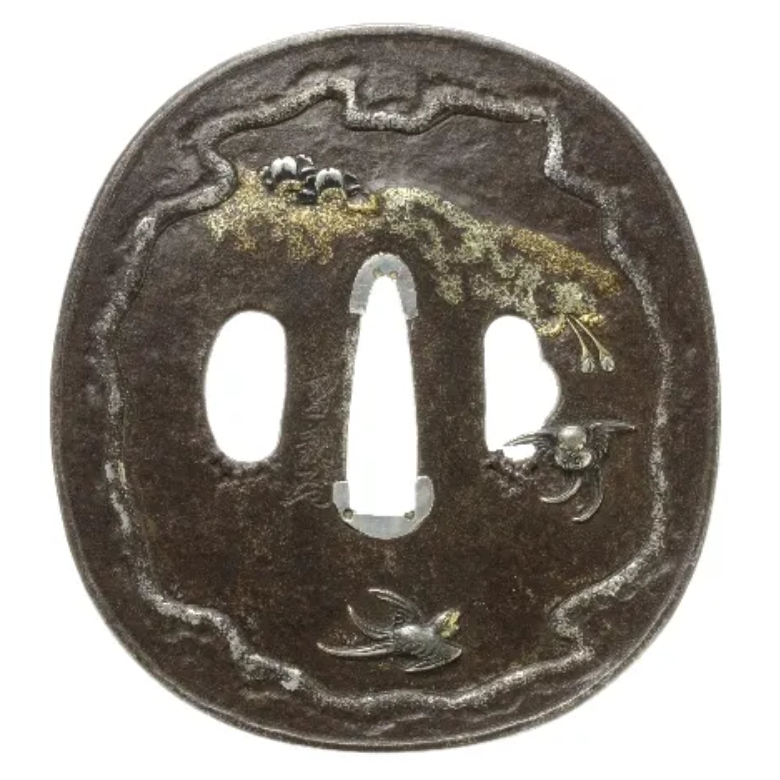
I'd say yuki karigane sukashi tsuba (雪雁金透鐔). The mimi could be described as 竹節肉彫耳 - takefushi-nikubori-mimi.
-
The subject of tsuba no. 272 should be orchid (蘭 - ran).


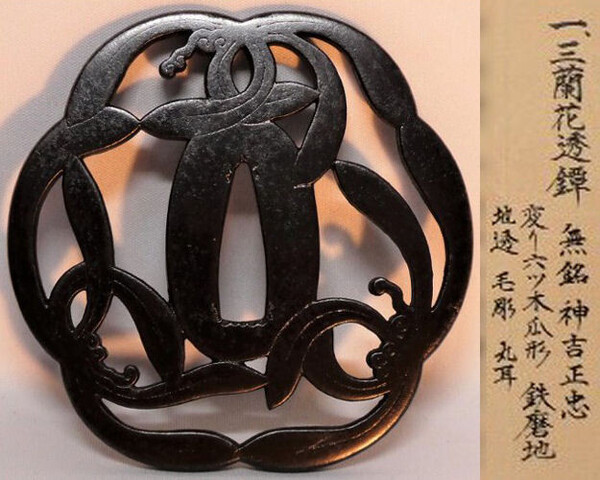
-
In ura is depicted a whip (鞭 - muchi). So if the implements in omote refers to a lady (according to Genji Monogatari's chapter), the ura could be a reference to the male counterpart. Just my hypotesis.
-
The kanji depicted in seal script style should be 朱 (shu), meaning scarlet or red.

-
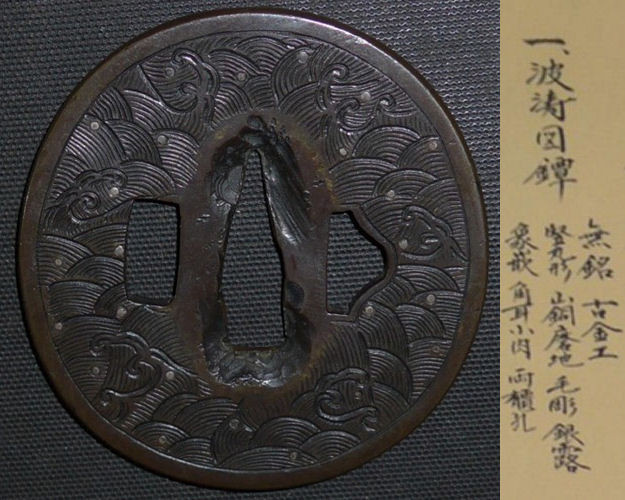
My fault, Damon, I missed to see two tsuba were signed. Actually suemon-zōgan are unusual in Echizen Kinai tsuba (much more common golden karakusa pattern in nunome-zōgan or, less commonly, scattered dot inlays). That's why I assumed the tsuba could be placed in the Heianjō-zōgan style.
-
Hi Damon, as Bruno said shinchū-zōgan (brass inlay) is the hallmark of Heianjō-zōgan style (though the same style overlaps to some extent to Ōnin and Yoshirō traditions). In Heianjō tsuba the inlays can be either flat or protruding. The pattern on the border of your tsuba is a stylized representation of snow.
-
@David, see here: https://www.shibuiswords.com/awase.htm
-
As John said

-
Indeed a design that Morichika enjoyed. https://blog.goo.ne.jp/tsuba_001/e/093e25de54040c61f8cb49d3ef439c33
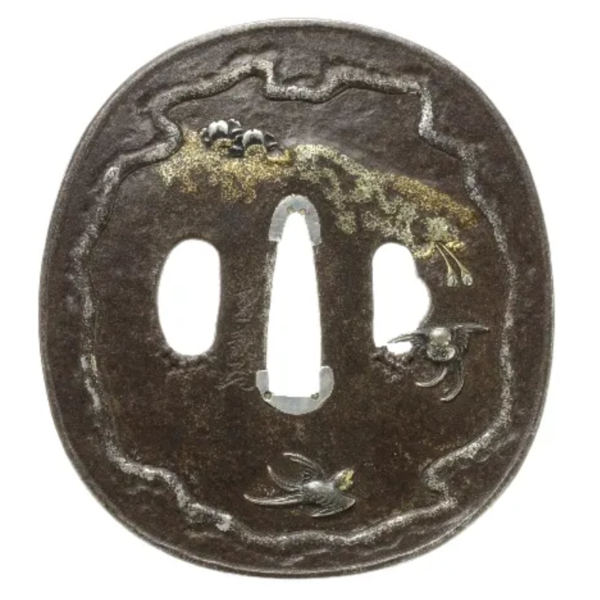
-
Good catch, Grev! Here a very close one described as 輪宝図鐔 - rinbō zu tsuba, and attributed as Hōan.

-
... and this one has just a kitame-ji as decoration.

-
Another undecorated tsuba by Seiryuken Eiju. Actually I got this one just for the fancy signature and the kakihan.

-
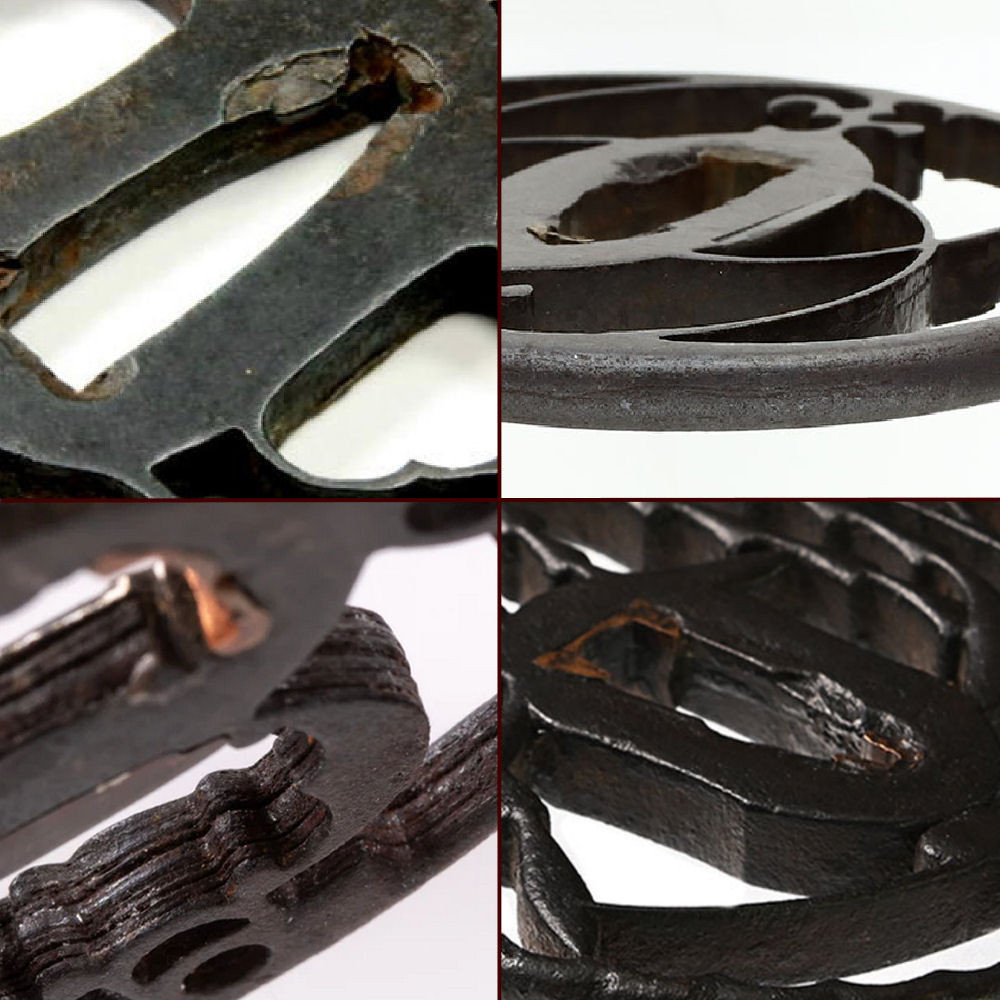
Some more examples from four Akasaka tsuba (all with NBTHK paper). In some pieces the separation between layers is even much more evident than in the tsuba wich originated this thread.

-
Can someone provide background on these recent purchases?
MauroP replied to Winchester's topic in Tosogu
Hi, I see no grape leaves, just bottle gourd (hyōtan - 瓢箪). The flowers depicted on the ji-sukahi tsuba should be narcissus (suisen - 水仙).

-
That's mine: ... and more, papered tachishi and ko-kinkō
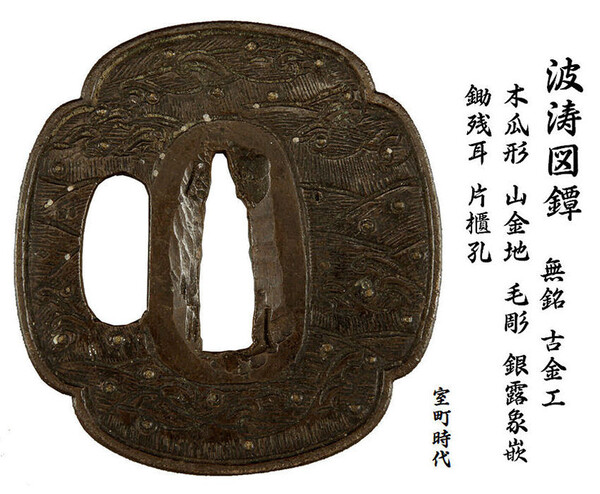

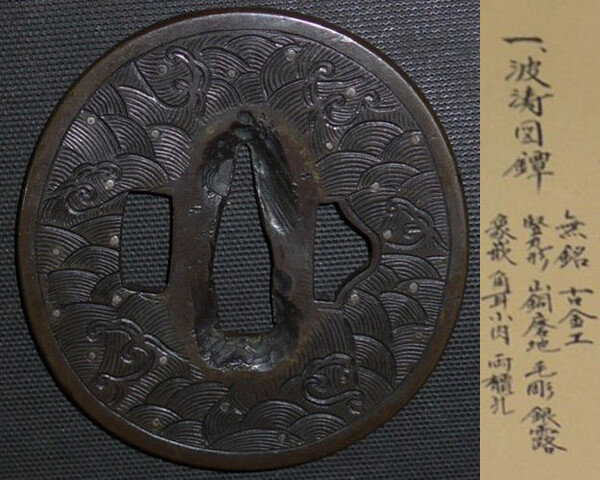
- 1 reply
-
- 5
-

-

-

-
Would someone be kind enough to identify these two tsuba
MauroP replied to roger dundas's topic in Tosogu
no one really close...
-
Would someone be kind enough to identify these two tsuba
MauroP replied to roger dundas's topic in Tosogu
Umetada, Myōchin or simply katchūshi? -
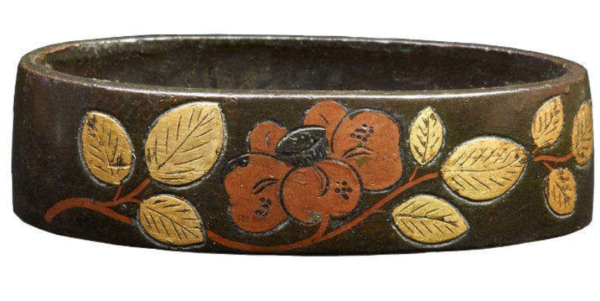
This is a plant of tea (Camellia sinensis)
-
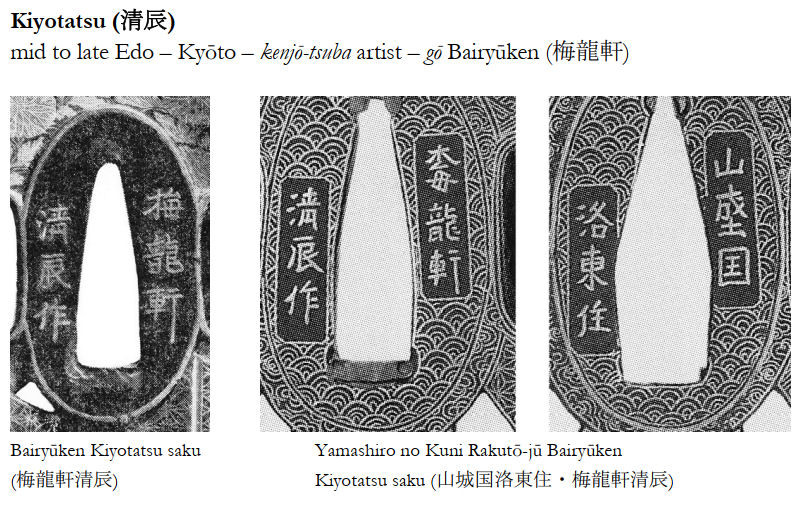
Would the 'real' Bairyūken Kiyotatsu please stand up.
MauroP replied to Spartancrest's topic in Tosogu
... he was so bored making the same tsuba again ang again... let him changing at least his signature! ... or there are at least two guys with very close names: 梅龍軒清辰 Bairyūken Kiyotatsu 梅龍軒清長 Bairyūken Kiyonaga

-
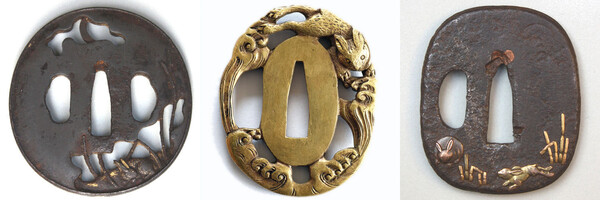
"Nami usagi no zu" tsuba (some signed): ... and the only one papered as "Ōtani Jinnosuke saku"


-
Hi Bob, Kōfu (may be read also Efu) means just Edo, so Kōfu jū and Edo jū are equivalent.
-
How reliable is the Hamano call? Interested "pro domo mea"...
-
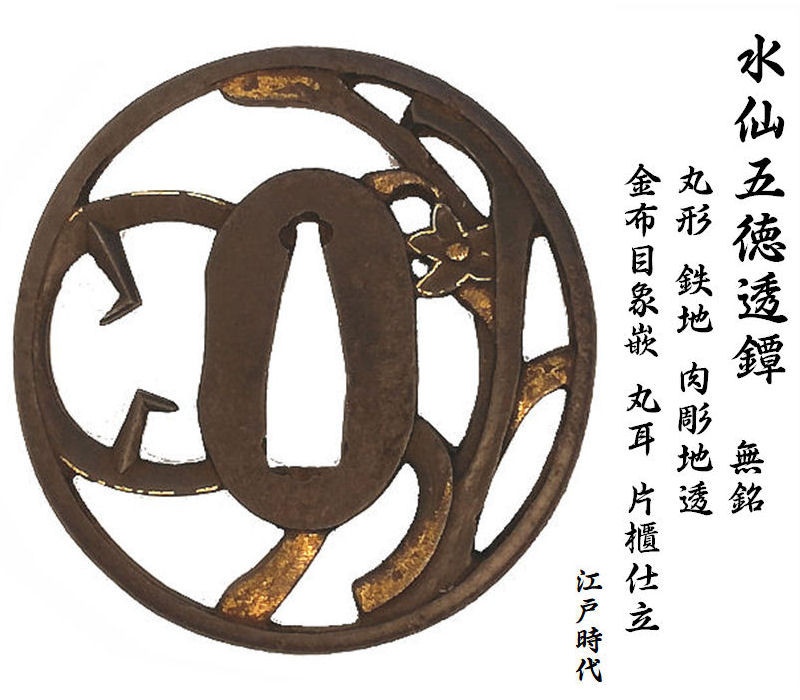
Here a tsuba with just one element suggesting tea ceremony. It's a gotoku (五徳), the traditional support for water kettle. The pairing with a narcissus flower is still unclear to me.