MauroP
-
Posts
845 -
Joined
-
Last visited
-
Days Won
5
Content Type
Profiles
Forums
Events
Store
Downloads
Gallery
Everything posted by MauroP
-
How reliable is the Hamano call? Interested "pro domo mea"...
-
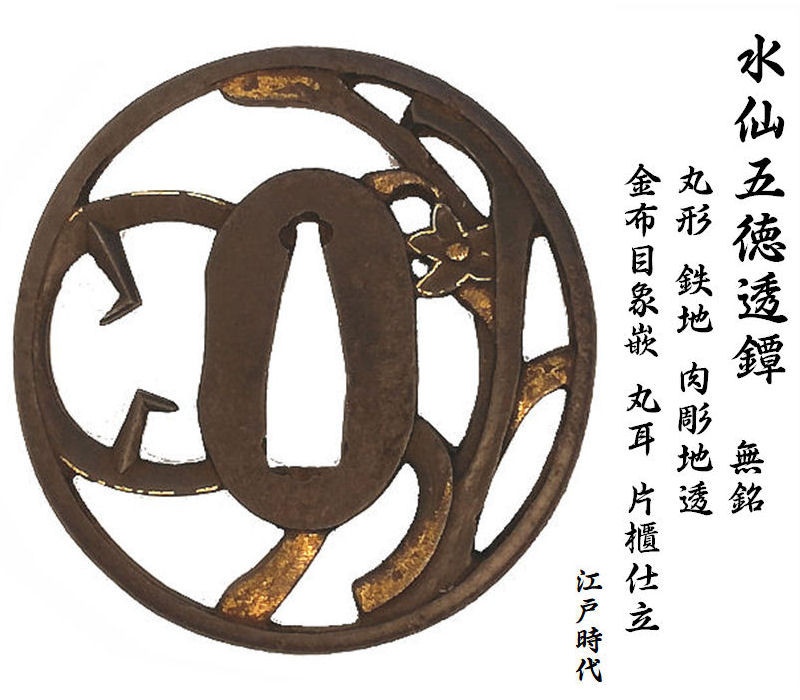
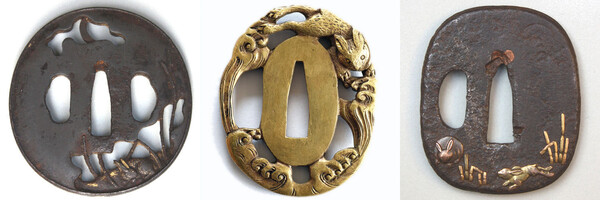
Here a tsuba with just one element suggesting tea ceremony. It's a gotoku (五徳), the traditional support for water kettle. The pairing with a narcissus flower is still unclear to me.

-
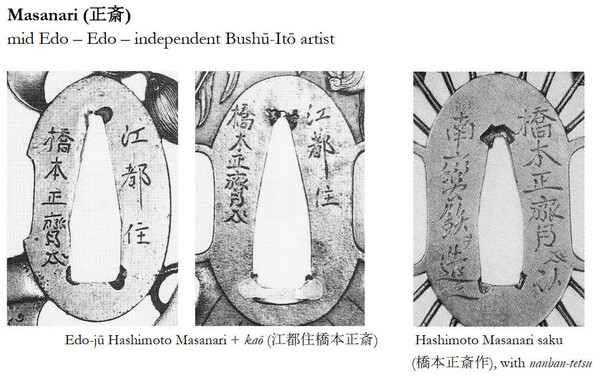
Hi Bob, the tsuba is signed 江府住 正齊 – Kōfu jū Masanari. Since the kanji 齊 is a variant of 斉 I think the artist could be the same as reported here below:
-
江戸住 奈良利治作 素銅槌目地 本金象嵌 仏教図縁頭 Edo jū Nara Toshiharu saku suaka-tsuchime-ji hon kin-zōgan bukkyō zu fuchi kashira
-
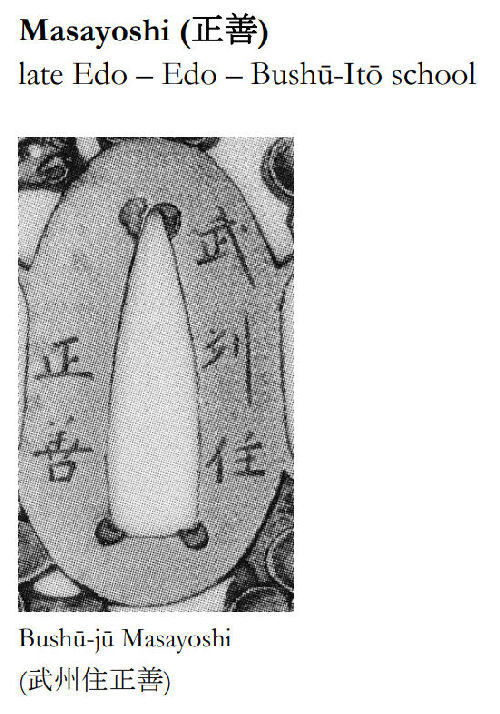
Hi Bob, I can't see a kaō, just 正義 - Masayoshi.
-
To filling the gaps: 菊に鹿図縁頭 - kiku ni shika no zu fuchi kashira (chrysanthemums and deer design) 無銘 古美濃 - mumei ko-Mino 銀魚子地 鋤出高彫 - gin-nanako-ji sukidashi-takabori (silver material)
-
It's hard to judge from the pics whether the plate is just carved or perforated and then filled with gankin. If the latter is true probably the fillings are not iron, so it should be easy to probe them with a little magnet.

-
Hi, try searchig for "nishiki-tsutsumi". See: https://www.touken-matsumoto.jp/en/product/shousai/KO-0047
- 1 reply
-
- 1
-

-
The comma-shaped sukashi should be a magatama (曲玉), a bead with religious significance and one of the three Imperial Regalia of Japan.
-
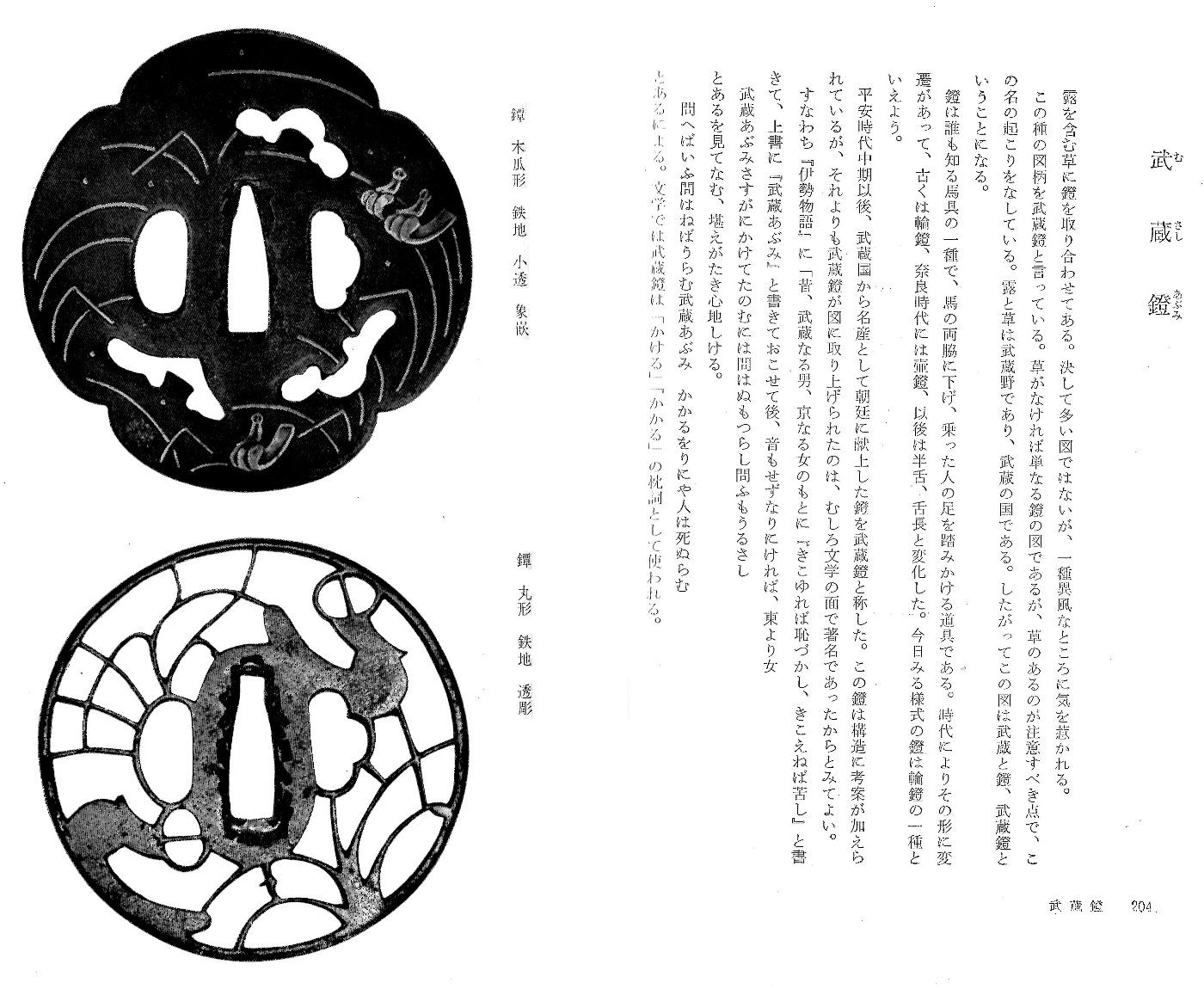
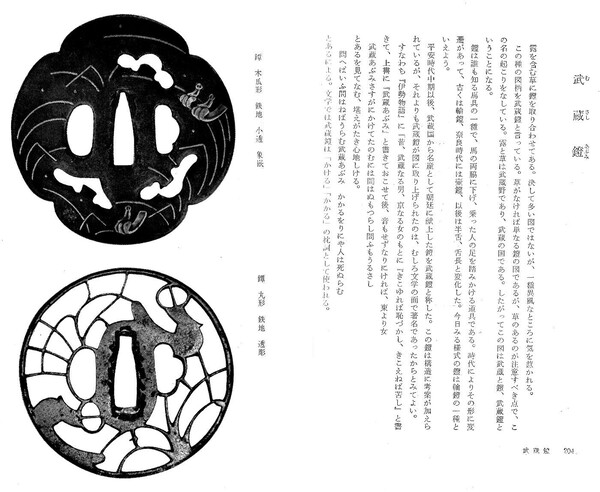
Here the relevant entry for Musashi abumi. See also https://ja.wikipedia.org/wiki/むさしあぶみ. Unfortunately I'm unable to find a reference in a Western language.
-
Hi Grev, the subject of Akasaka tsuba is 武 蔵 鐙 - Musashi abumi. The Stirrups of Musashi refers to a book reporting the Great fire of Meireki in 1657 (according to "Tsuba - Kodōgu Gadai Jiten" by Numata Kenji).
-
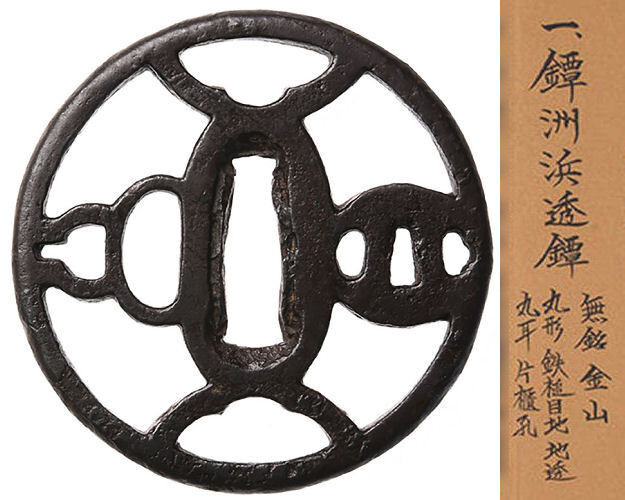
Hi, another "tsuba in tsuba" piece, attribution to Kanayama (from https://eirakudo.shop/tosogu/tsuba/detail/323113)
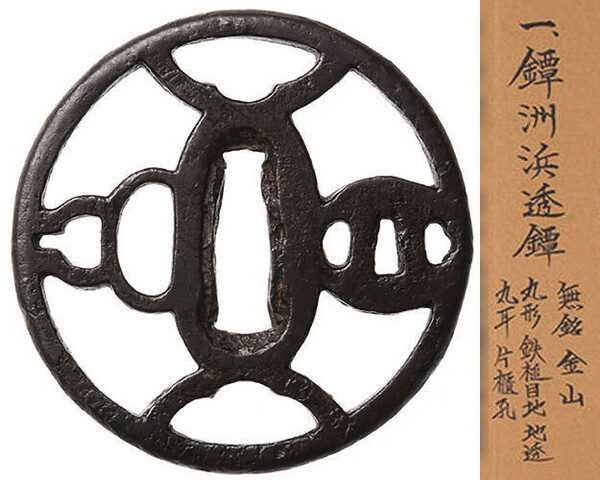
-
Hi Ali, welcome in the forum. You are correct, the paper is a sort of certification of authenticity. Nonetheless I respectfully suggest that 280 bucks for an almost undecorated tsuba (and you have also to pay for taxes) is not exactly a bargain...
-
That's my library, but the books in it were acquired quite randomly... https://www.dropbox.com/s/1o3db7r4le9hytq/Japan %26 nihonto-related library.pdf?dl=0
-
"Tsuba - Kodogu Gadai Jiten" is possibly the best reference book for subjects from Japanese artistic tradition in tōsōgu, and quite easy to find. Unfortunately it's written in Japanese. I tryed to compile an index. See here: https://www.militaria.co.za/nmb/topic/31049-tsuba-kodogu-gadai-jiten/#comment-317709
-
Hi Mark, I think the tsuba doesn't look so bad, it could even be a ko-kinkō piece, though unmatched to a saya with kogatana slot.
-

Interesting Heian Tsuba with Shakudo Mimi and inserts
MauroP replied to Infinite_Wisdumb's topic in Tosogu
Another example of Heianjō-zōgan tsuba with shakudō gan-kin.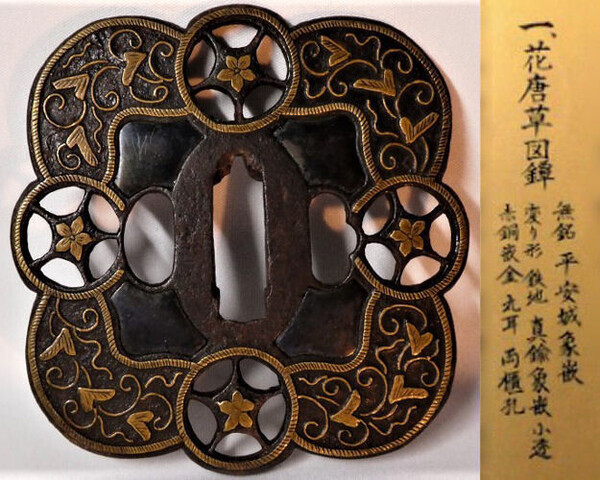
-
Aizu-Shōami or Mito?
-
@Thomas Sinclair In my database I've recorded 7 tachi-kanagushi tsuba; 3 out 7 can be oriented according to their decoration, and all are edge up (as in katana mounting). In 5 tsuba attributed to tachishi (is the same as tachi-kanagushi or not?) the only one that can be surely oriented is also edge up. So what's the meaning of such attributions is still unclear for me...
-
Here below some examples of vertical nanako tsuba. No.1 papered as tachi-kanagushi, the others as ko-kinkō. No.2 has a sanmai construction. Unfortunately no ko-Mino example to show.
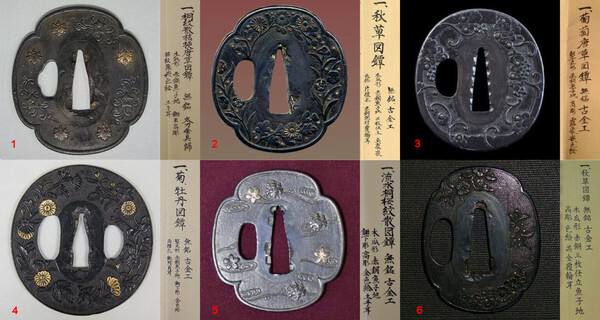
-
The kanji read Otsuryūken Miboku Hamano. More than one artist signed that way.
-
Here a tsuba (縄暖簾図透 - nawanoren no zu sukashi) attributed by NBTHK to Inshū Suruga school.

-
Pretty sure that most sanmai tsuba were not produced with repoussé technique. Here below an example of an unusual large tsuba whose shakudō plates show lack of decoration pattern near the border. That's a proof that the plates were produced in standard dimension and then adapted to the "core" plate. Nontheless that kind of tsuba should be old enough to deserve a ko-kinkō attribution.

-
About No. 217: the tsuba below is described as shi-hō warabide sukashi (四方蕨手透 - openwork of fern sprouts in four directions)