


MauroP
-
Posts
870 -
Joined
-
Last visited
-
Days Won
5
Content Type
Profiles
Forums
Events
Store
Downloads
Gallery
Everything posted by MauroP
-
Anyway the description on the paper just report 笹に巻物の図 - sasa ni makimono no zu (ops, Kyle was faster than me)
-
A nice kogai, but the hidden cross is not so hidden… Moreover its placement is slightly asymmetrical, and this could be suspicious for a later addition.
-
Bravo!
-
Ask ye, and it shall be given to you [Mt. 7:7] (ask via PM … in that times they had no claim on copyright).
-
Hi, nice hamidashi tsuba, unfortunately overcleaned. The subject is autumn flowers, possibly Aizu-Shoami
-
Ciao Luca, IMO better than average Kyō-kanagushi, but not as good as expected for a Mino piece. A nice tsuba, whatsoever.
-
Another Kyō-Shōami tsuba matching some of tsuba early presented in this thread. https://www.christies.com/lot/lot-5047102

-
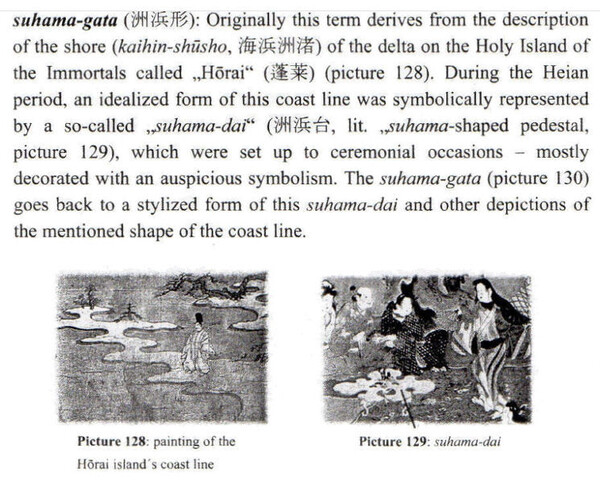
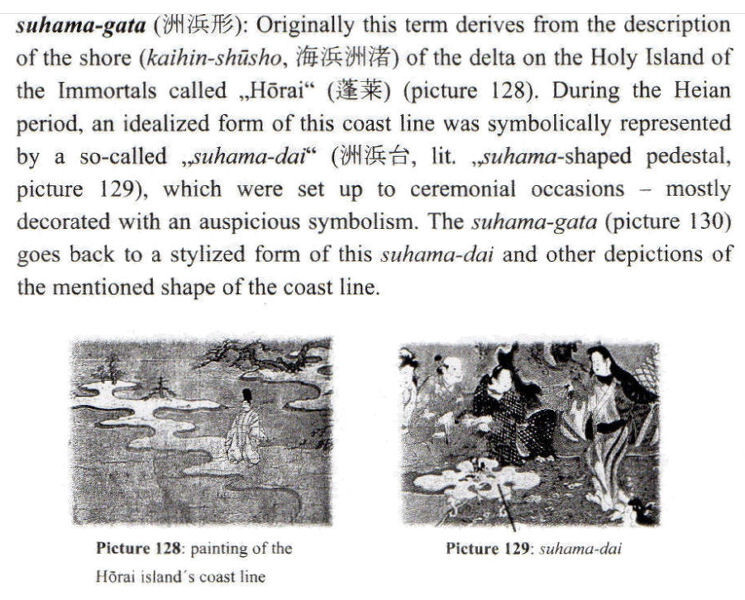
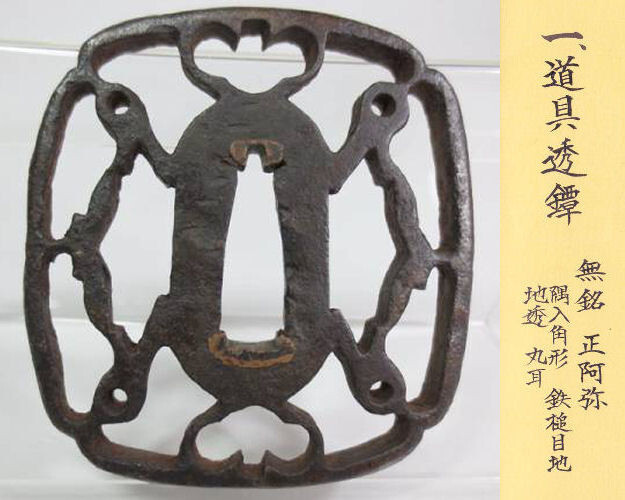
I'd say kuruma-sukashi in this case. Anyway the meaning of suhama-gata is well explained by Markus Sesko in his "Handbook of Sword Fittings related Terms".
-
The tsuba above (and possibly the previous ones) depicts Tsuno Daishi - 角大師 (Horned Great Master), a manifestation of Ryōgen, the 18th chief abbot of Enryaku-ji in the 10th century. He is considered a restorer of the Tendai school of Mahayana Buddhism.
-
Tsuba No. 289 looks like a variation in the theme called hatsuyume - 初夢. Hatsuyume is the first dream one has in the new year. It was considered to be particularly good luck to dream of Mount Fuji, a hawk (taka), and an eggplant (nasubi). Beautiful tsuba, by the way.
-

Help on finalizing three tsuba descriptions
MauroP replied to Ron STL's topic in Translation Assistance
#1 紋散図鐔 - mon chirashi zu tsuba 無銘 古金工 - mumei ko-kinkō 障泥形 山銅槌目焼手地 - aori-gata yamagane-tsuchime-yakite-ji -
I suggest Begonia grandis - 秋海棠 - shūkaidō. See my updated "Flora Hoplologica Japonica" (I made a mess even of the title...) https://www.dropbox.com/s/yvqi0kb0nr69bcp/FHJ.pdf?dl=0
-
Echizen Kinai tsuba box translation request
MauroP replied to Deez77's topic in Translation Assistance
Dr. Satō (Kanzan) Kan’ichi (1907–1978) was one of the founders of NBTHK, and the author of "The Japanese Sword: A Comprehensive Guide". His akogaki are considered highly valuable per se (sometimes they were even forgered). -
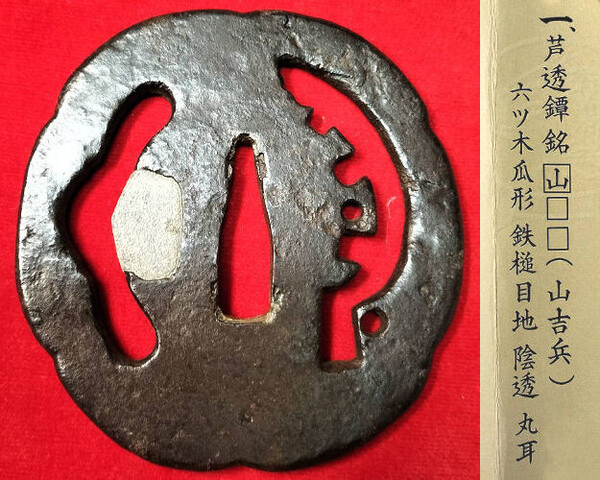
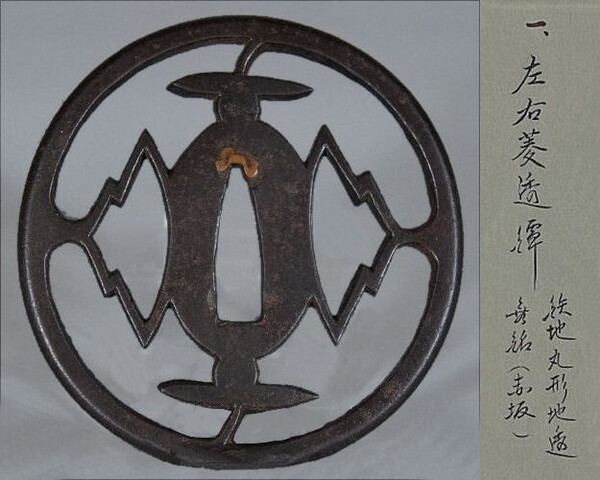
An unusual interpretation (as far as I know) of the sukashi shape: in this NBTHK paper is reported as 芦 - ashi (common reed).
-
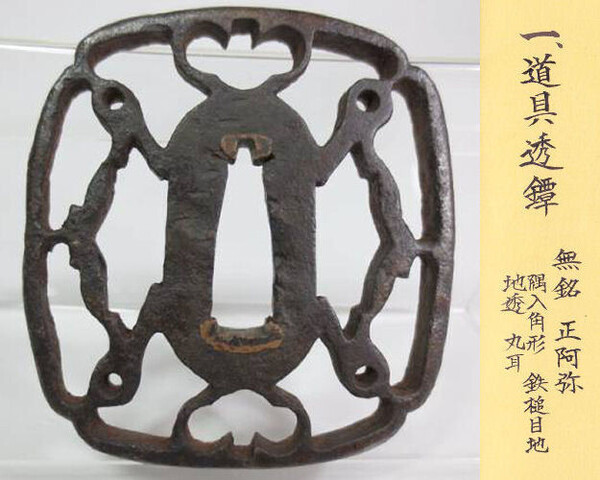
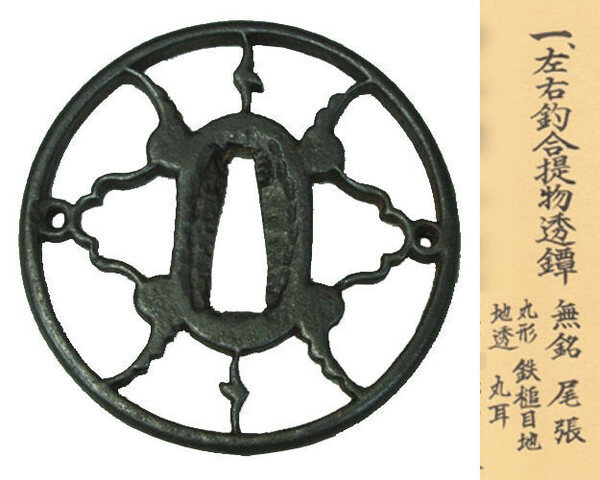
The design alone could suggest many different attributions. Looking at the oblique images a certain layering may point to Akasaka school.
-
Hi, nice tsuba, one of few I'd assign to Shōami as first choice.

-
之信嶋馬 - Yukinobu Shimama?
-
A: mumei B: nagamaru-gata ryō-hitsu-ana kaku-mimi ko-niku tetsu-migaki-ji C: botan karakusa shishi-mon zu kin-nunome-zōgan D: dimensions E: Edo jidai kōki (late Edo period)
.thumb.jpg.43a56c05e8bcff08014e12b9f3c4a4d8.jpg)
-
Ciao Luca, it was a popular pattern, so more likely a daishō composed in Edo times from two independent uchigatana tsuba from late Muromachi/Momoyama period.

-
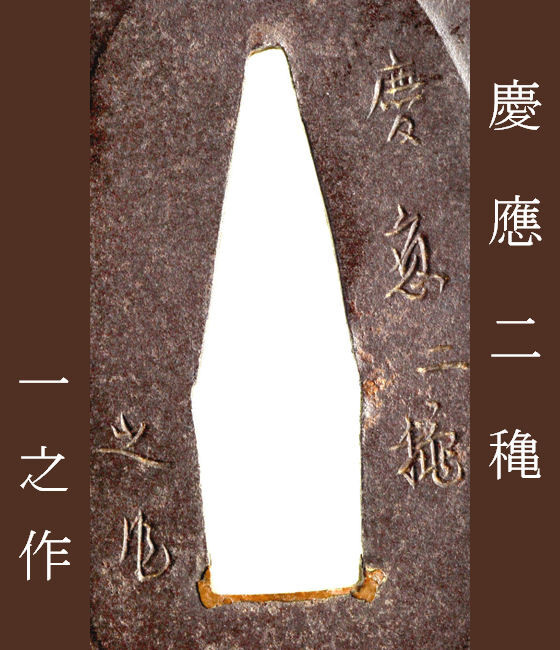
Steve was right, but given the data it was an impossibile task, so better go to the original image. After a little “photoshopping” a faint single stroke coud be seen, giving coherence to the whole: 慶應二穐 一之作 – Autumn 1866, Kazuyuki saku. So a a collaborative tsuba, since is signed Hashimoto Isshi on ura side. Possibly another Kazuyuki collaborative tsuba can be seen here: https://varshavskycollection.com/collection/tsu-0079/
-
No, I'm unable to see signs of casting. All can be explained with layering during hand forging, IMO.
-
Shakudō was the most used material by Gotō school, and the most used in all nanako-ji tsuba. So, statistically, should be shakudō...
-
芳園鐫 - Hōen horu (Hōen carved)?
-
後藤傅乗 - Gotō Denjō + kaō





.jpg.fc1901307c503a19c1ac95e5f3f0925c.jpg)
