
Leaderboard



Popular Content
Showing content with the highest reputation on 08/09/2026 in all areas
-
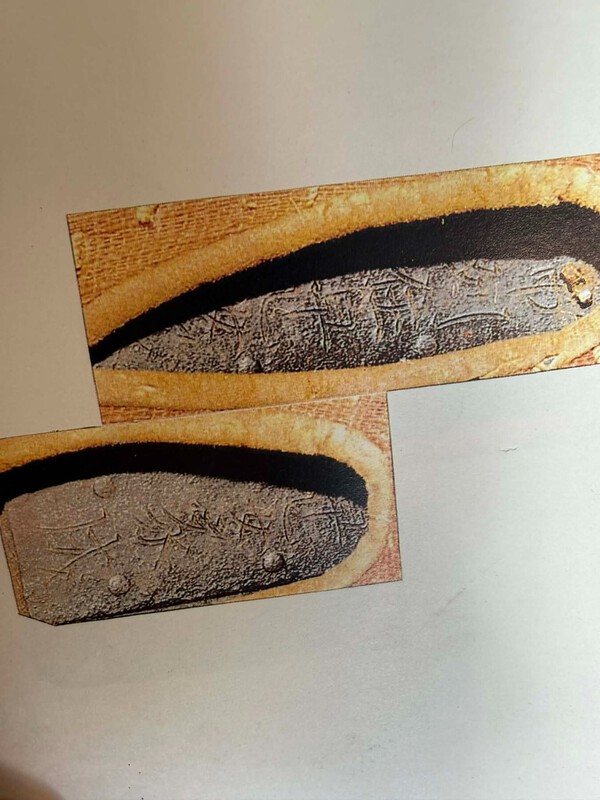
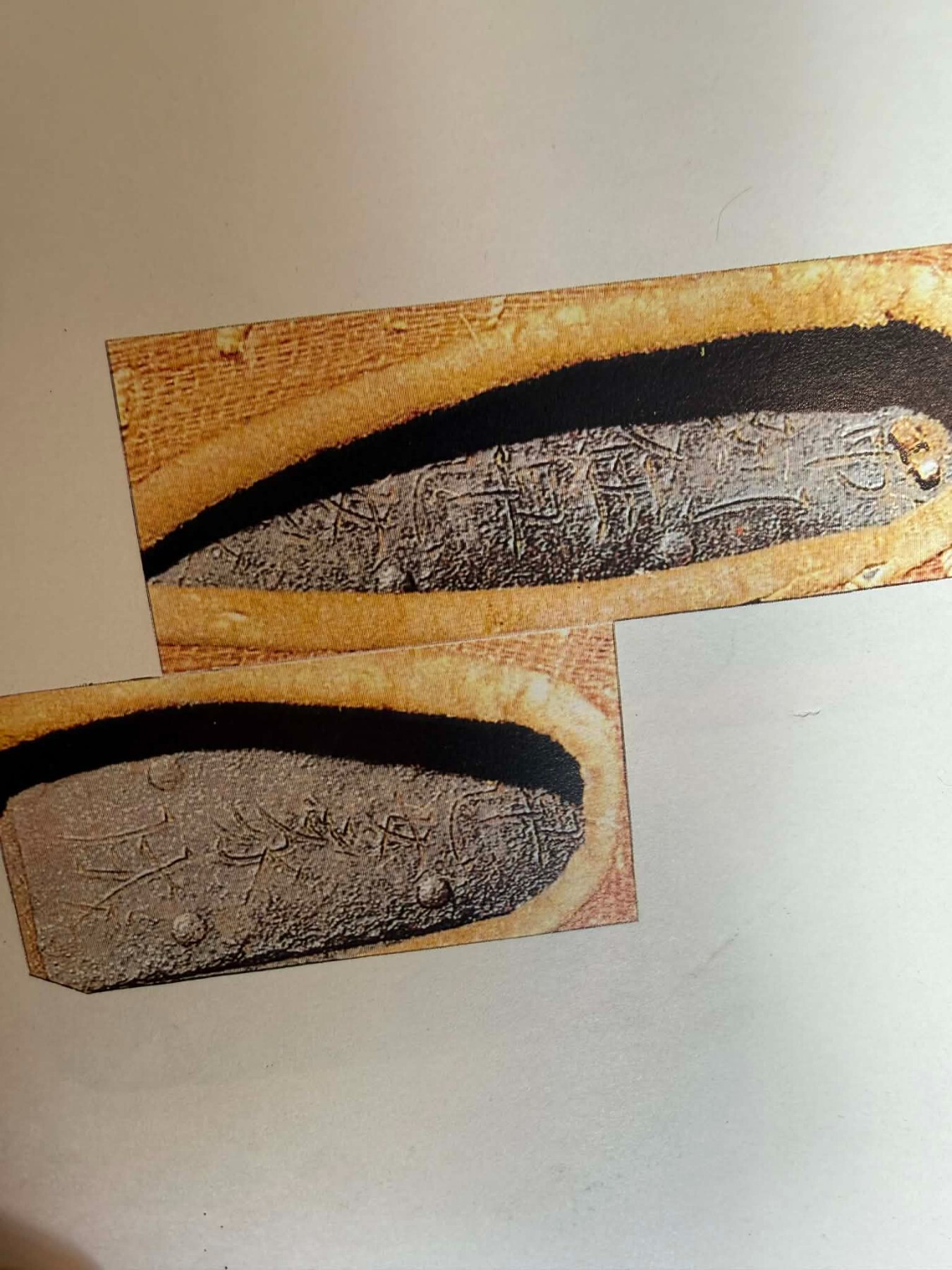
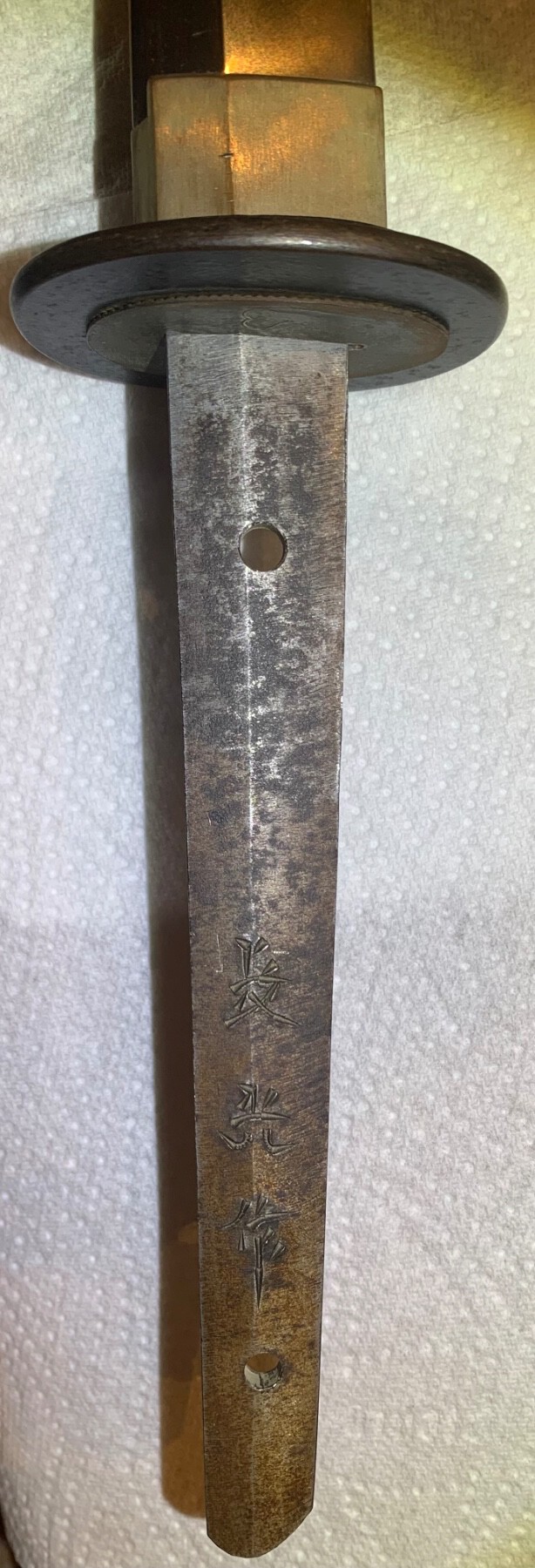
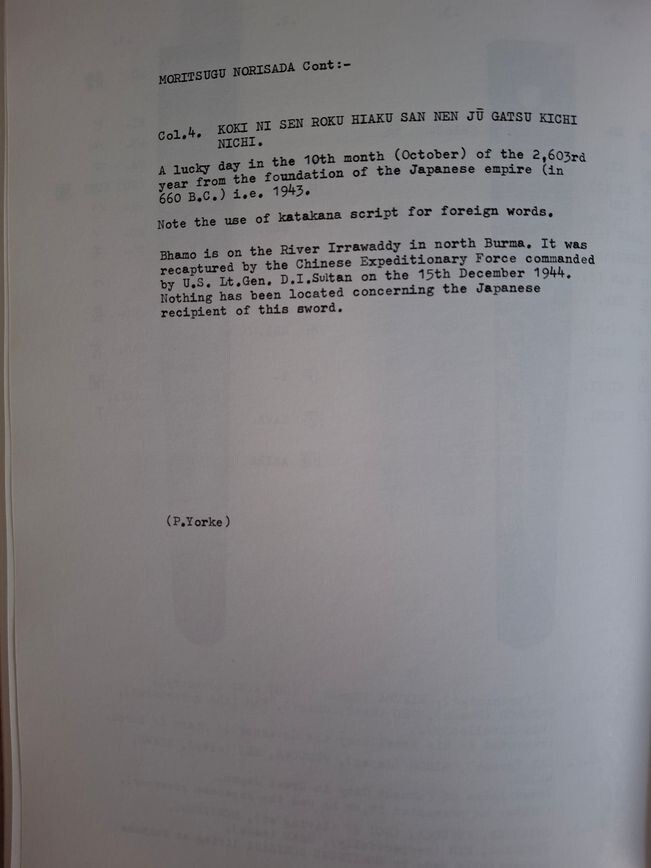
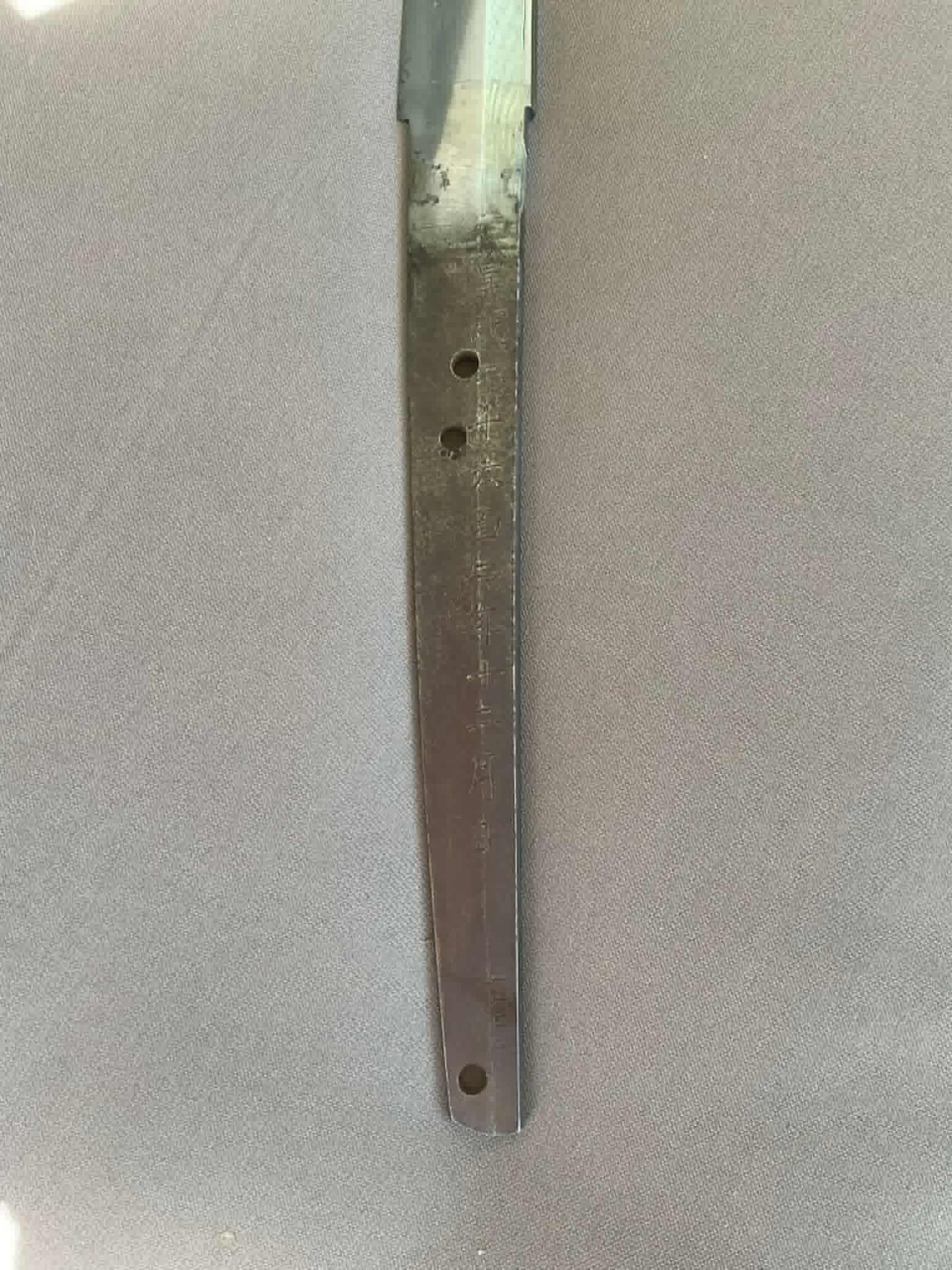
Showa ju hachi nen shichi gatsu hi 昭和十八年七月日5 points
-
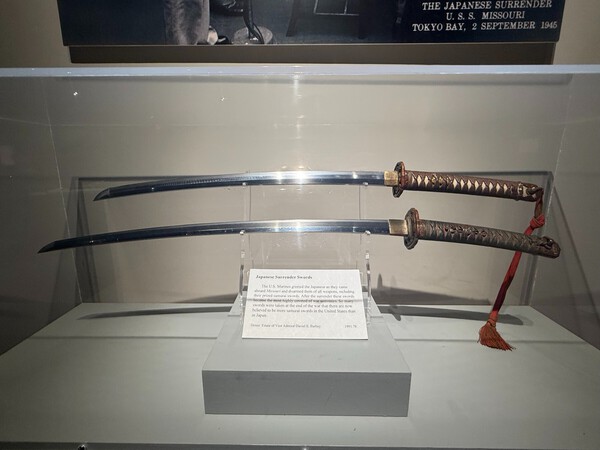
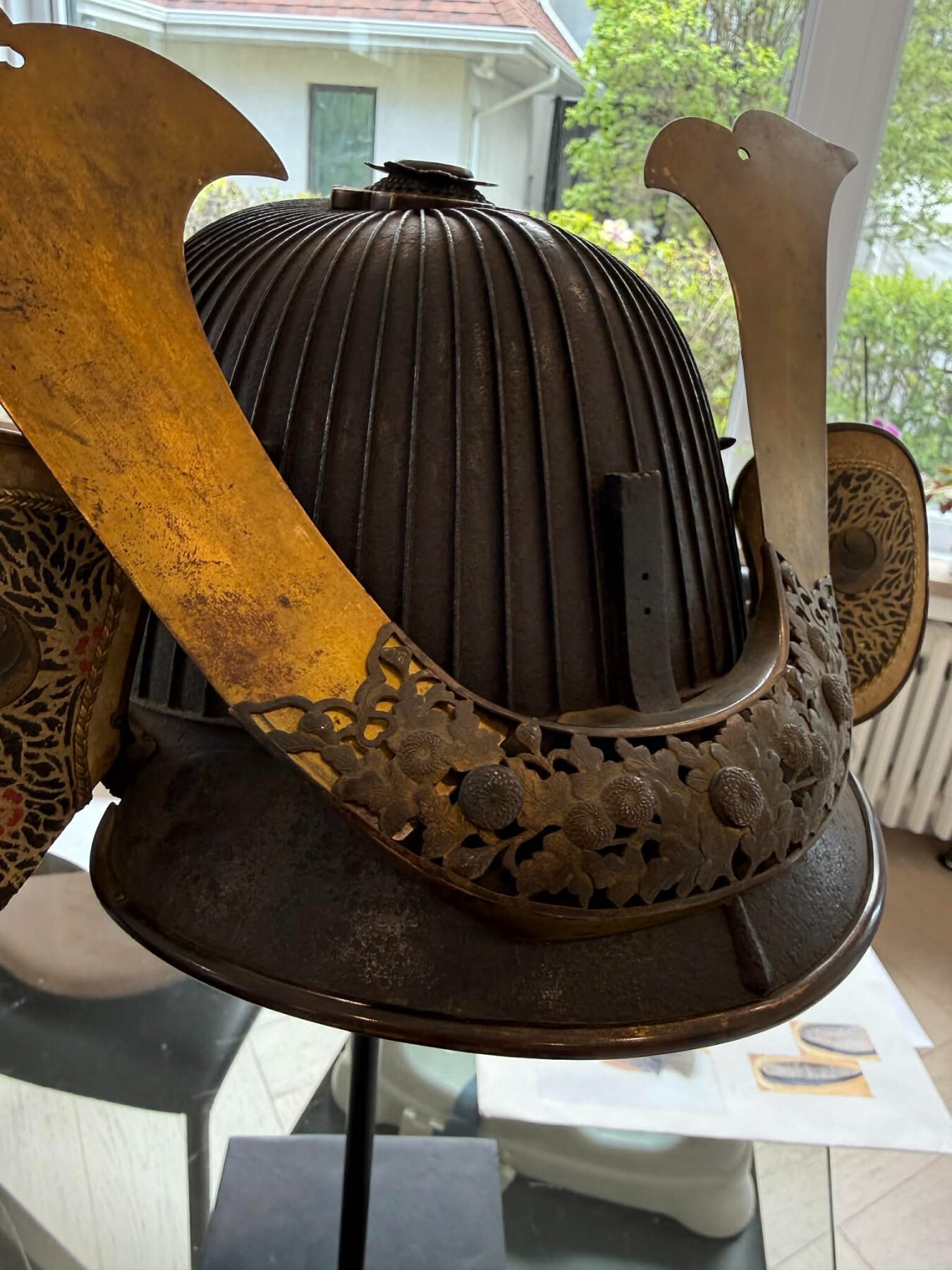
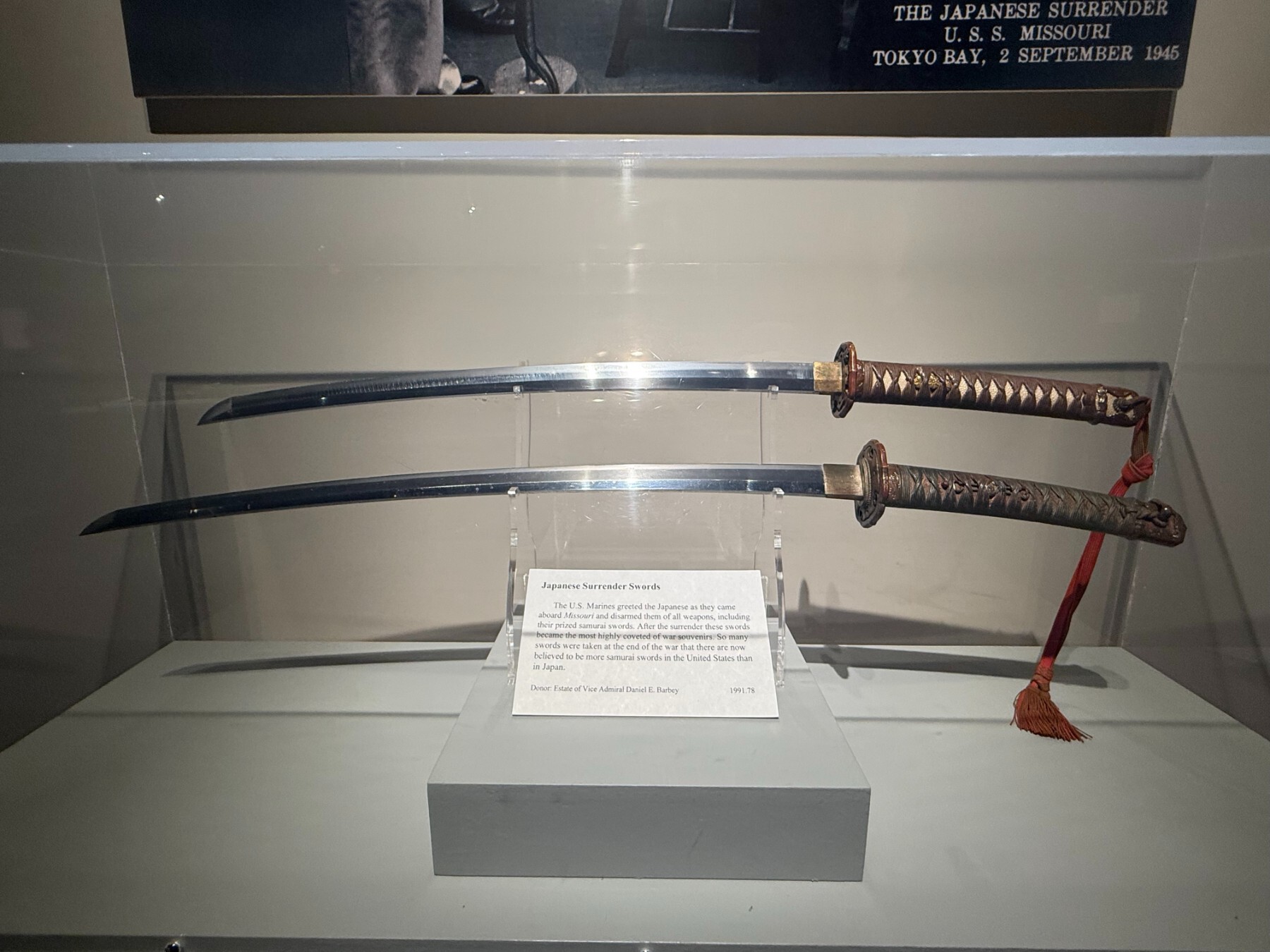
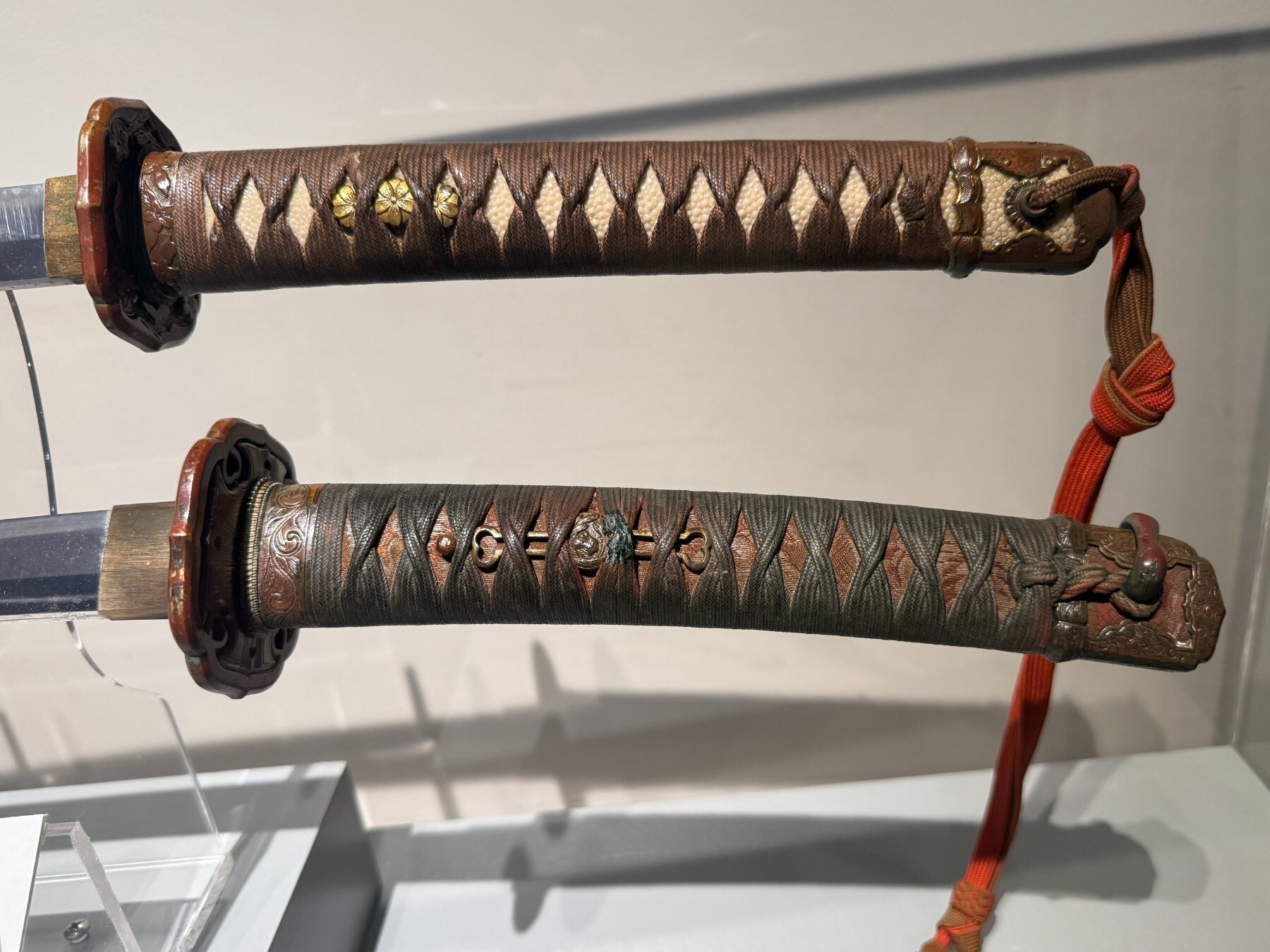
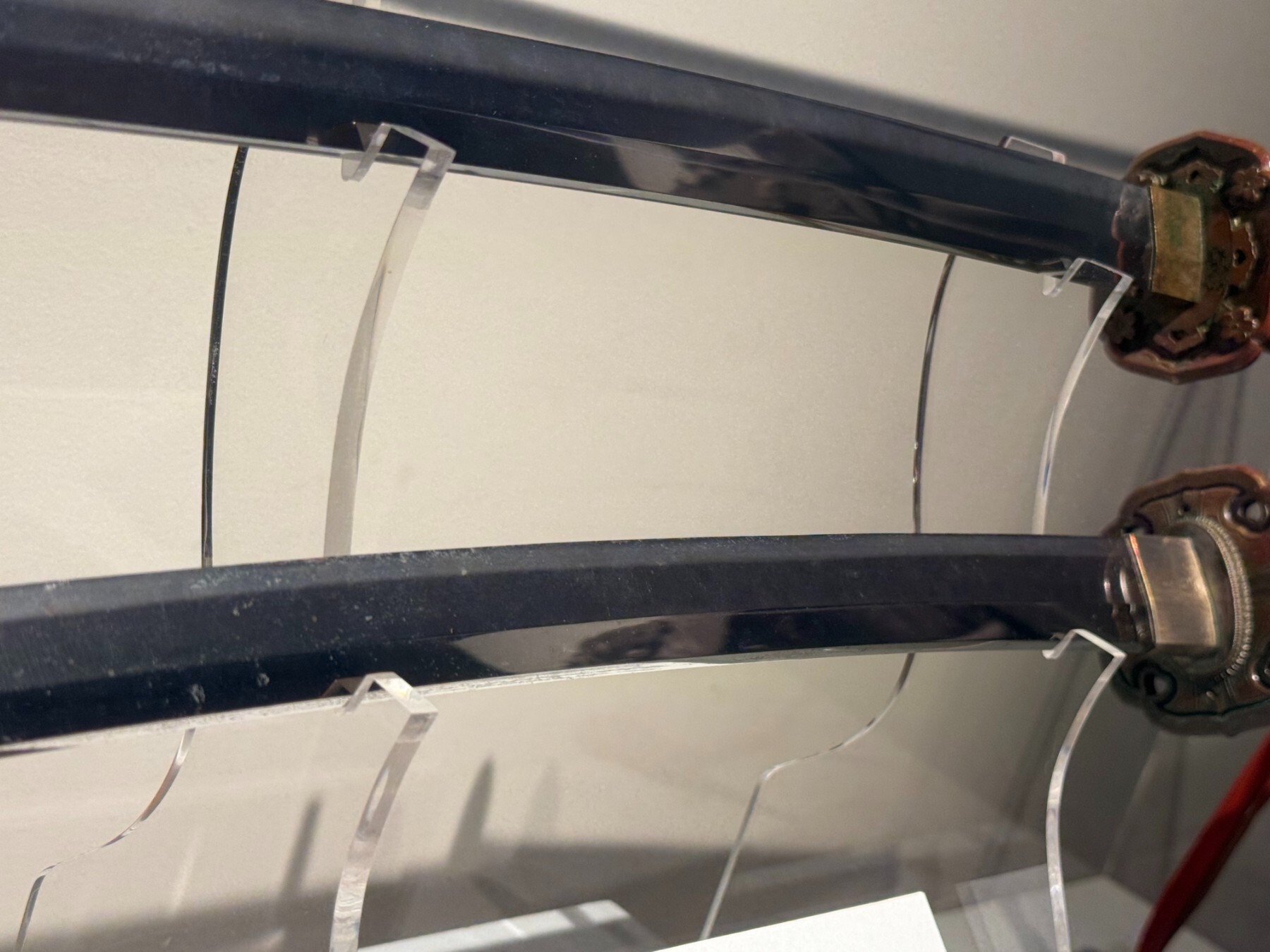
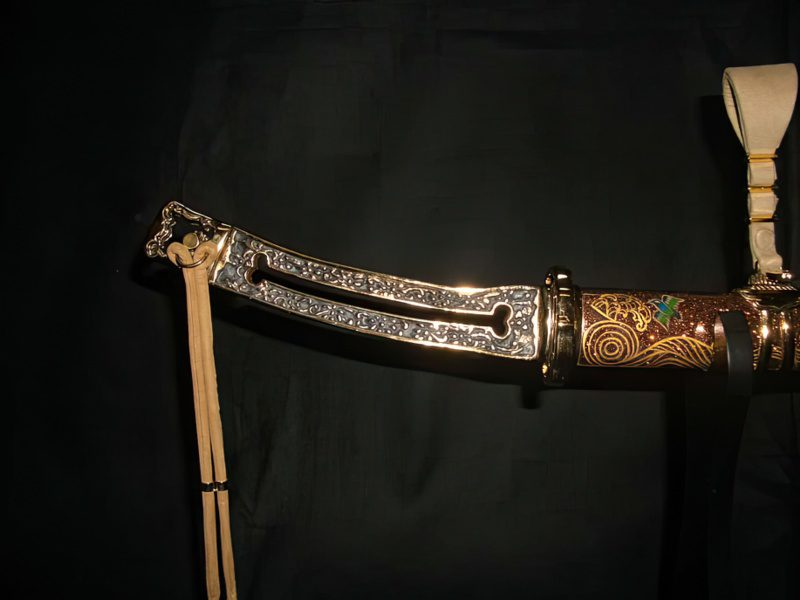
Given the apparent circumstances surrounding the surrender of these swords (on the Missouri?) its fair to assume they belonged to Officers of considerable rank. The one in question could be a custom ordered koshirae that vaguely looked like a military sword but was leaning more heavily towards an old Tachi. It looks like it contains an old Tachi blade, possibly something rather exciting?4 points
-
Date is June 1942.4 points
-
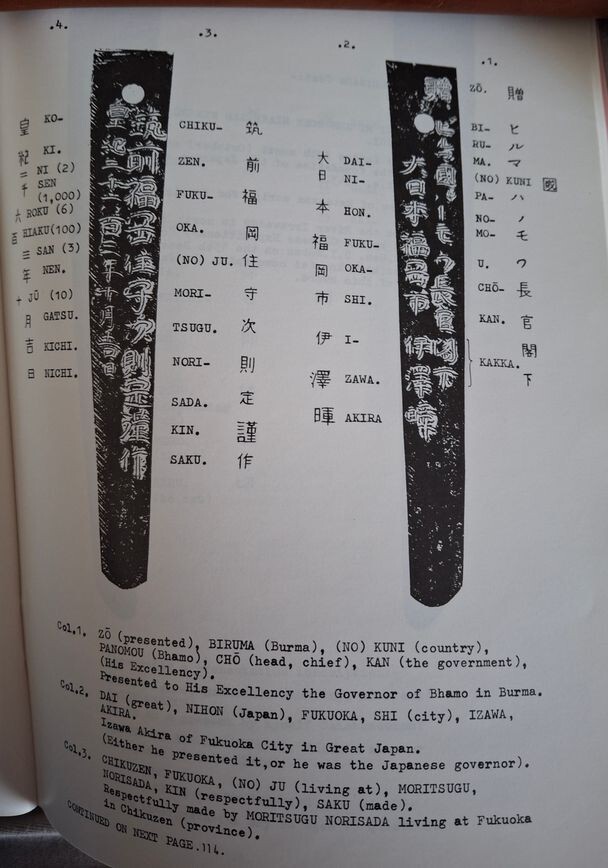
Please see below for examples of the gendai smith Chikuzen ju Moritsugu Norisada. https://www.google.com/search?q=Moritsugu+norisada+site%3Awww.militaria.co.za&oq=Moritsugu+norisada+site%3Awww.militaria.co.za+&gs_lcrp=EgZjaHJvbWUyBggAEEUYOdIBCTEzNTY0ajFqN6gCFLACAfEFZSLB4wvu73g&client=ms-android-google&sourceid=chrome-mobile&source=chrome.ob&ie=UTF-84 points
-
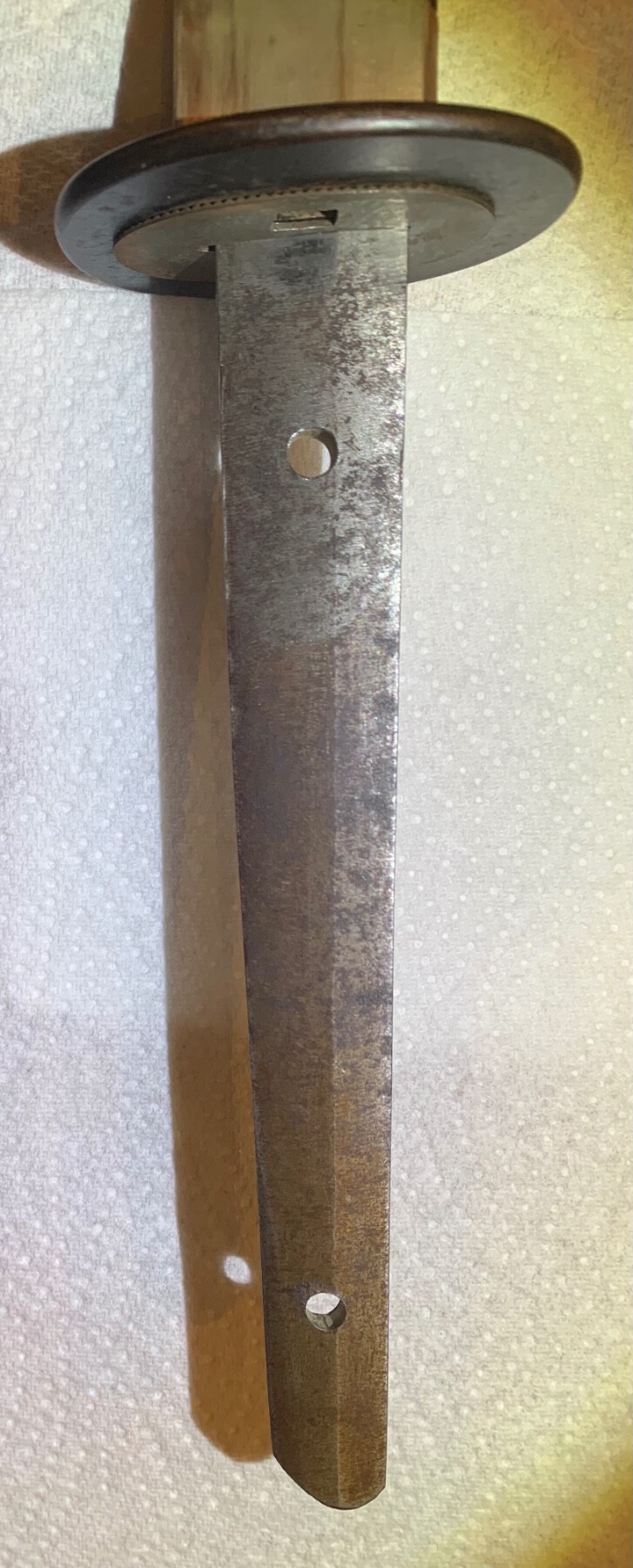
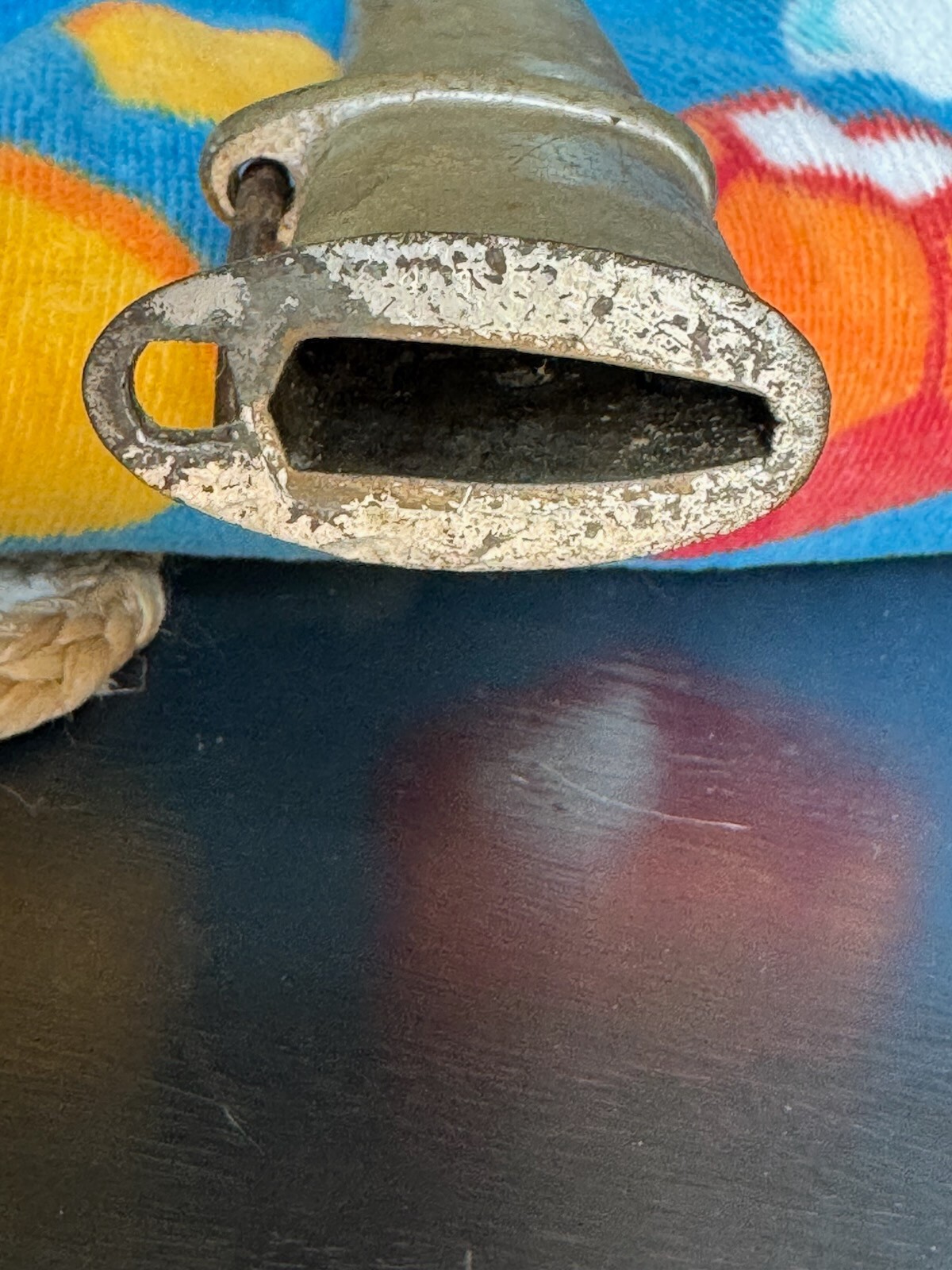
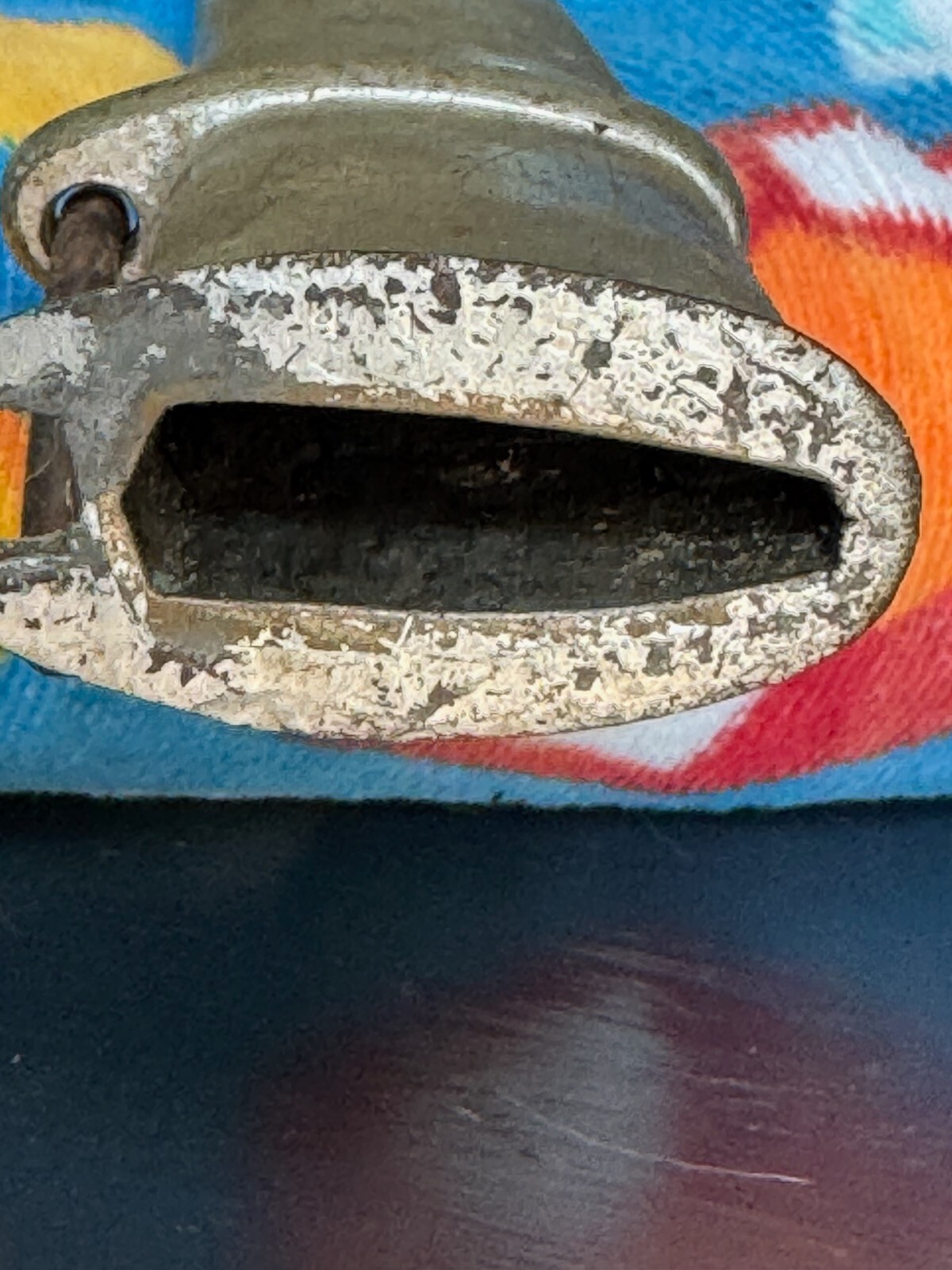
Uwe , I'm not a good photographer. Her are some better images the seller took.
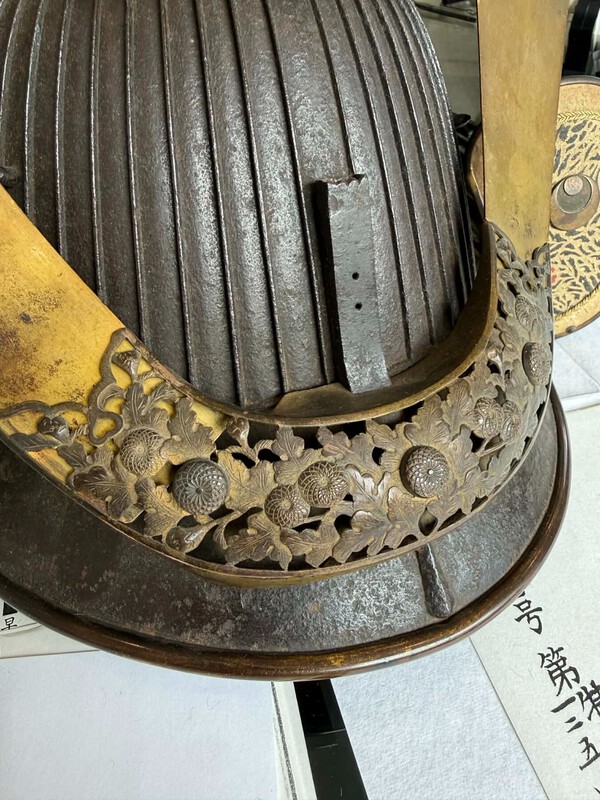
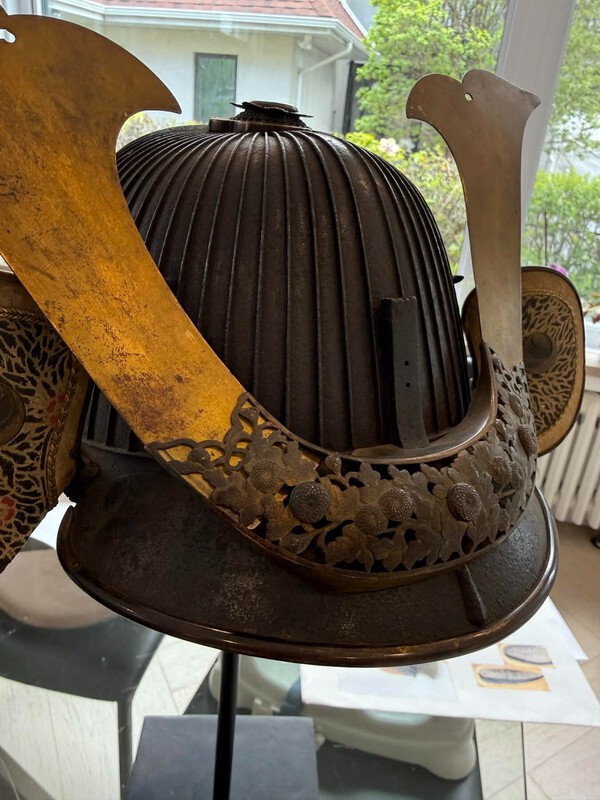 4 points
 -
Sam, the museum needs advice and support, and I hope you will get into contact with relevant staff members there!3 points
-
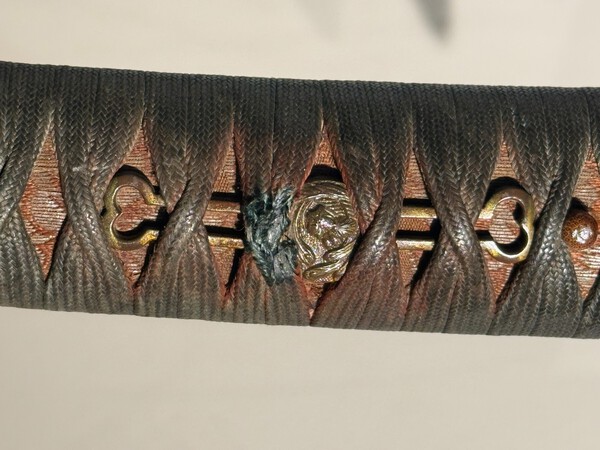
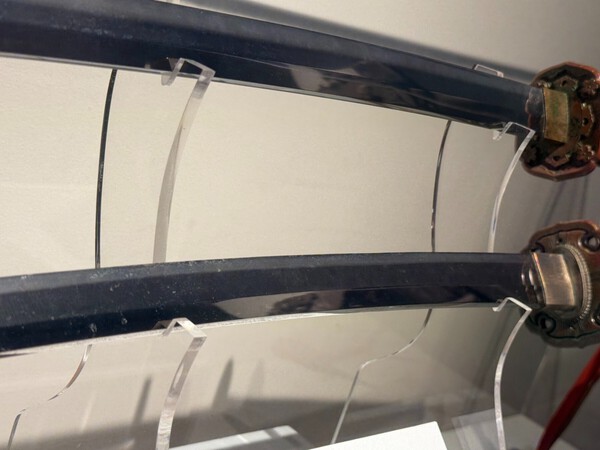
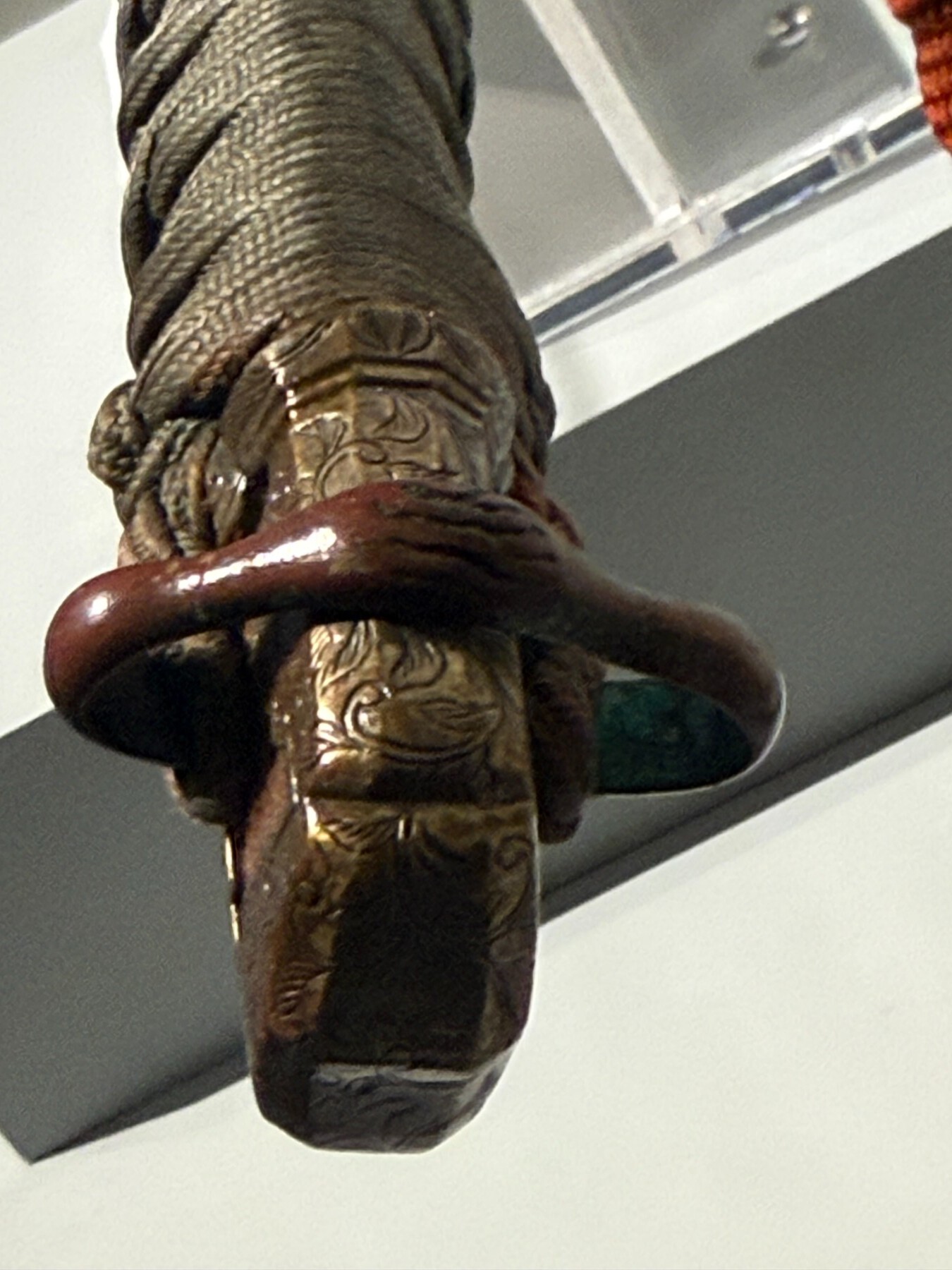
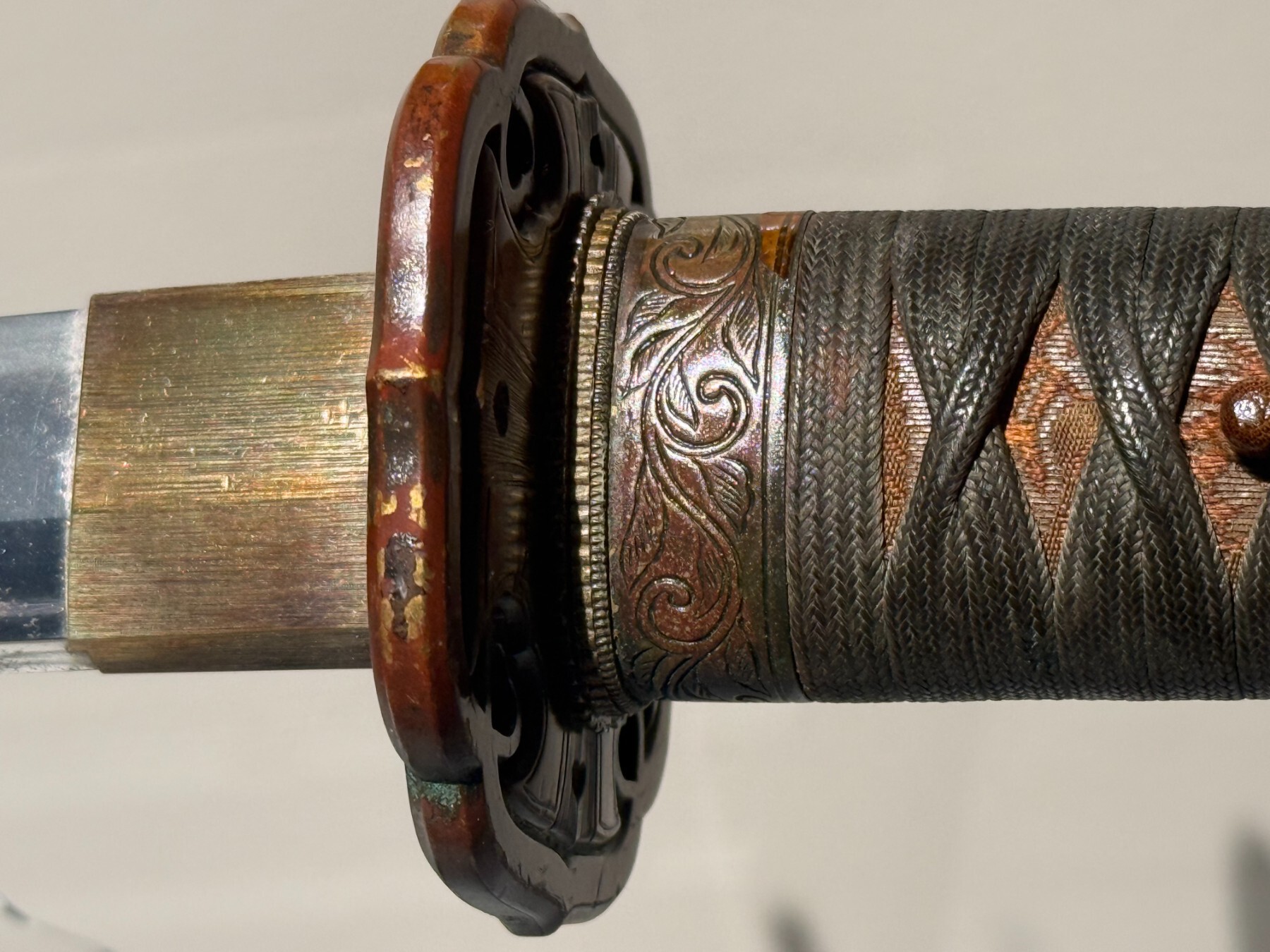
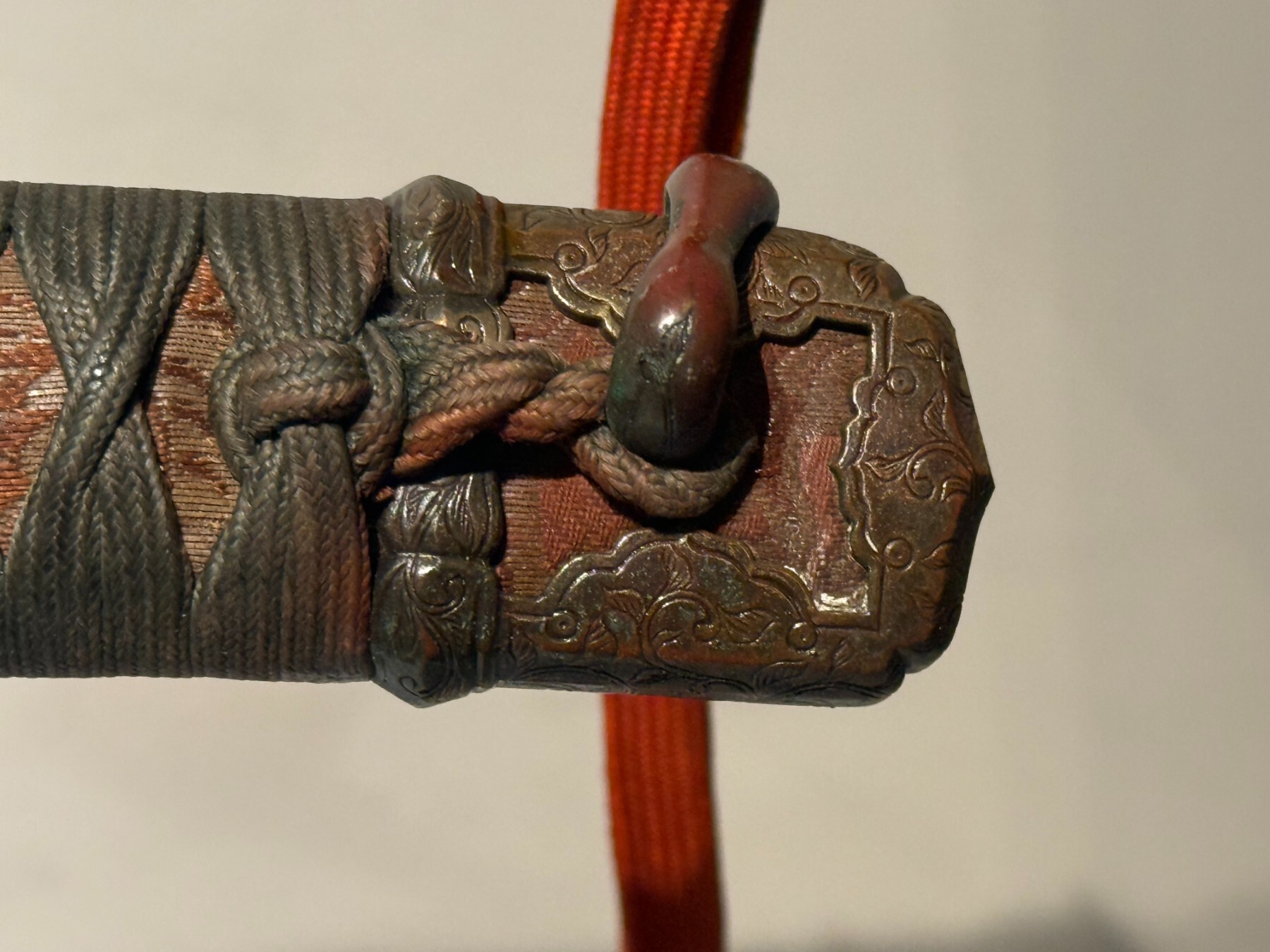
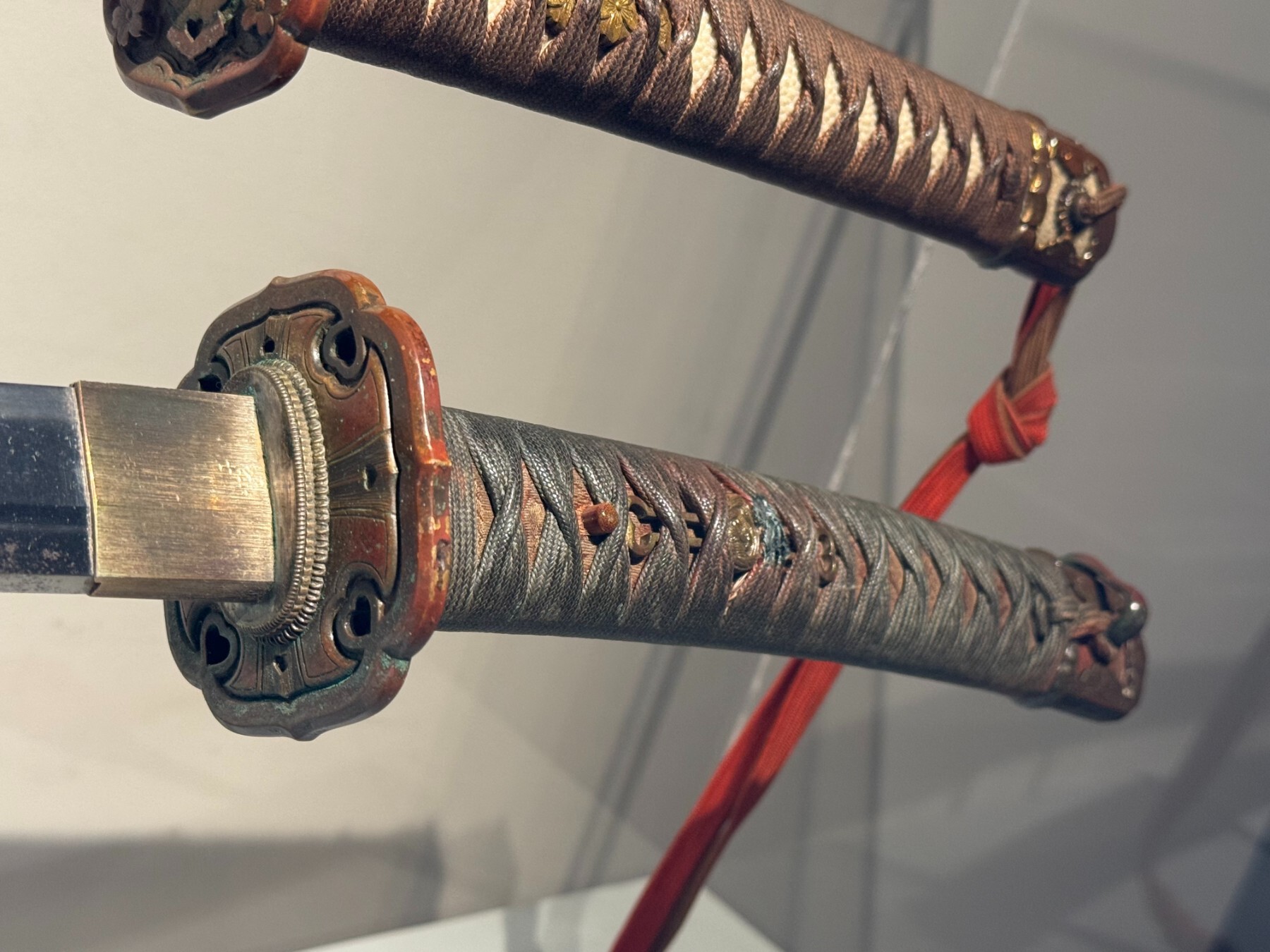
Thank you Colin and Jean! That's very interesting. I flipped my image below for better vewing. I wish I took better/more photos of it. Blade in suguha with fine consistent nioiguchi, with very tight/fine jihada. A little hard to see behind glass. No views of nakago. Nice polish, no rust, lots of what looked like more recent scratching in the monouchi area. If it's an old blade, I agree it could be very exciting. It definitely caught my attention. I wonder if the curator would flip the display if I reach out to them. I'm building a relationship with the OBON society, so maybe I can get a better look at it someday in the future. Thanks again! Ya'll are the best. -Sam
 3 points
 -
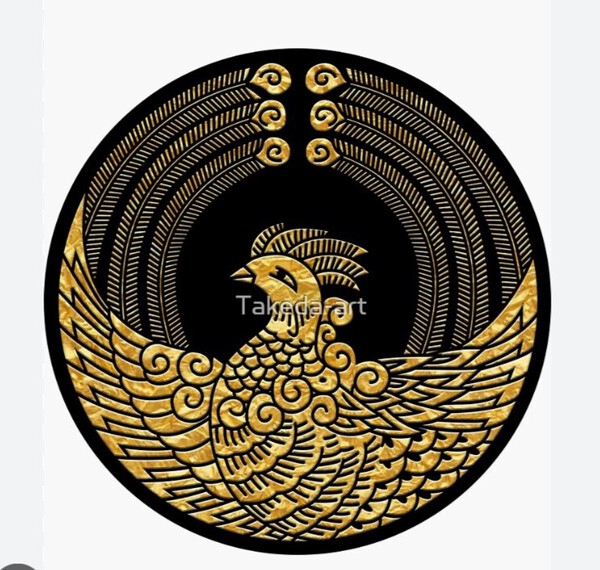
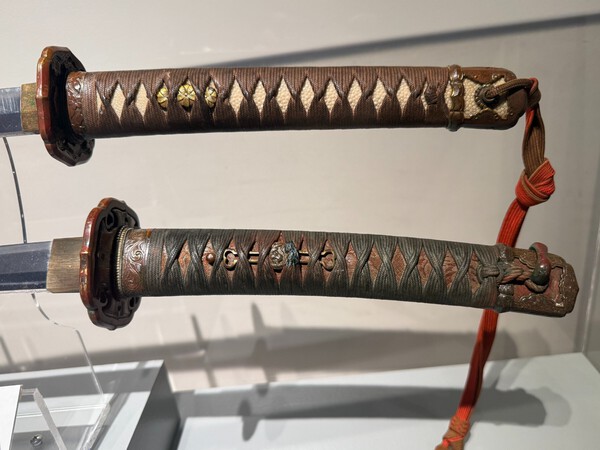
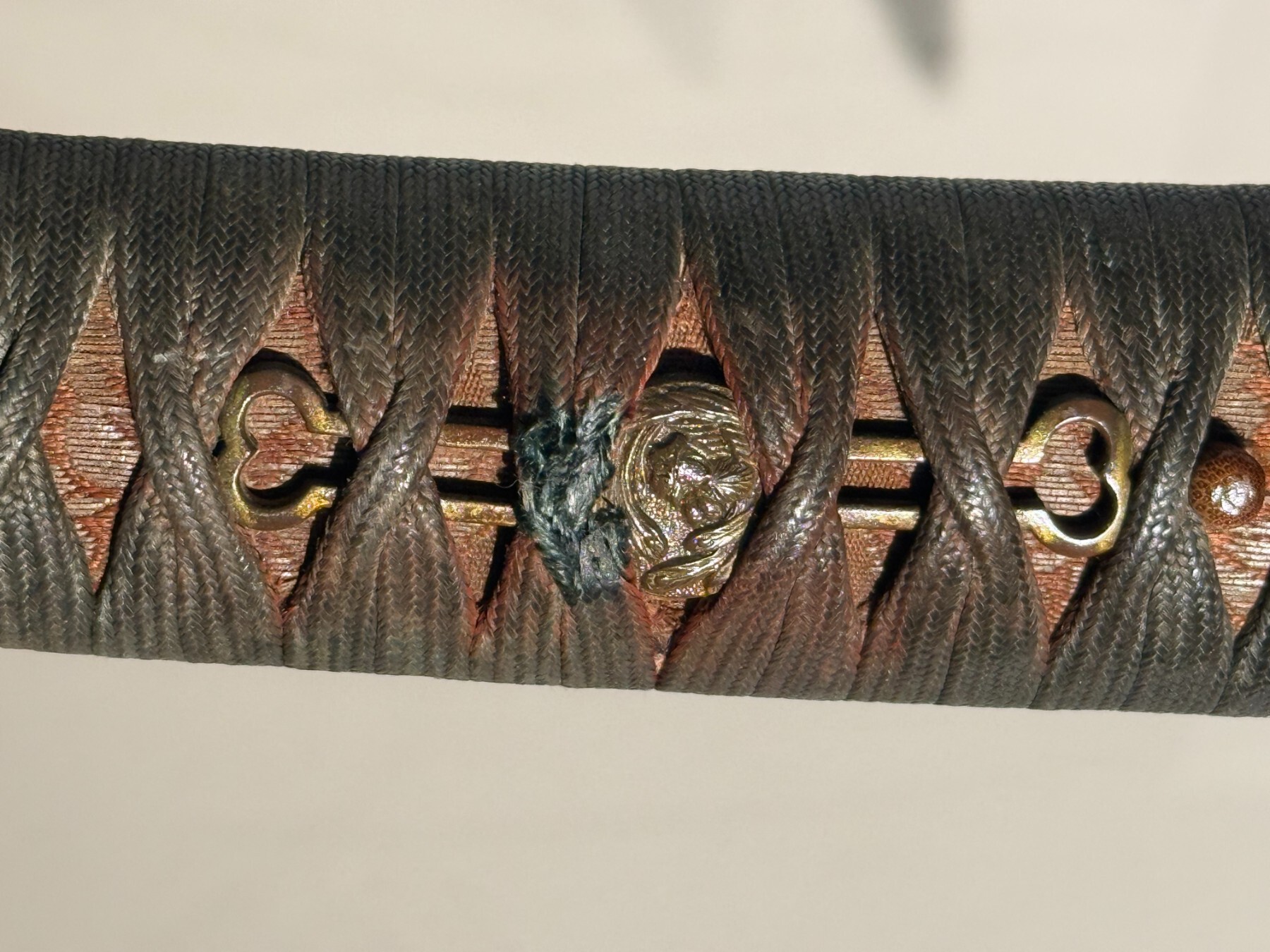
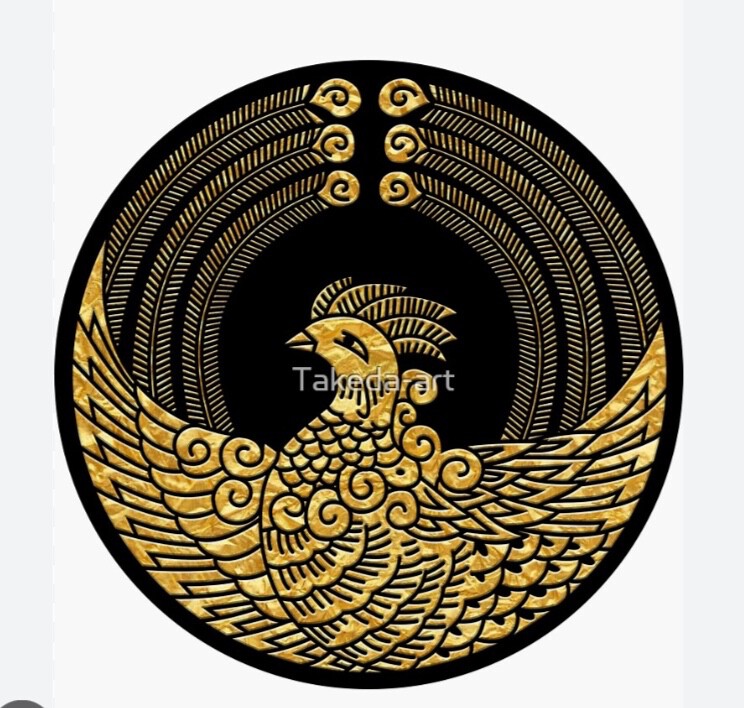
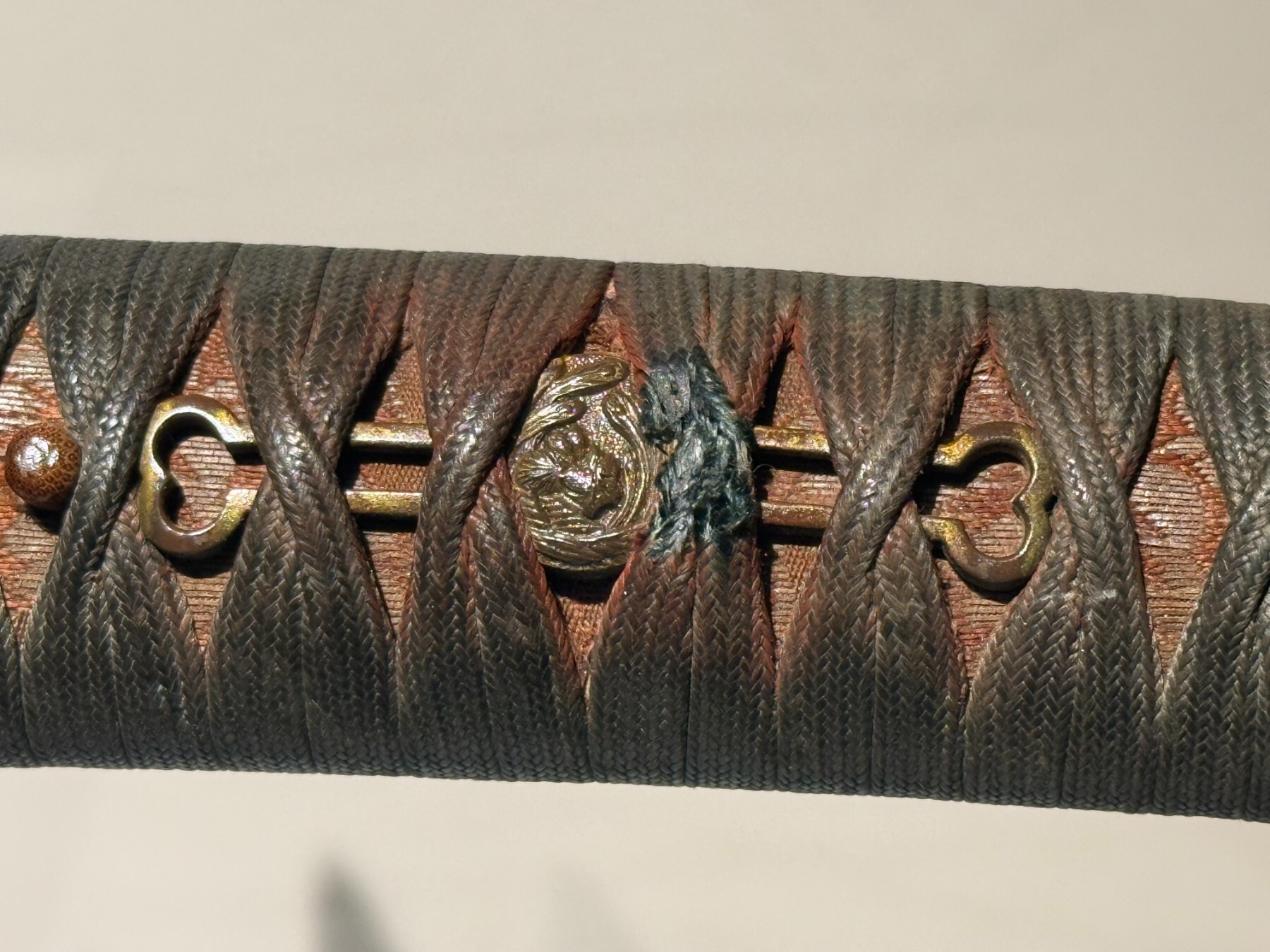
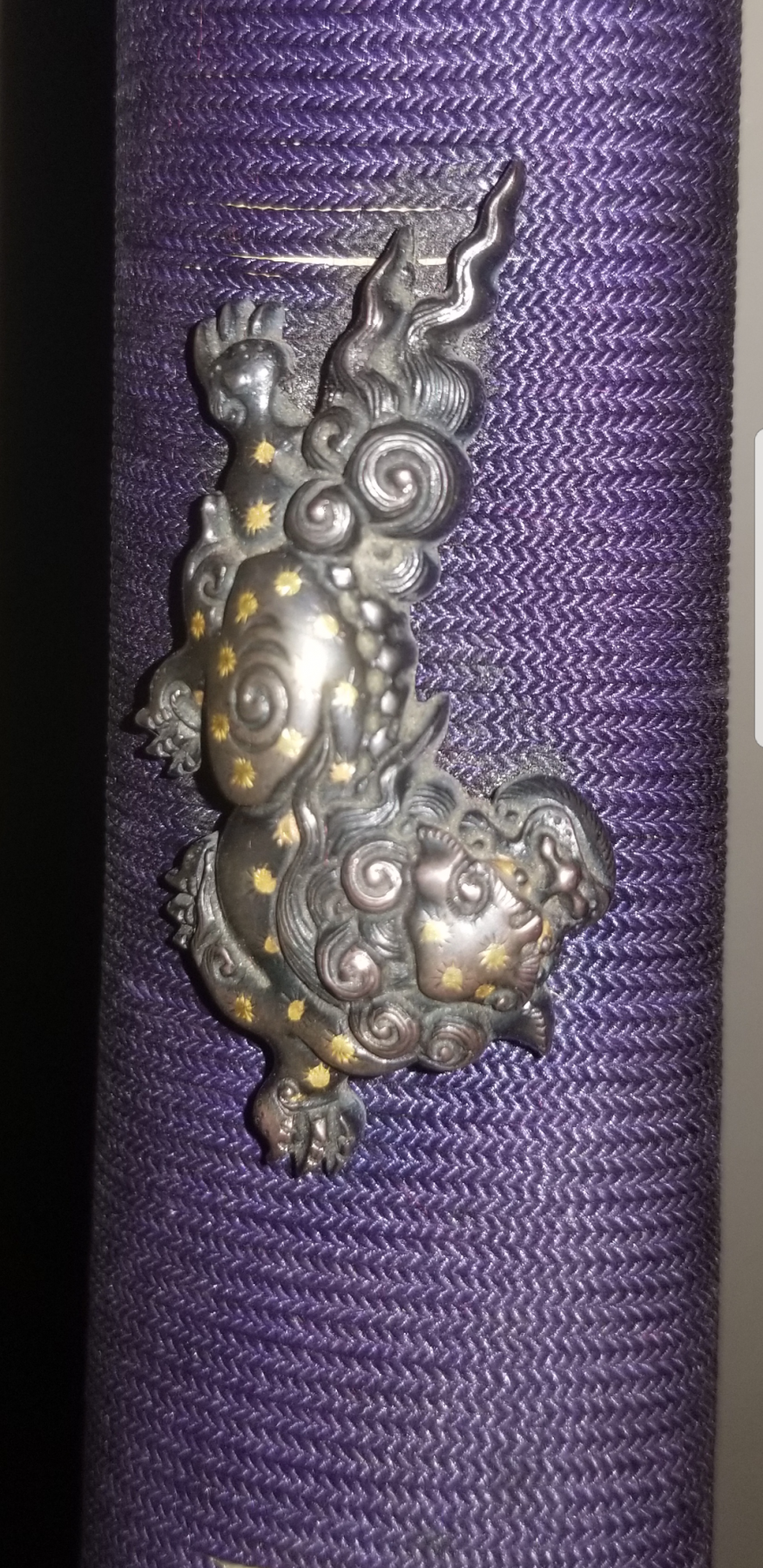
…..and the centre of the menuki look like a Ho-o bird kamon with all the swirling feathers but not easy to “see”. The sword is a Tachi and as such the koshirae is “upside down”…ie designed to be seen with the cutting edge downwards, but even rotating the image it’s still tricky.
 3 points
 -
Hi Sam The material under the Ito looks like heavy silk brocade often used on itomaki no Tachi and sometimes found on all other varieties of Nihonto especially more luxuriously mounted ones. I think it has faded a bit.3 points
-
A day in July, 19433 points
-
I donated a flag to the OBON society this weekend, and had the opportunity to tour their WWII display in the Maritime Museum in Astoria. I was surprised to see this sword on display. I’m no tosogu guy, but it immediately stood out to me as looking pretty nice and predating WWII. No saya was displayed unfortunately. I was hoping some of the tosogu folks here might be willing to offer their opinions on it, particularly regarding its quality, age, and any other details that might be apparent from the photos. What is the material under the ito? Also, I cannot tell what's in the center of the menuki for the life of me. Just a curiosity because I was immediately attracted to it. Behind plexiglass, so I did my best with photos. Thanks for taking a look! -Sam
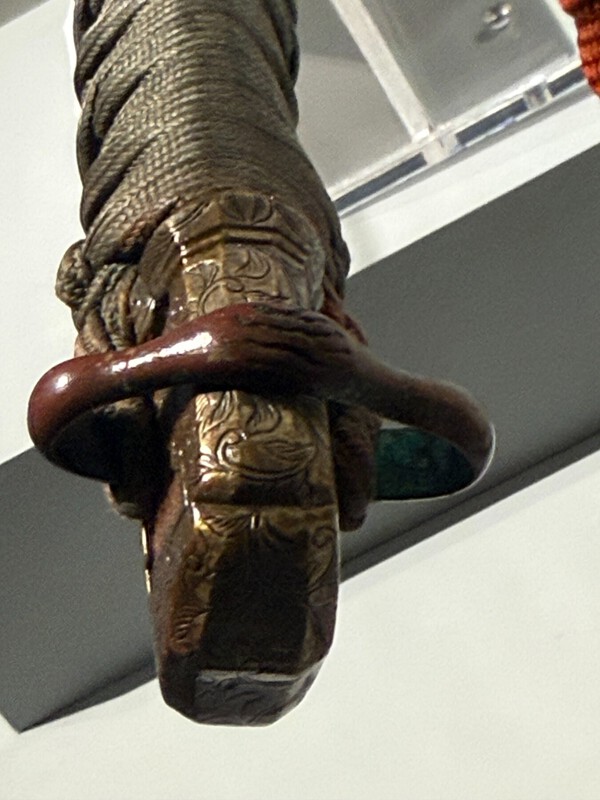
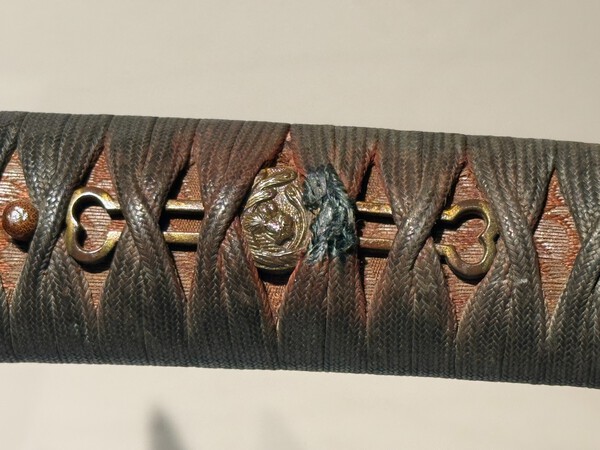
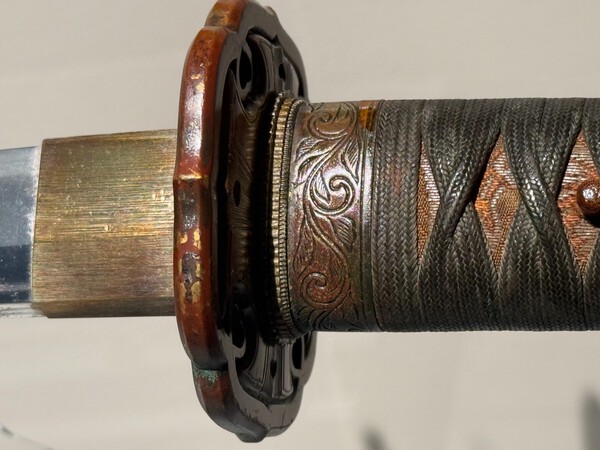

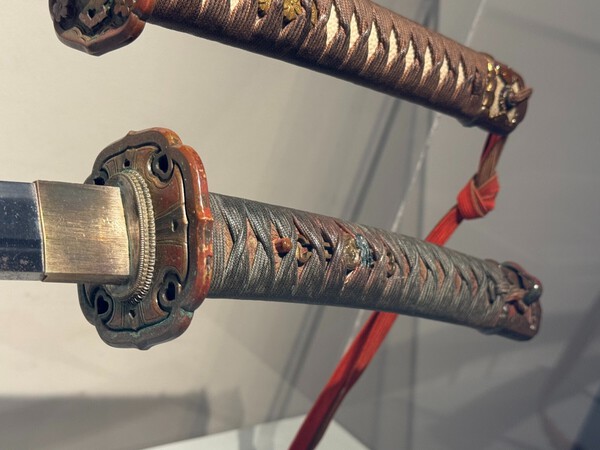
 2 points
 -
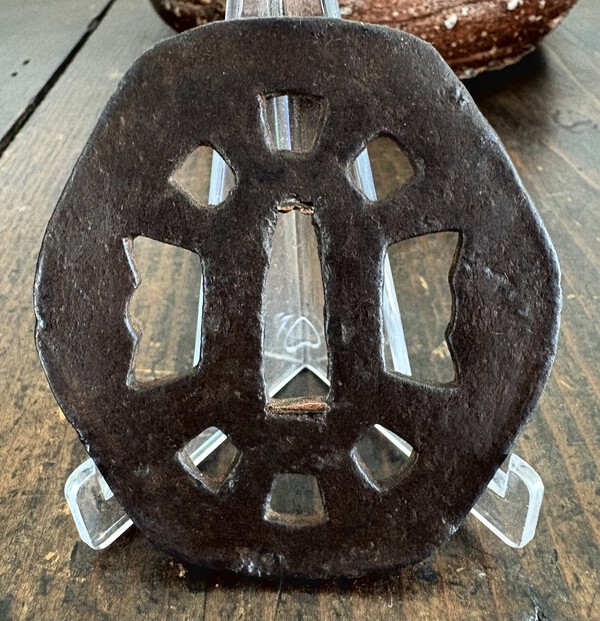
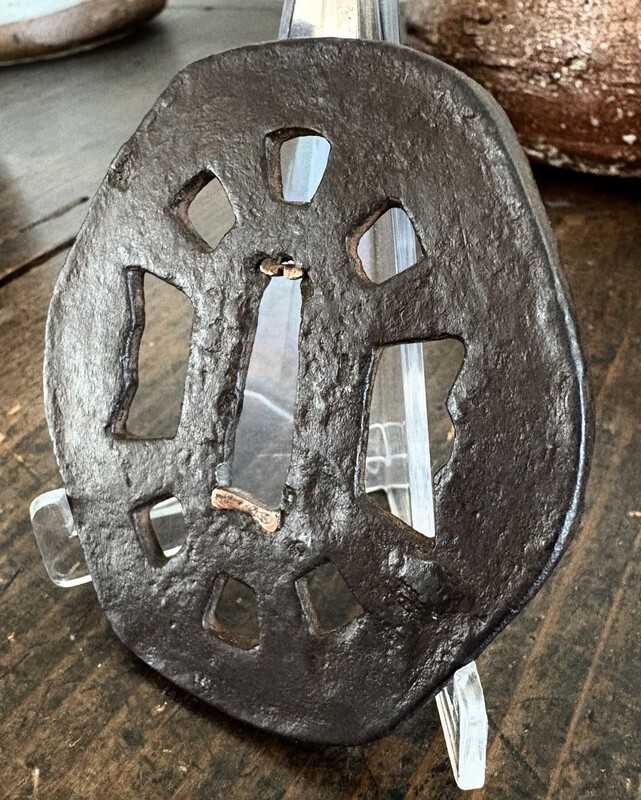
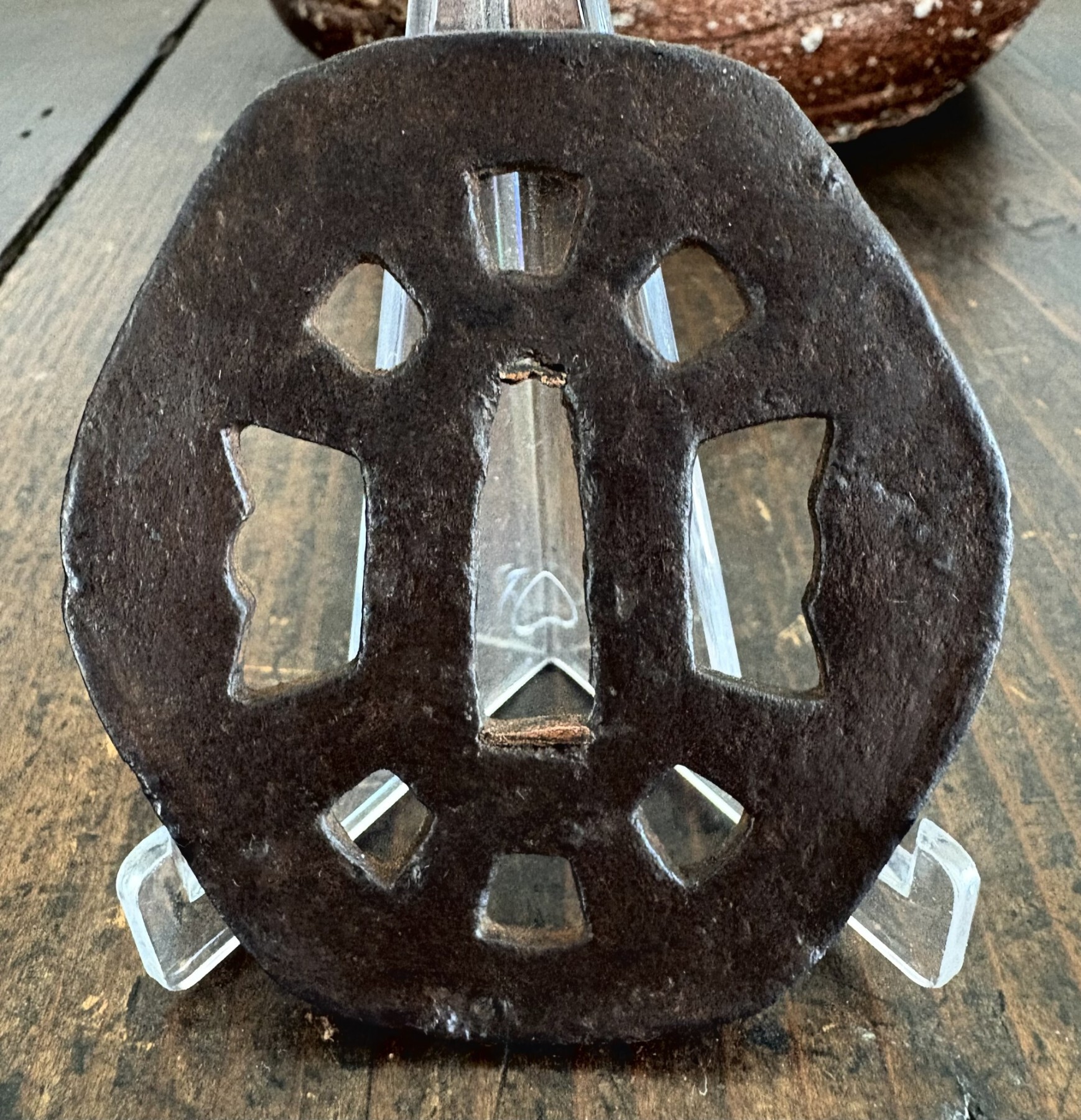
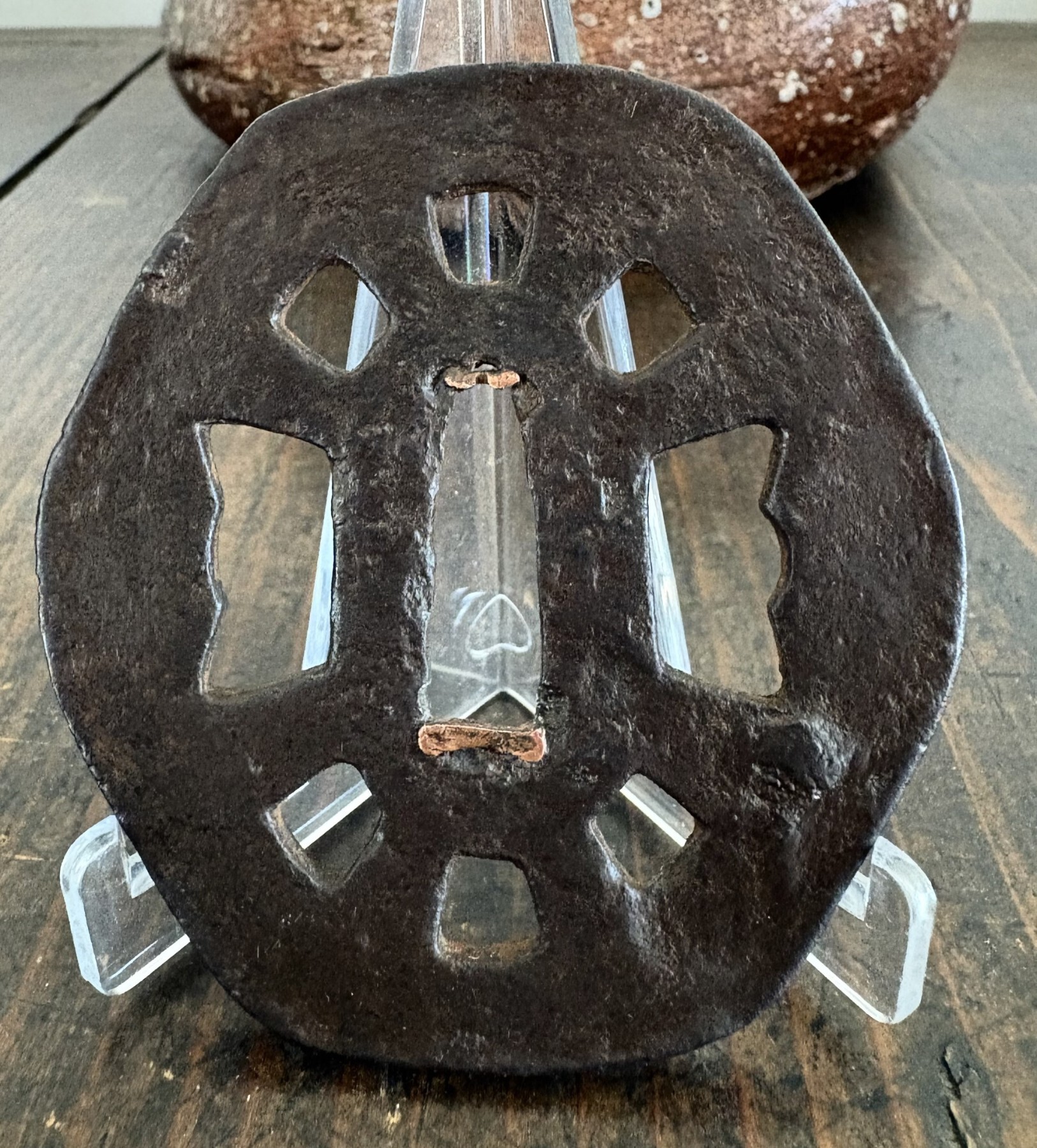
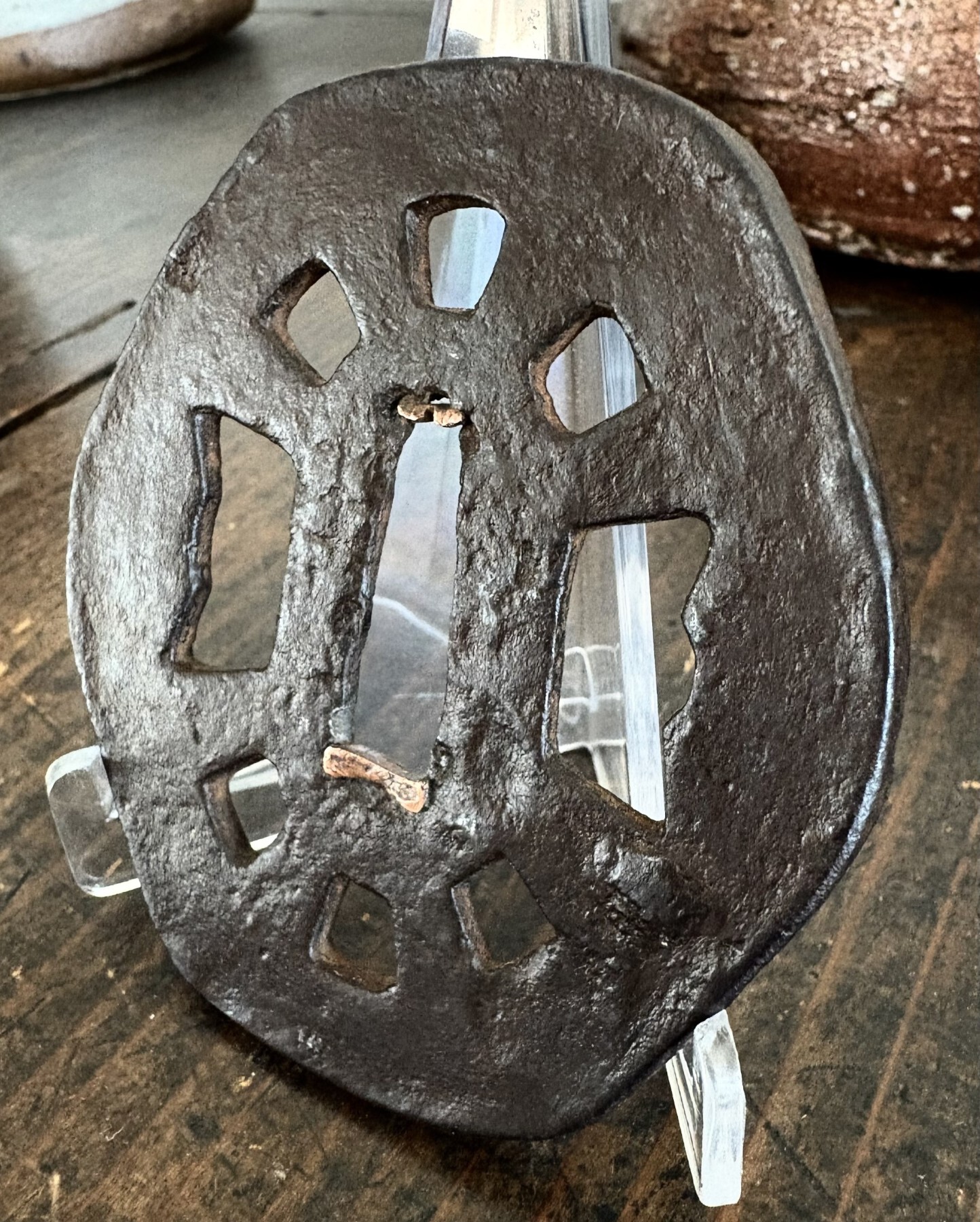
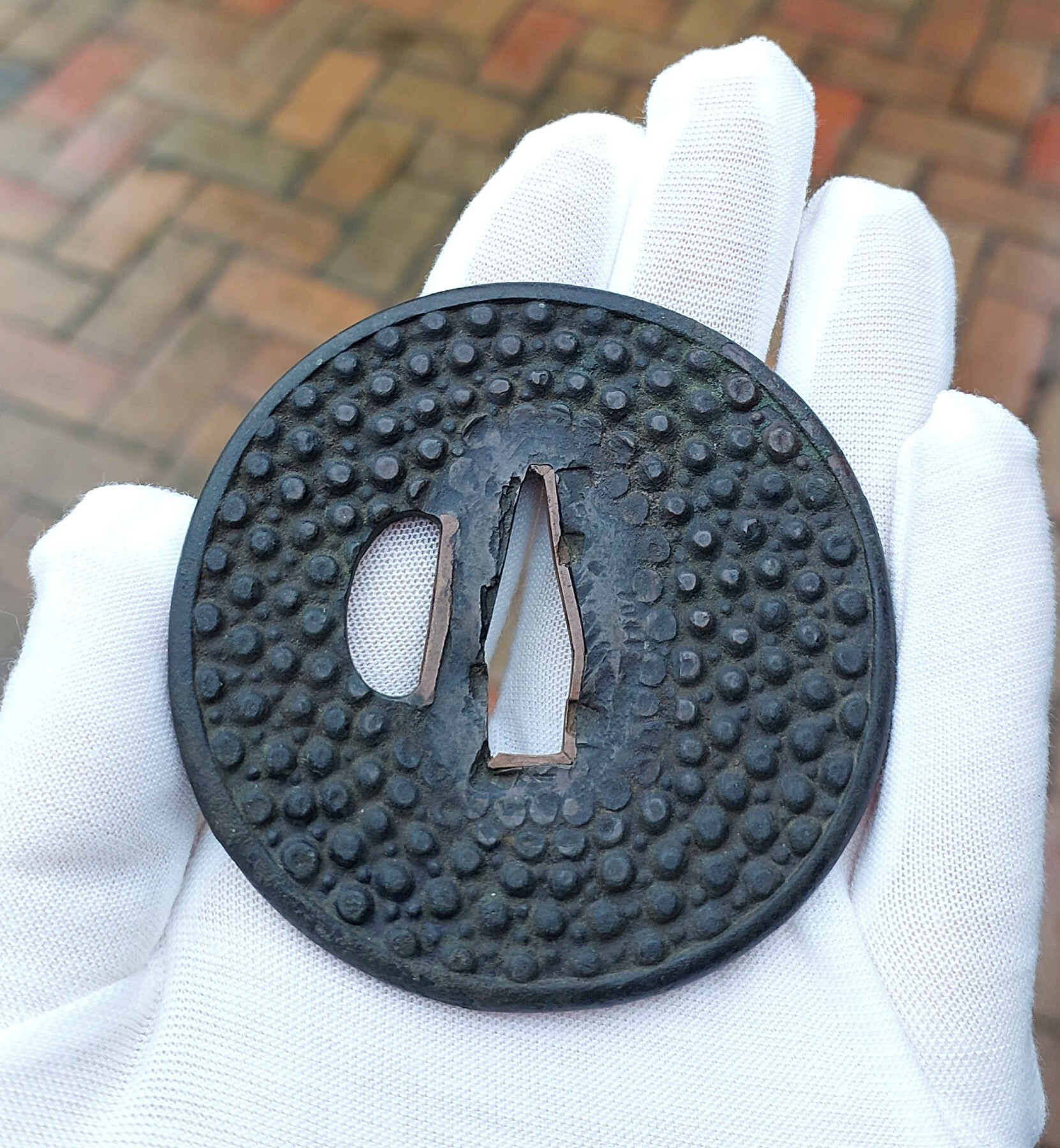
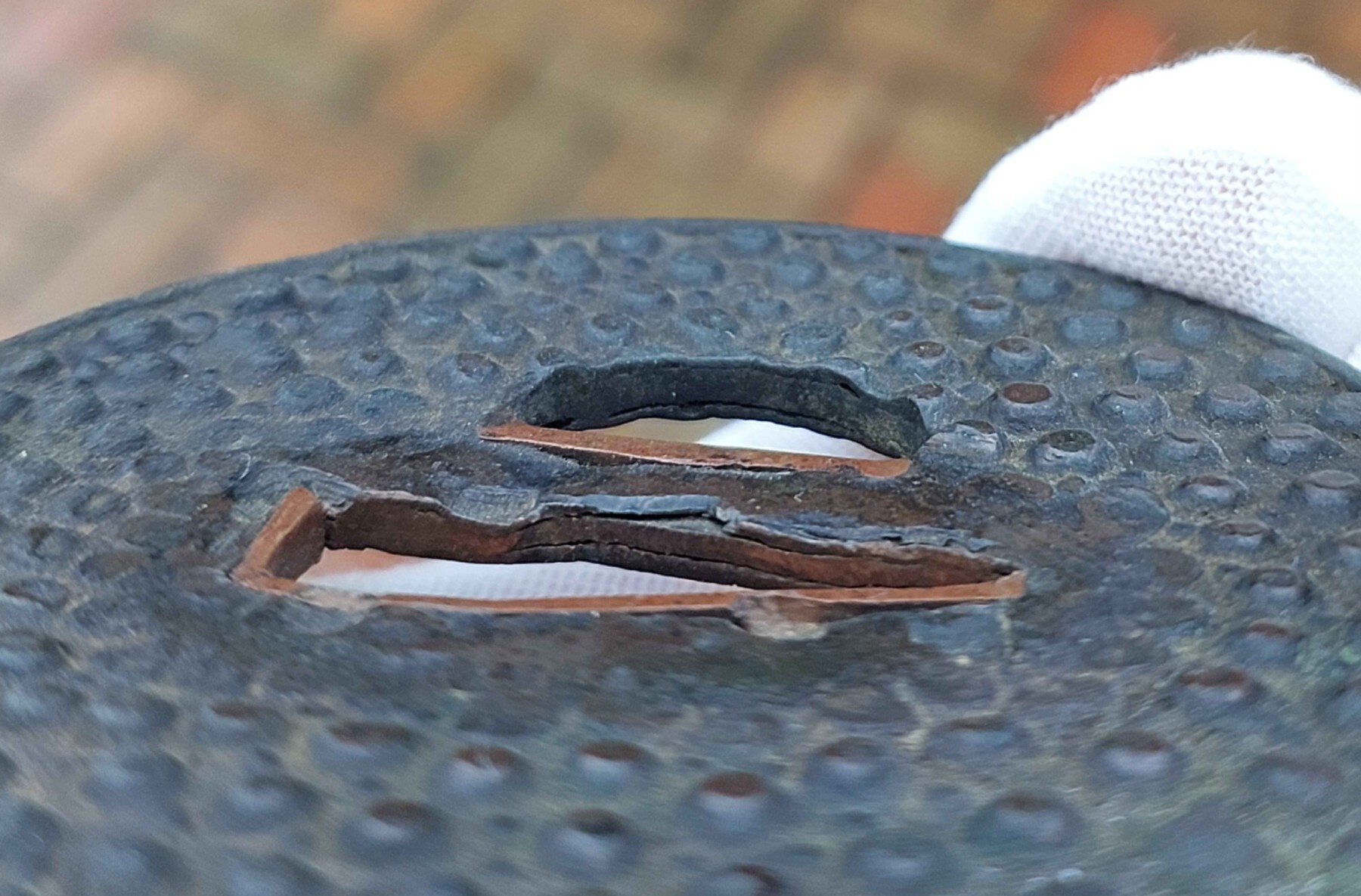
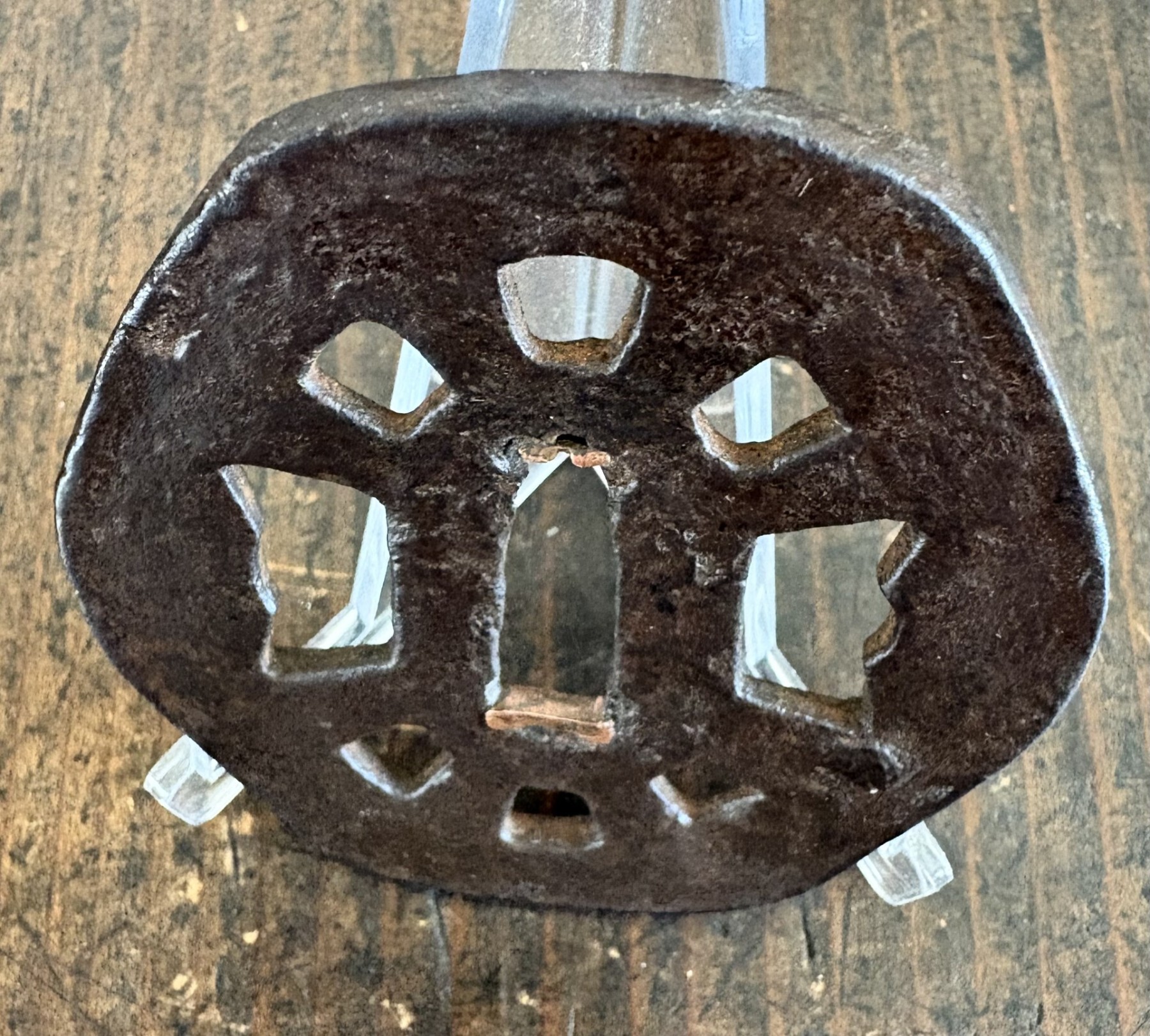
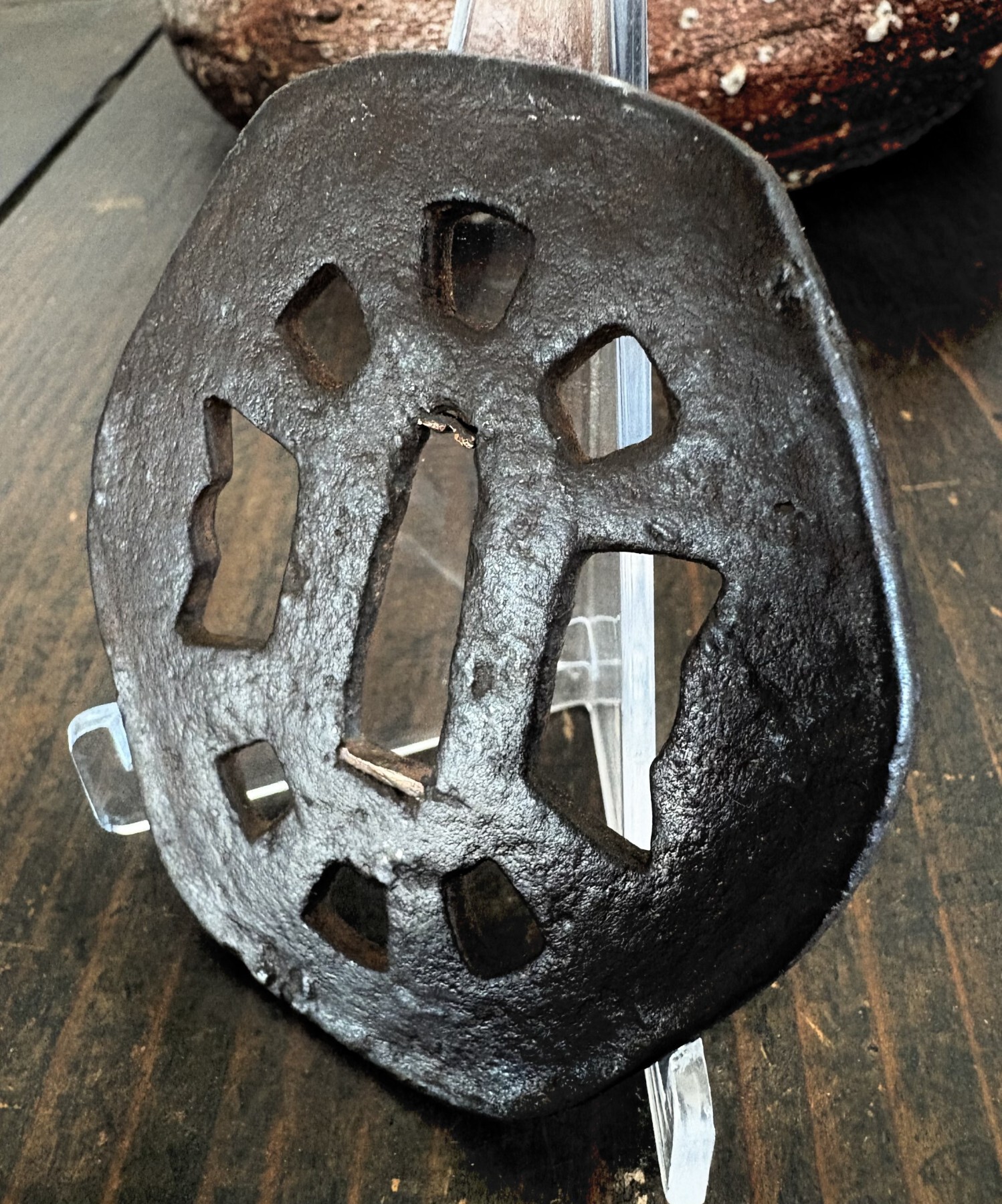
Offering today a couple of iron tsuba, both of which I would consider "project" pieces, at least to a degree. The first is a Yamakichibei work. I acquired this tsuba believing it to be early (early-Edo or Momoyama), and still believe it to be so. The mei, however, has been affected through the application of a yakite treatment after being chiseled onto the seppa-dai, plus the accumulation of rust on the surface of the iron. This makes it difficult for me to determine which Yamakichibei smith made this sword guard. There is also a wax coating applied in an effort (I suppose) to arrest any more rust activity. The form of the tsuba is a modified otafuku-gata (modified in that the upper and lower ends have been squared off, a treatment the Shodai is known to have used) featuring a guruma (wheel) sukashi design. There are tekkotsu here and there on both the plate and the rim. The tsuba measures 7.7cm x 7cm x 4mm at the rim (perhaps 2mm at the nakago-ana). This is a strong Yamakichibei design and a pleasing tsuba, but entails more work to ivory the plate and bring the tsuba up to the state it should be in than I am willing to engage in at this time. So, I am offering it here today. It is priced very reasonably owing to the fact that it does need some attention, as described above. $240.00, plus shipping. The second tsuba is a small (6.4cm x 5.4cm x 4mm) piece in iron, also of an otafuku-gata form. It is signed "Kunihiro," though as with the first tsuba, it is difficult to read the mei due to the condition of the surface. Another project piece. The plate features a sukidashibori treatment, possibly with a yakite finish. Spending time ivorying the tsuba would likely reveal the motif more definitely, but I believe it to be botanical in some way. Despite the small size of the guard, the dimensions of the nakago-ana (just short of 3cm top to bottom) suggest a large wakizashi or even a katana as the blade to be fitted to the tsuba. I am asking only $40.00 for this tsuba (plus shipping). Both tsuba together would be offered at $250.00, plus shipping. Also willing to entertain offers. For those who enjoy bringing neglected iron sword guards back to life, these could be interesting projects to tackle.

 2 points
 -
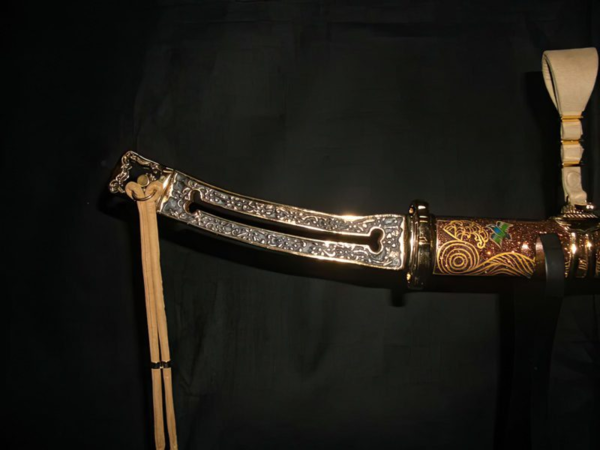
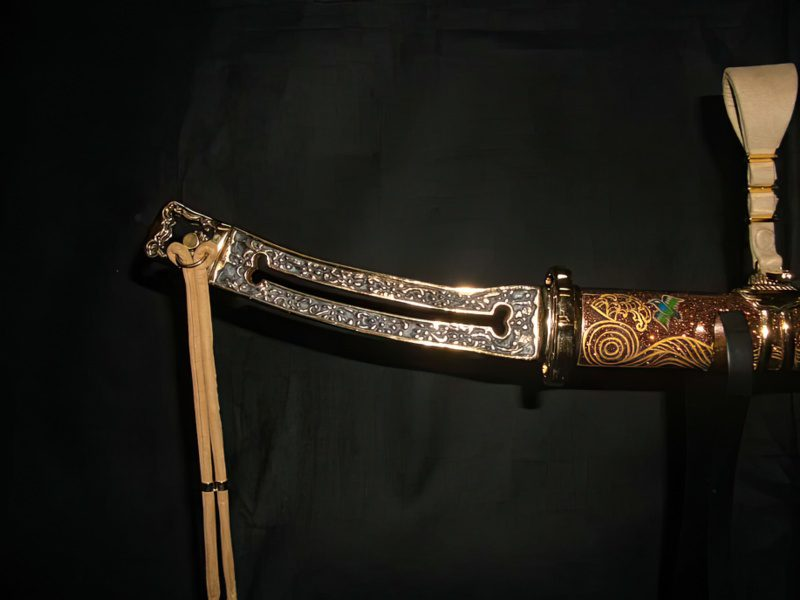
These long handle ornaments are called KENUKI GATA MENUKI after the HEIAN JIDAI TACHI style swords.
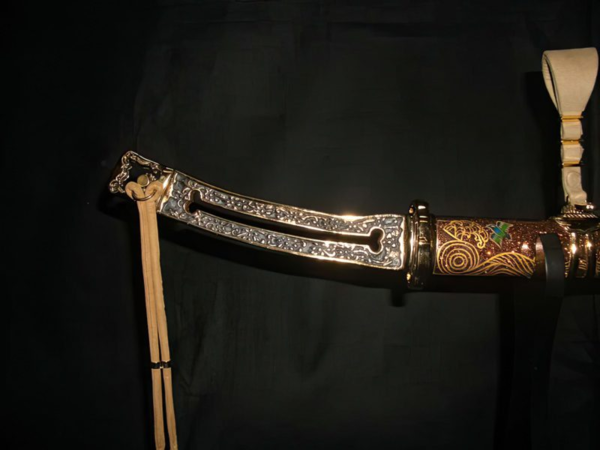 2 points
 -
Hi Bruce. Another one on a fine Gendai blade by Nagamitsu….undated. Pristine Type 3 mounts. Simple “Nagamitsu saku” mei
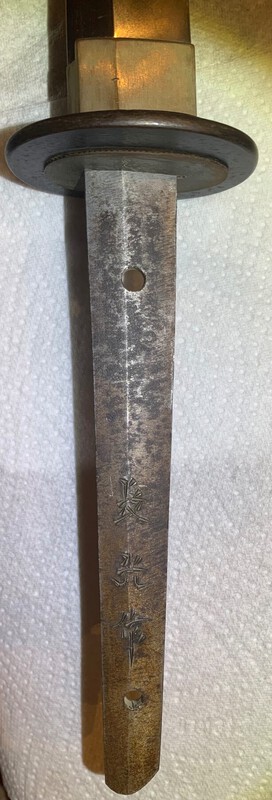
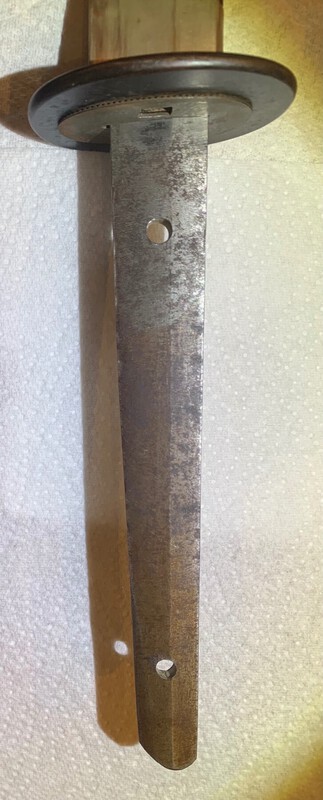
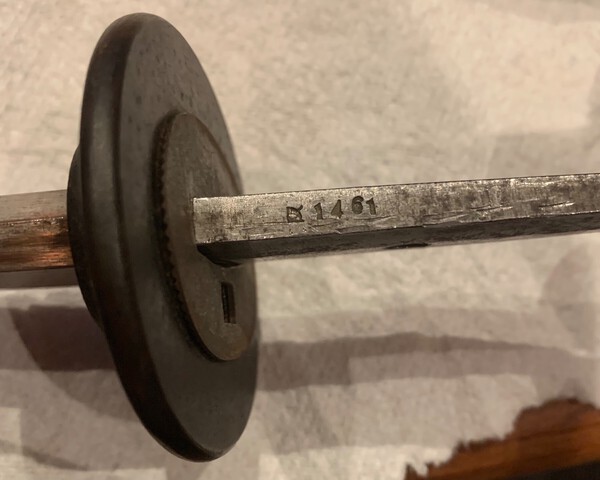
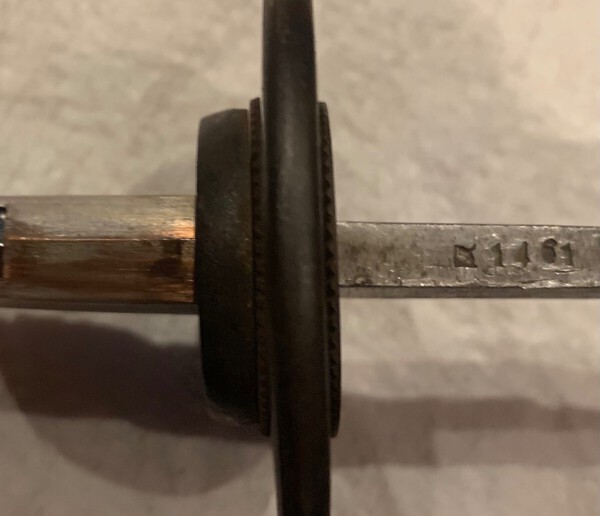 2 points
 -
2 points
-
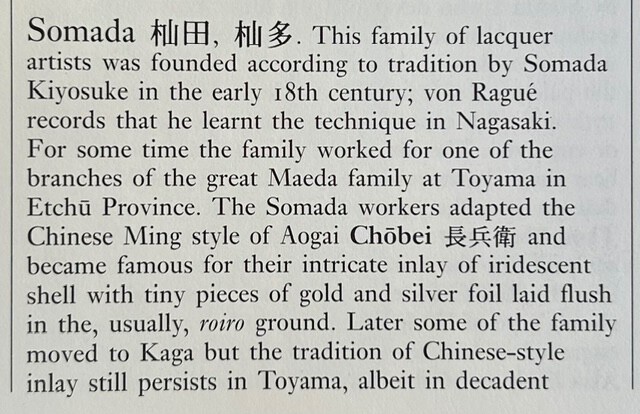
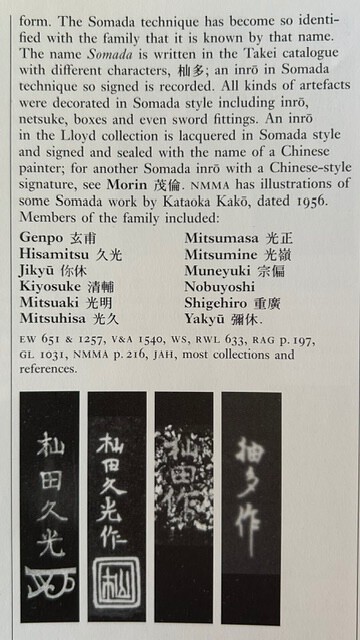
Yes, those both look to have decent age to them. Interesting objects. The tonkotsu seems to depict battlefield aftermath. The ‘kōgo’ (?) is signed Somada Mitsuhisa, as you say. There was also a Hisamitsu in the Somada line of lacquer artists. There is a general *discussion of the Somada family line, (starting with Somada Kiyosuke in the early 18th C) but although his name is listed there is nothing specific for Mitsuhisa. *”The Index of Inro Artists”, by E.A.Wrangham, pp 271,2712 points
-
This is weird, I can't find anything about a smith named 井戸兼弘 Ido Kanehiro as in the picture. This does look like a WWII sword if it's not a fake one, and there was a WWII smith named 兼弘 Kanehiro, so that might be the answer. Value is best estimated with sophisticated pictures, but a WWII sword like this without its fitting goes around 1000~2000 US dollars in the Japanese market...? Ah! There was a post talking about a similarly signed sword. https://www.militaria.co.za/nmb/topic/8498-ww2-sword/ The signature of your sword looks a little weaker than the one in that post, and that could be a sign of a counterfeit sword from, um, yeah...... But I'm not familiar with WWII swords, so this could still be genuine. May we see its fitting and the blade?2 points
-
My grandfather served with the 96th Division and fought in the Philippines, Ryukyus, and finally in Okinawa. He brought back these swords, a mint Japanese paratroop take-down rifle, a Nambu Pistol and Holster, a Japanese Royal Marine helmet and a few other items along with money. Along with these, i have some never before seen combat pictures, presumably showing a couple of these items, and additional pictures of the Japanese surrender party arriving in Okinawa and some never-printed pictures (seen) of Gen. MacArthur. If memory serves me, the handle in sword #1, is a handmade by him and one that had been fabricated out of plexiglass from a downed Japanese fighter, but i cant be sure. i am also attaching a couple more pictures showing a stamped number on the scabbard. I believe it reads #41354. The story behind this particular sword was that he recovered it from a downed Japanese transport plane carrying Japanese marine paratroopers that crashed around the Shuri mountain range were he and his company were engaged in combat. the sword was badly damaged in the handle area. later in the battle he took the damaged handle of off and kept the rest. This and the other items that i mentioned were brought home after the war along with a piece of plexiglass (no sure why?) and started to fabricate the handle. Before he passed he gave me everything, but i never (regrettably) got the full story on the other items in my previous pictures.
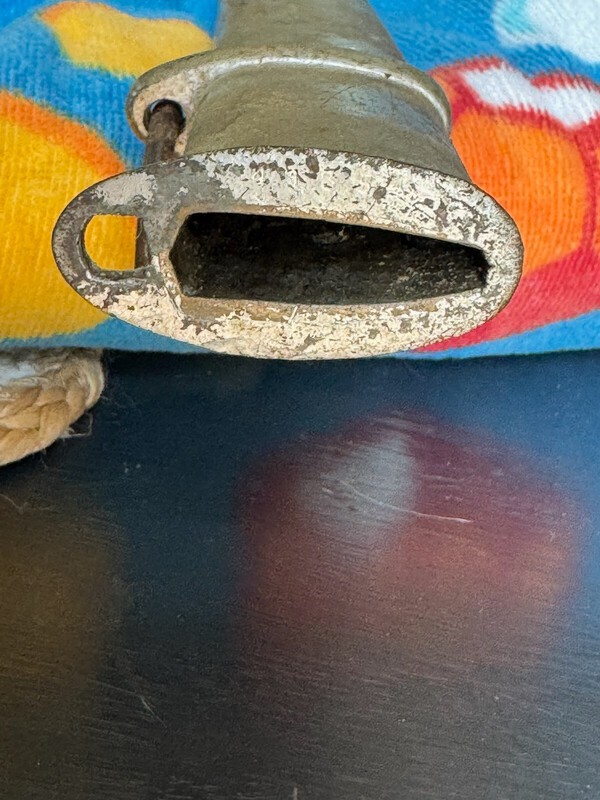
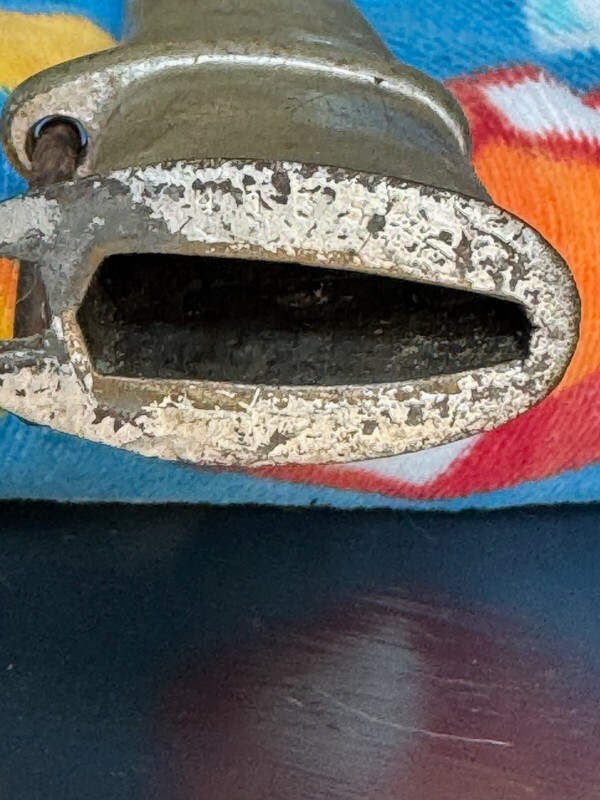 2 points
 -
Dang, that's the loosest hachi I've ever seen. But it's the only thing that makes sense. Thanks brother!2 points
-
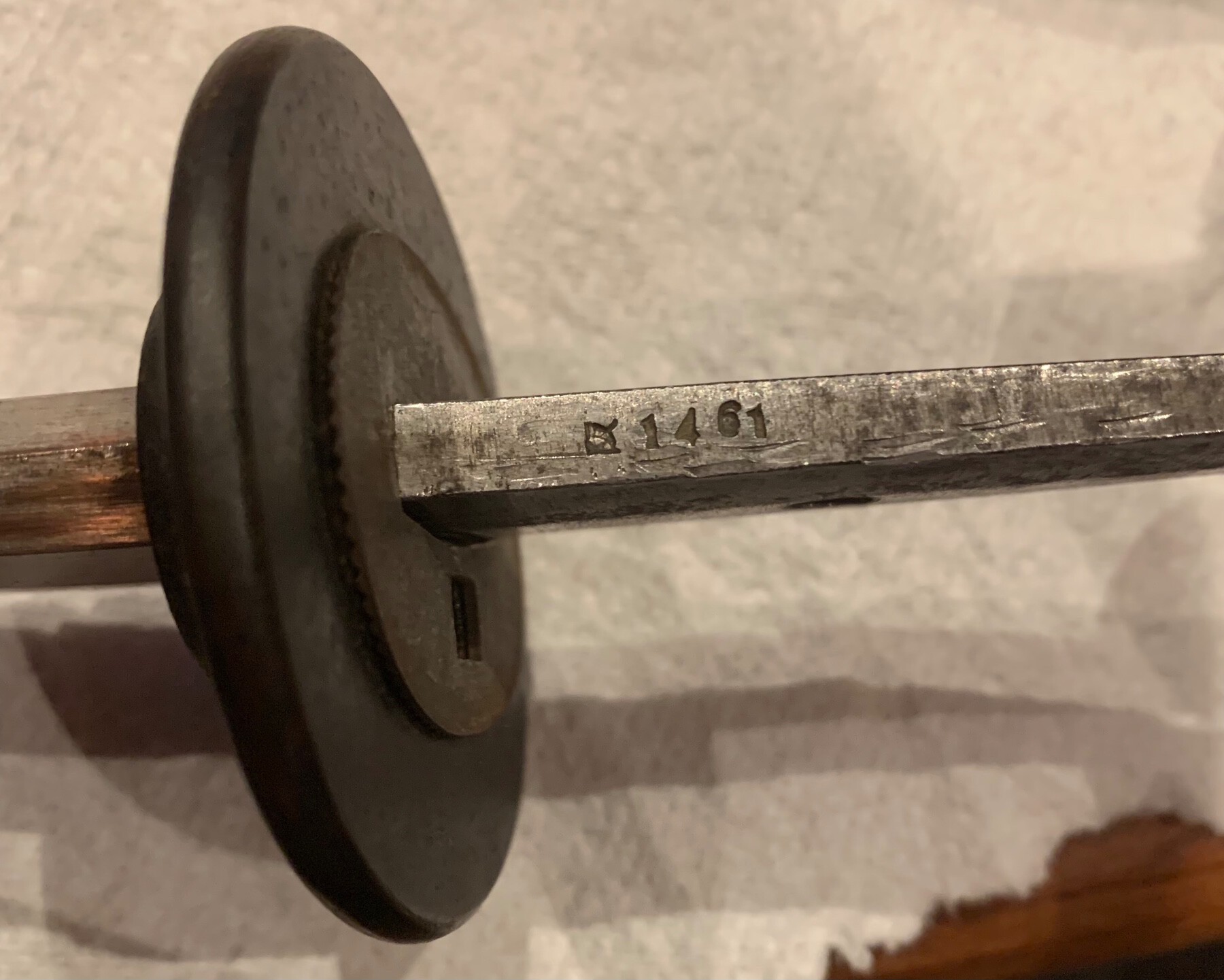
I think it is a continuation of the serial number range used by Tōkyō Arsenal for the early Type 100 Military Swords. This is the highest Type 100 I have recorded and it is serial number 2128. Akimitsu - Unusual Date Inscription2 points
-
Whatever you put on a blade. Some of it will stay in the saya. reinhard2 points
-
I do have my own personal archive of that listing, and the images and description are identical (i.e. the "now" in "it has now been polished by Saito Tsukasa" refers to its original listing in December). So either the blade never left them, or it was bought and later returned or re-consigned for whatever reason.1 point
-
My copper has a distinct rounded shape. My early aluminum (Variation#2) with unserialized unit armor replacement scabbard, has a slightly rounded shape like Johns above. My others are more square. Here is a rare Variation#2 Iijima with a slightly rounded opening as well: https://www.ima-usa.com/products/original-wwii-Japanese-army-type-95-nco-katana-sword-with-leather-cover-and-matching-serial-numbers?variant=29377861288005 Here's a very near Tokyo scabbard, SUYA #40961 with rounded opening: https://www.ima-usa.com/products/original-wwii-Japanese-army-type-95-aluminum-handle-nco-katana-matching-number-40961?variant=39595377360965 I have begun collecting data on this, but I do not have a large enough sample size to make a good determination on the opening. I suspect, like many things Type 95, it's more complicated than meets the eye and depends date, range, contractor, arsenal or some combination. I'm seeing a pattern develop but nothing concrete yet. Best, -Sam1 point
-
1 point
-
David take a look
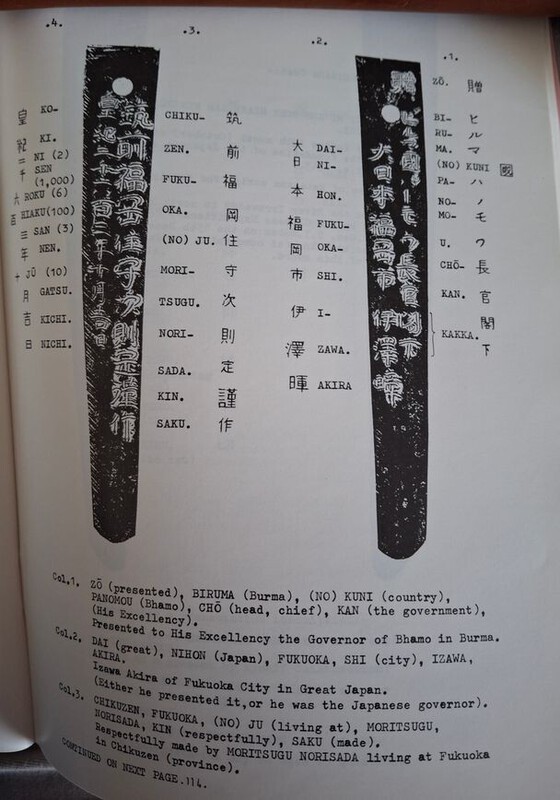 1 point
 -
Search the forum for Moritsugu Norisada. He's popped up a few times. Good smith, quality work.1 point
-
Here is the cast San-mai. The top and bottom plates have been cast and are held in place by the Fukurin.
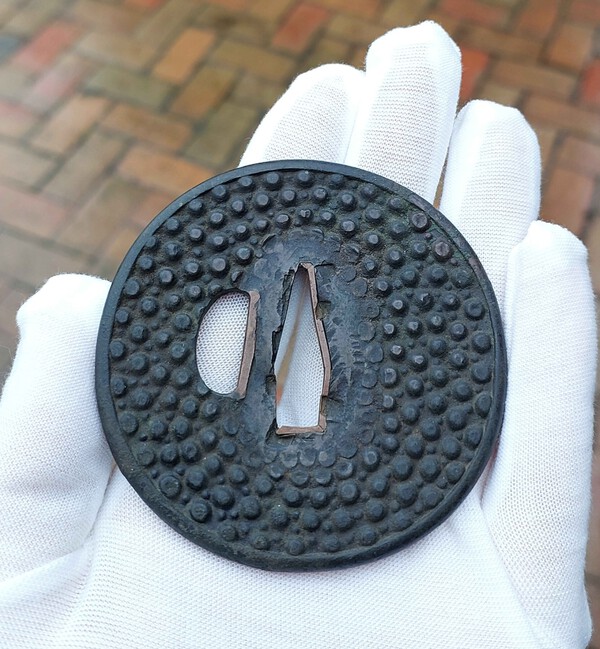
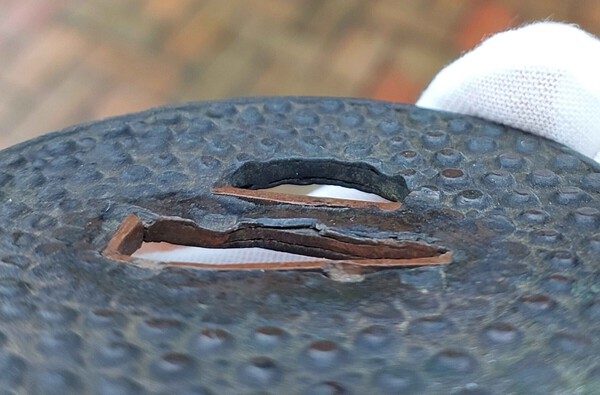 1 point
 -
I'm really loving the great anecdotes and dialogue in this thread - so I'm also going to try and turn it into a proper, personal learning opportunity. I want to be able to understand what the experts see when they look at a tsuba so I can learn to see it too. For example, the Japanese dealer said of my tsuba "Sukashi is deformed - not sharp. Thats not Rakujū's style." Below is my tsuba on the left and the long-acknowledged Rakujjū (courtesy of Nicolas @Kiko) on the right. I can see some definite differences in outline but it would be really useful if someone could point out the deformity to me. I want to learn! (I suspect it could be the poorly balanced seppa-dai already commented on by Michael, along with some irregularity in the two tomoe 'comma' shapes. I can also see a possible design flaw in the upper left sukashi.) Best, Hector
 1 point
 -
War renders all its participants 'primitive'. Some men behave like men but many more toss aside the veil of civilization completely and indulge their basest natures. It's simply the nature of the beast. (Pun intended.) I don't believe that the theft of Manfred Von Richthofen's medals, decorations and trophies by the Russians in 1945 is any less a theft of cultural property than the looting and confiscation of Japanese swords - including those belonging to Emperor Hirohito (a man who should, by rights, have joined Tojo on the gallows). Regardless, very few - if any - of these pieces will ever make it back to their original owners - and perhaps that's exactly the way it should be. The more the rich and powerful lose personally (not just the poor young plebs dying in the front lines), the less they'll feel inclined to start another war.1 point
-
Well summerised, I could not agree more.1 point
-
1 point
-
Wow! That's really something. Thank you for filling me in.1 point
-
That was me in 2007. And no, I am not Sasano Masayuki. The one I ended up selling did go Tokubetsu Juyo. Oh well.1 point
-
Hector, it is probably part of the collector's game to "hunt" down a piece that nobody had recognized before.... In my opinion, it is not irresponsible unless you invest money that is needed for your daily life. But I know that happens also. SASANO-SENSI once came home with two VERY valuable TSUBA he just bought, and when he showed them to his wife (who was very well informed about TSUBA and knew all of her husband's trade), she immediately said 'We do not have enough money to buy these! How is that possible?' He had to admit that he took a loan on their house. Not soon after this, he sold one of these TSUBA and bought the house back. Not really recommended unless you are SASANO MASAYUKI....1 point
-
Really appreciate it, and thanks on behalf of all the members go out to the family. Wondering if anyone out there has compiled these into one large file yet? Would be much more accessible and useful, even if it would be a large file to download.1 point
-
I'm agreeing too much with Glen and Steve. I am not sure how much else to say. It is easy and lazy to trust the NBTHK opinions, but they haven't been very good for at least 10 -12 years now. Difficult to get modern collectors to self educate and trust their own opinions.1 point
-
Generally pre-Edo San-mai would fall under the categorisation of Ko-kinko, like Mauro said. That being said, I actually have a cast San-mai Tsuba, the only one I have seen (so far). I will add some images when I get a chance. I actually do not like the term Kagamishi and instead use Ko-Chūzō Tsuba, which I think is more fitting. This example is actually not cast, and only mimics the visual characteristics that were popular in that period. It would therefore fall under Ko-kinko.1 point
-
That is a famous published example and very nice, whoever picked it up is going to be very happy. I have seen a few others in a similar style, but I have not personally seen another with exactly that design, that does not mean that others did not exist, only that we only have one surviving example to draw from (so far). I have a Tsuba that is very similar to that in construction, I find it very hard to determine if it was cast and worked, or made using more conventional methods, generally I look for casting flaws/artifacts and then confirm with XRF analysis to determine the material, because cast fittings are always bronze and will not be Shakudo or Yamagane. The soft details and lacquer on Ko-kinko examples can sometimes give the effect of it being cast when it was likely not.1 point
-
Jacques wrote my thoughts and Markus expanded on it with excellent post. As a person who is totally focused on shape and size of the swords, it is unfortunate that it is very rarely that experts share their thoughts on what they believe the original length of a shortened sword to be. They are rather focused on pinpointing the smith who made the item. For me that would be secondary stuff. I would much rather hear/read their thoughts on what kind of polearm (size,shape, etc) they thought naoshi X was originally. Or for ō-suriage katana it would be most interesting to read if they think it was 80,90,100 cm sword originally. I feel specialized definitions like kodachi, ōdachi etc. are bit difficult, as there should be some flexibility. There are some 60 to 65 cm swords that can be kodachi or tachi, and to be honest is there really any difference? They would just be short long swords. Similarly as I have focused my research on ōdachi, and by classification the defining line is 3 shaku, however there are swords around 88-89 cm length that I would basically say are ōdachi even though they fall tiny bit short of the actual classification. Similarily there are (extremely rare) katana that are 100-110 cm long that I classify as ōdachi as they are so far beyond average katana size. For the late Muromachi swords, technically there would be very little difference if the sword had 59 cm vs. 61 cm blade but by modern classification one would be wakizashi and other katana.1 point
-
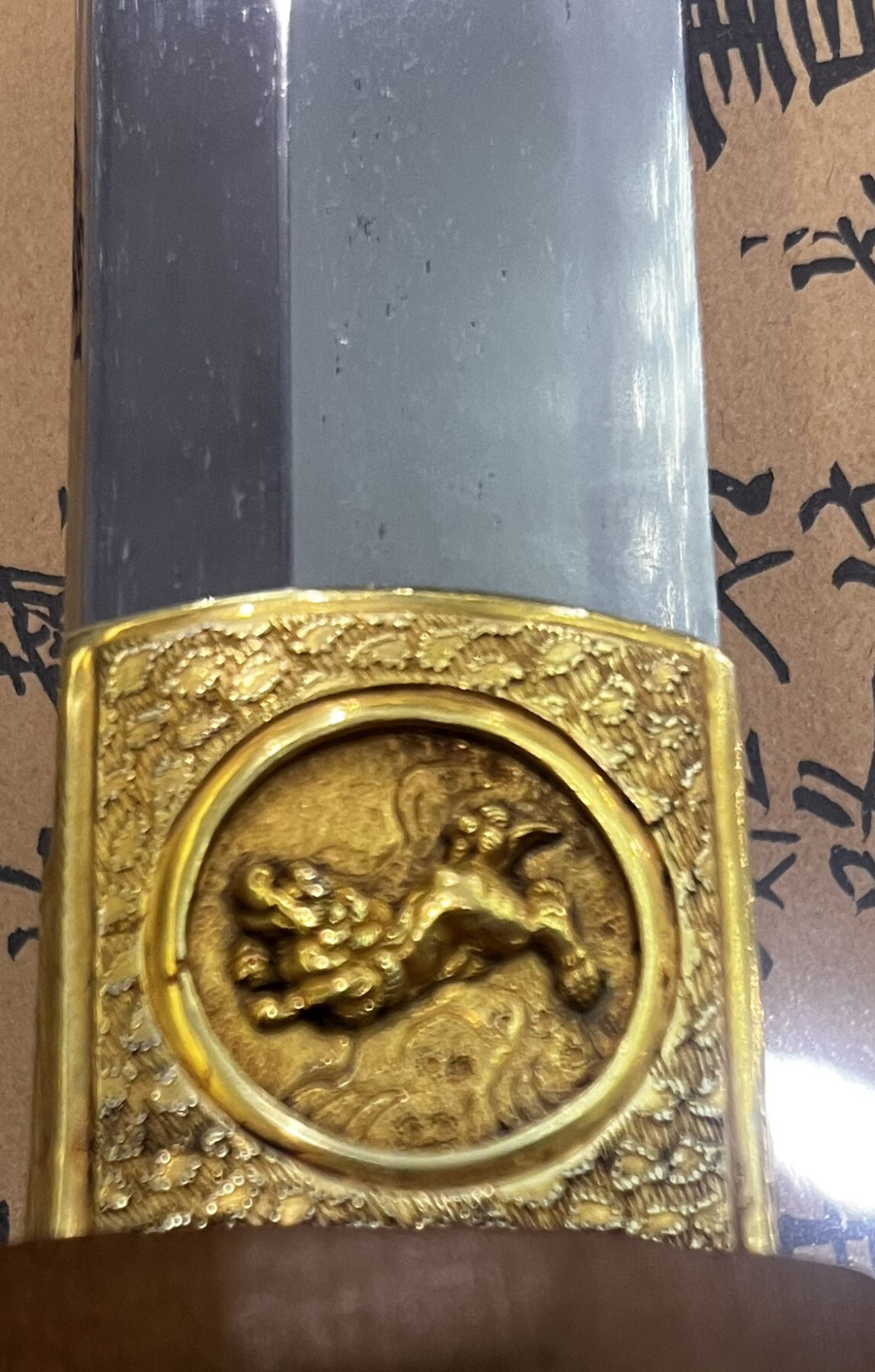
Some habaki from the San Fransisco Sword show: Two Kiku A lion/dog creature (lion/bear?)
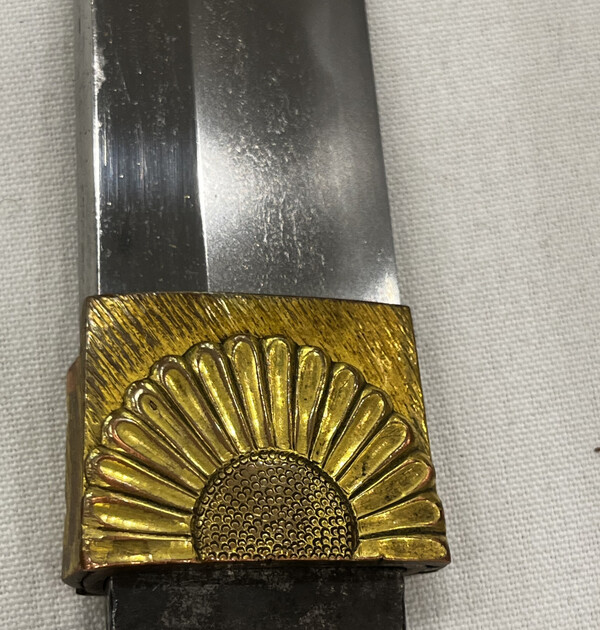


 1 point
 -
You're very welcome, Hector; I’ve only just received this new reference book, and I’m delighted to have been able to put it to use so quickly! Furthermore, now that the cloud motif is confirmed, I am quite tempted to interpret those perfectly round tomoe as a reference to the taiko Raijin uses to create the sound of thunder. In that case, the tsuba’s theme could be elegantly summed up as "the storm." The spirals on "my" particular pieces seem to lend further weight to this hypothesis, as this geometric shape is frequently used to visualize invisible phenomena such as air currents, eddies, turbulence, gusts of wind, or the rapid movement of clouds. It would be Raijin and Fujin at work together !1 point
-
Found this mumei daishō, made of iron with spiral gold inlay and numbered 339–340 in the 1964 Higo Kinkō Taikan (肥後金工大鑑). The description identifies the pattern as "Kumo-gata-tomoe-sukashi" and attributes the work to Rakuju (楽寿).
 1 point
 -
I've probably shared this with a sword a while ago but here is another shot for the archives. Signed(inside-huh) Made in 1853.
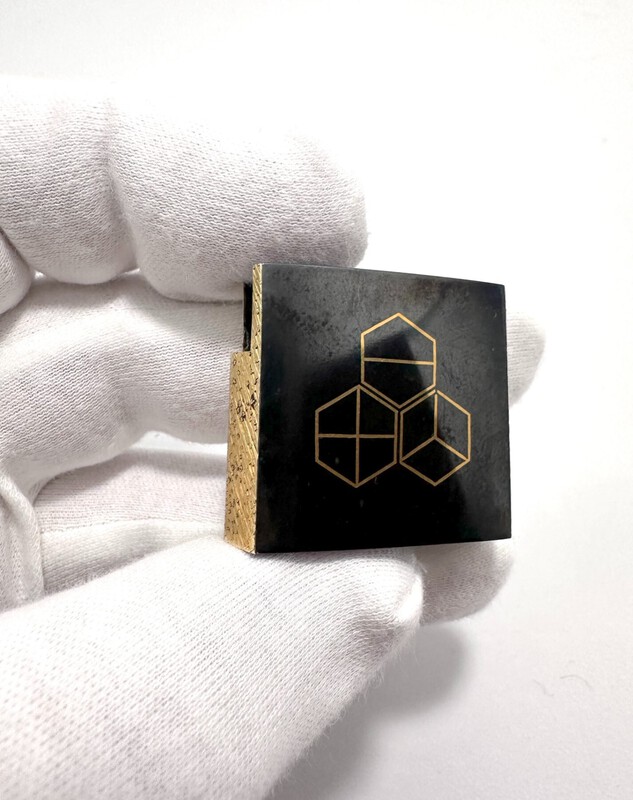
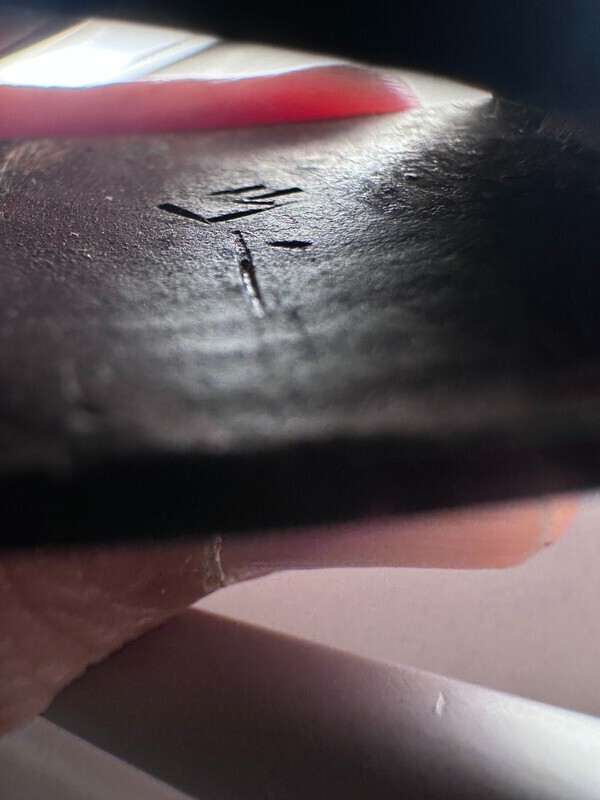
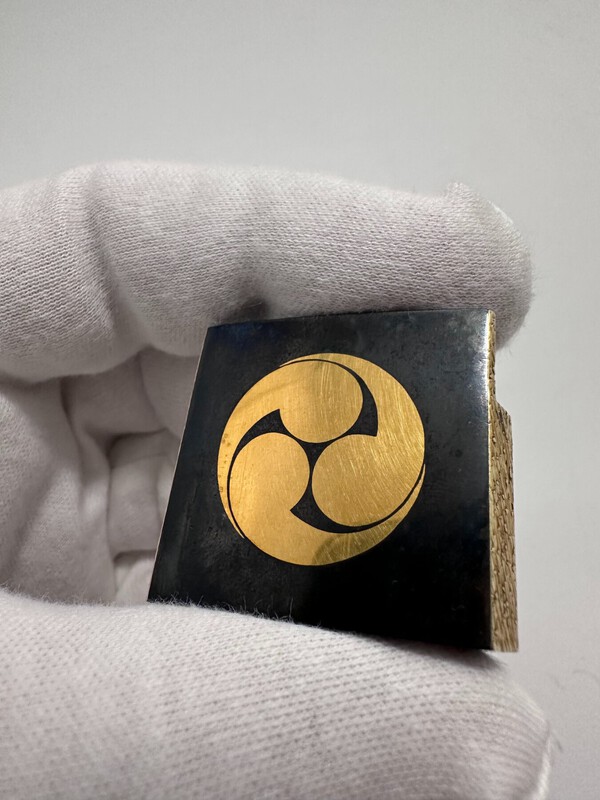 1 point
 -
Dear Colleagues, Recently I visited a tsubakō that ask me to help him for sale his tsuba works. He's Mr. Ōkawa Chikō renowned artist winner several times of Tōken hakubutsukan contests, and also 18th generation of Edo-Itō school of tsuba artists under the name Itō Masanori also received the artistic name Tōhōsai Masami from his sensei, which dates back not only the Itō school but also Ametani Jyūmin line which is related to Unnō Shōmin. Prices are between 300.000 and 500.000¥ depending if there's so much gold in or if the tsuba won a first, second or third award at Tōken hakubutsukan. Serious customer interested in, please PM me. Best regards,

 1 point
 -
All from the same seller - they look like top quality pieces. https://www.jauce.com/auction/x1235901241 It is a shame there is some damage - fantastic work. https://www.jauce.com/auction/h1235911663 https://www.jauce.com/auction/n12359106681 point
-
Chris Bowen posted this star blade on Facebook. I can't figure out how to post an address for it, but it's in the Military Swords of Imperial Japan Group. Unique in a few ways. It's a Masakuni, but using 眞国, dated Dec 1941. So the forth earliest RJT blade I have on file. It's in RS fittings, so the earliest dated RJT blade I have in RS fittings. The three earlier blades are in T98 fittings. Also, the saya is painted black, usually associated with later war design. Let me know what you think: I have only one other Masakuni blade on file, June '44, but the smith signed 正国. Japaneseswordindex only shows one Masakuni, but they don't show a first name or prefecture, and it's not unusual to see unlisted RJT smiths show up.

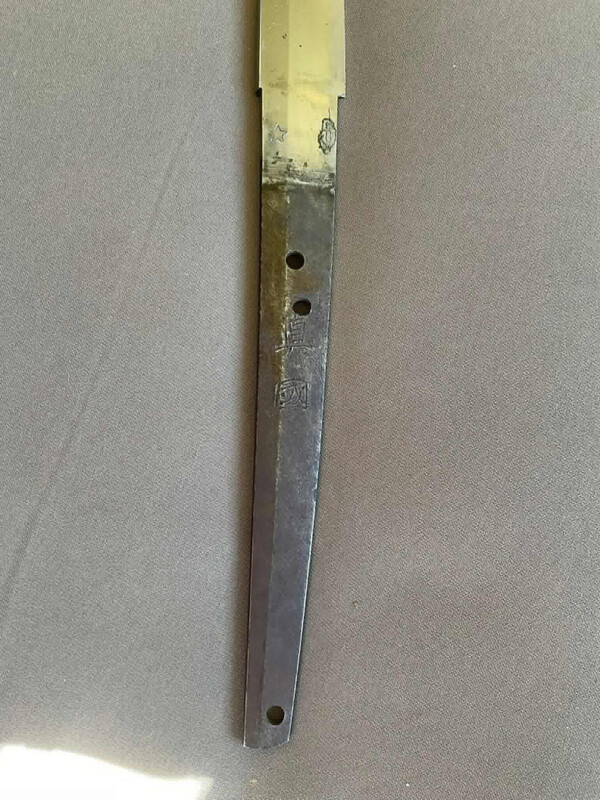
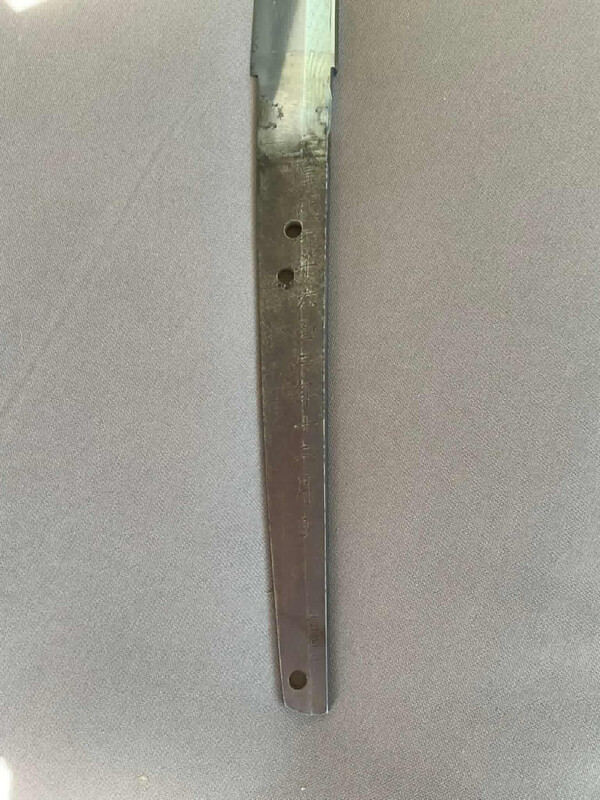
 1 point
 -
Spider web in the rain habaki! Where is the spider?1 point
-
A kasa with a twig (Edit: these are strings as Piers kindly points out in the next post) on top of it; was re-used as a tobacco pouch ornament at some point - 2.1 cm x 1.1 cm

 1 point
 -
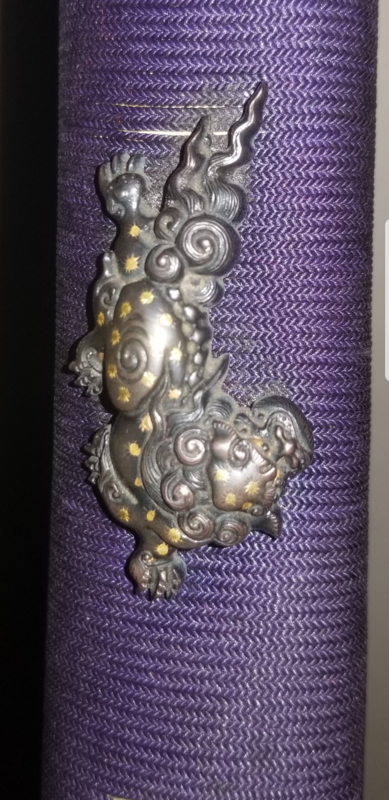
Hello I am missing one menuki on katana. I would buy it if anyone has one by chance. Thank you
 1 point
 -
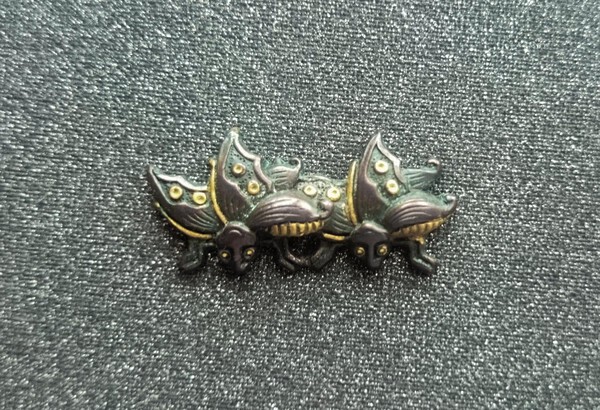
I'd like a companion for these butterflies shakudo
 1 point


.thumb.png.54593db2789c8a1dcb235543b184ce39.png)

















This leaderboard is set to Johannesburg/GMT+02:00