
Leaderboard



Popular Content
Showing content with the highest reputation on 08/05/2026 in all areas
-
Found this really interesting piece of historical news that, whilst not specifically sword related, definitely has some strong links due to the persons involved. From NHK ONE: A letter from Hashiba Hideyoshi (later Toyotomi Hideyoshi) detailing Ieyasu's offer to send his son and brother as hostages during the Battle of Komaki-Nagakute, fought between Hideyoshi and a combined force including Tokugawa Ieyasu, has been newly discovered in Tatsuno City, Hyogo Prefecture. Experts consider it a valuable document, as it demonstrates how Hideyoshi gained an advantage in the battle and paved the way for his unification of Japan. The letter, found in May of this year in an old house in Tatsuno City, is addressed to Wakizaka Yasuharu, a senior retainer of Hideyoshi, and bears Hideyoshi's signature and seal. The letter describes the Battle of Komaki-Nagakute, which took place after the Honnoji Incident over the succession struggle to Oda Nobunaga's position. It states that Ieyasu offered to end the war by offering his son and brother as hostages, but Hideyoshi refused. Ieyasu then offered to send three more powerful warlords, including Ishikawa Kazumasa, as hostages. The letter also expresses the expectation that the fighting would soon end. Yoshiaki Shingu, director of the Tatsuno Historical and Cultural Museum, who assisted in the discovery of the letter, said, "This letter is a fascinating and valuable document that allows us to assess how Hideyoshi advanced the battle to his advantage and paved the way for the unification of Japan." The letter will be on display at the Tatsuno Historical and Cultural Museum from October 24th this year. This is about as important a letter as you can get as it lays out the blueprint, from the horse's mouth, for the proposed terms by Ieyasu that allowed for the ascension of Hideyoshi and ultimately the unification of Japan. With so many documents lost to history it is pretty cool that something like this has survived 462 years and is now available for viewing by anyone.
 8 points
 -
Regarding your question, the last 3 Gō attributions (1 Jūyō and 2 TJ) have all been den including both Andrew's blades. When it comes to mumei blades the den is generally given, as @eternal_newbie advises, to those blades without Hon'Ami attribution. If Hon'Ami attribution or significant DenRai does exist (read Tokugawa) then the blade will generally be labelled without the den. There are some exceptions, with reference to Gō for example: 1. The second Gō in Jūyō Shinsa 11 was mumei without Hon'Ami attribution but was labelled Gō - I have found no explanation for this. 2. The TokuJu 25 / Jūyō 35 Gō was attributed to Gō again without Hon'Ami attribution but I suspect that this was because it was re-attributed from Taima to Gō and the NBTHK wanted to cement their decision that this blade was a Gō. That said, when TokuJu 16 / Jūyō 31 was re-attributed from Kashu Sanekage, some 9 TJ Shinsa earlier, it was re-attributed to den Gō, so the rule does appear to be flexible according to the Shinsa. Certainly when it comes down to it with regard to the two most famous mumei smiths Sadamune and Gō the den does not really matter as all of these blades as @Jussi Ekholm points out have had to be attributed whether it was last week or 400 years ago. If the NBTHK calls it a Tokubetsu Jūyō blade then because these smith's blades are so rare and so desirable (you may only get 1 or 2 cracks in your life to ever acquire one and only if you have the money and are well connected) then big money will be spent regardless of the den status. In fact, you can say that for most famous smiths with high mumei counts such as Masamune. If the NBTHK has given it a status of Jūyō or above then big money will not really care about the den status. At the end of the day the name, the quality of the blade and its exclusivity is all that matters. It is as much a bragging right as it is a investment. And in this regard when people whether it be nihonto fans, collectors, owners or even people in the industry talk to these blade they generally do not talk to a den Masamune or den Sadamune or den Gō but instead generally talk with some excitement and even reverence about the blade and when they do they generally drop the den label. Most people will simply say "I saw a Masamune" rather than "I saw a den Masamune." As such whilst den is an important factor for smiths who regularly sign their blades as we move into the arena famous mumei heavy smiths the den label is less of a factor especially at the higher level designations due to this understanding of attribution, the scrutiny they have already gone through to get designated and finally because of the exclusivity of just being anywhere near any of these blades. Therefore for these blades if they have cracked the Jūyō and above designation then den or not, it does not really matter, the name and quality is all that counts.5 points
-
Given that I wrote him a letter and spoke with him by phone earlier this year, the Varshavsky collection is guilty of fake news here. I hate that term. In his late 90s now, Bob is still an active asset to this field of art + other fields too.5 points
-
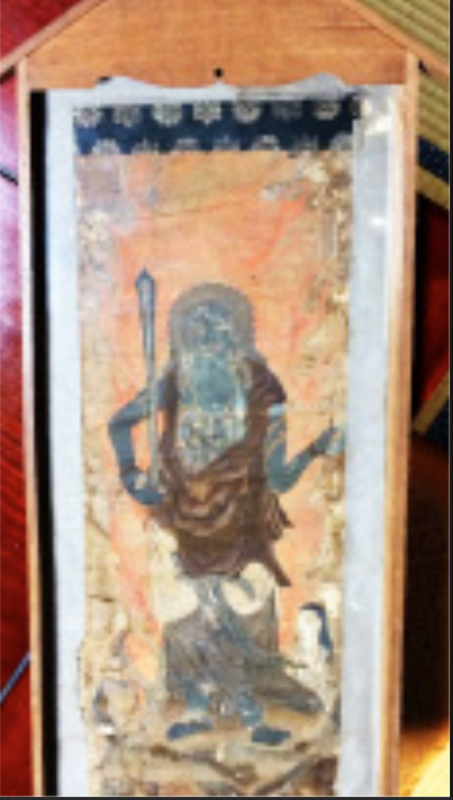
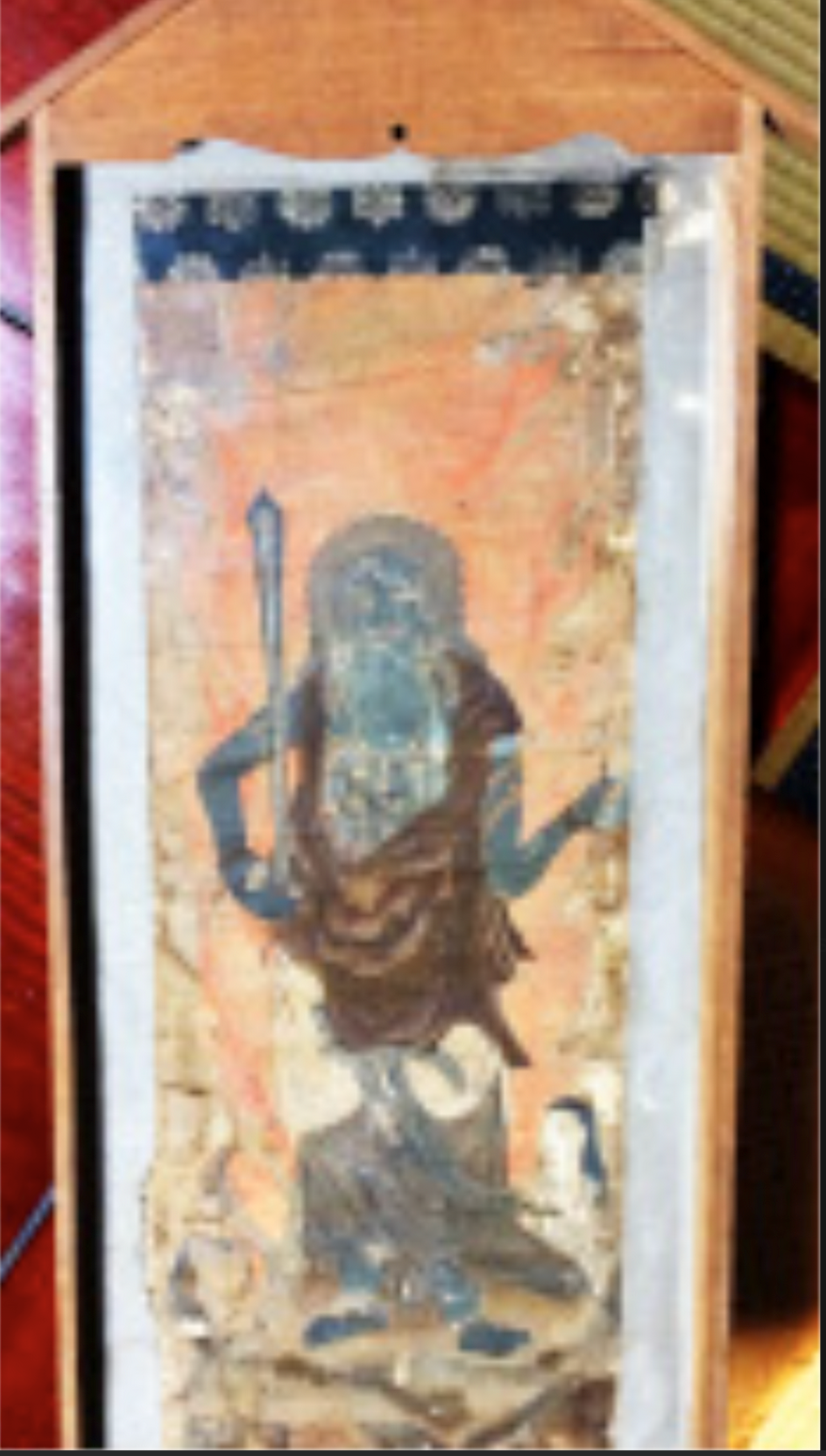
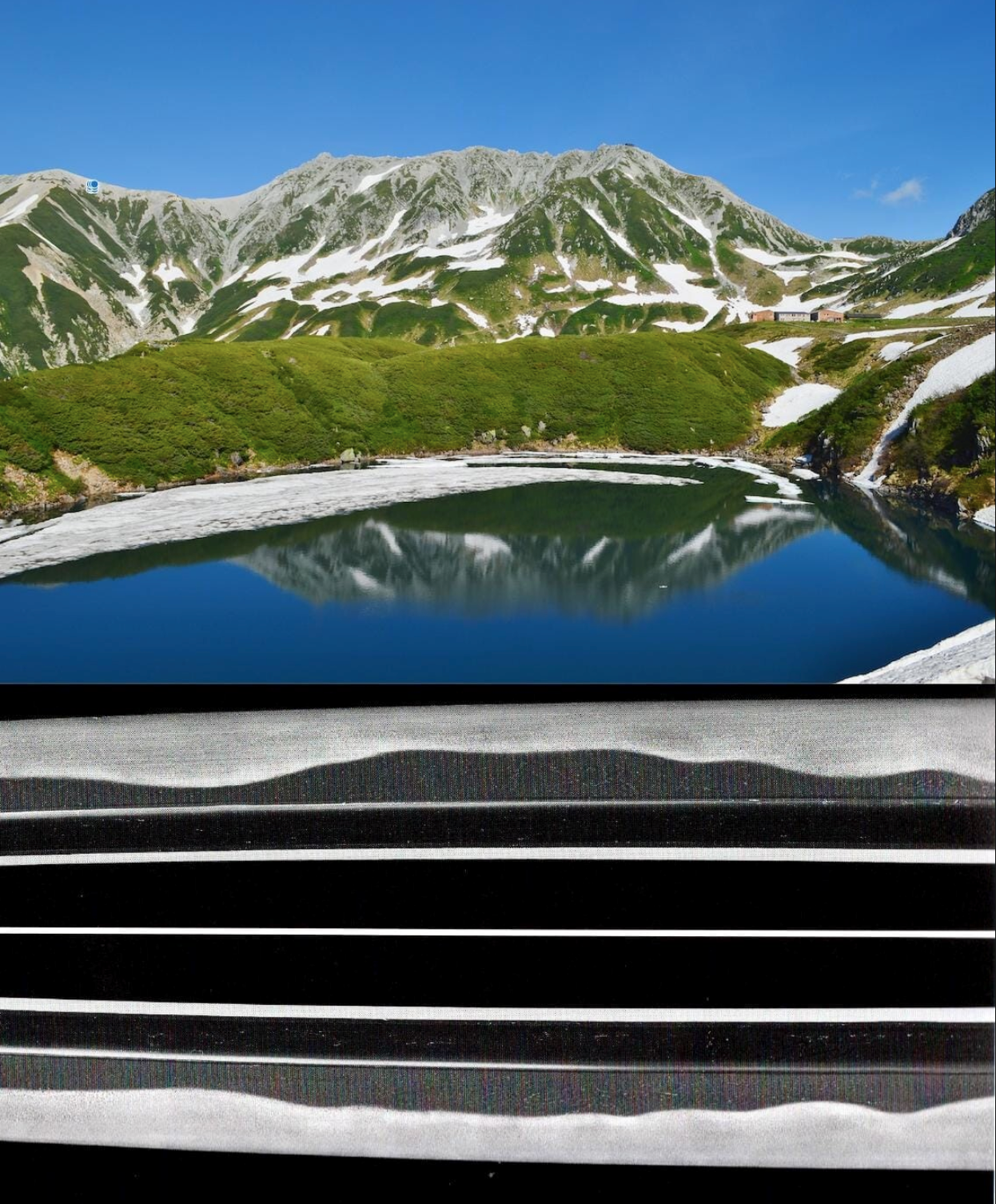
I want to add a little more to this deep dive into the life and time of Go Yoshihiro. I'm fascinated by the imagery of this depiction of Fudo Myoo, a major protector deity in Japanese Esoteric Buddhism and why Go might have had this displayed in his forge. It surely wasn't just an aesthetic choice but one made with deep spiritual meaning and maybe a nod to his earliest mentor. The deity was first depicted in 839AD in the early Heian period in Kyoto's To-ji temple. Some key features of the image: Blue/black body colour indicating wrathful manifestation to overcome ignorance and evil. Right hand holds a 3 pointed vajra sword symbolizing the cutting down of delusions, greed and attachments. (now I know how this imagery translates to the common horimono motif) Left hand carries a lasso to bind negative forces and draw lost individuals back toward the path of clarity. Background. Fiery orange flames symbolizing purification and burning away anger, passions and worldly desires. All very appropriate for a swordsmith dedicated to a goal of perfection. While devotion to Fudo Myoo was widely understood throughout Japan its significance for Kamakura and Nanbokucho era smiths was variable. Logically the deity received most attention in the Monastic Center of Nara in Yamato. These smith's weren't just artisans and craftsmen they were monks or temple servants called monzen-kaji. Then there is Yamashiro, the Cultural seat of Japan where some of the most revered Awataguchi and Rai smiths worked. The capital was surrounded by the foundational headquarters of Esoteric Buddhism including the Shingon sect on Mt Koya and Tendai on Mt Hiei. And then there was Soshuden. The smiths in Sagami would have been influenced by the Kamakura samurai who were attracted to Zen Buddhism for discipline but actively relied on Fudo Myoo for battlefield protection and victory. Thus application of religious iconography expanded, be it Fudo Myoo on the Fudo Masamune tanto or countless blades with associated imagery like bonji, the 3 pointed vajra sword or Fudo Myoo's Kurikara dragon. There could be many reasons why this image of Fudo Myoo would have been important to Go. Important enough that it was preserved according to family legend, from the time when he was working in Matsukura Castle. If its true Go was initially trained within the Yamato tradition, then later as a student of Masamune (himself a lay Buddhist priest), one can see why religious iconography would have been an essential element when undertaking the spiritual process of swordmaking and continued after he returned to modern day Toyama province. @MassiveMoonHeh has already mentioned how its conceivable the nearby Tateyama mountain range provided artistic inspiration for the intensity and structure of his hamon, where he collected high grade masa satetsu iron sand and maybe there is even a direct connection to the Fudo Myoo. In the 14th century Tateyama was the epicenter for a syncretic religious movement called the Tateyama Shinko. These mountain ascetics practiced Shugendo blending ancient shamanism, Shinto animism, Taoist magic, and esoteric Buddhism. The volcanic craters on Tateyama leaked sulfur and steam and they believed this was the physical manifestation of Buddhist hells. Fudo Myoo was the gatekeeper according to local lore where he would subdue the hellish demons and protect the pilgrims. Thus the iconography of the scroll placed in a prominent part of the forge would have had multiple levels of meaning for this young, master swordsmith working in the Matsukura foothills in sight of the Tateyama mountain range. The perfect manifestation for someone in the pursuit of perfection.
 4 points
 -
Just Tadahiro and Masahiro alone have over 60 dated Juyo blades.4 points
-
The following part from 北条市-Wikipedia is translated by AI. Meiji Period 1. With the enforcement of the municipal system, it became Hojo Village. The districts of Hojo, Tsuji, Dotenai, and Yasujima merged. 2. April 1897 (Meiji 30) - Kazahaya District was incorporated into Onsen District along with Wake and Kume Districts, becoming Hojo Village in Onsen District. 3. November 1898 (Meiji 31) - Hojo Village was elevated to town status and became Hojo Town. Ref. 北条市 - Wikipedia4 points
-
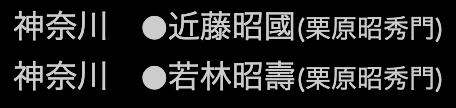
According to Ohmura‑san, two of Akihide's students, AKIKUNI (昭國) and AKITOSHI (昭壽), were from Kanagawa 神奈川. Both were RJT smiths.
 3 points
 -
It was a tachi before being suriage but NBTHK always name suriage mumei swords katana.3 points
-
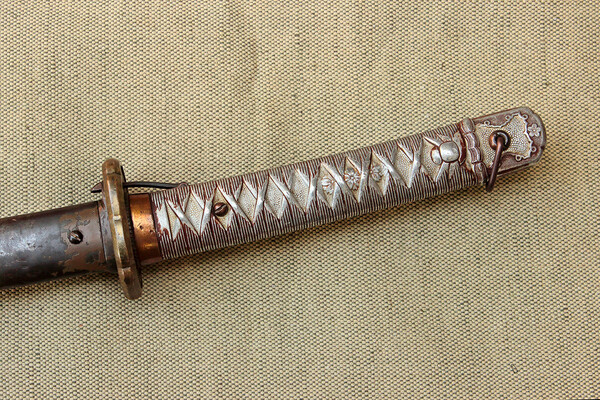
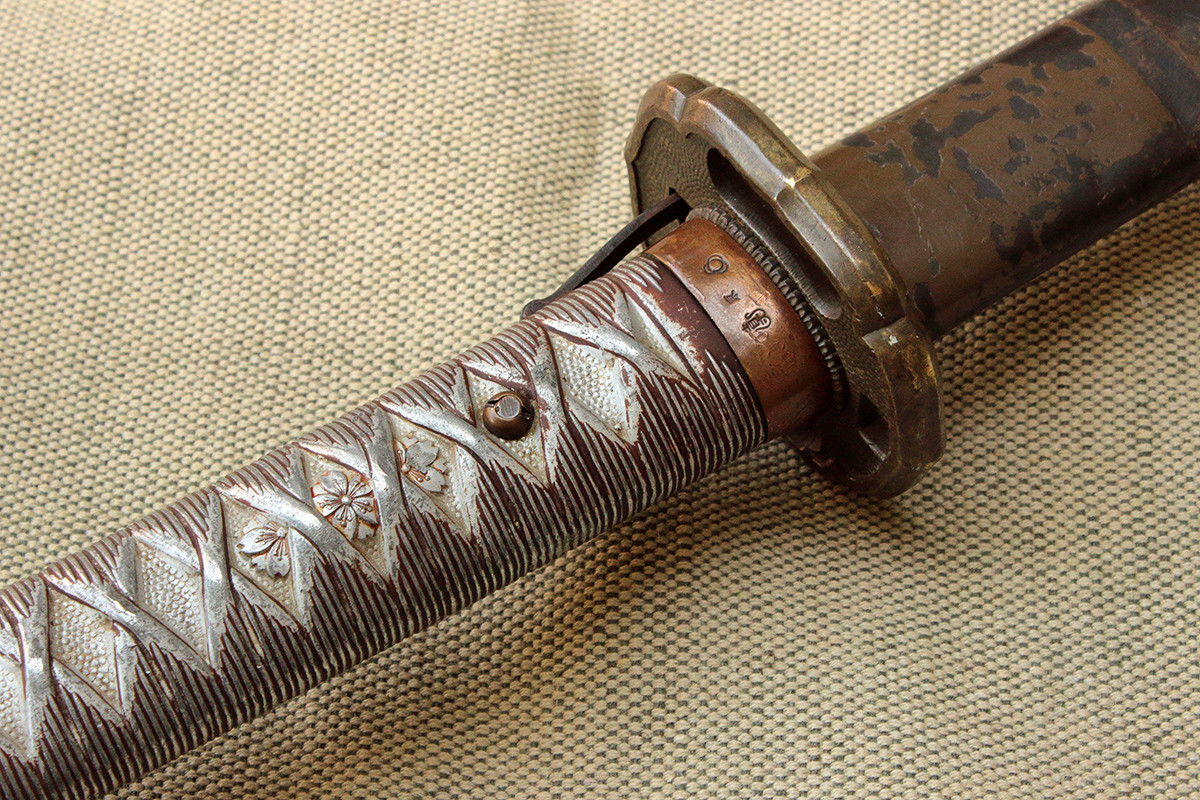
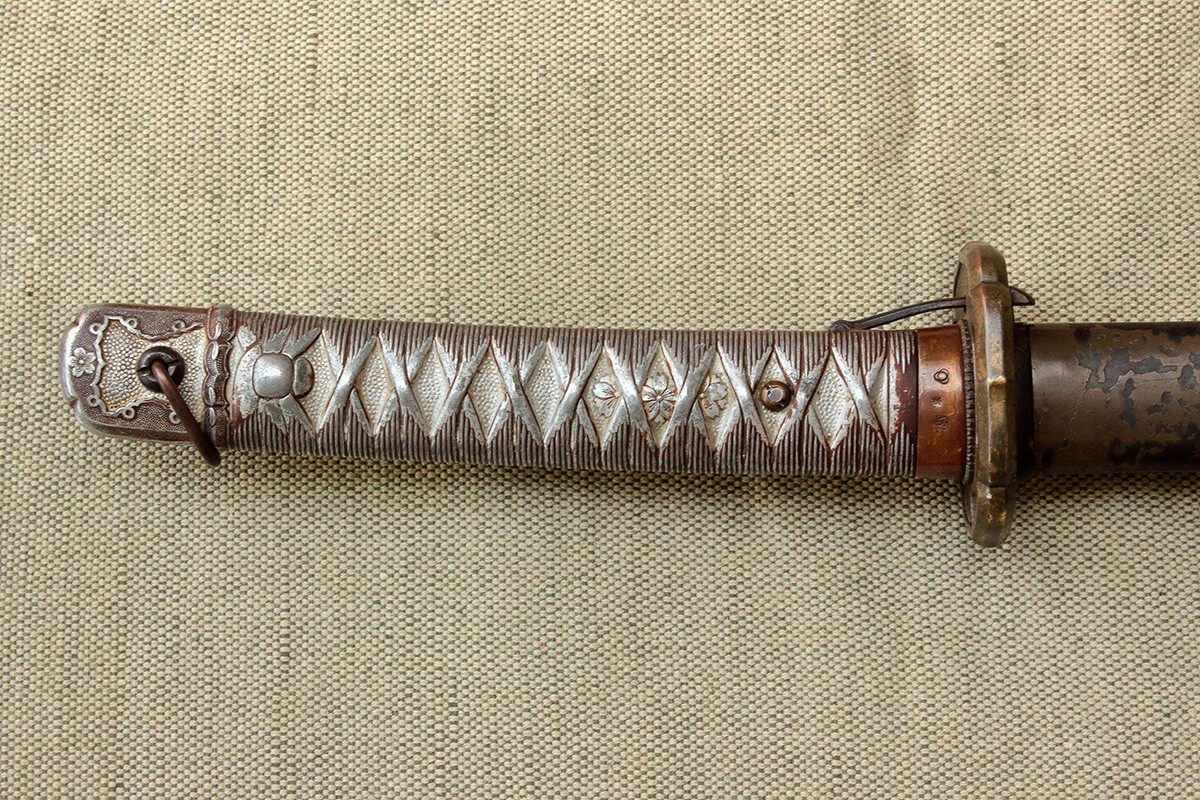
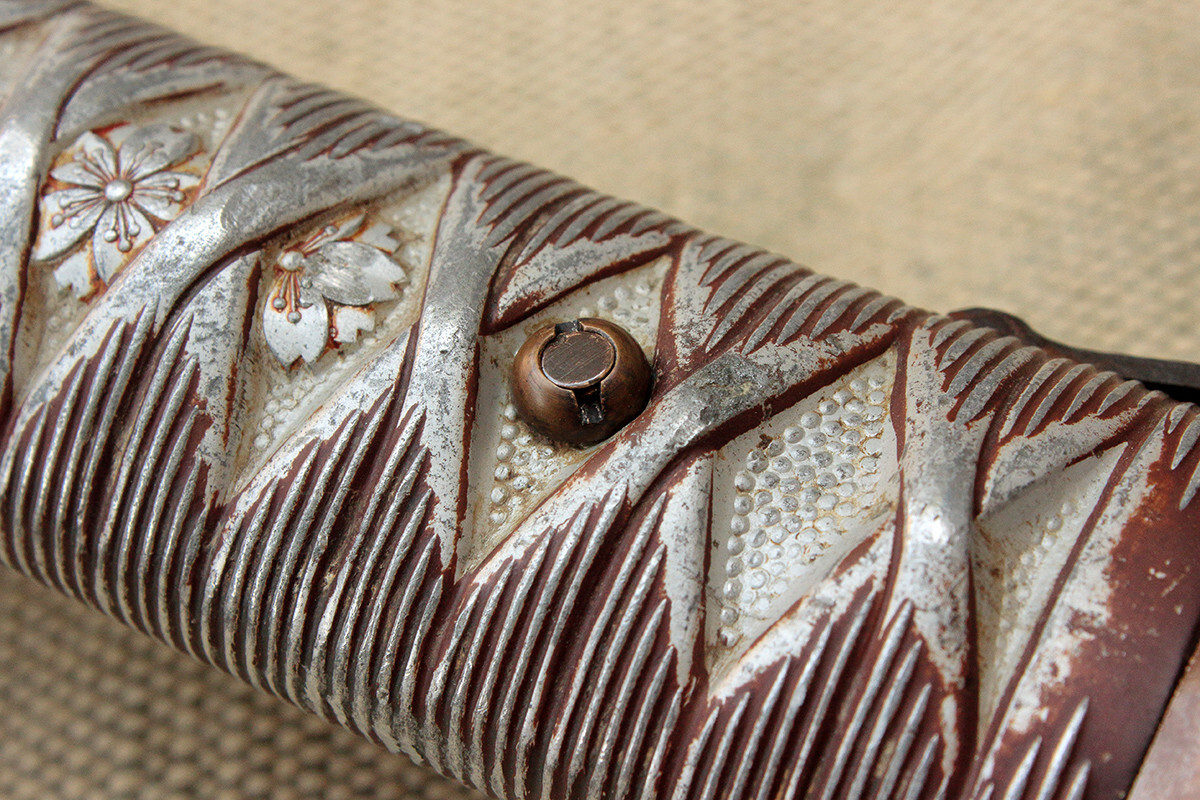
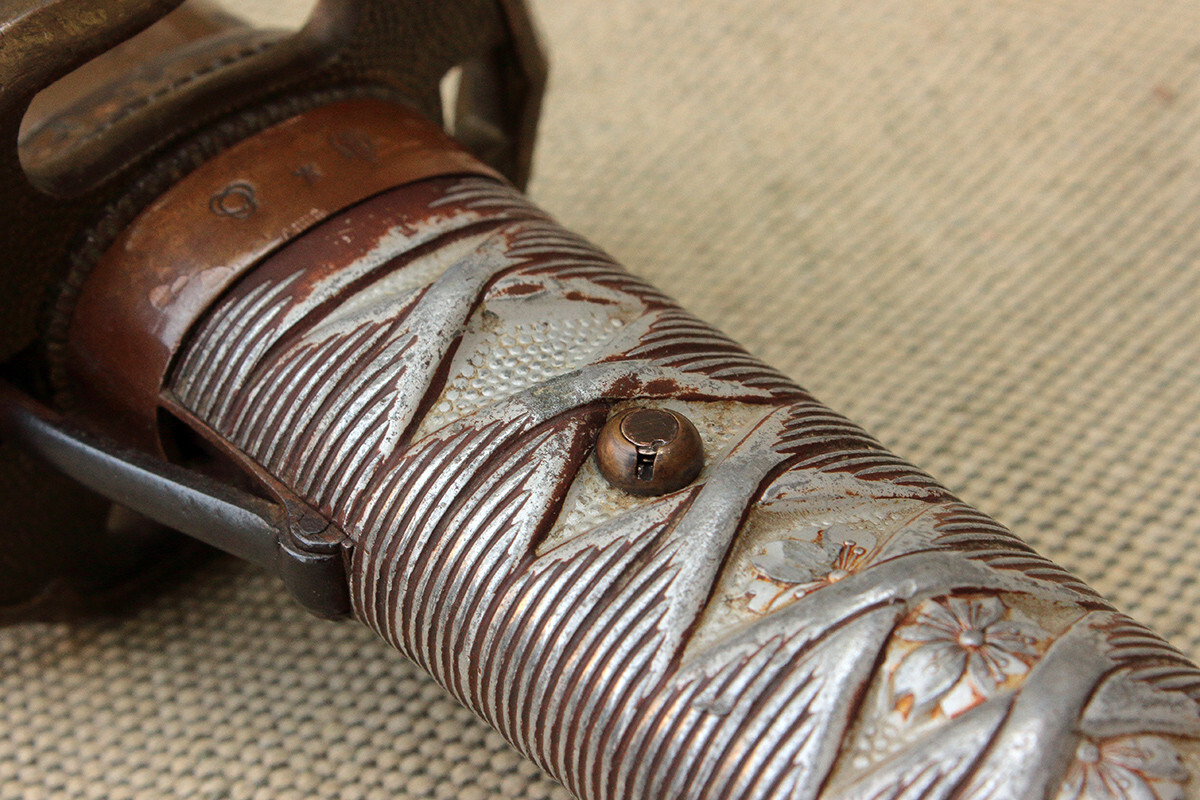
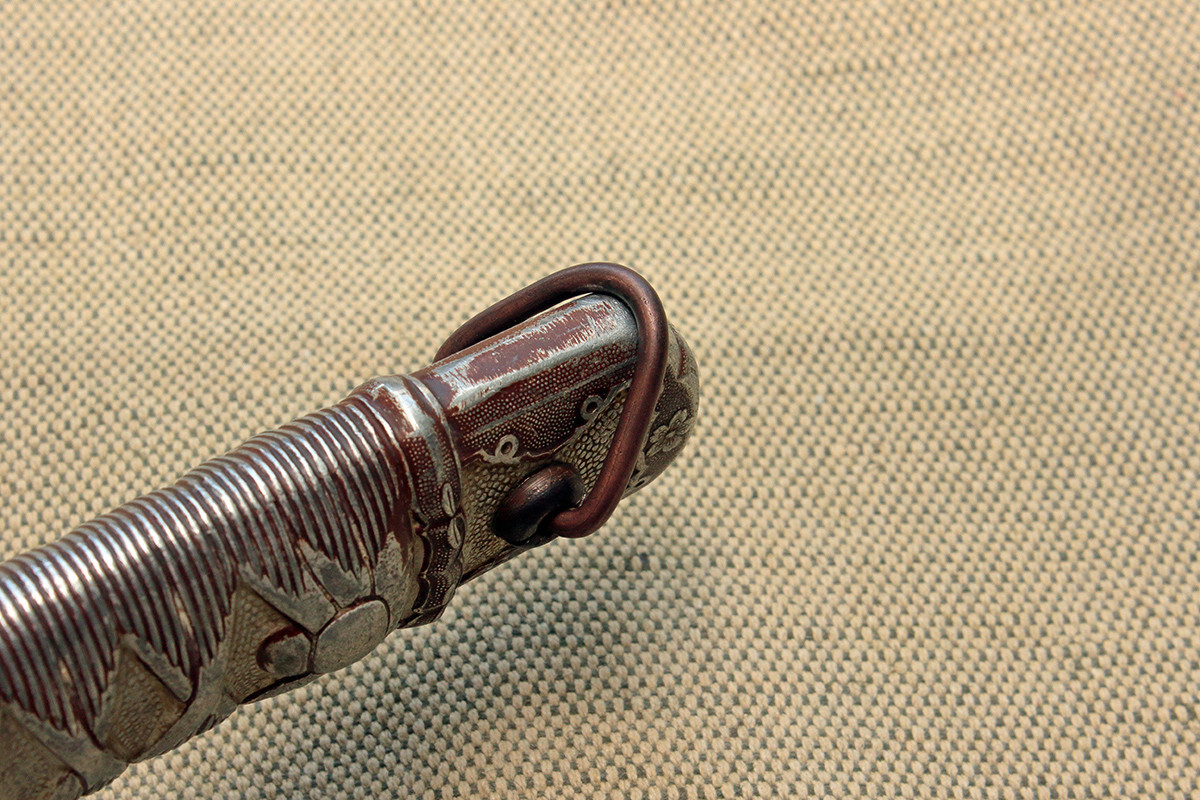
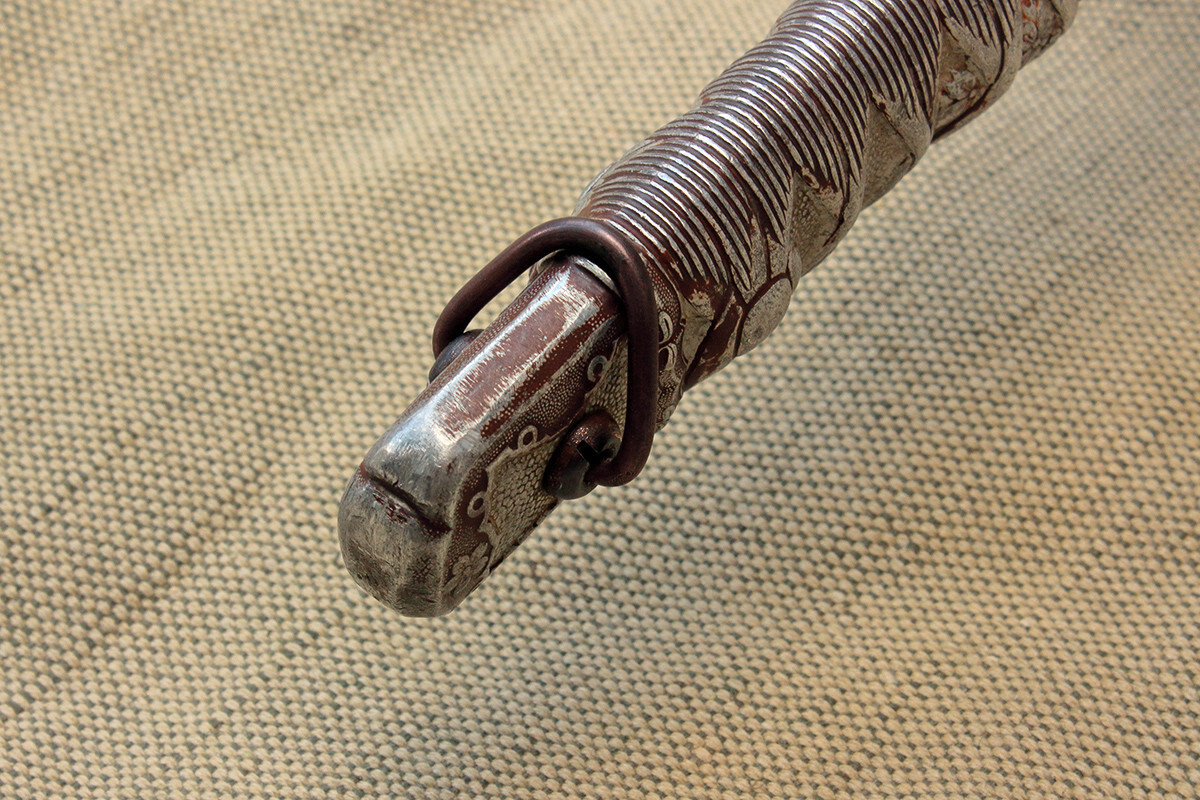
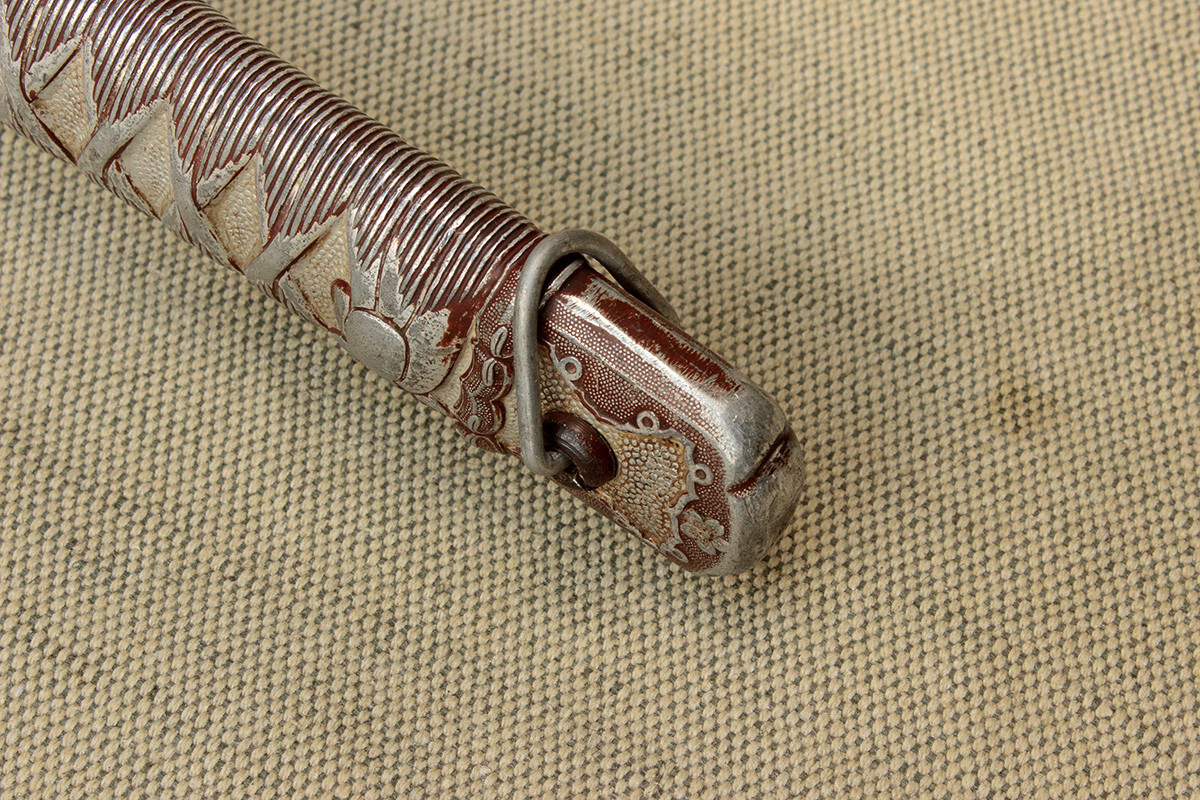
And here are some photos of tsuka with both sarute and nut installed.


 3 points
 -
It aligns quite nicely, giving it context and provides a fantastic insight into the original offer. In the end Ieyasu sent his unfavored second son, 10 year old Ogimaru (later Yuki Hideyasu), as a hostage to Hideyoshi (who was childless at the time) managing to avoid having to send his brother or senior retainers. He probably saw it as the better deal as he did not have a great fondness for Ogimaru, because his birth caused complications with his first wife who was jealous. Hideyoshi in return sent his younger sister Asahi-no-kata and mother Ōmandokoro to Tokugawa Ieyasu as hostages. Whilst Hideyoshi gained the advantage in terms of his ascension, you can argue that Tokugawa got the better deal here. https://en.wikipedia.org/wiki/Battle_of_Komaki_and_Nagakute3 points
-
Sounds good to me, glad thats cleared up now, thanks for the confirmation3 points
-
Update: Yamanaka Newsletter Volume 5 Issue #6 available: Yamanaka V5 NL062 points
-
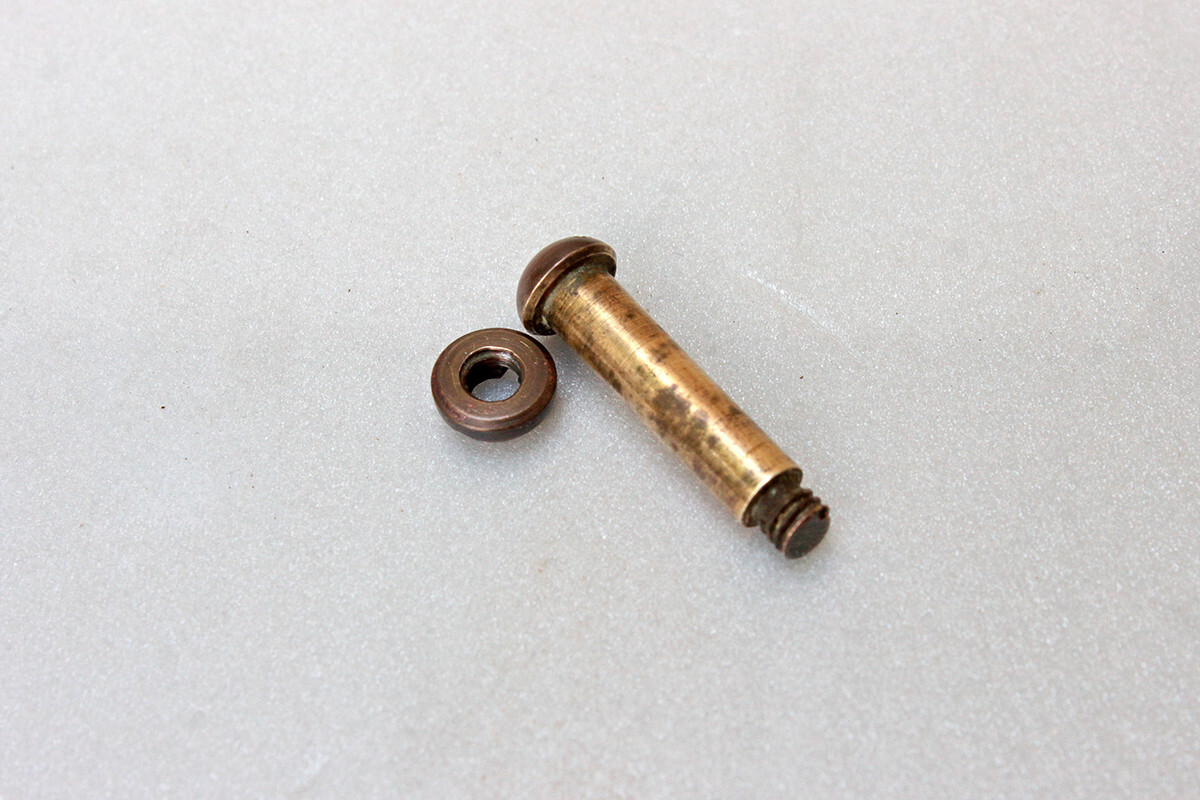
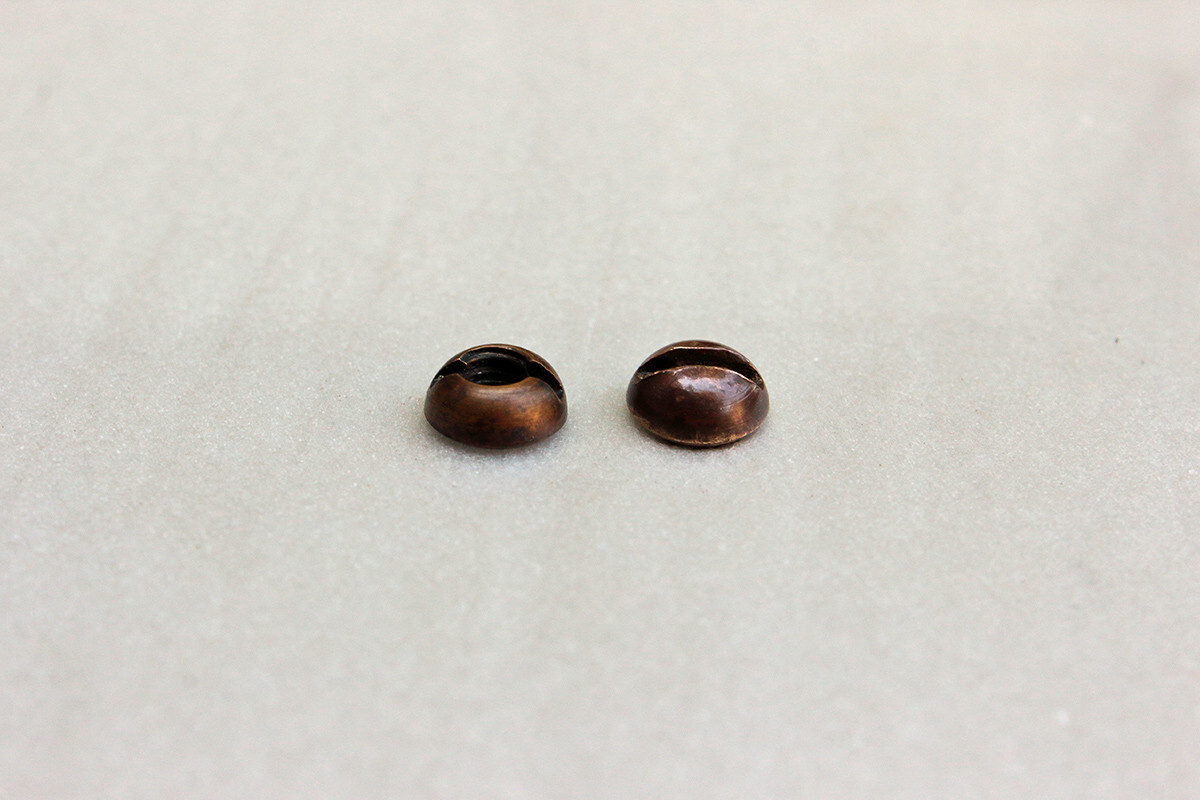
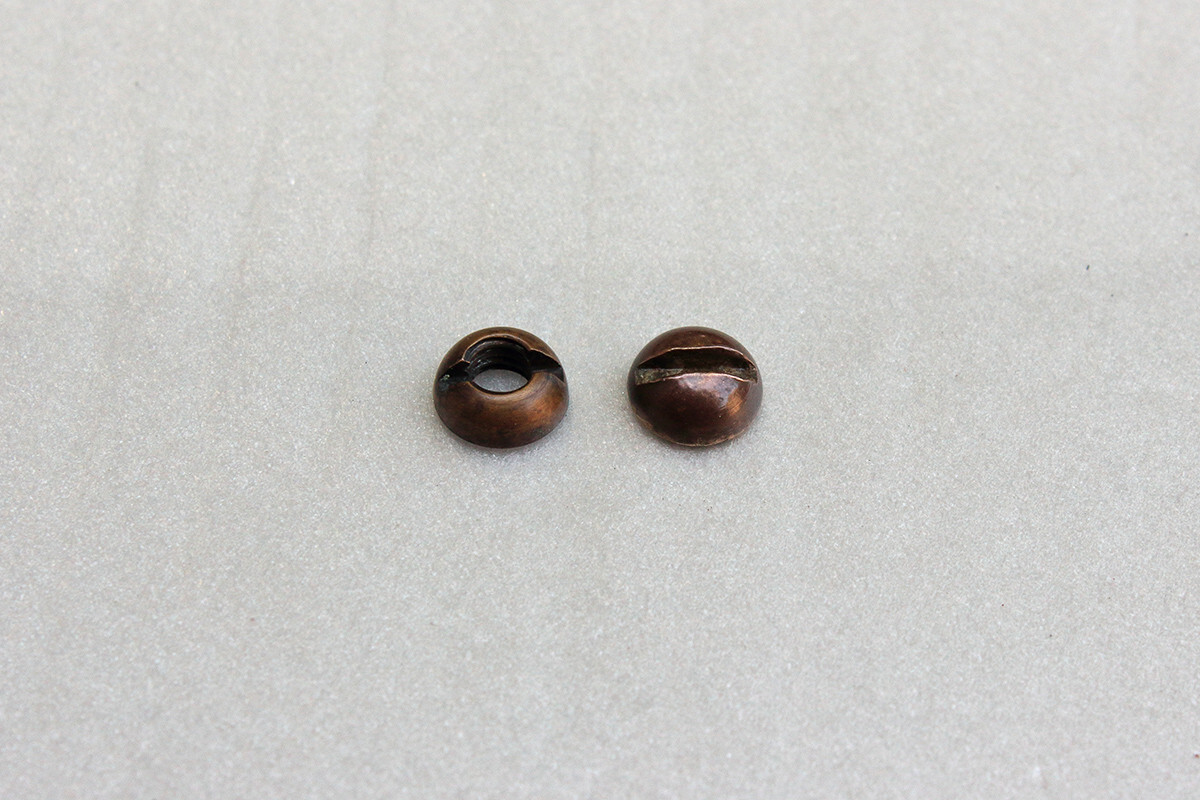
And here is the story of mekugi' nut making. To read this part one may turn on "I can get no satisfaction" by the Rolling Stones. I started with mekugi bolt measurements. The diameter of the threaded part of the mekugi bolt turned out to be 4mm. The standard pitch for the thread of this diameter is 0.7mm. Yet, both of my thread gauges clearly showed that the thread pitch of this bolt is 0.75mm. I ended up buying the set of taps and dies that had M4X075 tap and die. It was like some Chinese knock-off set, but it was sufficient for the brass. I sent it to my parents and asked my stepfather to turn me a couple of brass blanks for the nut. I also asked for a threaded rod so I could put nuts on it and work on them using cordless drill, small files, sandpaper and Scotch-Brite. When I received blanks I didn't have a sword with me in my workshop. Therefore the first design of the nut I recreated from memory. I shaped it using files and I chamfered the side that faces tsuka in the way the bolt head was chamfered. I used a small file to mark the groove for the screwdriver slot and cut the slot by hand using a hacksaw. To finish it I grinded a piece of broken small file on the grinder to make it thinner. I put some effort into the patina, making it look close to the copperish patina of the bolt head.


 2 points
 -
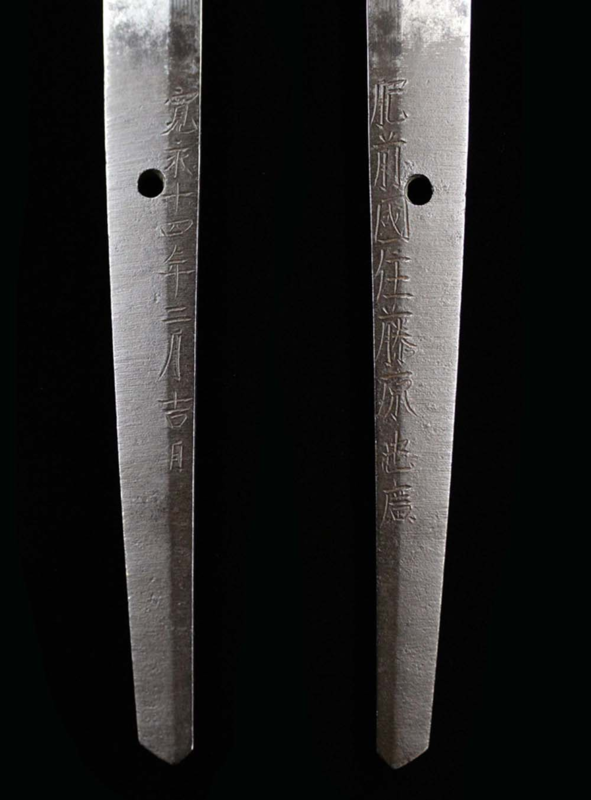
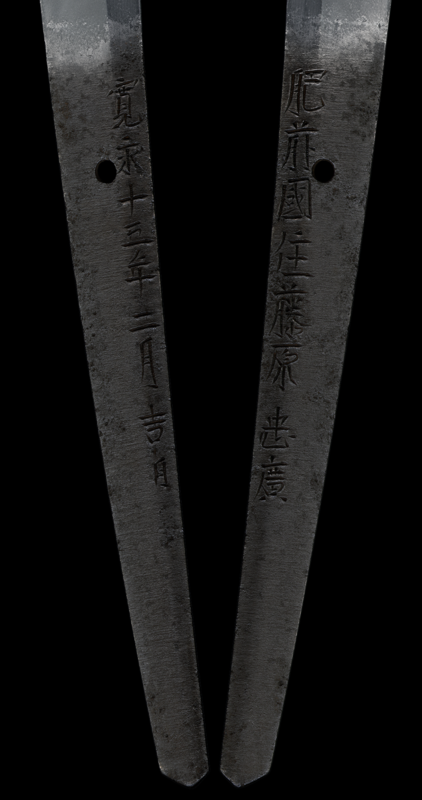
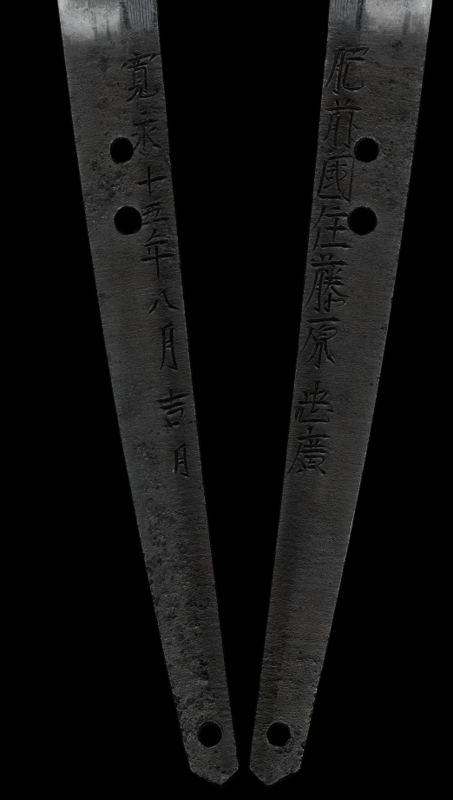
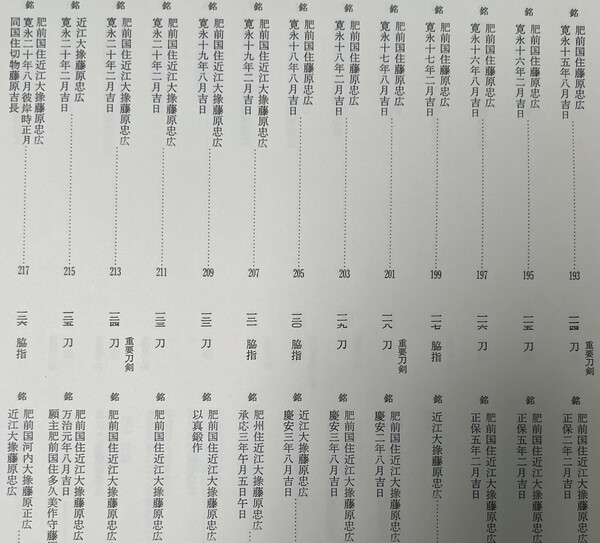
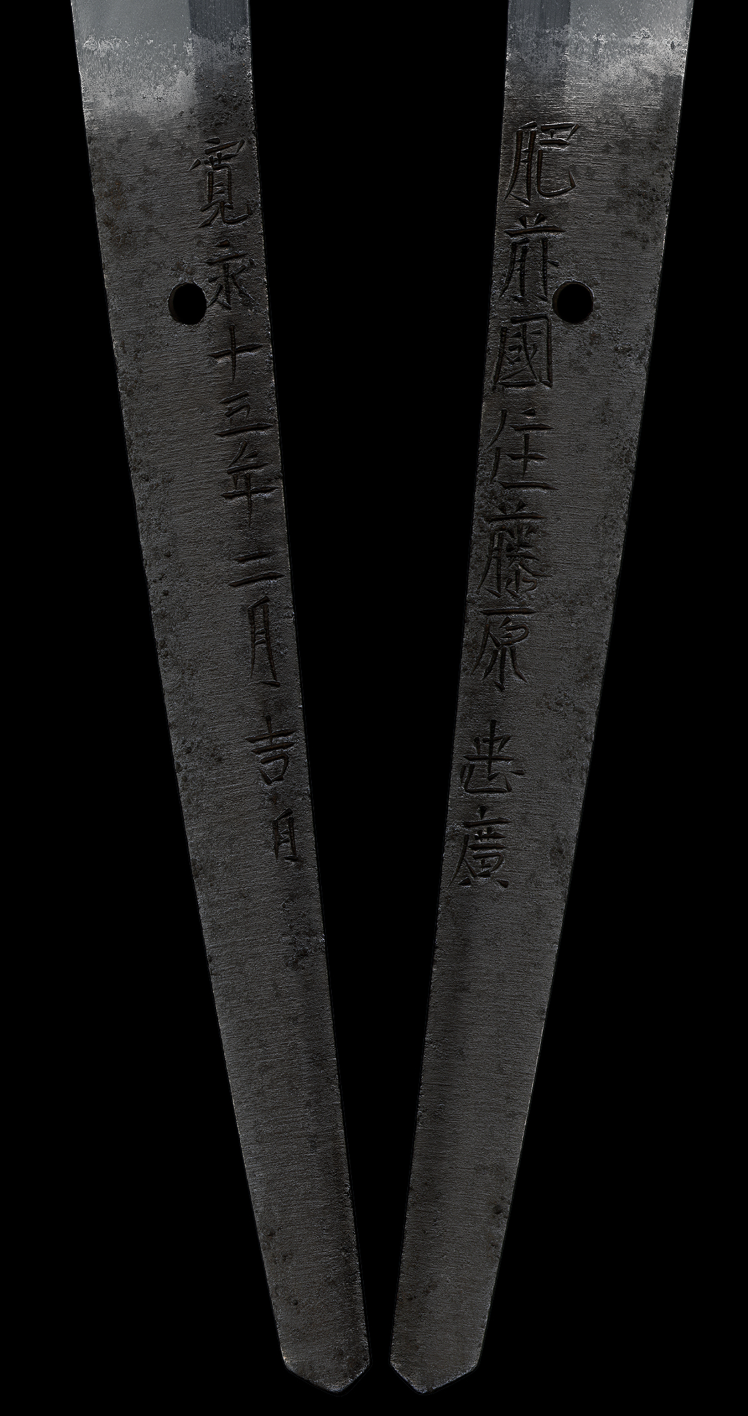
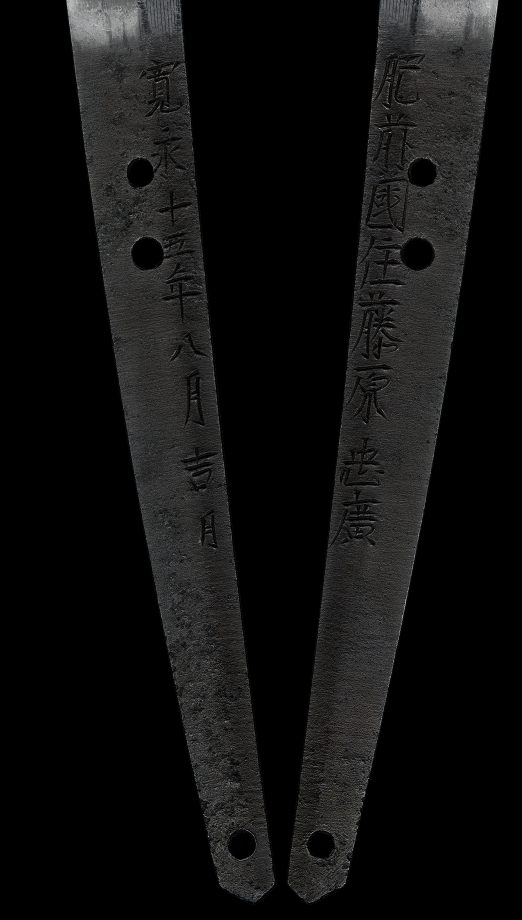
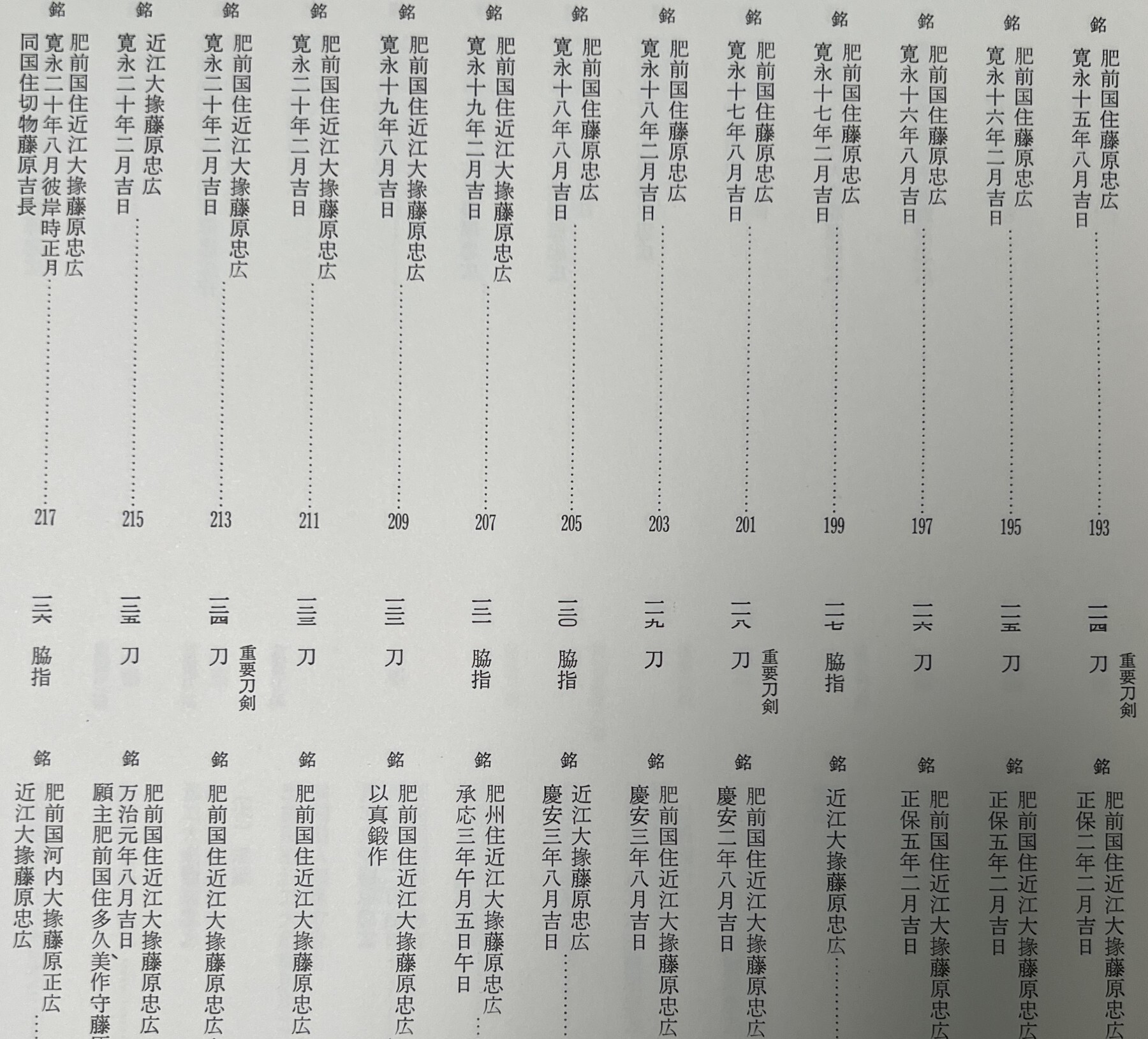
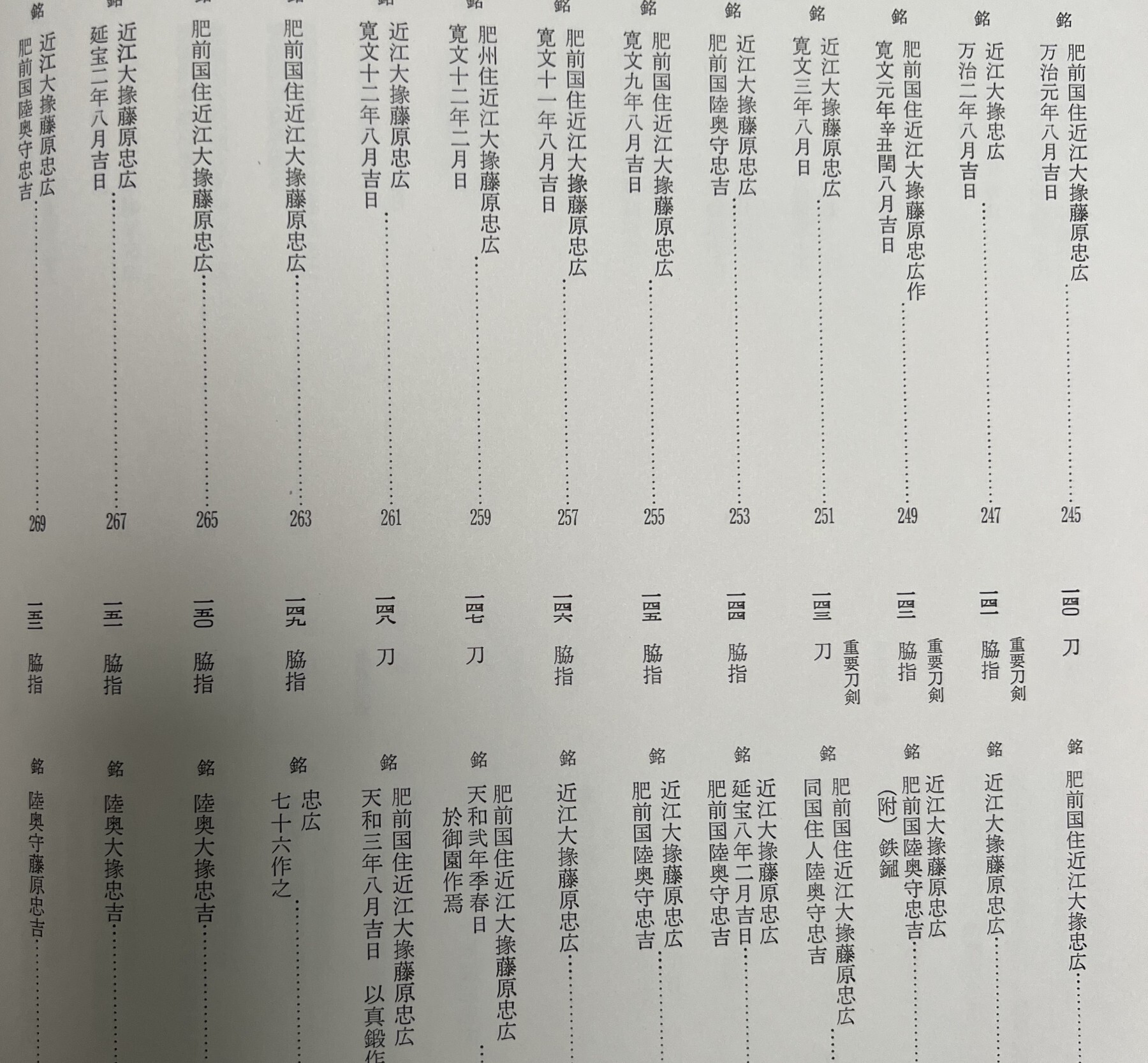
Hi! This is the first time I realized that dated Tadayoshi and Tadahiro are quite rare! At least on the market, because I do recall pages of dated Hizen in the Hizento Daikan. Kanei 14. Kanei 15, 2nd month. Kanei 15, 8th month. This is weird, all three dated Tadahiro I can find in a jiffy are before Tadahiro's Juryo (for Ominodaijo) in Kanei 18. It does look like Tadahiro dated his swords more before and around his Juryo.
 2 points
 -
They exist… for a price! https://www.instagram.com/p/DbJ7V0Xltvo/?igsh=eHg1a2Y3b2VhZzZ12 points
-
Dated swords do exist. I have read that a date on a Hizen sword is associated with an 'event' in the swordsmith's life. BaZZa.2 points
-
Actually there was no law that determined the direction that Japanese had to be written. Writing from left to right was not forbidden, or unheard of, and there were official publications as well as commercial publications that wrote left to write. The Ministry of Education and the Army promoted a left-to-right writing standard in the middle of the war, in 1942, but ultra-nationalist elements of the military, as well as the newspapers, never got on board. But the army as an entity was not hostile to the idea. And, just to throw this out there, Tamachi (田町) is also an acceptable Japanese family name, though Machida is much more common.2 points
-
I'm trying to find RJT blades made in the Kanagawa prefecture (so far I have none). I've ID'ed only four WWII RJT smiths from the province: NAGAYOSHI (長善), Shōwa (昭和, 1926-1989), Kanagawa – “Nagayoshi” (長善), family name Koizumi (小泉), rikugun-jumei-tōshō, ryōkō no jōi (Akihide), Fourth Seat at the 6th Shinsaku Nihontō Denrankai (新作日本刀展覧会, 1941) TERUMITSU (輝光), Shōwa (昭和, 1926-1989), Kanagawa – “Kawashima Terumitsu saku” (川島輝光作), real name Kawashima Toyokichi (川島豊吉), he worked as rikugun-jumei-tōshō TSUNEZŌ (恒真), Shōwa (昭和, 1926-1989), Kanagawa – “Tsunezō” (恒蔵), family name Anzai (安斎), his name is also quoted with the reading Kōzō, he worked as rikugun-jumei-tōshō, ryōkō no jōi (Akihide) UJU (宇寿), Shōwa (昭和, 1926-1989), Kanagawa – “Morishita Uju kore o saku” (森下宇寿作之), “Kanagawa-ken Kōgyō Gakkō kyōyu Morishita Unokichi kinsaku” (神奈川県工業学校教諭森下宇之吉謹作, “respectfully made by Morishita Unokichi, teacher at the technical school of Kanagawa Prefecture”), real name Morishita Unokichi (森下宇之吉), born September 2nd 1883, he studied under Miyaguchi Ikkansai Toshihiro (宮口一貫斎寿広) and worked later as rikugun-jumei-tōshō, in 1932 he also worked as instructor at the Yasukuni Jinja Tanrenjo (靖国神社鍛錬所), jōko no jōi (Akihide), Special Honor Seat at the 6th Shinsaku Nihontō Denrankai (新作日本刀展覧会, 1941), it is said that he received the smith name Uji from the director of the Neyagawa University (寝屋川大学, present-day Setsunan University) by incorporating his I've searched NMB, but I'm helpless searching on the web, as pages and pages of modern girls on facebook and businesses pop up when I try. So, if anyone would like to lend a hand, I'd sure appreciate it. Heck, I'd gladly split my NMB researcher pay with you 60/40 .... ok, 50/50! Ha! @mecox @george trotter @Kiipu @vajo @Conway @Marcin - and all others!1 point
-
Mei: Kashu ju Fujiwara Kaneshige Date: an auspicious day in the 8th month of 1857 (Ansei 4)1 point
-
Sorry Bruce, I haven't got/seen any Kanagawa RJT blades. Geo.1 point
-
Hello Nazar, First class work and excellent narrative … Regards, Paul.1 point
-
1 point
-
Amazing work, really impressed1 point
-
So... I took the first nut and reshaped it. This time the traces of the lathe cutter weren't that good, but the patina might have turned out to be even better. Here is how it looks in its place.
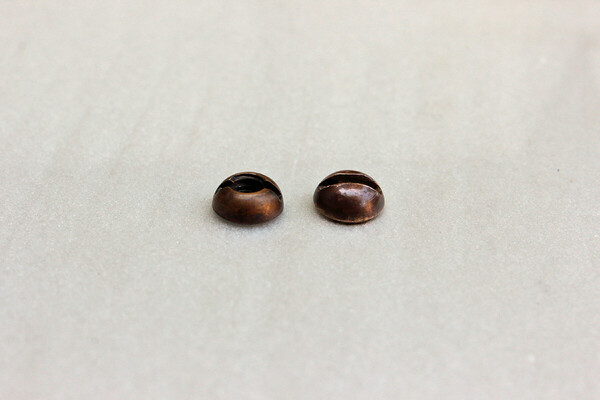
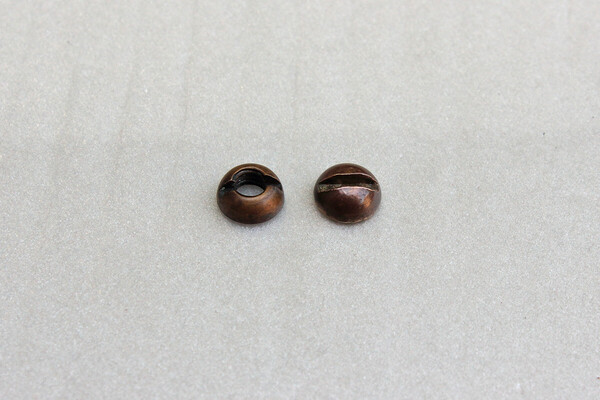
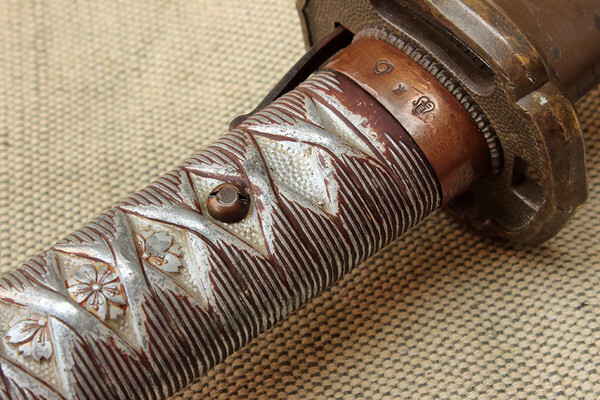

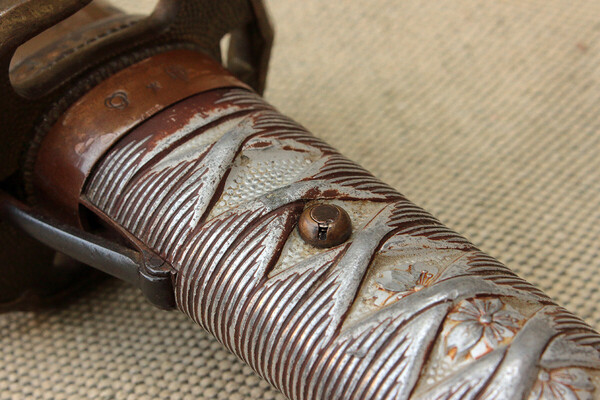 1 point
 -
1 point
-
You are correct, a tachi would be denoted by 大刀. It could be a mistranslation by Aoi, or they refer to it as such because of the handachi-style fittings on the koshirae.1 point
-
Well, that's good news at any rate!1 point
-
Have a look at this thread….modern technology and processes are getting a bit scary The last images are “enlightening”…….1 point
-
Jono1uk take Matsunoki up on his offer ,I can vouch for Colin he will help you beat he can. Honestly- I wouldn’t even consider importing any sword ( unless through a reputable agent )1 point
-
The polisher was Nicholas Benson. The man who returned from the war was the brother of the swordsmith, forged to celebrate his brother and his triumphant return… sorry I don’t recall the name of the smith.1 point
-
I have tried having a look at on line but I’m scratching my head with this, it was in a plain white cotton bag. Must be an odd thing if you guys don’t know anything. I’ll just keep it and put it with the collection and maybe one day it may be revealed what it’s for,,,,,,,,thanks guys! 👍1 point
-
Well, option one is a non starter as the tsuba on their website clearly shows all the grinding scars Dale told us to expect - in exactly the position he said they would be found. So option two it must be.
 1 point
 -
https://jssus.org/1977V9no_5_Stolen_Fairhaven_Sword_Tsuba_and_Menuki_Jiritsusai_Tomohide_Mishina_Naomichi_Yoshihara_Fujishiro_Interview.pdf1 point
-
Apologies for resurrecting yet another old thread but this one is very relevant to me. Asano-san is indeed a truly unique craftsman as well as being a really nice guy. He encapsulates old traditions combined with a youthful energy and enthusiasm to 'spread the word'. When I retired recently, my wife got me one of his swords as a present. Sure beats a watch! Seriously though, it is a flawless blade with all the features and qualities I have ever wanted in a shinsakuto. I'm not a lover of modern koshirae but I can deal with them in this case. (It is a Nosyudo iai koshirae with solid silver bits and pieces.) The photos are not mine; I've come to realise that I just cannot photograph blades! This is a great shame as I also have two hira-zukuri wakizashi and a Yari that I'd like to post on the board. Best, Hector
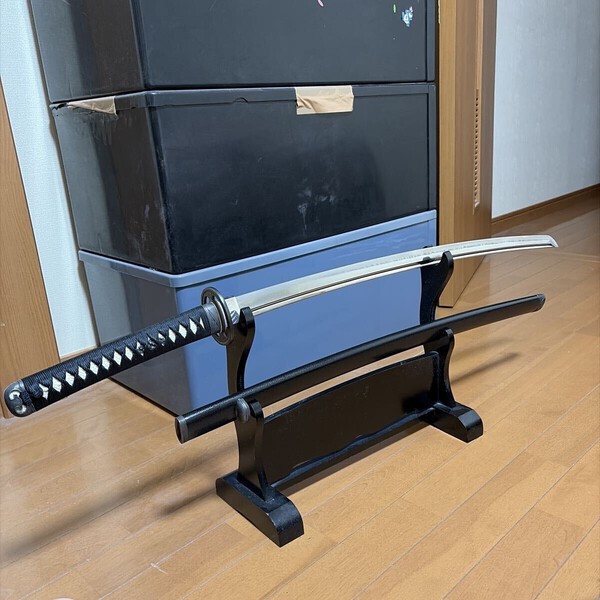
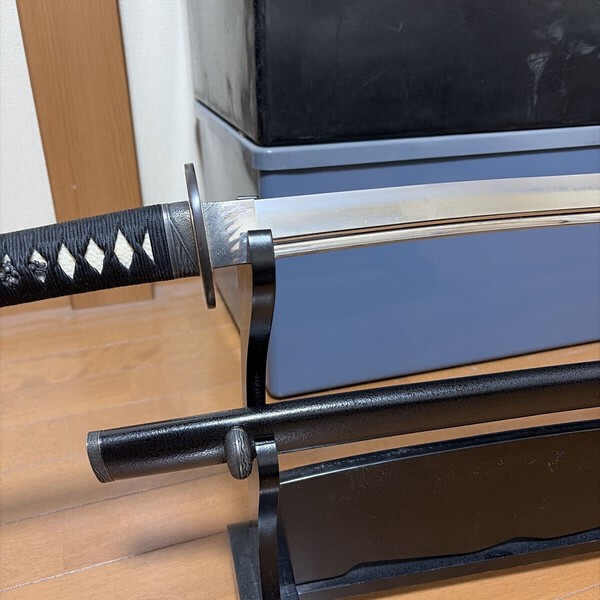
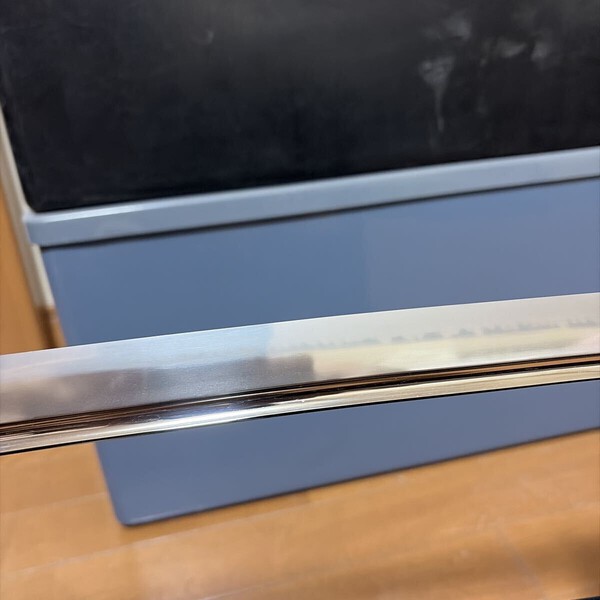
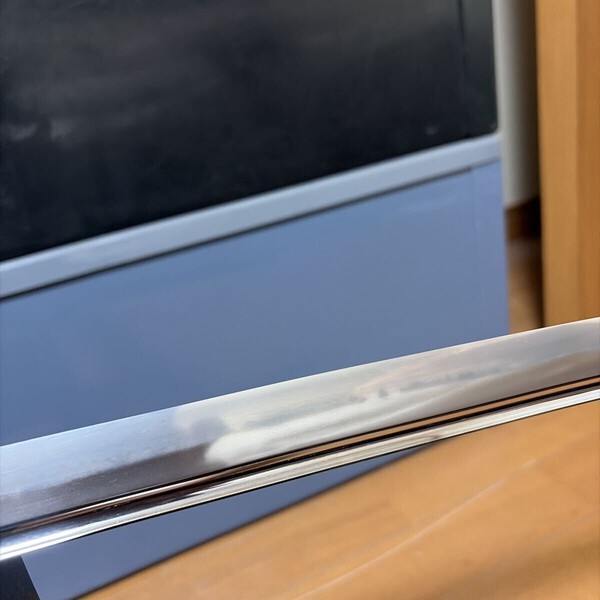
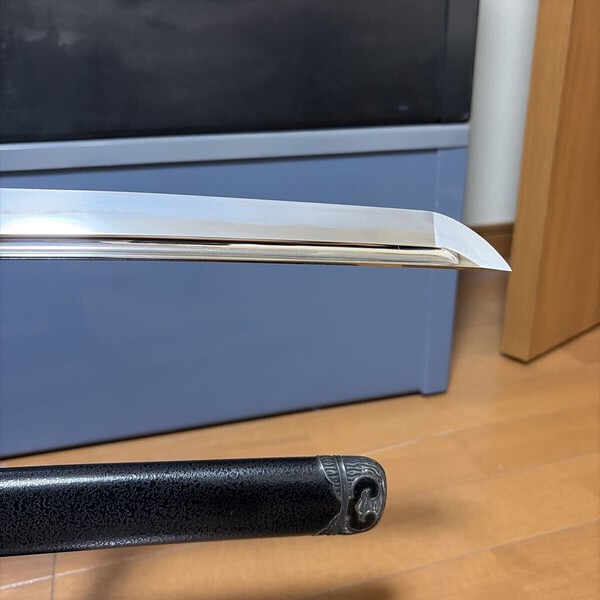
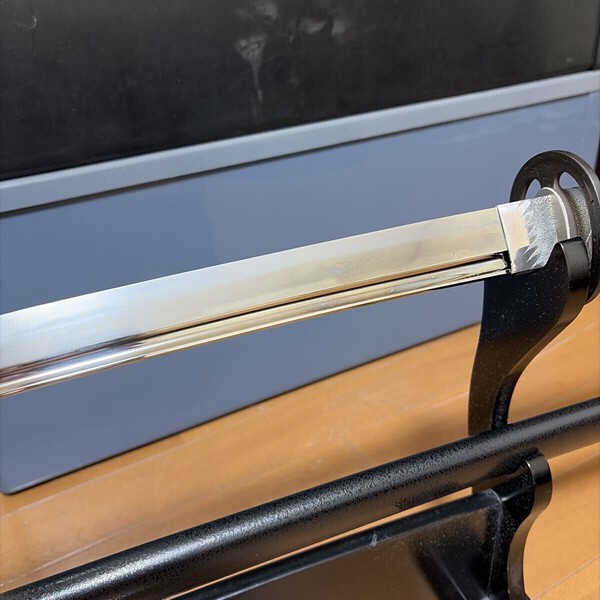
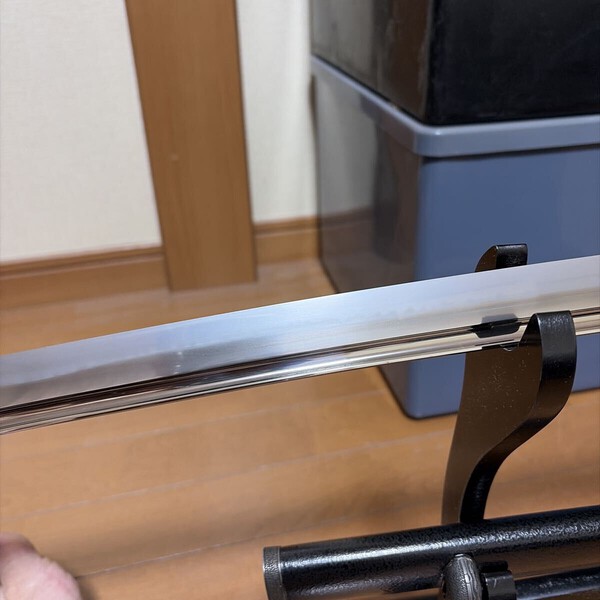
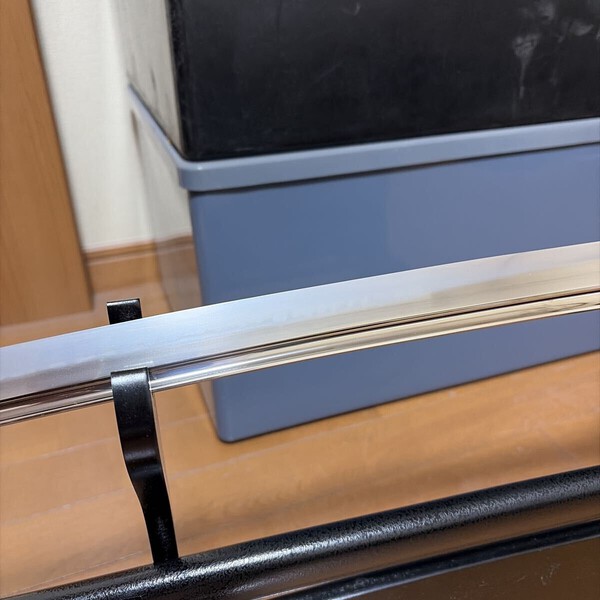
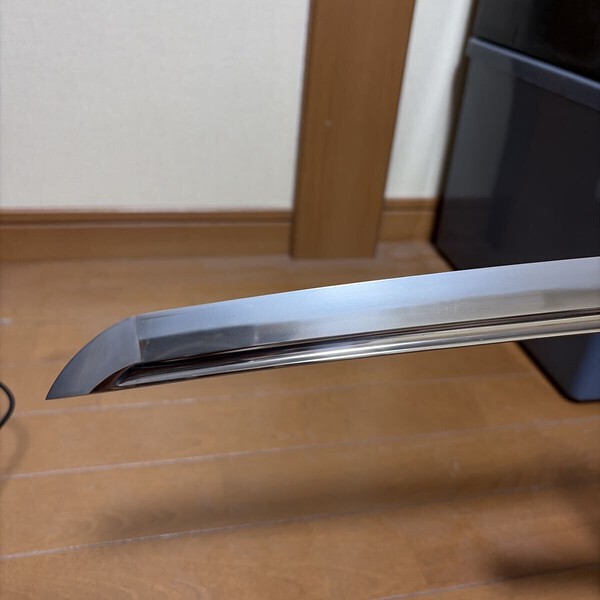
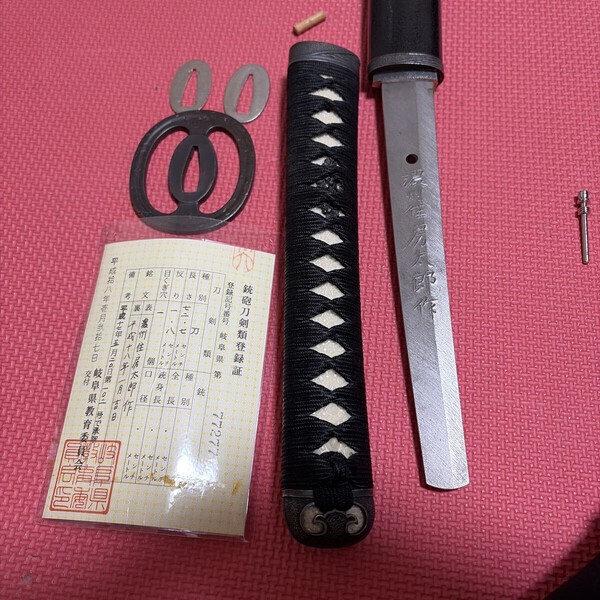 1 point
 -
As I mentioned, I went through a lot of pictures of sarute. And even when it is hard to verify if all of them belonged to the swords they were installed on, I figured out not the rull, but like a general outline: one wouldn't be wrong if the look of sarute more or less corresponds to the look of hatome (sarute barrel). Which is only logical in cases like mine, where both are made of steel/iron and copper coated.
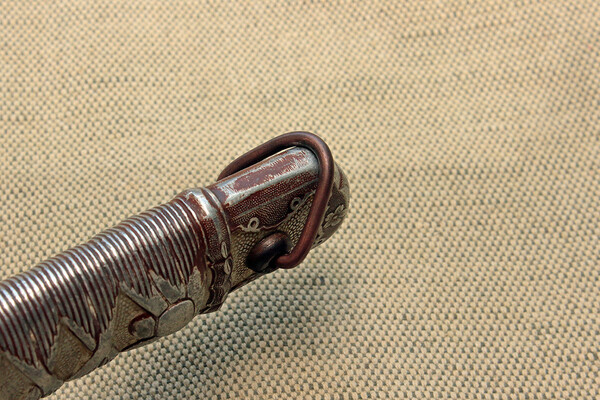

 1 point
 -
Then it was time to copper plate the sarute. I made the solution according to the receipt from the internet: Copper sulfate - 100gr Distilled water - 450gr Battery acid (sulfuric acid) - 100gr I am not great at chemistry, but I believe the crucial part of mixing it is slowly adding acid to the mix of water and copper sulfate, not other way. This solution alone is sufficient to provide steel with a thin coat of copper. Here is how the drill bit for wood looks after dipping it into the solution. I didn't clean it through and through, so I was able to scratch copper off in places that weren't clean enough. Yet, in other places copper adhesion to steel was surprisingly strong. The only suitable DC power source I had at hand was a 12V 2A power unit for a WiFi router. With the help of an improvised adapter I was able to connect alligator clips to it. This power source turned out to be far from perfect but it worked. From what I could observe, the reaction went in like impulses and maybe it went too fast. I believe for the perfect result one has to use an adjustable power source and test different combinations of Volts and Amps. I want to return to copper coating and do some experiments later on, because it is quite an interesting tool. My first experiments showed that the surface of the wire had to be prepared through and through. It might be due to previous zinc plating that I got some sketchy coating that was very tough in some places while piling off in another. Here is what I mean: However, I have to admit that this result may look a lot like the sarute in Marcin picture. I experimented a bit more with heating the wire again, cleaning it with scotchbrite and etching it in sulfuric acid. Then I copper plated the final version of sarute. After plating I let it sit for some time in the solution of water and baking soda. Then I darkened it using sulfuric ointment.

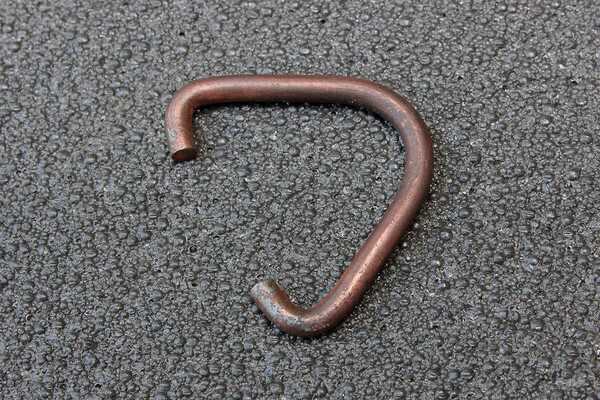

 1 point
 -
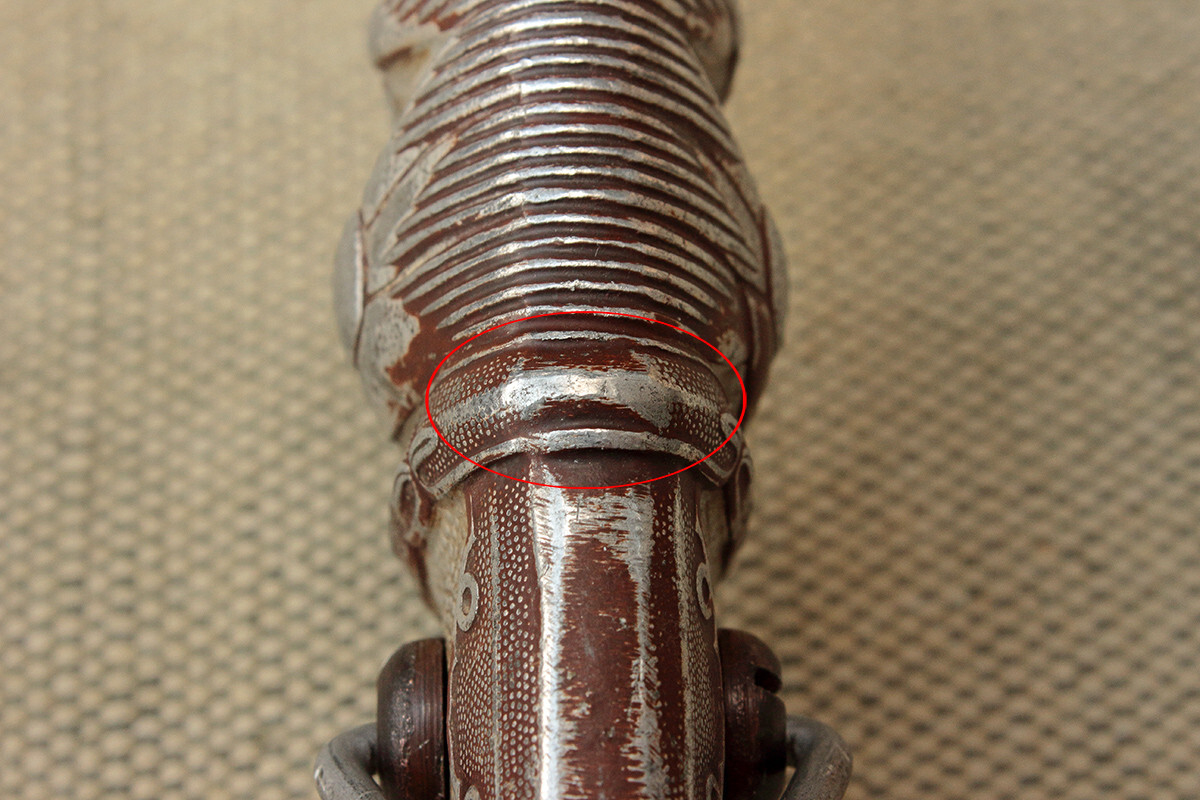
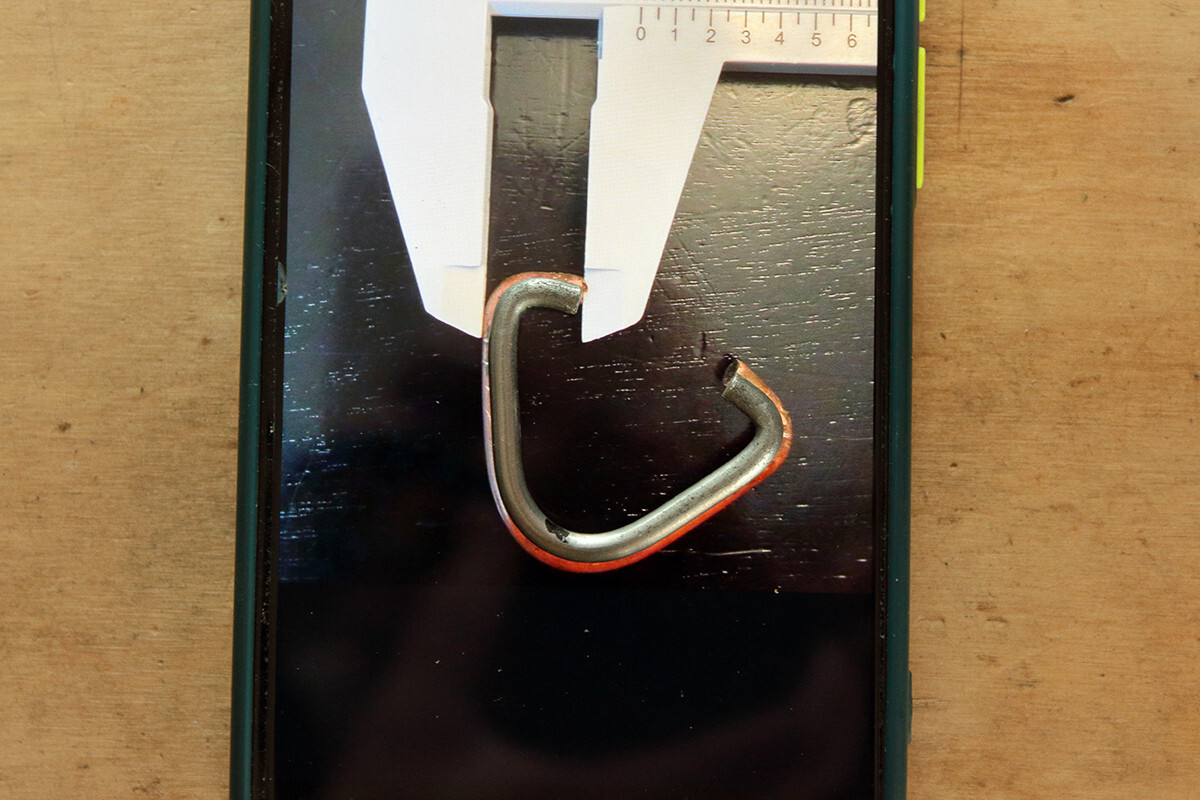
So, the sarute and the nut for mekugi are ready. I started with sarute as it seemed to be quite easy. According to the measurements made by Sam Scogg (many thanks to him again!), the diameter of the wire used for the sarute is 3.3mm. I went through a lot of pictures and I believe the diameter of wire may vary, however for my sword 3.3 seems to be the correct value. I sourced a piece of steel wire of 3.4mm in diameter. That wire was zinc plated, so I had to prepare it beforehand. Zinc has a relatively low temperature of melting, so the general idea was to heat the wire with a gas torch. Another goal of heating wire was to make it softer. Yet I have to figure out the right configuration of sarute. I tried to make it using measurements provided by Sam and after the first attempt I realised it wouldn't work without some recalculations. The reason was I didn't take into account that the total length was measured by the side of the wire that is already stretched. I either had to recalculate the correct length of blank or figure the other way to get the correct length of wire. I took a closer look at tsuka and I beheld a solution. The proof that my sword was equipped with a sarute and it was lost only recently was there all the time. Here is what I mean. Look at the area in the red oval in the picture below and you'll see the rounded outline left by the sarute hitting the tsuka countless times for the last 80 or so years. I believe sarute was removed relatively recently. Supposedly it happened during someone's attempt to remove tsuka. At the same time the mekugi nut was removed and lost. So all I have to do is to make a sarute that will fit exactly the same spot. By lucky chance I stumbled upon 3mm aluminum wire and I used it to model sarute. Once I got the sarute of right configuration made of aluminum wire, I unbent the area of this model sarute between the "prongs" that go into the hatome. The distance between these prongs is the most crucial dimension when it comes to recreating a sarute that will fit as original. After this it wasn't very hard to bend the right configuration from 3.4mm steel wire. I formed prongs in vises and bent the length of wire between them around the rod of suitable diameter. And as I finished bending sarute, I looked into my phone that was lying on the workbench to check messages. The phone still had a photo of sarute that Sam sent me on its display. And just out of curiosity I put my sarute on top of the picture. And while scales of the picture and my sarute were not adjusted it was clear that proportions were mostly identical. It was another indicator I did it right.
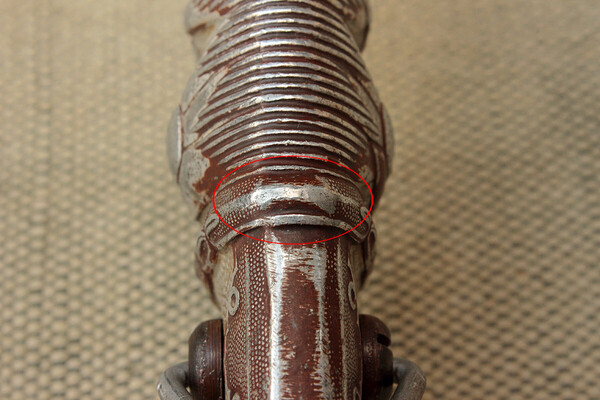
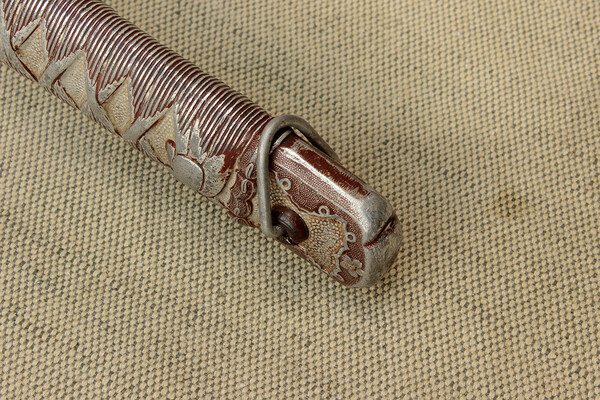
 1 point
 -
Hi, While it is theoretically possible to de-register and export Jubi items, I do not recommend it for a number of very important reasons. First of all, it is considered poor taste. Jubi was initially done (in a rush...) to prevent swords from leaving the country during difficult economic times. This is therefore a sensitive topic, and the reaction to de-registering and exporting a Jubi can vary from a frown to a perception of national treason. While one can probably reach the level of respect in that community where it's considered "mostly OK but only for you" to do this, the mere fact of having the money and not the standing would be considered exceedingly poor taste. Second, it destroys value. Once a Jubi is de-registered, it is no longer Jubi for collectors in Japan. Expect a value hit of 50%. Third, there is a significant percentage of Jubi items whose attributions, provenance, etc would not hold up to today's standard, and there are also items that would be considered gimei. It is therefore a real minefield. Fourth, the quality aspect: the average TJ blade is superior to the average Jubi blade. What differs is the variance: there are a few great Jubi which are true outliers in terms of important and quality, such as the Sagara Mitsutada or the Ko-Bizen Tomonari in the Taiwan exhibit. However, the average price of a Jubi is typically around the price of a high TJ because ownership of these items carry status, and collectors pay for this rare status and especially, the frozen supply. So, to sum up: You will be spending more money than on a TJ, you take an immediate haircut of 50%, you hurt your reputation in the process unless truly special circumstance, and if your knowledge is not sufficiently advanced, you may end up with a poorly attributed item that does not hold up to modern standards. As for this specific blade, it is attributed to Aoe school (Not Sadatsugu, unlike what the listing present). It is a typical Chu-Aoe blade of the Nambokucho period of upper Juyo quality. Probably the work of one of the "-tsugu" smiths of that period. I hope this helps, Hoshi1 point
-
His videos on TT do a lot for education, and I find him a pleasant guy who does have a passion. I'm glad to have him on TikTok, and I know he looks up to Ray Singer for advice. Enjoy watching his stuff.1 point
-
Looks like A grade Aoe from 1360. One of two main Aoe styles and earlier versions are known but sugata is more 1360 like and also around this time you see this very distinctive nie utsuri like line right between shinogi and ha.1 point
-
Reinhard, no one is arguing that text wasn't read right to left, or even that it wasn't the main form of writing horizontally. I am merely pushing back on your statement that kanji HAD to be written right to left. This is false, and there are examples of where it was written left to right. Here is a copy of a mathematic textbook from 1939 written left to right Here is a copy of an advertisement from 1919, again, left to right.1 point
-
Much nicer in person.....lots going on here
 1 point
 -
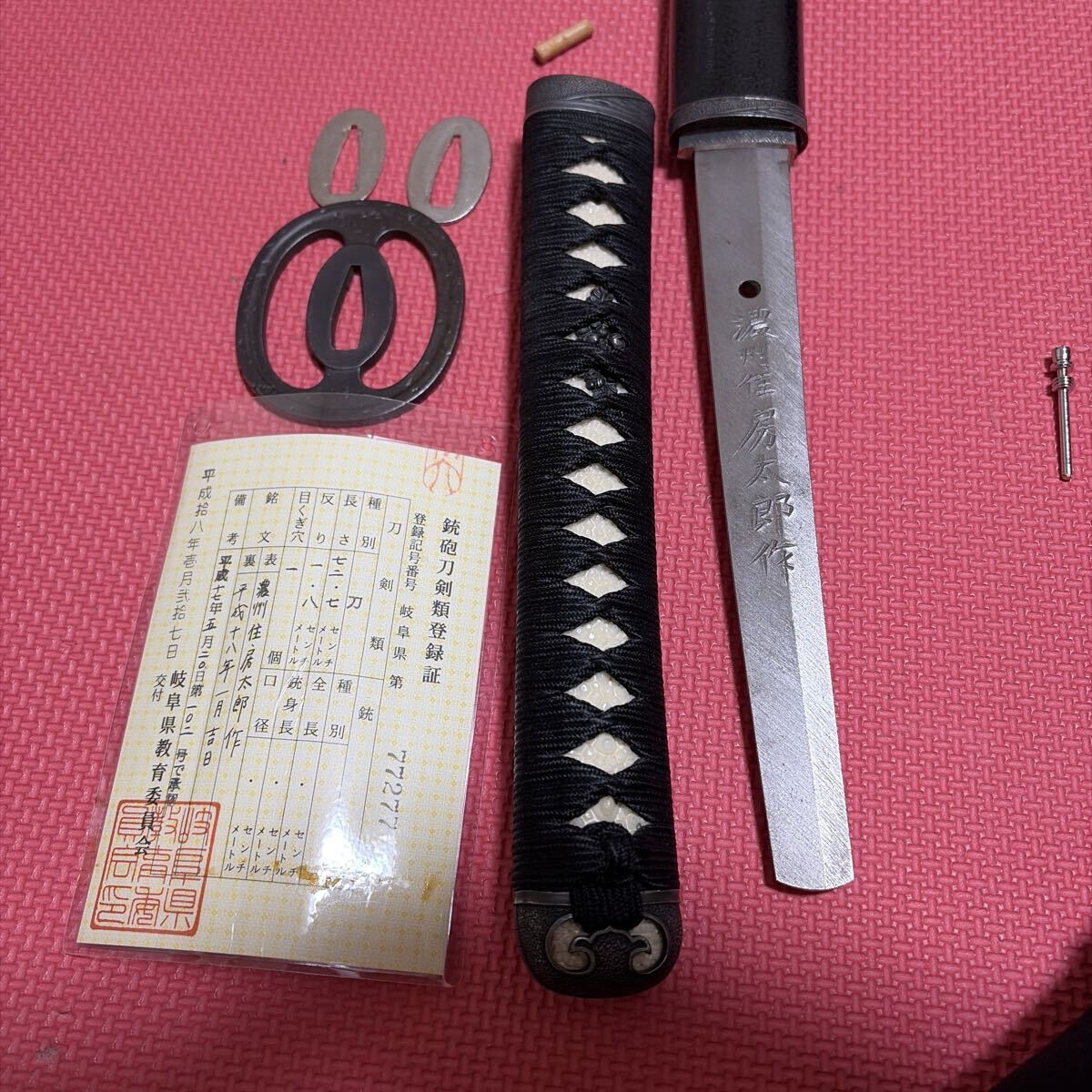
Mei reads 豫州北条住博正作, so yes, this is Yoshu (豫州 or sometimes 予州)! Short(?) for Iyo no Kuni, nowadays Ehime Province.1 point
-
This is the WWII era swordsmith Torio Hiromasa (鳥生博正). This example is dated October, 1944. https://www.google.com/search?q=torio+hiromasa+site%3Awww.militaria.co.za&rlz=1C1ONGR_enUS1136US1136&oq=torio+hiromasa+site%3Awww.militaria.co.za&gs_lcrp=EgZjaHJvbWUyBggAEEUYOdIBCDI3MzNqMGo3qAIAsAIA&sourceid=chrome&source=chrome.ob&ie=UTF-81 point
-
@xiaopangshizi i found the story of your tsuba. It's from nihon shoki poem "Agatamori battling mizuchi in the pool" Here a passage of wikipedia "The ancient chronicle Nihongi contains references to mizuchi. Under the 67th year of the reign of Emperor Nintoku (conventionally dated 379 AD), it is mentioned that in central Kibi Province, at a fork on Kawashima River (川嶋河, old name of Takahashi River in Okayama Prefecture), a great water serpent or dragon (大虬) dwelt and would breathe or spew out its venom, poisoning and killing many passersby. This mizuchi was exterminated by a man named Agatamori (県守), ancestor of the Kasa-no-omi (笠臣) clan. He approached the pool of the river, cast three calabashes which floated to the surface of the water and challenged the beast to make these gourds sink, threatening to slay it should it fail. The beast transformed into a deer and tried unsuccessfully to sink them, whereby the man slew the monster. The record goes on to say: "...He further sought out the water-dragon's fellows. Now the tribe of all the water-dragons filled a cave in the bottom of the pool. He slew them every one and the water of the river became changed to blood. Therefore that water was called the pool of Agatamori"." Could you make 2 good pictures of the tsuba front and back for my archive? I like that motif and story very much.1 point
-
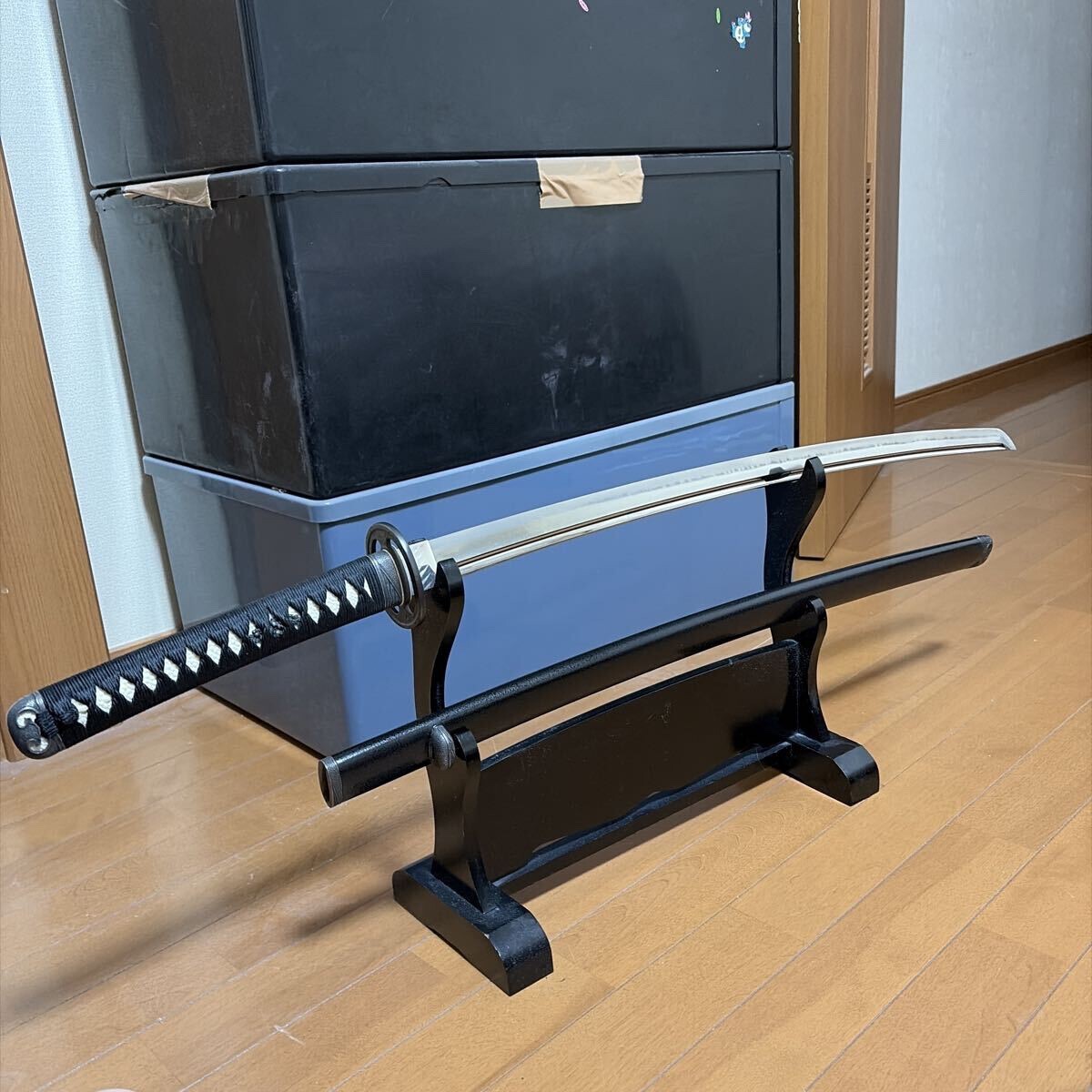
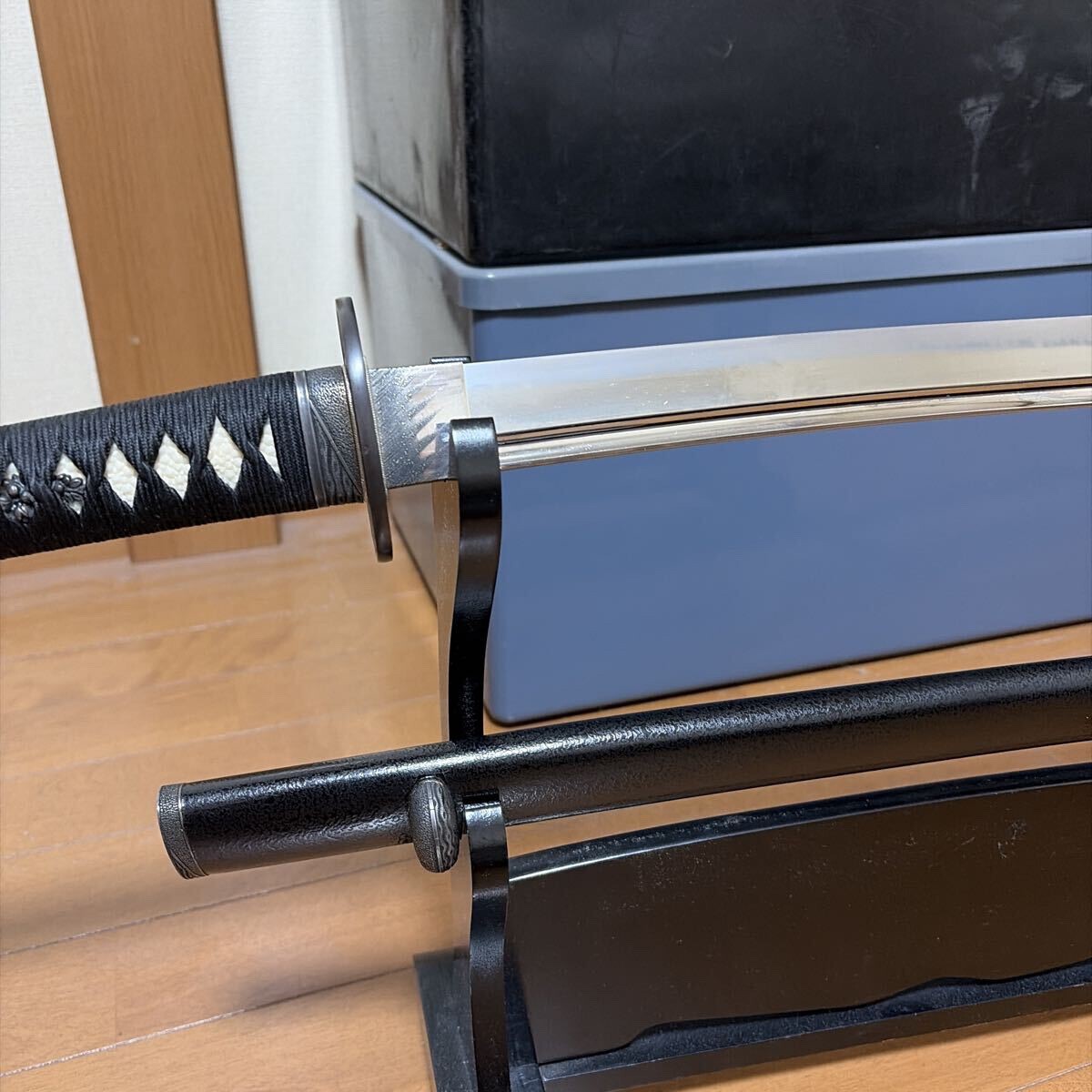
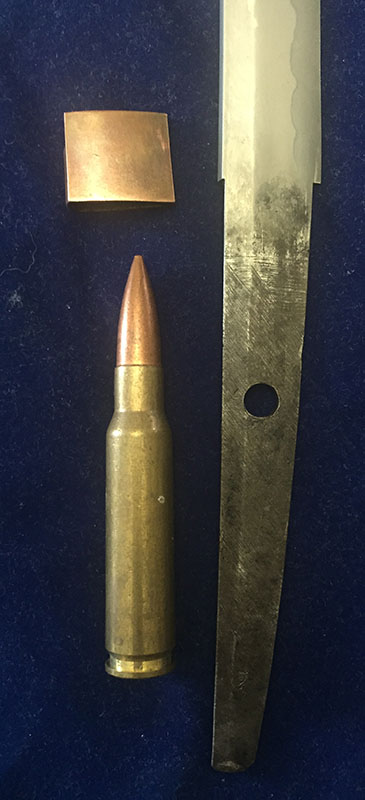
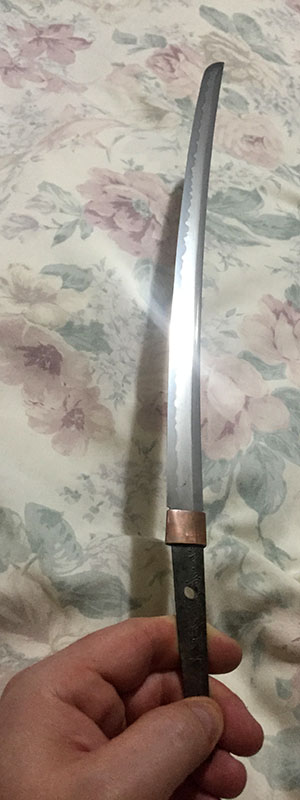
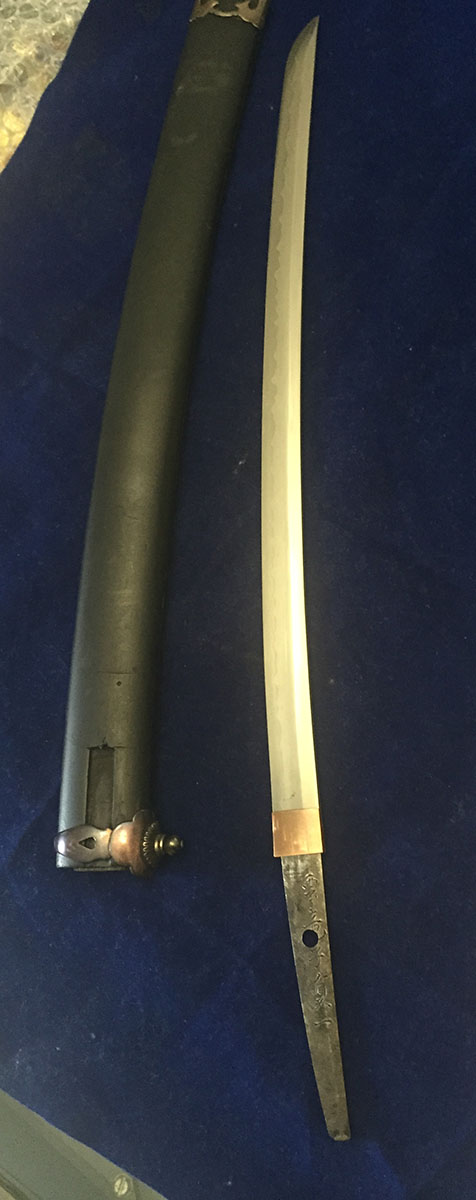
Quite a few threads on these, with varying opinions. Some say Boy's Day. Others say that those swords were not really for the festrival, and they are actually made for the birth of a child. Then others say that they are child's swords made for young Samurai. And some say they are made for Bunraku plays...where some of the puppets are high end, and very well made. Some of the swords are crude, most in fact. But it appears as though higher end miniatures do exist, and I recently came across one that is now mine after some negotiation. This one was saved from destruction many years ago by a knifemaker here. It appears as though the blade had been powder coated black when he got it, and he stripped the coating and etched the hamon, but luckily he was clever enough not to hit it with any power tools, or ruin the lines, and the etching hasn't caused any damage..very lucky. The sword is restorable. I was amazed when I got it. The pics made it look like a small wakizashi. But it is perfectly to scale, and tiny. Really cute. Every detail is perfectly done. Because of the acid etch, I can't really tell if the hamon is nie or nioi, but under magnification I think I see some nie. And I won't know if it has hada until I can get it to a polisher. But I hold some hope that it does. It appears to be signed Sadakazu. Of course that is seriously wishful thinking. But the signature is less than half normal size, the yasurime are perfectly done, and I do have a 5% hope it was made for some wealthy family. It only has a saya, but the level of technique there is also impressive. Taking off the single hanger and the ishizuki, the saya was able to come apart, revealing an outer and inner layer of wood, with touches like horizontal striations inside the top of the saya where the (TINY) habaki sits. I also later saw some symbols on the fittings, that are repeated numerous times in gold and silver...2 triangles facing each other. Not sure if that is a mon or what, but they indicate higher class to me. This is a tiny sword. Nagasa is only 343mm, and at the machi it is only 8mm across (mihaba) and 4mm thick (kasane) So there you have it. The pics look like they are distorted by perspective etc, but that's actually how big it is . I don't have giant hands Think I want to get this one restored and see how it is made, and put it into shirasaya. Not sure I'll find fittings for it...not with those dimensions, and don't want to get them modern made. I wonder how it was mounted before? The single ashi might have had a second one...but won't move lower down currently. I assumed it would have been mounted tachi style, but it's signed katana mei. Lot of effort in this one, and I am really enjoying it. So..comments on this style of sword in general? (.308 cartridge for scale, since it was handy at the time Also pictured next to an average out of polish wakizashi with regular proportions)
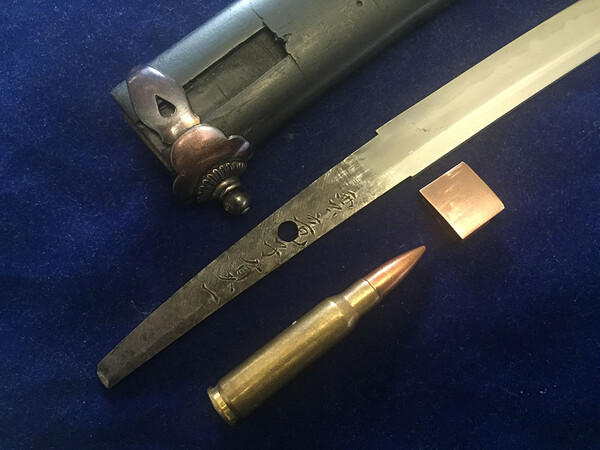
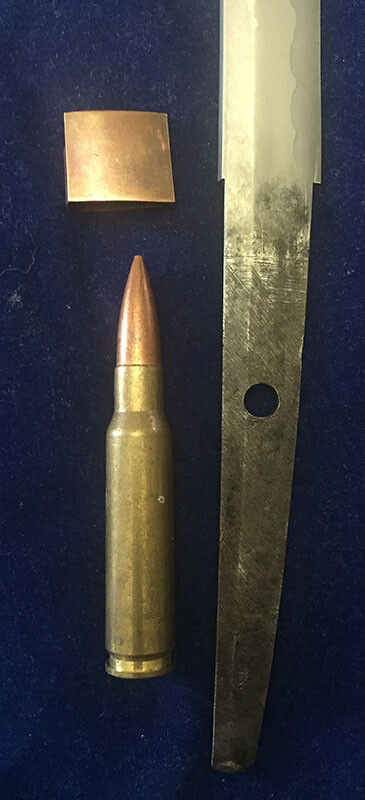
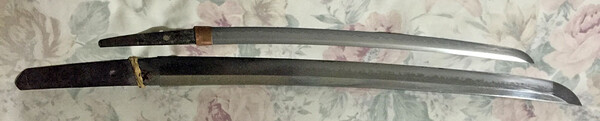
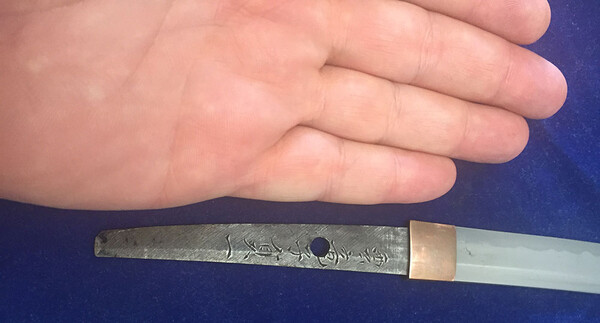
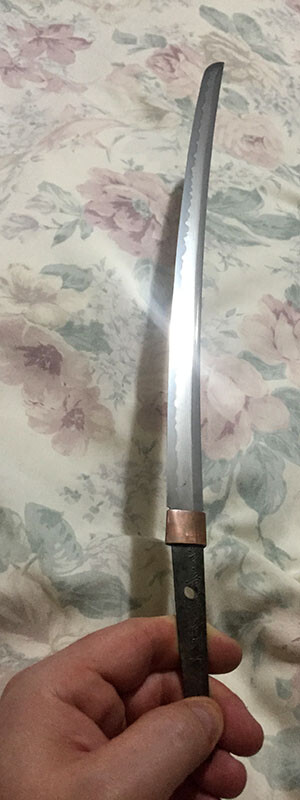
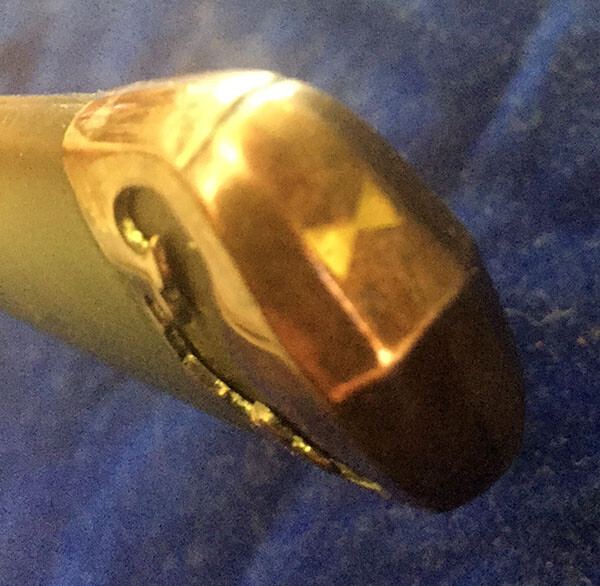
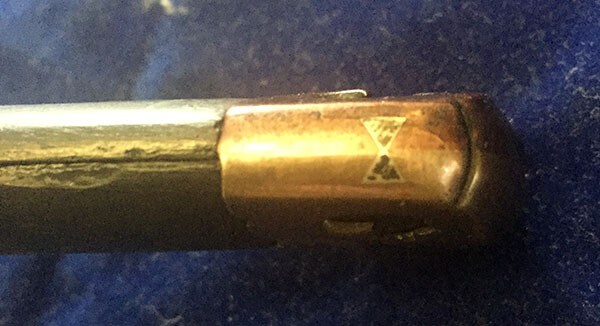
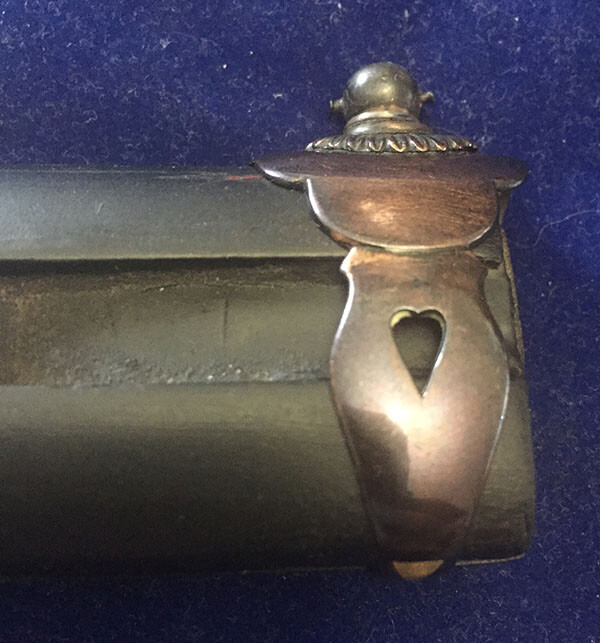
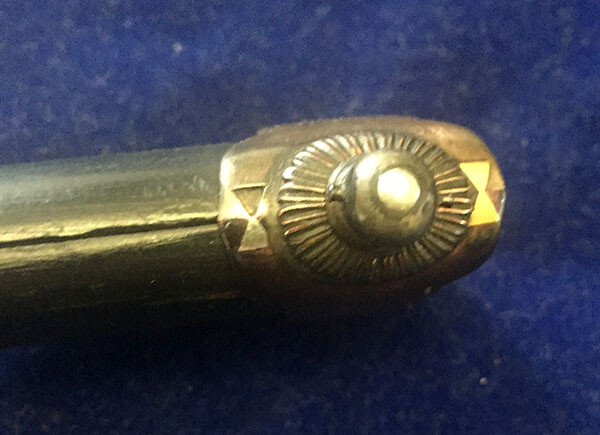
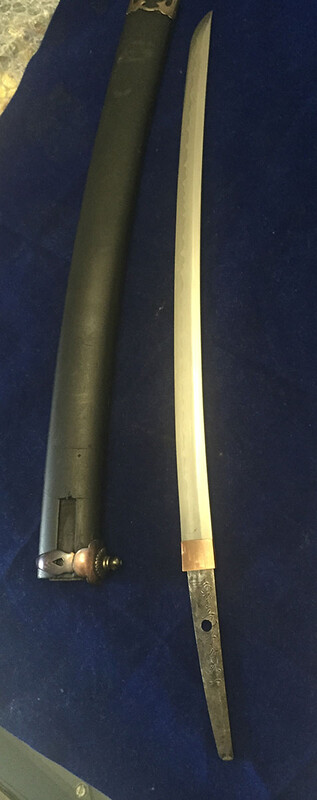
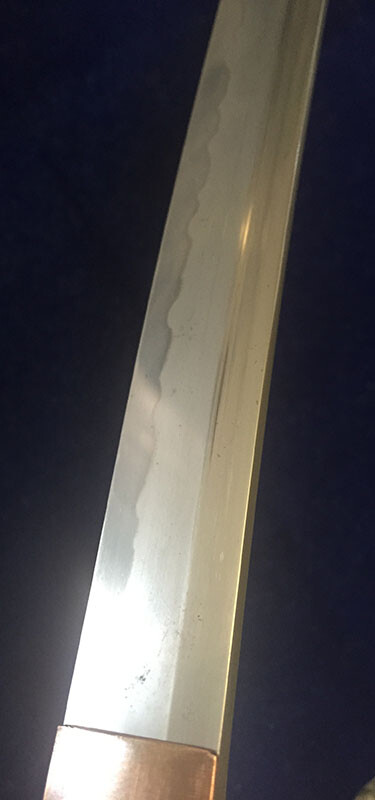
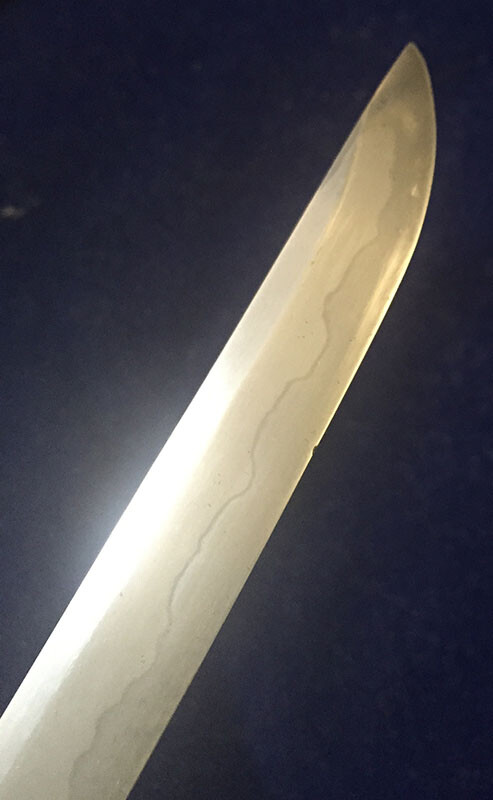
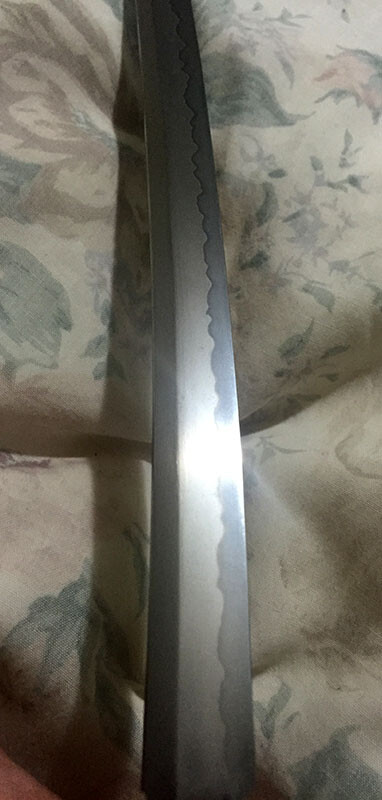 1 point
 -
Spider web in the rain habaki! Where is the spider?1 point
-
I get what you are saying but we can see Hanabishi for example in both areas. Actually my own sense is that the artisan chose some brass Mon (rimmed) disks almost at random, for the pattern rather than any affiliation.
 1 point
 -
Dear Emil. As no one else has answered you I will offer my thoughts. I have not been able to find this idea in Nagayama so I may have misunderstood your question. The mitsukado is not generally considered to be an indication of the smith's skill or lack of it, the boshi most certainly is. During yakiire the smith is controlling a sometimes very long blade and controlling the temperature in the boshi is a very skillful thing to do. Hence a well done boshi, one which demonstrates the smith's control, is indicative of a high level of skill. (See page 108 in Nagayama) The smith is responsible for the sugata of the sword and in this case forges the kissaki to shape and then the polisher is the one who finally defines the precise shape of the blade though in theory the polish will remove very little metal and the polisher will have a high regard for the intentions of the smith. It is conceivable that a poor polish might result in the mitsukado not being geometrically correct, the three lines that meet here are the result of three surfaces and poor shaping could result in the lines not meeting here. I have seen polishes where the yokote has been poorly applied and seems to miss the junction, for example. You would not expect to see such things from a properly trained togishi. Hope this helps. All the best.1 point
-
Although possible, I don't think this is for Bunraku. I think it is a real sword, traditionally made, just for a child or very wealthy family. Basing this on the workmanship, hamon, and what I think may be hada in places. It is so well made, I still have a tiny hope it is shoshin, although reality says it probably isn't. But it isn't out of the realm of possibility based on the time period and work that the smith was doing at the time. It wasn't a period of conflict...so commissions would have been common. But maybe just getting my hopes up. The "mon" are interesting and unusual. Must have meant something to someone, as they are not blatant.1 point











.thumb.png.54593db2789c8a1dcb235543b184ce39.png)

























This leaderboard is set to Johannesburg/GMT+02:00