
Leaderboard

.thumb.png.54593db2789c8a1dcb235543b184ce39.png)
.thumb.png.4c5df79fec171b2dc4a23af38e280a4d.png)
Popular Content
Showing content with the highest reputation on 07/05/2026 in all areas
-
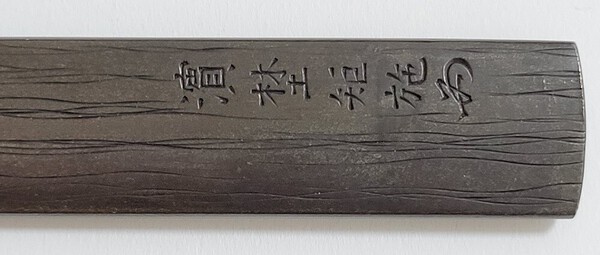
Hi NMB, I've been away from the board for a bit due to work but figured it was time to share my latest Hamano school acquisition. I picked this kozuka up direct from a Japanese dealer (shoutout Touken Matsumoto!) for what I think was a great price overall. This is a Tokubetsu Hozon papered kozuka by Hamano Noriyuki II, signed with his youthful gō prior to assuming his position as a master of the Hamano school (Norimasu). The piece features some beautiful takabori and the theme is Shinkiro (sea mirage) featuring shells which is a motif Noriyuki is famous for. The timing of this piece as it fits into Noriyuki's early career also makes for an interesting point of reference or study! I will keep looking to expand my collection of Hamano school fittings so that this piece has friends...

 9 points
 -
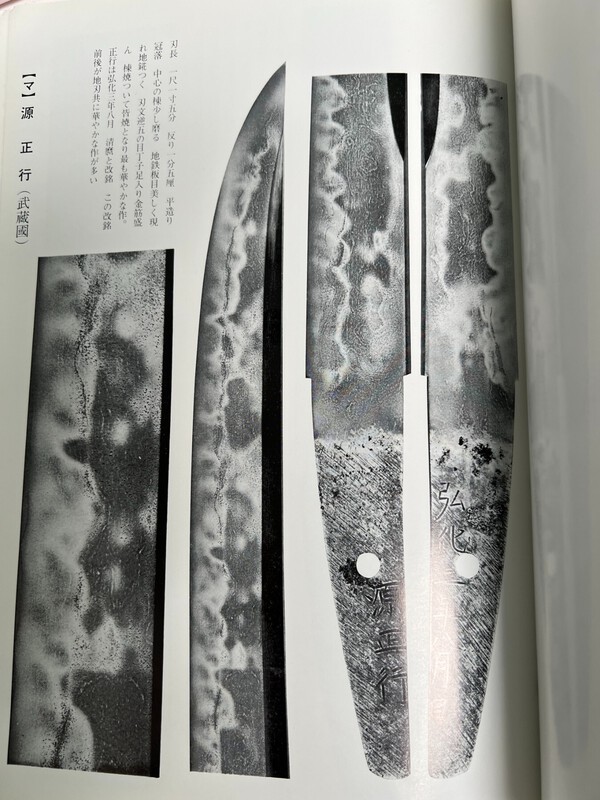
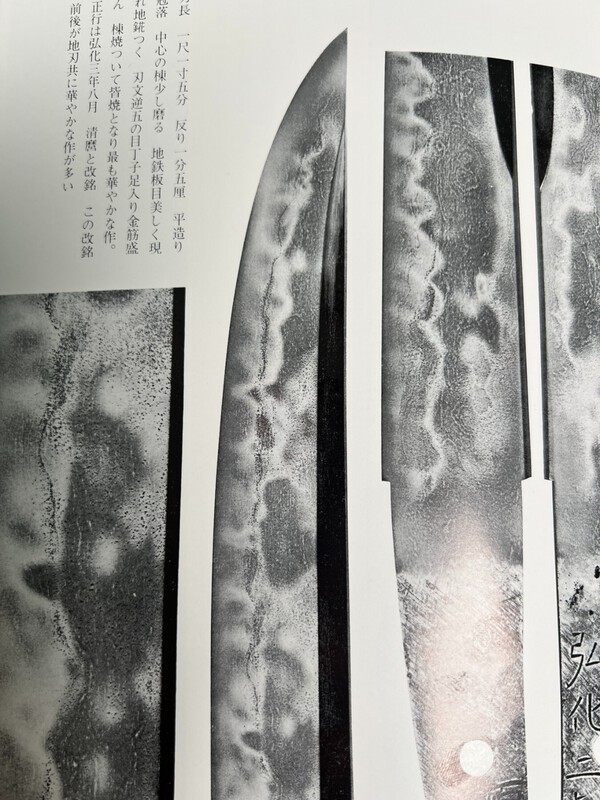
I go first! (This is from Fujishiro Sensei's Meito Zukan, episode 15, "the most gorgeous work" per Fujishiro Sensei, best 34900 Yen I ever spent on a book)


 7 points
 -
Simply wonderful! Attached an image of another Masayuki Wakizashi .. still trying to find out who currently owns the attached shown blade.

 5 points
 -
The sword arrived yesterday and it s more than I could have ever wished for 🙏🙏🙏. I ve looked at every millimeter of this blade and there s not a single area showing any hint of age or loose hada. The entire blade is just coved in activity and every millimeter of the nioiguchi is bright and brilliant. Just amazing what an upper sue bizen blade can be. On top of it all it has massive .9 cm kasane and sits at just about 900 grams. Will definitely try to take more photos with some professional gear and try to capture as much of the hataraki as I can


 5 points
 -
春明法眼 - Haruaki Hogen5 points
-
Lovely! The story is of course Urashima Tarō, and the word Shinkiro literally means ‘spirit (dream) of the giant clam’, which is what people thought they saw when observing a mirage over the sea. In this case the dream is the towers of Ryugu Jo Castle under the sea where he was entertained by the Sea Princess. I have some Netsuke and Ukiyoe on this same story.4 points
-
The translation:
 3 points
 -
In the box. 企, but one stroke missing. Artistic license? 川 口 Not having much luck, but (Kigyo?) Kawaguchi is the closest I could get so far. A museum in Kawaguchi City, Saitama Prefecture. On the right, fuzzy but 企 again (?) plus 五 with the top stroke missing, which is an old way of writing 5. Maybe way off, but giving up for now. The answer must be out there. Anyone? PS Are you sure it's a woodblock? Last long shot, Elly Kawaguchi3 points
-
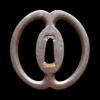
Very interesting habaki design, and even more so that the tsunagi replicates it.2 points
-
Hi Marcos do you have any pictures of the sword?2 points
-
For reference re Somada: https://collections.lacma.org/object/850652 points
-
2 points
-
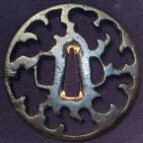
http://aoijapan.com/img/fittings/2012/F12449.jpg Akasaka https://www.aoijapan.net/tsuba-mumei-unsigned-akasaka-school-tsuru-kame-sukashi/ Bushu ju Akasaka https://www.choshuya.co.jp/senrigan/鶴亀図透鐔 銘 武州住赤坂彦十郎忠時/鍔/忠時 https://eirakudo.shop/tosogu/tsuba/detail/481005 Higo papered as Higo https://wakeidou.com/pages/365/ indeterminate https://rafuju.jp/products/detail.php?product_id=8291202 points
-
Apparently I didn't overspend: https://nihonto.com/unusual-tsuba-by-nobuie-信家鐔 110222/ Of course my new acquisition doesn't have papers and nothing really by way of provenance - but I think I got a bargain! Thank you all for your thoughts and thank you Steve for pointing me in the direction of Echizen Nobuie.2 points
-
I love this community! Just one Sayagaki and we have people from the USA, Australia, China, Japan & a nod to Canada all working together in a common cause to translate it! Let this never change!2 points
-
The first part of the date desicription is 旹秊. 旹秊 (Jinen) – the year 旹 and 秊 are variations of 時 and 年 respectively.2 points
-
Allow me to correct only one character. 九字銘有之而製作年紀ガ消サレ二月日ノミ残存ス a nine Kanji signature with its date erased (or faded?), only “a day in February” remaining2 points
-
Why do I have to found this right before my party and away from Chengdu…… If I am not hungover too much tomorrow morning, I can help with this! Also I can't get Grammarly to work on my iPhone so I guess it's finally time for people to find out my illiteracy…… Wait, the drive to party is way longer then I imagined, so here is the Japanese text, might have some minor errors, working on the translation! 備前国住長舩清光作 Bizen no Kuni Jyu Osafune Kiyomitsu Saku 九字銘有之而製作年紀ガ消サレ二月日ノヲ(edited: ノミ)残存ス a nine Kanji signature with its date erased (or faded?), (edited: only) “a day in February” remaining 俗名無キト雖モ孫右衞門尉ニ紛レハ無ク Although not signed in Zokumei, no doubt a work made by Magoemon no Jou 蓋シ年號永禄ナラン the date should be Eiroku (1558-1570) Ok I think I have reached the appropriate amount of time looking at my phone at a party so…… edited: Phew! A full bottle of white wine and some Baijiu, nothing this Baby Joe chouldn‘t handle. Anyway…… 頑健ナル先反ノ造込而板目ニ地沸ヲ敷キ Robust and a Tsukurikomi with Sakisori, (Kitae-wise mainly) Itame and with Jinie, 肌目ノ立ツ鍛ヘニ得意ノ廣直刃ヲ焼キ足・葉入リ沸ツキ Hada Tachi, made in his signature wide Suguha (Hiro Suguha) with (many) Ashi and Ha and (Ha) Nie 横手下ニハ彼ノ個性ナル縦長ノ葉ガ見ラレ vertically long Ha can be seen under the Yokote as maker’s personal trait 其持味ヲ明示スル優品也 showing the smith’s charming characteristics, truly a great sword ("優品/Yuhin", as in Yuhindo’s Yuhin, literally “a superior work”, a very positive and rare comment by Tanzan Sensei, and long live Mr. Brockbank, a great person I never had the honor of meeting in person but from whom I learned so much, not just Kantei Kanshou but also how to act when faced with ignorance or greed. Very rough translation, more detailed information like “what’s Ashi, Ha or Hada Tachi” might be added in the morning when recovering from hungover orz ↑……Ok perhaps just googling them will do it orz2 points
-
The gold standard for translations is Markus Sesko.2 points
-
I do not think I have ever seen a Tanobe-sensei sayagaki without a kao. I suspect it is on the other side.2 points
-
Awesome clean up Dale You always manage to get the best deals! And that's thanks to the fact that you've trained yourself to have a good eye, and have a lot of patience and dedication to go a long with it.1 point
-
This strikes me as later work than that... I would have thought Bakumatsu Period (or in that ballpark, 1800-1850) Hamano work or possibly Iwama school... Agree with you that it is a nice piece and better mumei than gimei.1 point
-
Thanks for the help piers. I had the number 5 on my notes but I had it as the fifth month.im not sure it is a woodblock it looks a bit to crisp and sharp but it is listed as one .Elly Kawaguchi has some you tube videos I've had a quick look at her art it could be her.i though it was a modern piece by a younger artist and she fits that profile perfectly.im going to watch the rest of her stuff on YouTube and see if she's done many kio carp pictures.thanks again piers .I will keep you posted1 point
-
1 point
-
(Juyo Bunkazai from Izuyama Shrine, both this and the Kokuho are mentioned in the Toku-Ju description as similar Kiriha-Zukuri Ken, while this Ju-Bun one is closer to Toku-Ju)
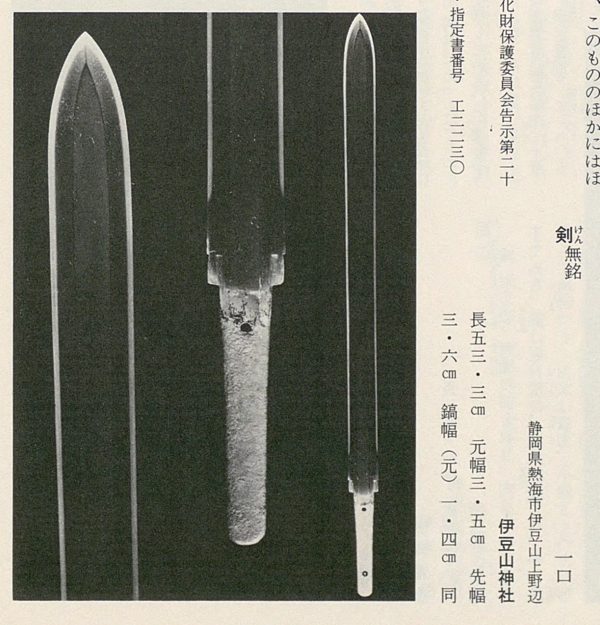 1 point
 -
If you mean that the head of the Bisen screw has a hole through it, that is the hole for insertion of a special iron 'bisen-nuki' pin for screwing and unscrewing it. Brass would bend too easily. If you like I can post two or three original examples. There is a way of relining the bore for competition shooting which involves inserting a thin-walled metal cylinder to create an inner lining. I am sure this would be easier to do within the USA today than over in Japan where regulations make anything weapons-related more than just difficult.1 point
-
I was browsing Aoi Art recently and this listing stopped me in my tracks. It’s a Mumei katana attributed to Den Masamune with NBTHK Tokubetsu Hozon papers. It features a Sayagaki by Hon'ami Choshiki (dated 1884) which Aoi Art seems to rate highly. https://sword-auction.com/en/product/29329/as25618-刀:無名伝-正宗特別保存刀剣委託品/ I was surprised to see a piece with this attribution available publicly like this. Has anyone here had a chance to look at the photos in detail? I'd be interested to hear your thoughts on the blade and the attribution.1 point
-
Number 18 is from a particular school the darker image is from the Walters Art Museum https://art.thewalters.org/object/51.298/ The museum has trouble with lighting its items! https://www.city.toyama.toyama.jp/etc/muse/tayori/tayori05/tayori05.htm "In the Toyama domain, the second lord, Maeda Masatoshi, invited Somada Kiyosuke, a master of mother-of-pearl inlay work. From then on, the Somada family inherited the mother-of-pearl inlay technique and continued to produce works. Mother-of-pearl inlay was highly valued and was apparently used as a gift from the domain. Perhaps this tsuba was also made as a gift. The intricate patterns are beautifully expressed within the limited surface area, demonstrating the high level of skill of the Somada family."1 point
-
Either a Gimei, or much later generation.1 point
-
Hello all! The weblink below is a monthly star chart guide to constellations and star patterns visible in Japan. It may be of interest. https://www.nao.ac.jp/en/gallery/chart-list.html Also, I put the question to AI of what constellations are visible to the naked eye in Japan. The answer is shown below- “Because Japan shares similar latitudes with the rest of the Northern Hemisphere, stargazers can view nearly all northern constellations year-round. Constellations change with the seasons, with summer and winter offering the clearest, brightest skies. [1, 2, 3, 4, 5] Key Constellations by Season Summer: The Summer Triangle dominates the night sky, made up of the bright stars Vega (in Lyra), Deneb (in Cygnus), and Altair (in Aquila). You can also spot Scorpius low on the southern horizon, recognizable by its red supergiant star, Antares. [1, 2, 3, 4, 5] Autumn: The skies cool down to reveal the Great Square of Pegasus. Andromeda and Perseus are also easily visible, and from very dark skies, you can spot the Andromeda Galaxy with the naked eye. [1] Winter: Winter provides some of the most spectacular viewing, featuring Orion (the Hunter) and his belt, and the dogs Canis Major (home to Sirius, the brightest star in the night sky) and Canis Minor. You can also clearly see Taurus and Gemi Spring: You can look for Ursa Major (the Big Dipper) swinging high overhead, which acts as a helpful pointer to the North Star in Ursa Minor. Leo (the Lion) is also prominent. [1, 2, 3, 4] Iconic Asterisms Subaru (The Pleiades): While technically an open star cluster in the constellation Taurus, this is arguably Japan's most famous naked-eye celestial sight. The cluster is known locally as Subaru (meaning "to unite") and is instantly recognizable. The Milky Way: The radiant band of the Milky Way is clearly visible to the naked eye throughout the summer and early fall. [1, 2, 3, 4]”1 point
-
Hi Florian, I stand more chance of unaided flight than I do understanding that map! But surely the stars do not move around? The constellations are the same wherever they are viewed from? I am simply comparing what is on that tsuba to the Little Dipper…..and the match looks very near, almost exact ….would you agree?1 point
-
I totally agree with you Jacques However, the reality is that access to studying the blade in hand is very limited Just look at our European collectors (and not only them) Many don't even share photos of their collections - including you Not to allow the study of their blades in hand Great photos or video are not the same as a blade in hand However, they can please the eye of a nihonto enthusiast1 point
-
Just to add to the debate……some of these are definitely not shippo patterns but do look like constellations imo. Why some have a Ken on the end?……representing a dragon constellation??
 1 point
 -
There are so many ways you can look at this, and there may never be a convincing answer. You could even say for example that the Shippō pattern itself developed from people looking at the stars, and maybe seeing random patterns. In Japan of course they would not have seen the same Mediterranean mythical figures or creature shapes up there, though you do find allusions to the Hokuto shichisei 北斗七星 One of my netsuke could be a star map, but that is only one interpretation of it and other possibilities remain. I do not feel the need to come down on one side or another. My own feeling is that we are free to look at Shippō patterns and make mental associations, and that such poetic lateral association or subtle allusion is an active feature of Japanese art.1 point
-
Although there are similarities to star constellations these seem only coincidental. At least the mentioned constellations have different intervals between the stars. The idea of this scattered (chirashi) shippo-pattern (like many other patterns) is imperfection to symbolize transience and decay.1 point
-
Modified Roman numerals “19“. Do the fittings have stamped numbers that might correlate?1 point
-
Type (Tachi, Katana, Wakizashi, Tanto, Naginata, Other) : Wakizashi Ubu, Suriage or O-Suriage : Ubu Mei : (Mumei, Signature) : 前伯州信高入道 Papered or not and by whom? : NBTHK Tokubetsu Hozon Era/Age : Kanbun Shirasaya, Koshirae or Bare Blade? : Shirasaya Nagasa/Blade Length : 37.0cm Sori : 0.5 Hamon Type : Toranba Jihada : itame / ko-itame / hint of masame Other Hataraki Visible : dynamic hamon showcases big waves surging and cresting, interspersed with tobiyaki resembling water droplets.The hardening of the hamon's edge is densely covered with fine nie, producing a bright and sparkling clear appearance. Within the hamon, a deep yet soft nioi spreads, with faint traces of sunagashi, resulting in a richly textured interplay of nie and nioi. Flaws : Blade is in older polish, no scratches but may have a few very small/minor kitae-ware or polish ware, but can easily be corrected with an updated polish. Sword Location : USA Will ship to : Worldwide Payment Methods Accepted : PayPal, Bank Transfer Price and Currency : $3500 Other Info and Full Description : Blade is currently with Moses Becerra awaiting a new polish and koshirae. If purchased, I have already covered the cost of new polish for you (so you will get a new polish for free) and the koshirae work can be cancelled. If you do not want Moses to polish it, simply let me know and no worries. Really a powerful wakizashi.

 1 point
 -
Thank you everyone for the help and esp @YourBabyBjornBorg for the help with the characters 🙏🙏🙏🙏 After adding everything up this is what I have so far if the translation is correct "Bizen Koku Ju Osafune Kiyomitsu Saku" The tang bears a nine-character signature. The portion containing the date of manufacture has been erased, leaving only "2nd month, day" (二月日). Although no personal name is recorded, there is no doubt that this is the work of Magoemon-no-jō Kiyomitsu (孫右衛門尉清光). The era is most likely Eiroku (1558–1570). It is a robust work with a pronounced saki-zori. The steel shows a well-forged itame-hada with abundant ji-nie, and the grain stands out clearly. The blade displays Kiyomitsu's characteristic wide suguha, containing numerous ashi and yō activities. The temper is rich in nie, and just below the yokote appears his distinctive vertically elongated yō, a hallmark feature that clearly demonstrates his characteristic workmanship. This is an excellent example of his work. Blade length: 2 shaku, 3 sun, and 4 bu 5 rin. Written by Tanzan in the month of Rinchū (6th lunar month), in the year of Hinoe-Uma (Fire Horse).1 point
-
Look forward to pictures of the sword, sounds like an excellent example.1 point
-
@YourBabyBjornBorg Oh my godness thank you so much for this !!1 point
-
Hi @Bugyotsuji This was the Eisho 10 Kiyomitsu I used to own https://eirakudo.shop/018294 I have noticed over the last few years that the mei in Eisho Kiyomitsu blades vary significantly. Interesting since there s only one Kiyomitsu smith recorded. I will say the Jigane and hamon on your tanto looks extremely close the sword I owned


 1 point
 -
The Hideyoshi Koshirae also appear in Paul Martin's book:


 1 point
 -
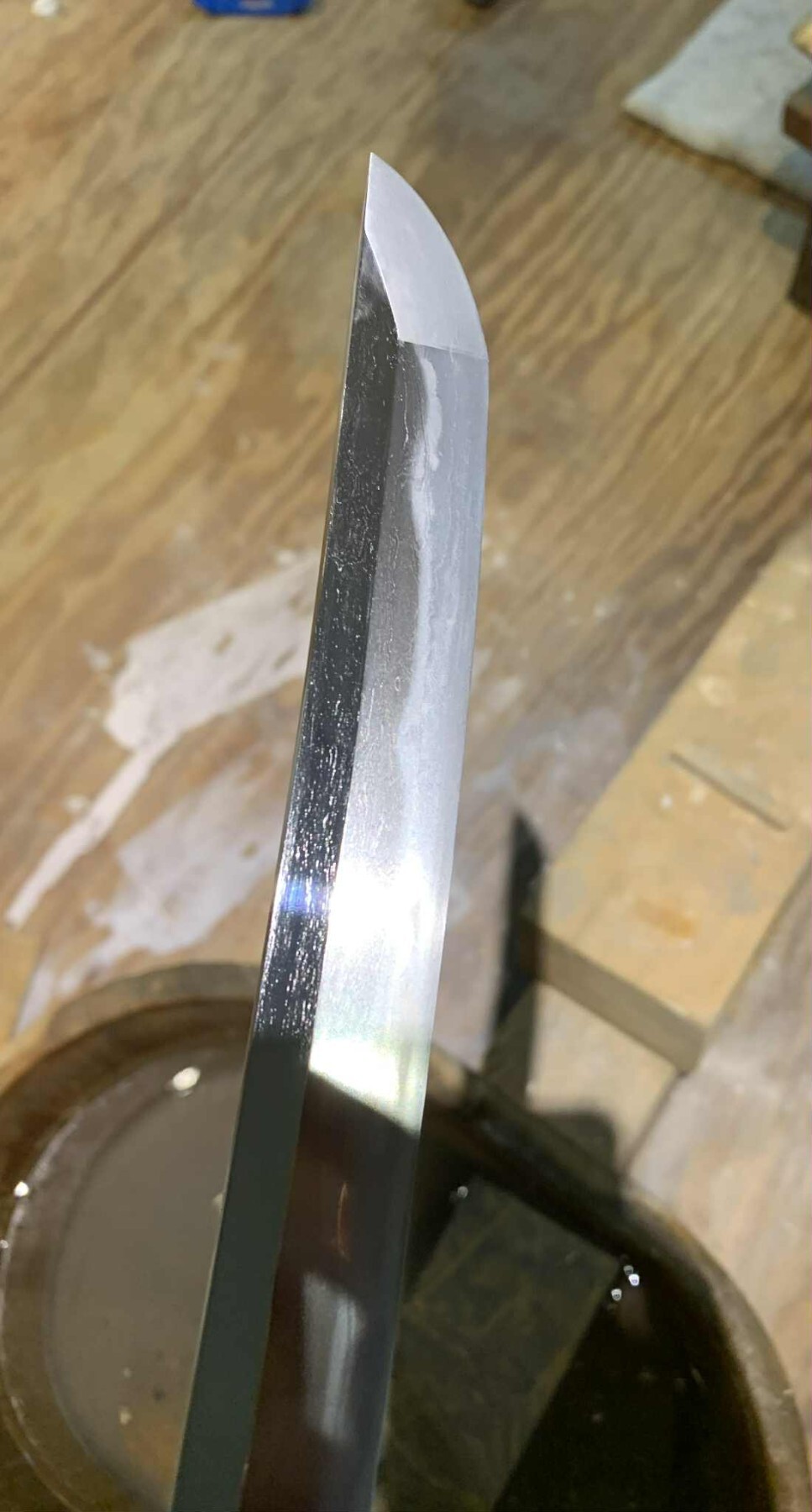
I agree, to me those lines look like ware, rather than just a colored wrinkle.....not a very good picture though1 point
-
Just a wild guess from a distance, but the surface steel seems to suffer from lenghtwise cracks appearing when a bent blade is straightened again. reinhard
 1 point
 -
@Gakusee Regard the TJ Masamune tanto, when you used the word “upgrade it to Masamune” is not entirely correct because at Tokuho, the blade has the paper and the sayagaki by Dr. Honma that attributed it to Masamune. So at Juyo, the current Shinsa team was bold enough to reattributed it to Norishige. The last owner then ask Tanobe Sensei to wrote a sayagaki, in which he attributed to Masamune despite the Juyo paper. So at Tokuju , the Shinsa panel yielded and reverted the attribution back to Masamune. This also resulted in very unique Tokuju paper, where they spent a lot of time saying why its not the other smith rather than just saying why it is that particular smith. So my point is that its not really an upgrade if it was already a Masamune.1 point
-
one of the nicest boshi i've seen so far.
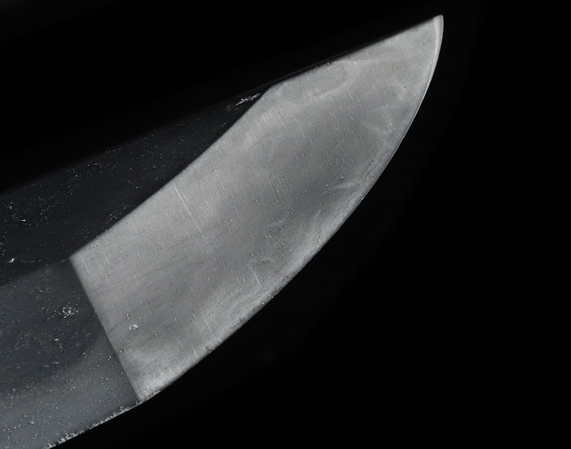 1 point
 -
In its current state? Not as a Masamune (remember that it has to be compared to other examples of high level Soshu work and be considered in the upper range, not just in quality but in state of preservation). Not unless there's a particularly special historical significance to this particular sword, which doesn't seem to be the case or it would surely have been documented in the listing to help with the sale. It could potentially pass as a really good example of a lesser smith, in which case the listing price would lose a couple of zeroes, but I suspect the fallout of such a move wouldn't be worth the hassle for the current Juyo committee (or the person trying to sell it at its current price). Much easier for all parties involved to just say "it's old, it's worn, this is as good as it gets for what it is, take it or leave it".1 point
-
42 milions yen, would it ever pass juyo?
 1 point
 -
Hi, I am bothered by this blade and I am not too keen comment, but I will do it to honor Darcy's memory. A newcomer to this hobby will inevitably have his perception shaped by Aoi's offerings, which as one comes to learn, are arbitrage opportunities for blades that do not make it in Japan, with few exceptions. One must learn from great blades first and foremost, and such a sword is an experience that teaches the wrong things. Some context: I find it irresponsible of Shinsa to make a call to "Den Masamune" on such a sword. One could argue that they've hedged it with "Den" - and unfortunately this is a misrepresentation. All Masamune without Kinzogan or Kiwame by the best Hon'ami judges or featured as Meibutsu are "Den" with only very few calls diverging from this pattern historically. Some of the Masamune blades without "Den" are shakier than the ones with Den, and so forth. It is not a simple attribution, and calls for deep contextualization. Then inevitably comes the unorthodox positions that Masamune doesn't exist, that he's unneeded, that this is evidence that his work is not that great, and so on, and so forth. I don't want to go there, I find it silly. Then there is the absurd claim by Aoi that "Choshiki was one of the most respected judges..." - Darcy used to say that an attribution by Choshiki means anything but. Since Tanobe sensei's departure from the Shinsa panel, the NBHTK is more swayed by Choshiki judgements than in the past. If you are really deep into this field, you know that since 2022, it is a good time to target blades with Choshiki attributions for Shinsa. There is only one "Den Masamune" in the Juyo record with a Choshiki attribution, and the setsumei states that this is the work of Shizu. Now, when faced with such a TH blade, there is no context on the attribution, and this absence of context is damaging. This absence of context is why Den Yukimitsu, Den Norishige, or Den Shizu are much safer harbors at TH and have been traditionally preferred before going so far as to calling it Masamune. Back to the blade in question. It is tired and has been extensively repaired. This sword has suffered a tragic accident in the past: it was twisted. Someone repaired it, and by untwisting it created a plethora of shinae, or bend marks. These shinae appear as ware/fukure along the ji. Some of these ugly openings have been filled with umegane. Choshiki calls attention to this fact in his Sayagaki, which has conveniently been left untranslated. While it is true that the extensive jinie of the blade, and the angular chickei and inazuma are characteristics of Masamune, this is all there is to it. And before people bring up "Ogiba" and other arcane Hon'ami things, just don't bother, no, this is not relevant anymore since the mid-20th century and the great cleanup of inflated Edo attribution. The sword is missing Masamune's defining trait: the highest class of nie executed in a nie kuzure that leaves no visible nioiguchi demarcation line. Masamune's nie unfolds in layer to the light, with different nie sizes reflecting light at different angles, leading to a kaleidoscopic effect which can only truly be experienced in hand. Unaffected Yubashiri emerge from the interplay at the hamon, fading in and out of existence when swiveling the blade. The deposits of nie form clouds of diamond dust. The contrast between ji and the ha is the brightest amongst all the Soshu Joko. The hamon is formed out of overlapping clouds of nie. It's unlike anything else. What "Masamune" means We don't have a time machine. At the end of the day, "who made it" remains an open question. While we know that Masamune existed historically (it is proven by pre-edo sources), we can never be sure that a particular hand made a particular swords, especially when the corpus of blades contains such a paucity of signed examples. Are the best works of Yukimitsu, Norishige, and others, likely to be absorbed in the Masamune attribution? Certainly, but this is true elsewhere as well. Within the Masamune attribution group, there is indeed great variety. Some have a distinct Ko-Bizen flair, others are veritable storms of inazuma crossing in and out of the ji with violent angular formations, and the last group are masterworks of such virtuosity that they truly defy understanding and fit absolutely nowhere else in the Soshu corpus due to the quality of their nie. All these blades have in common nie kuzure, unaffected yubashiri, and the feeling that the nie diffuses out into the ji as china ink spreading on paper. Masamune is a snowstorm over the ocean painted in sumi-e ink. Blades that leave you wondering if a human could have made it. Swords that stand in pure defiance to the laws of metallurgy. Masamune means perfection of nie-deki. Best, Hoshi1 point
-
The short answer to your question is yes. But that assumes there was only one smith using that name at the time, and that we absolutely know that as a fact, which often we don’t. For example, we now know of blades signed by a very young Jirozaemon Katsumitsu in 1489 which is much earlier than his stated work period listed in Fujishiro and other sources. So, if you have a blade signed simply Bishu no Kuni Ju Osafune Katsumitsu and dated 1489, you would probably think it was the work of the main master of the time, Jirozaemon’s father, Ukyo no Suke Katsumitsu, but you might be wrong. There are periods, especially in the later Muromachi, when smithing families ran large studios with slews of smiths using the same “generic” signature. In this, the Sukesadas and Kiyomitsus had some of the largest and most prolific production houses of their day to meet the demand for both mass produced and special order pieces. And lots of their work includes these inferior pieces, leading many to dismiss Sue Bizen as junk. This is why hardcore Sue Bizen collectors focus on and pay more for blades with Zokumyo Mei, which I will roughly translate as “full signatures” using their common art names, like Ukyo no Suke Katsumitsu, or Gorozaemon no Jo Kiyomitsu. These tend to be a key determining factor separating their top-of-the-line special order blades from early export pieces to China at the turn of the 16th century and later mass production “bundle swords” for rank and file troops during the height of the Sengoku Jidai. They are also a key factor in determining price. Fully signed and dated pieces are fewer in number, of higher quality, and thus the premium. (If I recall correctly, I remember reading somewhere that the Kiyomitsu line were not prodigious users of Zokuyomei but you should double check that.) So, if Markus has only one smith working at the time, chances are you are probably right that that’s the smith who made your blade, but not necessarily so. That is why it is so important to study the working periods and nuances of these smiths so you might be able to recognize the hand behind the generic work. To do that you must study Zokumyo Mei pieces carefully where you can find them. In Honma sensei’s Kanto Hibi Sho, (translations are available from Markus) you will see him parse the work of these smiths carefully, explaining why thinks a generic Sue Bizen blade might be the work of a particular smith in a studio. Like everything thing else in this crazy hobby, it takes time, book study and exposure to as many blades as you can find.1 point























This leaderboard is set to Johannesburg/GMT+02:00