
Leaderboard


Popular Content
Showing content with the highest reputation on 06/04/2026 in all areas
-
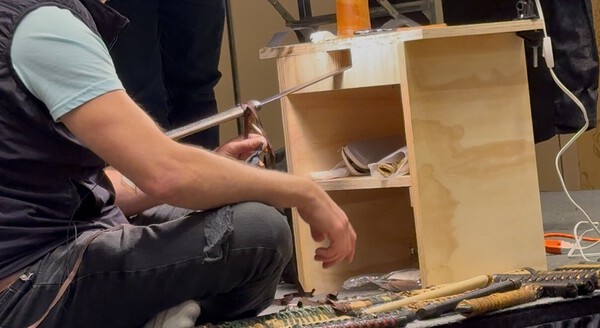
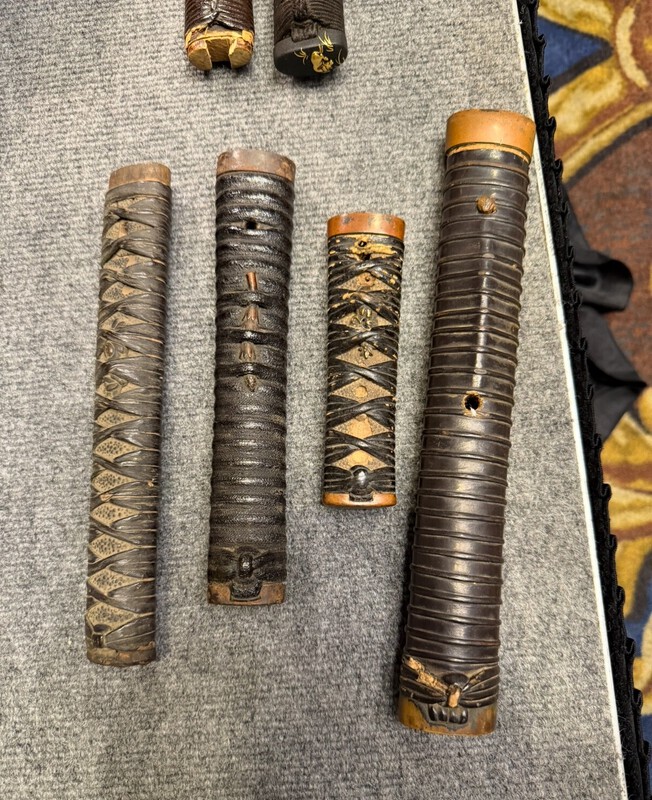
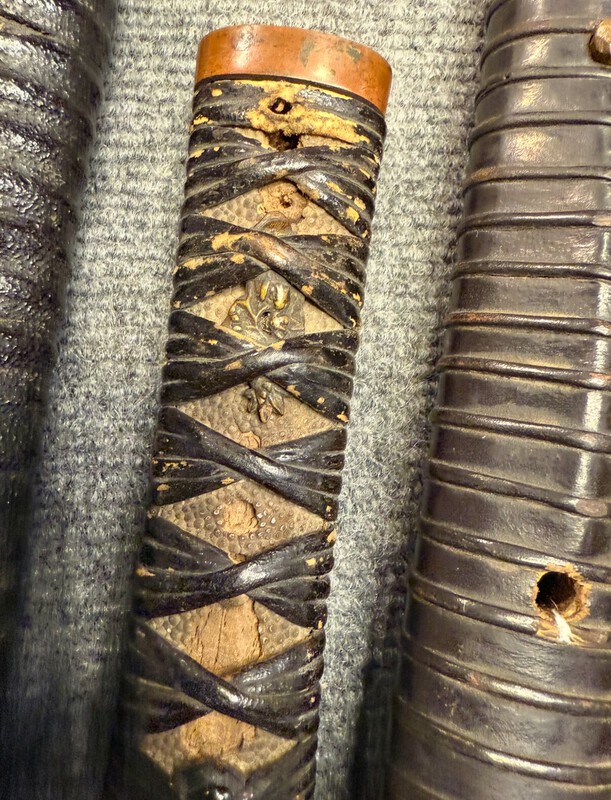
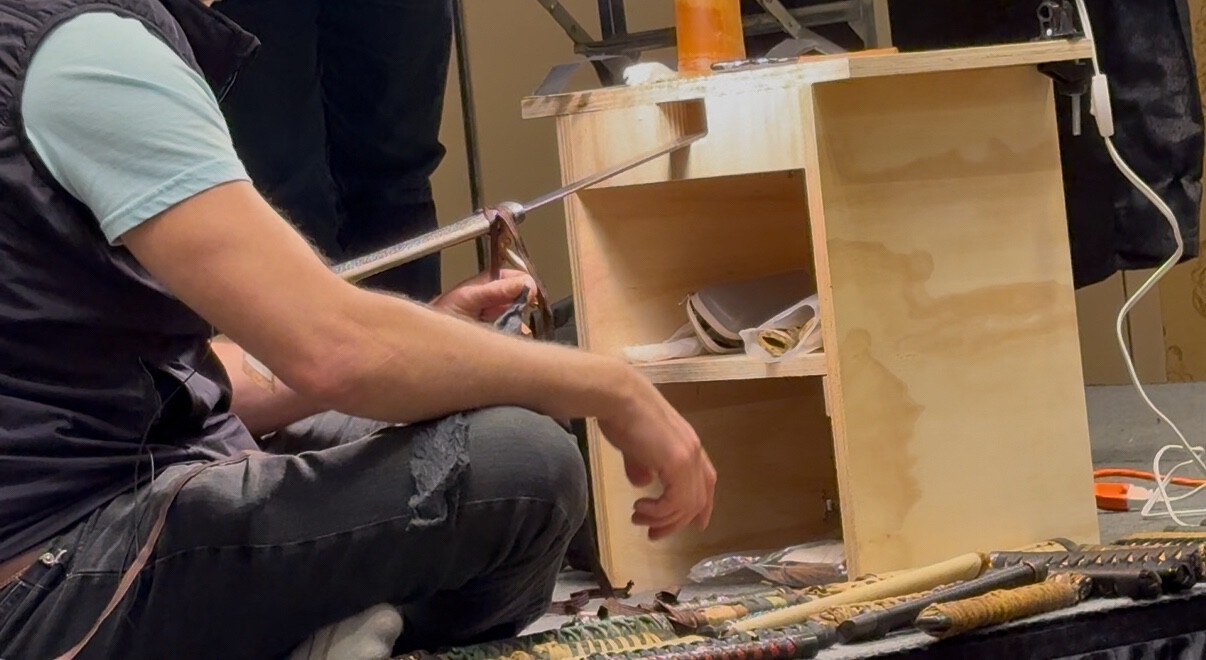
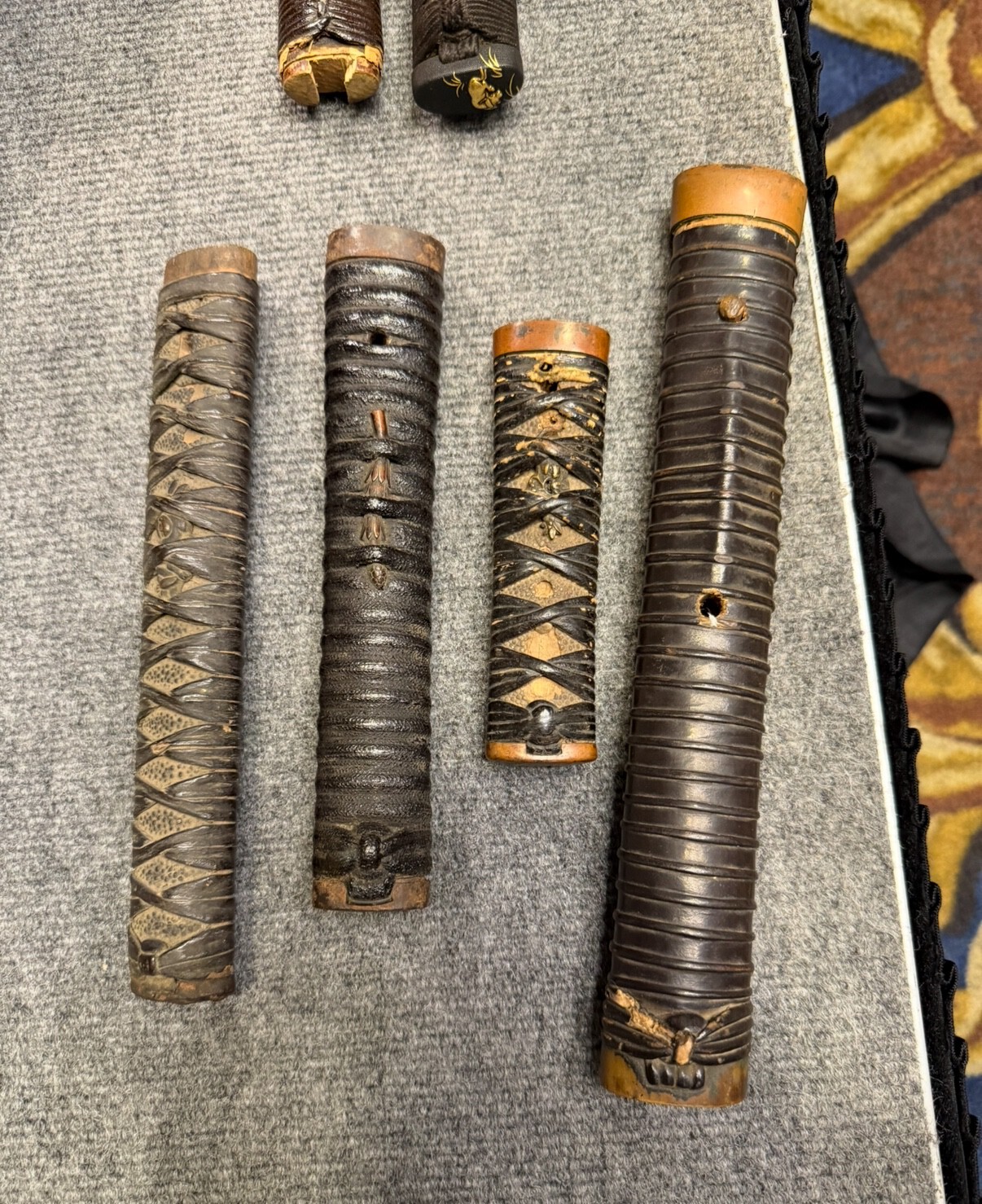
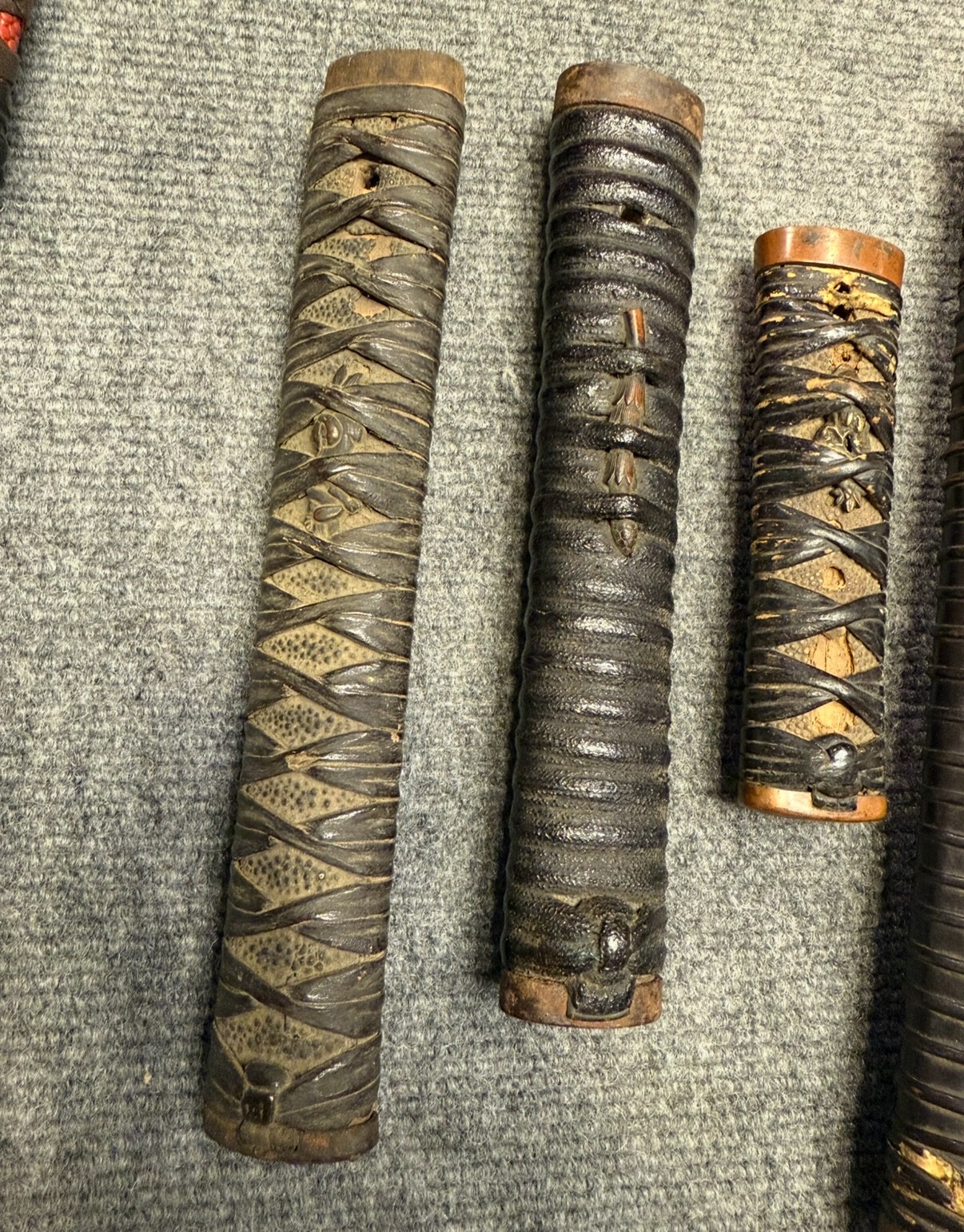
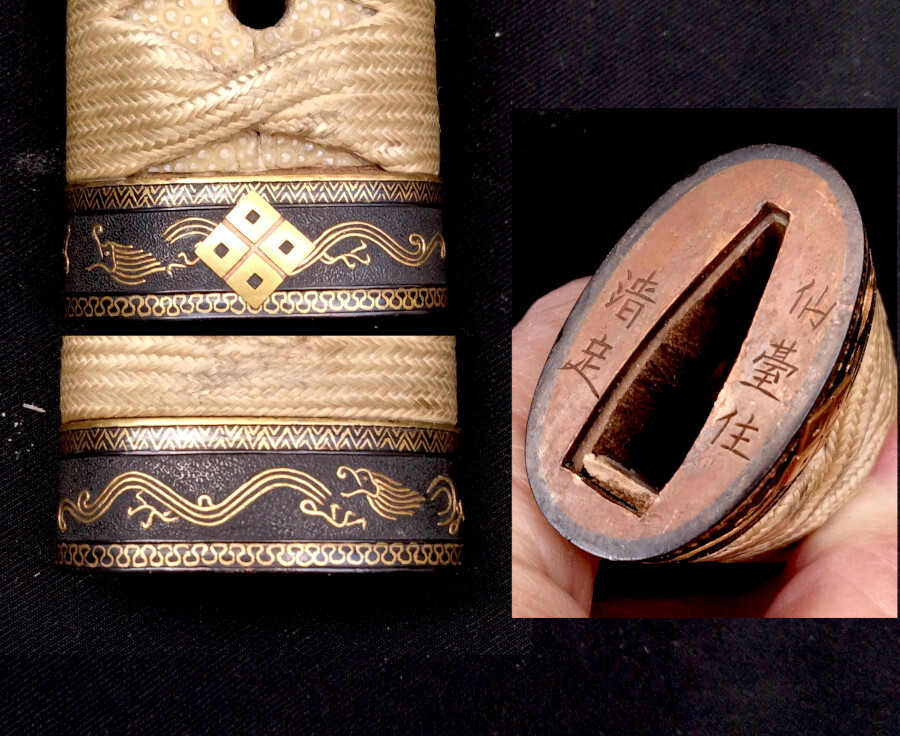
Last year at the Las Vegas Japanese Sword Show, Brian Tschernega did a presentation on tsukamaki and discussed tsuka. He brought several old tsuka from the Muromachi period onward, and talked about them. He emphasized that old tsuka were "teachers", and that they inform and inspire modern crafstmen to better emulate how tsuka were made in the past. Preserved old tsuka can help keep those tradition alive. Obviously not all tsuka are old, but just another scenario tsuka may be traded around. It's important to keep them in the hands of people who care about their preservation and appreciate that history and craftsmanship.

 6 points
 -
I expect 99% of this sort of damage is neglect and messing around, and done in modern times. Blade to blade contact is rare and unlikely from those pics. We tend to romanticize these things, but it's important to realize that it isn't a desired thing in most cases and unless can be proven 100%, it's best to not see them as a feature.5 points
-
I have seen retrofit old tsuka where the mekugiana was moved. you can tell if you see a same' patch where the original hole was. If the Cheness tsuka is too tight, then various files could be used to remove material. This is a 3D problem that takes some thought about which way you want the tsuka to move. Do you take wood off the ha side or the mune side? It is also important to make sure that fuchi tenjogane is parallel to the tsuba seppadai, so may need to remove or add wood in stategic spots to "rotate" the tsuka into proper alignment. Also need to check the interior length against the nakago length with the habaki, tsuba and seppa in place. If used for martial arts, then the tsuka needs to seat tightly. If too much wood is removed then this can be replaced with thin shims, basswood sheet from the hobby shop works. I have an old wakizashi koshirae where the tsuka is a period refit. I can tell because the inside was crudely recut. Also, the style of the tsuka does not ideally match the Owari/Yagyu saya. The original mekugiana was used, but this resulted in a big gap where the tsuba goes. Their solution was to make an extra long habaki to fit the tsuba and seppa correctly. Apparently that was preferable to making a new tsuka for it.4 points
-
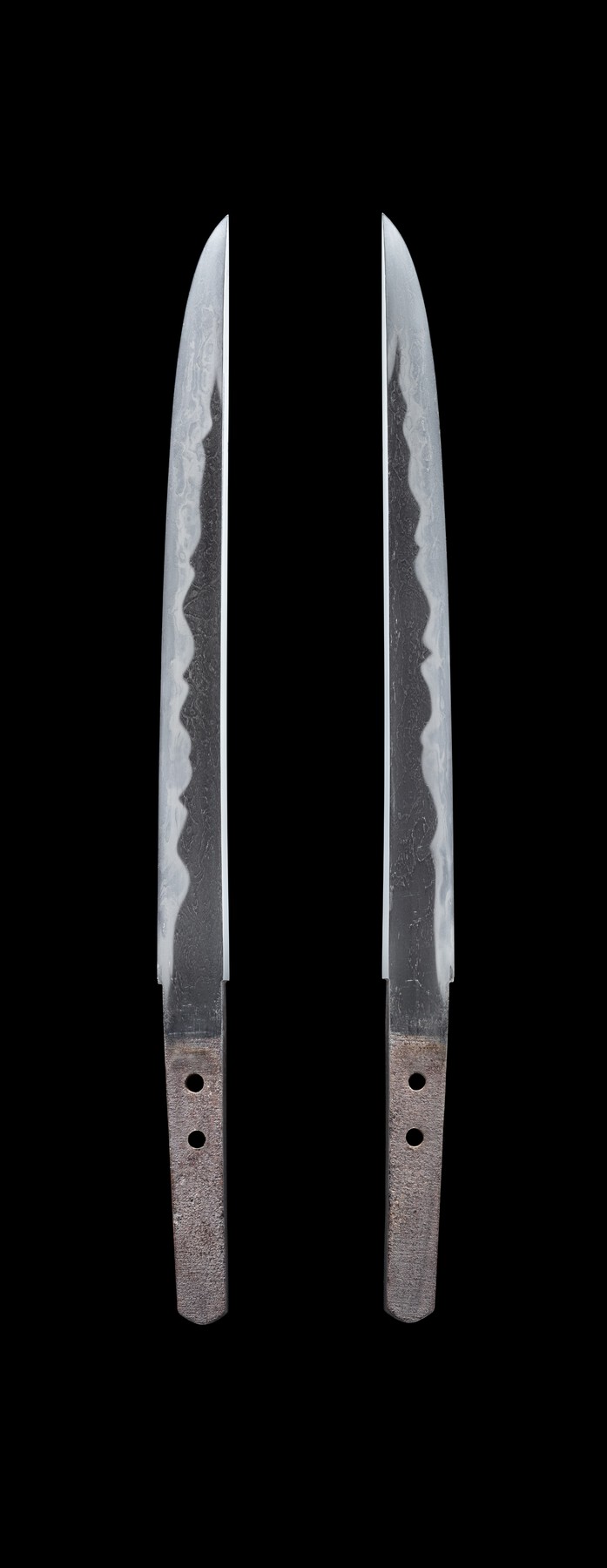
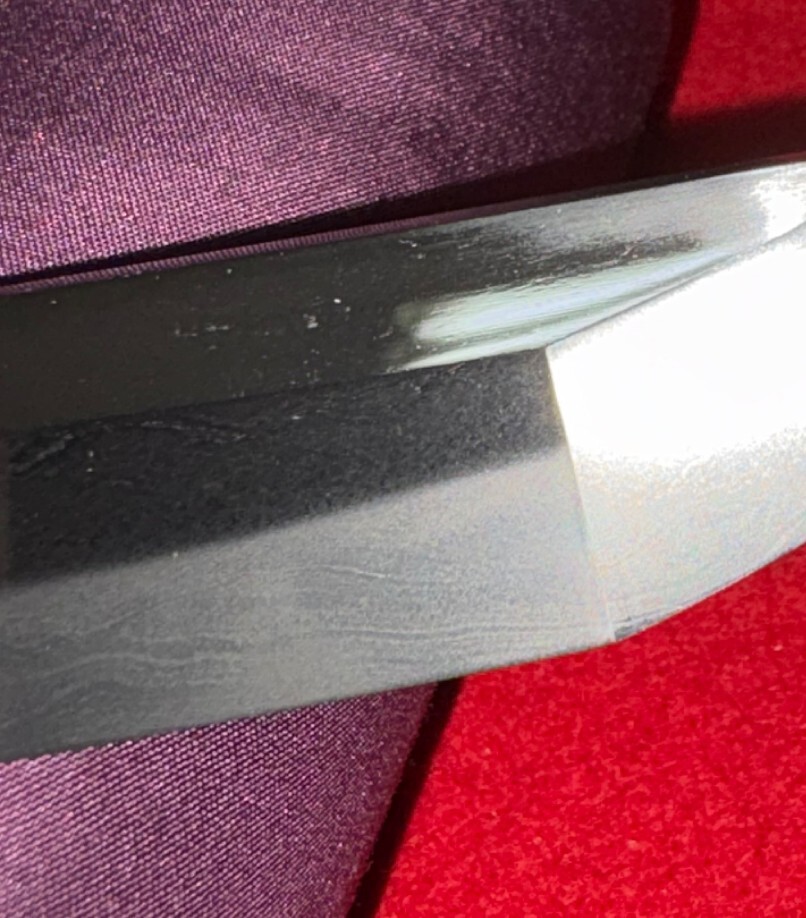
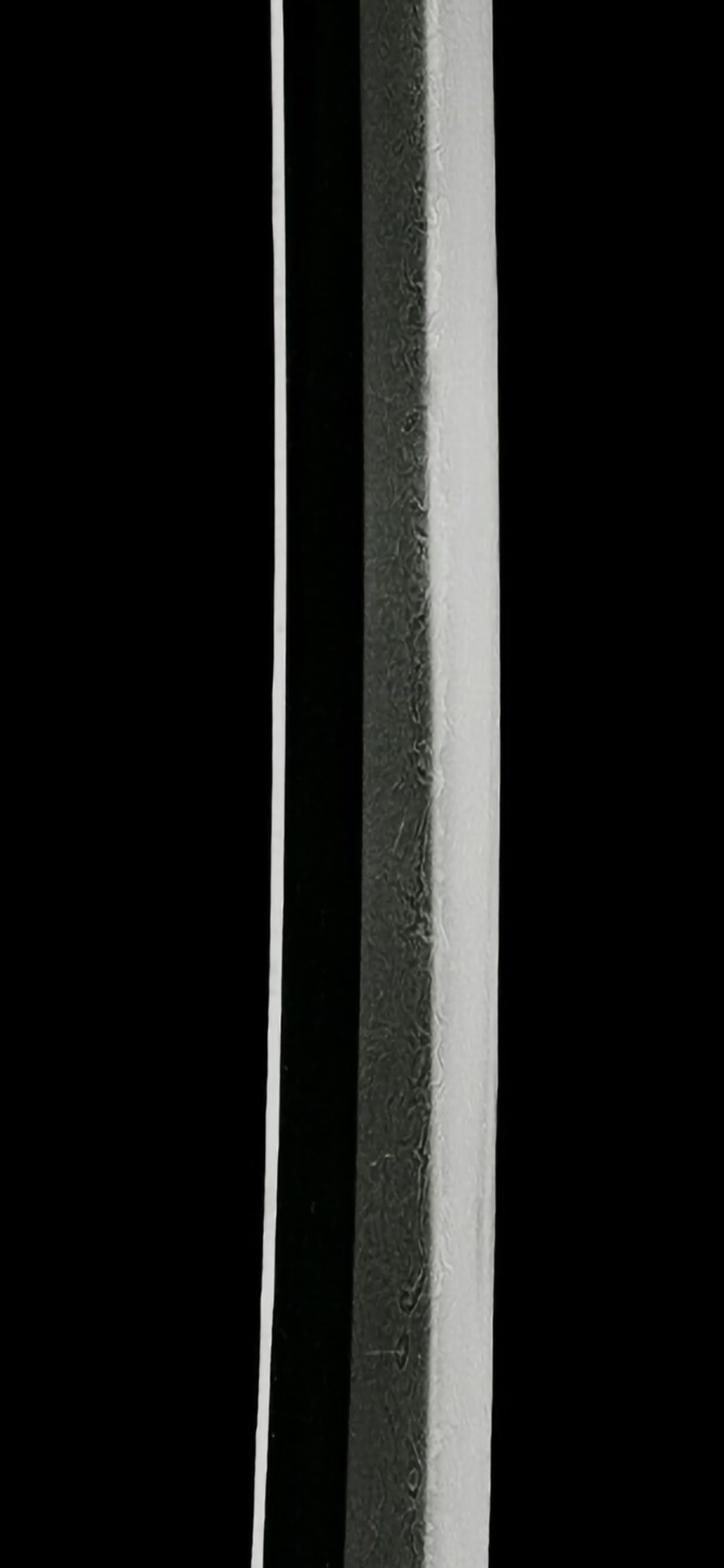
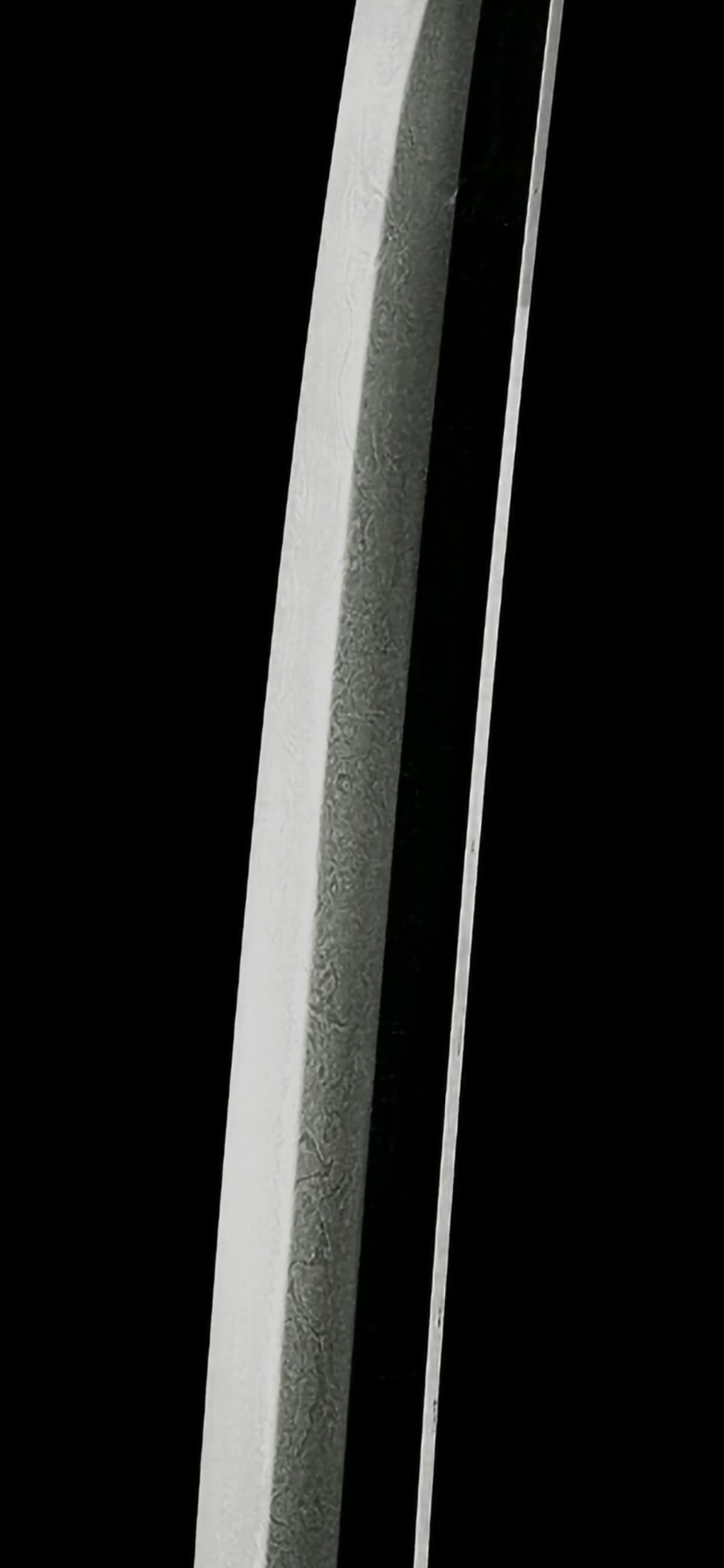
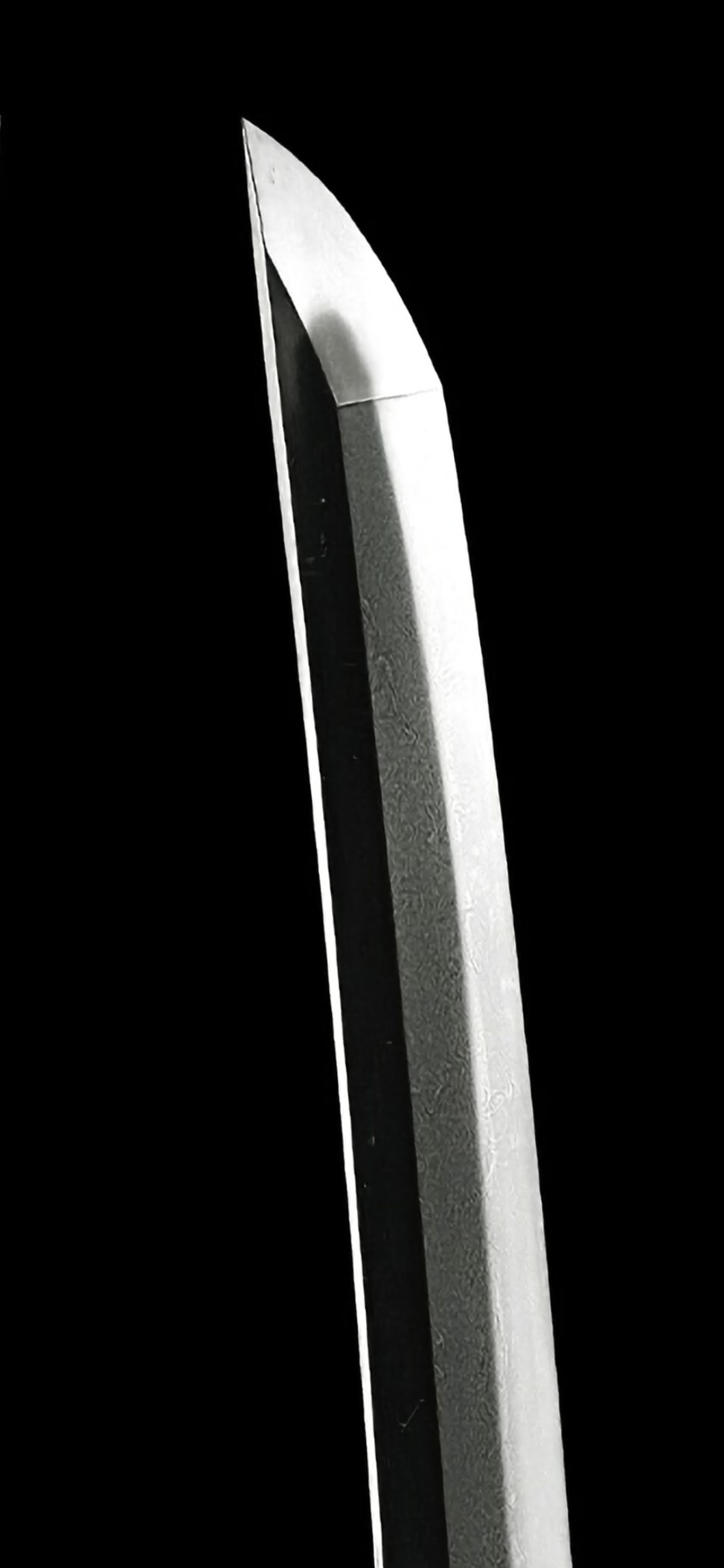
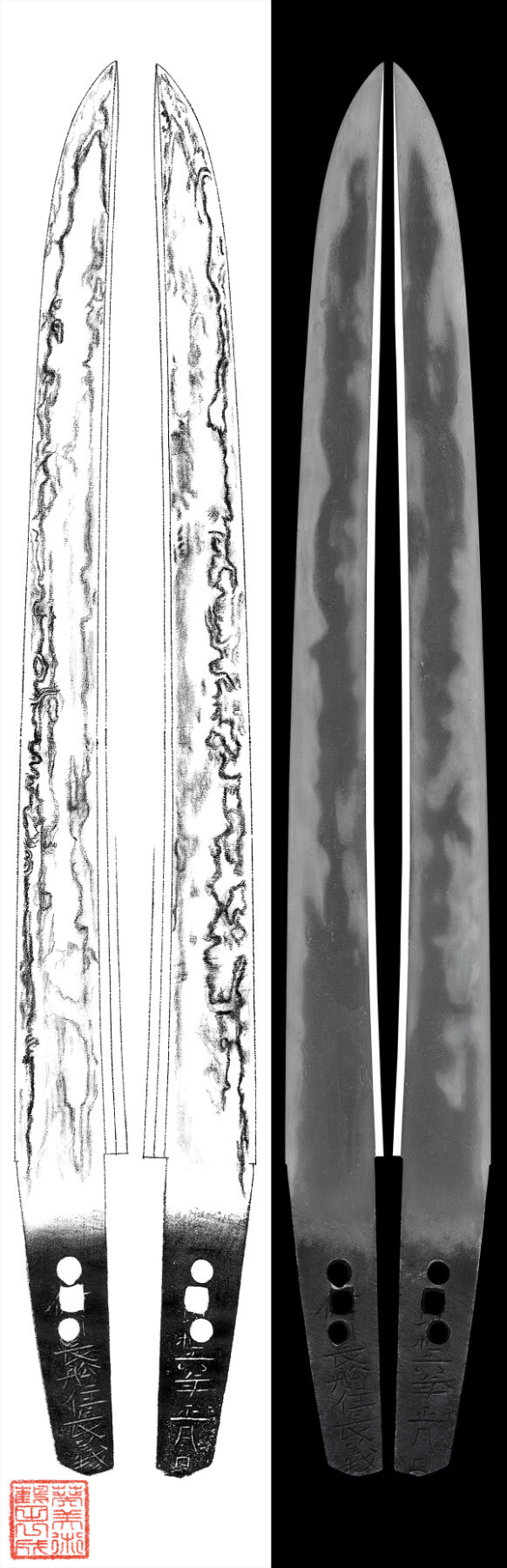
What makes this fascinating little blade so important is its date. It appears at least a full decade earlier than what has traditionally been considered Chōgi's established working period, making it a significant piece for students of Sōden-Bizen and the development of the Chōgi school. Unfortunately, the blade is showing its age. Condition issues including ware in the ha likely explain why it has remained at the Tokubetsu Hozon level despite its rarity and research value. Could it make Jūyō someday? Anything is possible, but I would not consider it likely. That said, it is probably the most reasonably priced zaimei Chōgi to appear on the market in quite some time. The blade was previously offered by Aoi Art roughly four years ago, though I do not know the asking price at the time. @Jussi Ekholm may have that information recorded. I am also curious why the current owner is parting with it after such a relatively short period, something some collectors may understandably view as a cautionary sign. The hitatsura is another point of interest. It is an outlier within Chōgi's body of work, recalling the work of Hiromitsu and, further back, the full-temper explorations seen in some works of Yukimitsu. Yet despite the treatment, Chōgi's hand still comes through clearly. The blade retains the dynamic,Sōshū-influenced Bizen character that makes his work so distinctive. Signed and dated Nanbokuchō-period works by Chōgi and his immediate circle rarely appear on the market. Even mumei examples are encountered infrequently. By comparison, the blade pictured below was offered by Aoi Art last year and received 2025 Tokubetsu Hozon papers to Kenchō—not Den Kenchō, but Kenchō himself, generally regarded as Chōgi's foremost student. Tanobe-sensei, however, attributed the blade to Chōgi in his sayagaki. Both opinions are entirely reasonable. The condition of that blade is exceptional. The zaimei example being offered here, however, provides something the Kenchō attribution debate cannot: a firmly signed and dated reference point from the formative years of the school. For collectors of top Nanbokucho Soshu works, that carries considerable importance. The asking price is not unreasonable for what is being offered, and I would not be surprised to see it rise before the auction closes, much as the zaimei Kanemitsu did last week. If I had an extra $40,000 available in these uncertain times, I would be very tempted. For collectors of Sōshū-influenced work, Sōden-Bizen, Nanbokuchō tantō, or blades exhibiting strong Masamune-style jihada, this is certainly worthy of serious consideration. As for me, I will remain content with my little mumei example.

 4 points
 -
I see you are in the PNW. You should look into the Rain Dragons sword club. You can contact @Scogg for more details.3 points
-
Yes we’ve discussed these Ginkgo nut blades (銀杏穂) Gin-nan-po/ho here before, quite a few years back. They’re beautiful, aren’t they! Perfectly formed curving facets. They come in various sizes, some quite small. I’ve seen bronze examples from 5th-6th century AD tombs. It has been said that the weakest spot of an armoured warrior is the eyes, for which you do not need a long blade. Maybe there is indeed more than symbolism and beauty to them though…3 points
-
I regret to say I missed some of your replies to me as (as I said) very tired. Your statement "I assume they are serious about Koshirae commissions" is very dangerous. Never assume across cultures/languages! Make sure you have an understanding. Apologize after for being difficult, (they will respect that you took the time to apologize) but go through the motions of being difficult. Will they do their best to give you quality workmanship? Yes. That is almost certainly true. Will they give you a checklist of things to make sure of? Almost certainly not, as they expect you to give them one.... and that if you wanted to make sure of X, you would mention it. IE, on the koshirae I commissioned there is no room for a kogata, and I'm a tad unhappy about it, as they never asked if I wanted one, and I never said.... I didn't know it was an option. They didn't give me a checklist of options, they expected me to give them one. I also have to make sure to tell them I wanted a wooden blade, as they didn't ask. That's why I say you need to make sure all your i-s are dotted and t-s are crossed. Don't be afraid to write to them now and ask about these things. In Japan, customer is king. The only time I ever saw Japanese getting rude and angry I was in a Japanese post office and the clerk was having a terrible time figuring out how to handle an international shipment... and the line was getting long and unruly. Is it too late? Depends on how far along the item is. It WILL be wonderful when you get it, but it will be much easier to make sure of this now then to learn about it six months later and need to send your sword BACK to Japan again to get a wooden blade of the tsuka reprofiled and rewrapped.2 points
-
Thank you @RobDam I will most certainly take more photos. I do love everything about it so I am excited. The jigane is beautiful with lots of activities. The signature is beautifuly done as well
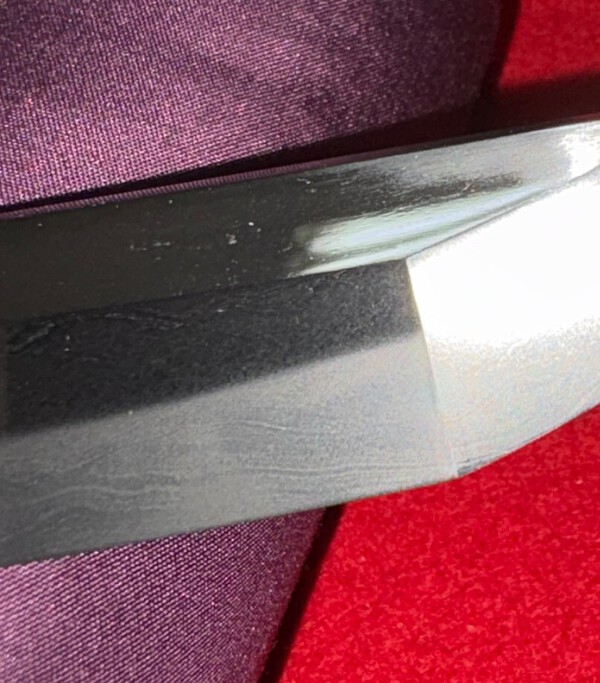

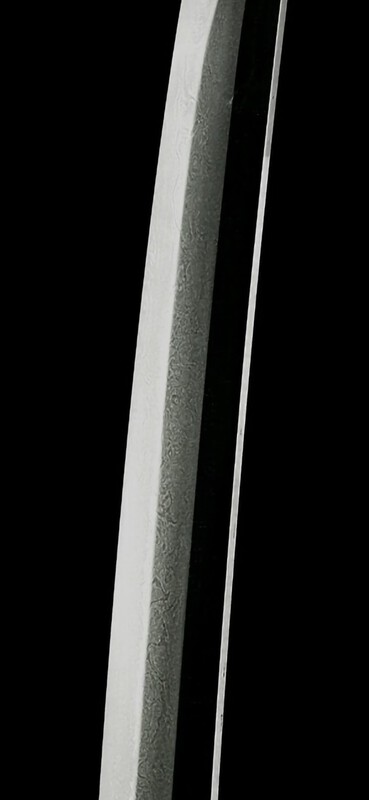

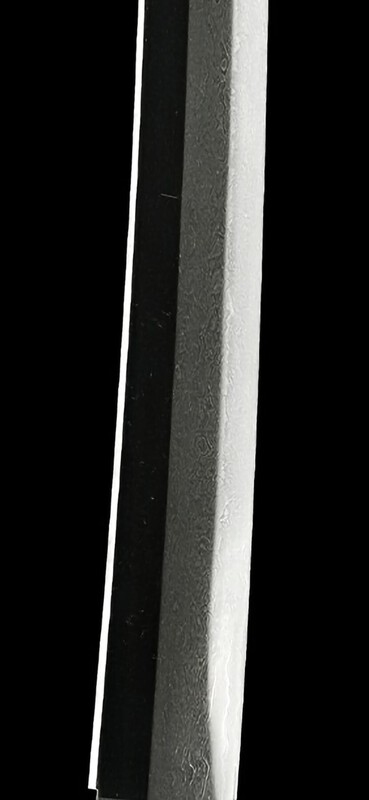
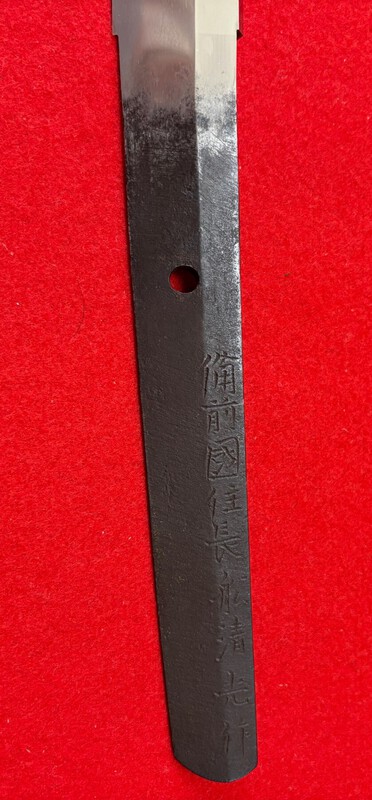 2 points
 -
Aoi Art currently has this Chōgi (Osafune Nagayoshi) tantō up for auction: https://sword-auction.com/ja/product/31815/as26214-tanto:-bishu-osafune-ju-nagayosi-cho-gi-jowa-6-nen-shogatu-hi-new-year-1350nbthk-tokubetsu-hozon-paperkurashiki-sword-museum-estimation-paper/ Just from a glance, it's easy to see why Chōgi is considered the least Bizen-like Bizen smith; this tantō looks almost like a work by a later mainline Soshu smith such as Hiromitsu. It is signed 備州長船住長義 貞和六年正月日 (Bishū Osafune ju Nagayoshi, Jōwa roku-nen shōgatsu-hi). There's some important context behind this particular blade and mei which is somewhat glossed over in the English listing – I've provided a basic translation here as I think this may be a useful reference point for someone someday. "Until recently, the oldest known sword by Bizen Osafune Nagayoshi was a meitō called the 'Osaka Nagayoshi' and dated Shōhei 15 (1360). That tantō was believed to have been bestowed at Osaka Castle upon Maeda Toshiie, a daimyō who was a retainer and old confidant of [Toyotomi] Hideyoshi. It was then subsequently passed down through the Maeda clan as a family heirloom. However, the tantō [listed here] was recently surfaced, and the mei—dating it to January of Jōwa 6 (1350)—predates that of the Osaka Nagayoshi by 10 years. It had long been considered to be gimei and held in reserve, but after re-evaluating it in light of Tanobe-sensei's judgement, the Japanese Sword Museum [and by extension, the NBTHK] finally authenticated it. With the Osaka Nagayoshi previously established as his earliest dated work, having a blade dated earlier [than 1360] authenticated as a work of this smith was no small feat. Henceforth, the listed tantō may now officially be recognized as the oldest extant work of Nagayoshi. * Reference: TANOBE Michihiro, The Japanese Sword – A Journey Through the Five Traditions of Japanese Sword Making: The Bizen Tradition, p. 182 (The Golden Age of Osafune Swordsmiths)"
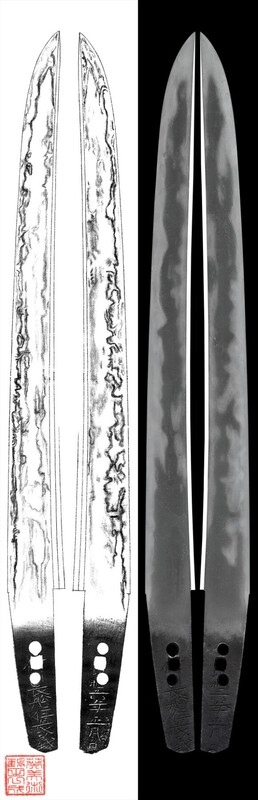 2 points
 -
Is this your first time having a koshirae commissioned? What I have to say isn't exactly what you asked, but I want to make sure to say it, as it might help you a good bit. Make sure you go over every detail before they start! Especially talk to them about the size of the Tsuka, including it's DIAMETER/circumference or they might make you a big wide one. Especially decide if you want the saya cut for a kozuka. They most likely will not do so if you do not specify that you want that. I notice your choice of Tsuba has the other hole closed up, so you might not want a kogai cut, but if you do, be sure to talk to them about it. Personally I love Kozuka, and would always get one given the option, but it's a choice you have to make. You mention black lacquer, there's more then one style there, most likely you are going for gloss, but make sure you and they are on the same page about the finish. Especially decide if you want a tsunagi (wooden blade) to display the koshirae with when the blade is in shirasaya. They might offer, but make sure you ask if you are getting one, and get one if you need to.... and ask them to make sure it also fits your shirasaya just for convenience. I ended up with one that didn't once when I bought a sword that I think ... now... had the wrong saya with it... and the Tsunagi was something they stole from a back room. (Still a bit cross about that... but I do love the sword.) A lot of these things they might offer, and they might assume you will ask, so be sure to ask. Take nothing as a given, go over every step, and don't be afraid to say you want to hear them say something. Sometimes people from eastern cultures do not want to admit there's a translation issue. I once worked with a Chinese fellow who had no idea what I was asking for, and pretended he did, until he couldn't anymore, so don't be afraid to make sure you are understood as it might mean having them repeat something back to you. I've spent a fair amount of time with new and old sword koshirae (though nothing close to some of the people here) and older sword koshirae is usually thinner/more narrow then is usually made to order today. So tell them you want it historically accurate and not adjusted to modern tastes and specify those things mentioned... and also ask on here for the things that I, as a bit of a noob, don't even know. There's people here who will. Also, I hate to drop frustration in the lap of another koshirae builder... but you might want to make sure you can get another similar Tsuba for your eventual wakizashi or tanto addition to the set.... and also be aware you are talking about understanding the sword's origin as a war sword while making what appears from your parts, an elegant Edo period town sword koshirae. We can all but guarantee this is not the first time your blade has worn such garments, but if you wanted a war sword koshirae, it is something that can be done for you. Handachi parts can be had, though it has seemed hard to me to find scabbard reinforcements as antiques. (perhaps someone has a suggestion there?) and getting modern ones is easier but you need to know you can ask about them. If you did want a handachi, there are a few places that make quality modern ones... though the only one I'm aware of is this one. (Other people might speak up with other workshops.) https://nosyudo.jp/item/itemgenre/gendaikanagu/ You can buy the bits ala carte, if you want just a cage around the saya's end, And not buy the tachi hangers, and likely (unsure) and it's likely you could even get different engravings.... I haven't ordered those parts before and there's likely other workshops. you might be able to get pretty much anything you wanted made.... but it'll take a few months. So if that's something of interest, get on the choices now. P.S. Personally I'd go with black silk ito. Never took to brown as well. I wish you the joy of your sword.2 points
-
Hi, Big sumo fan and I still maintain that the 58th Yokozuna grand champion Chiyonofuji was the greatest wrestler of all time. I read today that Gassan Sadatoshi (月山貞利) made the dohyo-iri tachi for 65th Yokozuna Takanohana in 1995 and 66th Yokozuna Wakanohana in 1998. This prompted me to try and find out which contemporary Tosho made the tachi for Chiyonofuji on his promotion to Yokozuna in 1981 - but no luck. Can anyone here help me to pin down the swordsmith? Best, Hector2 points
-
Thank you guys for all info.' Here some pictures of the tsuka from the same koshirae as the tsuba.
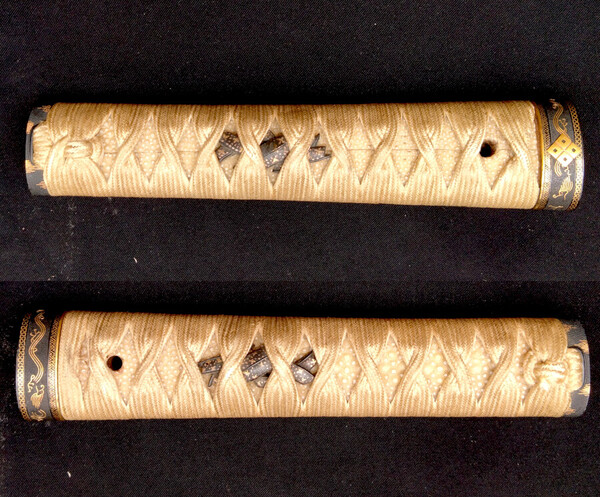
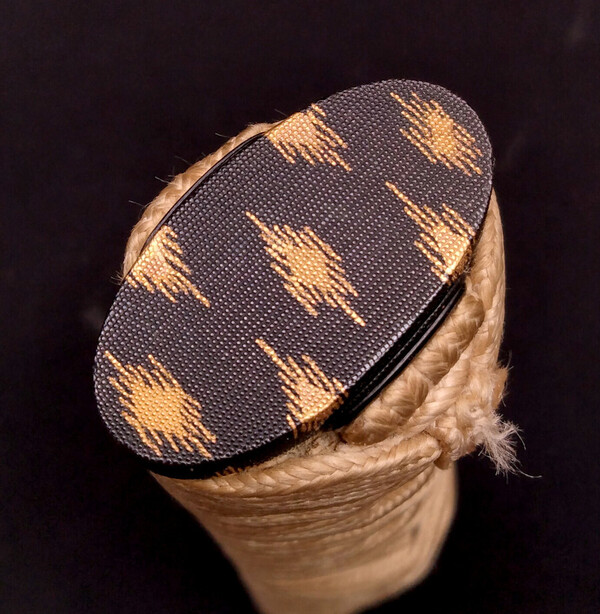
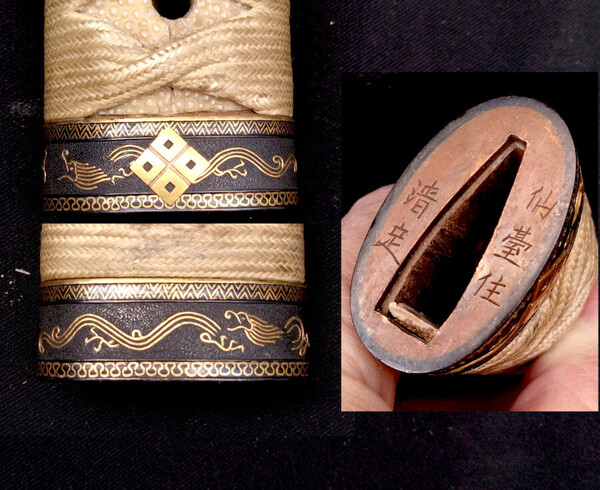 2 points
 -
One for the ladies - Obi. https://www.jauce.com/auction/e1217356383 an expensive but attractive Obi!
 2 points
 -
...And the mune is off-centre which doesn't help!
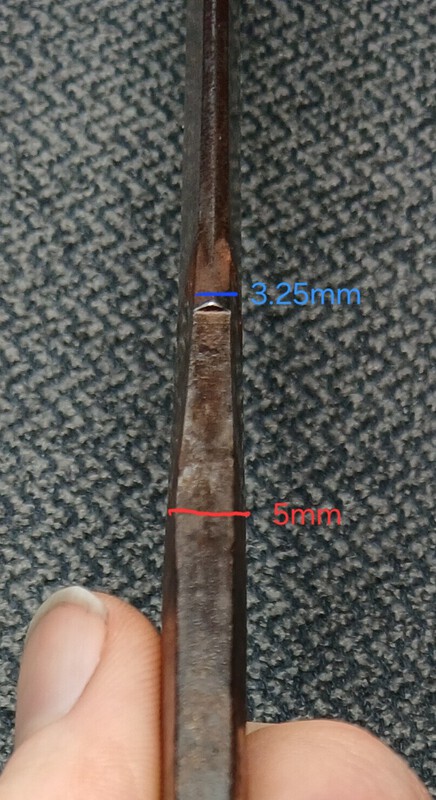 2 points
 -
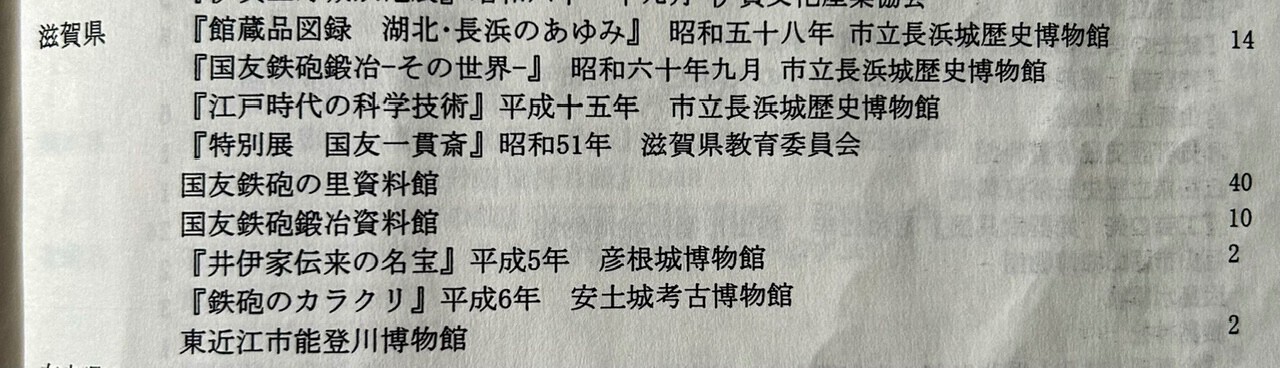
Often I have been surprised to find that these two 左右 look very similar in grass writing, almost indistinguishable to my eye. In this case however, the mouth part does look relatively clearer. The records often confuse the two, (gun registration cards are particularly bad), so I would not be unduly worried if they don’t match up. One suggestion might be to contact the Kunitomo Gun Museum directly for any stockmaker records. The Director there is quite friendly and willing to help. The material I use is a private research paper sold by the author only over the phone, but please see the entries for Kunitomo stock and lock makers. Note the suggested dates shown on the right. He collected municipal gun registration records directly from all over Japan, and lists his sources over several pages at the end. These are his sources for Shiga Prefecture where Kunitomo is located.

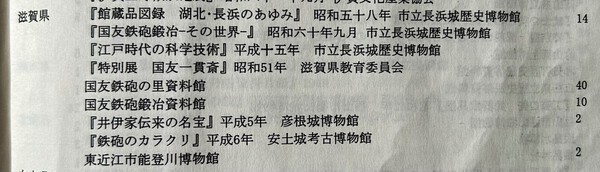 2 points
 -
Yes, I have seen a few blades that were obviously made for RS mounts (Type 3) but were in Type 98 fittings. Not normal, but not unusual.2 points
-
Atsu Toshiro, I think. Named for the celebrated maker, Toshiro Yoshimitsu.2 points
-
Unfortunately this appears to be a fake, and not Japanese. Sorry to be the bearer of bad news. -Sam2 points
-
Hi everyone, I am in the process of launching a mobile app version of my kanji flashcards. The digital app includes expanded content. In additional to being digital versions of my existing flashcards with names, places and time periods, the mobile app also includes flashcard sets for terminology, schools and examples of famous swordsmith mei. Please see below for a link to the Android version of the app. For those who are on iPhones and need an iOS version, that is still in development and a link will be shared here in the future. https://play.google.com/store/apps/details?id=com.swordsofjapan.flashcards If anyone needs assistance with access to the Android link, please let me know. As I am in the process of transitioning from the test to production release, it may be necessary to add your Gmail address to my access list. Please email me at raymondsinger@gmail.com with any questions. Best regards, Ray2 points
-
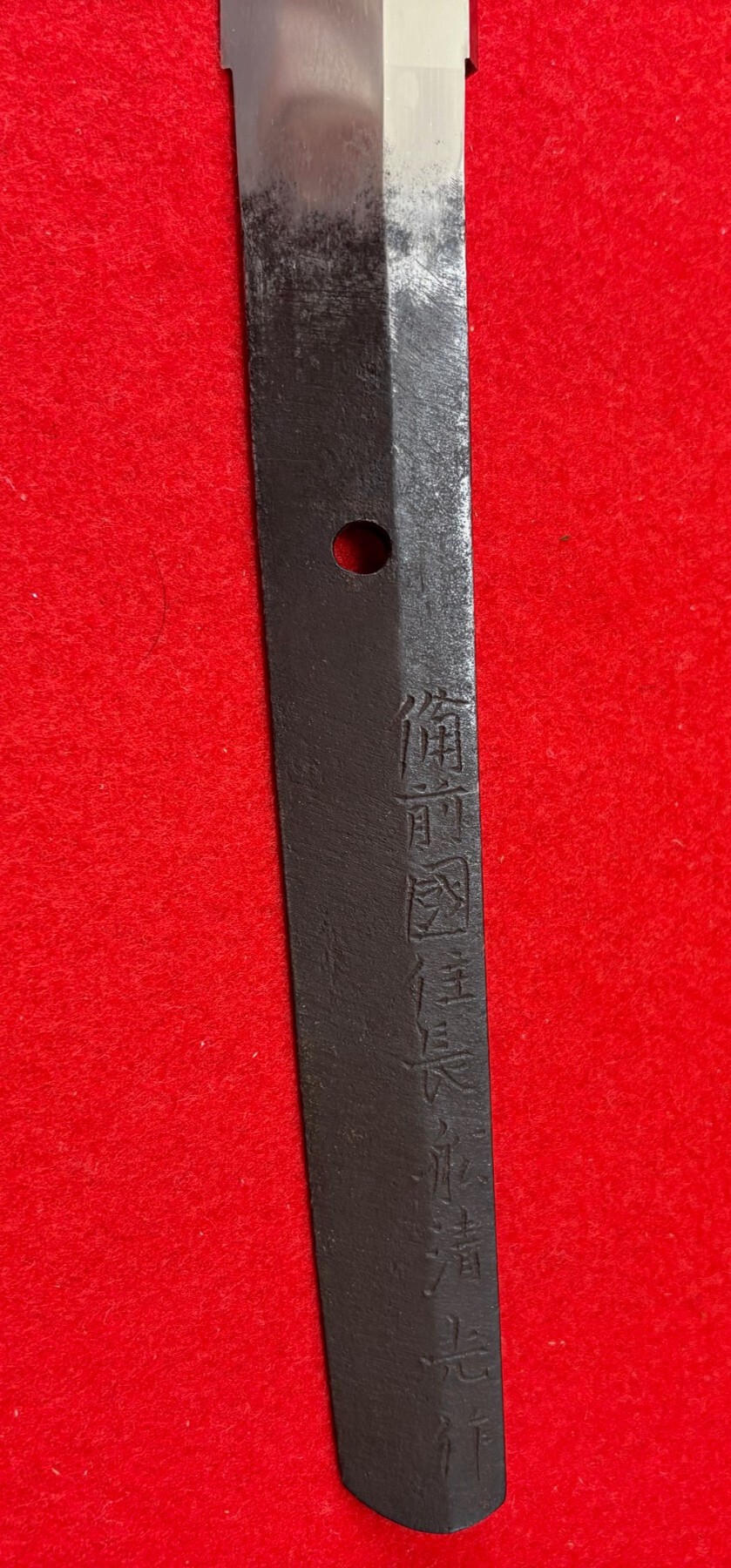
In any case, Mago or Goro, you can be assured it's a high level, well executed Kiyomitsu. "Does this place it above ordinary wartime production?" - I would generally say yes. Does not seem to be a kazuuchimono to me. It has been well kept, one mekugi ana, nakago is clean.2 points
-
Oh... when dealing with artists and artisans... of any culture.... this is something everyone needs to known when they commission something. I was trained as an artist. (I am not productive due to an injury and this is a great pain to me.... but...) How artists think should be of interest to those who commission them.... and we know KNOW... most of you can't SEE. You're all blind until we point out the details to you and half the time you still can't see it. As a result, we sometimes gloss over detail work if you do not demonstrate that you have an educated eye, but we will respect you more if you do.... because we know you will appreciate the detail and the time it took to include it. My old cinematography professor always said "Camera side fill forever. NEVER KEY from the camera side. NEVER." I found a piece he made with camera side key lighting. Asked what's up. "Because it was faster and the client was a moron, and I knew he couldn't tell the difference and the piece was going to bomb anyway because he wasn't funny even though he thought he was. He still owes me money actually." And the thing is, we're right about this. Most people are FREAKING BLIND and can't tell a square from a circle without it being pointed out to them. I've explained television refresh rate and how it effects the illusion of motion to people in stores and they tell me they can't see the difference in the edge of a moving object on the screen in front of them! That kind of thing is soul killing. Develop the eye of a Connoisseur and take the time to show anyone you commission that you have it, that you do care about the detail, and they will be happy to go the extra mile for you, because they know you're going to get something out of it. (and will understand when they charge you a little more for those details.)1 point
-
針石目 - hari-ishime (or just ishime). PS: indeed the NBTHK paper reports suaka-ishime-ji.1 point
-
Some good discussions for cross-reference: https://www.militaria.co.za/nmb/topic/14310-bakumatsu-kaei-ginnan-po-yari-osafune-sukesada/ https://www.militaria.co.za/nmb/topic/51765-yari-blade-shape-question/1 point
-
You could choose any kanji with a reading close enough to your name. That's what the student helped me with when I joined a calligraphy club, and I had to carve my own signature stamp. For many non-Asians, it can mean quite a few kanji (mine was 4 for the family name, and 3 for the first name).1 point
-
the more I look at your blade the more I like it I'd love to see more pictures once you get it (the same when I look at mine tho )1 point
-
Basically make sure you are getting the diameter you want. The thread I linked to last couple of posts are about that. If you want full historical you want smaller. These days a lot of people make overly wide/thick tsuka by default, often excuse it over hand size of modern people, but personally I much prefer the historic thickness (which is thinner.) (I'm pretty tired right now, but you might actually start a thread on things to check on when having a koshirae made.) It's very rewarding but it's long distance and cross lingual so you want to make sure you have all your ducks in a row.1 point
-
KATAKANA strokes1 point
-
One of the problems answering this is that so many swords nowadays have had their koshirae “messed with”….changed by western owners to suit their own tastes, tsuba taken off to sell separately, tsuka Ito replaced in some inappropriate garish colours etc etc My collecting always tried to focus on swords in full koshirae that were not messed with ie in the same condition as it was owned by its last Edo period Japanese owner be they Samurai, merchant or whatever. So based on the experience that close to 200 swords over 40+ years has given me…… Tanto, Aikuchi, Hamidashi et al……usually the koshirae would be an attempt to keep metals, colours and themes “en suite” .Not necessarily by the same maker but at least a harmonious ensemble sometimes carrying the same theme as well as the same alloys When you get to wakizashi…these can be more “mixed” in theme and also the alloys used. Usually because samurai could only afford what they could afford. Many wakizashi are one half of a daisho and those would usually have a more consistent alloy appearance ….iron with iron, copper with copper etc. Many wakizashi were owned by merchants and these will usually have more luxurious “en suite” koshirae where the alloys appear similar and maybe also the themes. Long swords however were predominantly the privilege of Samurai and depended more on what could be afforded (and what fashion/laws dictated). By and large I’m sure the desire would be to have matching alloys/iron to give that harmonious appearance and if budgets allowed, common themes also. Tachi by and large were mounted in en-suite metals and themes. The above is just a very high level brief view based on my own collecting experiences…..others will have differing opinions and experiences.1 point
-
Definitely not Japanese1 point
-
Hi Fred, My tuppence worth it could be from the Awa Shoami artists, who can be categorised as Kenjo. May be where your friends reference to Shoami comes from. If you have access to Marcus Seskus Tosogu Classroom volume 2, page 456, may give further insight. Nice tsuba BTW.1 point
-
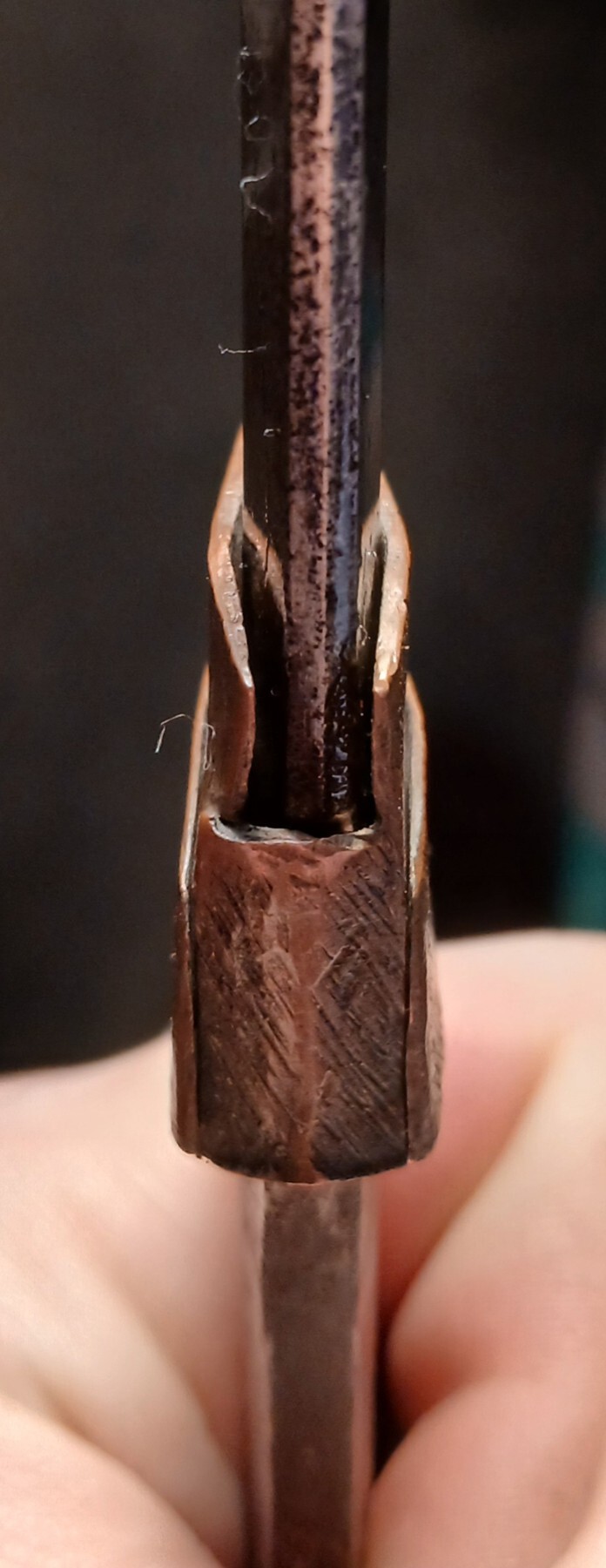
I'm not all together sure if I'm honest Bruce! It's on a koto naginata naoshi which has quite a diamond shaped cross section, and polished quite a lot, so I think it's just a bit of a crude attempt at getting it to fit a bit better

 1 point
 -
Agreed, for this reason I cross-referenced the signature dates with the actual era dates and intentionally avoided translating anything not directly related to the historical significance of the blade. If there are any errors in what I wrote, I would welcome any corrections or suggestions.1 point
-
Bill: I agree with Sam. At least the signature is not correct. I'm fairly sure that does not say Inoue Shinkai. See attached Shinkai mei and compare with yours. Also compare the way he wrote his dates. This one is from 1673. But in any case, it looks gimei. John C.

 1 point
 -
Starting bid only 5.5 mil jpy. I’m guessing this will go higher. would hitatsura tempering preclude utsuri? I don’t see this feature mentioned in the aoi description.1 point
-
Hi RobDam, I own a sword that's signed "Bizen Kuni Ju Osafune Gorozaemon Jo Kiyo-Mitsu saku" with a full length bo-hi. It's dated the 18th year of Temon/Tenbun (1549). If you're interested in a range of dates.1 point
-
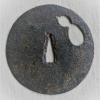
I think that is exactly my feeling, when i look at that tsuba. But does anyone have a clue where to put the artist or the mei? Such a work tetsu, without a larger school or anything behind it, leaves me a bit puzzled.1 point
-
You beat me to it. It also seems Chris wrote it up before. When I was more into swords than fittings, I was shown an Inoue Shinkai with similar damage. That burned into the brain fairly hard.1 point
-
I dont know why it won't let me add photos now but measurements are Nagasa- 28in. 71.12 cm Nakago- 7 5/8 in. 19.3cm Kissaki- 1 3/8 in 3.5cm1 point
-
Matt: I'll give you one possibility. An officer may purchase a blade that was originally designed for an RS/type3/1940 style fittings (hence the two mekugi-ana). But had the type 98 fittings mounted instead, which use only the top mekugi-ana. I have a star-stamped sword that is just the opposite - one mekugi-ana RJT sword in RS mounts. John C. p.s. FYI in cases where a civilian sword were used, the mekugi-ana would be much closer together.1 point
-
As Jean said I signed with the kanji 古伝 which reads as "Koden" that sounds like my surname and also have a meaning of "old tradition" which fits my style of Muromachi -Early Edo style. For NBTHK contest you're required to have either a signature or a kao to submit1 point
-
Whoever said that was completely different. 尾州住人真野光弘作之 (Bishu junin Mano Mitsuhiro saku kore) – A resident of Bishu (= Owari province), Mano Mitsuhiro made this.1 point
-
Fascinating catalogue, Pietro. Thank you. Interestingly, no dates or materials are shown for these wonderful, indeed genius pieces, many of them contemporary, helping us to transcend artificial concepts of time. ( Some lovely creations by Clive, but none by Natasha though?) Personally speaking, I collect Netsuke from an 'innocent' cultural time, preferably before the end of the Edo period, made for and by Japanese with no consciousness of Western eyes. Since I do not have the cash resources for top-end works, I look for unusual pebbles on the beach, i.e. naive Netsuke gems that rarely but occasionally bubble up in antique shops or street markets.1 point
-
In the Edo period, gimei was not always interpreted according to the modern Western distinction between authentic and fake, but was part of a cultural system where imitation, transmission of tradition, genealogical prestige, and commercial value were deeply intertwined. This perspective emerges particularly clearly from Kameda-Madar's studies on the practice of utsushi. It would likely be of interest to more than one member of the NMB. https://www.academia.edu/10385390/Copying_and_Theory_in_Edo_Period_Japan_1615_1868_1 point
-
Thank you, that makes sense. So the mei gives the broader Osafune Kiyomitsu signature, while Hon’ami Nisshu’s sayagaki identifies it more specifically as Gorōzaemon no Jō Kiyomitsu. That is exactly the distinction I was trying to understand. I will read the references carefully, especially the point about Gorōzaemon and Magōemon being considered among the best Sue-Bizen Kiyomitsu smiths.1 point
-
Well he did a superb job. That is top quality work.1 point
-
Dear Sebuh, I'm sympathetic to the request, but I'm convinced a feature like this would cause more harm than good to the community — let me explain why. The root problem is that quality isn't a legible characteristic through dealer photos. Paper levels are the best proxy we have, but they're a coarse one. Within a single designation, there are "barely Juyo" Norishige and "Tokuju-in-waiting" Norishige, and in Japan those are completely different items value-wise. The overseas market tends to get offered the "barely Juyo" tier with open price, because the "Tokuju-in-waiting" pieces get deemed "too expensive for Juyo" by Western buyers and stay in Japan or are marked as "ask". So the average Juyo Norishige price an aggregator like this would surface is already a biased signal. It doesn't reflect the artist's realized market price, it reflects items that make it online with a revealed asking price. The deeper concern is what happens once that metric exists. Collectors will (rationally) optimize against the legible signal: lowest possible price-to-name ratio. That, in turn, creates an incentive for dealers to source cheaper and cheaper items attributed to master smiths (rationally). We've already seen a flood of big names with recent TH papers at prices that feel too good to be true, and the uncomfortable answer is that they're too good to be true. The market is responding to exactly the pressure this kind of metric would amplify. I think the better direction is to help prospective buyers understand what constitutes truly great work within an artist's oeuvre, so quality becomes more legible, not just price-per-name. How to do this, however, is not so obvious, but I have some ideas down the line. Hope this helps, Hoshi1 point
-
Eric, this sounds as if you are not working on it which is good news. Would you mind to disclose who does the polish?1 point
-
Interestingly enough, when we typically think of wolfs we think of the default larger North American wolfs. Japanese wolfs are actually quite smaller, like a dog and weasel mixed together and the tsuba examples above portray them fairly accurately. https://en.wikipedia.org/wiki/Japanese_wolf1 point
-
Henry, I think the lean wolf motif is a reference to the desolate plains of Musashino, after battle.. Lots of nibbles for hungry wolves. Wild animals are the only creatures that benifit from battle. It looks to me to be a really lovely carving, I'd love to see more. Actually I've been wanting to do this theme myself for some time.1 point
-
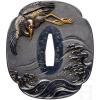
A very interesting and nice tsuba. The theme of a wolf is not common I think. Does anyone know it's significance? I don't know where my Henri Joly is1 point
























This leaderboard is set to Johannesburg/GMT+02:00