
Leaderboard



Popular Content
Showing content with the highest reputation on 05/06/2026 in all areas
-
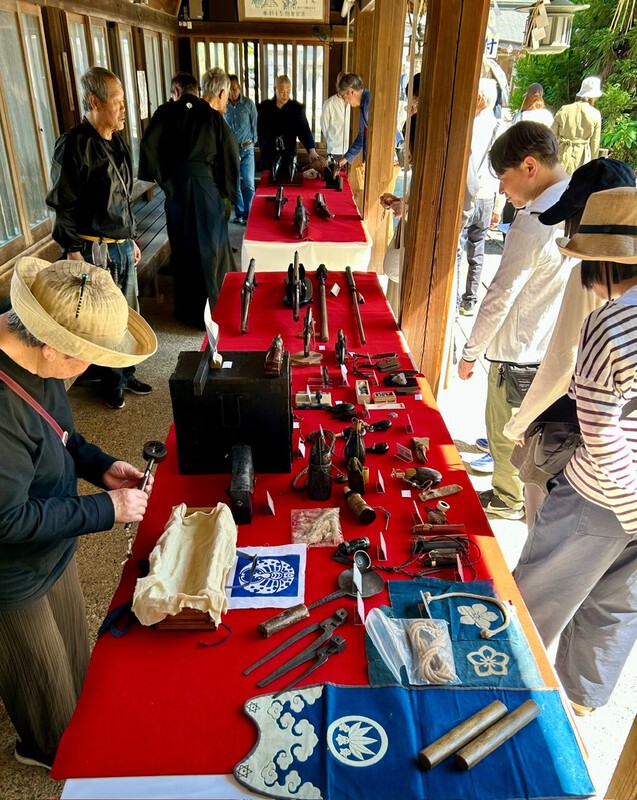
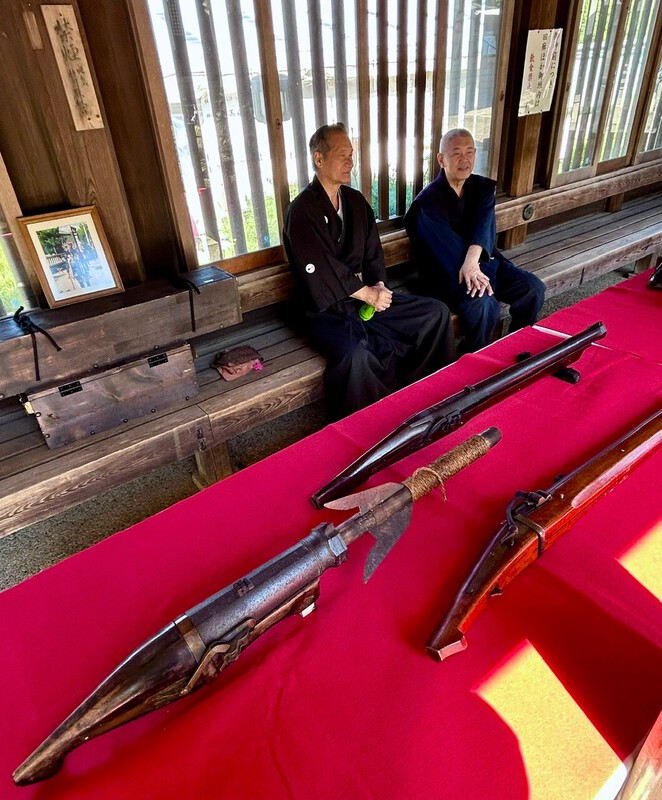
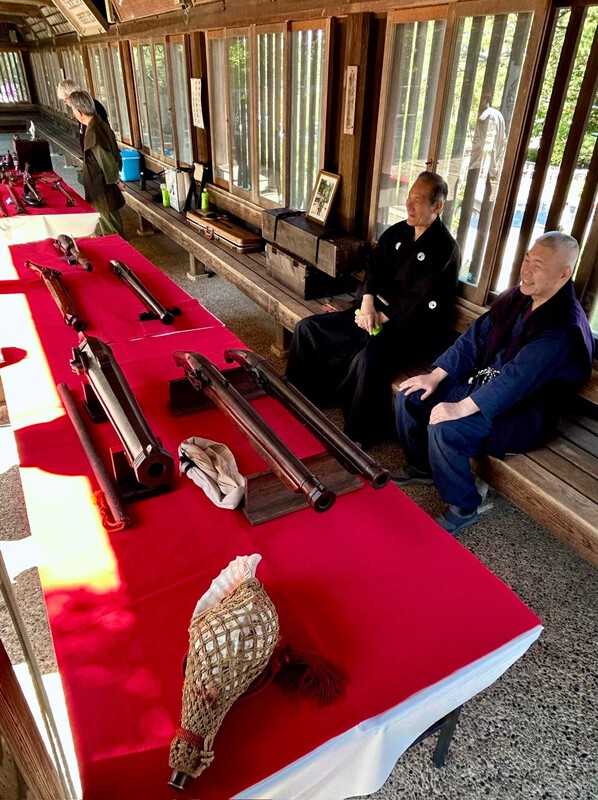
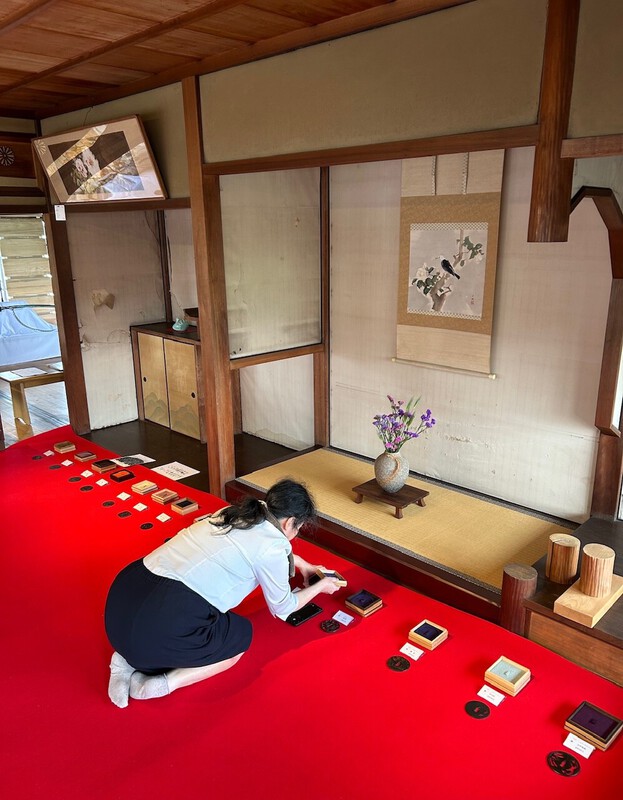
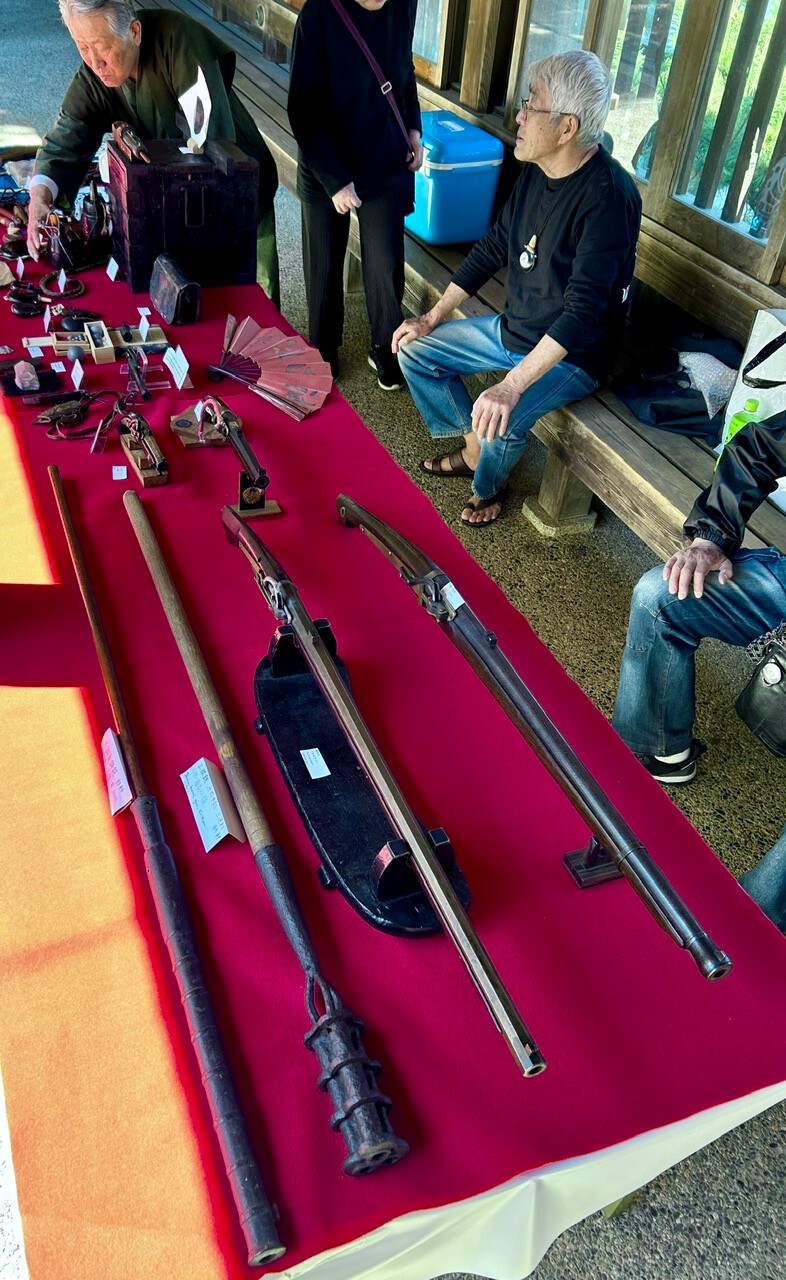
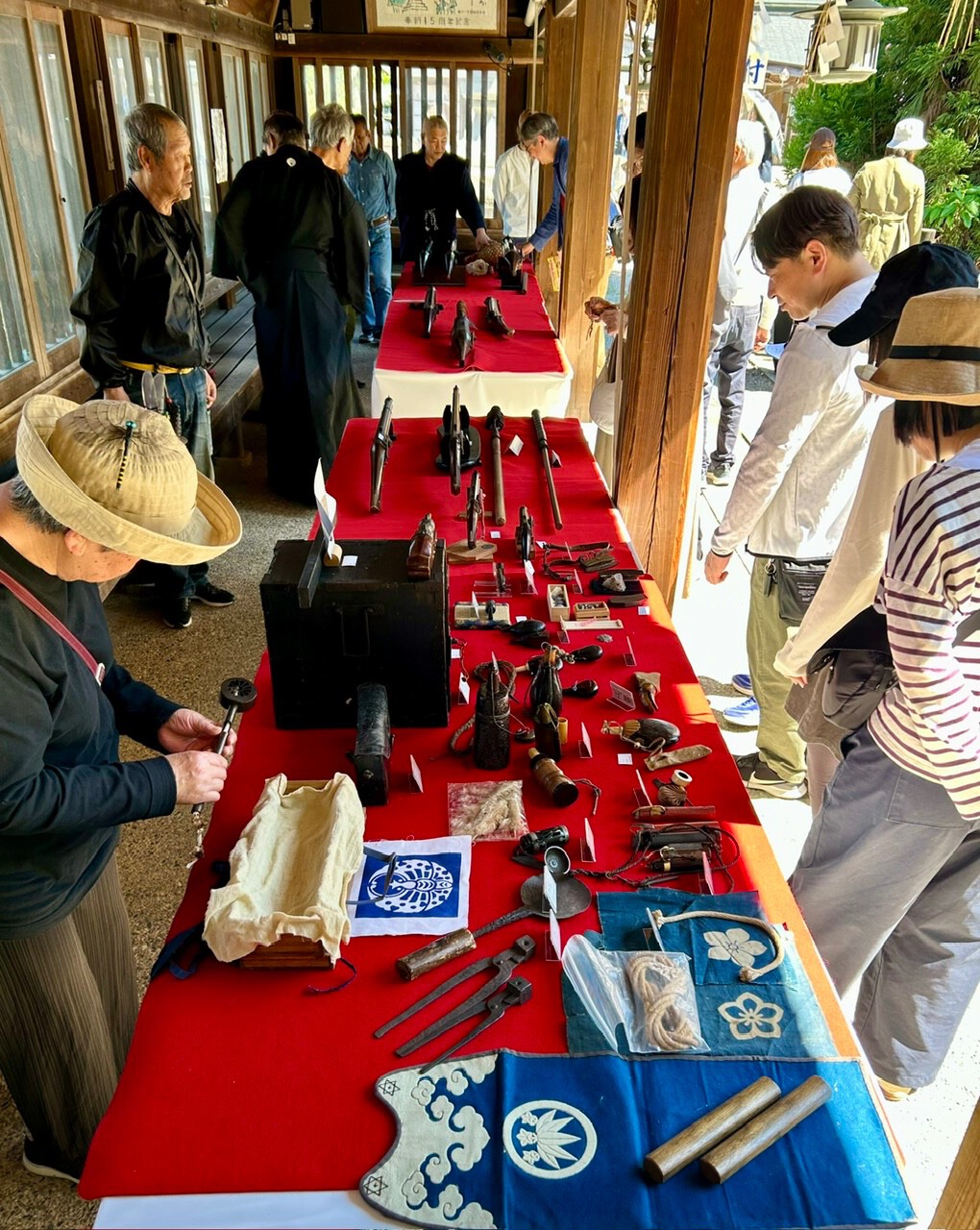
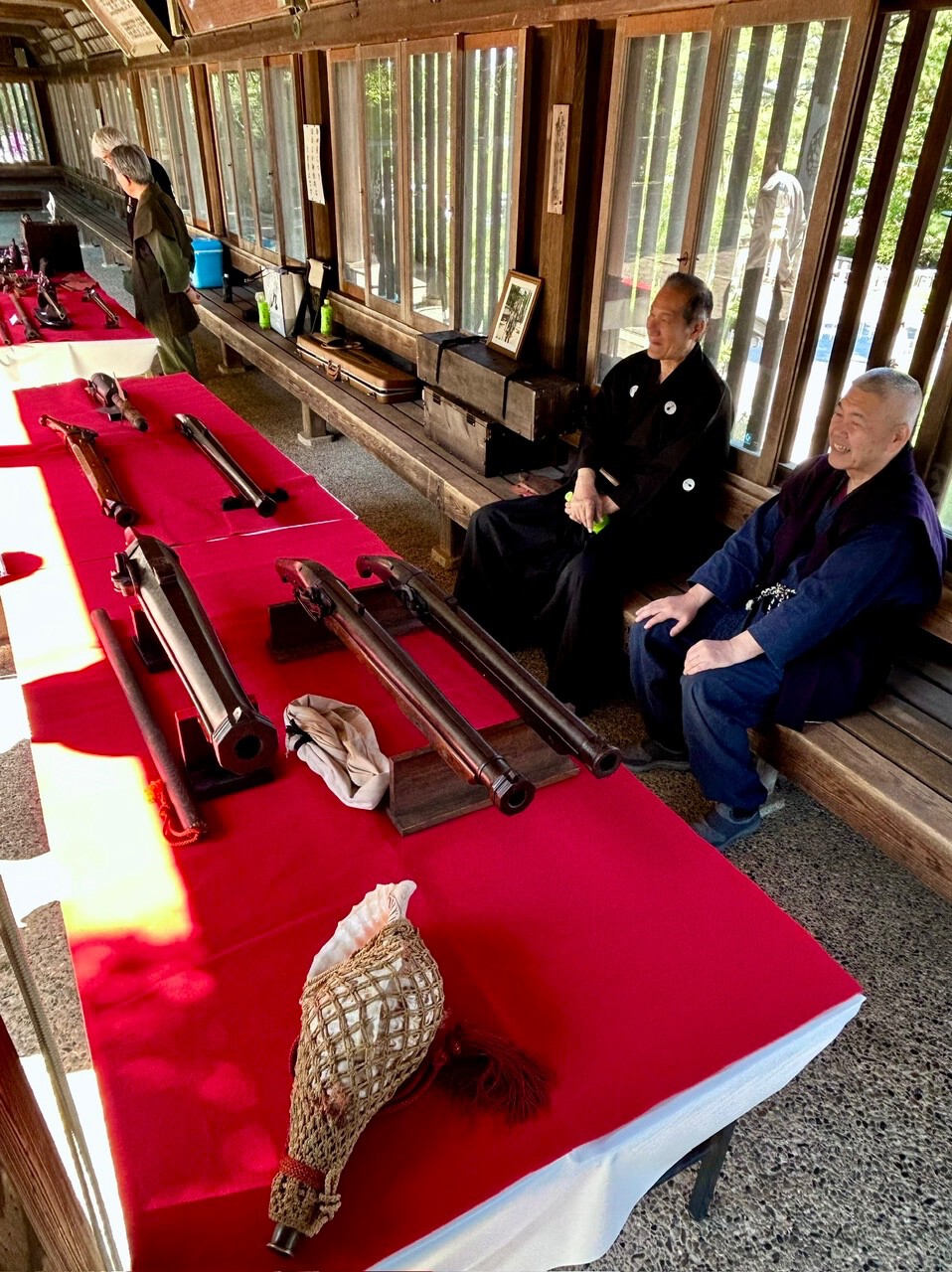
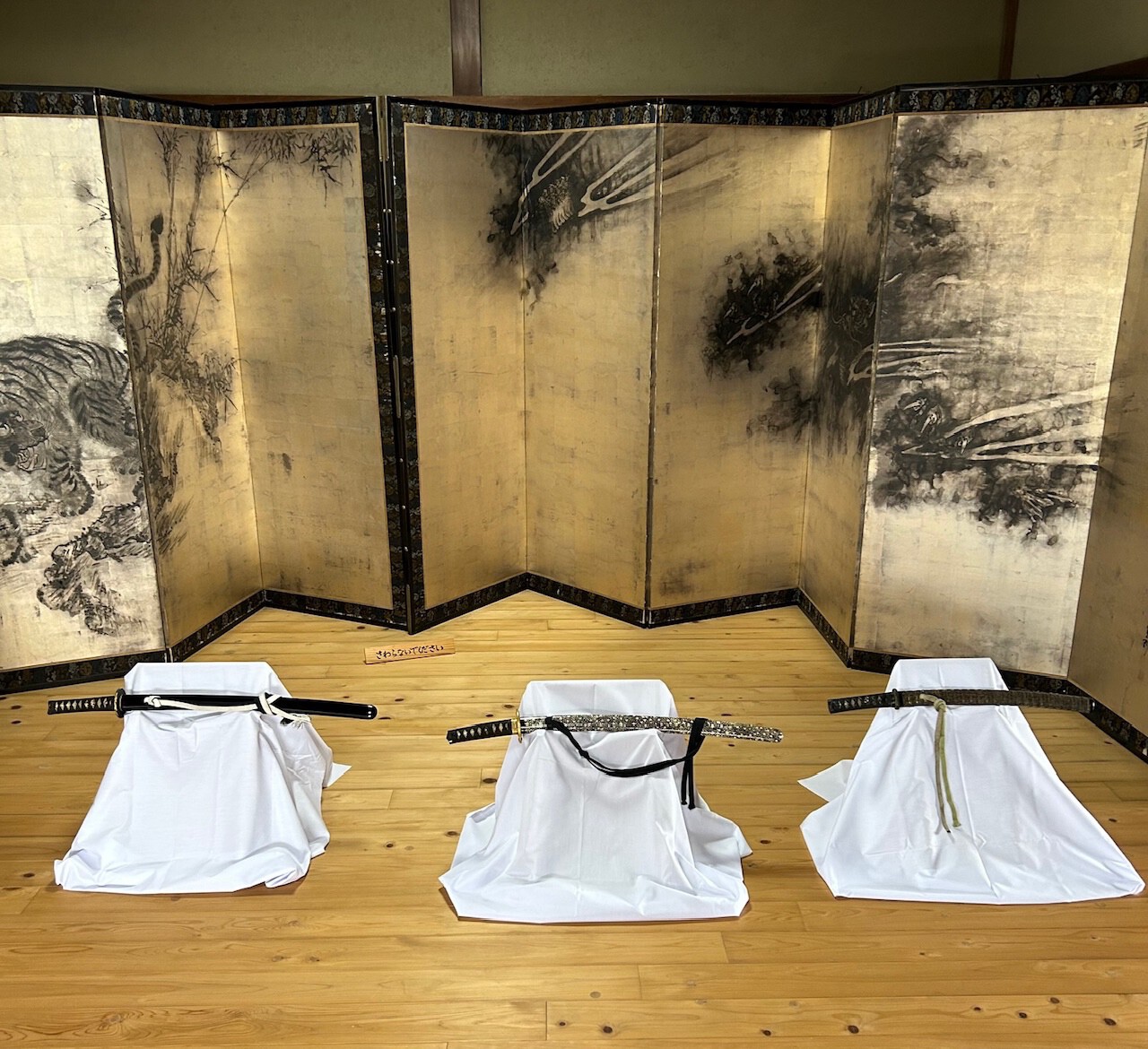
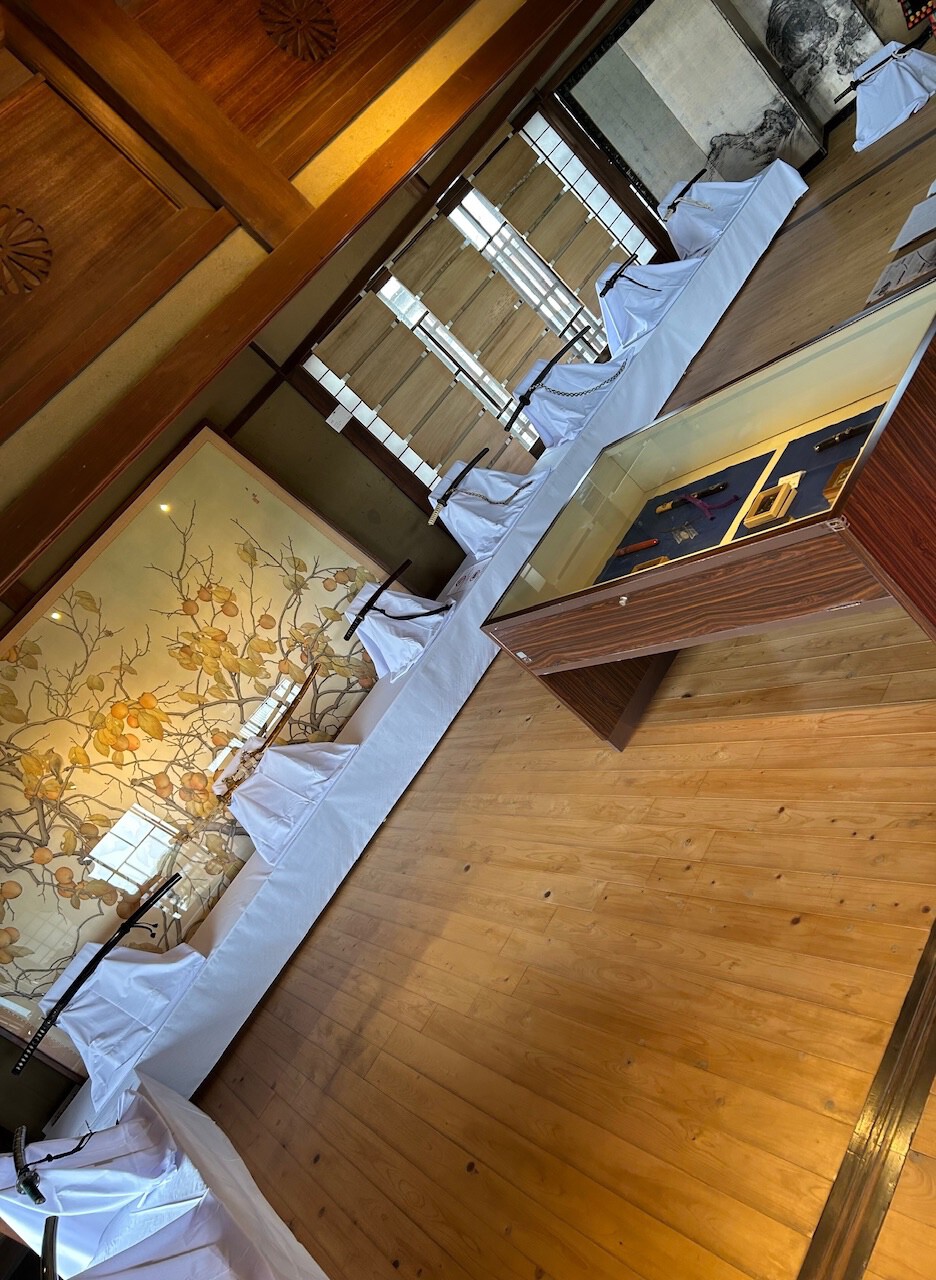
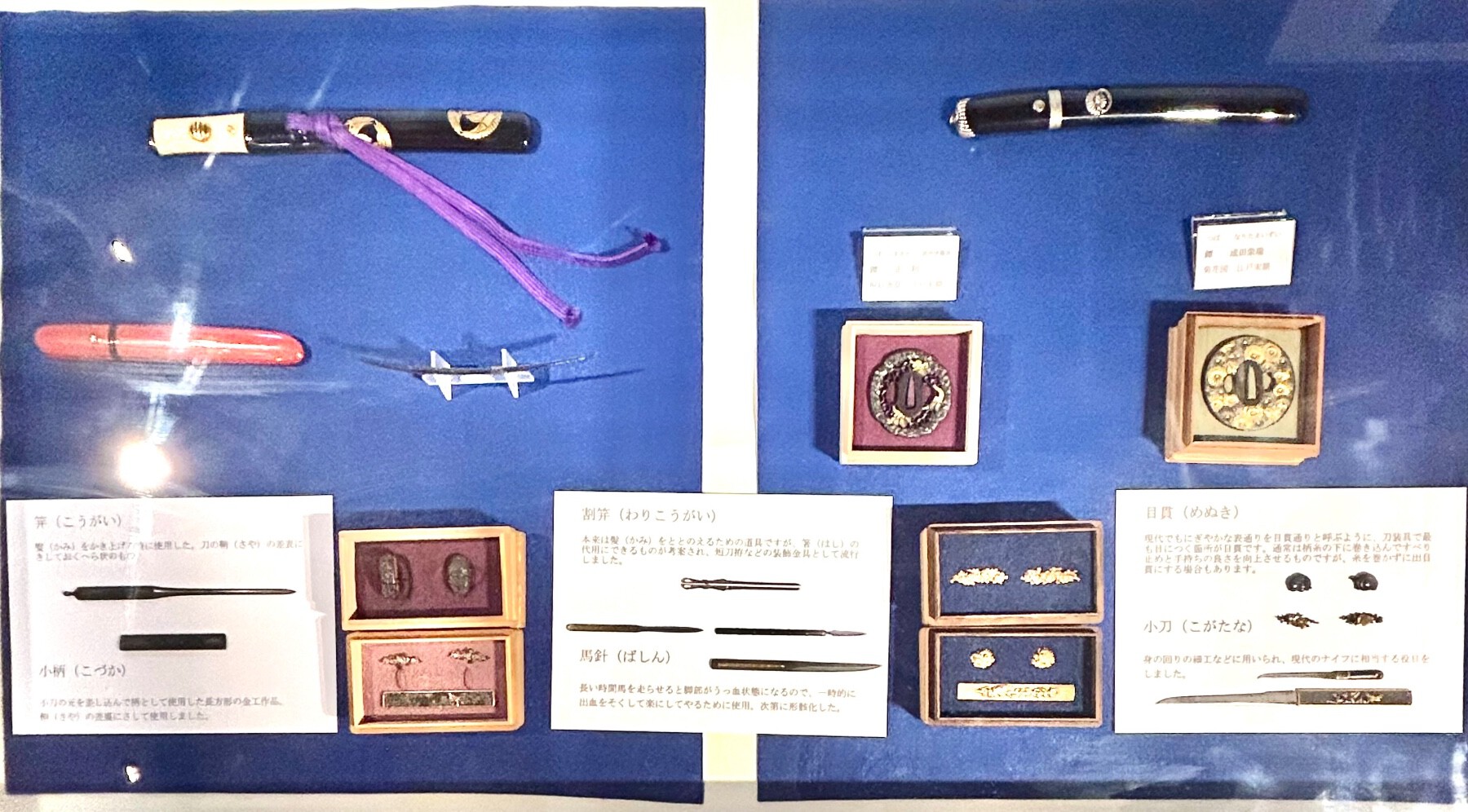
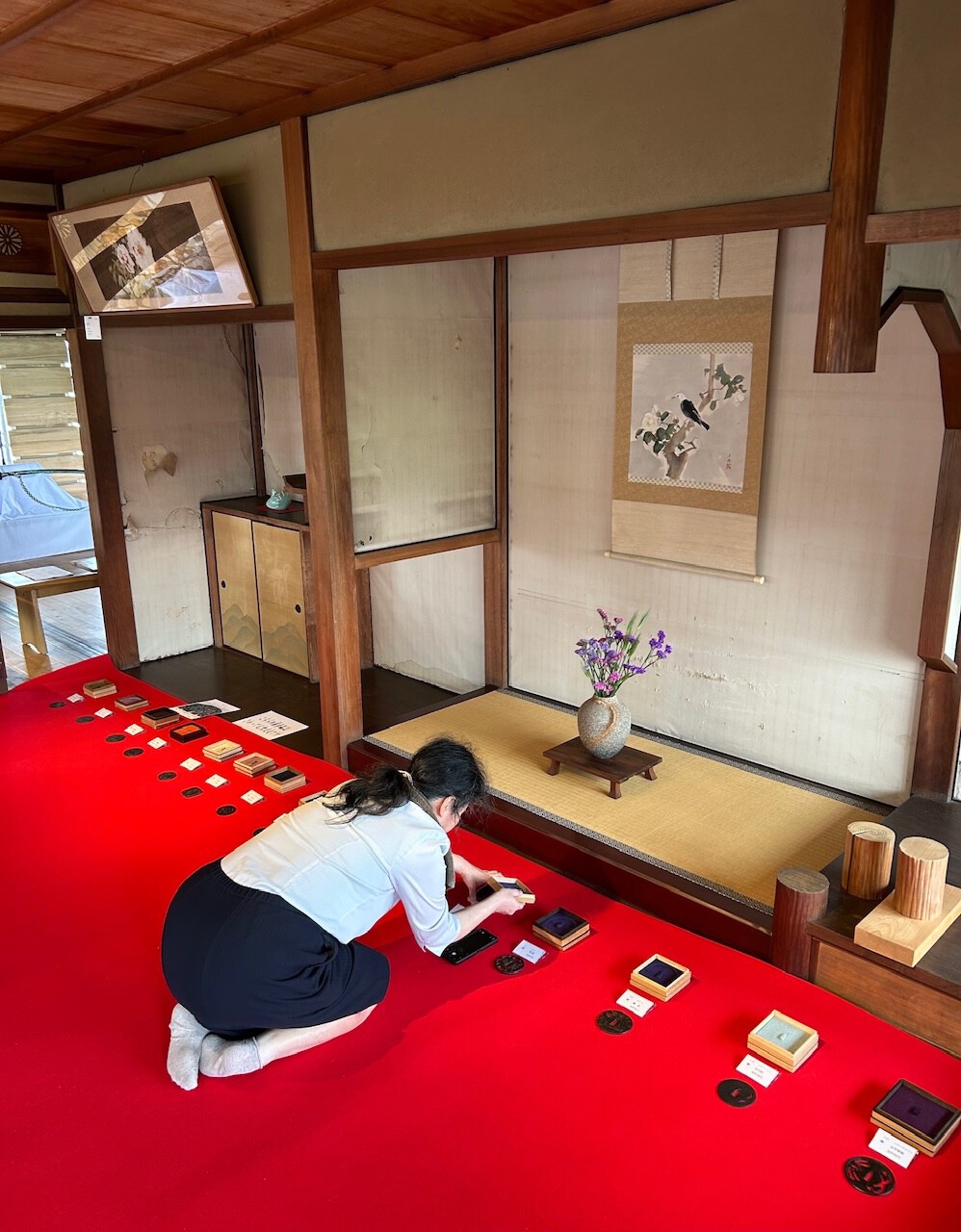
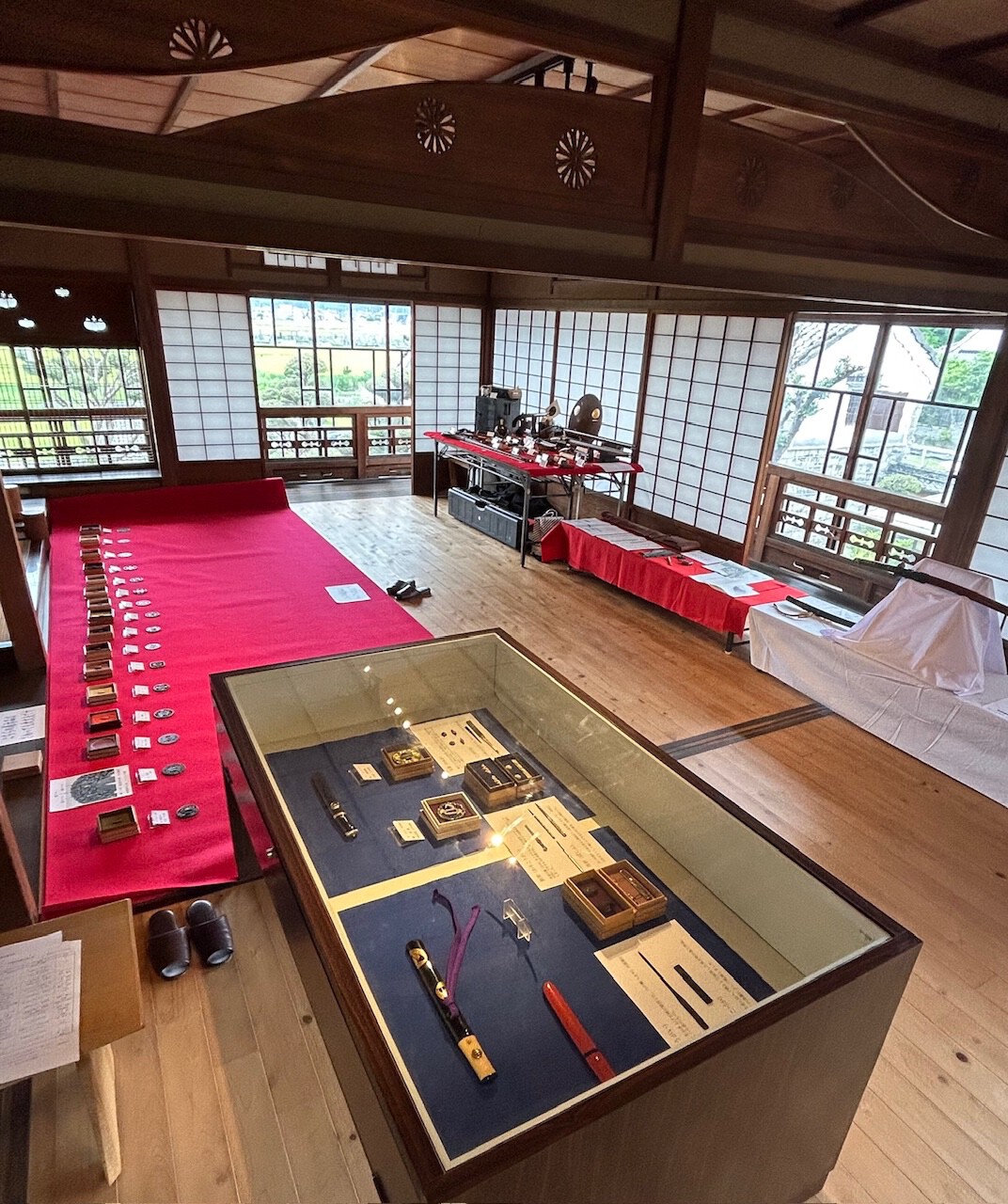
Unable to take part recently in the live firings with a bad knee, I have been able to concentrate on doing these static displays, and taking photographs. This time we chose a few representative guns, and I brought some different accessories for variety. (If we show the same objects every year, things can get really stale.) Although it is a Japanese shrine and we were ostensibly showing Japanese hinawa-ju related stuff, I included a couple of Korean pole weapons which Hideyoshi's troops would have encountered on the Korean peninsula. 'Bunroku-Keicho no Eki' in Japanese, and to the Koreans the 'Imjin Wars'. In the back of my mind was the possibility that the shrine priests might not approve, so I was prepared to take flak, but everyone accepted it in their stride with no negative comments. Left foreground Bronze 勝字銃 'Victory mark' 'Seungja Chongtong' hand gun, dated 萬暦 Banreki 11 (1583) Three-barrel 'Sanyan Chong' gun, iron, 1590s(?)
 7 points
 -
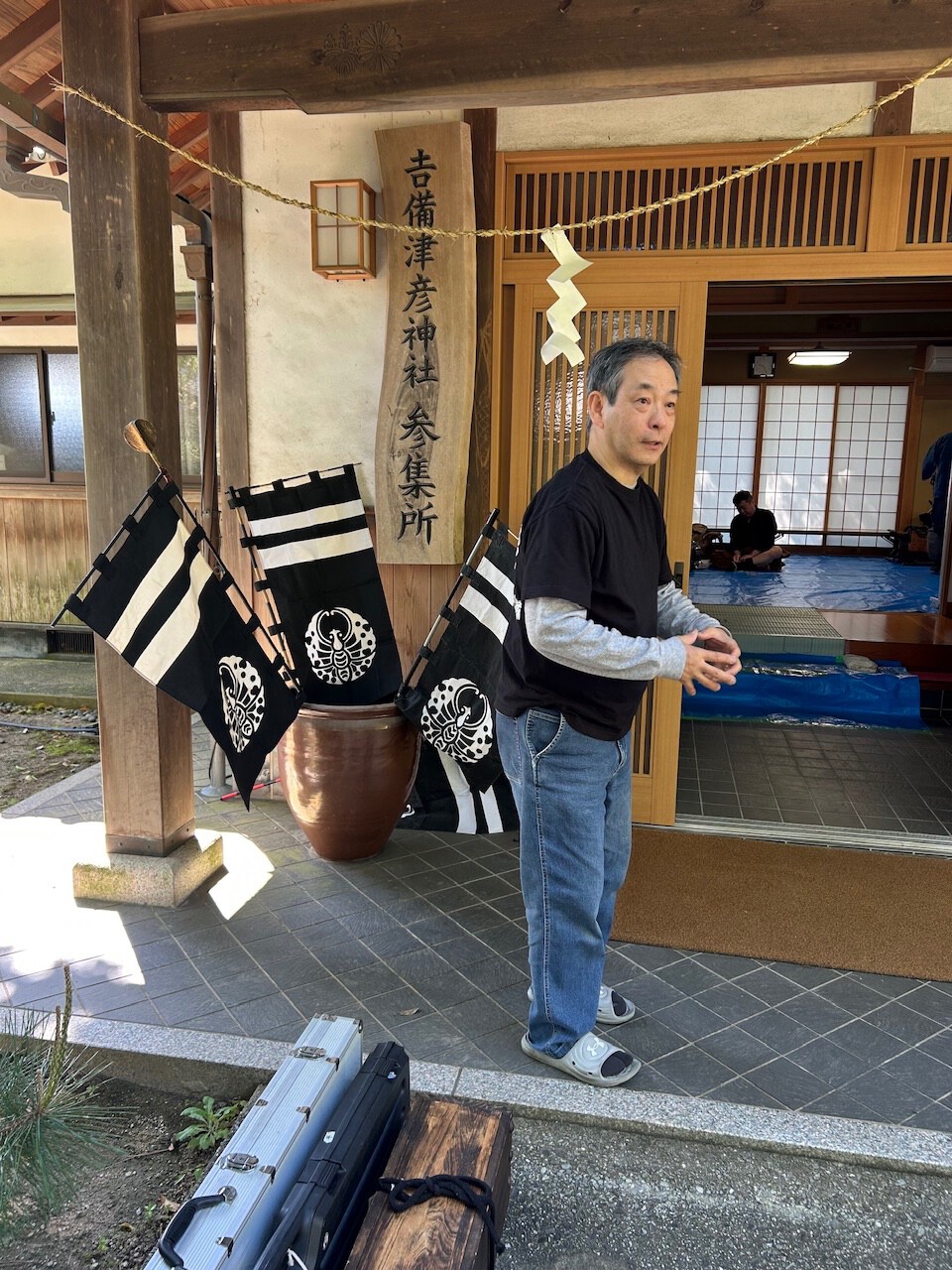
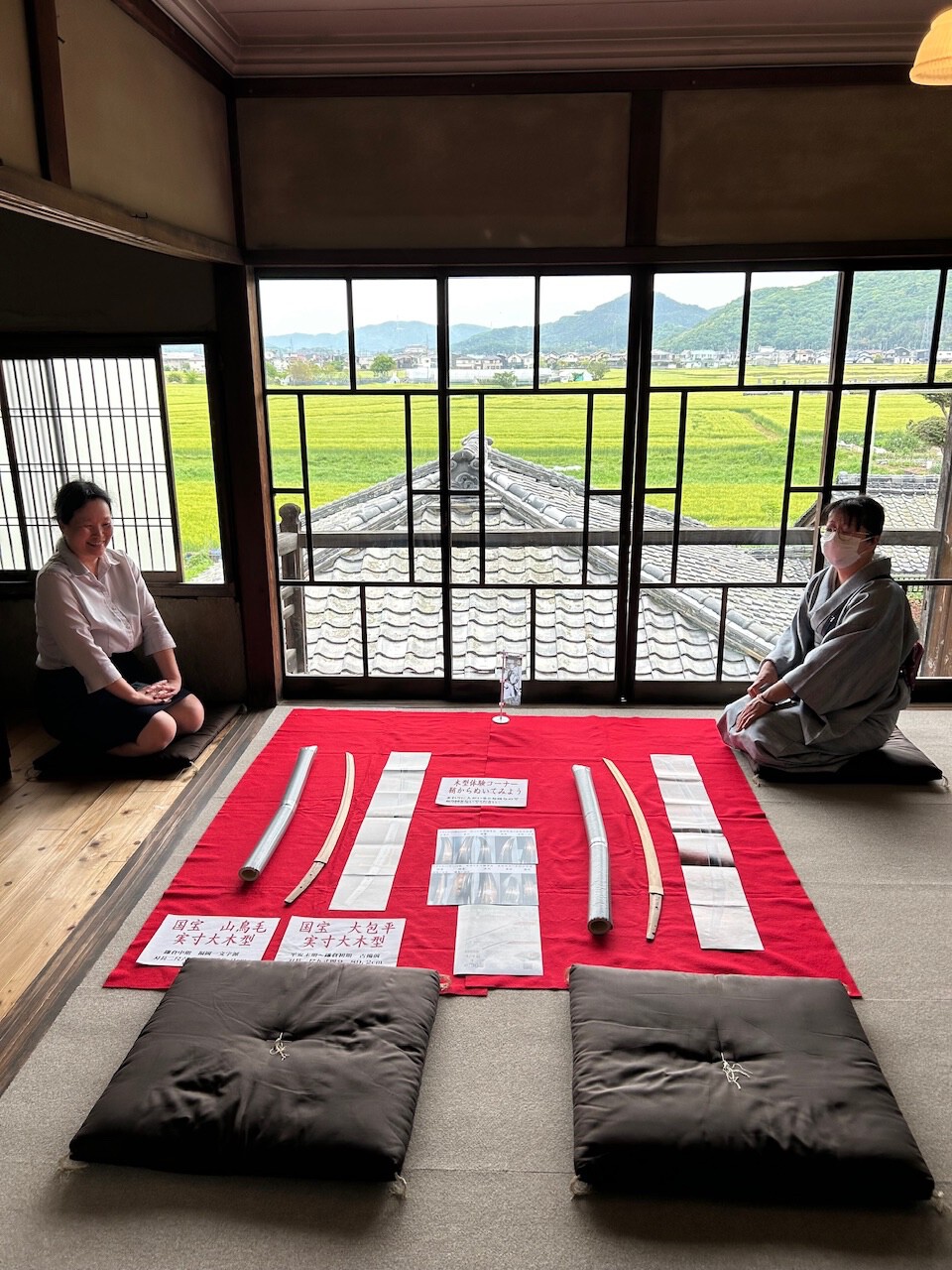
Golden Week includes Children's Day on the 5th of May (formerly called Boys' Day). This year our matchlock troop were asked to perform during the morning at the Kibitsu Hiko Jinja, head shrine for the Ikeda family of Bizen (Okayama) which is close by the dividing line between Bizen and *Bitchu provinces. The blessings ceremony was fairly elaborate. The Shojitsu Kenrikata IchiRyu Katchu Battojutsu sword group also performed, and we all provided entertainment for families and their children throughout the day. During the afternoon, still in armour, we sat for photographs with families, and displayed some of our swords and guns and accessories for the public to see and learn about. The day was special for me too with visiting family and friends. *(Kibitsu Jinja next door is the head shrine for Bitchu and the Abe family of Fukuyama, now Hiroshima.)7 points
-
Hmm... The first one is 若无(無 in cursive)清風吹,香氣为(為 in cursive)誰發, part of the poem 古風·孤蘭生幽園 by 李白 Li Bai of the Tang dynasty. Gemini suggested "If no gentle breeze blows, for whom would the fragrance spread?", feels close enough I guess! (Edited again: This is quite a poem upon a second read! One of the most classic themes recurring throughout Chinese poetry history, that is not being appreciated in one's own time for their talent. This poem was written in the autumn of the second year that Li Bai (arguably THE greatest Chinese poet ever) was called to the capital by the emperor himself, one of the greatest honors and dream of every ambitious person in ancient China, slandered by the emperor's favorite eunuch because Li would not kiss up to him, now growing apart from the emperor. The poem pictures a lonely orchid (considered the gentleman's flower, signifying pure of heart and high moral standards) overrun by weeds (the evil people in the court), once blessed with the sun's warmth (the emperor's favor), now loomed by the autumn moon(absent of sun and gleam future), experiencing frost and rain, and finally, "If no gentle breeze blows, for whom would the fragrance spread?" (one's talent is meaningless without the emperor's appreciation) (孤蘭生幽園,衆草共蕪沒。雖照陽春暉,復悲高秋月。飛霜早淅瀝,綠豔恐休歇。若無清風吹,香氣爲誰發。) ↑ AI could probably translate this well, not me orz) The signature on the bottom left is a little hard, I read 化 something 主人, so master of 化 something, a typical pseudonym of an old-timey Chinese or Japanese literatus. Edited: Forgot to add! Many well-educated Edo-period people read and write Chinese poems, there are even quite a few examples where swordsmiths chisel Chinese poems onto swords (Nakago and/or sword itself). But the bowl(?) in the first pic looks a little Chinesey to me. A good magnifier may tell if it's machine-made with a mini hand drill or laser-engraved. The middle one might not have anything actually intelligible on it. The third one is too blurry to make out for me, perhaps someone trained in Chinese cursive could tell, but I'm in my third weekly class in total and from which I haven't been for three weeks......5 points
-
That’s highly specialized research…! (As I’m sure you are already aware, Gifu was also affected by air raids, so when you search for information from that period, you often find only references to documents having been destroyed.) I found the 1935 and 1939 commercial directories (lists compiling information on commercial and industrial businesses商工名鑑). (I can see the characters for “sword(s)刀剣” , but I am not sure whether this refers to a blacksmith’s workshop or a retail shop.)You may have already found this information, but I hope it will be helpful. 「刀劍 (古物) 美浪町Minami chō 尾關憲司OzekiKenji」 Town Minami chō 美浪町corresponds to the present-day Town Onami chō御浪町, and the numbers refer to telephone numbers. National Diet Library Digital Collection 商工名鑑 (Shōwa 10) National Diet Library Digital Collection 商工名鑑 (Shōwa 14) I hope your research progresses well.
 5 points
 -
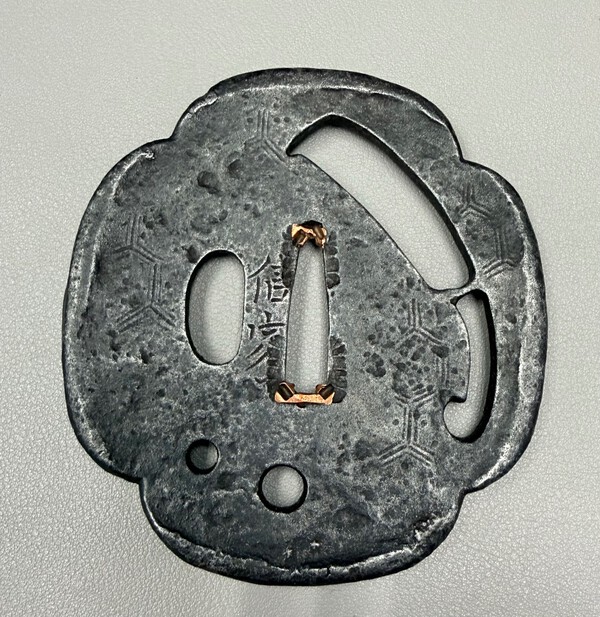
Just added a nice HUGE Nobuie Utsushi. Fantastic iron with lump tekkotsu on the mimi and ji. 9.1 x 8.5cm. SD 3.5mm and 7.5-8.1mm at the mimi. Thing is a brick.
 4 points
 -
I admit even after checking and documenting thousands and thousands mumei attributions by NBTHK I am often very clueless as they give so little information to anything below Jūyō level. I believe as Robert mentioned you can ask directly from NBTHK, however as I have never sent anything to NBTHK I am bit clueless about that process. The amount of time they spend for items at Hozon/Tokubetsu Hozon shinsa is to my understanding quite short (due to huge number of submissions) so they must give out the attributions at quite fast pace. Personally I would prefer they would give more general attributions but specify the time in brackets for the items. I have been under the impression that if there is a mumei attribution to specific smith without any addons it would often mean "the famous one". Of course there are in my eyes times when that attribution would not maybe mean the famous one... it is very complicated, as sometimes the famous generation can be specified in brackets for items with mei, sometimes it is not but it is still seen as the work of the famous one. And as mentioned in another thread lately there are even some attributions where I am not sure if it is narrowed down to a single smith or if it refers to a group of smiths. One thing would be also to know when the papers have been issued? NBTHK has been issuing papers for quite long time and there can be slight variations depending on issue dates. And with more modern information they have switched some smiths to different schools for example, or they have added more information for few schools as there has been misunderstandings by collectors so NBTHK has decided to add information to specific groups.4 points
-
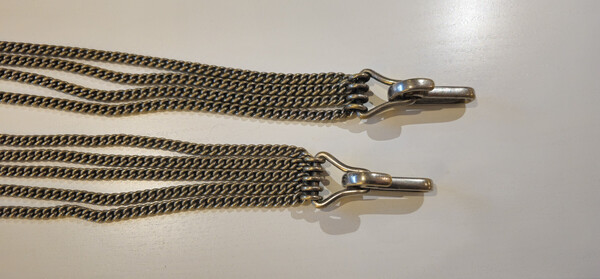
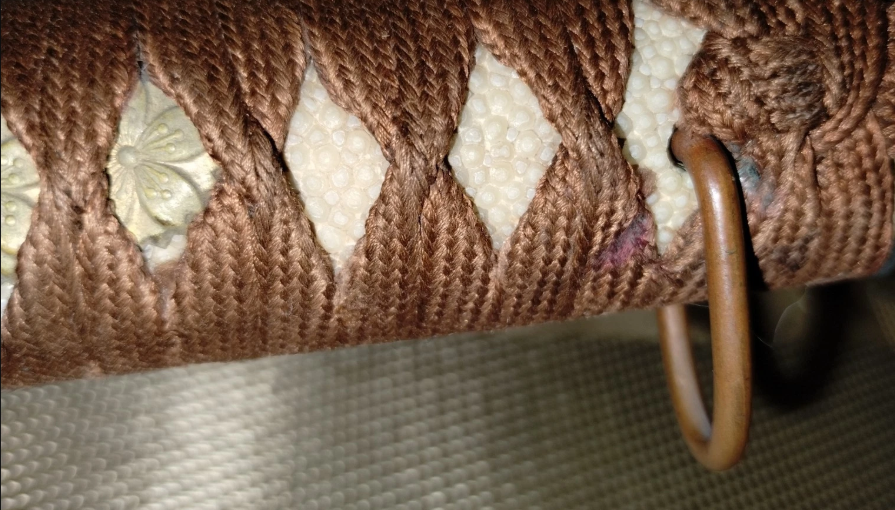
An example with five strands, not sure what dictated the number of chains. One imagines these multi strand examples were inspired by old Tachi hangers, like on the National Treasure Hojo and Uesugi Tachi Koshirae.



 4 points
 -
Photo of our recently departed leader Mr Ōmori
 4 points
 -
・Hōbei / Hōhei (奉幣) refers to the act of offering heihaku to the deities. ・Heihaku (幣帛) is a collective term in Shinto ritual practice for offerings presented before the deities, excluding shinsen (神饌)—that is, food offerings such as rice and sake. It includes items such as cloth, paper, and jewels. From 1875 onward, kinpei (金幣)—monetary offerings wrapped in paper—were also included as part of heihaku. ↓Text is in Japanese only.There is a photograph of textile offerings used as heihaku幣帛. 佐川記念神道博物館 Sagawa Memorial Museum of Shintō and Japanese Culture, Kōgakkan University.4 points
-
The following is information about the term. ・Kampeisha (官幣社) and Kokuheisha (国幣社)→ These are the two major categories of ‘kansha官社’ , which indicated the ranking of Shinto shrines under the Modern Shrine Ranking System that lasted from the Meiji period until the prewar era. ・Kansha (官社) refers to shrines that received offerings from the state during the Kinensai (祈年祭) and Niinamesai (新嘗祭) festivals.These shrines were divided into Kampeisha (官幣社) and Kokuheisha (国幣社). The modern shrine ranking system was historically influenced by earlier state-controlled classifications, and was organized into major, medium, and minor ranks within each category(大・中・小).Promotions within this hierarchical system were also carried out. ・官幣社(Kampeisha ):the shrine that receives ritual offerings (heihaku幣帛) from the central government (the Jingikan神祇官,the government office responsible for Shinto affairs under the imperial court) ・国幣社(Kokuheisha):the shrine that receives ritual offerings (heihaku) from provincial authorities (kokushi国司, and later prefectural governments) ↓The text is in Japanese only, but there is a clear diagram. Please refer to section 3: Modern shrine ranking system (after the Meiji Restoration)近代社格制度 (明治維新以降). 神社研究所Jinja-lab4 points
-
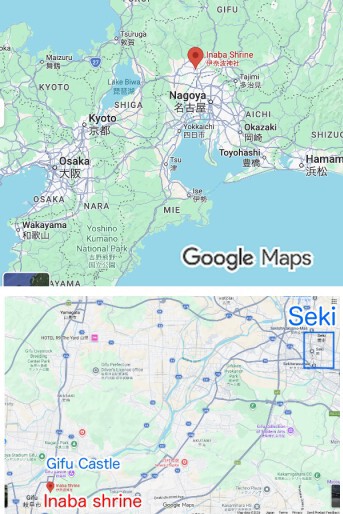
(This is an additional note.) “升格 為 国幣小社”= It was promoted to the minor rank of Kokuheisha. Is this perhaps the shrine you are referring to?→伊奈波inaba神社Shrine (In Meiji 6 (1873), it was ranked as a prefectural shrine, and in 1939 (Shōwa 14), It was elevated to the rank of a kokuhei shōsha) It is located at the foot of Gifu Castle 岐阜城 and is quite close to Seki関. wiki.inaba.shrine(Gifu) the Inaba shrine’s official website
 4 points
 -
I've also noted that sometimes dealers who have a sword in this situation go back to the NBTHK and ask what generation the attribution was for, and the NBTHK has some comment to make on that - presumably from notes associated with the shinsa process. Might be worthwhile reaching out to them to see if there is more that they can say!3 points
-
It should be related to the shrine's receiving an official ranking. Shintō shrines had a kind of ranking system, with the shrines most closely connected to the Imperial family receiving the rank of "Imperial Shrine", and other major shrines receiving various "National Shrine" rankings. The phrase you posted means something like "appointed National Shrine 3rd Rank" (see Wikipedia for a list of such designated shrines). https://en.wikipedia.org/wiki/Modern_system_of_ranked_Shinto_shrines#Imperial_shrines,_3rd_rank3 points
-
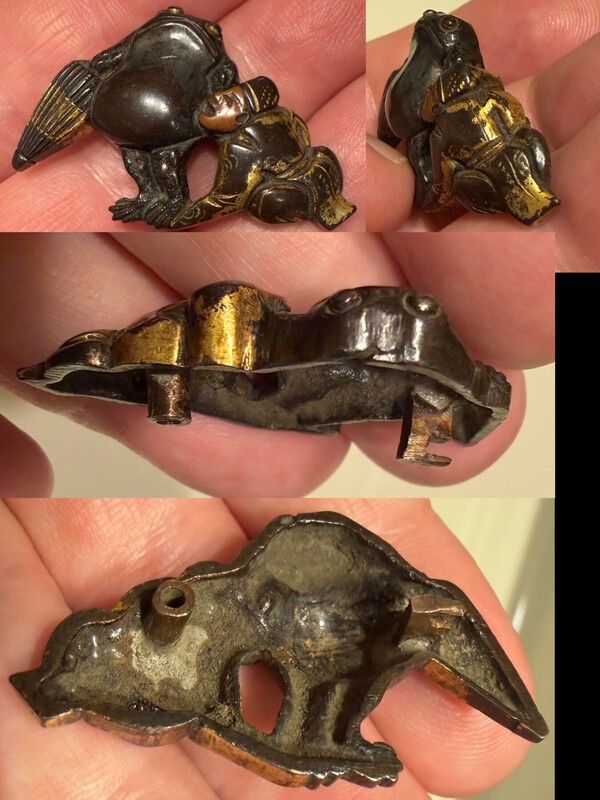
Last month I was in Kyoto. went into a tourist trap antique shop. It was at the end of a long street that is aimed at the tourist trade, but had genuine antiques for sale. There was a large section of sword fittings, most of them in poor shape. Some were sets connected by small bits of plastic, others individuals. In the individual menuki box, I found this treasure and bought it on the spot. A giant frog holding an umbrella, while a man in court dress bows down and prostrates himself to the frog. (I, For One, Welcome Our New Amphibian Overlords!) Whatever it was paired with has been lost to time. I am therefore posting it here, to ask if anyone else has seen it's like? (Besides the fire breathing toad of Tenjiku Tokubei...)


 2 points
 -
Hi Everyone, I was pleasantly surprised 30 minutes ago by a ring on my doorbell from the USPS, with what looked to be a very long box. Lo and behold, my shingunto surprisingly made it to my doorstep, despite the USPS tracking data showing no updates. Inside, there was "US Fish and Wildlife" tape all over the contents, and for some reason, it seems like the fish and wildlife department had my sword for 2 weeks. Not sure why that was so, and I'm just glad that the sword made it to me in one piece.2 points
-
These come up in discussion, now and then, so thought I'd post a photo for reference. Civil sword, with hole drilled through the tsuka top for a sarute. Found on this ebay sale.

 2 points
 -
James, below the maker’s mark there appears to be a * star. These were put on the early imported German blades. I have a similar Type 19 by Clemen & Jung. I will post pictures when I have time. I would buy this one if the price is reasonable.2 points
-
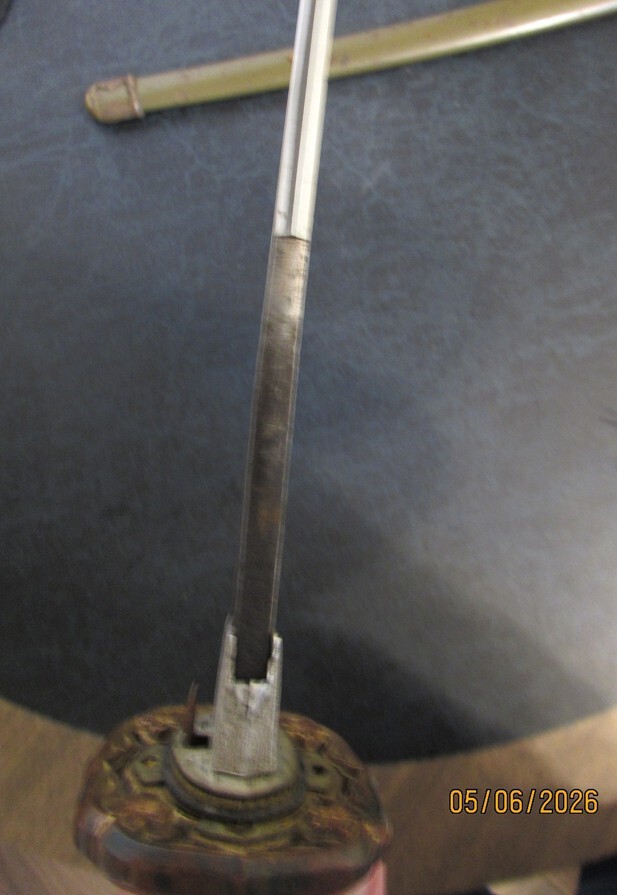
The X-ray was a bit much, but it looks cool. You can remove the handle on these without breaking anything. From the image, you can see the ana that the sakura nut goes through to secure the handle. Even the basic plated blades with acid-etched hamon have ana are able to be removed from the handle.2 points
-
I was just about to write I have never even heard of Kongōbyōe Morihide but it seems I have a reference blade by one of the smiths. Still I actually have zero knowledge about these smiths, and even though I have the reference item, they are completely unknown to me. I have put it to early Muromachi period as both Sesko and Nihontō Meikan have only the same two smiths featured. Unfortunately the item is now gone from online but here is the NBTHK paper, the info is quite scarce as is pretty much the norm by them. I would call in @flemming as he knows a lot about this school.
 2 points
 -
Assuming no fatal flaws, I would guess what you have is worth anywhere from about $900 upwards to whatever the quality ends up as.2 points
-
2 points
-
2 points
-
Moses was my kendo teacher for well over a decade and spent many years visiting his workshop, mostly to see my blades being polished. His level of polishing skill is on par or better than many “fully apprenticed” togishi I have sent swords to or have seen. He’s also willing to work on swords that many would turn away. I had one such sword with deep kizu that he fixed and subsequently received TH. He’s in no way an “amateur”. Yes, it’s true that he didn’t do a full apprenticeship, but that doesn’t affect his workmanship. I haven’t spoken to him in some time, but there’s no one else I’d send my swords to. Just my 2 cents.2 points
-
Matt lovely piece - coincidence as I just won one on auction but I have no idea what I will find under the dirt and rust! Do you think Nobuie was a "Nutter for Nata"?2 points
-
Hi Dave, Your sword looks interesting; someone knowledgeable and honest needs to see it in hand in order for you to learn much more. In the mean time, other than a light coat of machine oil on the area of the blade that would be polished (all but the tang) don't try to fix anything; well meaning amateurs often do serious damage. If you took your pictures on a dark background, not white, we could see more of the detail. There is a friend of mine in Toledo who could take a look at the sword. If you'd like to be connected with him send me an email: gdoffin at gmail.com Grey2 points
-
It is an honor to be of help. (I truly understand the frustration of not being able to access the information you seek due to the language barrier.) I hope you will find the answers you are looking for…!2 points
-
Generally, when this happens it's because in that particular line of smiths, there's a bunch of them who are more or less indistinguishable, or have enough overlap in style, skill and/or working period that it becomes difficult to separate the generations, or alternatively that the blade in question has enough features to qualify for more than one generation of that smith. The bigger the skill/quality gap between the "best" smith of that line and the "worst" smith of that line, the more likely it is that they will disambiguate, either with a generation or an approximate time period. As an example, consider Magoroku Kanemoto, the second of the Kanemoto line. He is by far the highest rated Kanemoto; his predecessor is also quite well-thought of, if not quite up to the standard of Magoroku, while the various other Kanemotos that succeeded them are a mishmash of quality with none really standing out. In this case, you're likely to see the one of the following attributions: "Kanemoto (first gen)" - the first Kanemoto. Not up to the legendary standards of Magoroku, but still quite far above the rest "Kanemoto (Magoroku)" or "Kanemoto (second gen)" - the one, the only, the big name "Kanemoto" - one of the other ones, we might have our suspicions but we're not exactly sure which one Sometimes they will add a bit more detail to the last category by attributing to "Kanemoto (Momoyama)" which might narrow it to a particular subset of those smiths within that time period, or "Kanemoto (later gen)," meaning essentially "it could be any of them other than the big two". Rather than asking "What did they mean when they said this", it's sometimes instructive to consider what they didn't say, and then try to figure out why. On occasion this can be a very diplomatic hint at the state of the blade - e.g. "Kanemoto" could also mean "this is by a smith of the Kanemoto lineage but the current polish means we can't tell you any more than that" or "the blade is too tired for us to go out on a limb because who knows what it really looked like with all the meat on its bones and the kissaki not having been reshaped".2 points
-
Your contribution is amazing! This should help a lot. Yes, the research is not only specialized but also difficult without access to records in Japan (I know some folks use JACAR, however I don't speak Japanese). I have a working theory about some smiths and their location so I'm working backwards, if you will, by trying to find the location of forges -> then trying to find lists of smiths for those forges -> then looking for specific smiths on those lists. I assume it really won't be possible to do that but it keeps me off the streets, as we say. Thank you again for your time and contribution, Hiro. John C.2 points
-
And D E F


 2 points
 -
Some general shots of the place. A B C

 2 points
 -
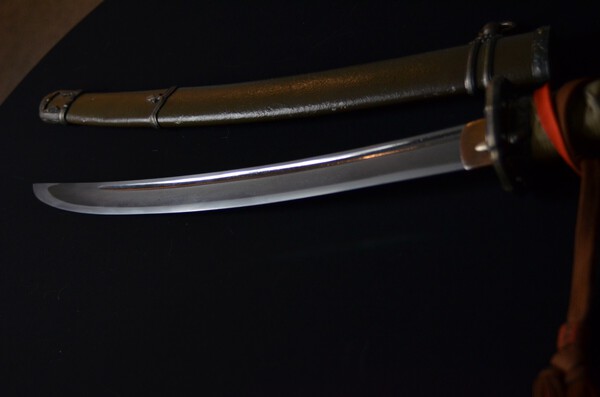
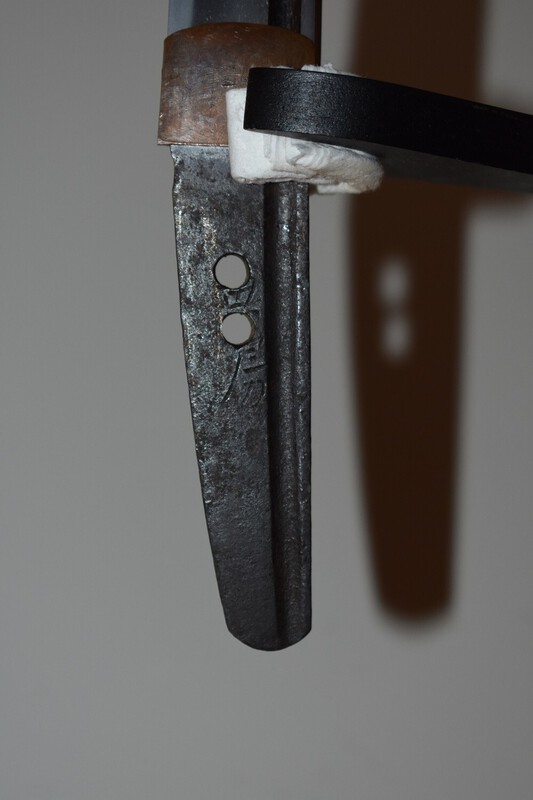
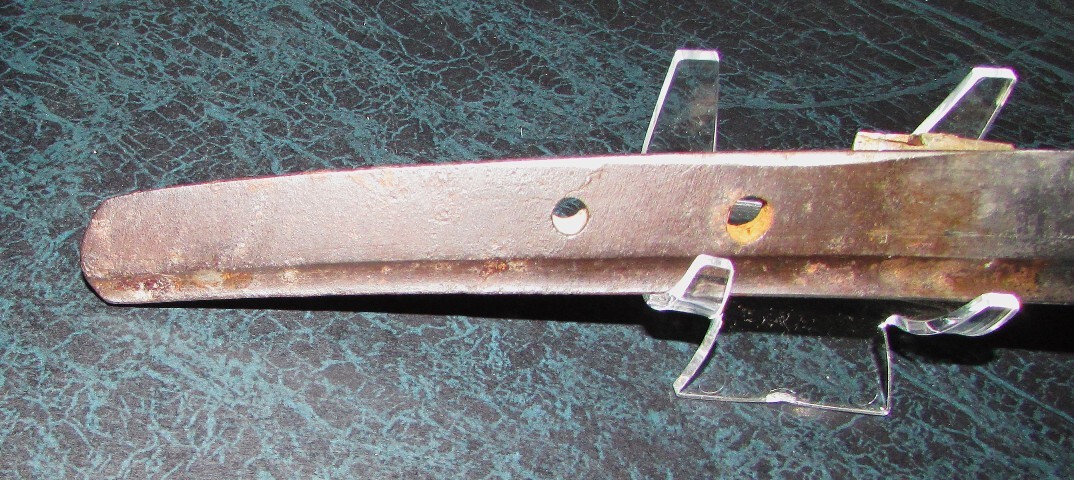
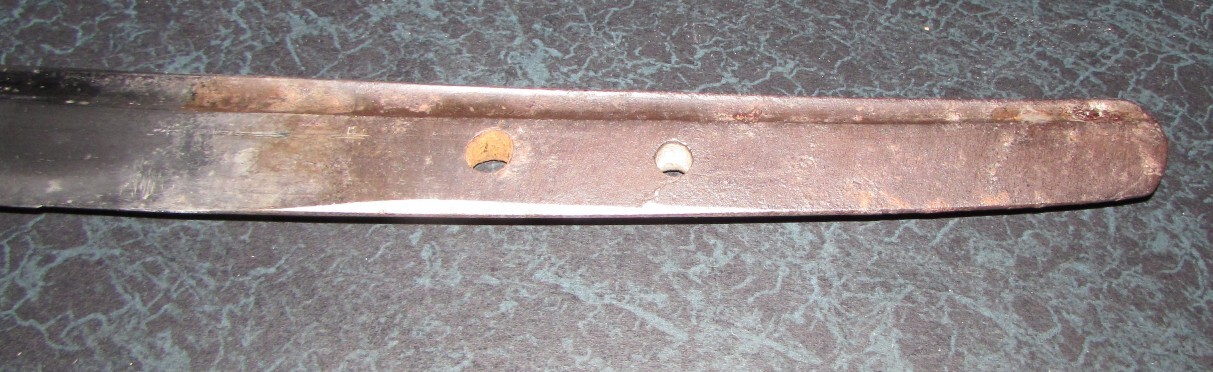
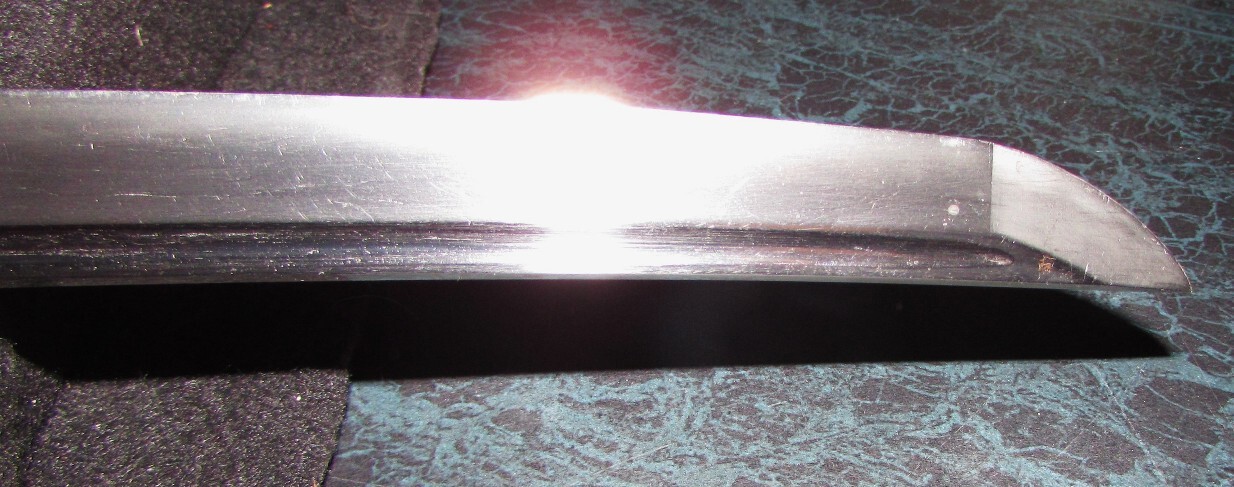
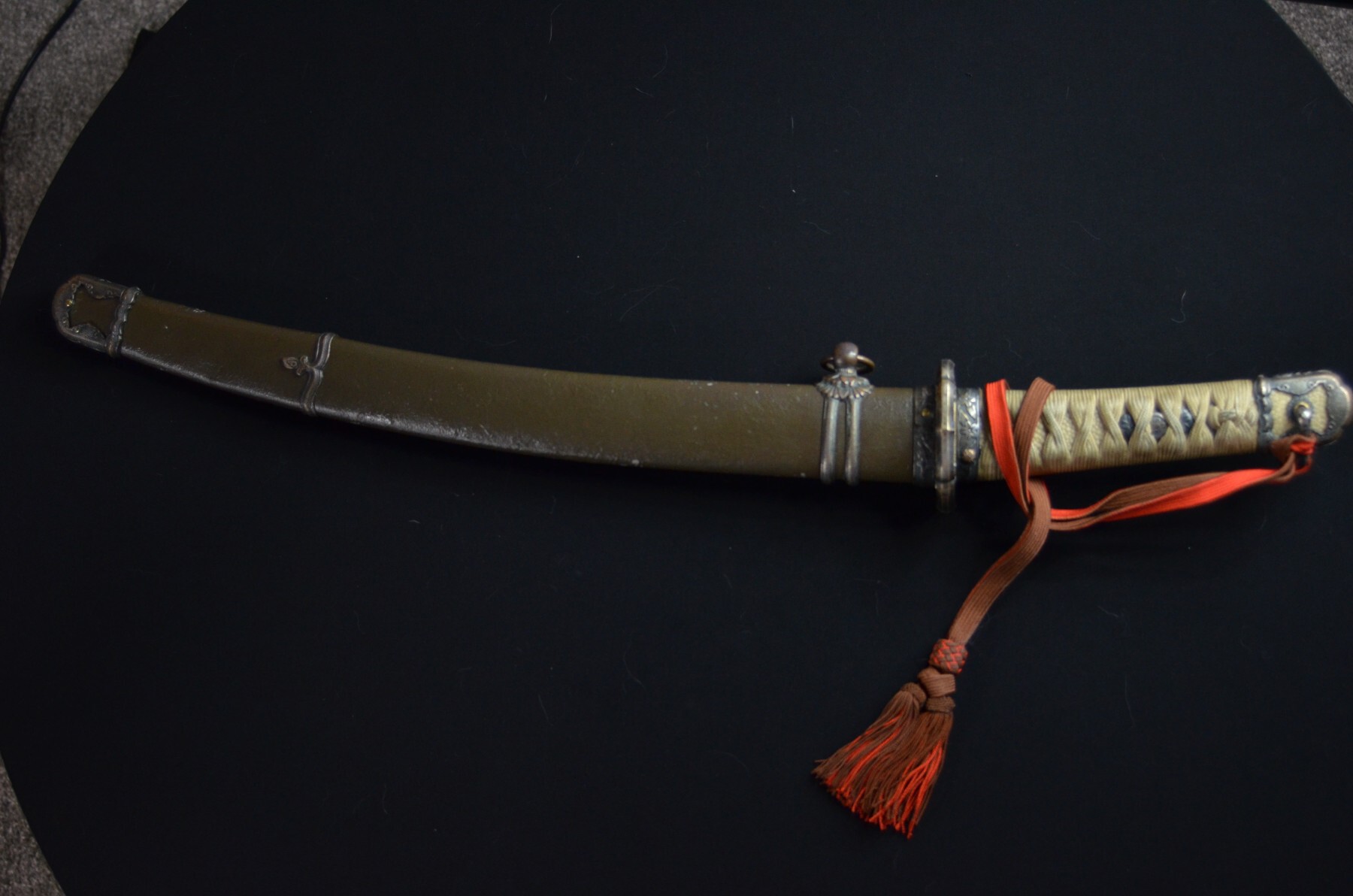
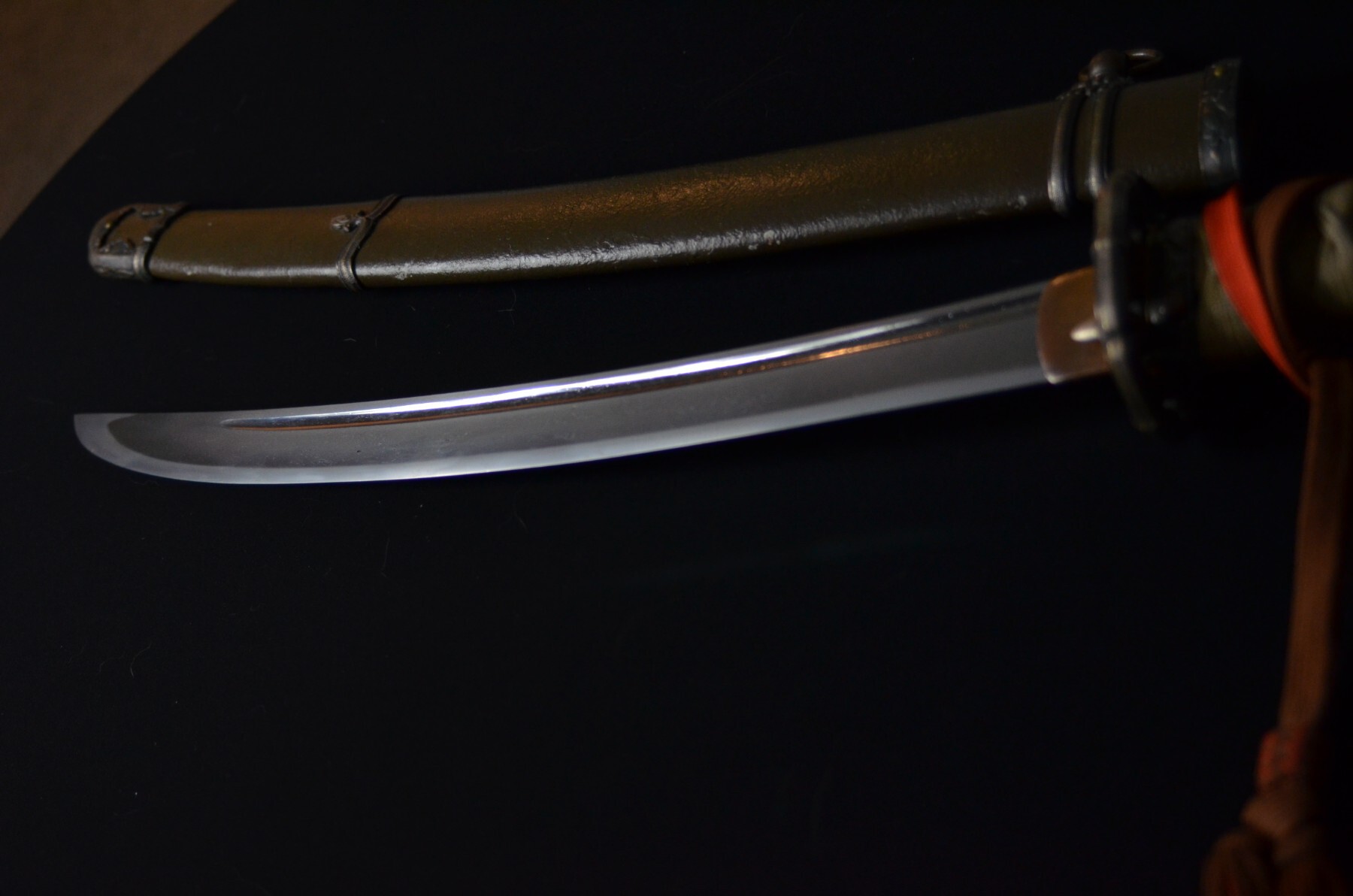
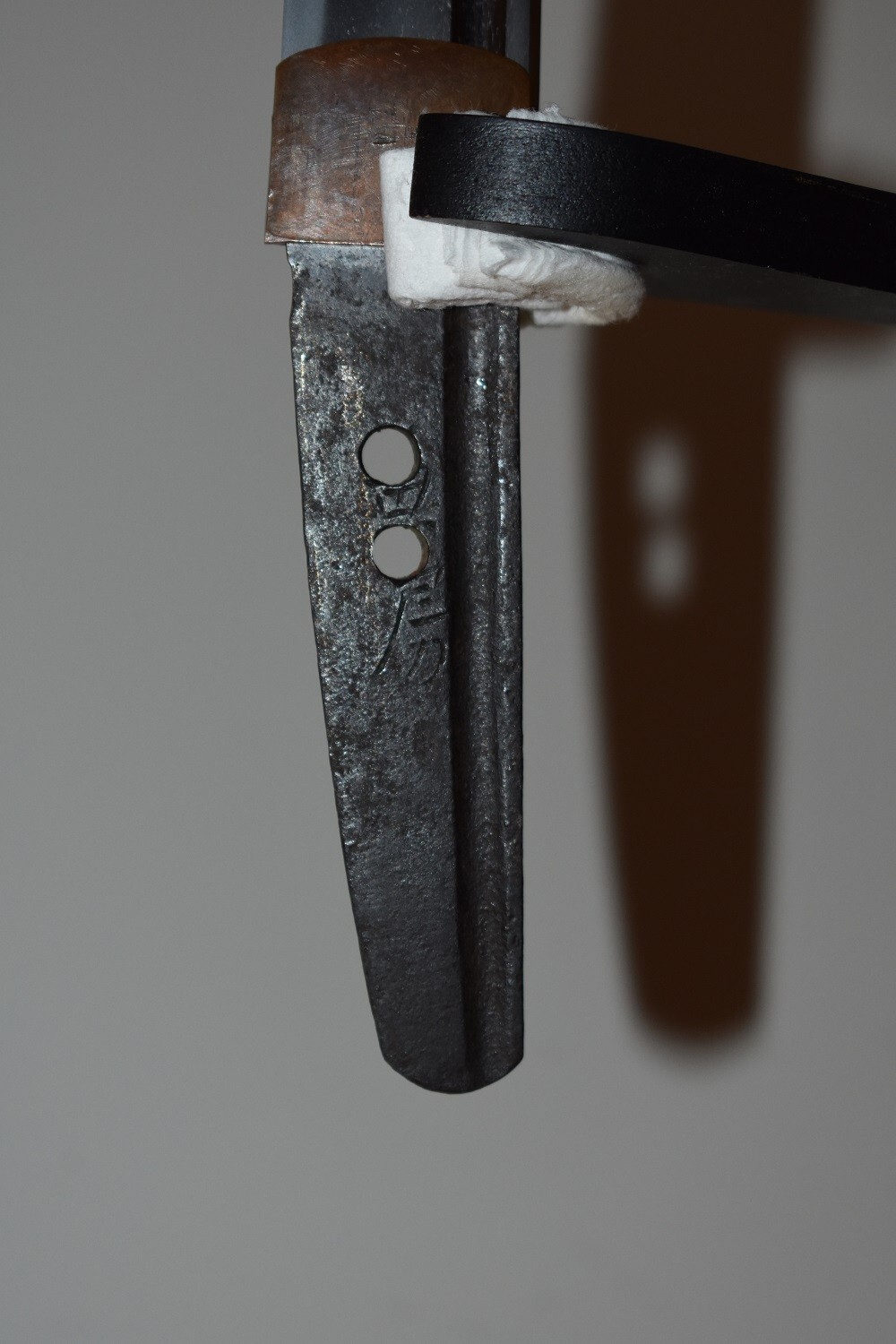
Good afternoon all: I recently acauired this old Wakizashi with a Koi-toshi Hi. The pictures attached are as I recieved the bladeout of the Veteran Estate so not a prefect condition specimen. In any event, I would like to get some opinions as to how old the blade may be in age and possibly which school, den, or maker? It is two hole tang, possibly surigae, and quite old from what my amatuer eyes see. The Nagasa at present measures about 21 1/2 inches. The nakago file marks are quite faint. The Gunto Handle has a faded Lt Grade Tassel and also a Mon from Maeda Toshiiye Family. Any thought or opions would be deeply appreciated. Edward G





 1 point
 -
untilOn view at Museum Bronbeek from Friday, 17 April 2026: the temporary exhibition on the shin-guntō. The Japanese officer’s sword of the Second World War was both a symbol of centuries-old samurai honor and an instrument of military authority. The exhibition Shin-guntō: Tussen Eer en Terreur (Between Honor and Violence) shows how tradition, ideology, and warfare converged in a single weapon. More than 25 swords are on display, including 10 Yasukuni-tō. https://www.bronbeek.nl/onderwerpen/t/tijdelijke-tentoonstelling1 point
-
What does mukansa have in common with full education and training from a traditional togishi? ( BTW - such education takes 5 years or more )1 point
-
@Spartancrest, After my last reply, I did a LOT of digging. Now, when I buy a unique item online, I always try to do a reverse image search, because I've seen a lot of people selling items they do not own, then rushing off to buy the item if it sells. I bought a wonderful set of Fuchi & Kashira off ebay, asked the seller to send them to a Japanese company making a koshirae for me... and the guy panicked, acted weird as heck, and canceled the sale. I don't think I was even able to bad review him because he cancelled it. I did a reverse image and found out it was on a Japanese site for half the price. I bought it there out from under the swindler. Lately though Japanese sites are bouncing the reverse image search, and ChatGPT who I occasionally use for assistance (though I do NOT trust LLMs. I use them as search engines now that search engines are mostly bad at the job.) tells me that it is not able to access the images on those websites if I link them, I have to download the screenshots and manually enter them for Chatgpt to look at. This is a big problem, and I think I should make a thread about it, because if I can't reverse image to the Japanese auction sites because they are bouncing the search it's much harder to catch swindlers. Still, I took your photo (which I originally didn't recognize as a link to Yahoo auctions Japan's images) and reversed it, and got those suspicious websites we mentioned. It seems what these websites are doing is scraping the internet to have the entire internet on their site so they can mirror whatever you are searching and can come up for every search. You search "Prehistoric potato chips made by time traveling dragons from mars" and they will somehow always manage to come up and look like they have something for you.... The scraper sites however did have some real images.... and copies of the Japanese kanji text from the original yahoo auction. And using that text I was able to search google for that text exactly, and the original auction (from 2021) came up.... and it's the place I bought the item at. Which was a lot of work to go in a circle. Seems they had the neat little thing 4-5 years before I walked in and was enchanted by it. (IT was also 8K more in person..... but I still love it.) https://auctions.yahoo.co.jp/jp/auction/t1026815632 Still, the ability to reverse image to these sites directly matters to collectors, and I really do want to dig into why the search engines are getting bounced by them. Anyone have anything on that? Below is (some of) what ChatGPT had to say on it. Also, note that where it says "And this is important: your object may not originally have been catalogued as a netsuke at all" is an example of an LLM having a breakdown, as it was never suggested the Frog Overlord was a netsuke, and I always referred to it as a menuki, since it was sold to me as one (though I think the idea above by @ROKUJUROthat it's actually a clasp has a lot of merit.) Which roughly translates to: “Sword fitting, Edo-period original, shakudō-ground frog large fitting, 12g (first item / purchased item)” That is a very strong sign this was copied from a genuine Japanese antique listing. A few important clues: 刀装具 = sword fitting 江戸~ オリジナル = Edo-period original 赤銅地 = shakudō base/ground (the dark copper-gold alloy used in high-end fittings) 蛙 = frog 大金具 = large fitting So the scraper page at least preserved the original Japanese title. And this is important: your object may not originally have been catalogued as a netsuke at all. It may have been sold as: a sword fitting, kozuka ornament, menuki-related object, or detached tosogu component. That actually fits your earlier suspicion that the piece felt “odd” and did not neatly conform to normal netsuke construction. As for safety: The domain does not immediately present as classic malware/phishing from the search result alone. HOWEVER, it still behaves like a scraper/mirror commerce site, and I would not log in, create accounts, enter payment info, or disable browser protections. If you want to inspect it safely: use a browser with scripting limited, or open it in a VM/sandbox, or use a text-only fetch service. But the key takeaway is: you now have real Japanese metadata attached to the piece. That is valuable. And honestly, “赤銅地 蛙 大金具” is probably the most useful lead you’ve gotten so far. {I asked about the scaper sites and it came back with 1) Why those scraper pages exist (and why they look sketchy) They’re not random—they’re SEO parasites. How they work: Bots crawl places like Yahoo Auctions Japan, Rakuten, Mercari They copy: title text (often in Japanese), thumbnail images, sometimes prices/IDs They auto-generate fake “product pages” on cheap domains 2) Why the real Japanese listings don’t show up This is the part that actually matters for your use case. I'm also discussing work arounds with chatgpt, but he's being unrealistic in the way that LLMs sometimes are. Giving academic ideas that actual users will immediately see are bad. Have there been big discussions on here about that? There likely should be. EDIT: Actually do kind of like that frog Tsuba.... if it stays low maybe I will buy it.... I like fitting with animals, especially aquatic animals.1 point
-
i have a very nice hard bound copy. I would sell it for the same price. i am away from home and can post a picture when i h=get back sunday1 point
-
Thank you very much, Piers. Wonderful photos and accounts of the events.1 point
-
https://xmhqqg.dlubowitz.com/index.php?main_page=product_info&products_id=13979&sid=6XDvntj The site won't open for me either but the image is able to be copied. When I tried to search the second image I get a link including Yahoo Auctions. But still won't show where it originated. Need a froggy tsuba? https://www.jauce.com/auction/w1228933639 Heads up it is a "popular" cast piece! Note the simulated sekigane!1 point
-
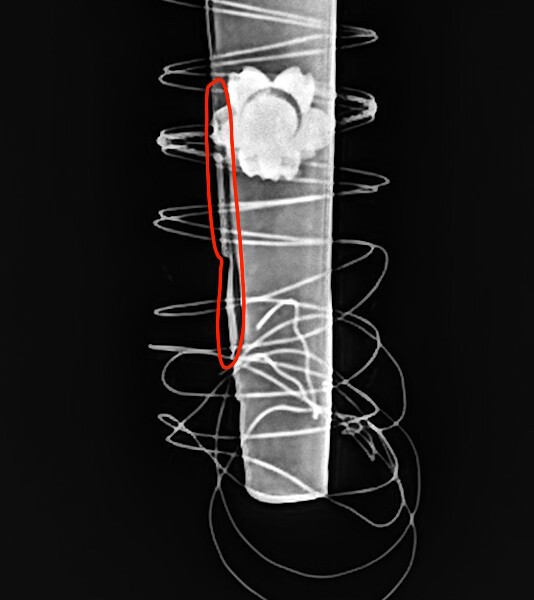
Thank you @John C. We have just obtained X-Ray images of our Tantō! The areas I have circled--my fellow grad researchers and I disagreed on this. They think these are damages/breakage in the steel. But to me these look like a mechanism to secure the nakago in position. Like a latch? Surely metals don't break in this manner...? What does anyone else think? @Bruce Pennington @Kiipu ? Such a beautiful, intriguing object.
 1 point
 -
Mine is a bit odd, the cut out in the hitsu goes the wrong way? I like the udenuki-ana on yours, they are unusual on an already sukashi guard. I don't know how many like it there might be? This one from a post last year might interest you. Posted January 3, 20251 point
-
That is exceptionally helpful, thank you very much! As you say, what they didn't say is likely as instructive as what they did - something to keep in mind when a dealer might be leaning more to a specific generation than the attribution likely supports. The usual adage of the sword proving the mei (or in this case, the attribution) seems one that is good to keep in mind then.1 point
-
The Imperial Ordinance No. 775 can be accessed via JACAR. The citation is at the bottom of the webpage and can be cut and pasted. Good luck with your scholarly studies. 御署名原本・昭和十四年・勅令第七七五号・海軍工廠令中改正1 point
-
Wow, Hiro! Thank you very kindly for the thorough explanation. And yes, this is in reference to the Inaba Shrine. I am researching whether or not there was a WW2 forge associated with Inaba shrine or possibly on Inabagawa. The 1939 date peaked my interest, hence the attempt at a Google translation. John C.1 point
-
While we wait for your answer, I must amend my arising doubts about the Showa stamp from the post above. Ohmura's website quotes a 1940 Japanese magazine article which clearly specifies it was the Showa stamp being used by the Seki City Manufacturers Association. One can only speculate why the polisher, in the discussion above, thought that the army had placed the stamp on blades, but I suspect he saw blades at an arsenal where he worked with the stamp and assumed the army inspectors had done the stamping. Honestly, we don't know how or when the Association did the stamping. It is possible they had reps at the arsenals inspecting blades that came in. Who knows? But both Ohmura and the Seki City website say the Association was inspecting blades and the magazine article said it was the Showa stamp being used. Back to awaiting your source about Toyokawa. Are you able to cite Wikipedia? Toyokawa Naval Arsenal - Wikipedia They state: "The land was acquired in the towns of Toyokawa and Uchikubo and village of Yawata in eastern Aichi Prefecture by July 1938, and construction began on October 1, 1938. The formal opening ceremony for the new facility was held on December 15, 1939. The new plant initially covered 200 hectares, and had 1500 employees. "1 point
-
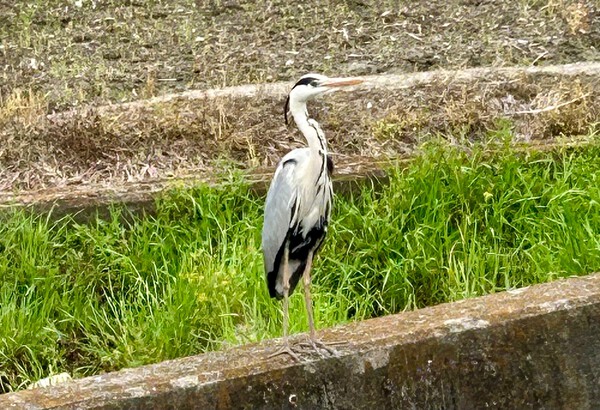
Agreed! It’s a wonderful old house. Looking out across the fields of young barley towards Osafuné and the hills beyond. Saw this from the car window as I was about to drive home!
 1 point
 -
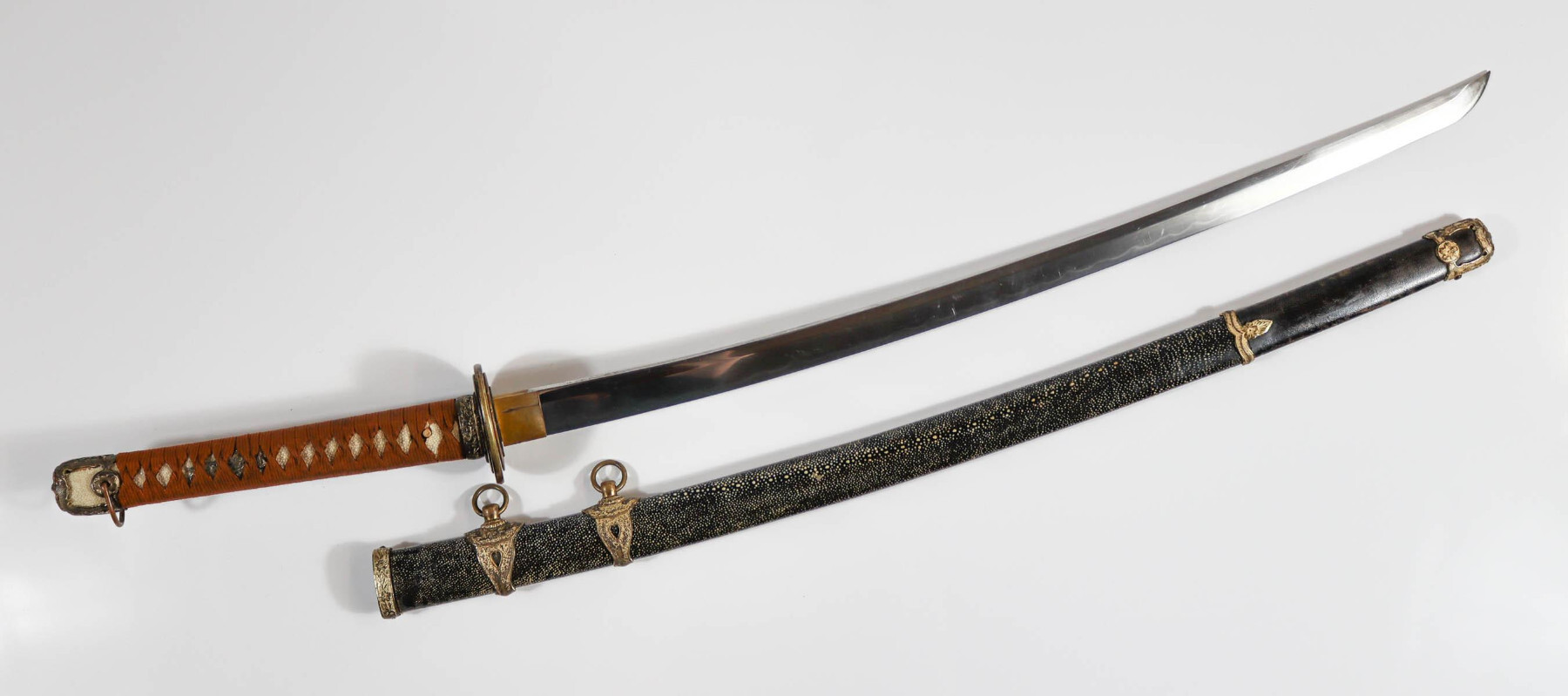
Kaigunto with white samegane and army colored ito. At this O'Gallerie Auction. Blade is a Seki stamped Yoshinaga.


 1 point
 -
Sneak preview...
 1 point
 -
Jason: I just picked up a very similar udenuki-no-ana tsuba, though in much worse shape and mumei. Would you happen to know what the style and shape (aorigata?) are called? John C.
 1 point
 -
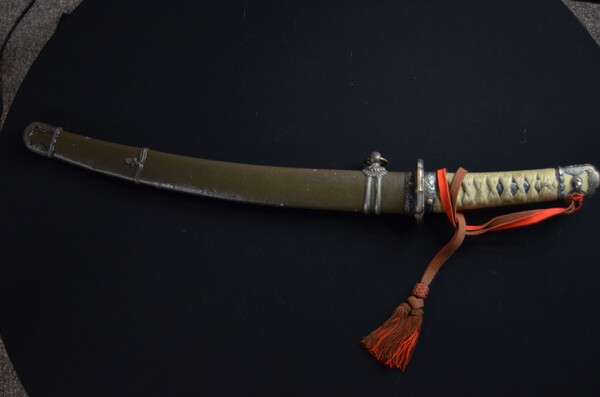
I can take more photos in a day or two if you'd like.
 1 point
 -
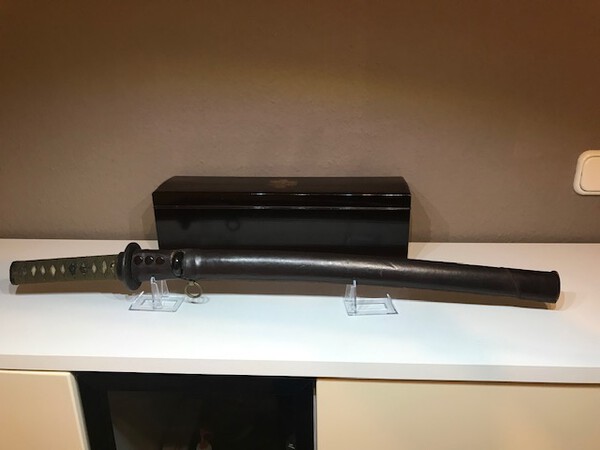
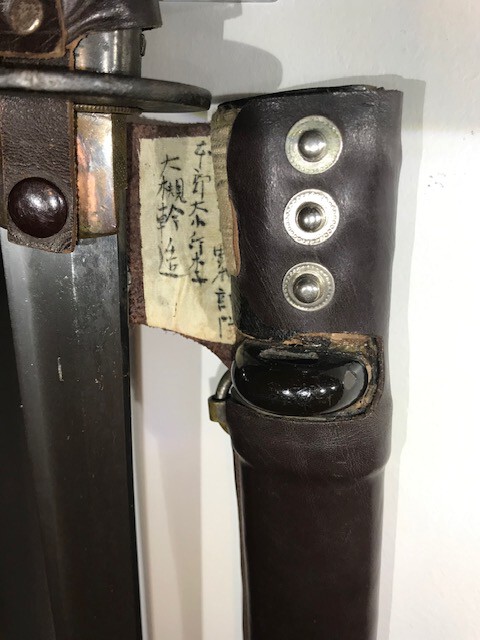
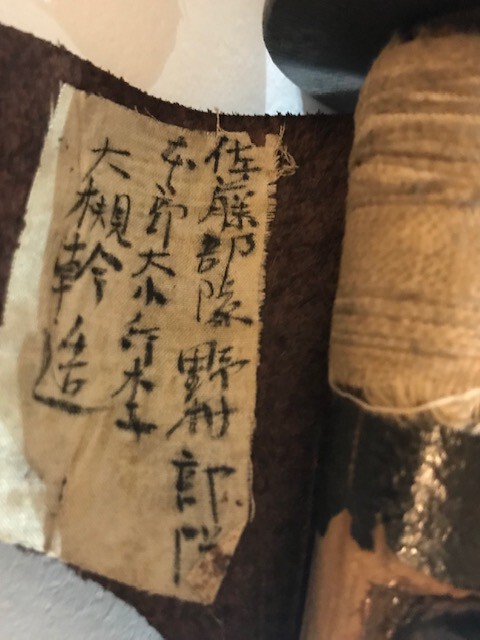
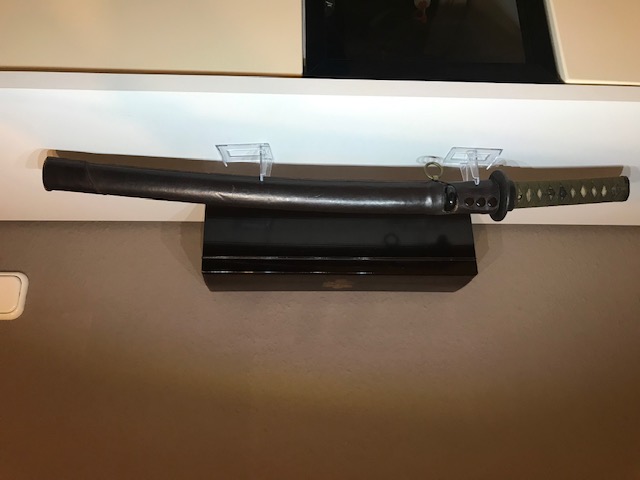
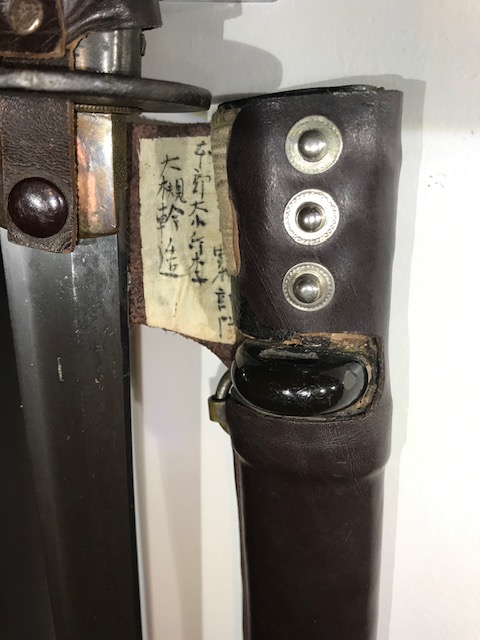
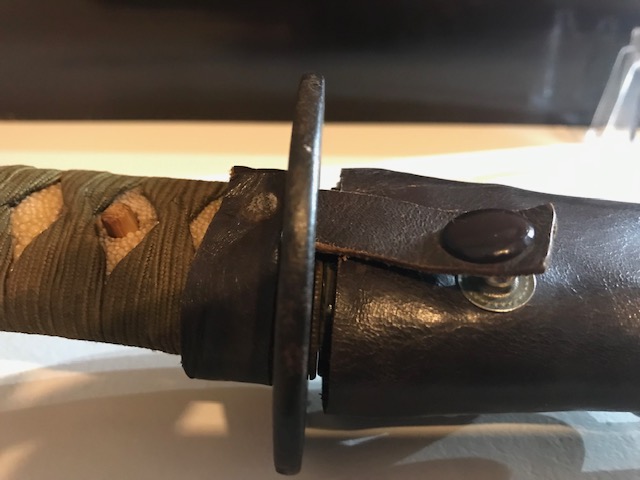
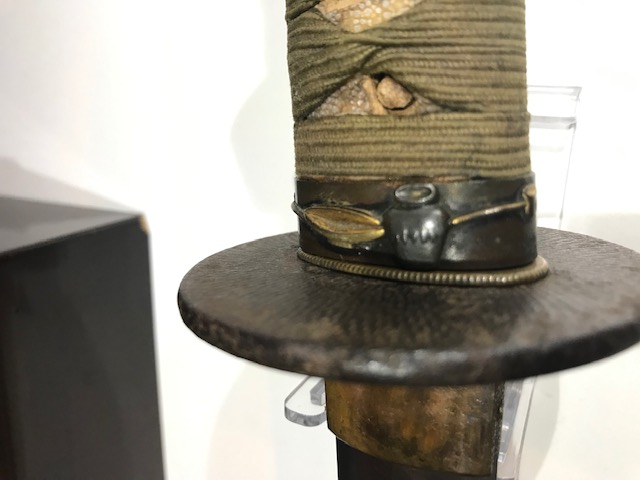
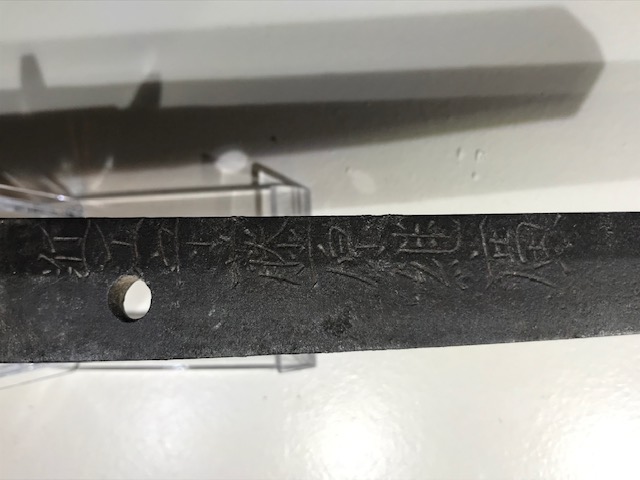
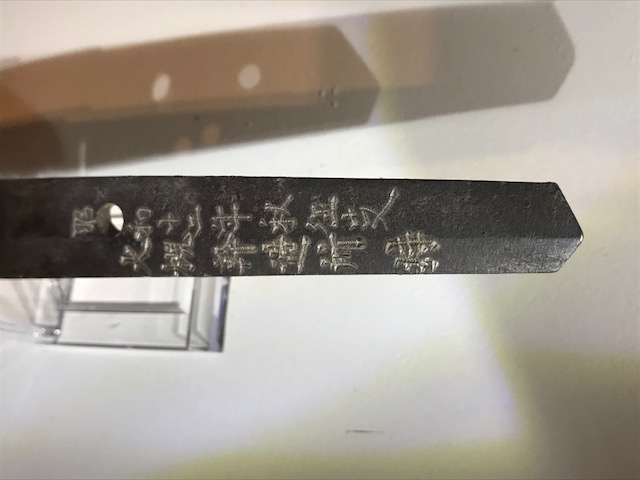
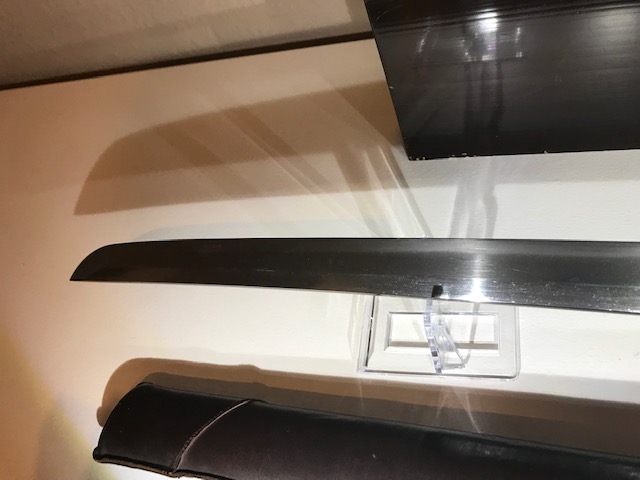
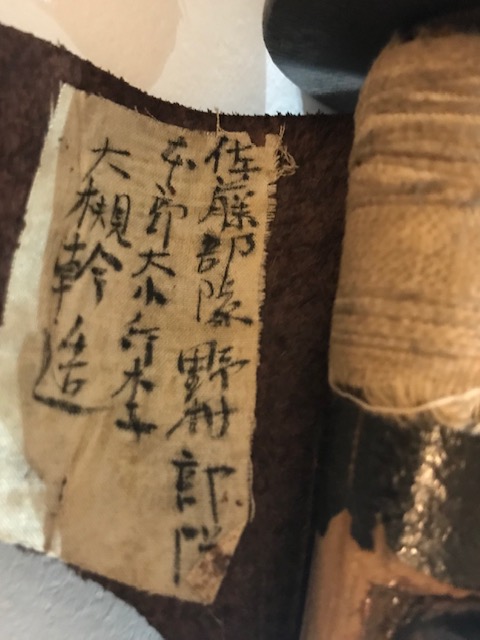
I would like to introduce my omi no kami Tsuguhiro wakizashi, pilot, tank or what it is. It has a wood Saya. The condition of the leather cover is very good. Thanks for the translation Steve.


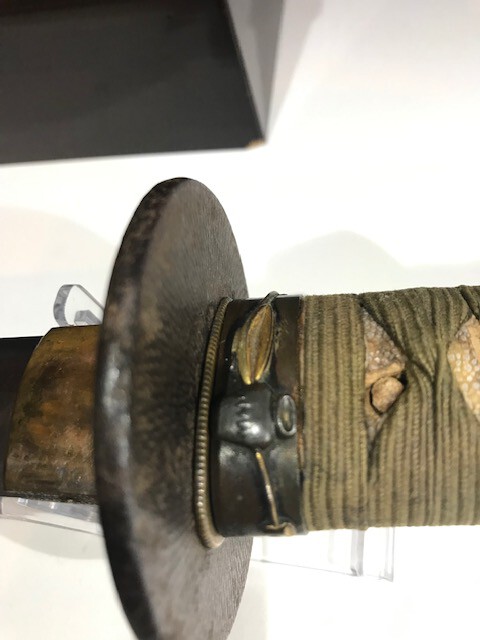
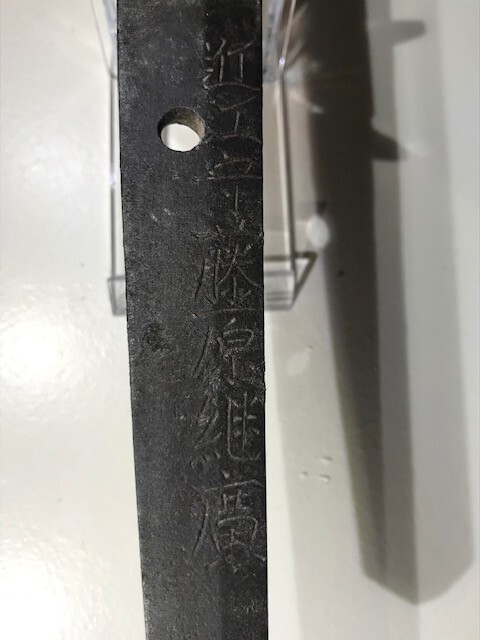
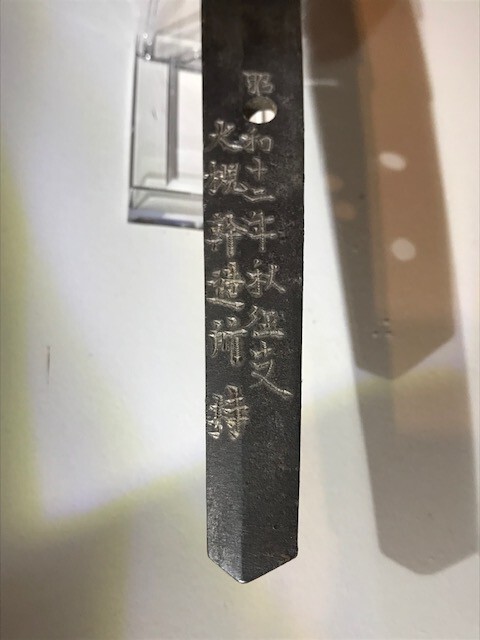
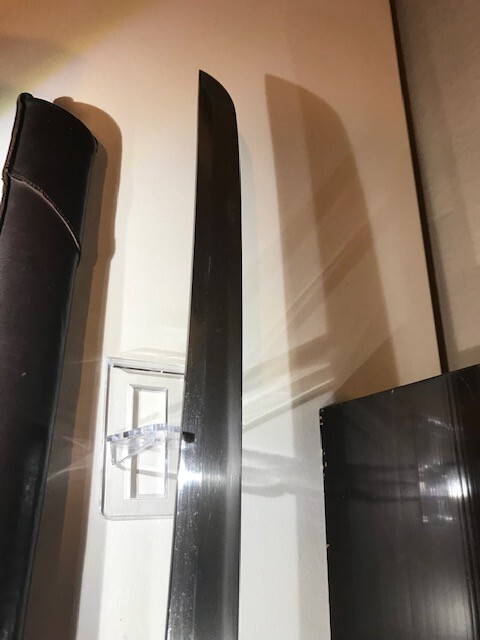
 1 point
 -
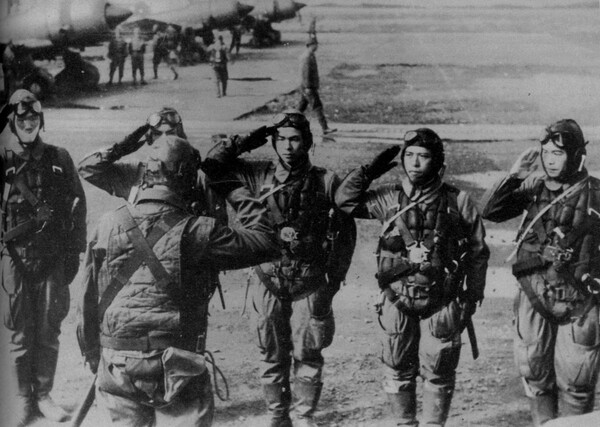
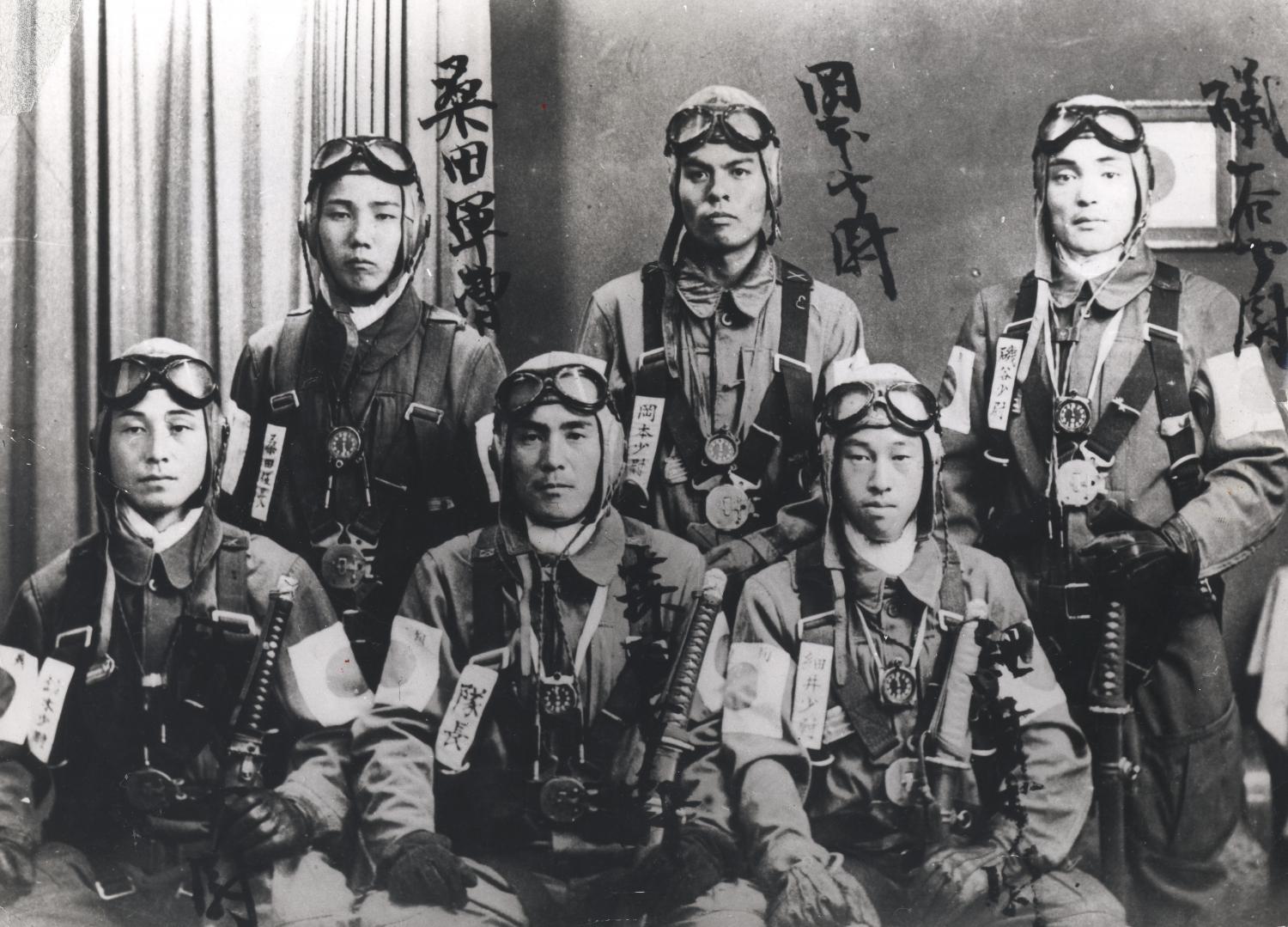
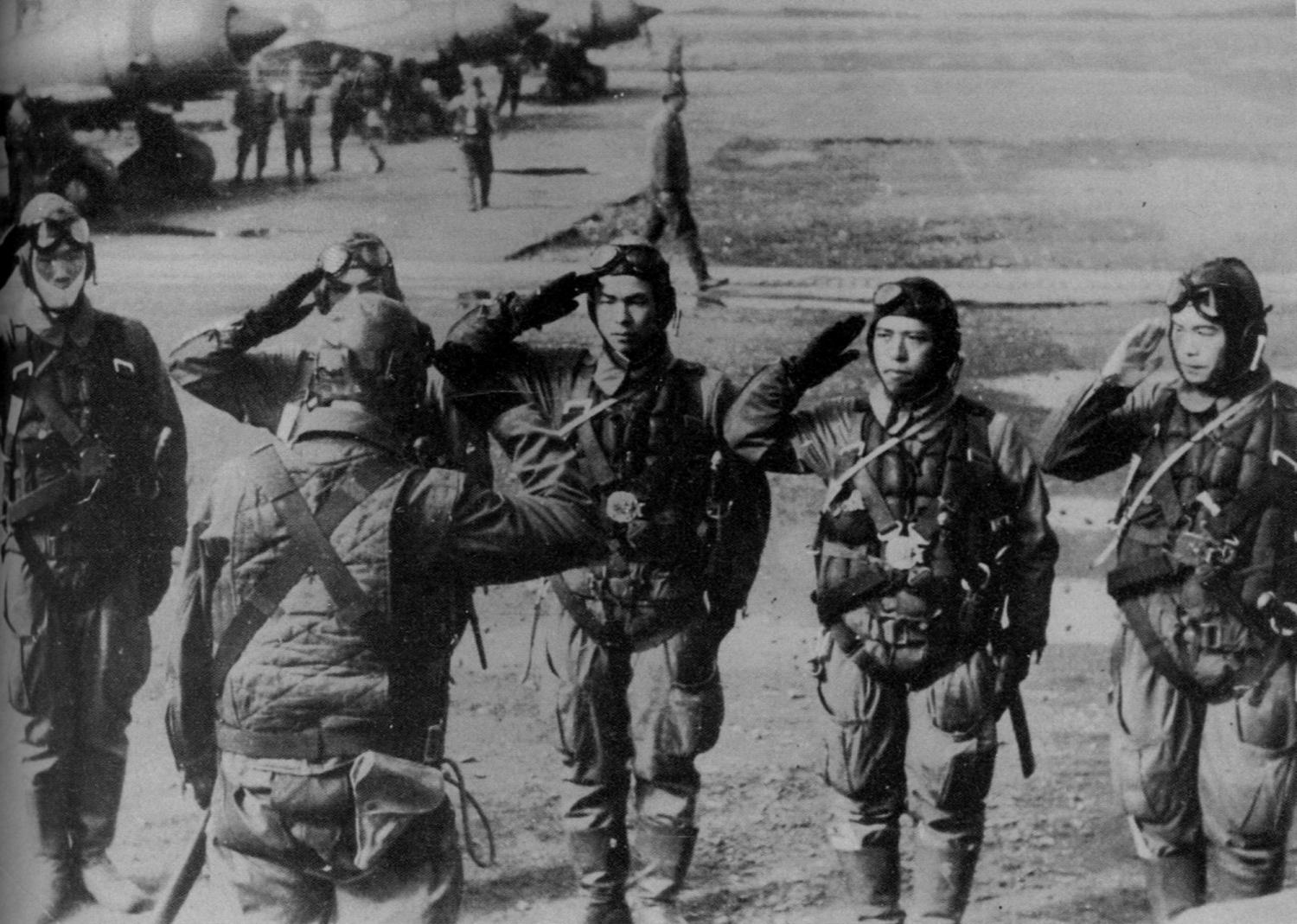
Some pictures of pilots with full length swords, the second is supposedly of a Kamikaze unit.

 1 point
.thumb.png.54593db2789c8a1dcb235543b184ce39.png)


































This leaderboard is set to Johannesburg/GMT+02:00