Hiro
-
Posts
47 -
Joined
-
Last visited
-
Days Won
2
Content Type
Profiles
Forums
Events
Store
Downloads
Gallery
Everything posted by Hiro
-

Help with Asano Kanezane Nakago Inscription
Hiro replied to Conway's topic in Translation Assistance
I appreciate your correction…! I will make sure to remember how to read the kanji as well. magane…! -
Help with Asano Kanezane Nakago Inscription
Hiro replied to Conway's topic in Translation Assistance
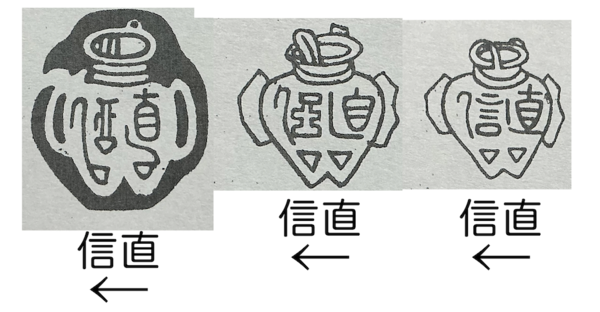
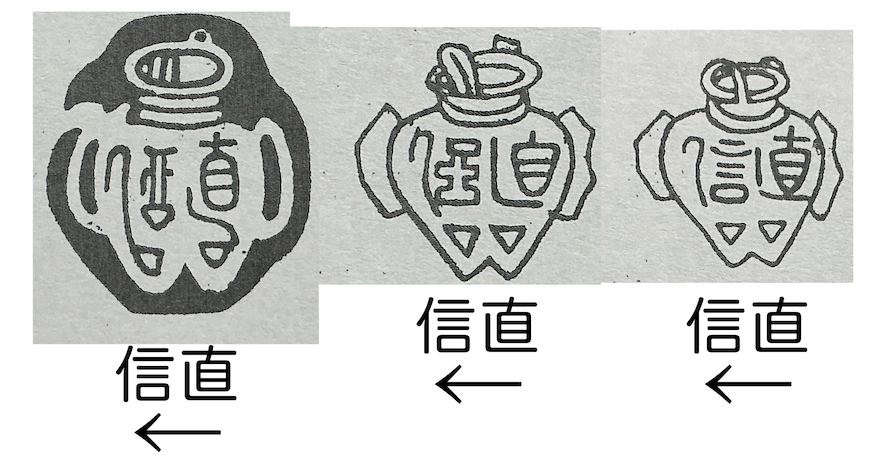
Hi, I will write only the characters. (I also do not know the correct reading of the first sentence.) 「純正直鐡入鍛 濃刕住浅野兼眞作之」 (To me, it looks like the character “入,” but on the auction site below, it is identified as “人”. Looking at the photo of the registration paper on the same website, it says “入”.) ↓ 刀 (銘:濃州住浅野兼真作・純正眞鉄人鍛) auction site(yahoo!Japan)There are still some photos near the bottom of the website. 刕=州 濃刕=濃州=美濃Mino 住=live 浅野Asano兼眞Kanezane 作之=make this 眞=an old-style “真” ↓There was also a brief biography on this website. sword dealer Giheiya 「Mei 濃州住浅野兼真 Real name 浅野真一 Date of birth 明治45年3月15日(March 15, Meiji 45 [1912]) Address 関市仲町住 Title 陸軍受命刀匠」 ↓以安来鋼浅野兼真作之刻印 Asano Kanezane sword dealer Meirin sangyo -
Hi, At first glance, I also thought it was “芝” , but after looking more carefully, I began to think it might actually be “艺”. The character form 「艺」 is used in Chinese simplified script(簡体字). 艺 wiktionary it would result in the somewhat unusual situation of the sculpture appearing Japanese in style while the name is written in Chinese script. Would it perhaps be more natural, after all, to regard this as “芝”…?

-
Photographs Illustrating the Wearing of Japanese Guntō
Hiro replied to saemonjonosuke's topic in Military Swords of Japan
I would like to make a partial correction. I previously translated 「聡隊」 as “総隊,” but in the military organizational terminology of that period, they may have referred to different units.These were probably pronounced the same (sōtai). “Sōtai” (聡隊) is said to have been a colloquial designation or unit title referring to an internal formation within an infantry regiment, particularly a battalion-level unit. Rather than forcing an uncertain translation, I would prefer to leave the term untranslated and defer to those with greater expertise in historical military terminology. -
Photographs Illustrating the Wearing of Japanese Guntō
Hiro replied to saemonjonosuke's topic in Military Swords of Japan
I’m amazed that photographs from the Taishō era could survive in such beautiful condition. Thank you very much for sharing them here! -
Photographs Illustrating the Wearing of Japanese Guntō
Hiro replied to saemonjonosuke's topic in Military Swords of Japan
↑ It’s photographed very beautifully! The text in the first image reads: “MAINICHIKEN” (毎日軒) (Address: )Osaka Sennichimae大阪千日前, just west of Nankai-dōri南海通西入. (This would be south of Osaka Castle, around the present-day Namba Station area.) when I hear the word ‘ken’ (軒) today, I tend to think of a restaurant, but at that time it may actually have been the name of a photography studio. The third image reads: 大正3年8月15日 August 15, Taishō 3 (1914) 歩兵 第8総隊 Infantry 8th Regiment Headquarters 陸軍中尉 服装 Imperial Japanese Army First Lieutenant’s Uniform (NAME)瀧澤繁信 Takizawa Shigenobu I think August 15 would have been a holiday period back then as well (the Obon season). I wonder whether the photography studio was open…? -
It is an honor to be of help. (I truly understand the frustration of not being able to access the information you seek due to the language barrier.) I hope you will find the answers you are looking for…!
-
That’s highly specialized research…! (As I’m sure you are already aware, Gifu was also affected by air raids, so when you search for information from that period, you often find only references to documents having been destroyed.) I found the 1935 and 1939 commercial directories (lists compiling information on commercial and industrial businesses商工名鑑). (I can see the characters for “sword(s)刀剣” , but I am not sure whether this refers to a blacksmith’s workshop or a retail shop.)You may have already found this information, but I hope it will be helpful. 「刀劍 (古物) 美浪町Minami chō 尾關憲司OzekiKenji」 Town Minami chō 美浪町corresponds to the present-day Town Onami chō御浪町, and the numbers refer to telephone numbers. National Diet Library Digital Collection 商工名鑑 (Shōwa 10) National Diet Library Digital Collection 商工名鑑 (Shōwa 14) I hope your research progresses well.

-
・Hōbei / Hōhei (奉幣) refers to the act of offering heihaku to the deities. ・Heihaku (幣帛) is a collective term in Shinto ritual practice for offerings presented before the deities, excluding shinsen (神饌)—that is, food offerings such as rice and sake. It includes items such as cloth, paper, and jewels. From 1875 onward, kinpei (金幣)—monetary offerings wrapped in paper—were also included as part of heihaku. ↓Text is in Japanese only.There is a photograph of textile offerings used as heihaku幣帛. 佐川記念神道博物館 Sagawa Memorial Museum of Shintō and Japanese Culture, Kōgakkan University.
-
The following is information about the term. ・Kampeisha (官幣社) and Kokuheisha (国幣社)→ These are the two major categories of ‘kansha官社’ , which indicated the ranking of Shinto shrines under the Modern Shrine Ranking System that lasted from the Meiji period until the prewar era. ・Kansha (官社) refers to shrines that received offerings from the state during the Kinensai (祈年祭) and Niinamesai (新嘗祭) festivals.These shrines were divided into Kampeisha (官幣社) and Kokuheisha (国幣社). The modern shrine ranking system was historically influenced by earlier state-controlled classifications, and was organized into major, medium, and minor ranks within each category(大・中・小).Promotions within this hierarchical system were also carried out. ・官幣社(Kampeisha ):the shrine that receives ritual offerings (heihaku幣帛) from the central government (the Jingikan神祇官,the government office responsible for Shinto affairs under the imperial court) ・国幣社(Kokuheisha):the shrine that receives ritual offerings (heihaku) from provincial authorities (kokushi国司, and later prefectural governments) ↓The text is in Japanese only, but there is a clear diagram. Please refer to section 3: Modern shrine ranking system (after the Meiji Restoration)近代社格制度 (明治維新以降). 神社研究所Jinja-lab
-
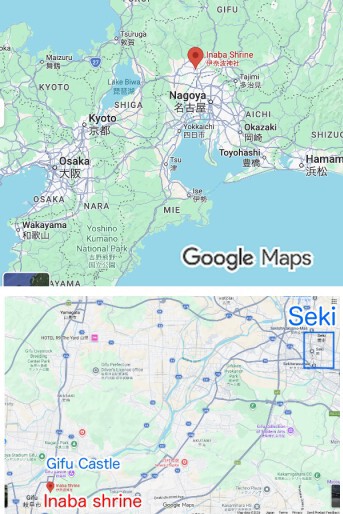
(This is an additional note.) “升格 為 国幣小社”= It was promoted to the minor rank of Kokuheisha. Is this perhaps the shrine you are referring to?→伊奈波inaba神社Shrine (In Meiji 6 (1873), it was ranked as a prefectural shrine, and in 1939 (Shōwa 14), It was elevated to the rank of a kokuhei shōsha) It is located at the foot of Gifu Castle 岐阜城 and is quite close to Seki関. wiki.inaba.shrine(Gifu) the Inaba shrine’s official website
-
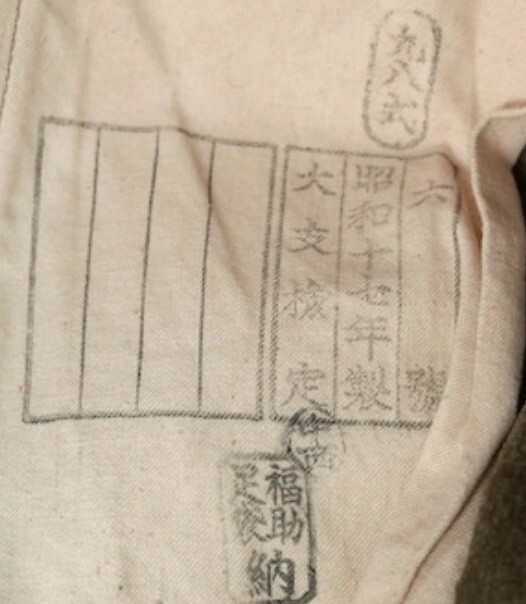
I also came across a pair of trousers like this. It is said to be a pair of trousers made by repurposing an army wool overcoat from the 1940s–50s (likely postwar). In this case, it is possible that it was created independently by a private individual, so I thought it might be possible that such unexplained markings were added…(This is all purely speculative. )

-
(I will keep notes only of what I have imagined.) I considered that it might perhaps also be a memo containing sewing instructions. 上 ue :meaning [↑]. Would it mean something like this: ‘Please place the fabric on this side (the left edge) over the fabric on the right edge’? I am afraid I do not understand the second line. I suspect that technical terms may sometimes be written in an abbreviated form. However, would it, in the first place, be customary to write text on a military uniform in this manner? From a brief look into the matter,It appears that the markings on military uniforms were generally based on a standardized format, such as the manufacturer’s name.(I imagine that those here may be more knowledgeable about this point.)
-
Jitsuden's calligraphy It’s quiet and beautiful.I, too, was able to deepen my knowledge of the Ōbaku school this time. I sincerely hope the curator will be able to provide you with a helpful response…!
-
Komazawa University houses the Zen Culture History Museum 駒沢大学Komazawa University禅文化歴史博物館the Zen Culture History Museum If you were to make an inquiry here, I am not certain to what extent they would be able to address highly specialized academic questions; however, I would imagine that there is a possibility they may be able to refer you to a specialist. This is about the extent of the information I am able to provide…!
-
However, I believe this matter is highly specialized and not something I should comment on lightly. So, I looked for documents mentioning their names and for any relevant expert institutions. Komazawa University駒澤大学: Donated Materials List (In 2023, approximately 250 Ōbaku-related ink works were donated by Mr. Mochizuki望月氏) The list includes the names “Mokuan Shōtō 木庵性瑫” and “Sokuhi Nyoitsu 即非如一” ,while the genealogy contains the name “Jitsuden Dōcho実傳道釣”. PDF Ōbaku-related ink works were donated by Mr. Mochizuki望月氏

-
It certainly appears to be a very similar painting. (The seal in the upper portion appears to be “傳←実”…?) (source:偏類六書通Henrui rikushotsuu)

-
Regarding the inscriptions on the Kannon painting, the character near Dōshū’s seal is said to be “釈道秀卓峰燻沐敬写”, which seems to mean “Dōshū copied it with a purified mind and body, and with deep reverence.” Kōsen’s textual portion may also have been copied and written by Dōshū, although it may simply indicate that only the painting was copied. This is just my personal speculation, and I am somewhat hesitant to make claims that may not be sufficiently supported. “釈道秀卓峰燻沐敬写”source↓:In this paper, a comparative analysis is conducted on a group of works derived from the “Thirty-Three Kannon Paintings” at Tōfuku-ji Temple. PDF:Graduate School of Osaka University of Arts 三十三観音図の変異Variations of the Thirty-three Kannon Images

-
It is indeed interesting how the letter “性” is written. I wonder if they created their own unique script. Kōsen was a person from 明Ming China and also a Zen monk, so I believe the terminology and kanji he used are highly specialized. I hope that the mystery will be solved by experts. On the Japanese Wikipedia page for the Ōbaku school, there is a lineage chart tracing back to Ingen隠元, and the name Takuhō Dōshū卓峰道秀 appears there. (Bold text indicates monks who traveled to Japan;Names in < > indicate those who did not manifest the Dharma; numbers indicate generations of abbots of Mampuku-ji萬福寺; names in italics indicate people who did not travel to Japan.) 黄檗宗Ōbaku school I hope this will be of some help.

-
Regarding how to look up seal engraving (tenkoku篆刻), if you are able to input kanji characters on your computer, you may find the following website useful. (As the site is available only in Japanese, it may be somewhat difficult to use, however, by entering a character and clicking the arrow, you can access the corresponding page in the dictionary. You may enter either a single kanji character or just a kanji radical.) Seal Script Radical Search System篆字部首検索システム I sincerely hope this will be of assistance.

-
I would be glad if this could serve as a clue for deciphering it…! I sincerely hope that the text will also be clarified. Regarding the Kannon painting I shared earlier, it appears that the inscription at the top was written by Kōsen. I had focused on Dōshū’s seal at the bottom and did not notice this. source:ColBase/Manifestations of the Bodhisattva Kannon By Takuhō Dōshū

-
I hope that you will be able to find a clear answer to this matter. While I regret that I am unable to provide detailed explanation about the painting, it is said that Takuhō Dōshū卓峰道秀’s father and grandfather served as official painters (edokoro-azukari絵所預) of Nishi Honganji西本願寺, and that Dōshū learned painting from his father. Taito City webpage (paintings)The silk canvas work (Seson-ji Temple)byDōshū grandfather:徳力善宗(Tokuriki Zensyū) father:徳力之勝(Tokuriki yukikatsu)(=徳力善雪 Tokuriki Zensetsu) These are images of their paintings. 徳力善宗(grandfather) Nishiyama Betsuin of Honganji Fusuma Paintings in the Main Hall (Painting ② is by Zensyū) 徳力善雪(father)屏風Byoubu 静岡県立美術館Shizuoka Prefectural Museum of Art It is said that there are two prevailing theories regarding the teacher of Zensetsu (善雪): one attributing this to Kanō Sansetsu (狩野山雪), and the other to Kanō Tan’yū (狩野探幽). 狩野山雪KanōSansetsu 狩野探幽KanōTan’yū It may be that the roots of Dōshū’s painting can be traced to the Kanō school.
-
I did come across a seal attributed to 卓峰道秀 (Takuhō Dōshū), a disciple of Kōsen, though it seems to differ from this one. I also hope that someone with more expertise will be able to provide further insight. source:ColBase/Manifestations of the Bodhisattva Kannon By Takuhō Dōshū

-
Hello. I am not at all familiar with classical Chinese poetry, so I will write only the parts that I understand. lines 1–2 「(黄檗?)高泉□□」(oubaku?) Kōsen …… 延宝7年」enpō 7nen (延宝enpō:1673~1681 延宝7年=1679) Kōsen became the founding abbot of 仏国寺Buukoku-ji Temple in 伏見Fushimi(kyoto)in 1678(延宝enpō6). 高泉性潡Kōsen shōton (wikipedia Japanese) 仏国寺Buukoku-ji(wikipedia Japanese) I was wondering whether the seal might possibly read “卓峰” and “名道秀.” However, as the known examples of these characters do not match perfectly, this interpretation may be somewhat forced. source:偏類六書通Henrui rikushotsuu天保Tenpō 8 [1837] National Diet Library Digital Collections

-
Returning to Shōei… Unlike his father, 元信Motonobu, Shōei is said to have been gentle and kind, and it’s often noted that this quality is reflected in his paintings. His son was the famous Kanō Eitoku狩野永徳, and I believe that Eitoku’s success was also supported by Shōei. I almost never get a chance to talk about Shōei, so I was really happy to be able to write about him here this time. Thank you very much. The inscription appears as follows: Credit:日本書画落款印譜 Maar-sha Publishing Co., Ltd.