
Leaderboard


Popular Content
Showing content with the highest reputation on 04/26/2026 in Posts
-
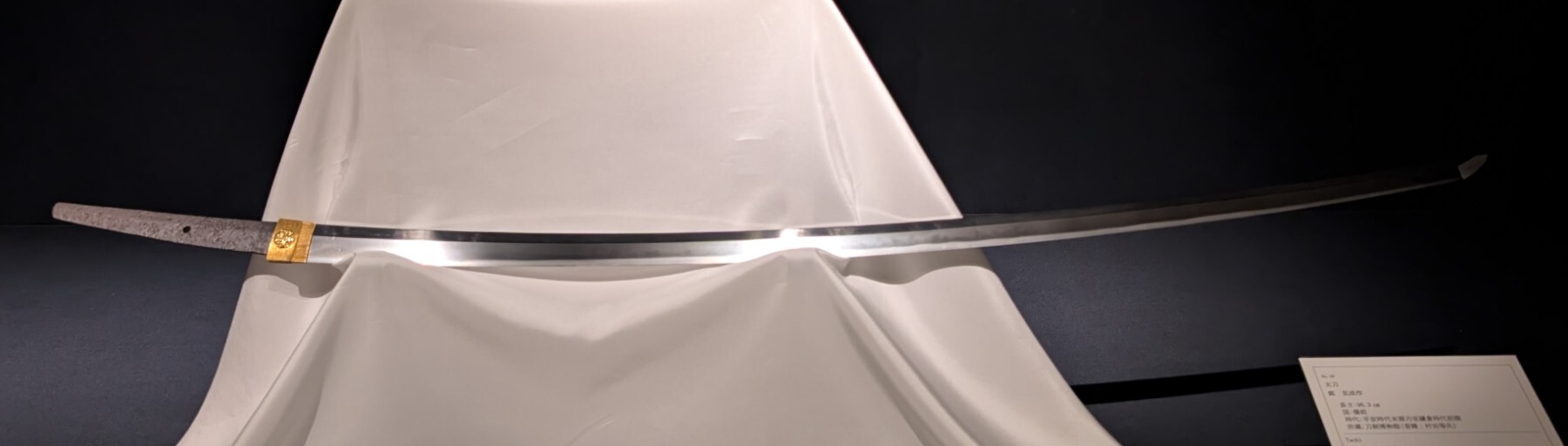
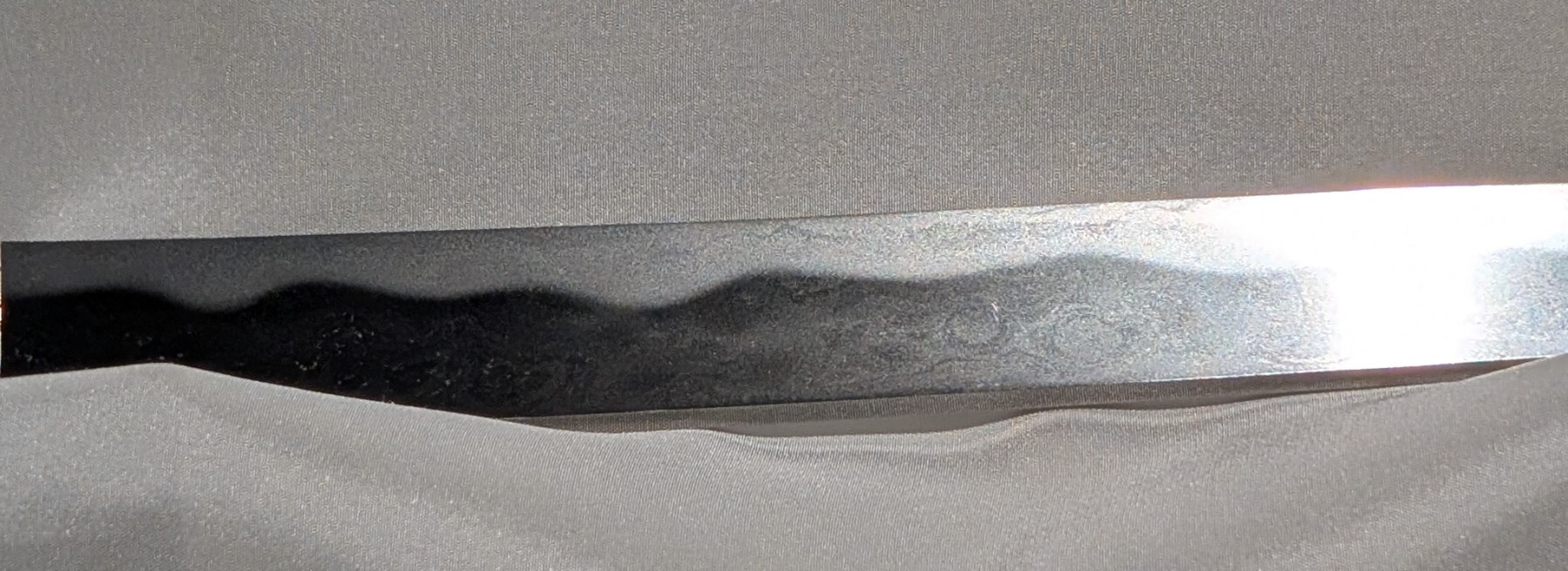
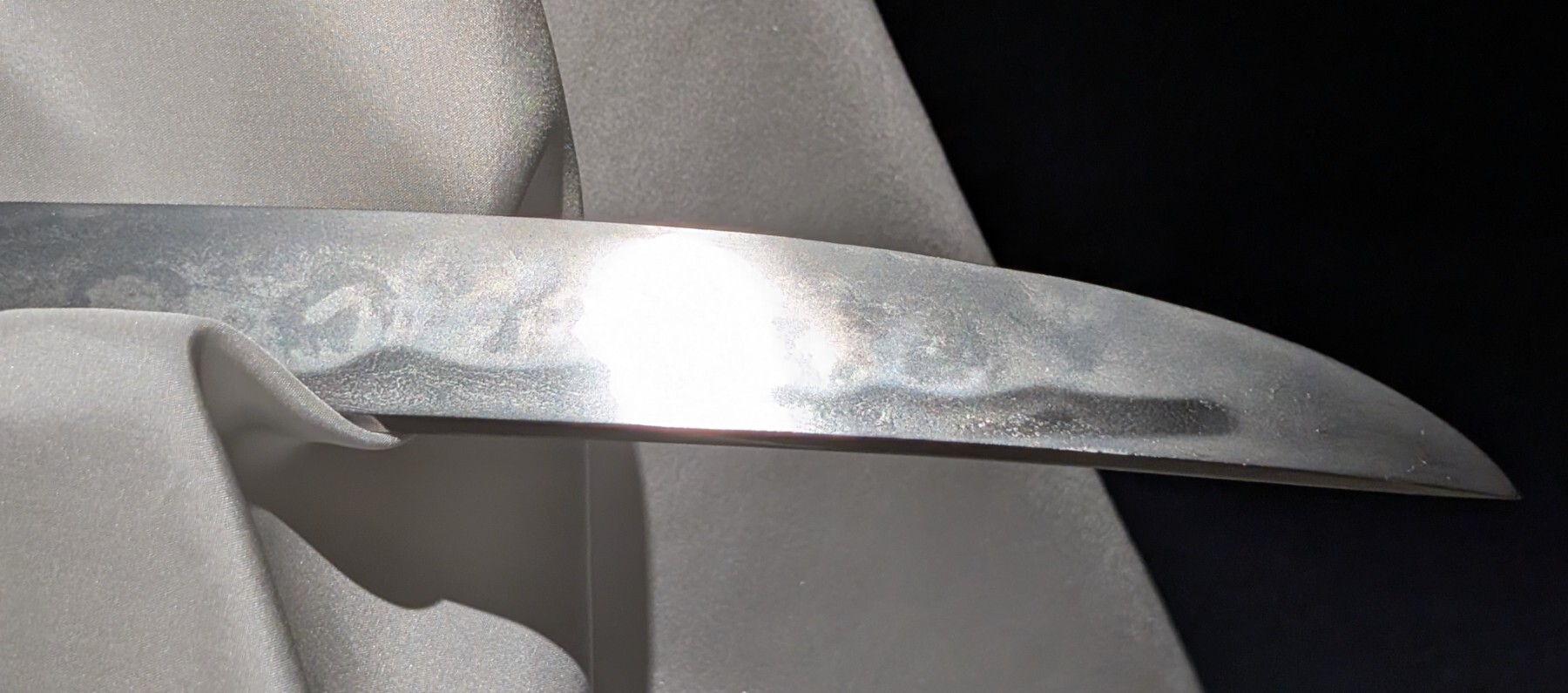
I was just at the 2nd phase of the Jubi exhibition at the NBTHK museum this week, and it was quite a treat to see so many Kamakura era ubu zaimei tachi. The standout to me was the 96.3cm signed Tomonari tachi below: There was also a Norishige tanto with a gorgeous jigane, but it was was odd that the mekugi ana were both punched straight through the characters of the mei: There was also a Tsunahiro hirazukuri wakizashi with a flamboyant hamon: And also a Masamune, which I honestly didn't find to be that outstanding: There were lots of koto blades with prominent utsuri, such as this Muneyoshi: And a few blades had the hamon on the kissaki running very close to the edge: One very interesting sword to me was a Kaneyoshi that was signed and dated both on the same side of the nakago:

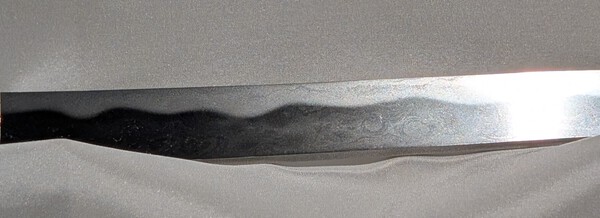

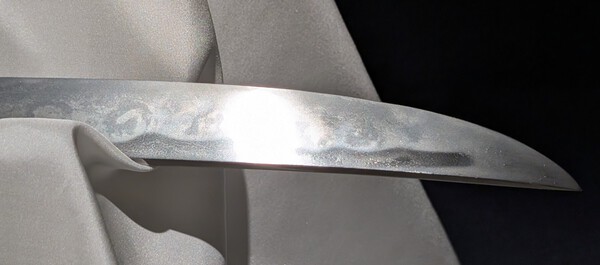


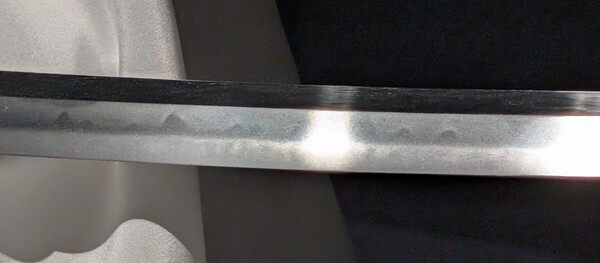

 8 points
 -
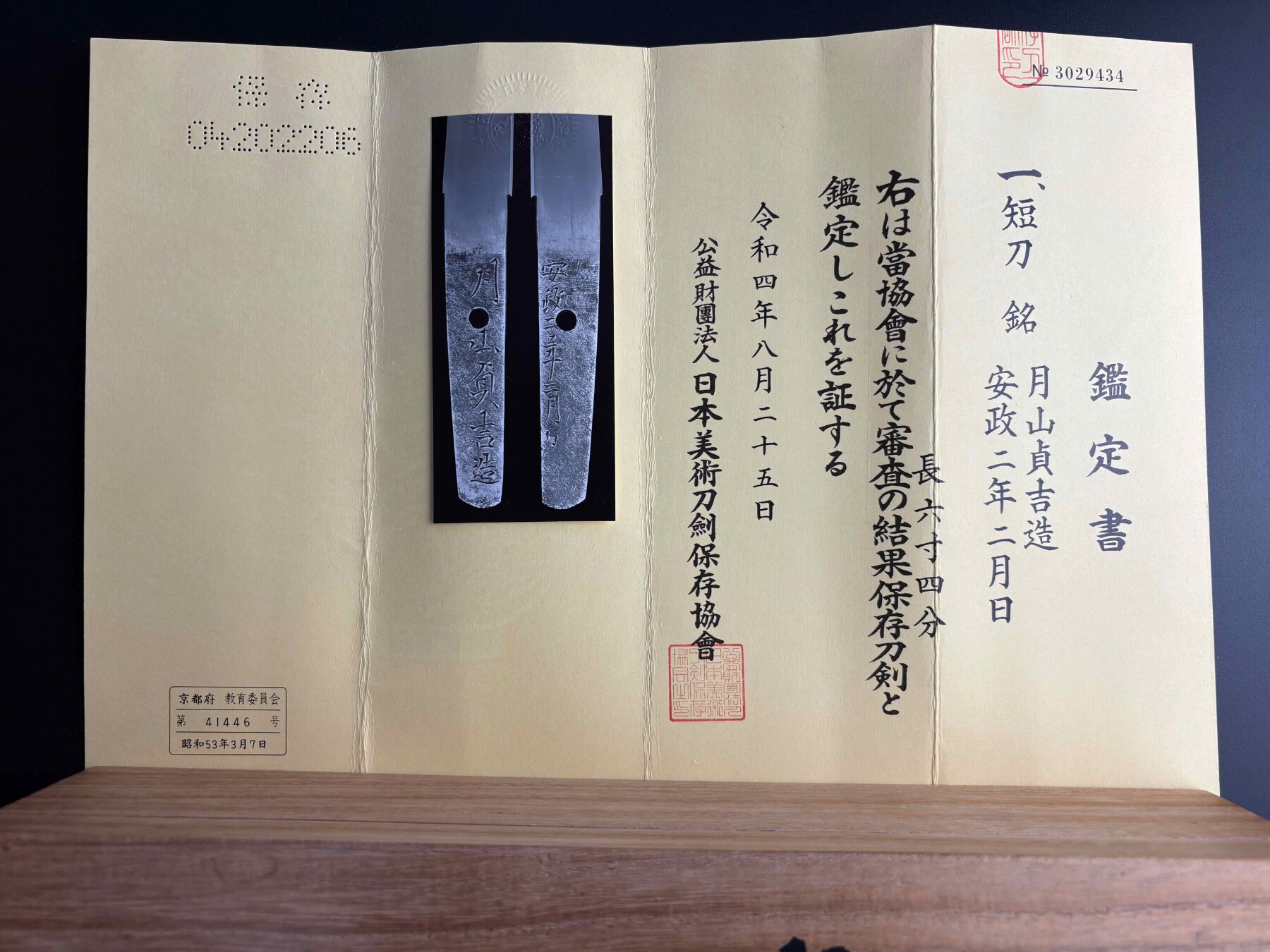
Hi, i am reducing my collection and selling now a nice Tanto from Gassan Sadayoshi. Nagasa is about 19,5 cm. It comes in Shirasaya, a Box and NBTHK Hozon papers. A nice package I think. Price is 3000 Euro (including shipping inside EU) About the smith (from Markus Seiko books): SADAYOSHI (貞吉), Bunkyū (文久, 1861-1864), Settsu – “Ushū Murayama-gun no jū Gassan Sadayoshi Sesshū Ōsaka ni oite kore o saku” (羽州村山郡住月山貞吉於摂州大坂作之, “made by Gassan Sadayoshi from the Mura- yama district of Dewa province in Ōsaka in Settsu province”), “Naniwa ni oite Gassan Yahachirō Sadayoshi” (於浪花月 山弥八郎貞吉), “Naniwa Kinpō-jōhen ni oite Gassan Yahachirō Sadayoshi kore o tsukuru” (於浪花金宝城辺月山 弥八郎貞吉), “Naniwa-jū Gassan Sadayoshi” (浪華住月山貞吉), “Gassan Sadayoshi kore o tsukuru” (月山貞吉造之), “Sesshū ni oite Ikutama-jū Gassan Sadayoshi kore o tsukuru” (於摂州住生玉月山貞吉造之), real name Gassan Yahachirō (月山弥八郎), he was born in the first year of Tenmei (天明, 1781) in Takegawa (竹川) in the Murayama district (村山郡) of Dewa province as oldest son of the local swordsmith Okuyama Yasaburō Sadachika (奥山弥三郎 貞近) who is regarded as reviver of the kotō-era Gassan school, at the beginning of the Bunsei era (文政, 1818-1830) he moved to Edo and studied there under Suishinshi Masahide (水心子正秀), later, in the fourth year of Tenpō (天保, 1833), he moved to Ōsaka, he died on the 19th day of the second month Meiji three (1870) at the age of 90, we know blades from the Bunsei to the end of the Keiō era (慶応, 1865-1868), the jigane is the Gassan-typical ayasugi-hada, a masame in the Yamato tradition, or a dense mokume, the hamon can appear as suguha in nie-deki, as small dimensioned choji- midare, or as koshi-no-hiraita midare, traditions say that his adopted son Sadakazu made some daisaku-daimei works when Sadayoshi was in his later years, – The handed-down dates are somewhat uncertain. When Sadayoshi was allegedly born in Tenmei one (1781), his father Sadachika was only ten years old. A theory says that Sadayoshi died not at the age of 90 but of 71 in Meiji three (1870) what would calculate his year of birth as Kansei two (寛政, 1800). Sadachika was then 30 years old and this seems to be more plausible. So maybe this all goes back to a wrong quotation of his age when he died and the year of birth had never been transmitted and always just calculated back from Meiji three. jō-saku For any questions or offers, write me pleas a PM, Thanks Oliver

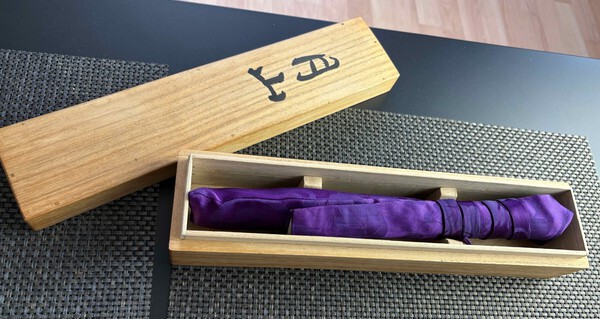 4 points
 -
Whenever you need a good laugh, heading to the lanes armoury site and reading the latest high fantasy they've dreamed up never disappoints. Hollywood could take some notes on the cultivation of sheer suspension of disbelief these fellows pull off.4 points
-
Just having a beer and got a link to this through email. Sounds interesting but for some reason im getting lost reading through it. Sure someone here will fathom it out, cheers. 2nd one down. https://thelanesarmoury.co.uk/shop.php Price on request, must be special.3 points
-
...and yet, a dozen folks on Ebay, icluding some of our own unfortunately, call ANY dagger a kamikaze suicide dagger. In my opinion, it really gives the hobby a black eye, particularly when perpetuated by folks who know better but just want to make a buck. John C.3 points
-
[I guess the word "utsushi" wasn't in the vocabulary of these early collectors?] From "Ornamental Ats of Japan" 1884 by George Ashdown Audsley - "Although we have in the course of our studies, examined thousands of guards, we do not remember ever to have seen two exactly alike" From "The Scottish Arts Review Vol 1 Japanese sword-guards" by J. P. MacGillivray 1888-89 - "From the variety of designs it would almost seem a first principle with makers of sword-guards in Japan that there should be no two alike. There is nothing characteristic of wholesale manufacture about them." Wow how things have changed!3 points
-
I read it as: 濃州関前川助房作之 = Nōshū Seki Maekawa Sukefusa saku kore The name is not listed in Sesko's Swordsmiths of Japan, but see here for another example: https://www.nipponto.co.jp/swords10/KY337312.htm3 points
-
This is from my file that I did about year ago
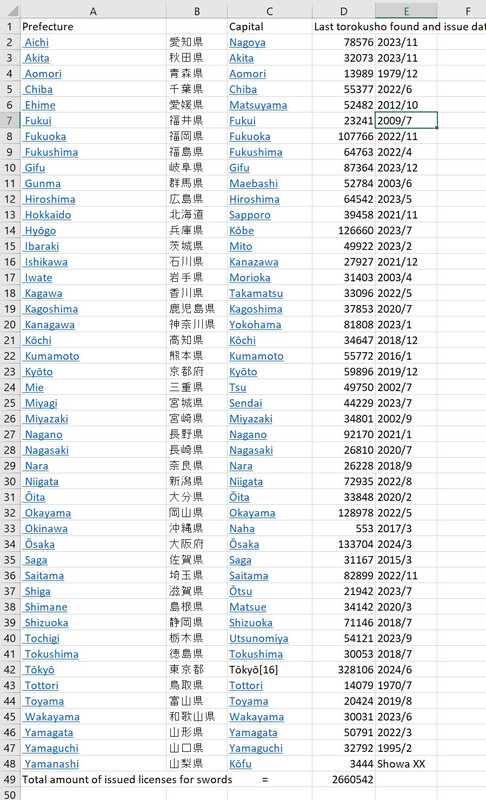 3 points
 -
3 points
-
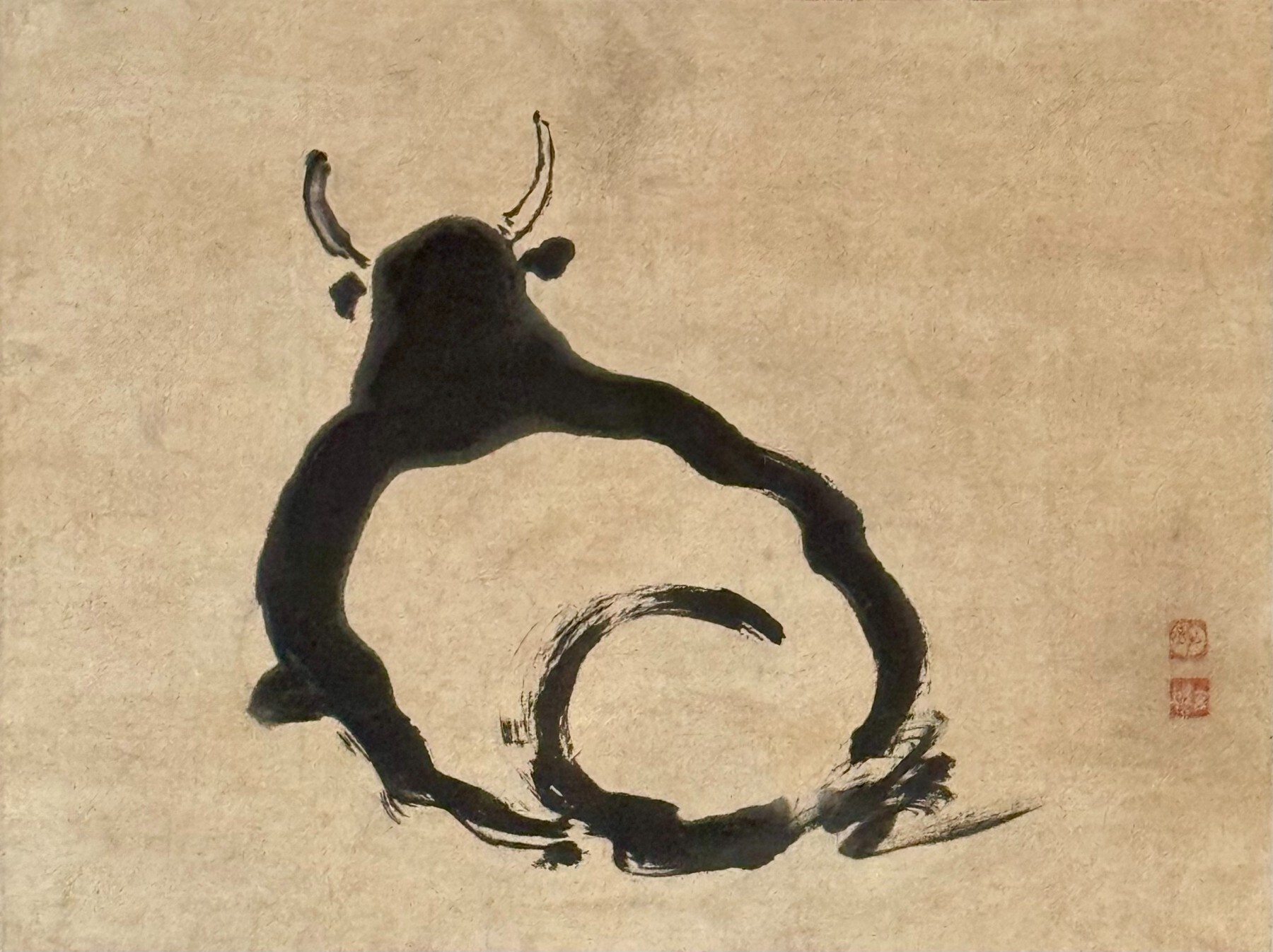
Obaku Kōsen Shōton (Gaoquan Xingdun 高泉性潡 1633-1695) was born in Fuchow, China, and studied with Ingen. He would later become the 5th Abbot of Mampukuji. He ranks as among the very best Obaku calligraphers and was also an excellent painter, although there are a different set of seals on the bottom right, suggesting that he collaborated on this work. Would appreciate help with the translation, which is clearly kanji.


 2 points
 -
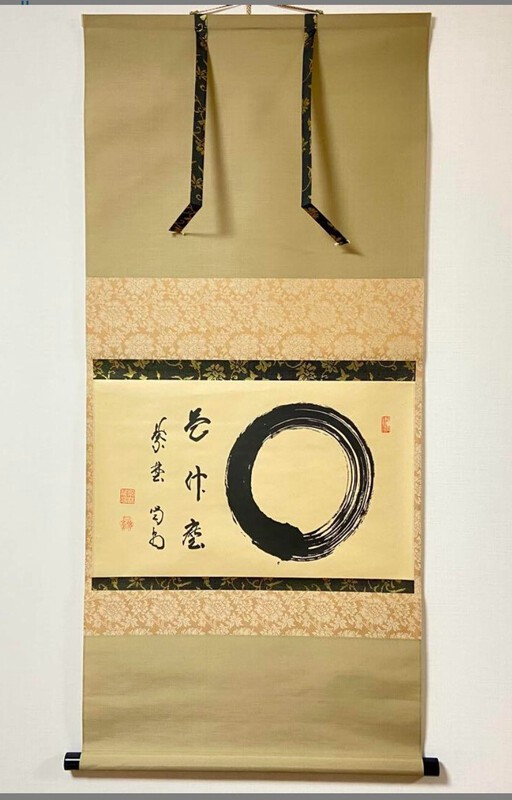
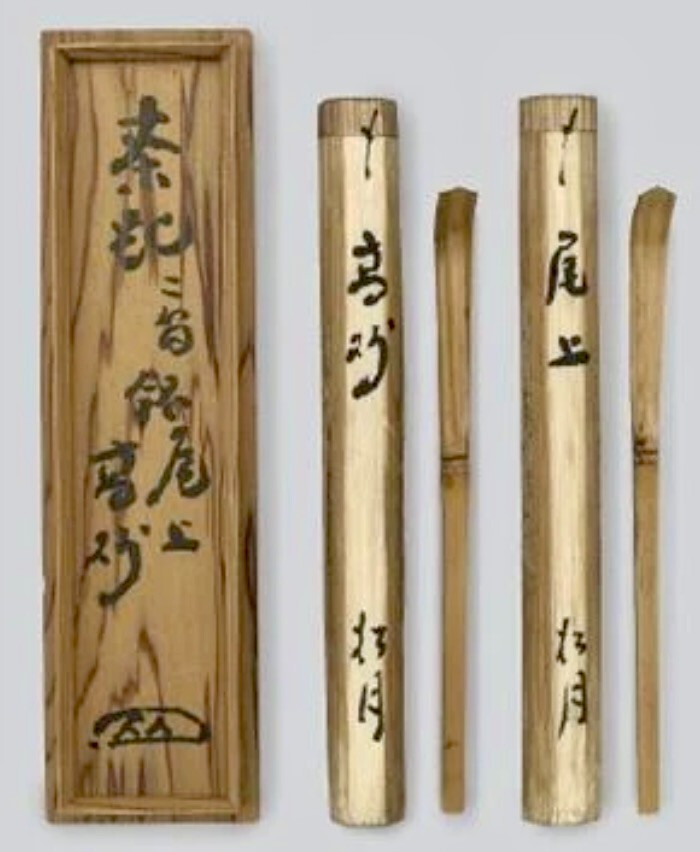
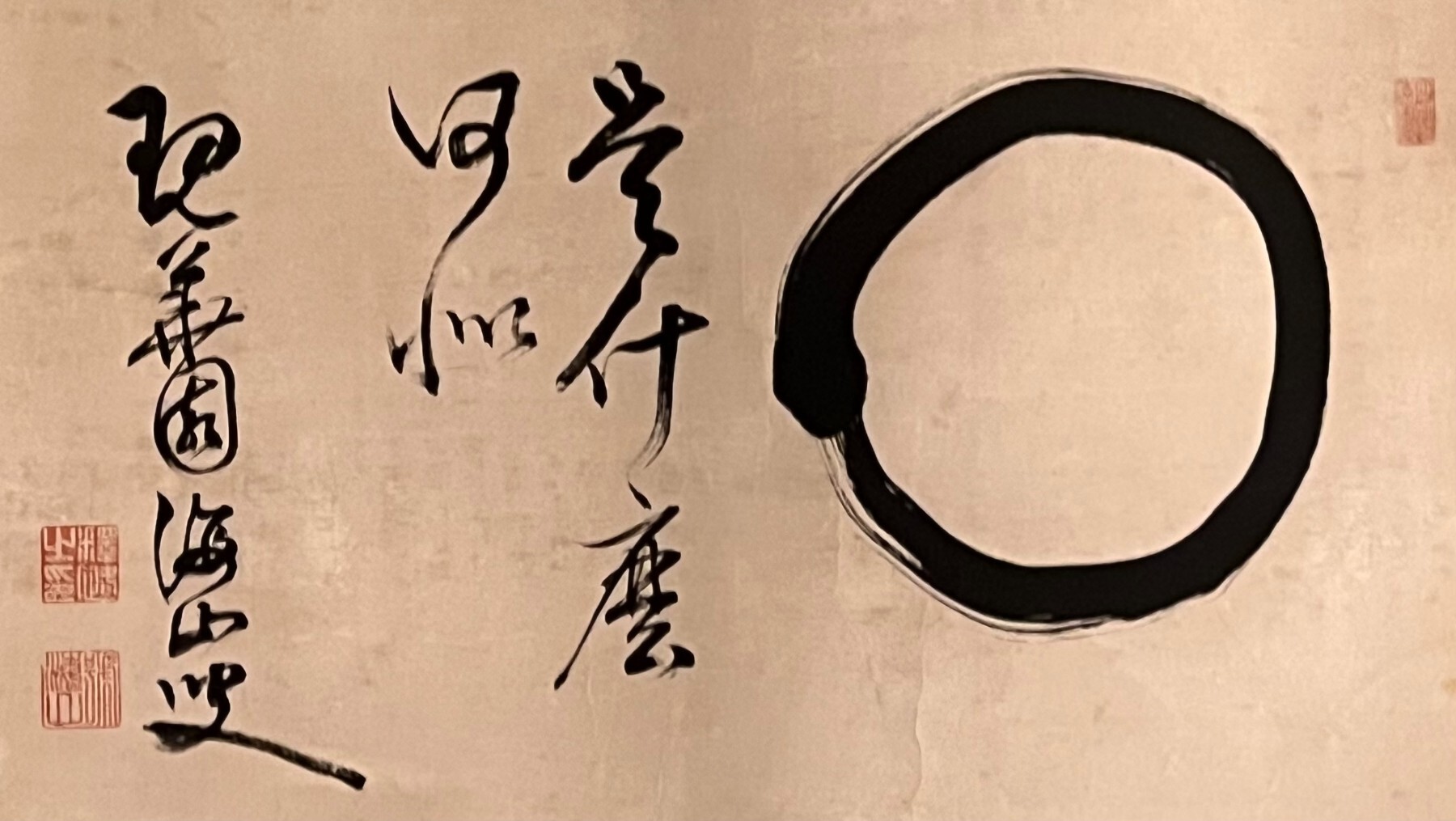
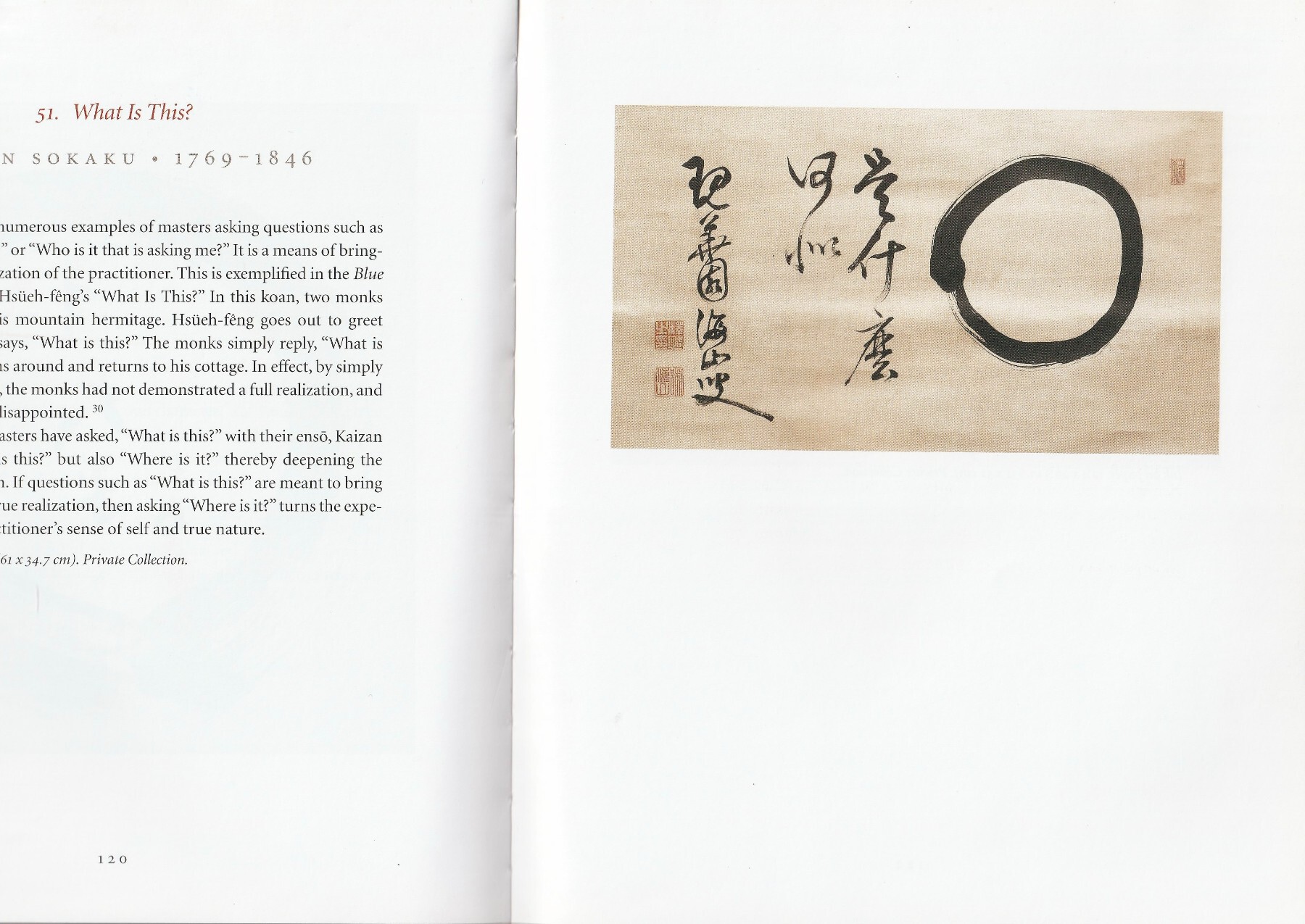
Chūhō Sōu (宙宝宗宇, 1759-1838) was the 418th chief priest of Daitokuji Temple in Kyoto. His Buddhist name was Chūhō, his given name was Sou, and he was known as Shogetsu (昇月), which means "Rising Moon." He trained under Sokudo Soki, the 406th bishop of Daitokuji Temple and was a highly revered Japanese Zen master, calligrapher, potter, and tea connoisseur. Chūhō admired and was influenced by his contemporary Jiun Onko. Two works below are excellent examples of his unique style and deep comprehension of the Zen aesthetic and the enlightened mind. This is the 3rd work by Chūhō Sōu in my collection. Here he signs as Shōgetsu rōsō (松月老僧), meaning "Old priest 'Moonlight on the Pine Trees.'" The colophon that appears at the bottom is found on some of his brush works and crafts such as tea scoops. Together with his characteristic seal, this work is confirmed to be authentic. I now have seven Enso paintings with and without calligraphy by notable Zen masters from the 18th to 21st centuries. The artists start painting at different positions of the circle, but always going clockwise. The two most contemporary ones start at the bottom. This one is unique because the mei and stamp are within the Enso, as if to say that the artist is also infathomable and fathomable, empty and full, and infinite within the finite. Here are other Enso in my collection. From left to right: Kaisan Sokaku (1768-1846), Kogan Gengei (1748-1821), Nakahara Nantenbo (1839-1925), Tachibana Daiki (1898-2005), Hosoai Katsudo (1919-1985), and Kobayashi Taigen (1938-). I consider unadorned iron plate tsuba to be "Enso" that you can hold in your hand and carry in your pocket.
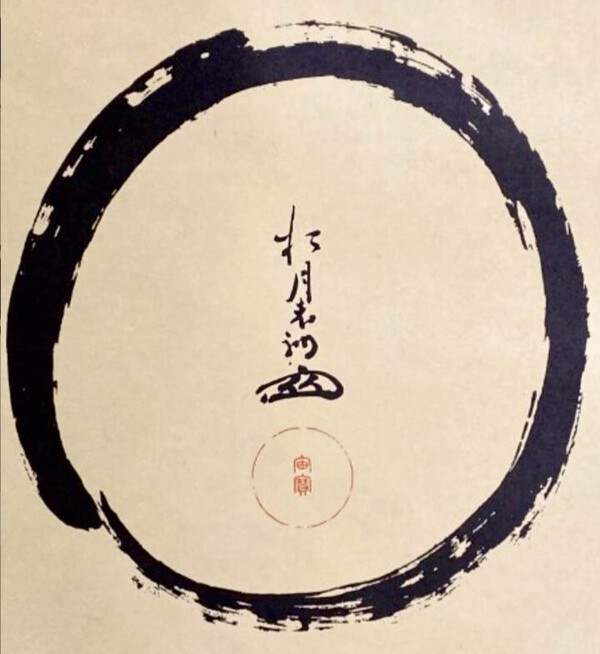


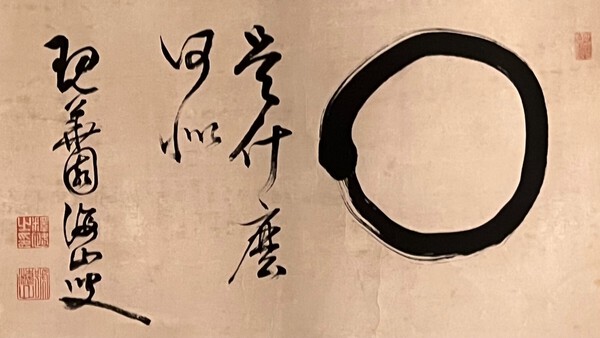
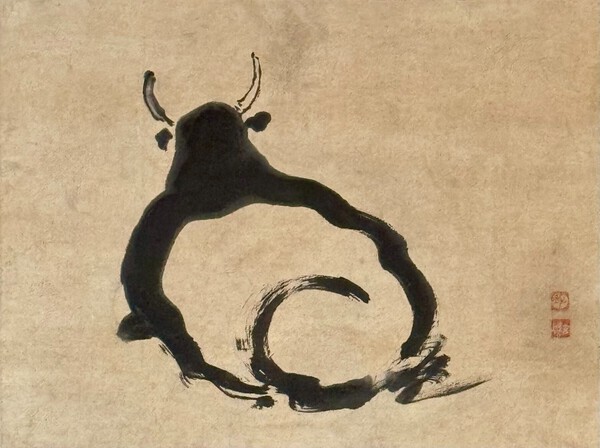

 2 points
 -
I like this one. mei Ichiiriuku Hisamitsu
 2 points
 -
I'm a Zen student of the Chosei Zen Dojo in Madison, WI that follows the Chozen-ji Rinzai lineage that was established by Tenshin Tanouye Rotaishi and his teacher Omori Sogen as the first training monastery outside of Japan. Later, Kenneth Kushner Roshi founded Chosei Zen on the mainland. Gordon Greene Roshi, current Abbot and my teacher, then established the Spring Green Dojo nearby as a rural training community. I live in Florida, but do both virtual and in-person intensive training with Chosei Zen and private training with Gordon. We all practice a martial art and a Japanese fine art to enhance our Zen training because it's an extremely physical practice through posture and breathing. Tanouye Roshi believed that we could enter Zen through the body and that "Zen without the accompanying physical experience is nothing but empty discussion." In my case these physical practices are kyudo, iaido, and shado. When we do calligraphy, often copying from a manual by Yamaoka Tesshu that he brushed for his wife, it feels like martial arts. The brush is like a sword. Breathing and focus are critical. Ink is laid down not through the wrist, but through the entire body. It is said that painting the Enso is one of the most illuminating activities for a Zen calligrapher. The result is a direct reflection of the state of one's mind, here and now, in this very moment. When I gaze on the Enso works displayed in my home, I feel the presence of Zen masters and their teachings (Nakahara Nantenbo in particular), stretching back 400 years and even more. The transmission of the mind-seal (inka shomei) from master to disciple ensures that the experience of enlightenment and the teaching of dharma is an unbroken strand that reaches all the way back to Siddhartha Gautama.2 points
-
2 points
-
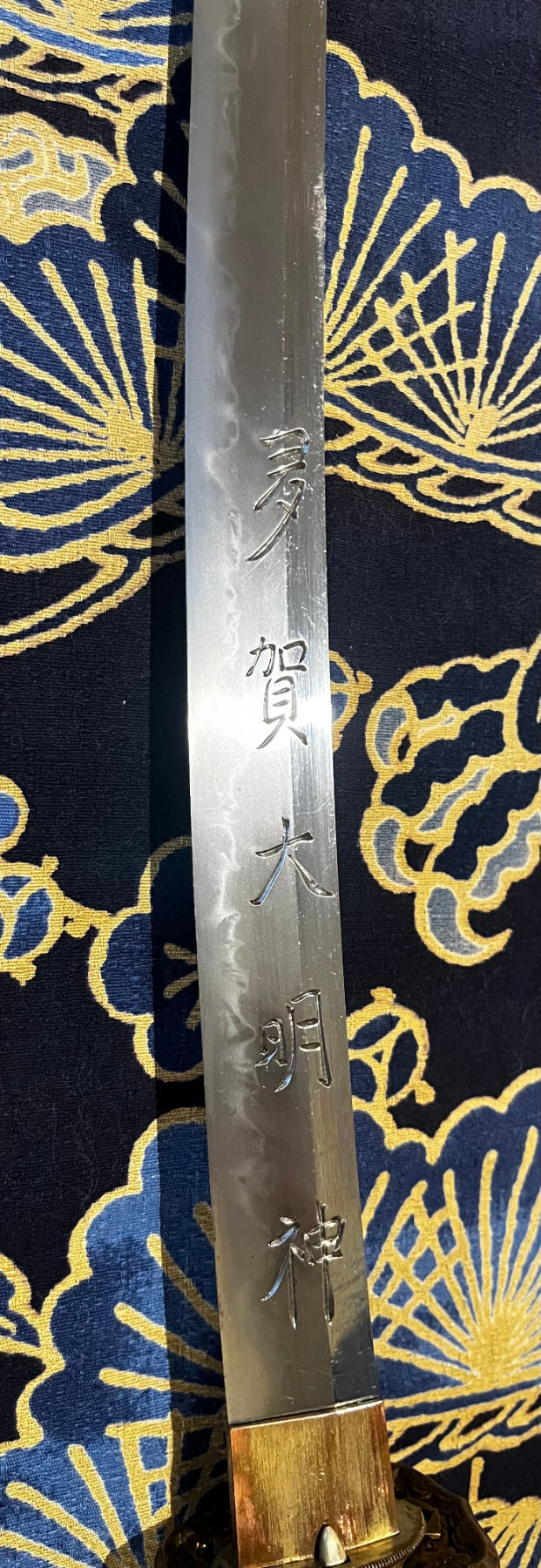
It looks like 頒御賜 https://katanahanbai.com/katana/kanesaki-marsha-admiral/ Found this website with a blade bearing similar engraving, and the same traduction2 points
-
Hi Robert, 関前川助 (廣)作之 - Seki Maekawa Suke(hiro) saku kore. I'm not convinced about the "hiro" as I can't find a Seki tosho with this name but someone who knows better may chip in to confirm or suggest an alternative.2 points
-
Hi Rawa, Thank you very much for your interest. We can confirm that the Mekugi-ana since NBTHK Certification. It is likely that on our website it looks different due to the angle when the Photography was done by us for the website. We hope this information helps. If you are interested in this piece, please message us on our whatsapp and we can send some live photography of the tang. Best, Nicholas Fu Touken Takarado2 points
-
Ted, Brian, so well said. Ted, I truly appreciate your follow-up and am very glad I came back to this thread and had the chance to acknowledge your original post properly. Your point about the relationships and shared experience that come out of this field is so true, and crucially, the friendliness and helpfulness of folks who care and take the time is invaluable. Again, thank you. Brian, don’t know what to say other than thanks for keeping the lights on at this cool venue. 😎 Lewis, I think a lot of us started in exactly the same place – straight to the steel, with the books catching up later whether some of us want to admit it or not. Remember the old chestnut, “do as I say, not as I do.” 😂 I can’t condone my previous degenerate behavior, but at least in the end it wasn’t a complete disaster. My thoughts on the sword 16 years on… I’ll start by saying I still find this sword quite impressive. It is undoubtedly quite utilitarian in terms of design proportions and construction build, and yet it remains beautiful thanks to noteworthy jihada with lots of sparking activity. I used to read plenty of anecdotes about how one’s eyes would change and mature when looking at swords, and of course that is true. Succinctly, I can say what has changed most for me verses back then is the relative context in which I am able to see a sword for the first time, and with that greater context comes much greater “clarity” for want of a better word. Realistically speaking, if one is not particularly visually artistically talented (and I am not) there is a lot of information to process in a sword’s sugata alone, before even beginning to look at what is happening in the ji steel and hamon, and light years before building up any kind of “mental blade database” of reliable info to draw upon. If I’m honest with myself, I remember it taking years to truly wrap my head around what’s going on with different sugata. As one sees more swords, one accrues more comparative data points but there’s just no shortcut to this. On the topic of the bohi, I’m not going to lie, at the time Ted had me quite convinced that they were atobori, and due to the schooling on blade geometry plus all the new-to-me terminology he had just laid on me, I had more questions than answers, and plenty of homework to do. As the years went on, however, and I saw more swords, I became less convinced of the atobori theory. As others had noted earlier in the thread, there are enough precedents in Yamato work where this kind of carving is original to the blade. For example, looking back, John Stuart’s post now comes across as a very perceptive read. He saw the coarse mokume tending toward ō-hada, gunome-midare with togariba, and specifically noted that kissaki-sagaru in this context does not imply atobori. He placed it in Naoe Shizu, so while I have no reason to question the current appraisal there is clearly some overlap, and in that sense his earlier observation holds up well. As for papering, it’s something I’ve considered, but I haven’t felt any real urgency. It could benefit from a touch-up polish, but the ura is quite tired and the boshi somewhat weak. When factoring in the time, cost, and practical risks involved against what would likely be a minimal change in outcome…well, I’ve been content to just leave it as it is. Thanks again to all of you for taking the time to respond, it’s truly appreciated.2 points
-
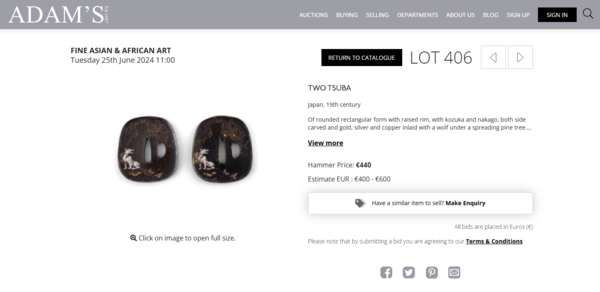
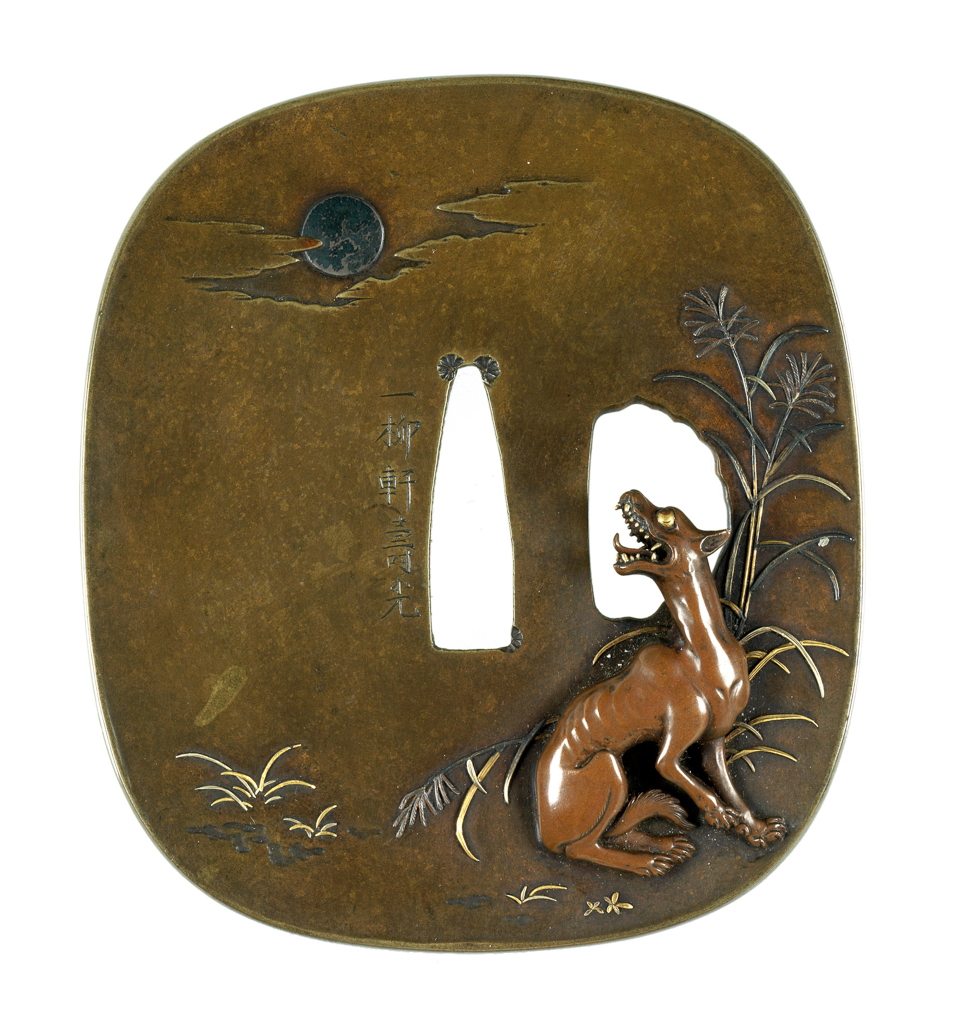
Jean there are others - of course. https://www.sellingantiques.co.uk/1089133/Japanese-meiji-period-iron-tsuba Worse when they copy a crap copy!!! https://fi.pinterest.com/pin/696932111117232603/ omote view of another sold at auction https://www.invaluable.com/auction-lot/a-bronze-wolf-under-pine-tsuba-ein-tsuba-aus-bron-261-c-f28490a9482 points
-
Do I have to? https://www.ebay.com/itm/116660887829 Even this one is trying for twenty times its worth! [50 times maybe?]2 points
-
Oof, seems like Lanes Armory won the Knutsen auction for this item. Well it is good to know for the future that the item resides with them. However unfortunately I don't think I can ever afford to buy it from them. It seems it was 3,400 GBP at auction, don't even want to ask what the price is now...2 points
-
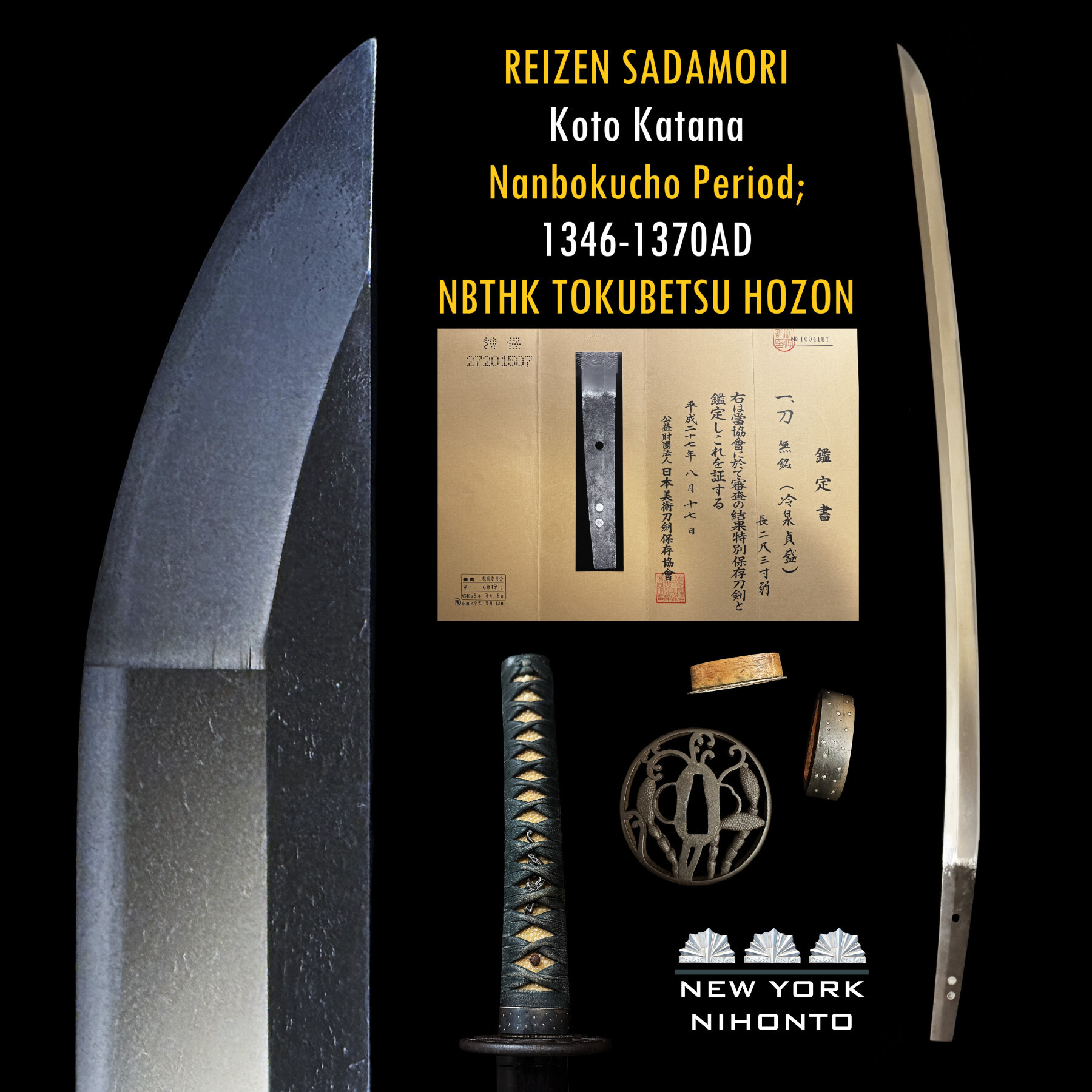
REIZEN SADAMORI KATANA for sale NBTHK TOKUBETSU HOZON NANBOKUCHO PERIOD (1346-1370AD) -VERY OLD- SHIRASAYA and KOSHIRAE 70CM NAGASA / 27.6" Weight: 662g Motohaba: 3.2cm Moto-gasane: 5.9mm Shinogi-gasane: 6.5mm Mune: Iori SURIAGE Sword Location : NYC Will ship to : ANYWHERE Payment Methods Accepted : zelle, venmo, check, cash Price and Currency : $7700 + shipping and fees if applicable Reizen Sadamori was a highly skilled Kongōbyōe smith who lived in Hakata Bay. His teacher was the founder of the school, Moritaka; Moritaka was Sairen’s nephew and student. Kongōbyōe swords are known for their strength and functionality as front line weapons. These smiths are descended from monks who defended Japan against the Mongol invasions of Hakata Bay in 1274 and 1281. This sword comes in koshirae. The steel has a darker hue typical of Kyushu work, with nie crystals sprinkled throughout the blade. Sugata: This sword features a wide, flat and powerful Nanbokucho sugata, with a long kissaki. Koshirae: Standard level koshirae with menuki of water dragons; tsuba is iron with openwork floral motif. Happy to answer questions if you have any. Please click on photos to see in full resolution. -Jake


 1 point
 -
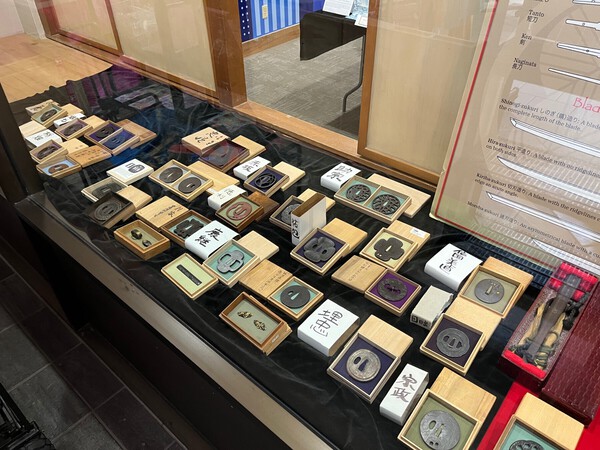
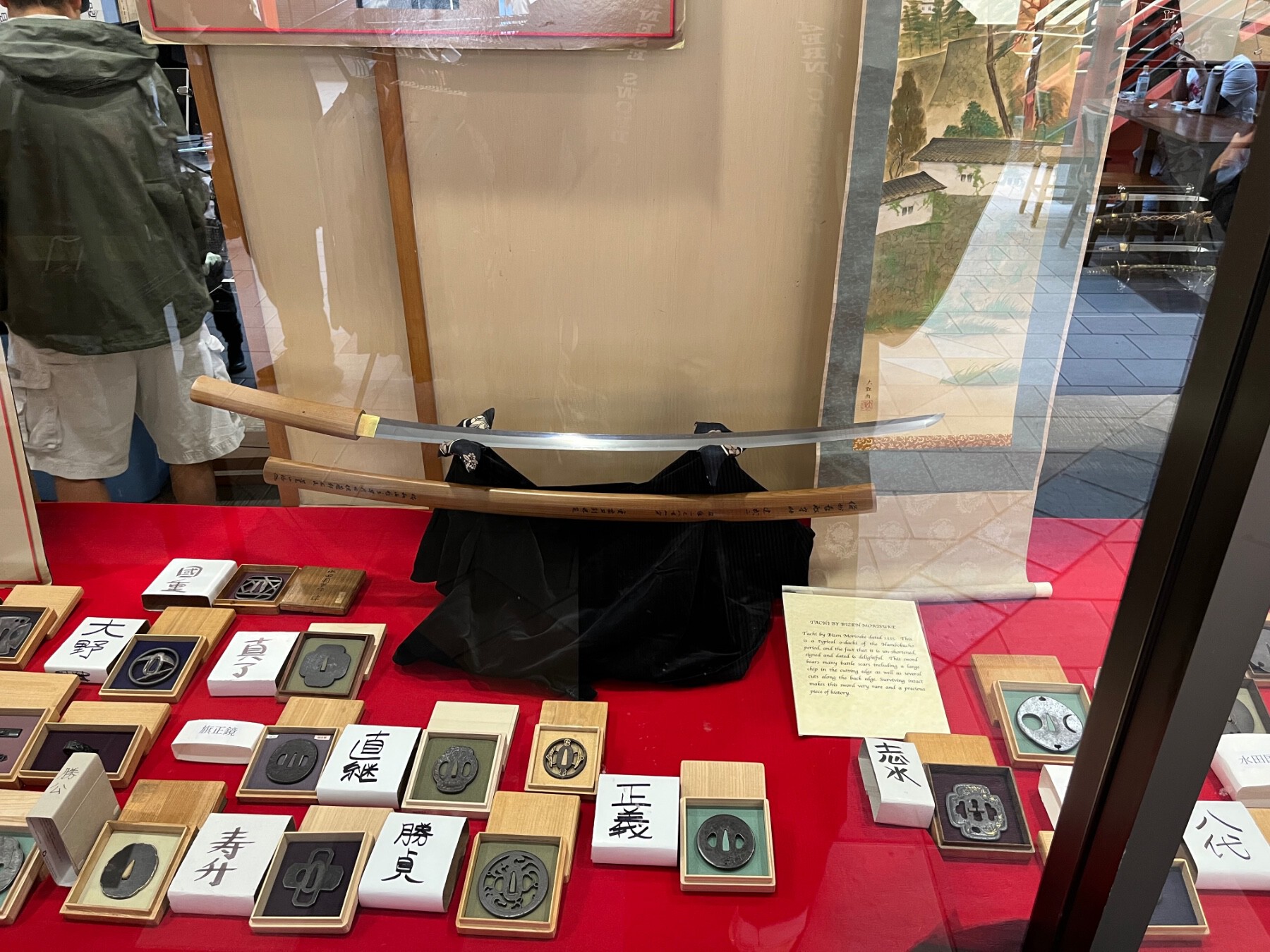
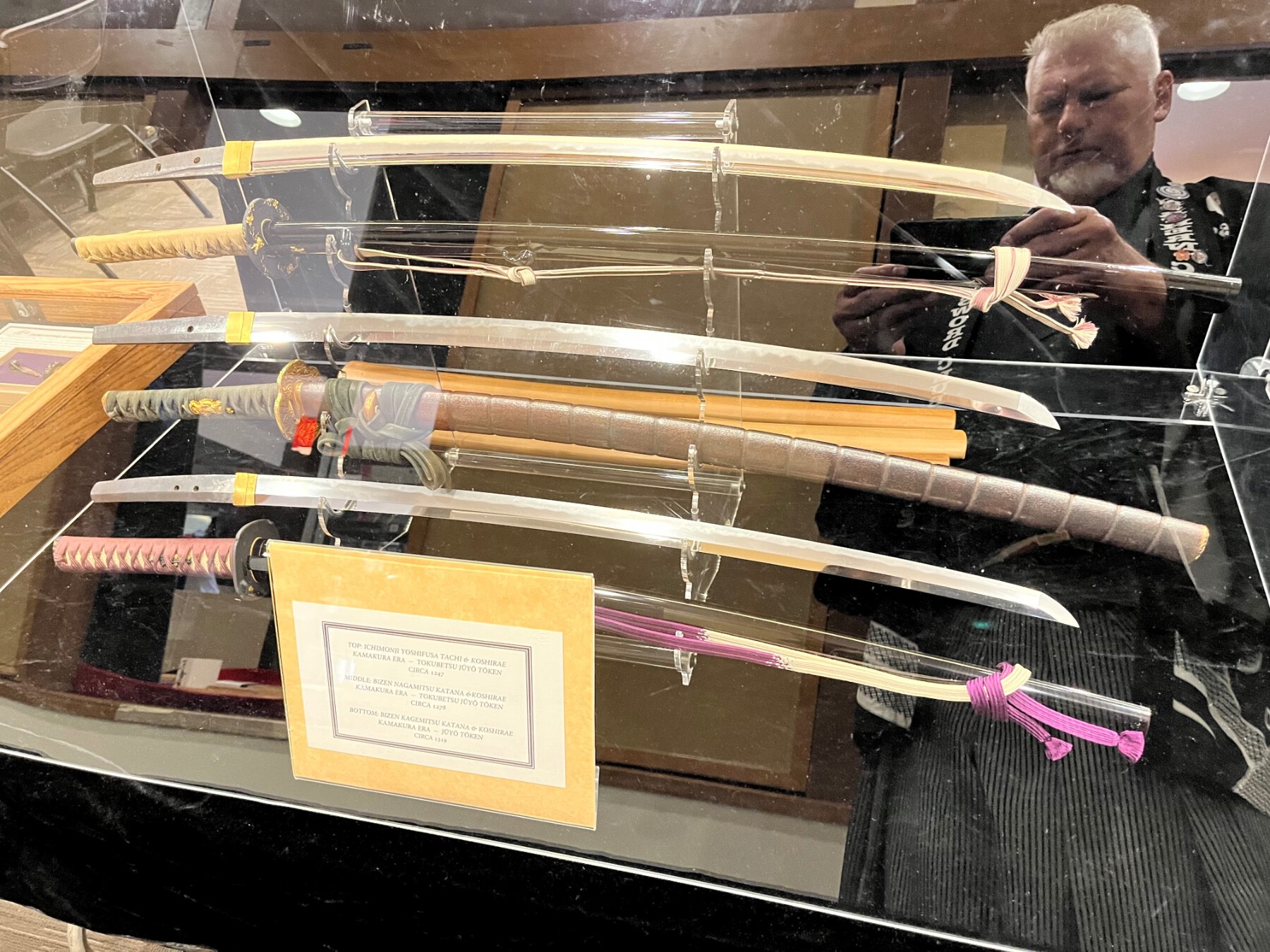
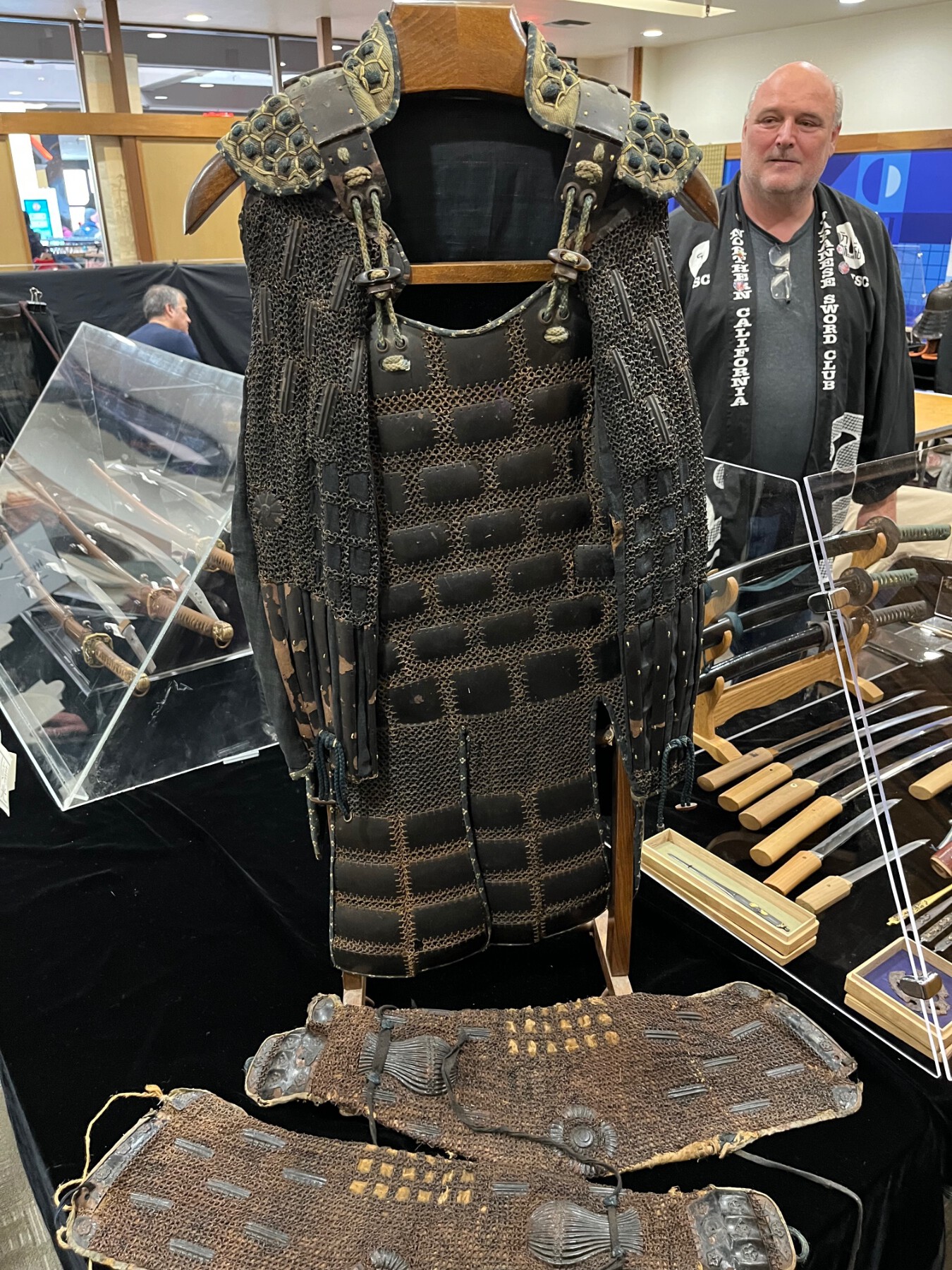
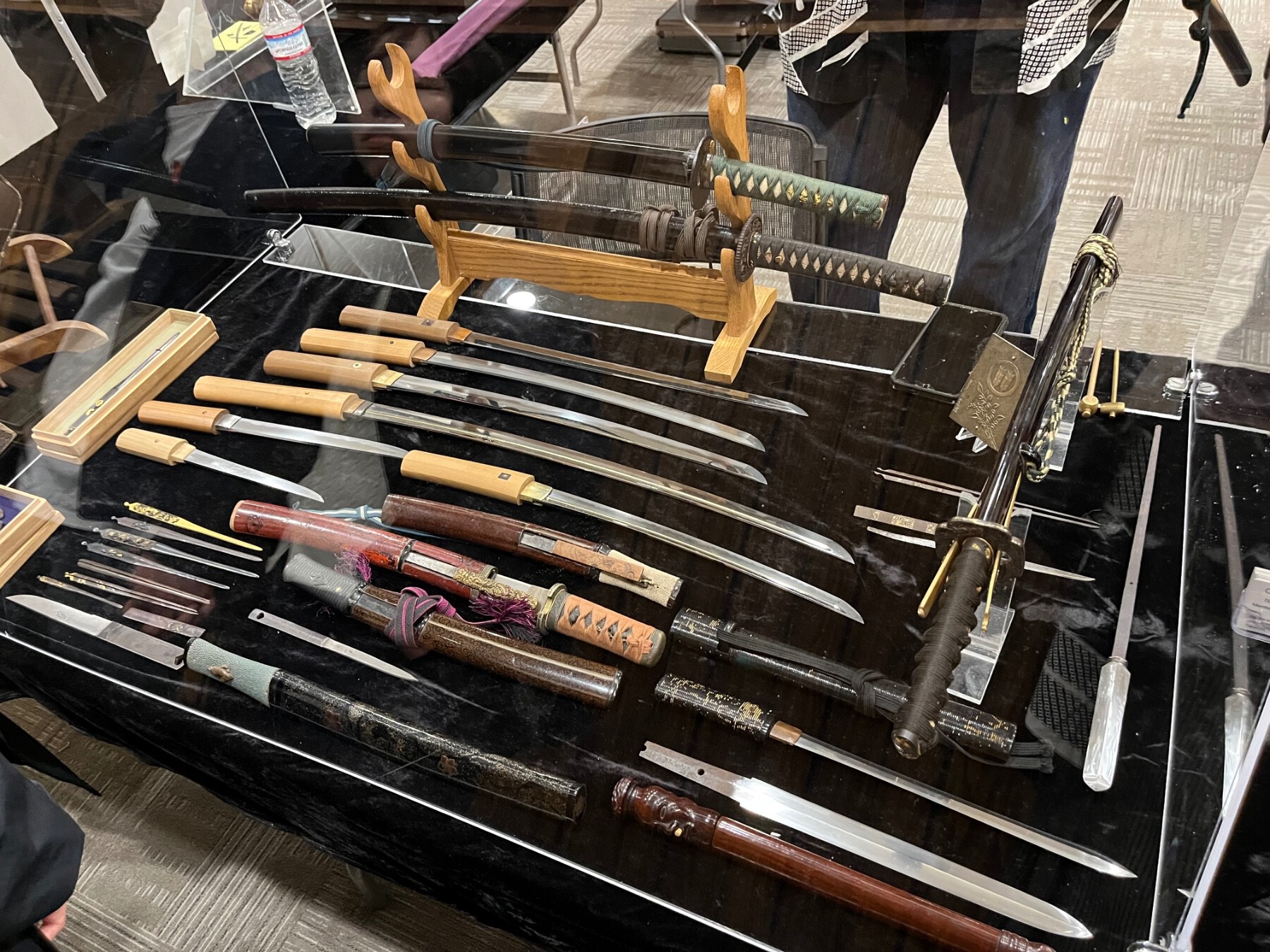
59th Northern California Cherry Blossom Festival - sword display

 1 point
 -
On a related topic, note the statement that the officers committed suicide by shooting themselves and not with the often labeled "suicide dagger." John C.1 point
-
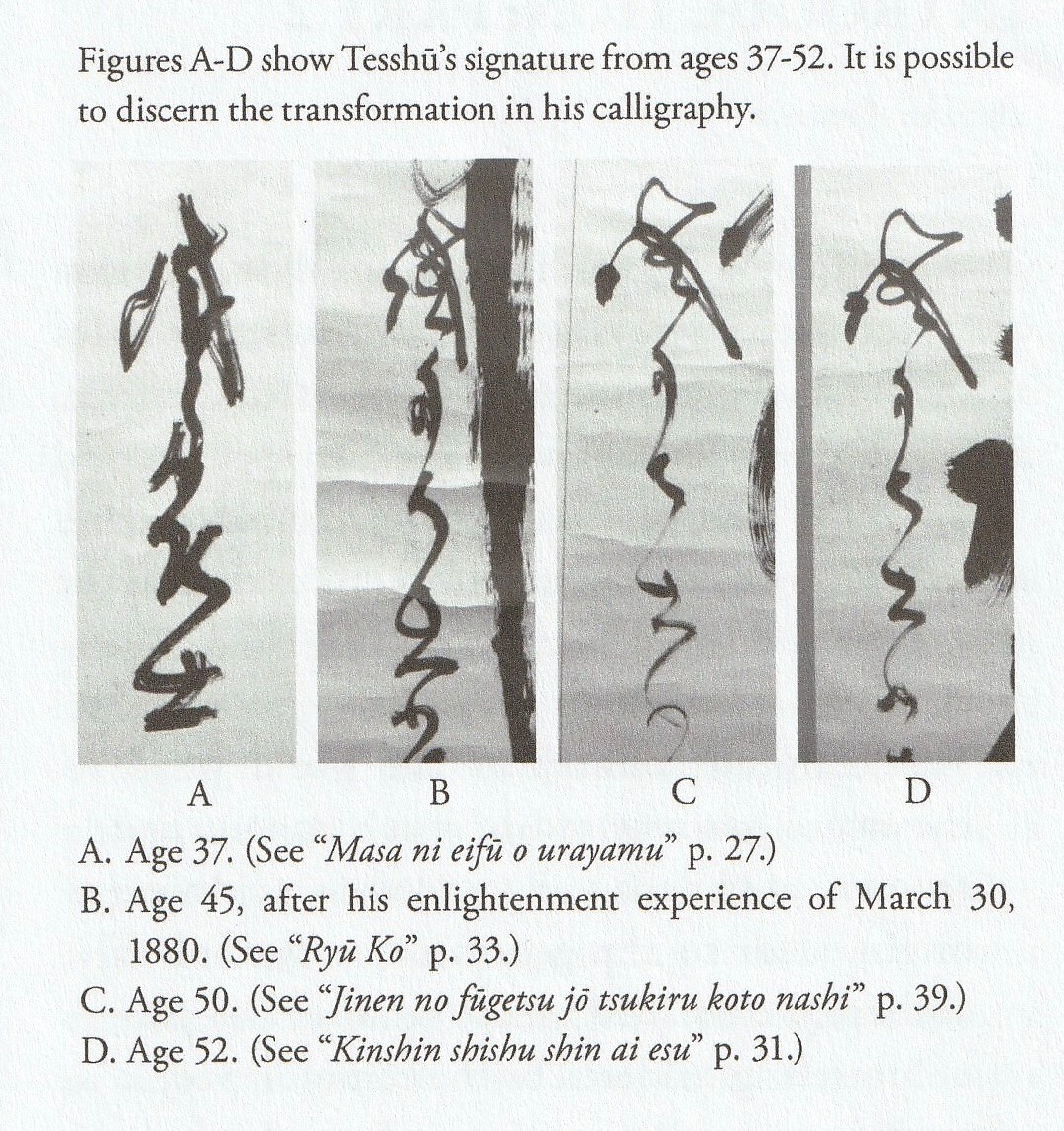
Absolutely. One of the concepts I have been taught is that what we paint evolves as our minds evolve, becoming truer as we discover the depths of our True Self/Original Nature--like a spiritual diary. I have seen motifs rendered before and after Zen masters had their enlightenment experiences; they often brush the same motif hundreds or thousands of times during their lives. There is greater and greater clarity. Keep at it!! If you would like to see examples of Enso painted by Zen masters through the ages, you should get the book "Enso--Zen Cirecles of Enlightenment" by my friend Audrey Seo. Here is my Kaisan Sokaku included in this lovely book. Compare Yamaoka Tesshu's mei from age 37-52 as his enlightenment deepened. They have even done an analysis of the ink grains in his strokes to show the complete absence of hesitation when the grains line up in one direction. He brushed more than 1 million works, as part of his practice, but also as a means of raising funds for a temple and providing for lay Zen practitioners. Yamaoka literally wanted to save all of the souls in Japan living in his time. I have works by him across this timeline. He died at age 52 of stomach cancer. It is said that he is the only known case of a Zen master from the Meiji who died upright in meditation.

 1 point
 -
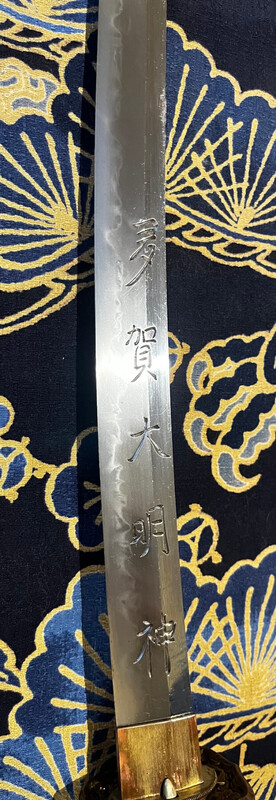
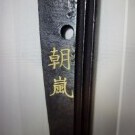
This blade has the name of a Buddhist god "Daimyōjin". On a blade owned by @PNSSHOGUN John:
 1 point
 -
The same ones from 2024 ??
 1 point
 -
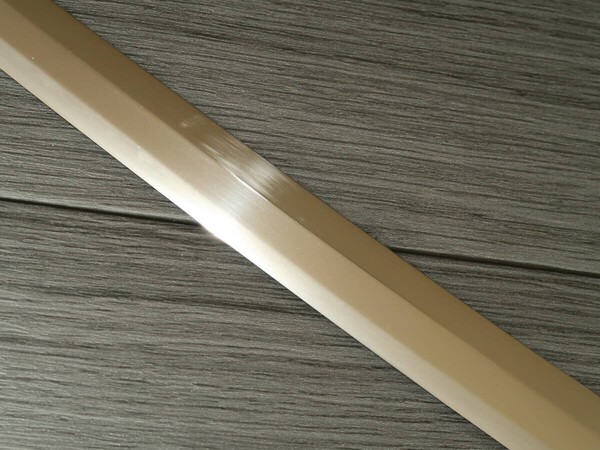
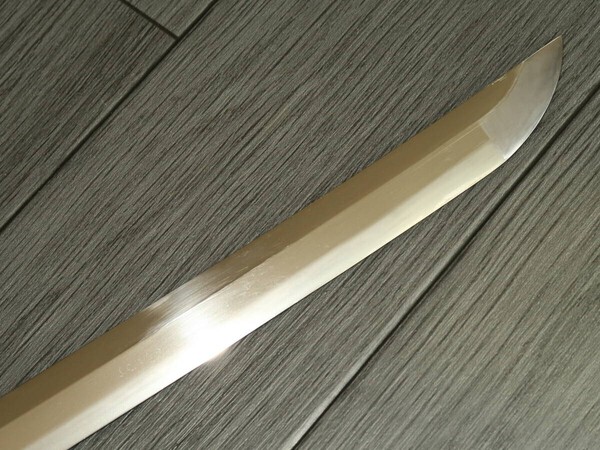
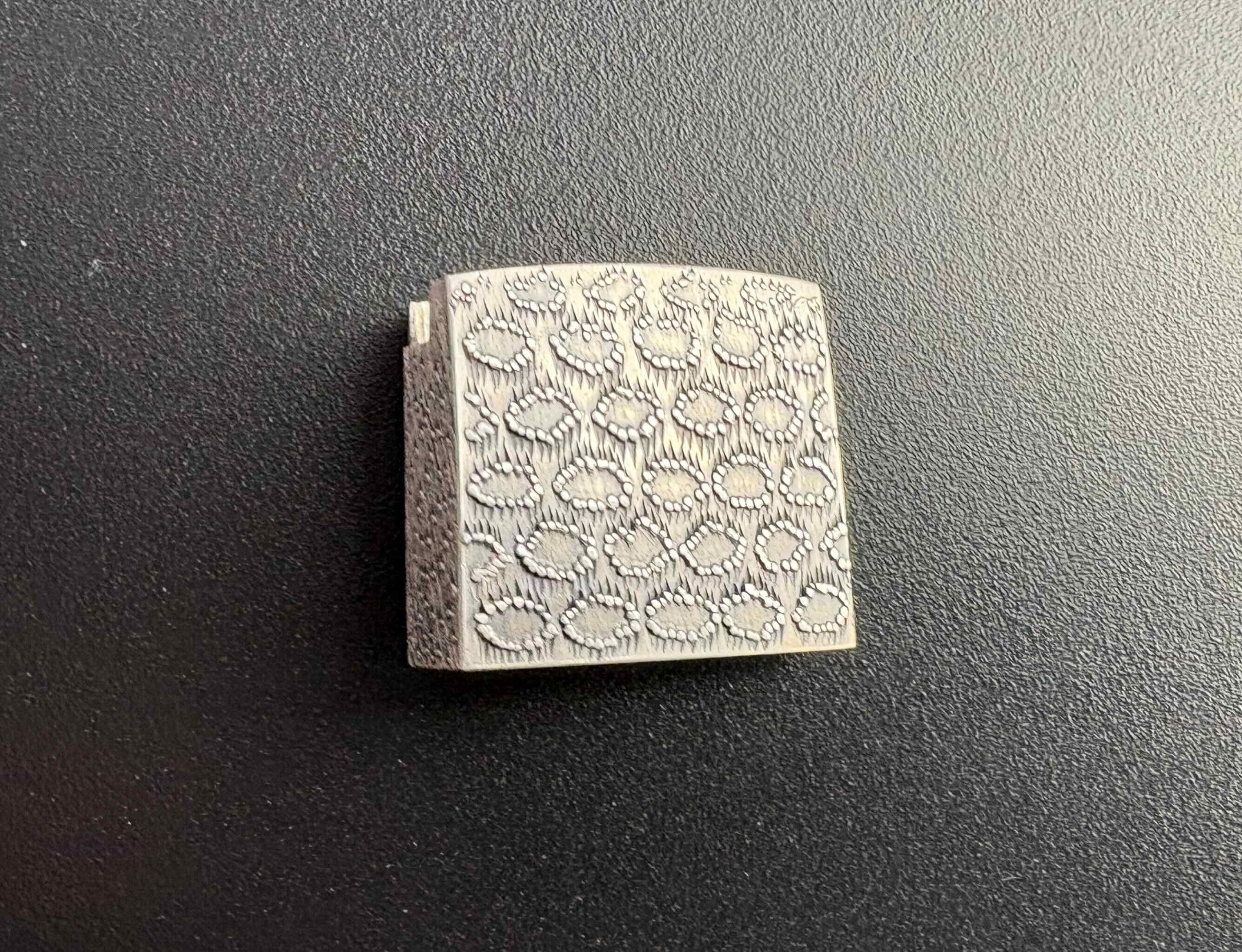
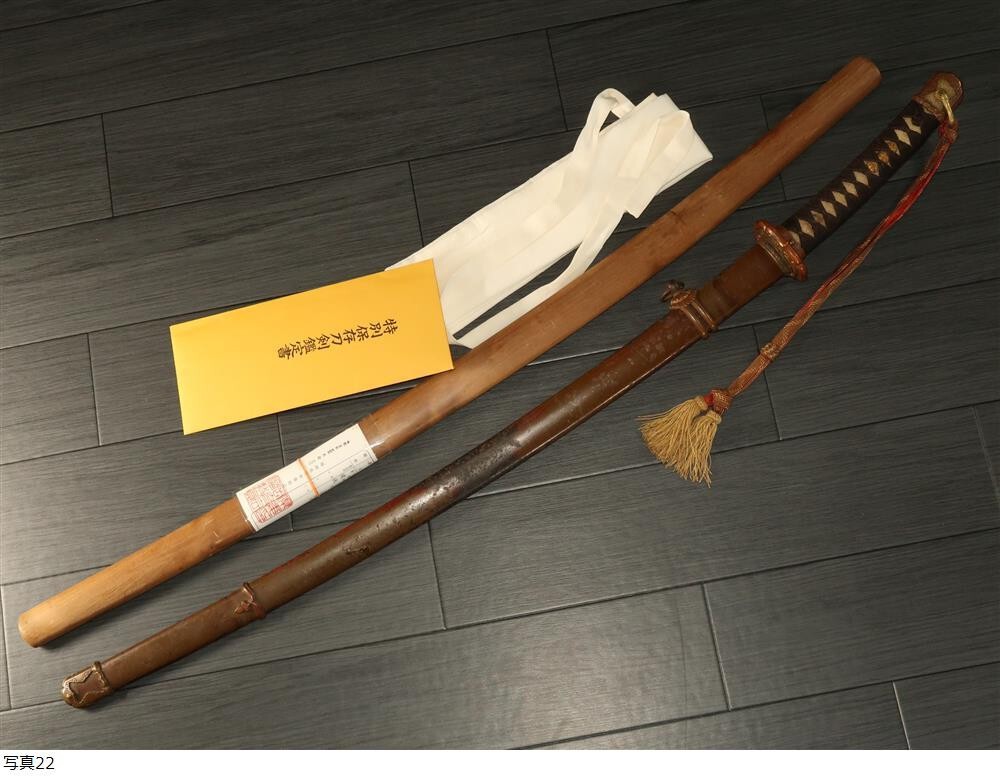
Nice to have this separate thread. Late offer Yasutoku. Imperial gift. 750k wasn't enough so now it's 1,5M Sarute feels like bad repro. Tassel in normal variant? Habaki de lux with convex engraving koshirae. Possible T94 with pinned kabuto-gane, centered chuso , separate sarute barrel. Haikan was remounted. I would like get mei translation.








 1 point
 -
Wow what a write up....half of it sounds like AI1 point
-
Thanks Julien, so now from that website it looks like: 頒 (han) — to distribute, to grant, to bestow • 御 (go/gyo) — honorific prefix indicating imperial/august status • 賜 (shi) — to grant, to gift from a superior to an inferior which makes sense since it was a gift to Kawabe Masakazu when he was promoted to general. thanks for pointing out the website. best regards John1 point
-
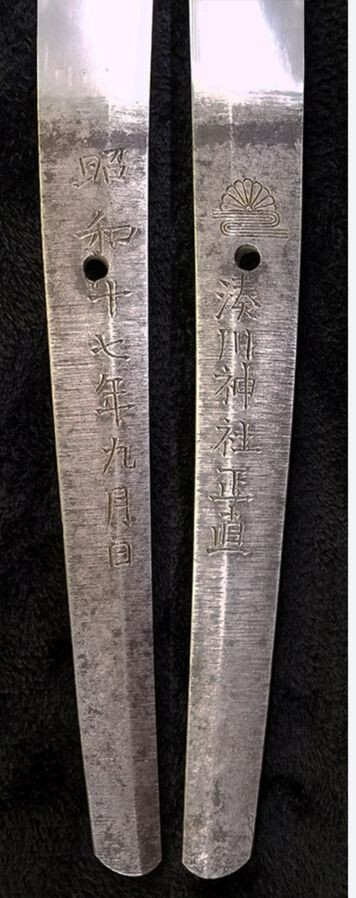
Sorry for the delay in getting back to you. It turns out the Navy-marked dagger I found is a Meiji period piece. I apologize for not including enough photos earlier to show you the details properly.

 1 point
 -
Historically significant, yes. An interesting specimen! But very, very tired. Basically nothing left at the hamachi. Others have articulated it well. This is never going Juyo because it’s not a Juyo sword, so I think $21k USD is a fine price for what it is… if it’s what you want. I hope the buyer was able to do their own accurate translation of the site and papers. With LLMs now there’s no excuse.1 point
-
Jeff: Your last pic may show signs of being water quenched, however The polish and resolution make it hard to tell. In hand, you may be seeing larger martensite crystals called nie, which could indicate water quenching particularly paired with some grain pattern in the hada. Oil quenched blades typically will not have nie nor will they display obvious hada. The blade will look light flat metal. You may need a loupe to see the grain if the polish is particularly bad or the grain is tight. John C.1 point
-
Russ, No apologies necessary. Great thoughts. While I am new to nihonto I have been a collector in different areas. It is amazing to think how much has changed in so short a time. Back to my quest for which Kunitoshi this sword is. Showato? Gendai? Again thanks for anyones help on this. A couple more pics
 1 point
 -
My apologies for this as it is a slight deviation, but following on from my earlier post regarding the 'perfumed' blade and myths of days gone by.......... I read somewhere, I don't recall where though, that the Japanese say that the weather changes when one draws a sword indoors. perhaps the smell of choji indoors makes the Japanese think of a certain season? Perhaps Piers or someone may have heard of this? The other thing that I remembered was a dealer friend of mine shivered when she went past my stall and saw the Japanese swords on my table. I asked her what was wrong and she said that the Japanese wrapped curses into the hilt binding. Well, I had never heard of this, so I asked just about everybody I that knew involved with nihonto, and David Parker at Armada Antiques eventually came up with the answer. Going back to the late 19th and early 20th century, when people were beginning to start collecting Japanese sword furniture, when they cut off the tsuka ito to free the kashira and menuki, small pieces of paper fell out (the packing for the tsuka ito), but as few people could actually read Japanese it was thought that they were curses. They were in fact bits of old prints and news letters etc, just old paper, but the collectors of the day didn't know that. Maybe we could start a thread if anybody has any other old fables and myths regarding nihonto? Incidentally, it was David Parker that I bought the Kunitoshi from, the grand price then (ca. 1981-82) was £175 ! I wish we could buy them for that price now! Apologies for going off topic, but thought this might be of some interest......at least to someone....1 point
-
An auspicious day in the fifth month of Genji 2 (1865).1 point
-
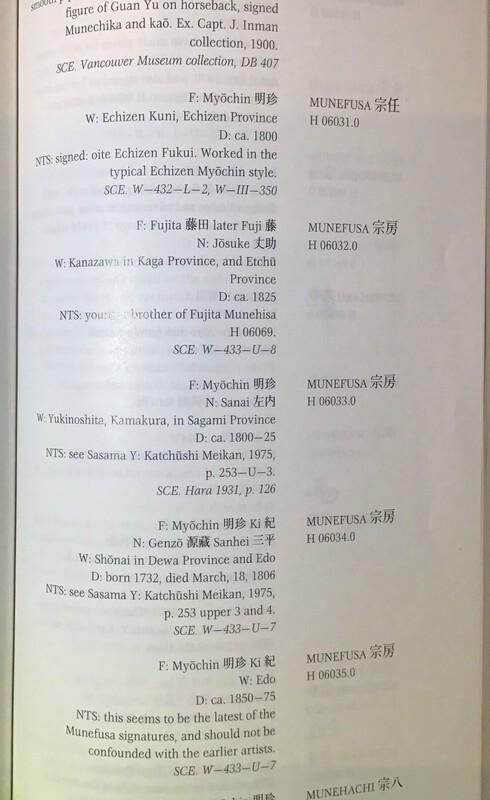
Hi Grev image of relevant page…….. Best. Colin
 1 point
 -
You are from states sadly, in Europe @Lexvdjagthave some marvelous pieces which is posting at forum. Jake's NJC Hokke with 2 koshirae was also worthy buying.1 point
-
Has it really been over 15 years since I wrote that post?? Oh my gosh... :-D. Alex, you are very welcome, and thank you so much not only for acknowledging my post, but also sharing with me how it helped shape your perspective and drive you to continue your quest to study, learn, and *enjoy* this magnificent art form! I am *truly* touched by your post. You've made my week, and I am so happy for you. Sadly, the Nihonto community has lost every one of the folks you mentioned before; Guido, Ford, Keith, and Darcy, three of whom were very close personal friends to me, and while I could not presume to call Ford a friend in the truest sense of the word, I held deep respect for him as a craftsman. Friendships and relationships that were forged with shared enthusiasm and the joy within Nihonto. Herein lies the profound and salient point; the most precious of all things we collect in this wacky field is the friends, relationships, and experiences that stay with us forever while we help preserve the arts that brought us together in the first place. Thus in turn, these things can continue to do the same for future generations. Keep going. You're doing great, and it gets better. Cheers, Ted1 point
-
If I'm not mistaken, that Morisuke tachi in the bottom image is the same one that was listed on Fred Weissberg's site: https://nihonto.com/bizen-morisuke-備前守助/ A grand old soldier measuring in at 87.7cm (34.5in) with a bunch of battle scars.1 point
-
https://www.behance.net/gallery/41878025/5000-MON-Japanese-FAMILY-CRESTS Page 228 check book by Yourself but I didn't spot more similar. For translation ask in translation tab.
 1 point
 -
Found on dirks, kaigunto fittings, and naval kyugunto fittings. Richard Fuller lumped it together with the circled anchor calling them both "Toyokawa Navy Arsenal" stamps. My current theory is that it was a Naval inspector stamp for fittings or finished products. Suya made swords for both army and navy, so we might be seeing a naval inspector sampling and approving the items made for them.1 point
-
Given that I need to pay my polisher and a few other obligations, here is one more reduction as well as some additional pieces listed for sale. 1. 28" katana in shirasaya. $2100 -> $1900 2. 19" wakizashi in substitute saya. $1500 -> $1400 3. 27" katana in partially restored gunto mounts. $1800 -> $1700 4. 23.25" o-suriage early to mid Kamakura tachi in assembled mounts. Off the market. I have decided to get this one put in shirasaya and papered. 5. 24.5" katana in remnants of WWII leather-cased mounts. $1800 -> $1700 6. 26" katana of WWII origin. No further reduction on this one. $900 7. 17" wakizashi in American-made saya. No reduction on this one! SOLD! 8. 11.25" tanto in restored mounts. $1200 -> $1100 9. 26" katana of WWII origin. $1050 -> $1000 I have also decided to list these pieces for sale, if you are interested then please request pictures. A boy's tachi, 18" nagasa, signed to Omi no Kami Minamoto Hisamichi, with kikumon. 1st generation, 1650-1673, needs restoration but is worth having done so. In shirasaya. Silver-plate habaki. I believe this one is shoshin. $2200 A Bizen no Kuni ju Osafune Norimitsu wakizashi, dated to February 1506, 20" nagasa, in the remnants of Satsuma Rebellion mounts with classic washer menuki. Needs a polish and habaki, but the rest of the mounts are present. I suspect the habaki was shorn off by a bullet strike to the tsuba as there is a clear bullet strike on the tsuba that has bent the tsuba itself. No reason to disbelieve a signed/dated piece from this smith is anything but shoshin. $1700 A Koto katana, possibly Kamakura... at latest Muromachi based on sugata and workmanship according to polisher, 28" nagasa. Was shortened to fit Kyu-gunto mounts and is therefore o-suriage. Bohi were added on during this time. Ill-fitting silver plate habaki with kyu-gunto tsuka. No saya, I had to make a paper saya for this one. $2200 A lady's kaiken, bare blade, narrow suguha. 6.125" nagasa. Ca. 1680. A cheap little project knife. $400 A Soshu Naginata, circa 1380-1410. 18.5" nagasa. 36.25" OAL, so this one is ubu. Very much worn down but enough to bring back even still. Itame hada at the ha that turns into masame at the boshi. Could even be possibly earlier. Had a very long signature on the nakago that is completely rotted out and illegible now. $2250. A Yokoyama Sukesada wakizashi, circa Kanbun. Signed Yokoyama Kozuke no Kami Fujiwara Sukesada, probably a lesser generation? Needs more investigation. Has beautiful Yokoyama Choji/Gunome mixed hamon. Masame in ji. In original black lacquer saya with habaki and tsuba. No tsuka. $1800 A rather rare SIGNED Owari-den wakizashi, signed to Noshu-ju Ujimasa. Circa Kanbun. Damaged silver-plated habaki, bare blade. Needs a polish. Not sure how to price this one, so just tossing out the price at $1000 since I've never seen a signed Owari blade. 17.75" nagasa, ubu. Two rather rough-condition tanto in full mounts for $1,000, being sold as a pair. One is earlier, probably 1600-1650 and the other is probably 1800's. These are good for display, but would not make sense to pay for restoration. Perfect for an amateur to dabble with though I suppose. The mounts are clearly made for export. Shipping is $100 CONUS, and will include the original valuation insurance. Outside CONUS, shipping will be discussed and as reasonable as possible. You can ask any of my previous customers. I made sure things are transparent and arrive quickly. If you would like pictures of one, feel free to DM me. ~Chris1 point
-
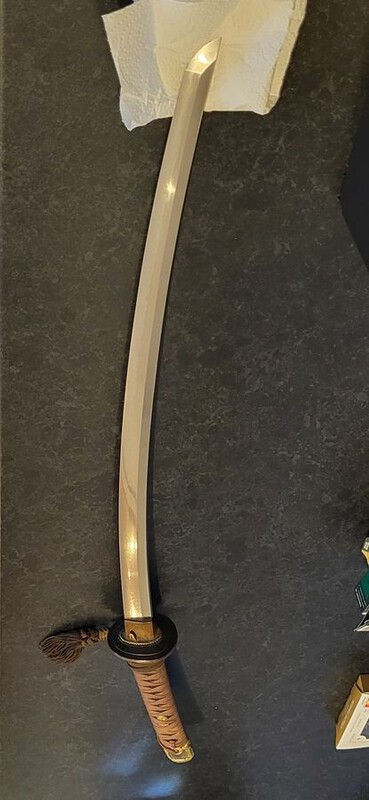
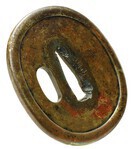
beautiful shaped Kikusui Masanao if you mount the original handle on one of these great swords, as long as the original koshirae is still there, such a tachi gets a completely new look

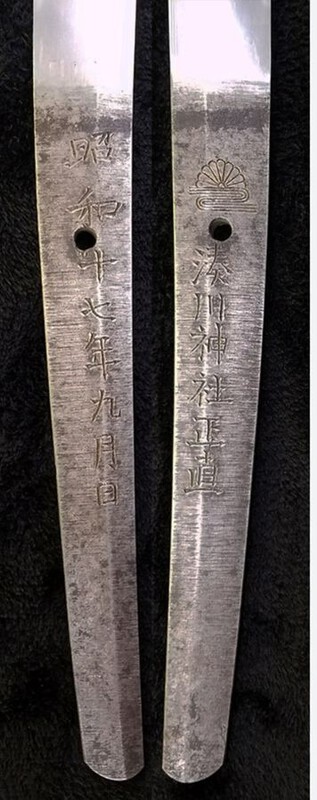 1 point
 -
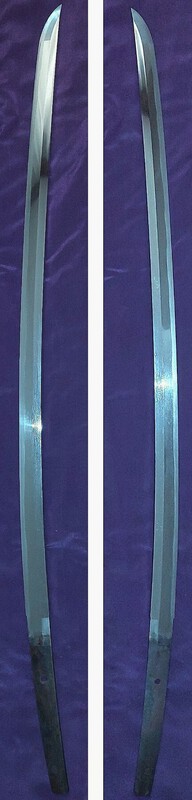
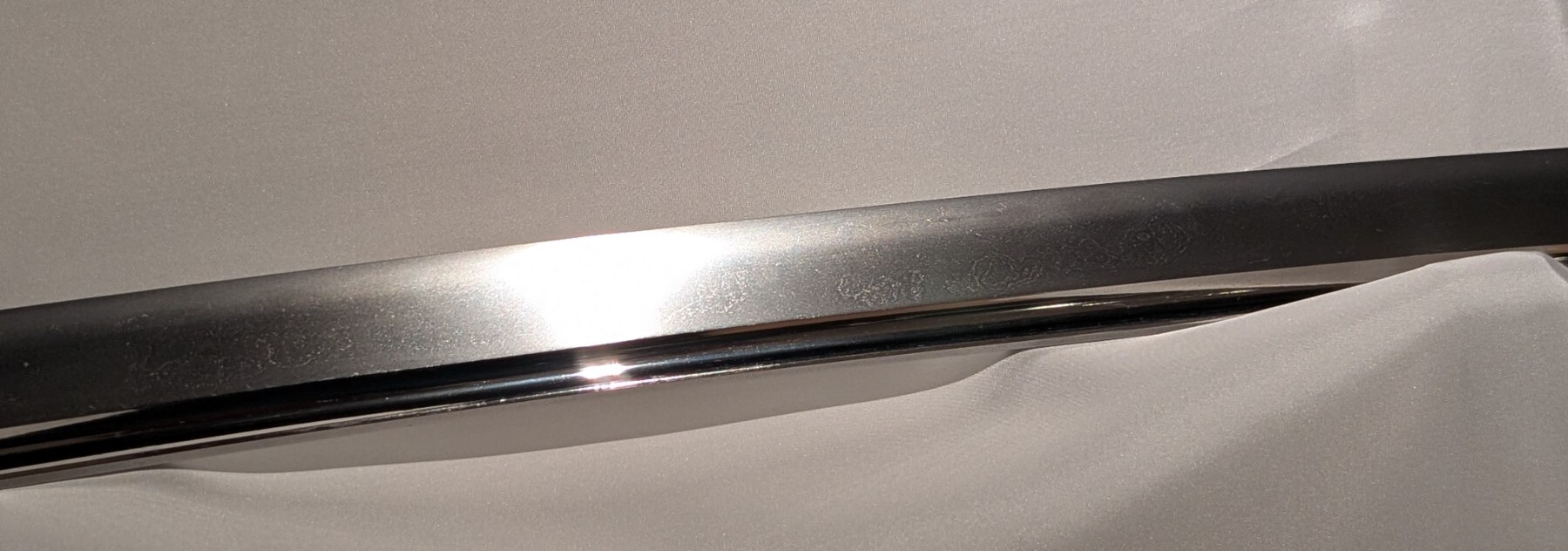
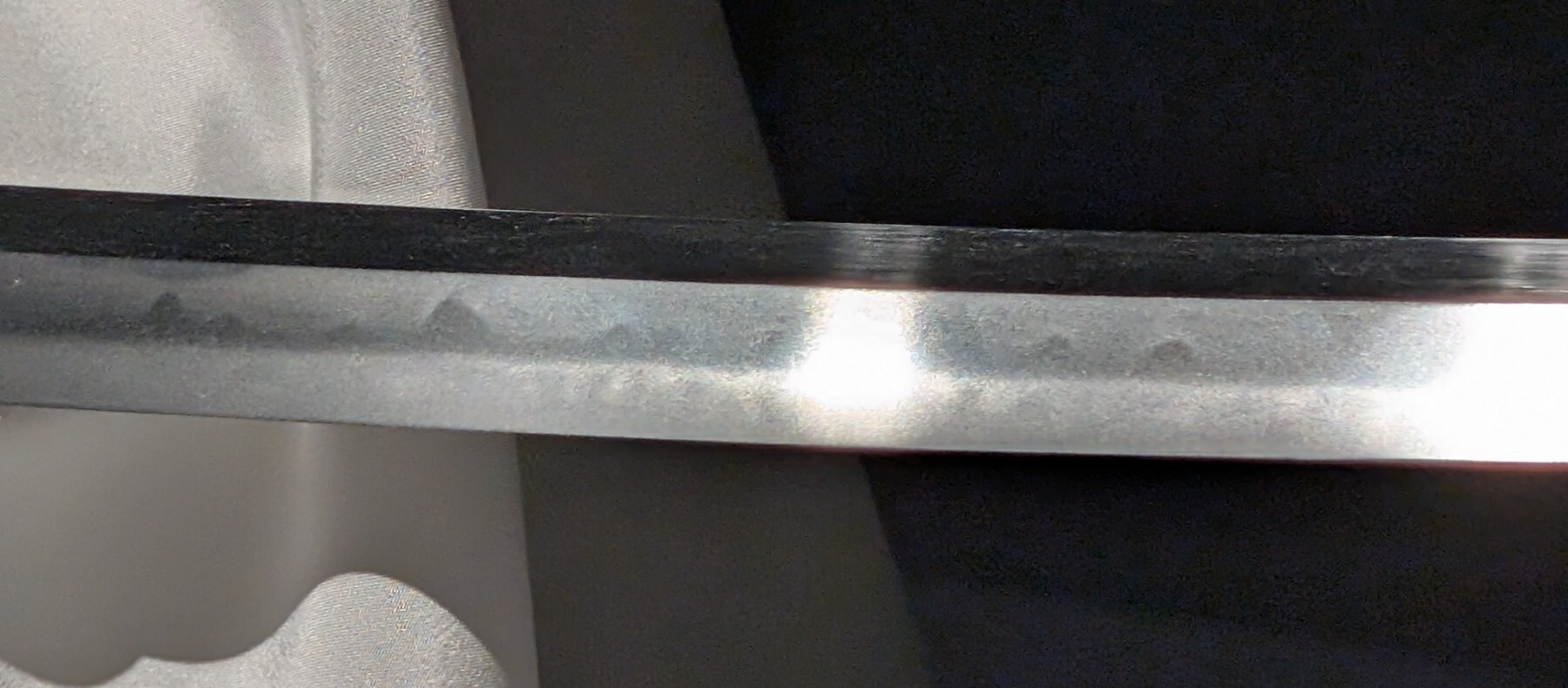
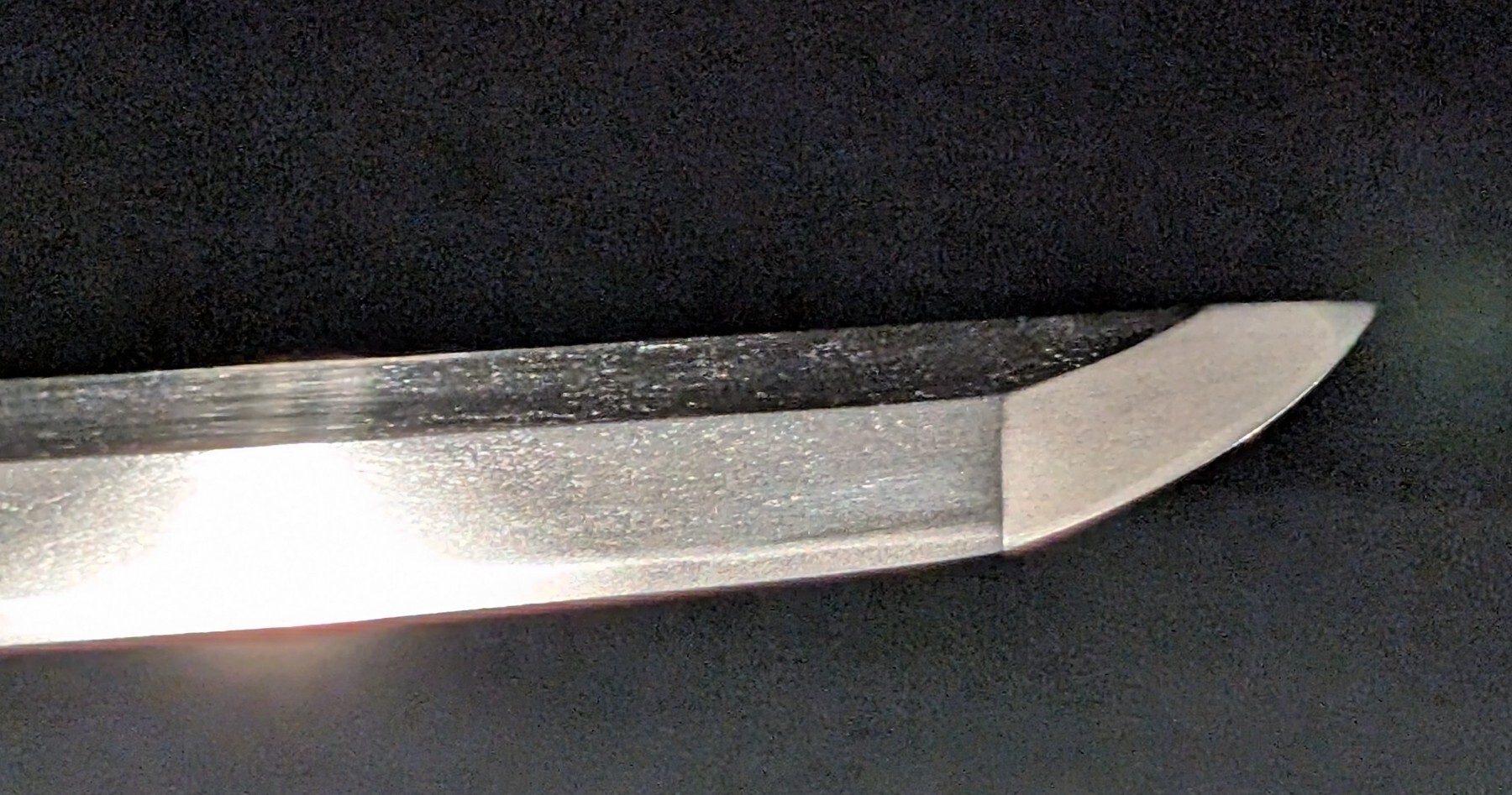
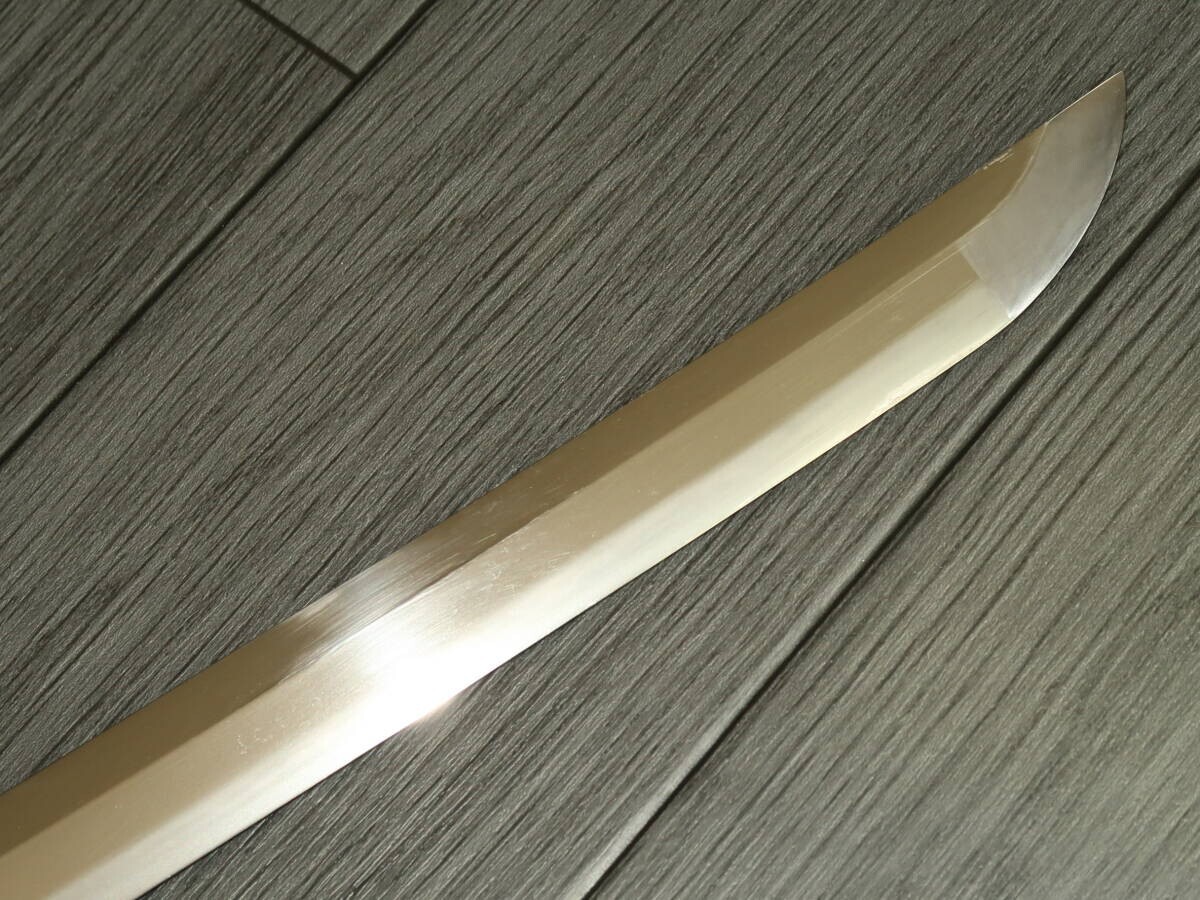
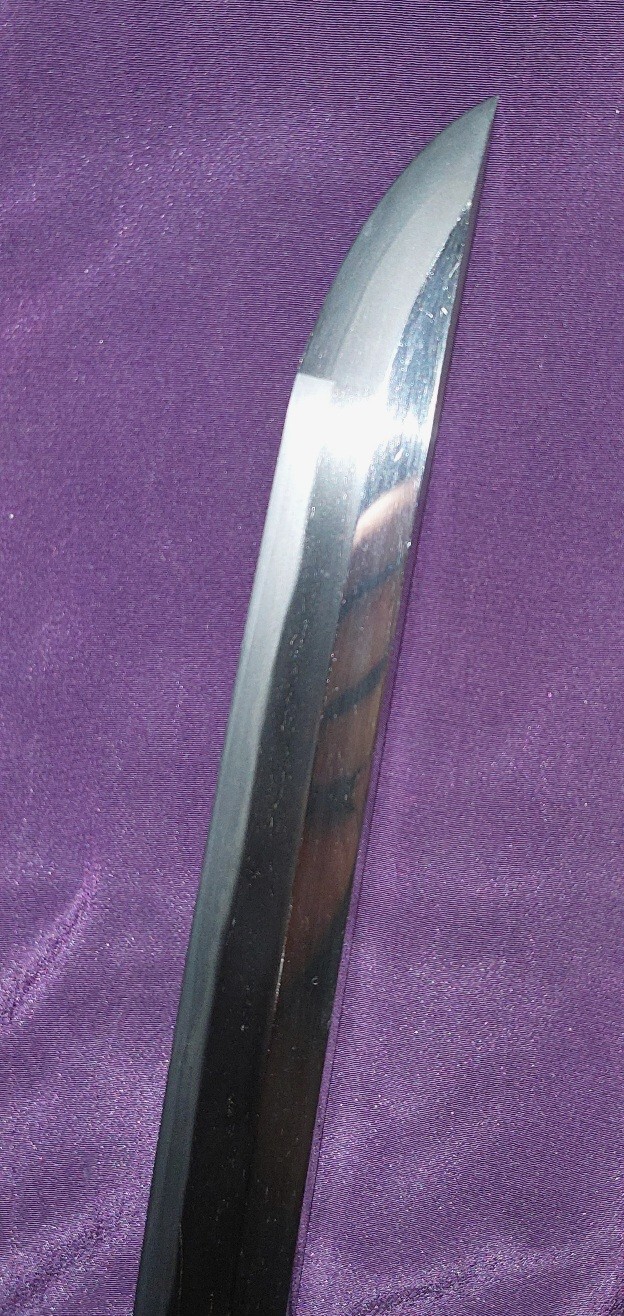
The blade:
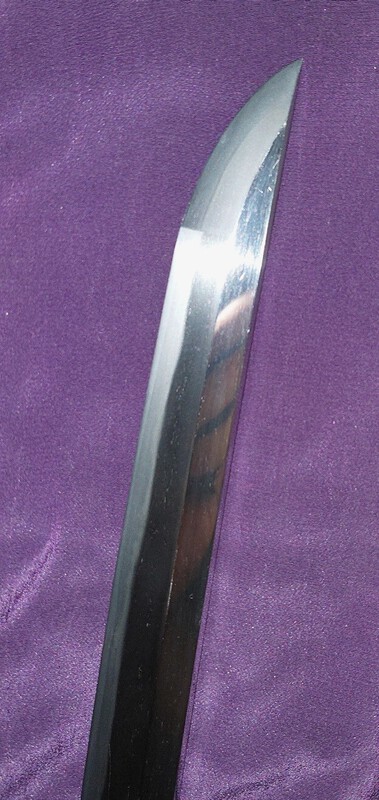
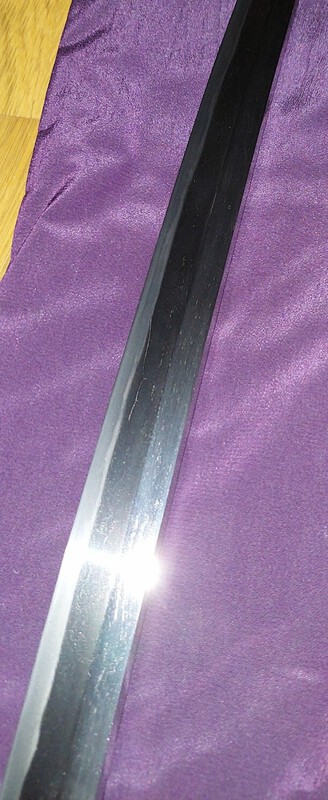
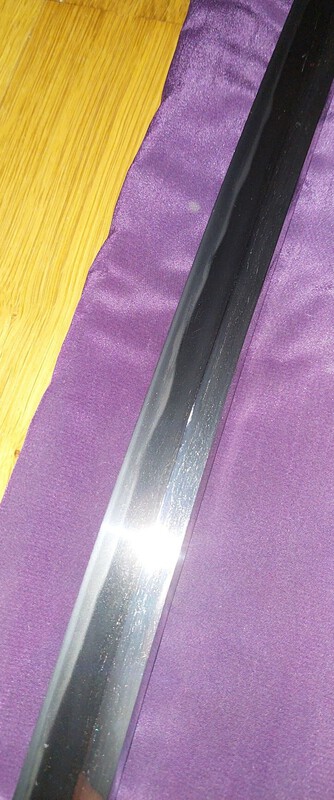

 1 point
 -
Bruce, About the stamp of 'Nan' and 'Ren'. I have found a table about the marks of Mantetsu Gunto. Here I try to translate the content from the year of 1943. 昭和18(1943) 興亞一心(Koa isshin) , 滿鐵作(made by Mantetsu) , Spring; 昭和18(1943) No motto,滿鐵鍛造之(forged by Mantetsu) ,Spring, 南(Nan); 昭和19(1944) No motto,滿鐵鍛造之(forged by Mantetsu) ,Spring, 連(Lian,Ren); 昭和19(1944) No motto,滿鐵鍛造之(forged by Mantetsu) ,Spring, 連(Lian,Ren)W; 昭和20(1945),no record. It looks like the motto 興亞一心(Koa isshin)no longer existed after 1943. Instead of it, the “Ren” and “Nan” blades are actually Mantetsu gunto without motto.

 1 point












































This leaderboard is set to Johannesburg/GMT+02:00