
Leaderboard


Popular Content
Showing content with the highest reputation on 04/25/2026 in all areas
-
Has it really been over 15 years since I wrote that post?? Oh my gosh... :-D. Alex, you are very welcome, and thank you so much not only for acknowledging my post, but also sharing with me how it helped shape your perspective and drive you to continue your quest to study, learn, and *enjoy* this magnificent art form! I am *truly* touched by your post. You've made my week, and I am so happy for you. Sadly, the Nihonto community has lost every one of the folks you mentioned before; Guido, Ford, Keith, and Darcy, three of whom were very close personal friends to me, and while I could not presume to call Ford a friend in the truest sense of the word, I held deep respect for him as a craftsman. Friendships and relationships that were forged with shared enthusiasm and the joy within Nihonto. Herein lies the profound and salient point; the most precious of all things we collect in this wacky field is the friends, relationships, and experiences that stay with us forever while we help preserve the arts that brought us together in the first place. Thus in turn, these things can continue to do the same for future generations. Keep going. You're doing great, and it gets better. Cheers, Ted6 points
-
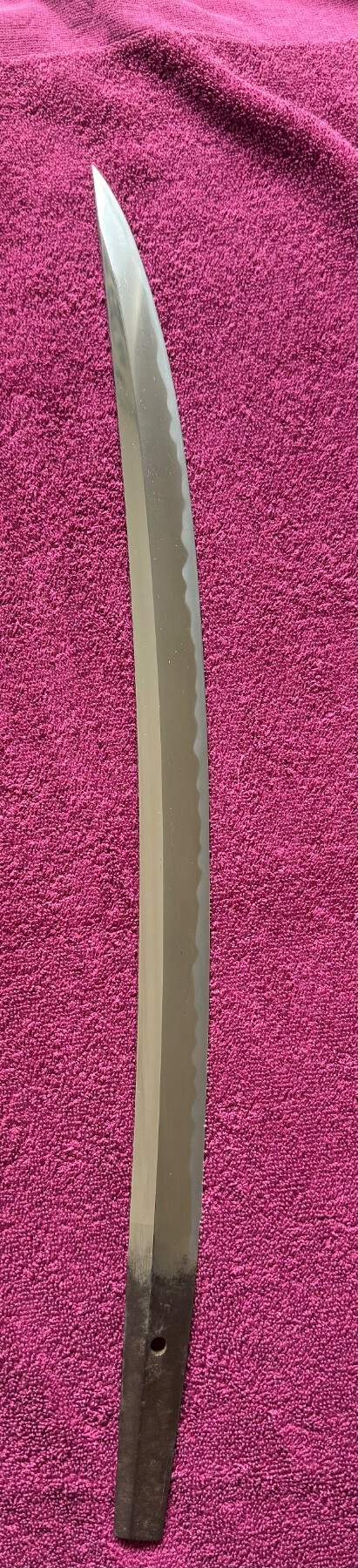
The study/collection of nihontō can be a slow-burn pursuit. Some of you with bear-trap memories may recall (though I concede, it may be unlikely) this blade I posted here, coming on seventeen years ago. At the time a recent graduate living in the UK with plenty of enthusiasm but very little knowledge and severely limited means, this board (and SFI) was effectively my only interactive window into the realm of nihontō. At this stage of my 'study', which I recall very clearly, I was not content in taking the very good advice to spend my hard-earned pennies on boring old books! I was keen to get my mitts on medieval Japanese steel, and was rather more inclined to trawl eBay looking for a deal than to drop my “first thousand dollars” on dusty tomes. (You gotta be kidding me!) I had three criteria for buying my first ebay sword: be sure it’s koto, thick, and not rusty. Eventually I settled on something I could be certain, I told myself, was genuinely old but still healthy, which to me meant thick. In my defense, I tried hard to be selective, gravitating towards something with an “obviously old” and active jihada. This sword represented my first foray into online auctions, and marked my first thousand dollars spent there. I always had faith that this sword was a bit special and unusual; however, try as I might, I could never confidently match it to any school. It seemed to my ignorant eyes to have the traits of several, all at once. I am pleased to finally and at long last be able to share a reliable update and judgement of this sword. The sword was examined by renowned expert Mike Yamasaki, who appraised it as the work of... More recently, I had the opportunity to exhibit the sword locally at a cultural arts festival in Orange County, alongside a few others. It was a small thing, but meaningful to me, and felt like a way of (finally) contributing something back to the wider “nihontō study and preservation” community. I wanted to return to this thread to close the loop, but more importantly to say thank you. A great deal of my interest in deeper study began right here - I was so determined to uncover the mystery of this blade's origin. The friendships, knowledge, and perspective that followed all trace back, in part, to those early exchanges. NMB has a lot to answer for. Over the years I’ve had the chance to meet and correspond with some of the people who replied here and elsewhere. That has been an honour, and always both enlightening and entertaining. I feel compelled to mention a few names in particular who I wish I could properly thank: Guido Schiller, Ford Hallam, Keith Larman and Darcy Brockbank, among others. Ted, I have been meaning to thank you for your responses to that original thread for a very long time. So, a belated thank you to Ted Tenold for such a detailed reply; it became, whether you realised it or not, a lens through which I’ve looked at sugata and three-dimensional blade geometry ever since. This post is not intended to resurrect an old thread but rather to close the loop on an earlier discussion, which I have always felt was left unresolved, and also to acknowledge the influence it had. My thanks to those who contributed their knowledge then and who continue to do so now.
.thumb.jpeg.a53816b19e3b8e9bbbb6cef710a398c1.jpeg)
.thumb.jpeg.3a7d6133b37c21b7824db9bed9b2b588.jpeg)
.thumb.jpeg.26b676aa0fc4ddc3b9e78523161fc803.jpeg)
.thumb.jpeg.9c9715cf3672044db374e6270d5ca4ed.jpeg)

.thumb.jpeg.6c5b469dfc5c4e49d8a5de2a6fcfebcd.jpeg) 6 points
6 points -
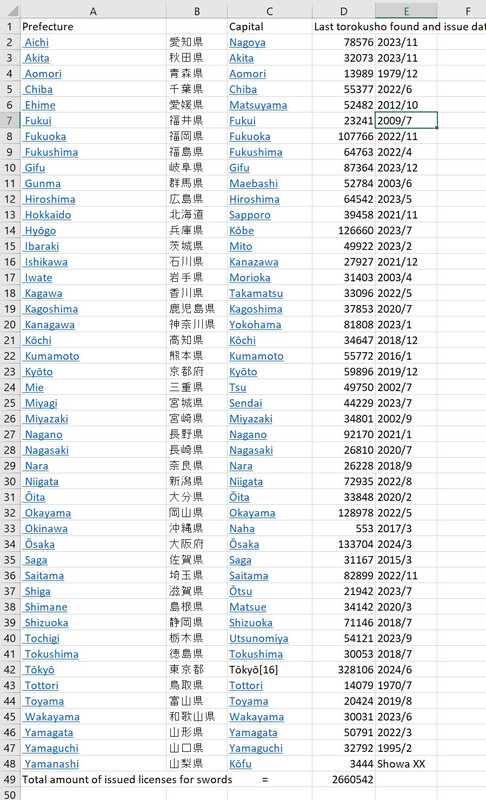
@Bruce Pennington @Kiipu You guys might find this interesting. Through a discussion with a dealer, I commented on showato getting torokusho. I was told that this dealer was commisioned to gather swords to be sent to Japan for resale. The Japanese dealer had several shops and would ask the swords be sent to his Osaka location and not his Tokyo location because the regulations were less strict (or at least less enforced) in Osaka and getting a torokusho for gunto was easier. I bring this up because I was thinking about...gulp...doing some research on registered gunto by location and frequency - unless you guys have done that already. John C.5 points
-
Funnily enough, that's also how I found the sword initially; I had been searching for an iaito online for my own practice, and because the story about the iaido sensei was in the seller's description, the listing showed up in my search results. The koshirae is very nice for a fatally flawed blade, albeit rather low-key, which lends some credence to this story (as does the blade being extremely thin and light due to having taken so many polishes - suitable indeed for an elderly practitioner). I was particularly fond of the tsuba, which has some subtle detailing reminiscent of Kagamishi school work. At any rate, I am pleased that both you and the previous owner were both upfront and well-informed about the blade's condition, and that it has found its way to someone who can appreciate it for what it is and the centuries of history behind it.4 points
-
Hi, yes, took screen shots, cropped them, turned them upright and saved them. The first is a Settsu (Osaka) gun made by a smith (name obliterated) working for the House of Enamiya. 摂州住榎並屋xxx衛作 The second has stuff I need to double-check on. The date at top is fuzzy but looks like 萬延 Man-en Gannen (1860). The Mei 鈴木鉄造 典直 作之 Suzuki Tetsuzo (?) Norinao Saku Kore, = made by Suzuki Tetsuzo Norichika/Norinao (not sure about how he wanted those characters read!) but no place of manufacture is indicated. NB I did find a record of another gun made by this second smith above Nick, dated Bunkyu Gannen (1861), which does put yours inside the ballpark.4 points
-
Good afternoon/evening! See, things like this is why I adore the Nihontō community - it’s such a small group of honest people! You were under no obligation to point any of this out, and yet you felt compelled to be open and honest - I wish more communities had this level of integrity. because… The seller 100% notified me of the concerns/previous issues with this blade, but he could not completely remember what was originally told to him. He was absolutely open on the “risks” of the purchase, and had provided a more than reasonable price (in my opinion). I was indeed wondering, although it wasn’t stated at the time, if this was an artificially applied hamon. That said, I noticed some aspects of the blade (like the hamon not extending into the kissaki, exactly), and figured something like this was going on. The fact that the suguha hamon is not original, while sad, doesn’t bother me too much to be honest. Ultimately, I ended up purchasing the blade based entirely on the fact that it (appears to have been) mounted so many different times, and has some aspects like the asymmetrical horimono that I enjoy as well. I set out to purchase a koto blade that was used throughout its life, and despite its issues and although it may never see a kantei due to those concerns, I *think* I still accomplished that at least (though I’m still very much a novice in this!). The other amusing thing is that, I am a student of iaido of about a decade now, and I did also hear that note about the sensei - while that story may or may not be true, I found it enjoyable nevertheless. Out of curiosity, being mounted so many times and based on the profile of the blade, I had imagined this was somewhere in the ballpark of 1400-1500. Did you ever place the blade in a particular time (understanding the school/tradition may be impossible now) when you owned it? Thank you! Very Respectfully, Vincent4 points
-
An auspicious day in the fifth month of Genji 2 (1865).3 points
-
I’ve emailed Rachel Hyman. (“Senior specialist”) ……erm. Let’s see what she does.3 points
-
2 Amazing replies. Alex, thank you for the update and that wonderful story, and to Ted who may not realize he is one of those pillars of the community like the great names he mentioned that came before him.3 points
-
An unusual place to find a matchlock! He,p with Flintlock ID3 points
-
My apologies for this as it is a slight deviation, but following on from my earlier post regarding the 'perfumed' blade and myths of days gone by.......... I read somewhere, I don't recall where though, that the Japanese say that the weather changes when one draws a sword indoors. perhaps the smell of choji indoors makes the Japanese think of a certain season? Perhaps Piers or someone may have heard of this? The other thing that I remembered was a dealer friend of mine shivered when she went past my stall and saw the Japanese swords on my table. I asked her what was wrong and she said that the Japanese wrapped curses into the hilt binding. Well, I had never heard of this, so I asked just about everybody I that knew involved with nihonto, and David Parker at Armada Antiques eventually came up with the answer. Going back to the late 19th and early 20th century, when people were beginning to start collecting Japanese sword furniture, when they cut off the tsuka ito to free the kashira and menuki, small pieces of paper fell out (the packing for the tsuka ito), but as few people could actually read Japanese it was thought that they were curses. They were in fact bits of old prints and news letters etc, just old paper, but the collectors of the day didn't know that. Maybe we could start a thread if anybody has any other old fables and myths regarding nihonto? Incidentally, it was David Parker that I bought the Kunitoshi from, the grand price then (ca. 1981-82) was £175 ! I wish we could buy them for that price now! Apologies for going off topic, but thought this might be of some interest......at least to someone....2 points
-
This is from my file that I did about year ago
 2 points
 -
Oof, seems like Lanes Armory won the Knutsen auction for this item. Well it is good to know for the future that the item resides with them. However unfortunately I don't think I can ever afford to buy it from them. It seems it was 3,400 GBP at auction, don't even want to ask what the price is now...2 points
-
Your sword is signed - 伯耆守平朝臣正幸 / 文化年寅八月日 - Hōki no Kami Taira Ason Masayuki / 1806 8th month (I think he might be also read Masayoshi but I usually read Masayuki)2 points
-
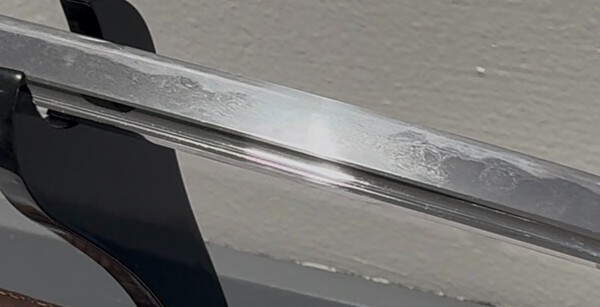
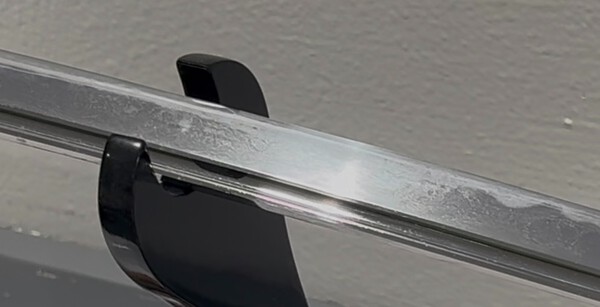
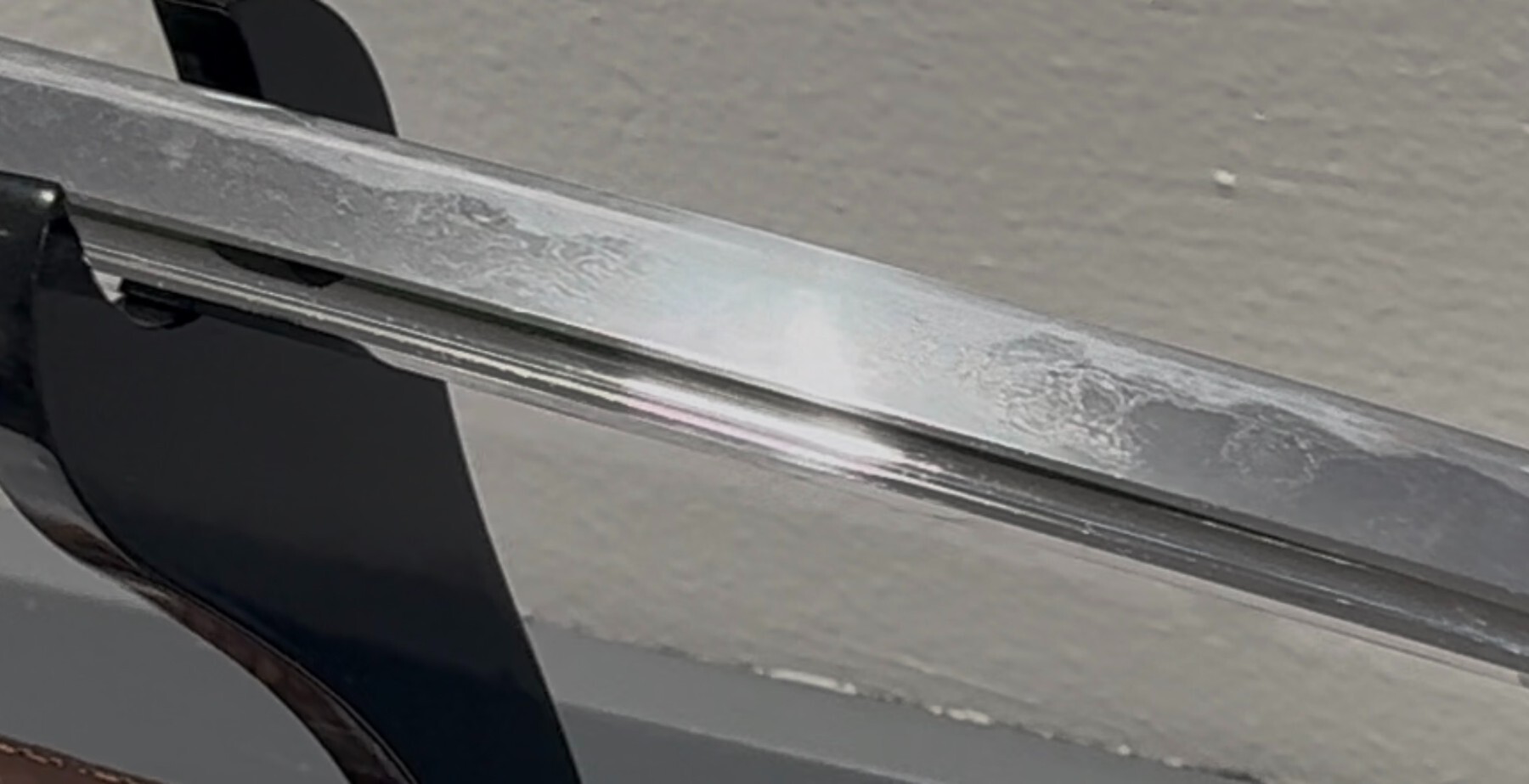
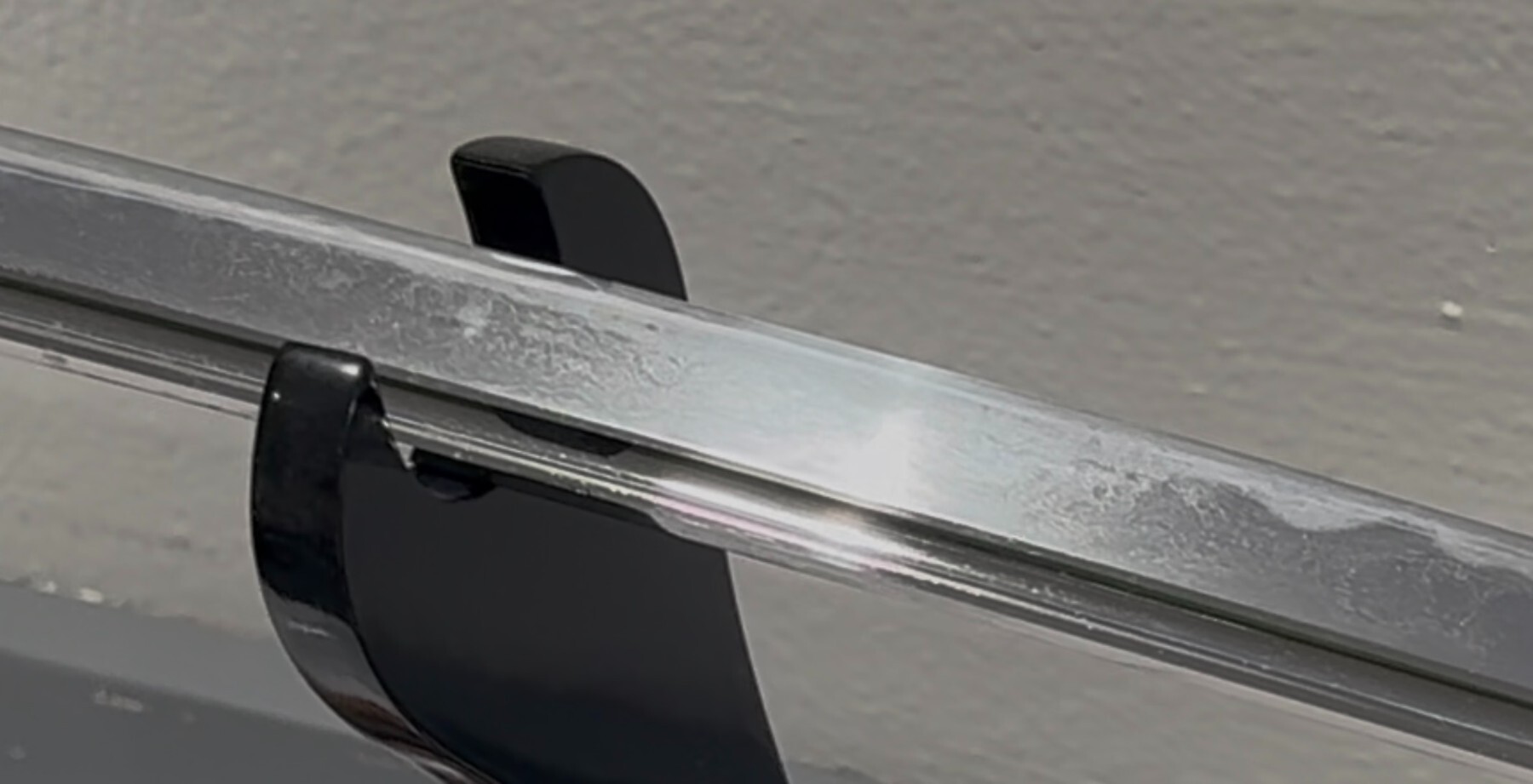
@ROKUJURO@Rawa Here’s the spot on the munemachi. Not bad at all in my opinion and could be removed through less abrasive methods. I haven’t done anything to the blade other than oiling it
 2 points
 -
Many moons ago, when collecting nihonto was almost unheard of and in its infancy some people thought that some blades were perfumed. Later they found out that it was the choji oil than gave the blade its aroma. The smell seems to linger a bit more on some blades than on others, and the Kunitoshi was one of those blades. There are many myths that stem from this period. There is a section in Alfred Dobrées Japanese Sword Blades , which was originally printed in 1905.2 points
-
The Koshiraé is Inaba Koshiraé typical of Tottori on the Japan Sea, black lacquer with silver chrysanthemum fittings. I bought it because it straddles the two Ikeda Daimyo strongholds of Okayama and Tottori, the wife being from Tottori. I thought one of the offspring might want it but thankfully 😅 not, (“I don’t like black”) so I get to keep it.2 points
-
I like it Piers, its the kind i would look for. Regarding any that are a bit hit and miss, always of the impression they could be student swords that were signed by the main man, dai saku mei. Who knows, without having been there at the time. Just speculating and not looked into it.2 points
-
16 years later. These replies are never too late. What a wonderful story mirroring a little my own journey into the crazy world of Nihonto, albeit I'm still cruising the bunny slopes. The post about not wanting to invest in 'dusty tomes' was funny reflecting the motivation of most noobs, who are only focused on getting their paws on the real deal, research and knowledge be damned. I appreciated the discussion on the bohi, especially around signs of atabori and carvings ending in front of the yokote. Now with 16 years experience under your belt, what are your thoughts? The style of bohi carving is also found on some Yamato Cho-Senjuin swords from late Kamakura period like the TJ Mumei ubu blade in the Nagoya Museum collection I posted recently. Any plans to have it officially papered?2 points
-
Interesting observations, Alex. Thanks. My sword sensei here says my blade is by the father right at the end of his career, an example just before his son took over, although most people are generally not aware there were two generations of Sukekane.2 points
-
Started getting into Sukekane blades quite a few years ago now and from time to time would look them over on sites. Now i cant say ive had 100,s in hand, just seen a few over the years. Years ago i could never work out why he was rated Chu-jo, think maybe i started a thread on it some years ago. Over the years though i kind of came to my own conclusion, whether right or wrong. The jigane was always the same tight ko-itame on the examples i came across, i guess many would describe it as uninteresting, especially when compared to many other blades, Koto or whatever. Though that for me was not the reason. From memory, he worked mainly in Suguha which he did well and the flamboyant Yokoyama Choji style which everyone knows. Now the reason ive come to think he was rated Chu-jo is consistency (again whether right or wrong). Its interesting that Sukenaga got a mention above, higher rated smith and often his choji is consistent and many times to my eyes, perfect. There was a wak on the Bill Brannow site but now it seems the site is down. It was a dedicated shrine sword with inscription, wish i could do a link as for me it was the perfect example of Yokoyama Choji. Anyways, regarding Sukekane. His best work goes for relatively high prices and you know why when you see it, consistently good. Often though, you see blades with a Choji hamon that is nowhere near that of Sukenaga. Sometimes, i believe they were created this way but other times i believe they were just not the best, as in how the choji hamon appears. Being brief, parts of it appear missing, often one side far better than the other side etc etc. Sometimes when the polish is not great, hard to tell. Anyways, just thoughts.2 points
-
Not while I owned it, but as per the linked thread, the general consensus seems to be Yamato or Yamashiro, late Kamakura to Nanbokucho (1320 ~ 1390). Personally I lean towards Yamashiro because of the lack of masame and the relatively flat shinogi, which would make Rai or Enju the most likely candidates (and indeed these are the most common guesses from the people who've examined it or seen photos of it). Unfortunately the main kantei difference between Rai and high-level Enju is ko-maru vs. o-maru boshi, and we no longer have a boshi to examine here.2 points
-
Should be fine here, guys like Piers etc with a background in these items have a good chance of working out the mei based on their knowledge of the makers and styles.2 points
-
I am sorry to be the bearer of bad news, but this blade is one that I previously used to own. It was examined by a polisher, who determined that it has been damaged in a fire and most of the hamon is gone; what you're seeing is a cosmetic hadori applied by a polisher to hide it. I ended up refunding it and selling it to someone who understood the condition and was willing to accept it as such. I would contact the previous owner seeking a refund if it was sold to you as being without any fatal flaws; however since you noticed that the hamon does not continue into the kissaki it sounds like you knew what you were doing, and hopefully obtained it at a reasonable price. Previous discussion here: https://www.militaria.co.za/nmb/topic/22108-ji-nie-question2 points
-
If this can help, I sometimes goes on the same "hunting grounds" as Masa... I generally overlook/do not consider the kind of pieces he buys, but if you are looking for something specific, I can definitively keep an eye open for you, and share pics.2 points
-
99% gimei, 住東叡山忍岡邊 – Living in Toeizan Shinobugaoka no hotori, 長曽祢興里作 – Nagasone Okisato made. 於小塚原二ツ胴敷碗落之 – At Kozukahara, two bodies and forearms were cut. 寛文拾貮年八月日 – Kanbun 12th year (1672), 8th month2 points
-
Sold thank you everyone and thank you NMB. A donation shall be made.2 points
-
Thanks, John. I like it. August 1823. I have one dated 1822, and both are after he switched his mei to Amahide after giving his Masahide art name to his son (they explain that, actually, in the sale description).2 points
-
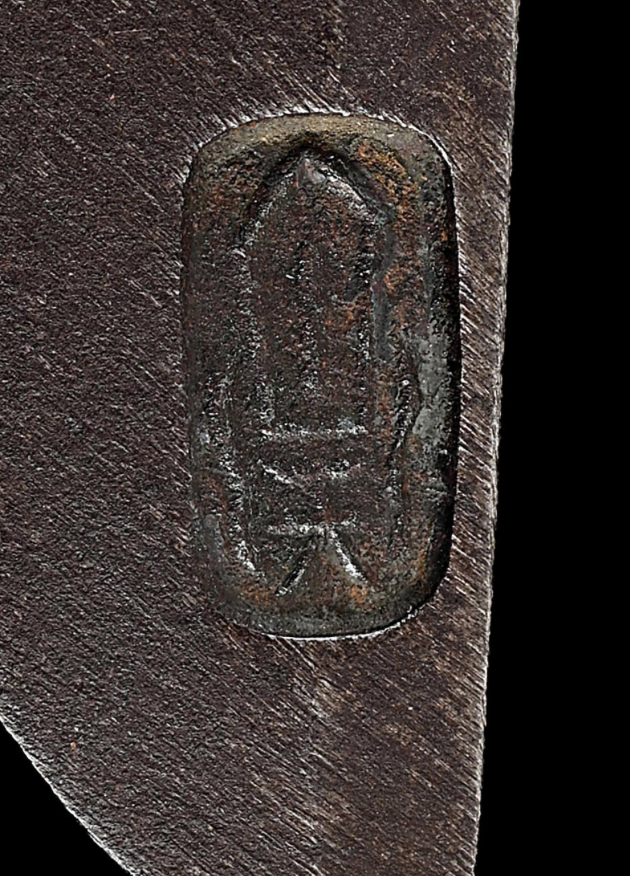
@Bruce Pennington From the auction posted above: I know you have Masahide's kokuin listed in the stamps doc, however this may be a slightly clearer pic. John C.
 2 points
 -
Appears to be "home made". Hard to tell about the wrappings, by these photos, so can't tell about the age of them, but the blade and metal (brass) fittings all look to be made by an amateur/hobbyist. At best, judging by the parallel buffer/grinder marks, the blade could be something from the occupied lands that was totally rusted/corroded and someone ground it down to "clean it up."2 points
-
Small update. I managed to contact the buyer other pieces and offered to sell him the blade. He's going to get back to me a bit later. Fingers crossed!2 points
-
Alexander I also did a four volume book series on the A.H.Church collection - the unpublished Koop catalogue in book form with the addition of both views of the guard, which unfortunately the museum's online resource does not have.

 2 points
 -
Dear All. Surely not! https://www.bonhams.com/auction/32016/lot/304/a-pair-of-mixed-metal-tsuba-edo-period-19th-century-2/ Apologies for hurting the eyes. All the best.1 point
-
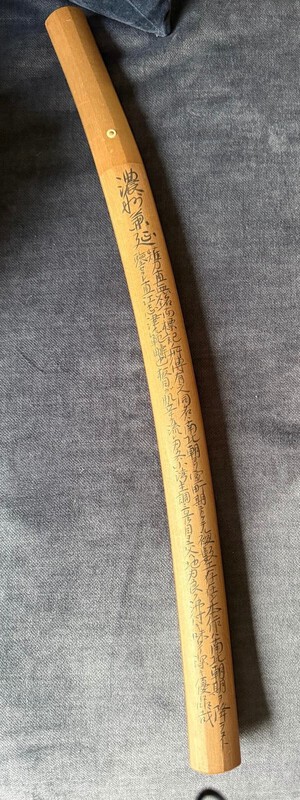
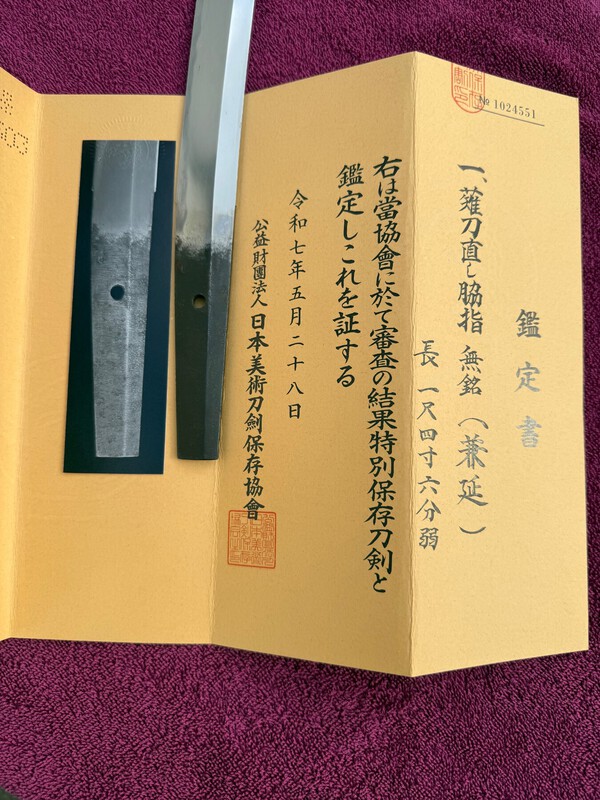
Since I will be selling a large part of my collection, here is the first piece. This Naginatanaoshi-zukuri/shaped wakizashi is mumei, but has been attributed to "Kanenobu belonged to the Naoe-Shiz I school. The hamon of this wakizashi shows gunome-midare consists of similar to Yahazu-ha and sunagashi which can be said to be "Den-Naoe Shizu," demonstrating the characteristics of Naoe Shizu. There are signs of repairs that appear to be umegane, but the work more than makes up for this. Tokubetsu Hozon sayagakı by Tanobe san. Length. 44.3cm Sori. 0.9cm Motohaba. 2.9cm Munekasane. 0.3 cm Shinogikasane. 0.7cm SOLD many pictures in the link https://drive.google.com/drive/folders/1quHMHSl_W1t5hfjPdAb50gYNybmHZGY7 Currently, DHL is not shipping from Germany to the USA (thanks, Trump). The shipping value must not exceed €100.


 1 point
 -
I admit I am completely clueless about guntō, it is always fun to visit the military sword section as guys in here have so much knowledge on them.1 point
-
I have not looked into that topic but you might want check with Jussi Ekholm first.1 point
-
We have added three additional items to our website, continuing to expand our inventory across Koto and modern works. Tokubetsu Hozon Token — Mumei (Attributed to Taima) Naginata-Naoshi Wakizashi A late Kamakura to early Nanbokuchō period naginata-naoshi attributed to the Taima school of the Yamato tradition. The blade shows a sharp and elegant sugata with characteristic curvature toward the tip and no yokote. The jigane is a tight itame with areas of nagare, transitioning to masame toward the kissaki, a noted Taima feature (Taima-hada). The hamon is a refined chū-suguha in nie-deki with fine kinsuji and inazuma. Accompanied by an aikuchi koshirae with peony and warabi motifs, and a vermillion mushi-kuinuri lacquered saya. 🔗 https://www.toukentakarado.com/item-tk042-mumei-taima-wakizashi Tokubetsu Hozon Token — Harima Daijō Fujiwara Tadakuni Wakizashi A powerful naginata-naoshi wakizashi by Harima Daijō Fujiwara Tadakuni of the Hizen tradition, a direct relative of the first generation Tadayoshi. The blade is ubu with a wide mihaba and a large ō-kissaki, giving it strong presence. The jigane displays fine konuka-hada, while the hamon is a precise nie-deki notare with bright, consistent nie and a well-formed boshi. Accompanied by an aikuchi koshirae with unified dragon motif and aogai mijin-nuri lacquered saya. 🔗 https://www.toukentakarado.com/item-tk041-harima-daijyo-fujiwara-tadakuni-wakizashi Sasshū-jū Minamoto Morikazu Katana A modern katana by Morikazu (Fujita Kazumasa), a disciple of Moritoku Minamoto and member of the All Japan Swordsmiths Association. Designed for practical use, the blade features masame hada and a gunome-midare hamon with visible sunagashi and kinsuji. Mounted in a practical koshirae with black leather tsuka wrap, offering excellent balance and handling. The well-cut bō-hi produces a clear tachikaze, making it well suited for iaidō and martial arts practice. 🔗 https://www.toukentakarado.com/item-tk043-sasshu-ju-morikazu We hope you’ll take a moment to explore these new additions. Please feel free to contact me if you have any questions. Warm regards, Nicholas Fu Touken Takarado 🌐 www.toukentakarado.com1 point
-
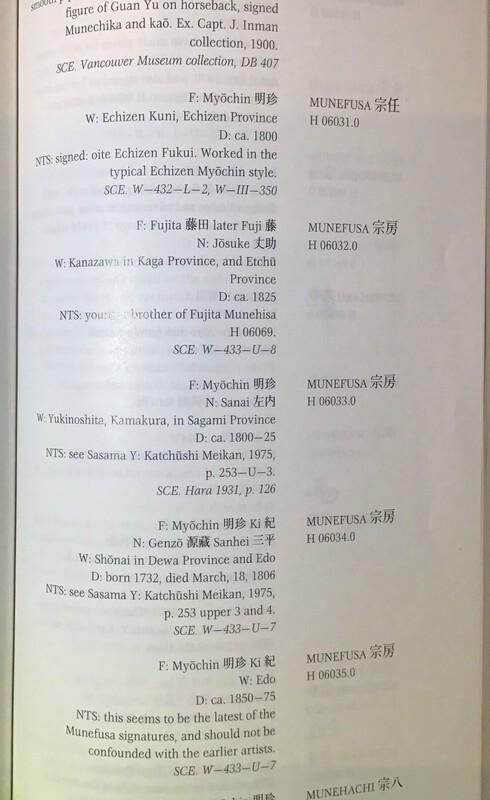
Hi Grev image of relevant page…….. Best. Colin
 1 point
 -
Thanks guys, this explanation makes sense. I've seen a video about the use of this eye technique in larger statues. Setting the pupil from the back would certainly align with the practice as it exists today and make a lot more logistical sense. I am still chasing down a picture of that kashira in the description I posted above... As it turns out the digital copy i was using ended up being a blended mash of Naunton and Behrens. If anyone reading has a copy of the W. L. Behren's Collection (Part 3) and could take a picture or scan of plate LXXIII (73) where I believe the potential sister kashira can be found, it would be much appreciated.1 point
-
You are from states sadly, in Europe @Lexvdjagthave some marvelous pieces which is posting at forum. Jake's NJC Hokke with 2 koshirae was also worthy buying.1 point
-
Very much appreciated, and again, thank you for your candor! V/R, Vincent1 point
-
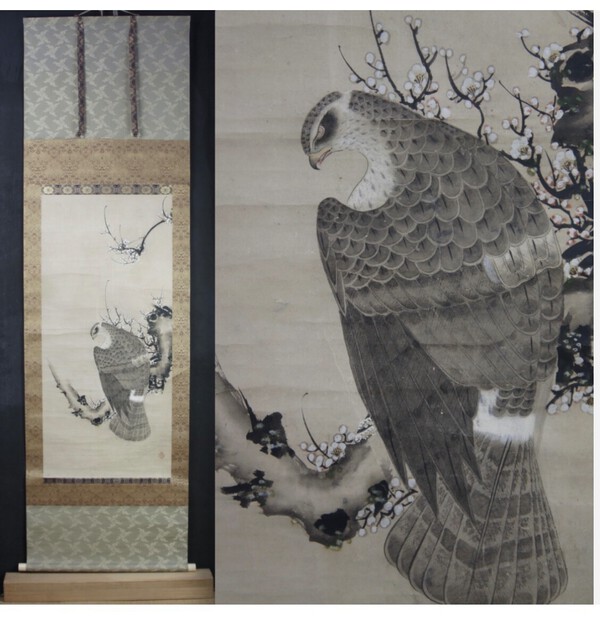
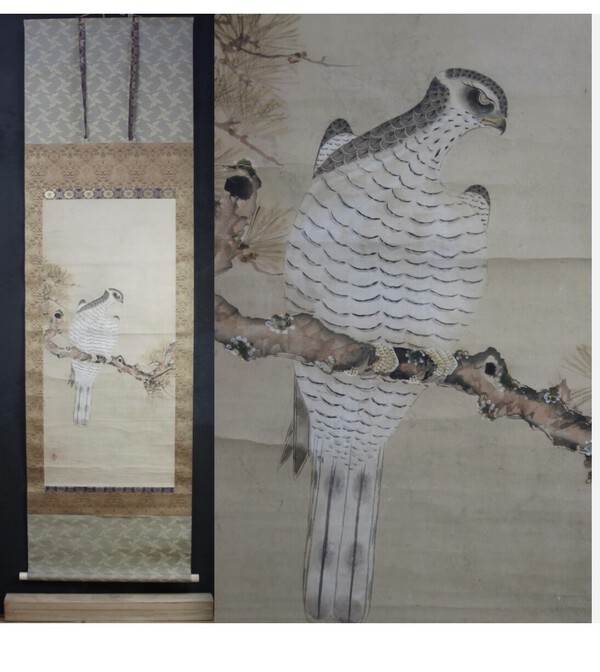
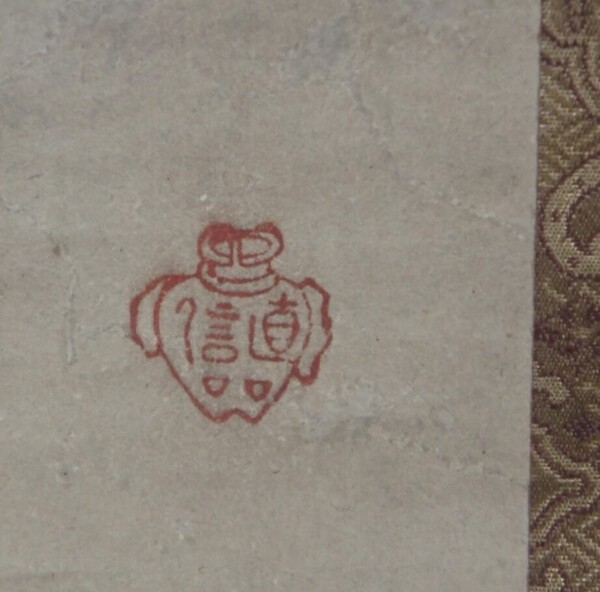
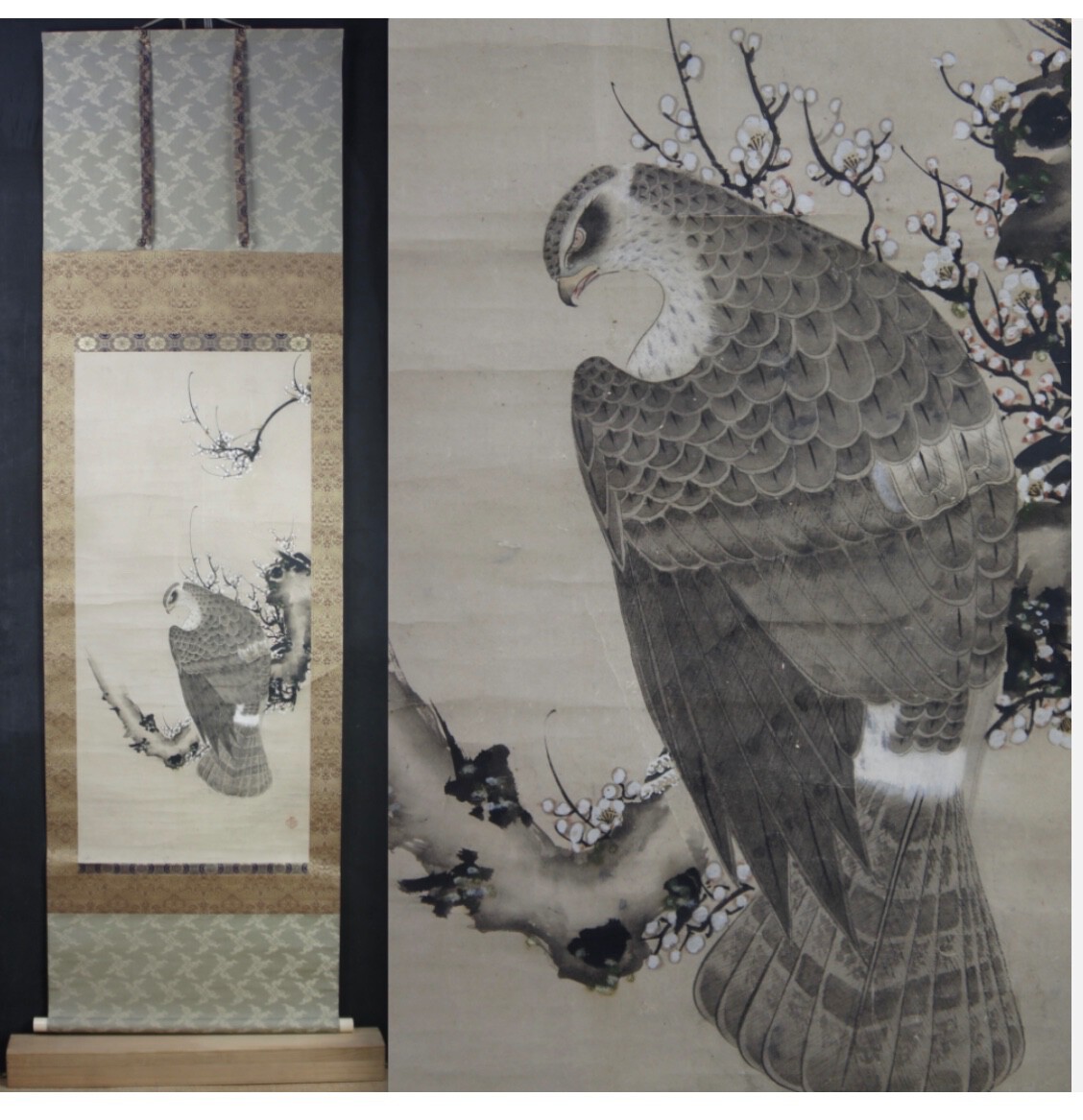
One of my favourite subjects in Japanese Art is the depiction of hawks, falcons and other birds of prey. I recently acquired this pair of large scrolls (from Japan). They appear to carry the seal of Kano Naonobu (1519-1592ish). They are said to be two paintings from a now lost Kano hawk byobu screen that were remounted as scrolls in 1914. Do we have any Kano knowledge on our Forum? Does that provenance seem possible? Certainly the paintings are older than the scroll mountings and they look “right” to me but really, I bought them because I absolutely love them. Any opinions anyone? Many thanks.
 1 point
 -
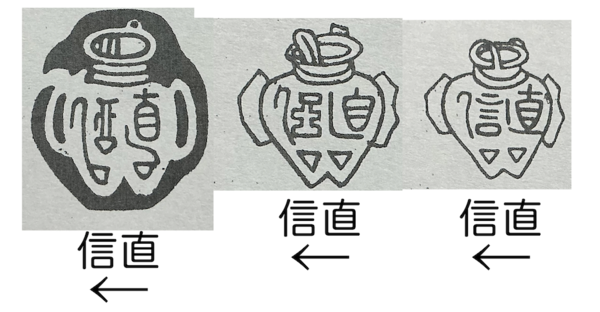
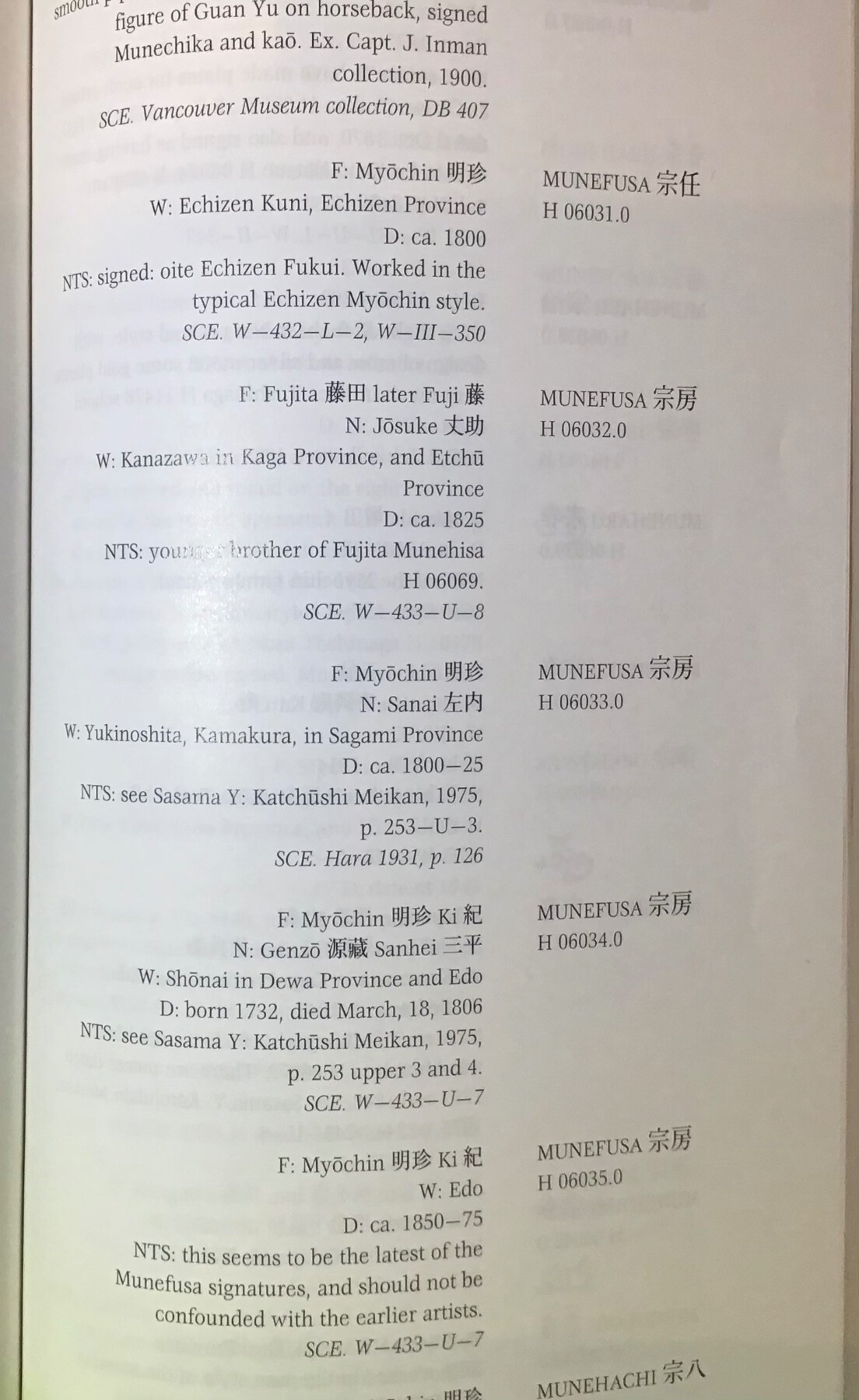
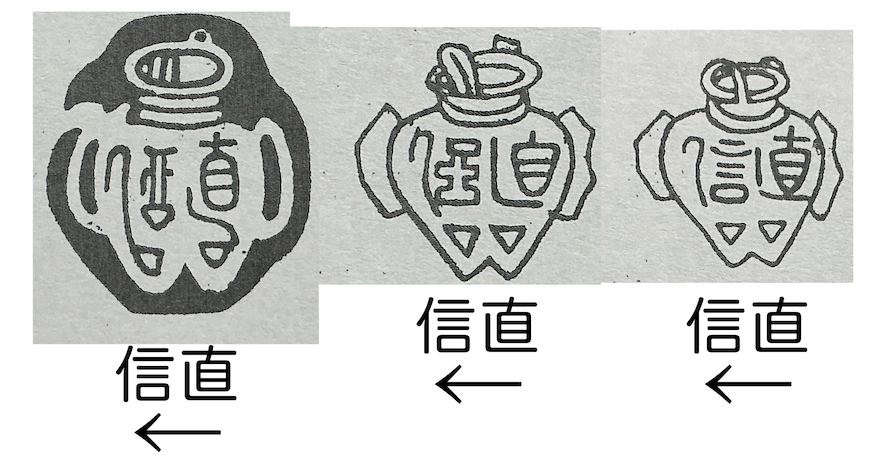
Returning to Shōei… Unlike his father, 元信Motonobu, Shōei is said to have been gentle and kind, and it’s often noted that this quality is reflected in his paintings. His son was the famous Kanō Eitoku狩野永徳, and I believe that Eitoku’s success was also supported by Shōei. I almost never get a chance to talk about Shōei, so I was really happy to be able to write about him here this time. Thank you very much. The inscription appears as follows: Credit:日本書画落款印譜 Maar-sha Publishing Co., Ltd.
 1 point
 -
Hello, such beautiful paintings! If they’re by 直信 (狩野松栄Shōei), that makes them even more special. I like Shōei, so this part especially stood out to me →「two paintings from a now lost Kano hawk byobu screen that were remounted as scrolls in 1914. 」 I wonder if these might have been dispersed during Haibutsu Kishaku廃仏毀釈 (the anti-Buddhist movement) in the early Meiji period? I looked into where the “花鳥図Flower-and-Bird” paintings by Shōei that are still known today are currently housed. As a result, I found information suggesting that the “四季花鳥図Four Seasons Flower-and-Bird Paintings” once at 大徳寺瑞峯院Zuihō-in of Daitoku-ji may no longer be extant. The “梅花雄鶏図Plum Blossoms and Rooster” painting that was at 真珠庵Shinju-an, also within Daitoku-ji, is likewise no longer there; however, there seems to be a view that a pair of six-panel folding screens now in the Museum of Fine Arts, Boston may in fact be that work. ----- Incidentally, Zuihō-in of Daitoku-ji was founded in 1535 (天文Tenbun 4) by 大友宗麟 Ōtomo Sōrin as the family temple of the Ōtomo clan. Sōrin himself later converted to Christianity, and it is said that a painting depicting his meeting with missionaries is held in Germany (in the Schönborn Collection at Weissenstein Castle). However, Anthony van Dyck, the court painter to the English royal family who created this work, never traveled to Japan, so Sōrin’s likeness was imagined. It’s a bit disappointing—had van Dyck visited Japan, we might have been left with a truly lifelike oil portrait of him. Ōita City.Ōtomo Sōrin.pdf
 1 point
 -
The only Yoshimochis of note are Fukuoka Ichimonji so it doesn't need to be qualified here. If they thought the mei was legit but belonged to some other, less well-known Yoshimochi, then they would add a qualifier in brackets.1 point
-
It was sold for 4.2 million yen, or roughly $26,000.1 point
-
(When artists of the Kanō school depicted Mongolians, they often showed scenes of polo played on horseback or hunting scenes.) Canon Tsuzuri Project/韃靼人狩猟・打毬図屏風 伝 狩野宗秀 Tatars Playing Polo and Hunting Attributed to Kanō Sōshū The reasons I think the figures depicted are Mongolian people are that the clothing appears Mongolian in style, the bows and arrows are short and have distinctive shapes, and it depicts a mounted archery technique typical of nomadic peoples, where the rider turns backward while shooting. Watching the video below makes it easy to understand the differences in archery techniques between Japan and Mongolia. (This is a yabusame 流鏑馬event held at a shrine in Fukuoka Prefecture, where members of the Mongolian Horseback Archery Association were invited.) youtube / a yabusame 流鏑馬1 point
-
There are 3 main ways of reliably creating the dark pupil. 1. a piece of black horn is inlaid into the front of the eye and then polished down…..most common. 90%+ 2. a piece of dark horn is inlaid into the back of the eye….rarely done as the effect is not as crisp 3. a hollow is created on the back of the eye and filled with black lacquer or similar…quicker thus cheaper A even cheaper method is simply to stain or lacquer the pupil onto the front of the eye but this obviously wears off very quickly when handled. They eye in question is either 2 or 3 above imo I think we can discount any possibility of injections! As for how they are securely fitted…..most are simply glued in with a variety of adhesives. Some have a deep tapered reverse to give greater surface area adhesion. Raising up a metal lip after insertion would likely damage the horn so that’s unlikely and I have never seen it done on organic material, only on other metal inlays Just for info…..the horn used can be of varying transparency depending on the desired effect….from virtually clear to dark amber to black. In addition to horn a variety of shell (mother of pearl) can be used for the eyes ……golden lip pearl, black lip pearl, bronze lip pearl etc …..all showing a range of stunning iridescent colours when finely polished. Often mistakenly described as “gem stones”.1 point
-
Still, a very nice wartime blade. The leather saya cover is missing, which is not uncommon on the WW2 bring back swords. I have a couple in similar condition. The leather cover just didn't last, or someone cut it off to see what was underneath ( usually just a simple wooden saya) The cost of a professional polish plus a new habaki and shirasaya is probably more than the blade itself is worth. But it's still an original Japanese Officer's sword from WW2, and it has a value all of it's own for that. So, kind of up to you if it's worth the investment.1 point


.jpeg.b02f6bcf81b2482f8efe6639165a897f.jpeg)
.jpeg.31e7f8b7743d6c1dd5aee1e13b477c47.jpeg)
.jpeg.ce9576d012c9a6dc0452f32150659116.jpeg)
.jpeg.a7c9a34f2b6a8ed14303bb498b8b01b4.jpeg)

.jpeg.3ad2784aa39c85cabfbd801f87e89c73.jpeg)

















.thumb.png.4c5df79fec171b2dc4a23af38e280a4d.png)








This leaderboard is set to Johannesburg/GMT+02:00