
Leaderboard



Popular Content
Showing content with the highest reputation on 02/12/2026 in all areas
-
I have been advised of the passing of Brian Klingbile (Username Winchester) by his wife. She had this to say: "This is Brian's wife, Sarah.....Unfortunately, Brian has passed away. Thank you so much for providing such a wonderful forum. Brian was new to collecting, and was excited not only to connect with others with similar passions, but to have access to learning opportunities for his new passion. What you have here is amazing, and I wanted to let you know that you make a positive impact on people's lives even if you don't hear this on a regular basis. Thank you for being so welcoming to Brian. I have attached Brian's obituary in case you or anyone else was interested in it. I don't know who Brian all connected with (or to what level), so I will leave announcing or contacting others up to you. I am comfortable with this information being shared. https://www.zimmerfuneralhome.com/obituaries/brian-klingbile " Our condolences go out to those who knew him, may he RIP.11 points
-
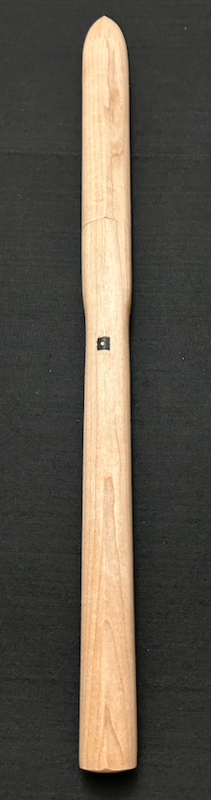
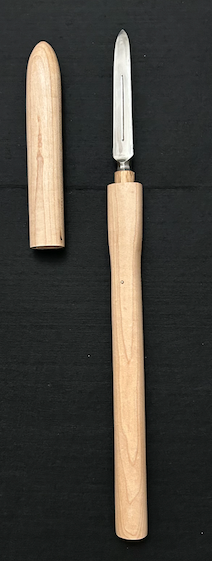
Hello fellow woodworkers: I wanted to share this shirasaya I made for a naked Monju Kanesada yari. Mostly because of the saya's unusual shape. The shape was inspired by an existing shirasaya I have on a Inoue Shinkai yari. The wood is aged (i.e., very low to no VOC's left from the tannic acid) hard maple with an ebony inset for the mekugi. What makes it particularly difficult to manufacture are the number of compound angles. There is a central peaked rib that runs the length of saya but only on the top, which makes it easier to index which way the top aligns to the bottom half. From the rib, the width is a flattened oval, widening out just after the mekugi ana to accomodate the extra width on the blade section and rounded on the back side. The rear end is also dome-shaped and the tip is sort of boat or airplane shaped. All of which brings me to the challenging part - this must all be done by hand. No power tools involved (with the exception of drilling the mekugiana to keep it straight). Just a kanna (Japanese block plane), some different sized oire nomi (chisels), a bench scraper, and some files. The finish is a standard woodworkers finish of boiled linseed oil followed by carnuba paste wax. Thanks to the various bench scrapers, the wood is extremely smooth and tactile. The Japanese do not usually use sandpaper so I didn't either. It's tough not to hold it! If you have any questions on the process, I will be happy to answer. John C.



 9 points
 -
Well, feel i have to add something positive here as folks seem keen on pulling Aoi apart. All i will say (in my experience), there are no special saint type dealers in this game. Every dealer will have sold something to someone that has ******them off. Its how they respond that makes the difference. My experience with Tsuruta San has been 95% positive, he accepted a sword back that i was not happy with, without making a big song and dance about it. Antiques in general is a minefield. Personally, i think there are far worse dealers to moan about. Lets face it, buying swords online is less than ideal.6 points
-
I didn't know Brian personally, but I had warm regard and I felt a connection, with Winchester. He often popped into my posts with an emoji and he was always understanding and encouraging.....never changed. Maybe (selfishly), he fitted my narrative, I don't know, but for someone I have never met or messaged, I just felt a connection.....he was a real gentleman. Thankyou Sarah for sharing this....thinking of you and Brian's extended family. We will miss him. Rob5 points
-
The Honno-ji Temple Museum DAIHOUDEN (The temple where Oda Nobunaga died), has been hosting an excellent exhibition for the last 8 months entitled "Valuing the Invaluable Symbols of the Warrior Class". This has been an excellent exhibition that saw a large attendance. Here they did something more than just show the sword. They also produced life size Oshigata of the whole sword and displayed this below the sword with explanations so the people visiting the exhibition could compare it directly with the sword so that they knew what they were looking at. Basically like looking through the eyes of a Hon'Ami appraiser. This was a great idea. They also provided the valuation according the Hon'Ami based in Gold Coins of how much each sword was said to be worth at the time in gold pieces and converted this to today's value. They gave only one value but the truth is that there are three values that could have been provided, the Gold Price, the Rice price and the Labour price. The most valuable is the labour price whilst the rice and gold price has not really kept up with inflation. Their price appears to settle somewhere in the middle. For example the Masamune Tanto had a price of 50 pieces in 1639: - In terms of rice this would be worth around 2-3,000,000 yen today. - In terms of gold this would be worth around 20,000,000 yen today. - In terms of labour where 1 ryu was equivalent to roughly one year's wages of a labourer. The this would be worth around 200-300,000,000 yen today. These are what the museum estimated today's value* equivalent would be from lowest to highest: - Hirotsugu Katana: 20 million yen (approx. $133,000) - Enju school Katana (attributed Juyo): 35 million yen (approx. $233,000) - Sekishu Dewa-ju Naotsuna saku Tachi (Juyo Bijutsu): 50 million yen (approx. $330,000) - Hasebe Kunishige Wakizashi (Hon'Ami Kōjō origami): 60 million yen (approx. $400,000) - Rai Kunimitsu Tanto: 80 million yen (approx. $530,000) - Norikuni Tanto (Juyo & Hon'Ami Mitsutada Origami): 100 million yen (approx. $665,000) - Masamune Tanto (Hon'Ami Koon Origami): 100 million yen (approx. $665,000) - Rai Kuniyuki Kodachi: 150 million yen (approx. $1,000,000) - Bizen Osafune Kanemitsu Tachi (Juyo Bijutsu & Hon'Ami Mitsutada Origami): 200 million yen (approx. $1,330,000) - Rai Kunitoshi Tachi (Tokubetsu Juyo & Hon'Ami Kōjō Origami: 300 million yen (approx. $2,000,000) This was very interesting and if correct it again confirms that we are living in the 安刀時代 (Era of the cheap sword). 日本刀の美 made a great video of this exhibition that you can view here and you can read more about it here on from Tamaki Joji Togishi's blog post. *I never attended the exhibition but did a quick google and found only one post but without any photographic evidence I could not corroborate these numbers and I could not find anything else so if you did attend or are going to attend before the exhibition closes this weekend, please confirm or deny these numbers. Thank you.
 4 points
 -
4 points
-
For those who have no idea of what we are talking about... here is an article from 2018 about the craze that started in 2015, such is the popularity of the game that it is still a thing today.4 points
-
One thing i have noticed with them over the years, they always list a gimei. On the opposite side of that scale and why i personally think there are a worse dealers. There are some that make a living from selling non-papered swords with mei and pronouncing through their write-ups that everything is legit. No mention of caution to the unaware buyer, no guarantee to pass Hozen. I could go on about such a dealer but ive made just one point which will suffice for this discussion. Suppose that's where my perspective on such matters come from. As for Aoi, they sell lots of swords and no doubt there will be some from time to time that raise questions, that's up to the buyer to educate themself and ask. At the end of the day. If someone buys a wrong one, who is to blame?. All been said before.3 points
-
As a wild guess, I would suggest “戸田彦左衛門” (Toda Hikozaemon)…3 points
-
The mei reads 備州長舩盛家 - Bishu Osafune Mori'ie.3 points
-
That's absolutely heartbreaking, prayers going out to his wife and family.3 points
-
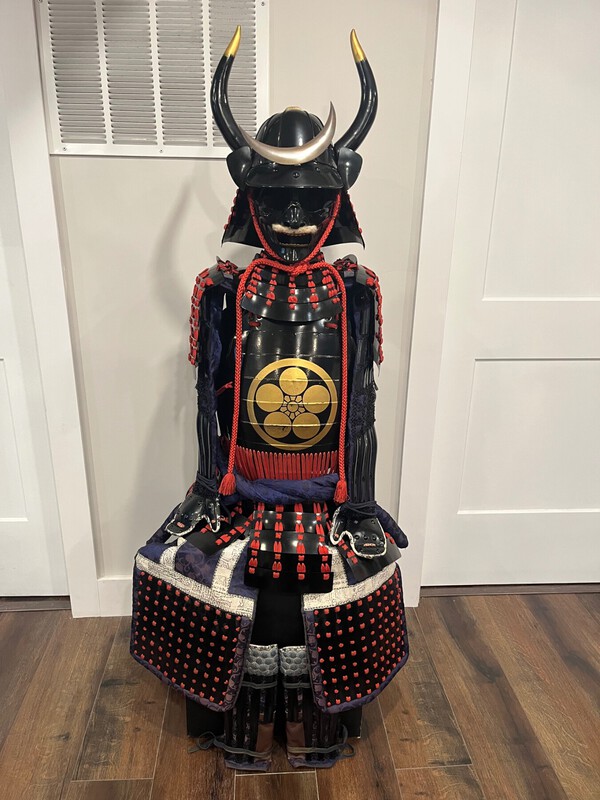
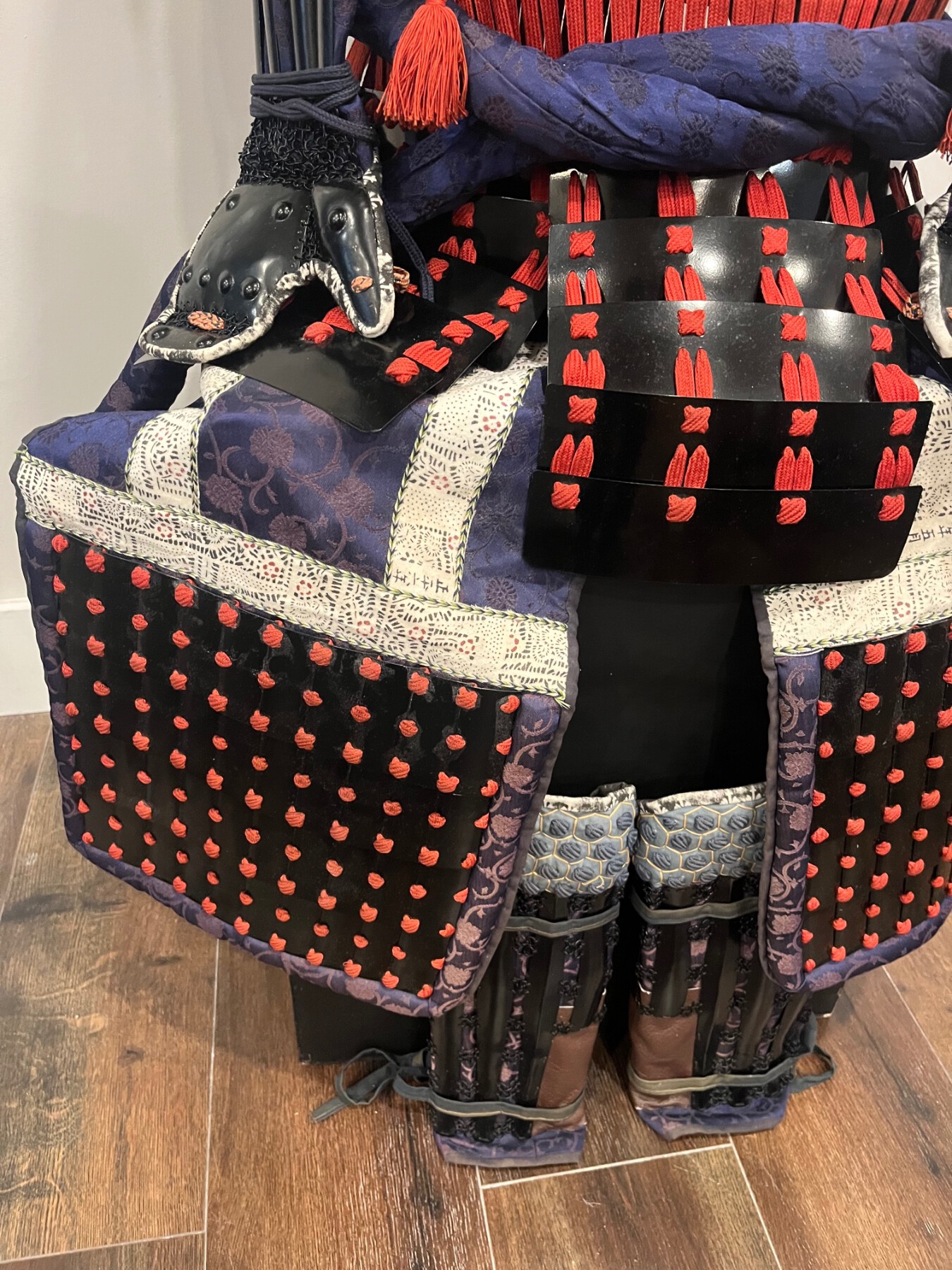
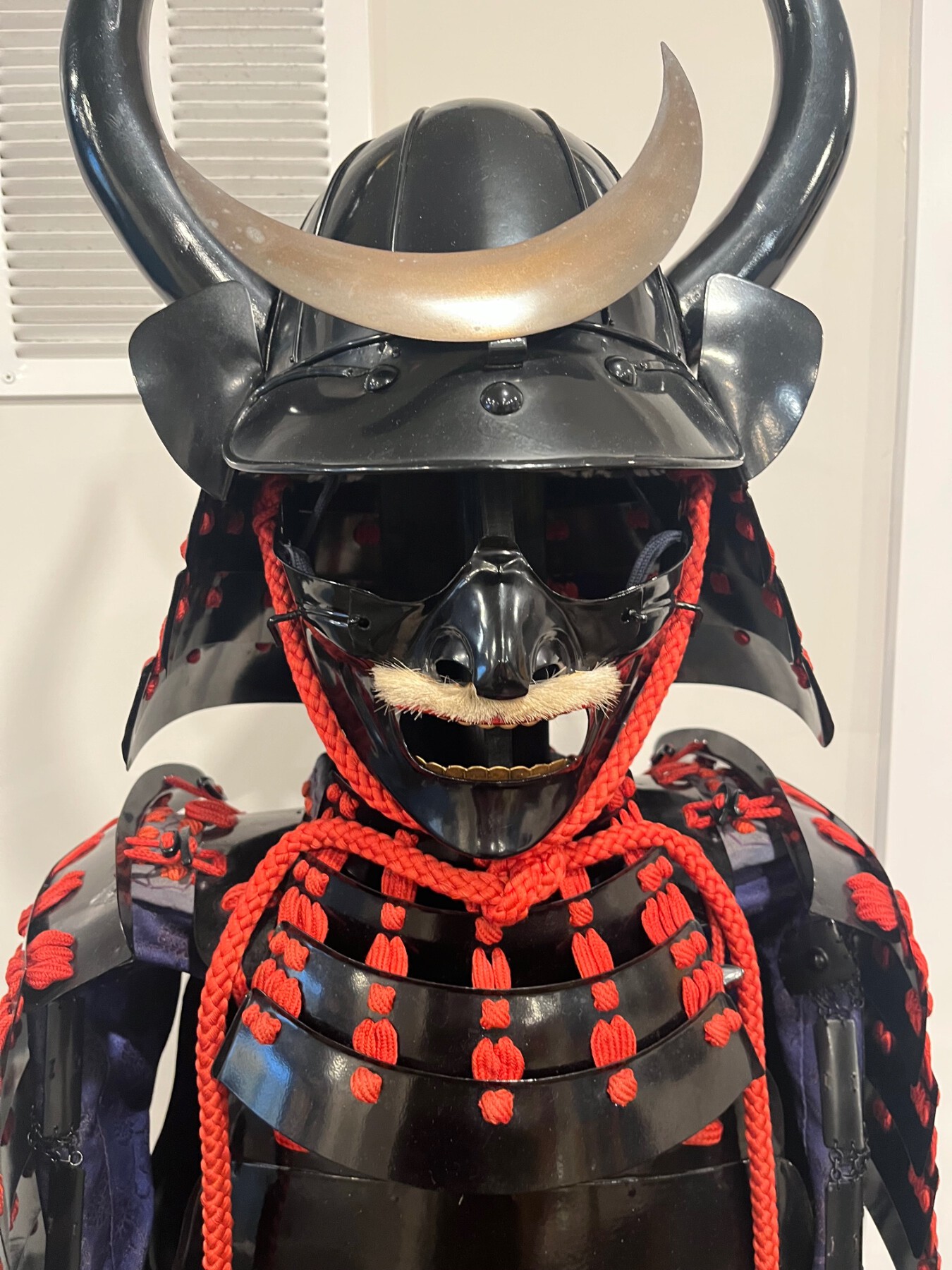
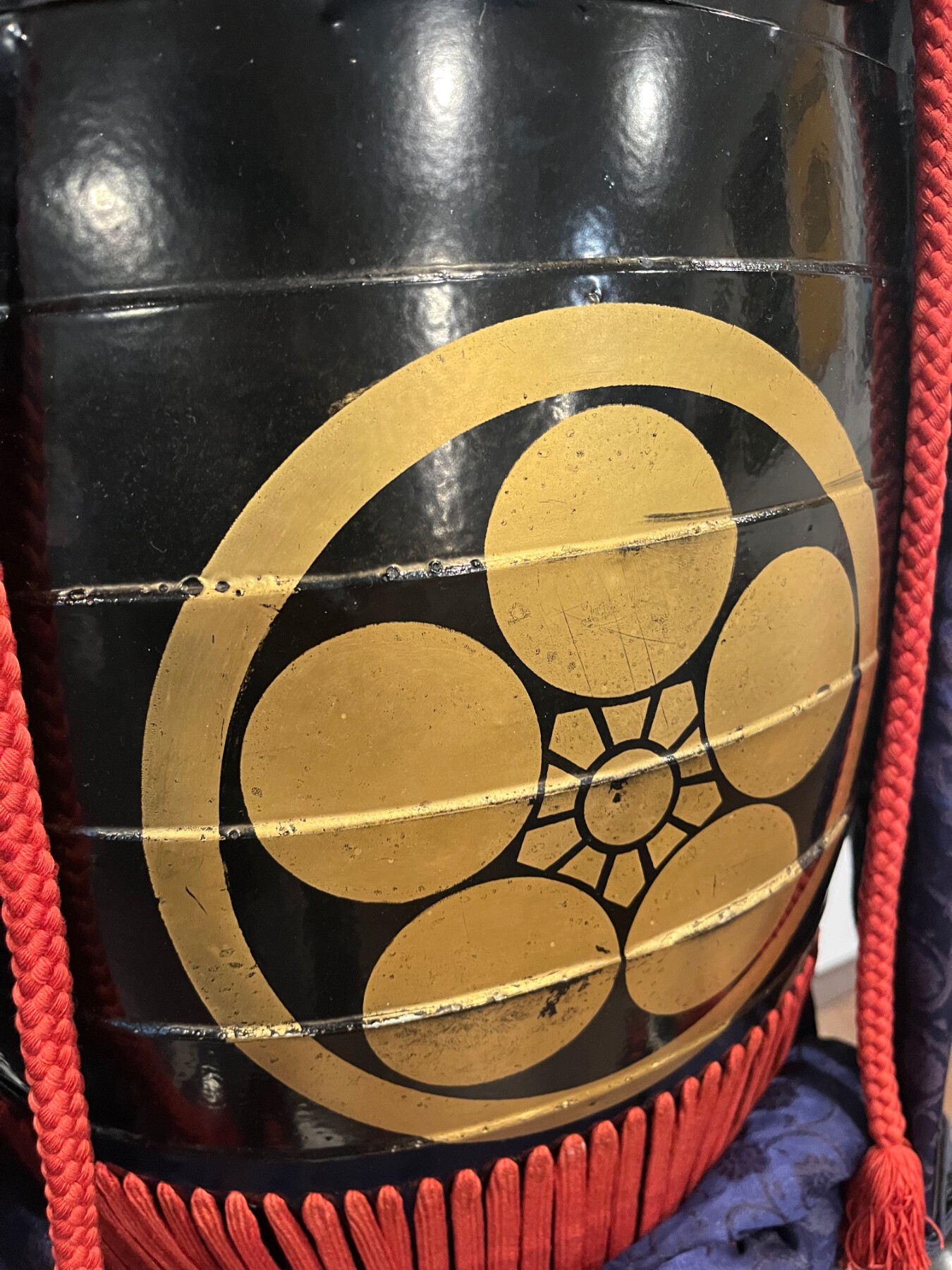
Hi folks! I just got a set of reproduction samurai armor from Japan, claimed as being somewhat old (maybe 70s or so). I was interested in folk’s thoughts on the quality and value of this armor? Best I can tell it is not hardened, happy to answer any other questions if helpful!


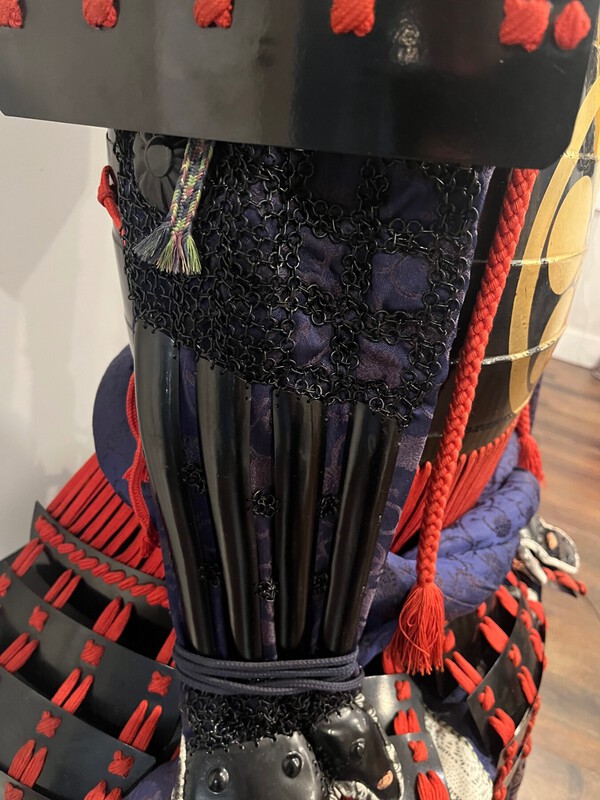 3 points
 -
You can also put some padding into the sleeves (kote) so that they get a more “arm like” shape. Cut two cardboard tubes of about 8-10cm diameter, length normally 20-25cm, and wrap the shin guards (suneate) around. The shoulder guards (sode) are sitting a bit high. That’s probably because the bar of the stand is too long. It should be about 36-38cm… Guess that will enhance your display!3 points
-
While we’re on the topic of ha-machi and mune-machi alignment. Here is a rare glimpse of the machi on a wood handle Variation#8 that displays misalignment. Looks like a seki stamp on the blade, and I think the serial number is 215465, although the eBay photos make it very hard to see.
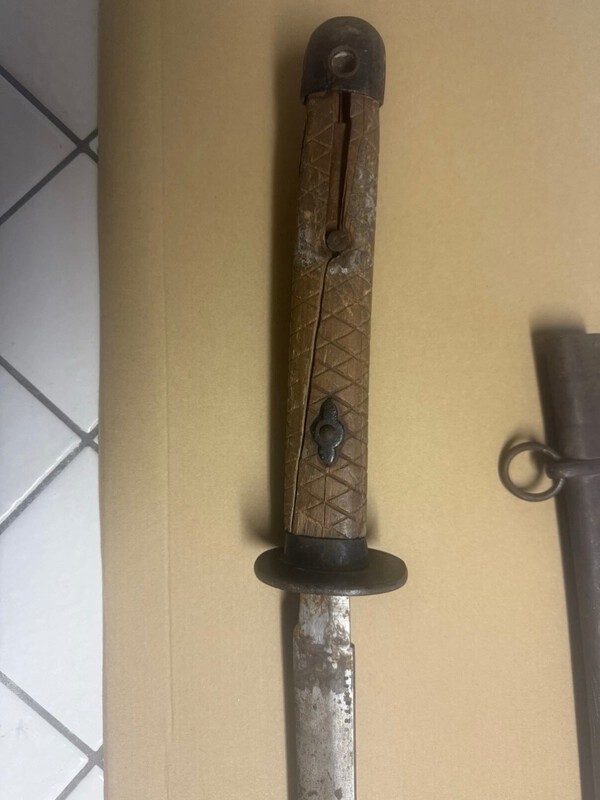
 3 points
 -
As a decoration, why not? And you can learn a lot from the construction since it looks like it closely follows traditional work in many places. Personally I would put a wider pedestal underneath the yoroi-bitsu box just to give the whole thing added height and presence. You might want to add a sword at the side? And I would take the two long cords and tie them behind the neck as a first step in how to correctly tie a shinobi-no-o. A fun journey lies ahead! I feel sure that in due course as your budget allows you will be filled with a desire to collect old parts or even display a genuine old set too.3 points
-
@wakiboy yup!

 3 points
 -
I met Brian at the 2025 Chicago Show. He had an inquisitive interest, a keen eye, and took a good amount of time to talk to me and examine my blades. He was going to buy a blade from me but was distracted by his wife needing him for something. He felt guilty about it and reached out to me after the show to arrange the purchase. We were about to finish the transaction when he found out about some things that changed his priorities. Its sad that I just found out now why those priorities changed. He and I shared an interest in Bungo Den and I think my collection of ken intrigued him. Gone from this world too soon. Rest in peace, friend.2 points
-
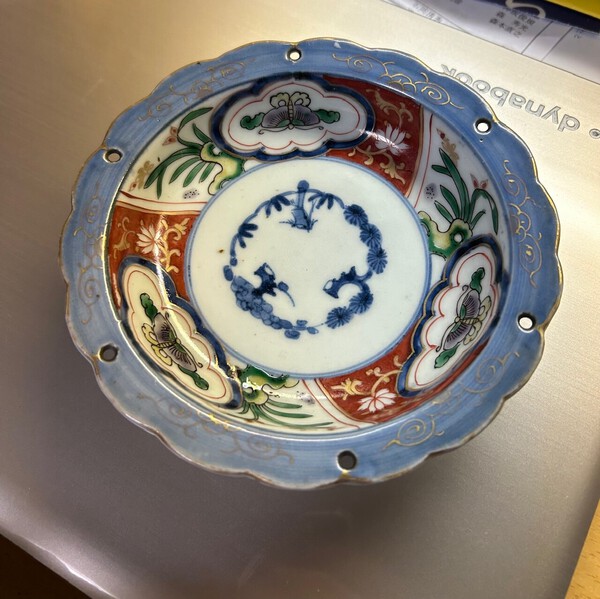
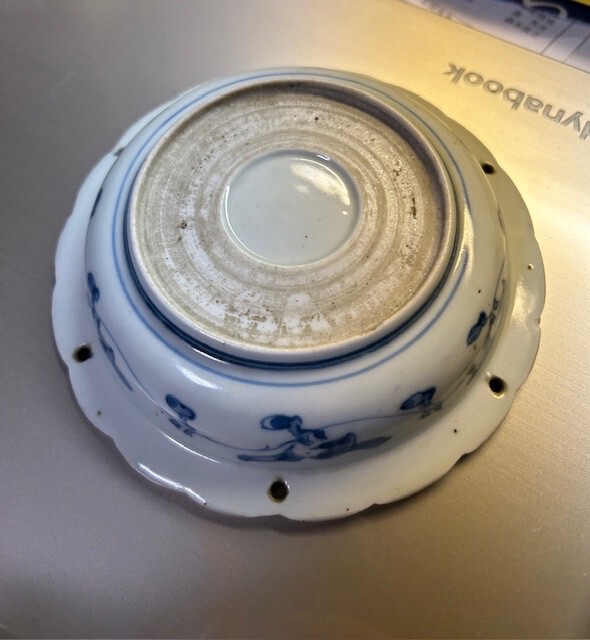
It’s Japanese. Colours are wrong for Chinese. Porcelain body is a bit too “blue”.2 points
-
I should also note that being one of the biggest English-speaking dealers with the highest throughput of merchandise, it's far more likely that you'll encounter "sketchy" seeming deals on their website, simply via the law of averages. I personally have at least a couple of Japanese-language dealer websites where any verbiage they add to a sales listing is to be taken with extreme amounts of salt.2 points
-
Agree with Alex Probably one of 3 dealers I ll ever buy from. Definitely a dealer you have to know what you are looking at and buying but he ll never claim a blade to be something it isnt. Their photos are also one of if not the best. Seen way more sketchy listings from ppl on the forum honestly2 points
-
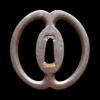
My guess. Its a plant hanger. Pot sits in the bowl which catches runoff. The theme being plants and butterflies sorta supports that theory.2 points
-
Dear Eric, blade is authentic, signed Bishu Osafune Suke...(Sada?), no comment on the validity of the mei but nagasa places the blade in the middle of the Muromachi period. Regards, Giordy2 points
-
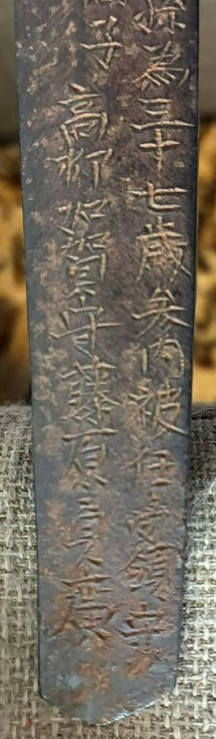
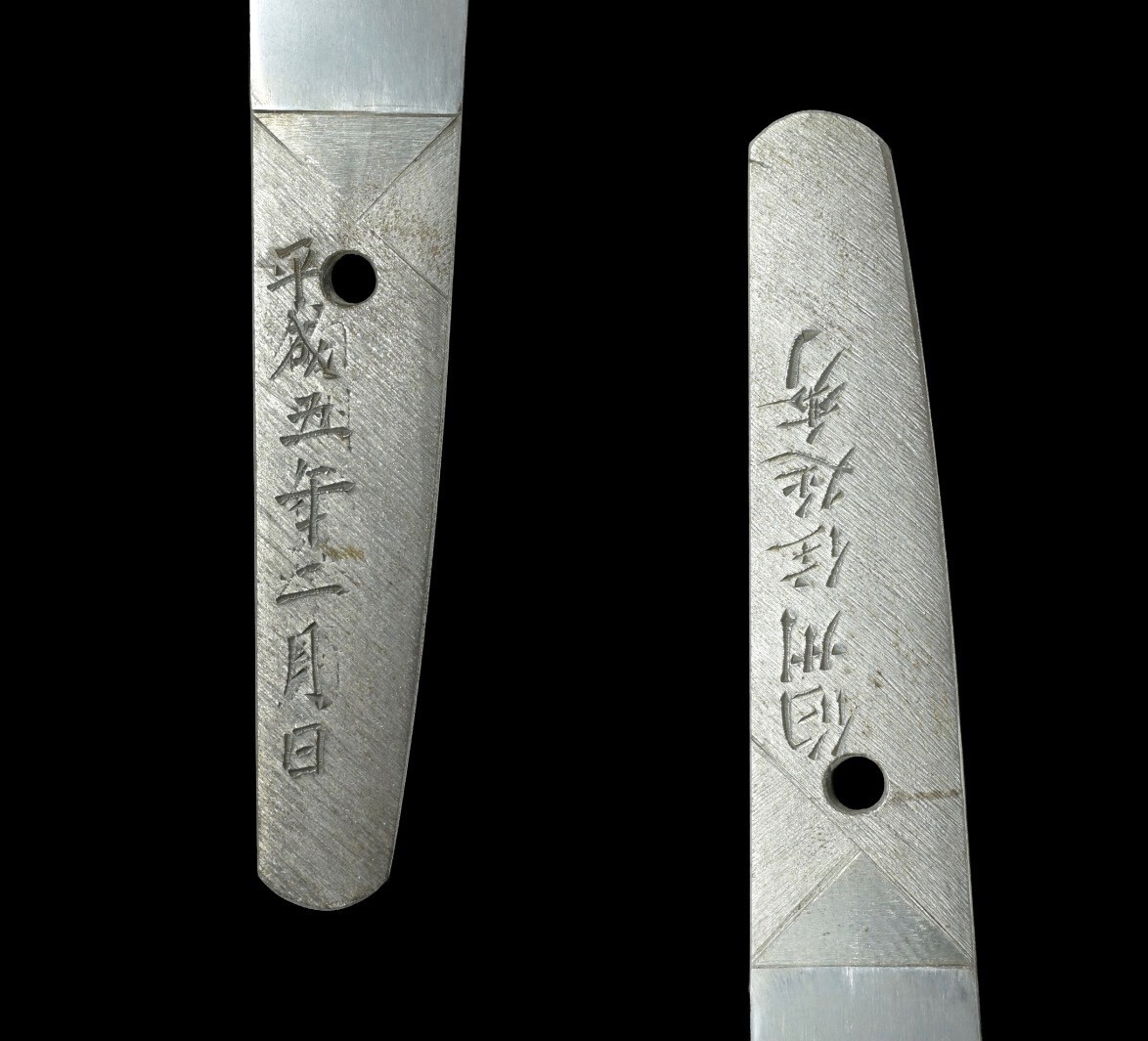
3rd times a charm. Other possibilities besides being a tameshigiri inscription is that it refers to a special occasion or a battle in which the blade participated. I'll let the experts in Japanese clarify the meaning.
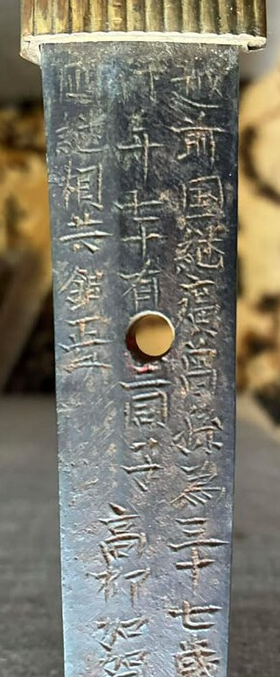
 2 points
 -
You can use a magnet to see which components are steel/iron vs fibreglass, resin or other material. it will help you to know what exactly you have bought. Although new, a lot of work has gone into assembling it. Absolutely nothing wrong with enjoying this as a highly decorative display item (for a fraction of the cost of the Edo equivalent) These armours are usually available in the $1500-2000 range although some are horrendously priced on eBay and misdescribed as Edo or “genuine vintage” (whatever that means) I have recently started to collect armour……it can be rather addictive and is certainly very very challenging as there is so little reliable written information in English (compared to swords or stamps or coins etc🙂) if you get “hooked” and want to progress start with components….masks…Kabuto and exercise extreme caution seeking advice before diving in. Pieces in poor condition can be bought for very little yet can still be interesting. PS……I’m what Bowie would describe as an “absolute beginner”2 points
-
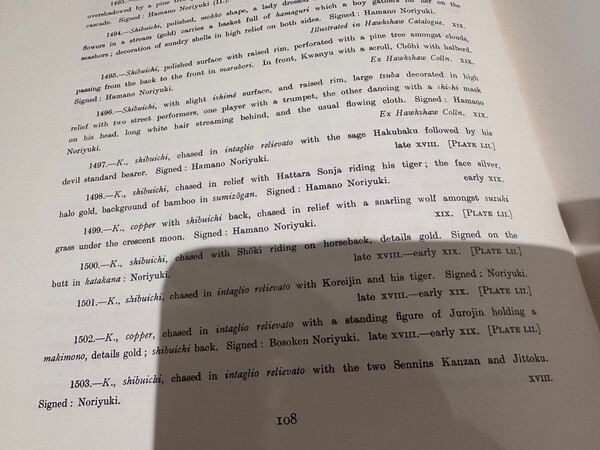
Those are pretty egregious examples. The second one is comical. One also needs to be very careful with papers. A couple of years ago there were 2 'Juyo' blades by Go Yoshihiro and Awataguchi Kuniyasu with altered nakago and hamon to match the NBTHK oshigata from stolen papers. More recently this fake Sadamune. It's a minefield out there.2 points
-
Yes, this would be an unmissable exhibition. A broad range of blades from top makers with a focus on middle Koto period. I'm a little surprised a signed Masamune was only valued at $665K though, but a Juyo mumei Enju is $233K Full size oshigata under the blade is a great idea to inform the casual observer and assist those with some knowledge.2 points
-
Sam: What's interesting is that this could be the genesis of why the Chinese fakes have offset machi. I could imagine them taking apart a type 95 and thinking this is how it is supposed to be done. John C.2 points
-
Steve: I think your method with the foam was fine, just switch out the foam for leather. There is an old weightlifting belt on shopgoodwill that would make a dozen very thick seppa. https://shopgoodwill.com/item/254983331 Just lightly trace a seppa onto the belt using an exacto knife. Then slowly cut through with the exacto knife, which make take several passes. You can then treat the seppa just like wood and sand the edges smooth and even burnish the edges (to smooth and round them) with water and the shaft of a screwdriver. John C.
 2 points
 -
oops I failed with uploading photos, here's the links. https://touken-ranbu.fandom.com/wiki/Aizen_Kunitoshi?file=Aizen.png https://touken-ranbu.fandom.com/wiki/Akashi_Kuniyuki - Kuniyuki looks stylish, wonder if he wore this in Kamakura times?2 points
-
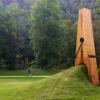
It is... by Tetsuya Noguchi. I will add, that this artist's work has also been exhibited at other serious Sword Museums including Mori Shusui Museum of Art in Toyama. You can find the instagram post of the sculpture's arrival at the British Museum, here.2 points
-
John: The main task is war, so I have to keep things more or less mobile. What I like about swords and other blades is that I could have some projects and working on projects serves like a safety valve. It's like returning to my pre-war workshop. But, unlike motorcycle projects, sword projects are much more mobile. When it comes to printers I chose the Flsun SuperRacer. I bought the first one in 2023 and it is still working, even as these printers (like any machinery) have to be maintained. As for the filament, I use CoPET/PETG locally manufactured in Ukraine. It is most suitable for the main task of my printers. Kind regards, Nazar2 points
-
If the date were authentic then around 624 years old, however my impression is that the mei is not an authentic example of Oei Bizen Yasumitsu. https://www.google.com/search?sca_esv=51f7e736cc3ae313&rlz=1C1YTUH_enUS1164US1164&sxsrf=ANbL-n5ZA1YvSe7fFuacZEAz9Ky50sgU8w:1770829463352&udm=2&fbs=ADc_l-aN0CWEZBOHjofHoaMMDiKpaEWjvZ2Py1XXV8d8KvlI3ppPEReeCOS7s1VbbZz2TLt2sOibMbYx2XAHg-v8xM5VF21PBaI65iLKFQqYKyuNIrDnm7F1EBiwvvxej7VarpUVOsmaAouY6YfTb0P07uvJ1kSkBvJv3ZPqOgqj5jRBD5oez8Cr0DJEYrGkGqbLAnVBWawLvlnnreVGZ3Efk-KXWnq72g&q="備州長船康光"+"応永"&sa=X&ved=2ahUKEwizqvvo9dGSAxUvhIQIHXlgCJMQtKgLegQIExAB&biw=1085&bih=790&dpr=2.52 points
-
As some of you know, I spend a lot of of my retirement time In Japan looking at the auction sites like Yahoo. Everyone, except the most woefully uninformed, knows that a decent level maker without current papers will be sporting a fake signature. However, I'm starting to see a pattern where it looks like nakago are often being reworked before the blades are put on the market. The first example below clearly shows overworked yasurime but you can still see traces of the original signature under the new Kanji. On the second, the signature goes into the fuller in a way that I've never seen before. Best, Hector

 1 point
 -
One of NHK's more recent videos explores the use of Nihonto in Kabuki theatre. It explores the Japanese mindset around swords, how legends influence culture and this space through dramatisation. Nihonto have found a lot of interest through the recent Touken Rabu manga series which has now been brought to life in Kabuki. Animating the sword, makes the people associated with it come alive and makes the art form even more interesting. It was a fascinating watch to get an insight into the spirit of the Nihonto. https://www3.nhk.or.jp/nhkworld/en/shows/3025180/1 point
-
Recently I could not resist buying a small to medium sized Imari bowl. Butterflies and plants. Around the rim are six holes. Assuming that the holes would enable stringing and hanging, what would be the purpose of the bowl, I wonder? Today we might toss the car keys in there. Back then, what? One person suggested a mosquito coil, and I can kind of imagine a set of fire lighting equipment, i.e. striker and flint. A B
 1 point
 -
I'm just a new guy here, but I've had a broad taste for various historical items/collectables over the decades. I always tend to do research on educating myself about a type of item I wish to acquire a couple of years in advance, if not more. That said, when something strikes me and ticks all of my boxes, I will impulse buy. However, that does not mean I don't know exactly what I'm buying. I also tend to buy just one example of an object I want, then move on to something else. In very rare cases, I become an extreme niche collector of a VERY specific form of a thing and over decades will acquire as many as I can of it. Anyway.... Caveat emptor always applies, and most everything has a variation of a compromise, even if slight, unless you have unlimited funds AND patience. I knew about a decade ago that I one day wanted a Sengoku period nihonto. Over time, casually researching, I found myself drawn to a certain style of hamon, and jihada especially. Then via more in-depth research, I found which regions and schools and in what time periods I would narrow my search to. After this, I compiled a list of dealers/websites to monitor. Over time, I noticed trends and browsed posts online about them. All of that to say, I believe a buyer should always do their due diligence (or hire an expert curator to acquire it for them) so that they can identify attributes of an item from all available sources (written, pictorial, documentation, etc.), often contacting a seller to request additional info due to gaps they may perceive in an ad/auction/etc. It's already been said in this thread that simply over time and volume, most sellers will exhibit patterns in their listing details and feedback. In the end, it comes down to the buyer's education and the seller's integrity, should there be an issue. I made a purchase almost 5 weeks ago from Aoi, and thus far, I've found the seller to be extremely responsive, professional, and accommodating. I found the listing details and images in my swords case, to have been comprehensive enough for me to make the purchase without further inquiry. I more or less knew exactly what I was buying (signed, dated, NBTHK, condition, etc.) and anything else was just a bonus. In my case, I found the koshirae (particularly the tsuka and tsuba) to be non-offensive and complimentary. The saya didn't even matter to me at all. When the sword arrives, I expect it will be just as shown, but if there is a problem for any reason, I'm also confident this seller will not "ghost" me if I reach out with one based on our correspondence thus far and having not seen any reports of this occurring to others. Which is good enough for me, what more could you ask of a business? Of course, there are always people who will buy whatever, totally uninformed, simply based on desire in the moment and at face-value of what a listing states (truth, lies, omissions, and all - just trust me bruh). More often than not, those people are totally happy with what they receive and never think twice about it. Mostly because they just don't care or sweat the details like most of us do. At the end of the day, no one is twisting your wrist to buy anything you don't have the warm fuzzies over. If you spot something that feels off, trust your instincts and move on. - But keep in mind, even the most terrible seller could one day come across exactly what you are looking for, then what will you do....1 point
-
Quite a puzzle. Never seen one. Hanging plant pot is logical although I would expect the exterior to be more heavily decorated as (depending on height of suspension) it would be easily seen. Possibly a hanging censer? Dunno.1 point
-
Away from books, but the mei does seem off.1 point
-
Yet another article in the mainstream media, getting the word out to the unwashed masses. https://www.bbc.com/culture/article/20260210-the-true-story-of-japans-mysterious-samurai There's no doubting the effort to encourage inclusivity referring to historical female samurai characters like Tomoe Gozen. "A Ukiyo-e print from 1852 shows one of these women – Tomoe Gozen, wife of a general of the Minamoto clan. It shows her at the Battle of Awazu in 1184, where she was said to have tracked down the fearsome warrior Hachirō Morishige, knocked him off his horse, and twisted off his head with her bare hands."1 point
-
Gone too soon. I was very familiar with the name and photo associated with the account, although our areas of interest didn't overlap. But he was clearly passionate about his hobbies and that enthusiasm affected those close to him, as demonstrated by his widow reaching out at this very difficult time. His last contribution was in Jan so this must have happened very quickly. Condolences to his friends and family.1 point
-
I remember seeing the handle name Winchester, but had no direct contact as far as I can remember. So brave of his wife and parents, and so much is left unsaid...1 point
-
I didn't realise mukansa were also being targeted but I suppose it makes sense if someone with a chisel is trying to make a quick buck. 😳 On my Yahoo travels today, I also came across a Kiyomaru and a Chikuzen no Sa. Must be my lucky day! 😬

 1 point
 -
untilNagoya Sword Museum will be hosting it's very first exhibition of the now world famous tachi MIKAZUKI KANEMITSU that was purchased at Sotherby's from the Paul L. Davidson collection on the 25th March 2025 for an undisclosed amount via silent auction. This exhibition will only feature Bizen Swords showcasing the brilliant works of sword smiths active in Bizen Province (present-day Okayama Prefecture). There are going to be a proverbial festival of swords on display, see here. This is probably one of the most anticipated Nihonto exhibitions of the year. Prices: Adult: 1,200 yen Senior (65 years and older): 1,000 yen University: 500 yen Students: 300 yen Disabilities: Free For more information click here.1 point
-
Thanks for the reply. It looks good, worth the extra effort. (I've seen other attempts around the world to make shirasaya that for various reasons just look wrong!)1 point
-
Honoki is much easier to work with. Almost as light as balsa (hence the light weight of shirasaya). It also tends to have long straight grain, which again is perfect for shirasaya. Maple is much harder, denser, and heavier. And as a consequence, much harder to carve. I had to stop about every 10 minutes and re-sharpen the tools. But the upside is that hard maple doesn't dent as easily. In any case, honoki is nearly impossible to get here in southern California. My local wood suppliers didn't even have American magnolia. I just happen to have some left over maple from another project so I used that because of the grain and color. John C.1 point
-
I dont think this sword was made in the thousands. I think it was likely made maybe a few at a time, depending on who was selling them. I cant imagine this particular design being a big seller to the point where they needed volume. As for the price, someone said you didnt get ripped off.....I would agree to the extent that "ripped off" is more a feeling than a value. I would simply say that for the same $100, you could have procured a new mass produced blade made in china, but manufactured from actual carbon steel and mounted more appealingly. At the end of the day though, if you are pleased with how it looks on your wall......thats all that really matters.1 point
-
Don't mind you budging in here at all. Great insight into culture. Yes, I have read the reports of strong interest from girls at sword exhibitions. If the boys were smart they would go hang out at the latest Rai and Awataguchi exhibition dressed like a Token Rabu character.1 point
-
Hope you don't mind me budging in here Brett Touken Rabu is such a odd sight. I've followed a large amount of Nihonto based accounts on Twitter, and man. It really almost all revolves young women in Japan obsessed with, Awataguchi and Rai works depending on how handsome the game designers made them out to be. (Token Rabu also has a videogame adaption that is immensely popular, pretty sure Darcy wrote about this in his "Touken Girls" article. I'm afraid to admit I may know more about the characters than the actual swords.. but hey, those girls have very good photography skills when it comes to finding the source of their sword crush. (Yes they call it that) I'll attach some photos cause it is seriously funny, these girls really keep museums popped open and busy. And their community had put in major efforts to fundraise for sword restorations etc. Rai Kunitoshi looks a bit different.. then what I imagined.1 point
-
Nakahara Nantenbo (1839-1925), Buddhist name Toju Zenchu (Complete Devotion), was in the last 17 years of his life the Exalted Master of the main temple of Moyoshin-ji of the Rinzai sect. The inscription is the second half of the quatrain traditionally attributed to the First Patriarch of Ch'an known as Daruma, who brought Buddhism from India to China: It's simple: pointing directly at mind. There, (jikishi ninshin 直指人心) seeing original-nature, you become Buddha (kenshō jōbutsu 見性成佛) Of course kenshō is the Japanese Zen phrase for enlightenment which resides within us. That is perhaps the major distinction between the "prayer" and "meditation" type of spirituality. In the former, the dialogue is directed within in order to awaken the already enlightened original-nature/true Self. In the latter, the dialogue is directed outward towards a deity. Suzuki and other Japanese intellectuals introduced Zen to the West as a philosophy in order to cater to the Western European tradition. In truth, if you visit a Zen monastery in Japan, you will find a deep and profound practice of spirituality (God within) that is indistinguishable from that of a Catholic Trappist Monastery. This depiction of Daruma is one of my favorites--a testament to Nantenbo's irreverence and Zen humor. I can't quite imagine an artist during the Italian Renaissance producing any form of iconography that portrays one of the disciples of Jesus Christ or of a Catholic saints in this manner.The work was done when he was age 86 (the last year of his long life). Translation: David Hinton, The Blue-Cliff Record, Shambala Publications, Inc (2024), pg. 226
 1 point
 -
Leather is the easiest to fake, seen sooo many fake swords with what looks like 80 year old leather. Wet molded and aged a bit, and it looks ancient. I suspect they have people who do just that all day. Some fake combat covers look better than the real thing. I'm guessing labour and materials are so cheap there, that it means nothing to do a half decent job. Either way, your next one will be better. But it's vital to look at some real ones, then the fakes become very very obvious.1 point

























This leaderboard is set to Johannesburg/GMT+02:00