
Leaderboard


Popular Content
Showing content with the highest reputation on 01/03/2026 in all areas
-
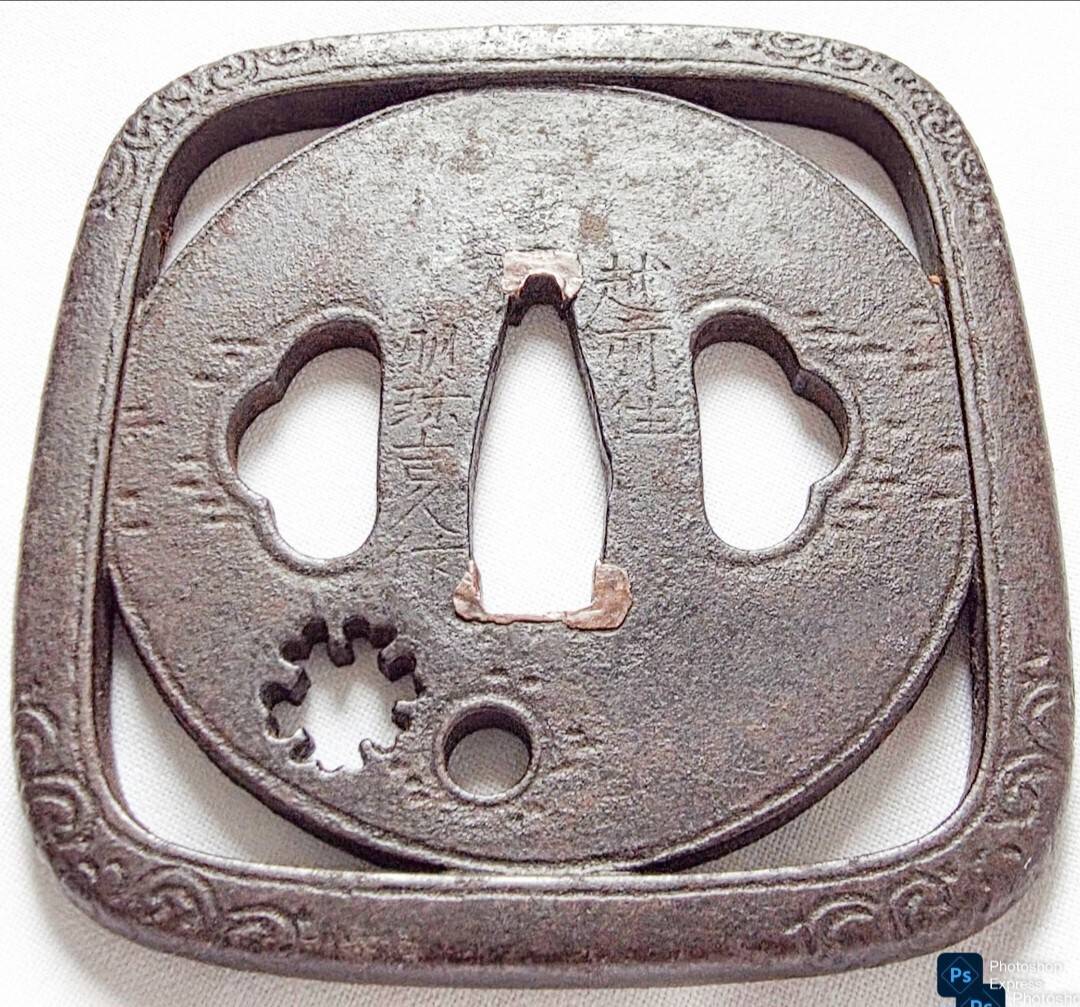
Damon I have seen a few "collaborative" decorated tsuba - But not signed in this way. The ones I have seen have had inlay work with a signed plaque beside each piece of inlay. Would you believe there is a collaboration of SEVEN artist on one tsuba? Walters Art Museum 51.410 https://art.thewalters.org/object/51.410/ There was another collaborative tsuba here: https://www.sothebys.com/en/auctions/ecatalogue/2005/Japanese-and-korean-works-of-art-l05860/lot.852.html4 points
-
Honestly, considering the clumsy writing of 藤原, I thought the third kanji was a poor attempt at 兼. The last one could well be a partial 是, or a partial 恒.4 points
-
Another interesting sword at the Nihontocraft website. Kotani Takenori (Yasunori) Yasukuni Shrine Tosho Special Order at the request of Vice Admiral Jinichi Kusaka, Commander of the 11th Air Fleet and Commander of the Southeast Area Fleet. October, 1942 https://nihontocraft.com/Takenori_Yasunori_Tachi.html4 points
-
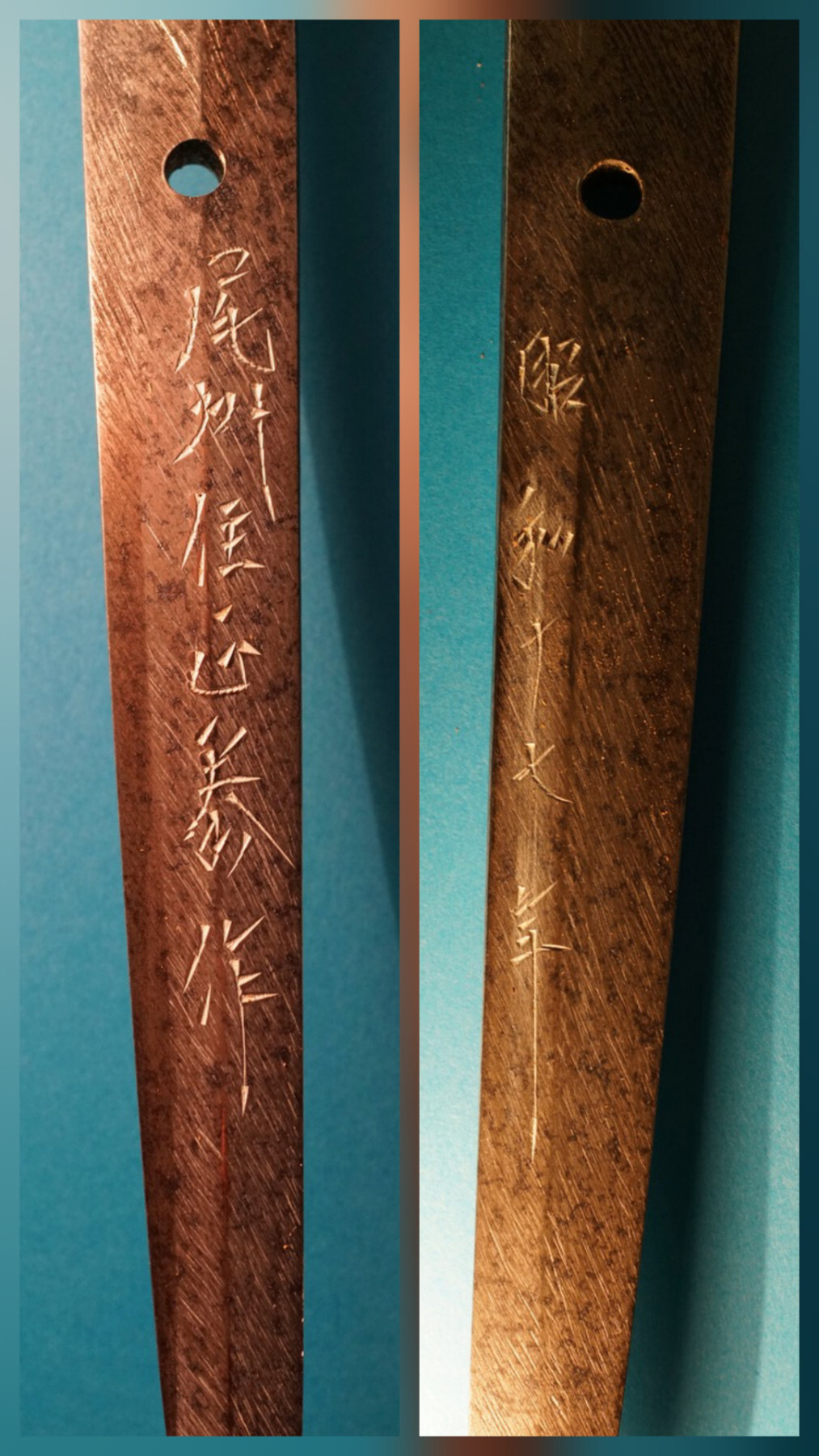
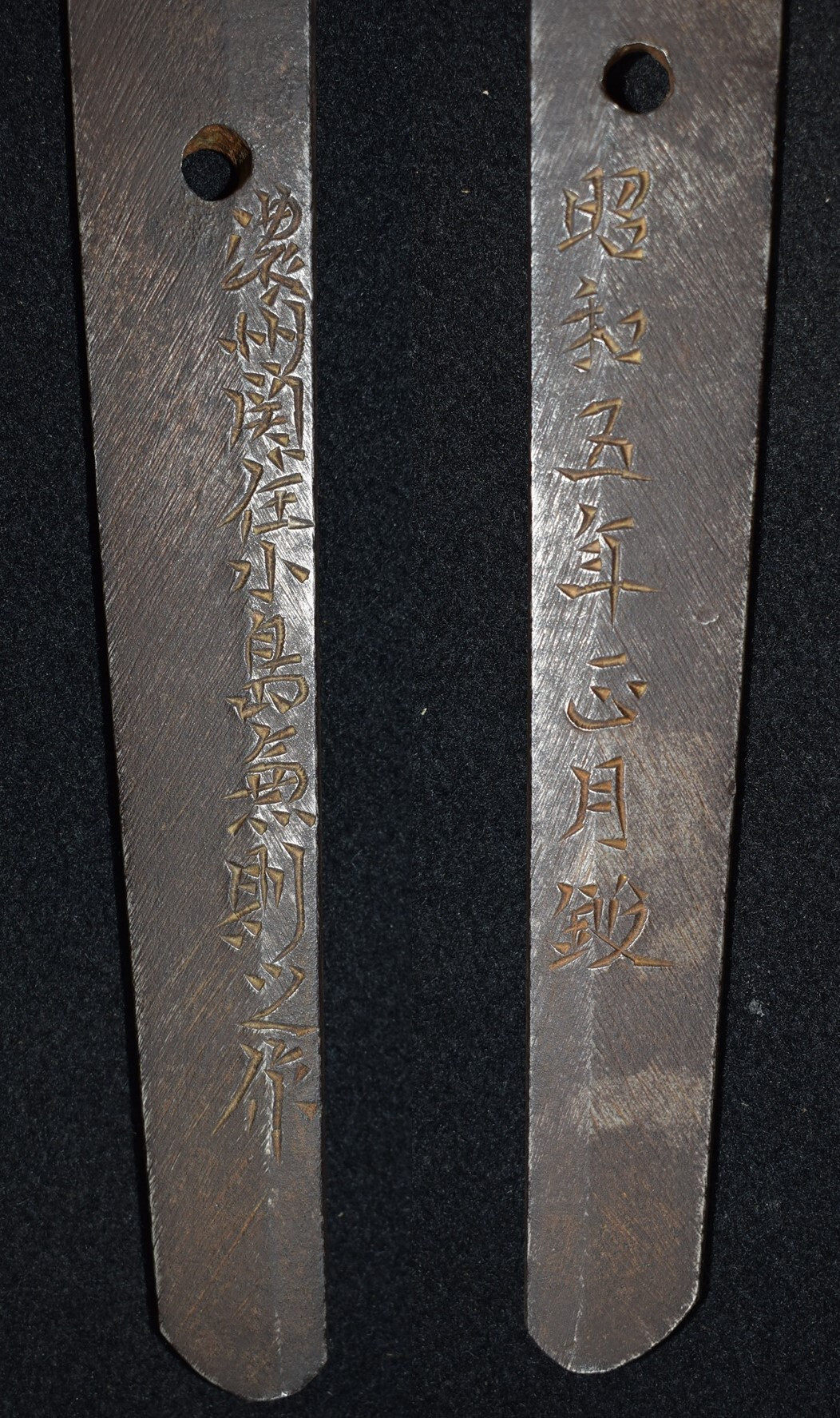
Bishu ju Masayasu saku, dated 1942. https://www.google.com/search?q=mano+masayasu+site%3Amilitaria.co.za&rlz=1C1YTUH_enUS1164US1164&oq=mano+masayasu+site%3Amilitaria.co.za&gs_lcrp=EgZjaHJvbWUyBggAEEUYOTIHCAEQIRiPAjIHCAIQIRiPAjIHCAMQIRiPAtIBCDYwNDVqMGo3qAIAsAIA&sourceid=chrome&ie=UTF-84 points
-
I'm considering updating the forum to the latest version, which is a complete revamp of the current software, and has been in development for a number of years. I'm currently trying to raise the $600+ that would be needed to get someone to assist, as it is a huge update with lots of new features and benefits. Frankly, we'll have to do it eventually anyways, as this version 4 won't be supported forever, and it will allow us to improve a lot of things. That aside, I don't have a date yet when we will do it. But there is one thing that I need to warn all members about. Most forums nowadays, across most platforms, are moving away from logging in using your username. This is because usernames are visible to everyone, and it is a security risk when hackers etc use various methods to run common passwords etc. The modern convention is to have everyone log in with their registered email address, and their usual password. This is because emails are not visible and are far more secure. So I am putting this out there now, so that people can start transitioning from logging in using their username, to logging in with their email address. YES...I know how many people can't remember their emails they used, or have changed it by now. Hence why I'm giving everyone plenty of warning to see what your email is here, so you can use to to login. Or update it if you like. Your forum email address is in your profile. You can find it here: https://www.militaria.co.za/nmb/settings/ Make sure you know what it is, and probably best to make sure you know what your password is, or reset it if you don't. For now, you can log in with your username OR your email address. But eventually that username won't be a login method. Your username will display as it does currently, no changes there So please start transitioning over, and post here if you have any questions.3 points
-
Sword is not fake, but the description and inscription are fake enough that I think this one deserves a place here.3 points
-
Hi Nick, What Ray said, and here you will find care & cleaning, which you should read twice. https://nbthk-ab2.org/sword-characteristics/ Grey And if you have a bunch of questions and would appreciate talking with someone who is not an authority but has been at this for 40 years and won't try to get you to sell the sword to me, feel free to call sometime. Grey 218-340-1001 US central time3 points
-
It is possible the next kanji is Tsune. Bishu Osafune Tsune__. Several smiths used this kanji including Tsunehiro and Tsunenao. https://nihontoclub.com/view/smiths/meisearch?type=All&mei_op=contains&mei=備前長船恒3 points
-
I replied to you on reddit. My comment there is repeated below. Wonderful find. This appears to be a Nanbokucho period or earlier tachi, signed Bishu Osafune __ (the remainder of the inscription is not readable in the photos, however please do not do anything at all to try to improve the visibility of the inscription). There may have been a date on the other side of the nakago, not presently readable. Do not try to remove rust on the nakago (tang), or to clean or polish the blade in any way. It has every indication of being a valuable sword. Best regards, Ray3 points
-
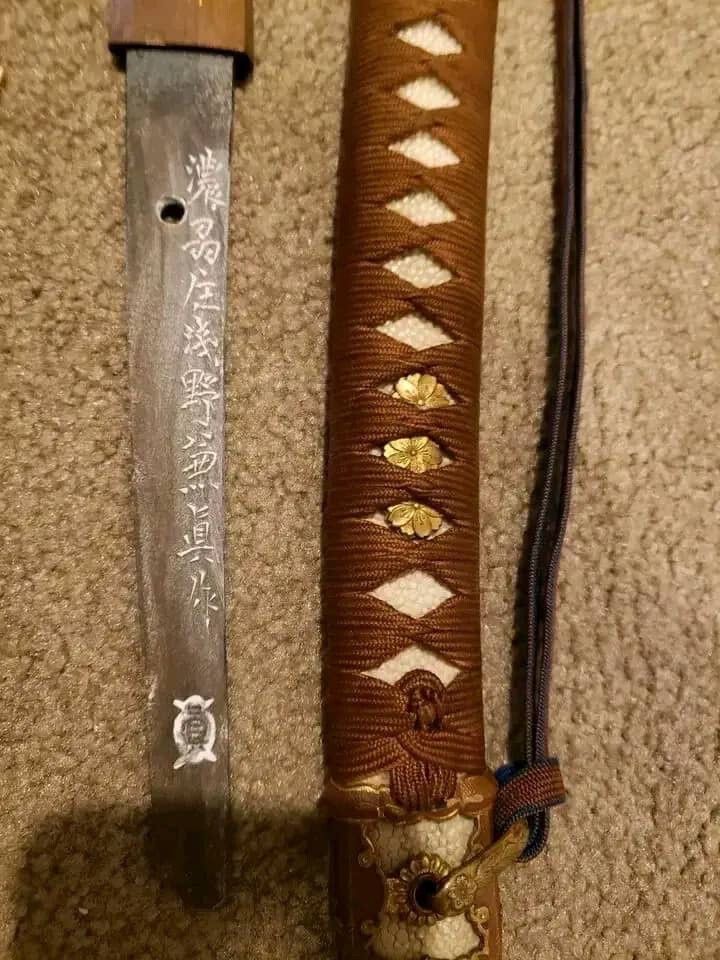
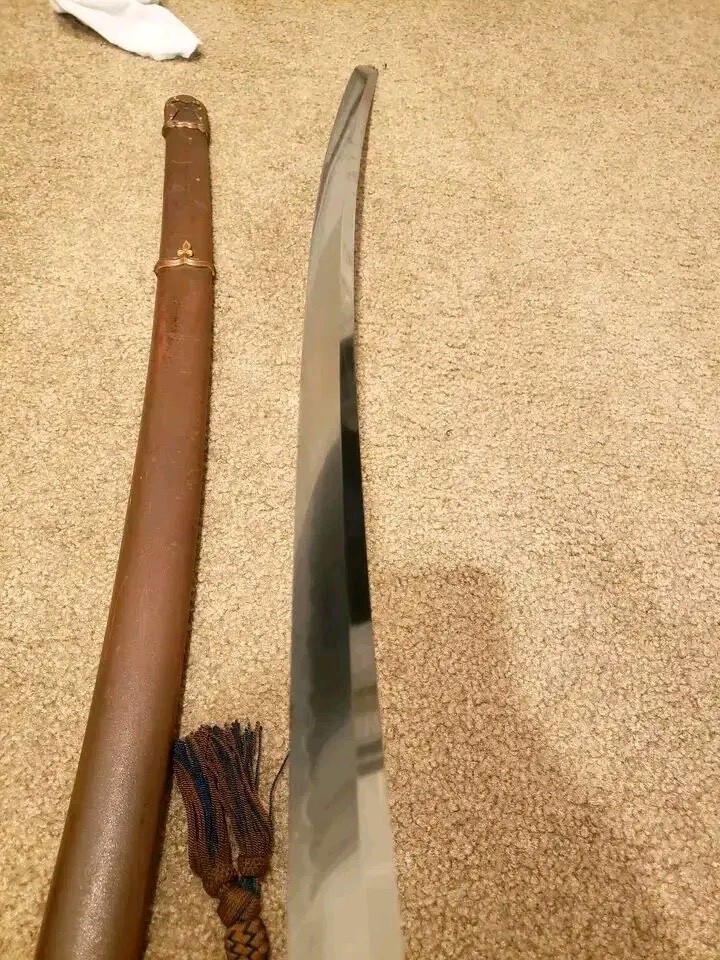
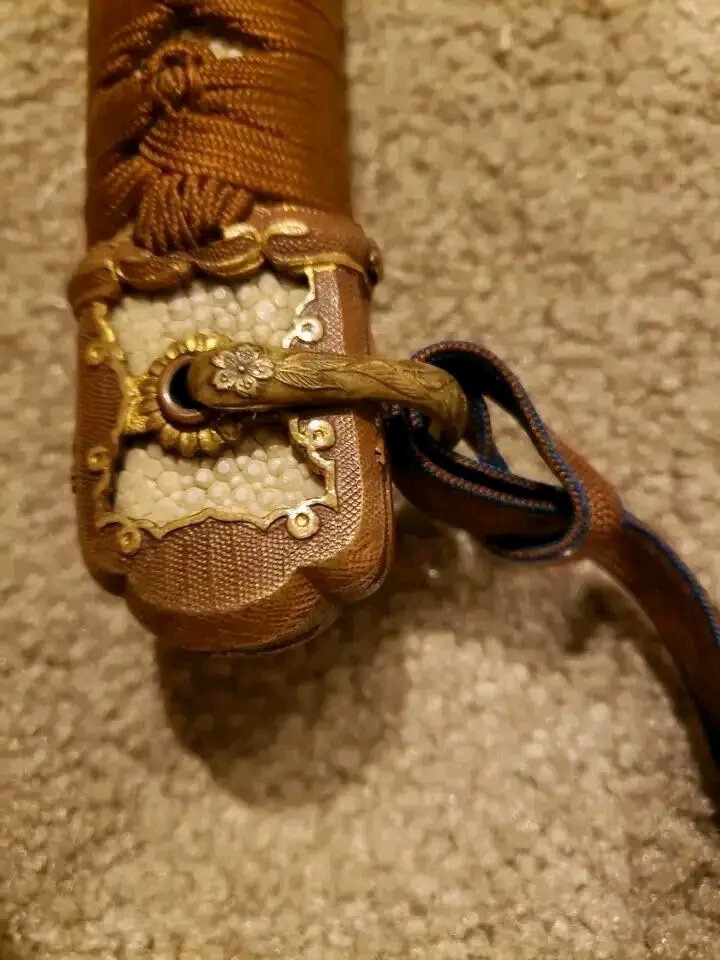
Hi Dekabyu, I bought my KaneZane in 1980 from the old vet who brought it back. It was the second Japanese sword I ever owned and at the time I couldn't even translate the tang. (I think I paid $250 for it). I knew an old sword collector who translated the signature for me, I guess I got VERY lucky and got something nice. Later I bought Richard Fuller and Ron Gregory's book "Military Swords of Japan 1868-1945" they had published a letter from a collector who wrote to Asano Shinichi (KaneZane) and received an answer from him. I think that article really established KaneZane's fame, and showed just how much care he and his students poured into each sword. He spoke about his work as a swordsmith as being "the flower of (his) life" and a "fragile dream" that ended when the war was over. After reading that, how can you not be romantic about Japanese Swords? I really don't know the going price of KaneZane's swords, over the years I have seen quite a number come up for sale. (KaneZane stated that he was making swords full time for 10 years) As mecox alluded to, the sword is in good polish, the fittings look to be in great shape, so I think its a great example of a '98 with a tassel. But, it is more than likely not a traditionally made sword. Good luck with the purchase, buying from an unknown person can be nerve-racking! Tom3 points
-
Sort of feels like authentic Bizen[???] Osafune signature which is almost gone. The blade can be early-mid Muromachi.3 points
-
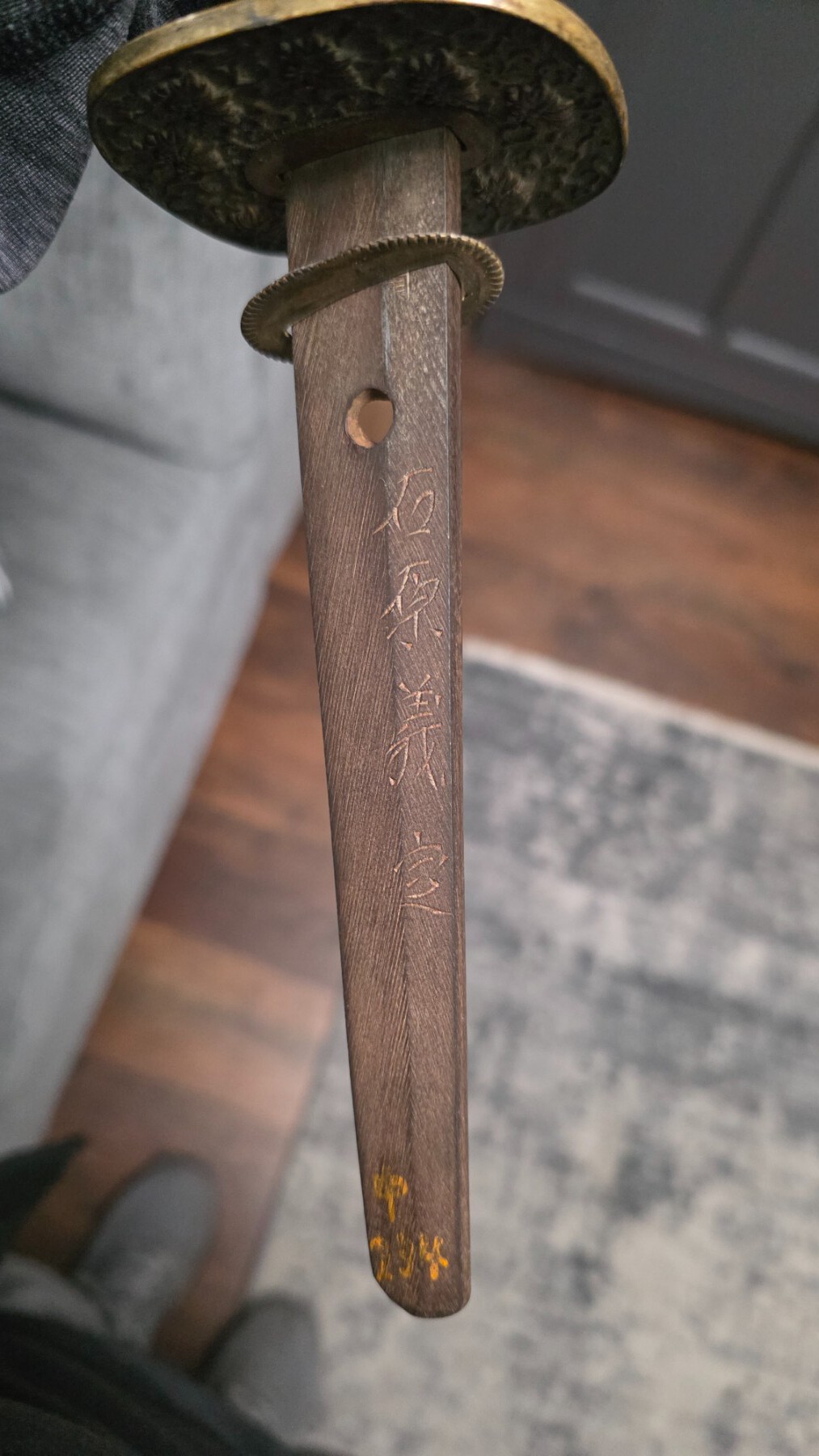
Ishihara Yoshisada. A WWII era showato smith. This one has a Seki arsenal stamp. It is not traditionally made.3 points
-
The inscription in the first picture, 應武□嘱朝波作於大連 – Responding to the order from “武+something”, Chao-Po made in Dalian.3 points
-
@CuriousNewbie Jay , as noted by Ray your sword is made by Masayasu. and dated 1942. For interest are there any stamp marks on it? For more examples of his work and background see this paper from NMB Downloads (at top of page):3 points
-
Jay: Bishu in the inscription indicates the smith worked in Owari. Masayasu is his art name.3 points
-
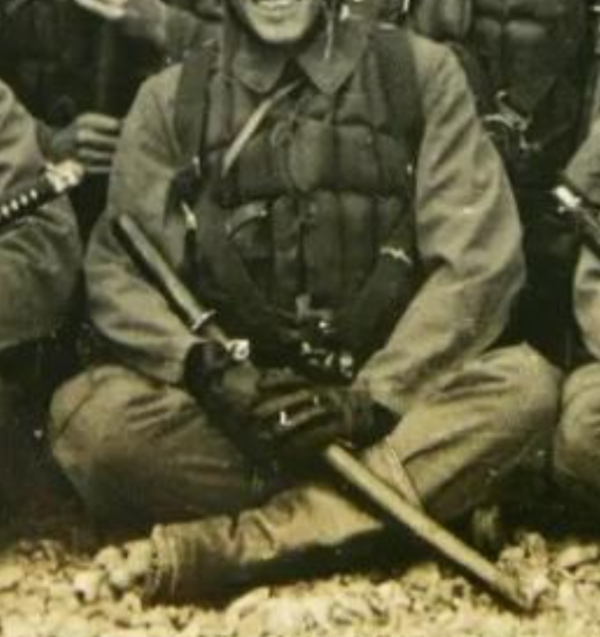
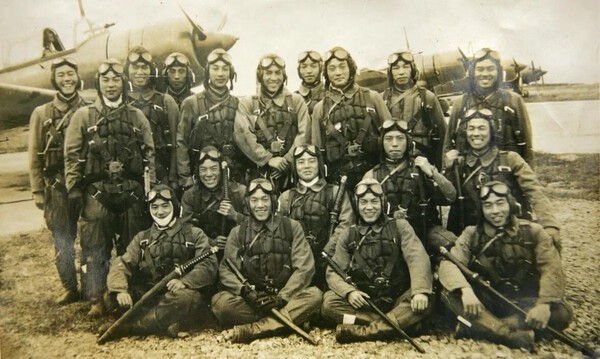
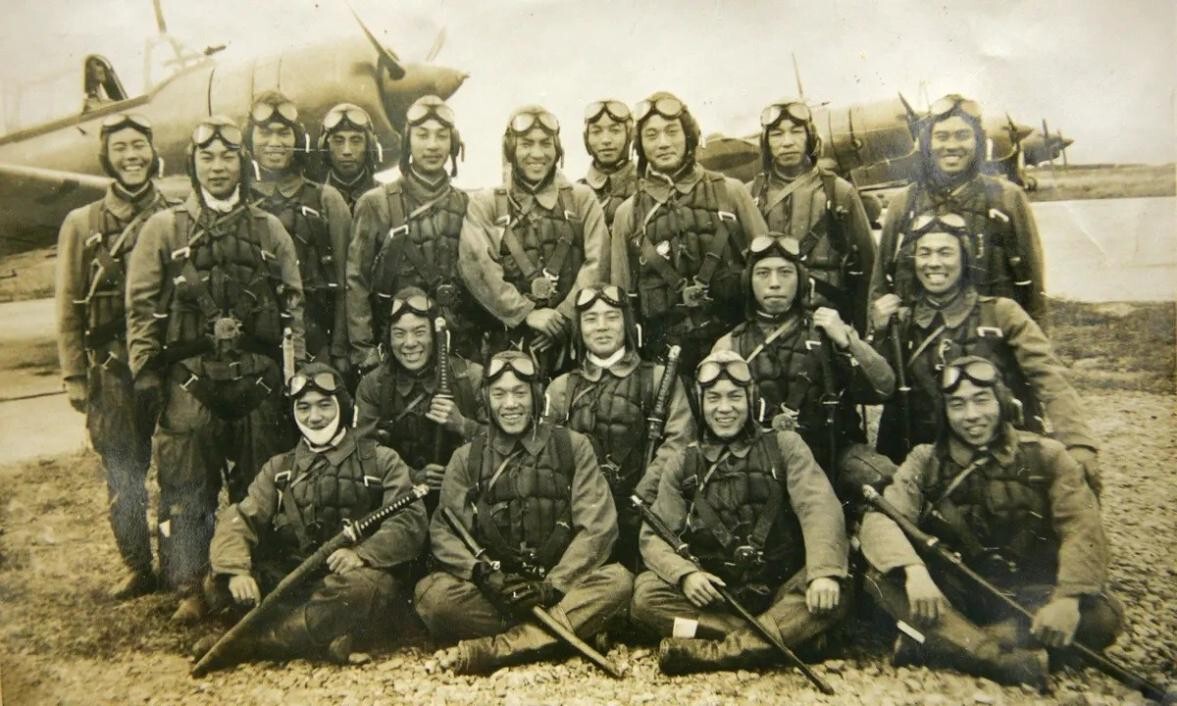
We've all seen the swords tightly covered in leather, head to toe, but spotted this one in the hands of a pilot in this photo. Interesting to see one "out in the wild" so to speak:
 2 points
 -
Logged out and tried the email address instead of a user name. No problems encountered at all. One is just substituting an email address instead of a user name and then entering the same password as usual. Strongly recommend everyone give it a try now versus later. I would also suggest having another member's email address at hand in case of a problem. They can contact one of the moderators on your behalf if there is a glitch.2 points
-
Happy new year!! After getting some help in the translation section, I'm here to ask your opinions on a peculiar piece. I picked up this Echizen Myochin Yoshihisa tsuba which is also signed on the other side: "水戸士 Mito shi (Retainer of the Mito clan)" and "高山千□造 Takayama...zo". Although the characters are not easy to read and not definitive, it seems to allude to a samurai from the Mito clan having/making/reworking it. The question is why the second signature? I'm not sure I've seen a piece signed this way before, so I'm wondering if this indicates: - a collaboration piece - a case of signing to show ownership - gimei signature(s) - something else If both signatures are legitimate, then this seems (to me) like a special piece given the rarity to find similarly double-signed pieces. I'm really curious and interested to hear from those with much more experience than me. Appreciate any input you have. Damon

 2 points
 -
Happy new year Dale! Thanks for sharing. That 7-artist piece is really amazing. I love the little signed plaques. And the father-son collab makes sense. As for my Myochin Yoshihisa, if you've not seen anything signed in a similar way, that is saying a lot. Not sure if that's good or bad at the moment. But I'll continue to research and do some light cleaning to see if the signature can come through more clearly. Damon2 points
-
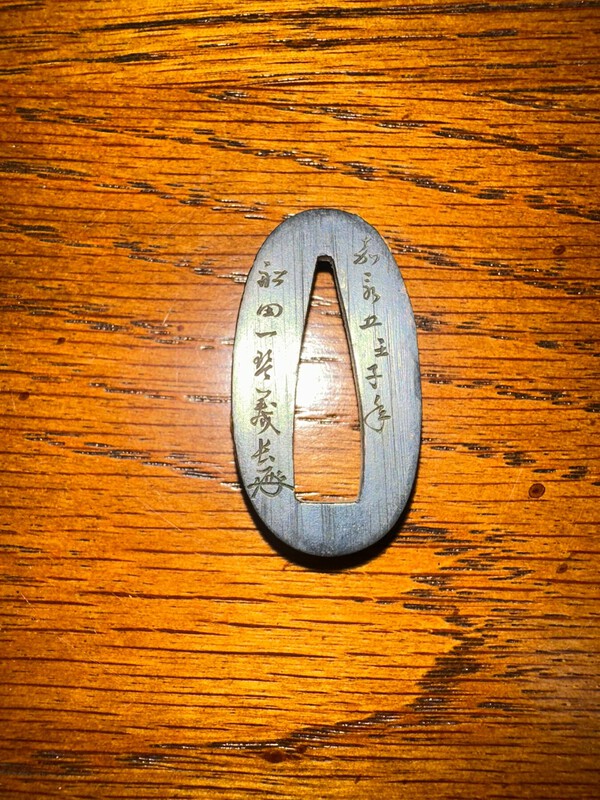
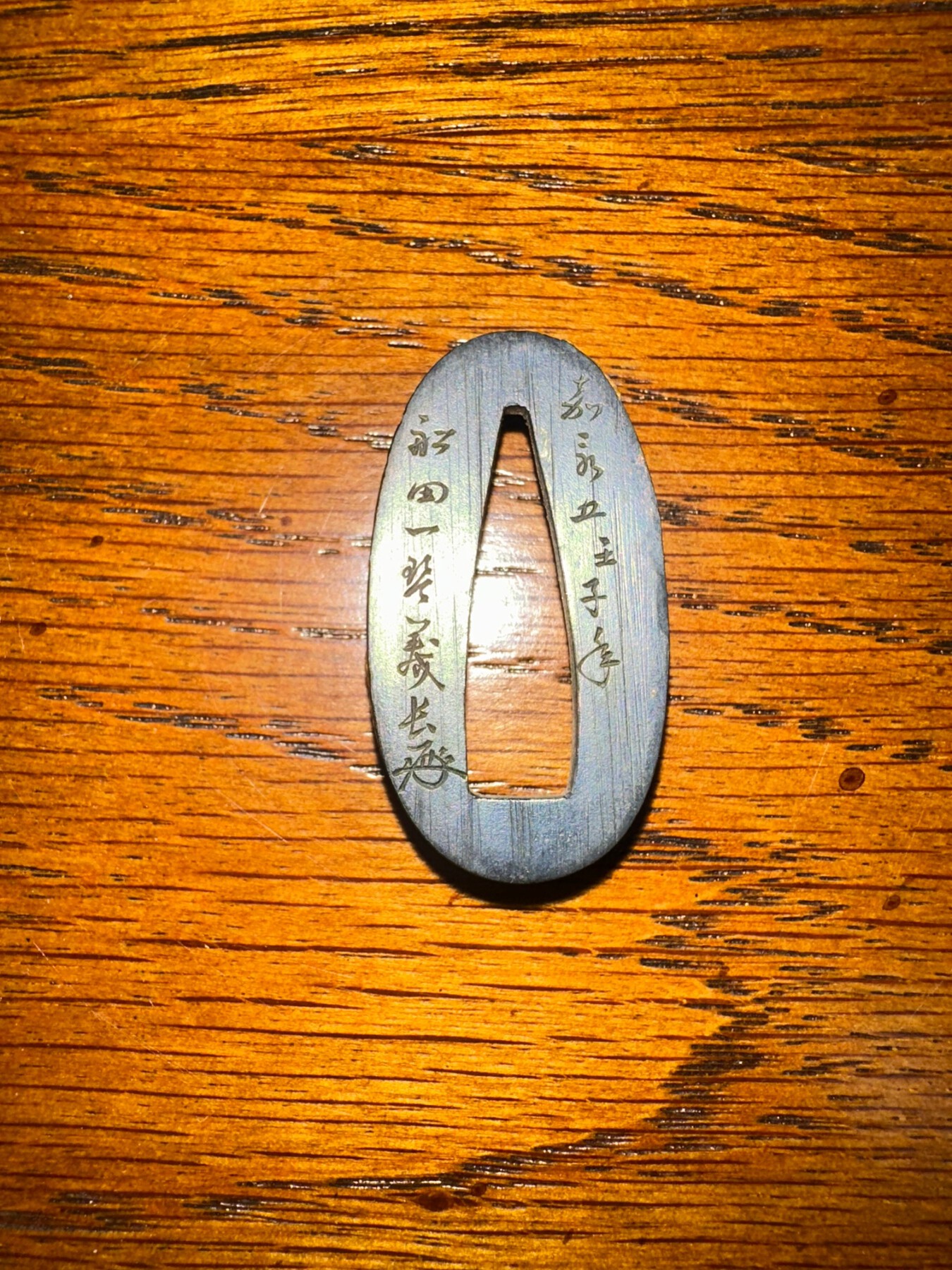
This is what I provided for the date. 嘉永五壬子年 - Kaei 5, mizunoe-ne (zodiac date for 1852)2 points
-
Clinton, as noted Yoshisada from Seki. Produced a lot. WW2 made, not traditional methods, this one is in wartime civilian mounts. There were earlier posts on him.2 points
-
Hopefully no one here will bid on this. It is certainly not an authentic Yasukuni-to. At best, it is a showato arsenal blade, doctored up with a gimei and frankenstein'd koshirae. i'm sorry to be so blunt, and I don't like to comment on active auctions, but this is one of the worst things that I've seen posted to the group.2 points
-
Hi Dekabyu, Yes this is an authentic KaneZane. It's a Nakirishimei for him just like Oshigata "D" in Slough's "Modern Japanese Swordsmiths 1868-1945". And, an almost identical copy of the signature on my KaneZane! Good looking sword and mounts look great. hope this helps, Tom2 points
-
@Dekabyu Rugger, from pics looks like a good example of work by Kanezane with complete fittings. Possibly has been rebound, but well done. Maybe a stamp (Seki) has been filed off above signature? Others can comment on value. For more info and background to Asano Kanezane see this paper in NMB Downloads (at top of page):2 points
-
https://japaneseswordindex.com/kanezane.htm Read here for more information on this smith.2 points
-
Hi Gary, Neither of these blades are Japanese-made – however, they nonetheless appear to be high-quality replicas. The inscription on the wakizashi is 大耳 = Ōmimi; indicating that it was made by Howard Clark. The other image is rather low-resolution and I can't read all of it: 應武[?][?]朝波作於大連 = ???? Chaobo made this in Dalian Chaobo (朝波) is the given name of Paul Chen – a Chinese maker of Japanese-style swords.2 points
-
Babich, Gregory A., and T. Keep. Imperial Japanese Grenade Rifles and Launchers. Dutch Harlow Publishing Company, 2004. Imperial Japanese Grenade Rifles and Launchers covers the gamut of this topic including army and navy arsenal procedures, inspection marks, ordnance nomenclature, Japanese dating systems, and relevant rifles and bayonets. More than twelve types of grenade rifles and launchers and numerous variants, many of them previously undocumented, are described in this book. In addition, cup wrenches, carrying pouches, cleaning equipment, and launching cartridges are discussed. Throughout this book, grenade rifles and launchers are placed in historical context, and background information is given regarding their development, manufacture, and use. Considerable text, photographs, and drawings are devoted to the numerous shells, hand grenades, and rifle grenades that were used with Imperial Japanese grenade rifles and launchers. Many previously undocumented fuzes and grenades are covered including improvised, rocket propelled, and naval variations. With ten chapters of detailed information, more than 300 photographs and drawings, translated wartime documents, and an extensive reference section, Imperial Japanese Grenade Rifles and Launchers is the definitive work on the topic. This book is a must for museums, military historians, and collectors of Imperial Japanese rifles, rifle cartridges, and ordnance. Dust jacket, hardcover, 8.5 x 11 inches, 248 pages, color illustrations. Weight 3 lb 6 oz, printed in USA. Cost per book is US$90 including shipping to United States, overseas shipping add about US$45.


 1 point
 -
Hello dear Nihonto Message Board community! I am new to this community, as I am very new to the world of Japanese swords, but an inheritance has kind of forced me into the topic and to be honest I am finding it rather interesting. I am curious about translating what I have already found out is known as a "Mei" in the hopes that this will tell me a bit more about the sword we found it on. As Kanji were previously also a closed book to me, I have my doubts wether my amateur attempts to translate them yielded any usable results. So I searched for a community that is passionate about exactly this topic and might be able to assist me more professionally with years ahead of me in research into this new-to-me world... and I found you guys :) So, my questions are: can anyone help me translate what this says? And... what does this tell me about the sword? Is it possible to reliably tell from this Mei where or when it was made or who made it? Thank you very much in advance for your time and effort
 1 point
 -
First post here! I’ve inherited an old gimei wakizashi and been learning all I can about everything. Namely Funada Ikkin who I believe made the fuchi and kashira. From a couple different sources they are dated 1852. I haven’t been able to find too many examples of his work but I had a fun discussion with Ray Singer and he gave me some great insights and believes it is likely the shodai which was a fun discovery considering it seems like he has less known works. Well if I’m right here’s a couple more! This whole process has been fascinating, and any extra resources would be great to have! Also, I had a friend of mine who enjoys studying old kanji and he wasn’t able to decipher everything but said something about a father/son when reading the left side. And he knew nothing about the fact there were two generations of artist so I’d be curious if someone could shed some light on that as I’ve noticed the mei on the left differs from others I’ve seen with a couple extra characters. Thanks, Cole

 1 point
 -
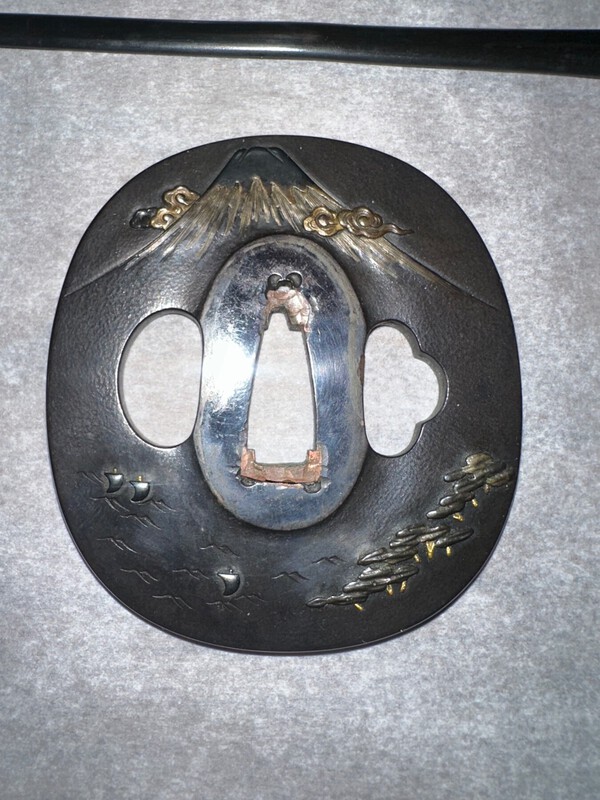
Sadly no signature on the tsuba, but it’s very pretty. Doesn’t seem to be a matching set with the fuchi/kashira but that’s ok. From the story I was told the whole set was as is from the pile pop grabbed it from. He actually sliced his hand by accident as it slipped from the saya and he instinctually grabbed it and caught the blade. Had a scar on his palm from it till the day he died at 92. I used to make the joke that it was the swords revenge from being kidnapped
 1 point
 -
Kogai looks good. I cannot tell much detail from that one photo, but I can guess it is probably Yasuda, Yoshioka, or Waki Goto stuff. The tsuba looks promising with plovers on it? A signature at all? Feel free to post more pics of it. Some of the vets mixed and matched the bits n bobs of the WWII bringbacks. Sometimes you get great tsuba on ho-hum swords.1 point
-
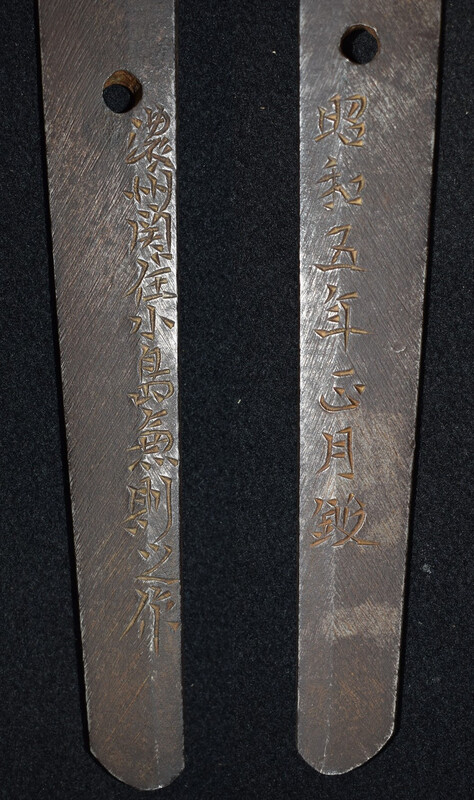
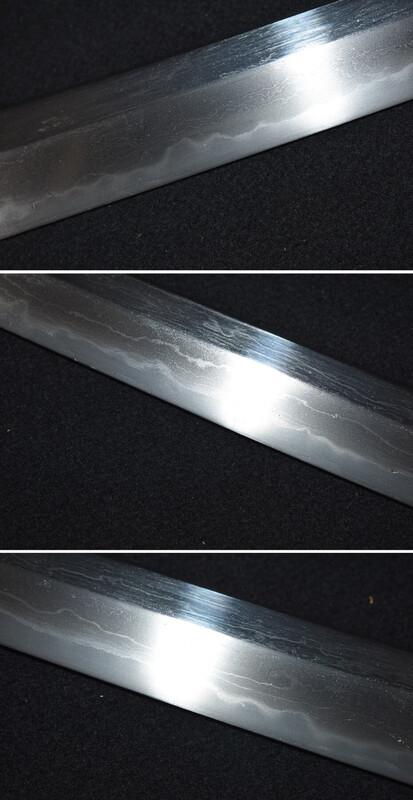
Just in time for the New Year, a sword by Kojima (Taro) Kanenori from January 1930. In four years, it will be antique :-). He was the younger brother of Kojima Kanemichi and was born in 1907. That means he was just 23 years old when he forged this sword. He became an independent swordsmith in 1931. I hope you like it. All the best for 2026!


 1 point
 -
Thank you, II will try to get some decent pics and post them in the appropriate section.1 point
-
Yes indeed. Now I need to do some research regarding the Mumei Katana. My fear on that one is that it will most likely, remain unknown.1 point
-
This also illustrates the difference between non-traditional blades off a production line and traditionally hand-forged blades by a well-trained smith (which these are), even if that smith is Chinese or American. The contrast is night and day, regardless of the country of origin.1 point
-
Hello everyone and my sincere thank you for the information and taking the time to respond. I guess this explains the reason why I was having trouble with the Mei and was confused by my results. All three pieces display beautiful workmanship. Myself and another long time collector, would have sworn they were traditional Shinsakuto. It is for sure, a continual learning experience. Thanks again…..Gary1 point
-
Similar features, Mei placement, futasuji-bi to this rare Bizen Ugan school Sumimoriji sword. https://www.touken-sato.com/event/katana/2014/03/TC-moritsugu-01.html I would get this blade in front of a top US based togishi. Could be well worth the investment to restore it. Nick, I'm sure I speak for many here, but we would love to hear the story of the blade and how comes to be in your possession.1 point
-
Very interesting sword that definitely needs to be examined in hand. But what Ray, Kiril and Grey said. This should end up with someone eventually that will consider having it professionally restored. Don't try any restoration yourself, and be wary of the inevitable offers to purchase that you may get privately until you know more about it.1 point
-
Indeed, Howard Clark swords are highly regarded as cutters and for their performance, and although not Nihonto, would likely have decent value among the custom knife/sword guys.1 point
-
I'm trying to find out anything I can on this sword. It was gifted to me decades ago and I k ow nothing about it.

 1 point
 -
Thank you!1 point
-
So catawiki keeps their standards. @Scogg could you move this thread to fake’s tab?1 point
-
I am buying this katana and I am in talks with the owner. Not sure if it’s authentic, collectors worth and any information about the sword itself. Any information is much appreciated
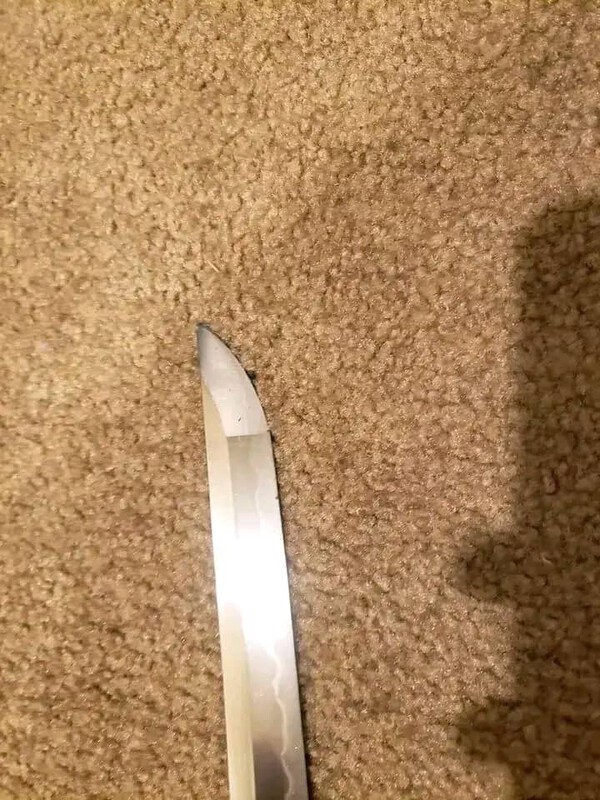
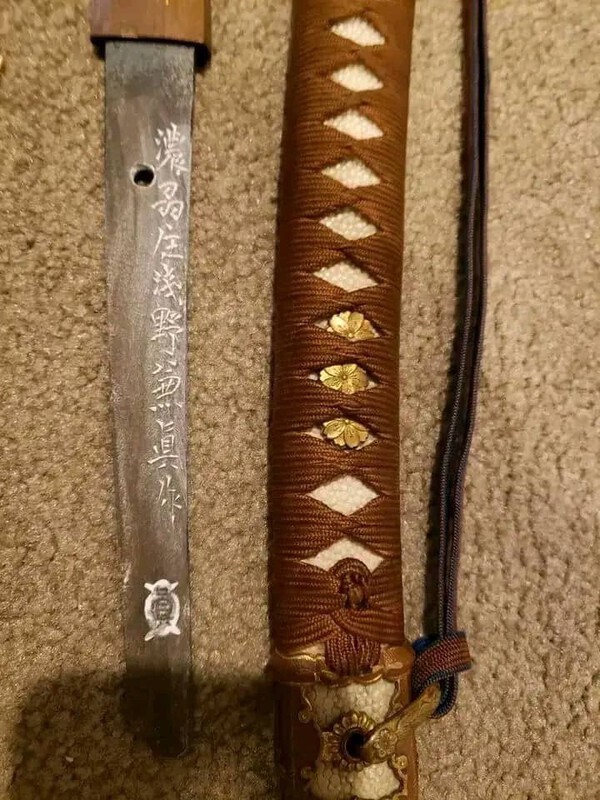


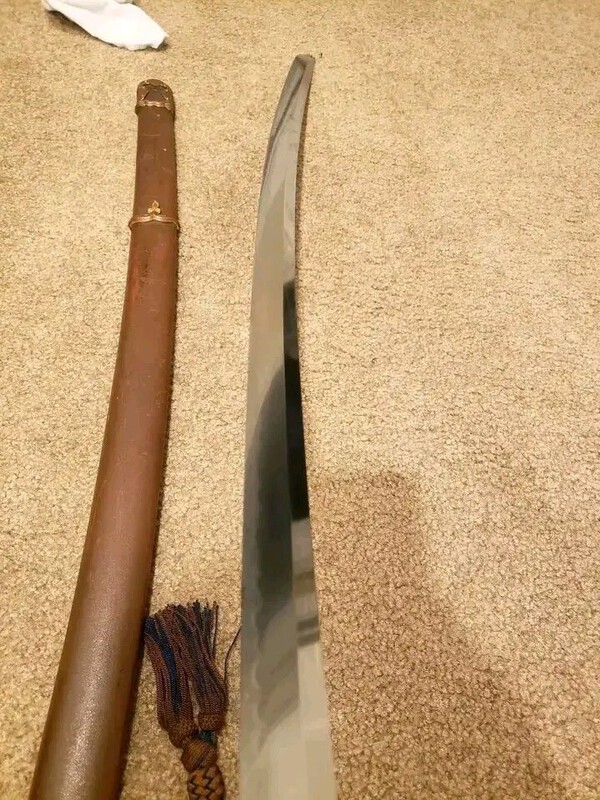
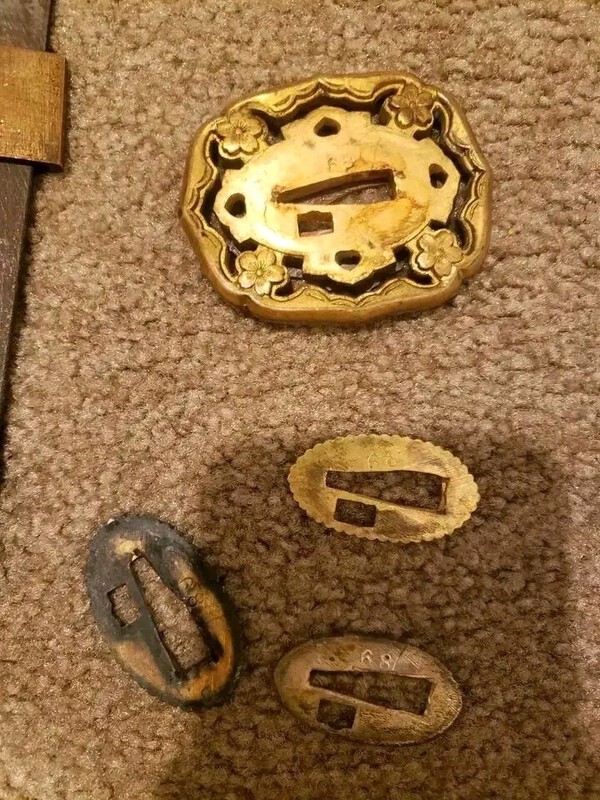
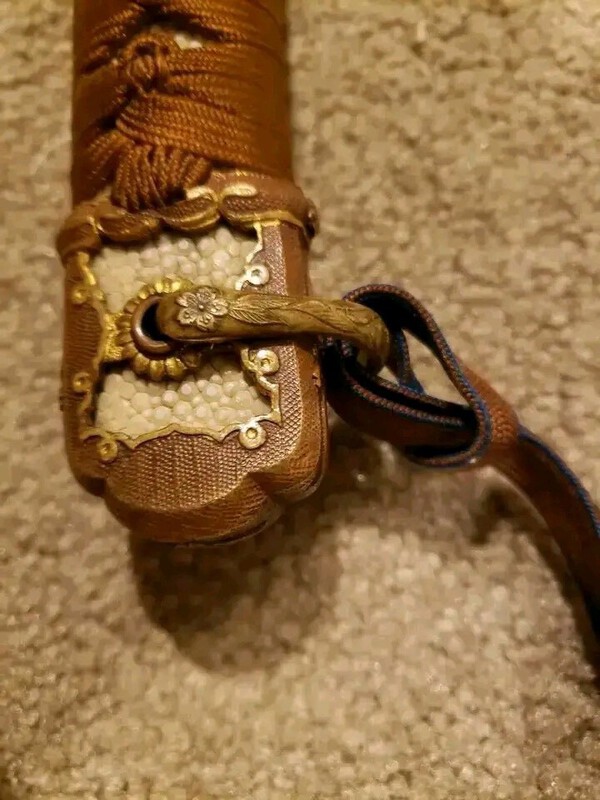 1 point
 -
The second photo is upside-down, but even if it were correctly positioned, KANJI in etching technique are not seen on Japanese swords, as Chris stated above. The first photo is not nicely focused, and we should see the complete NAKAGO (= tang) without HABAKI, oriented vertically (tip-upwards), and with light from the side.1 point
-
Wow, Ray, thank you very much vor that incredibly swift and equally helpful reply! :) So the sword was forged in 1942 in Owari by a smith going by the name of "Masayasu", that helps a lot! Would there by anything more to be learned from this about the sword? I will try to read through the threads you suggested, thank you very much for that as well!1 point
-
I'm afraid this is a clear case of a Chinese fake/reproduction. The Japanese never put kanji on a blade in this manner.1 point
-
Eternal newbie Thank you so much for your reply, I have compared them and they do look very similar indeed,1 point
-
1 point
-
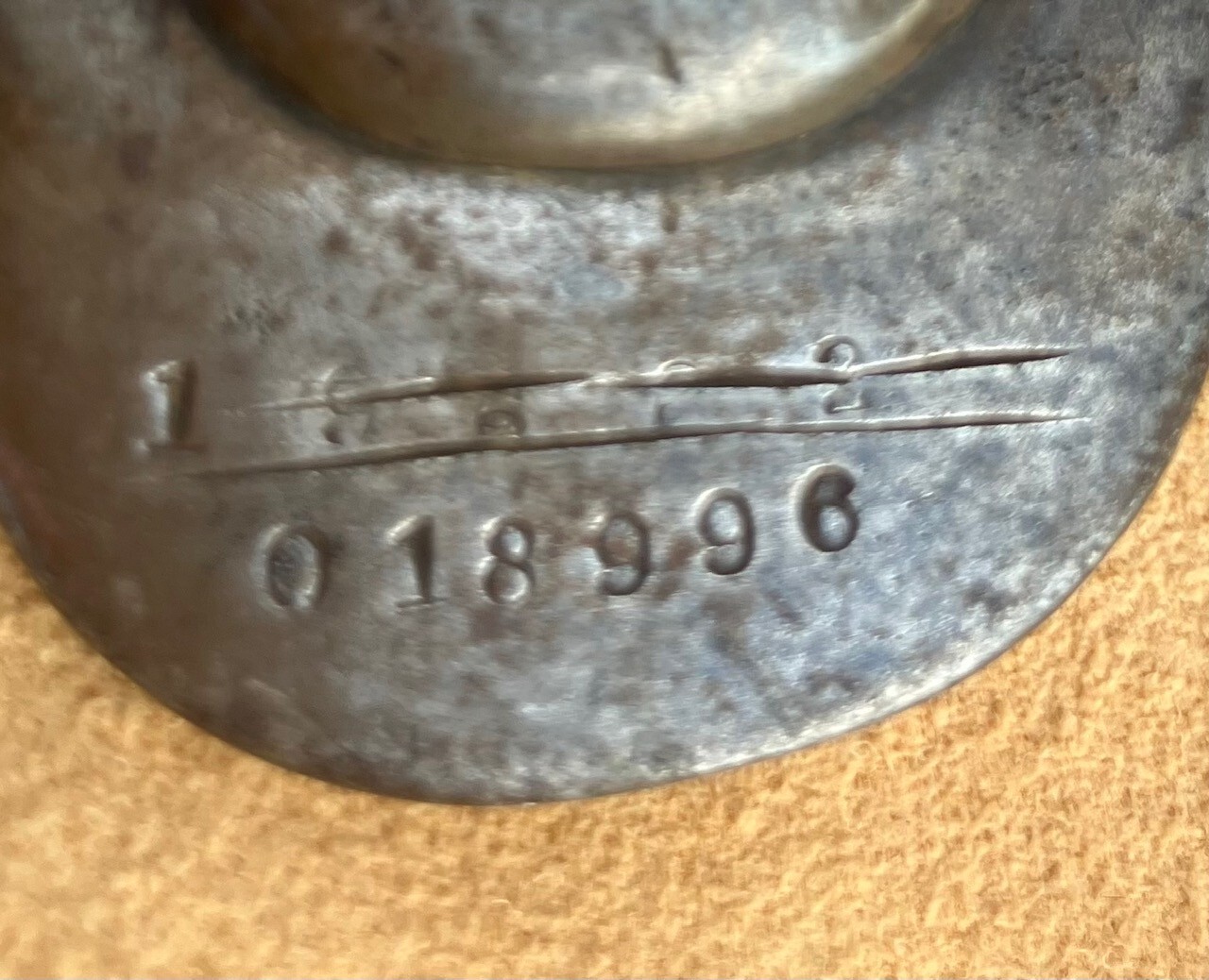
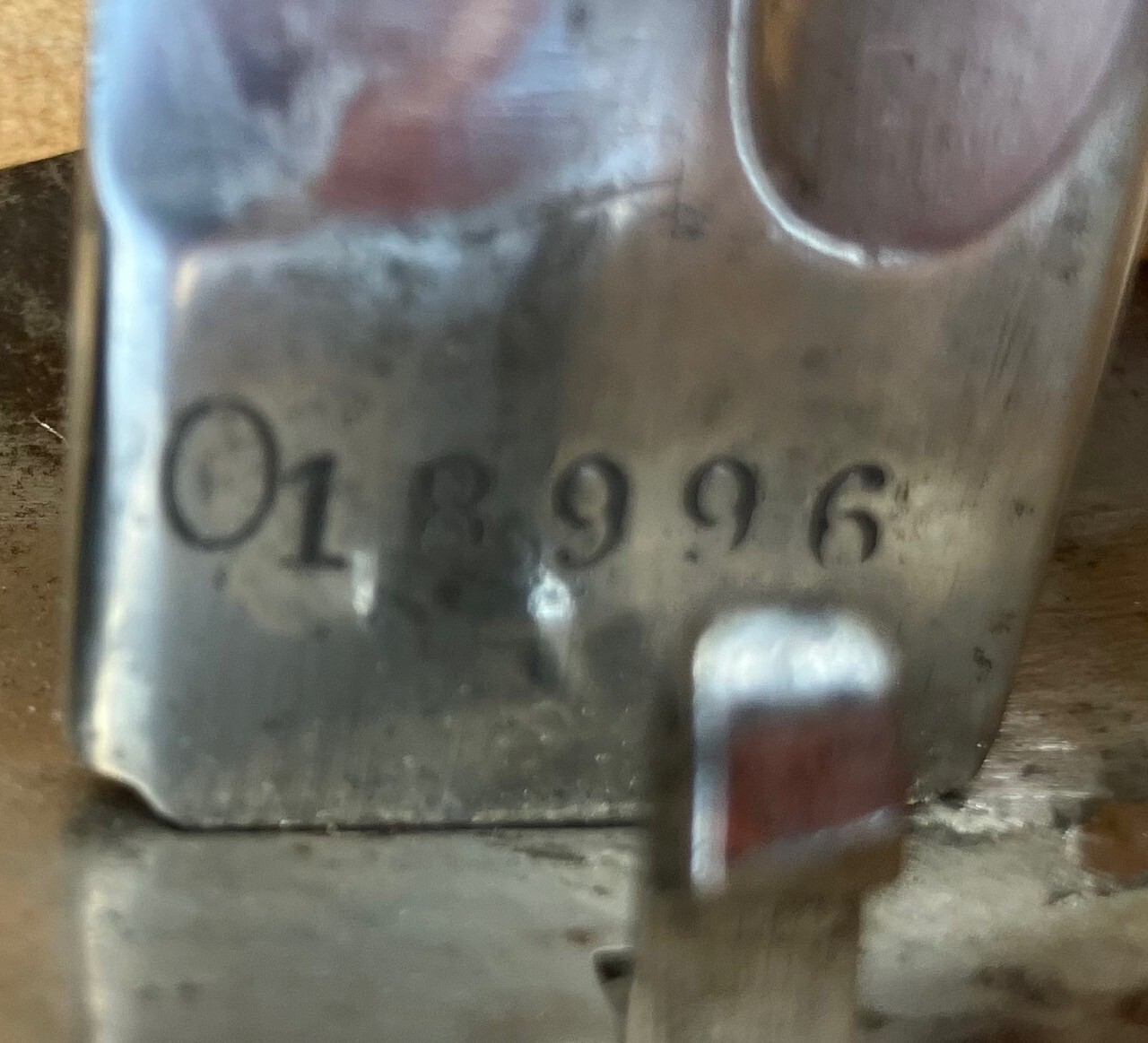
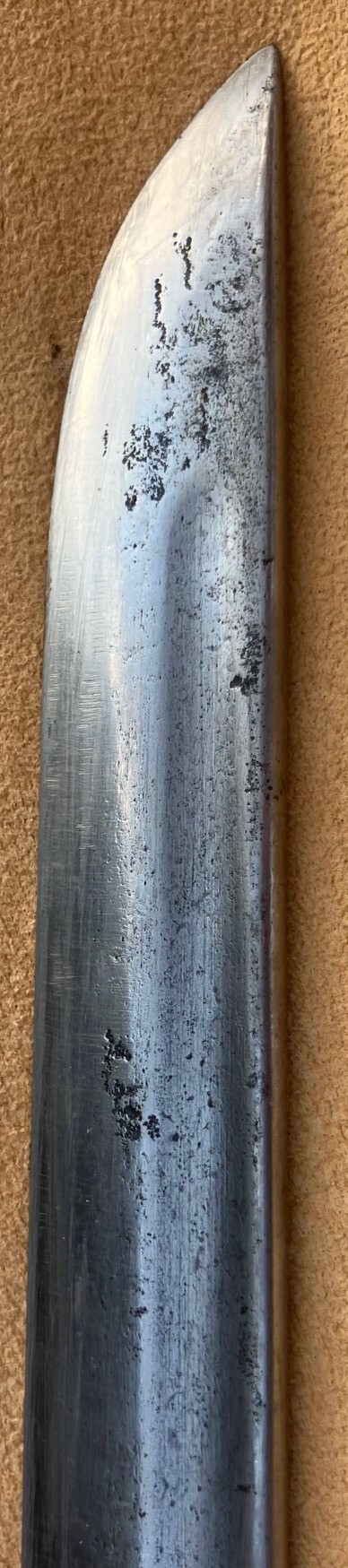
Type Type 32 cavalry Saber Era/Age : 1899-1935 Nagasa/Blade Length : ~32 inches/ 82cm Sword Location : Eastern Virginia Will ship to : USA Price and Currency : $475 USD Other Info and Full Description : I have decided to sell this gunto to make room for more nihonto. It is in good shape, with matching serial numbers. At some point it went through a factory refurbishment, and an older serial number on the saya was struck out and replaced with 018996, to match the blade, and a zero was added in front of the serial on the blade. The blade is still quite sharp. I believe it has a (poorly struck) Kokura Arsenal stamp and an inspection stamp and two other stamps that I'm not sure about. The leather finger loop appears to be cut off, perhaps at the time of its refurbishment, though its remains and the rivet are still present. The latch still works well. I believe it is the longer cavalry model. Let me know if you would like to see more pictures. Edward
.thumb.jpg.30445cc4352c0d9e64931ced91a9a424.jpg)
.thumb.jpg.c8e58c733286a361bb81c9a13d8299ce.jpg)


 1 point
 -
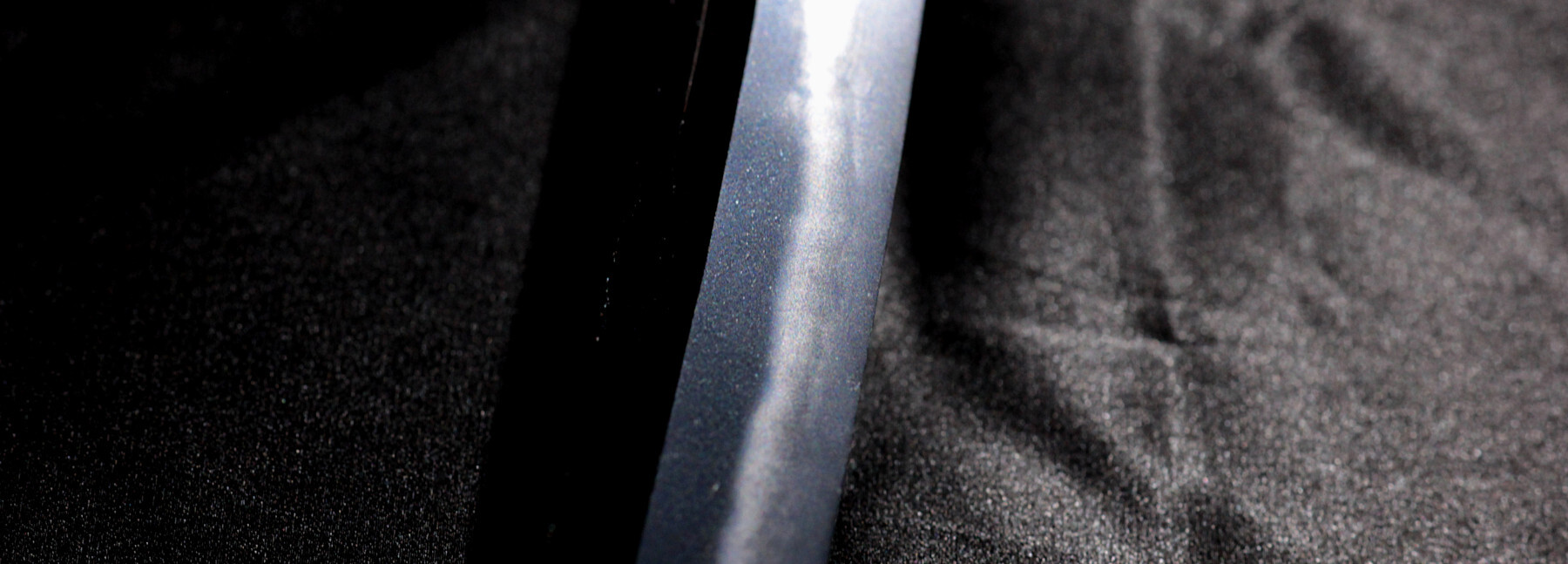
Well, I'll be damned if I leave info on FB to waste away, so I am sure that @Andrew Ickeringill and @Adrian S won't mind if I blatantly plagiarize their posts and share the info here. Very happy to see that the sword that Adrian "discovered" a few years ago that eventually went Juyo to Go Yoshihiro, has now passed Toku Juyo. Wow...what an incredible find and story. And what a high praise for Andrew and his polishing. This is a masterpiece and a proud moment for both owner and togishi. Well done to both, I am sure we all share in your achievement, with a little jealousy thrown in


 1 point































.jpg.819346804412a860b9c5b6c3277e8303.jpg)
.jpg.598e43e91969cc3a274869d90ac5207d.jpg)




This leaderboard is set to Johannesburg/GMT+02:00