
Leaderboard


Popular Content
Showing content with the highest reputation on 12/23/2025 in all areas
-
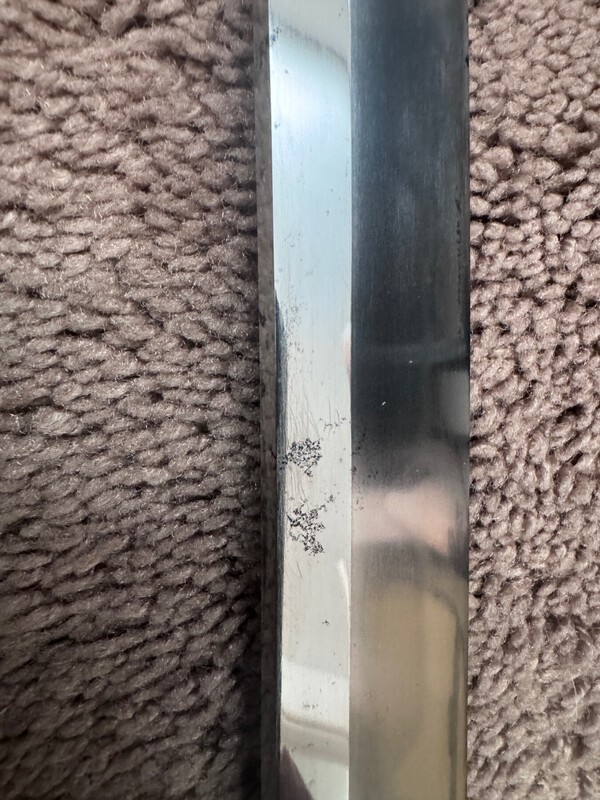
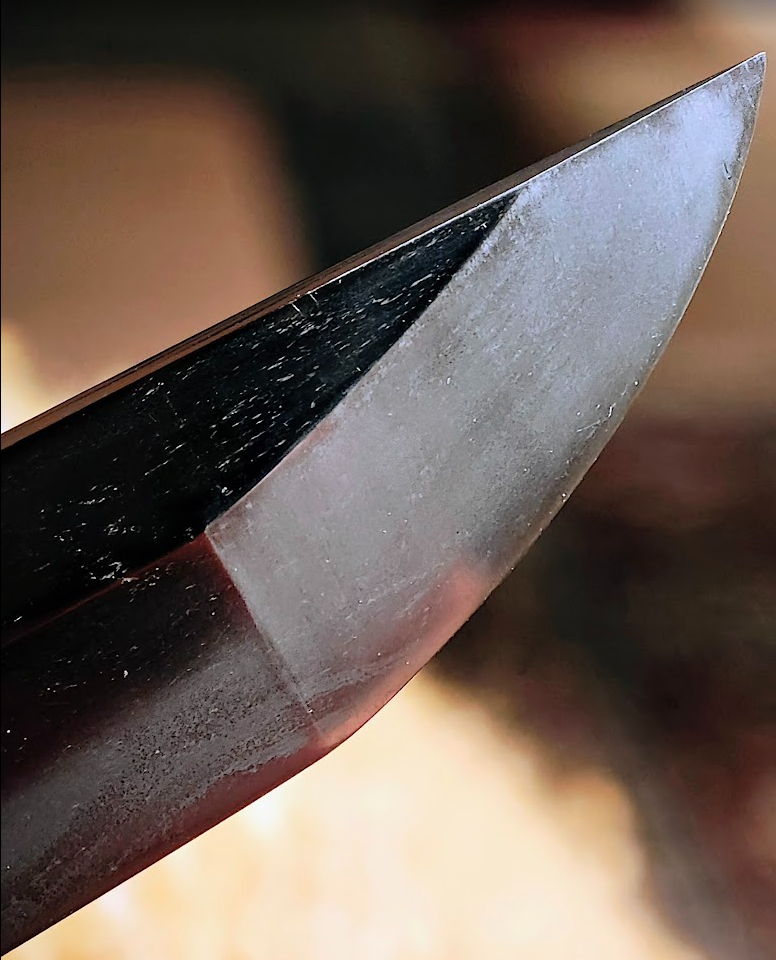
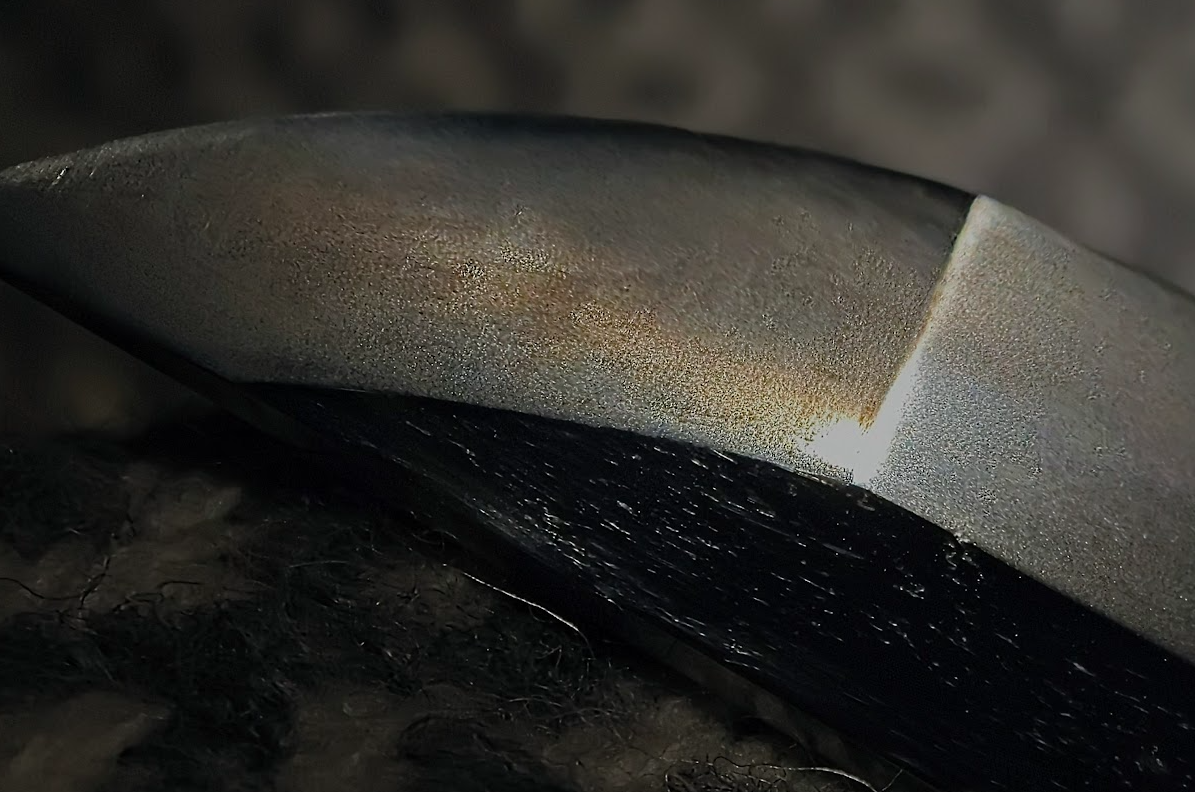
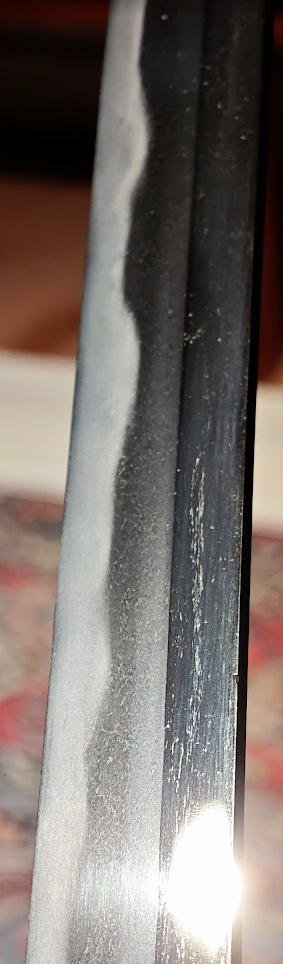
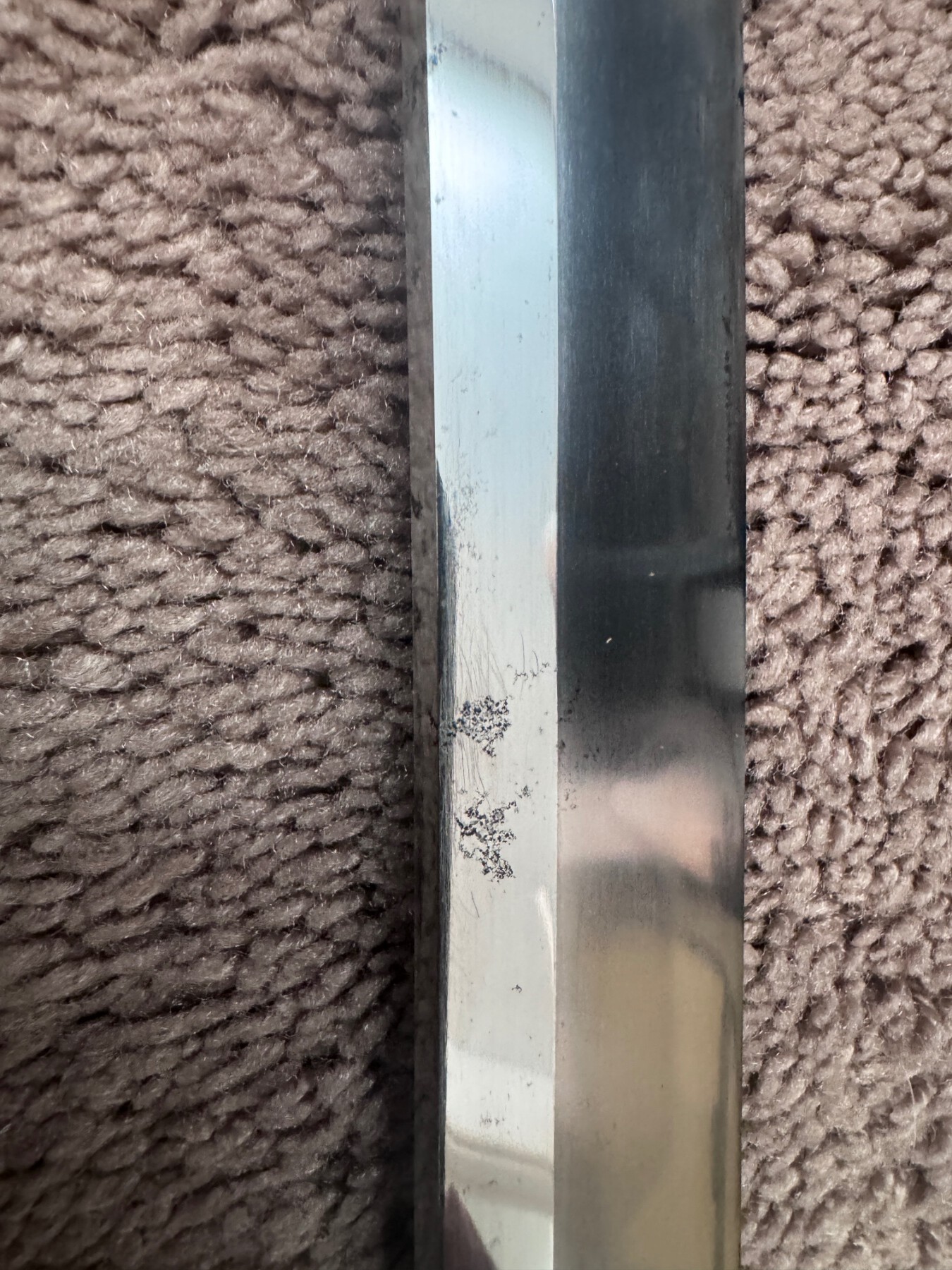
Quick update; it arrived this morning and I'm extremely happy with it! Cons first: It is in very old polish with some tiny and insignificant 'spider web' rust spots in places. The hada is also cloudy for the same reason. There is a small fukure on one side but it's certainly not a dealbreaker and I could see it in the seller's photos - so not a surprise. Pros: It is massive! It's one of the most intimidating blades I've ever held in hand. As Colin said above, “lethal and menacing” sums it up perfectly. Apart from the forementioned old polish and tiny kizu, it's in extremely good condition with no hagire, chips, bends or other damage. The hamon is just as stunning in real life; at first glance, it appears to be nioi based with patches of tight nie but I'll have to put it under a good light source and look at in depth. The Kanzan sayagaki seems genuine and matches the blade's dimensions (I think - I'll be asking for your opinions on both its authenticity and correct translation). Photos to follow later. Best, Hector6 points
-
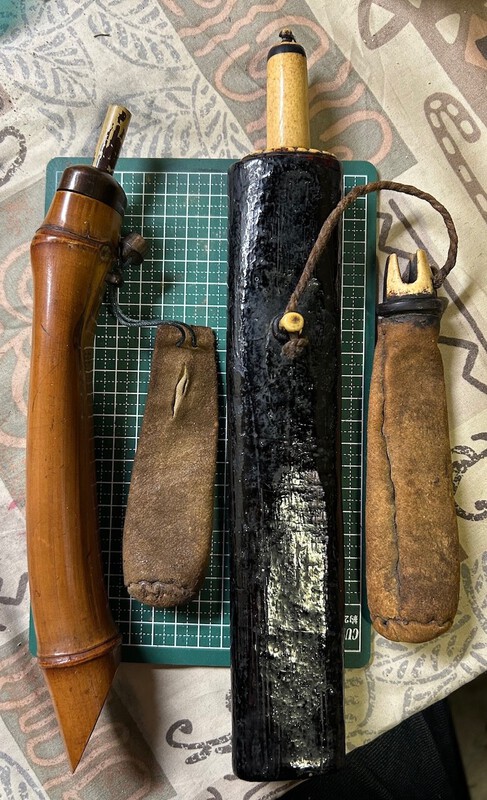
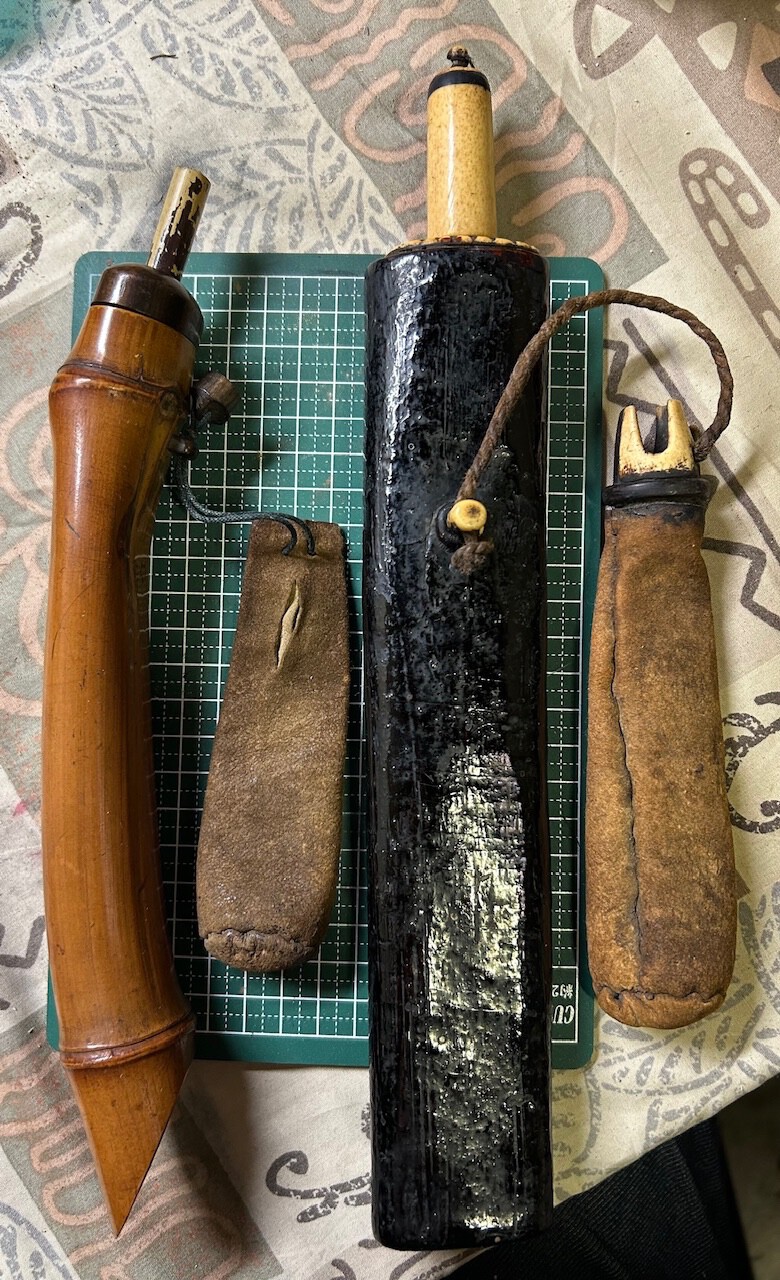
So, removing the botch jobs, three out, realistically we are down to these four. Two coarse powder flasks, a crow’s beak ball dispenser and a regular ball bag. The ‘ruffs’ on the black lacquer flask are quite roughly cut. Not Daimyo quality! Now I need to make a measuring cap for the bamboo flask.
 5 points
 -
Nagare-hada near the hamon and in the shinogi-ji combined with the presence of ara-nie and sunagashi, and what looks like a somewhat raised shinogi, suggests Yamato influence. This could point you in the direction of Naoe Shizu and early Mino in general, which tended to be much closer to Soshu than what we now recognize as the classic Mino style. The weird spot in the last picture could be a fukura, possibly patched up with umegane, or it could just be a blob of tobiyaki floating above the habuchi (with the hadori making it look like it's inside the hamon when it's really just above it).4 points
-
Jason, I believe this is representing a waterfall, with the vegetation and insect in the foreground. If you notice the top edge of the grooves have a slight curvature, like the water at the top of a waterfall as it passes over the ledge. The bottom has no such curves. Also, I think this is wet-location vegetation such as may grow in the mist of a waterfall.4 points
-
Hello Jon, Yes, the Southern California Japanese Sword Club (Nanka Token Kai) holds a meeting on the 2nd Friday of every month. We just had our December meeting a couple of weeks ago. You are welcome to bring any swords to the meeting and get an opinion on valuation. The next meeting should be on January 9th, but this is not fixed yet as I haven't confirmed availability of our club teacher/sensei. We meet at the Gardena Valley Japanese Cultural Institute (link below). Feel free to come by if you are so inclined. https://share.google/5cSJ3YytU03Cqh8D9 In general I would say the market price for WW2 blades is between $1k and $2k, depending on the condition. Items that are in particularly good condition will reach the top end of that range or higher. Swords that are unique or have signatures of well-regarded smiths may fetch higher prices. In the event your sword is an antique blade that predates WW2 - as in, it was a family heirloom that got mounted in WW2 era scabbard/fittings, the value could be higher. Condition is everything. If you want a quick sanity check you can post pictures of the blade here on the forum and we can take a look. If you don't want the whole world to see, feel free to DM me pictures of the blade and I'll give you my best guess.4 points
-
Enormously talented, and incredibly kind, Richard was one of those exceptional people whose integrity was beyond question. I knew him for more than two decades. He never failed to show respect for everyone, and interest in everything. His loss is a great loss for all of us who knew him, for our KTK group and for the larger community. On one trip to Japan many years ago Richard took the time to help me call my mom back home via the internet, which I could not have done without his help. He didn't make me feel I was doing him a favor. He seemed happy to help me, his inept friend. There was a humility and decency to Richard that exceeded his great talent as an artist and engineer. Richard will be greatly missed. He set a high standard in every aspect of his life, including especially his love for his family. His contribution to the field of nihonto study, and all his life's good works, will endure. God bless this good friend, and great human being.4 points
-
Welcome to the forum Richard. I think your photography looks very good, however I think for identification purposes I think you would need to post several of your pictures in higher resolution pictures so details can be seen. Many members of forum are very good at identifying fine details in blades and can offer assistance on that. I am not that good at that but my focus is on blade size and shape. Your sword is extremely shallow in curvature, it being 0,8 cm. To me in overall I might go more towards possibly Muromachi period just looking at the shape of the sword. There are few late Kamakura shortened blades that have under 1 cm of curvature remaining but they are very few in number. Posting lot more pictures would be very important for identification and guess the possible origin. There seems to be good looking hada on the middle blade picture for example, and seeing better pictures like that would be great.3 points
-
水府明珍紀義久 - Suifu Myochin Ki no Yoshihisa3 points
-
Thanks for the feedback. I will take additional detailed photos with higher resolution as soon as possible and then post them. Richard R.2 points
-
The magnification/resolution is unfortunately not there. What is seen is that hada is masame dominated, hamon is ko nie to nie deki, suguha with a bit of gunome, midare. Definitely koto, but without high res pictures its hard to say something more specific. Nakago sustained significant damage which will scare a lot of people to think its saiha, but the work does not lean this way. It can be Naminohira. Or Yamato shikkake. Finally, Uda is definitely worth consideration. The most optimistic outcome is Yamato Shizu. Period can be later... High resolution would be nice, also boshi [!]. If hamon widens towards yokote its a common Muromachi trait. In general it feels like the photos are good enough to identify, they've just been downsized until not much is seen...2 points
-
Well I admit years ago I used to think that in order for one of the great sword teachers to write a sayagaki the sword would have to be absolutely spectacular. Now with more years under my belt I've understood that is not the correct view as there are blades of varying quality that have their sayagaki. Well of course the top and higher class swords are better represented as they are the swords people most likely would want to show to the teachers. Few years ago I started putting a note if the sword has a sayagaki for my data. However that is just for swords until roughly to mid-Muromachi. So everything that is Middle Muromachi period or later I have skipped, which means a lot of sayagaki that I have seen for example in very good late Muromachi and Edo period swords. Still I am bit surprised the numbers I have even gotten so far, as I think I have just small amount of their sayagaki and they have written so many more (I am just scratching the surface of Kunzans Kantō Hibishō series and I do think the series has 2,500+ swords in total). Tanobe - 481 sayagaki Kunzan - 439 sayagaki Kanzan - 167 sayagaki While there was really not a specific point for the thread I am just curious if for example someone would have asked from Tanobe or if he even knows how many sayagaki he has written, as it must be quite large number. I do think having sayagaki from them would be extremely valuable addon to the sword. Of course that value aspect can also introduce some shenanigans like Rohan said fitting a different sword to the shirasaya, or then faking the sayagaki, and other stuff too like alterations. In Kantō Hibishō Kunzan writes in 1969 for a Tegai Kanenaga tachi that last year he wrote a sayagaki for it and in it mentioned it was saiha but seeing it again someone had erased those letters from sayagaki.2 points
-
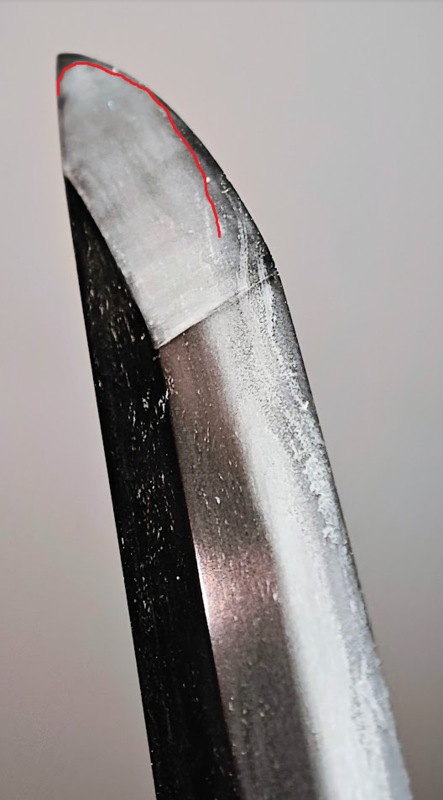
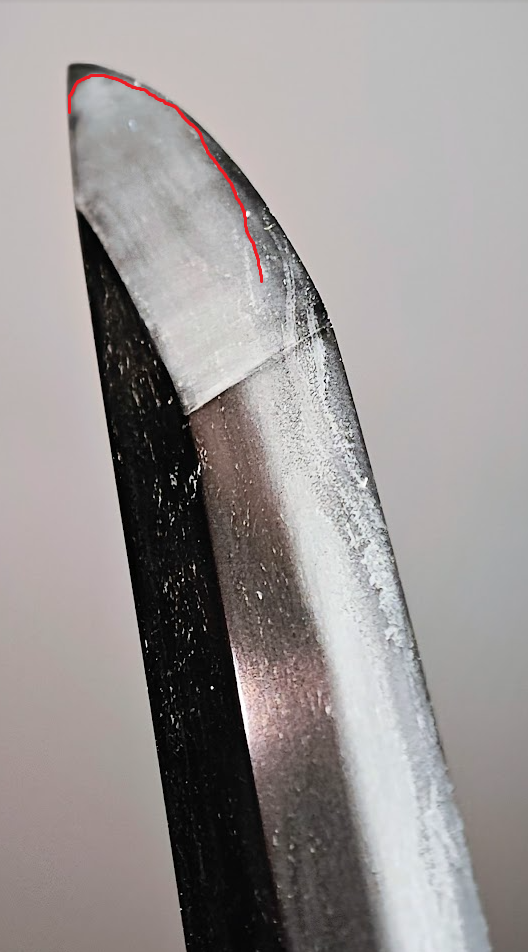
Here is what I would see in two kissaki pictures, I tried to put in a red line to highlight what I am seeing. Not sure that is what actually is happening on the sword but I would see kissaki been repaired and there is a portion where hamon gets very close to edge. Have you measured the sori, motohaba, sakihaba and nakago length? I am not that good on identifying the fine details in blades but I think I can do decently with numerical measurements. It looks to me there are good looking portions of the blade and some portions are looking bit weaker but in overall there seems to be lot of interesting activity on the blade.

 2 points
 -
I thought the same. Both of these might have been his back in the day. He has specialized more in one school and sold off the other Higo schools. A few of those reside with now. Some got away. That wave form one might have escaped my tractor beam.2 points
-
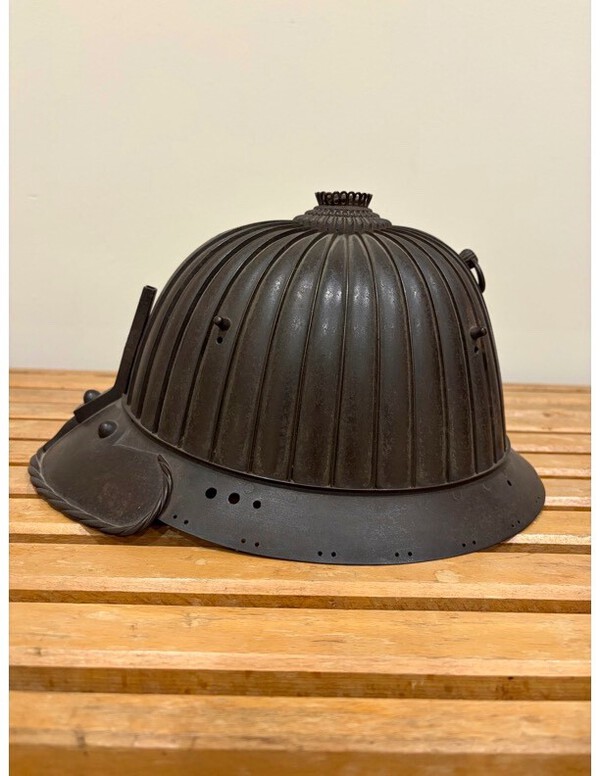
Here are images of the helmet...


 2 points
 -
@Scogg Nice looking first club meeting with a great collection of Japanese swords. The iron Higo tsuba on the table reminds me of one I once owned that I purchased from one of @Curran friends in the UK (sorry I have forgotten his name, but he is a big time Higo fitting collector).2 points
-
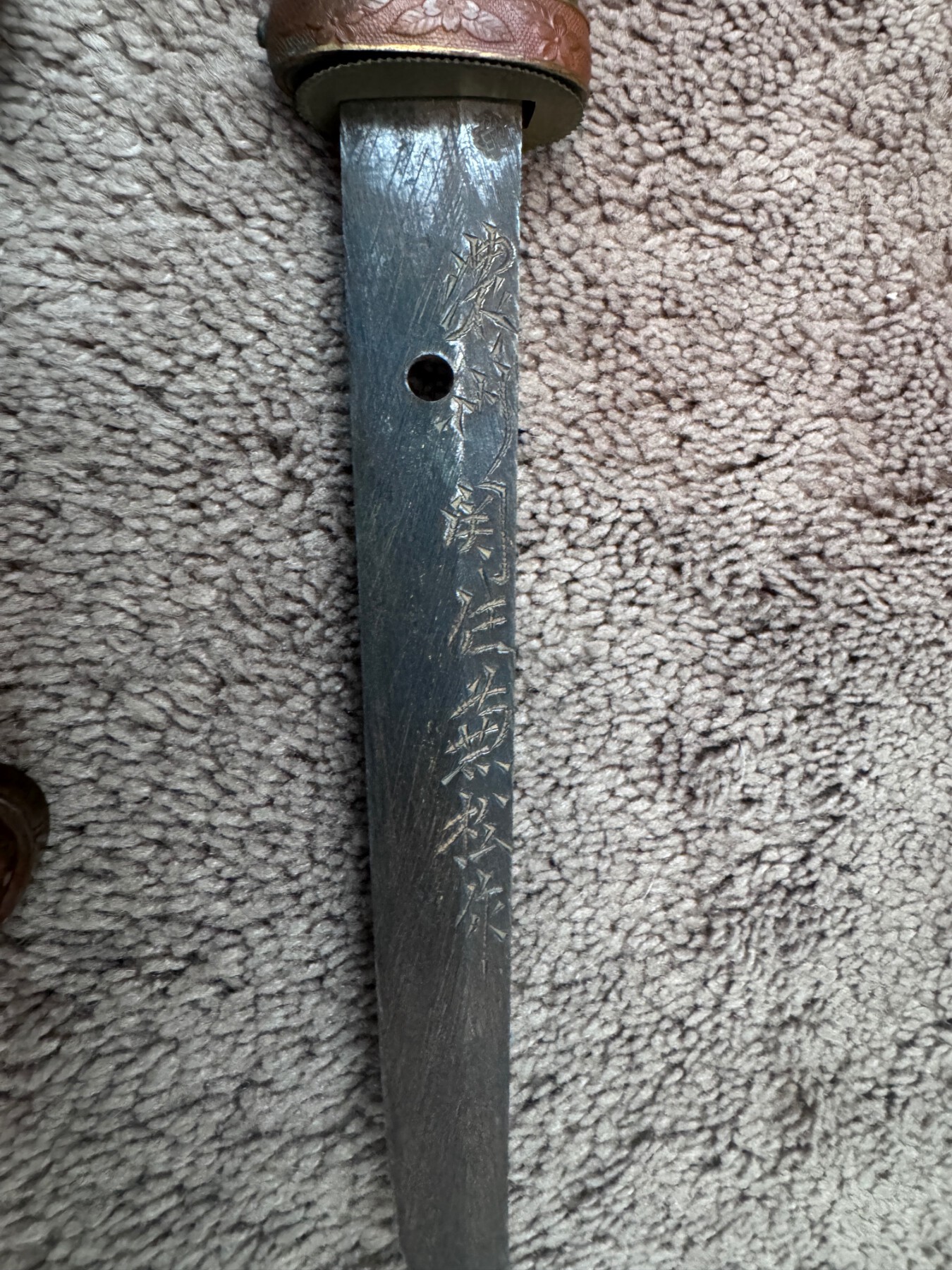
江府住 – Efu ju 満喜 - Mitsuyoshi □本 - ? 和歌山県西牟娄郡西富田村二〇五一 – Wakayama-ken, Nishimuro-gun, Nishitonda-mura 2051 井谷重吉 – Itani Jukichi/Shigeyoshi2 points
-
One man's trash is another man's treasure. I would be over the moon if I found something like that. That kind of stuff just isn't floating around in my neck of the woods. John C.2 points
-
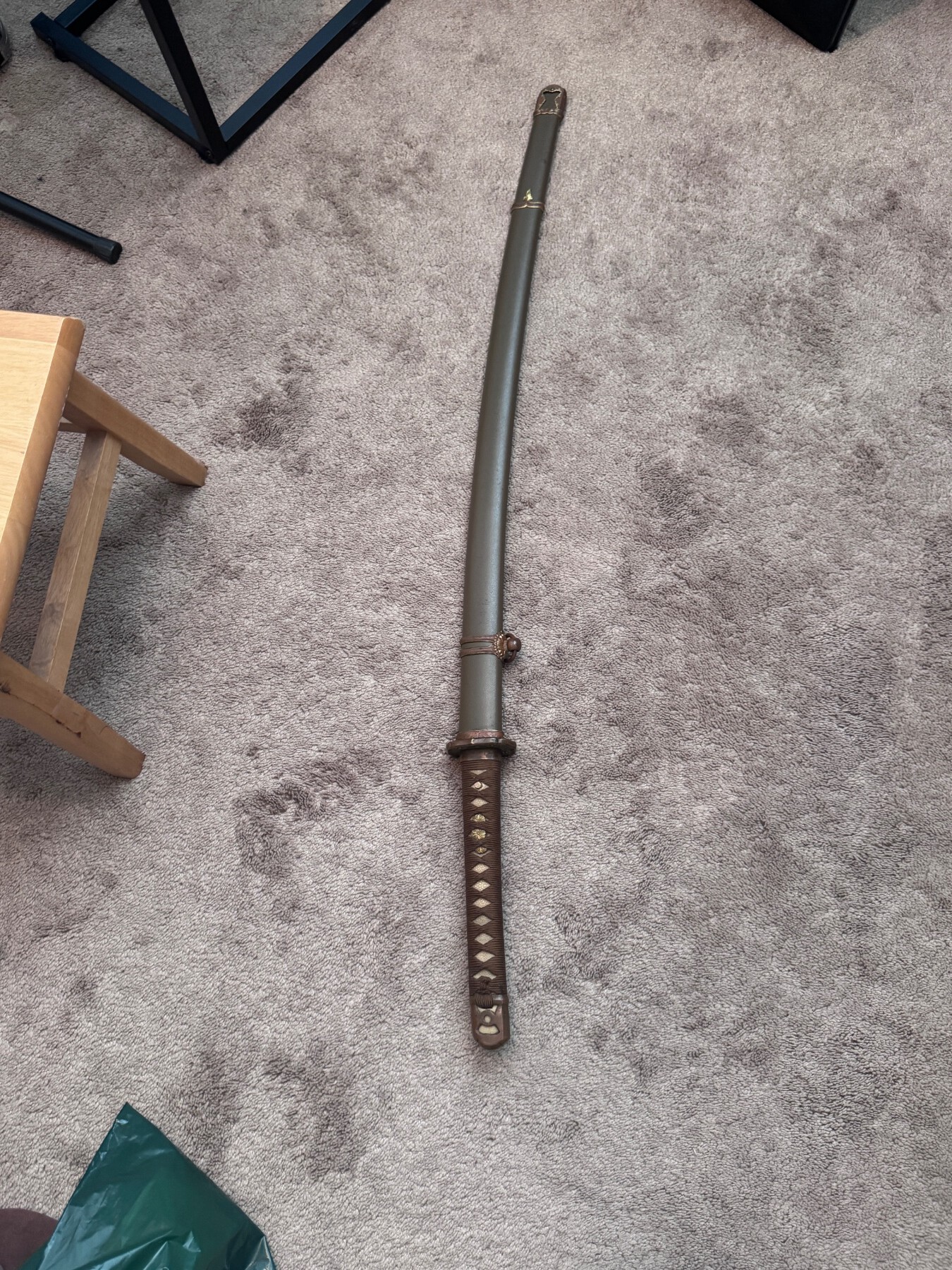
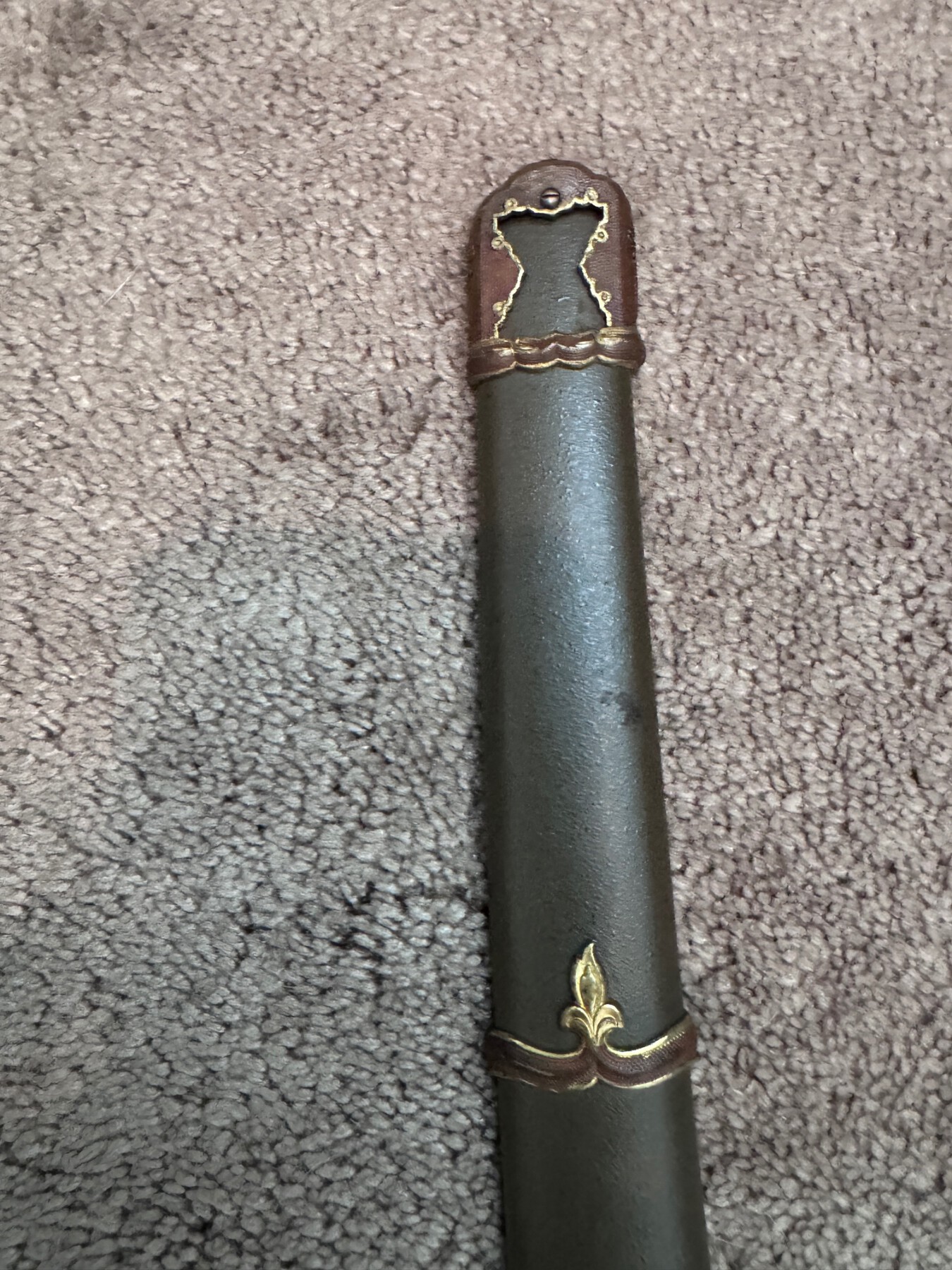
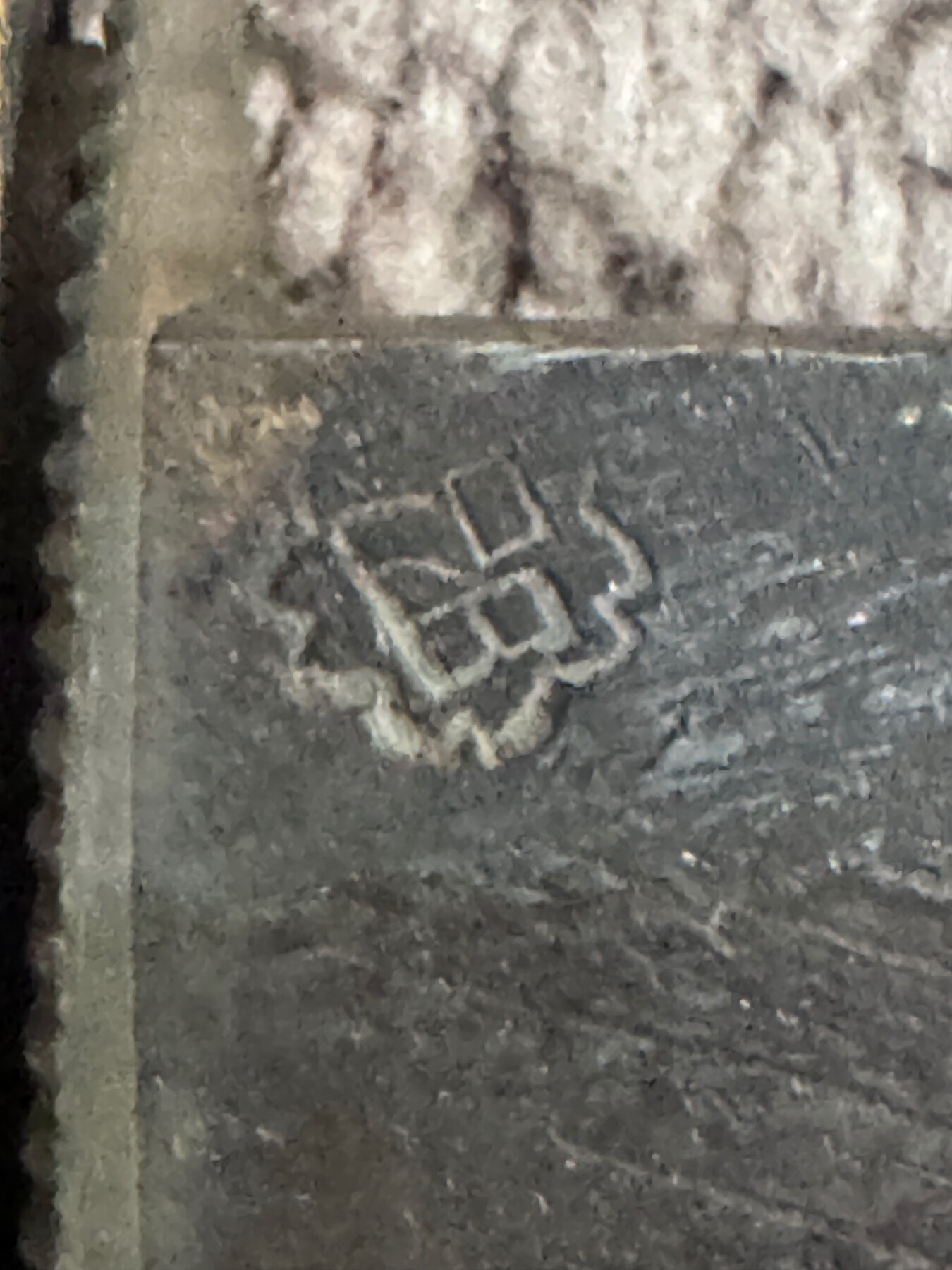
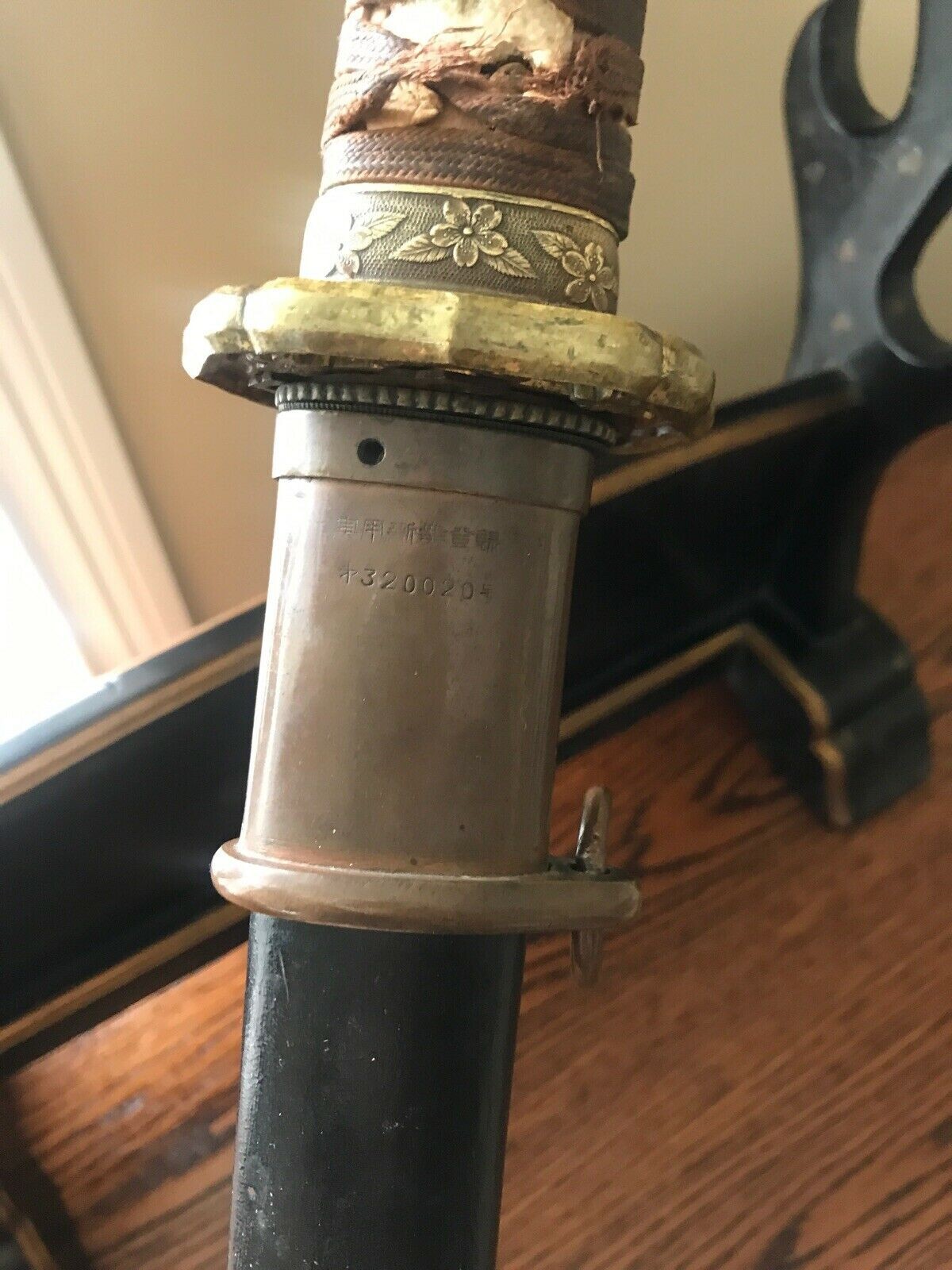
@Bruce Pennington @Kiipu here is an unusual shingunto mount for well known Gifu smith Amahide Yahoo!オークション - 【ASAHI】鍛え肌立つ健全豪壮で美しい一振り 一... 濃州関住一文字源天秀鍛之 Noshu Seki ju Ichimonji Minamoto Amahide kitaeru kore Torokusho (Showa 34 (1959) May, from Shimane) : notes an ura mei of Shigenaga 重長 (not sure if owner). nagasa: 63.6 cm sori: 1.5 cm not sure of fittings kanji and how to read: maybe "Jitsuyou......" practical ?? 㐧 320020 号 (not sure how to read) Is this some type of patented hanger for gunto saya most unusual hamon
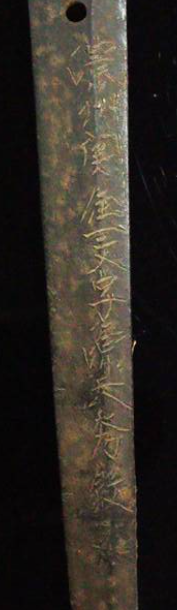


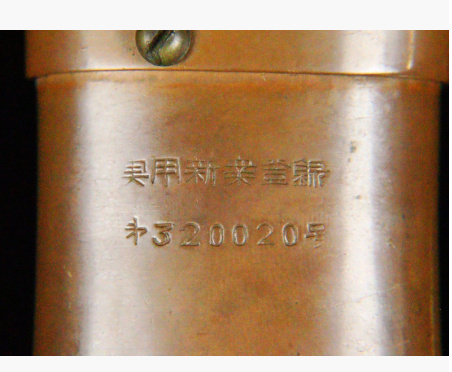
 2 points
 -
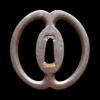
It looks like someone also brought a very nice wave form Kanshiro tsuba. Unless my wife rug-pulls the move, life looks like we will be joining you next Fall.2 points
-
Thought of this thread when I read this discussion of Meiji 19 Uniform size Changes on Warrelics. In the discussion of why there were more sizes added to the Type 38 uniforms, Akira Komiya said this: "As for sizing, I believe it is reasonable to assume that the army decided to enlarge and add additional sizes to the Type 19 uniform by the 20th century as the Meiji era was a time of rapid growth of Japanese physique. According to an anthropological study based on exhumed remains, it is said that Japanese started to grow smaller in stature after the Heian period (794-1185) and reached rock bottom in the Edo Period (1603-1868). Scholars generally attribute this to 2 causes, one the taboo of eating animal flesh due to the teachings of Buddhism and the interbreeding of the populace due to restrictions on movements of particularly farmers. The first 2 charts I attached show the average heights of adult males over the ages based on excavated remains in the Kanto area and you can see that it reaches the lowest of 155cm in the early Meiji era, meaning that they probably reached maturity during the later part of the Edo era. The 2nd chart shows the heights of students and you can see that the average height of 20 year old men grew by 1.5cm between 1900 and 1910 from 160.0cm to 161.5cm, which was also a 6cm growth from the Edo era. Because the eating of animal flesh was an alien concept to Japanese but was considered essential by the government for maintaining a strong healthy military as well as to appear enlightened in the eyes of foreigners, the government, particularly the military, made every effort to devise dishes which would make meat palatable to the populace; among the most famous of which are curry and sukiyaki, the former said to have been devised by the navy. As for the sizes of Type 19 tunics, I never even gave a thought to such until now, but checking 2 of my tunics, I noted that unlike the later model uniforms, size information were not an integral part of the issue stamps but were added separately in vermillion colored cinnabar. One of my tunics is stamped 小ノ大, Large Small Size and the other, 小, small. I will attach photos of one of my Type 19 tunics with the former size marking which belonged to a corporal in the 9th Infantry Regiment. With the very limited samples available to me, I can't comment on the number of sizes the Type 19 uniforms came in." Here is a chart he included:
(1).jpg.735022b7bc3809c772b354052251d31e.jpg) 2 points
2 points -
Why not!?!?! Oh, and it says 廣島 Hiroshima on the old registration card.2 points
-
Each member had a table where they could display their items. Rules basically were, you have to ask to handle anything, and it's up to the sword owner to decide how that happens. Etiquette was instructed when necessary due to the wide range of experience of our members; ranging from people I consider expert, to entry level individuals with questions about their inherited blades. There was a huge variety of items, and some very high-end blades; including probably the best Aoe blade i've ever seen, and also a Tametsugu. Huge thanks to the more seasoned members and attendees for bringing such incredible swords to study - my only complaint is the lighting in the venue that I chose, and that I didn't have more time to admire those blades. I hope to smooth out those wrinkles on the next meetup, and be more prepared. I'm very excited people were able to make it, and support my efforts to get a club going out here again. Feeling very grateful, and humbled. -Sam2 points
-
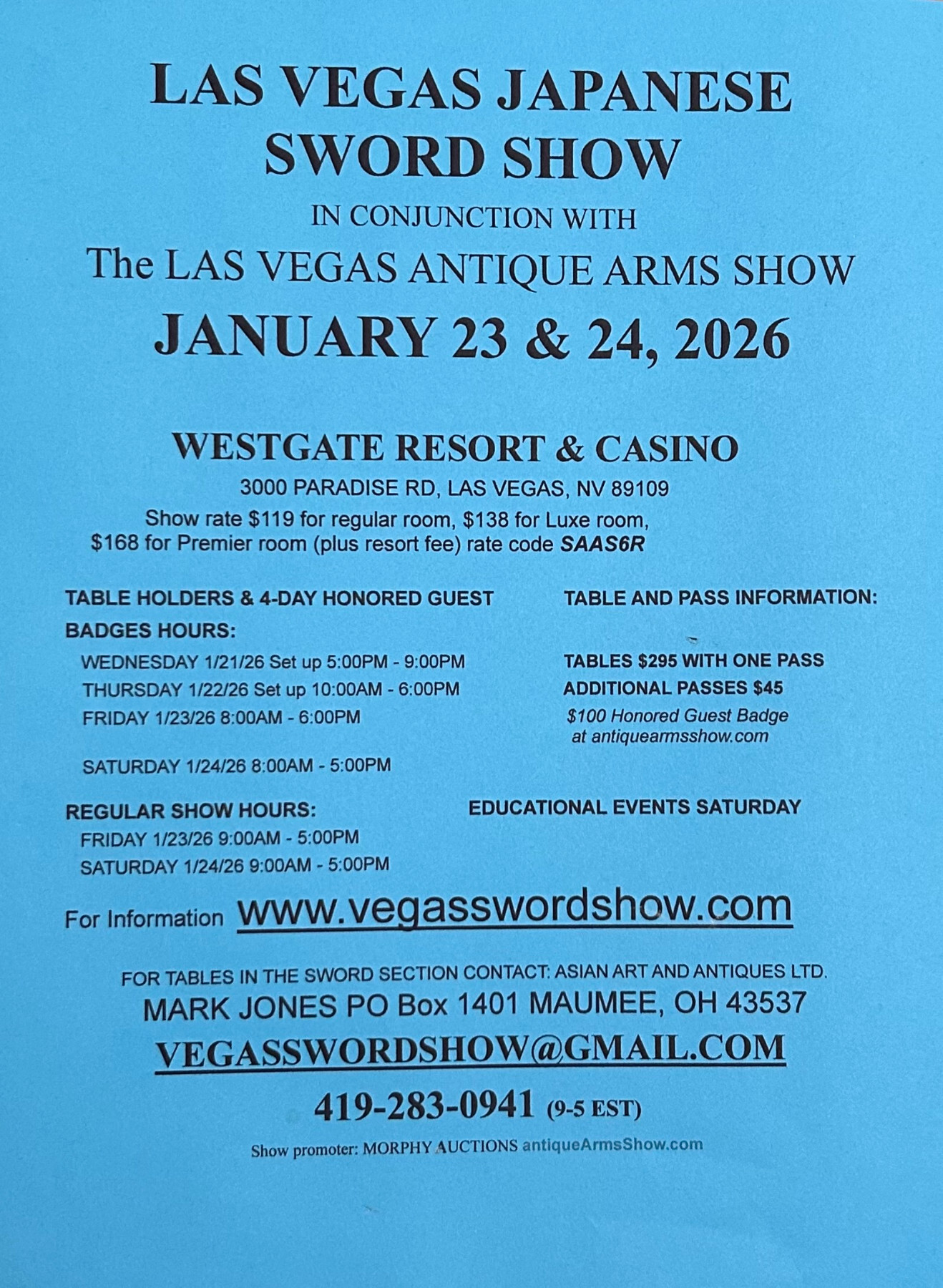
The Vegas show is a few months away. Plan now to attend if possible. For information see https://www.vegasswordshow.com/ The public days are Friday and Saturday. Here is a flyer for the show If you have any questions please contact me Thanks for Looking Mark
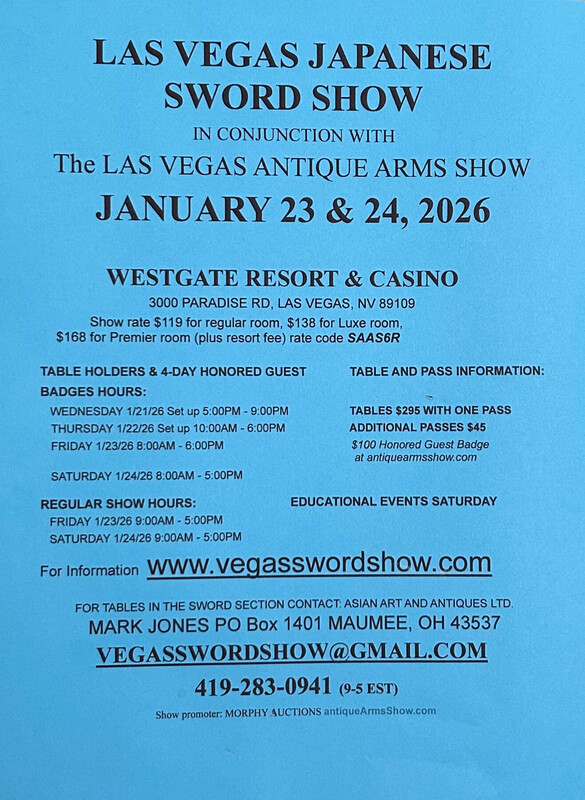 1 point
 -
Hi and Merry Christmas to all, For me one of the more interesting pieces that got back to me this year is this interesting blade with 70 cm nagasa, and shallow sori. Before the restoration, the blade had a nanbokucho bizen feel to it with utsuri, ko-itame, midare-based hamon with nie and some chikei. After the polish the blade show now numerous magic hataraki that points toward soshu-den. I would describe the hamon, to be have been painted with a thick brush, a mist of ara-nie that swirls in the wind. I appoligize to many photos. I would appreciate everyone thoughts on this blade, and it will be interesting what a future shinsa will attribute it to. If you have any kantei points towards a smith or school pleae let me know I would describe the hamon, to be have been painted with a thick brush, a mist that swirls in the wind. I appoligize to many photos. Mostly itame hada, with some mokume and a bit of masame (I may be wrong) closer to the nagako. Utsuri is very destinct. There is dark streaks in the metal, that follows the grain. General overview photos. Kissaki - Boshi is hard to photograph - it changes depending on the light and angle. Possible ichimai-bōshi. More photos in next post.


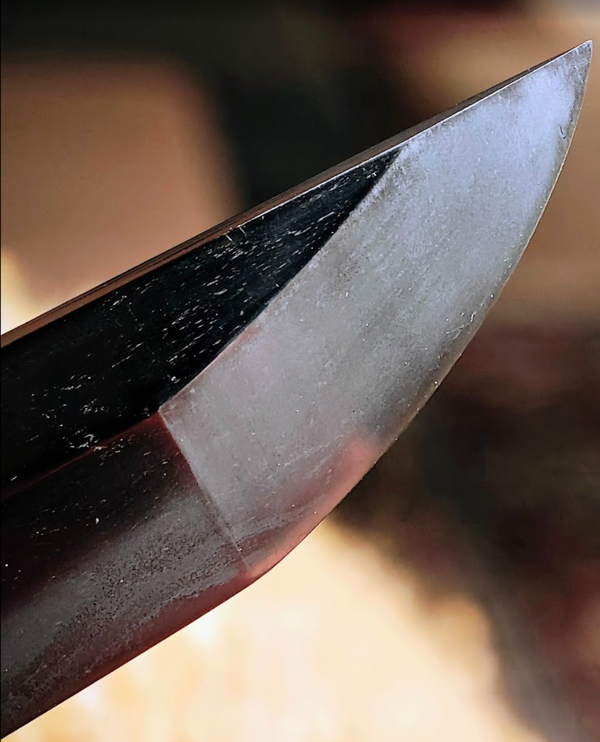

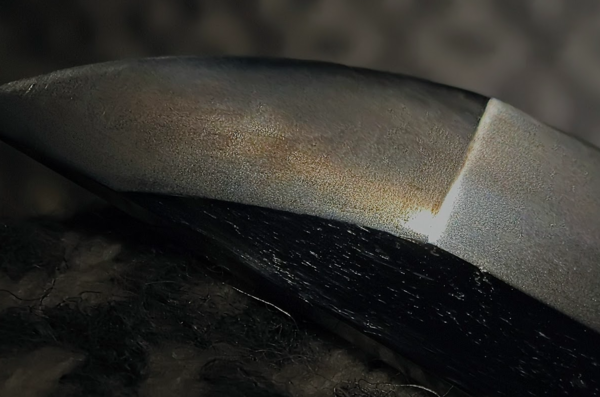


 1 point
 -
It has some Soshu to it, but Yamato also feels very strong here. Uda is a possibility. Tametsugu is optimistic outcome.1 point
-
I think one bit difficult thing to grasp is that Japanese experts often identify unsigned work towards a specific maker. I am not a huge fan of that but after being in the hobby for so long I have learned to live with it. It gets often very difficult when the smiths are rare to find. Sometimes it is relatively easy to find say 25+ signed items by the smith and do some comparisons etc. I do have massive reference library at home (Although I do focus on old swords) and of course Internet in use too. However in my books I can only find that 1 Jūyō example in few books and then this from online as verified item with quick search: https://ginza.choshuya.co.jp/sale/gj/r6/012/14_yoshikuni.php When it is difficult to find reference items it always makes me wonder how the experts can arrive to the attributions they give. Of course they have seen and handled thousands and thousands of swords and have the expertise. To me it would look attribution to Horikawa school in general would be totally plausible one. Well I think the Japanese experts don't give out such a broad and general attribution, and it will always be much more specific. In this case towards Horikawa Yoshikuni. However I think you got nice and big hirazukuri wakizashi. Please post more pictures when you have time, of the blade and sayagaki too (would be nice to see the date of it).1 point
-
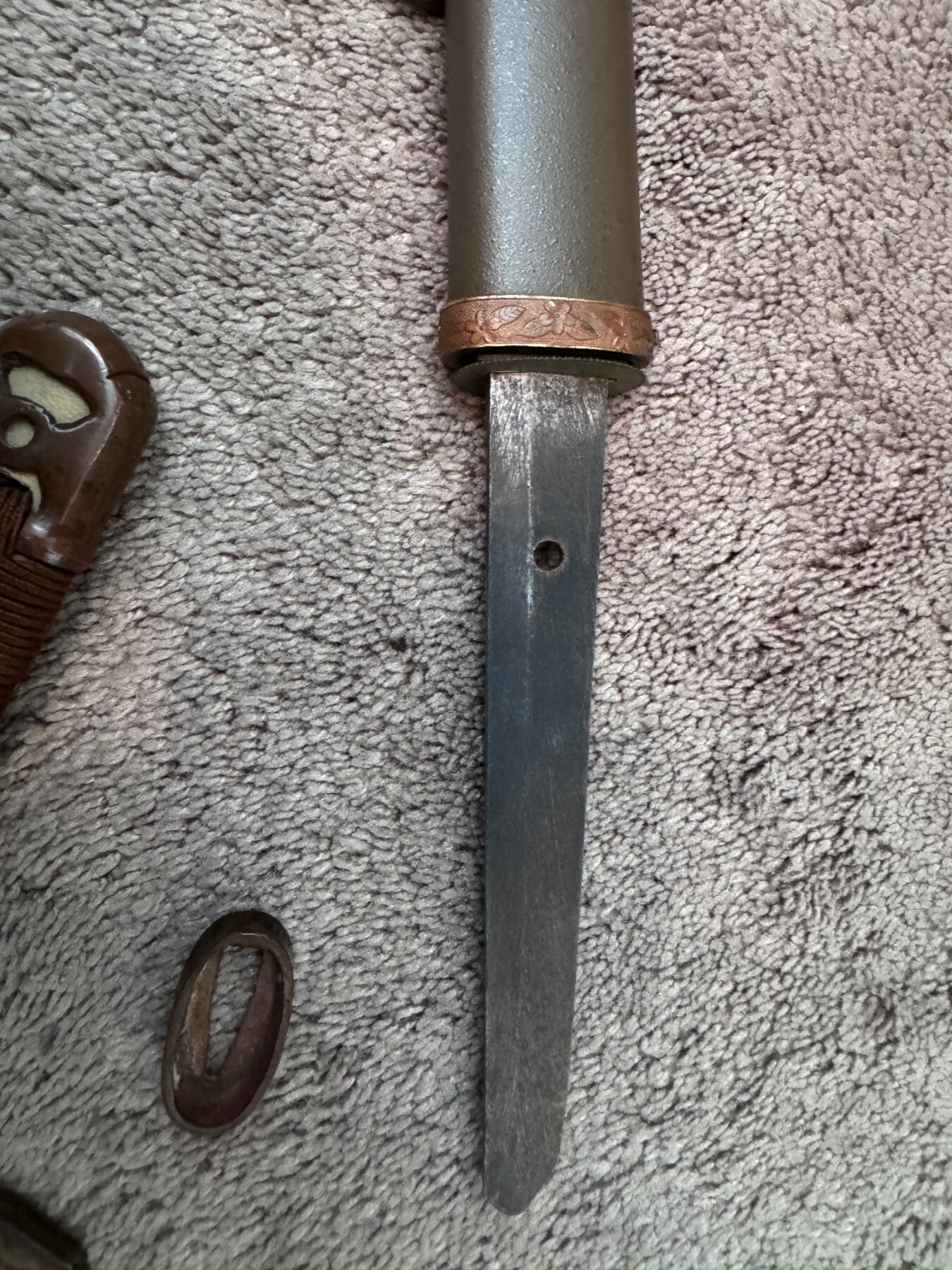
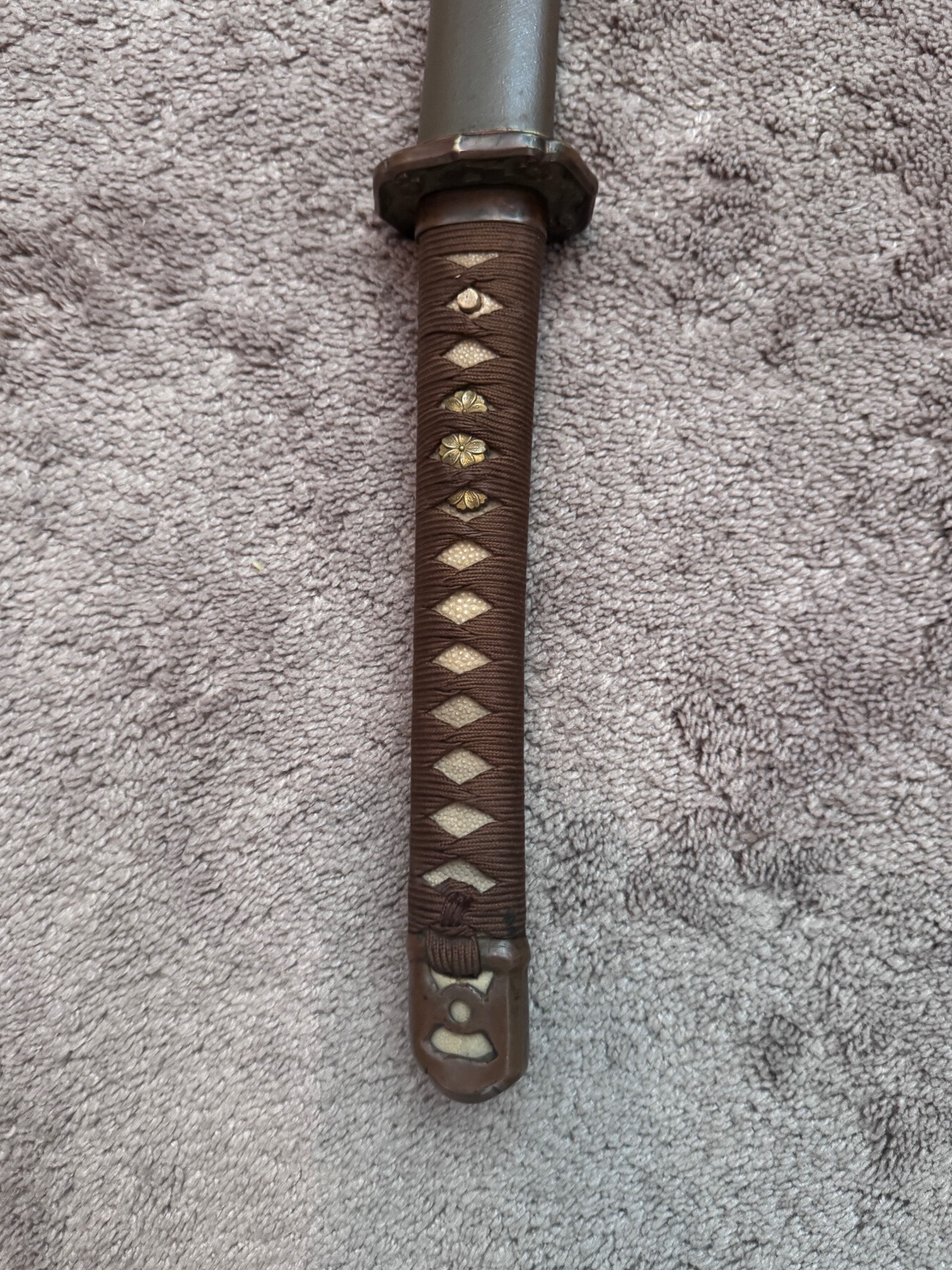
Hi, I’m hoping for some assistance with translating and identifying the mei on a katana in my possession. It was my father’s that I pulled out of his safe. The blade is signed, and the mei appears to reference a Seki Kane-smith, but I would greatly appreciate confirmation, correction, or any additional insight. The tang has a dark, natural patina with one mekugi-ana. The blade is mounted in traditional koshirae. I do not have papers for this sword. I have attached photos of the full blade, both sides of the nakago, close-ups of the mei, and the koshirae. Any help with reading the mei, possible smith attribution, time period, or whether the signature may be gimei would be sincerely appreciated. Thank you very much for your time and expertise.
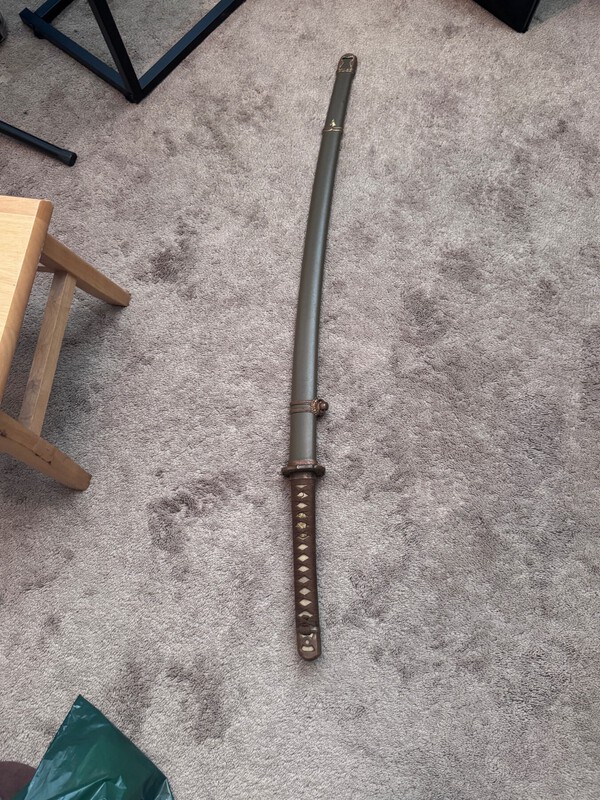


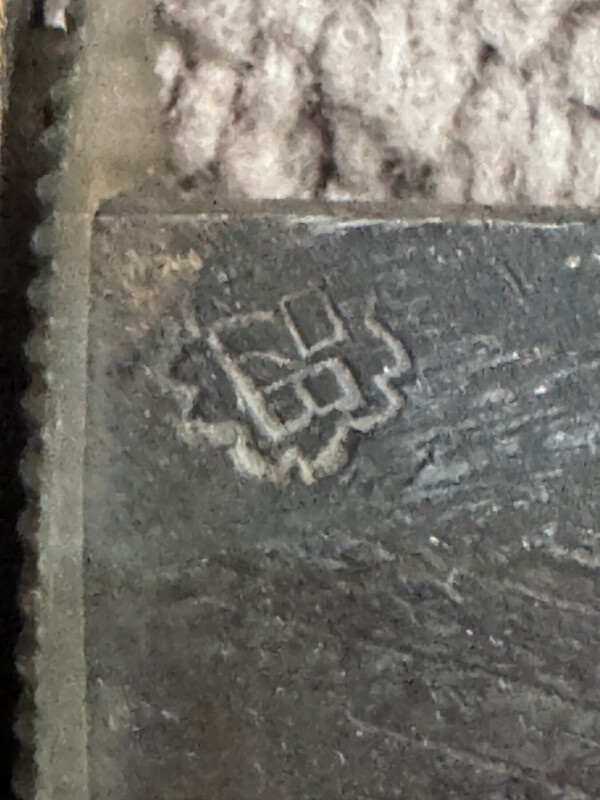
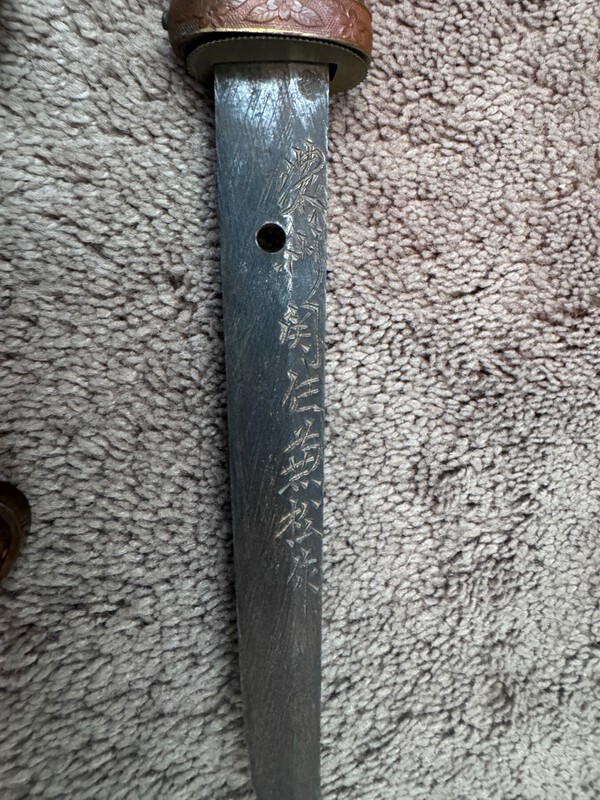


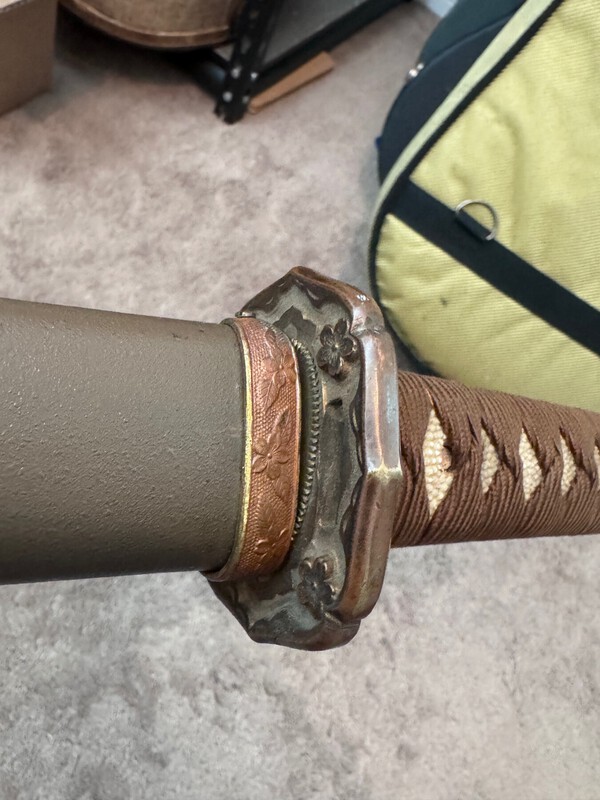

 1 point
 -
Bruce, I do not have much history on it, I come from a family of U.S. Marines and this sword my father had in his safe as long as I can remember as a kid. He passed away a few years ago and I am trying to help my mom with appraising and selling some of things he had including this. Any direction I would gladly appreciate it. thank you.1 point
-
Still available.1 point
-
Great eye @Curran, yes it was a marvelous brass tsuba; and if I remember correctly, early edo period. It was overlooked by most because of all the blades, but it really was something special. I have not focused on tsuba very much, otherwise I’d have retained more information about it. A high class piece, no doubt. We’d love to have you, and I hope you have a safe and easy move out here! It’s a wonderful place to be. Let me know when you’ve settled in. Would be great to put face to name -Sam1 point
-
Bruce: Just a general note about the attribution of population growth and/or decline. So many factors usually contribute to such events that it is alway difficult to list just a few. For example, the Tenmei famine of the 1780s and the Tenpo famine of the 1830s probably accounted for quite a bit of decline in the overall health and height of the population. Not discounting their research (since I haven't read it), just noting that other contributing factors may also be notable. John C.1 point
-
Wow, that is a pretty butterfly cabinet example of lacquerware. Wife would probably permit that in our house. I'm glad I clicked on the link. As you guys debate this, I have no real knowledge to share. I'm familiar with the Korean furniture versions of this, and have watched videos on how they make it. I've never much delved into the Japanese versions.1 point
-
I think you are right. I scanned the sword descriptions pdfs I stored away and got roughly the ratio 12:1:3.5... With a caveat that my pdfs are obviously not representative and if anything they probably over-represent Kunzan and potentially Kanzan. If I take Tanobe-sensei's sayagaki at 3000 that would be 600-1,000 for Kunzan and 25-36,000 for Kanzan.1 point
-
Thanks Mal. So, it became the Tokyo 1st Army Arsenal after 1940, if I read it right.1 point
-
It does not appear Japanese to me. Even in the very unlikely event that it was once Nihonto, one has to ask why someone would alter it so drastically; especially in a way that closely resembles common Chinese reproductions. Even amateur or at home restorations typically don’t replicate the consistent features seen on Chinese forgeries like the nakago and mei. I apologize for any bluntness, but that is my honest assessment. Best regards, -Sam1 point
-
Quite nice blade Hector! I like the shape! I would not exactly call it HITATSURA, but nevertheless an attractive HAMON with TOBIYAKI and ICHIMAI BOSHI as far as I can see.1 point
-
Definitely a bad Chinese fake, never been in Japan. It would be illegal there.1 point
-
Hi @Darren20, I hate to be the bearer of bad news, but what you have is not a genuine Japanese sword. It is a fake; likely made in China. https://www.jssus.org/nkp/fake_japanese_swords.html Best regards, -Sam1 point
-
It's awful when you only find out about someone by news of their passing and then see how amazingly talented they were. After following the link provided here, I've been looking through Richard's photography and it is so stunningly beautiful. Rest in peace, sir.1 point
-
My good friends, I know that we have been through some major conflicts on some other of my threads on this forum (oh let’s think, like my "Tsuba casting molds?" thread!). But when the end is in sight (come on God give me at least 10 to 15 years!), everything doesn’t matter anymore. Maybe a little too much philosophy! Oh well! This is a great forum. And I will continue to put forward my thoughts on subjects, no matter what kind of backlash I get. Hey, that is just me! Starting tomorrow, I will start taking digital pictures of my collection to start cataloging them! Onward and with respect!1 point
-
At first glance not a TACHI and not a Japanese sword.1 point
-
Sad news indeed. Yes he was an excellent photographer, but he was a fine gentleman. The KTK will need to search far and wide to get someone worth his skill set. He will be missed by those who knew him.1 point
-
The show is less than 2 months away. Now is the time to plan to attend the Vegas Sword show https://www.vegasswordshow.com/ There is a link on the website for room reservations. If you want a table (or 1/2 a table - they are 8') let me know at vegasswordshow@gmail.com A great opportunity to see Samurai swords in hand and learn from actual examples. There will be educational presentations organized by Mike Yamasaki https://www.facebook.com/tetsugendo Contact me directly with any questions. Thanks for looking! See you there! Here an opportunity to buy/sell/trade and see hundreds of great swords, tsuba, and fittings. Meet restoration craftsmen, educational presentations.1 point
-
Looks like a great show Sam! I'm still hoping to make Vegas show this year! We'll see how the newly inbound family member will be coming along around that time!1 point
-
Wonderful opportunity for seasoned collectors and novices alike. The more exposure we have to nihonto the better for the hobby. Word of advice. Gloves should be worn when handling the blades in shirasaya or displayed with a tsuka. Bare hands when holding the nakago.1 point
-
The first meeting was a huge success! Big thanks to everyone who made it, and brought swords to show. Hope to have our next meeting this spring/summer 2026 in Washington state


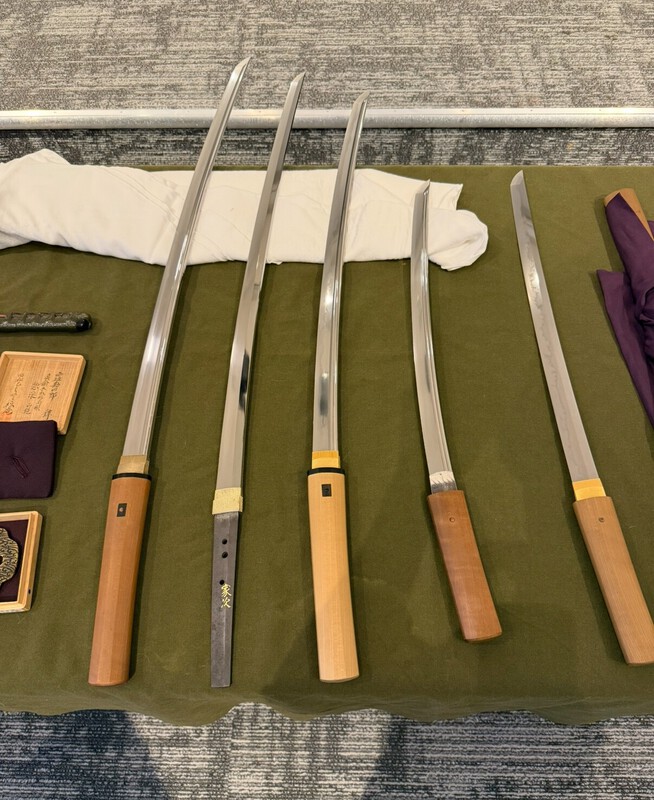 1 point
 -
And the bad news is that a friend told me that once they get your name on the register they will ask you again the following year, and it will be hard to refuse. This means that from now on it is likely that I will have to do the above display or something equivalent every year, unless I can come up with a good excuse. Hmmm…1 point
-
Children’s Day Sunday, actually part of the annual Buddhist Kuyosai ritual commemorating the souls of Osafuné swordsmiths. The day started off with speeches, incantations and pinched offerings of incense. Kōzuke Daijo Sukesada’s gravestone is here, behind the dark green bush. I went round later to have a look. “No photos allowed” the sign said. It was the first time I had been invited to do a stall illustrating Bizen guns. I unloaded the car and set up the display at 9:30 am. Imagine my surprise then, when they required my attendance in the special dignitaries’ tent, and to be called in turn by name to go and offer incense and prayers at the altar. I watched closely and tried to memorize the ritualized movements of the Mayor etc., giving an internal moment of thanks for the lives of all those Bizen smiths of yore. Various attractions and events were held during the day for the children, with whole families joining in. Most visitors to my little display were respectful and full of questions, but a couple of the hyper kids were grabbing antiques as if they were playthings, and needed close watching! Family sword play My table


 1 point
 -
I had this photo awhile ago ,but forgot where did I got it.
 1 point
 -
Looking at Kanetatsu, Sesko lists: KANETATSU (兼達), Shōwa (昭和, 1926-1989), Gifu, real name Kanemura Tatsuo (兼村 達雄), born February 23 1913, he worked as a guntō smith. This agrees with listing in the Seki tosho registration: Kanetatsu, Kanemura Tatsuo, born Taisho 2 (1913) Feb 23, registered Showa 14 (1939) Oct 26 (this is earliest registration date) at age 26. He was living at Seki-machi, Asahi-cho. The sword of Robs (A): "Kanetatsu" 兼達 ni-ji mei, dated Showa 18(1943), with o-suji kai yasurime and Seki stamp. Sword B (2015 KimberFortyFive): shichi-ji mei : "Seki ju Kanematsu Kanetatsu saku" 関住兼松兼達作 Sho stamp, apparently no date, and taka-no-ha yasurime. Sword C (Slough, p. 68): shichi-ji mei : "Seki ju Kanematsu Kanetatsu saku" 関住兼松兼達作 Sho stamp, apparently no date (not shown), and taka-no-ha yasurime (and described as "nakirishimei"). Sword D (F&G 1983): shichi-ji mei : "Seki ju Kanematsu Kanetatsu saku" 関住兼松兼達作 Sho stamp, apparently no date (not shown), and taka-no-ha yasurime. Sword E (F&G 1983): ni-ji mei, dated Showa 17 (1942), with o-suji kai yasurime and Seki stamp. Sword F (Stein JSI): shichi-ji mei : "Seki ju Kanematsu Kanetatsu saku" 関住兼松兼達作 Sho stamp, apparently no date (not shown), and taka-no-ha yasurime. Sword H (nipponto.co.jp): same shichi-ji mei (last sword) Looks like two versions: swords A and E are "Kanetatsu" ni-ji mei, with Seki stamp, o-sujikai filing and dated. "Tatsu" kanji maybe more simple style. (could these be "shoshinmei"?) Swords B, C, D, F: are shichi-ji mei with Sho stamp, taka-no-ha filing, probably not dated, and some more artistic mei by cutting specialist. There are also differences in the shape of the nakago. Looks unusual that his name is Kanemura Tatsuo (Kanetatsu) and he signs Kanematsu Kanetatsu 兼松兼達 on some swords. For sword D, Fuller & Gregory suggested could be a joint effort. This is also suggested for sword H (last sword) by seller Nipponto.co.jp. For interest, there is an example of Kanematsu: "Noshu Seki ju Kanematsu saku" 兼松 sword G, but his name is not in lists.

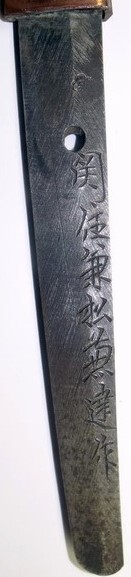





 1 point
























This leaderboard is set to Johannesburg/GMT+02:00