
Leaderboard


Popular Content
Showing content with the highest reputation on 12/02/2025 in all areas
-
Many thanks for the previous contributions. The question of pricing, development, and returns in connection with Nihontō is fascinating. I can well understand why many consider this aspect central, expecting clear guidance from it, only to be disappointed. My preliminary conclusion, however, is that there are at least two main approaches: the quick, seemingly clear answers that promise guidance but are usually misleading, corrupting the true joy of Nihontō by entangling us in political and economic argumentation - the moment one adopts a political approach and starts to calculate, the magic vanishes. And the more complex considerations, which offer no simple solutions but lead us deeper into the intricate reality of human experience. First, my own experiences with dealers and auction houses have been always very unpleasant. Perhaps personal factors played a role, but the situation is simply too steeped in tricks, lies, and deceit. And apparently, I am not alone in thinking this: Darcy, for instance, criticizes in his articles how dealers dismantle Nihontō for the sake of pure profit, selling pieces individually without regard for cultural or historical context. Likewise, the history of certain smiths or works is often exploited through exaggerated storytelling, solely to inflate market value. In Japan, there seems to have been an early aversion to profiting from beauty, which is why dealers in the Edo period held the lowest social status (a position I still hold to this day, though, of course, there were other political reasons). For many, Nihontō are sacred relics; they are bound up with love—and yet, as we know, politics and love rarely mix well. That is fundamental. All of this nearly spoiled my initial interest in Nihontō. Personally, I would be immensely grateful never to have to deal with dealers and auctioneers again, preferring instead, as it was settled in the past, to resolve everything with friends by handshake. At the same time, there is supposedly an informal market that grants access to the finest pieces only to a select few insiders. These developments trouble me from a scholarly-philosophical perspective, as they prevent us from realizing the potential of these art. Additionally, I share Hoshi`s concern, as he writes that new crypto millionaires and their ilk may be infiltrating the market, generating illusions and artificially inflating prices. I had actually assumed this was already happening, but apparently, it does not yet seem to be the case. That said, I still appreciate museum exhibitions, but a blade truly reveals its almost 'totemic' power only when held in one’s hands. What I think would be really nice would be a kind of prayer room in the museum, similar to the ones you find at airports, where you could take a Nihontō and spend a few hours meditating with it. That’s my vision for the Nihontō museum of the future ;). (A brief personal digression): I am familiar with the saying, “Bad swords spoil the eye,” which makes it all the more embarrassing to admit. Yet, perhaps others feel the same: the Nihontō that shape us are, in most cases, called "bad" Nihontō, because most of us never have, and likely never will have, access to the truly exceptional pieces. These "good bad Nihontō," as I like to call them, offer a richness that one loses once a more refined taste or collecting ambition takes hold. When one becomes acquainted with high art, the terrain that was once wild and wondrous begins to narrow—a system with its own pitfalls (ultimately giving rise to sometimes strange, oddly intellectualized judgments of taste). The original joy is partially lost—it is lost with taste. The central question, then, becomes whether—and how—one can recover it. As I’ve mentioned, all of this is intellectually fascinating to me. However, what occupies my thoughts most is the question of why the market remains informal and opaque to this day—a point that has been repeatedly raised in previous forum posts. Nihontō continue to be a niche market, and as such, their pricing potential can hardly be fully realized. The fact that purchases are often conducted in secrecy and that knowledge is guarded with caution, suspicion, or even jealousy is particularly intriguing. Of course, knowledge is hard work, requires a lot of effort, and one must dedicateto it seriously and with humility. Literature is the main path. But fundamentally, it seems to me that this community thrives on the generosity of a few individuals, like Darcy, Hoshi, and some others (I hope there will be more in the future). It’s always a few who carry the pull of one generation to the next, expose the vanity of other secret keepers, and thus push the species forward in certain areas. But secrets are simultaneously the origin and driving force, as they have a long tradition. The dynamic is truly complex and fascinating. I believe one can approach this topic on multiple levels of abstraction. Here is a small selection of reflections I have made: At a higher level of abstraction, the Japanese "culture of secrecy" exists within a historically developed cultural context that can only be understood from within that context. Reading, for example, Jun’ichirō Tanizaki’s nostalgic longing for the beauties of old Japan, one encounters an aesthetics of darkness and shadow. While in the West we aim to illuminate every secret with the light of science—a pursuit with its own beauty—the Japanese cultivated an aesthetics of shadows, of veil, of the unspoken. It is at the core concerned with the question of how to preserve the secret, how to protect what can only be sensed. There is a special appeal in this as well: allowing agreements or relationships to arise somewhat in the half-light—a subtle, peculiar pleasure. From another perspective, Japanese cultural history can also be read as a succession of treacherous attacks. The persistent insistence on loyalty among the Samurai and in military contexts sheds a clear light on the frequenct occurrents of plots, lies, and breaches of trust. From this arose a deep cultural inclination toward secrecy. Another interesting aspect is that, although Japan traditionally maintained a naturalistic outlook, its world remained suffused with legend. Their world is full of ghosts. They invented gods and created myths and legends to somehow interact with that which could not be grasped by symbols alone. Observation and myth were not strictly separate, flowing together. Swordsmanship was revered as a sacred craft, and the formulas for making Nihontō were treated like magical spells. Many smiths even withheld knowledge from their own students. This attitude continues into the modern era. Togishi Hayashi captures it beautifully through the words of Satō-Sensei: "During an apprenticeship, you are not taught anything. Your sensei is not obligated to teach you. In a way, you are to ‘steal’ your sensei’s skill and make it your own. It is up to you to observe what he does and emulate him." Of course, there are also Western figures, like Dostoevsky, Zweig or Calasso, who have approached the dark heart of things. Yet the Japanese perspective undoubtedly belongs among the human endeavors that peer most deeply. It is difficult to fully comprehend. Precisely because it remains a mystery, it gives us so much. How can anyone still attempt to express it seriously in numbers?7 points
-
市川市新田一四五 – Ichikawa-shi, Shinden 145 中川清一 – Nakagawa Seiichi 千葉県市川市新田一四五 – Chiba-ken, Ichikawa-shi, Shinden 145 中川清一 – Nakagawa Seiichi7 points
-
I appreciate the question, but it is difficult for me to offer anything definitive. First and foremost, I am in anti-Masamune camp. Any other major smith - Yukimitsu, Norishige, Hasebe, if you take them out and try to write the history of Soshu, it does not make sense anymore. You can write a Soshu book without showing a single Masamune piece and you'll be perfectly fine. You also seldom will hear from a high end person "it papered Sadamune but its really X" or "its papered X but its really Sadamune". Note: leave dealers aside. With Masamune you hear that constantly. There is no 100% consensus of what Masamune actually is and is not. That is not to say there was no great smith who today is attributed as Masamune - the "fukure master" with crazy nie work, but he was relatively late (1330-1345?), did not work for a long time and did not produce many pieces. Then ofcoarse there are suguha works signed as Masamune, which is another, opposite end of the spectrum. And then there are works with relatively narrow hamon, but which is rich in nie, structured as long, winding "belts", and it can have ara nie and tobiyaki. Jigane tends to be a bit rough and large featured. That feels like the type of work we see here. And really not the best example of that. You can see those as done by someone who studied under Shintogo and made considerable changes in both hamon and jigane, but did not really go into later Soshu like Go and Sadamune... but sugata-wise such pieces don't necessarily fall into the "early" category. Will this one be Juyo? Probably not. Is it really Masamune? Hm.... There are many books that state "you can't mistake Masamune's work with anything else", but they offer very scarce hints regarding what makes it unmistakable. If this blade is resubmitted today, can it draw something like Sanekage? I don't know.4 points
-
I fully understand Brett and I think it is very important to be supportive of new enthusiasts to the hobby. As someone with quite modest means for collecting I know very well that spending multiple thousands into a purchase is something many people will need to seriously consider and weigh the different options. That is why I initially started looking at the prices and trying to figure out things in order to make most of my potential future purchase. It can be extremely difficult to understand why for example one mumei Ōmiya attributed sword is 600,000 yen, another is 1,100,000 yen and third one 2,800,000 and to be totally transparent I sometimes still struggle to understand the pricing for some items. Originally years I was thinking that there could be a major difference on a 700,000 yen sword and 600,000 yen sword. And many cases there can be major differences just not ones that might affect the price too much. For me personally when an item is jumping through dealers or sold multiple times, it just makes me think there must be something on that item as people don't want to keep it even though the item would be really nice. Here is an example of a Ko-Bizen tachi that was listed at 3 different high quality vendors lately. https://web.archive.org/web/20221203191527/https://wakeidou.com/pages/522/ https://web.archive.org/web/20230603022557/https://eirakudo.shop/token/tachikatana/detail/425951 https://web.archive.org/web/20240424230207/https://www.samurai-nippon.net/SHOP/V-2051.html Each of them had it priced slightly differently but they were of course around the same ballpark. The Japanese dealers of course know their pricing very well. I think the Paul Davidson collection had awesome items but a low level collector like me isn't the target audience. I just felt many of the estimates were beyond what I would have been looking at. Well of course I couldn't afford a single item from there. The most interesting item for me was the Kozori Sadamitsu wakizashi and I think that could have been a good deal: https://www.sothebys.com/en/buy/auction/2025/important-Japanese-swords-and-armour-from-the-paul-l-davidson-collection/a-ko-wakizashi-signed-bishu-osafune-sadamitsu However the smith is completely irrelevant as long as high end collecting goes so I would guess the Tomomitsu and Morimitsu got a lot more eyes on them, well the Morimitsu seems wonderful item. Of course I understand that my personal view is skewed towards overvaluing some items and not realizing the real potential for most of the items.4 points
-
https://en.wikipedia.org/wiki/Blind_men_and_an_elephant It is naive to assume that Sotheby’s or Chrtistie’s are the places where great Nihonto masterpieces change hands. Occasionally that happens but it is rare.4 points
-
From memory, that tanto was Norishige at Juyo but on passing TJ they upgraded it to Masamune. If you read the setsumei, they expend a whole three sentences (proportionately for a setsumei that is a very substantial fraction of the text) explaining why they have changed their minds away from Norishige. I have only seen it behind glass but it is an amazing blade. Simply beautiful. The Aoi blade…. Well I think it is more likely a Tametsugu or a very very rough Norishige, but as Rohan explains above, there must have been some politics involved to upgrade it historically to a Masamune. It just does not look right for a Masamune in either nioguchi or jigane or hataraki. However, I shall leave it to others to explain why the workmanship is not fully aligned to the Masamune paradigm, hence the “den”. It has been a long day at work for me… In my view it is problematic that the NBTHK do not issue papers with attributions “Soshu ju no Saku (Kamakura)” or “Soshu ju no Saku (mid Nambokucho)” etc at H/TH level. So as they don’t do that, hence the den Masamune, which is a bold call on this one.3 points
-
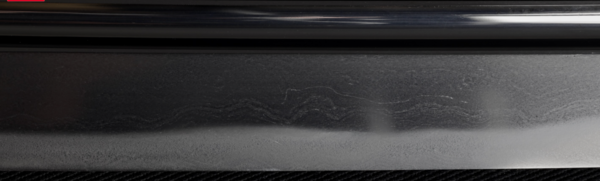
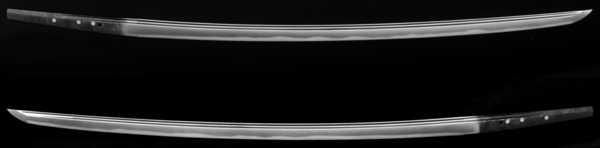
Excellent points. According to historical references there was a signed Masamune blade, dated 1314, so he was active for several decades. The condition of this blade will almost certainly hold it back. Very speculative pricing for a blade that, taken on its own merits, is far from appealing. This is the best 'Masamune' that I've seen on the open market. Very healthy and I think this is worthy of its attribution at Juyo level, also with early Honami family papers. The distribution of Nie is quite distinctive. I doubt there would be Sadamune without Masamune's influence. Their style from what I can tell is quite distinctive compared to the other contemporary Soshu grandmasters. Who else had such control of Nie distribution? Of course with so much cross pollination of ideas and technology a great deal of overlap should be expected. Norishige with his Mitsukawa hada is probably the standout Soshu smith offering a unique style later in his career.
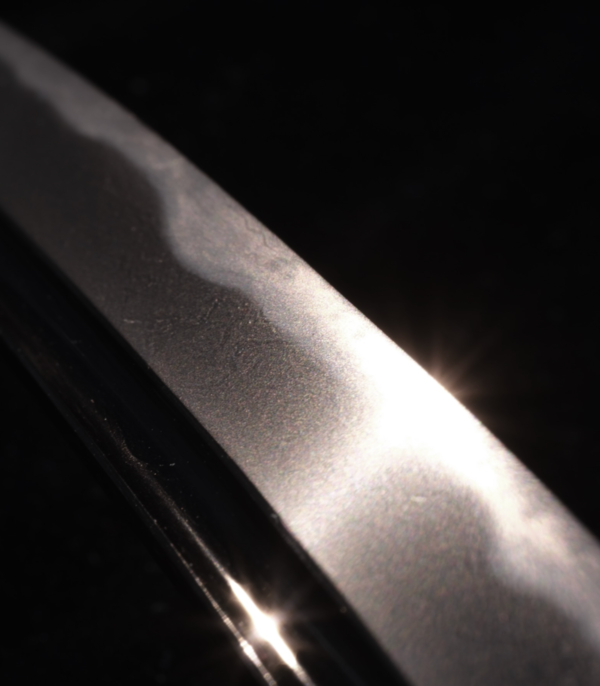 3 points
 -
TH papers are paradoxically from August 20243 points
-
Hello, I realize that my previous post may have been too theoretically-slanted. For the benefit of the broader readership, it's worth clearing things up. Claim: Prices are down on the items I found online. Your sample is not representative. On a representative industry price survey, DTI24 -> DTI25, top TJ prices are up ~+25%+, Juyo+ were mostly absent (TJ coming up 2026), Juyo- items are stable. Claim: Auction house all time high has not been exceeded since the Compton sales Auction house ATH has been broken (see Mikazuki Kanemitsu) 418'000$ -> 1'300'000$ (although, I caution that this is a perfectly meaningless measure) Claim: 50% of items went unsold, therefore the market is down because seller's reserve on a per-item basis has not been met What matters for the seller and auction house are the total sale proceeds, not the item clearance rate. Total sales proceed is driven by crown-jewel items (power-law distribution) and it has been a resounding success from this perspective. And finally, are you sure you want more transparency, liquidity, and participants? It would be relatively simple to "pump prices" in this field, as such a market is extremely sensitive to new whales joining. Do we want more speculation-minded deep pockets with no education? At your risk and perils. The center cannot hold. Be careful what you wish for. Hoshi3 points
-
Agree 100% on auction houses being outliers. But even though they are they represent transparent price action that is sorely lacking in this space. They are also an indication of the strength of the current market that the international community does watch. And yes, at the moment Nihonto is not even on anyone's radar due to the auction houses being a outlier in the Nihonto market. Case in point... the 54% clearance rate after the sale of the Mikazuki Kanemitsu in the same auction. This tells you everything you need to know about how the global community currently sees the Nihonto market - it is not something anyone is touching. That is a valid point and really great insight regarding the example you use of selling rare coins. Whilst you have great price data you also have smaller margins but the price trend is up. With Nihonto there is no price data, the market is fragmented and difficult to understand. And yes dealers do differ massively in the price they charge which makes it even harder for a buyer to understand. I suspect however like your coins shop that for the majority of Nihonto sellers they are also making a very small margin on their sales because their market is so small and there is very little demand meaning the price trend is not up. You can tell exactly how well a dealer is doing by how quickly their swords sell (or how long they stay on their website) and for the younger dealers who started their YouTube channels during covid how many are still producing content. Most are not doing as well as their optimistic view suggests. I would love to see this change and for these sellers who are the bread and butter of Nihonto transactions to be rewarded for their hard work and effort they put into this space. They truly are the link between the old community and the new enthusiast and if they do well the community does well. Thank you for your insights - it is really appreciated.3 points
-
Colin, You overlook several pertinent facts: - The business has moved on tremendously in the last 20 years. Previously, auction houses were the only way to access top blades etc, while now they are not. Also, their presentation of auction items, in-house knowledge and overall expertise are woefully behind the standard benchmark (of even the modest dealers working and presenting on this forum) let alone the topmost leaders in the space internationally (no slight intended to our members here, just reality); - So, since the auction houses lag so pitiably behind, they can no longer be representative of “the market”. The market is where most action happens and that is in Japan. That is not accessible to the vast majority of NMB members and that is privileged info. Of course you could endeavour to parse the “market” into segments such as the US market, the U.K. market etc but again that is a false methodology as all of these jurisdictions now primarily source from Japan nowadays (with the ever diminishing trickle of discoveries in the US); - The “unsold” auction houses proportions cited above are misleading. There are post-auction private sales which still realise prices and margins on the auction remnants for the auction houses. In fact, the Davidson collection left-over items were placed that way and so were other “unsold” items in other auctions. The auction house fulfilled its purpose to indicate roughly where the seller’s mind was (taking into account reserve pricing axioms). - While Hoshi and others do discuss top items, please do not get distracted by that. The facts above in relation to auction houses are relevant to all levels of items. On the perennial point of secrecy: - It is embedded in the Japanese national psyche. Ever since Nobunaga and Toyotomi confiscated swords nationwide and demanded their vassals present them with “worthy” blades (ie the best blades in the daimyo’s ownership). Therefore families hid, defaced, concealed their swords - Furthermore, there was ignominious embarrassment associated with the impoverishment of daimyo families in Meiji/Taisho and the concomitant dispersal of family heirlooms. Therefore, family histories were deliberately obfuscated, eradicated or concealed. - Next, there is always fierce competition for great blades. That is necessitated by the limited number of such in existence at every level (Hozon- Kokuho). Therefore, as we now all know more, have access to more info and all hope for better items in our collections, guess what - we are all competing with each other for the very few items which still circulate around and have not been acquired by Brastsheave, Nagoya Token World, Mori foundation, the collectors first / foremost in Japan or the few top Japanese dealer-collectors (who own outstanding items). It is always easier for the Japanese dealers to sell in Japan even though sometimes the higher Western market friction is justified by the higher prices which could be realised in the West due to the lower variety and choice. The idealistic approach of some of our younger and newer NMB members, perhaps inspired by their other respective fields of study of collecting outside of Nihonto or even the utopian (ubiquitous, indelible and immutable information availability) promise of blockchain technology, is unfortunately not commutable to nihonto esoterica. One needs to be realistic about the cultural, historic, psychological (self-interest etc) aspects of this hobby.2 points
-
Whilst that may be financially true (to an extent) for the auction house it does their image/reputation no good at all to have high unsold rates and they are very conscious of that. That is why they try to depress estimates and reserves at every opportunity. High “unsolds” makes for very nervous department employees. Low estimates and reserves makes for very nervous vendors……selling one or two high profile Lots for serious money can catch the eye and make the headlines but the undercurrent can be a totally different story for both parties. From the vendors point of view it isn’t exactly wonderful either because he is left with a “significant” number of swords that have failed on the open market and although the star items have sold, his unsold items now have the unwanted provenance of having been rejected by the open market in a very high profile way. In such a small niche market that will have been noted by all interested parties ……..and then what?2 points
-
Sadly there is nothing we can do. All the major auction houses have “bean counters” deciding what to put effort into and what not to. Once upon a time it was different when specialist departments employed genuinely knowledgeable people who were allowed to do the job vaguely properly. Not so now. Minor departments (eg a Japanese Art) are either closed, moved geographically or tacked on to a wider Dept eg “Asian Art”. The potential comparatively low £return from such niche markets is an irritant to be tolerated rather than developed…..and I guess from a financial perspective (the only one that matters to them) - that’s fair enough. I don’t think anyone on here is naive enough to think that major auction houses are a complete guide to the market but then neither are top end dealers selling top end swords to rich people who don’t care what the price is and don’t know what they are actually buying. Both can cause definite distortions but both are reality……that is what is actually happening. You could argue that auction results are a better reflection of the “everyday” marketplace ie what people are prepared to actually pay for something in open competition with others.2 points
-
just saw this on Aoi https://www.aoijapan.com/katanamumei-attributed-to-den-masamune-nbthk-tokubetsu-hozon-token-consignment-sale/ very thin and lots of ware but still cool to see anything related to Masamune / Den Masamune come up2 points
-
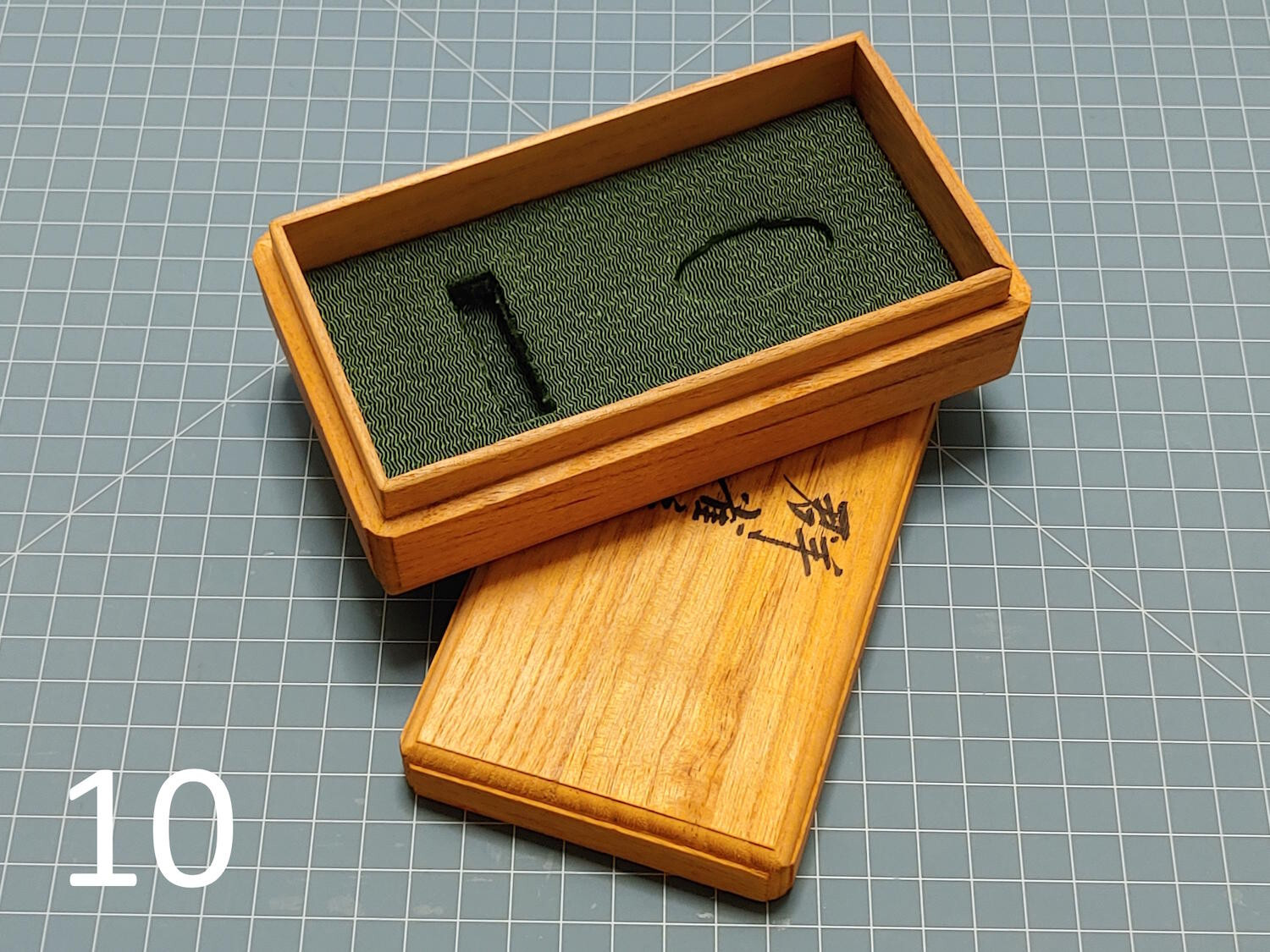
That's the logical explanation I was hoping for Dale! 😁👍 I think the whole 'ninja' grift comes from the word 'shinobi' (忍者) written on the box lid (if I'm reading it right). Best, Hector
 2 points
 -
2 points
-
Hi OP and fellow enthusiast, Hope you are well. There are a couple things to point out in reference to your main thesis or major premise: -The examples are larger sums for a specific class (Juyo) and therefore cannot be used in a ‘most’ argument to provide overall direction of a market. Separately, how many people can spend $5K or $10K on art let alone six figures for one example? -As Hoshi (I believe mentioned) about knowledge…Brother, people are not going to give up their competitive advantage (knowledge) that cost them time and money so ‘we’ can quickly Google search or AI gobbles it up. This is one of the reasons why it is such a service to our shared hobby when someone is kind enough to write articles, et cetera or even provide books for sale. ……Let us borrow a thought experiment from Charlie Munger and inverse: +How would we NOT be a successful dealer? No established clientele, nearing six-figure pieces, limited opportunity to sell via auction house. +How could we BE successful as a dealer? Tsuba under $2,500.00 USD, nihonto under $25,000.00 with most in the $5K -$15K range. Fittings at $2,000.00 or below.2 points
-
Though we meet each year, the number of nights we spend together on Tanabata is so few, by Fujiwara - no Teika https://www.flickr.com/photos/artur_drogamiecza/albums/72177720330625675
 2 points
 -
Hi, No one seems to have mentioned that the NBTHK Hozon attributes the tsuba as mumei: Mito best regards, John2 points
-
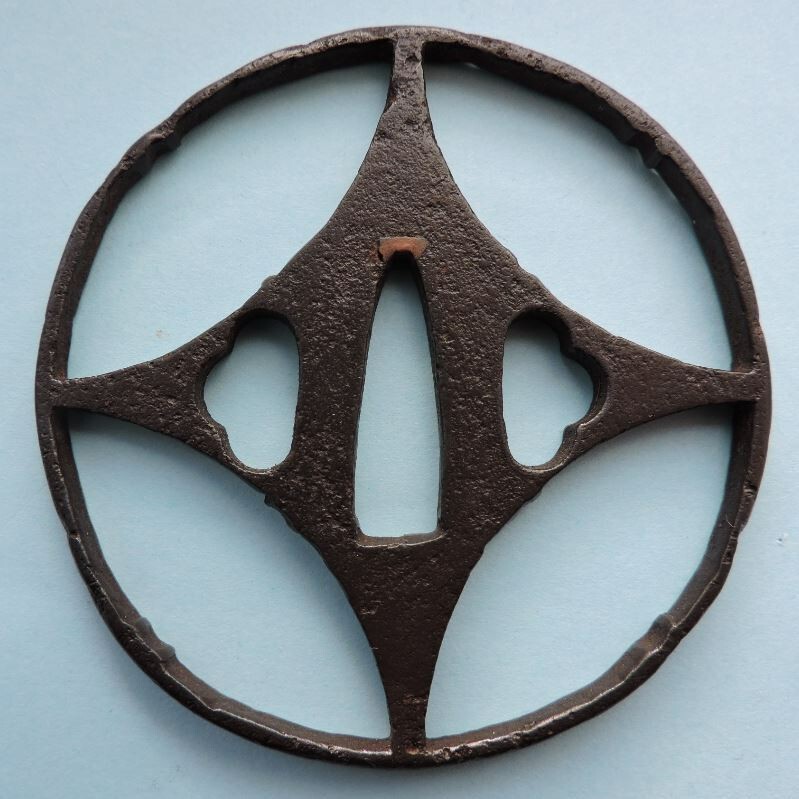
Hi guys, a couple of tsuba from my collection to add to the thread (sorry) The first is a shibuichi tsuba ‘inscribed’ Goto Mitsunobu (sometimes transliterated as Mitsutoshi), Tsujo, 11the generation master (1663-1721) living in Edo. The design is a shippo tsunagi (shippo chain) a symbol found in ancient Egypt as well as Asia and is 3,500 years old and embodies a wish for family happiness and financial success. No one has mentioned that the itomaki gata tsuba presented in this post can also be considered to be a single element of the shippo tsunagi design and I have never seen this mentioned anywhere. The second tsuba is a particular favourite of mine, maybe because it has seen better days and I can emphasize with it. A previous owner also loved it to judge by the old tsuba box in came in, maybe because it exudes wabi sabi. Although it is now an itomaki gata spindle, it was not always so. Inspection of the four large openings reveal that there were once inserts that have been removed. It took me several years before I stumbled across a picture of a tsuba with the missing elements, four jiguro bishi kamon of the Takeda clan (see pics). So why were these removed? Here is my rather fanciful explanation, for which I have no evidence. The jiguro bishi kamon version of the four diamond shapes of the Takeda kamon was used by Itagaki Nobutaku(1489-1548), one of Takeda Shingen’s 24-generals and although he won several battles became over confident, celebrating victories before the battle was finished. He did this at the battle of Uedahara in 1548, where he was killed. The Takeda were famously slaughtered at the battles of Nagashino in 1575 and Tenmokuzan in 1582 by Oda Nobunaga using volleys from matchlock muskets. I think that my tsuba may have been on a sword taken from a fallen Takeda samurai and as the new owner did not want to be falsely accused of being a Takeda clansman had it modified. My tsuba and the intact versions seem to shout ‘Kyo sukashi’ and the sale catalogue sources described them as such. However, Kyoto was in the hands of the Takeda’s enemies, so it would have been unlikely that they were made there. All the best, John

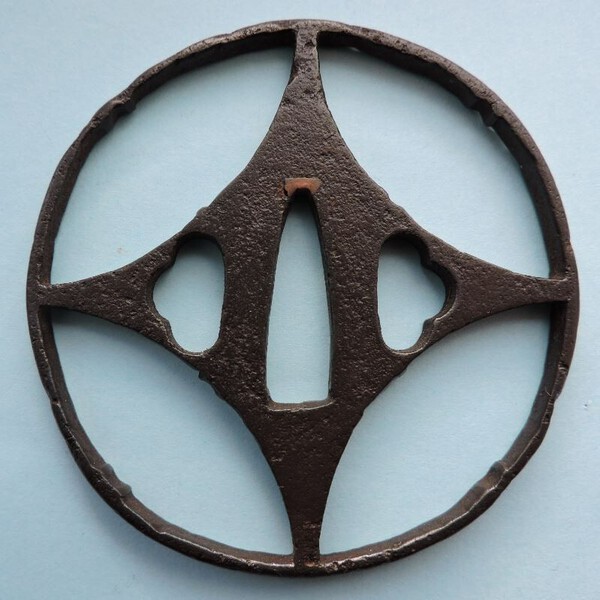
 2 points
 -
Don't forget what I consider to be a huge influence on the above: The internet and availability of a huge number of swords from a wide variety of sellers. In the past, you heard about swords being available on auction, or you traveled to a seller. You had to fight other buyers for a decent sword as auctions and sales were the primary source of Nihonto. Now you just log onto the internet, and can choose from thousands of swords. Sellers aren't guaranteed a captive market. They need to be competitive and aattractive to buyers. The more the internet makes good stuff available to a wide audience, the more prices will have to adjust to lure the customers. It's no longer "Buy that sword because I don't know when a better one will come along" Now it's "Let me compare 10 of the best examples available on the net and decide which interest me" I think in a market like that, it's only natural that prices remain competitive and sellers are under pressure.2 points
-
I believe this is referred to as Ninja is because, with a sturdy saya, the Ninja could lean the sword against a wall, point down and with the flat of the tsuba against the wall, step on the projecting opposite edge of the tsuba and get a boost in climbing over. The flat stops the tsuba from rolling. I have been told that there is little evidence ninja ever existed. Makes a good story, though. Grey2 points
-
It is somewhat rare when a Masamune comes to the open market. I certainly enjoy looking when they come up. But as others have said, Aoi Art's Masamune leaves a lot to be desired. In addition to the photos, there are plenty of hints in the listing about its condition. This is not an entirely fair comparison since they have much different asking prices, but compare Aoi's Masamune with the TJ Masamune tanto that @Ray Singer has available for sale: link. The latter has a far superior condition, TJ papers, and Honma and Tanobe sensei sayagaki confirming the attribution. If you are among the elite who can afford to buy a Masamune attributed blade at 42M JPY, you are probably also able to buy the much nicer tanto. This is not intended to be a slight to Aoi either. I think a lot of dealers would love to list a blade attributed to Masamune, regardless of its condition. It is a consignment sale, so Aoi is doing its job by listing what their client is offering. It is obviously working as we are drawing attention to the listing. Even if it does not sell at auction, I cannot imagine this blade sitting unsold for years. Someone will buy the attribution (and overlook the condition).1 point
-
Hi Khalid, You get a minimal description and lousy photos; what's not to love? Unless you can attend and see the swords in hand, I find it hard to believe you can't do better with a knowledgeable dealer you can trust. Grey1 point
-
Very cool and exciting whenever Masamune comes up publicly, will be staring at this piece for awhile. Was about to start a w hole other threat about it!1 point
-
Check the top of the forum, there is a menu for image resizers.1 point
-
忍者 Can be read either ‘Shinobi mono’ or ‘Ninja’, often shortened in speech to ‘Shinobi’. A woman in this role could be referred to as ‘Kunoichi’ = く ノ 一 (The sound suggests possibly: ‘First in suffering’, or ‘one of the most stressful things in life’) Write those three sounds in order and you get 女 Onna.1 point
-
Works for me. I do the same thing then drop the photos into google search for a "reasonable" translation. John C.1 point
-
@John C and @Scogg - both requests noted. I'll look as soon as it arrives (it's coming from a little old bookshop way out in the boonies). Best, Hector1 point
-
If you are ever in the area of Takahashi, a hike up to Bitchū Matsuyama Castle is quite rewarding.1 point
-
Price reduced to SOLD EURO Shipping to the US is possible. I will give a discount to US clients to compensate for the (possible) tariffs.1 point
-
Yes I did, the catalogs were there and in some corner within the display room. Sothebys and Christies go out of their way to label all other forms of art, they did it with every other item displayed, just didn't bother with Nihonto as much. A few weeks back I was at Christies for their 21st evening sale, and they had no problem displaying little bits of paper with estimates ranging from 40,000,000 USD - 60,000,000 for a Monet. Of course paintings and swords are one and the other. Just left a bad taste in my mouth when everything else setup at Sothebys at that time had far more attention tended too it than the swords being tucked away in some corner unceremoniously, but what can we do.1 point
-
Well you did accurately tell that the one posted here is fake. My point is that all the “rules” you can think of have exceptions, but after you have seen (and possibly handled) hundreds of genuine pieces the fake ones will just seem obvious to you. (Note that I’m talking about tourist trinkets here, sophisticated forgeries are a different matter).1 point
-
A very interesting thread, This discussion is wonderful and insightful. Having said that, there are some points I disagree on. I personally will not take auction results from auctioneers like Christie’s, Sothebys (or other high end auction houses), as a market parameter. These auctions are in many cases outliers, and one auction or auction house is to me not a proper market indicator. Having been active as a dealer in the antique market when I started at 14 has taught me A lot about market decline and rise. I have sold ancient Roman and Greek coinage ever since I was 14. The coin market is very transparent, you’ll always be able to check the market price for a particular coin. I have a very wide range of databases that I use to figure out the price increase or decline of certain coins (which overall has seen an uphill increase). But from the perspective of a coin dealer this transparency is also a curse, my profits are low (because anyone can find out where they can get it from my source), and I focus on selling in quantity to make a living. This cannot be said about Nihonto. When I started buying Nihonto, I desperately wanted to gain intimate knowledge of the market and trends within the market. I have never been rich so I’ve always focused on the Hozon-Tokubetsu Hozon range. The market is completely dependant on location and clients, it’s a whole different game. There is no standard metric to compare your swords to. The Japanese market is very different depending on who you know or where you can get into (for example dealer auctions). Dealers can really truly ask whatever they want, if they have a client willing to pay. There is of course some basic understanding of price, but it can wildly differ. Overall in Japan when I talk to dealers, some can be quite optimistic. Looking to branch out more and reach more clients, and working to get young people interested in Nihonto. I don’t worry as much, at least not at my collecting price point. Greetings, Lex1 point
-
I tried to buy Index Tokubetsu Juyo Nado Zufu in English. I have approached several long-term collectors, but it is clear that there is probably nothing like that. I think such an index would be useful for many Nihonto enthusiasts So - are we able to get enough applicants to make the economic cost acceptable? (It is too expensive for an individual) My idea: Create a file in xls format (for filtering, sorting) with data available from TJ Nado Zufu - TJ Nado Zufu's number and the position of the blade in it - the name of the swordsmith - School - Den or not - Mei: mumei / zaimei / shumei / orikashimei - period or date if indicated - nagasa - sori - motohaba - sakihaba - kasane - kissaki If there are at least 20-30 of us, the fee per person should not exceed a few hundred USD Also, if there is a member among us who is willing to make a database for a fee - I would greatly appreciate it It's just an idea. I am enclosing the Meito Zukan Index, which I made for myself for better orientation in the publication Anyone who is interested, send me info to branislav.kalabus@gmail.com for better archiving of applicants Meito Zukan by Fujishiro.xlsx1 point
-
And to add to Colin's points above... we, the collectors outside of Japan, have no leverage to effect any real changes and would likely wind up on several blacklists if we tried. Work with the world you've got, not the world you'd like.1 point
-
I don’t want an argument but this is not true when dealing with clients that are perfectly happy and well prepared to pay a premium for exclusive private buying opportunities. Also many dealers do not wish it known that they sold “sword X” to “customer Y” for “$Z” Not everyone wants exposure to the limelight. It’s the same in any high value commodity market. The art market operates in a very similar way. Imagine you are a dealer with many high net worth private clients…….the problems that could occur when your clients find out what you have sold to their rivals etc. You stand to lose your best customers. Transparency can work negatively as well as positively……it can depress a market if the “prices” start to fall - because there is no guarantee that sword prices will rise especially in this world. We have seen a few very decent collections hit the open market in the last year or two with pretty gruesome results……high percentage of unsold….likely caused by vendors expectations. And, what effects of age demographics will we see……will younger collectors be interested (or able) when these high value swords come onto an open market? Or will they prefer a new Porsche? It’s a complex set of circumstances.1 point
-
Yes, that is very much the Japanese way. Word of mouth, privately brokered trades, favoured dealers and clients. The best blades in Japan will change hands, but never on the open market.1 point
-
Ninja Rule Number One Leave no proof you ever existed.1 point
-
It is a type of tsuba that does not need a Katana Kake - [sword stand] as the flat base will allow the sword to lay blade up without rolling on any flat surface. It also has udenuki-ana but probably just as a form of adornment. Nice piece - beyond my pay grade! The Yahoo advert says it is "unique" but that is far from the truth. Nothing about it is "Ninja"1 point
-
Roland, Sawada San seems to have used the same book you mentioned above. As to the Taté shields, yes. Actually they soon found bundles of bamboo to be more effective against ball when larger guns were able to penetrate old-fashioned wooden shields. In Osaka Castle they also keep a heavy iron self-standing shield in the same shape as those above.1 point
-
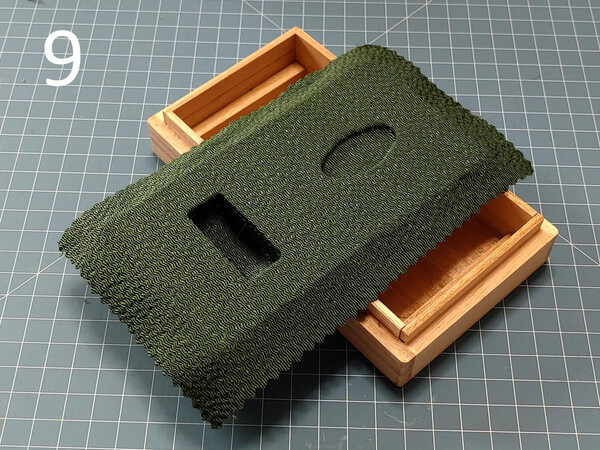
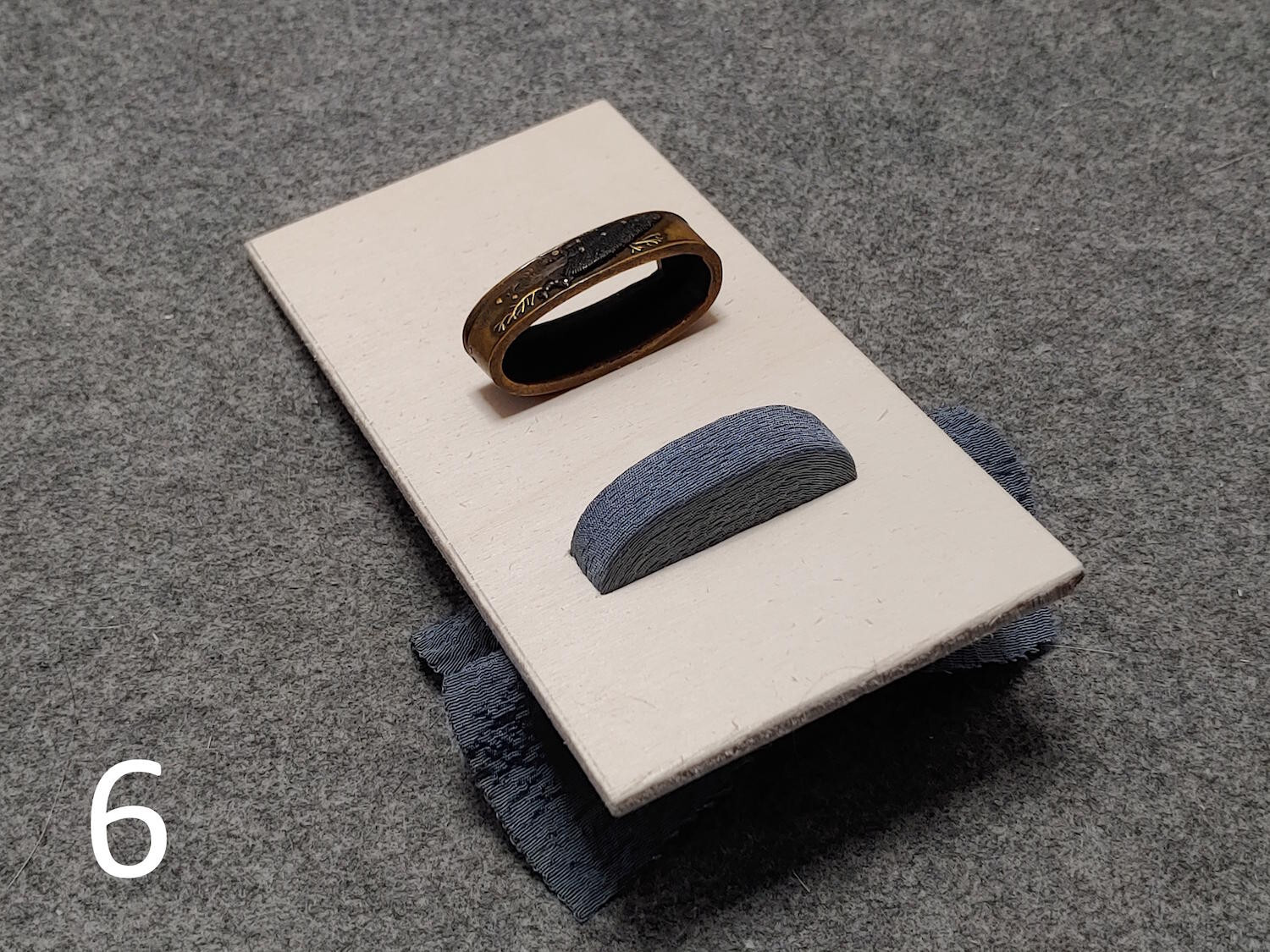
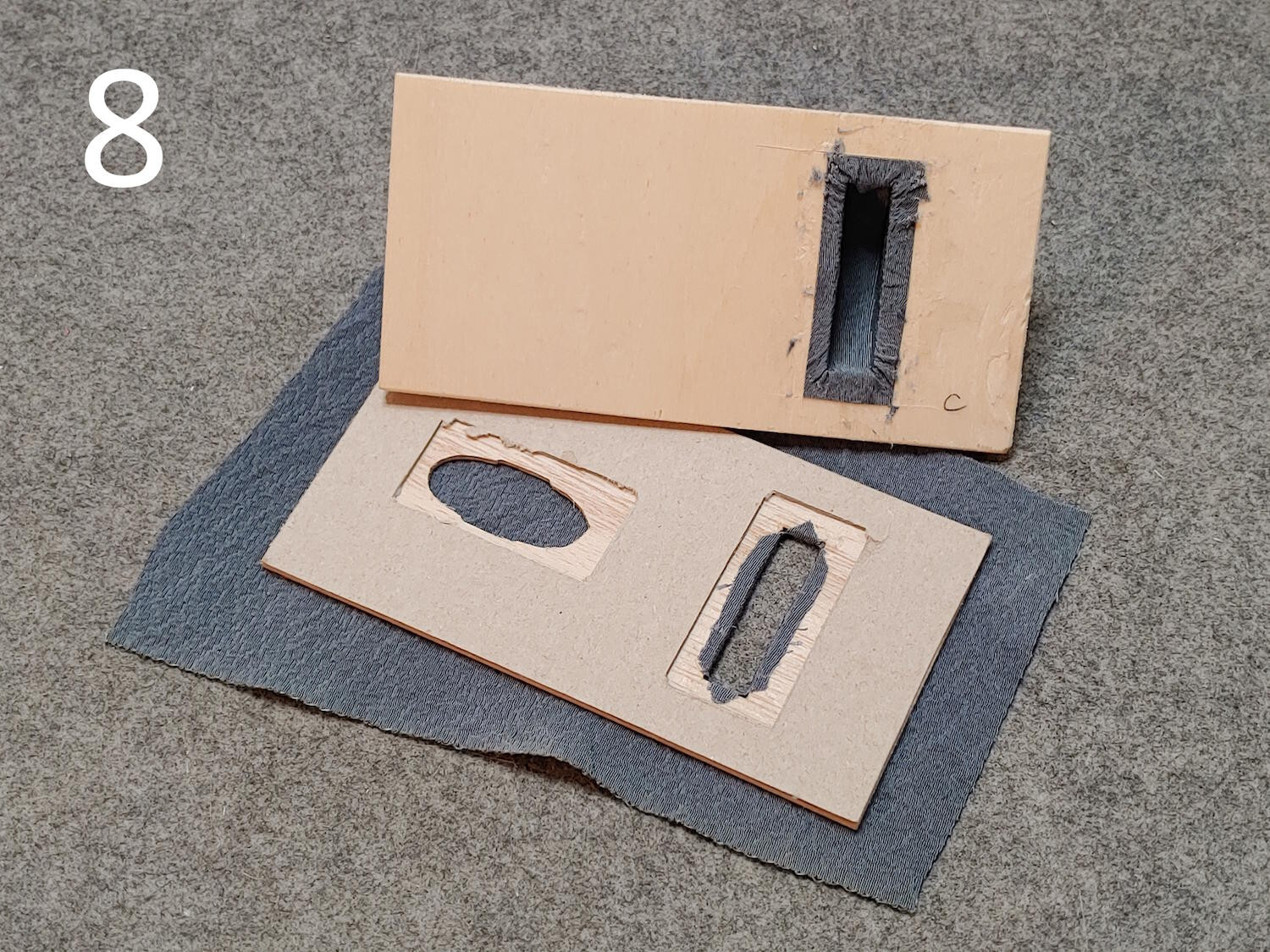
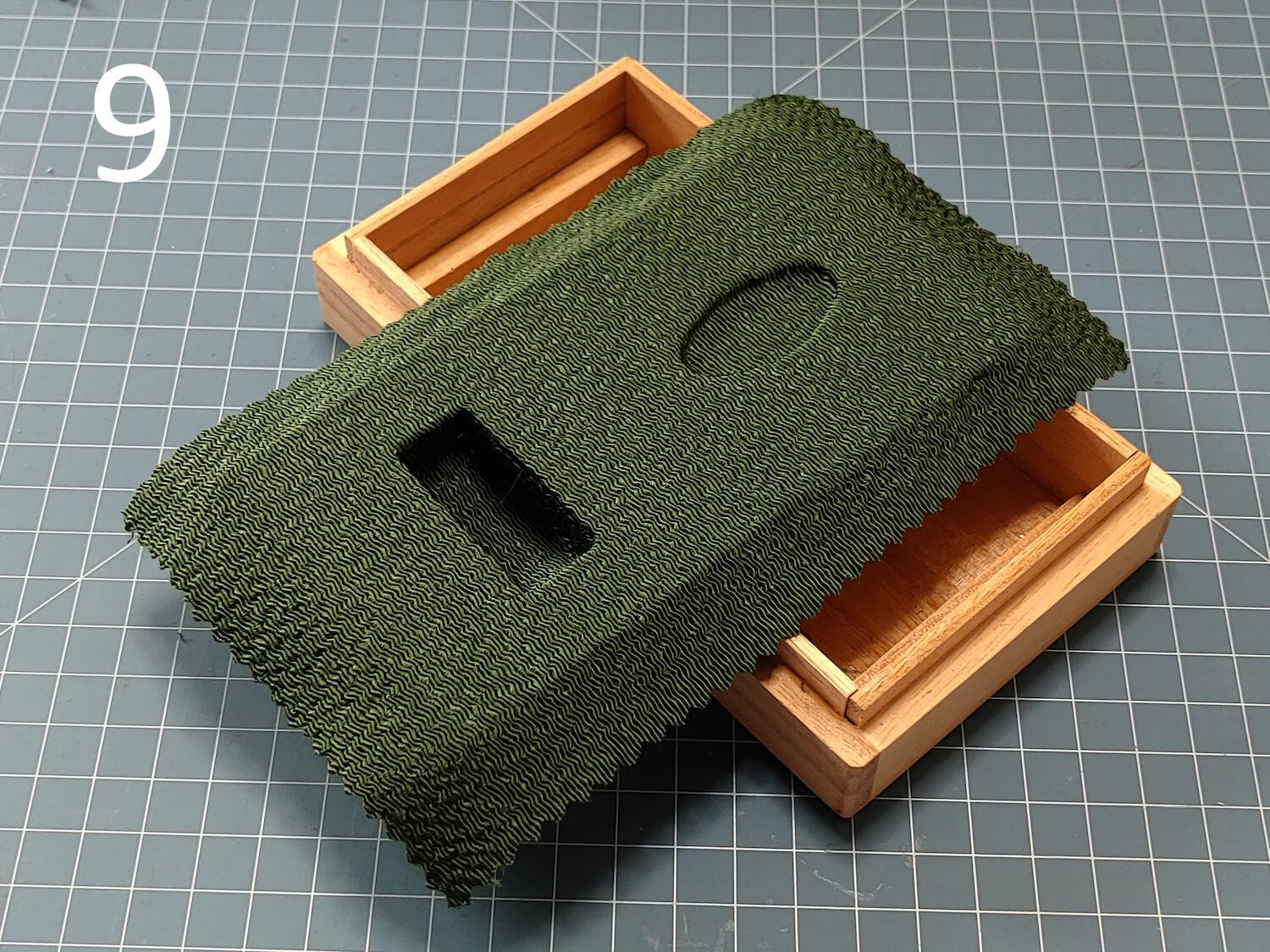
Part 2 To keep it in shape, I tap the silk with a little bookbinder's glue (it's viscous and doesn't seep through easily). The glue acts like "hairspray"... That's the bottom of the top layer. On the bottom of the top layer I glued a layer of thin cardbord. Then both pieces are glued together and the silk is glued in the kashira indentation. In the box there are two squared pieces of wood glued so that the fuchi silk doesn't touch the bottom, when the inlay is in the box.
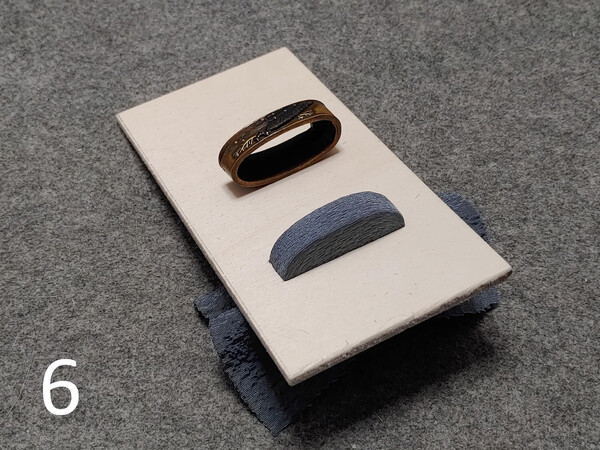
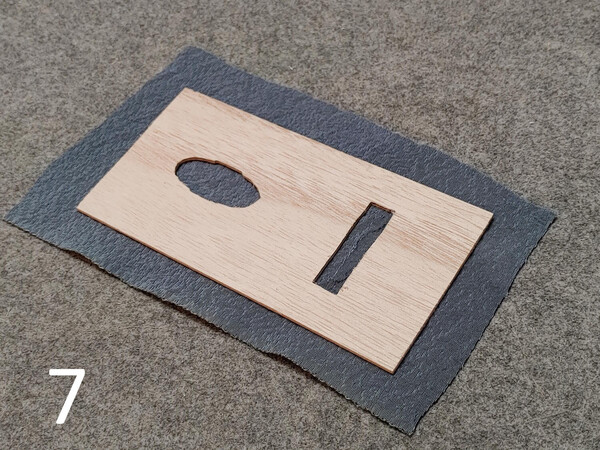

 1 point
 -
The quality of blades attributed to Go are on a different level. This one went Juyo and was polished by Andrew Ickeringill https://www.facebook.com/photo/?fbid=1994822754423622&set=pcb.1994826924423205

 1 point
 -
I have made fitted fuchi-gashira box inserts. I used balsa wood for the insert, it is readily available in hobby shops or online in various thicknesses and is very easy to work with hand tools. I will describe using inch measurements, I assume there are equivalent metric sizes. This is just a general outline, various dimensional adjustments may be needed depending on how big the fuchi and kashira are. Cut a 1/4 inch thick piece of balsa wood to fit inside the box. Make it a little small since it will be wrapped in fabric. Cut a 1/8 inch thick piece of balsa wood the same size. This will hold the fuchi. Locate where you want the fuchi to sit, then cut the hole for the fuchi in the 1/8 piece. It should be a little tight. Glue a piece of fabric on the 1/4 inch piece where the fuchi hole will show through. Glue the 1/8 piece on top of the 1/4 piece. Locate and cut the slot for the fuchi. Think about how high you want the insert to sit. If too low, then you may want to glue another balsa wood board on the bottom. A board on the bottom also helps it look more finished. Some adjusting will need to be done to the holes since you want a little friction to hold the items in place, but are also easy to pull out. cut a piece of fabric to go over the top and down the sides. Glue this on. This is the fussy part. carefully cut the fabric covering the holes so that you can fold the fabric over the edges of the holes and glue them down. The fuchi hole will need additional small pieces of fabric to line the sides and the bottom. I have also used this method to make press in liners for menuki and tsuba boxes.1 point
-
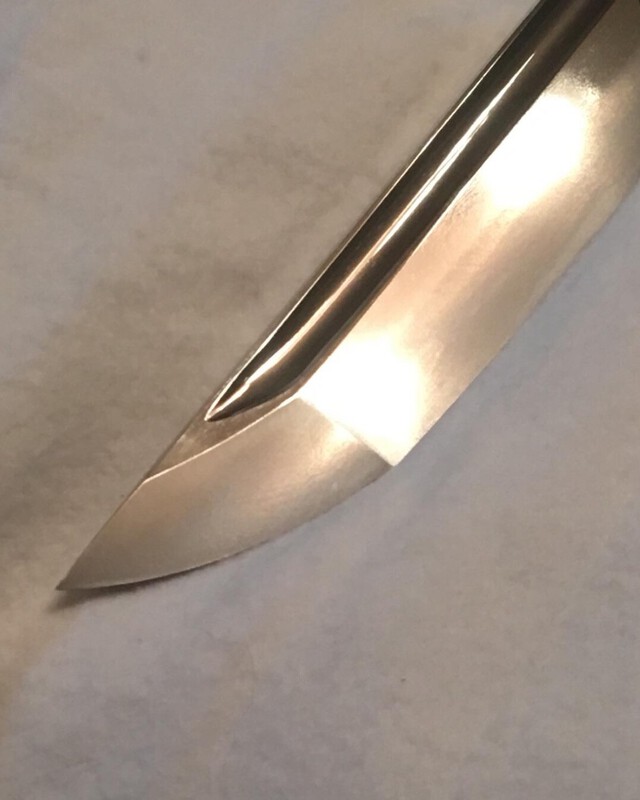
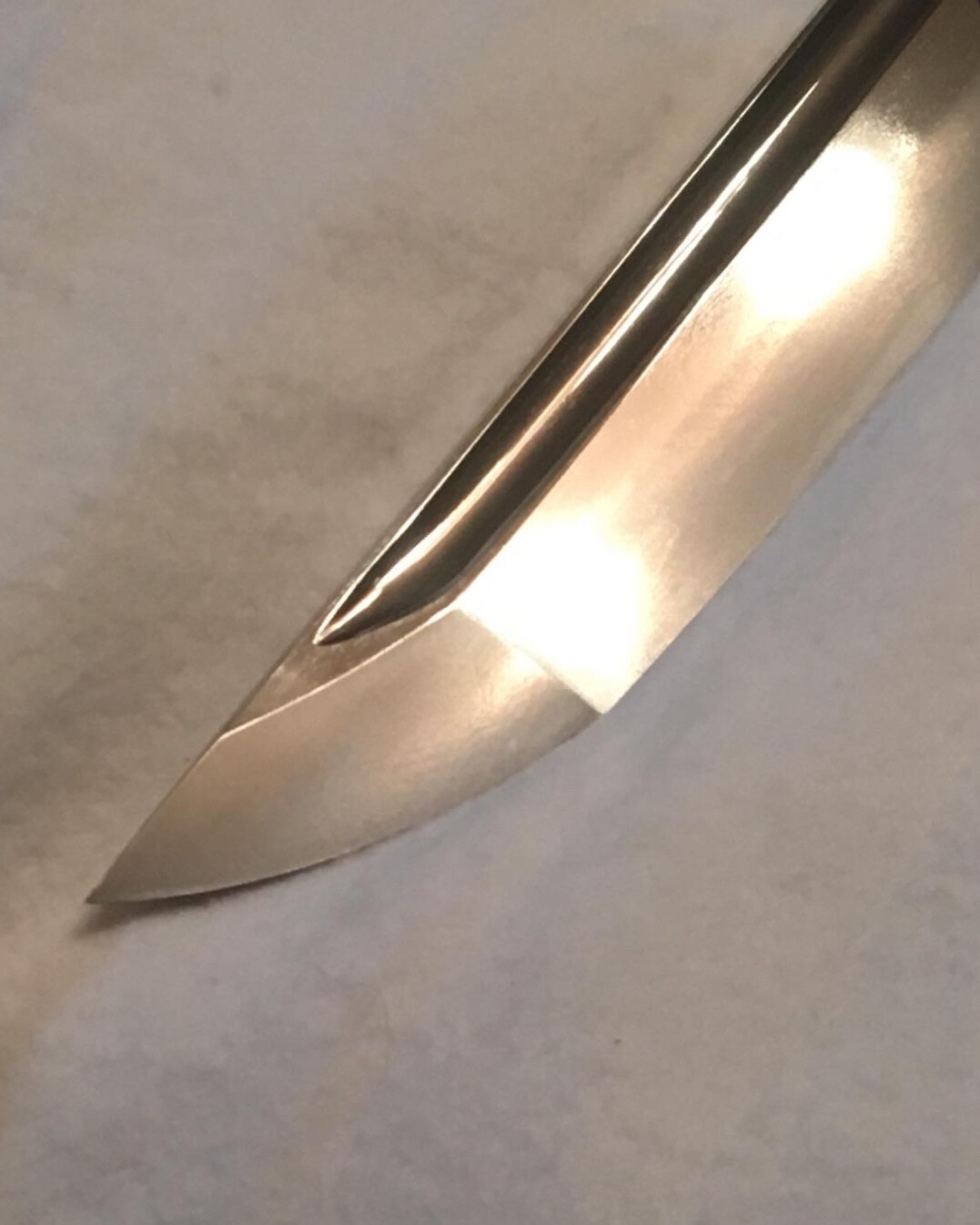
Beautiful contributions by some friends above, who I know are fairly knowledgeable and I can attest they have handled numerous Go (as some of that was a joint opportunity). Elusive as Go is, they do come up occasionally in Japan and if one has the admittedly rare opportunity, they should study them. The nice organic hamon and clarity combined with the uruioi micronie in the jigane is beautiful. Apologies for the bad pictures below but this is what I currently have on my mobile below. I merely want to demonstrate with some photos the “connectivity” to Norishige (note that jihada in some of the Juyo Go photos below) and the lustre. That Go is not one of the most flamboyant but still educational. As Tsuki says, not as prominent chikei or very ostentatious kinsuji but they are still there.


 1 point
 -
Hi Kevin, Great question. There is a tradition of attribution that goes back to the 17th century where respected appraisers wrote the name of the maker in gold inlay on the tang of the blade (Kinzogan). Some of the shortening were performed by this group, called the Hon'ami, and as a result they had access to many more signatures than we do today. The attribution "Go Yoshihiro" has a number of canonical traits (e.g., Ichimai boshi, first class nie, shallow sori, habuchi that increases towards the kissaki...) that have been studied since the Momoyama period. There is, of course, a substantial degree of uncertainty with attributed blades. Attributions on mumei works are best understood as "this is the most likely maker given what we know today" - and even more conservatively as a way to state that a sword expresses certain traits and a certain level of quality that is in line with reputation of a certain master smith. In this sense, there is a tradition of attribution that has been honed over generation of competent judges, based on ancient literature and oral transmission. I would advise caution on mumei Soshu blades to big names that are without Ko-Kiwame (old appraisal by the reputable judges) or established provenance from Daimyo collection with a high-level record of gift-giving. Makers during the Shinto era, such as Nanki Shigekuni or Shinkai came very close to Go, and one should always examine the sword critically. Best, Hoshi1 point
-
I bought from @Lexvdjagt and can vouch for quality of his nihonto and after purchase service.1 point
-
I realise I'm a few years late; I didn't see this until earlier today. Attached is Jussi's document, reformatted as a spreadsheet. Miekkojen hintaseuranta NMB version 1.xlsx1 point
-
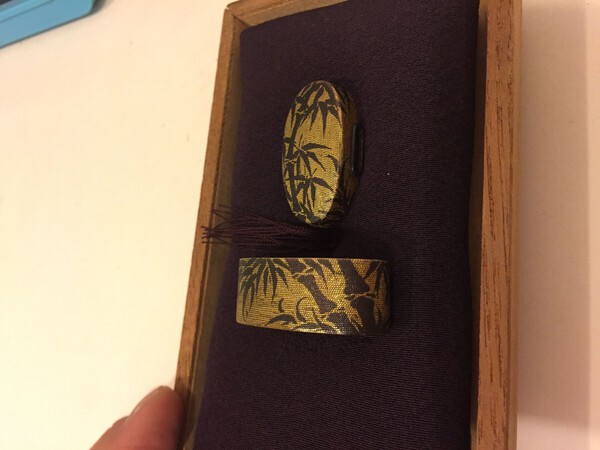
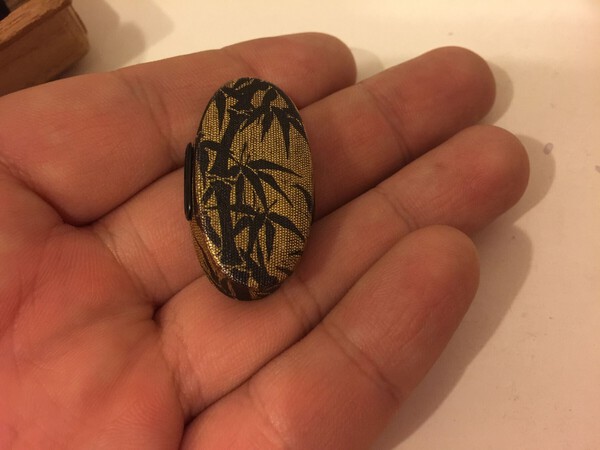
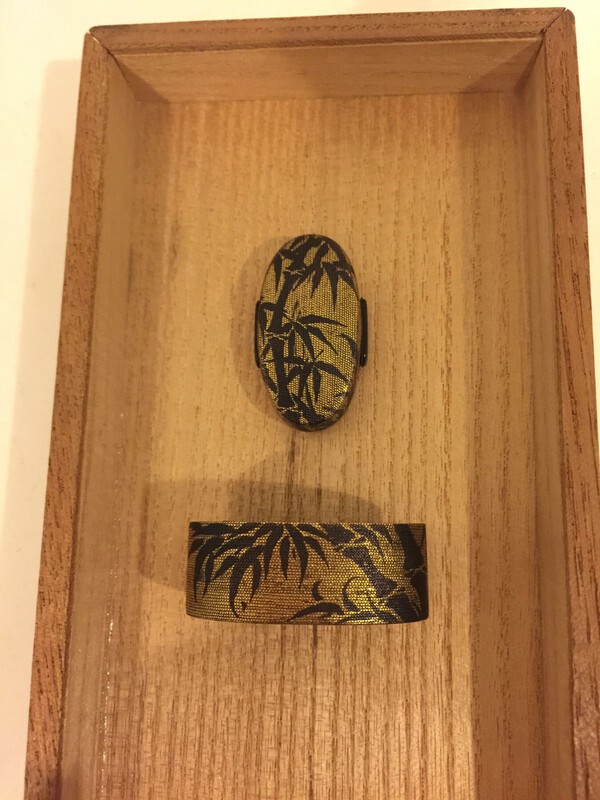
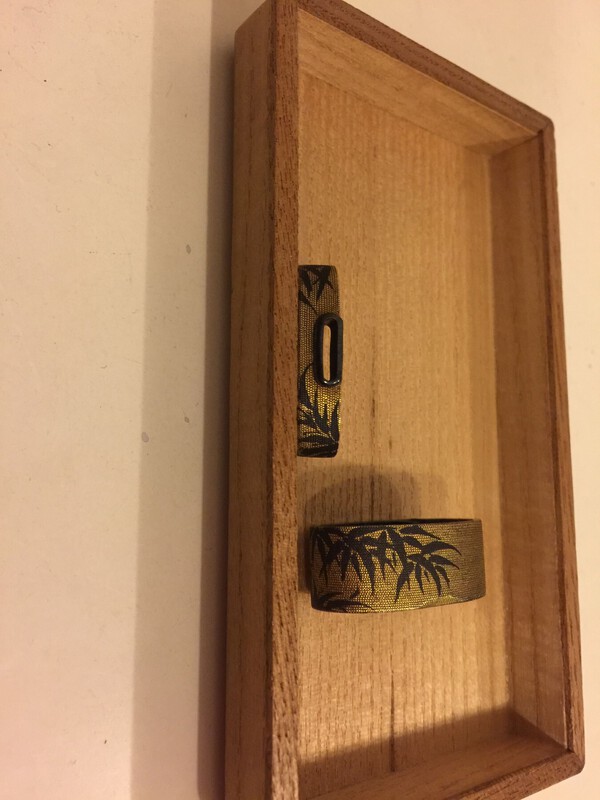
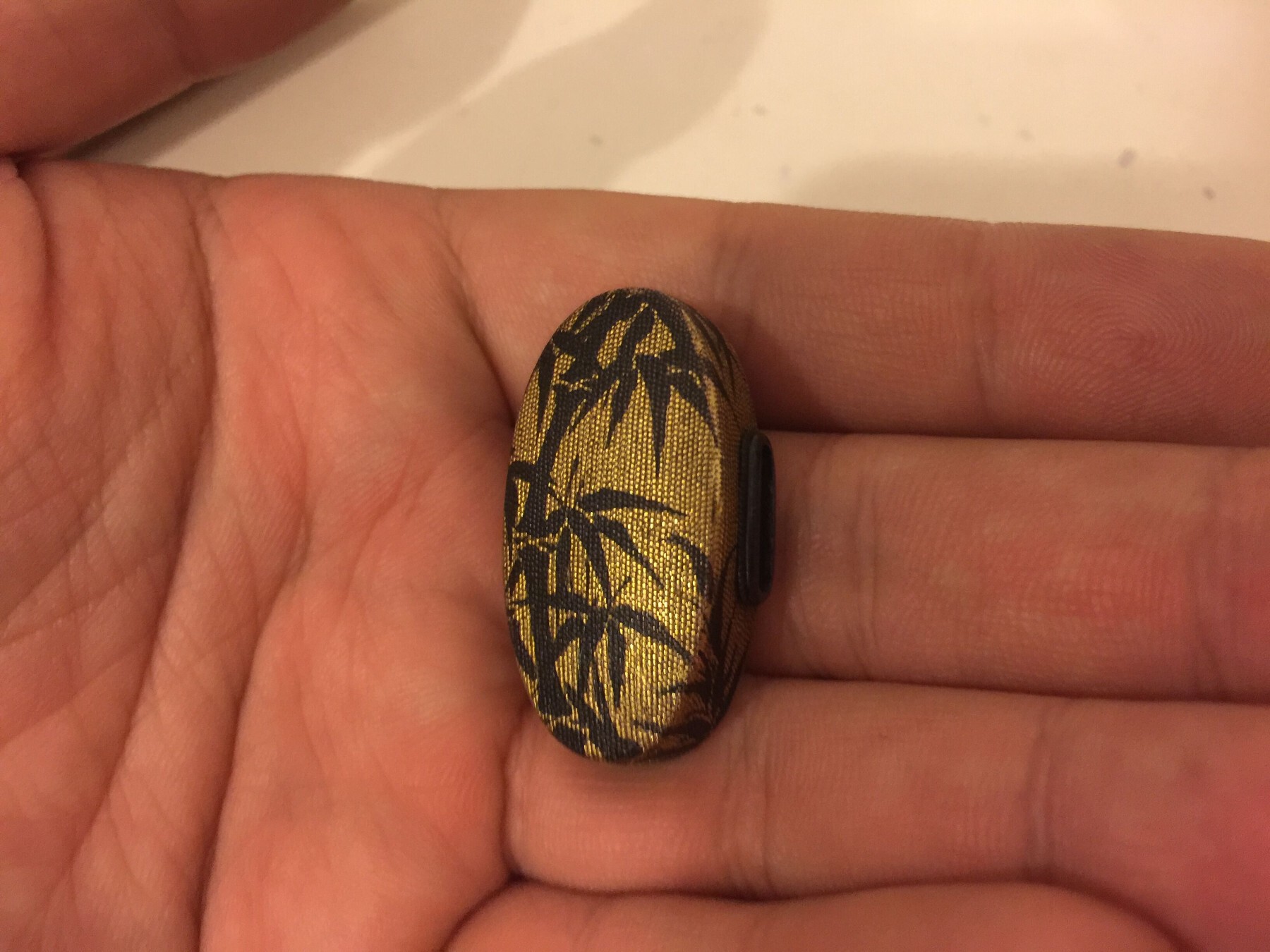
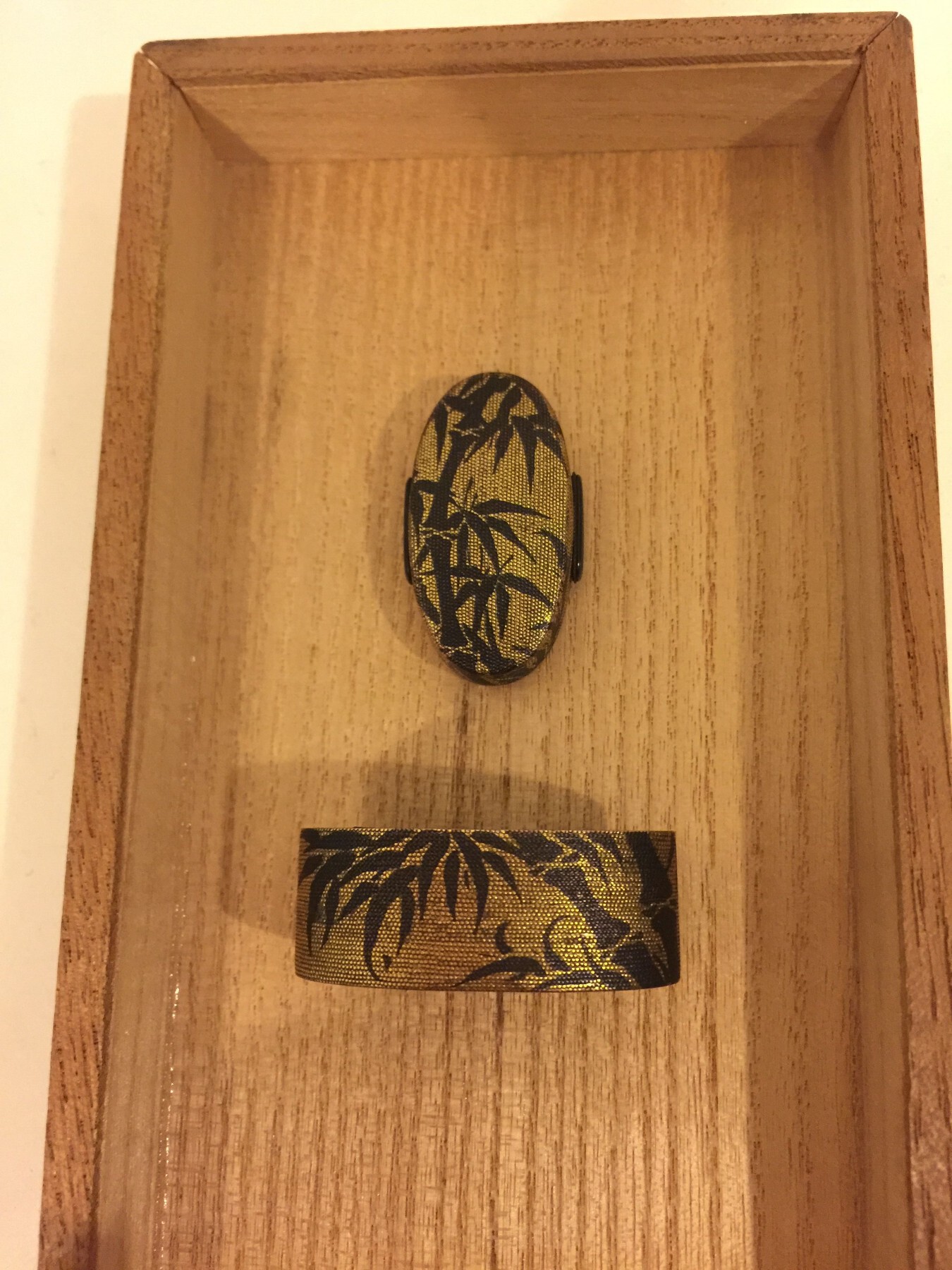
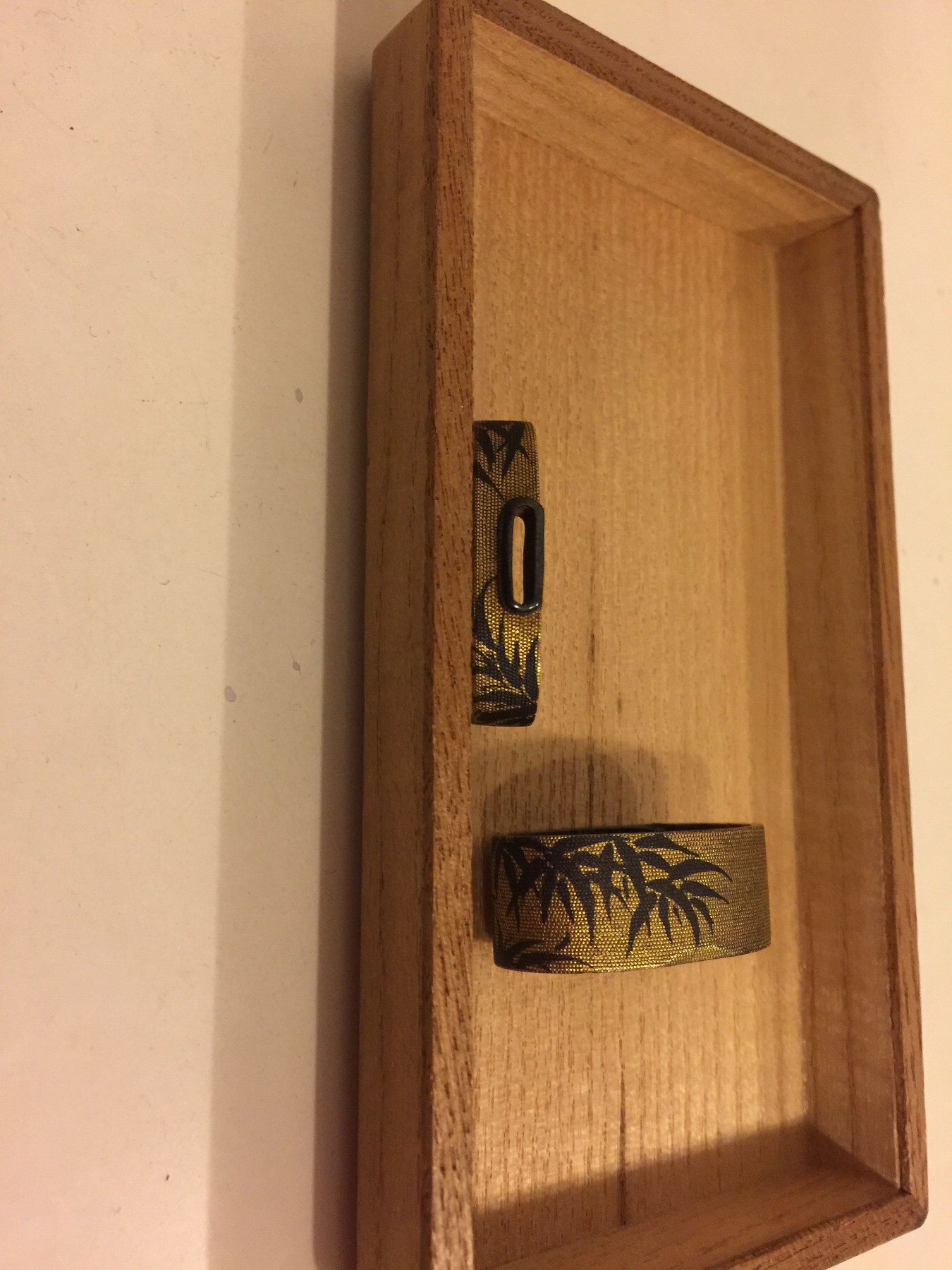
Fuchi kashira with design of Ink Bamboo






 1 point
 -
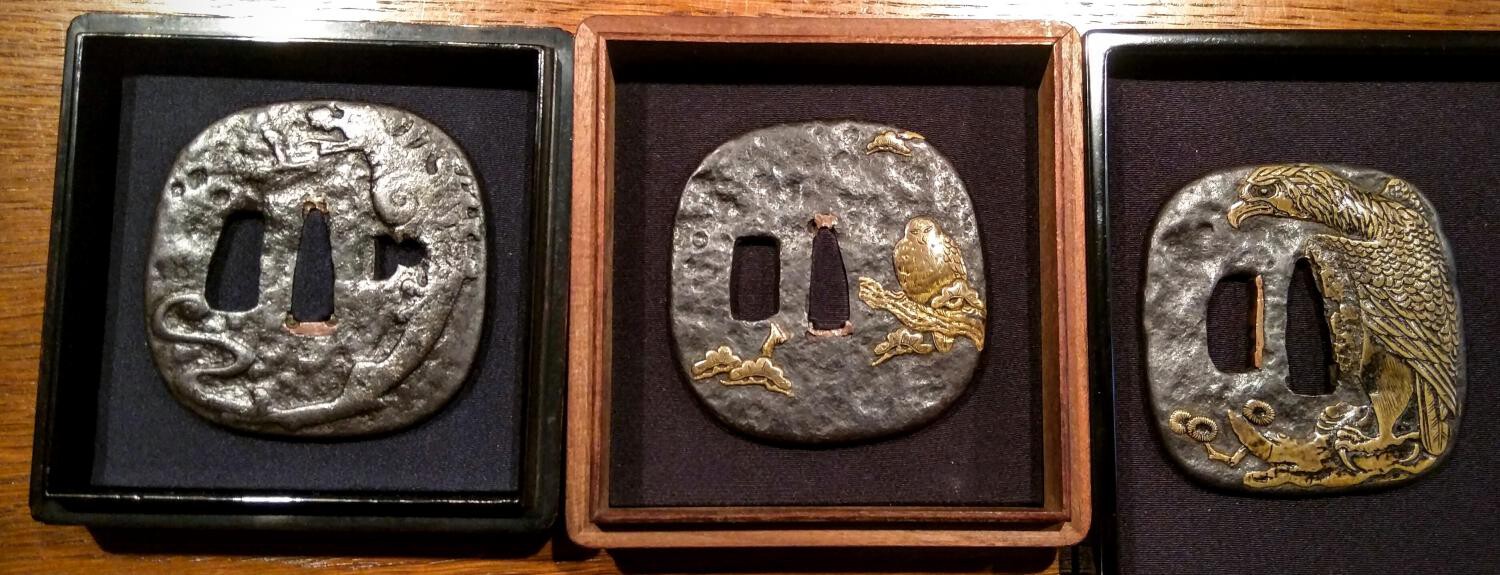
One of the best thread of the NMB. Keep 'em coming. I'll revive it with this image, which I found on the old archives of the forum. The most epic Higo lineup ever to have graced a table in Europe since Alfred Baur.
 1 point


























This leaderboard is set to Johannesburg/GMT+02:00