
Leaderboard


Popular Content
Showing content with the highest reputation on 11/16/2025 in all areas
-
Those “Is this eBay sword good?” posts belong in the ‘Auctions and Online Sales’ section so the rest of the forum stays focused. We usually move them when we see them, but some members repeatedly post in the wrong place despite being reminded and redirected over and over. The real concern, in my opinion, is when the forum is repeatedly treated as a free consultation service for someone’s resale efforts, with no contribution or appreciation in return. I thinks that’s what’s really going on in some cases. If someone is genuinely interested in Japanese swords or wanting to buy something, those identification posts are welcome and help keep the community active. But when the post is in the wrong section and solely for profit rather than learning, it starts to feel like the forum is being taken advantage of. That all being said, is it against the rules? Not necessarily, I don’t think, but that’s for Brian to decide. It’s just unethical and it always feels bad to be used. Just my personal view. Sincerely, -Sam ps. I’ll try to be more vigilant about relocating the eBay type posts to the auction section7 points
-
Hi, A blessing for the forum would be to ruthlessly filter out the low-effort "I found this on EBAY is it good should I buy it?" These posts are polluting general and nihonto section. Some visitors just throw crap at the wall to see what sticks and abuse the kindness of people here. And these people don't contribute anything of value, not even a gold badge. I would in fact make a section called "identification" and limit posts to 1 sword per visitor, and after that it's a 200$/year. That will keep the noise the down.5 points
-
I am always hesitant to make changes that affect others that aren't so..."oblivious" But seems something may need to be done in this case. Hmmm. A membership would at least have been appropriate a while ago. Especially considering the hosts just advised me now we are almost up to our 125 GIG allocation, and I'm going to have to buy more server space. Sigh. Still....125 Gigs of images here is quite something. Try publish THAT as a book4 points
-
Well put Sam, the serial offender(s) should honestly be ashamed at this point. If common decency is completely lacking, many would welcome moderator action.4 points
-
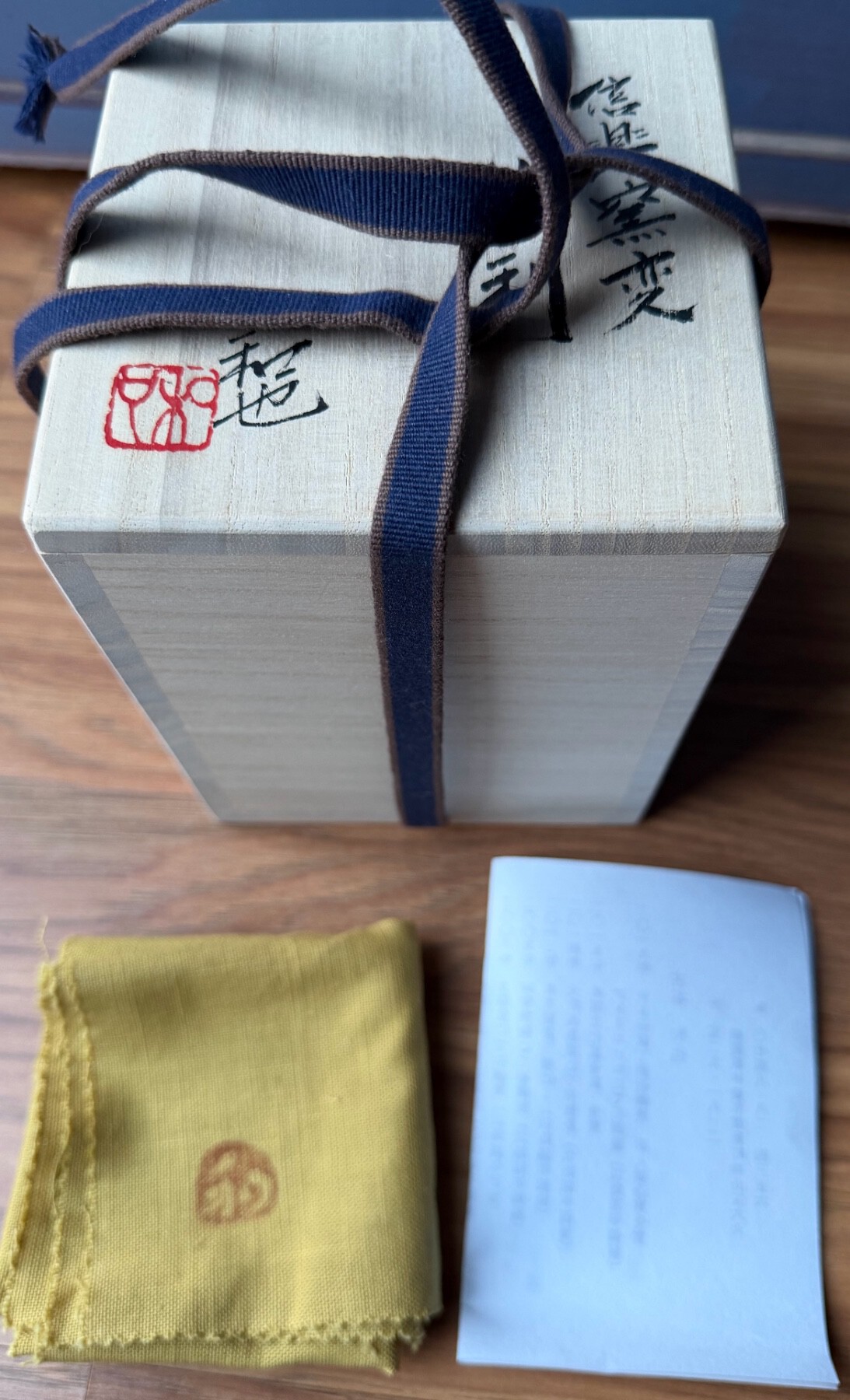
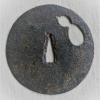
Dear NMB members, first of all, thank you for your interest in this project. All the missing or unclear writings have been brilliantly resolved by Steve M, to whom I extend my warmest thanks for his kindness and expertise. I would also like to thank Jean (AKA Rokujuro), Manuel (AKA C0D) and Matt (AKA M Ubertini) for the interesting correspondence on the topic. I have just released the 2nd draft of "Tsuba hakogaki written by Satō Kanzan". The file is available for download from the same link (https://www.dropbox.com/scl/fi/gkfcfqc6gs14invoeg6hn/KanzanHakogaki.pdf?rlkey=5i89f80fkbbf60x67f1lloa2k&st=zfh4ao27&dl=0). Several new hakogaki have been added, so the file is now even larger. Since the focus is on the hakogaki rather than on the tsuba, I decided to include hakogaki that are highly suspicious forgeries, as well as others that clearly refer to tsuba different from those stored in their respective kiribako (sadly it seems quite common for tsuba to be randomly swapped from one box to another). Annotations have been added at the end of the document to point out inconsistencies and to provide rough translations of Japanese expressions beyond simple tsuba descriptions. The new additions, of course, contain missing kanji and transcriptions that still need to be confirmed (which is why this remains a draft rather than the final release). I look forward to receiving further feedback from all of you. Thank you.4 points
-
I'll re-raise my earlier point Only gold members can post items for sale3 points
-
Just being the devils advocate, as I suspect this may have been prompted by a few specific posts I haven't read yet, but imposing restrictions on new members specifically would likely limit the first time buyer > enthusiastic novice > actually learning about nihonto > later being able to contribute in return pipeline. Speaking from my own experience, if I hadn't been able to post pre-auction questions when I was starting out, I'd not only have a tonne of rubbish swords, but I probably wouldn't have been compelled to get membership later. I don't understand why people don't say please or thank you though3 points
-
Spoilers / answers:3 points
-
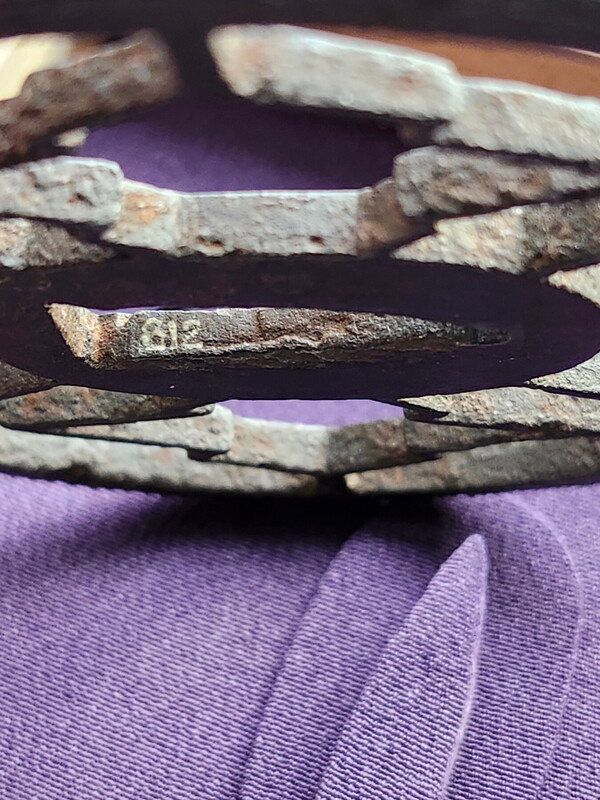
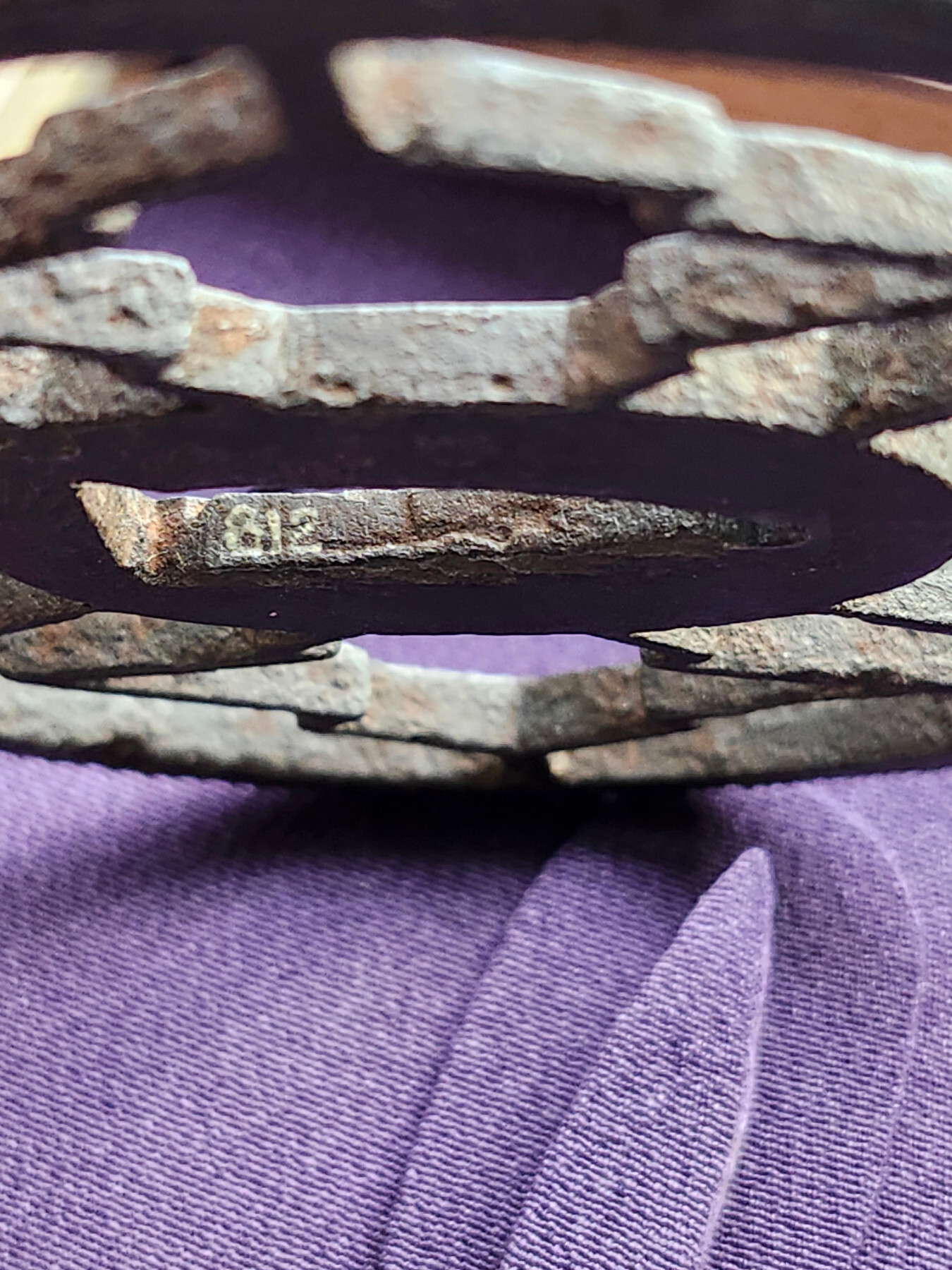
From prior experience helping with the deacquisition of about 140 tsuba from a small museum, the first two numbers (28) usually reference the year it was taken in by the museum. Then pull the old books kept by the museum and look up acquisition item 722 from that year. The collection I helped with was largely taken in 3 waves during the 1920s and 1930s. I still have two of the tsuba that I bought from it. Over the years, I have had other tsuba with Museum #s. Currently the only one I have is this big thin Ko-shoami or Ko-Kat. For various reasons, I know what country it came from but not what museum. Anyone have anything similar and information to share, do let me know.
 3 points
 -
Here is a favorite in my collection - a Daiso tsuba set signed by Souju (Kao) 宗寿(花押)

 3 points
 -
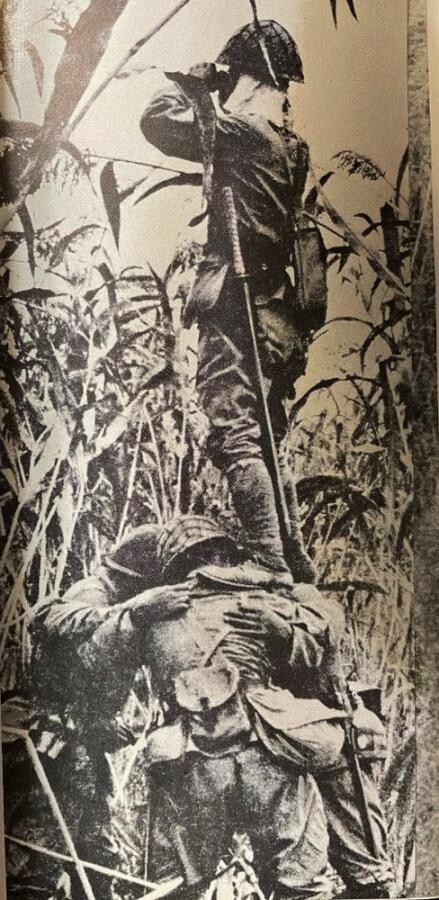
Just came across this sword on Yahoo Japan, and I've never seen a shin gunto saya with a rattan exterior, as well as English numbers on a nakago. https://www.jauce.com/auction/h12079849882 points
-
Facebook and Reddit will always be free. So if the NMB were to charge for services like translating or listing items, people would simply have no reason to do those things here. I hate to go there… but what then happens when AI figures out mei to a reliable degree? Additionally, I would hate to see the NMB be flooded with complicated little transactions for this or that; when it’s supposed to be an accessible resource for like minded people. The finances are one thing. Otherwise the translations and sales are very rarely a problem, with the exception of a select few repeat offenders who abuse the service. I don’t have the answers; but funding for the board just needs careful consideration, IMO2 points
-
Hope I'm not stepping on your toes or anything, but using the info you gave (the attribution and rough price range of the Juyo blade) I was able to track down the listings for the three blades in case anyone else wanted to see more details/other photographs:2 points
-
@Swords Relocating this and your other post to the auction and online sales section because the Auction and Online Sales section is for: “For the Discussion of eBay and other Online Sale and Auction Items or Sellers.”2 points
-
The blade is a wakizashi. Anyway, it is still a give away.2 points
-
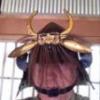
Hi Jon, menpō can be divided in several types with quality ranging from average to piece of art. Unfortunately not much is written on the subject, even though they represent an interesting collecting field in their own right. However, back to your piece. Hmm, how should I put it….well, it looks very odd! The mask pretends to be a ryūbu-men (mask with calm expression, usually without wrinkles). Actually, some features in the design and workmanship are raising doubts that we are dealing with a real menpō in this case. That is also true for the throat guard (called “tare”). Nodowa is a different piece of armor! We can go through step by step if you like, later on?!2 points
-
Steve: As a general rule, always assume gimei if not papered. But also, with a big name in particular, if papers raise the value substantially why didn't the previous owners get it papered? Or, did they try and it didn't pass? Without a thorough kantei of the blade itself, it's just guesswork. And just my personal thing, I get suspicious quickly of flowery descriptions. He's trying to sell the sword a little too hard. John C. p.s. From marketing 101 - people like to buy; they don't like to be sold.2 points
-
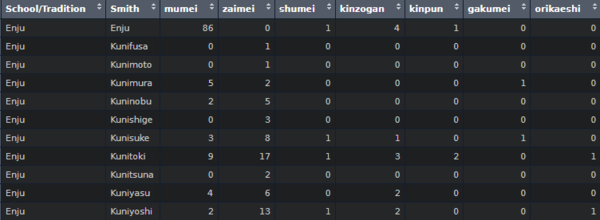
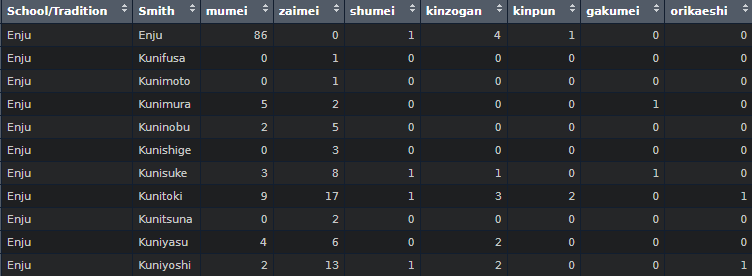
A fun little exercise I did using @Jussi Ekholm's wonderful data he's provided to the forum. The filter here is just looking at Juyo blades (Not TJ or above, but I could add that in easily enough), and the first numeric column is the number of Mumei blades and the 2nd numeric column are non_mumei. In the case of the Enju/Enju combo this includes 5 instances where there is a shumei, kinpun mei, or kinzogan mei simply to Enju. The columns in order are: School/Tradition, Smith, # mumei, # non_mumei. Enju Enju 86 5 Enju Kunifusa 0 1 Enju Kunimoto 0 1 Enju Kunimura 5 3 Enju Kuninobu 2 5 Enju Kunishige 0 3 Enju Kunisuke 3 11 Enju Kunitoki 9 23 Enju Kunitsuna 0 2 Enju Kuniyasu 4 8 Enju Kuniyoshi 2 17 There are still some fringe cases that I'm working out the bugs with where the count may be off 1 or 2, but this was a quick bit of tinkering. Edit: I did more tinkering and here's a big table with most of the possibilities of mei realized: Again, a huge shout out to Jussi for the compilation work he's done. I can't possibly say enough about how insightful it has been for me as a data nerd to pour over different possibilities and arrangements of the data he's collected and given to members of this forum. Its truly invaluable and selfless of him for giving this to the NMB community!
 2 points
 -
My apologies for the quote Rohan, but I can't get the spoiler box to work on my phone. Have edited the contents of the spoiler box (so its content is mine, not Rohan's), though conveniently I agree with Rohan's order.2 points
-
By the way, that is a magnificent tachi, of the Nambokucho period. I recently examined similar mumei tachi which had achieved Juyo Token papers. Lloyd2 points
-
Thank you @flemming for the great bits of insight ! I thought the tachi might have been earlier in the nanbokucho due to it s smaller/ thinner size but that is great to know. The shape does make it look grand but it s actually quite a bit on the smaller side Blade Length: 67.0 cm (26.38 in) Curvature: 1.6 cm (0.63 in) Mekugi Holes: 2 Width at Base (Motohaba): 2.86 cm (1.13 in) Width at Tip (Sakihaba): 2.22 cm (0.87 in) Thickness (Kasane): 0.58 cm (0.23 in) Sword Weight: 655 grams (1.44 lbs) looks to have been a tachi of about 77cm before suriage. One of my favorite part of this blade is that the Sakihaba is quite large compared to it s motohaba which gives it a grand feeling. And with the addition of the O kissaki I can definitely see it being late nanbokucho as well.


 1 point
 -
Thanks, Uwe. It is a bit odd. With all that corrosion, I'm surprised the mei is there at all, and I'm tempted to think it was added later by an unskilled hand.1 point
-
Best I can imagin is an oddly written "久光" (Hisamitsu)??1 point
-
Its no Awataguchi, but if I remember correctly better pictures, it looks like a good sword. It might have a shot at Juyo, though again Juyo is its own domain with its own rules.1 point
-
Yep, some good points. I personally do not intend on getting rid of the sword regardless of the outcome as it's a beautiful piece that speaks to me. I bought it TH and the submission is more about the sword itself trying to discern the delta of Enju -> Yoshimasa and the fact that I have never held an Enju piece (and I have held a few) that has striking moist jigane (strong uruoi) like this. Also, I might still submit the original blade in the thread. In February I will be in Japan to inspect the final polish and my contacts over there have already suggested I submit it. For what it is worth, I showed this (Enju/Yoshimasa) sword to Bob Benson and his son Nicholas in Hawaii in much higher detail than posted here and they have asked me to send it to them in March and said - and I quote - "It is a good candidate for Juyo". They also suggested I send it to Tanobe for some thoughts on the conflicting attribution while it's there. All that being said, I appreciate all of the inputs and this is all part of the fun to me. I love good swords, at all levels1 point
-
Nope. That's all good. 🙂 I'd had the same thoughts as you regarding the third blade, so I'm glad I wasn't alone in that.1 point
-
I know that shadowing and the fact that it's a black & white photo could be falsely giving the impression, but this could be a black painted saya. It's clearly a Type 95, steel tsuba (sorry Sam, no numbers, Ha!):
 1 point
 -
Thank you, Damon. I had forgotten about that post. I’ve already updated the file with your hakogaki.1 point
-
its s**t, no mempo1 point
-
Not educated enough to add to the topic, but just to mention general thoughts: if you show the blade in here first and have it discussed (documented for everyone to be read in a public forum too), if the blade then fails, do you want your blade somewhat "documented to have failed Juyo"? Remember that according to our Western standards for some this would mean that the blade isn't good enough and maybe with that knowledge will value the blade at less than what it deserves. If you are 100% certain you'll be keeping the blade anyway (and that this will not change, even if it fails - you may be disappointed of it afterwards and have a hard time to look at it again) and you'd just be keen to know, then I do see less risk with that. Also, think about what you would do if it does fail. Would you want it to stay in Japan for it to be submitted to Juyo again and again? At least there sometimes were claims that submitting an item a few times may result it somewhen to possibly achieve Juyo, but also no warranty with that. Or do you really want it back immediately afterwards? The fact that your thread initially started with a different blade and you then bring up another blade that you may consider submitting may make it appear as if your wish is mainly to have submitted one blade and for it to pass Juyo, to kind of "have this experience". Is this what you want? Also, why would you want to send it over for Juyo? Because you think it is the best for the blade and that the blade is really something very special that should be documented as Juyo? It is easier if a blade already is in Japan, not much to be lost. If you ship it over for Juyo shinsa, then there is more work, time and money involved, with absolutely no guarantee that it will achieve of why you are doing this.1 point
-
Does a magnet stick to the Menpo? ie is it iron?1 point
-
Here's another give away. Tadayoshi swords are signed Tachi Mei (except Waks).1 point
-
予士63 Something like "Cadet 63".1 point
-
Brian would have said because it’s a big name and no paperwork it’s probably a gimie1 point
-
That is my finding as well. It may be because there are only 2 generations listed in Fujishiros with signatures, and being suriage in most cases, it may be difficult to pin down the jidai with full confidence. The Juyo blade I mentioned has comments with the papers, attributing it to Nambokucho due to shape, length and nakago. I have seen few NBTHK papers with a jidai mentioned for Kongohyoe, but I do have one, ko-Kongobyoe with jidai of Bun-Ei 1264 in Tokubetsu Hozon papers. I will study the photos that you posted and possibly tomorrow will have more info. Lloyd1 point
-
Collecting is not an addiction. It’s a hobby1 point
-
Hi @Natichu I have personally only seen it a very few times where a Mortitaka signed blade had a generation attributed on NBTHK. I have however seen them specify the time period here and there i.e Nambokucho And also End of Nanbokucho- Oei era1 point
-
Mauro, thank you so much for your excellent work! Valuable research material!1 point
-
That is a good line-up. You need to brace yourself. As has been explained here several times, Juyo Shinsa has lately become more stringent, difficult and unpredictable in the last few years. So one needs to be twice as self-critical and analytical than before.1 point
-
Yes! That is exactly right. It is easier to see in the oshigata. Lloyd1 point
-
Yes, but a lot of people delude themselves that they have a top piece. In fact the majority. It requires a lot of knowledge (absolute and comparative), honesty, sobriety and self-criticism to admit that one might be wrong and deluded oneself that the piece is a top one. So, while one might think theirs is the best or among the best, a few attempts at shinsa (in my view one is not enough) could actually prove or disprove that. A top piece eventually gets promoted, even if not at first attempt. Also resubmitting at the same level has a few complications and hurdles one needs to overcome…..1 point
-
Thanks for the replies so far (and double points for the hidden answers 🙏). I'll let it run for a while longer to give others a chance to answer, but I must say I'm impressed by the level of knowledge displayed! It's actually really useful for me to see the perspective and descriptions from the limited data (small, single picture available), it's helping my limited understanding and is very appreciated.1 point
-
Hello, A good question and a chance at learning. Remember that there is a component of intra-smith competition at Juyo, this means that in addition to appreciating the overall quality, one must assess the relative quality. That said, it is possible to design such an exercise without traps (e.g., not taking a chu-saku JINO or mumei shinshinto in koto style). Moreover, ideally, we would have more picture than this: unfortunately our eyes are prone to errors in appraising the nioiguchi from these photos, due to hadori, poor polish, or other visual artifact. It's a game of statistics and it relies on picking archetypes and not outliers for this exercise to be meaningful. All of this to say that the heuristics I'm about to produce only work if there are no traps: Hope this helps, Hoshi1 point
-
Hi Kevin, Great question. There is a tradition of attribution that goes back to the 17th century where respected appraisers wrote the name of the maker in gold inlay on the tang of the blade (Kinzogan). Some of the shortening were performed by this group, called the Hon'ami, and as a result they had access to many more signatures than we do today. The attribution "Go Yoshihiro" has a number of canonical traits (e.g., Ichimai boshi, first class nie, shallow sori, habuchi that increases towards the kissaki...) that have been studied since the Momoyama period. There is, of course, a substantial degree of uncertainty with attributed blades. Attributions on mumei works are best understood as "this is the most likely maker given what we know today" - and even more conservatively as a way to state that a sword expresses certain traits and a certain level of quality that is in line with reputation of a certain master smith. In this sense, there is a tradition of attribution that has been honed over generation of competent judges, based on ancient literature and oral transmission. I would advise caution on mumei Soshu blades to big names that are without Ko-Kiwame (old appraisal by the reputable judges) or established provenance from Daimyo collection with a high-level record of gift-giving. Makers during the Shinto era, such as Nanki Shigekuni or Shinkai came very close to Go, and one should always examine the sword critically. Best, Hoshi1 point
-
Thank you @Tohagi I really enjoy this sword. It shows the typical Kongo Hyoe characteristics with a mixture of mokume, Itame and masame near the HA. Always liked the wild feeling of their hada


 1 point
 -
Fairly common Hira-sankaku Yari indeed, but heavily damaged. I’ve never before seen a gimei Yari, but 大吉 作sounds more like a fortune telling than a real smith’s name. The slightly longer kerakubi could indicate a little more age, possibly early to mid Edo period(?), but I’m just guessing.1 point
-
Even though I recently bought a blade in Japan, I would not try shipping it to the U.S. right now. As noted, EMS is not an option. UPS is reportedly destroying some international packages (link to article), which is not a risk I will take. OCS may be an option, but I don’t know if they have a U.S. customs broker. Then add in the usual chaos, volume, and theft of shipping around the holidays. I asked several dealers at DTI how they were shipping to the U.S. Answers varied from “UPS is no problem” to “OCS” to “we cannot right now, but maybe we can ship it next year.” The answers did not give me much comfort. And even if they can ship, tariffs still add 15%. I will just have my blade held in Japan unless things improve soon. Maybe I will make a special trip to Japan next year just to bring mine back personally. In that case, I should buy a couple more to make the trip worthwhile.1 point
-
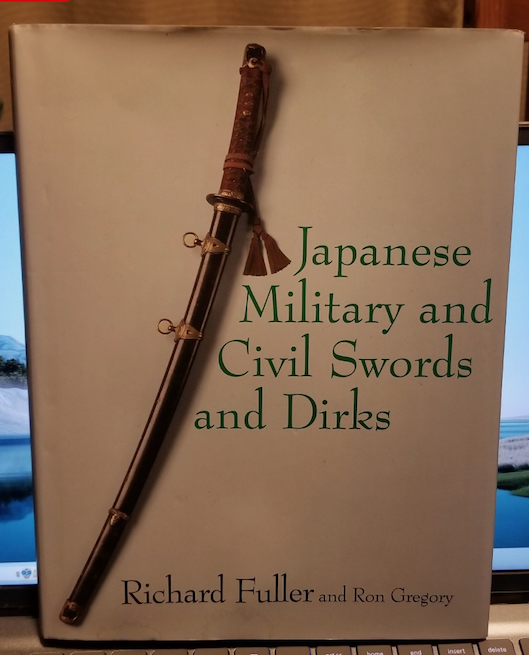
Starting at 50 bucks. Maybe it will stay at a reasonable price for someone who needs it. https://www.ebay.com/itm/177539932123? John C.
 1 point
 -
Not my pics, but thought these were pretty outstanding - pics by Andrew Ikkeringal ko uda ko ichimonji cheers Rich


 1 point




















This leaderboard is set to Johannesburg/GMT+02:00