
Leaderboard


Popular Content
Showing content with the highest reputation on 10/27/2025 in Posts
-
Thanks to everyone who contributed in here. As a final update, after carefully considering everything said here, I have put in an order for a different blade that I have been eyeing for a while. A Gorozaemon-no-jo Kiyomitsu masterpiece, fully signed, dated (1537) and ubu, with all the workmanship and style I was looking for. @Scogg and @Hoshi special thanks for your posts.5 points
-
慶應四年七月日 = on a day in the seventh month of of Keiō 4 (1868 CE) 水府 稲延徳正作 = Suifu Inanobe Norimasa saku5 points
-
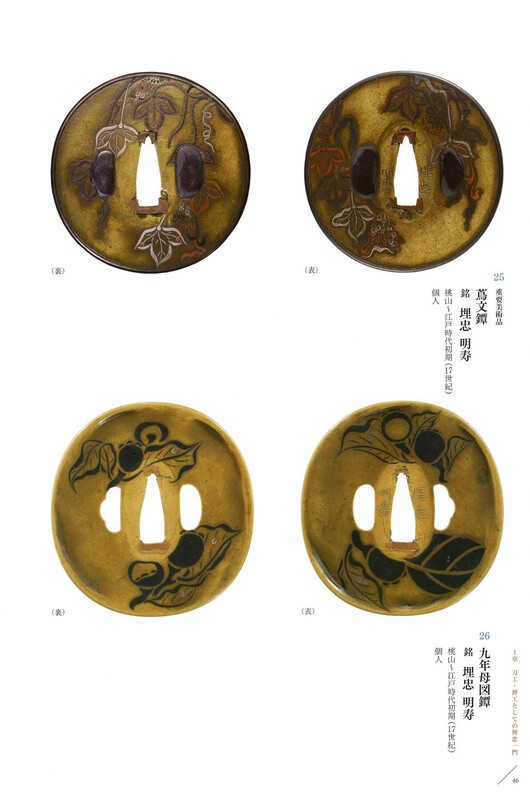
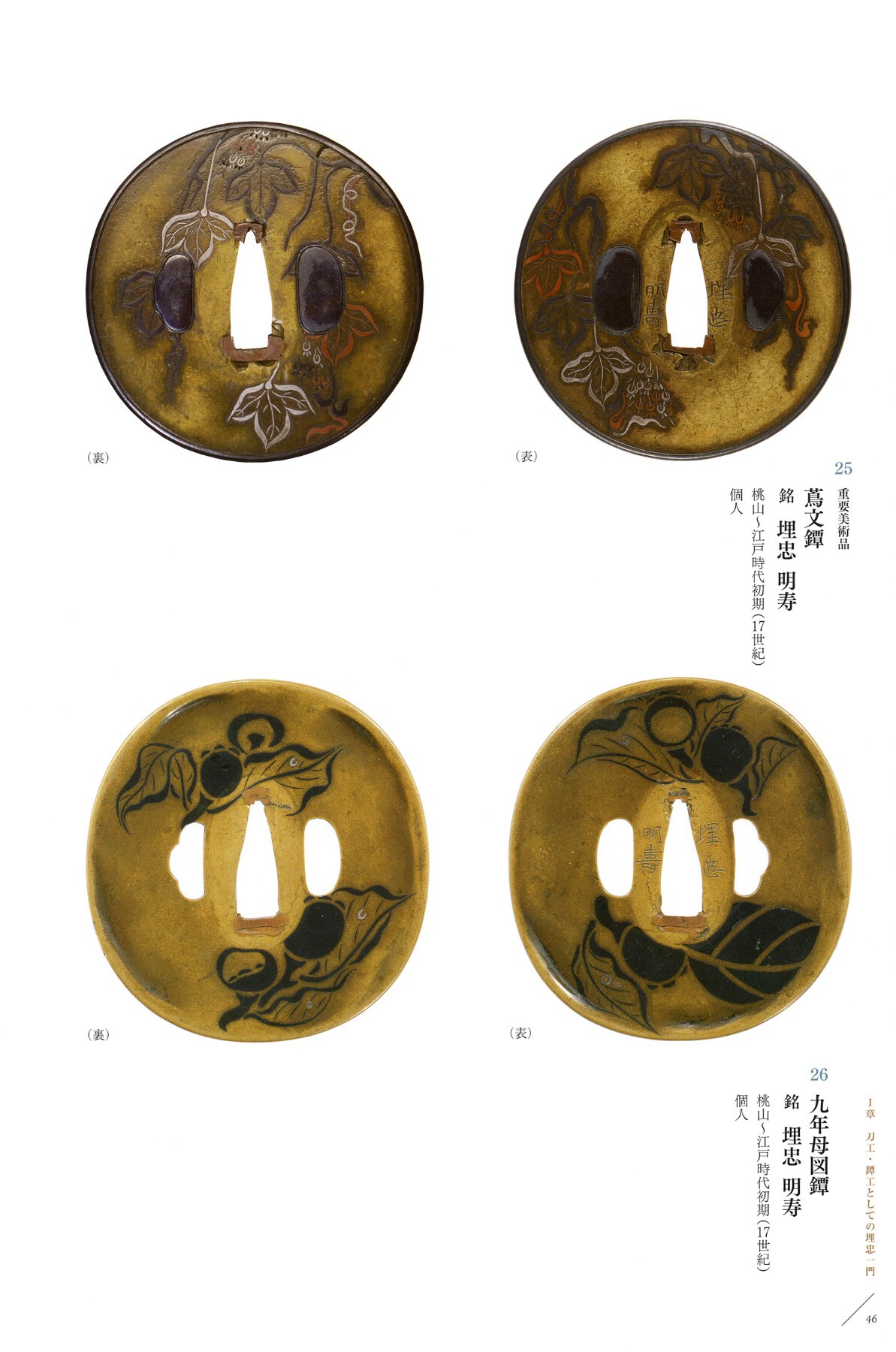
Here you have a Umetada school to compare with. Umetada - 埋忠鐔.Joshu Nishijin Ju Umetada Shigeyoshi
 3 points
 -
The provincial capital of Hitachi province (常陸國) was Mito (水戸). Suifu (水府) was another name for Mito.3 points
-
Hi John, Suifu (水府) is the name of a village in Hitachi province. The formatting of this mei is slightly unusual, with the two characters of Suifu being arranged horizontally (and read right-to-left) at the top, and one would ordinarily also expect them to be followed by "住", but I guess the smith took some artistic licence here.3 points
-
Cancel that. I’ve amazed myself and found him. Miboku. Thanks for looking!2 points
-
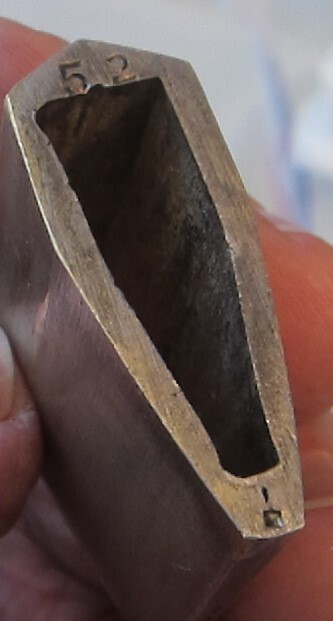
Hi John C..Just thought you and Bruce might be interested in a little more marking detail on that RJT 5/1944 Kanehide I posted mei pics of just above. Here is a pic of its habaki...stamped '52 and also '1 with kanji' (Seki? not sure). The '52' matches with the blue paint marking on the tang which says 'Ku 52'. When he made this sword he was working at the "Seki Kabushiki Kaisha' which he joined on Sho 16 year 2 mo 2 day so these marks must be related to their production system markings (Dai Nihon Token Shoko Meikan Mar 1942) (from Hist. of Nakata Kanehide, Swordsmith' from sanmei.com). Not sure if this is of interest bur it does show the tang and fittings are numbered together. Regards...
 2 points
 -
Nice work Jan, and interesting to see him in Sesko lists: NORIMASA (徳正), Keiō (慶応, 1865-1868), Hitachi – “Suifu-jū Inanobe Norimasa” (水府住稲延徳正), real name Kurosawa Sōjirō (黒沢宗次郎), student of Norikatsu (徳勝)2 points
-
Just for information: Kin-pun mei (gold-lacquer attributions) were made no earlier than Meiji-period and are not very reliable, to say the least. Old Hon'ami attributions were always done in kin-zogan (gold-inlay). Unfortunately for fakers this is much more difficult to counterfeit than kin-pun. reinhard2 points
-
There absolutely are examples of the Masamune school, his teacher and immediate students, which continue to emerge from the woodwork. However I wouid not expect to find a legitimate example of a Masamune, being presented as a Masamune, from the online auctions. The majority of the swords on Yahoo Japan, Ebay, etc being offered for sale out of Japan with sayagaki kinzogan-mei and kinpun-mei attributing to Masamune and his important disciples are fakes (misrepresented items).2 points
-
Thank you for the vote of confidence, however the purposed tassel treatise has fallen way, way, way by the wayside. Will dust off the draft and see what can be salvaged.2 points
-
Recent acquisition, a shakudo piece with a tranquil design depicting what? I would guess something to do with textile dyeing/production….washing silk in the stream? but I cannot think of any specific “legend” or story that relates. Maybe for a posh silk merchant’s wakizashi? Very heavy for its size suggesting decent quality shakudo. Any other suggestions? Mei is “Shokodo Mitsuchika” and I’ve asked in translation section for help with the lid inscription.


 1 point
 -
Gents Dore and Reese an auction house in the uk has an auction of swords and fittings on the 15th of November there are over 100 pieces for sale. Even if you are not in the market to buy anything you could do worse than spend a pleasant hour looking at the items for sale. This link will take you to the auction the swords and fittings start at lot 701 https://auctions.doreandrees.com/catalogue/81A7582615F99A2E3774098876CAACFC/AD74375B82A358E6EEF0CE537DEF266D/fine-Japanese-art-including-the-eva-aubrey-sweet-collect/ Regards Mike1 point
-
hi, in the book: Japanese Swords and Armor: Masterpieces from Thirty of Japan's Most Famous Samurai Warriors from Paul Martin are some pictures, and yes Hidekuni is the late name of Motooki, regards Oli1 point
-
So says the "informed amateur"1 point
-
For gendaitō 現代刀 collectors, I recommend the following two books for the reference library. They are definitely worth having. Sesko, Markus. Encyclopedia of Japanese Swords. Lulu Enterprises, Inc., 2014. 552 pages. This is a dictionary explaining all the Japanese sword terms. Sesko, Markus. Swordsmiths of Japan. Lulu, Inc., 2015. 1450 pages. A listing of over 20,000 Japanese swordsmiths. And finally, might as well download the free compendium from Sesko as well. Small Compendium1 point
-
Yes, “Otsuryūken Miboku”!1 point
-
Juyo shinsa happens once a year in October. If it fails it'll likely be released towards end of the year. If it passes you have to wait for the papers and oshigata to be completed. You won't see it again until early 2027. Obviously worth the wait in the latter instant1 point
-
“伯耆住金谷勝正作” (Hōki jū Kanaya Katsumasa saku). Dated “Shōwa 16” (1941)1 point
-
@Bruno and I have been discussing whether RS blades found in standard (light tan) fittings (originally, we were discussing late-war blades, but expanded) were tempered, had hamon, both or neither, and whether there was a progression of cutting edge treatments over time. I feel like this has been discussed in various random threads, and would like to consolidate our knowledge on a dedicated Type 3/Rinji/etc thread. I re-read Ohmura's page on them - Type 3 Report (Japanese only) - and Nick Komiya's pages and found nothing that specified how the standard rinji blade was to be made. Ohmura's report simply stated (English translation by Chrome): "The characteristics of the new saber are, first of all, the raw materials and the forging method - the first condition is that it does not break, does not bend, does not spill the blade, and has good cut, and in the case of hand-to-hand combat, it is hard (does not bend and has good cut) and is soft (does not break and does not spill the blade) In order to satisfy the contradictory conditions, the part that uses mechanical power is folded into the ancient Japan sword style that forges Japanese steel. 2. Shape and dimensions - pickaxe construction, the magnificent shape of the flower surface warping, first of all, it is close to the ancient Aishu tradition, and the cutting edge, the width of the body, the radius of the ground meat and the harmony of the warp are measured, and both the "thrust " and the slash are combined. In addition, the meat is sufficiently preserved, and the layering of the small pickaxe and the crucrum of the pine needle horn is thickened to give it a tense appearance of being beaten. The dimensions of the blade are 2 shaku 1 inch, 2 shaku 2 cun, and 2 shaku 3 inch, and the weight is 195 to 225 kg." also "The results of the experiment of Major Morinaga and other assistant professors of the Army Toyama School are excellent as shown on the left ▲ Straw cutting = When cutting two bales of straw soaked in water for a day and night, the response is light and the cutting taste is good, the average slashing amount is 170 % (roughly the same as the human torso), and there is no abnormality in the blade ▲ Green bamboo slash = 30-35 mm diameter green bamboo is put in the heart of a bale of straw and soaked in water for a day and night. ▲ Iron helmet slash = When cutting an iron helmet covered with cotton cloth soaked in water, a part of it is cut twenty millimeters long (conventional ones are generally not cut), and only a slight blade snail is created, and there is no other abnormality." I don't think you can make a sword cut steel helmets unless it's tempered. The "do not bend or break" definitely means it had to have been tempered. I have tons of RJT blades in upgraded fittings, and several non-star blades (mostly by RJT qualified smiths) with stamped numbers, which obviously had hamon of all styles. But I don't track standard RS gunto if they have no stamps. I'll go through my files of stamped blades, in RS fittings, to try building a survey of likely conditions - temper line? hamon? change over time? But could use everyone's help searching NMB for blades in standard fittings to build an observed consensus about the question at hand.1 point
-
The attribution and mei is to Rai Kunimitsu (not Kunitsugu), but this does not appear to be an authentic example of his mei.1 point
-
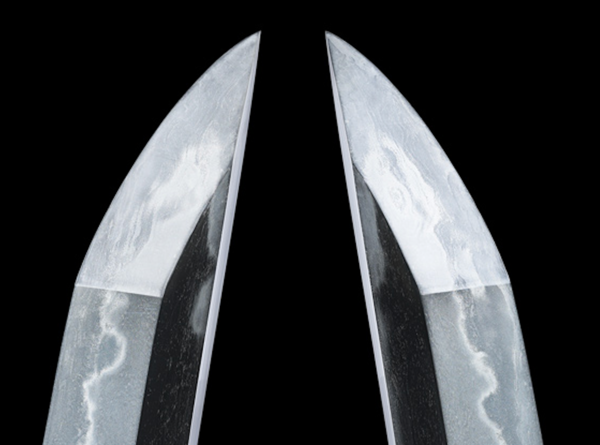
It really just checks all the boxes for me and I had been looking at it for a while but was just searching for something cheaper. I had originally been pretty close to buying this a while back https://www.aoijapan.com/katanamumeiunsigned-attributed-to-den-nakajima-rai-中島来the-17th-juyo-tokenmenukinbthk-hozon-tosogu/ I stopped however once I found out it has a big patch of umegane on the ji (not in the description but look on the image and you can see it, confirmed by Aoi Art). But I really enjoyed the sugata combined with the double hi, not to mention the Rai workmanship of this one. That lead me to look around for other swords with a similar style and I am a huge fan of Bizen (my favorite tradition) history, workmanship and style in general. I had kind of written this one off a bit because of the price, but it really has it all for me. Warring period, Bizen, uroi, utsuri, ubu, long signature, dated, healthy. I find the warring period Bizen swords especially interesting for a few reasons. You do see the Sue-Bizen description thrown around as undesirable by many, but this is mainly because of the overall average of work during this period and the writings about such. It is true, however multiple things can be true at once, and a key thing to remember, as evidenced by the rare masterpieces crafted during this time, is that the smiths did not "forget" how to produce swords with uroi, utsuri, they just weren't doing it for the most part. I am guessing due to time and material constraints combined with needs of the times and other things that have been mentioned in this forum. These were still essentially unbroken traditions and lineages of smiths before the destruction of Osafune. So when I see a Bizen masterpiece come out of that historically important and bloody time, it has always peaked my interest. I have a sword signed only Bishu Osafune Sukesada, but it is one of my favorite pieces in the collection and is overall one of the most interesting and beautiful Bizen pieces I've held, largely due to the (imo) insanely beautiful sashikomi polish on it. It is like the sun behind clouds.

 1 point
 -
Thanks, Bruce. That's great. Not sure it matters for your data set, however the one labeled Aug 44 was mis-identified by the website (I had seen that one as well). It's actually June 44 (Kanehide has a very particular way he makes his 6's, which can look like an 8 if the picture is blurry). Also, it's a little interesting that on two he used a black and red paint scheme rather than the green and blue we normally see. John C.1 point
-
He can always submit to shinsa. Great fat sword. Blade was made with Futasuji-hi [double bohi] in mind. That’s why blade have this motokasane.1 point
-
Dang, Colin! Excellent question! The quick answer is “a mixed bag which included two dollops of serendipity”. This is the Netsuke Central thread, however, so to stay strictly on topic, the weekend was ‘educational’. I saw perhaps 100+ top-class Netsuké, and thinking that it might be relatively cheaper, enquired casually about a beautifully lacquered, signed obi-hasami. The answer was ¥1,000,000… Well, cheap to some perhaps, but that was ten times my total budget for the day. Ulp! I did buy an obi-hasami of perhaps bone material (?) which cost relatively nothing, plus two ojime, and a very pretty old shell (with a tatty string remnant through it), which had once served as a ‘natural’ netsuke. There was indeed a fashion at one time (early to mid Edo) for natural netsuke, and I once had a pearlescent nautilus shell netsuke, plus a beautiful chunk of amber with silver fittings, so I was pleased to acquire another one. So, netsuke-wise, not a great haul, but better than a kick in the butt.1 point
-
These are the ones I have info so far 96,1 cm - Jūyō 27 76,1 cm - Tokubetsu Jūyō 2 (Mutsu Shintōgo 陸奥新藤五) 74,2 cm - Jūyō Bunkazai - Seikadō Bunko 73,6 cm - Ise Jingū - Dedicated by Tokugawa Ieharu in 1769 73,4 cm - Tokubetsu Jūyō 7 70,5 cm - Tokubetsu Jūyō 12 68,8 cm - Private collection - Was featured in 2002 Masamune: A Genius Swordsmith and his lineage (4 Museum combination exhibition) 65,4 cm - Jūyō 20 For the Ise Jingū item it is explained in the book that mei is good but the upper portion of the sword is in rough condition. Text also states that this particular item is noted as Bizen Kunimitsu in Tokugawa Jikki. However it is now seen as work of Shintōgo Kunimitsu. Unfortunately I have never seen a Shintōgo Kunimitsu tachi in person.1 point
-
The first two have been sitting on eBay for months1 point
-
MOTO KASANE 8,7 mm! Wow, that is heathy! Nice sword!1 point
-
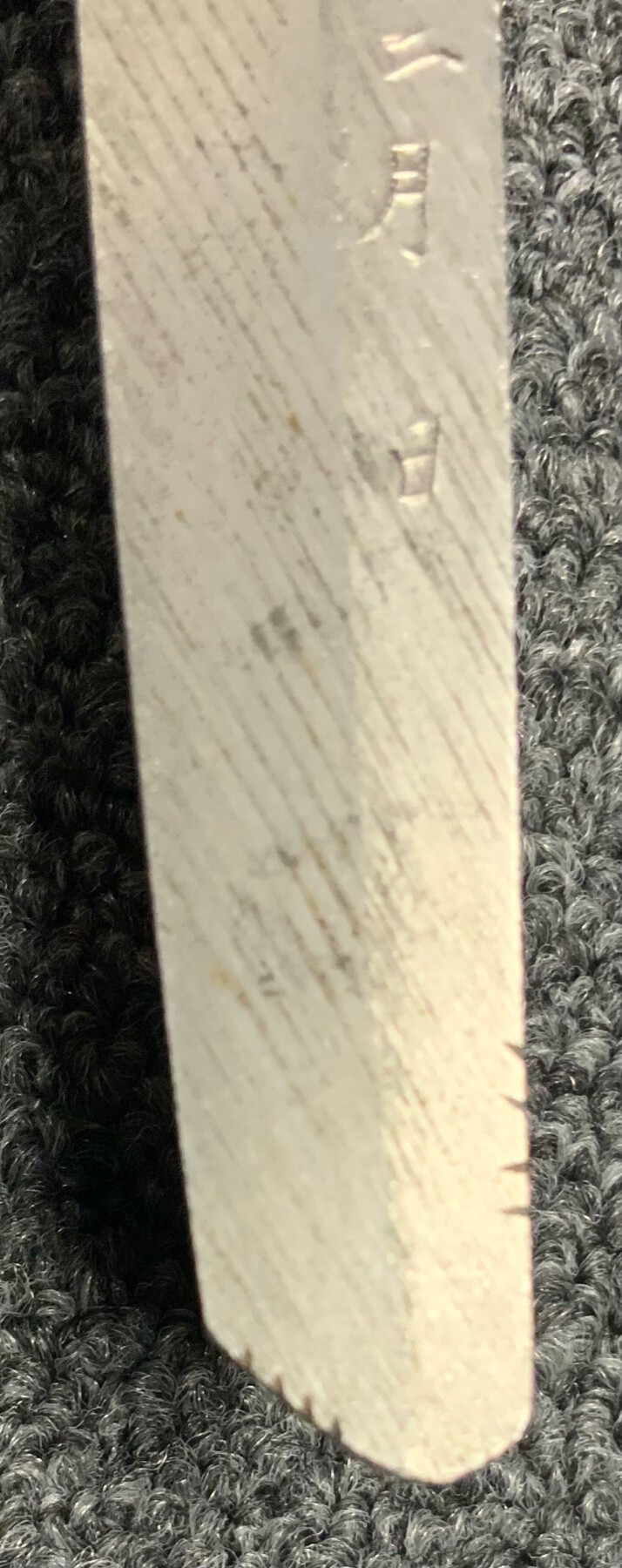
This appears to be a fake Hon'ami kinpun-mei purporting to be by Hon'ami Kotoku, using his kao. Best regards, Ray
 1 point
 -
Looks like Nakajima Masayasu1 point
-
For what it's worth you sometimes see a similar overall composition of a Kitsune admiring its reflection under moonlight.1 point
-
Yes, it's true! I am afraid to buy a sword tassel unless it shows considerable wear and has a bit of damage here or there indicating it is from WWll era. Especially when considering a higher priced field grade tassel let alone a general's tassel. What a racket, many of these reproduction tassels are getting so good it's terrifying to spend big money only to find it is a well-made reproduction. As collectors, I suspect most of us want the nicest looking item we can find, there it is, nicely folded pristine in a box, have to have it only to discover its a well-made reproduction. They get your money, then sellers claim...not know fake, not know fake, your fault you judge. John (psnshogun) has made much appreciated attempt to help with how to properly identify fake from real but I still find it difficult to confidently tell the difference in many cases. Particularly in photos as it is impossible to have the tassel in hand. John has mentioned he is preparing a guideline as how to identify real from reproduction. Hopefully, he will share it soon.., Dave1 point
-
I wanted to point out that the two blades on the right are from the Enju school.1 point
-
I’m in the same boat with you. I know some people here feel a gunto is incomplete without the tassel or knot, but I try to avoid purchasing these unless I find them in-person. It's hard to shop for tassels by pictures alone.1 point
-
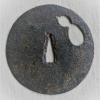
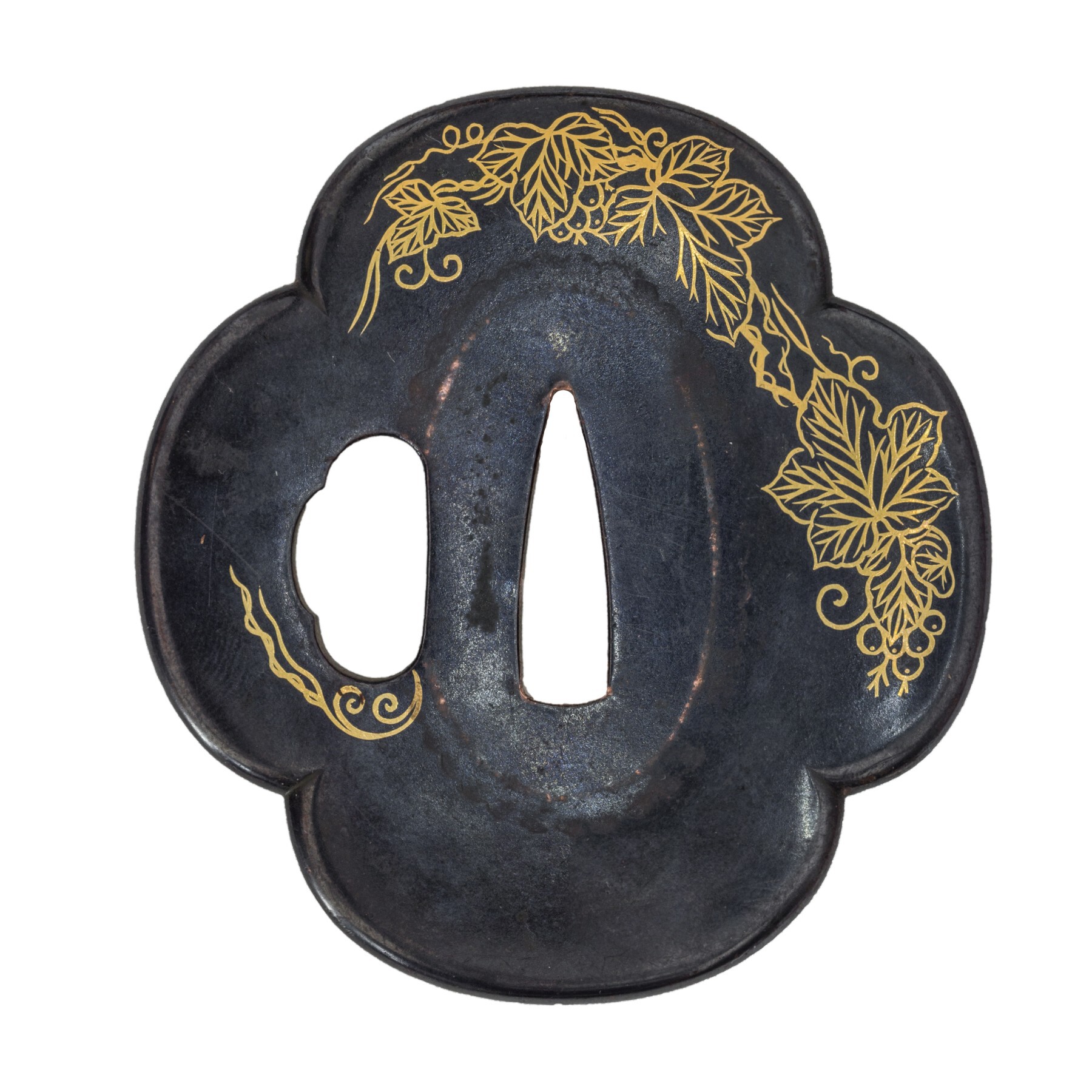
It's a tsuba from a friend.1 point
-
You could always talk to Bill Rannow! He knows his stuff about tassels and has a lot of them for sale, many new in box that he bought years and years ago.1 point
-
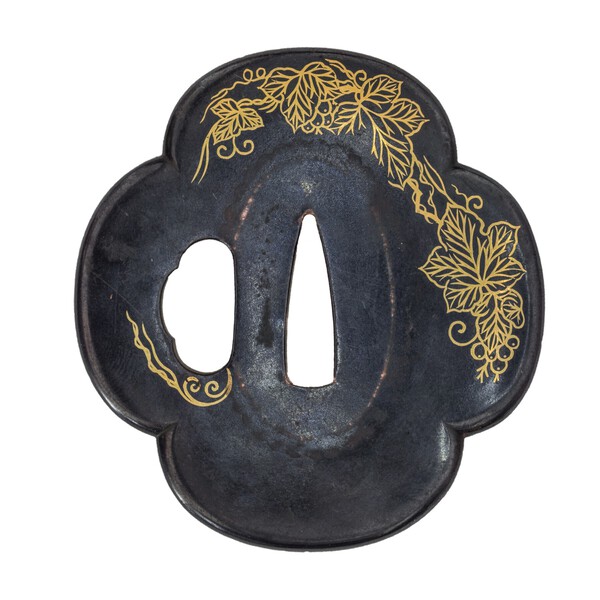
Okay, the tsuba got this feature. But it is very clone to Kaga zogen...
 1 point
 -
@Bruce Pennington Wow, Bruce. That's great! I have 39 examples of his mei, which is what I am recording, but do not have 3 on your list (aug, 43; oct, 43, aug 44). I would love to get your nakago pics of the 3 left on your list below. You have two listed as Aug 44. The one I have has the A80/A930 paint scheme. But it's the mei I am particularly interested in for this project. Just to give you some background info - It is widely known that Kanehide changed his mei through out his career. But current literature available to me does not discuss a) how many times (i.e., what style kanji used) he changed, b) when those changes took place, and c) why those changes took place, if that can be determined through examination. It would be easier to just get in touch with his son Masanao and ask these questions but that is obviously not possible for me. Additionally, there is an almost 20 year gap in his oshigata record between 1954 and 1973. What version of his mei did he use during this time period? Are there any exhisting oshigata from this time period in Japanese sources? So far, I have been able to log 39 examples of his mei from ~1938 to 1988, except for that 20 year gap. There are some definite time frames for his kanji changes—basically 1938-1940, 1940-1945, and post war. Also, there seems to be some correlation between his kanji changes and certain events in his life. So I am comparing his kanji changes with his biographical history (mostly coming from Malcolm's research and one of his "resumes"). Anyway, it keeps me off the streets. And I greatly appreciate any info you have. John C.
 1 point
 -
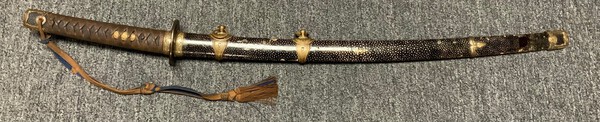
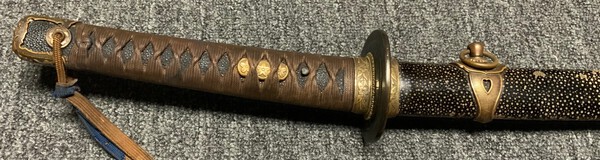
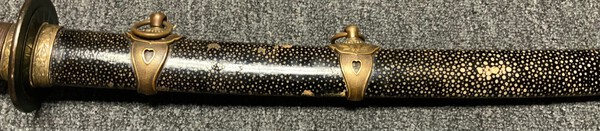
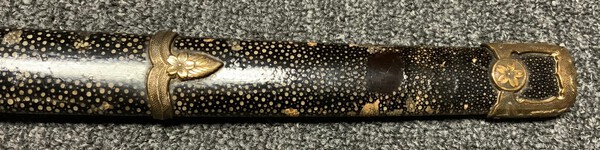
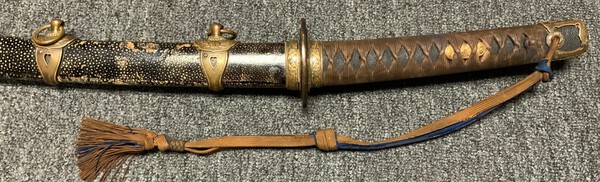
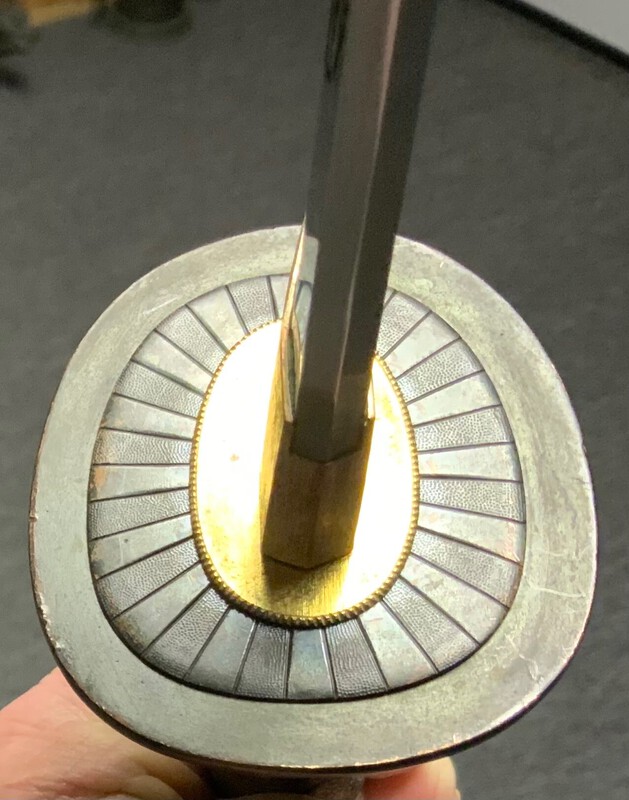
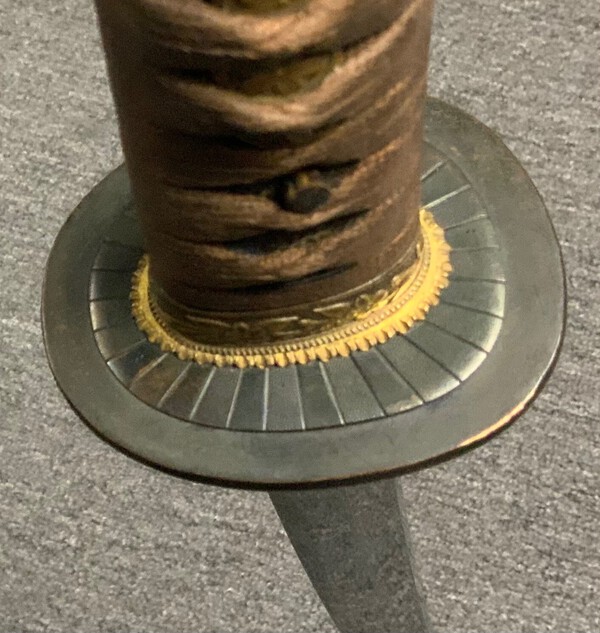
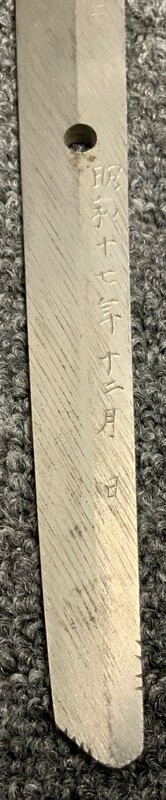
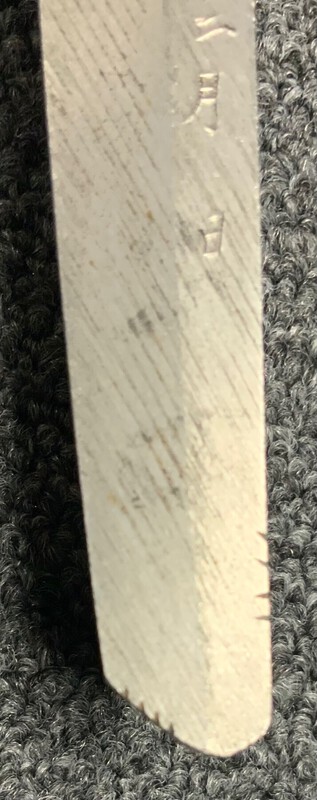
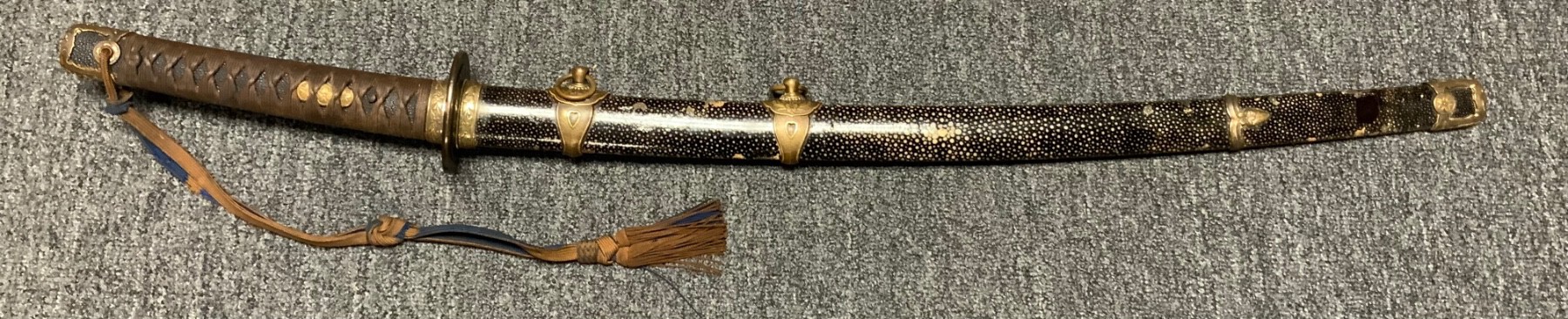
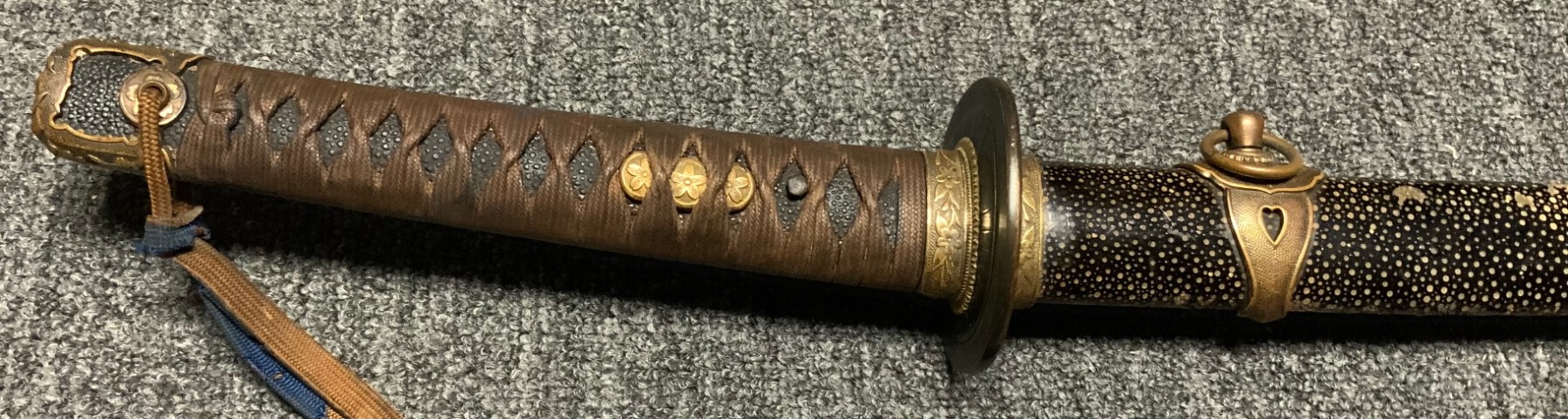
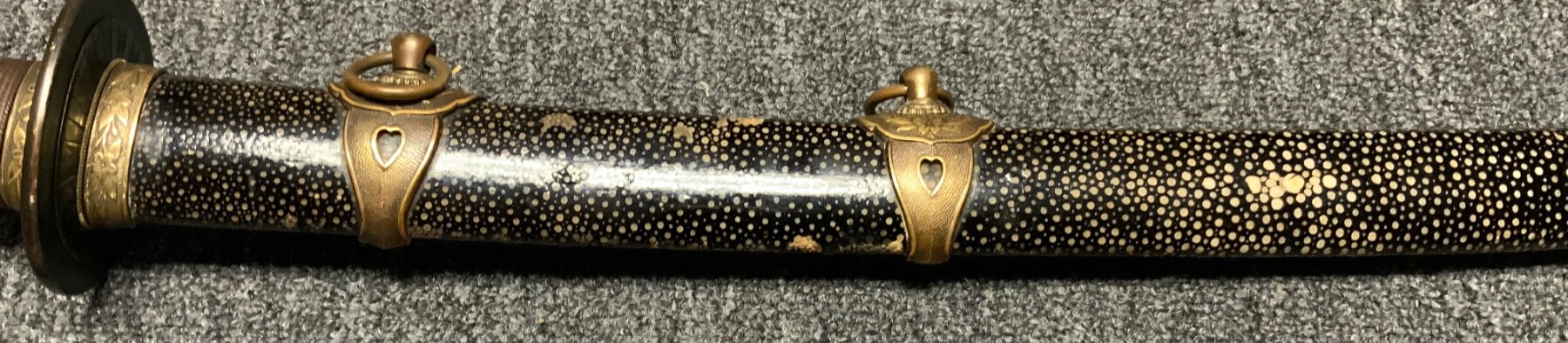
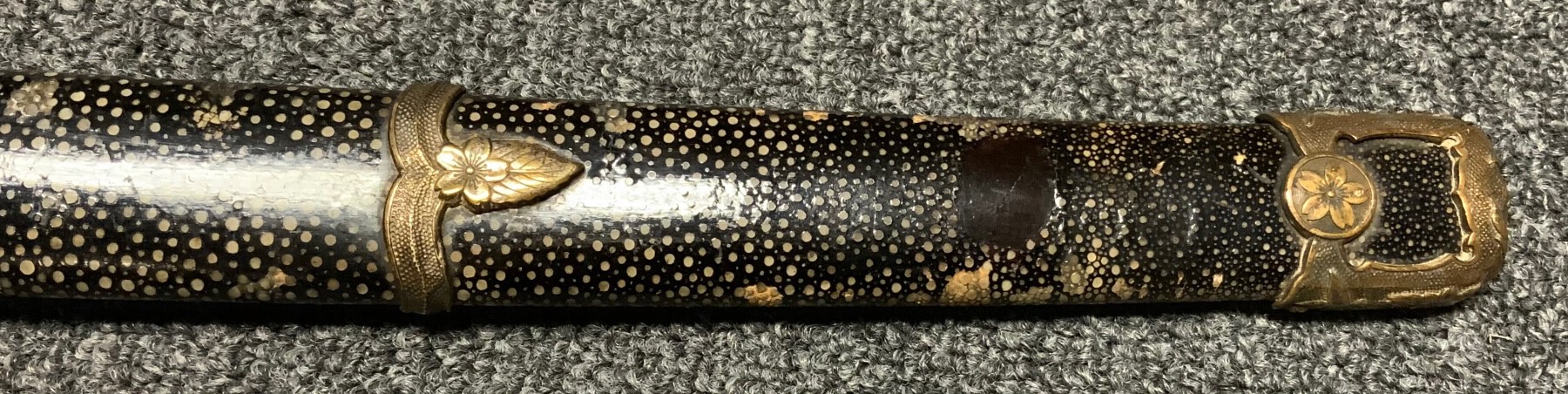
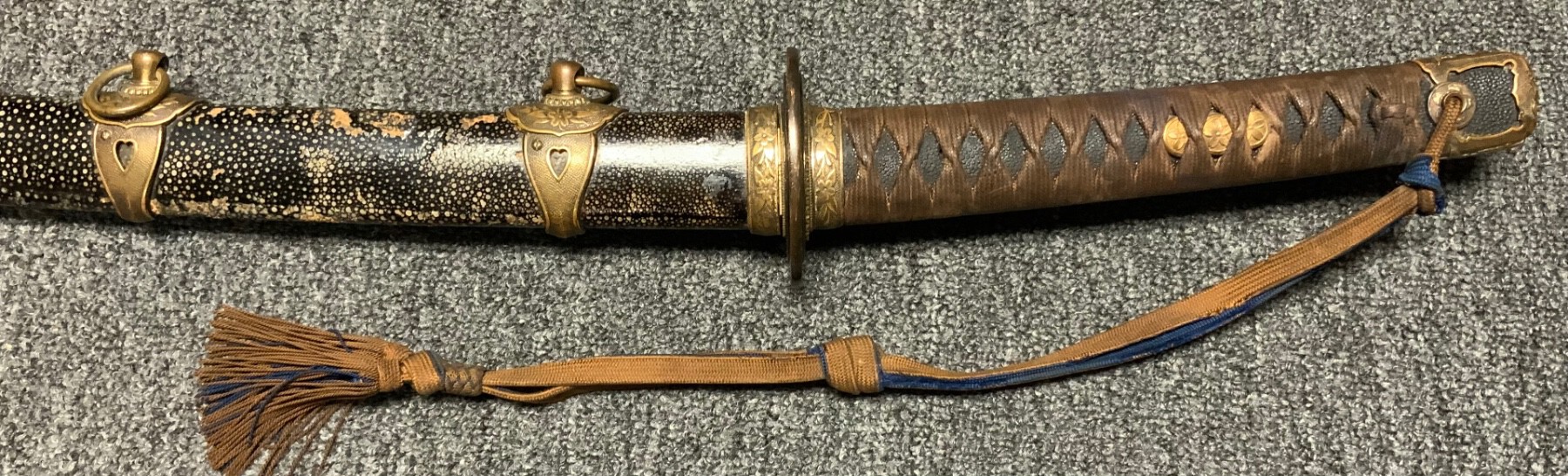
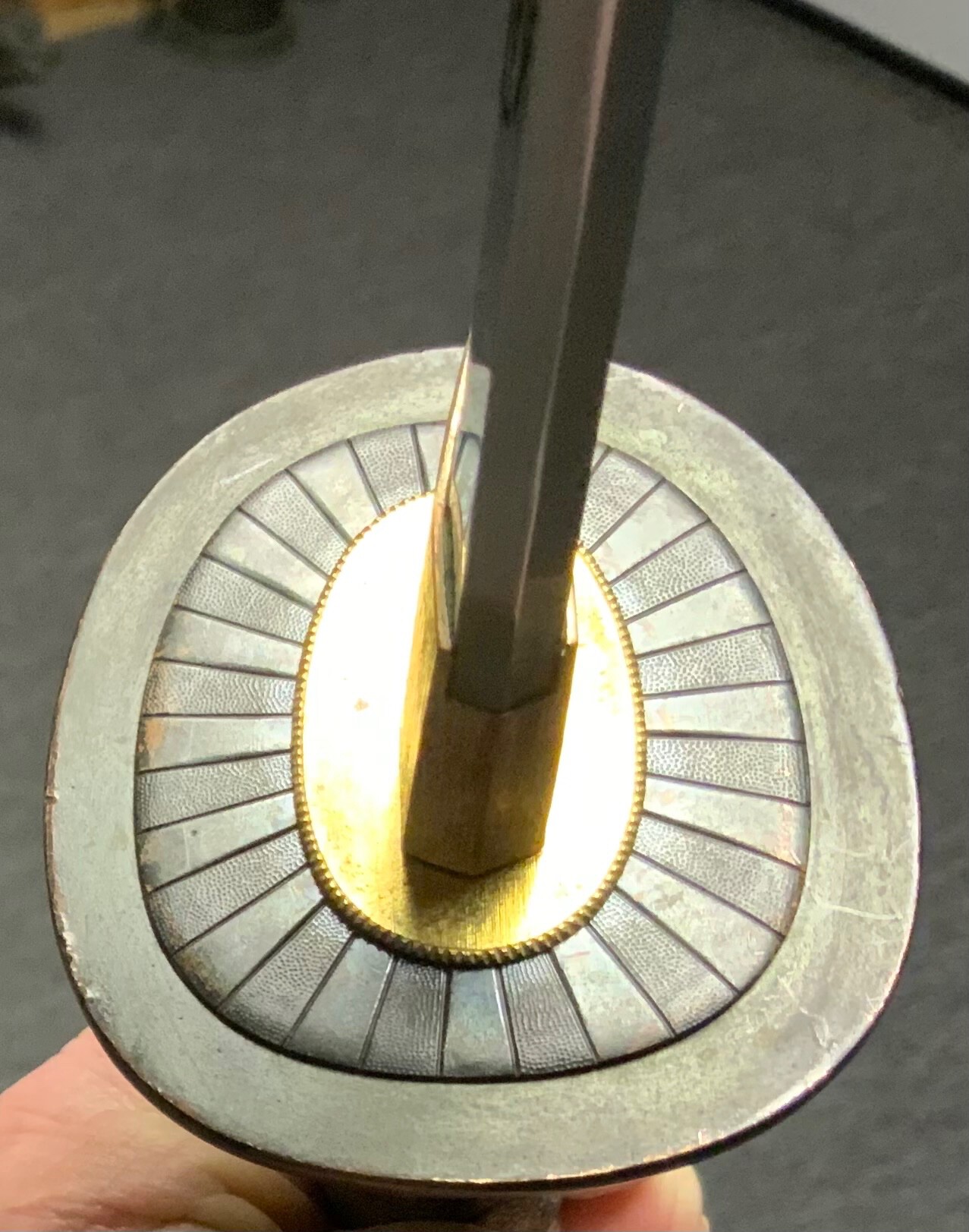
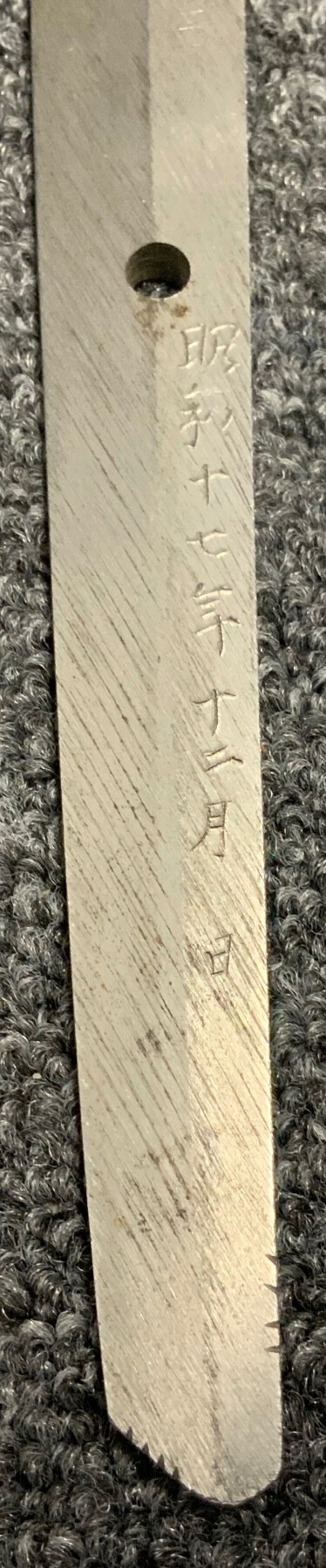
Hello everyone. I just wanted to share a recent purchase. I believe it is a Type 97 Kai Gunto, with a large anchor stamp without the circle which I believe is for the Kamakura arsenal. It also looks like it is dated December 1942. Please feel free to comment and I hope you enjoy. MikeR



 1 point
 -
Ricky, You have what was originally a very nice Japanese Naval officer's sword, or kaigunto, with upgraded stingray skin covered saya (scabbard). The signature is "Tenshozan made" a shortened version of the normal "Tenshozan Tanrenjo made" or Tenshozan Forging Workshop. The blade is stainless steel, and the anchor stamp is of the Navy's Tenshozan inspector. I assume there is no date on the other side? I only have one other blade with this shortened mei. The hash marks match the stamped numbers 223. Unusual method of writing it, though, as they actually say "twenty two three". Usually you will see "two two three" in the hash marks. Nothing special, just interesting. I'm not sure about the small stamp at the end. It could be "11" or the Japanese 2 "=", or a square. Hard to say.1 point
-
Hi Ricky, you may consider Deeple as translater. “Good morning. Can anyone help me? I found one very similar to yours, but with different markings. Could anyone tell me anything about it and how much it might be worth? Since I won't be keeping it, I'll sell it.“ www.deeple.com1 point
-
Related to this post is a tsuba featuring 4 Gingko leaves with gold coloured dew and insect nibbled leaves. Neil
 1 point
 -
I think it is Kaga zogan. Umetada looks different.
 1 point
 -
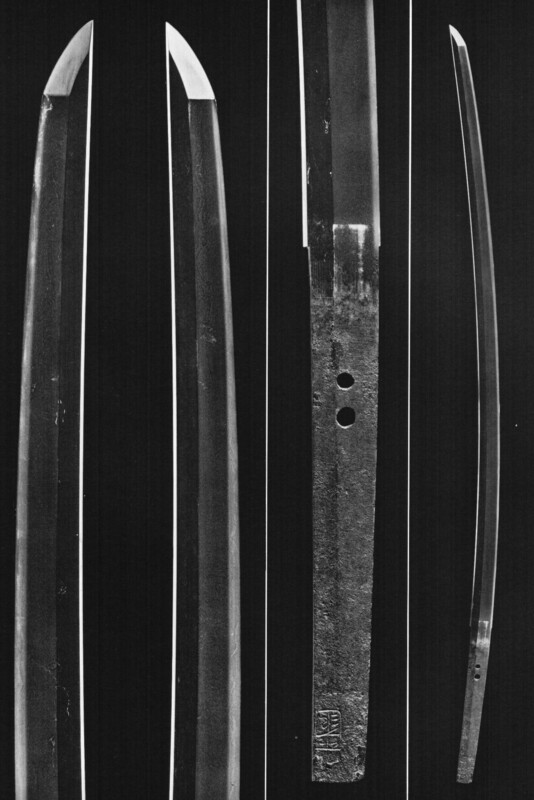
This above is a good point for people to always bear in mind; first and foremost the workmanship and traits should underpin our understanding, followed by the (secondary) view of the signature. In the last 20-30 years, long since the great Koza publication was written, scholarship has moved a bit in relation to the multi-generational theory and lately single-generation interpretations often prevail where previously there was a strict separation about some smiths (often the case in Bizen Osafune for example). Various examples include Mitsutada, Nagamitsu but also Kunimune etc. Moving on to how many zaimei Shintogo tachi exist. With regard to the zaimei Shintogo Kunimitsu tachi…well, there are more than one. Of course they are a great rarity but I think I have records of 5-6 such zaimei tachi. And it is very possible that Jussi might have unearthed more with his visits to shrines and temples and perusal of old records. I attach some of the examples I have records of. Of these, on a couple of occasions, I have been privileged to hold and study the last blade (TokuJu, one ana). It is an extremely fine blade, with sophisticated and fine jiba and in no way inferior to his tanto ( I have studied some in hand and various behind glass). So, I am not sure to which [inferior ibid.] tachi the Koza refers in the excerpt above.


 1 point
 -
As of August 2025 plan to pay 15% tariff on items purchased from Japan. Just purchased and small item at a bit over $300 US and paid $47 Tariff fee......1 point
-
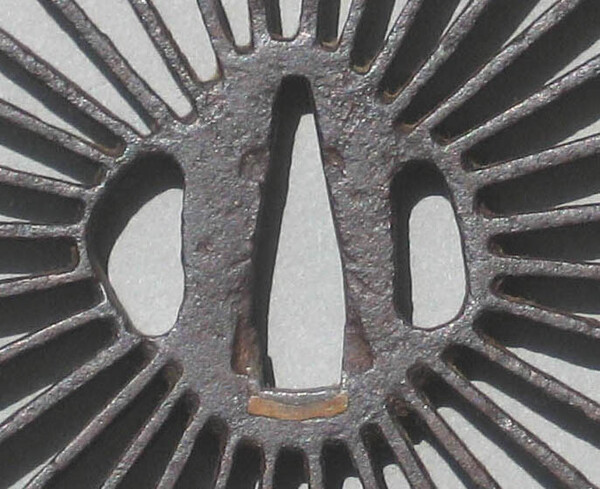
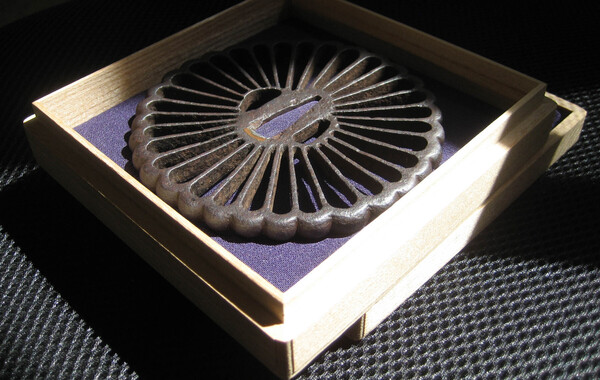
I am late to this thread and will have to read it in more depth to see if I can add any value. For now, here is one I have owned for a while. Thought it has gotten some surprising interactions out of tsuba scholars smarter than me, I have never inquired too much.

 1 point
 -
Agree with Brian, total scam that adds non-existent tax and fees to items that don't require them. Also forget buying swords using the GSP, they aren't accepted and have heard stories of the item being seized, money refunded, and sword summarily 'destroyed'.1 point
-
1 point
-
Dear Dee. A longshot from me. I cannot see a space for a kogai though there is a slot for a kozuka and a corresponding hitsu in the tsuba. One of the seppa is gold foiled, the other looks like a replacement. I agree the binding is not a good look for this sword. The hanging ring appears to be integral with a fitting that encircles the saya and includes a kurikata, all in nanako. One possible direction is that around the Boshin war samurai were wearing Western dress, or an approximation thereof, and sometimes rather unusual sword hangers. I wonder if this fitting could have been made to allow both a traditional position in the obi and a European style carry with the edge down, either as a modification to an existing koshirae or perhaps as the koshirae was assembled. Have a look at the first picture in this link, https://sbg-sword-forum.forums.net/thread/51310/samurai-guns Also this wonderful example, https://www.toukenkomachi.com/index_en_tachi&katana_A040720.html You might also search around toppei koshirae, a form I enjoy. Edit to follow on from Marcin's post. I do not think the example in Dee's post has anything to do with Gunto, unless of course it has a Showa blade. All the best.1 point





























This leaderboard is set to Johannesburg/GMT+02:00