
Leaderboard



Popular Content
Showing content with the highest reputation on 10/10/2025 in all areas
-
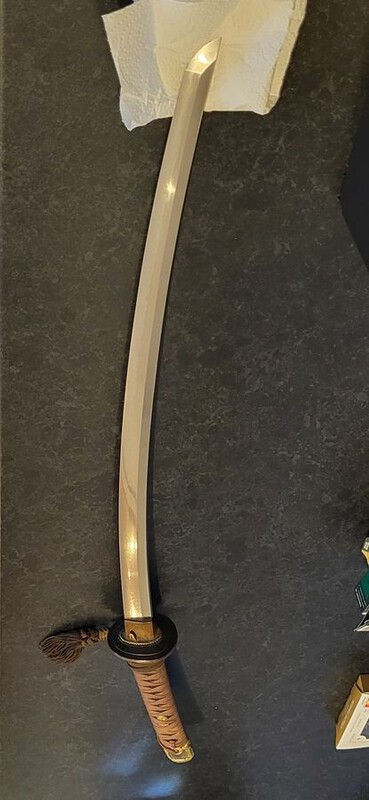
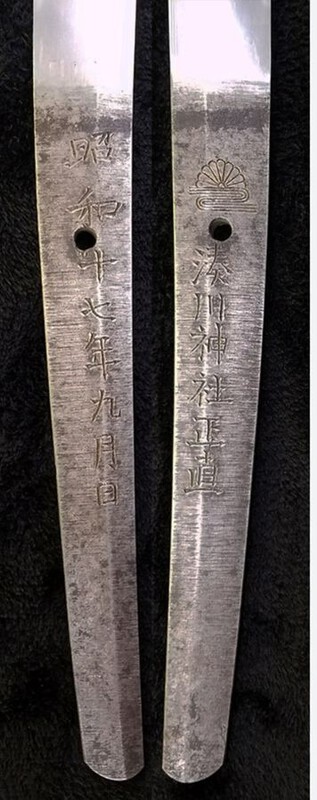
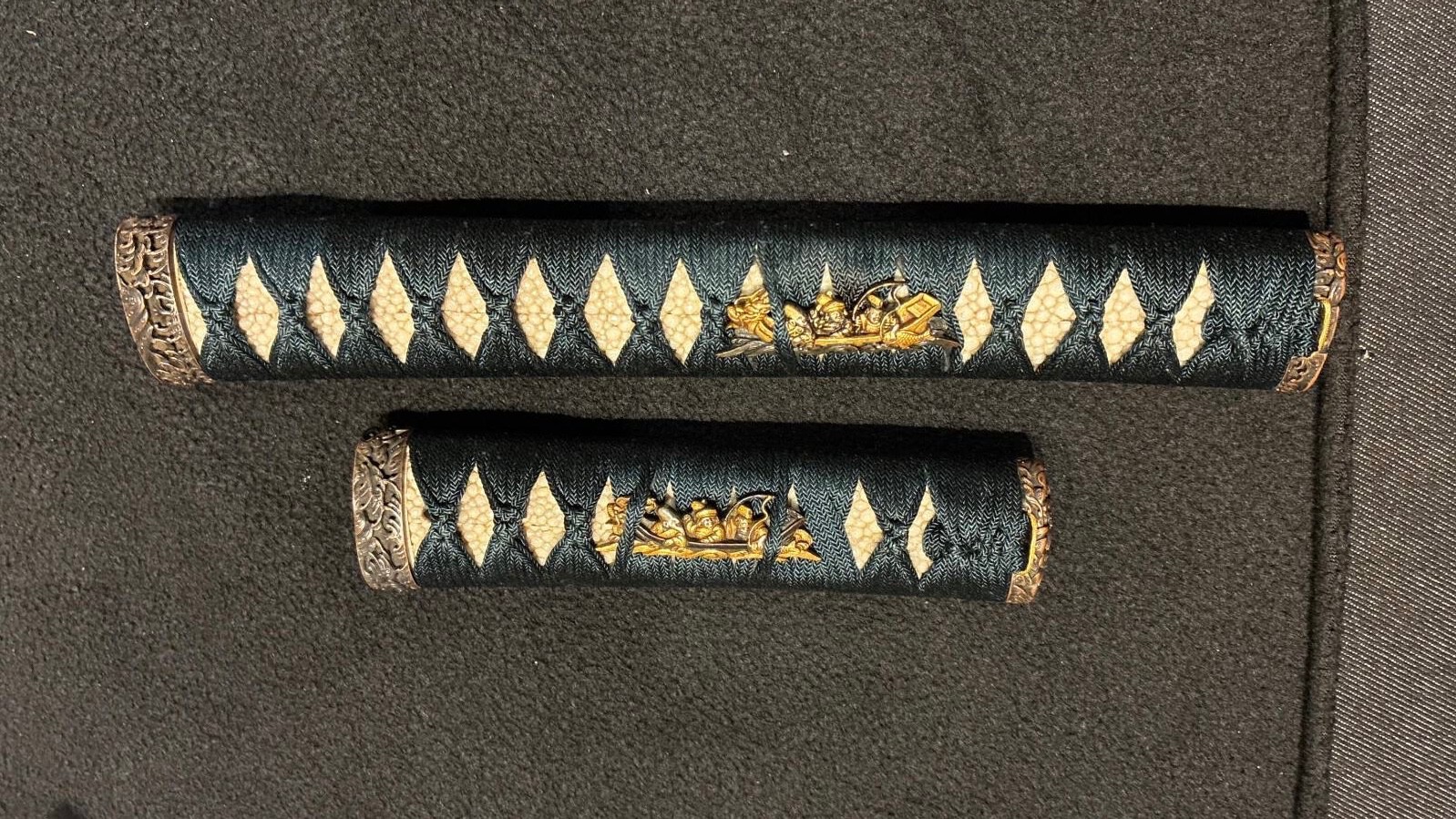
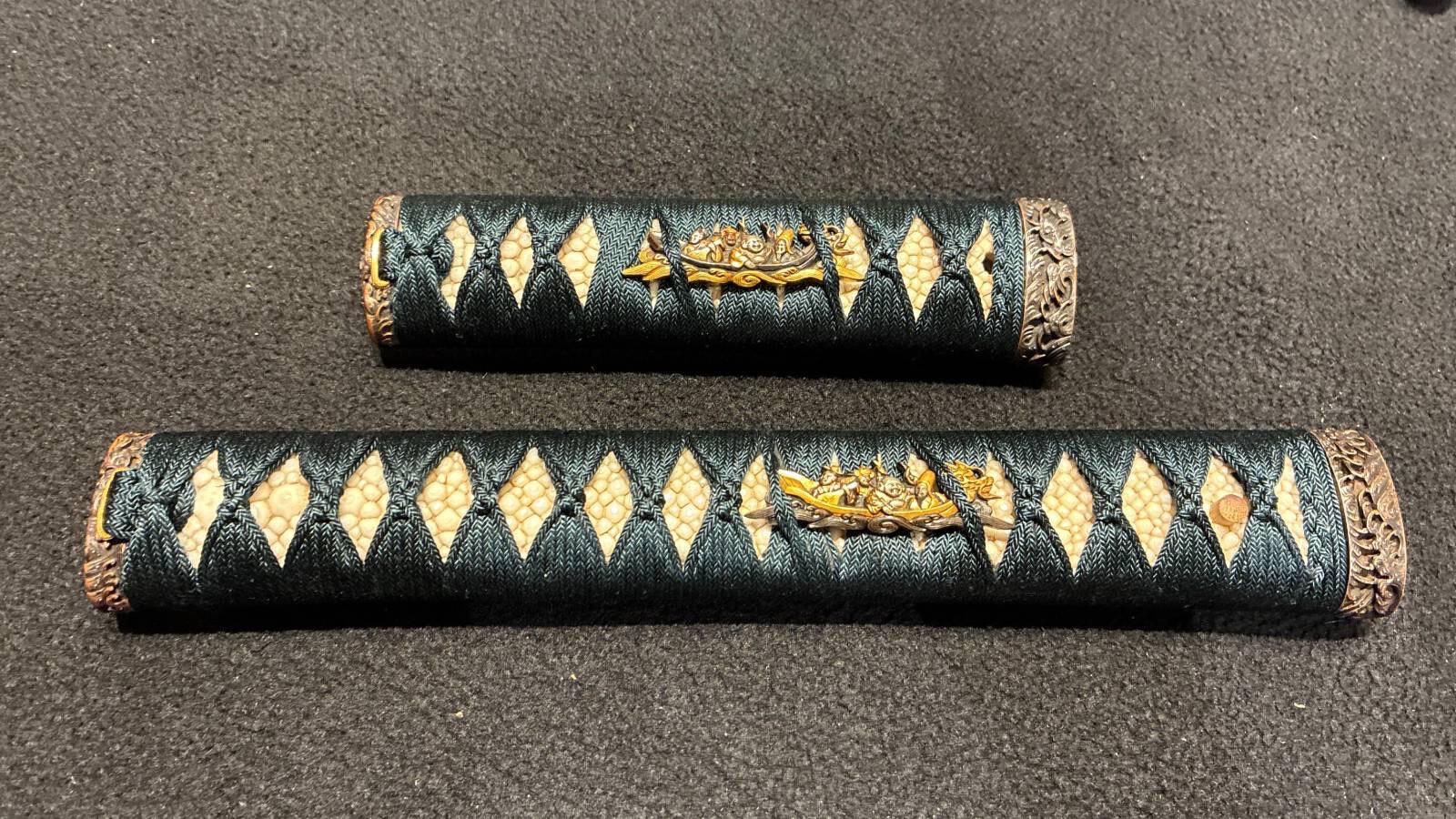
beautiful shaped Kikusui Masanao if you mount the original handle on one of these great swords, as long as the original koshirae is still there, such a tachi gets a completely new look

 7 points
 -
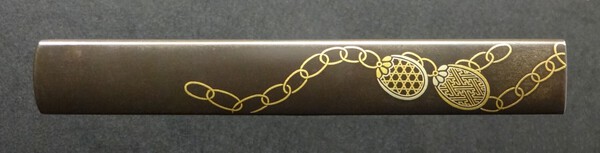
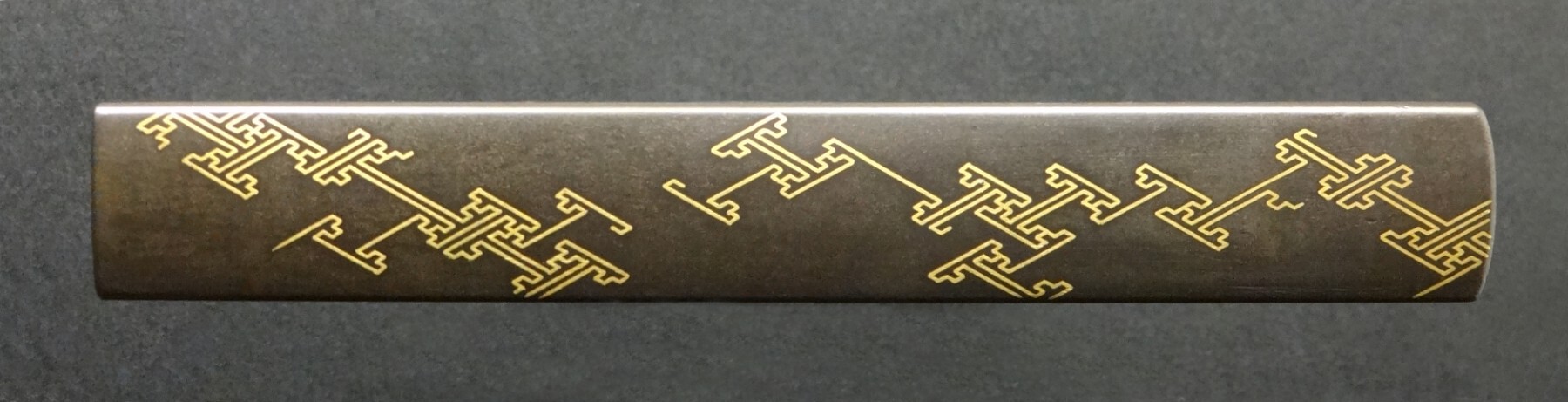
Dear all I have recently acquired a nice kozuka that, as a first guess, I would classify as Kaga Zogan. Dimensions 98.3 mm x 14.0 mm, 4.8 mm thickness, the base material is shibuichi with gold and silver hira-zogan inlay. The decoration on the back is sayamon (紗綾文), but I am struggling with identifying the decoration on the front. They look like some kind of pendant or weight attached to a chain. Any suggestion about the front decoration is welcome. @SpartancrestDale any idea? You are our black belt in this jutsu! Regards Luca
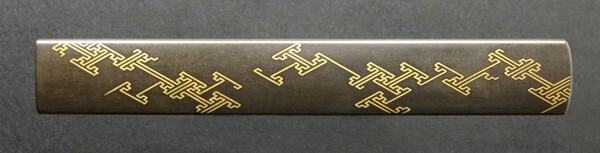 3 points
 -
Nanka Tōken Kai meeting tomorrow (Friday) October 10th at the Japanese Cultural Institute in Gardena, from 7:00pm to 9:00pm. Club Sensei Mike Yamasaki will not be attending, so there will be no specific topics. Bring your swords by if you would like to share with the group. If you have any swords or related items with Japanese inscriptions that you would like read/deciphered, bring them by and I will be happy to take a look. Gardena Valley JCI, 1964 W. 162nd Street, Gardena, CA 90247 Steve3 points
-
As many of you know, I have struggled to get this set completed. Through much effort I was able to retrieve my fittings and all prior work and they have finally been completed !! thought I would share the work done by Pablo Kuntz’s team
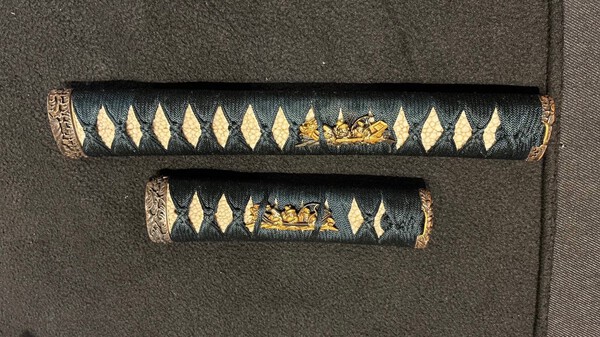
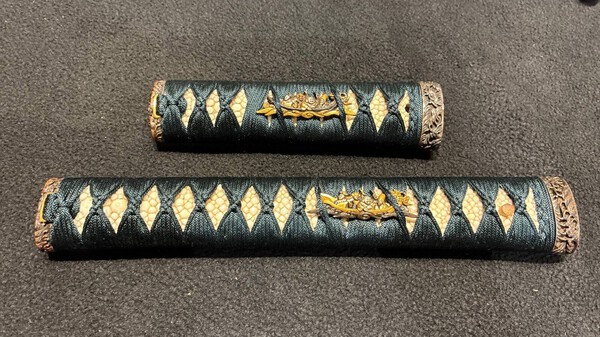 3 points
 -
It is a wide ranging essay, so succinctly summarizing might be difficult. Below is a list of the topic headings that will provide an idea of the scope. Visions within Visions The Nature of Aesthetics and the Japanese Sword as Fine Art by Paul R. Allman Introduction: In Whose Eye is Beauty? The Sword as Beauty: How I first saw it. Is any Art Rubbish If no One Appreciates It? “Craft”, “Art” and the Sword: Some Definitions. Why Worry About It?: We Know the Sword is Art. What’s Ahead; A Summary View. The Avaricious Eye; Why do we collect? Money: The Lure of Mammon and the Love of Midas. “Collectibles”: The Search for Hidden Treasure. Self Identity Tools – Status Symbols: You are What You Own. Self-Expression; It’s Cheaper than Psychotherapy. The Weapon; Proof of Man’s Mastery. History; The Romance of Age and the Dreams of Past Life. Challenge: Technical Perfection and Esoteric Learning The Intellectual View: Idea and Icon. Appreciation: To Love an Object for Itself. “In Sum”: Conclusions About Collecting. Mind And Beauty: Theories of Aesthetics. Instrumental Or Pragmatic Views. Naturalistic Views. Formalist-Aesthetic Views. Theories of Aesthetic Vision Art and Language: the Shaky Tower of Blabber. Allman’s Theory of Pure Vision. Footnotes to Aesthetics: We’re Still in Trouble Art: What Is It?: One Man’s Eyes. Communication: The Ultimate Aesthetic Aim. Importance: The Expression of Primary Concerns. Display and Decoration: Symbols of Earthly Power. Celebration: The Art of Exuberance and Joy. Self Expression: Healing the Spirit Through Art. Art as Ordered Chaos: Man, The Order-Seeking Animal. Icons: Art as the Image of Supra-Earth States. The Touch of the “Kami”: Art and Supra-Earth Force. Harmony with the Tao; Art As Reflection of the Artist’s Being. Art as Seeing Shared; Do you See What I see? Art As A Good Time: The Effect of Time Spent Seeing. Looking to Find Vision: the Connoisseur As Artist. The Appreciator As A Man With Artist’s Eyes. Learning To See: The First Step Is the Hard One. Sensei Trouble: I Was Certain It Was A Trick. Hade, Hanayaka, Shibui; New Vision And New Words Too. Vision And Intellect: Friendly Enemies In Seeing Art. A Footnote On Vision: It Need Never Stop Growing. The Sword As Art: The Samurai As Aesthete. Baring and Beauty: Polishing As An Aesthetic Act. The Sword In History; Time Travel On An Art Object. Sword And Samurai; The Many Roles Of A Weapon As Art Object. The Kyoto Aesthetes; Balance To The Samurai. The Analytic Eye; Appraisal And Analysis, Then And Now. Factors In Appraisal: Some Basic Considerations. Schools Of Appraisal; Even Vision Changes. The Sword As Pure Object Today; The Aesthetics Of Now. The Sword As Sculpture; Form And Function…..And Beauty. The Sword As “Plastic Art”; The Interplay Of Form And Surface. The Collector’s Eye: Fear, Safety and Seeing. The Final Stroke: Perhaps An Empty Gesture. The Future: In The Jigane We See…? Does It Matter?: Then What Does?2 points
-
For sure I'm not qualified enough... Reading this thread, I wish to share some thoughts: - for some one who have sensitivity, looking at really great sword feels like contemplation. You can touch silence of the soul...your's and maybe sword's. - a deep historical/legendary background helps to understand the cultural importance of a great one. - obviously, it must be a true high piece of art, a masterpiece... For me the 3 conditions are necessary and sufficient... Regards, Eric2 points
-
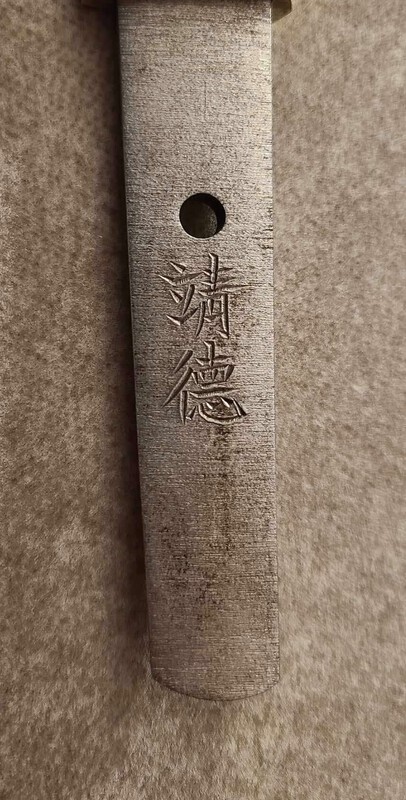
Volker, I know that tanto from somewhere 😉. Here's my Yasunori from my collection for comparison.

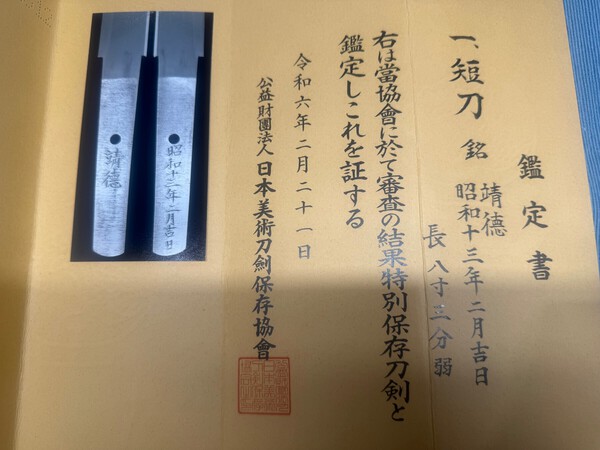
 2 points
 -
Hi Dee, yes I think that Tanuki [Bunbuku chagama] tsuba is legit. It is close to this one in the V&A https://collections.vam.ac.uk/item/O75227/tsuba-ichijosai/ This one in the Metropolitan Art Museum https://www.metmuseum.org/art/collection/search/6424752 points
-
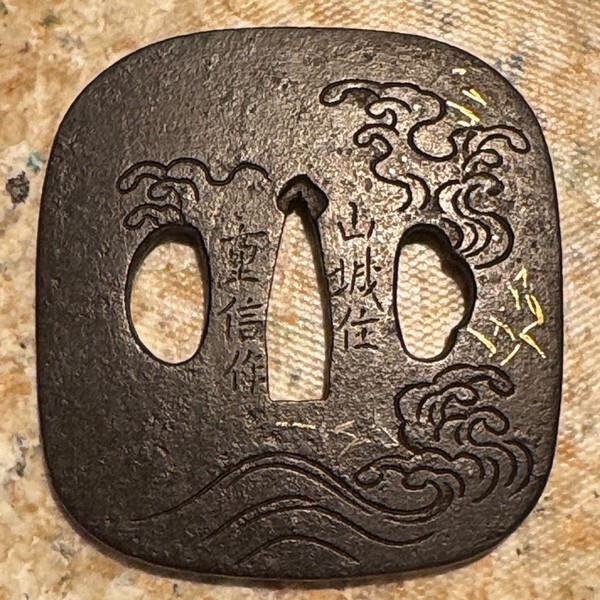
Yamashiro jū Shigenobu saku (山城住 重信作), possibly Shōami school.2 points
-
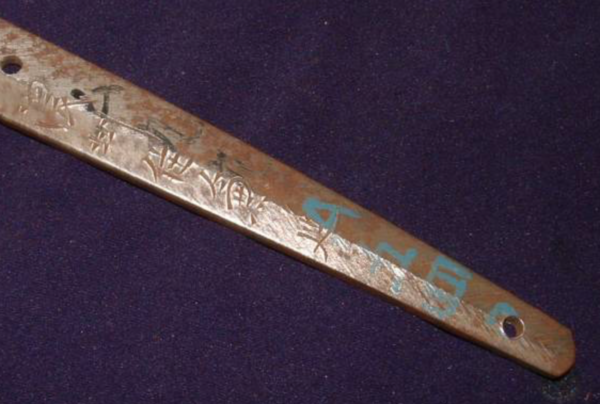
The other kanehide pics I have show only numbers, however I have a Kanenobu (see pic) with the same A number system as the Kanehide but what looks like MU as the katakana. John C.
 2 points
 -
A little missive of mine from early 2023. Kanehide Gendaito Rinji questions2 points
-
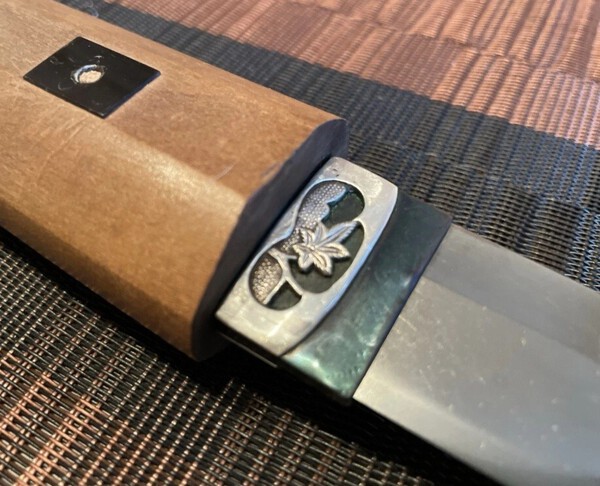
2 piece.
 2 points
 -
For the sword enthusiasts in Southern California, there will be a meeting of the Nanka Tokenkai ("Southern California Sword Club") on Friday, April 12th, at the Gardena Valley Japanese Cultural Institute in Gardena from 7:00-9:00pm. For information check out the club's Facebook page. https://www.facebook...174273/?ref=newsfeed Gardena Valley JCI, 1964 W. 162nd Street, Gardena, CA 902471 point
-
yes, thats how it is with shipping, someone is always selling and shipping1 point
-
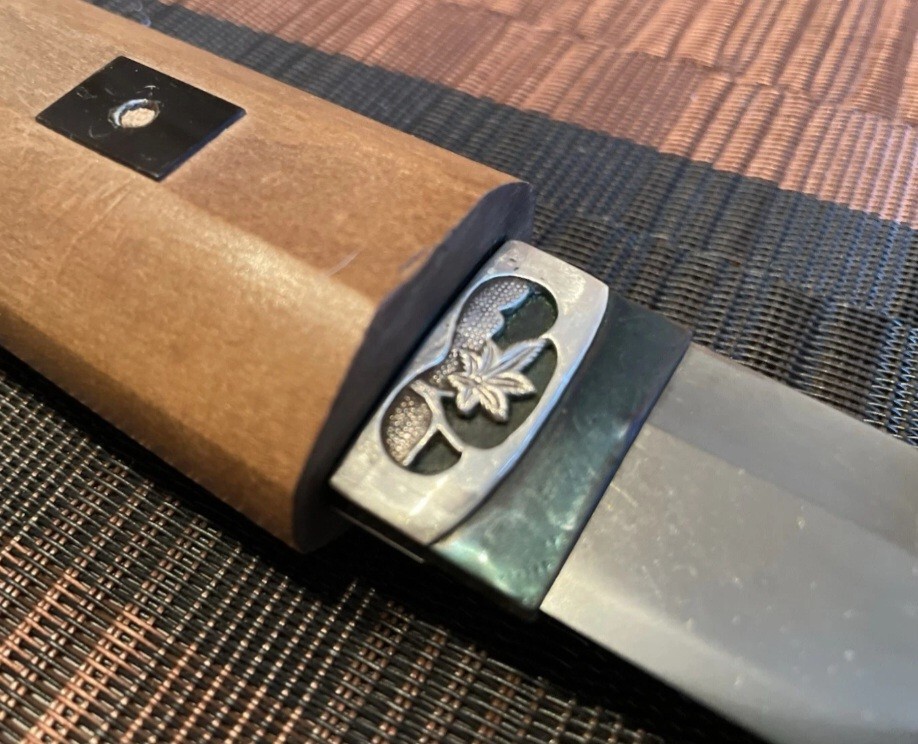
Just a guess…..personal “pomander” ie fragrance container?1 point
-
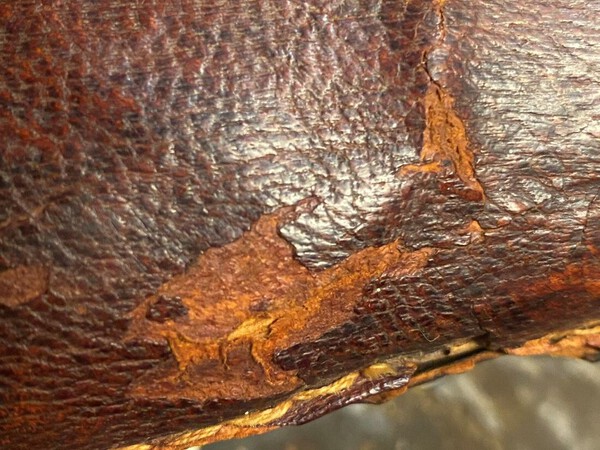
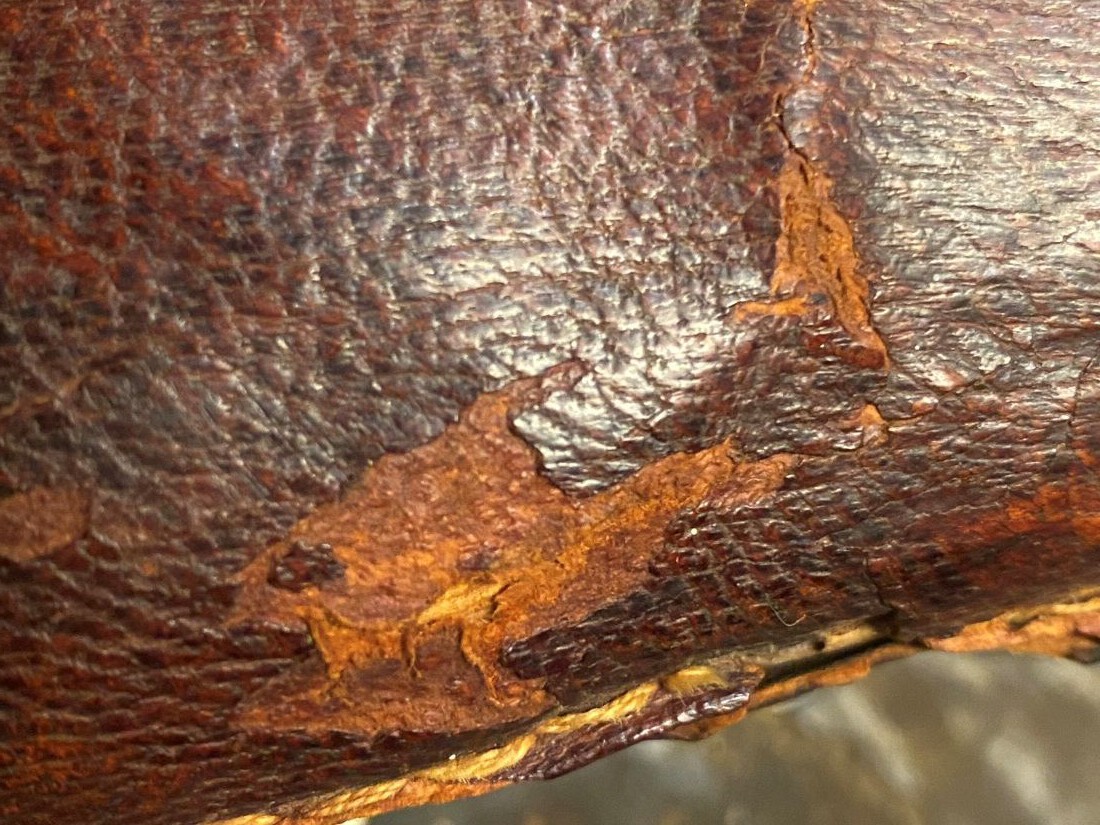
I took a close-up of the leather. I wouldn't dare say whether it's artificial or real leather.
 1 point
 -
I've been wondering, since two of the three have surfaced in the Netherlands. Could it be possible that these were made in the former Dutch East Indies during the Japanese occupation? I know that a large number of the Shin Guntos found here in the Netherlands were brought from that region by Dutch soldiers after the war.1 point
-
Made in an occupied territory? Not made in one of the Japanese workshops I think. By "Ersatz" I expect he meant made out somewhere, where they didn't have supply of swords. Maybe made in Manchuria for local troop supply or from a small workshop there1 point
-
@Bruce Pennington the picture of the mark is taken from a Dutch site. https://www.marktplaats.nl/v/verzamelen/militaria-tweede-wereldoorlog/m2307382007-japans-officiers-showato-katana-1940-1945-gunto-stijl1 point
-
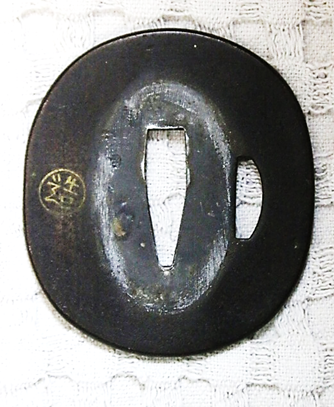
Where did you find that one, Marcel? Here is one I have on file. Found on what Fuller called an "ersatz sword." "The tsuba of an “ersatz” sword possibly made in Manchuria in the last months of the war. 造 could be short for 造兵 which in Japanese apparently translates to "Arsenal."
 1 point
 -
Yeah, there is no way that mark belongs on a WW2 Japanese made sword or tsuba. Also starting to wonder about this one. I think it's worth making a very small slit to get that peg out and post the bare tang. At best, that handle is "home made"1 point
-
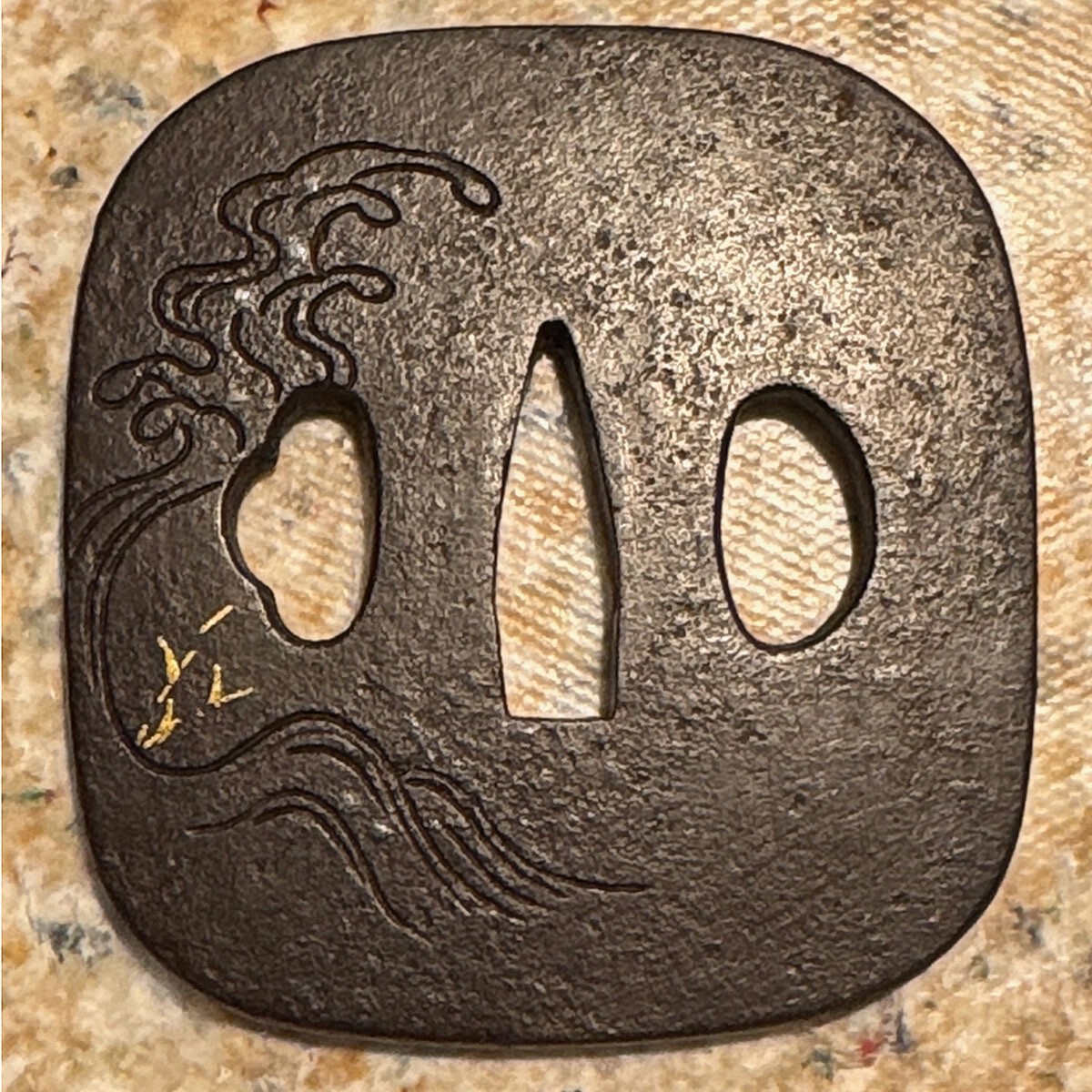
Found this in an odd little shop in Himeji. Would anyone be able to help with the mei and any thoughts on the origins? It is iron, with a nice wave pattern, which seems to have silver highlights (which are a bit faded on the omote side, more visible on the ura), and bamboo or reeds in gold. But, that’s all I can say for now.
 1 point
 -
1 point
-
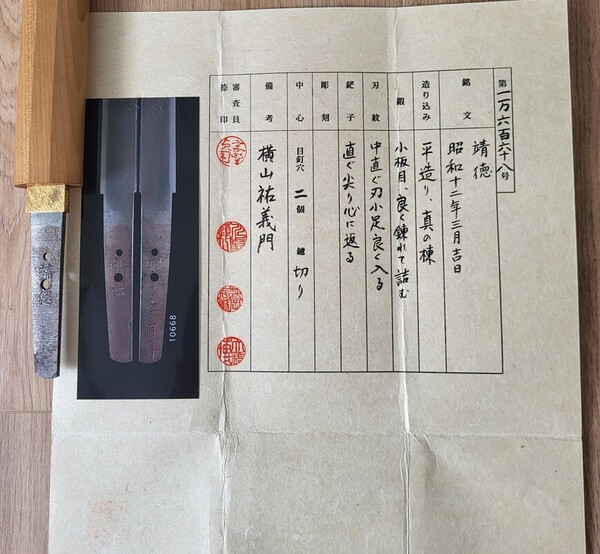
for comparsion
 1 point
 -
No..I moved it here. We do not spend time translating obvious fakes. There is no reason to.1 point
-
Again, this is nothing done officially. It was done by or for the owner at his own personal request. So no..it's not an official "variation" just something done as a personal request or choice. To me, that pretty much puts it in the "field done" league. That tassel is also nothing that belongs on that sword, so added by the owner for some reason. Sword is still real.1 point
-
@Bronte Sorry, this is a modern Chinese or Spanish decorative wallhanger. Bears little to no resemblance to a real Japanese antique.1 point
-
That sounds like the time I had to give a presentation at a meeting in Honduras... in Spanish... and realized afterwords that I had referred to myself in the feminine gender the whole time. Huge kudos to all attending for keeping a straight face1 point
-
Chinese copy (Fake).1 point
-
Colin/ Brian greetings to UK and south Africa thank you very much for your quick reply!!1 point
-
Thank you, Dee. I have those as well. Note how the Kane character is different than that of the OP. Mal graciously provided me with a pic that matches the OP blade. Now I just have to figure out if it is post or pre war. John C. p.s. If anyone is interested, I have a DOCX file of the Kanehide mei I have collected so far tracking his changes. It is a work in progress and missing a lot of data. I currently have 26 of his mei on file. If anyone has a Kanehide blade that is not listed online anywhere, PLEASE feel free to let me know. I would love additional input. p.s.s. Just to clarify what some may be thinking. There is no issue with the sale itself. Eric and I have spoken about this blade already. My personal issue is with the NTHK attribution to this particular smith and not some other gendai smith named Kanehide.1 point
-
https://www.namikawa-ltd.com/product-list/131 point
-
I wish I could unsee that one. wow. I do like the one that @When Necessary posted.1 point
-
Thank you everyone for the input. Yes, Mal I have most of those and about a dozen more. The one I didn't have is the pic of the 1940 mei that is very similar to the OP tanto. From what I could see, he had a certain style in 1940 prior to the RJT program. He changed his Kane character during the program then reverted back to his 1940 style until his death. I don't, however, have any examples from his 1954 to 1973 period so there is an information gap there. Much appreciated, John C.1 point
-
Glad to help, man!1 point
-
In order to give you a visual idea what separates a masterpiece from the better-than-average work, I'd like to show you a comparison. One blade is a masterpiece by Osafune Mitsutada made around middle of Kamakura-period. It airs a supreme yet relaxed mastery of forging and tempering in all aspects; dignity as well, if you want. The other blade is a work of Edo Ishido Tsunemitsu from Kambun-era. It is a very well made blade with brightly shining nioi-guchi, utsuri and all traits of a good choji-midare hamon. (The images were made by master-polisher Fujishiro Okisato and show the real nioi-guchi without hadori-finish) One blade I call a masterpiece; the other a very well made blade. Hope this is is helpful. reinhard
 1 point
 -
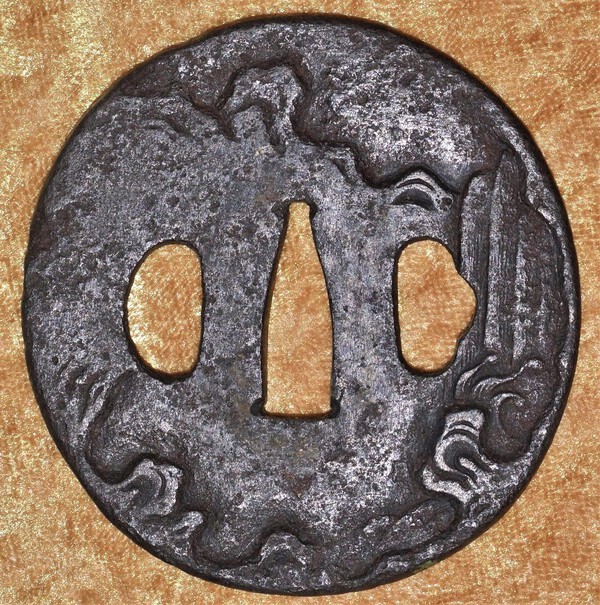
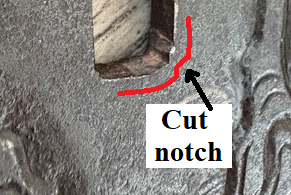
Hi Jay and welcome. I believe it is a typical Shoami school piece, they are relatively common and tend to have a waterfall and mountain scene - with minimal soft metal overlay [nunome] and some inlay. There is a notch at the bottom of the nakago-ana that suggests it has been mounted [but probably only briefly]. I am a little surprised that it is not signed, most are. [not being signed can be a "good" thing - many have fake signatures] Compare it to this one that is cast, the hitsu are rough and not filed smooth the "signature" is crude and to my eyes obviously cast-in [IMHO] Fake signature : 正阿弥包矩 (Shoami-Kanenori) Compare the cast signature to the tachi-mokko one. I strongly believe Jay's piece is hand carved, the cloud swirls on the ura are carved-in not cast. Another selling on ebay - signed and with the characteristic waterfall on one side, rocks on the opposite. Some appear "rushed" and like this one are often neglected [unsigned as well] The Tachi-mokko shaped examples are also common, each have subtle design differences, check this thread: You can also check out this auction site https://www.eldreds.com/auction-lot/iron-shin-no-maru-gata-tsuba-signed-eichizen-kin_6EB3733865 They don't know their stuff, as it is NOT signed Echizen Kinai!
 1 point
 -
清秀 Kiyohide Late Edo era artist.1 point
-
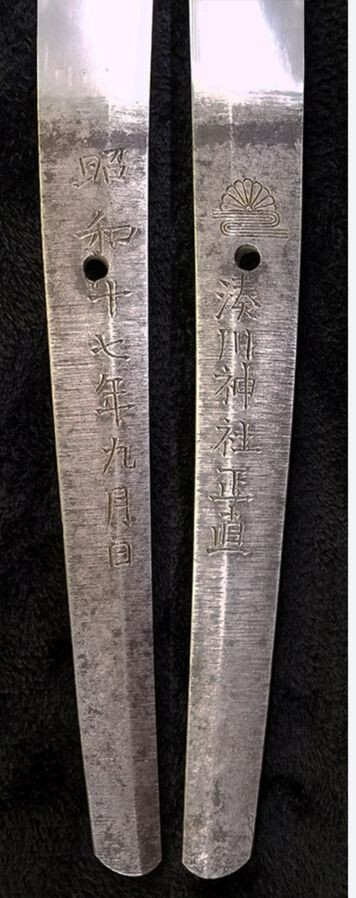
Star stamped swords from Gifu Prefecture usually have two sets of painted numbers on them. As far as I can tell, one is the Nagoya Arsenal production number and the other is the koshirae subassembly number? Regardless of one's personal opinion, there does seem to be a pattern to these painted Nagoya RJT blades. The colors noted so far are red, green, and blue.1 point
-
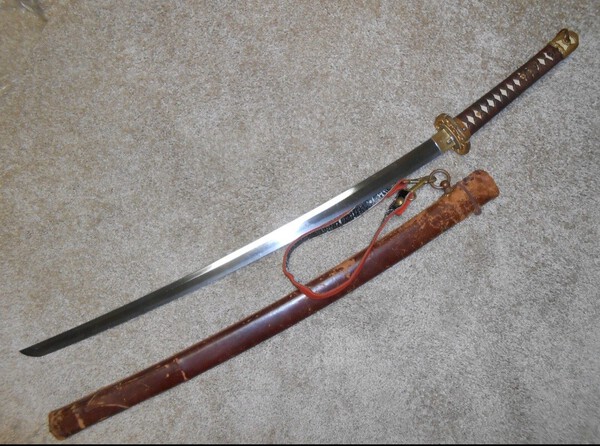
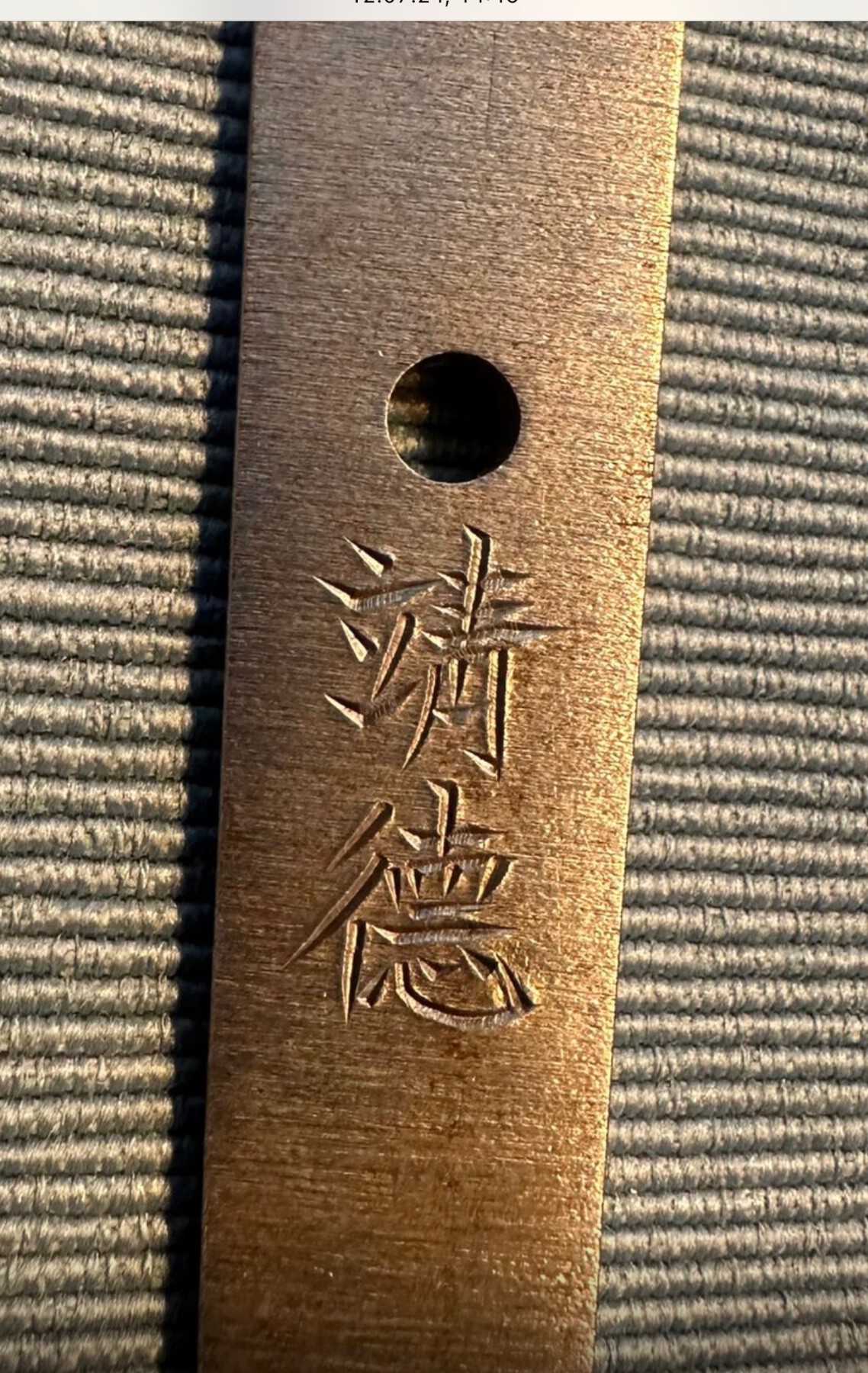
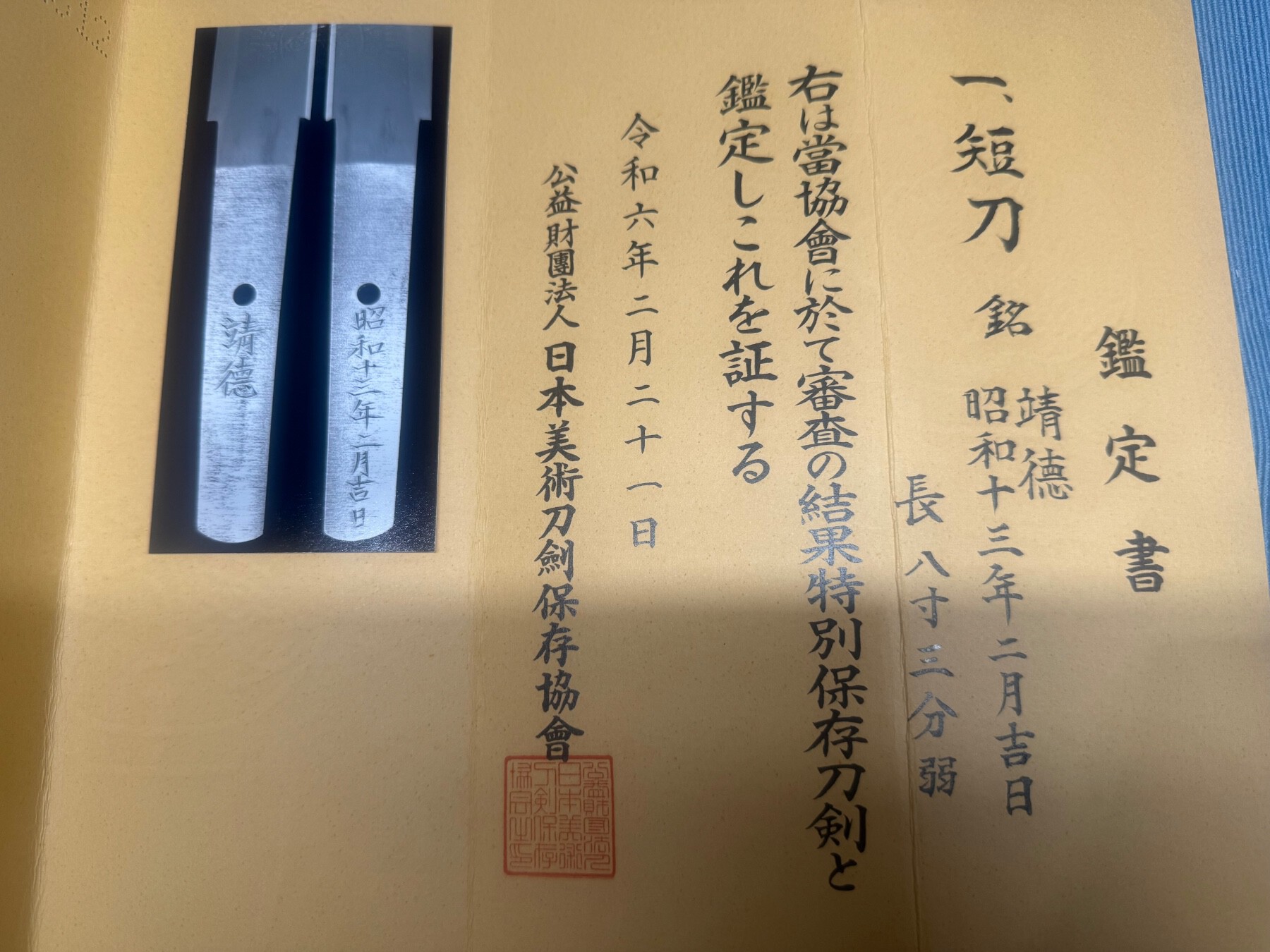
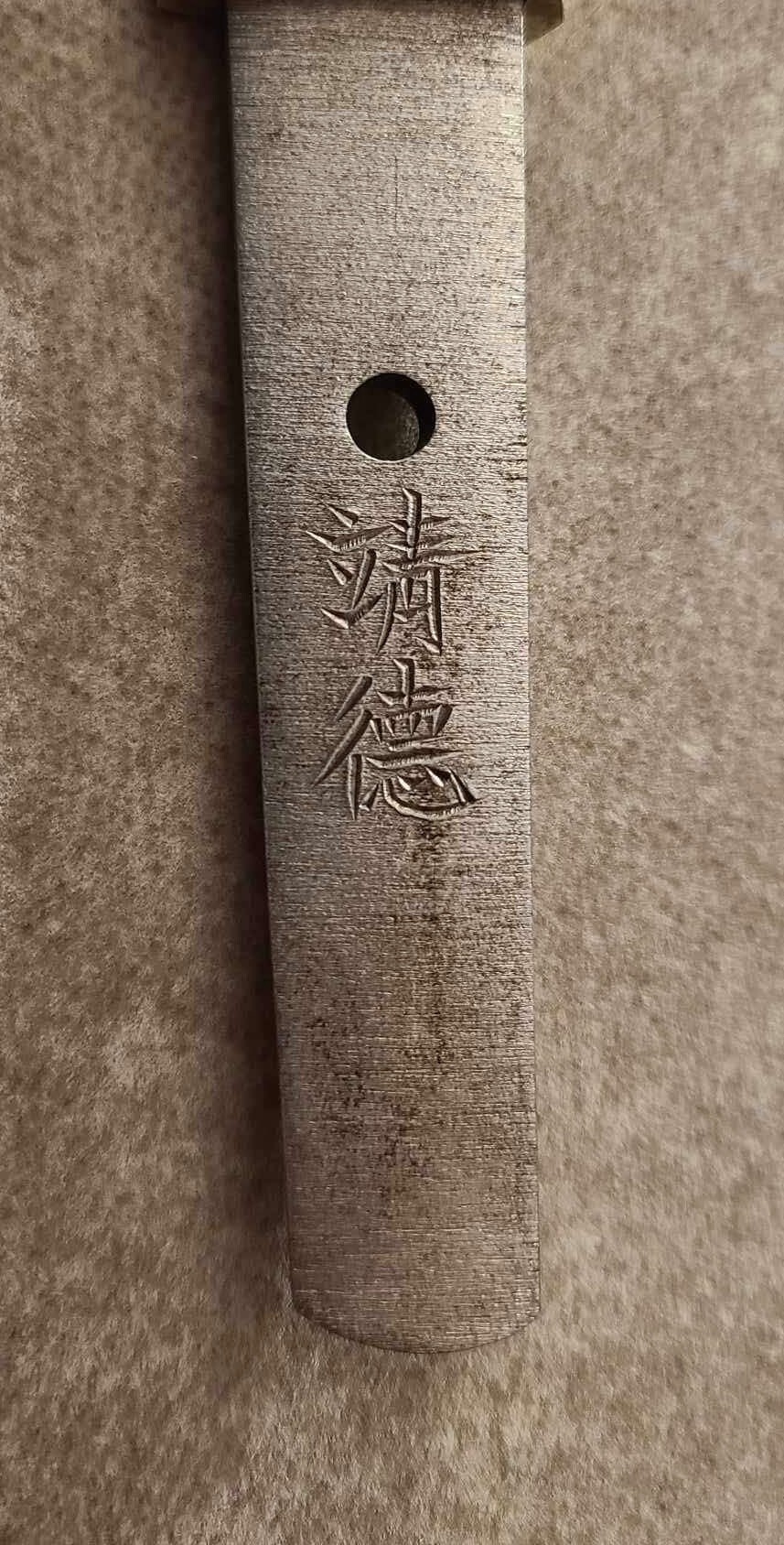
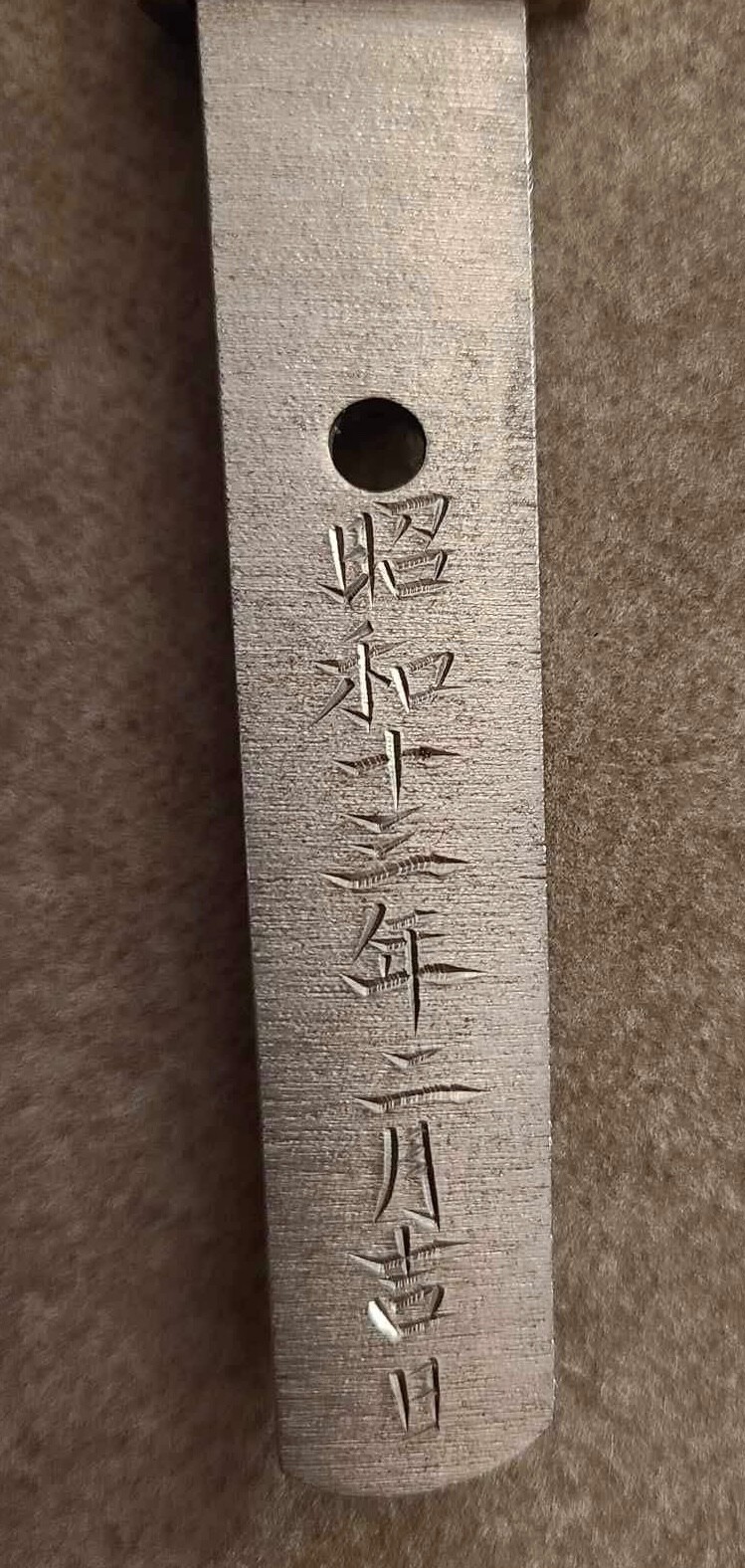
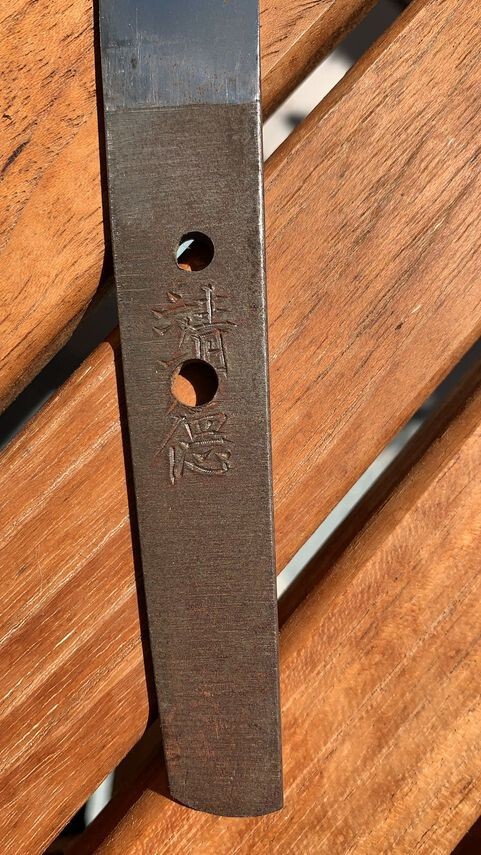
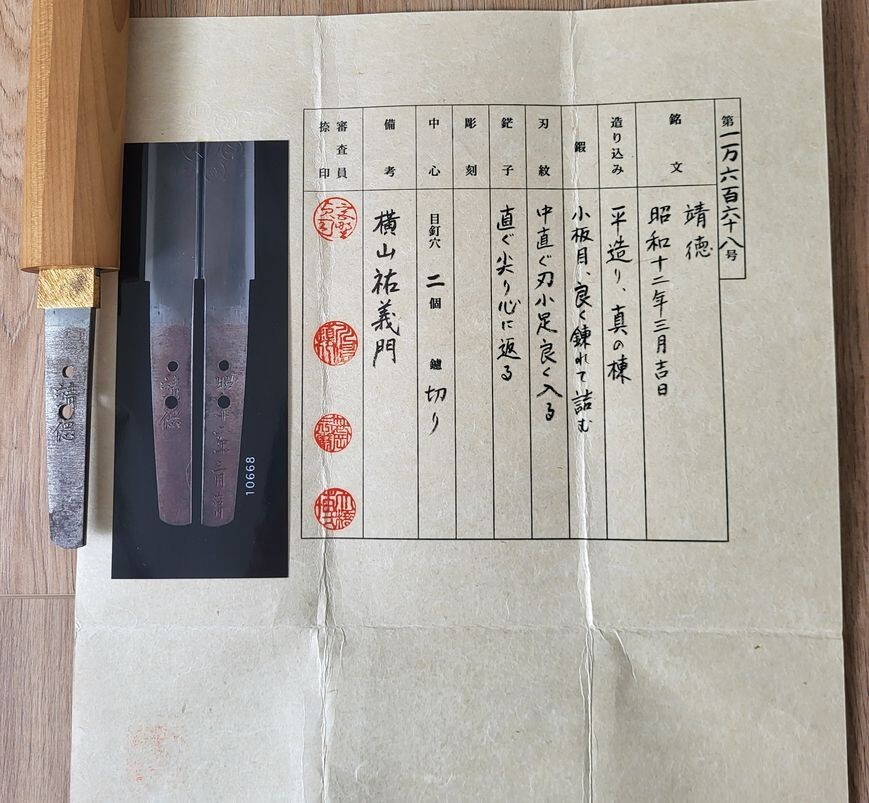
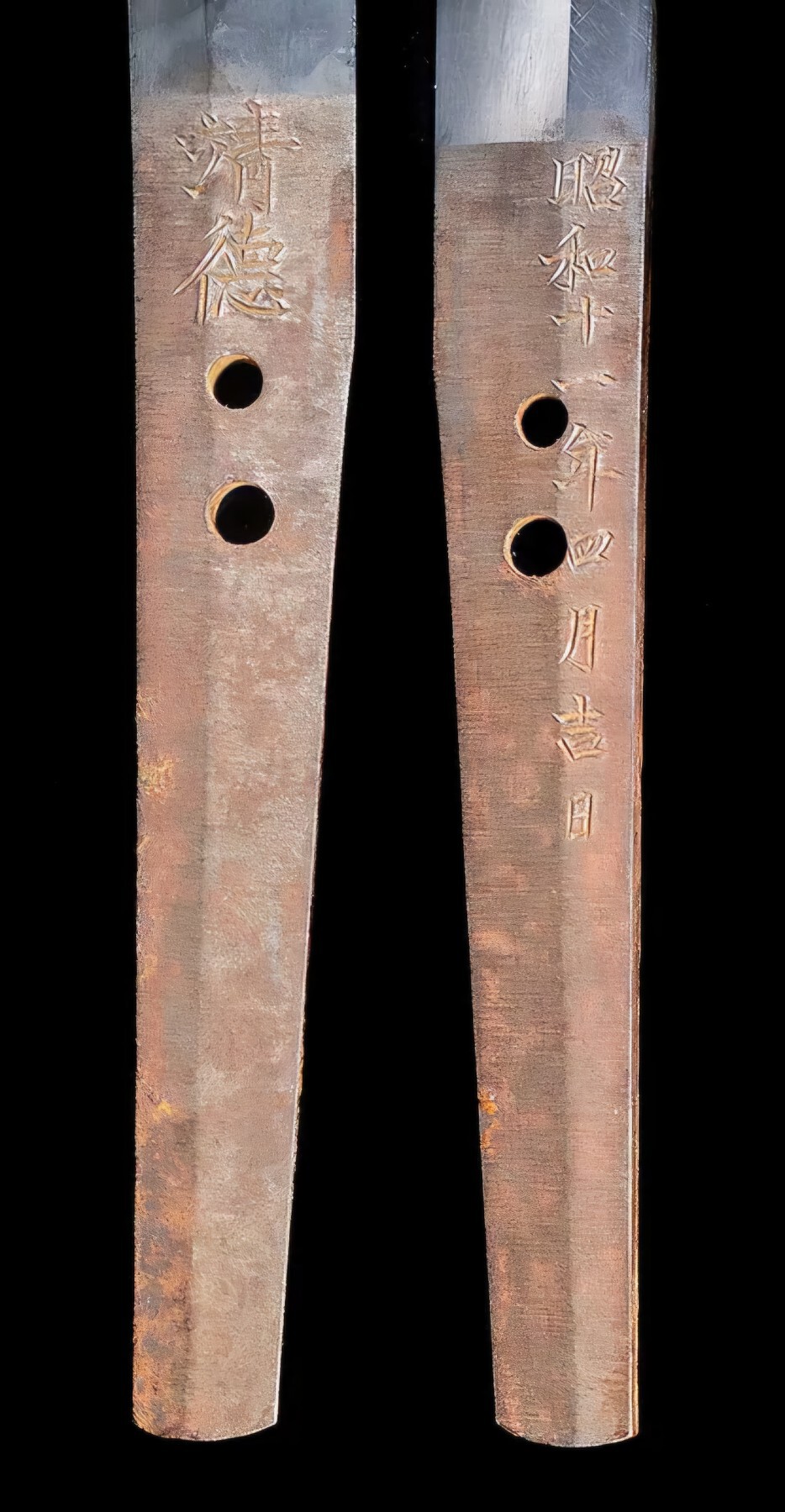
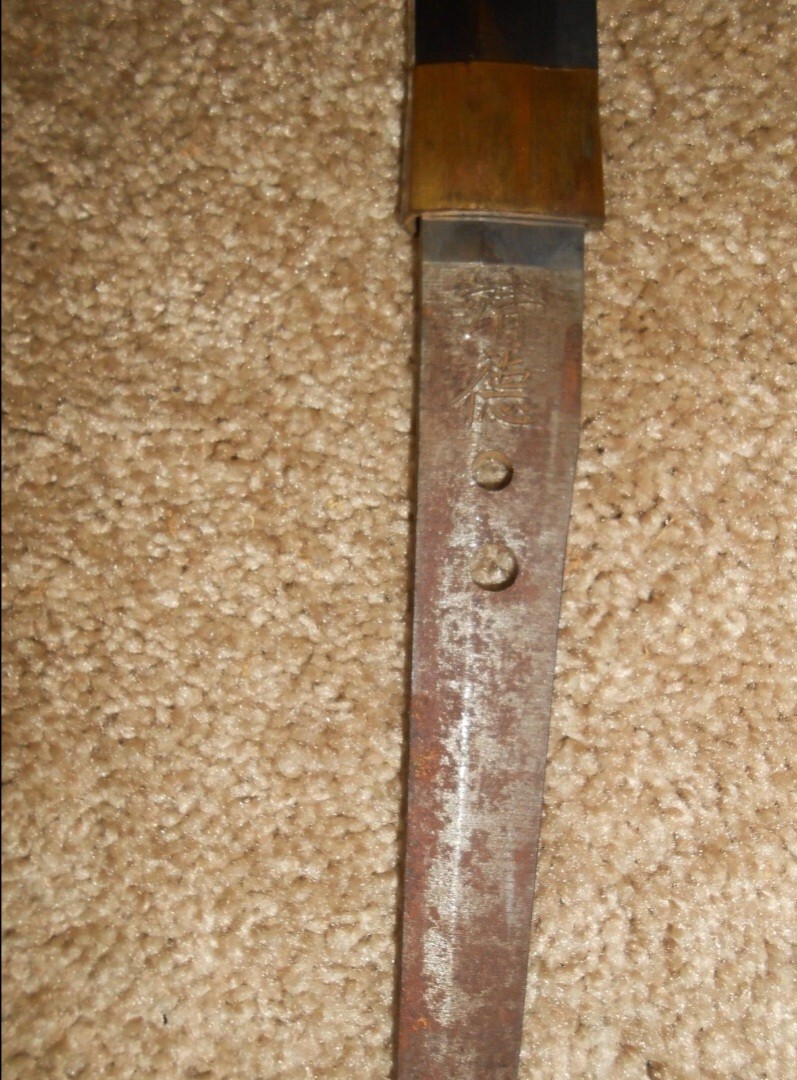
Then Yasutoku https://www.liveauctioneers.com/item/205719402_ww-ii-Japanese-katana-morristown-nj Now Yasunori https://ebay.us/m/mbgYo3 Caveat emptor. It dsn't look as professionally repolished. Yasutoku/Yasunori? Is this "upgrade" validates jump from 2500 to 7500?

 0 points
 -
Looks like that fox has really bad gas0 points

















This leaderboard is set to Johannesburg/GMT+02:00