
Leaderboard


Popular Content
Showing content with the highest reputation on 08/10/2025 in all areas
-
Your advice is very solid Rayhan, and I think it is wise for all of us to think about our decisions. Especially new people can buy something without thinking too much and if they would have waited for few months might be able to get an item that they enjoy much more. There was actually a recent thread where several of you guys were giving very solid info and recommendations to a new member. I do think that buying items is important to enjoy the collecting aspect of the hobby. I have fallen more into researcher category as I do enjoy that part immensely but I understand for most people it is the collecting that makes the hobby for them. So for collecting I think that buying & selling items is a major part of the enjoyment of this hobby. While it might not be optimal in terms of gathering funds for larger purchase, I would think it would be more enjoyable for many to have some items to enjoy while they save up for major purchase. Sure the money could be better invested in something else for 5 years for example and then used for larger purchase and it would be perfectly ok to do that too. For the low level items I think it is decently safe to get roughly the same investment back when reselling. Of course the initial investment need to be taken into consideration but if you have modern NBTHK papered item it will always sell for decent price outside Japan. The higher up you go in price the more variable it will get and people need to be cautious. For 2000€ sword losing 50% is only losing 1000€ or you could in lucky case get 150% and score 1000€ in your pocket in resale. Now think about 40,000€ sword and losing 50% is losing 20,000€. Of course you could in extremely lucky case sell it for profit but I think for a private person it will be more difficult to make profit on expensive swords, that is high end dealer playground. I can only imagine it would be extremely stressful to think about so large (money amount) fluctuations in price. As for personal collecting to maybe as a slight shock I don't care at all about the smiths/schools or quality... I don't actually want Masamune, Nagamitsu, Rai Kunitoshi etc. Currently even condition is bit irrelevant for me if I like the shape of the blade which for me is about the only thing that really matters. Even with unlimited budget my dream of personal collection would be 1. Muromachi period ōdachi 2. Muromachi period ō-naginata/nagamaki 3. Nanbokuchō period ōdachi 4. Nanbokuchō period ō-naginata/nagamaki Would it be completely irrational to choose a huge sword with condition issues and no papers over a pristine Tokubetsu Jūyō sword for example, of course. I know myself that I would enjoy that flawed ōdachi more than a very high level sword in my personal collection.6 points
-
Having hands on experience early on is quite valuable, until you see real quality in hand it's all theoretical. Once you know what something of good quality is, saving for it becomes far easier.5 points
-
A 1939 Mantetsu Koa Isshin, in a thick combat saya with the "airborne", or Kite, sarute. But it went to a good man, so I miss it, but don't regret it.


 4 points
 -
Hi! Here is my collection of something often labeled as ”Snaphaunce netsuke tinder lighters”. I don’t think they are netsuke in the ortodox way but still they cary that name. What do you think? Netsuke or not? Regards, Anthony
 4 points
 -
It was with Choshuya around 2010 - with the benefit of hindsight I would have bought it. Twisted rope inlay goes back as far as the first master in the Shimizu Jingo school but rarely seen in the work of the first or second. When used by the early masters its very finely done and quite different. Here is another similar example of its use by the third master, again signed with his earlier signature style. Incidentally this is also specifically identified as being 2nd master by the NBTHK due to the confusion of the generations within the school. kindest regards Michael
 4 points
 -
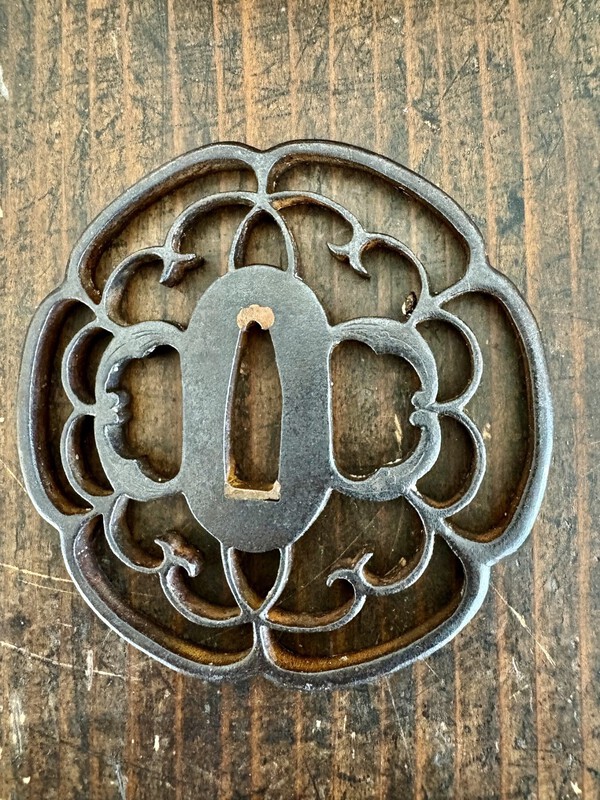
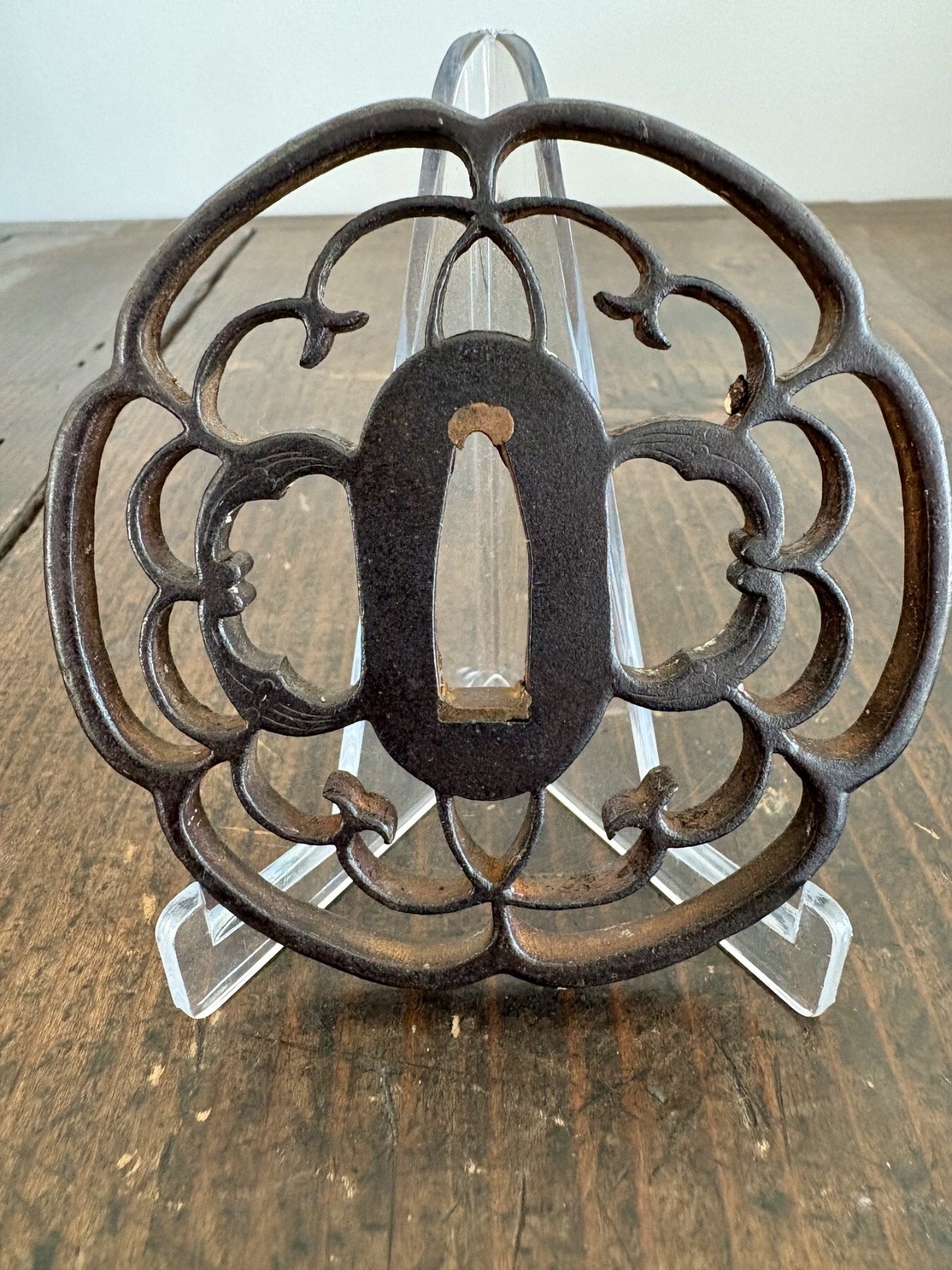
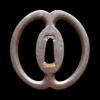
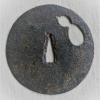
Offering two ji-sukashi iron sword guards. The first is quite large at 8.4cm x 8.2cm x 5-5.5mm. It is a symmetrical, mutsu-mokkogata openwork design, featuring myoga (Japanese ginger) motifs to form the hitsuana. I believe this to be a late-Momoyama to early-Edo Period Owari tsuba. While the surface of the piece is fairly smooth, there are gentle tekkotsu and tsuchime in the rim. Overall condition is excellent. Owing to its size, the tsuba has a fairly striking presence, with a natural, mellow patina. $325.00, plus shipping. The second tsuba is a bit smaller at 7.9cm x 3mm. It presents with a rather "starker" design expression, with a dominant heavy cross motif centered within the marugata form. Triple tomoe add to the motif, with one present in ji-sukashi at each "arm" of the cross. Slender strips of iron shadow the central element of the cross, suggesting a lattice. A very striking design. I am unsure of the school here. I feel the rim is too narrow for Owari, the design a bit too bold and martial for a clear Kyo-sukashi attribution. Some might say ko-Shoami. Again, I am unsure myself. Condition of the tsuba is very good, with a subtle, natural patina (no oils, lacquers, or wax here). $275.00, plus shipping. If both tsuba are purchased together, I would offer them at 10% off, for $550.00, plus shipping.

 3 points
 -
Curator of the MET - Markus Sesko - released a curatorial today which explains the concept of mono no aware by using examples. I've asked his permission to reproduce it here and he gracefully agreed - however I would like to stress that people should sign up for these mails at the site of the MET. It's really worthwhile and informative. Broken Tiles: The Japanese Concept of Impermanence Figure 1 Over the course of time, Japan developed worldviews that permeated native art as aesthetic concepts, many of which are difficult to translate or define in a concise manner. Arguably most well-known in the West is the Japanese concept of wabi-sabi, which started to shape culture and art in the late fifteenth century and which is often described as being that of “appreciating beauty that is imperfect/incomplete and of natural simplicity.” Another such concept, however, had emerged much earlier, i.e., in the Heian period (794–1185), and that is the concept of mono no aware (物の哀れ). Figure 2 Mono no aware is deeply rooted in Heian-period literature and is most prominently associated with the classic The Tale of Genji, written in the early eleventh century by noblewoman and lady-in-waiting Murasaki Shikibu (Fig. 2), and highlighted in The Met Asian Art Department’s exhibition of the same name held from March 5 to June 16, 2019. While the phrase translates literally as “an empathy towards things,” it stands more broadly for the awareness of impermanence. Mono no aware comes with melancholic undertones but is not about the mere acceptance of impermanence and transience of life per se. It embraces the certainty that although certain things and even moments are doomed to fade and pass, much of their beauty lies in the fact that they can indeed be witnessed in the first place, most famously so the brief blossoming of cherry blossoms in spring. Figure 3 When it comes to Japanese sword fittings, references to the concept of mono no aware start to appear in the mid-Edo period (1615–1868), when swords had become a critical means of self-expression for Samurai, and their fittings collectibles for persons outside of the Samurai class. Shown in Fig. 1, with additional details in Fig. 3, is a sword guard (tsuba) made by Gotō Ichijō (1791–1876), the last great master of the renowned Gotō School of sword fittings makers. It depicts broken roof tiles scattered over both sides, of which some are inscribed. The tile on the bottom right of the obverse bears the inscription Byakkorō (白虎樓, lit. “White Tiger Watchtower”) which was one of the four guarded entries to the walled Greater Palace inside of the original Imperial Palace of Kyōto and which was repeatedly destroyed by fires, never to be rebuilt again after the early thirteenth century. The tile on the top left of the same side of the tsuba is inscribed Daijōkan (太政官), the Great Council of State, which was the highest body in Japan's premodern Imperial government, but which lost power over the tenth and eleventh centuries. The inscription of the broken tile on the top right of the reverse starts with “Sakyō” (左京), which refers to the areas of central Kyōto east of the Imperial Palace. And the last inscribed tile, located at the bottom left of the reverse, references the Kōrokan (鴻臚館) guest houses for foreign ambassadors, traveling monks, and merchants that existed in Japan during the Heian period and earlier. Thus, through the deliberate use of broken roof tiles, ko-gawara (古瓦) in Japanese, the subject of the tsuba can be understood as an allusion to the old Kyōto at the height of its imperial glory in the sense of mono no aware, which was long gone by the time the sword guard was made, with actual power having been in the hands of the warrior class by many centuries at that point. Figure 4 The motif enjoyed great popularity, and the artist Gotō Ichijō produced several sword guards in this style. For example, as shown in Fig. 4, this daishō pair of tsuba featured in Volume 2 of multi-volume Tagane no Hana (鏨廼花, “Flowers of the Chisel”) published in 1904 by entrepreneur Mitsumura Toshimo (光村利藻, 1877–1955), which centered around his extensive collection of sword fittings. Ichijō was actually born and raised in Kyōto and was trained in other traditional arts, like waka and haiku poetry, as well as in painting. He visited Edo (present-day Tokyo) on several occasions but did not relocate there until the age of sixty when he started an official employment with the Shogunate. We can imagine that Ichijō might have had some mono no aware moments in the “new capital” if you will, yearning for his home, the birthplace and breeding ground of classic Japanese arts. Figure 5 Ichijō’s interpretation of the mono no aware subject via broken tiles was then also adapted by several of his students, e.g., by Araki Tōmei (荒木東明, 1817–1870). A tile on one of his works (Fig. 5), however, references the Shitennō-ji (四天 王寺), a Buddhist temple in Ōsaka, not in Kyōto. Built by order of Prince Shōtoku (聖徳太子, 574–622), the temple was destroyed by fire several times as well over the centuries, hence it carries the very same sentiment as described earlier. Figure 6 One more tsuba from our collection that I would like to introduce on the topic of mono no aware is shown in Fig. 6. Via openwork, it depicts a waterwheel and lively waves, a combination, which refers to the Waterwheels of Yodo (Yodo no Mizuguruma, 淀の水車). Once, two large waterwheels measuring around 48 feet in diameter were operated on the lower course of the Yodo River and transferred water into the castle of the same name and to surrounding farms. When the castle was abandoned at the very end of the sixteenth century and maintenance of the waterwheels became too expensive, the river was allowed to change course in a natural manner and the wheels were left dry. Soon, however, they became a famous scenic attraction, especially when viewed from a nearby bridge and tea pavilion. The scenery also must be understood from the point of view of power changes. Yodo Castle was once captured by the famlous warlord Oda Nobunaga (1534–1582), and then renovated by his assassin Akechi Mitsuhide (明智光秀, 1528–1582). Afterwards, it was expanded by Toyotomi Hideyoshi (豊臣秀吉, 1585–1592), who avenged Nobunaga and succeeded his political powers. When Hideyoshi’s own major castle of Fushimi was completed in 1594, Yodo Castle was abandoned. Fushimi Castle, however, was then itself dismantled in the early seventeenth century on behalf of the new rulers of Japan, the Tokugawa, who in turn had the older Yodo Castle rebuilt at a slightly different location, using material from former Fushimi Castle and incorporating once more a single waterwheel. There the castle remained under different rulers until it was burned down in the turmoil of the Boshin War in 1868. Figure 7 Accordingly, the subject of the tsuba shown in Fig. 6 and in a stencil in Fig. 7 in The Met's collection, highlights the tumultuous era of The Three Unifiers—Oda Nobunaga, Toyotomi Hideyoshi, and Tokugawa Ieyasu—in a single design. It so alludes to the fact that no empire, kingdom, or rule has proven immune to impermanence. Thus, works of art such as introduced in this humble article can be a reminder of the fleeting nature of human influence and that governance is one of constant flux and change. Fig. 1: Sword Guard (Tsuba), 19th century. Copper-gold alloy (shakudō), copper-silver alloy (shibuichi), bronze, copper. H. 3 1/4 in. (8.3 cm); W. 3 in. (7.6 cm); thickness 3/16 in. (0.5 cm); Wt. 4.5 oz. (127.6 g). The Howard Mansfield Collection, Gift of Howard Mansfield, 1936 (36.120.23). Photo: Stephen Bluto. Fig. 2: Detail of Portrait-Icon of Murasaki Shikibu (Murasaki Shikibu zu), Tosa Mitsuoki (1617–1691). Hanging scroll; ink and color on silk. Lent by Ishiyamadera Temple (SL.7.2019.19.3). Fig. 3: Detail of Sword Guard (Tsuba) shown in Fig. 1. Fig. 4: Mitsumura, Toshimo. Tagane no Hana, Vol. 2. Kobe, Japan, Ryūdshidō, Ltd., 1904. Department of Arms and Armor Library. Fig. 5: Fukushi, Shigeo. Tōsō, Tōsōgu Shogaku Kyōshitsu, No. 96, Tōken Bijutsu No. 545, pp. 23–24, Nihon Bijutsu Tōken Hozon Kyōkai, May 2002. Courtesy of Nihon Bijutsu Tōken Hozon Kyōkai. Fig. 6: Sword Guard (Tsuba), 19th century. Iron, copper. Diam. 2 3/4 in. (7 cm); thickness 1/4 in. (0.6 cm); Wt. 3.2 oz. (90.7 g). Funds from various donors, 1946 (46.122.145). Photo: Stephen Bluto. Fig. 7: Stencil with Pattern of Flowing Water, Waterwheels and Embankment Baskets, 19th century. Paper reinforced with silk. 20 1/2 x 14 3/4 in. (52.07 x 37.47 cm). Gift of Clarence McKenzie Lewis, 1953 (53.101.37).3 points
-
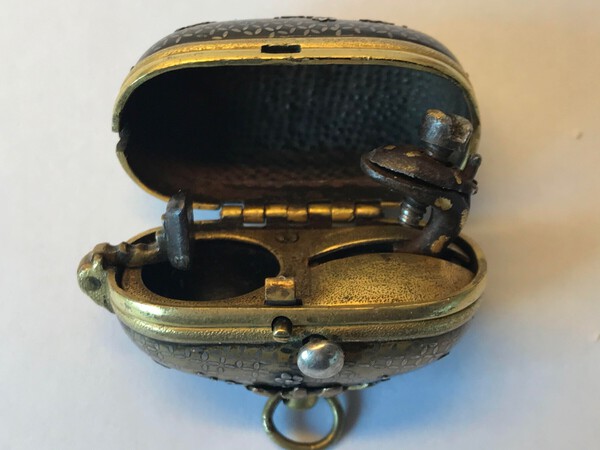
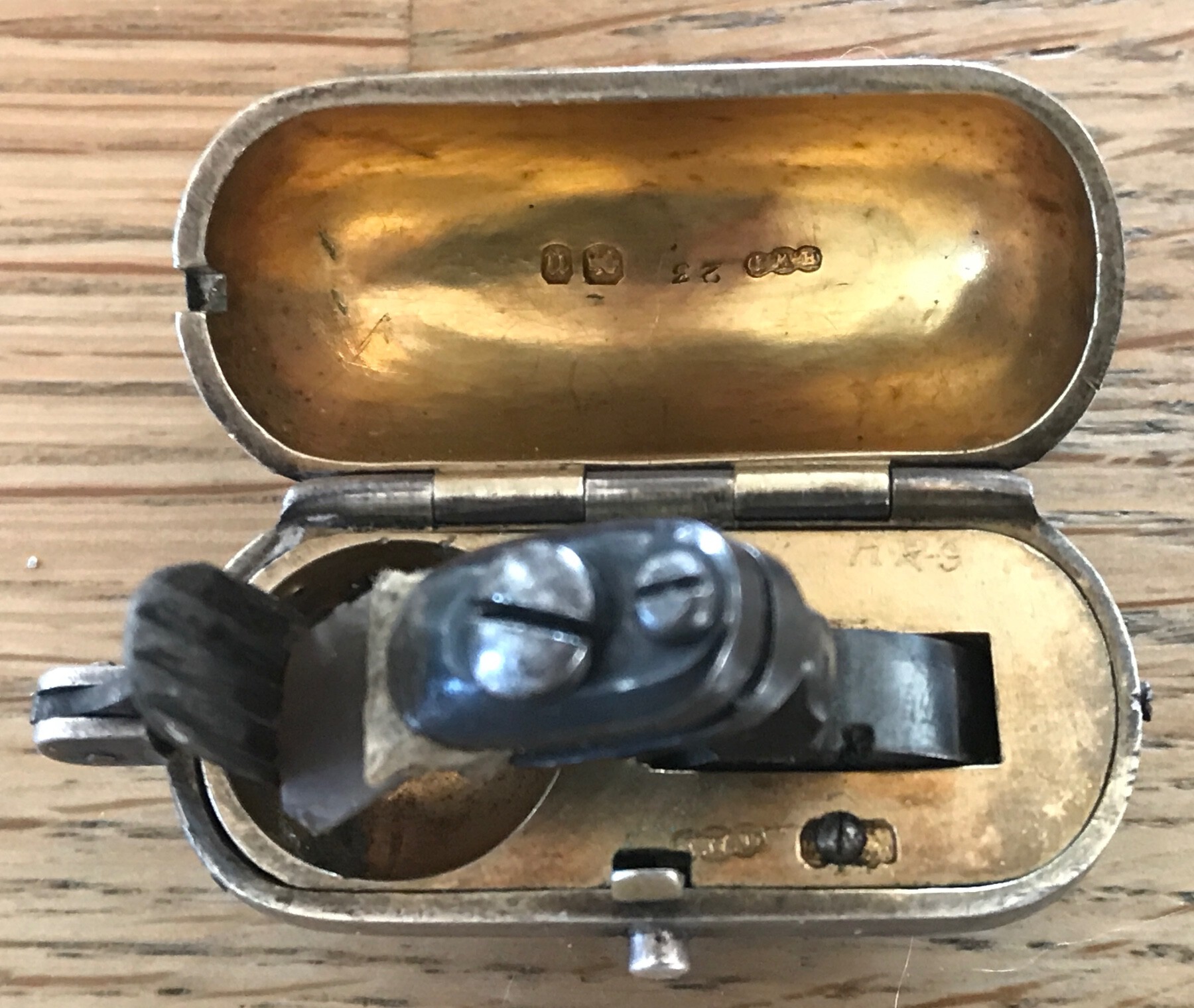
Hi! Here is my example of the Dee silver lighter mentioned above. It’s a beauty with gold on the inside. Enjoy! Regards Anthony


 3 points
 -
Hi! Thanks gentlemen for your nice words. Regarding how the collection, which is the largest in the world, come to be, well I had to corner the world market buying everything on it for many years. Most of them are found in Japan. I have some interesting info regarding who invented them and when, but unfortunately not much on how they were worn. I have multiple examples from some models, both in iron and brass, and are willing to sell some to interested people. PM me if interested. I enclose some information that I have regarding the lighters. (The silver walnut mentioned, made by Henry William Dee, is one of 3 known made by him. I am lucky to have one of these three and it's the earliest item known by the silver smith. If I remeber right the stamps indicate that it's made in 1867. It's interesting that Dee managed to use the same button to open the lid as well as working the snaphaunce mechanism itself compared to the Japanese that has 2 buttons) Regards, Anthony Info netsuke tinder lighters.pdf3 points
-
This is Marto Spain. Have seen them before. Basically one step up from Chinese wallhangers. Not for using though.3 points
-
Hi! Here is a nice example in more detail. Regards, Anthony

 3 points
 -
I think one important thing is to scale the time frame to financial means of the person. People will have varying opportunities and it would be of course important to make most out of them. When someone gets into sword collecting I don't think we should expect that he/she will wait 5 years before purchasing a sword. I think that is just unreasonable time frame, if it is that difficult to get into the hobby most people will just find another hobby. For the first purchase I think few months would seem like reasonable wait time. Of course the level of purchase will totally depend on the amount a person will be able to commit. I know some people in this forum (and outside forum too) have actually started at extremely high level, and that is an amazing feat. As a small time collector I have only 1 sword in my collection that I have actually wanted, I got it 3,5 years ago. The few others I have I have just purchased because they were very cheap and I liked them. Most likely when I approach my next purchase that I actually want in my focus I will sell something. For me saving up to items that I actually want will probably take somewhere around 5 to 10 years. It is just fun to spend 5 months of sword saving budget into a cheap item and then sell it bit later on for approximately same amount, that just keeps me being a collector. If I would only buy an item once every 10 years, honestly I think I would not care about the collecting side of this hobby at all.3 points
-
I always figure if the only meaningful collecting was sai-jo saku master smith's pieces, we'd only have books on that. But we don't. If it was just koto and shinto blades, we wouldn't have books on shinshinto. If it was just traditionally made blades, we wouldn't have militaria books on war-time swords and fittings but we do. There is enough depth in this field to really get deep into any one of many many sub-genres of Japanese swords. Masterwork collectors aren't better or more pure than gendaito collectors. Its all about one's preference and collecting goals.3 points
-
I started my collecting based entirely on collecting gunto, I wanted one of each type ,95, nco etc then it got more refined the more i learnt. Gendaito, Copper nco etc etc Then i learnt more and moved closer to nihonto, collecting good smiths in gunto koshirae now i collect nihonto, more specifically ko-gassan. I went from £500 to £2000 then to £10,000 plus Would i have spent the higher end at the start of my collection? no. now i know what I do and don't know to a much higher degree and can be more confident in a purchase. Not just that; now I am closer to being able to appreciate what that price is getting me. But the final thing really is, even at the start of my collection , i loved the swords i had then, swords others would dismiss now as junk, they still sit there and are cleaned, oiled and kept well looked after. each one is a piece of my journey to where i am now in my knowledge and also while it may sound a little silly, those swords were crafted with care and sweat and deserve to be preserved.3 points
-
If you save $2000, ‘someone’ will tell you, “you should have waited and saved $5000.” If you save $5000, ‘someone’ will tell you, “you should have waited and saved $10,000.” If you save $10,000, ‘someone’ will tell you, “you should have waited and saved $20,000.” If you save $20,000, ‘someone’ will tell you, “you should have waited and saved $100,000.” Collect the way you want to collect. You do you. While graciously accepting advice is noble, there will always be people who love to tell you what to do with your money, what you should or shouldn’t buy, and why you messed up buying what you bought. That is always the easy part. Studying and knowing what you like, being happy with your purchases, and collecting for yourself vs others is a little harder. Is it more important that you are happy, or impressing others? Who are we buying these blades for?3 points
-
For me it's a Kunitsugu unokubi zukuri naginata of 53 cm, where the first 40 cm is double edged, which is quite rare. A very elegant piece, wonder where it ended up.
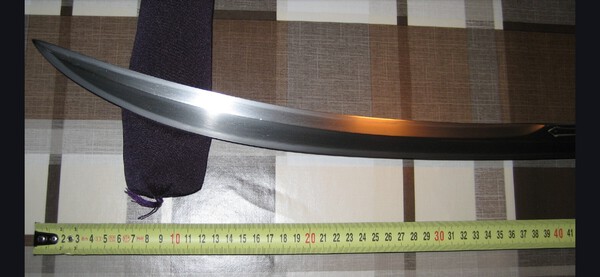 2 points
 -
These two tsuba would have been based in continental Europe, no doubt that they would have encountered a new home (mine). Two very nice pieces at a very reasonnable price. People questionning if Ebay is the place to buy tosogu should consider Steve's proposal.2 points
-
That is very interesting, the fact that even Markus hadn't encountered this before makes it super rare. For me it is also the first time seeing this.2 points
-
Asked Markus directly and he hadn't seen before but did unearth one more with papers
 2 points
 -
Not necessarily. Actually seven is a lucky number and many groups of seven are known, i.e. seven gods of good fortune, seven virtues, seven autumn plants (nanakusa) etc. There are many Tsuba with a composition made of seven like this: Sometimes the whole number out of seven is distributed on both sides.
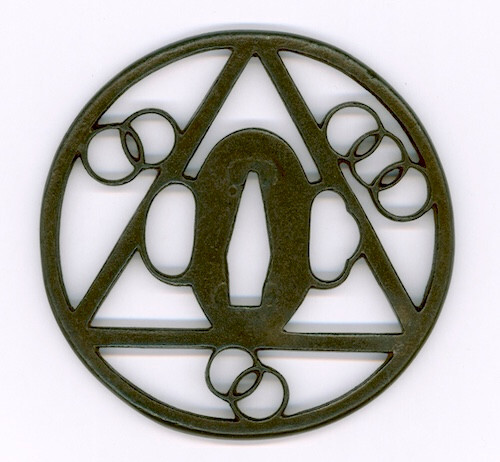 2 points
 -
23 for me. Will be getting my first this summer2 points
-
Im not sure I agree with the title of this thread, as I am unaware of any standing social taboo amongst collectors with regard to saving money for a larger purchase. It seems the real question is whether anyone should bother buying lower quality nihonto, simply because it's less expensive. Still a flawed question philosophically IMO, but I will give my take. Long before I came onto the nihonto scene, I was into timepieces, still am actually. I have far more invested in watches than I do nihonto and even custom blades by contemporary smiths, which can be quite pricey. I mention this because when I first became interested in watches, I started with a Fossil purchased on a field trip. Very quickly one became two and two became five, from different makers. In the budget arena, you name it, ive had them all, Seiko, Citizen, Bulova, Accutron, Belair, etc. All of them were unique in their own way, construction materials, colors, movements, but as I had the opportunity to study and wear each one, I learned my taste. From there I stepped into mechanical movements starting with miyota and so on, same process. So when it came time to step up into real money, I was already well versed. Bringing this back to nihonto, I am on a similar journey. I started in the sub 2k range and have moved up slowly since, learning a bit with each piece, honing my particular taste. I have even been fortunate enough to have those more knowledgable than I, make purchases for me at shows I was unable to attend, so I could get a glimpse into their value system. So, do I find value in less expensive items.....absolutely. Am I going to take a bath financially when it comes time to sell them.....absolutely, education is never free.2 points
-
nice to have a reunion story. Unfortunately I'm the opposite, I pick swords up and never let them go even if i should.2 points
-
Sold a fairly average civilian mounted Gendaito that I adored because it had some really interesting activity. 10 Years later when my friend retired and sold his collection of knives, I bought it back. It's here with me again.2 points
-
I have owned this sumptuous wakizashi twice and each time got tempted by bigger and bigger offers when I really didn’t need to. Last seen going through Sothebys I think. Truly beautiful and extremely high quality koshirae on a mint Kanefusa hirazukuri blade. By far the most luxuriously mounted sword I’ve ever owned. In perfect condition. I still kick myself. Anyone know where it is?

 2 points
 -
Normally I do not think about blades that are gone, but now that you bring up the subject, there are several. Not actually sure now why I sold them. One was a papered Sue So-Shu tanto in red koshirae with matching shinchu fittings. Every yellow-green part, including the kozuka and wari-kogai was original to the piece, and each part bore the same Mon. I sold it at auction more out of curiosity to see what it would fetch, but it went for almost exactly what I bought it for, and I think it must have then gone over to China. All I gained from the liaison was the sweet memory. Would I ever find something similar again? Now you've got me wishing again that I still had it!
 2 points
 -
The tagane-ato punches would suggest it isn't cast Iron - looks like some ten-zogan on a couple of the fan faces, seven lobes seems like a rare design lots of eight and six lobes - I wonder why seven seems uncommon?2 points
-
On the other hand, if it really is the aesthetics of the blade that captivate you, it may be a $1500 blade that is "just right", even if you could afford $50K. It's not going to be "that name" with "that history"... but that's not always important. It may be something else entirely that is the goal of the purchase. My last blade was a sad little overpolished and belt sanded wakizashi for $150... and it's a wreck, but I'm learning lots from it, and will have fun making koshirae for it.2 points
-
So, possibly both of these are tied to the buyer rather than the smith? I have that kuyomon on blades from 2 other smiths.1 point
-
Irresistible…..PM sent1 point
-
Superb article, Anthony. And you have set a tiny flint, ready to roll!1 point
-
Same here!1 point
-
Anthony, amazing collection of very rare things. I’ve never even found a single one! How did you amass such a treasure trove? As for whether they are netsuke in the true sense I think it depends on what they are paired with. It would be unlikely to mount these as a netsuke with a fine lacquer inro or delicate pipe etc case for fear of damage. However I’m sure @Bugyotsujiis correct in that fine ones would have been highly prized by the wealthy possibly worn not as a netsuke but as an item suspended from a robust netsuke. Also (imo)the more basic ones would have been carried by hunters, travellers, maybe some farmers….in fact anyone who really needed to start a fire quickly and “easily”. Have you ever searched for evidence of how they were worn? Not sure where you’d start looking!1 point
-
I was told, the de-registration period, has been increased to 4wks. Anyone able to elaborate on this?1 point
-
Lots of trusted dealers listed here on the NMB that I would recommend. If any new collectors find themselves in these threads of yours, I think there’s plenty of arguments on both sides to consider. I subscribe to the opinion that nicer items offer more satisfaction long term. And I think it’s important for new collectors to see that viewpoint. When new pages are created for this thread, those counter arguments get easily lost in the mass of pages. So here we are again -Sam1 point
-
Wow, Anthony. I'm jealous. I've been looking for just one example...no wonder I can't find any! John C.1 point
-
山城國伏見住 - Yamashiro no kuni Fushimi ju 金家 - Kaneie1 point
-
Never regretted a sale as it helped pay for something better down the line.1 point
-
Susudake is funny stuff, and like toast, comes in various shades of burnt. It used to be very expensive some years ago. Perhaps as old farmhouses are getting knocked down there is now more on the market? If you do find examples at antiques fairs, etc., and wish to make your own, make sure to get bamboo with thick enough walls and joints from which to fashion suitably sturdy pegs.1 point
-
For the shinken that I use for iaido I use susudake, cut and filed to fit the tsuka and the mekugi-ana. Susudake is smoked bamboo, thst is strong and flexible, far stronger that chopsticks bamboo. I would not trust chopsticks bamboo for my iaido practice. On the other hand if you do not intend to actually use it normal bamboo will do. I usually purchase mine here https://www.namikawa-ltd.com/product/131. Regards Luca1 point
-
I'm probably going to pull this for now. Had a few inquiries and a few very lowball offers. Fortunately the need to sell financially is a bit lessened for me right now.1 point
-
See how traditional iron TSUBA of the SAMURAI era were actually made:1 point
-
Bobby, they exist….. Simply they are not available or accessible to 99.999999999% of the NMB. I would add that few have the willpower nowadays to resist temptations - we are human and fragile when it comes to emotions, desires and obsessions. Moreover, pursuing a rare and desirable blade can indeed take many years, will probably require extensive (predominantly Japan-based or Japan-connected) contacts and deep knowledge (nowadays it is easier but still these factors are present) as well as a very solid bank balance. Separately, isn’t instant gratification pursuit omnipresent in society today? That is not only the case with Nihonto / our hobbies. Our dopamine-, serotonin- and nor/adrenalin-exhausted brains just cannot conceptualise waiting 5+ years for a blade. Personally, I always advise new members and contacts to wait, learn, save, look, investigate and discuss extensively before buying. Some listen and some do not.

 1 point
 -
This is a gift to Fukushima Sensei. From Okamoto and Murakami.1 point
-
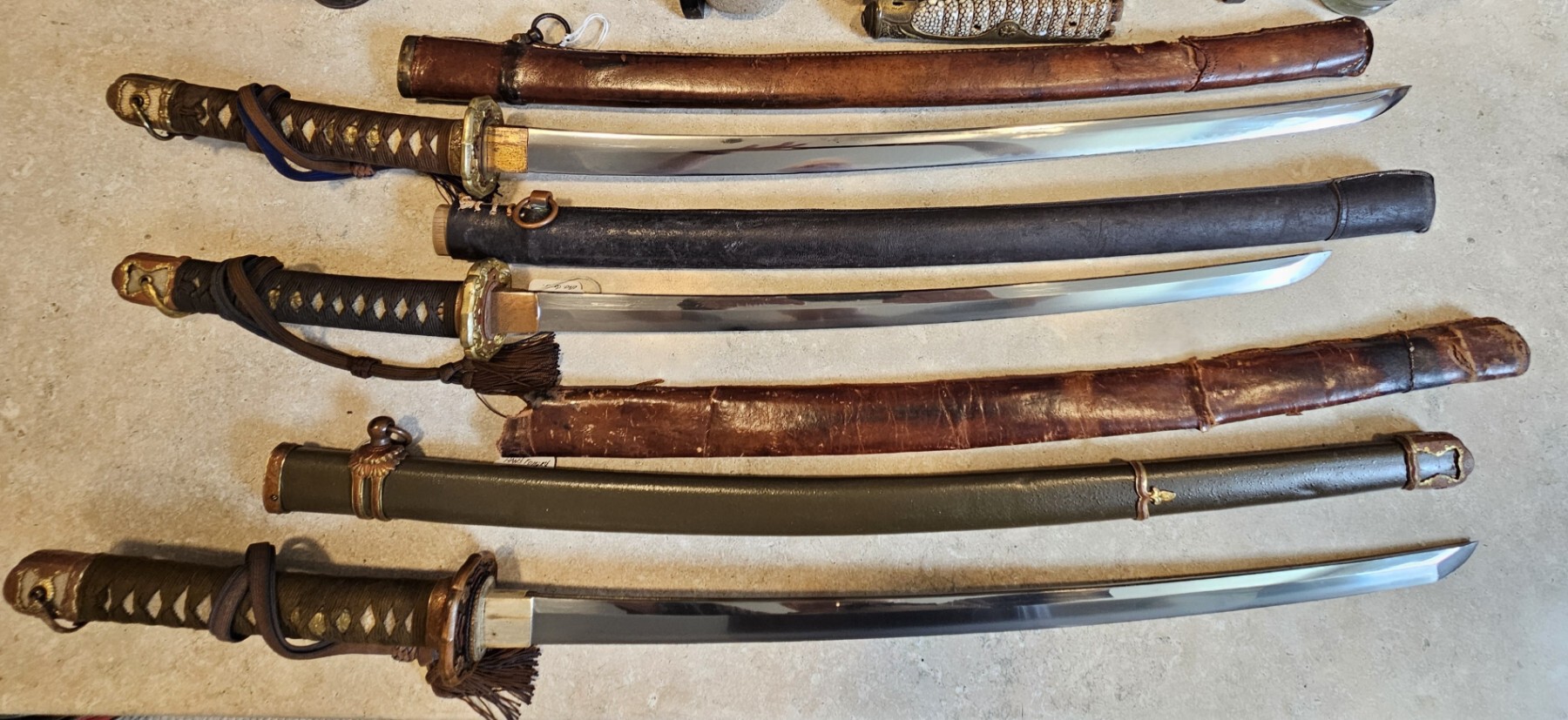
Thought I would add these combat covers mainly just for the heck of it with a couple of "Been There" examples, and also a late war pig skin cover. The upper and lower covers are obviously well used with the upper showing wear as to one can only imagine to where it was worn during the war. The lower cover is in the worst condition, however it apparently did its job as the saya is in overall great condition. It is the original to the sword cover as it was sewn on the saya when it came into my possession yet it became so fragile I eventually removed it. The middle sword very nice Shinto era sword with what appears to be a very supple pig skin cover and almost a tin toy type buckle. It shows practically no wear and almost has to be a late war lack of traditional material situation.


 1 point
 -
Here is my pic if it can help
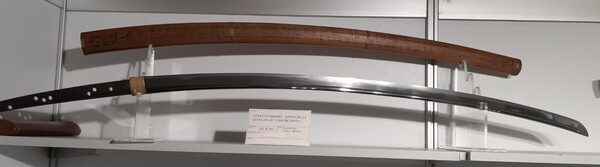 1 point
 -
The quality of some of their translations dramatically improved recently. I immediately thought that someone had used ChatGPT . My guess it that "top notch" comes from ChatGPT rather than Tsuruta-san.1 point









.jpg.462d87170a19640a6796ed461afe69ab.jpg)
.jpg.998ffe7adc7d81dc73c33122522a6d66.jpg)








.jpg.725cfdc9c25339acf23aed21c0b94ce7.jpg)
.jpg.c13c4d773d641d760a043dda22975ded.jpg)
.jpg.907cb1b1c395275abcbb8fb2b6427409.jpg)










This leaderboard is set to Johannesburg/GMT+02:00