
Leaderboard


Popular Content
Showing content with the highest reputation on 07/16/2025 in all areas
-
Hello Adam, Having exported swords twice this year from Narita personally, I can share the following process: You will receive the export permit in paper form from the dealer you purchased the sword from. This will include printed images of the blade in question. At Narita, walk up to the check-in desk and inform the staff that you want to check in a Japanese sword (they might not believe you at first, as many tourists export fake swords that require no permit). Show them your paperwork if needed; otherwise, they will simply call a customs officer to inspect the blade. The customs officer will arrive and verify that everything is in order. On one occasion, they even tested my blade with a magnet to check if it was real. After that, the police will be called. When I exported a sword from Narita in April, five officers arrived. Please don’t be alarmed—they often speak some English (or at least one of them does). The police will inspect the blade or blades more thoroughly. Last time, I was also questioned about my visa, intent, and dealer information. I would recommend having your dealer’s phone number on hand. If everything checks out, a staff member will accompany you to the oversized luggage department for a final scan of the sword case as you check it in. Lastly, please don’t worry—these are kind people, often simply surprised that a Westerner has taken such an interest in their culture. (In April, the police even wanted to take a few photos for themselves!) Make sure to use a strong, hard case for the blade when exporting to minimize the risk of damage. Some dealers in Japan can arrange this for you Greetings, Lex7 points
-
4 points
-
Bear in mind a proper polish is $150+ PER INCH. You need to decide if you are a militaria collector or a Japanese sword collector. Financially, you would need to appreciate the craft to spend money like that, as you can't do it just for the financial impact.3 points
-
Good sword most likely. But probably belongs with someone who will spend the money having it professionally restored. This isn't a sword for someone who just wants a nice wartime sword. You could likely swap it for a decent Showato here. Will cost a lot to put the edge back (you don't sharpen a Japanese sword, it's somewhat of a by-product of a proper polish) so swap it out and get what you really want. This will likely be a stunning blade once restored. Yes...someone took off the edge deliberately. Very sad...maybe they had kids. Who knows. But it's not ruined.3 points
-
Swords made outside the Yasukuni shrine by Yasunori Kotani were signed Takenori, they are often more lively in Hamon & Sugata. For a thousand bucks you did pretty well. @Bruce Pennington 1940 dated so firmly in the Type 98 realm.3 points
-
Well if he didn't tell you the edge of the blade has been removed completely which is kind of something you expect on a sword. Like others have said if your gut is unhappy I'd return it. I personally pick up a lot of damaged strays and unloved blades, but that's just me. You could get a nice sword for $1500 for sure.3 points
-
Ultimately it’s up to what you want, and what will satisfy your collecting interest. Personally I like to admire the steel itself, so I like things in polish. That being said, if it’s just for display in the scabbard.. A Takenori in nice 98 fittings is nothing to scoff at3 points
-
Probably. There’s also swords that don’t have an edge, but those are more typically “dress” swords. Never seen a type 98 without an edge. It’s evident that many individuals who brought swords back from the war did not carry the same respect that we might today. I’ve seen swords abused in all sorts of ways, some much worse than this. My own inherited sword, my grandpa spray painted gold . Maybe someone, sometime in the past, decided to “make it safe”, maybe in fear that a kid in the home may mishandle it. Looks legit to me, though. All the best, -Sam3 points
-
Thank you Davel and Charlie. Using AI is exactly what I have done. With some training the translations have improved since I have started. The names are still problematic but there are work arounds. I am mainly interested in Kaga Zoban pieces, so signatures and names are not a big issues since thus far I have limited myself to translate figures captions. I plan to tackle the mai text in the future. Let's see how it goes. Regards Luca3 points
-
Your sword appears to be a 1940's Tenshozan workshop stainless steel blade. Mei reads Tenshozen Tanrenjo saku !3 points
-
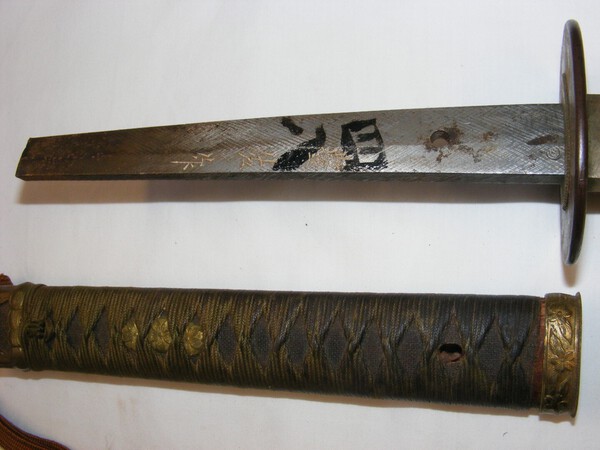
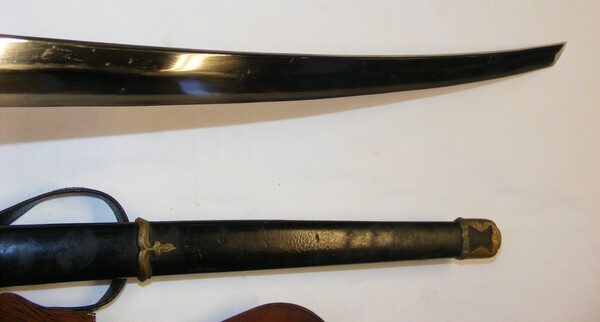
I've had this sword from my father for over 50 years that was given to him at the end of the war. Any info on type and such would be greatly appreciated. The tag translates to a captain's name.


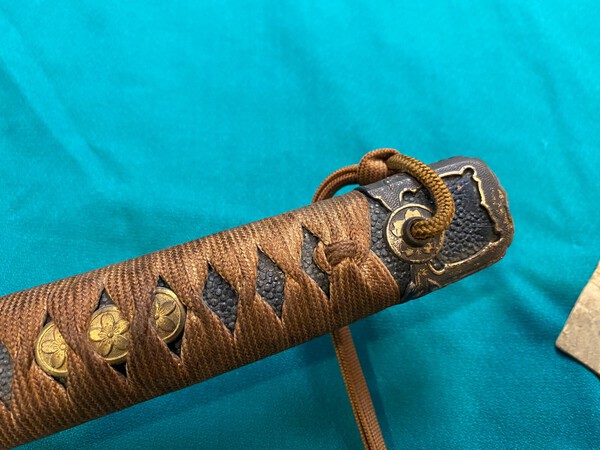




 2 points
 -
Thank you everyone! Mid to late Edo period and Tohoku region it is then!👍 Uwe, yes you are correct, the maedate is indeed a replica. Piers, true....it's not very easy to spot these in those pictures. I can see all 4 hibiki-ana, however I can't see the shiten-no-byo at all. Doesn't seem like it has those. However let me add a picture which might help clear this up a bit.
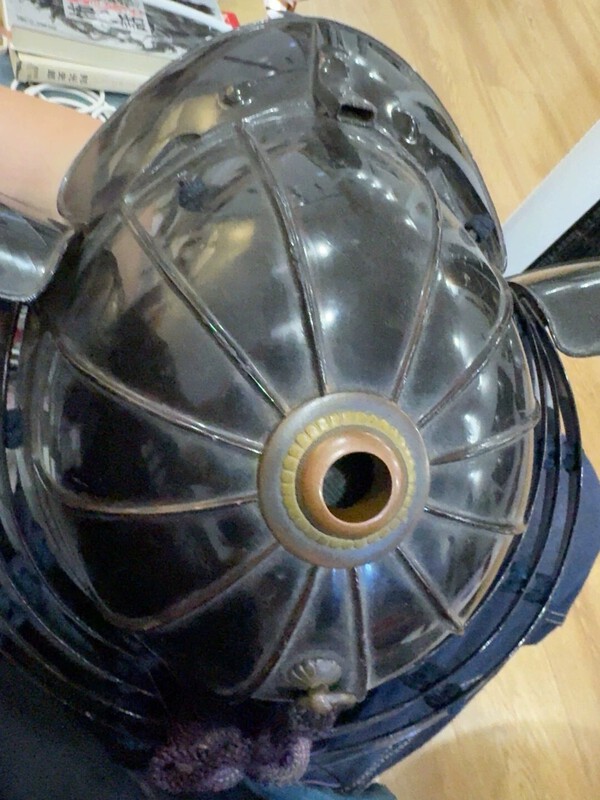 2 points
 -
Guys, you literally have the English Token Bijutsu issues in the download section...for free.2 points
-
I would be willing to invest it but I don’t know where I would go. As i understand it takes years to get it done but that’s fine with me.2 points
-
You've got an interesting item, no doubt. As Brian and others have mentioned, it will be expensive to restore properly. Lets break it down: Sword purchase = $1000 + Polish = $150 x ~27 inches = $4050 + Shirasaya = lets just say ~$750 Total approximate investment = ~$5,800 and a considerable amount of time. BUT for a very beautiful, complete, and desirable WW2 katana. It will boil down to what you're willing to invest. Best of luck, -Sam Edit: There's a chance that a flaw is hiding beneath its condition that could devalue the item. Unlikely in your case, in my opinion; But my point is that a restoration is not entirely without risk.2 points
-
I understand both terms can be used interchangeably. I would never try to sharpen something like this myself.2 points
-
Diameter? No...there isn't supposed to be a diameter measurement since they aren't round apparently, and those certainly aren't correct if they are giving a height, width and thickness. Just confuses the issue.2 points
-
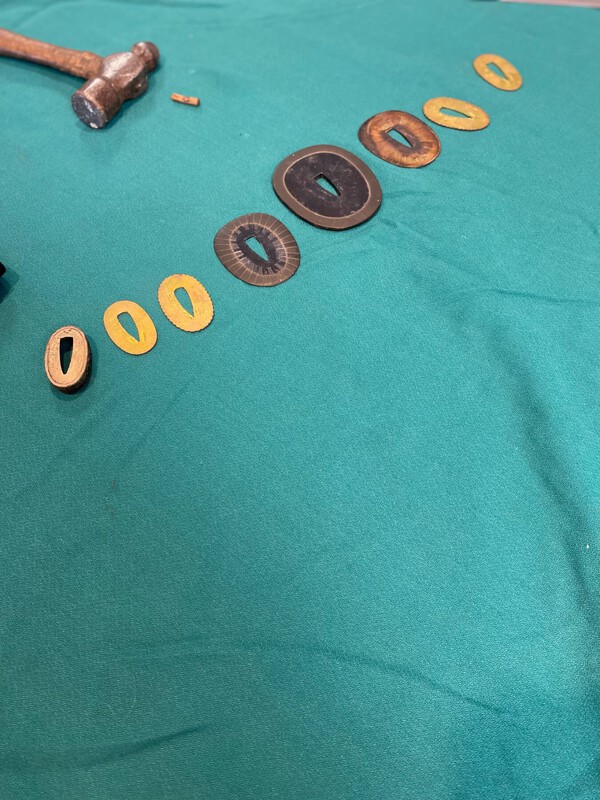
Yeah, I would also get generic ones from Namikawa and fit them yourself. It's pretty easy.2 points
-
Yes, this is the work from East (or North) Japan, Tohoku region.2 points
-
There is also the possibility that a former owner of the sword used it in IAIDO and blunted it for more safety. If it were mine, I would carefully consider the loss of steel necessary for a new polish. First step is always to know what you have. Making it sharp (what for?) is the very last step, and it will not improve the blade. Just my two YEN.2 points
-
The Sori on this Torokusho is “なし/None”.2 points
-
Current value you could get $1000 for it. I think the price you paid is ok. Not saying you can't get better or worse for that price but it's ok.2 points
-
Not worth it to get it polished and sharpened in my opinion. Also have no idea how much Hamon is lost. I would either keep it as is or if you're unhappy return it2 points
-
https://imageresizer.com/2 points
-
Just came across this odd looking nakago on a nagamichi katana. Does anyone have any idea why they would weld on an extra piece of nakago to original one? It's like the opposite of a suriage nakago.1 point
-
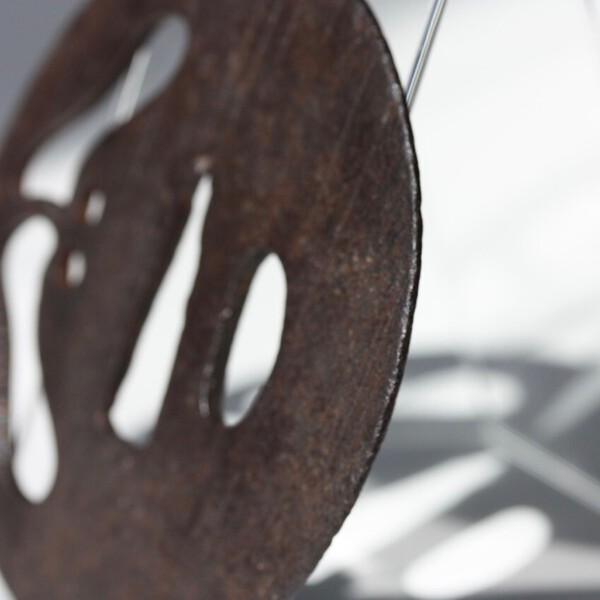
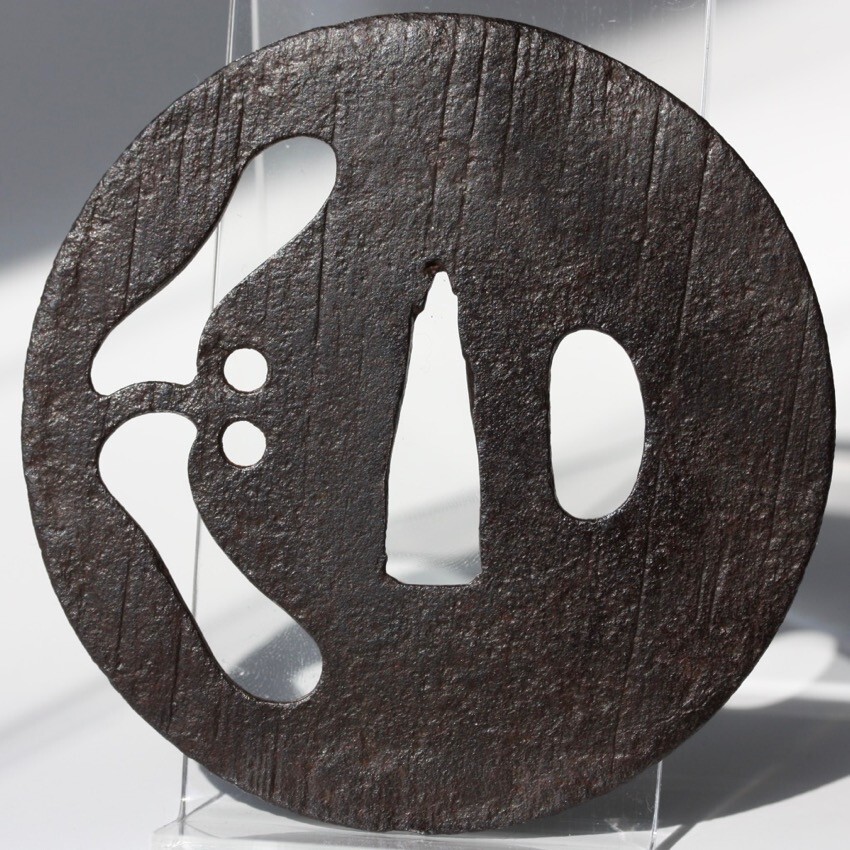
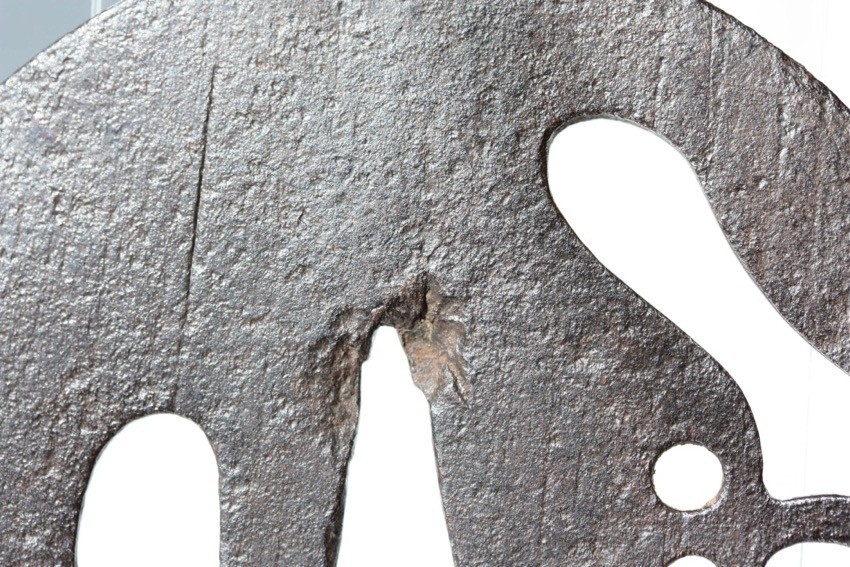
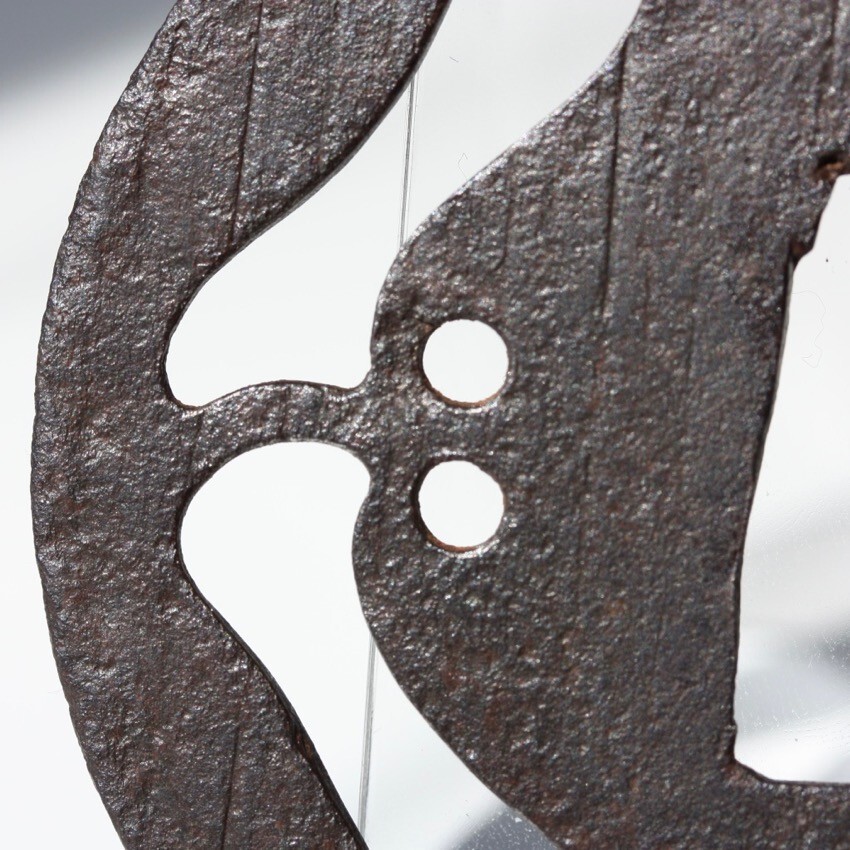
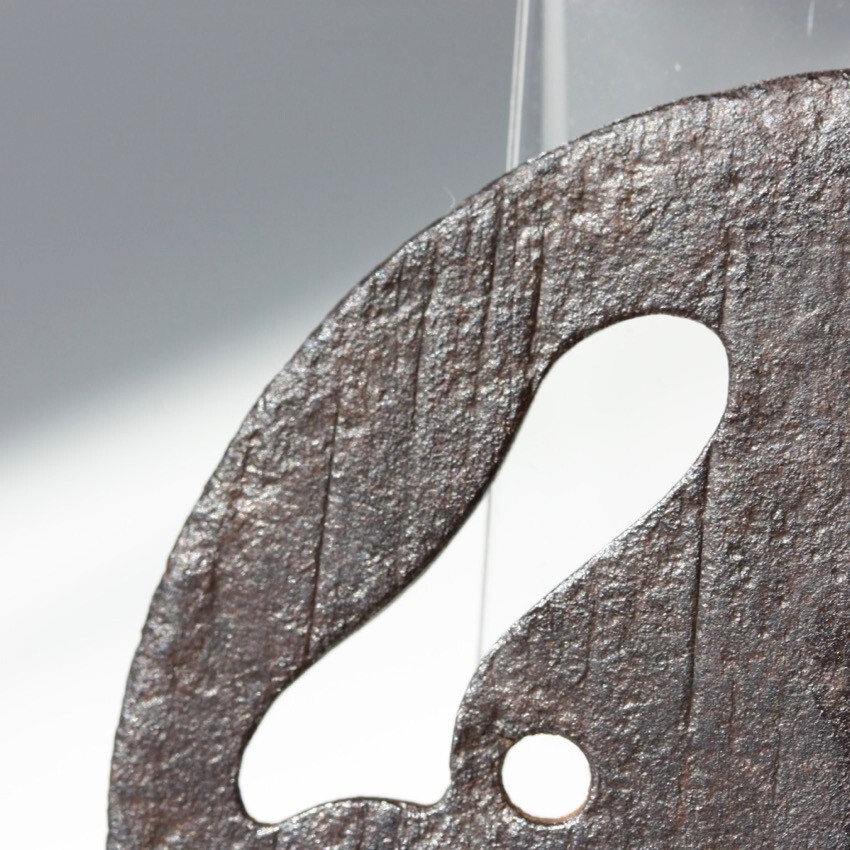
This tsuba is either Ko-Katchushi or Ko-Tosho from the late Muromachi/early Momoyama period. It is very thin (tapering from the centre) and has a sukashi of a dragonfly (tombo) and rain (shigure) yasuri. The quality of the sukashi work is excellent and the shigure yasuri are very well done. The sukashi work may be a later addition to an older plate. The tsuba has fine quality iron with great colour and texture. It has some very slight patina war on the lower section of the dragonfly sukashi. 76 x 75 x 1mm at the rim and 2.5mm thickness at seppa dai. I've included a photo from Torigoye's "Tsuba Kanshoki" to show a tsuba that has very similar shigure yasuri to this one. $375 including worldwide shipping. This tsuba was originally from Marius's collection so credit to Marius for the photos
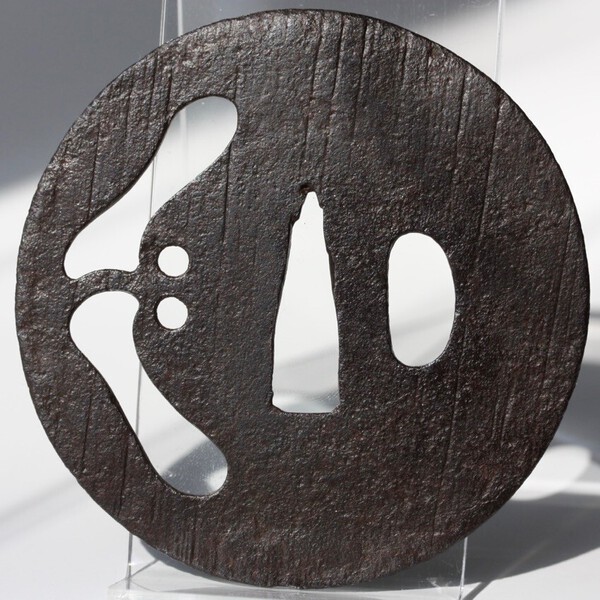

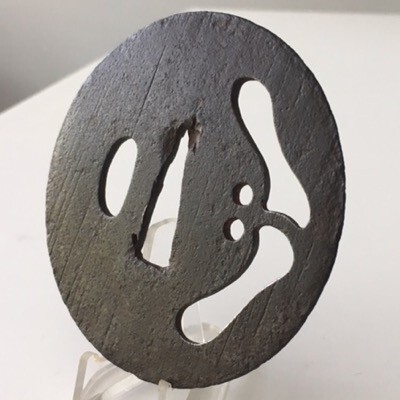
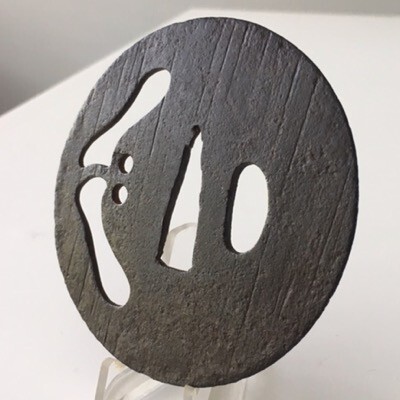
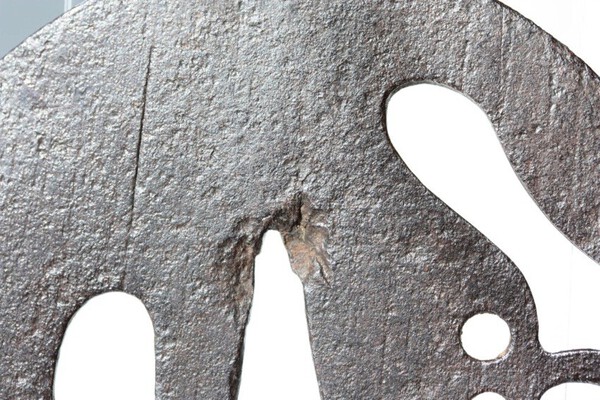
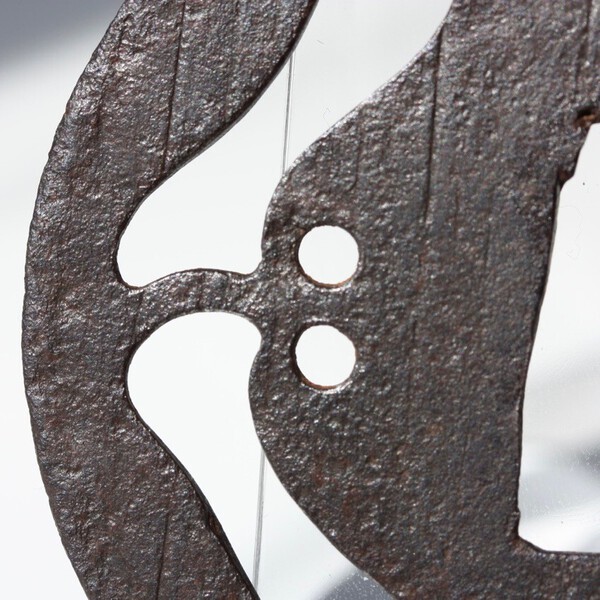
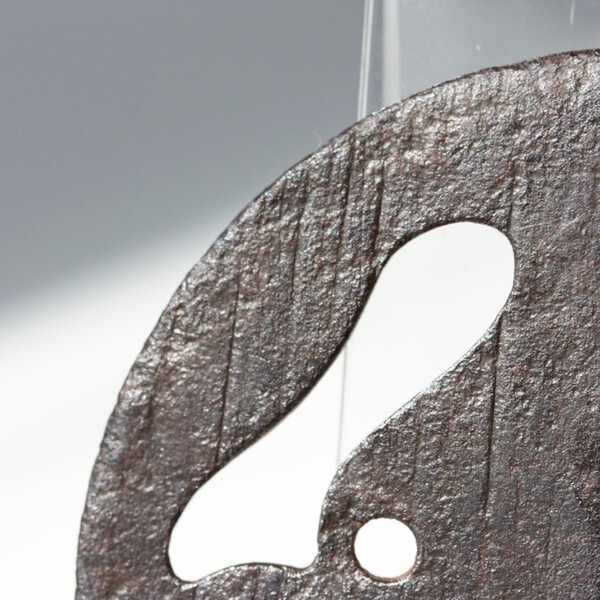
 1 point
 -
Once more, never buy a sword without having really seen it.1 point
-
I have one very similar, not to hijack the thread1 point
-
10/12-plate suji kabuto? Many of the features are hard to see, as it's all black lacquer. Does it have shiten-no-byo and hibiki-ana in the four directions?1 point
-
No it says indeed half, the nagago is broken right at the mekugi ana, so it is a half. Was a flea market find that I got for a small pocket money1 point
-
Mark, it would help to have shots of the full tsuka (handle), blade, blade tip, and bare nakago (tang). Oh, I see you are still adding photos!1 point
-
Just some additional information: The mei of the Kunimitsu-blade with the nengo "Kagen 4" (1306) has been seen critical for a long time now. Dr.Homma Junji noted in 1984 ("Kanto Hibi-Sho") his doubts about the mei. reinhard
 1 point
 -
Well worth a refresher read1 point
-
Larry, it is a good example of an early 1940's Naval kaigunto, stainless steel but custom mounts with same covered scabbard (saya). As noted the mei is "Tenshozan Tanrenjo saku" the place where it was made. The paper below has a good explanation of Naval swords. Look for your mei, also see table P. 118. The surrender tag says "Kaigun Taisa Nakane Ganjiro" Naval Captain Nakane (given name Ganjiro).1 point
-
Thank you much. Back on the hunt for one, was only on the hunt for a couple months.1 point
-
No doubt. And your gut gives the best advice. I agree with Rawa and Lareon. We’ll be here if you have questions while shopping around Best of luck, -Sam1 point
-
Really good read. Thank you. "Like fresh snow under moonlight" was such a poetic and accurate description I ended up spending a long time on that image1 point
-
If you do return it. Perhaps put your budget and request on the forum wanted section. I'm sure someone will have something for you to buy and it'll come from the forum where there is a lot of knowledge1 point
-
Good price imo. Decent mountings 400-500$ how long is nagasa? Blade looks longer then usual.1 point
-
Not sure on the damaged blade edge but I would say the sword is genuine. Just abused.1 point
-
@Bruce Pennington Didn't have a Souvenir in my collection but got this Toyosuke recently. Not in hand so can't send any more photos yet for you Bruce. 48 in paint and the tsuba has 45 on it



 1 point
 -
Things are always relative, when we speak of little sori it's in relation to the previous or the following era. That said, the major characteristic of Kanbun shinto is on tapering = a notable difference (1cm or more) between moto haba and saki haba (1 cm or more). I don't trust NTHK (once i sent a katana with NTHK papers to NBTHK shinsa and that katana turned to be gimei....).1 point
-
Well, this has all opened up a whole new angle on netsuke! Can’t quite believe I had missed a whole separate category but no ceramic netsuke had ever crossed my path. An interesting subject and I will enjoy reading the book that Pietro has linked. Thanks Piers, thanks Pietro.1 point
-
There’s a Japanese expression, ‘Oni ni kanabō’ 鬼に鉄棒 Giving a metal club to an ogre means further enabling someone already fearful.1 point
-
The barrel decorations were probably all added in Meiji, after the end of the Edo Period. It was common then to add a Tokugawa Mon in brass like that, and the single character is likely the ‘Kao’ of the inlay artist. There is a single upside-down 山 Kanji character which means mountain but makes no sense there on its own. Nothing else written under the barrel? There are crudely scratched numbers 二十六 (26) which may be an order run number. The serpentine and lock plate look good. The pan cover is probably a replacement, as too the amaooi rain guard. The priming pan looks a little messed up. Were you able to open the large bisen breech screw? There are various other comments one could make, but some of the most important parts are not visible in those photos. A good study piece!1 point
-
Ford was a magician. His knowledge on restoration, re-patination etc was unequalled. He restored many pieces for me that I would never have entrusted to anyone else nor would I have dreamed of tackling them myself. It isn’t just the “cleaning” you need to undertake, it’s the putting it right when it goes wrong……and it will go wrong. Ford had all of that knowledge. I am aware of just one other person whose workshop is fully capable.1 point
-
Ken katabami, Ukita. The large Ukita contingent (who lost as part of the western forces at the Battle of Sekigahara in 1600) would surely have lost credibility post battle and become homeless ronin.1 point
-
Don't understand why some people comparing different time epoch and argue which is the best. Personally i think in every time epoch, there are made wonderful blades.1 point
-
Very cool, Mark. While I cannot help you with the translation, I think you might be interested to know that this particular Type 95 is well documented. A researcher named Donald Barnes From Australia, who has since passed away, published a serial number list of Type 95s that appeared in the Newsletter of the Japanese Sword Society of Australia in the 1990s. Donald Barnes also was one of the contributors to the Type 95 chapters in both the Fuller and Gregory and Dawson books. Your sword appears on his list. @Kiipu might be interested to see this one. Very cool to see a sword resurface from Donald Barnes list, IMO. @Markdd, what is the serial number on the scabbard? Thank you for sharing, -Sam1 point
-
One of our latest addition to the Juyo Tosogu Family is this stunning piece by Tsuchiya Yasuchika, maybe the most famous name in the history of sword-fittings. https://www.instagra...gsh=YndkNTdzcHhpbG5p
 1 point









.thumb.png.54593db2789c8a1dcb235543b184ce39.png)









This leaderboard is set to Johannesburg/GMT+02:00