
Leaderboard


Popular Content
Showing content with the highest reputation on 06/18/2025 in Posts
-
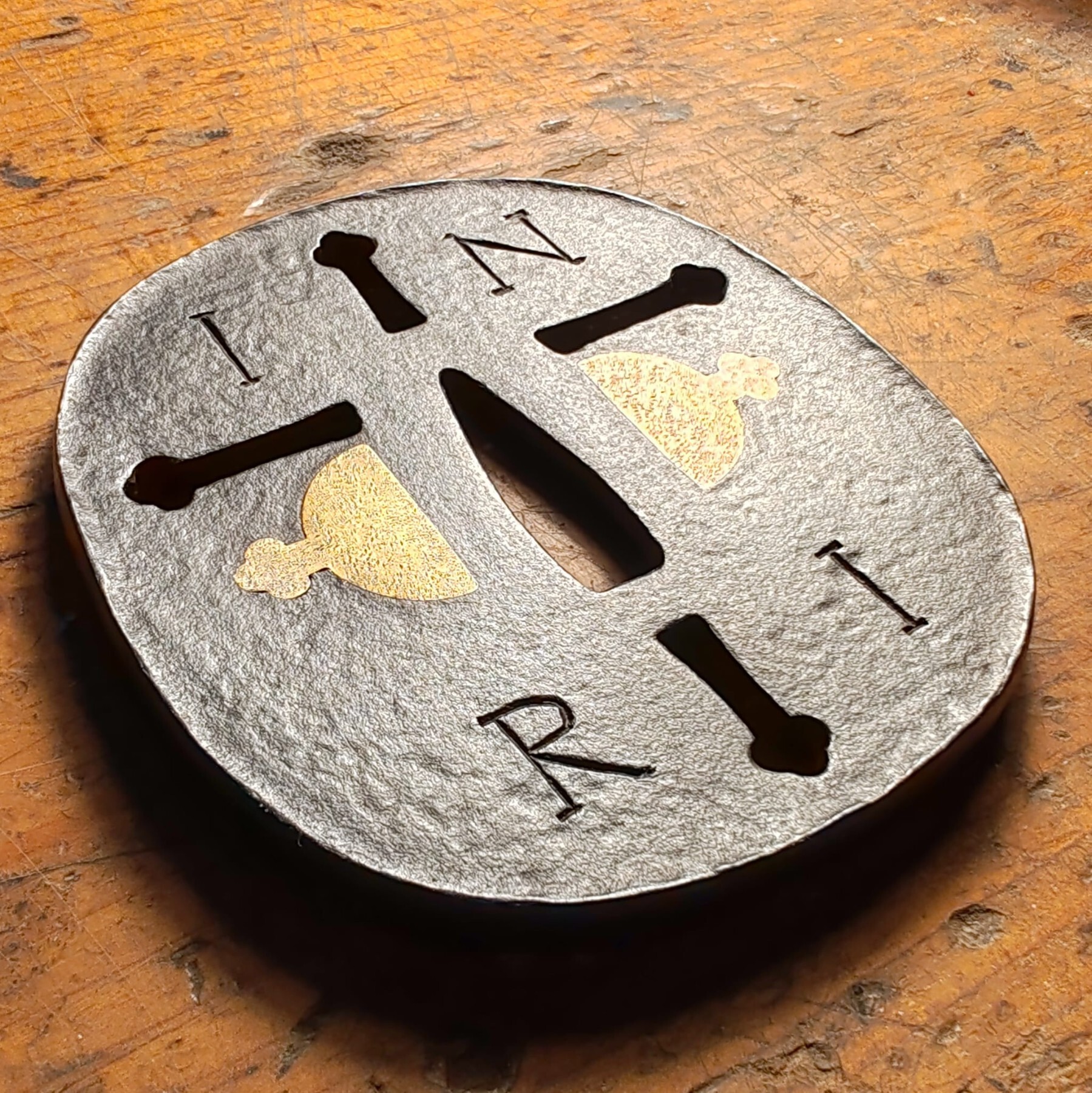
I'm proud to announce that my Kirishitan tsuba got awarded the 4th Effort Award in this year's NBTHK contest! This is an incredible reward for my hard work on improving my skills. To my knowledge i'm the only foreigner to win an award in this category for NBTHK competitions ( Ford Hallam only achieved Nyusen before moving to NBSK). My work will be featured in the catalogue and the exhibition, so please take a look if you have the chance. Following there are the pictures and a link to a video that shows the special feature of the mimi Link to the video https://drive.google.com/file/d/15HyBoEufhpyEx98n4Y9BETWOtrMtt5o6/view?usp=drive_link


 6 points
 -
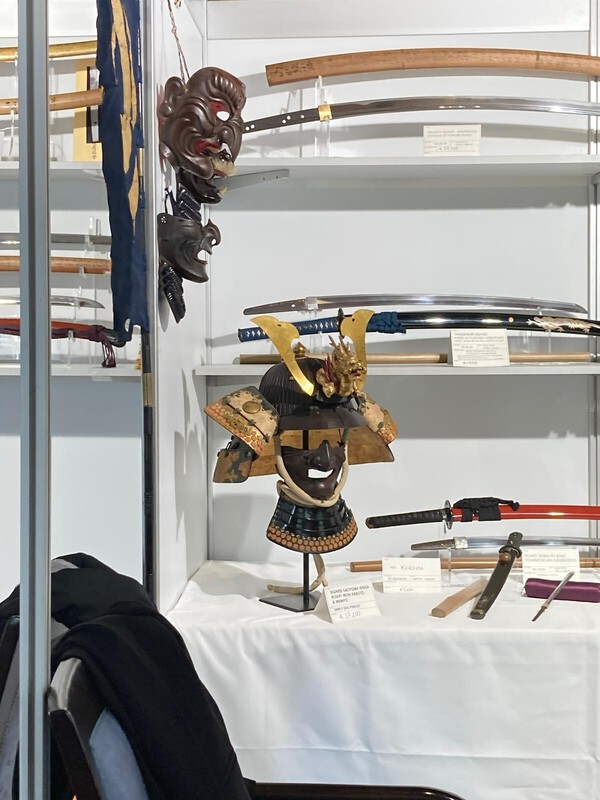
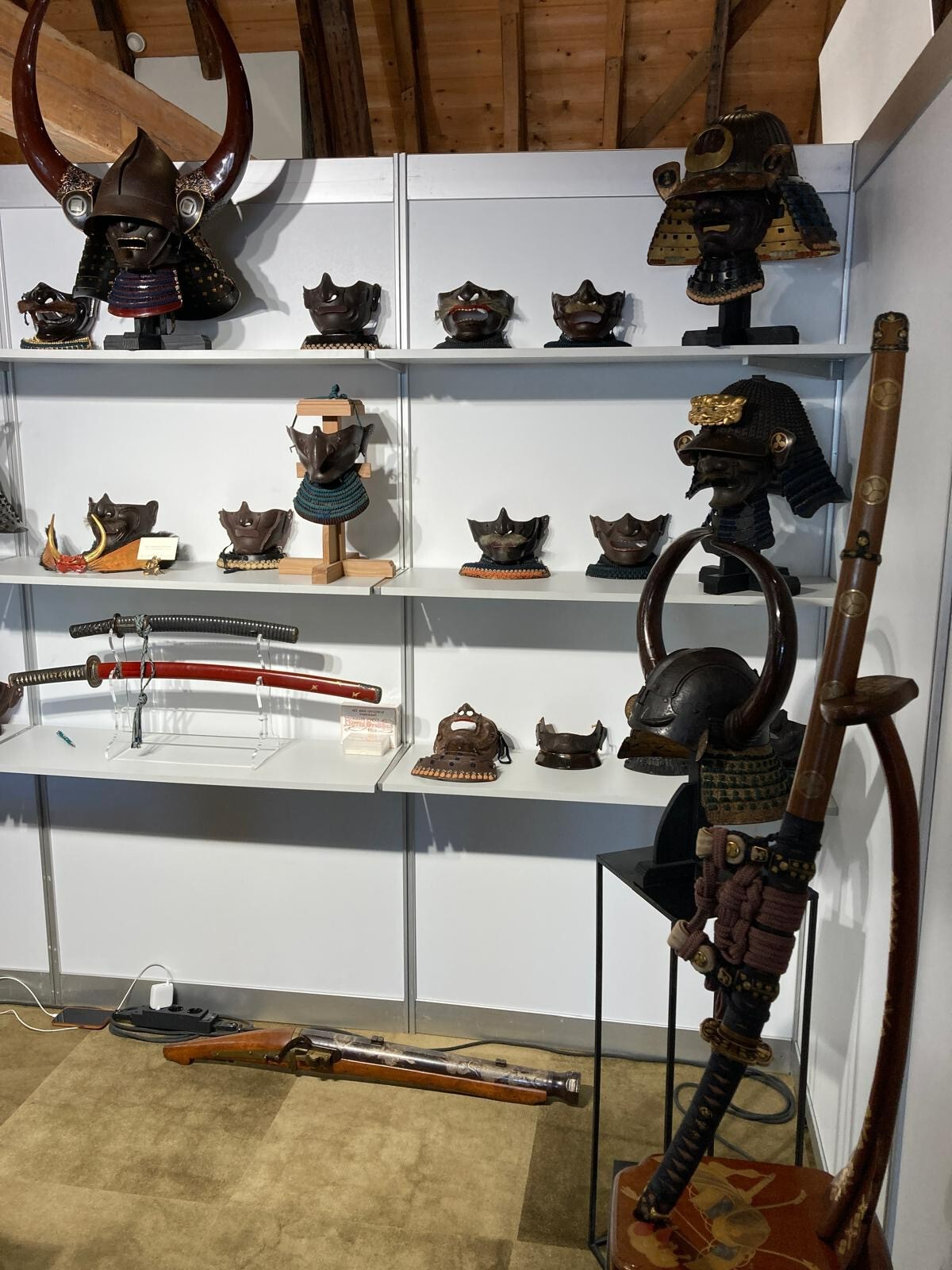
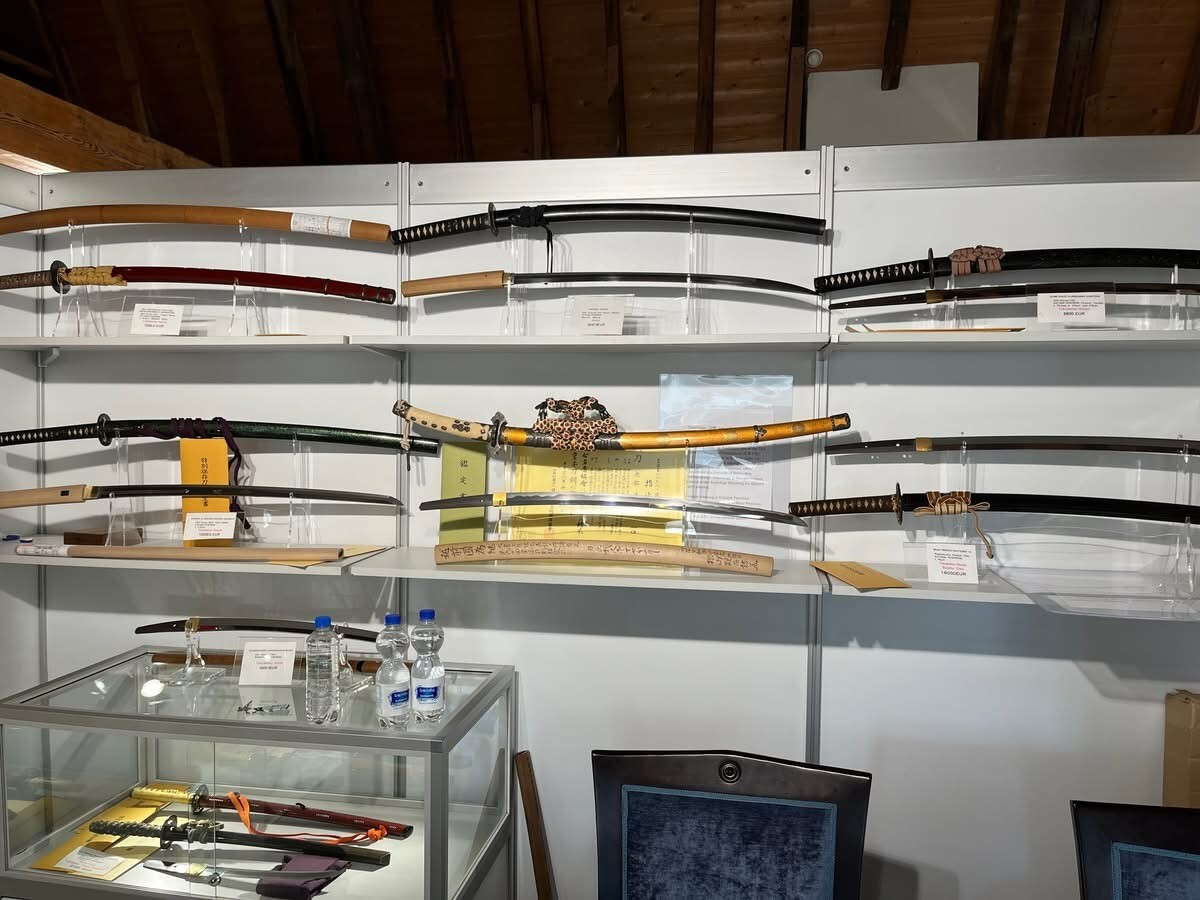
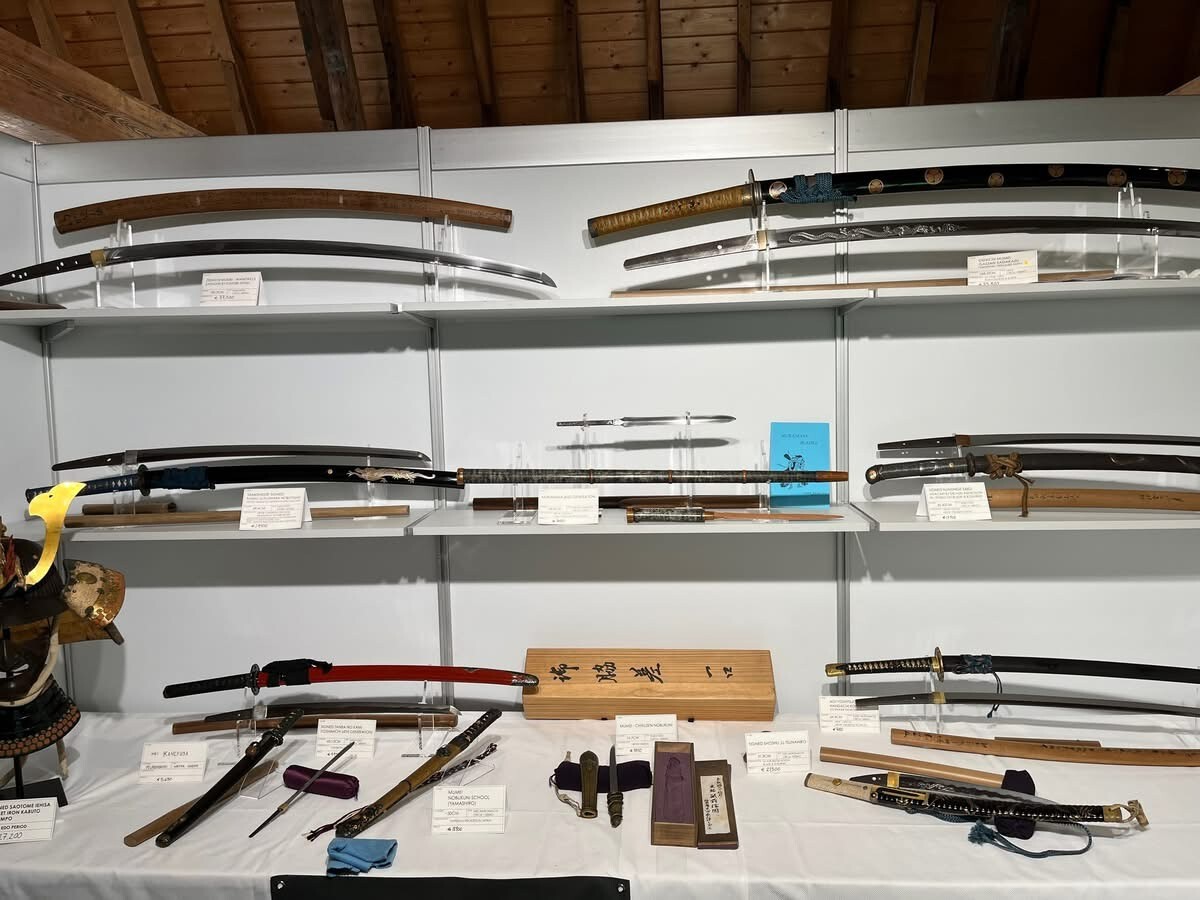
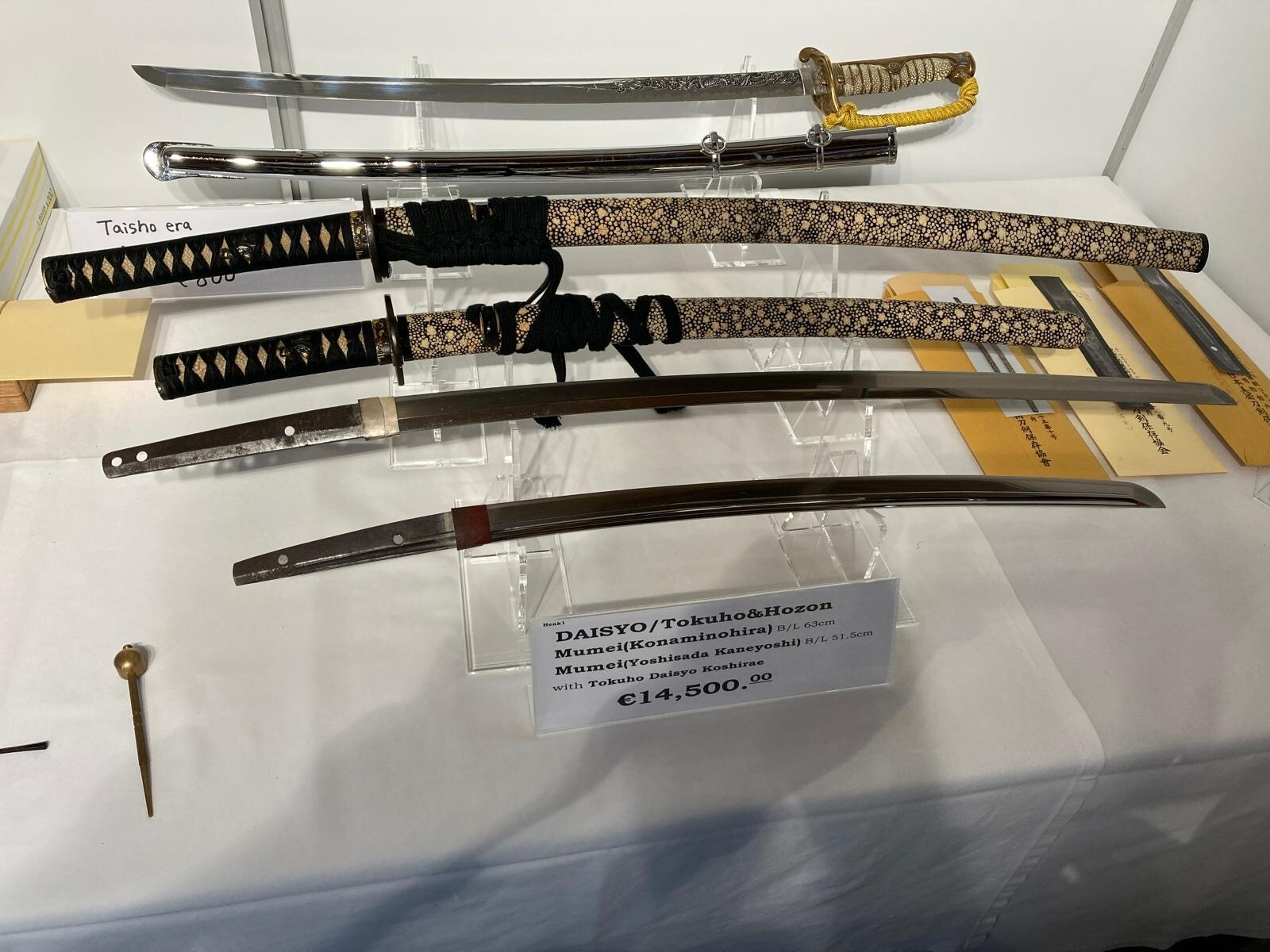
Japan ART FAIR 2025 Enjoi the pictures. Tom


 5 points
 -
Japan ART FAIR 2025


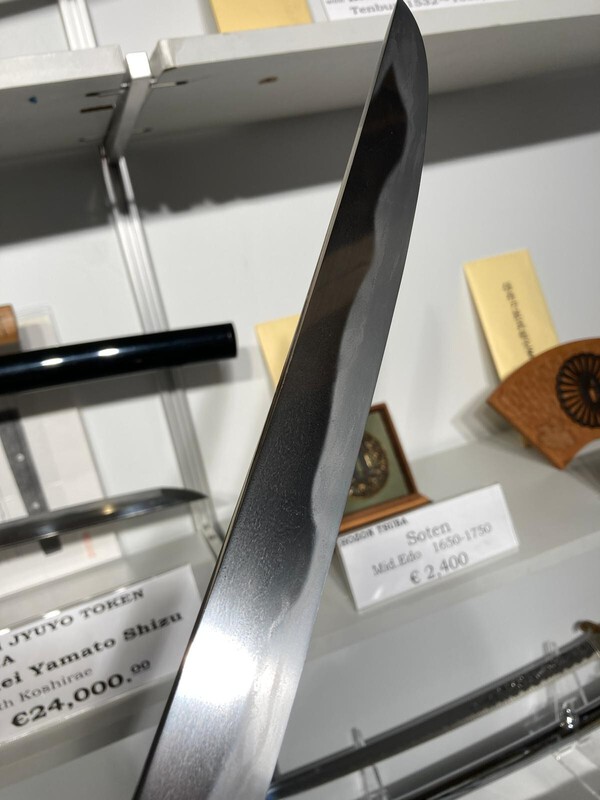
 4 points
 -
Japan ART FAIR 2025

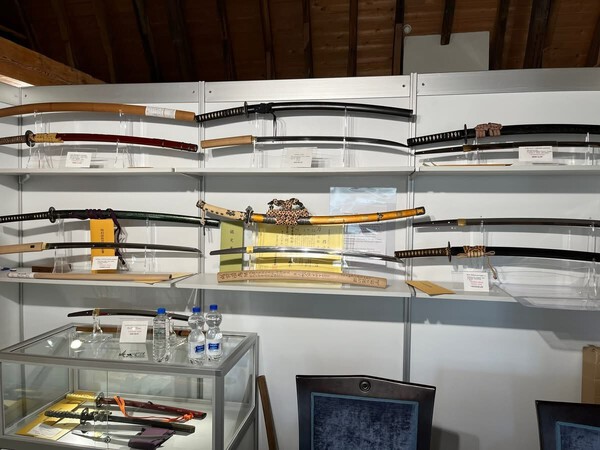




 4 points
 -
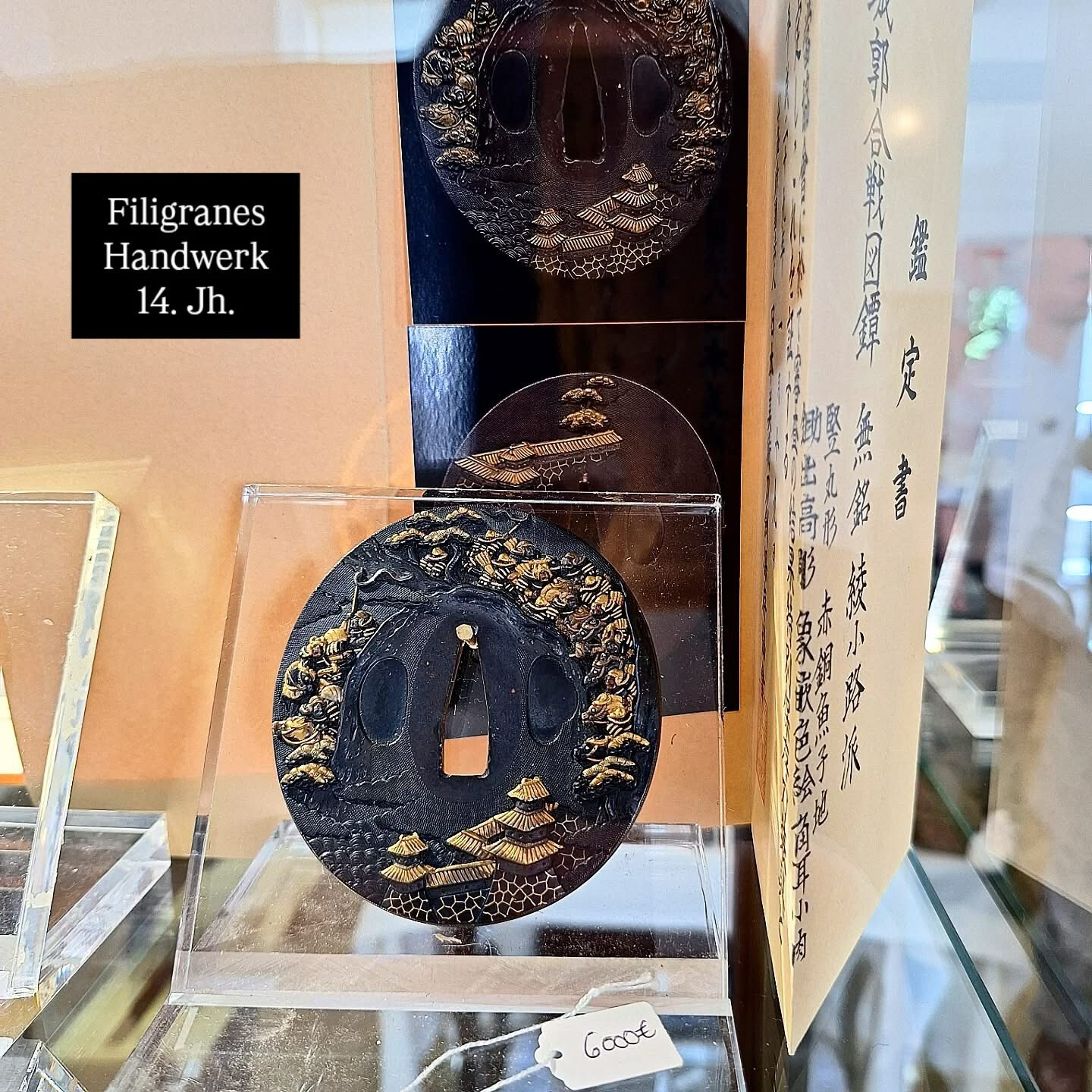
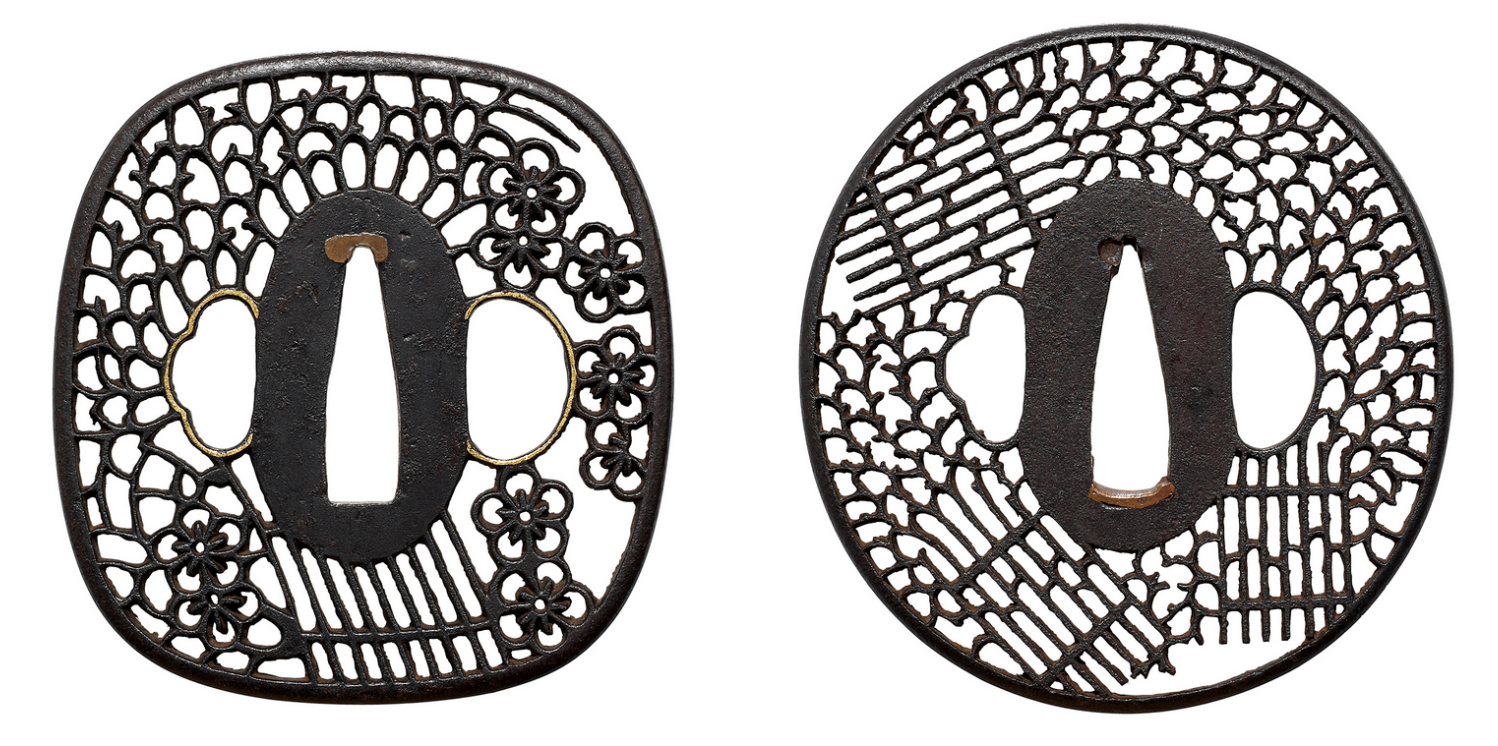
The paperwork says ‘Daigoro-utsushi’, which does suggest late Edo. The Yodo River ran through Arashiyama (south Kyoto) and Osaka but changed names at least three times according to which section, the ‘Yodogawa’ at its lower end. (The Yodo waterwheel and sometimes riverbank stakes often symbolized Osaka.)4 points
-
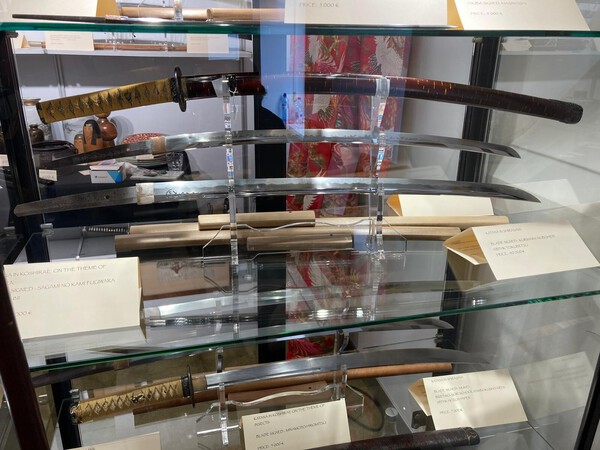
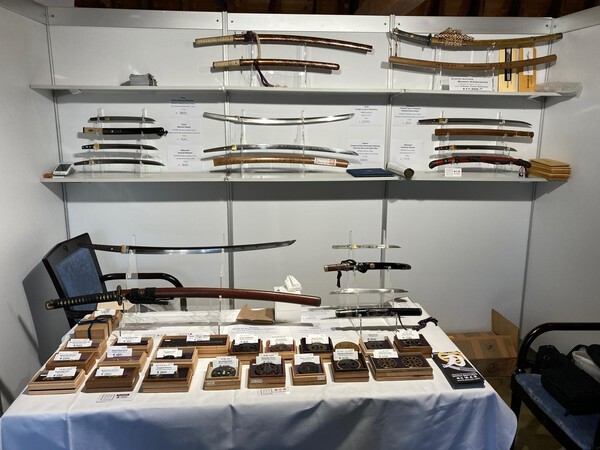
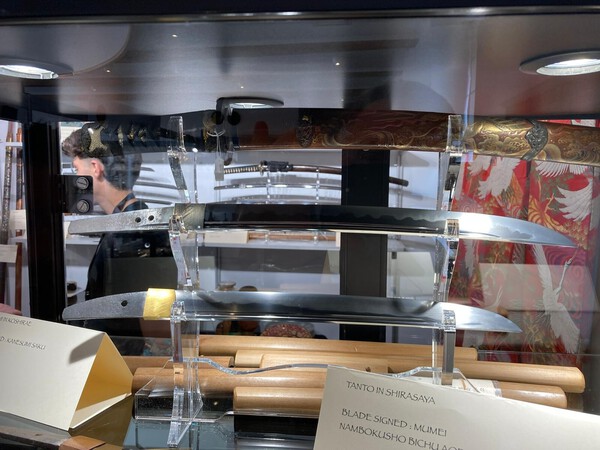
Visited for the first time, beautiful event in an equally beautiful and exclusive location, very helpful and friendly dealers, I sincerely hope that this event will be maintained because we desperately need it in Europe, hope that the dealers have also done good business because in the end a lot also depends on this. I see the format itself as centered but in a growth perspective it would be interesting to integrate more laboratories / lectures also in general on Japanese culture that can attract a more varied audience. The blade posted by Luc is a Gassan Sadanobu was exhibited together with 3 other Gassan including an Sadakazu Odachi for the very interesting lecture held by Simone di Franco on the Gassan school, obviously magnificent horimono as per Gassan tradition. Regarding possible purchases the offer was varied with both entry level and high level pieces, especially for entry level I saw several interesting pieces compared to the asking price so I strongly suggest to those who are thinking about their first purchase to come to the next edition. @Jussi Ekholm I thought of you when I saw this , never seen so many ana.. PS: sorry for the low quality photos but I didn't want to be too annoying towards the dealers... Giordy


 4 points
 -
some more pics

 3 points
 -
There is a gofundme set up for the repatriation of his ashes - please consider a donation https://gofund.me/ae445a373 points
-
Japan ART FAIR 2025




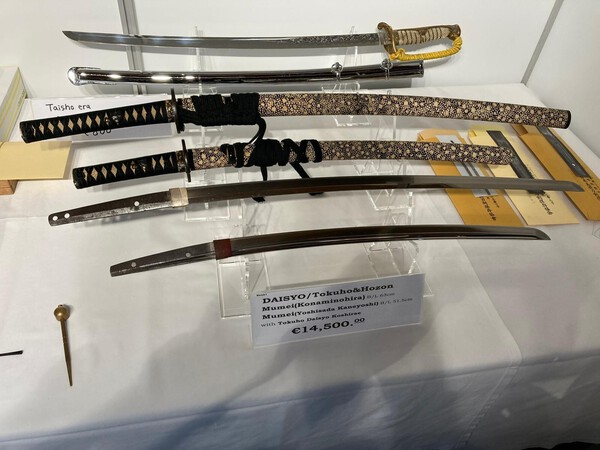 3 points
 -
The other way round - Daigoro is the successor of Kyo Sukashi in middle/late Edo period Daigoro is well known for an elaborate lattice-like design like these: Sometimes the waterwheel-bridge-motif in question is assigned to Daigoro but I think because of a lack of refinement it is earlier, thus Kyo-sukashi.
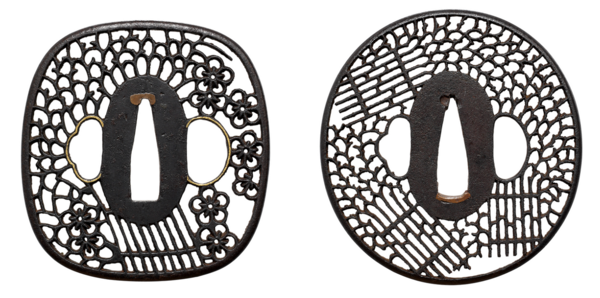 3 points
 -
Well said. Kazuuchi that are meant for a single battle, being preciously kept and making it through multiple eras and being polished without the polisher telling them the sword is crap, is a pretty half-baked theory. I am sure there might be some instances as most things have outliers, but what you're saying makes total sense to me. It doesn't help that many seemingly reputable websites seem to push this theory: https://www.mandarinmansion.com/glossary/bizen-sukesada Luckily they do quote from Darcy's website: "So generally, the longer the signature and the more information it contains, the better. But it's not always that simple. and shorter signatures do not always indicate lesser work. A case in point is a Juyo Token ranked katana, attributed to Hikobei no Jō Sukesada that is signed only Bishū Osafune Sukesada"3 points
-
Not sure where or when it was started but people have a very twisted view when it comes to Bizen Koku / Bishu mei and Kazuuchi. There were a lot of Sukesada smiths ( 30+ ) producing a lot of blades of varying quality in the 1500s ( esp starting in the Tenbun era coinciding with larger sengoku armies ). At some point people decided to associate mei with quality and I think this is wrong. Based on availability , I do believe a lot more swords were signed Bishu instead of Bizen Koku so naturally there are a lot of lower quality swords bearing the Bishu mei and this warped peoples preception of the mei. I have seen many TokuHo Sukesada with Bishu and low quality blades with Bizen Koku. To make things more confusing , many Bizen smiths also strictly used the Bishu mei in the 1400s and early 1500s adding to the confusion People are also quick to label them Kazuuchi which I believe are a whole separate thing ( mumei/nijimei with rough masame hada ). Ironically these true Kazuuchi would be unlikely to be found 500 years later since it would mean someone took care of them through the muromachi, through the entire edo period , the sword ban , and then somehow be recovered and deemed worthy to preserve after WWII. I may be biased because of my love of sue bizen but I wish more research and literature was readily available to clear up the many misconceptions around3 points
-
I think everyone was smitten by at least one blade in the show (probably several). For me the highlight was the Sa Kunihiro tanto, unfortunately sold prior to the show. Its koshirae was equally as impressive. Quality of the polish was next level. The Tametsugu was also a nice example of his work. However it was a little short at 66cm and the gawdy gold urushi tachi koshirae was not to my preference.3 points
-
My thoughts on these questions: Luc's talk on the evolution of the kabuto was an excellent concise and reasoned overview in the time allowed. The same goes for Simone's talk on the history of the Gassan school, both excellent and very interesting talks. As for the positioning of the blade, a picture says it all: All in all, a fantastic and very enjoyable happening, with a Tokubetsu Iga no Kami Fujiwara Sadatsugu keeping me company on the way home! Pierre
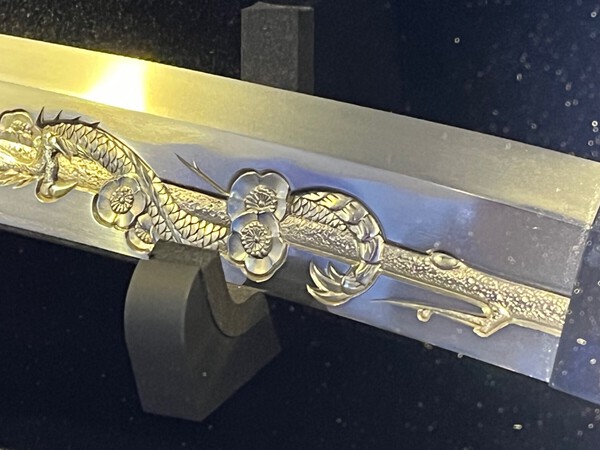 3 points
 -
Dear All. So a birthday road trip with my lovely wife and she starts asking me about swords. Out of nowhere the question, 'When did shirasaya start being used?' Looong silence.......until I realised I had no idea and had never read anything about this. Any ideas folks? All the best.2 points
-
Chiddingstone castle visit


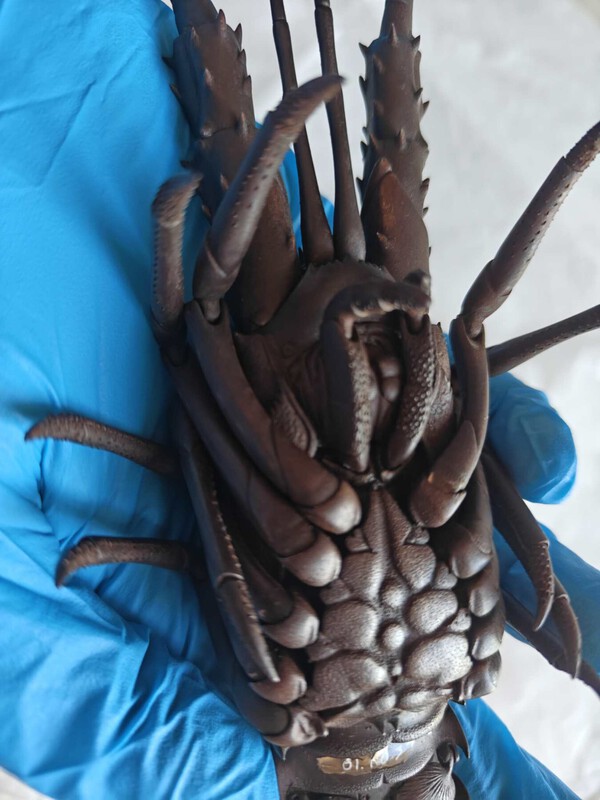 2 points
 -
Some more photos from the man cave 😆 Currently just adding detail to my replica armour but itching to start some restoration on older stuff. I have some “Edo Period” kote in not too bad shape and looking to replace areas of the kusari loss and Kotezuke no takahimo. I’ll post some photos before I start and hopefully get advice 👍🏼2 points
-
Well now we know! An old Tanto blade repurposed. Interesting and it has its own place in history. Possibly used as a multi-purpose tool rather than a gardening tool (wrong shape for that). Also, the saya is far too long and too curved to have been made for this blade so maybe it’s a marriage between an old blade and an existing mounting.2 points
-
Originated as a genuine tanto, maybe repurposed by someone or some group. I still suspect some or other more primitive group.2 points
-
Chemical trails, aliens at area 51, flat hearth, cast tsuba everywhere and now the dealers conspiracy... They sound the same to me.2 points
-
Proving that some incredible swords can carry just the Bishu Osafune Sukesada signature. Here is mine in the same signature + date 1567 - some incredible utsuri in sashikomi polish Length: 71.5cm Curve: 2.5cm Width moto-haba: 3.22cm Thickness moto-kasane: 0.77cm Width saki-haba: 2.55cm Thickness saki-kasane: 0.60cm


 2 points
 -
Thank you for the reports everyone. For us who couldn't attend it is great fun to read them. I am also happy that several people have nudged me towards the Ayanokōji ōdachi. Now for the shock of many I might actually prefer the Gassan Sadakazu ōdachi just based on the few pics... 🫣 that is just the feeling by looking at few pics. And feeling is for me the most important thing. The Ayanokōji blade is of course very interesting too. Seeing it got appraised by Tanobe and what he wrote about it, would be amazing to sit down and pick his brain about the sword, as his knowledge is superior. Would have loved to see it in person and make my own idea of the item 😊2 points
-
I add also had a great experience at Japan Art Fair, the three days wasn't too much to enjoy blades and people. I regret not having met our german fellows but I was caught up by time. I want to especially thanks the sellers for their kindness and availability, always ready to present theirs items. And of course a great thanks to the organizers. Giordy, I dreamed of this giant Ayanakoji friday night, very impressive and beautiful blade. By the way I didn't Shinsa'ed anything so can't express. I will come back next year. Can't say it better2 points
-
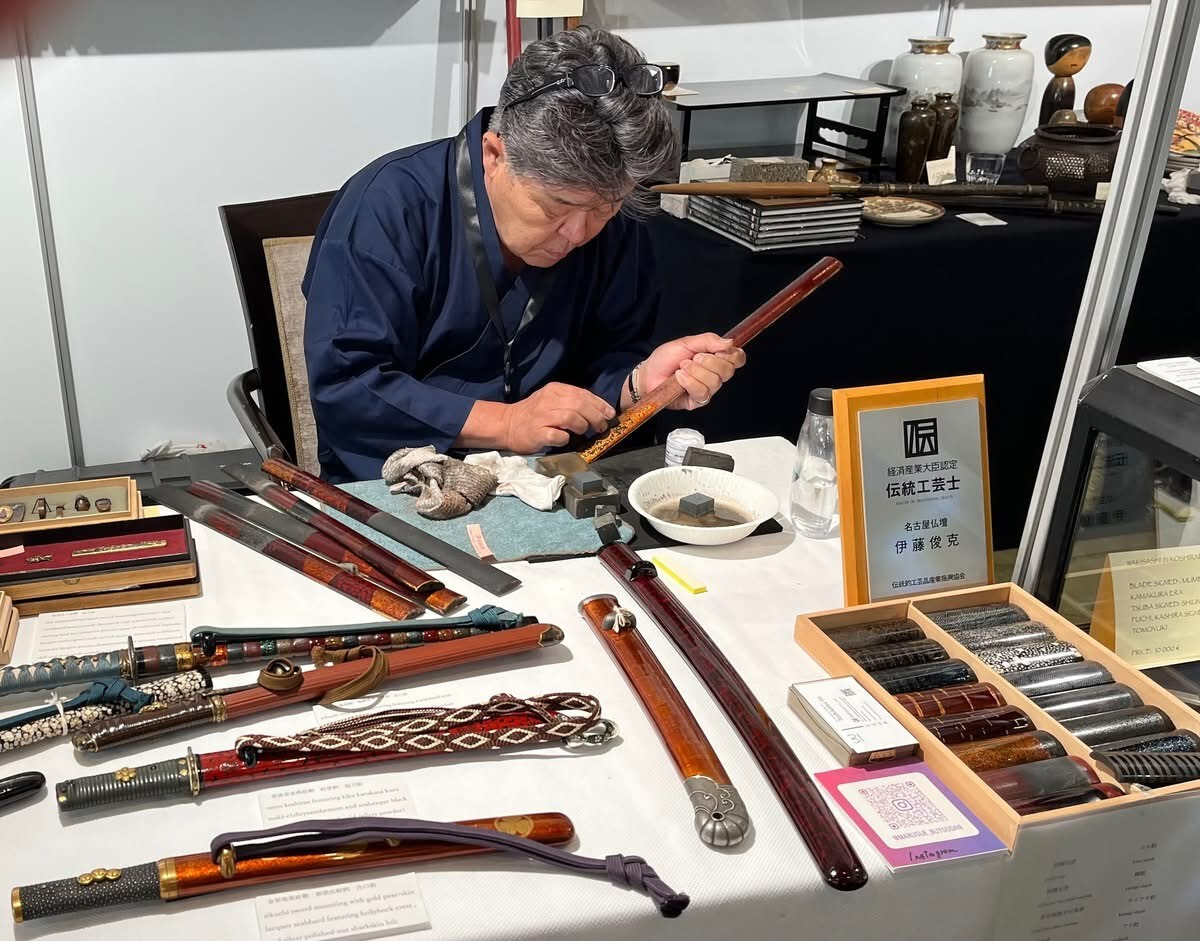
Another great event and certainly exceeded last years, both in terms of number of dealers (several new faces in the booths from Japan and Australia) and range of blades, with a little more emphasis on Koto. Many Juyo papered blades were available for sale too. There was a booth demonstrating urushi polishing and a separate room featuring the work of a calligrapher. Yes, I would agree a few more lectures covering a wider variety of Japanese culture would encourage greater attendance by the lay person. Maybe a tea ceremony demo would be a nice idea. Its a shame the event is poorly attended by the NBTHK-EB members. The more support it gets the more likely it is to continue. Europe sorely needs the Japan Art Fair. Congrats to Henk and Daisuke san for organizing this annual 3 day expo which seems to grow in strength with increasing years. I plan to be there next year too. Did anyone get their blade(s) shinsa'ed on the Sunday? How did that go?2 points
-
2 points
-
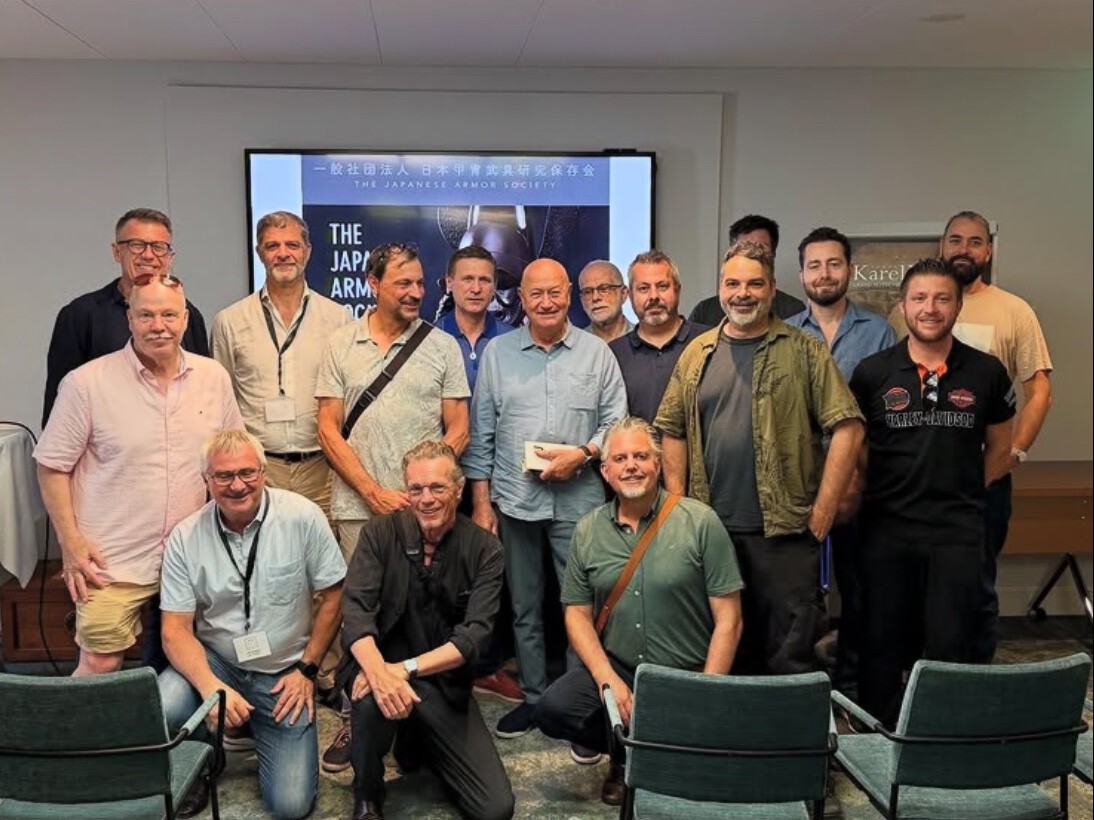
It was a very nice edition, maybe the best till now! I met a lot of new JAS-members, and it was an honour to give a lecture for you all.

 2 points
 -
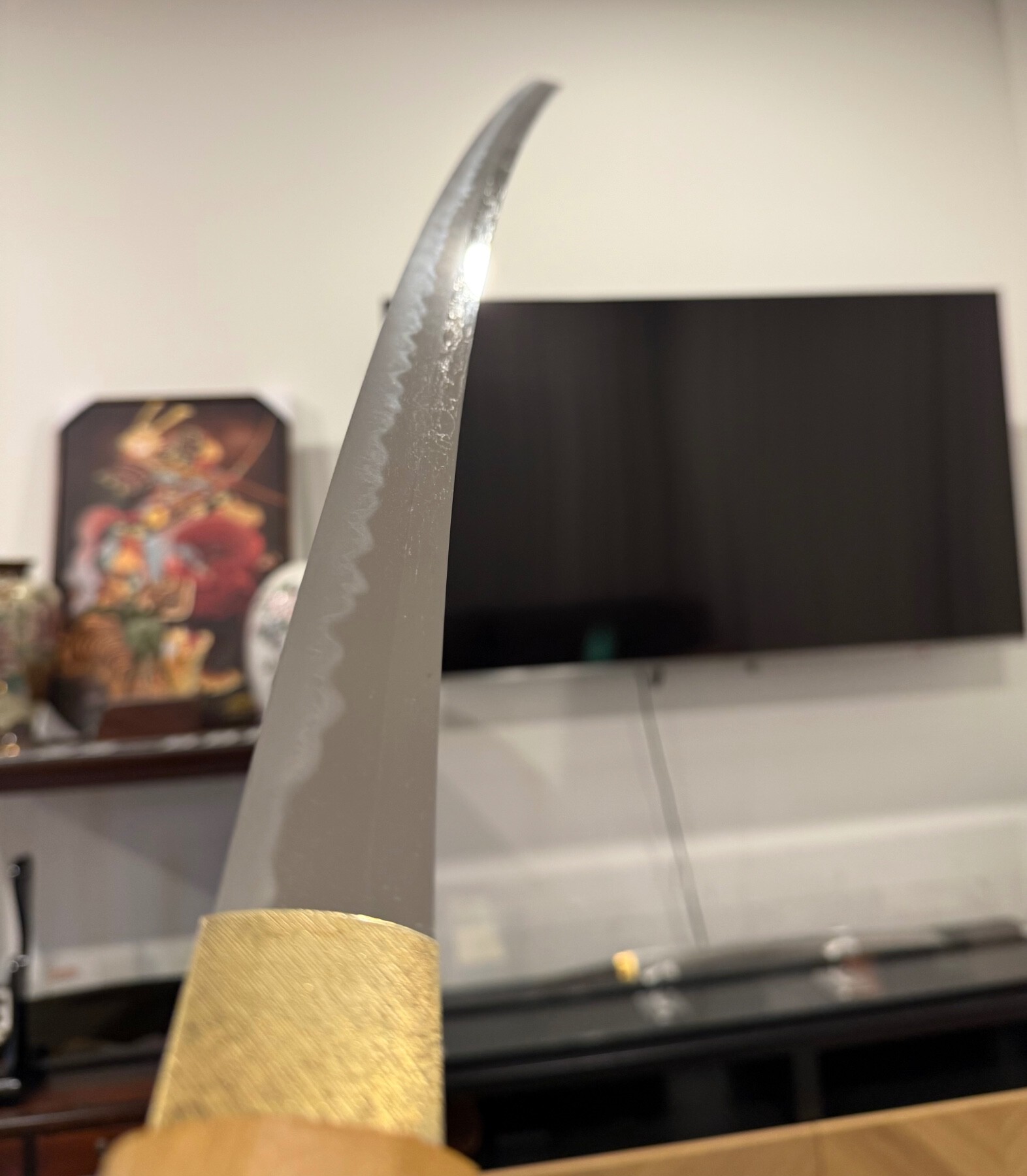
Finally received my sword. I tried to take some photo but still an amateur in this game. So far im still trying to learn the name for hamon and the hada. I think it would take sometime before I can identify them correctly. Nagasa : 71.7cm Sori : 2.2cm
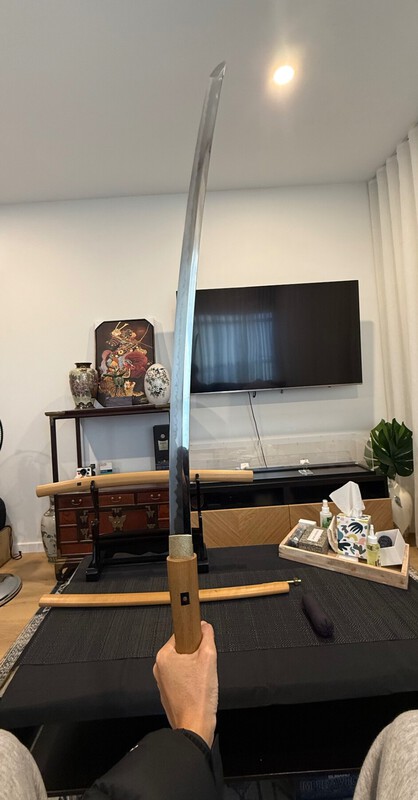


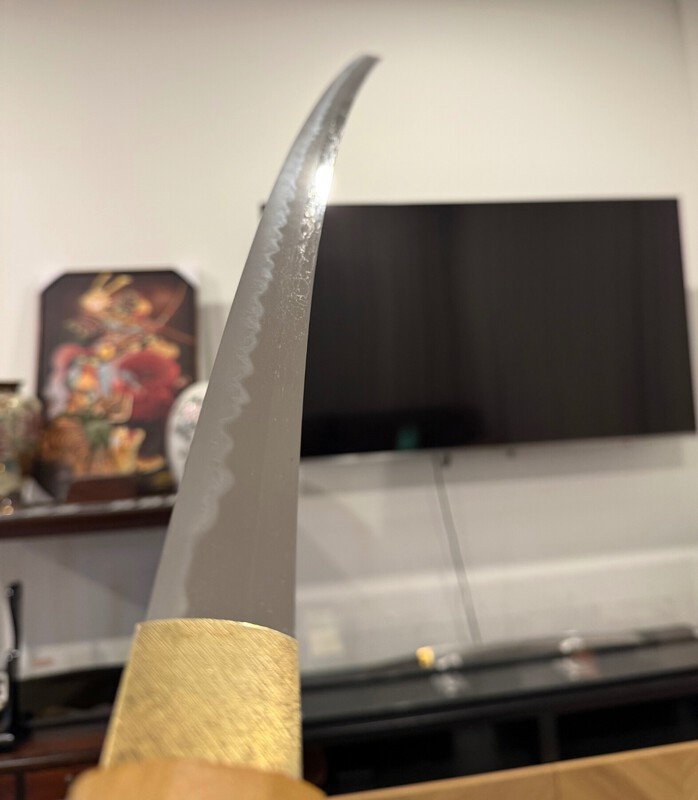
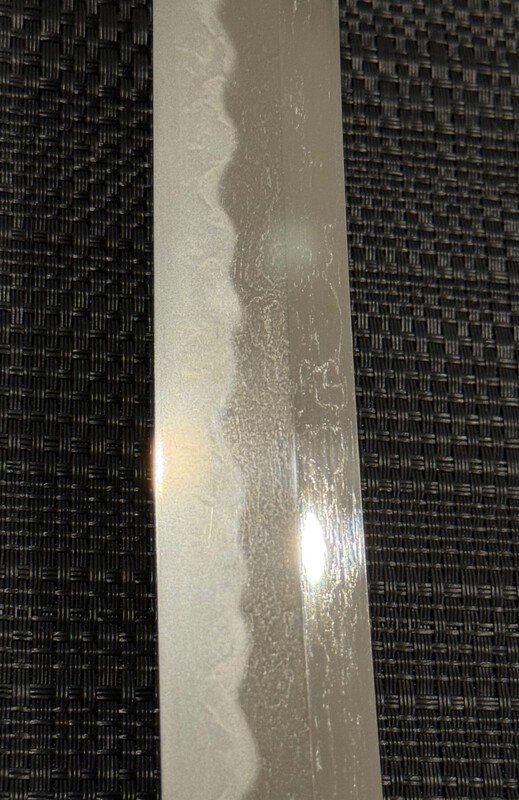
 1 point
 -
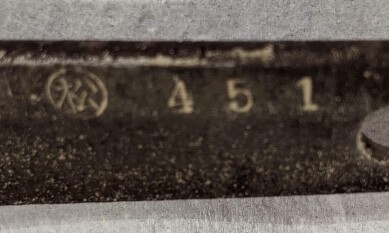
The Yamagami brother’s matsu stamp mystery. I have come across several references to traditional Japanese sword smithing where materials are mentioned. There is the obvious tamahagane, but they also mention pine charcoal as essential in nihonto production. This pine charcoal is called matsu-zumi Articles state that in ww2 the army supplied tamahagane to rjt smiths while the province was required to supply matsu-zumi. Articles also state that tamahagane was in short supply and strictly controlled. One would expect that matsu-zumi would also be scarce. Perhaps, in the mix of materials and methods used in war production, identifying pine charcoal as a material was important. Perhaps, like the military star-stamp, the matsu stamp is the A seal of traditional materials/methods.
 1 point
 -
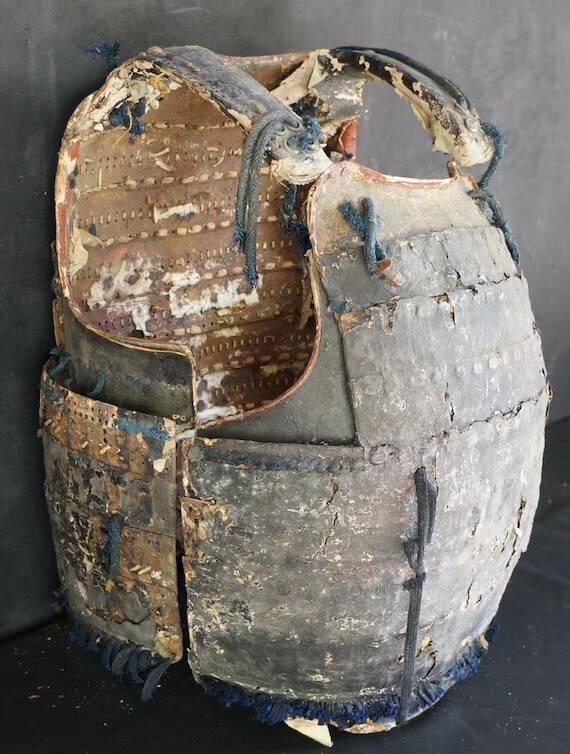
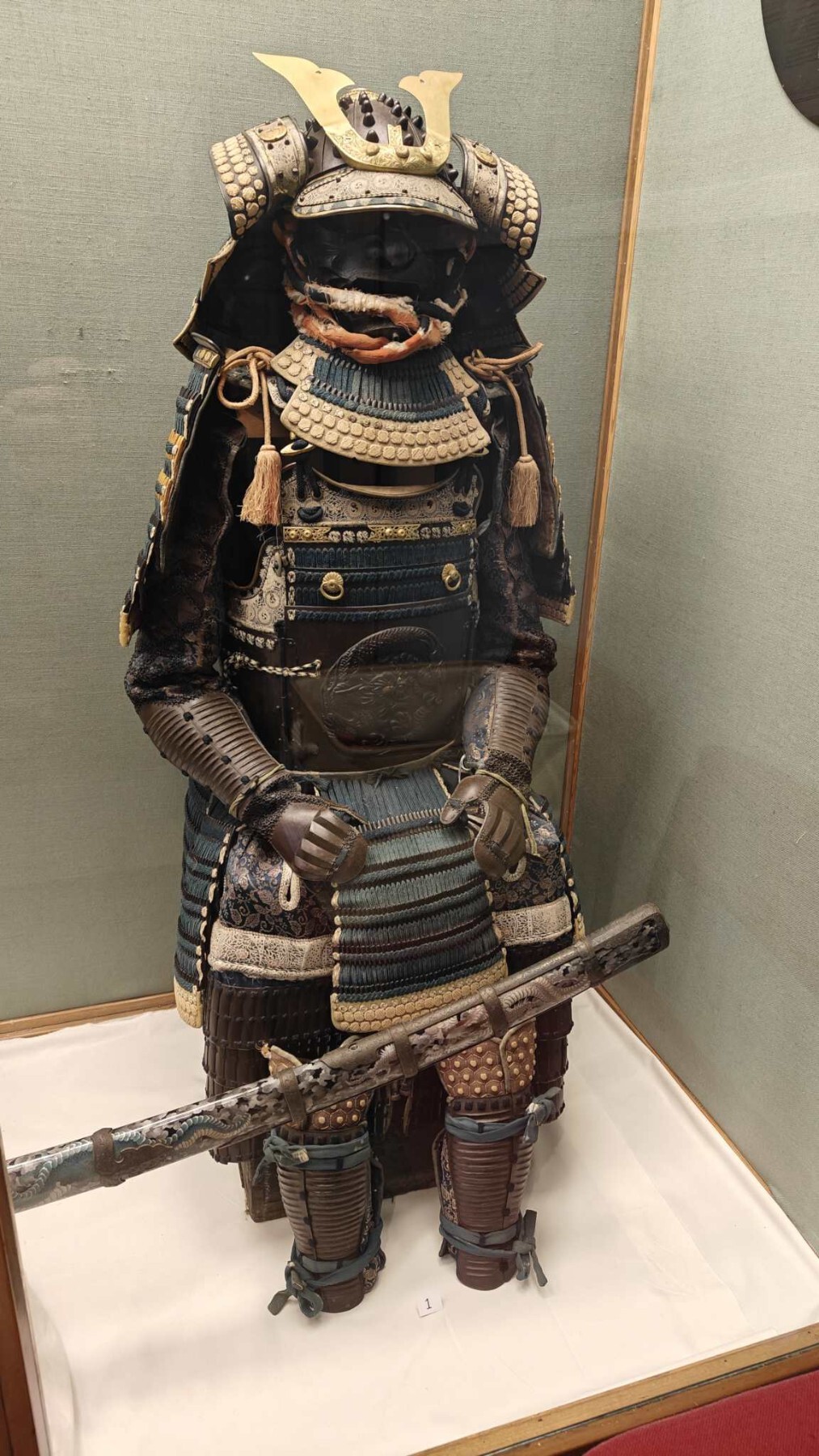
Some “enhancements” of my replica armour and learning how to recognise genuine historical armour.


 1 point
 -
So, made in 1940.1 point
-
@george trotter Got a new smith to add to our Matsu survey! Masakane from Ibaraki prefecture. Posted by Geoff - @Foletta - HERE. That makes 6 smiths in 4 adjoining prefectures - Niigata, Nagano, Gunma, and Ibaraki
 1 point
 -
Transitions periods are very interesting to study: for example, I have a Mihara sword from Momoyama tensho wich shows all the caracteristics of Kanbun Shinto and even integrating mino influence in hamon... Mihara is usualy very conservative yamato-den... and disapered in shinto. Best, Eric1 point
-
Looking good. (Don’t think I’ve ever seen an ukezutsu pushed through an agemaki tassel knot! )1 point
-
The Nakago looks kind of long. I wonder if it underwent Machi-okuri at some point?1 point
-
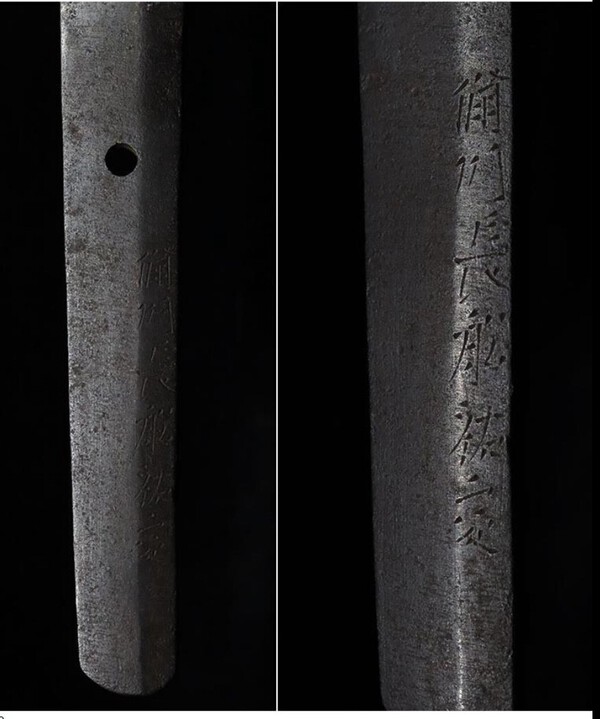
I think your one and mine almost identical in geometric. This is the signature
 1 point
 -
Nice! I think it is definitely not true that Bishu Osafune Sukesada is used for only "bad" or "average" swords. This signature was also used to create high quality custom orders in some examples, for whatever reason.1 point
-
Thats a beautiful one you got. Yes, I was surprised when it delivered to me. Its look so much better in person, everyone were saying Bishu Osafune Sukesada is bad, but I guess this beat it. I tried to take some more photos but please have a look. https://ibb.co/SDJ33HMP https://ibb.co/6cJ1w0mt https://ibb.co/n8wYXjX1 https://ibb.co/QF9R0HYr https://ibb.co/sdMDT0XH https://ibb.co/mg7CvSb https://ibb.co/ZCmVr44 https://ibb.co/F4F5wy4V https://ibb.co/Xk3sS7FD https://ibb.co/C36rXd51 https://ibb.co/353k58Vh https://ibb.co/xKMZLvdH https://ibb.co/Mxqh7Pw2 https://ibb.co/p67yY4RC https://ibb.co/Myn4Gh2v https://ibb.co/FbDS77yP It’s a solid blade, nagako appears ti be Ubu. Nagasa: 71.7cm Motohaba: 3.1cm Sakihaba: 2.0cm Motokasane: 0.8cm Sakikasane: 0.6cm Weight: 818 grams1 point
-
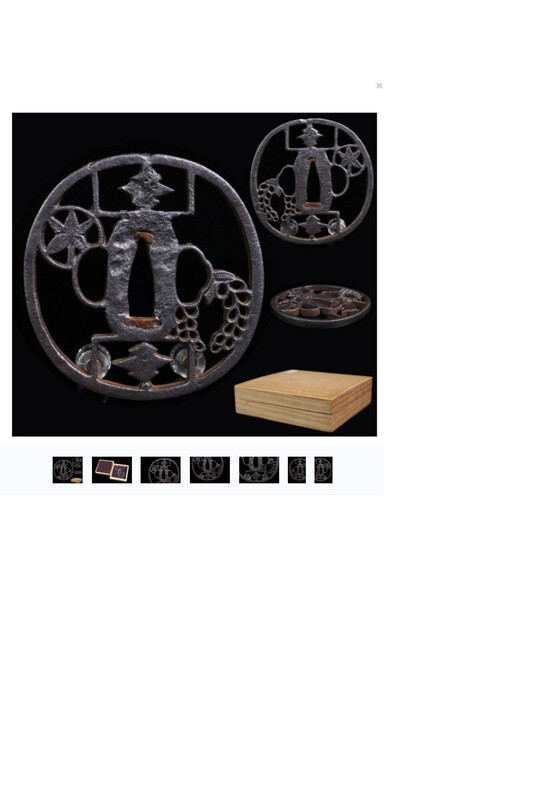
Anyone get this one: I'm hoping one of our members did. I've got other fish to fry at the moment, but I probably should have picked this one up for study. I understand why it went for so low, yet think it is probably a good tsuba. What some might see as defects might be something else.
 1 point
 -
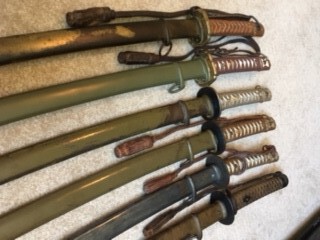
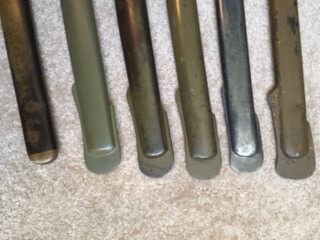
Here are some examples posted by @Stegel on this thread - Gold Painted Gunto I repainted a 95 years ago that had been completely stirpped and spray-painted gold, even the blade. I used an Army Green mixed with a brown. It was difficult (for me) to get the right mix to match the other 95s I own. Never got that close, so I finally stopped and let it be. Second one from the top: and from the left, here: There seems to be more brown in them that meets the eye at first.
 1 point
 -
1 point
-
Dear Nihonto Enthusiasts, I am incredibly fortunate and thrilled to share some exciting news with you all. After years of dedicated passion for Japanese swords and antiques, I have partnered with a licensed Japanese antique dealer in Japan to bring a curated selection of authentic nihonto and related artifacts directly to collectors worldwide. It is with great excitement that I introduce our new website: www.toukentakarado.com. Who We Are: Tōken Takaradō (刀剣宝堂) is the culmination of a shared dedication to preserving and sharing the cultural and historical significance of Japanese swords. Our team consists of knowledgeable professionals, both in Japan and internationally, who are committed to offering genuine pieces, clear provenance, and exceptional service to collectors of all levels. What We Offer: A selection of high-quality nihonto, including katanas, wakizashis, and tanto, each carefully sourced and authenticated. Various sword fittings (koshirae, tsuba, menuki, etc.) and related antiques that embody the artistry and craftsmanship of Japan’s rich history. Our goal is to create a reliable and approachable platform for collectors to access authentic items while fostering an appreciation for the art and history of Japanese swords. Whether you are a seasoned collector or new to the world of nihonto, we are here to guide and assist you. We invite you to explore our website, and we would be delighted to hear your thoughts and feedback. Thank you for your support as we embark on this exciting journey. Please feel free to reach out with any inquiries or questions—we’re always happy to connect with fellow enthusiasts. Warm regards, Nicholas Fu www.toukentakarado.com1 point
-
Yes, the person I got it from said that the rust was cleaned.1 point
-
I don't see any tradition in Mino-Den that is qualitatively inferior to the other 4 traditions. Since Mino-Den has its roots in the Nanbokucho, but only really defined itself in the middle Muromachi, it is difficult to compare it with Yamashiro or Bizen. The emergence of the individual gokads is based on certain cultural, economic and political backgrounds and are products of their time. They are reflected in the stereotypical demands of the clientele, such as Yamashiro = court nobility, Bizen = warrior nobility, Yamato = the Buddhist monasteries' claim to worldly power. All three of these social pillars were also the largest landowners in the Kamakura period. (Although originally only the tenno owned land. But the tide was already turning in the middle of the Heian period to the disadvantage of the imperial court). But these shifts in power are the reason for the emergence of traditions such as Bizen and Yamato. The emergence of the Mino is a reaction to an impending conflict between Go-Daigo and the supporting warrior clans against the Kamakura Bakufu (Kemmu Restoration) and an immediately following “counter-revolution” by Ashikaga Takauji, which led to the Nanbokucho conflict. Who knows, if the Southern Court had gone somewhere else, and another province had proved to be more strategically ideal, there might have been an Ettchu-Den, or Echizen-Den. Shinto itself is a renaissance of existing gokaden, especially the soshu-den. The cultural epicenter of Kyoto is crucial for this, as is the fact that the soshu-den was particularly popular under Toyotomi Hideyoshi and the Honami. This renaissance began in the Momoyama period. Renaissances of certain styles had already occurred before: Bungo Takada copied Bizen and Aoe, the Chikuzen Nobukuni Bizen, Kanabo, as a true Yamato blacksmith, worked more in the Bizen style, etc. However, during the Momoyama period, Kyoto was the benchmark in all areas of art and crafts, such as fashion, painting, ceramics, literature, tea ceremony, but also kodogu and swords. Some lords sent their swordsmiths directly to Kyoto (Horikawa, Mishina), while others were satisfied with their Smiths learning from the students of the Horikawa or Mishina masters. For others, it was enough that their swordsmiths at least drew inspiration and jumped on the stylistic bandwagon. What is truly typical of Shinto, the "standardization of characteristics" already mentioned here—the development of Shinto tokuden—only appears in the following generation of swordsmiths. A notable difference between shodai and nidai is often a much denser kitae. Kunisada and Kunisuke, for example, were a link in this effect. They are actually considered Horikawa students, but they were too young for that; they were more likely students of Horikawa Kunitomo. The hada of their blades soon no longer exhibited typical Horikawa characteristics. But the same applies to the following generations of Mishina smiths. The Momoyama-Periode-smith, Wakasa kami Ujifusa, often still displays an extremely Minoesque hada with plenty of nagare. His son, Hida Kami, already knits his hada much more tightly. And Sandai Bizen kami, with his ko-itame, is fully in line with the trend of the High Shinto period. From the Kanbun period onwards, one can find a dense ko-itame in Kyoto, Osaka, Edo, Owari, Echizen, and so on, as well as a hamon that is essentially based on Nie.1 point
-
Dan, you are being dishonest here, and I am being polite. The very first photo in the "Silver ring in tsubas" (https://www.militaria.co.za/nmb/topic/52786-silver-ring-in-tsubas/#comment-551308) is taken at an angle, and there is nothing in the surface roughness indicating casting, rather it is a look one could easily obtain during forging. My opinion is corroborated with more than 10 years working in research in mechanical and metallurgical engineering, reading actual academic research on the topic of tsuba (as well as period documents, when possible), and trying my hand at the different DOCUMENTED techniques of tsuba making. And if you are looking through my commenting history, you would see the links or references I have posted (I am even the one who posted the research report for the archeological find of cast soft metal tsuba in Nara). If anything, I always try to give a reference to support my opinion. Do it then. Find one of these supposed antique cast iron tsuba, and have the tests made. Or send them to me to do it. I have access to X-ray, electronic microscope with chemical analysis, and micro-hardness (not quite non-invasive, but still considered relatively non-destructive, if you can bear a barely visible indent). Put your money where your mouth is and do the analysis, instead of telling others that they are close-minded and scared, then taking offense at being called out. I am doing it. I had an idea about tsuba research, and my students and I are doing the calculations and experiments to see it through. It's not cutting edge, it's probably not very noteworthy, but we are doing what's necessary to find out if we are right or not.1 point
-
Dan, I think the main issue is that we're all going in circles. As Curran mentioned, some people have been involved in this hobby for decades. So while you say people aren’t open to new ideas, this particular idea really isn’t new at all. I also don’t think it’s fair or helpful to accuse Tsuba sellers of being part of some kind of casting conspiracy. The kind of reference you're hoping for simply doesn’t exist. You can’t reliably date a Tsuba just by looking at pictures. If I post an example of hand forging, you might point to any small flaw and say it’s proof of casting. If you post an example that does show casting, we can’t date it with certainty. So after 20 pages of discussion, where does that leave us? I’m not sure where I’m going with this. You're clearly committed to your search, and maybe there are ways to gather real data to support your ideas. But I doubt you’ll find that information hiding online; it would probably take actual hands-on research and analysis like others have mentioned. Even though I’ve had my share of frustrations with this topic, I do admire your passion... -Sam1 point
-
This is how it should be measured However, I have personal experience after purchasing a blade from a reputable Tokyo dealer that the declared figure for kasane was actually kasane measured on nakago Real dimensions measured with a digital caliper Motokasane 6.3 mm Motokasane at shinogi 6.7 mm Sakikasane 4.2 mm Kasane at shinogi nakago 7.6 mm
 1 point
 -
You’re totally right, and it’s a common problem. Sometimes they can be really stuck, and especially if any adhesive was used. Hard to know without inspecting it in person. Typically the peg will be tapered, or slightly conical shaped. It should come out one way more easily, and not the other. Inspect both sides, and push on the smaller end. If all else fails, you may need to gently tap with a block of wood. Tough to say without having it in hand. I’ve struggled many times to release a tsuka from the nakago, and it’s not always an easy or simple task. Overall, the value of the bone peg pales in comparison to the information it hides; but no need to break anything if you’re careful. Best of luck, proceed gently and with caution, and remember “time is on your side” so don’t rush it. -Sam1 point
-
Jussi Two things about old swords: 1) As Jacques points out above, centralised and more consistent / purified Tatara iron leads to fewer impurities on average, less character (ie fewer inclusions in the steel), and loss of regional variances due to local sand etc. Steel becomes more homogeneous and methods of forging more uniform 2) What you see from the old swords is their diminished, polished-down self, often exhibiting core steel or steel which if not quite classified 'core', would have been hidden by 1-1.5mm of top layer (which might have been more refined or more consistent) So, it is of course understandable why Shinto and later look they way they do.1 point
-
That's awesome Sam! Maybe there is hope after all to get a Mountain West sword group organized!1 point







































This leaderboard is set to Johannesburg/GMT+02:00