
Leaderboard



Popular Content
Showing content with the highest reputation on 04/12/2025 in all areas
-
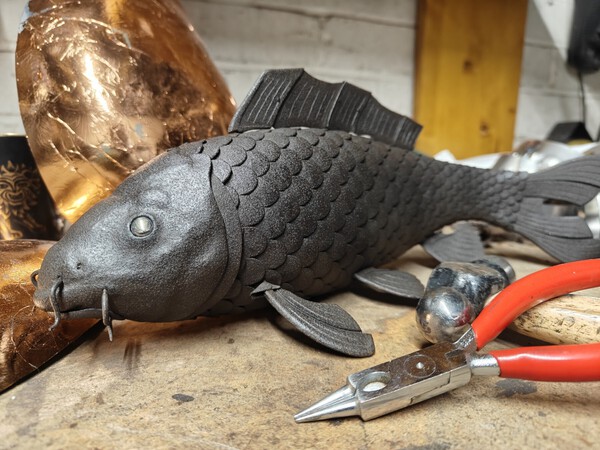
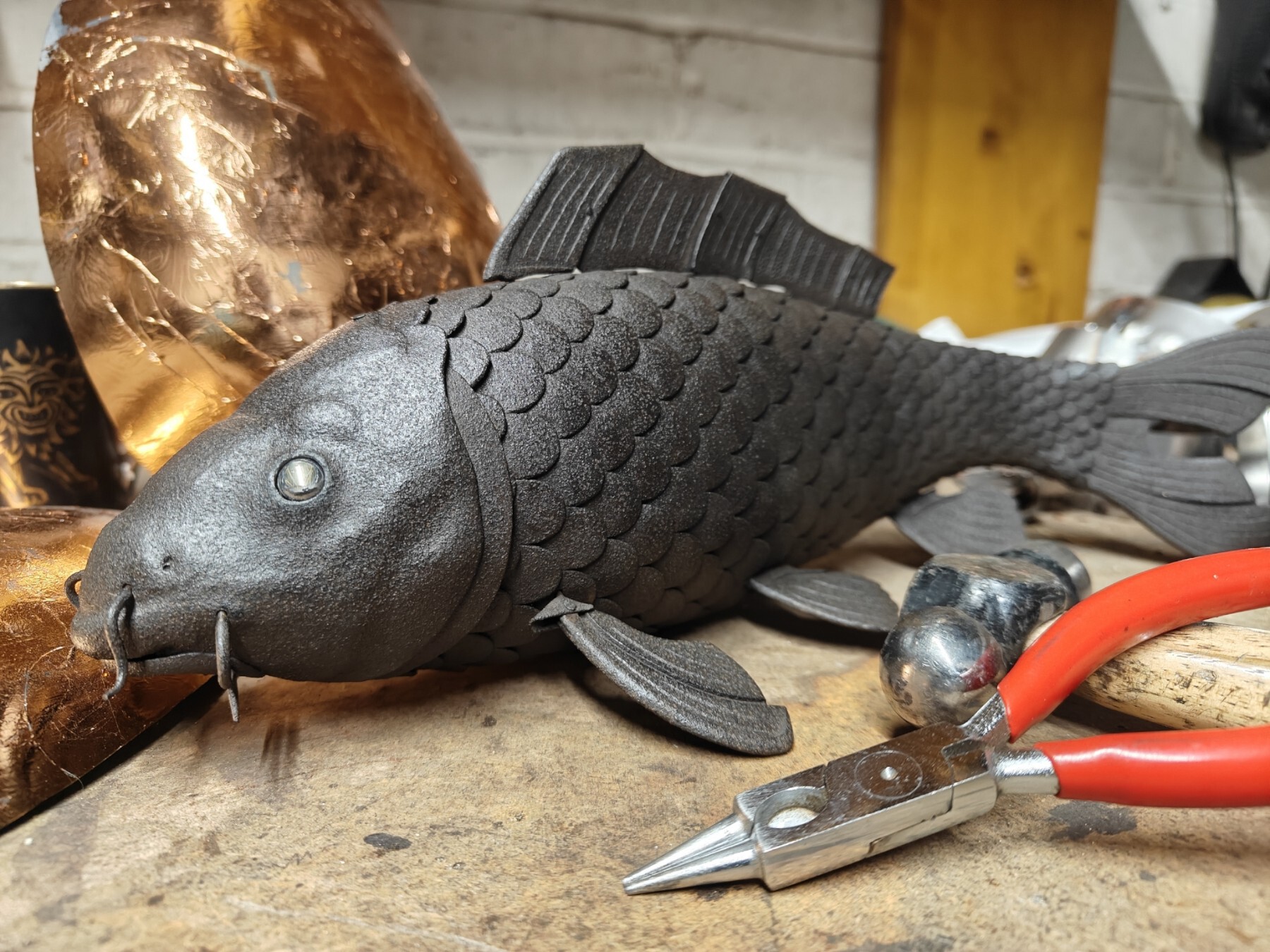
next carp, I am quite happy with it.
 5 points
 -
4 points
-
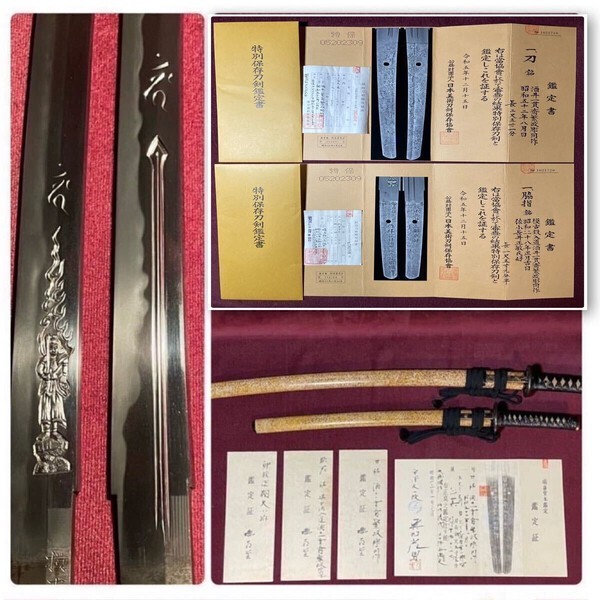
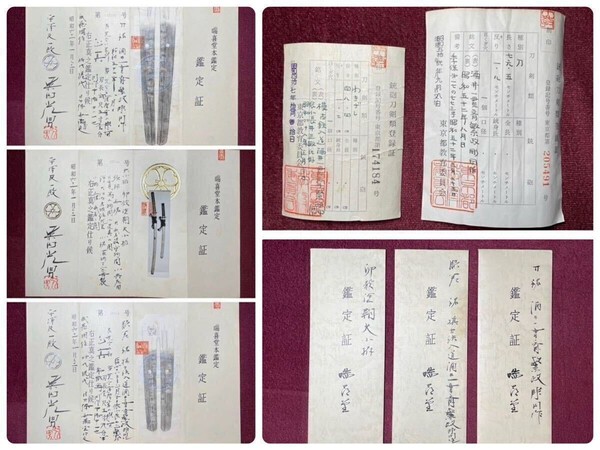
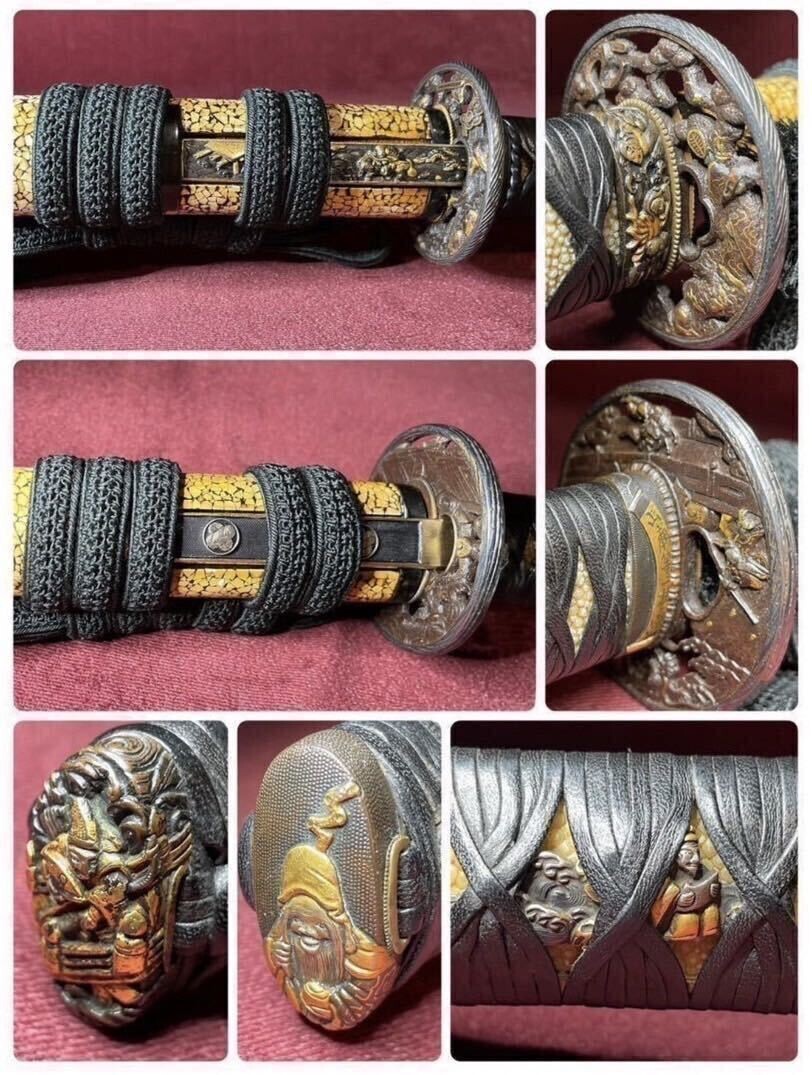
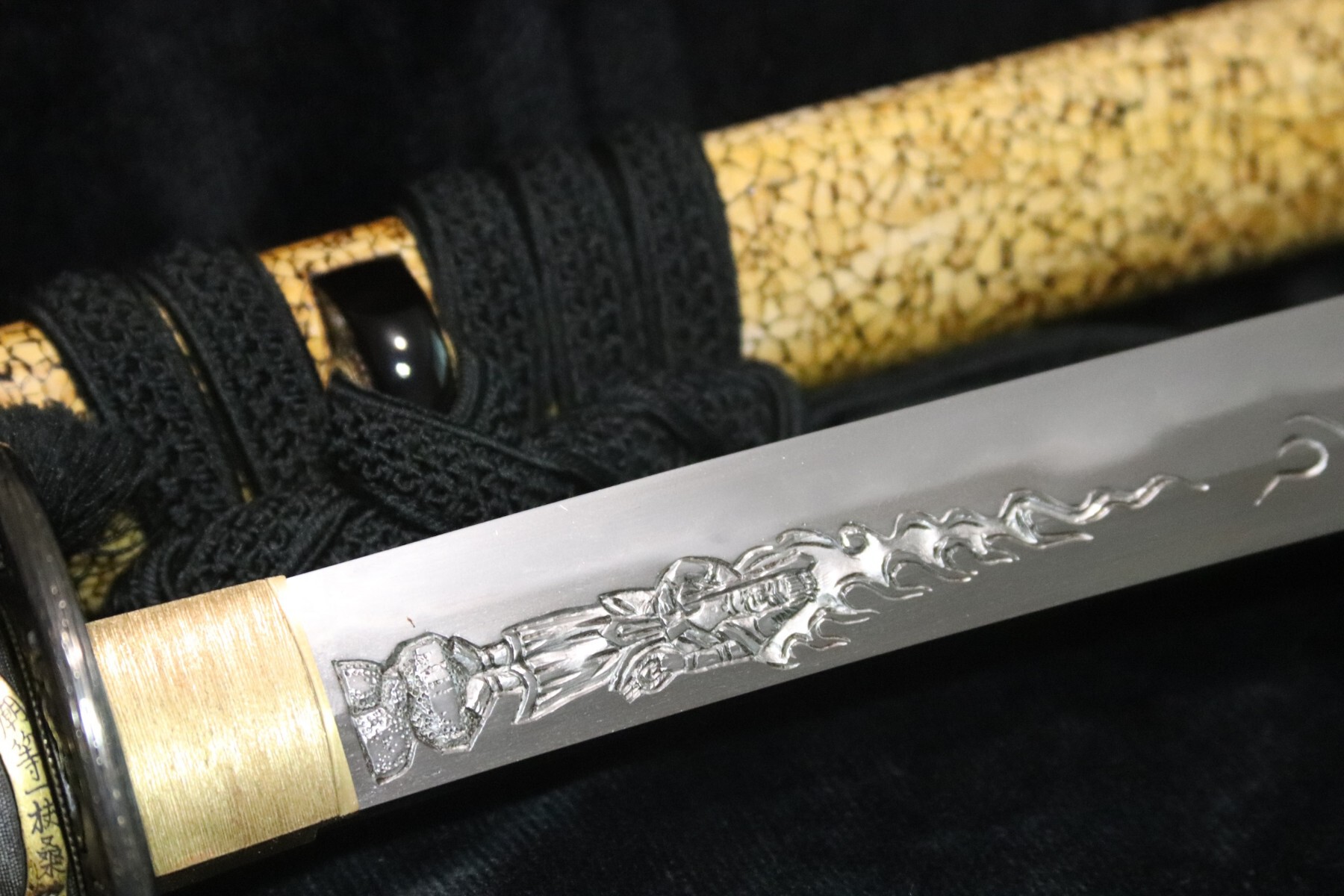
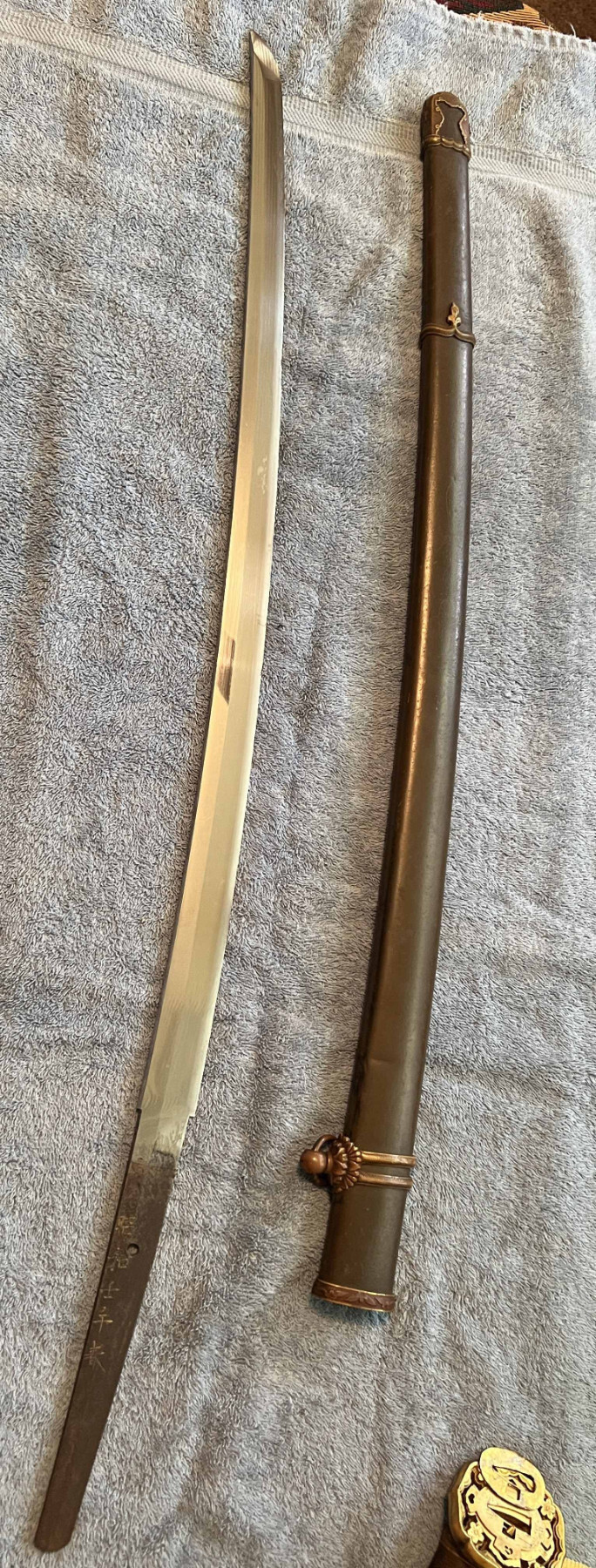
This is a daisho by Sakai Ikkansai Shigemasa with a beautiful paired eggshell lacquer koshirae. I’ve never seen a koshirae made to this level of quality, and some to whom I have shown the daisho think that the koshirae of a higher quality than the blades themselves (which says quite a lot). The handles are twist-wrapped with leather. Both blades also have kozuka. Both blades were made in 1971. The blades+koshirae come with additional kantei papers from Mitsuo Shibata. The dai is tremendously long, coming in at over 2.5 shaku. Both blades are in good condition, and have nice horimono. Daisho Type: Katana + Wakizashi Ubu, Suriage or O-Suriage : Ubu Mei: Sakai Ikkansai Shigemasa Papers: NBTHK Tokubetsu Hozon, Mitsuo Shibata kantei Era/Age : Gendaito Shirasaya, Koshirae or Bare Blade? : Matching daisho koshirae Katana (Dai) Weight: 999 g Nagasa/Blade Length : 76.5 cm Sori : 1.8 cm Mekugi-ana: 1 Width at base: 3.2 cm Width at tip: 2.4 cm Thickness: 0.6 cm Wakizashi (Sho) Weight: 548 g Nagasa/Blade Length : 48.4 cm Sori : 1.2 cm Mekugi-ana: 1 Width at base: 2.8 cm Width at tip: 2.4 cm Thickness: 0.6 cm More Information: This is a daisho with a beautiful paired eggshell lacquer koshirae. I’ve never seen a koshirae made to this level of quality, and some to whom I have shown the daisho think that the koshirae of a higher quality than the blades themselves (which says quite a lot). The handles are twist-wrapped with leather. Both blades also have kozuka. The blades+koshirae come with additional kantei papers from Mitsuo Shibata. The dai is tremendously long, coming in at over 2.5 shaku. Both blades are in good condition, and have nice horimono. Smith Details: Known Signatures: Shigemasa (繁政) Shigemasa (繁正) - initial signature Sakai Ikkansai Shigemasa (酒井一貫斎繁正) Tōtō Jōhoku ni oite Sakai Ikkansai Shigemasa kinsaku (東都於城北酒井一貫斎繁正謹作) Sakai Ikkansai Shigemasa (酒井一貫斎繁政) Sakai Shigemasa hori-dōsaku (酒井繁政彫同作) Civilian Name - Sakai Hiroshi (酒井寛) He was born on August 19th 1905 as third son of Sakai Yasujirō (酒井安次郎), the younger brother of Miyaguchi Shigetoshi (宮口繁寿), in Shizuoka. In 1925 he started his apprenticeship as a swordsmith under Kasama Shigetsugu (笠間繁継) and became independent in 1932. During World War II he worked for the forges “Nihontō-tanrenkai” (日本刀鍛錬会) and “Ōkura-Nihontō-tanrenjo” (大倉日本刀鍛錬所). During this period, he forged ten tantō for Admiral Yamamoto Isoroku (山本五十六, 1884-1943). He died 1995 at the age of 91. Like his master Shigetsugu, he was an excellent horimono carver. Kantei Details: The additional kantei papers come from Mitsuo Shibata, who was a student of Fujishiro-sensei and of Japan’s foremost sword appraisers. He was a member of many Japanese sword appraisal organizations, including the Sword Appraisal Committee for the Japanese Agency for Cultural Affairs and the NBTHK. Sword Location : Seattle, WA Will ship to : US (can discuss for overseas) Payment Methods Accepted : Bank Wire (open to discussion) Price and Currency : $15,500 USD



 3 points
 -
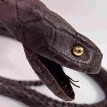
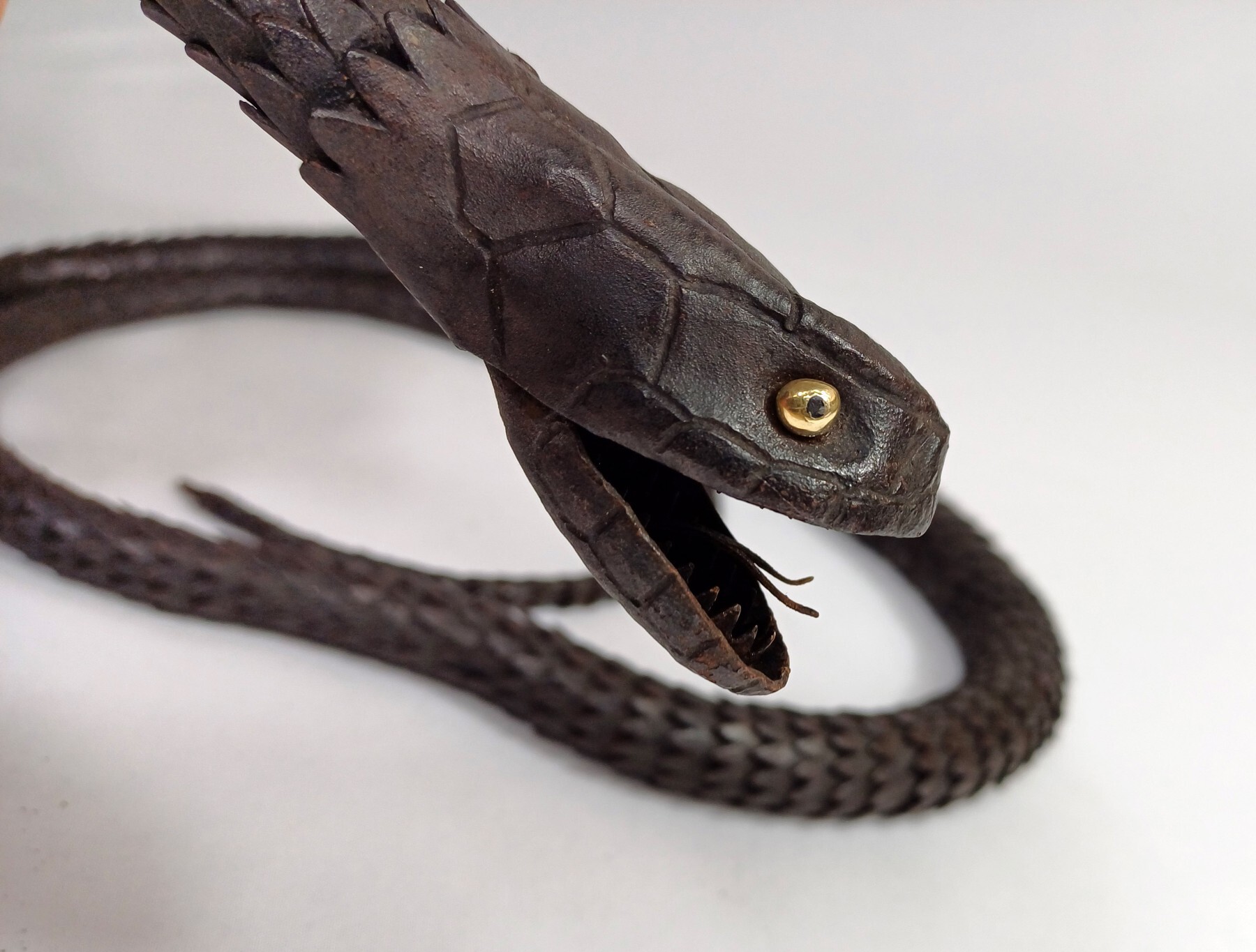
new snake, very flexible, but already planning some changes, mainly around the head
 3 points
 -
Charlie, where do you train? I am a godan in Toyama Ryu Battodo and am the chief instructor at a dojo here in New York City (same website as the article I shared). If you want to PM me I would be happy to help answer some more questions. I may even know your teacher.3 points
-
https://web.archive.org/web/20210123052753/https://blog.yuhindo.com/ladder-theory/2 points
-
Here you go..


 2 points
 -
If the price is reasonable it would be a fine first sword. Good Kai Gunto mounts and nice looking older blade, many of us started with far less glamorous examples.2 points
-
it's been a while. i've been trying to sort out a legal issue related to the art, it's a jungle. But I found time for new jizai okimono . .2 points
-
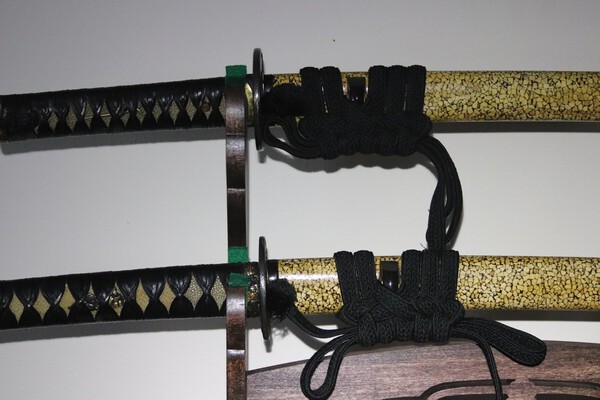
Additional Photos:

 2 points
 -
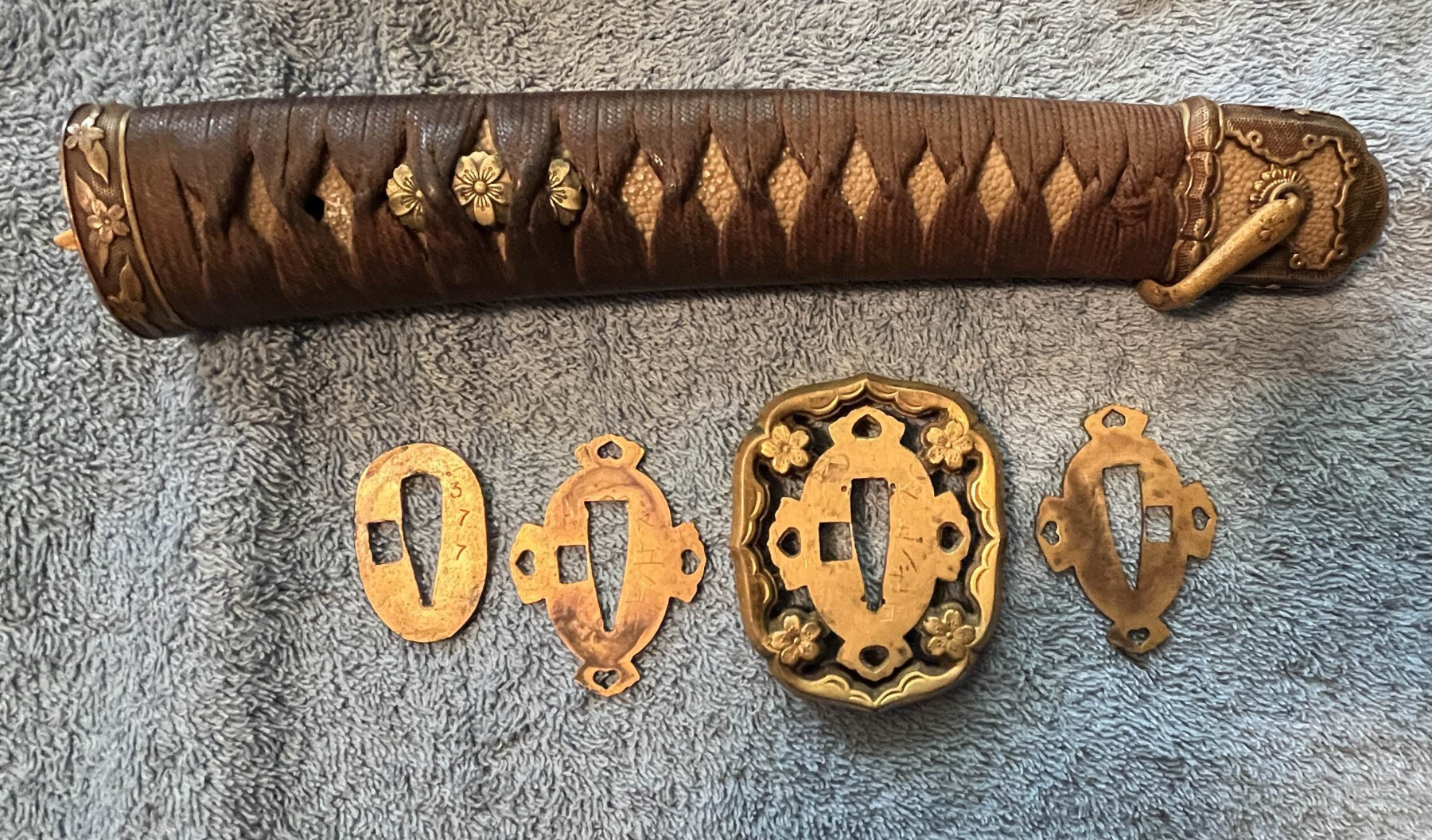
These look like a modern design from sword part suppliers https://www.ebay.com/itm/256749986998 from China A little more exotic also from China. With a lot of Chinese reproductions they are often based on older genuine published designs - I haven't found the original piece yet though.2 points
-
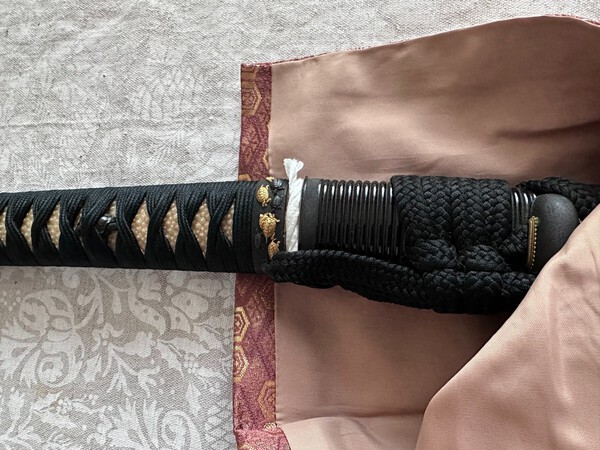
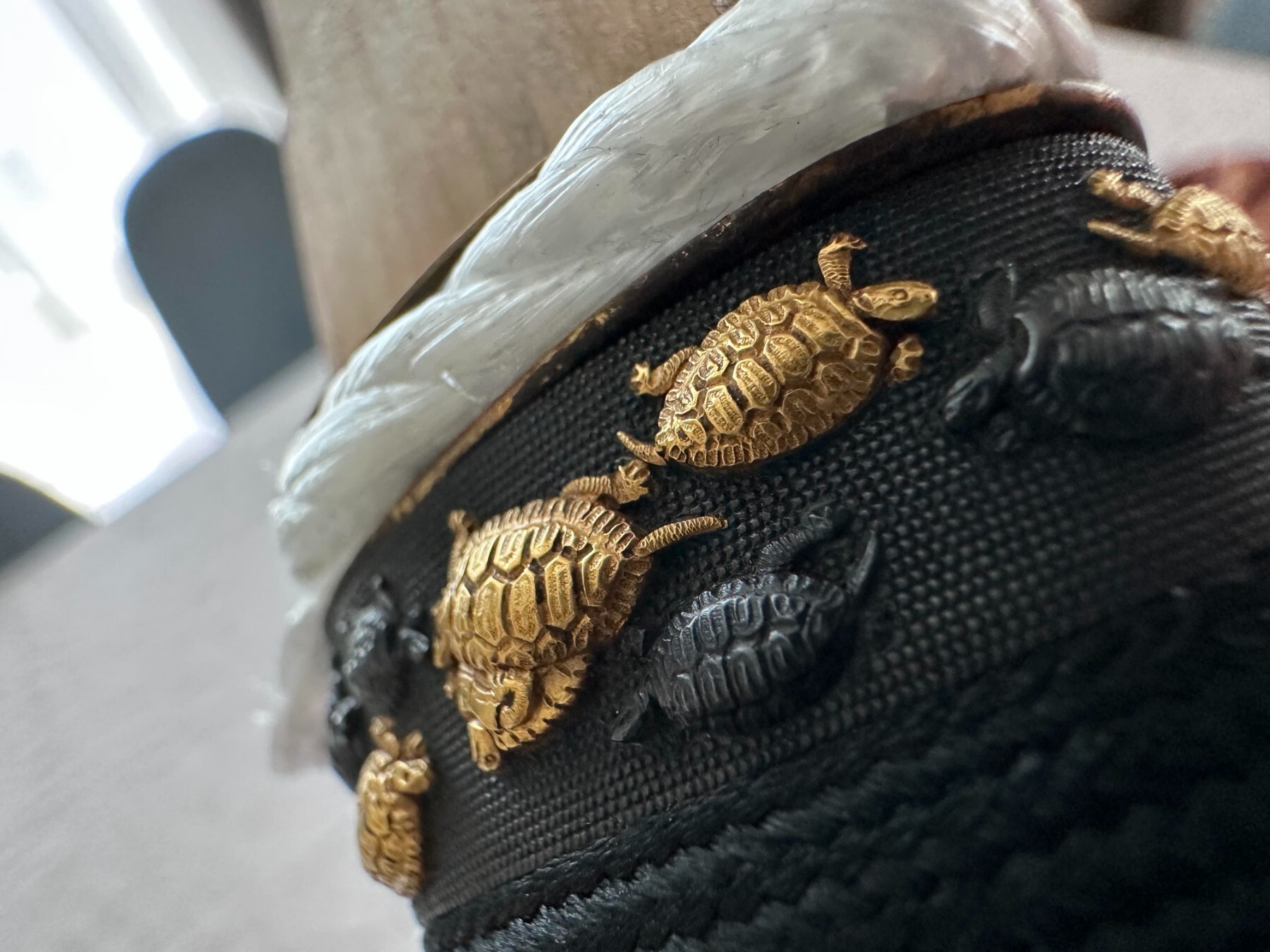
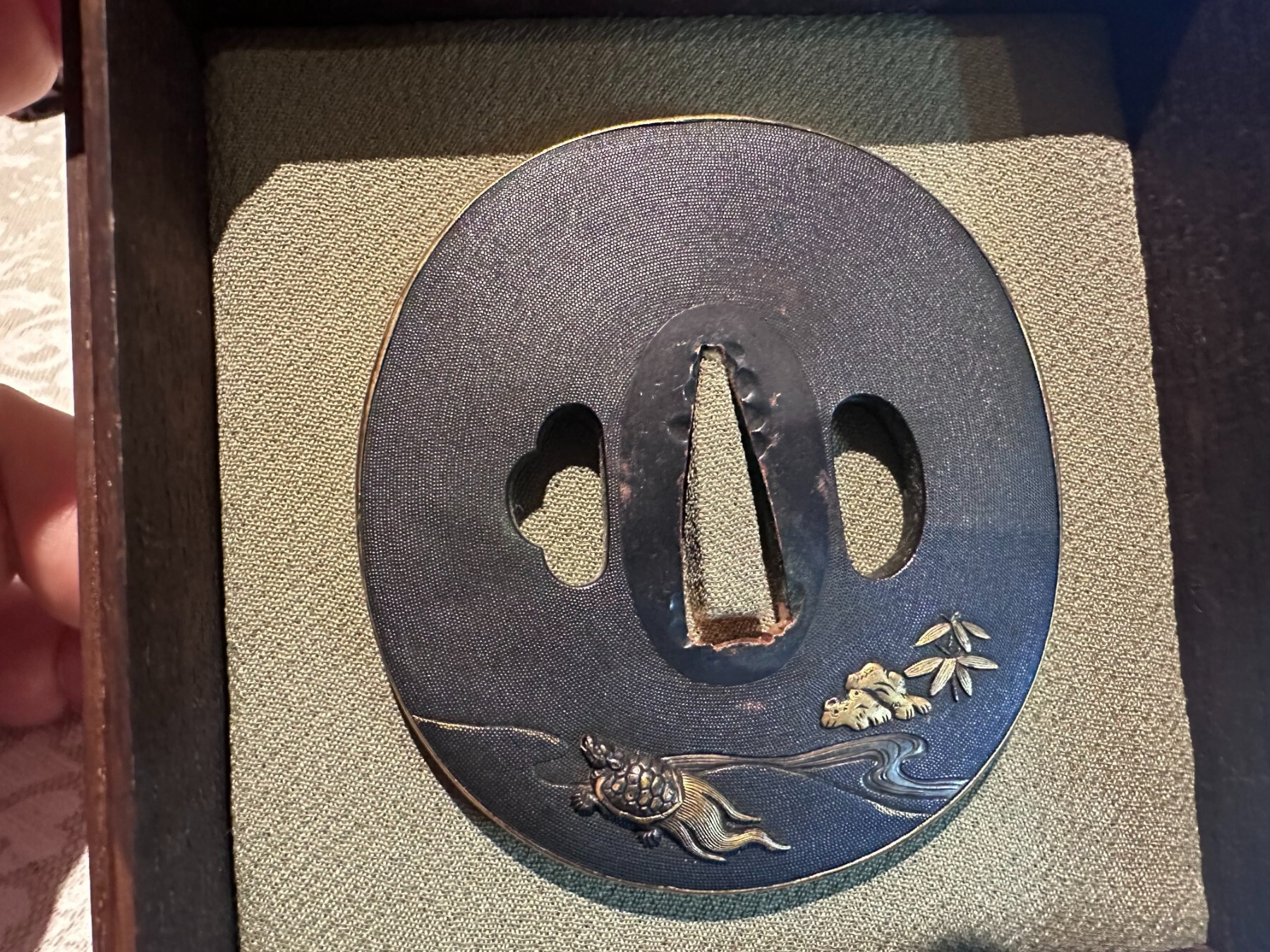
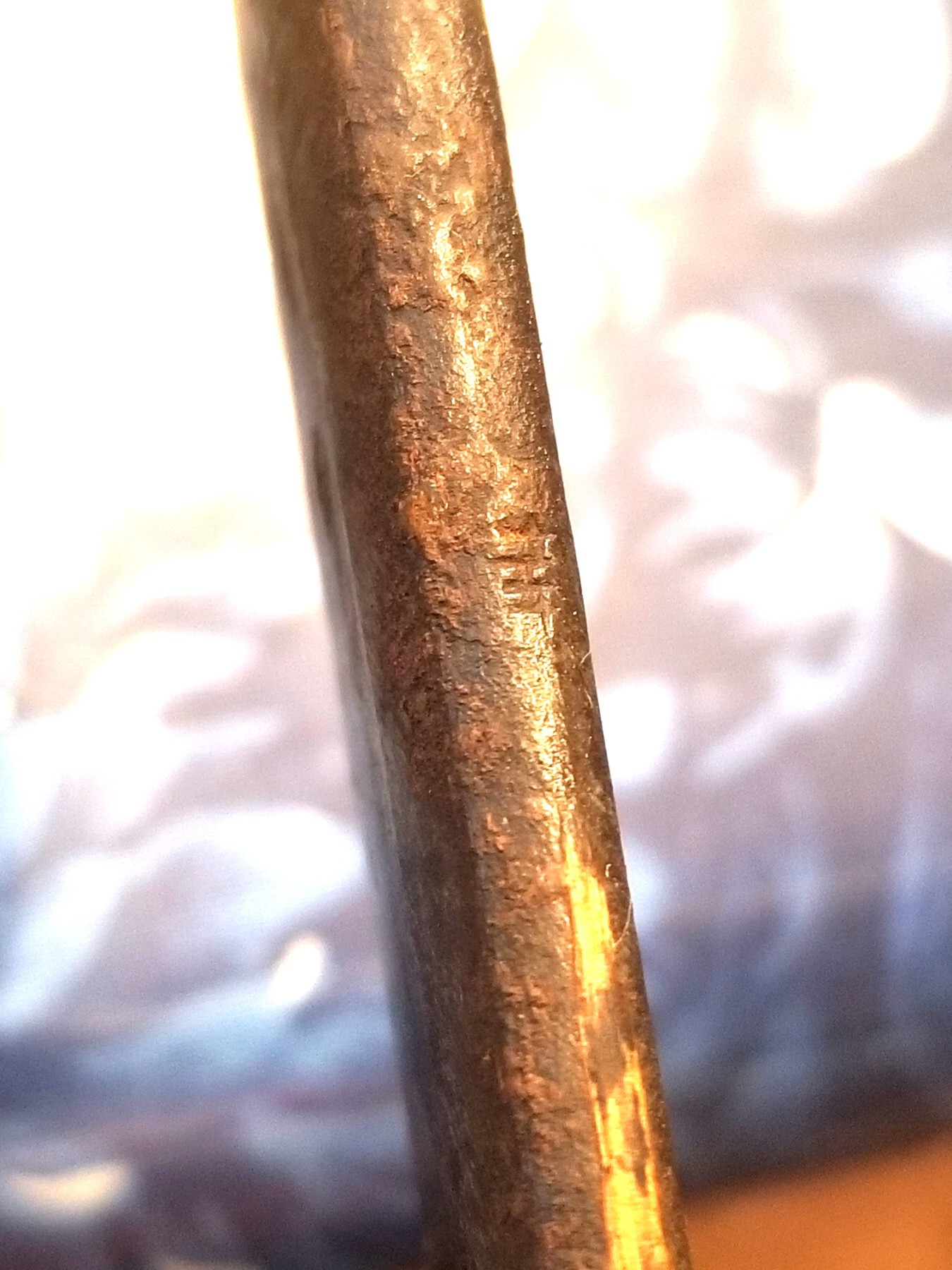
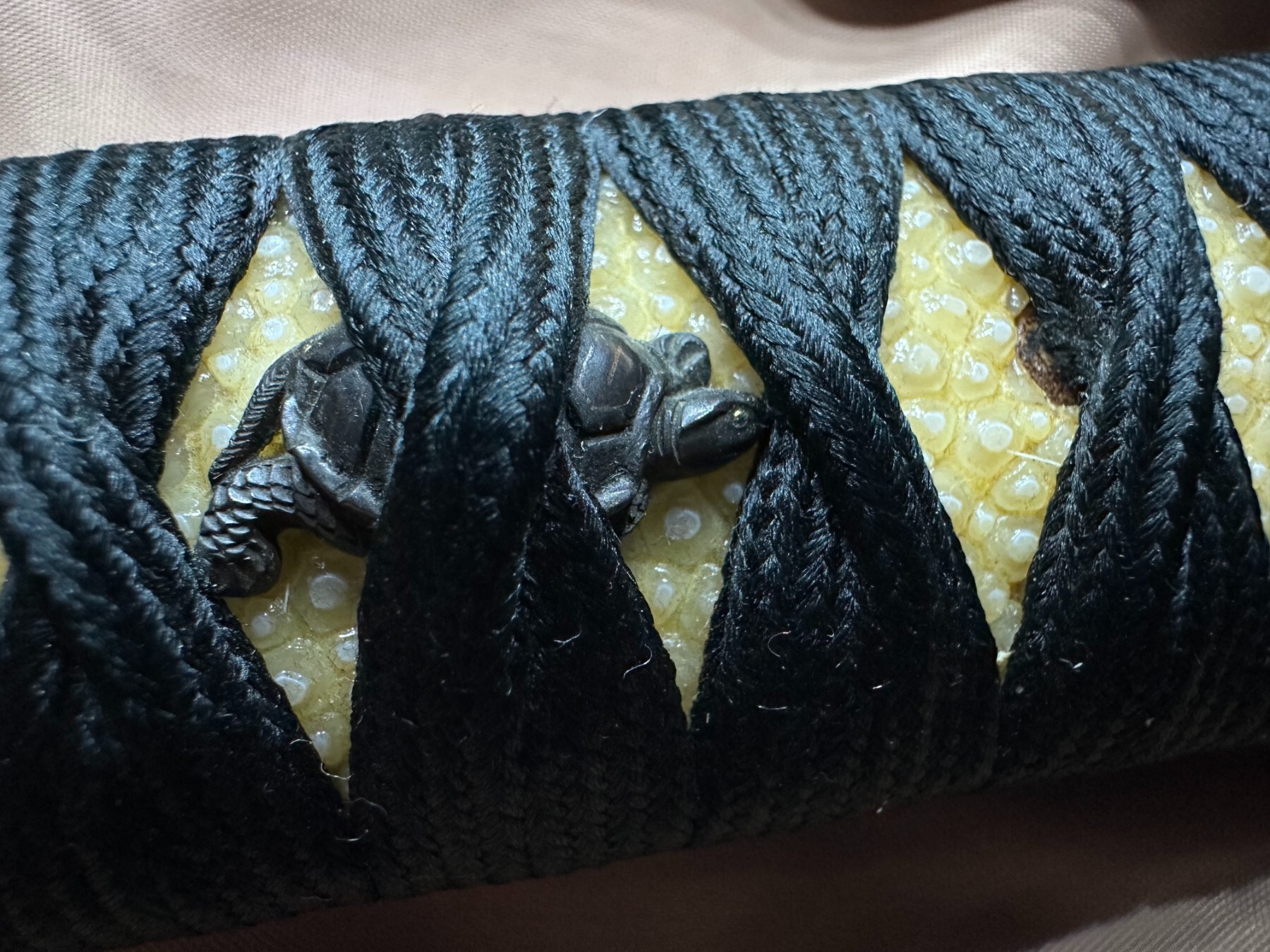
Darcy would have loved this. He liked turtles and used one as his avatar for a long time. That f/k is pretty exceptional. Is the fuchi signed?2 points
-
Turtles, all the way down!
 2 points
 -
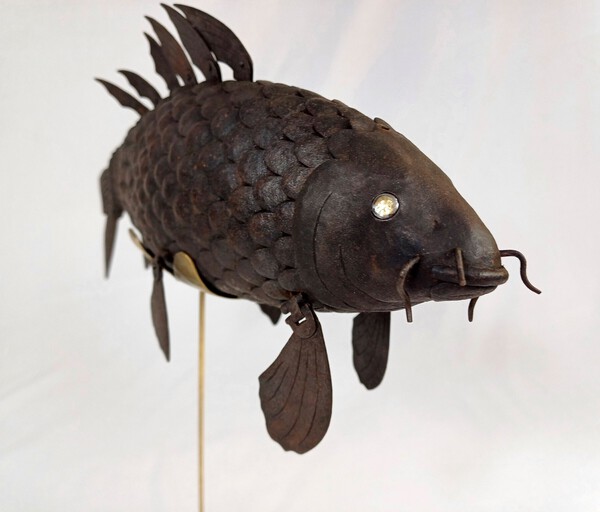
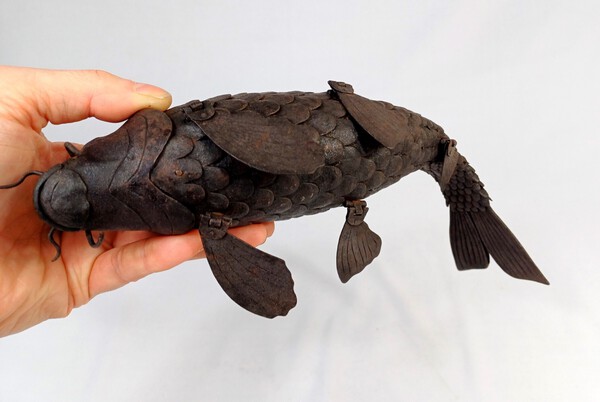
KP, I don't recognise MF it would be nice to turn a hobby into money, and my fish: steel body

 2 points
 -
For now I only make snakes and fish. I think I like this dragon scale pattern. insects are probably on a different level. I'm slowly thinking about the dragon, but everyday problems bother me a bit Another snake , material: body (steel), eyes (brass), and I have to solve some technical problems in the case of the dragon, and some chemical ones


 2 points
 -
I met a dealer from London, he's not interested. After several attempts to contact people from Jizai Okimono's circle, I believe that it is a very closed group. Not open to new things, new people. It took me a while to achieve what I have, years of trying. I started with the snake. I modeled it on the snake from the British Museum, from the photo. I made it too big :). My first snake , material: body (steel), eyes (silver), joints (secret, I can't just do that ) articulated.avi

 2 points
 -
The better Jizai Okimono I have seen make all the pressed soft metal ones look like toys. Iron that feels alive. I've seen some of the best, and they are just simply mindblowing. These pressed brass and riveted ones are in the trinket leagues. I'd say the good to excellent ones feature carving and substance, whereas the thin pressed brass ones are in the entry level leagues. Love to see some pics. Here's some smaller and simpler ones that are still in the higher grade.2 points
-
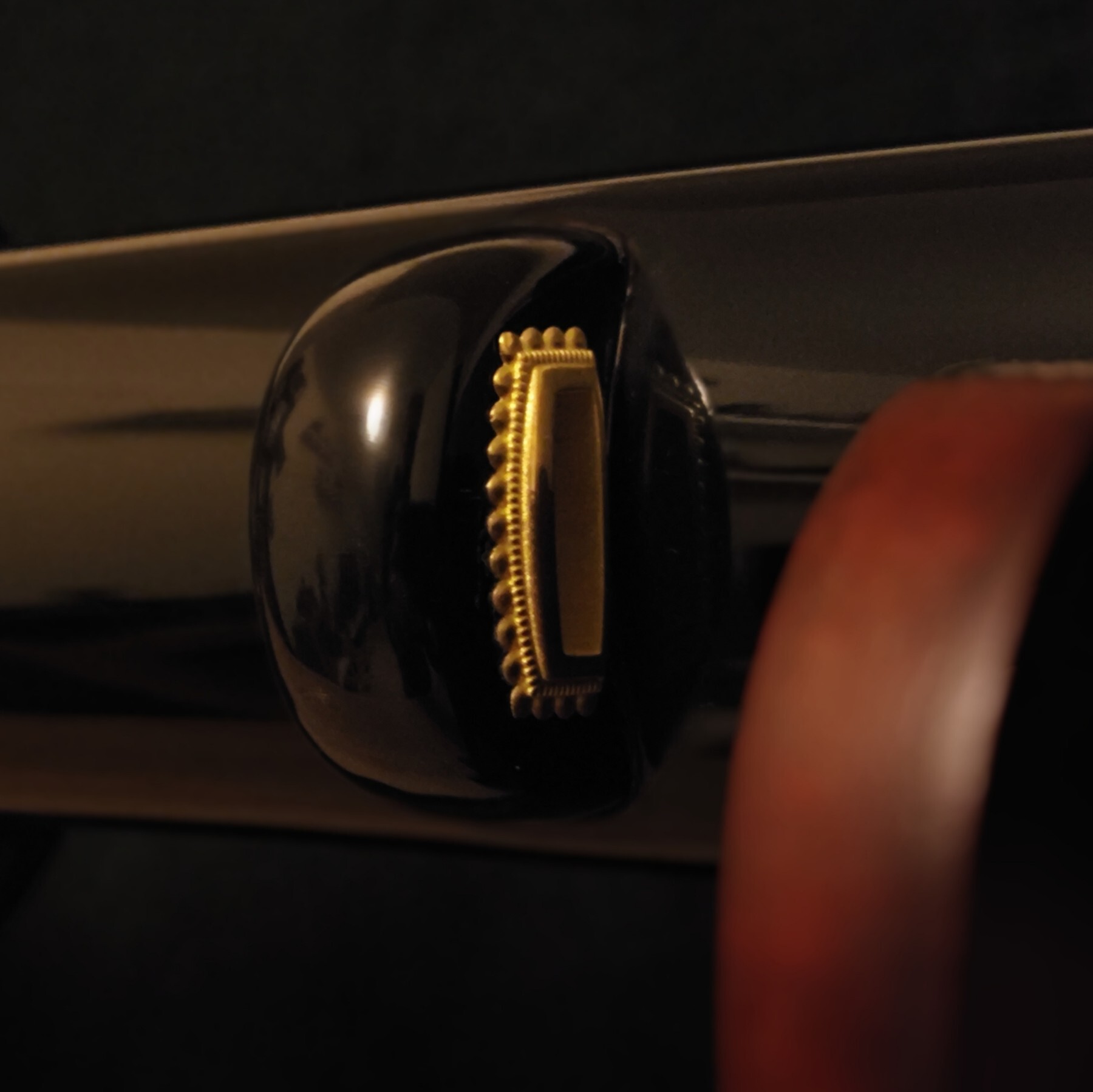
Hi all, This is from a brand new koshirae. At first I felt that something was off with these shitodome... Didn't know why. Now I realize that it's because I have never seen a rectangular shape shitodome on antique/Japanese made koshirae! Have you?
 1 point
 -
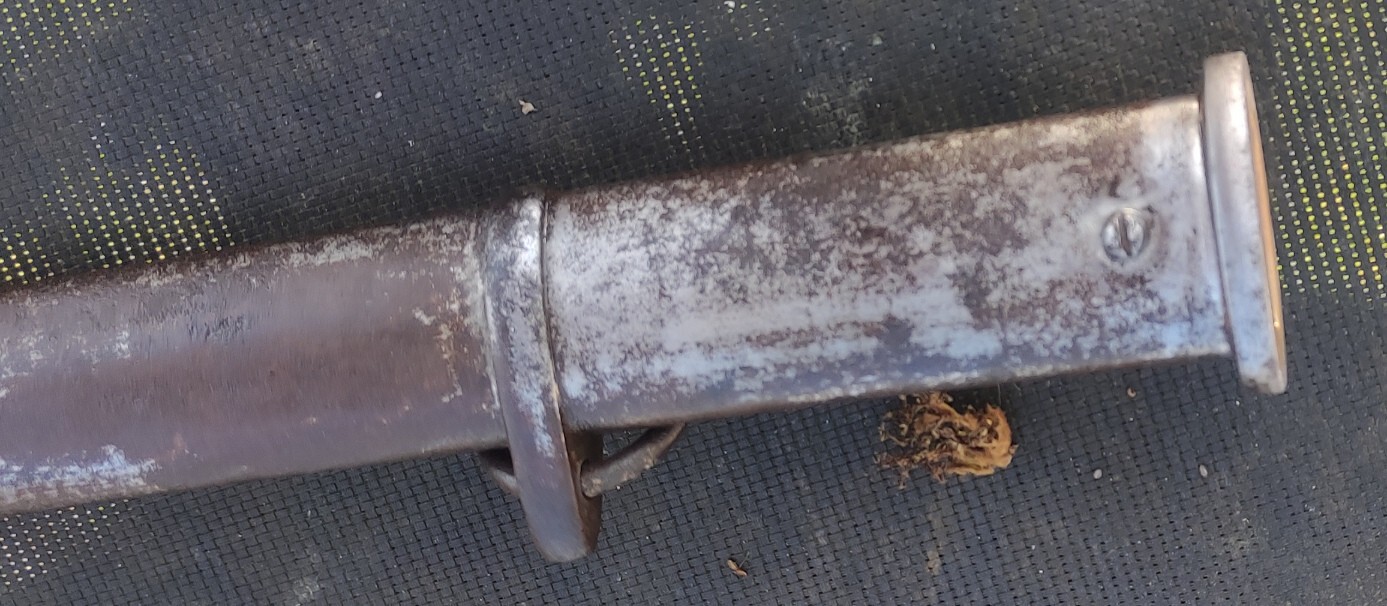
Was logged as ARMY MOUNT 26 3/4 MANCHURIAN STEEL #KO573-1942- Comment and Enjoy
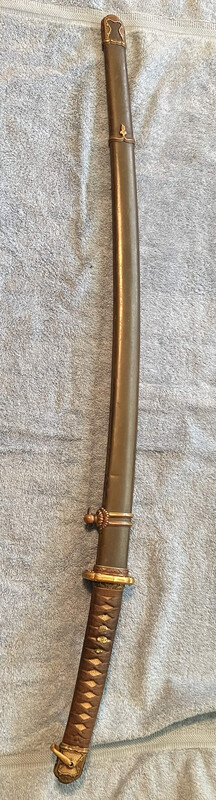
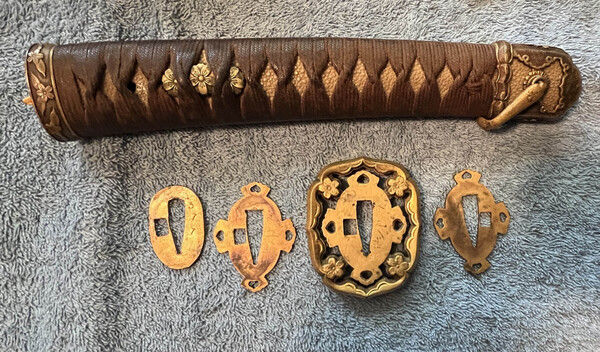

 1 point
 -
Hi fellas, This came with a sword I recently purchased. I’ve compared it with other examples by Mitsutoshi, and honestly, it doesn’t feel like a gimei—but I’d love to get a second opinion. Thanks a lot!


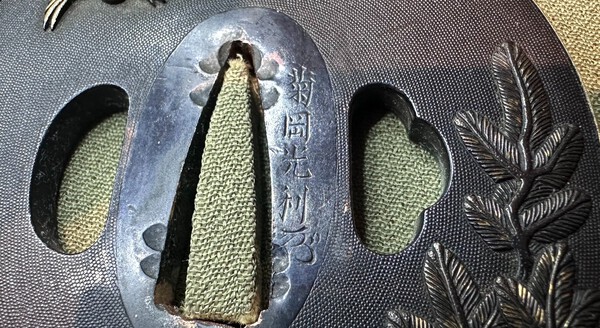 1 point
 -
Generally speaking, the criteria is as follows below. The nature of the criteria lends itself to more value as it rises, however as has been pointed out, it is no guarantee of and vast ranges of value exist within any given paper level. Hozon Token 1) Edo and earlier blades with correct mei, or mumei blades on which the time period, kuni and group can be identified, may receive Hozon paper. 2) Blades that meet the criteria given above can receive Hozon paper even if they are slightly tired or have kizu, as long as those may be permissible in their appreciation. 3) Repair on jiba is permissible, unless it significantly impairs the beauty of the blade. 4) Blades made in the Meiji period and later can receive Hozon paper only when the blade is well made and zaimei. 5) For Nambokucho and earlier zaimei blades by famous smiths, re-temper can be permissible if the blade is valuable as a reference, and if the jiba and nakago are sufficiently well preserved. However, this will be documented as "yaki-naoshi" in the paper. 6) Blades are put to "reservation" (horyu) if a decision could not easily be made on the authenticity of the mei. This also applies to mumei blades in which an attribution is difficult to make. Tokubetsu Hozon Token 1) Blades with Hozon papers, good workmanship and state of preservation can receive Tokubetsu Hozon paper. 2) Blades with the following conditions are excluded from point 1. a. Re-tempered blades may not receive a Tokubetsu Hozon paper, as a rule, unless they date not later than Nanbokucho, are zaimei, by famous smiths, if the blade is valuable as a reference, and if the jiba and nakago are sufficiently well preserved. However, this will be documented as "yaki-naoshi" in the paper. b. Muromachi and Edo period mumei blades may not receive a Tokubetsu Hozon paper, as a rule. However, if a blade is attributable to a famous smith and in excellent condition it may receive Tokubetsu Hozon paper. Juyo Token Blades with Tokubetsu Hozon paper can receive Juyo if one of the following points is true: 1) Blades of extremely high quality workmanship and state of preservation, and judged as close to Juyo Bijutsuhin, may receive Juyo Token paper. 2) Blades that meet the criteria given above and made in or before Nambokucho may receive Juyo Token paper even if they are mumei. Blades made in the Muromachi period have to be zaimei and blades from the Edo period and later, as a rule, have to be ubu and zaimei to receive Juyo Token paper. Tokubetsu Juyo Token Among Juyo Token, the ones of excellent quality and superior condition, judged as the same as the top level Juyo Bijutsuhin, or conceivable as equivalent value as Juyo Bunkazai, may receive Tokubetsu Juyo Token paper.1 point
-
You need to apply ladder (fallacy) theory to each blade as an individual. For example, I have a sword (now my daughters) that was taken from Hozon to Tokubetsu Juyo. I also have a Masayuki sword that will never pass THozon and I still have Juyo blades that have hopes of reaching Tokubetsu Juyo, Tokubetsu Hozon that may reach Juyo. There is a financial upgrade but it is always at an individual level in regards to the sword in question. The complexity to this system is far, far greater and applies directly to learning and patient development of one's understanding. If you visit the NBTHK museum in Tokyo now you will see Juyo Kiyomaro on display, you will see Juyo swords from Kiyomaro that will leave you asking "how can this be Juyo?" And then you will see swords from Kiyomaro that make you ask "how can this not be TJuyo or Jubi?"1 point
-
I believe it to be an unside down NAN. We have 3 other 1942 blades with the NAN on the mune. They are later in the year, which is why I said this is the earliest known NAN stamped Mantetsu. They are YA 677, YA 702, and YA 1048. Autumn '42 YA 677 was the clearest Autumn YA 702 was poorly stamped. Autumn YA 1048 was likewise poorly stamped
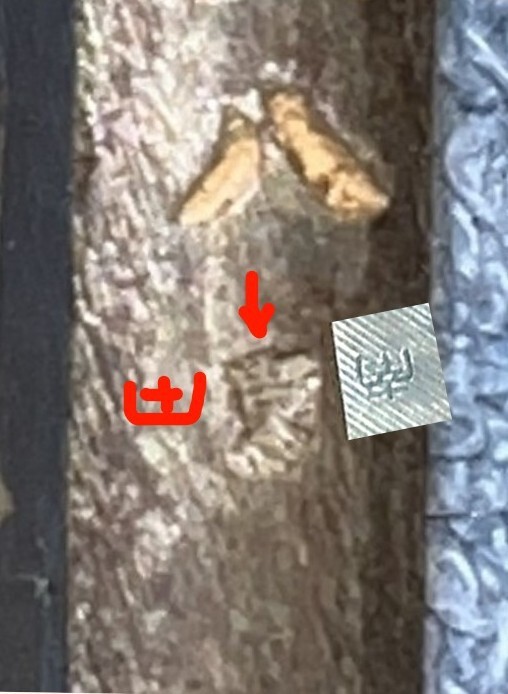
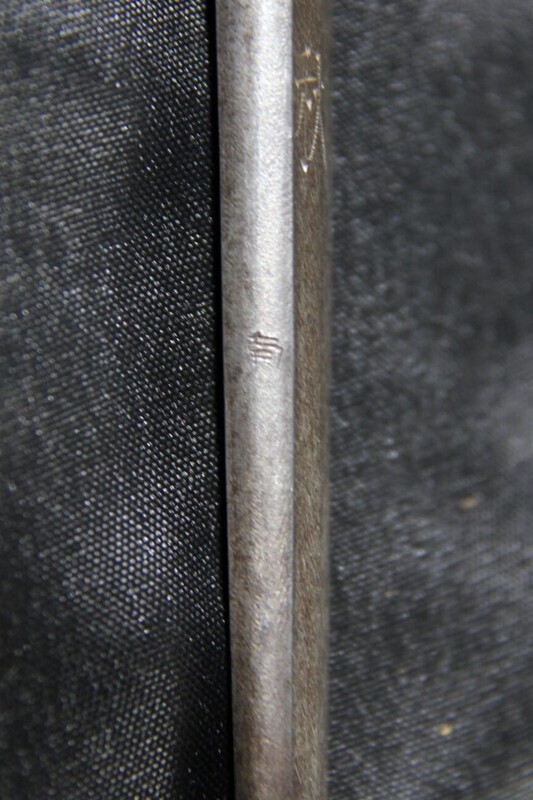
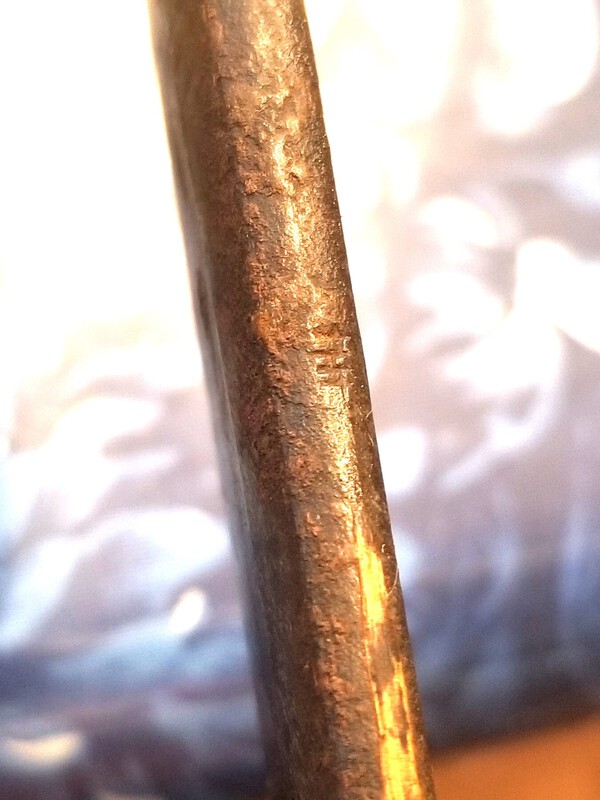
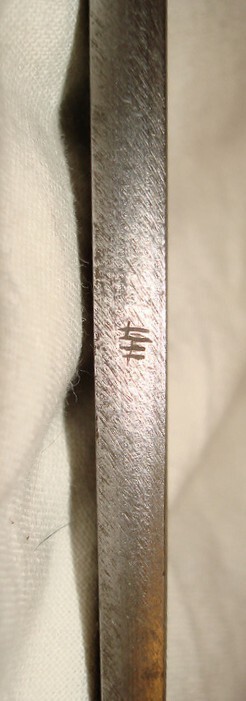 1 point
 -
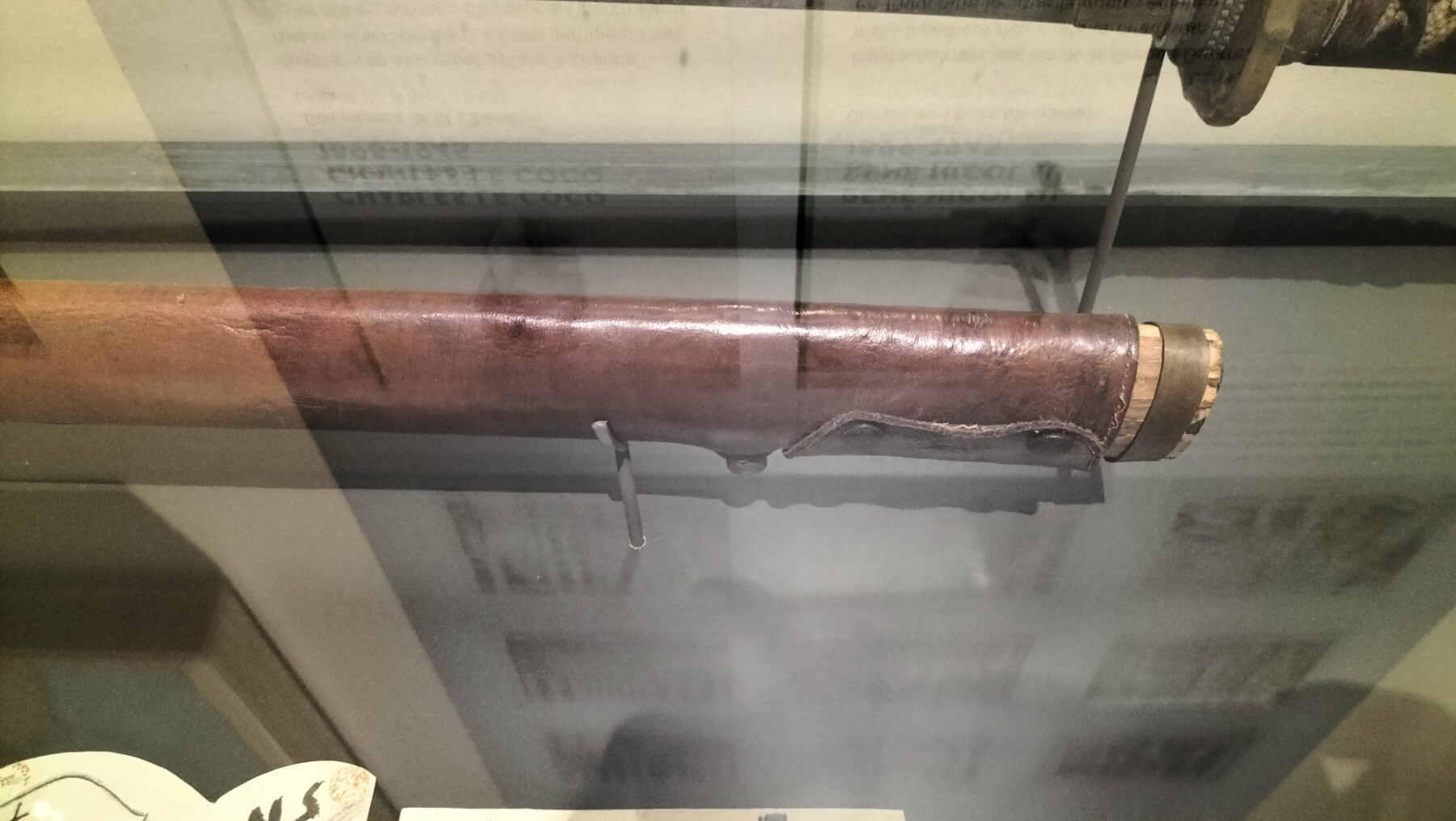
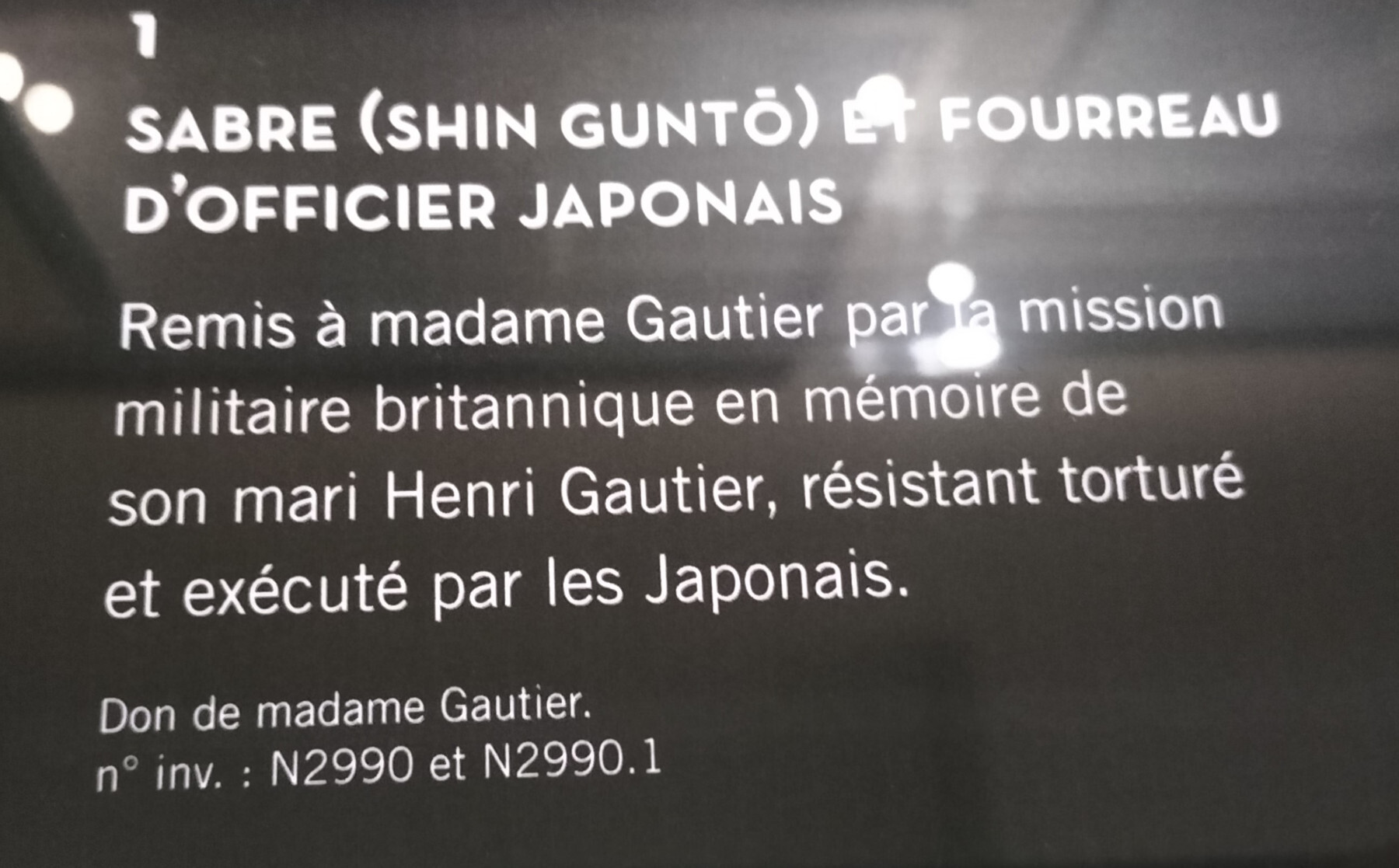
Maybe its 'oiled' but just kept in 'as found' condition which would be ok by me. According to AI, text reads..... The text on the image describes a Japanese officer's sabre (Shin Gunto) and scabbard, which was given to Mrs. Gautier by the British military mission in memory of her husband, Henri Gautier, a resistance fighter who was tortured and executed by the Japanese. The item was donated by Mrs. Gautier and has the inventory numbers N2990 and N2990.1.1 point
-
Absolutely love them1 point
-
Thanks!! That's the thing, me neither... So I wonder if this design is historically accurate or not... Thanks again for looking into it 😉1 point
-
This should be an authentic item.I once saw another sword with the same badge at a certain merchant's place. The merchant claimed that it originated from the Sakhalin colony. I can't be sure whether his statement is correct or not, but the badge does look like some kind of simplified Sakhalin badge. However, I also feel that the craftsmanship is likely to be of Chinese origin, perhaps from the Beiyang period. I hope this can give you some ideas. If you find the correct answer, please do reply to me. I'm very curious about this.1 point
-
https://www.slam.org/collection/objects/8677/ - can someone close to Saint Louis lend the Museum a tape measure please. Just doing some basic image comparison the height [if indeed it is 44 mm] when compared to the width shows a difference of about the rim thickness - at a guess 3 mm? I don't see the guard being 44 mm in height to start with, it is much larger than for a tanto wouldn't you say? I don't think we can trust many of the sizes given by this museum. I look forward to seeing what the museum has to say - Dimensions 1 3/4 x 1 1/8 x 1/8 in. (4.4 x 2.9 x 0.3 cm)1 point
-
No, you can forge with stone tools and stone anvil.1 point
-
It says WAKIZASHI.1 point
-
Cute little bastards
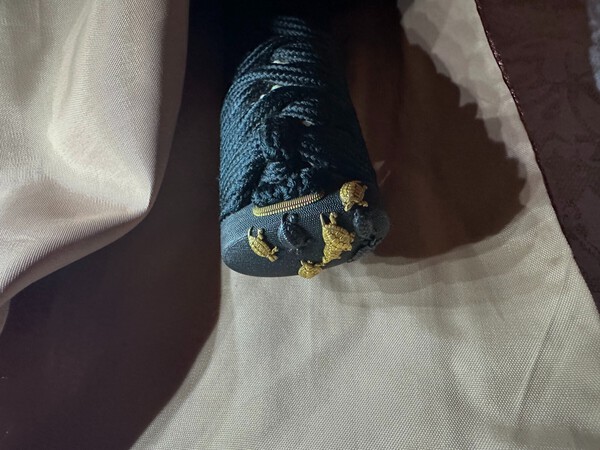
 1 point
 -
I'd say if you're a beginner an iaito is sufficient and as they're not steel they're light.1 point
-
Thanks, Iberian! The Showa stamp was a civilian inspection stamp of the Seki Cutlery Manufacturers Association. Your sword was likely made in 1940 or '41, according to chart survey data. There are a number of in-depth articles written by Mal Cox on the WWII smiths. Some links for download: Japanese Naval Swords, Part I Japanese Naval Swordsmiths and Workshops, Part 2 Showa Swordsmiths of Fukuoka, Kyushu, and Kokura Area Seki Toki Swordsmtihs Kaga no Kuni Swordsmiths Showa Swordsmiths of Ehime Prefecture Japanese Swordsmiths of Gifu - 1937 Tokushima Swordsmiths Kanemichi and Kojima Tosho Family Ichimonji Minamoto Amahide You will learn about Arsenal stamping in the article: Stamps of the Japanese Sword1 point
-
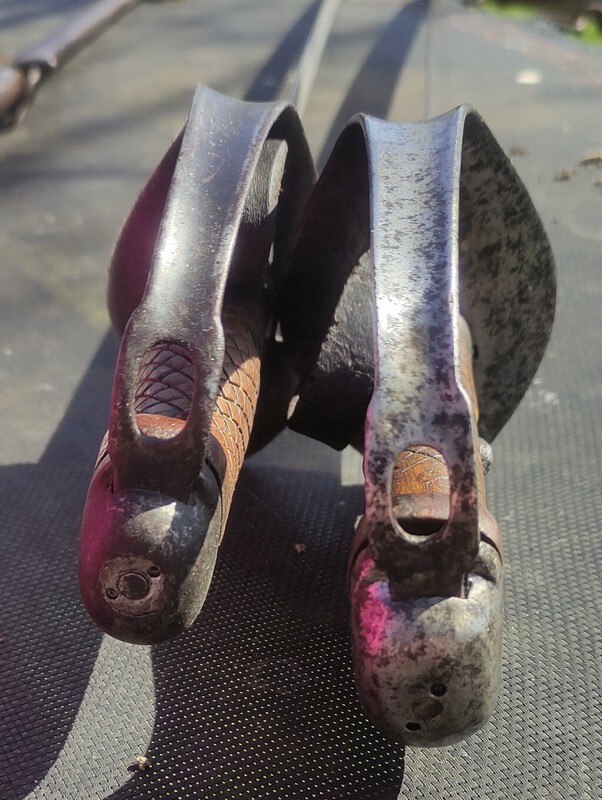
And the last ones.
 1 point
 -
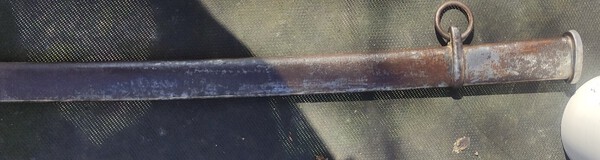
And more.



 1 point
 -
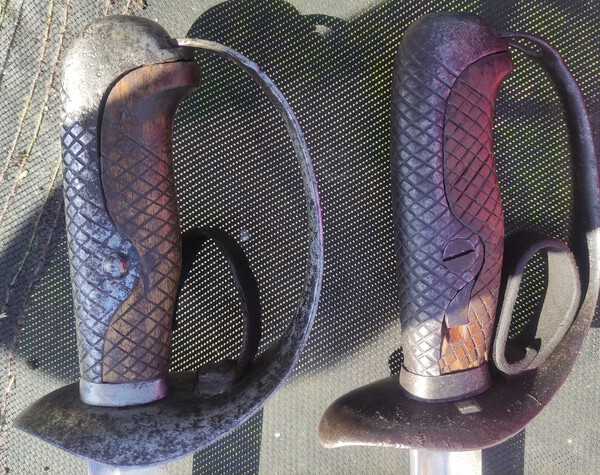
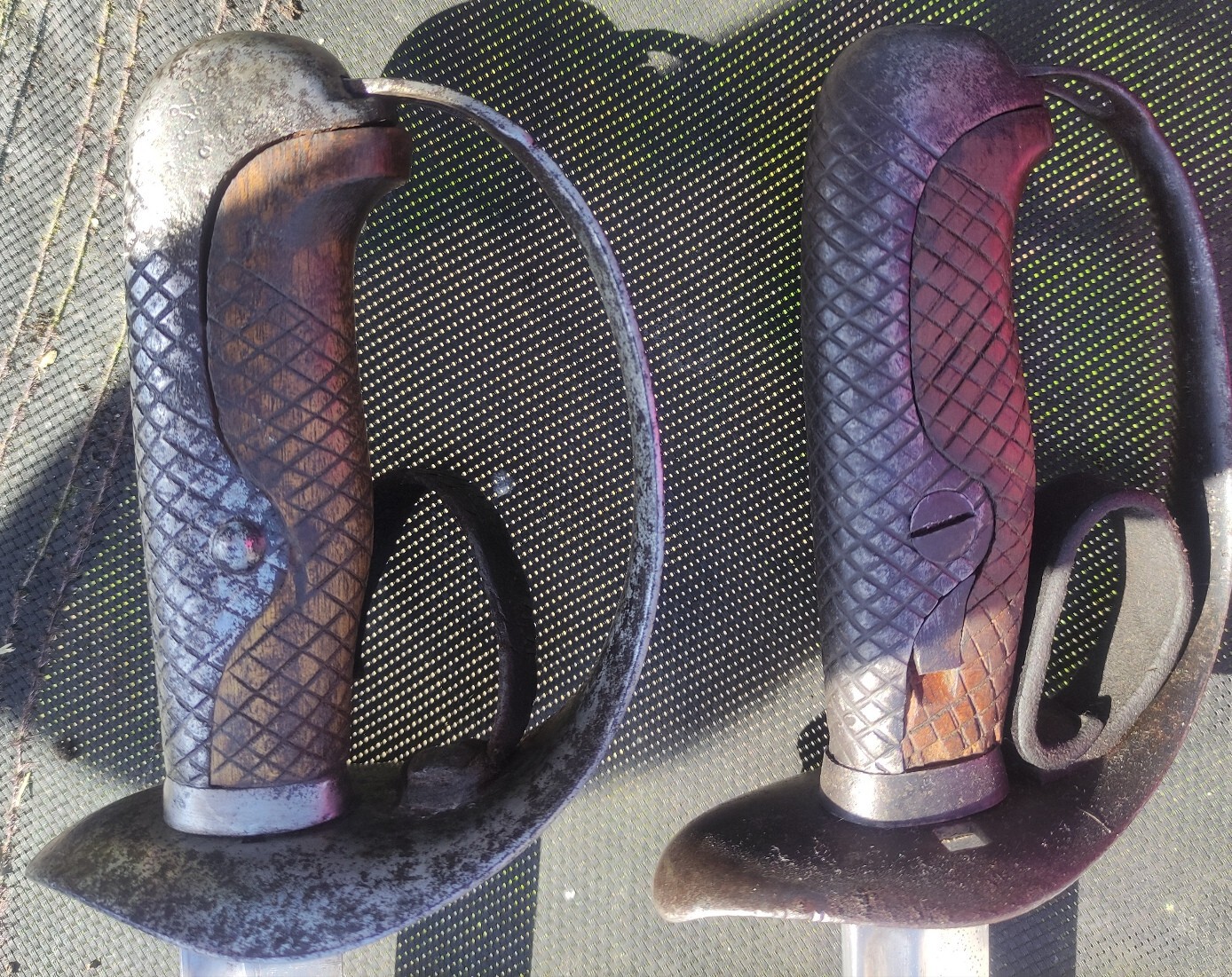
And the cleaned up pictures next to a type 32 KO.


 1 point
 -
I dont believe so, just a perk of being the king. The was another matching dagger to the one posted only it was made from gold. Everywhere gold........this boy king was smothered in gold and riches. While gold was obviously coveted, glass was one of the other luxury treasures owned by this king that is often overlooked based on how common glass is in modern society.1 point
-
If other more knowledgeable members chime in and have no issues with the signature, I would say that it is worth sending to the NBTHK for appraisal, especially if you are already in Japan where it is a much simpler process.1 point
-
Hi Charlie, If you are set on buying a shinken I recommend you read this article: https://www.brooklynbattodo.com/reading/5-6-2021/how-to-buy-a-real-sword Beyond that, I would suggest with respect that if you are asking these questions you probably should not be buying a shinken just yet, and certainly not a Japanese blade you’ve never held. What style / school do you practice? What is the nature of your tameshigiri curriculum? What kind of targets are you using? What is your plan for sharpening? These questions can have a big impact on what kind of sword is appropriate to buy — in terms of both the materials and the geometry. As for the blade you’ve described: the lack of taper in the kasane is curious and has a significant impact on balance. I would not buy a sword like this sight unseen if I were asking the same questions you are. My guess is this sword will be tip heavy, which is not ideal for real use. 900 grams is also quite light for a sword you want to cut with as Jussi mentioned. 1000-1200 grams is a more appropriate weight for a shinken of that length. You also didn’t mention if it has a bohi or not. At that weight I would expect the sword to bend easily, especially if it has a bohi. In my experience, most practitioners unfortunately end up using blades that are not ideal for one reason or another, so I urge you to take it one step at a time. I’d be happy to answer more questions after you read the article.1 point
-
Hi Charlie, in my experience, most IAIDO teachers will not use or even recommend sharp swords for it. Basically, it is practiced with BOKKEN, and only some advanced masters may sometimes use sharp swords in IAIDO demonstrations for show. Also, there is no cutting involved in IAIDO. A blade without much taper in the KASANE will have a tendency to wobble when a stroke is stopped mid-air. TAMESHIGIRI is another thing, and there, wide heavy blades are used by some experts.1 point
-
Thanks Steve, that's perfect! So, you've really got something there, in my world. The serial is RA 768 which puts it in the first run of blades in FY '42. It is the earliest known Mantetsu blade, now, with the "half-way inspection" mark "W" or "M" and the earliest known with the "NAN" stamp (Nan-Man Army Arsenal Supervisory Section). The sword in Suya Shoten fittings, which is known to have made quality swords/fittings, and comes with the custom clasped hands sarute. Congrats!1 point
-
Hi Henry, Unless your shirasaya has been messed with it probably needs nothing and you should leave it alone. Post a picture if you're not sure. Grey1 point
-
Looking through various sources, one additional possibility is a very well used 付け包丁. Kamaboko knife. Wrapping might be a later addition to strengthen a damaged handle. Edited to add: This post on KKF has some examples of old style Japanese kitchen knives as depicted in woodblock prints for future reference https://www.kitchenknifeforums.com/threads/Japanese-web-info-list.55062/page-7#post-10803811 point
-
I'm not totally convinced it's a takohiki, for the following reasons: It's very thin, most of them I've seen are around 3mm at the spine. It's possible it was sharpened down, but I would expect to see more of the original width remaining at the neck in that case. You said the ura side was flat if I'm not mistaken, and takohiki, like yanagiba and other traditional type sashimi knives, have hollow grinds on the ura side more or less always (searching hamaguri grind will get you some examples). The wrapped handle is atypical, normally on kitchen knives you see ho wood with either a smooth buffalo horn or metal ferrule, or plastic on postwar Showa period and later knives. In illustrations and prints from the Edo to Taisho periods I've kitchen knives with a very short section of wrapping, but only a few rows max. The reason for the preference for smooth handles is clear if you imagine trying to get fish slime out of the wrapping. Is it laminated or monosteel? Usually sashimi knives are nimai laminated. All of that said, it could very well simply be an atypical example of a takohiki, these things do vary.1 point
-
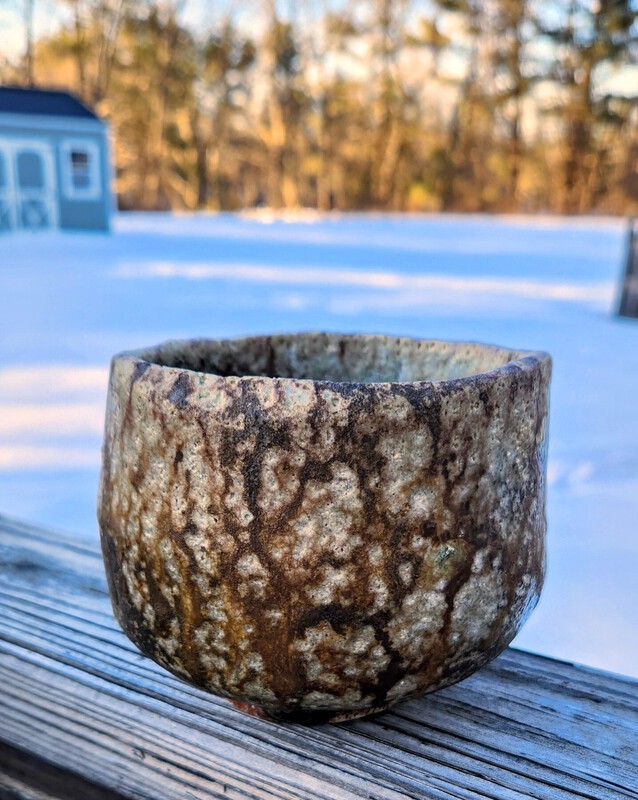
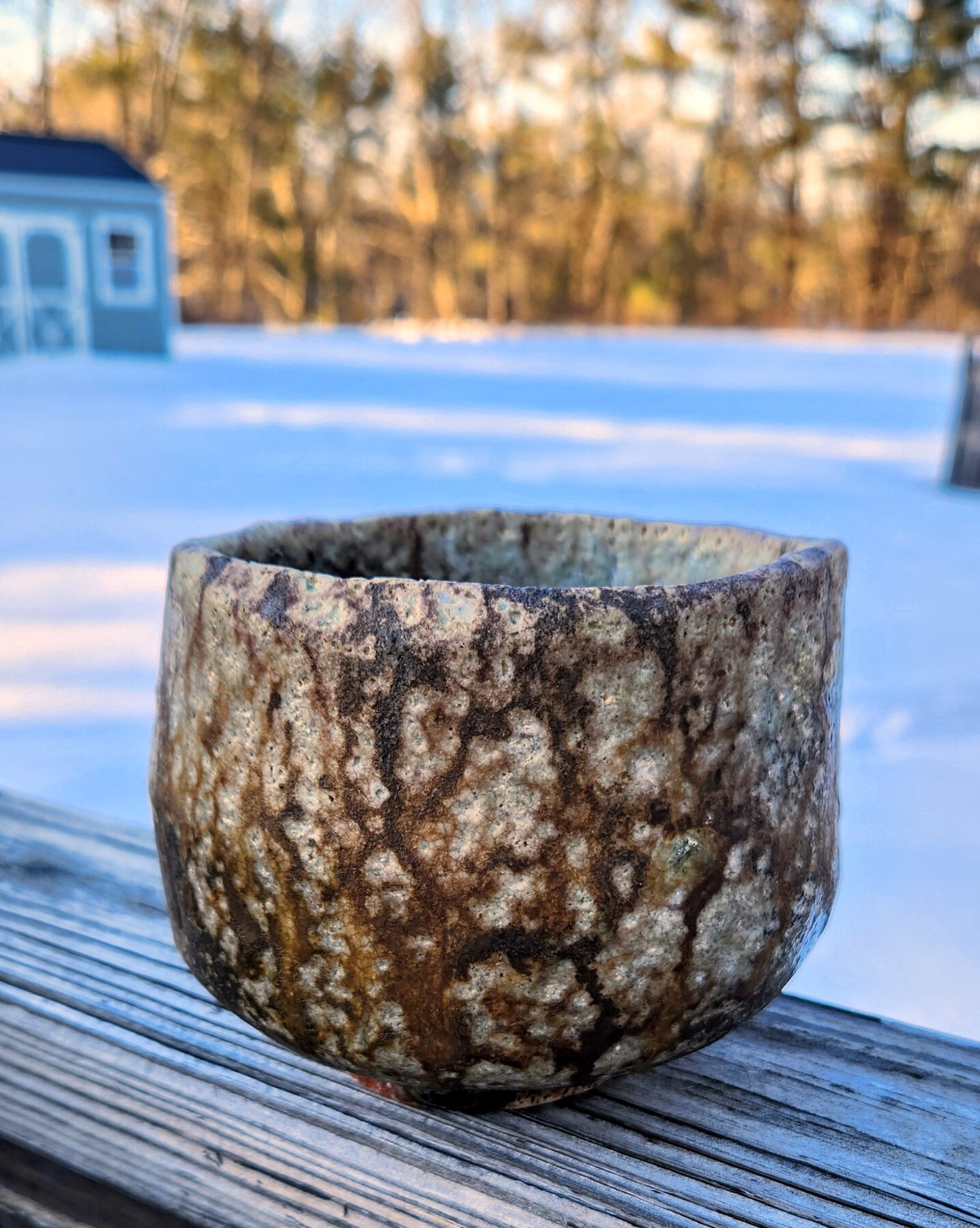
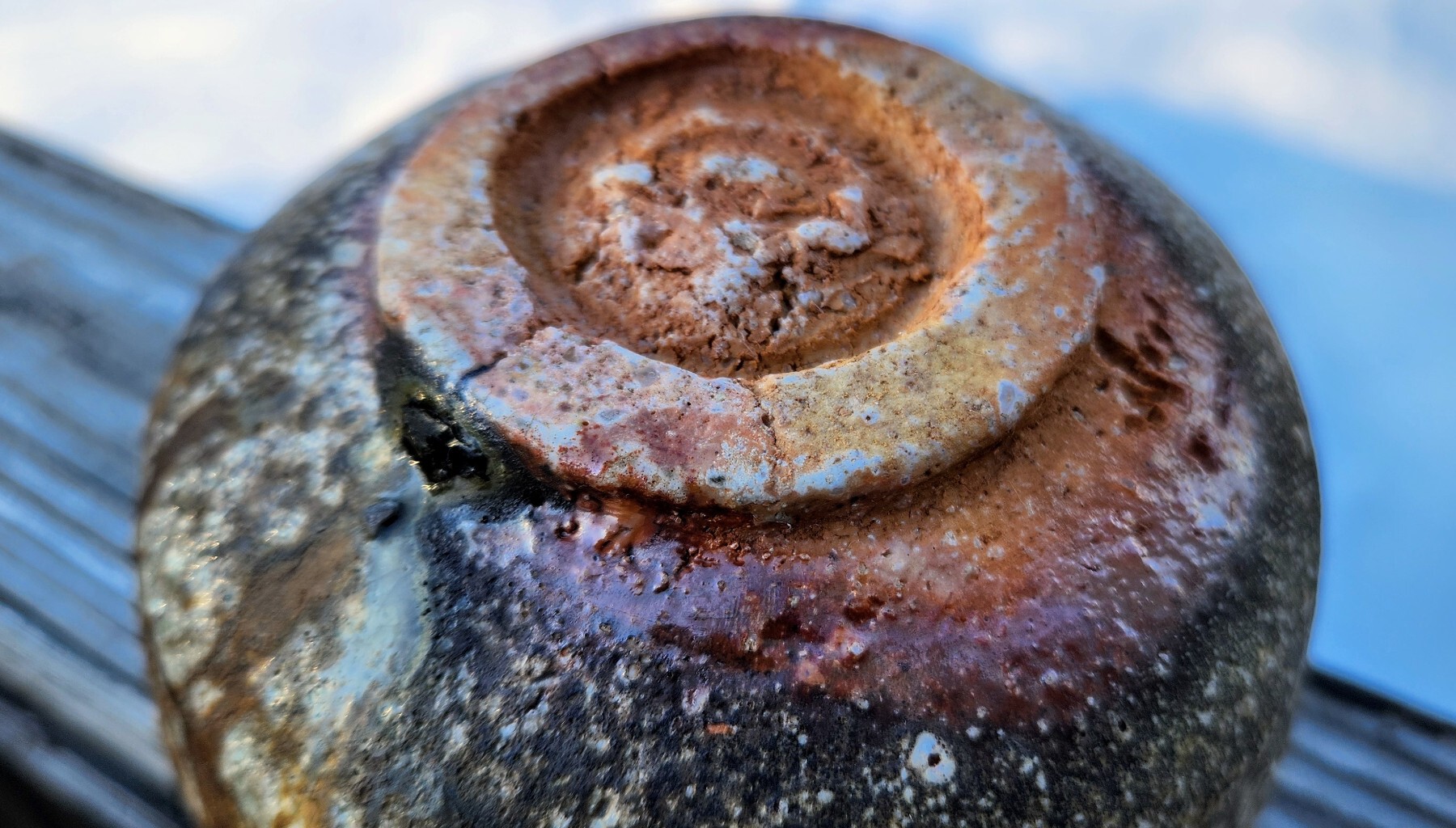
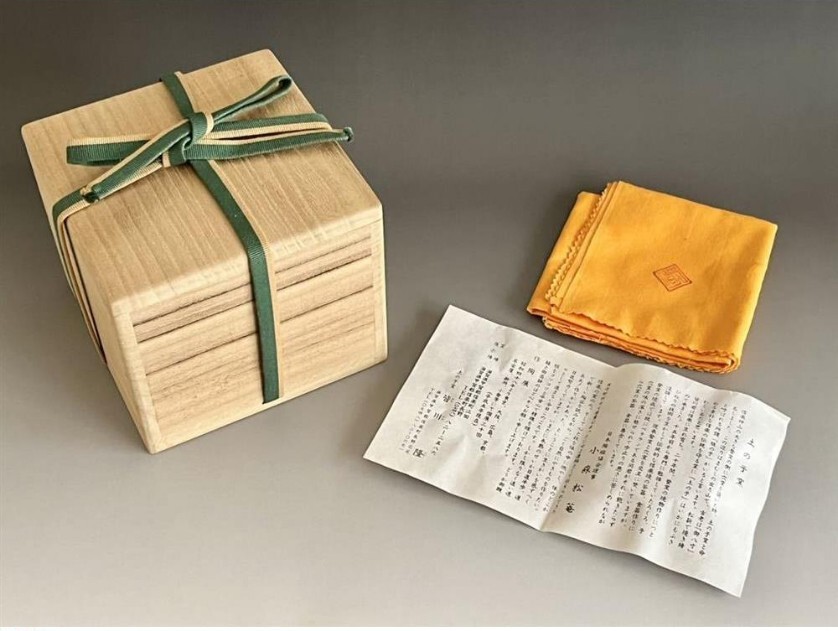
A beautiful chawan with the lengthy firing producing stunning natural ash glaze flows that are like the bark of an ancient tree. A friend of mine in Japan named this bowl "Oimatsu" (Old Pine) when I showed it to them, and I can't imagine a more fitting name. Fired for a week in the artist's "Tsuchinoko" kiln, a small anagama built adjacent to a large noborigama in 1973. Named by mentor and tea master Komori Shoan in honor of a nearby mountain that is home to vipers. Measures 12 x 10 cm and in perfect condition with its original signed box, cloth and paperwork. Bargain priced at $210 shipped to the USA, PayPal is preferred but will accept Venmo. Please let me know if you have any questions or need additional pics. Thanks for looking!


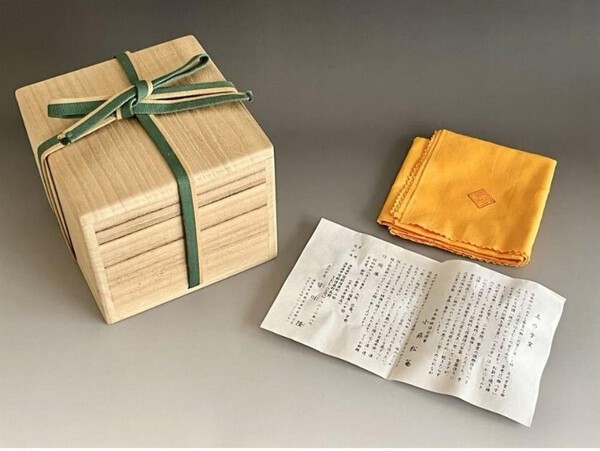 1 point
 -
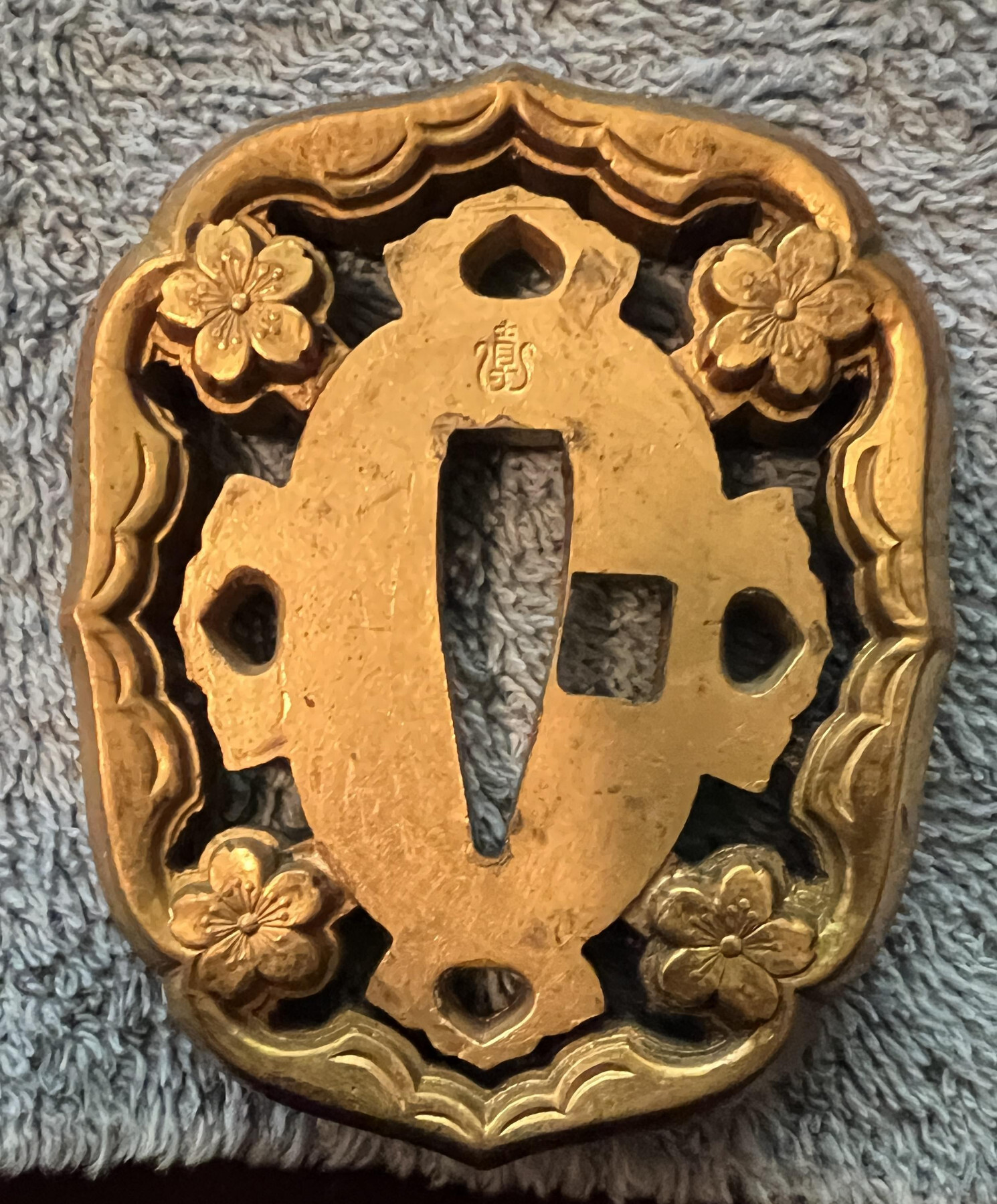
Toledo needs some help! http://emuseum.toled...2776a302a4fa&idx=104 I have looked and looked but darn if I can find a "Fan" - unless they mean they are fans of an Oni !! Sword Guard (Tsuba): Fans Date:19th century, Edo Period (1600-1868) Dimensions: 3 1/4 × 3 1/16 in. (8.3 × 7.8 cm) Medium:iron with inlays of gold, copper, and shakudo Major confusion with these two entries: http://emuseum.toled...7-b50817544f73&idx=0 http://emuseum.toled...9-da8c2679e70b&idx=0 Images are mixed up. I think I have it straight - I am surprised at some of the images - they have not been up-dated from the 1920s !!
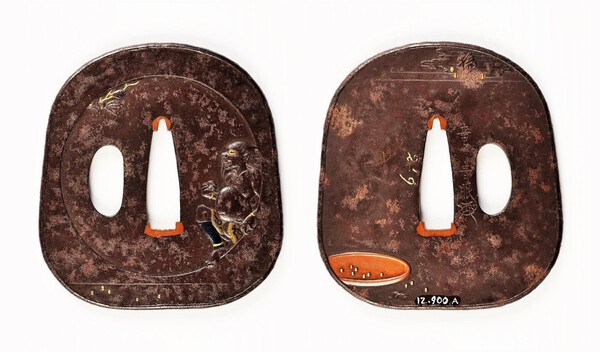
 1 point
 -
There are many new so called “jizai” appearing nowadays. They are mostly made from bent copper sheet or tin. Crayfish, shrimps and some insects are the most common. Some carry famous name fake signatures. Some come in “original tomobako” to make them look more important. Do not confuse them with the older examples. True jizai go way back but the finest examples were made by ex armour smiths…..Myochin etc…..in the Meiji period. The best are made from iron and are skilfully fully articulated…..fully moving bodies on snakes, fish, dragons, hawks etc. often signed Myochin. These genuine old examples are extremely sought after and fetch very high prices. The presence of the low quality “look alikes” will never diminish the value or market for the real thing. There is absolutely no comparison in quality or the skill in manufacturing. BUT YOU NEED TO BE ABLE TO TELL THE DIFFERENCE! Also during Meiji very good articulated lobsters, crayfish and crabs etc. were fashioned in bronze. These are heavy solid items, usually signed and the articulation of the joints is well done with concealed pins. These are also sought after but do not fetch the same prices as the iron examples. Should also mention that some were made in Meiji in boxwood…..mostly dragons You can get a good idea by searching Bonhams and Christie’s past lots using “iron jizai”.1 point
























.thumb.jpg.b230d369cb581228bdc2ca90f9259959.jpg)


















This leaderboard is set to Johannesburg/GMT+02:00