Bruce Pennington
-
Posts
14,323 -
Joined
-
Last visited
-
Days Won
171
Content Type
Profiles
Forums
Events
Store
Downloads
Gallery
Everything posted by Bruce Pennington
-

Double gunto unboxing later today - round 3
Bruce Pennington replied to Lareon's topic in Military Swords of Japan
And that means it was stamped prior to fitting. If the fitting shop put those numbers there it would be illogical that they would put a hole right through they’re own fitting numbers. I think these are army numbers. Or contract numbers. -
Found here: Gunboards Thread

-
Would love to see a photo or 2 of the whole gunto (sword and fittings).
-
Help translating on samurai sword tang
Bruce Pennington replied to Arielle's topic in Translation Assistance
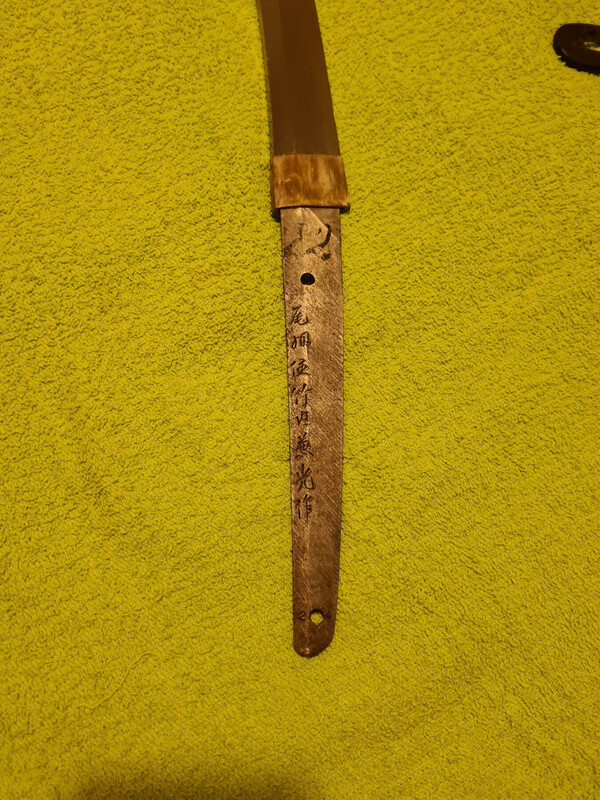
"Mino" was a Japanese prefecture, part of southern Gifu: https://en.wikipedia.org/wiki/Mino_Province He was Ozawa Kanehisa: "KANEHISA (兼久), Shōwa (昭和, 1926-1989), Gifu – “Kanehisa” (兼久), real name Ōsawa Kan´ichi (大沢勘一), born January 2nd 1915, student of Kojima Kanemichi (小島兼道), he worked as a guntō smith and died July 7th 1945, ryōkō no retsu (Akihide)" [from Marcus Sesko's book] The large Seki stamp at the top is an inspection stamp of the Seki Cutlery Manufacturers Assoc., who inspected blades to weed out poor quality showato. Generally speaking, the blades I've seen with the stamp are really nice quality blades. -
First of two WW2 bring backs to I.D.
Bruce Pennington replied to hi-revr's topic in Military Swords of Japan
Interesting to note the poor quality screws. @hi-revr - Eric, are there any threads on that bottom one? It seems to have a slotted head, like a screw, but there don't appear to be threads. It looks more like a metal peg. -
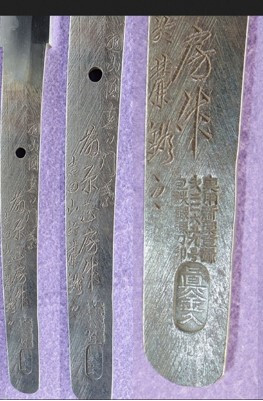
An interesting development concerning the "Kobuse" or wrapped steel stamp - I have 4 on file now, and all 4 are undated, Showa-stamped Kaneshige blades! They are sourced from: BenVK, Slough, Japaneseswordindex, and 1 undocumented. If anyone has a blade with this stamp, especially if it was made by a different smith, please post. I should add that none of the Kaneshige have the added "Shingani Iri" or "Genuine Core Steel" stamp like this one: Sadly, I didn't document the smith name on this one. If anyone can tell me the name I would appreciate it!

-
Double gunto unboxing later today - round 3
Bruce Pennington replied to Lareon's topic in Military Swords of Japan
Agree. Yet, you'll notice it does have the double release buttons. So, a mid-range quality fittings. Also, @Kiipu, a 3rd Kanemitsu with horizontally stamped numbers. I have: 1944 "24" 1944, Mar "118" NoDate "247" All three horizontally stamped and all 3 RS blades. 118 is from Slough, so no fittings shown, just he double ana. 24 is owned by Tim Blackbourne and is in identical fittings: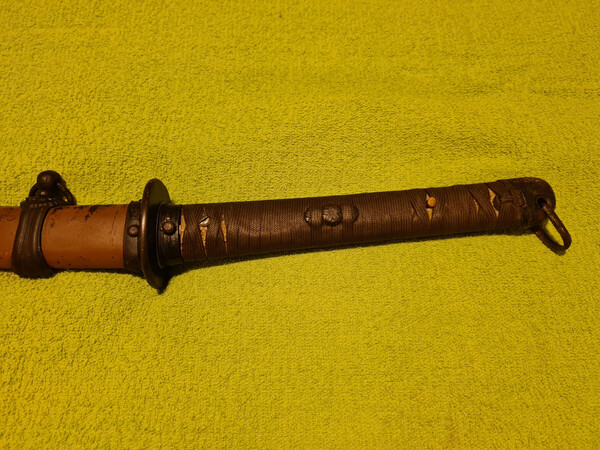

-
My first sword: Noshu Ju Marayama Kaneshige Saku
Bruce Pennington replied to BenVK's topic in Military Swords of Japan
This is interesting. This is the 4th blade on record with the "kobuse" or wrapped steel stamp, and all 4 are Kaneshige blades. -
First of two WW2 bring backs to I.D.
Bruce Pennington replied to hi-revr's topic in Military Swords of Japan
1943 Contingency model (Rinji seishiki) of the Type 98 Officers sword. -
But it's saying that a swordsmith named Kaneshige, who lives in Noshu, made this.
-
Here's an August '45:
-
Google translate says this means "Wild Sake Acceptance Kinshige This is a training " (not kidding!)
-
One thing for sure - you're going to wind up with a really firm grasp of what looks right and what looks wrong by the time you get done with it!
-
Out of the over 250 blades I have in the stamps survey, only 7 are May '45, and I have 1 June '45. So, not unheard of, but not common.
-
Not yet. The idea was tossed around recently, but I never pursued it. Pretty sure no one else has.
-
Yellow or Gold Tassels on Gunto
Bruce Pennington replied to Bruce Pennington's topic in Military Swords of Japan
This is an interesting idea. I know Allied soldiers had all sorts of lucky charms, good luck items, they carried. Pilots named their planes, often with courageous motifs. Would not surprise me to find out Japanese soldiers adorned their swords with tassels that carried meaning. They sure as heck adorned their nakago with plenty of that. -
More by the same faker here: https://www.militaria.co.za/nmb/gallery/
-
Adam, Good looking blade, but then I like bohi blades. Kabuse wrapping method isn't quite the same as Mantetsu method. Here's a couple of examples: Mantetsu used a hard-steel outer tube with a softer-steel rod insert.


.thumb.jpeg.154906a3410c4328d1622ab28e6f9a3b.jpeg)
-
Field Grade Officers Sword help
Bruce Pennington replied to Butch's topic in Military Swords of Japan
Yes, just saw that too. As Ray said, the year is 1943. -
Field Grade Officers Sword help
Bruce Pennington replied to Butch's topic in Military Swords of Japan
Date looks like 1940. Can't read the smith name. As to the gendaito question, I don't see the telltale black dots or egdes in the hamon that are signs of oil quenching, so it might be gendaito. But I'm the worst one to even comment on that stuff! -
Attention Mantetsu Owners: A Survey
Bruce Pennington replied to Bruce Pennington's topic in Military Swords of Japan
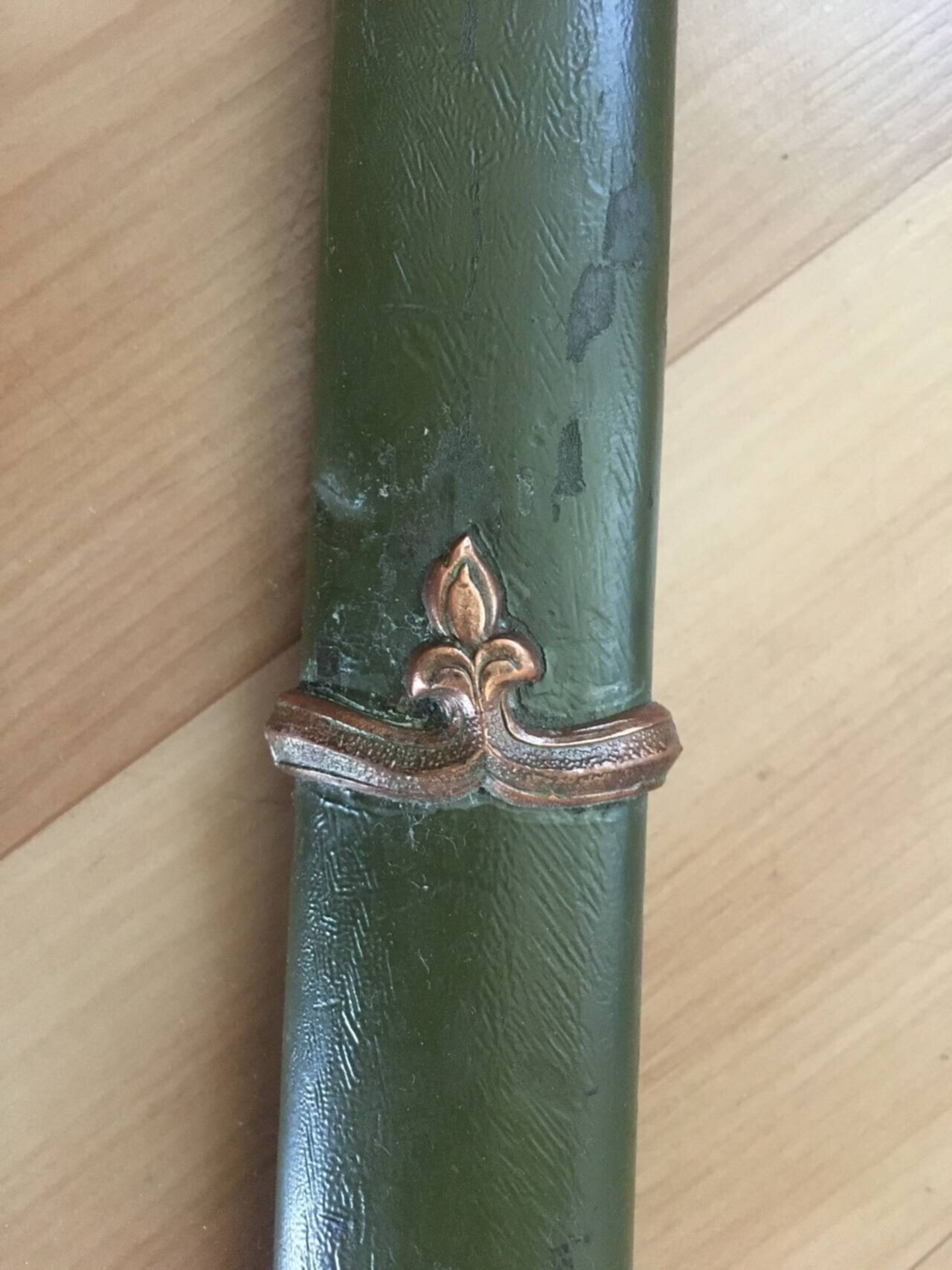
Thanks Victor! I happened to come across that one last October, but I appreciate the tip. If it is currently for sale @Sunny is on the hunt for one. This one is a little unique with the unusual color of green on the saya:


-
Arsenal Mark on RJT sword Fittings
Bruce Pennington replied to george trotter's topic in Military Swords of Japan
Maybe I missed that in the earlier discussions? As I understand it, the Army made no distinct name for this variant. "Types" were announced in an official Gazette, and to date, no such announcement has been uncovered, while the announcements for the other Types have been. My approach has been to find out the facts. Collectors (gun show attendees) have been calling this style a Type 3, a Marine Landing sword, etc, for years because they don't know what else to call it. To communicate with each other about our stuff, we tend to need terms that others understand. So nicknames, such as Type 3, Late-war officer sword, Marine Landing sword, are adopted. It's impracticable to have a discussion about the "strange Japanese officer gunto that isn't a Type 94 or 98, but has simplified fittings that are sometimes standard and simple yet sometimes customized and fancy" sword! So, what are the facts? The style was designed in 1938. It was announced publicly (not in the Gazette) in 1940. It was produced by using a loophole in the Type 98 authorization edict. Name? None factually documented. So, call it what you like. Everyone else does! Ha! -
Looking for a good haikan/ashi thread to post this and this one has a good title! Found on a Yahoo sale by @Stephen. '


-
What type of sword is this
Bruce Pennington replied to Otisman's topic in General Nihonto Related Discussion
Wow. Considering the eroded condition of the entire tsuba, could the ant have been added on at a later time? The gold on the other side seems to be all remaining of a larger figure? -
Attention Mantetsu Owners: A Survey
Bruce Pennington replied to Bruce Pennington's topic in Military Swords of Japan
Yes, forgot about that one! Classic example of a transition.






.jpeg.78f0bca27a7c7a656b8d5612ae695013.jpeg)