Bruce Pennington
-
Posts
14,351 -
Joined
-
Last visited
-
Days Won
171
Content Type
Profiles
Forums
Events
Store
Downloads
Gallery
Everything posted by Bruce Pennington
-

Kai Gunto saya types compared
Bruce Pennington replied to Kolekt-To's topic in Military Swords of Japan
Geoff, I don't know the real answer to that. Maybe someone who studies koshirae, like @PNSSHOGUN, or someone who collects kaigunto has more of a feel for that. I know that late-war gunto, both army and navy, were being mounted in the black-lacquered wood with leather cover. Earlier mounts were more of a mixture of every combination. -
Kai Gunto saya types compared
Bruce Pennington replied to Kolekt-To's topic in Military Swords of Japan
Tony, Yours looks a lot like one of mine. Same worn look to the skin saya cover, same loss of gold-gilding. And my has a Muromachi era blade. Interesting!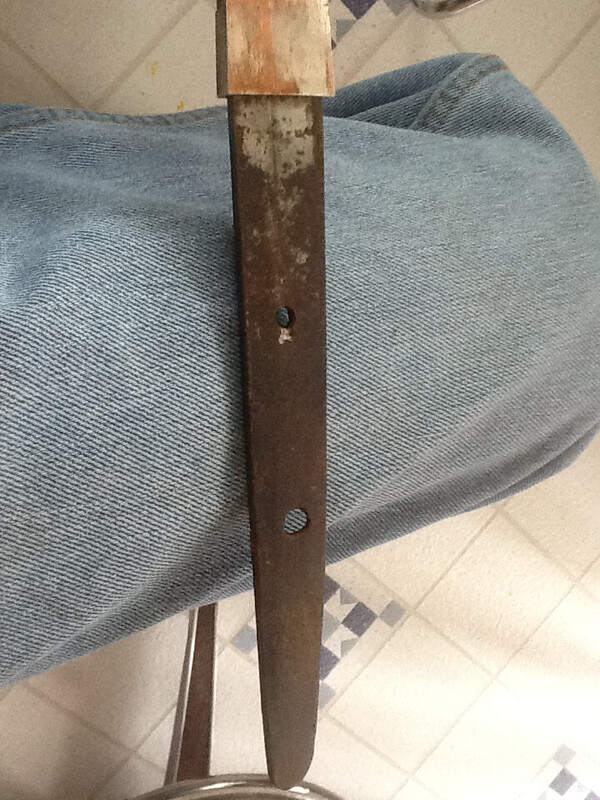


-
Kai Gunto saya types compared
Bruce Pennington replied to Kolekt-To's topic in Military Swords of Japan
I have not studied the kaigunto in depth, but in my casual exposure to the type, the single haikan (ashi) starts appearing toward the end of the war, so "older" simply means earlier in the war. The uniform regs were changed in the last year of the war to allow for single haikan and looser specifications to detail. Even non-guilded fittings were specified. I have seen pierced tsuba for a leather retention strap, but it is uncommon in my memory. -
Attention Mantetsu Owners: A Survey
Bruce Pennington replied to Bruce Pennington's topic in Military Swords of Japan
Yes, I saw that one on ebay a year ago. I have it on file as a "possible fake" because I'm not comfortable with some of the writing, and the lack of number. There are a few wavy blades on file, but they all have numbers. Could this one have been a custom order? If so, it might explain the more stylish writing. That's why I haven't totally ruled it out of the survey files. Here is the photo of the shirasaya: I also have a '39 Koa that was cut down to a waki with no number. So, this one could be legit, and a custom order, maybe. Here's the waki:
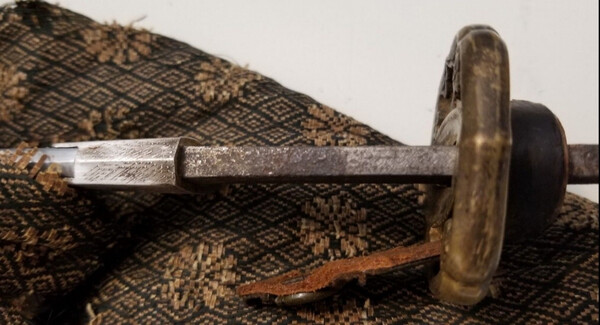

.thumb.jpg.d93980e56b51407b79700e68259730c9.jpg)
-
My First bargain of the year Star stamp Niwa Kanehisa
Bruce Pennington replied to vfc's topic in Nihonto
Chris, it's not common, but my '45 Kunitoshi is in the same fittings as this. That's why I was asking if it had the double release buttons. Here's mine:
-
I've always thought the slow photo loading was normal!!! Pictures are always delayed and slow, it seems.
-
My First bargain of the year Star stamp Niwa Kanehisa
Bruce Pennington replied to vfc's topic in Nihonto
And this is one of them. Vittorio, Many owners are quite proud to own a star-stamped blade in beat-up condition, scratched, used, and abused in the field. Yours is in far better condition that any of that. Don't be bothered by the opinions of the polish. It is still quite beautiful. A star-stamped RJT blades is Nihonto. And this is a nice one. -
Japanese swords in Indonesia.
Bruce Pennington replied to saemonjonosuke's topic in Military Swords of Japan
Well, after another look, Stephen, I think you're right. I can see a faint pattern on the tsuba, and what I thought was the fuchi sunken into a large hole (funnel), is really the center of the tsuba, with the fuchi above it. -
Kai Gunto saya types compared
Bruce Pennington replied to Kolekt-To's topic in Military Swords of Japan
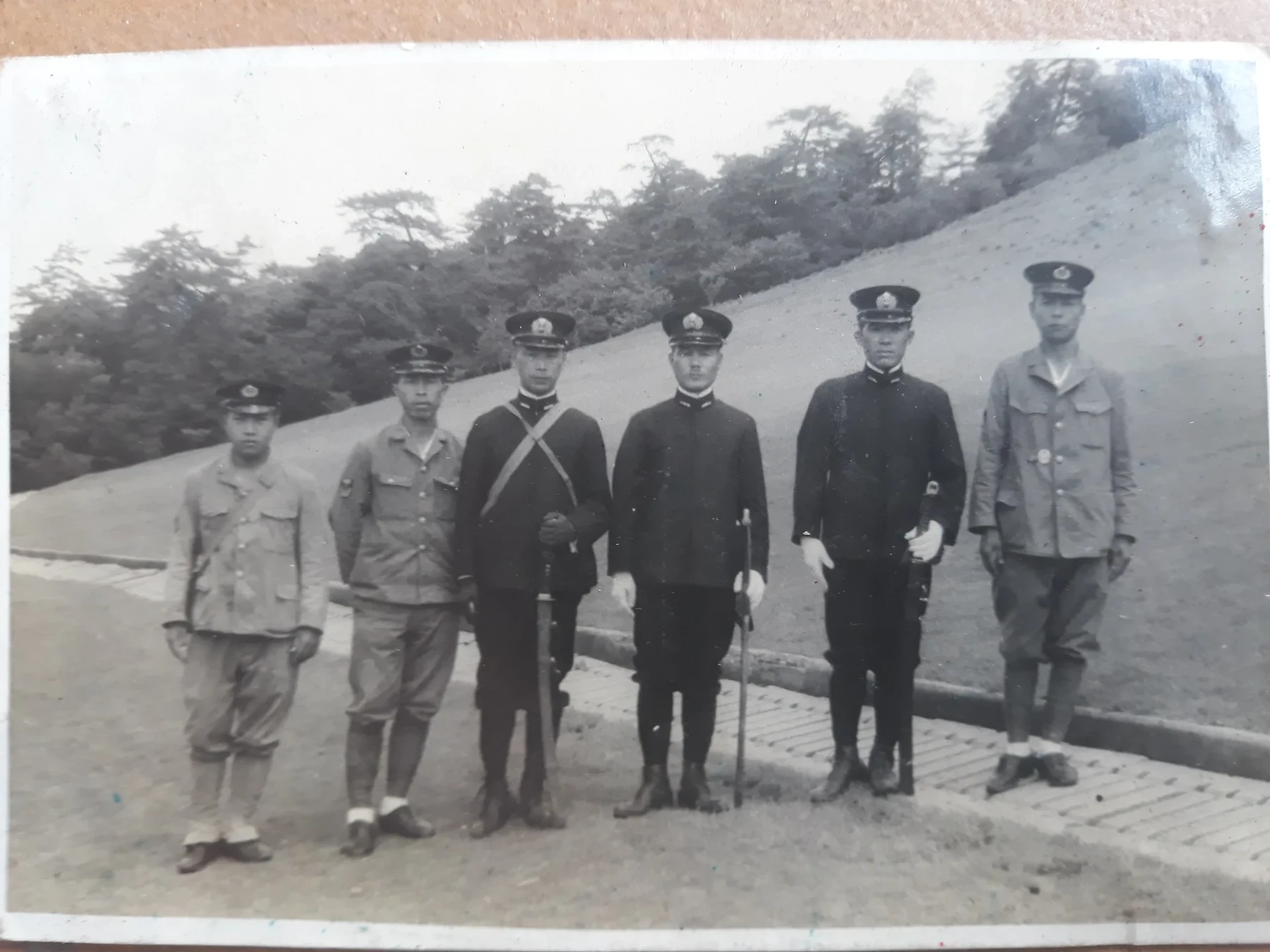
Can't find a thread dedicated to talking specifically about kaigunto fittings, so if @Kolekt-To doesn't mind, I'll start using this one a general reference thread for the topic. I know Nick Komiya made a post showing the leather saya covers for kaigunto were to be black or blackened, but I don't have that reference. If any Truly Gifted searchers, @Kiipu comes to mind, could dig that out and post here, I'd appreciate it. Otherwise, I can spend the next several years digging it out, and I'll update here! I mention this because I just came across this photo showing some kaigunto, a couple of them leather covered. One is dark, as expected, the other looks to be natural leather color. I appreciate this photo because I have a Navy takayama-to with a brown leather cover. It's always bothered me, as I've wondered if it were original or post-war made. This photo shows that the natural colored covers were in use by navy officers.
-
My First bargain of the year Star stamp Niwa Kanehisa
Bruce Pennington replied to vfc's topic in Nihonto
I've always like the longer kissaki look. It's also interesting to see a clear effort by the smith to keep cranking out quality work that late in the war (Feb '45). We see so much "late-war" poor quality blades, and yet here was a guy still putting his all into his work. Love it. Can't tell from the photo, is that a double latch button, or a single? -
An ebay seller going by "smallsword" usually sells stuff at mid to low market pricing, but he must be changing his tactics. He's got a copper-handled Type 95 listed for $5,000 USD https://www.ebay.com/itm/304156671018?hash=item46d1267c2a:g:-QwAAOSwN8thS2Un and a Nagoya side-latch listed at $3,995 https://www.ebay.com/itm/304305232042?hash=item46da0158aa:g:uj8AAOSwTwJh4EKe He's also got a late-war 95 at $2,495 https://www.ebay.com/itm/403408572461?hash=item5ded06502d:g:EoIAAOSw3WRh4Eny Seems odd when the Type 95 market pricing seems to be slipping back down to the $1,000-$650 USD range.
-
Japanese swords in Indonesia.
Bruce Pennington replied to saemonjonosuke's topic in Military Swords of Japan
Boy, if that captured Java sword had showed up here, the first yell would be "FAKE"! Ha! Interesting menugi: And that tsuba looks like a funnel! As to the first sword at top, the kabutogane of the 95s are almost identical in shape. They lack the blossom/leaf pattern on top and sides like the officer one have. But I looked at mine and the one on top is almost worn flat. The ones on the side are actually riveted on (a peg on the backside of the leaf pattern that goes through the kabutogane) so, it could be missing from the one in the photo. On top if it all, the photo detail is too blurry when zoomed to see such detail, so really hard to say. If you consider the whole thing was likely Java-made, the fine details I'm talking about probably weren't there at all and it's likely their attempt at an officer gunto.

-
Attention Mantetsu Owners: A Survey
Bruce Pennington replied to Bruce Pennington's topic in Military Swords of Japan
Excellent, thanks Trystan! I've updated my files on that one. -
Lieutenant level police sword
Bruce Pennington replied to wiktor69's topic in Military Swords of Japan
I like it. The flags on the ricasso alarmed me at first because this is a common item you will see in Chinese fakes. But the sword looks legitimate to me. There was a tremendous amount of variations with the Type 8/19, so the addition of the flags is not a surprise, and if anything, adds to the unique quality of the piece. I cannot read Japanese, so someone else will have to help with the kanji. -
Attention Mantetsu Owners: A Survey
Bruce Pennington replied to Bruce Pennington's topic in Military Swords of Japan
Right! I was just listing the ones with MRS fittings above. Here are the Ren blades I have on file: 連 1944 セ 1029 1944 セ 1066 1944 セ 1143 1944 セ 1310 Is 1066 in MRS fittings? My photos on file just show the rounded tsuba, but no fittings. -
A nice zoheito found by @mecox, thanks Mal! https://vi.raptor.ebaydesc.com/ws/eBayISAPI.dll?ViewItemDescV4&item=134007324527&category=165599&pm=1&ds=0&t=1643389175924&cspheader=1 I’m away from home at the moment. Will post some pics when able. Note the copper mekugi the seller apologized for damaging during removal. I have seen a couple of these come up recently, and I had mentioned to the owners that I thought it was post-war because I did not know they made copper ones during the war. But this one sure looks like it was original.
-
Japanese swords in Indonesia.
Bruce Pennington replied to saemonjonosuke's topic in Military Swords of Japan
Seems to have replaced the tsuba with one locally made?
-
Attention Mantetsu Owners: A Survey
Bruce Pennington replied to Bruce Pennington's topic in Military Swords of Japan
Interesting observation. There was definitely a transition. Here are the MRS gunto I have on file 1938 N156 (only the SMR logo) 1944 Se 1029 Ren at top of nakago 1944 Se 1143 Ren at top 1944 Se 1310 Ren at top 1944 Se 2430 連工 1944 Se 2575 連工 1944 Su 10 連工 1944 (?) 199 連工 1945 い 142 (not viewed, no full photo) 1945 い 1170 no stamps, full views -
I have seen a couple of these lately. Hard to know if they are post-war or late-war. They are always in the low-quality wooden saya made for leather cover.
-
Photos added for later when the link goes dead:
-
Attention Mantetsu Owners: A Survey
Bruce Pennington replied to Bruce Pennington's topic in Military Swords of Japan
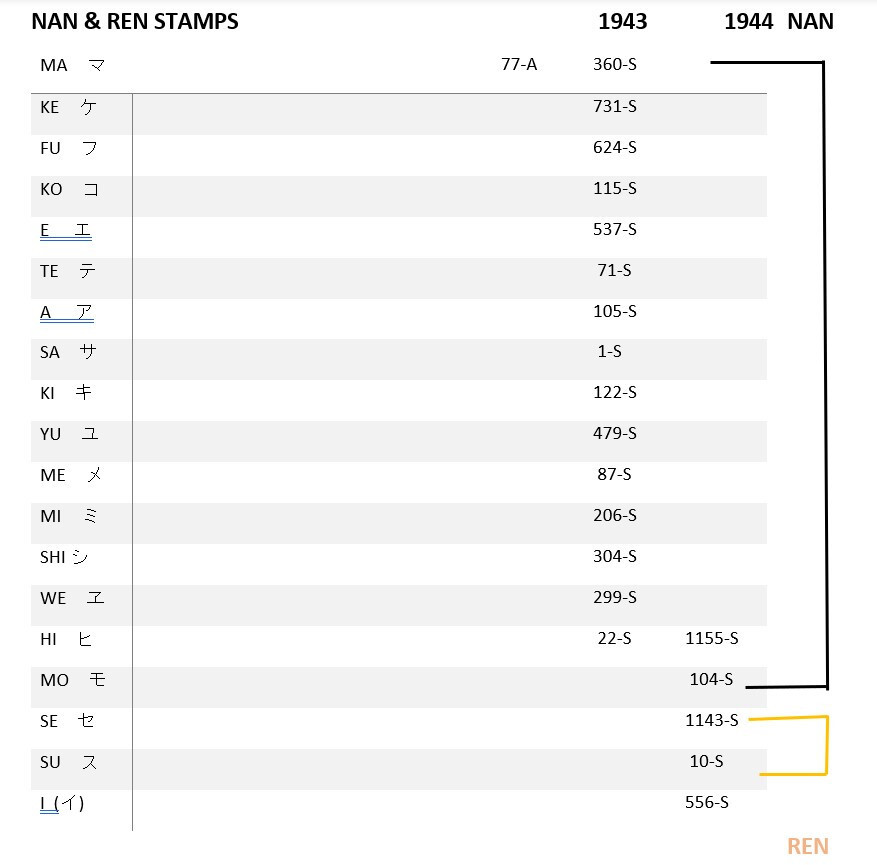
For the vast majority of us who don't read Japanese, what Trystan is showing us is a discussion Ohmura had on that link about the Mantetsu operation. Of the Ren stamp, Ohmura states: Nanman Army Arsenal inspection mark "Nan". inspection mark "Nan".※ Ren stamp: Nanman Army Arsenal Dalian Factory inspection mark. "Ren" Ohmura's discussion: "For Nanman Army Arsenal, organization was determined in August,1938. It had the site of about 9.917 K㎡ in Wenguantun of the Mukden suburbs. And 12,000 persons in all belonged the military man and the army civilian employee to this arsenal. And thousands of Manchu operatives worked. Nanman Arsenal was included in Kantō-Gun and turned into Kantō-Gun Arsenal in April, 1945. From the spring of 1943, an officer's Guntō was made from Nanman Arsenal and Nanman Arsenal Dalian Factory. The blade with the stamp of "Nan" and "Ren" receives the impression that Nanman Army Arsenal made with Mantetsu's introduction of technological know-hows uniquely. However, probably, these blades were dedicated by Nanman Arsenal with semimanufactured goods from Mantetsu, when they were guessed from the Mei of "Mantetsu Kore o Tanzō". The truth is still a mystery. " So, at the end, even Ohmura was uncertain of the implications. My first question is - what is meant by "Nanman Army Arsenal Dalian Factory"? The Nanman Army Arsenal was not located in Dalian. SMR was. So, if they are calling the SMR operation at Dalian a Nanman factory, then the Ren stamped blades were made by SMR not Nanman arsenal. As to Nanman making blades, we know for a fact that they were polishing blades at Nanman in '44 and '45. Is that because they were making the blades there, or because SMR was sending them unfinished blades as they were doing for Tokyo 1st Arnsenal? Not all '43 and '44 blades have the stamps. Why? Were the non-stamped blades made at SMR and the stamped ones at Nanman? Another factor is that the Nan-stamped blades were all in '43 and the first two lines of '44, then they stop, and the Ren stamp appears after that: If the Ren-stamped blades were made in Dalian (SMR), why did the Nanman arsenal (Nan stamps) stop? In the end we may find that Ohmura's hypothesis is correct and logical explanations will appear answering the questions. But for now, my speculative opinion is that SMR was making blades the whole time. In '43, they taught Nanman smiths how to make Mantetsu blades and their production enhanced the quotas required of SMR. The Army likely assigned Nanman Arsenal supervisory authority over the whole SMR operation and the Nan stamp was in use. By '44, they established an office to specifically oversee the Dalian factory, hence the Ren stamp. It still doesn't explain why the Nan stamp disappeared after the appearance of the Ren stamp though. So, like Ohmura said, it's still a mystery to me.
-
Interesting! I was thinking it was something along that line. They did a good job with the modification, but of course it was a swordsmith that did it.
-
My first sword, 1943 Type 98 Shin Gunto by Imai Sadashige
Bruce Pennington replied to Koryu's topic in Nihonto
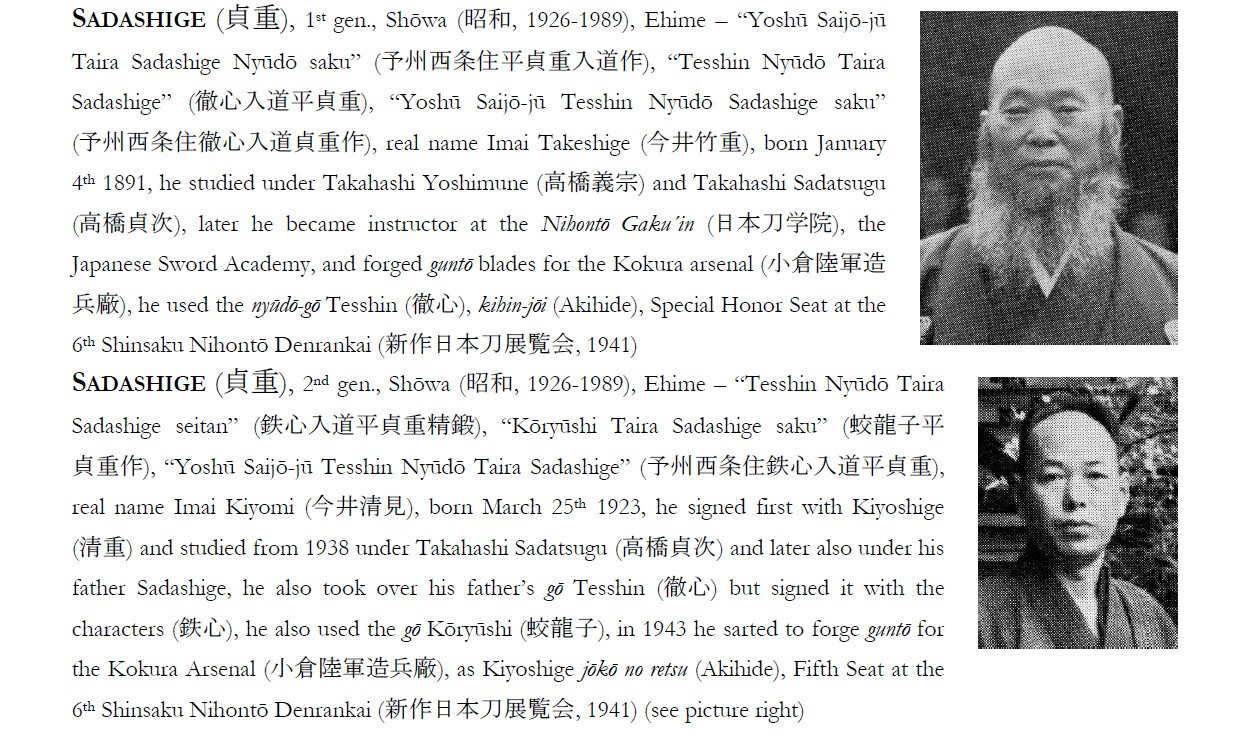
Sesko shows a father and son, don't know how to tell which one yours was made by: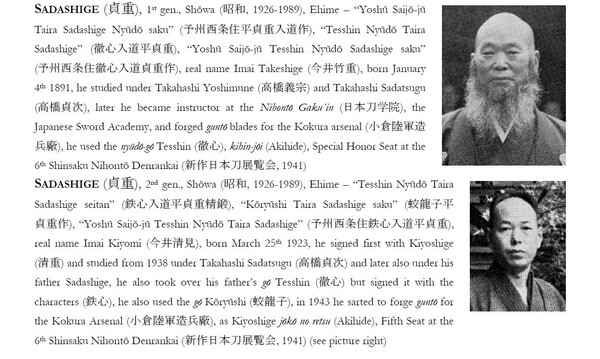
-
Can I get some help to identify these stamps
Bruce Pennington replied to Oliver's topic in Translation Assistance
Hi Oliver! One of the translation magicians will give you a full breakdown of the mei (signature). I'm jumping in to ask for a couple of shots of the full "naked" blade, and pics of the fittings. From the edges of a couple of these it looks like you've got one of the fairly rare canvas-covered scabbards. -
This mark is the strangest thing. It almost looks like the original nakago had been cut off, and another added. Yet if so, it was done before the kiku and mei. The kiku is right one line on the other side.


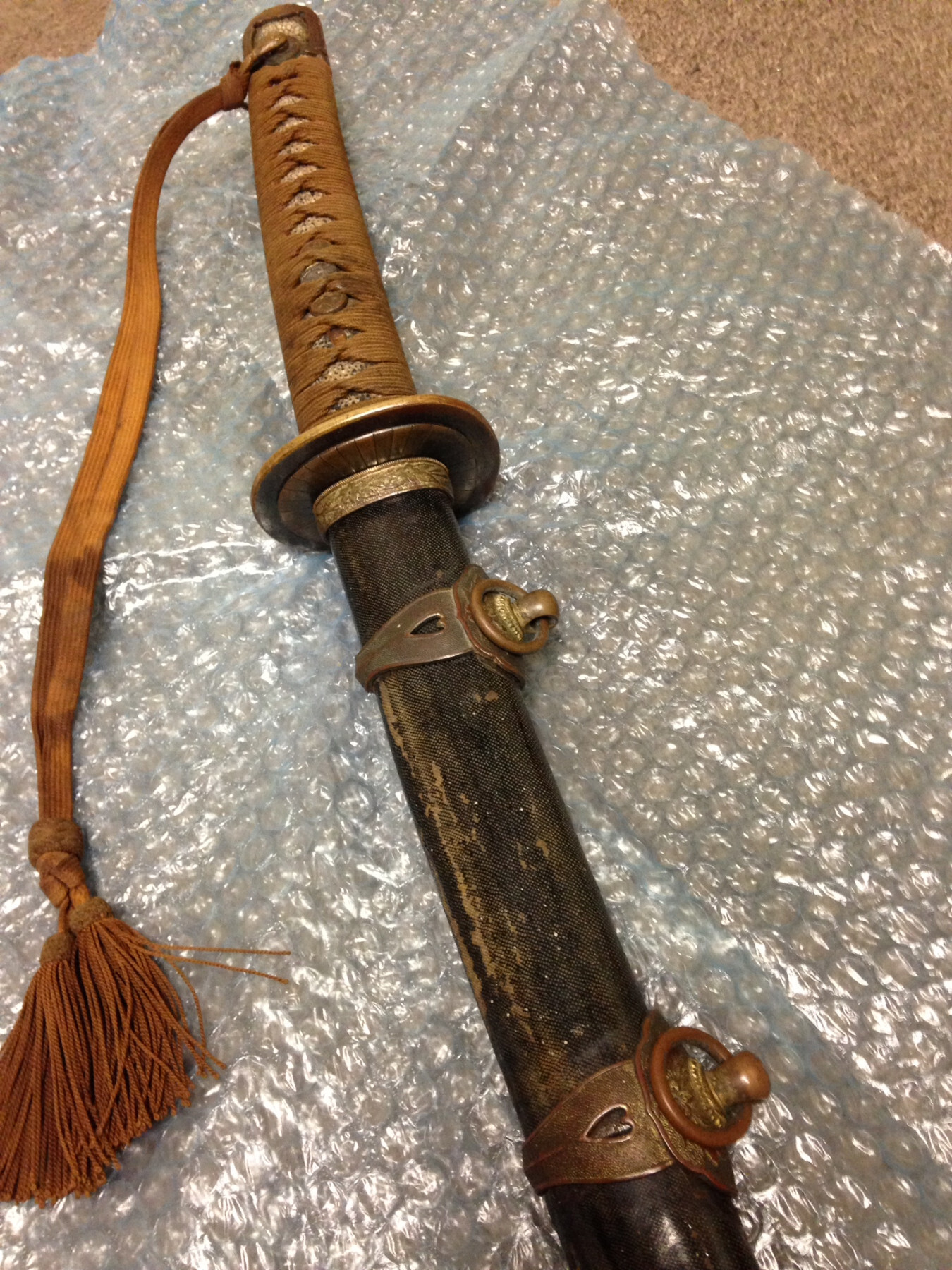
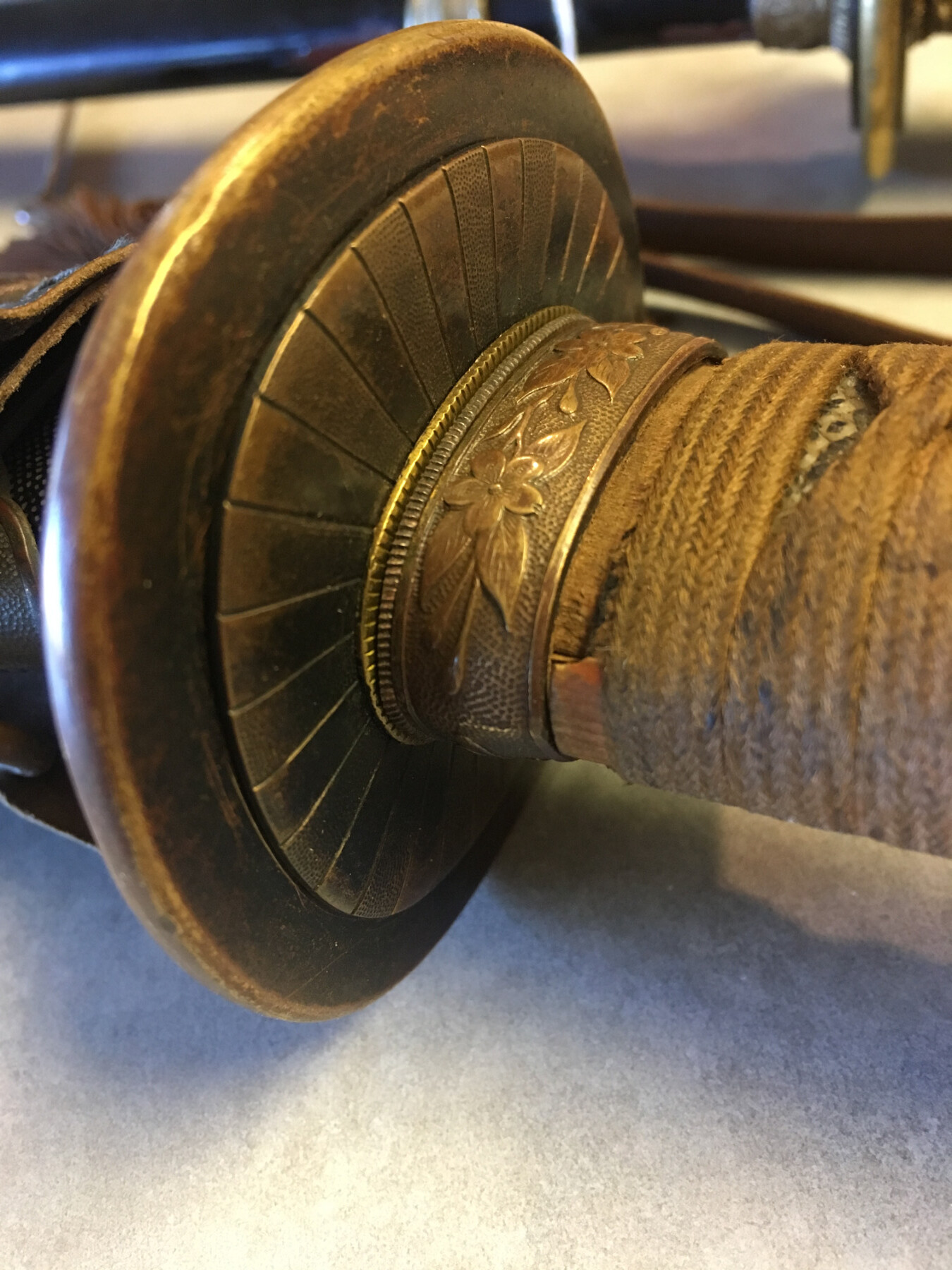




.jpg.e894b7f3c31d7ac3e00cb858da11d118.jpg)