Bruce Pennington
-
Posts
14,510 -
Joined
-
Last visited
-
Days Won
175
Content Type
Profiles
Forums
Events
Store
Downloads
Gallery
Everything posted by Bruce Pennington
-
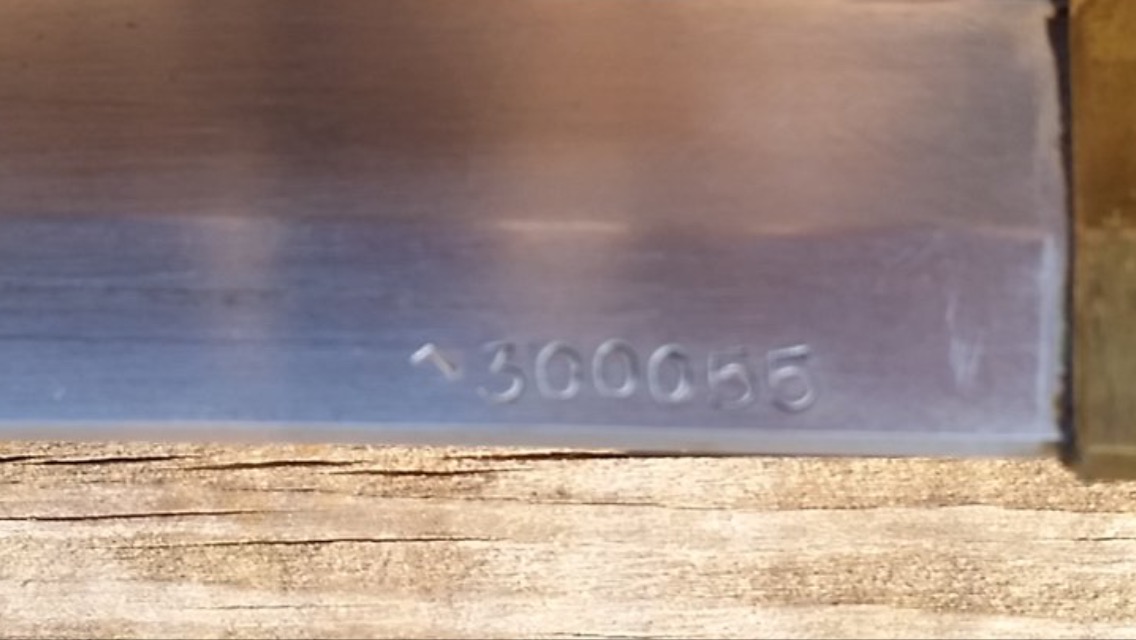
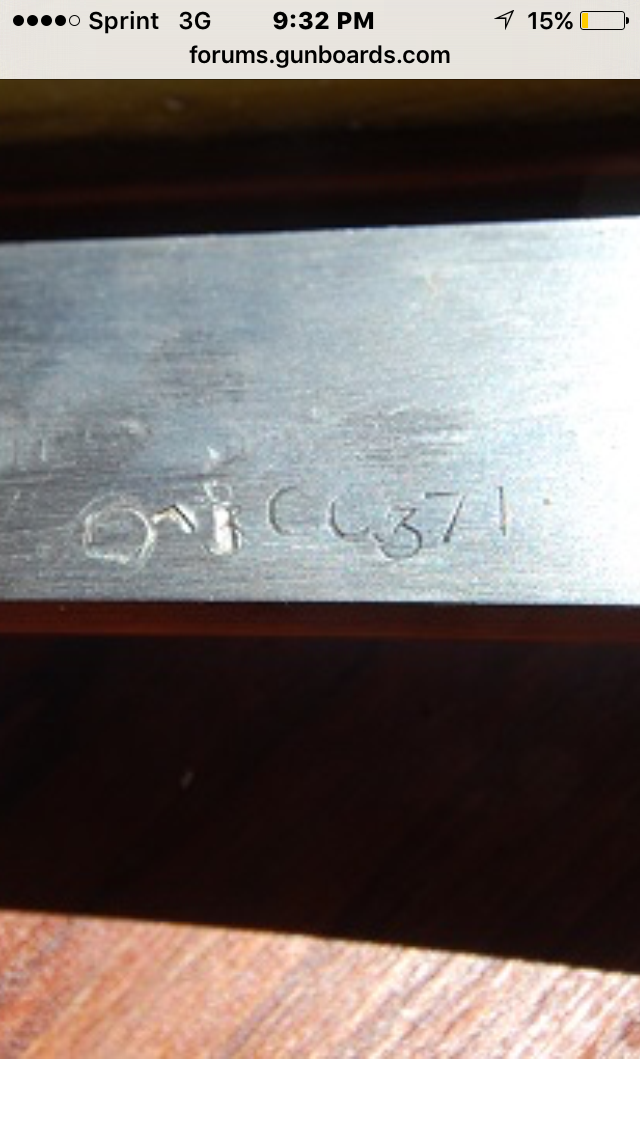
Somebody HELP! Tell me what I'm looking at! This eBay offering (from a Texas seller) looks legit is everyway UNTIL - the serial number is punched in with an odd type stamp, is Nagoya-style being read with cutting edge up, has a faint Nagoya inspection stamp, BUT the saya latch is on top, not on the side. Plus the serial number is in the 100,000s, which I've never seen before. Either this is something from Nagoya I've never seen, or it's one of the best fakes I've ever seen. Thoughts? http://m.ebay.com/itm/291840054917
-
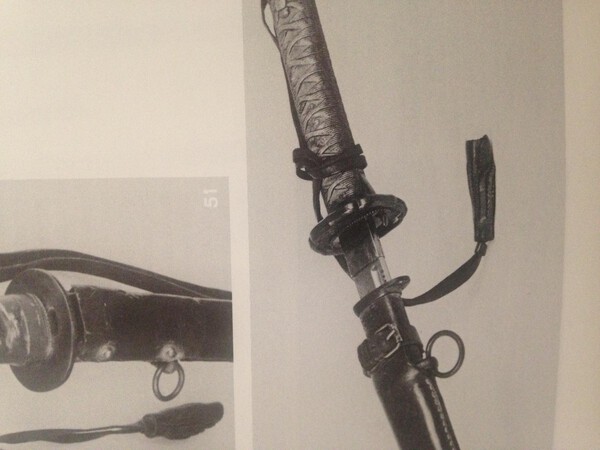
The really late-war 95s came with wooden saya. I haven't personnally seen one of those with a leather cover, but I'm fairly new to this. That was obviously a personal option, so it's clearly possible. Just haven't seen that kind with cover.
-
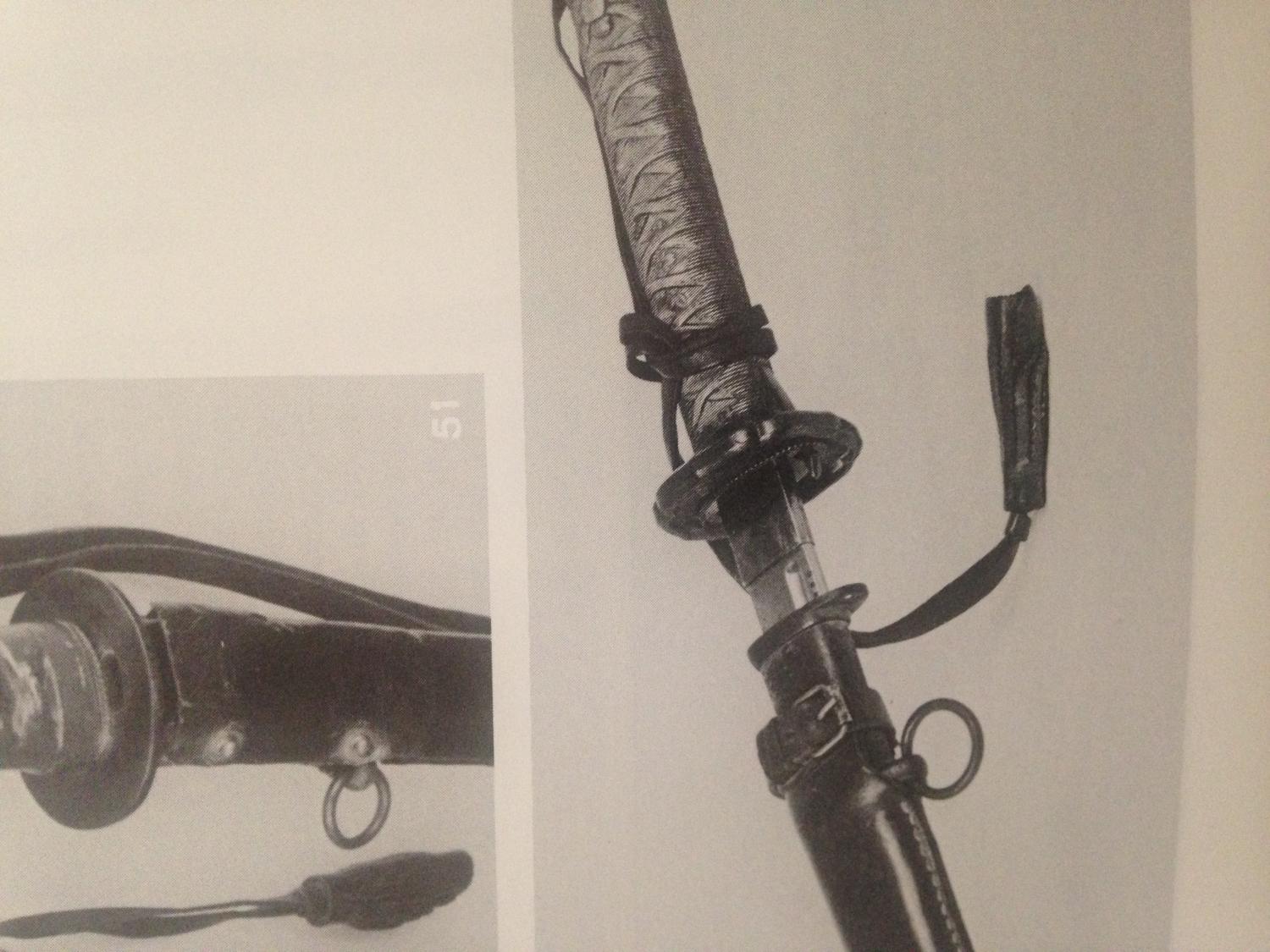
Here are a couple of them in Fuller & Gregory's 1987 Ed.:

-
After looking over the pics of both gunto, I'm coming down on the side of "legit." Here's a link to the thread with discussion and pics, if anyone wants to investigate: http://forums.gunboards.com/showthread.php?567201-Last-of-the-Late-War-NCO-Swords-with-a-serial-number
-
Carlos, Fuller had some 95s with wooden saya. There are pics of both wooden and metal saya in leather. I've never read about the wooden saya having serial numbers, though. I'd be surprised if they did.
-
Here's the discussion. http://forums.gunboards.com/showthread.php?567201-Last-of-the-Late-War-NCO-Swords-with-a-serial-number You got me, though, I was so excited to see the Incheon stamp, I failed to look into the authinticity of the blades. With the sparse pics initially, one has very fresh ito and an officer tassel (which F & G, or Dawson, speculates means the ones with ito might have been made for officers), a seemingly brass tsuba, and a habaki that doesn't fit precisely. The other one looks normal, and has a "patent pending" ishizuki, though the number stamping looks poor. Concerning both, it is well known across the board that these late-war gunto were poorly made. I've asked them both about it and will update when able.
-
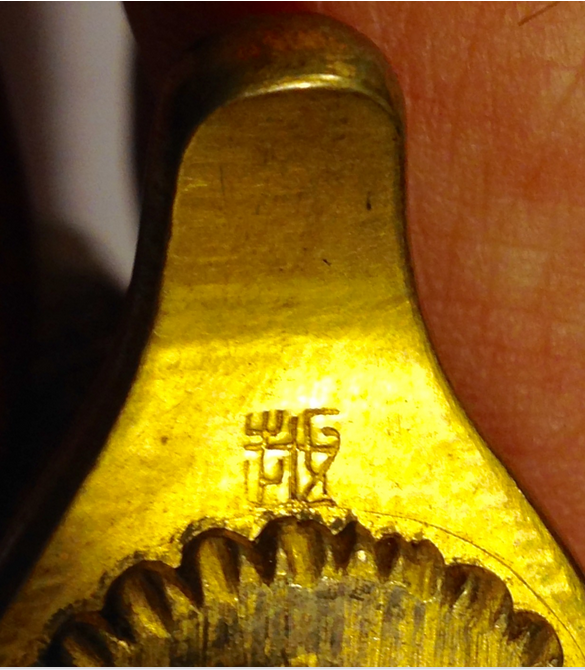
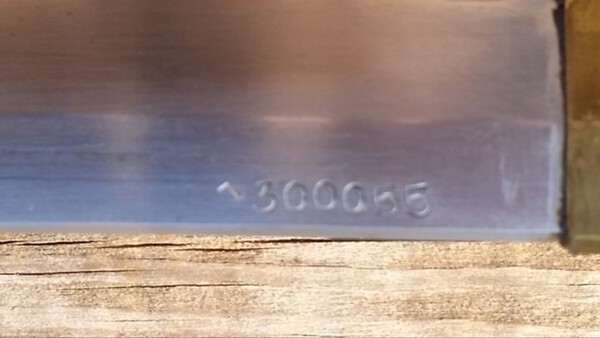
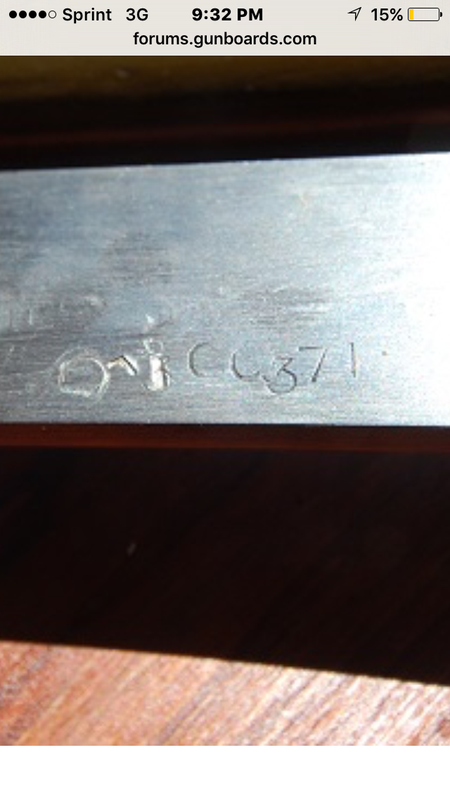
Thanks John! Here's a couple of Incheon Army Arsenal Pyonyang Factory "He" stamps, thanks to Matt (msam74) and "silverfox48" at Gunboards. Both are from late-war Type 95 gunto:
-
Is this an update version of his 1996 edition?
-

What "mon" / Marking Is This?
Bruce Pennington replied to ilikesword's topic in Military Swords of Japan
Just stumbled across this. I've never seen a gunto made by the Mukden arsenal, but the symbol is the same as these: [url=https://www.google.com/search?q=mukden+arsenal&tbm=isch&tbo=u&source=univ&sa=X&ved=0ahUKEwif4pqn66DOAhUMy2MKHRZwA9EQ7AkINQ&biw=1280&bih=775]https://www.google.com/search?q=mukden+arsenal&tbm=isch&tbo=u&source=univ&sa=X&ved=0ahUKEwif4pqn66DOAhUMy2MKHRZwA9EQ7AkINQ&biw=1280&bih=775[/url Also here: http://ohmura-study.net/794.html -
Using Guy's symbols, I found a translation software that gives some definitions. My attempts at translating kanji have been pretty poor, so I post this in the hopes it will trigger someone who really knows! I also don't know the proper order the symbols should be read through the square, but then, if they might not be meant to be a sentence, but more a collection of meaningful ideas: ム - Moon 山 - Top; summit; mountain 正 - True; righteous; just; honets; rightfully 又 - Again; moreover; too; once I suspect it is a collection of meaningful ideas like we say "God, Family, Country" or "Duty, Honor, Country", but I don't know and am still searching.
-
Matching Mystery Marine Mounton Ebay
Bruce Pennington replied to Johncstroud's topic in Military Swords of Japan
Jim Dawson calls them "late war Kai-gunto". It would fit the idea that GI's found warehouses of new ones, and would explain why most of them are in perfect condition. -
Matching Mystery Marine Mounton Ebay
Bruce Pennington replied to Johncstroud's topic in Military Swords of Japan
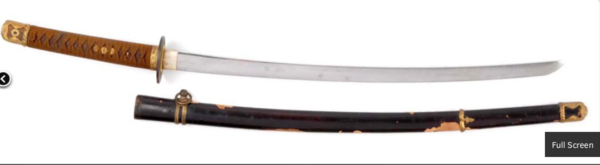
Interesting idea, Thomas, but why would the fittings be gold-guilded, and the nakago has a Toyokawa navy arsenal stamp? Here's another one, identical, on an auction site. Toyokawa Navy Arsenal, gold-guilded army fittings, no rising-sun rays.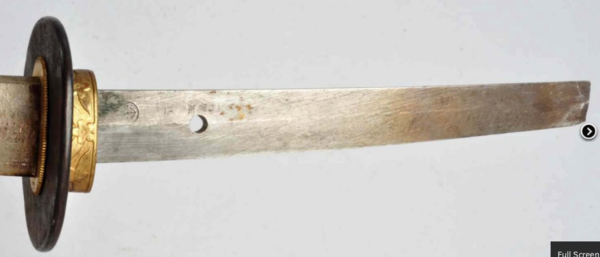
-
Matching Mystery Marine Mounton Ebay
Bruce Pennington replied to Johncstroud's topic in Military Swords of Japan
Ian, I've heard both theories too - late war production using IJA parts (but why are they gold-guilded?) and piece-together. I'm on the road and don't have my books with me, but I'm pretty sure Dawson or F&G have these discussed as legitimate IJN for land use. I'll update in a couple of days. I'll also check on the rising sun tsuba question. My problem with the "pieced-together" theory is that I've been trying to find pieces to finishe the saya of my dad's Mantetsu saya, and a chuso, and have given up! The variations of size are too great to claim that all the marine-landing gunto I've seen on the market and in collections were successfully fitted together from various parts. I'm posting a pic from a close friend who has one that is, for sure, a gunto collected on Iwo Jima.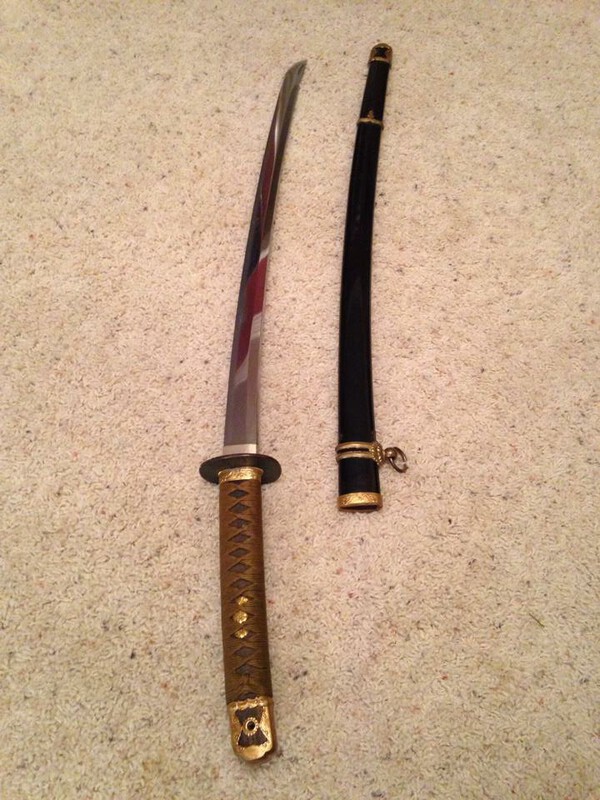
-
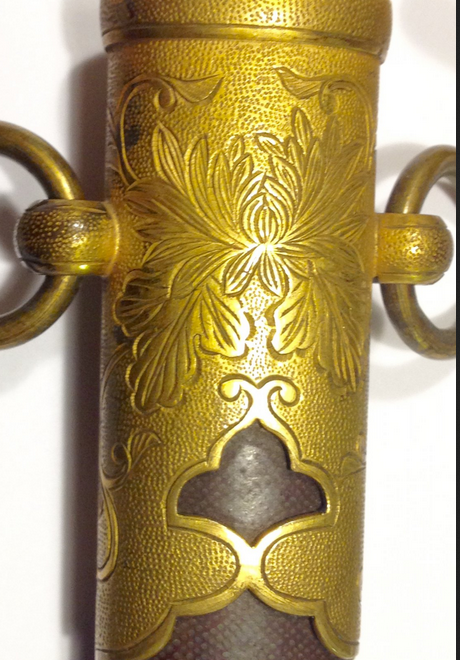
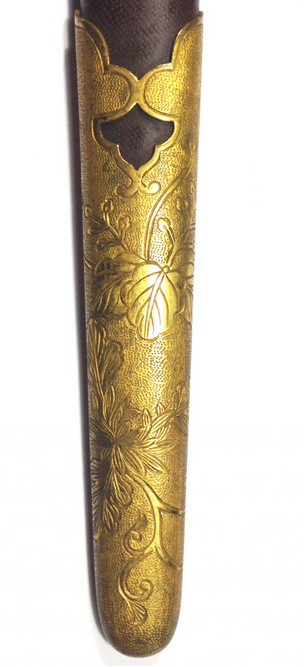
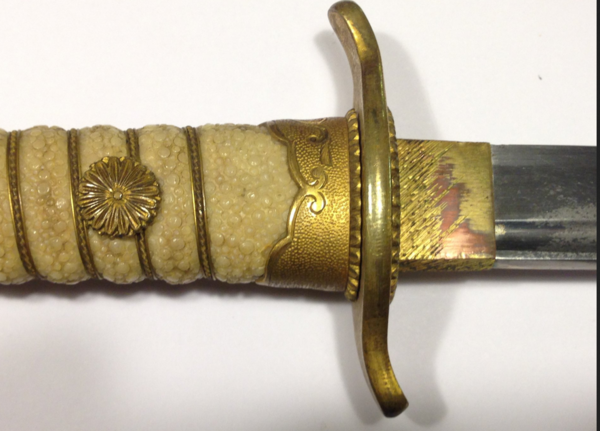
I'm helping to ID a dirk someone has. Looks like a pretty high official of the Imperial Household, but I can't read Japanese (yet!). Can someone tell me what the kanji means?

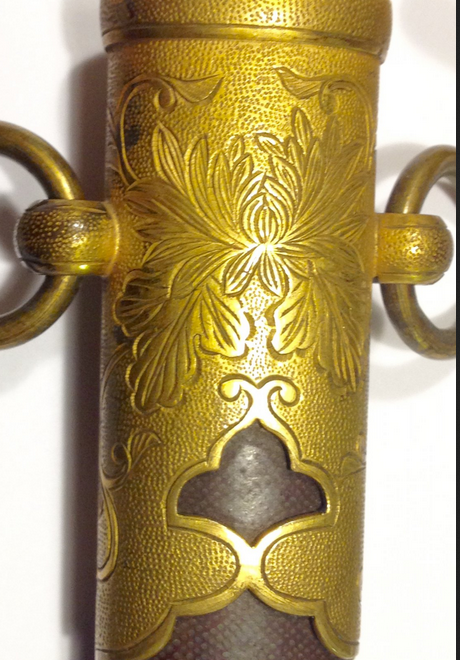
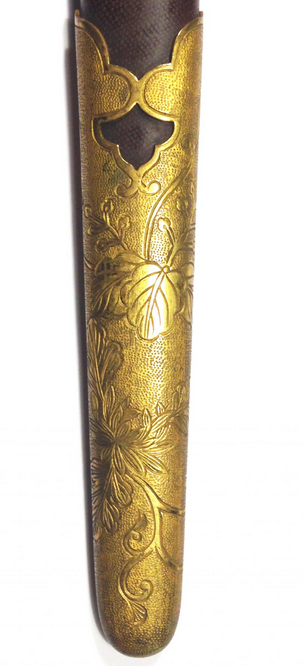
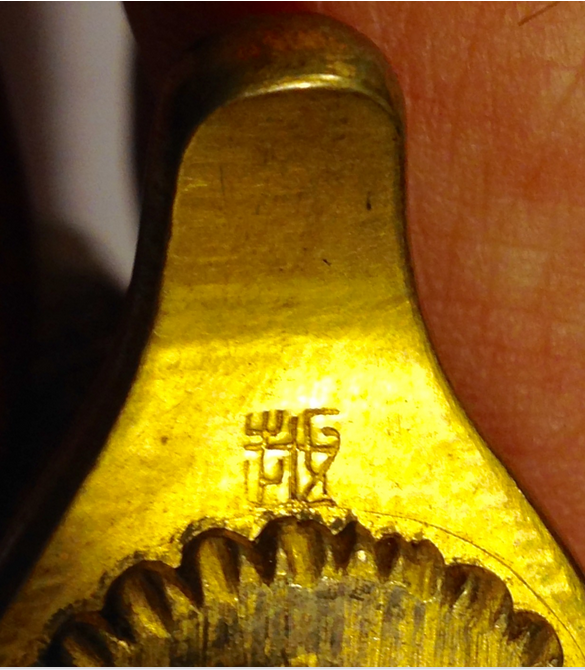
-
Matching Mystery Marine Mounton Ebay
Bruce Pennington replied to Johncstroud's topic in Military Swords of Japan
Brian, OMG, thanks for the tip! I've been on this forum for over a year, and never knew about that forum! Dang, there's LOTs of sword stuff going on over there! -
Matching Mystery Marine Mounton Ebay
Bruce Pennington replied to Johncstroud's topic in Military Swords of Japan
John, I don't see the difference? Yours looks like it was polished over, which fuzzed out the detail. What is it that looks different to you? -
Matching Mystery Marine Mounton Ebay
Bruce Pennington replied to Johncstroud's topic in Military Swords of Japan
John, seems translators are occupied elsewhere for the moment. Have you ever tried the Wehrmacht site? They seem to have more active translators right now. http://www.wehrmacht-awards.com/forums/forumdisplay.php?f=59 -
I always bring my gunto here. The forum for military blades on this site is dominated by European weapons. This site is where the Japanese enthusiasts hang out. However, I also lurk on the Werhmacht site, Axis allies, Japan: http://www.wehrmacht-awards.com/forums/forumdisplay.php?f=59. There the enthusiasts are all about WWII
-
Matching Mystery Marine Mounton Ebay
Bruce Pennington replied to Johncstroud's topic in Military Swords of Japan
While the standard Navy kai-gunto had 2 ashi, this version was quite common, and WAS Navy. I'm on the road and don't have my books, but there are multiple sources that verify this version as Navy. They were believed to have been used by Naval officers stationed on land, working with the Army. The standard statement is that they believed the army fittings would stand up better in land combat. But the fittings were gold-guilded and fitted on navy saya and tsuka. The blades are always kai-gunto blades. -
Matching Mystery Marine Mounton Ebay
Bruce Pennington replied to Johncstroud's topic in Military Swords of Japan
Can't speak to the mei, but the aresenal stamp is Toyokawa Naval Arsenal. -
Help Identifying A Tanto
Bruce Pennington replied to StringHunter's topic in Military Swords of Japan
Grey, I see what you mean! I am but a young grass-hoppahhhh, with much to learn still! Interesting artifact, if in fact it was originally a gunto from the war. If cheap, it's still a piece of history, namely the history right after the war when gunto were cut in half. Merchants took the pointy ends and crafted souveniers out of them. It still tells a story, if that's what one is looking for. Otherwise, keep looking! -
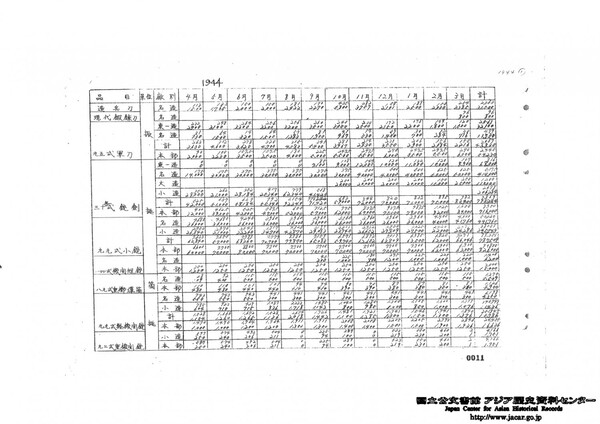
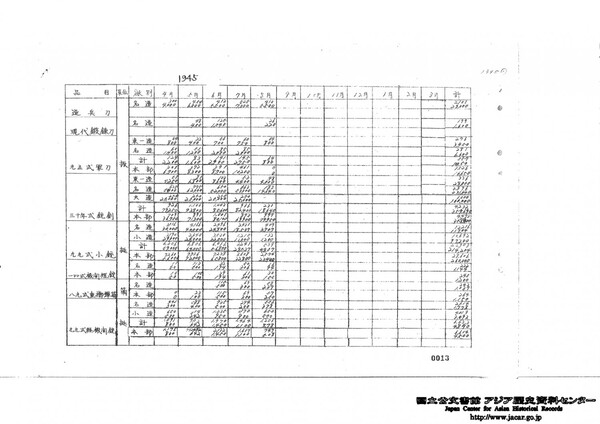
I wonder if it is percentages, maybe comparing production numbers to a desired number of 45? That would mean that most of them were beating production goals. Does that make any sense?
-
Help Identifying A Tanto
Bruce Pennington replied to StringHunter's topic in Military Swords of Japan
Very well made! I can't speak to the age though. -
Ok, this is too cool!!!! So, on the first chart, the Type 95 line seems to have 4 lines, with the top 2 being Tokyo First Arsenal and Nagoya Arsenal, correct? I see from Stegel's point that the third line is vertical total, but what is the fourth lines about?
-
Nick Komiya, at Warrelics, posted links to these WWII sword production charts. They are in Japanese though! I would bow a thousand bows to anyone willing to translate, or to post them in English, in chart form!