MauroP
-
Posts
888 -
Joined
-
Last visited
-
Days Won
5
Content Type
Profiles
Forums
Events
Store
Downloads
Gallery
Everything posted by MauroP
-
Camellia sinensis (tea plant)
-
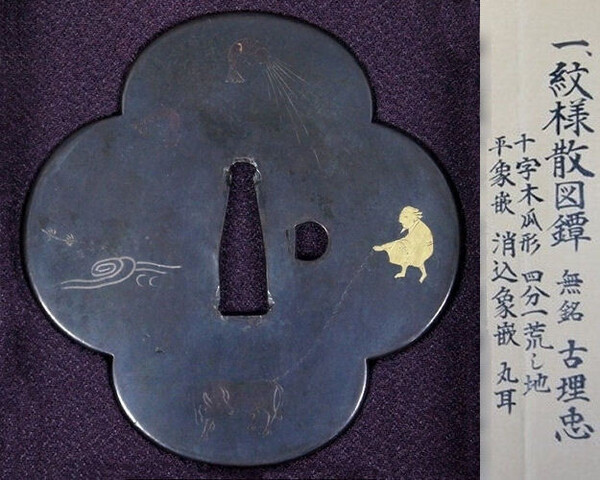
I think Umetada (or ko-Umetada) could be a good call. Here below a ko-Umetada tsuba (according to NBTHK) and the only ko-Shōami in soft metal I was able to find (which BTW is also not so far from the tsuba discussed here). .

-
関羽図鐔 - Kan'u no zu tsuba. Nikubori + suemon-zōgan + nunome-zōgan = Shōami (or better Aizu-Shōami), late Edo period. (for future reference)

-
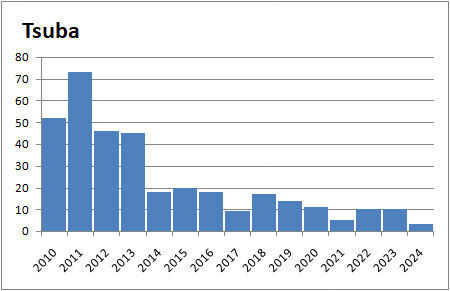
- Hi, my name is Mauro and I've been a tsuba addict for 14 years. - Thank you Mauro for telling us your problem! - Problem? Which problem...? All right folks, anyway now I've been astinent for 3 months. This thread prompted me to rewiew my buying habit about tsuba, and data clearly demonstrate: 1. it's a kind of addiction; 2. I'm improoving in the passing of years; 3. I'm not yet a wise man, but still enjoyng collecting .
- 56 replies
-
- 10
-

-

-

-

-
Possibly Akita-Shōami?
-
Kudos, finding an undervalued piece is the dream of every collector, much better IMHO than acquire a certified piece. Adding value through knowledge is the very essence of collectionism.
-
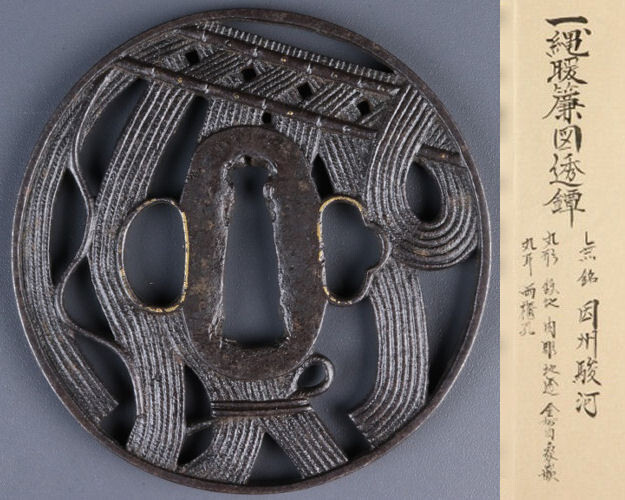
What about rope curtain (縄暖簾 - nawanoren)?

-
Complimenti, Manuel!
-
Manuel, I've recently moved to Venice, so I'd be glad to be part in the effort, nonetheless my limited competence.
-
I've visited the museum just a couple of weeks ago, after many years. Unfortunately nothing has changed. It's the kind of museum coud be acceptable a century ago, nowadays a shame for a developed country and for a culture capital like Venice. The quality of the collection is (possibly) out of discussion (but hard to judge in its own merit, IMHO), but the poor light, the small spaces and little information on each piece makes the whole more likes an old wunderkammer rather than a modern cultural experience.
-
Maybe a fragment of katana refurbished as a short blade to accomplish the tea ceremony dress code
-
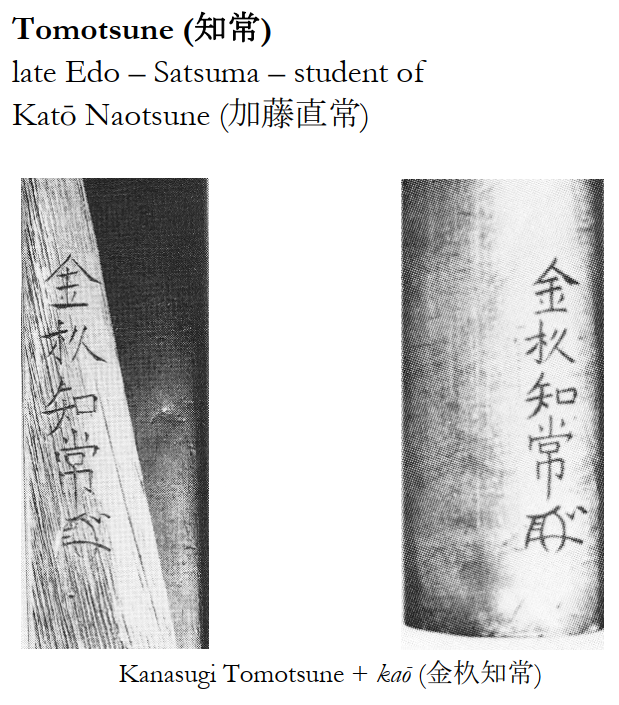
Benvenuto Mario. Possibly Nakai school from Chōshū province, mid Edo. The kaō is unusual, as far as I know, in tsuba signed Tomotsune.
-
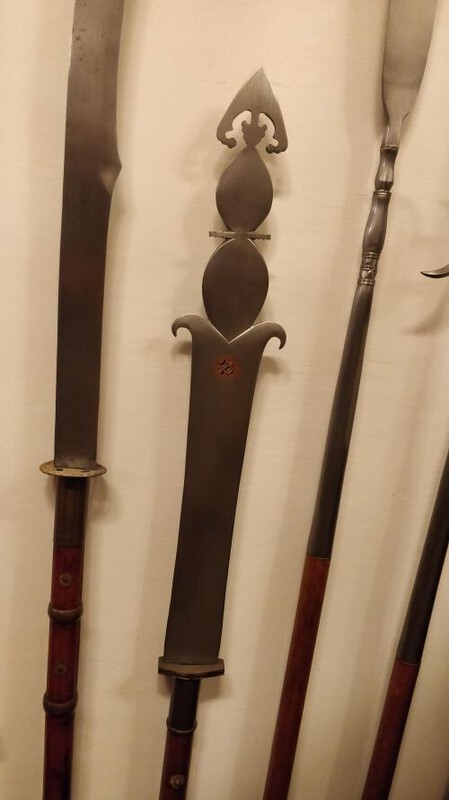
Hi David, at first sight I'd say not Japanese, but in Museo d'arte Orientale in Venice is displayed, among Japanese polearms, a blade wich resembles yours. The museum collection is an historic private collection containing also some Javanese keris, so maybe the old curator messed the items a little bit. Anyway a Japanese origin cannot surely be ruled out.
-
Who knows?...
-
translation Help Understanding NBTHK Attribution Kanemichi
MauroP replied to MikeyJ's topic in Translation Assistance
Hi, your translation is correct. No idea about its meaning. -
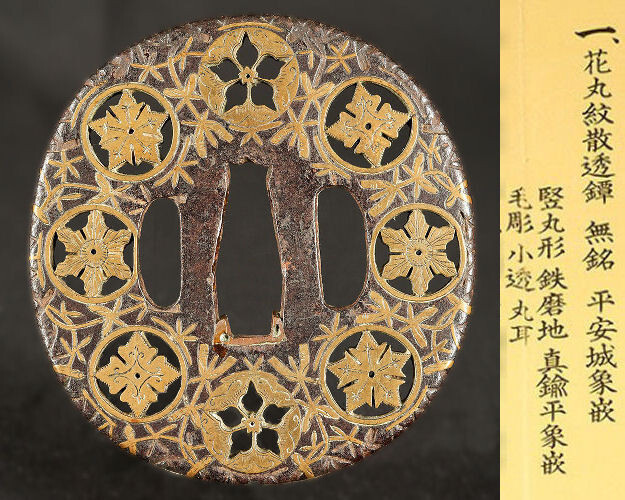
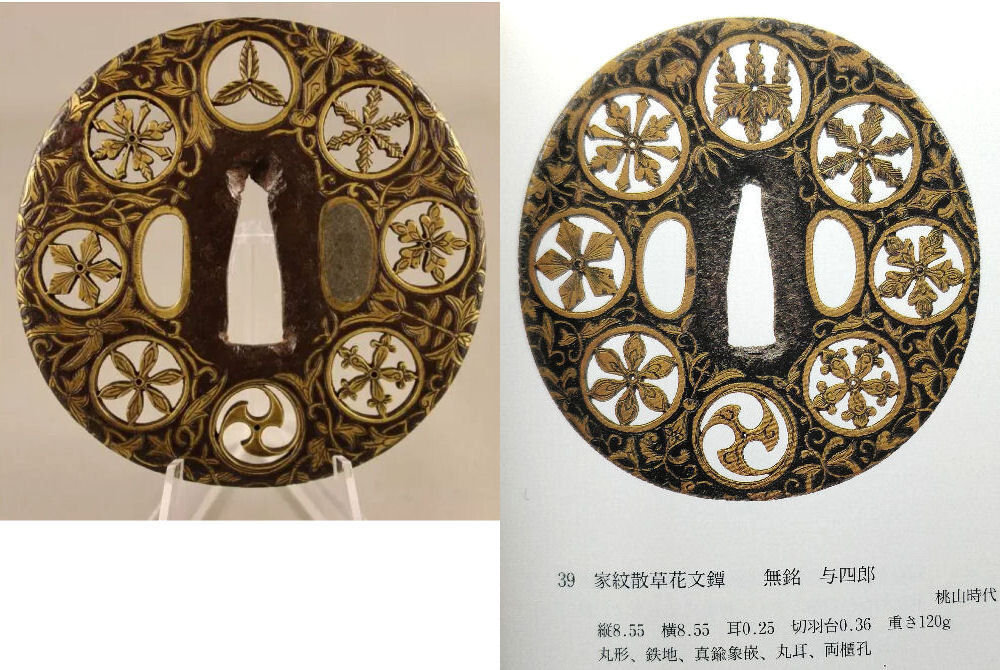
All right folks, first of all I want to assure that no intended disrespect to NBTHK shinsa activity from me. Simply I feel sometime confortable in expressing a different opinion. Here below another tsuba attributed to Heianjō-zōgan, showing a quite typical decoration with ranma-sukashi usually associated with Yoshirō-zōgan tsuba. I fully agree with Luca when he says that the tsuba we are dealing about is a "manual piece". Indeed here below the tsuba submitted by Justin paired with a very close example described as Yoshirō, taken from "Tanoshi Shinchū Zōgan Tsuba: 100 Tsuba" by Ōtani Sadao.

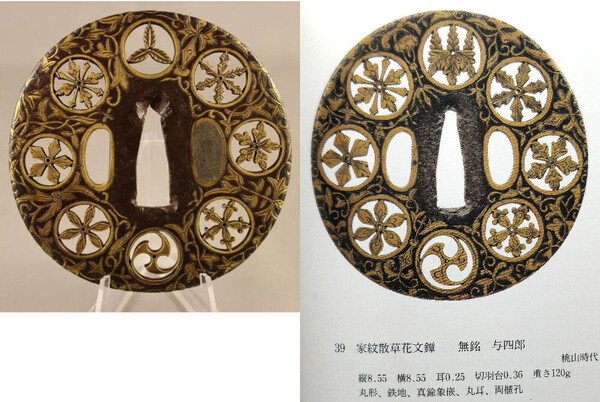
-
Luca, stai parlando male di Garibaldi! (it's an Italian idiomatic expression to say that some opinions cannot be challenged even if overtly misleading)
-
No. 1 – My recently acquired tsuba with an old tokubetsu kichō paper; attribution to Echizen school and described as folded bamboo (oritake sukashi tsuba - 折竹透鐔). No. 2 – Described as Tsuno Daishi sukashi tsuba (角大師透鐔), attribution to Ōno school. No. 3 – Tsuno Daishi no zu tsuba, attributed to Akao school from a well known Japanese blog (https://blog.goo.ne....c75e22236e977277602d). No. 4 – Subject described as bamboo object (take chōdo - 竹調度) and very precisely attributed (albeit mumei) to Kishū jū Sadanaga in “Tsuba: Ishō to Waza no Bi” by Hayashi Eiroku, p. 88. Already mentioned here above is another similar tsuba reported in “The Birmingham Museum & Art Gallery Tsuba collection” by Grev Cooke, p. 94, attribution to Shōami school. So what’s really depicted in these tsuba? Maybe a bamboo talisman representing Tsuno Daishi? Still looking for answers on the subject (no hope to know which school produced the tsuba...)
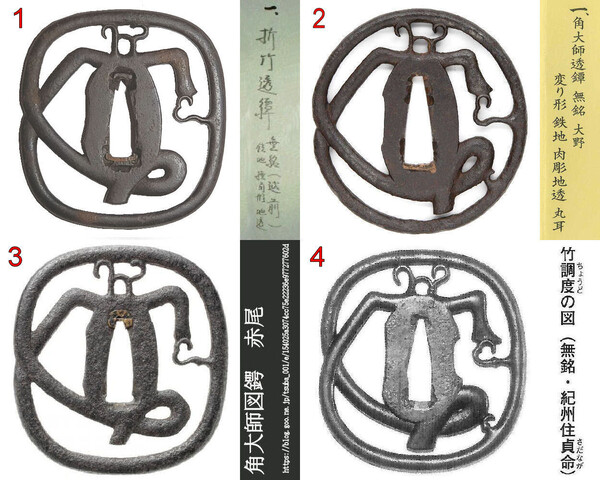
-
Thanks Pier, here the updated version of the document (I messed up even in the Latin title): https://www.dropbox....pdf?st=d2taebmh&dl=0
-
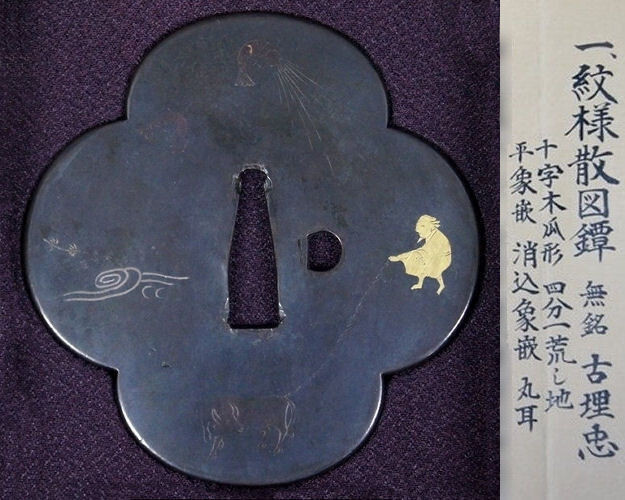
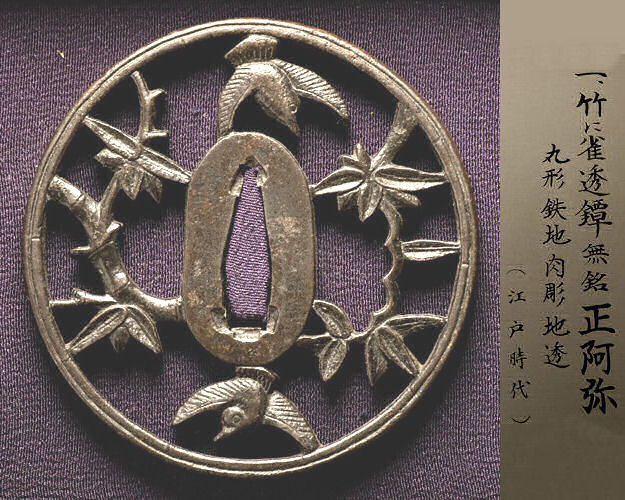
A traditional representation of suzume - 雀 - sparrows, that could well be (ko)-Shōami or Owari (less likely due to the nunome-zōgan).

-
Hi Mike, nice catch as first tsuba. Curran prompted me to give my not-so-educated contribution. So here we have a piece we may describe as: mitsu tsuru no zu tsuba - 三つ鶴図鐔 maru-gata tetsu-ji nikubori ji-sukashi kin-tsuyu-zōgan - 丸形 鉄地 肉彫地透 金露象嵌 ryō-hitsu-shitate (kata-ategane) - 両櫃仕立 (片当金). I assume this is a wakizashi-sized tsuba from the middle/late Edo period, not easy to assign to a defined school/tradition. I would suggest 3 hypotheses: Echizen (越前), Bushū (武州) or Shōami (正阿弥). Here just one example for each call:
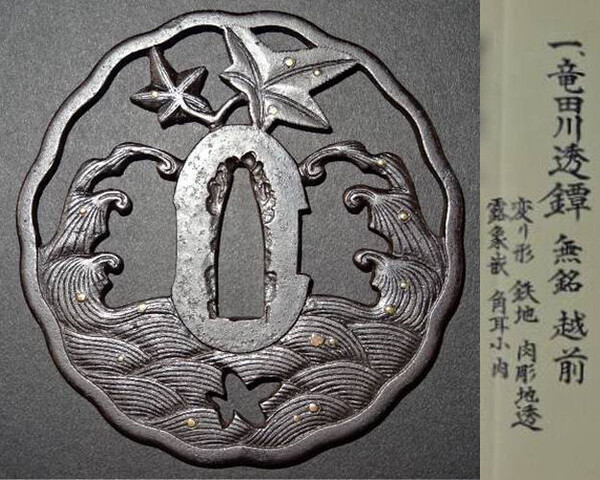


-
勾玉・曲玉 - magatama, literally curved jewel. Like hōju, magatama has also a religious significance, but it pre-dates (for many centuries) the Buddhist tradition. A magatama is one of the three imperial regalia of Japan (with a mirror and a sword).