MauroP
-
Posts
853 -
Joined
-
Last visited
-
Days Won
5
Content Type
Profiles
Forums
Events
Store
Downloads
Gallery
Everything posted by MauroP
-
The very same tsuba is also reported as Kanayama in "Early Japanese Sword Guards: Sukashi Tsuba" by Sasano al p.118. I think we need better photos of your tsuba to give an educated opinion on true Kanayama vs. cast copy. bye, Mauro
-
Hi Bojan, my best guess about your tsuba: #1 Kinai (記内), daikon no zu tsuba - 大根図鐔 #2 Owari (尾張) or Kyō-sukashi (京透), itomaki sukashi tsuba - 糸巻透鐔 #3 if not cast it could have been an Akasaka tsuba #4 Nanban (南蛮), unryū no zu tsuba - 雲龍図鐔 #5 Heianjō (平安城) #6 more Hizen (肥前) than simply Namban, ryū ni shachihoko karakusa sukashi tsuba - 龍に鯱唐草透鐔 Bye, Mauro
-
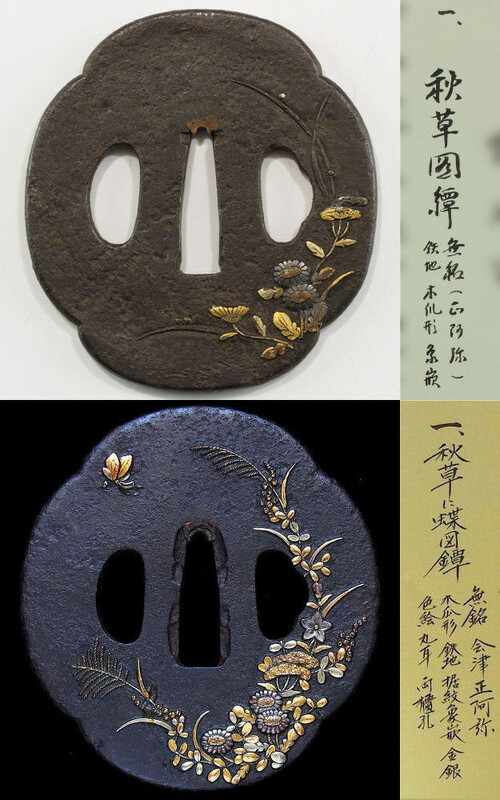
Hi Matt, your tsuba #1 is not so bad, after all. It possibly "fits the box" Aizu-Shōami (会津正阿弥) or just Shōami. Good luck for the next buy! Mauro
-
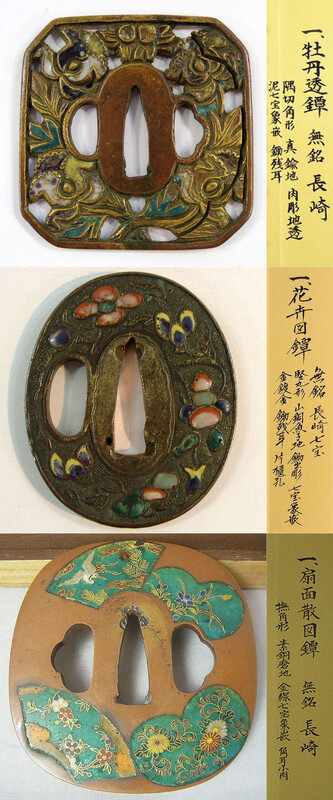
Hi Grev, try researching Nagasaki or Nagasaki shippō (長崎七宝). Mauro
-
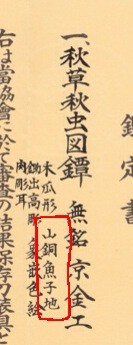
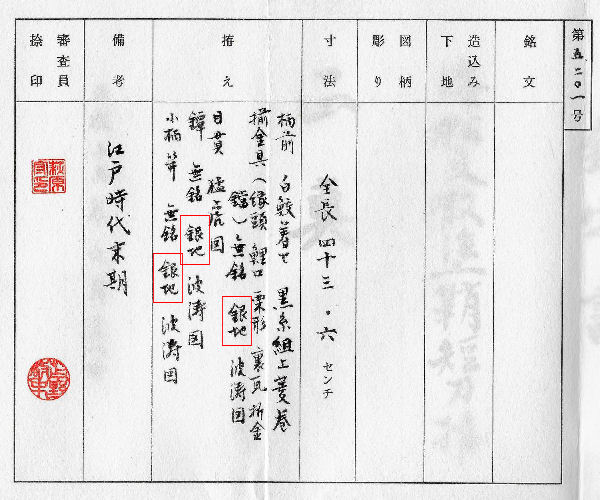
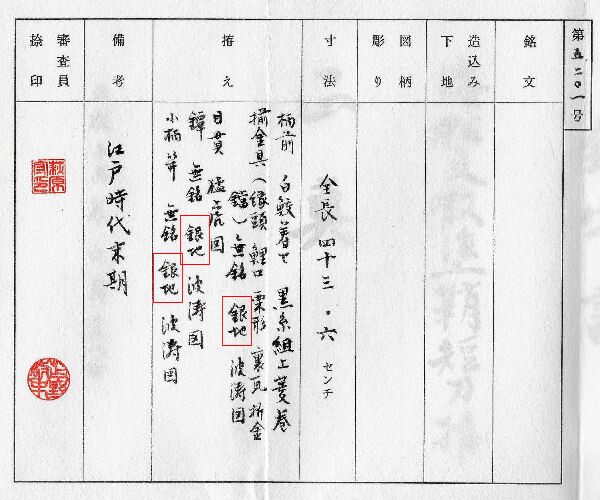
Hi Ron, the boxed kanji say 銀地 - gin-ji - silver material Mauro
-
May I suggest a different transcription of mei from Ludolf tsuba? Possibly 山城住家貞 - Yamashiro jū Iesada. The tsuba posted by Christian could be produced in another province: 勢州住正家 - Seishū jū Masaie. Bye, Mauro
-
In Italian the right definition is "margini del traforo", so margin, edge or border may be the right word? Mauro
-
The tsuba could be a Tenpō school. The filling of sukashi spaces is usually referred as gan-kin (嵌金). Bye, Mauro
-
The style of Chris tsuba seems more akin to the Higo style.
-
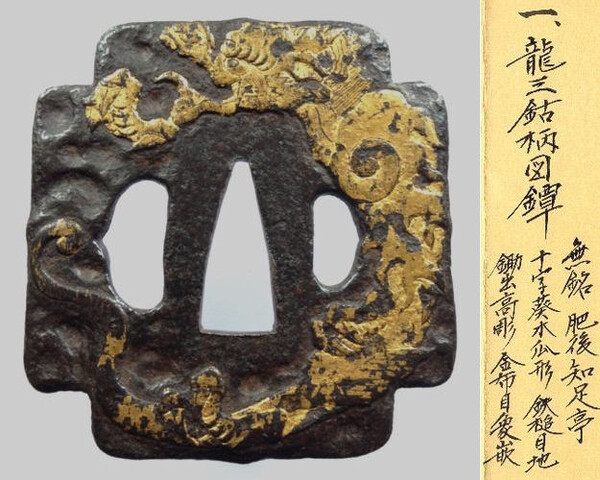
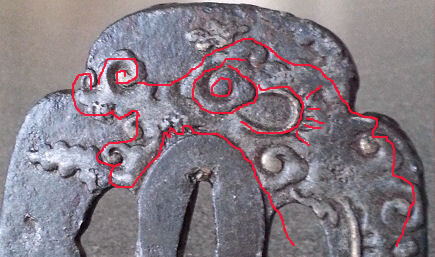
A dragon in clouds - a dragon of clouds !?
-
Hi Christian, here a tsuba papered Echizen by NBTHK: http://yushindou.com/%E8%B6%8A%E5%89%8D%E9%8D%94-%E4%BA%8C%E7%96%8B%E8%87%A5%E7%89%9B%E5%9B%B3/ More tsuba with resting ox/buffalo: http://www.mfa.org/collections/object/tsuba-in-the-form-of-a-herdboy-sleeping-on-his-ox-11332 http://www.mfa.org/collections/object/tsuba-with-design-of-water-buffalo-13687 http://www.mfa.org/collections/object/tsuba-with-design-of-two-water-buffaloes-11385 Bye, Mauro
-
The tsuba represent a daikon (大根), a kind of horseradish. Probably middle to late Edo period. Bye, Mauro
-
Hi Oliver, I have the very same tsuba, possibly in a better shape, and I have to confirm it's a cast one. The signature is Gōshū (no) jū Sōten - 江州住 宗典 (which is obviously gimei). The interesting questions now are: why and when these kind of tsuba were produced? The answers are not obvious. Bye, Mauro

-
Hi Chris, I was just suggesting that your tsuba could be a Hizen one. Regards, Mauro
-
Just a suggestion based on Gestalt feeling: what about Hizen (肥前) school? (sorry, I missed the original references) Mauro
-
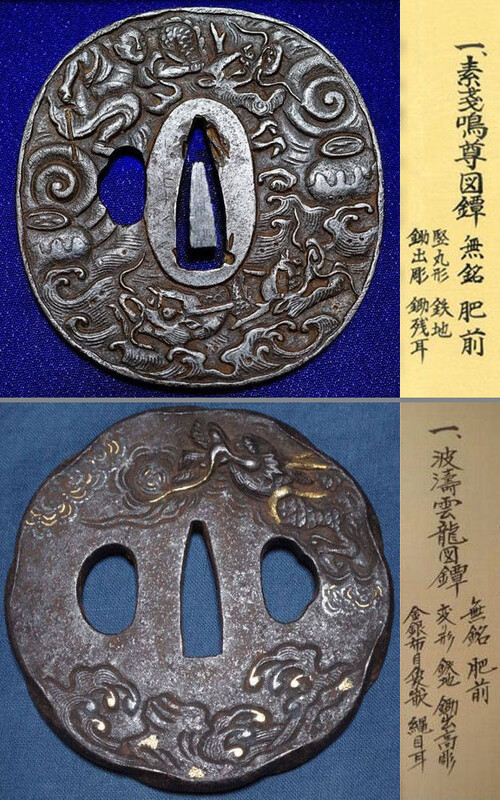
Regarding the generic techniques, the paper say hira-zōgan (平象嵌) and tsuyu-zōgan iroe (露象嵌色絵). Here another tsuba with NBTHK attribution as Kaga-zōgan (from http://wakeidou.com/publics/index/275/) Mauro

-
伏見住 鉄人作 Fushimi (no) jū Tetsujin saku Probably nothing to do with Kaneie school. A Tetsujin is listed in vol. 2 of Toso Kodogu Meiji Taikei by Wakayama (but unfortunately I haven't that book). Bye, Mauro
-
江府 reads Kōfu, but Efu is a "popular" way of reading, as far as I know perfectly legitimate. Anyway the meaning is just Edo. Bye, Mauro
-
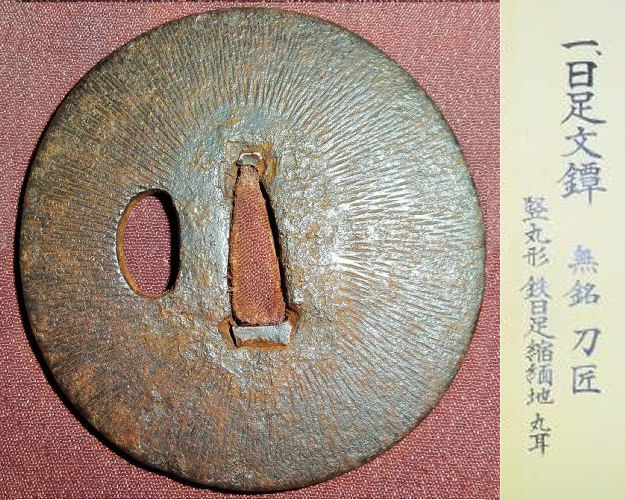
In the NBTHK paper here below a similar surface pattern is called 阿弥陀石目地 - Amida-ishime-ji. In another paper the same pattern is called 日足縮緬地 - hiashi-chirimen-ji. Bye, Mauro


-
Hi Grev, I have at least 3 tsuba where the transverse axis is longer than the vertical one, but the difference is less than one millimeter, so I assume it's just a negligible deviation from perfect maru-gata. Mauro
-
John, I think the correct rōmaji is: 鋤出彫 - sukidashi-bori - low-relief obtained by carving away the surrounding ground plate 鋤残耳 - sukinokoshi-mimi - raised rim obtained by excavating the central portion the tsuba Mauro
-
Hi Gasam and John, I too was puzzled by the transcription of the Nishigaki tsuba paper. In particular the inscription on the omote side 根元三ツ浦 - nemoto/kongen mitsu'ura (a name of the recipient?) is quite mysterious. Here (http://katana.mane-ana.co.jp/shigemitsu.html) a tsuba with the same inscription (as already pointed out by Michael on the old post), but even the Japanese author (if I have correctly grasped the general translation) seems perplexed about its meaning. Bye, Mauro
-
Hi Neil, 馬図鐔 - uma no zu tsuba, probably Shōami school, late Edo. For a better example see http://www.mfa.org/collections/object/tsuba-with-design-of-grazing-horses-13405 Bye, Mauro
-
The point here is: do you believe that the text from the dealer is more reliable/auctoritative than the NBTHK kanteisho? Bye, Mauro
-
Here where is written yamagane-nanako-ji. Mauro