Gakusee
-
Posts
1,951 -
Joined
-
Last visited
-
Days Won
22
Content Type
Profiles
Forums
Events
Store
Downloads
Gallery
Everything posted by Gakusee
-
With €1000 in the blade, it is like a lottery ticket, so chances could be taken. I still do not believe it is Koto, with all the new photos.
-
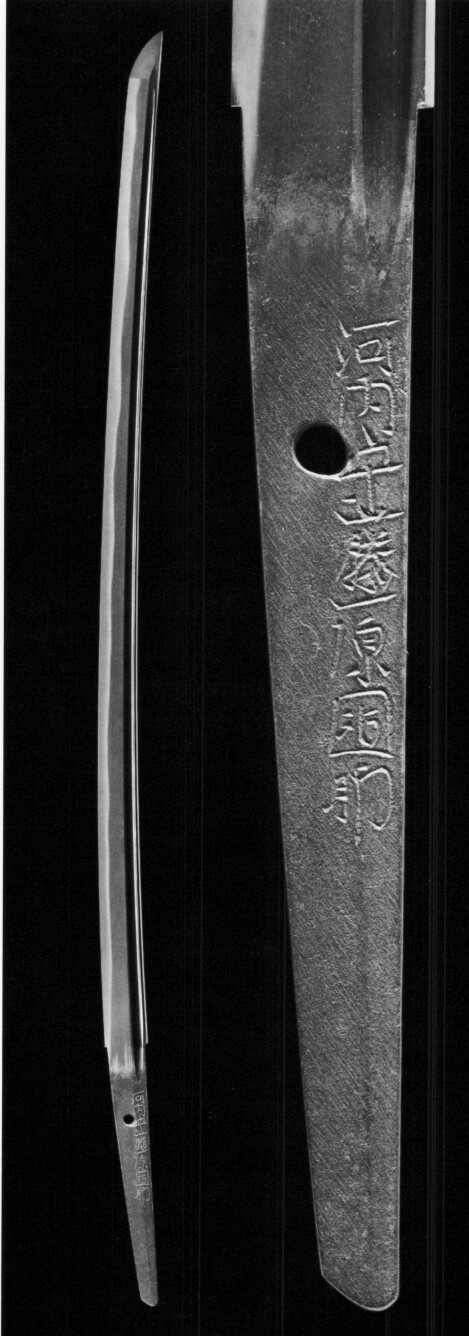
As a rule of thumb when we see such a straight blade, that points to Kanbun Shinto, of the end of the 17 century. The length of 75cm is not an issue whatsoever (see Kunisuke example below, all 76cm of Kanbun “magnificence”). In fact, there are some examples which are 80-89cm in length and frequent 75-80cm. This blade is likely Shinto/ Shinshinto and the nakago could have been tampered with to mislead for an older blade. I could be wrong, if we see wonderful hataraki and complex jigane, but somehow I am sceptical.

-
Well, John, the obvious answer is by the NBTHK itself in a recent shinsa. Also, a Japanese speaker can call the NBTHK and ask for confirmation or their views of a Kicho paper. You need connections and Japanese for that.
-
I shall be a bit contrarian here. I know everyone is clapping and congratulating, but I wonder why do people not save a bit more money first, study a bit longer and then buy something a little better? I am not talking expensive swords or waiting too much but a year worth of saving could potentially result in a much better outcome. With a couple of thousand dollars put aside one could buy something they might enjoy more. There are usually very good starter blades on this board or elsewhere, eg Ray and Grey and others sell these occasionally. I hope I do not sound elitist, as this is far from my intention. I merely wish to point out the virtues of patience and checking out blades here or other reputable dealers that come here.
-

NBTHK Yearly Number of Shinsa Passes
Gakusee replied to Jussi Ekholm's topic in General Nihonto Related Discussion
Good digging, Jussi, thanks also in the annual report you can see the Hozon fees dwarf any other fees received. A major revenue generator. -
Mumei and Suriage - Open Discussion
Gakusee replied to KWA's topic in General Nihonto Related Discussion
Hey guys, the thread started in a civilised manner. Even if you disagree or have misgivings, please post as Brian did, with rhetorical questions which clearly indicate that there is an alternative reality where people spend less, on non- exemplary swords but are still happy. We do not have to demean ourselves with insults, personal conjectures about people’s circumstances, insinuations, etc. Let us keep it civil and focused on swords please. In this hobby, there is a place for everyone. I do not go and throw mud on the military swords guys in their section even though I do not believe in them as art. The fact is some people view machined items as art, eg even cars or watches etc - made in their thousands etc they still bring joy to people who collect them.... Hey, in my childhood I used to collect empty matchboxes and cigarette boxes. Probably (well definitely) worthless but I was so happy with my next acquisition. Alternatively, if someone can collect at the very top of the pyramid, good for them. Clearly a successful person with a successful family who has the disposable cash to acquire top items. I do not remember 10-15 years on this board people being so vitriolic and slinging opinions and criticisms so much. It was mostly about the swords and content and knowledge etc. We need to become more tolerant all around, and more open-minded and inclusive and civil please. -
I suppose his approach of scratching the surface and using video game clips will appeal to the younger audience who wants instant understanding, visuals etc. Provided some of them delve deeper, that will be a good outcome. I wish Touken World would at least subtitle in English their wonderful videos. They talk of specific great swords, talk about their famous generals and war lords, about history of the sword.
-
Earliest dates of extended kissaki
Gakusee replied to bigjohnshea's topic in General Nihonto Related Discussion
Axel I do not wish to engage in arguments either. It is true that o-kissaki is associated with Nanbokucho (broadly after 1330) and Soshu den and Soden Bizen. However, what I am doing here is disproving that this is when o-kissaki emerged. John asked when the earliest examples emerged and I am proving below with examples from 1230-1280 across schools (Ichimonji, Mike, Sairen, Taema) that o-kissaki had already emerged in the mid thirteenth century.


-
Thanks, Rayhan, the baby-faced Dave has made a good basic attempt but that is what it is - very, very basic and interspersed with anime and video game clips. It failed to deliver on its promises of debunking myths. And much as I like Natasha and am very grateful for her helping us with various Leeds Armouries visits for our Society, I would have wanted to see Greg Irvine interviewed too. There were some comments in there about the Mongol invasions and the resulting death of the tachi in favour of the shorter katana for single handed combat which is simply not the case (videlicet the long Nanbokucho tachi, which came in fashion exactly after the Mongol invasions).
-
Swords on Exhibit - Oiled(?)
Gakusee replied to EastCoast's topic in General Nihonto Related Discussion
Please do provide updates for the rest of the year, if possible. Not every week but every couple of months indeed. Initial protection is clear but the long-term effect is what interests more. Thank you -
Earliest dates of extended kissaki
Gakusee replied to bigjohnshea's topic in General Nihonto Related Discussion
Axel it is very simple. Teiryo Yoji was written by Honami Koson at the beginning of 20 century. Since then more knowledge has come out. He was one man, very knowledgeable but he has seen a limited number of swords. The same applies to Fujishiro etc - while their books are great, they are one piece of reference only and we need to delve deeper into this. The field has expanded a lot in the last 50 years, with the publication of so many Juyo and Tokubetsu Juyo Zufu, and identification of a lot of swords that these guys had probably not seen. -
Earliest dates of extended kissaki
Gakusee replied to bigjohnshea's topic in General Nihonto Related Discussion
Hi Axel. Your post suggests the earliest o-kissaki swords are the Soshu ones. as posted above, Yoshifusa did it some 50-70 years earlier. -
Thomas S, 1. Your English is perfect. 2. Michael Hagenbusch had one of the best European collections, built with the help of top Japanese dealers like Kurokawa san and Iida san. He was also chairman of NBTHK EB and very close to the NBTHK Honbu and knew a lot through those associations. I am sure you learnt a lot from seeing his collection and it is a pity it was recently dispersed. I wish I could have seen it, but it was a bit before my time and I also did not travel to Germany for these sessions (work, family, etc) despite being a member. 3. Your pursuit of better and better blades is understandable. It is like an addiction - once you “know” quality and your eyes can detect it, you tend to gravitate to it. Unfortunately that is often proportional to financial stress. That is where the shrewdness, careful planning and budgeting and trying not to lose (too much) money, which the original post implied, all come into play. Of course, often this comes with experience. 4. I believe one can be honest and be a good collector or member of such forums and societies. It is better that way, even if one makes less money. Works from a collector point of view but less so (if at all) from a dealer point of view, even though it is practised by some dealers. Sometimes lines get blurred and collectors become dealers and vice versa. In other words, honesty and integrity might become challenging when people aim to consistently and repeatedly generate profits from trading swords, as that is not (always) possible if you are a collector (since usually there are at least a couple of dealers’ profit margins embedded in the price you have paid, save for the exceedingly and increasingly rare military veteran bring-backs). 5. I think the most liberating act is to realise that a moment comes when one’s taste and knowledge far exceed one’s financial ability. Then it becomes futile to chase all the great blades and is more imperative to study and view items even when they belong to others and museums. Having a few good items does not shackle you. What mentally fetters one is the “hunting”, the obsession with owning, the instinct to accumulate and hoard, the desire to spend when one has a few spare £/€/$/¥ (i.e. “itchy hands”). That is when mistakes can creep in. The above are merely my perspectives and others can approach the subject very differently. Overall, what always prevails is consistent studying and self-improvement, which should mitigate chances of being “mislead” inadvertently or deliberately by others.
-
Pity someone cleaned the nakago when they “ polished” the sword. From one of the top photos I think they even blurred the yokote line which has lost its crispness.
-
Bob, I beg to differ. I think one can combine acquisition of what one likes with these “likes” being sound investment pieces. In your statement you ignore the timing and evolution factors, which is what Ray and Adam refer to. In essence, with the passage of time and evolution of one’s taste, one tends to go after more sophisticated pieces, which tend to hold their value better. Commodity, commonplace items just do not hold value so well. To some, extent this is affected by the fact that this is a “zero sum game” since the number of old swords is finite (this excludes shinsakuto, which are still being forged).
-
Earliest dates of extended kissaki
Gakusee replied to bigjohnshea's topic in General Nihonto Related Discussion
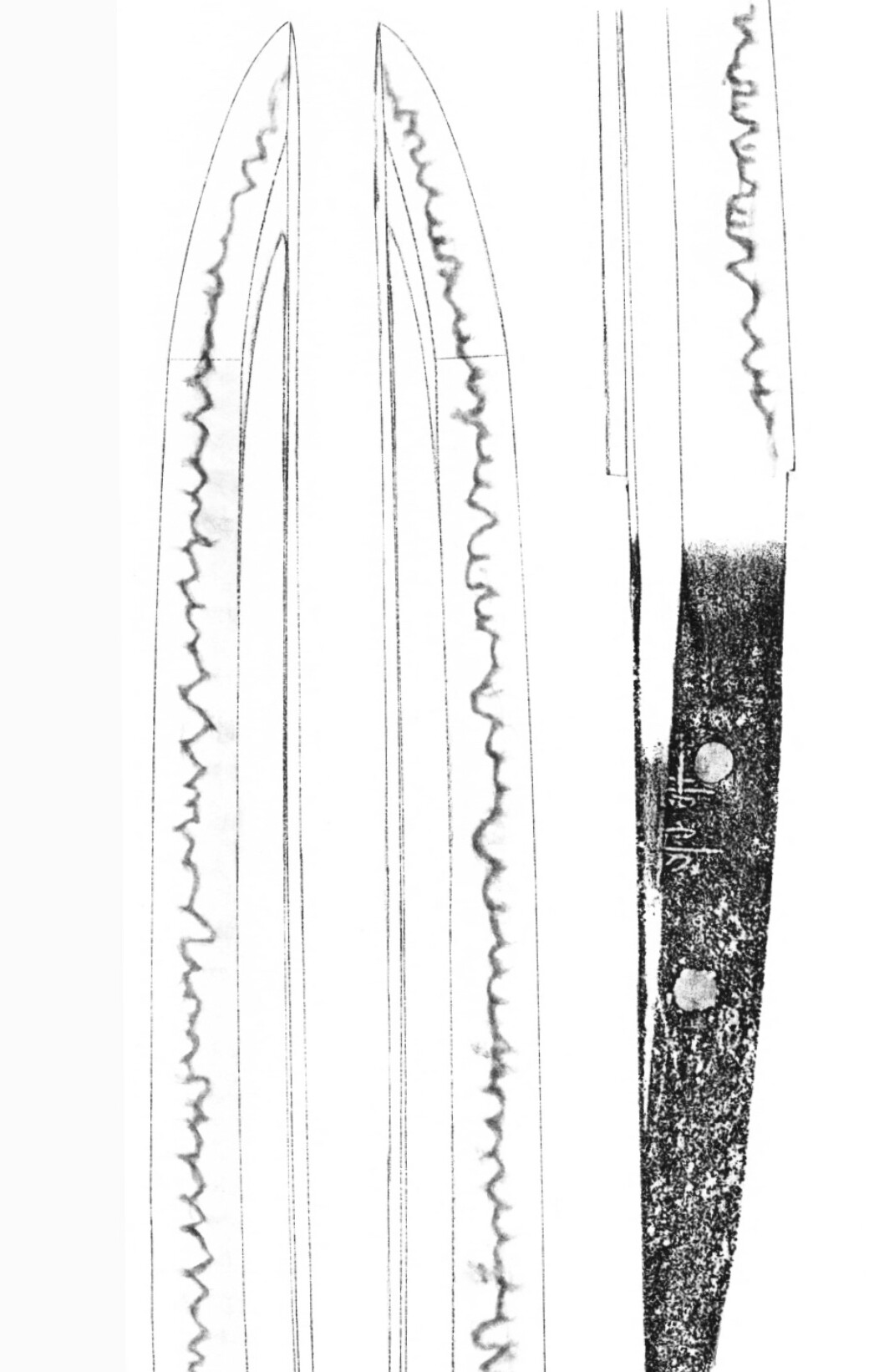
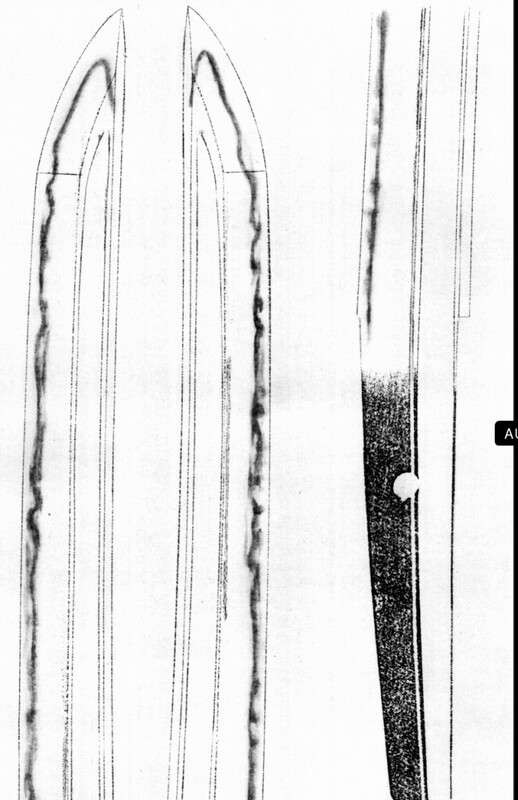
Yes, John, you are of course right and I mislabelled the Kaneuji, which is a later blade. But the Miike example still stands. Another interesting one is this special order Fukuoka Ichimonji Yoshifusa (he worked roughly 1230-1260, or along these lines) - see below. I think this is your best bet of a “ signed and dated” example. Yoshifusa did not date his works but signed them. Extremely valuable and pricy swords. We are lucky the mei was retained on this example. So, apart from this Yoshifusa and Katayama Ichimonji converted blades (presumably originally nagamaki or naginata), I have not been able to trace too many other early examples.I have been able to find some generic Ichimonji blades (not attributed to a school), probably 4-5, and some Yoshioka blades too - another 4-5, in the Juyo volumes. As we move towards the end of 13 century, 1280-1290, there are a few Senjuin and Taema blades with o-kissaki. So, I think it is clear that while mid/late Kamakura examples do exist, they seem to be special orders, exceptions, rather than prevalent stereotypes. As we move into Nanbokucho, then the archetype shifts for the previously discussed reasons.
-
Earliest dates of extended kissaki
Gakusee replied to bigjohnshea's topic in General Nihonto Related Discussion
-
Earliest dates of extended kissaki
Gakusee replied to bigjohnshea's topic in General Nihonto Related Discussion
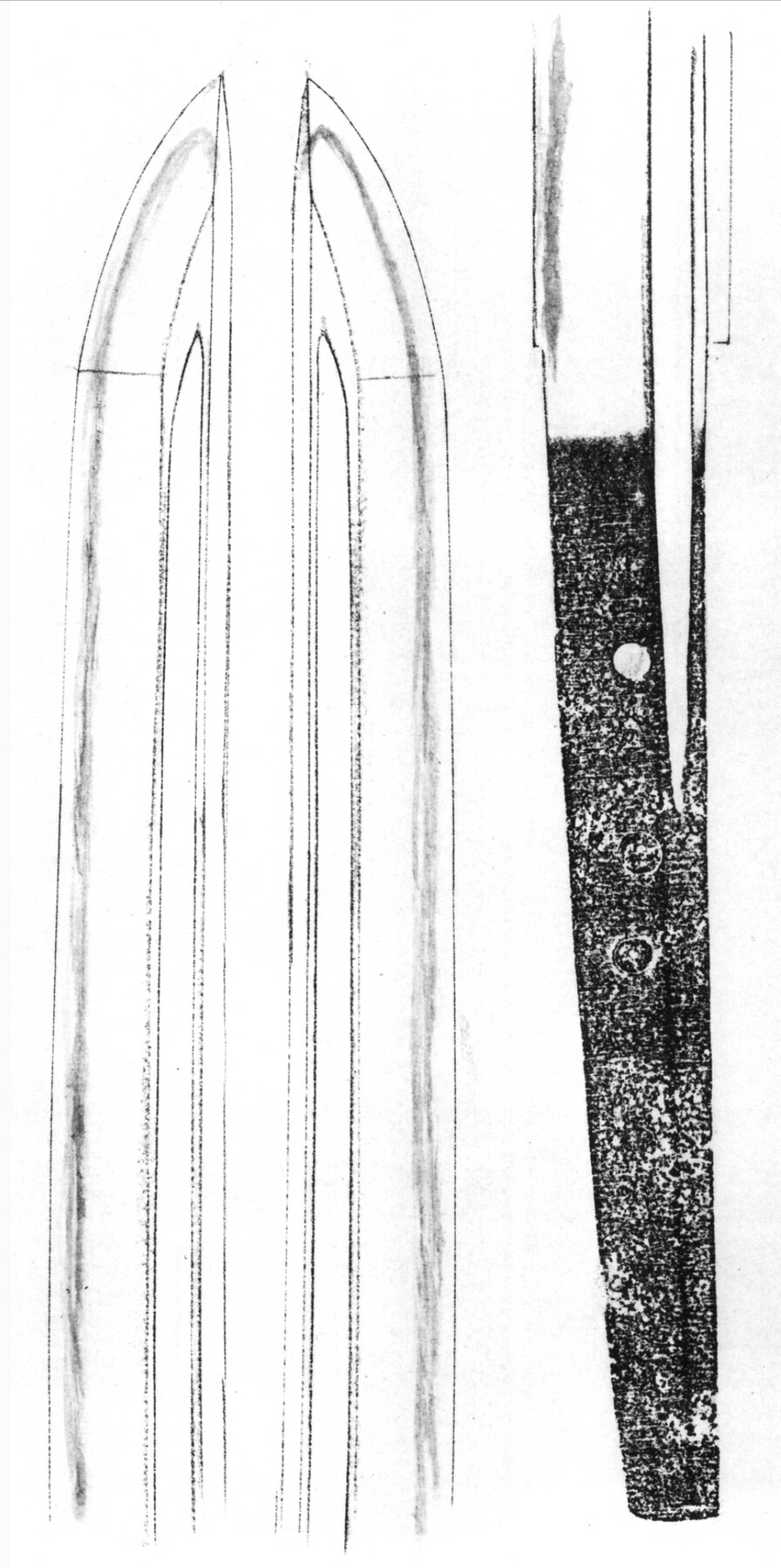
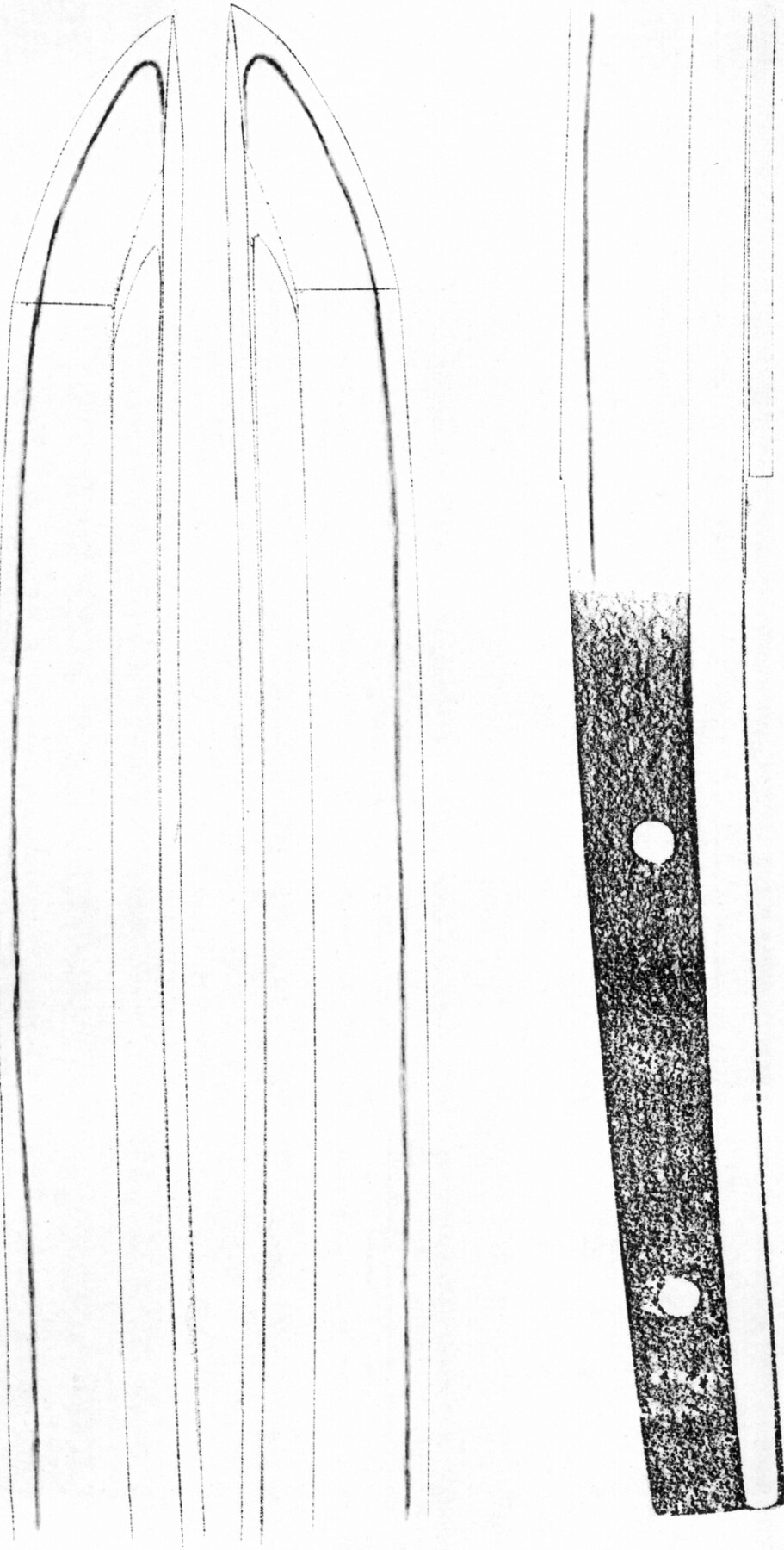
As Ray (Kawa san ) suggested above, these developed in pursuit of strong kissaki that could withstand the thick Mongolian armour, so mainly post the 1270s. I would not ignore the various naginata / nagamaki that Ray mentioned but acknowledge that they are not purely what the discussion is about. there are various Katayama Ichimonji nagamaki / naginata but also tachi with o-kissaki. I have read somewhere that the definition of o-kissaki is that the length of the kissaki is > 2xthe yokote line. So, we are safely in okissaki territory when at 2x. Extended chukissaki at 1.5x or thereabouts. When roughly 1-1.2x we are talking of ikubu kissaki and below 1 often ko-kissaki. Now, there are various early Kamakura blades with o-kissaki but these are rare. Jussi’s blade might have a big kissaki, simply because it is a gigantic blade, but that does not make it o-kissaki (which is about proportionality). Attached are examples: Yamato Kaneuji and Miike, dating to 1230-1250 roughly.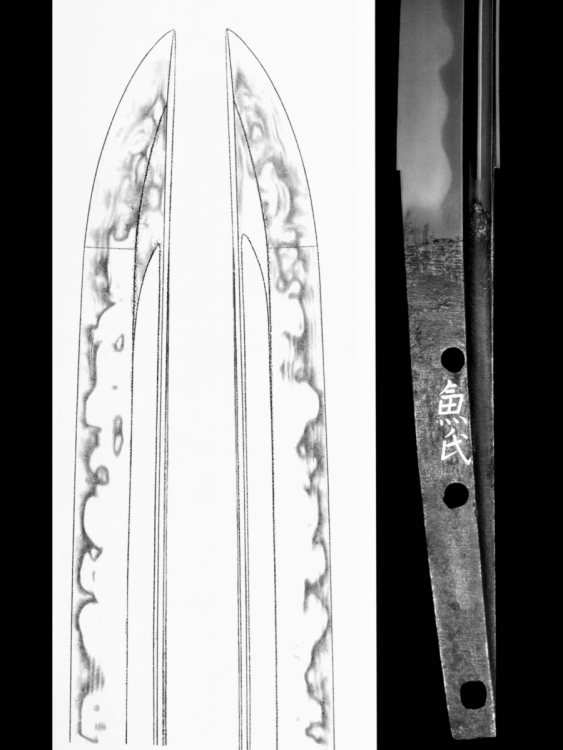
-
Darker theme for those who are light sensitive
Gakusee replied to Brian's topic in Forum Technical Details and Maintenance
Brian, similarly to Paul, I do not have this option: - only Privacy Policy and Contact Us. - is this one of the new paid-for/subscribe options? Anyway, hope you are recovering swiftly. Thanks -
Well done to Matt and the precedent shows that one should not pre-judge blades early on the basis of photos. Also, another trick is to look for recent TH papers, issued in the last 3-18 months. Those could indicate that the dealer either did not have the time, inclination or confidence to submit the blade to Juyo shinsa. Sometimes they merely turn inventory over and people could get a bargain in that the full margin of a Juyo blade might not have been priced in into the TH papered blade.
-
I do not think Katayama Ichi are the least well regarded. I would reserve that honour for Iwato and others. In fact if you see an Ichimonji nagamaki or naginata it almost always gets attributed to Katayama. There are some very good blades in that school, particularly by the founder Norifusa. I have not visited the Aoi website and am going by what Ray posted above in terms of images. For Katayama Ichi I would want to see a much more slanting , saka choji hamon. Notwithstanding, there are some where the choji and ashi are upright only.
-
I think the answer is reasonably simple: the website exists, Paul is around and very much in business but has likely discontinued his forum probably due to the headaches involved in managing one.
-
Thank you,.... that is very telling Many copies and fakes
-
Apart from the Nagoya “biggie” , his competitors are the Osaka mega-collector Sawaguchi san (http://www.brastsheave.com/custom.html) and Mori san (https://www.shusui-museum.jp/en/collection/).
-
Ha, the old debate ... To uchiko or not ..... Most novices, and actually even some people who believe they know what they are doing because they have “been collecting for 20 years” or whatever the number is, might not know how to use uchiko and apply it. Mistakes include: - using bad uchiko (large particles, or too many of them released via the mesh as the silk mesh is substandard) - overoiling swords and hence creating problems by setting up a toxic mix of oil, dirt and uchiko - pressing uchiko too hard or hitting the uchiko ball on the sword with too much force - and of course the micro abrasive power of uchiko, no matter what, on the lustre of the sword which has been newly polished I know myself, as I have scratched swords using uchiko..... Very few know how to apply it properly, ie removing the oil with a soft tissue or microfibre in the first instance, then spreading the very finest uchiko very very gently, then dusting off / brushing off the larger particles with tissue , and only then applying the tiniest of pressures with a soft tissue. As it is risky and an inexperienced hand can do more damage than none, it is safer and better to use microfibre. I have seen collectors with 30 years experience energetically slamming the uchiko ball on the blade and then zealously wiping it off with paper, which is guaranteed to abrade the polish. And it does not matter whether it is hadori or sashikomi, you are still inflicting micro scratches. Sashikomi vs hadori differs in the nugui being used and the technique for rendering/tracing the hamon but even a sashikomi polish could be “shiny” and could be damaged by uchiko. So yeah, some very experienced Japanese collectors and collections know how to use uchiko but that does not mean the wider majority of us can do it well.