Gakusee
-
Posts
1,954 -
Joined
-
Last visited
-
Days Won
22
Content Type
Profiles
Forums
Events
Store
Downloads
Gallery
Everything posted by Gakusee
-
Austus, no need for a new term. The swords you are describing in your last paragraph are shinsakuto.
-

Visiting Aoi Japan - First Nihonto Ever
Gakusee replied to radicalrad's topic in Auctions and Online Sales or Sellers
I have had negative experiences with Aoi’s online auctions: - they have let the auction run beyond the stipulated time - last minute “automatic” increases (I don’t know if there was shill bidding? No way to know) - when I telephoned and complained that the auction seemed to overrun and my computer did not cope with that, they said if I could buy the item right away at the specified price at which the auction closed that I could have it. But the payment had to be in one go (I could not use a credit card) - I would not participate in auctions there but others seems to have done it successfully. -
Shipping is a killer on that one, as they have chosen DHL and send the item framed. But very responsive in terms of notifications and emails. Will see how it pans out
-
Juyo Biyutsu Den Mihara Masahiro
Gakusee replied to Fuuten's topic in Auctions and Online Sales or Sellers
And? -
Inspired by this thread, I have just ordered one. I chose the artist, Teshima, in the video and ordered from his shop Hitofude Dragon. I checked the 3-4 other artists that appear in Internet searches but stylistically liked that one most: https://onestrokedragon.jp/ Other choices are: https://www.buy-Japan-art.com/collections/one-stroke-dragon-painting http://ippitsuryu.com/about http://www.kousyuuya.com/
-
Piers, I just want to make sure the distinction is crystal clear between NTHK perception (they are good), availability of knowledgeable people (there are some experts there and definitely better than us, laymen) and commercial reality (but actually commercially in Japan and Europe people prefer the NBTHK). Also, out of memory, my items were in the mid 70s point range.
-
Jussi, the score sheets I have seen used to contain the name of the owner. The Japanese are very sensitive about that usually, so I am not surprised these ”get lost”. Furthermore, having talked to a lot of people in Europe and Japan, the NTHK papers seem to be truly and unreservedly commercially accepted only in the US. Elsewhere there is unfortunately much less receptivity and acceptance of the NTHK. One dealer in the UK 6-7 years ago even did not want to take my sword because it had only NTHK papers. But even that blade with its 2 NTHK certificates, one for the blade and one for the tsuba, had miraculously lost the score sheets before crossing the Atlantic over to me.
-
Storing sword vertically for a long time, especially when oiling them more generously, could lead to impregnation of the tip of the saya with oil. I have seen photos of shirasaya discoloured at the very bottom from too much oil.
-
That kodachi is impressive. Not only is it gorgeous and TJ, but also it is in the famous Tsuchiya Oshigata book. Wonder which daimyo owned it? This sword at Juyo was qualified as Yoshioka but at TJ they corrected it to the much more sensible Fukuoka, given the flamboyance and shape of choji. The smith worked around 1220 and was a Gobankaji.
-
Favorite Era for Sword Making
Gakusee replied to Blazeaglory's topic in General Nihonto Related Discussion
“All books say Kamakura, however this is influenced by the Edo period notion of Kamakura being vastly superior to anything associated with Ashikaga usurpers and thus quite a few Soshu masterpieces are traditionally attributed not based on sugata, but based on tradition.” Kiril - will you elaborate please? Soshu blades are often suriage and thus sugata cannot be fully evaluated. Perhaps Nanbokucho and Soden blades could somewhat get attributed on the remainders of sugata but Soshu is attributed on the basis of skilful hada (usually refined but could be more ostentatious like matsukawa) with lots of chikei and jinie and hamon filled with nie-based sunagashi and kinsuji. So I agree that it is not sugata based but is what I described broadly what you meant? “Kamakura proper (pre 1300) pieces tend to be tachi, and they tend to be already recognized for what they are and Juyo+ unless having serious issues. And most are very tired.” Well, “most” which most people see might be tired, but not the good Juyo or TJ blades. Also, there are so many suriage Kamakura blades that they are now referred to as katana, even though likely they were tachi There is late Kamakura, 1300-1333, which probably should be treated separately from the rest of Kamakura period, and is very interesting in many aspects, but does require very significant numbers to access the top quality. But it has some of the best artistic works. Kirill R. -
Information in the research of two swords that I have recently purchased.
Gakusee replied to CaptainMac's topic in Nihonto
Let’s not be pedantic indeed. What Darcy said and meant was that the swords ought to bear the same month and year (swords are not dated to a specific day). When we use the term “dating” nowadays, we of course mean a specific date, namely a specific day in the month, but that was not the case with the swordsmiths in the past. Due to the mythological and auspicious meaning of Feb and August, those are the two months which are engraved on the nakago of older swords. I have heard from Victor Harris that the moonlight in Feb and August has a specific glow and emits just the right radiance for smiths to judge best when and how to quench a blade (or something along those lines). On the bigger point about the blades, also they need to have historically been together as a daisho, which can be traced and verified in some way. But even in the Koto period one could have had a tachi and also a shorter accompanying blade thrust through the sashi. I do not think they had matching koshirae at that time but two blades were carried by warriors. -
This must be the sword name, something to do with snow/yuki 雪. Wondering if it also has anything to do with a test cut (tameshigiri), known as sodesuri (袖スリ, “wrist rubbing”)? 袖 is sode, isn’t it? As in the kimono sleeve
-
Gifts. These used to be given as presents or displayed.
-
CHRISTIAN CHAFFEE PASSES
Gakusee replied to Bazza's topic in Sword Shows, Events, Community News and Legislation Issues
Of course, Piers, here you go.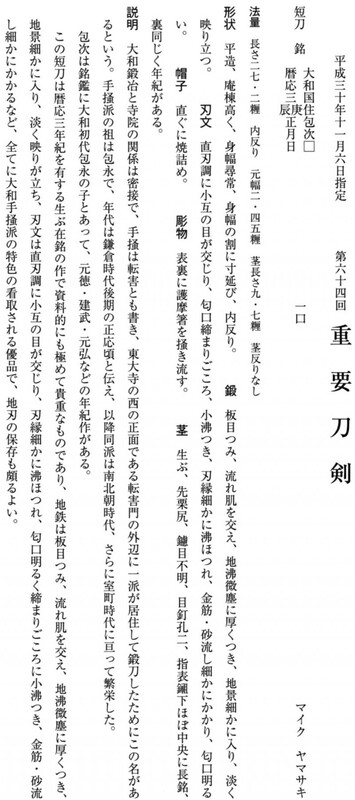
-
CHRISTIAN CHAFFEE PASSES
Gakusee replied to Bazza's topic in Sword Shows, Events, Community News and Legislation Issues
Well, never knew the guy. May he rest in peace. I somehow missed (or ignored) the 2014 thread about the Yamato tanto. Yamato is not my thing, even though lately I have come to appreciate more the Hosho and Taema skill levels. Brian had a question about what happened to the tanto. I did a bit of digging and hey, presto: it passed Juyo in the 2018 shinsa. So Christian was right it was special. Of course, Tanobe sensei has flagged on the sayagaki that it was an important reference piece and that should be enough for anyone to sit up and pay attention. The setsumei speaks highly of it and reiterates its importance and I think uses language such as “invaluable reference material” or something along these lines. Christian’s fondness of it was vindicated.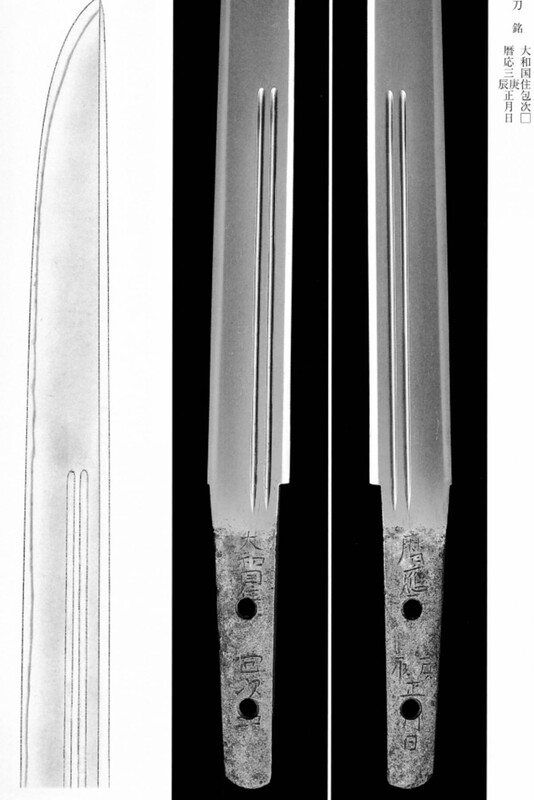
-
8 December Heritage Auctions Sale
Gakusee replied to Brian's topic in Auctions and Online Sales or Sellers
There were two or three great items which went for much less than they were worth. I know the buyers and well done to them - got great items -
Definitely not Yoshioka Ichimonji or any Ichimonji for that matter
-
Dojigiri
Gakusee replied to Bugyotsuji's topic in Sword Shows, Events, Community News and Legislation Issues
No one is going to split hairs over 2mm of length ) polishing can shorten a blade by that much and the quoted 80cm might have dated to the beginning of the 20th century when it was initially more formally catalogued (and that nagasa copied henceforth from older records). -
Dojigiri
Gakusee replied to Bugyotsuji's topic in Sword Shows, Events, Community News and Legislation Issues
I think the website which Guido linked has numerous good images showing that the blade does have a fairly visible boshi... by the way, this guy at Kougetsudo does not seem to be a dealer but seems to buy swords on request or something? Or is he a dealer? His website has a lot of research and images of topmost items. -
May he rest in peace. Gone too young. Not sure of succession....
-
Thanks, Piers. That looks very interesting indeed. As does the chest! It will be impolite to request to see the mei of the tanto, unless offered by the owner. But if you are good friends and have discussed the possibility of it being gimei and he agrees to you taking a shot, then .....
-
Yes, unfortunately, common Japanese have no clue about sword ownership and that it is relatively easy to establish and maintain. All they need to do is register with the police for a temporary permit and then monthly regional shinsa for torokusho. To be fair, even the baby-faced rookie customs officers at both Tokyo airports have no clue. Whenever I bring them a sword, they huff and puff, take out the big book of procedures, go through it 10 times, ask a superior (who is equally clueless) and call the local police. Depending on the time of day and which airport (Haneda: inexperienced and bumbling) one could be in for up to 4-5 hours of “fun” establishing what to do. So, if you want to bring in swords and get through within 1-2 hr go via the larger and more experienced (sword wise) Narita. There is much aura and enigma surrounding swords and indeed ordinary people do think it is illegal or proscribed. Kiril’s sarcastic take on all of it is hilarious indeed.
-
Session results come out a bit late. There is nowadays only one Juyo session per year: No 65 in 2019, No 64 in 2018, No 63 in 2017. Results come out around 3 months after the Sept Juyo Shinsa but the actual books with thorough descriptions, photographs and oshigata are published a year after the original Shinsa. For instance, the 2018 Juyo Shinsa only recently had its Juyo Zufu Nado published. For this year’s Juyo Shinsa, the volume will be published in the last quarter or so next year (even though the actual results of what passed have just been announced).
-
There is no gain in strength from cutting bohi. Full stop. All that happens is the excision lightens the weight, improves ductility/flexibility for only some types of strike/attack. But weakens the blade for lateral strikes on said blade. It is done mostly nowadays to remove ware or ugly horimono. Luis if the blade really deserves it (valuable/important/precious/whatever adjective in there) you will spend the few hundred dollars to send it to Japan. Sounds like it is borderline?
-
And frankly, your friend was very cheap, adding just $50 to a Kagemitsu bought at cost (if that’s THE Osafune Kagemitsu that is)