Gakusee
-
Posts
1,954 -
Joined
-
Last visited
-
Days Won
22
Content Type
Profiles
Forums
Events
Store
Downloads
Gallery
Everything posted by Gakusee
-
Also depends on how it was mounted (eg as tanto) in some part of its life
-

tsuka restoration - jabara-maki
Gakusee replied to Artur DrogaMiecza's topic in General Nihonto Related Discussion
Incredible! You achieved this with only a few months of training, not having done this before? I wish I were half as dexterous! -
Thank you, Henry, this is splendid
-
Uwe, Thank you - that was a great experience and your photos are very good. I have repeatedly had technical difficulties viewing your gallery on the iPad and had to open it on a Windows machine in the office and the photos are very detailed but as you rightly say - a blade needs to be held in the hand to be experienced properly. Or at least if not held, viewed in person from a near distance. So, you have not failed in your experiment but demonstrated what has always been said - handle swords to learn them and that Internet surfing and studying by photos is not enough. But again- many people picked the Juyo swords as favorites, so clearly could identify quality. Bear in mind that often personal taste prevails and we ascribe higher “mental’ value to what we like while in fact another sword might be better or, if not better, might be ranked more highly due to its rarity, being signed, exceptional health etc. For instance, that Ko-Bizen Kageyasu. I am still scratching my head about it. Juyo.... OK , I get it, but TJ? Given that it is mumei and the smith is only a sort of middle-level, rather-late (Ko-)Bizen maker, I think TJ was awarded due to the exceptional health (eg look at the boshi, kasane, width of the hamon) and the vigorous hamon
-
1,3,5 But frankly many of the other are very good. I think that often we mix quality with personal preferences and tastes. Here that compounds an already difficult situation, where you have a 2D partial shot of one side of a sword without angular shots to observe nie utsuri, nioi utsuri or hataraki in detail. Kirrill is right that often actually the nakago also matters and especially whose mei it is on it.
-
How did this whole conversation even veer into acid and cleaning? The blade does not need it. In fact, I am positive I can see the boshi even in these photos. The hamon will probably be visible, the hada will be visible in hand....
-
If true Aoe, subject to verification of the workmanship, Aoe smiths signed the opposite way, like Hizen. As mentioned, I have some signature reservations as the mei is different to all my examples, is a bit too small and a bit too close to the mune (I would have expected a bit larger chiselling and more central but I also have some smaller examples). There is obviously no need for acid and I think / hope the OP knows enough about swords not to do that. The blade needs to be looked at by a professional as it appears promising but worn out and pitted in places.
-
Well, it does look like an old blade and I think I can see the boshi on both sides so that is indeed good, Death-Ace, but I am worried about the putting (photo 7) and it has been polished down a lot (look at hamachi). The hamon should be mostly suguha with a slight notare and with koashi. The rest - once you get it in hand and see if it needs cleaning with isopropyl and oil
-
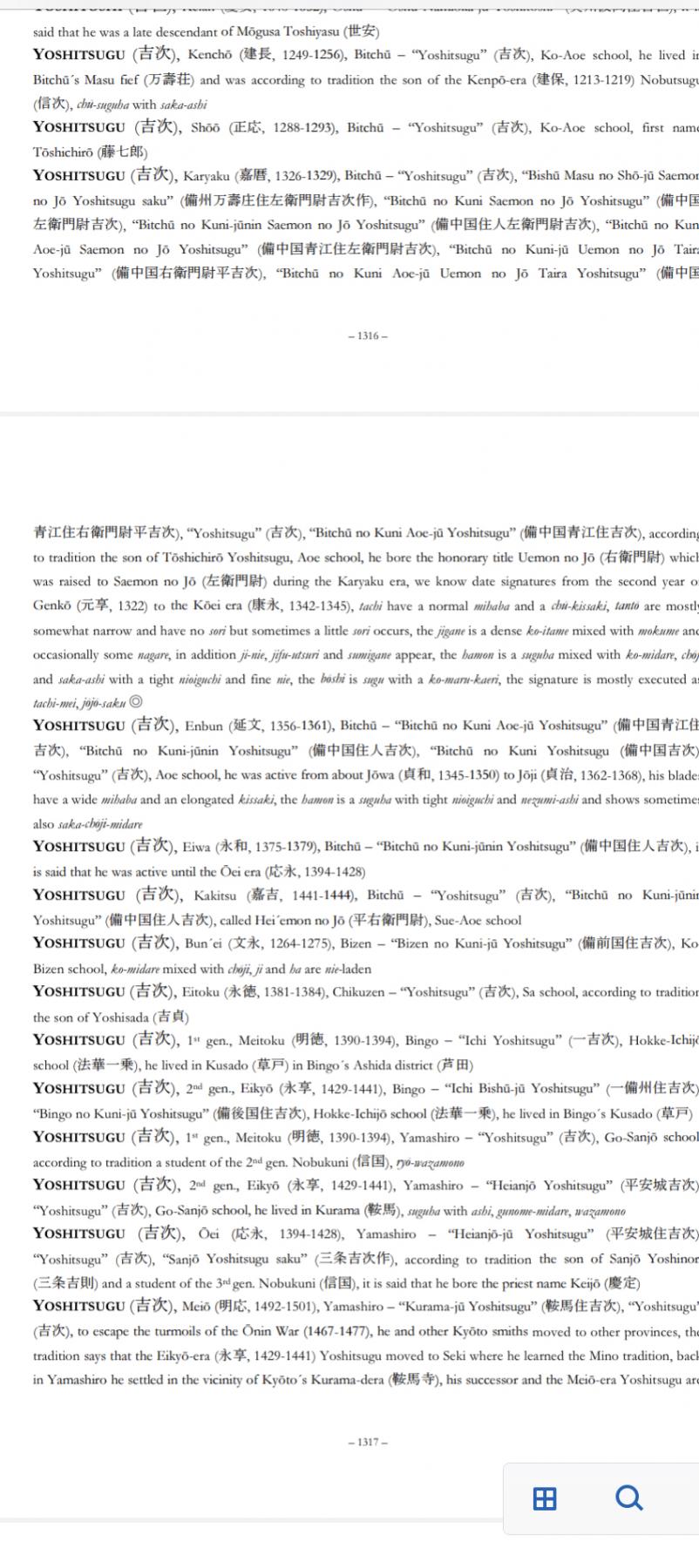
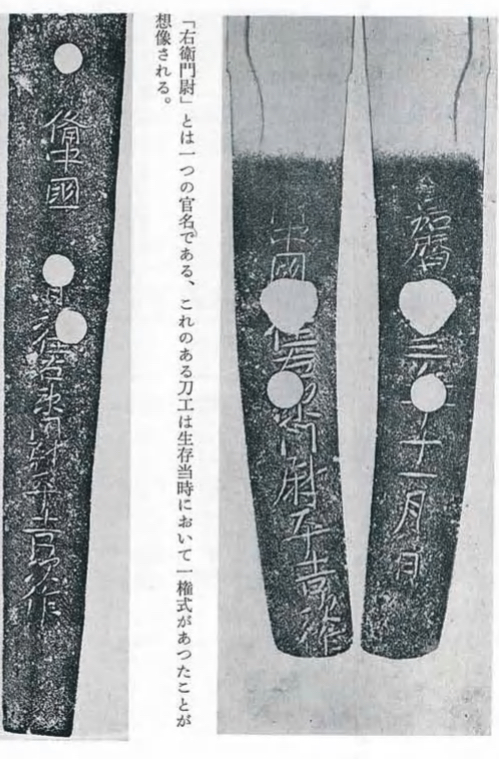
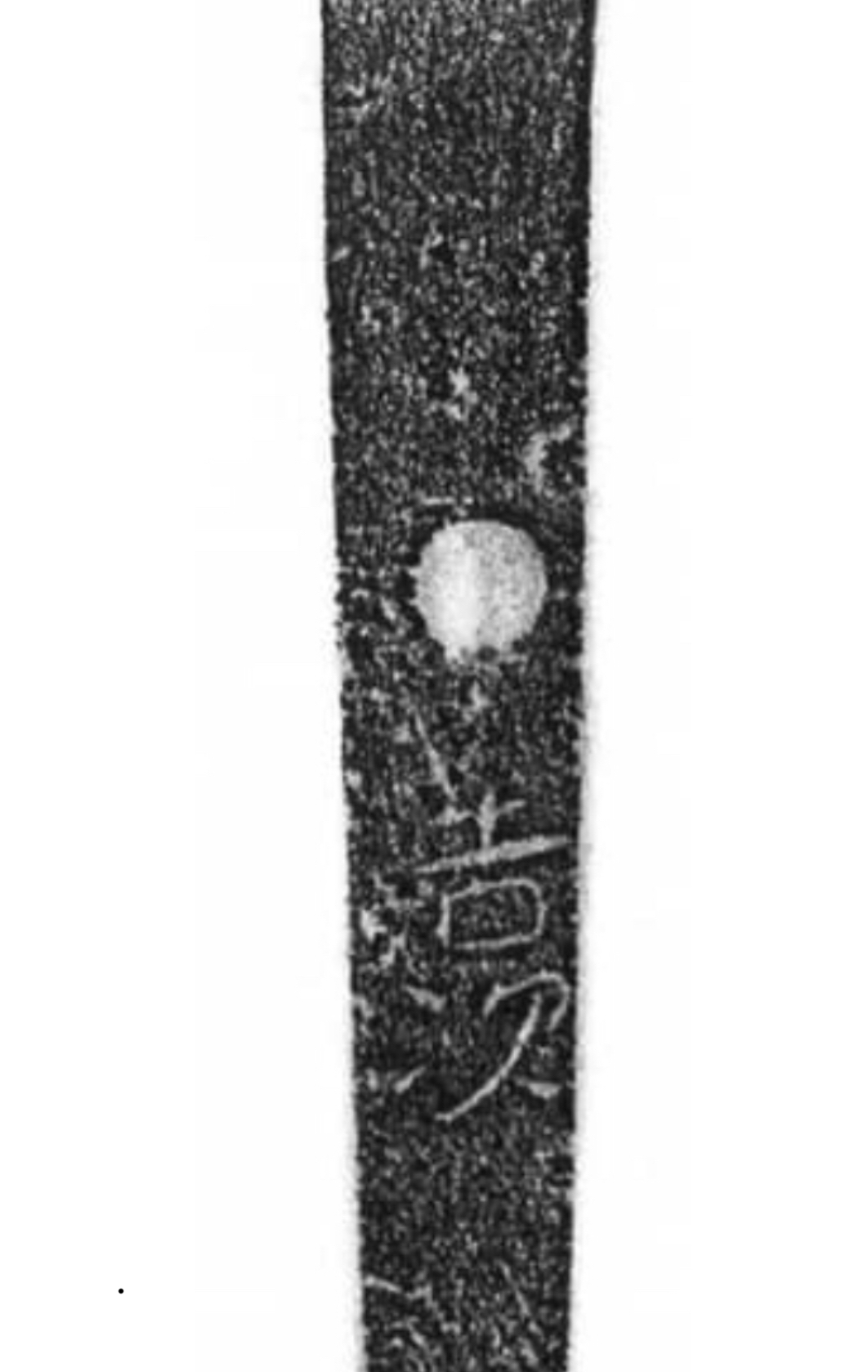
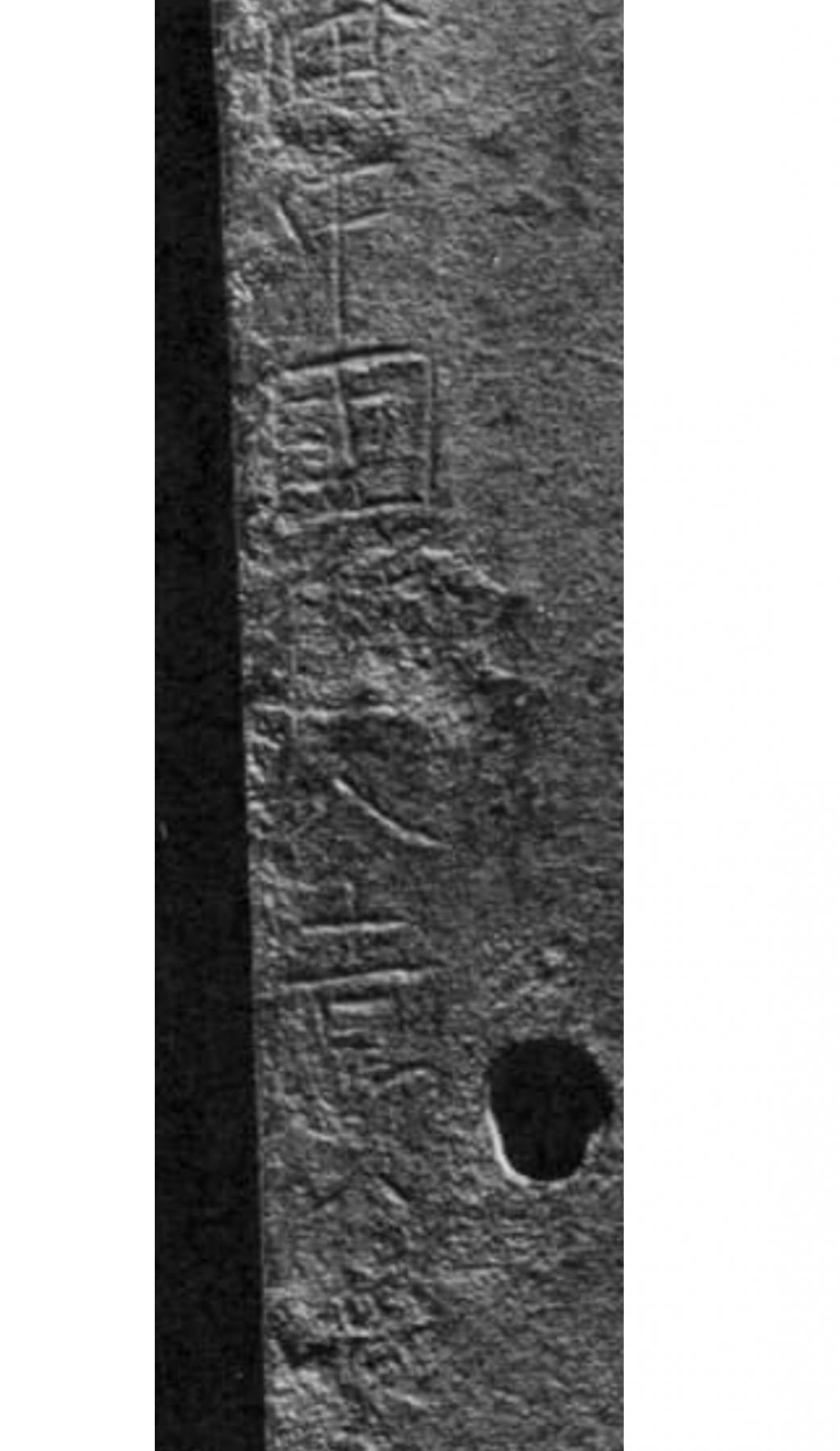
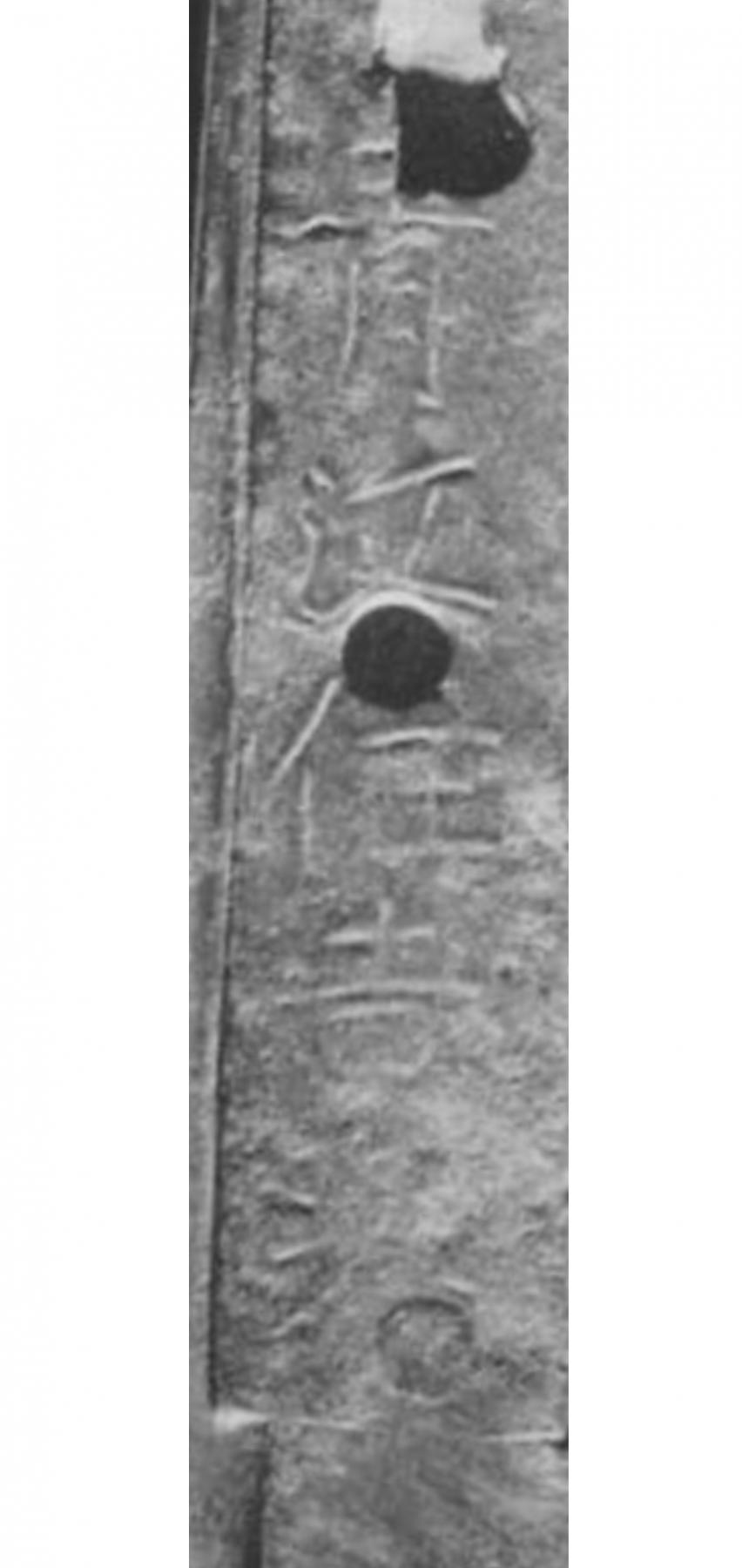
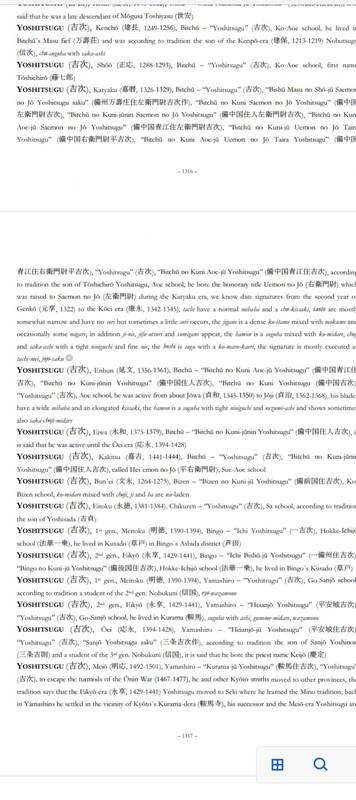
Interesting.... On the plus side are the length, the good deep-sori tachi sugata, the ko-kissaki (all of which point to Kamakura and not Nanbokucho). So, theoretically could be ko-Aoe. On the negative side are the state of the nakago (the patination seems off for me and the rust looks like red, active one - but need to caveat that could be the lighting.... also the shape could indicate slight suriage), the poor state of preservation (particularly that it has been so polished down in light of the koshimoto situation and hamachi and the pits I think I see) and the mei. With regards to the mei, I attach below some examples I have. There are more of course but the attached ones are of the more famous Yoshitsugu smiths. There were several, working from early Kamakura to Nanbokucho. Below is also snapshot of most of the Aoe Bitchu ones from the excellent swordsmith encyclopaedia by Markus Sesko. I find way too many differences to your mei when looking at some of the published examples. In fairness, the samples I have also differ quite a bit in the execution of the Yoshitsugu mei across both characters and also I have seen quite a few signed on the omote and on the ura. This is probably because of the high number of smiths bearing that name and long span across which they worked in Bitchu. Then, if one gets comfortable with the nakago patination in hand (I.e. not an old blade with a recently inscribed mei and then aged but the rust looking off), as a next step you could settle onto one of the less famous Yoshitsugu. Examination of the blade itself will be paramount - looking for the (ko) saka ashi, the special layered dan utsuri , fineness of jihada but possible sumigane Depending on all of that you could try to narrow it to whether indeed Aoe and then koAoe vs Aoe depending on how evolved the dan utsuri and how fine jigane and so on. You should have it examined by a polisher in hand. It seems to have been worn out quite a bit.

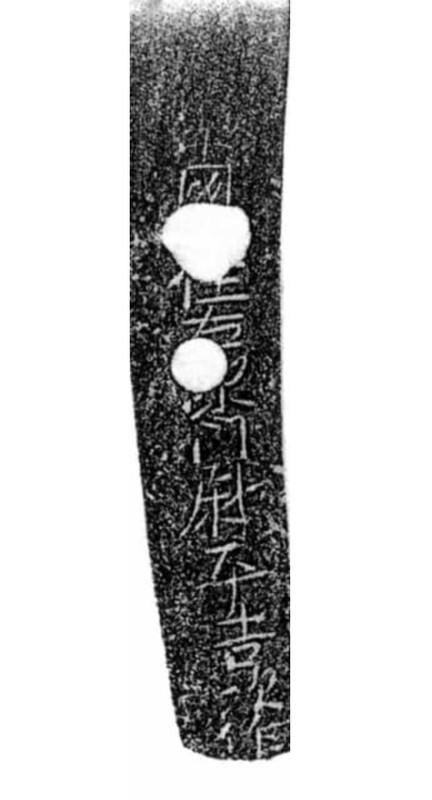
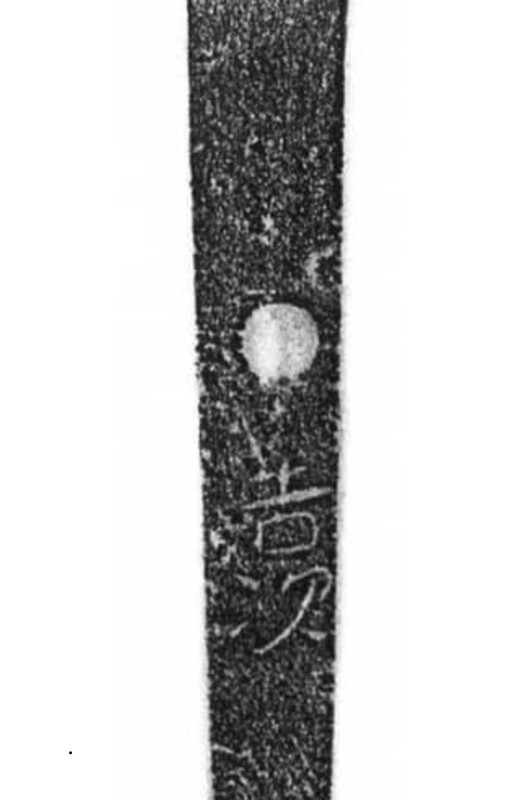


-
Hmm, StevenK, not sure i see that discoloring as a sign it was mounted..... but what I find is odder is the dai asymmetric shape. The fact that it might have been altered to fit a sword nakago is probably another indicator....
-
Both are beautiful. The thing is, I agree with above post, these are not even meant to be mounted. These Kaga items are wall or shelf showpieces. More art objects demonstrating artisanal craftsmanship than hilt guards with utilitarian purpose and simple elegance.
-
Chen You always post such delightful Tosogu! Keep it going
-
Isn’t the exhibition only on until the end of Sept or something? I might be wrong but think I read that on the actual page of the exhibition.
-
Of course not sandpaper. We are talking about proper sayashi work, which is done with tokusa
-
For mundane sayas it is OK but I have always found old saya with sayagaki too precious not to store a sword in and just discard. I have on a few occasions actually had a professional sayashi properly scrape and clean the inside of a saya and reuse it. If properly done it is like new
-
Uwe, that Ko-Bizen boshi you have shot is almost ichimai. That is a rather difficult feat to achieve. Also, the hamon is quite developed - I presume this is a “late” Ko-Bizen straying into (ko-)Ichimonji? Would you tell us the smith please? Thanks
-
Looking at the first image in the original post, it looks like Dmitry Sirotkin (zoom in first image, bottom left, where both the author and photographer are mentioned clearly)
-
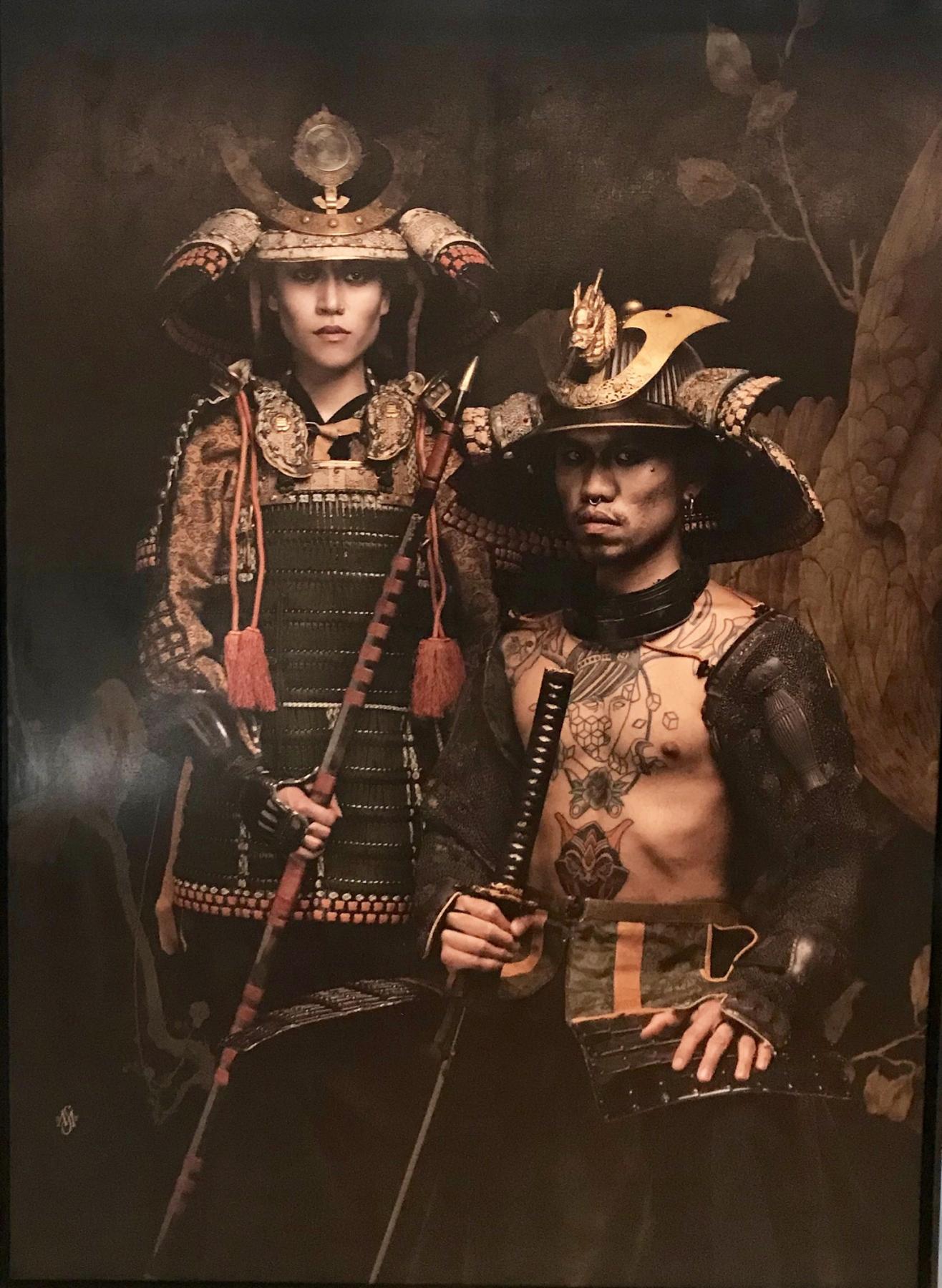
If you think that is beautiful, what about these? That lady photographer has worked them hard these armours hum hm
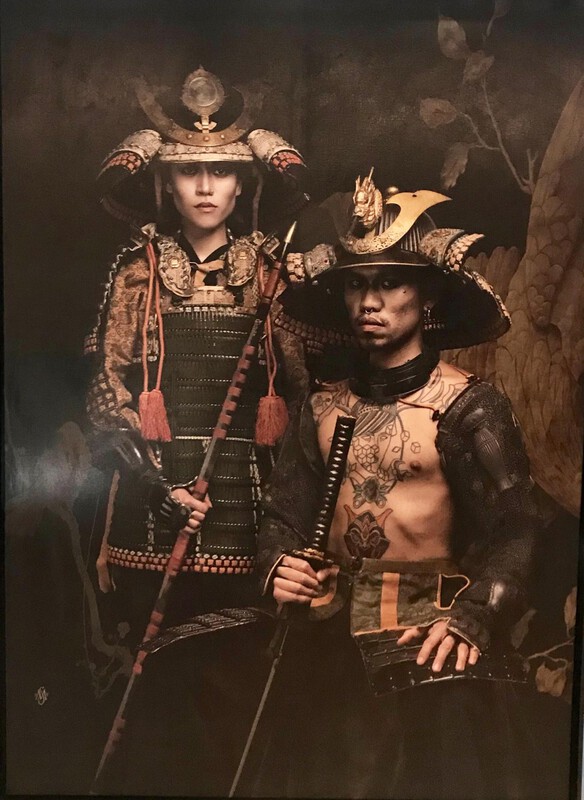
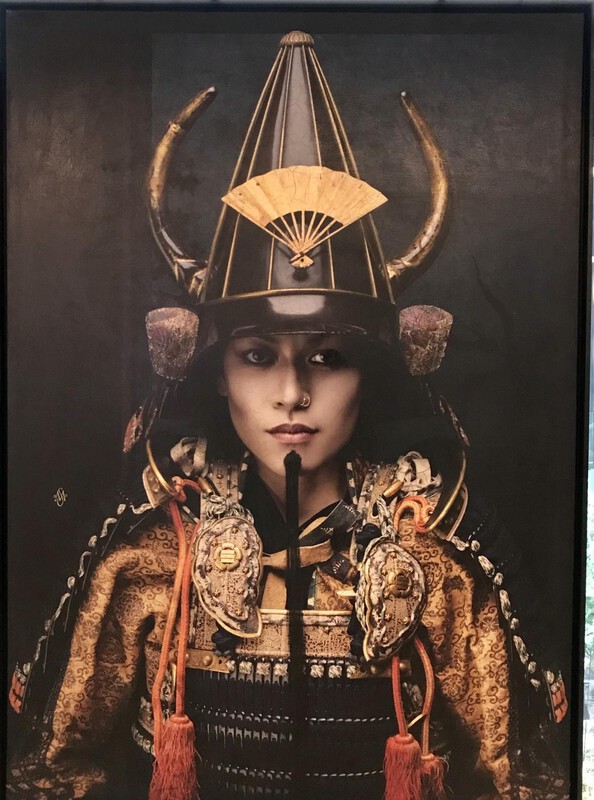
-
Ray, what were the more interesting blades there? Is that a Masamune kinpun mei I see there?
-
Which One of These Three
Gakusee replied to Prewar70's topic in Auctions and Online Sales or Sellers
Well, the Ichimonji is gone/on hold. Clearly people realised what a good blade and great deal it was. -
Which One of These Three
Gakusee replied to Prewar70's topic in Auctions and Online Sales or Sellers
As others have pointed out: - you cannot compare a Kamakura grandmaster sword (Ichimonji school) to a Nanbokucho / Muromachi sword. Simply not in the same category skill wise - secondly, Juyo is Juyo and TH is TH. Now, of course a TH could be a future Juyo but then you need to start the analytical work: how does it compare to others (Sue Sa) in Juyo category already, is it a TH which will get to Juyo (so just a matter of submission) and much much more importantly: since the TH paper was issued in 1987 you can be certain that previous owners have all tried to get Juyo for it in the last 30 years and have failed. That should tell you something already. EDIT: well, it is attributed to Sue so according to the tighter criteria it could not go higher unfortunately due to the period - so the Sa fails on numerous counts: not Juyo and not getting there. No koshirae. Not in the same league. - Yamato Shizu is no Shizu (ie not Shizu Kaneuji). I like Shizu Kaneuji but Yamato Shizu just does not do it for me. But it is a good sword, Juyo (but in a weak session when so-so swords passed) but with very good koshirae. - the Ichimonji activity is incredible and the hada is extremely tight koitame komokume. That should tell you what level of skill and craftsmanship went in there. And comes with used and utilitarian koshirae. So, enough said and quite clear why it is the best of the three. Frankly the price differential between it and the other two is too small for the big gap in quality between it and the other two. Only because of its length of 63cm (respectable for short Japanese samurai) is it so cheap. -
Swapping out good koshirae
Gakusee replied to Jussi Ekholm's topic in General Nihonto Related Discussion
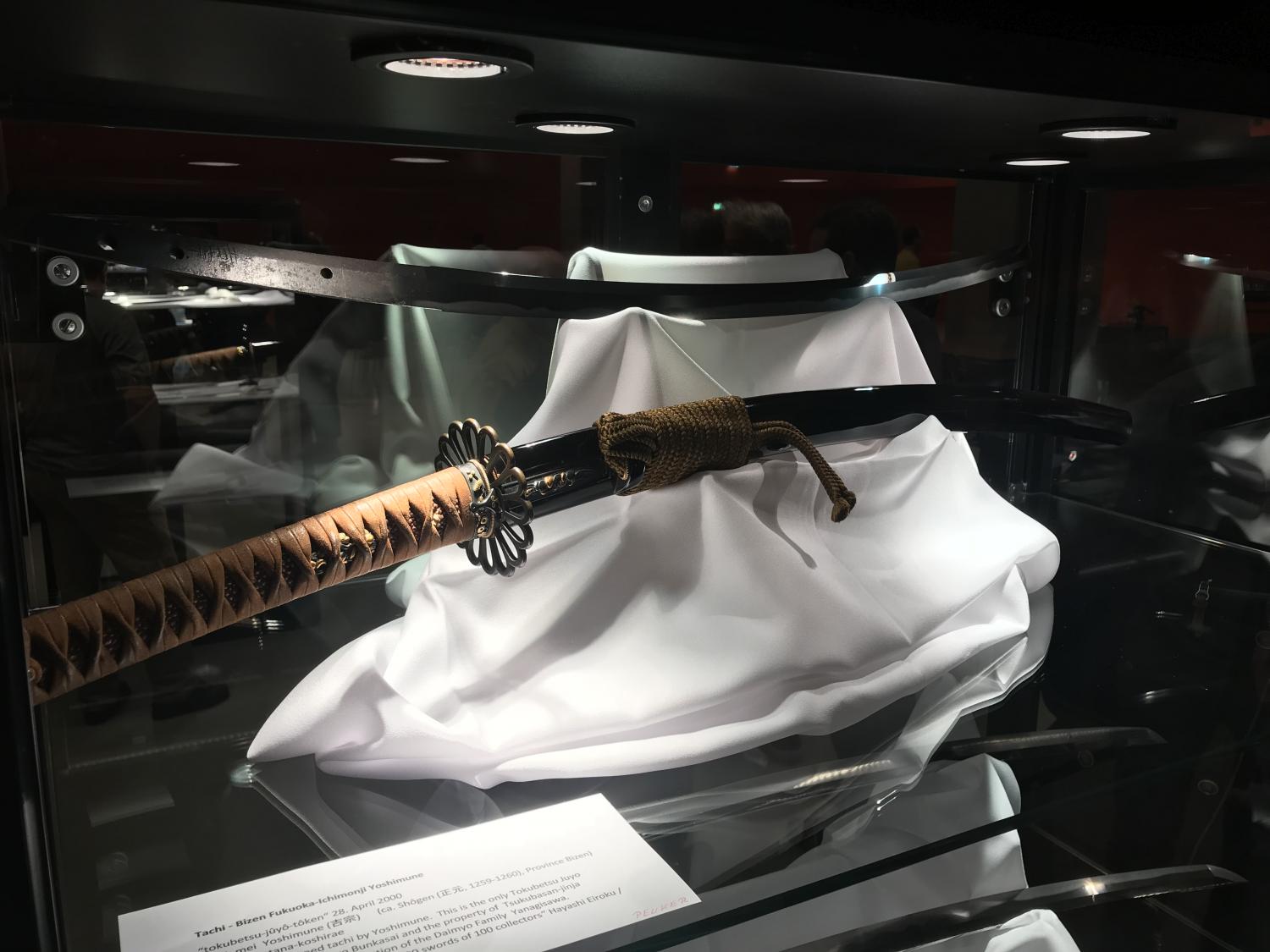
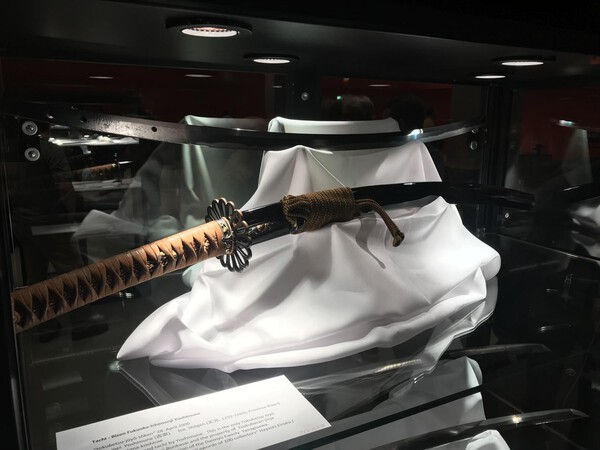
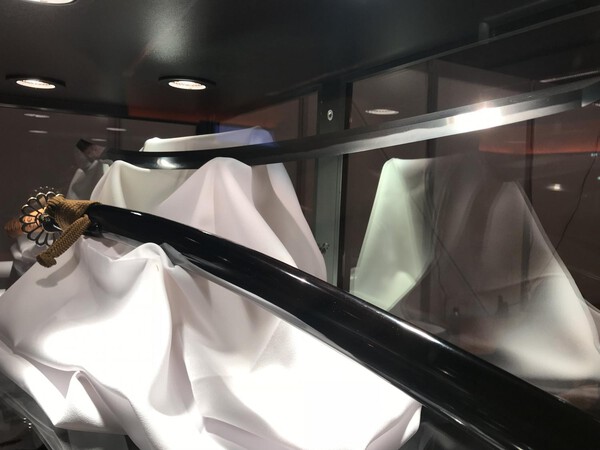
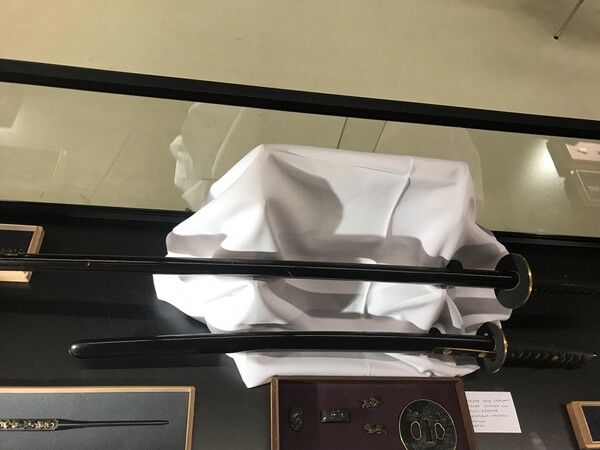
The pristine historic full-set koshirae dating to pre-Edo are extremely rare and valuable. Both because they were not collectible, as Kirill says, but also because they were brittle (and age and time take their toll) and were viewed as utilitarian exterior “wrappers” to the real treasure within, the blade. Indeed with the Edo period came the extravagance and elegance we associate today with high-end. Now, a daimyo set did not to have to be all lavish, like the examples we gave above (but could be, since indeed those were daimyo sets above). One point I take exception to is that daimyo exchanged inferior blades. That, if true, would have been an insult to whoever they gave the gift to, and would have demeaned the gifter. Besides, as most things in feudal Japan, actually the level of sword that could be gifted to the shogun and high ranking daimyo was also specified, as were gifts to be given to the shogun’s entourage or to newlyweds or to concubines, sons of the daimyo etc. The level and nature of the present was narrowly delineated. For your perusal and pleasure I attach several high-end sets. The gold set (yes, solid gold metal fittings!) by Ota Yoshihisa was created specifically for the emperor Meiji to give to the British minister to Japan Sir Harry Parkes at the private audience in May 1871. It is now housed in the V&A museum. The emperor (if we followed Kirill’s logic above) could have used some inferior blade, a tsunagi so to speak - after all, that Brit gaijin would not have known any better and could probably not tell a good sword from a stick! Also, who cares about some unusable old blade (in this gunpowder and steam engine era) inside when you are gifted so much gold! But - no, the emperor put in there a Bizen Tomomitsu blade from around early Nanbokucho. So, not a grandmaster but still a Jojosaku smith. The blade was pretty good when I saw it. And also, more broadly, the Tokugawa historic annals document very well the types of blades and smiths that made them. So, no need for conference papers really written by today’s authors. Next one is a superb TokuJu Fukuoka Ichimonji Yoshimune daimyo set. Pristine as they come and subtly elegant. Also, a court daisho. Top quality nanako and gold fittings of highest order but strictly in line with the canon. And finally a Juyo tensho koshirae set.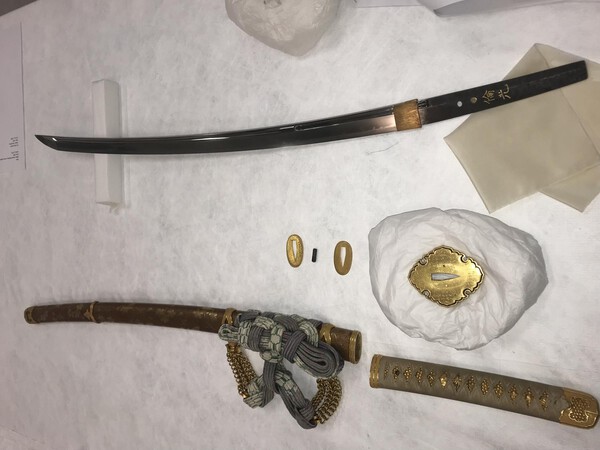
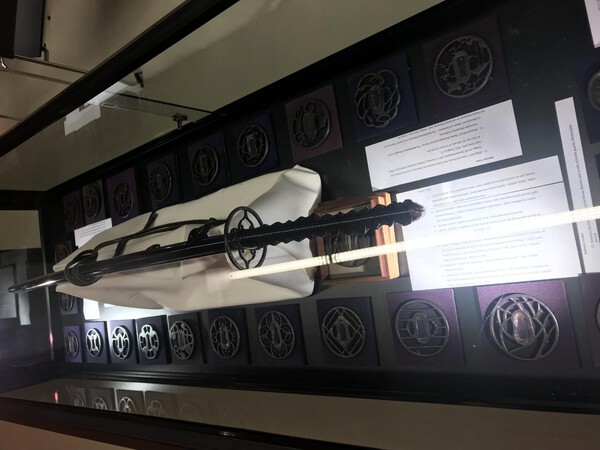
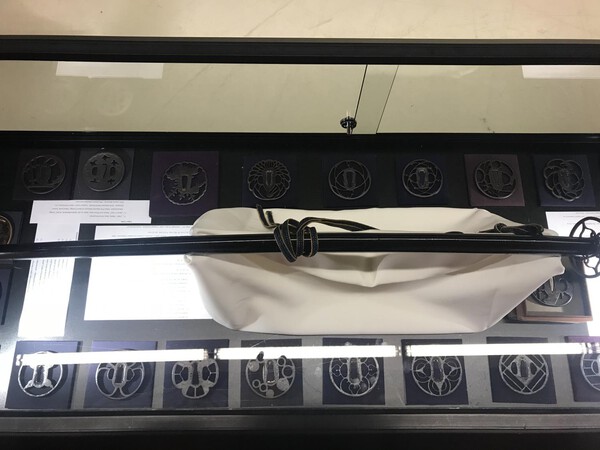
-
Swapping out good koshirae
Gakusee replied to Jussi Ekholm's topic in General Nihonto Related Discussion
Beauty is in the eye of the beholder. Plus we have mixed up around 300-400 years of gift exchanges. -
Swapping out good koshirae
Gakusee replied to Jussi Ekholm's topic in General Nihonto Related Discussion
Hi Kirill So, in general you tend to write quite authoritatively as though you did have access, in the Edo period, to daimyo gift exchanging ceremonies. Or as though important families allowed you to survey their collections and historic annals. When you say “requested as a set” I would like to oppugn, if I may - a senior daimyo would of course be interested in a blade (if top Kamakura piece) and he could commission his own lavish koshirae for it, so did not have to “request” a set - he was simply after the Shintogo or Sadamune or Mitsutada or whatever, and not the koshirae. However, that is not to say that daimyo themselves did not commission elaborate koshirae for their blades (and thus were not “requested” by a third party). I have, on the contrary, in various DTI sessions and at top online or Tokyo dealers, seen quite a few top blades in what I could only describe as daimyo koshirae: sometimes extremely lavish, invariably intricate workmanship, sometimes more subtle but still of sublime quality (nanako, guilding, chiselling, etc). They were mostly combinations of Kamakura (or end of Heian) top smith masterpieces and mid-Edo exuberance. Of course, historically there were also instances of sets of koshirae for different occasions which would fit the same blade belonging to a feudal lord: battle koshirae, formal koshirae etc. Next, please point us to some records where daimyo actually exchanged sub-par or low quality / poor-condition swords as presents (you describe them as “tsunagi level blades”). It will be beneficial to learn that. Thanks -
WTB: High-end tsuba, must have mei, spending 5k-15k USD
Gakusee replied to terminus's topic in Wanted to Buy
Tony/Terminus Please be very careful with Bonhams and Christie’s auctions for high-end items. Time and again high-end items are gimei but purport to have big makers’ names on them. Do your homework extensively and carefully examine the mei, the workmanship, etc. Of course, one does come across the genuine artefacts occasionally but these tend to be papered or come with some hakogaki or sayagaki etc