Gakusee
-
Posts
1,954 -
Joined
-
Last visited
-
Days Won
22
Content Type
Profiles
Forums
Events
Store
Downloads
Gallery
Everything posted by Gakusee
-

Which One of These Three
Gakusee replied to Prewar70's topic in Auctions and Online Sales or Sellers
Well, the Ichimonji is gone/on hold. Clearly people realised what a good blade and great deal it was. -
Which One of These Three
Gakusee replied to Prewar70's topic in Auctions and Online Sales or Sellers
As others have pointed out: - you cannot compare a Kamakura grandmaster sword (Ichimonji school) to a Nanbokucho / Muromachi sword. Simply not in the same category skill wise - secondly, Juyo is Juyo and TH is TH. Now, of course a TH could be a future Juyo but then you need to start the analytical work: how does it compare to others (Sue Sa) in Juyo category already, is it a TH which will get to Juyo (so just a matter of submission) and much much more importantly: since the TH paper was issued in 1987 you can be certain that previous owners have all tried to get Juyo for it in the last 30 years and have failed. That should tell you something already. EDIT: well, it is attributed to Sue so according to the tighter criteria it could not go higher unfortunately due to the period - so the Sa fails on numerous counts: not Juyo and not getting there. No koshirae. Not in the same league. - Yamato Shizu is no Shizu (ie not Shizu Kaneuji). I like Shizu Kaneuji but Yamato Shizu just does not do it for me. But it is a good sword, Juyo (but in a weak session when so-so swords passed) but with very good koshirae. - the Ichimonji activity is incredible and the hada is extremely tight koitame komokume. That should tell you what level of skill and craftsmanship went in there. And comes with used and utilitarian koshirae. So, enough said and quite clear why it is the best of the three. Frankly the price differential between it and the other two is too small for the big gap in quality between it and the other two. Only because of its length of 63cm (respectable for short Japanese samurai) is it so cheap. -
Swapping out good koshirae
Gakusee replied to Jussi Ekholm's topic in General Nihonto Related Discussion
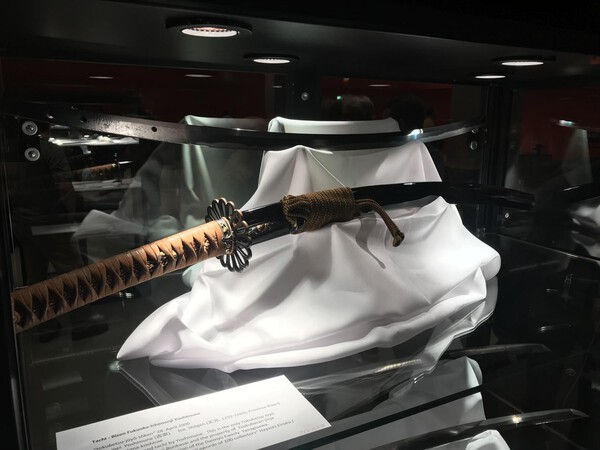
The pristine historic full-set koshirae dating to pre-Edo are extremely rare and valuable. Both because they were not collectible, as Kirill says, but also because they were brittle (and age and time take their toll) and were viewed as utilitarian exterior “wrappers” to the real treasure within, the blade. Indeed with the Edo period came the extravagance and elegance we associate today with high-end. Now, a daimyo set did not to have to be all lavish, like the examples we gave above (but could be, since indeed those were daimyo sets above). One point I take exception to is that daimyo exchanged inferior blades. That, if true, would have been an insult to whoever they gave the gift to, and would have demeaned the gifter. Besides, as most things in feudal Japan, actually the level of sword that could be gifted to the shogun and high ranking daimyo was also specified, as were gifts to be given to the shogun’s entourage or to newlyweds or to concubines, sons of the daimyo etc. The level and nature of the present was narrowly delineated. For your perusal and pleasure I attach several high-end sets. The gold set (yes, solid gold metal fittings!) by Ota Yoshihisa was created specifically for the emperor Meiji to give to the British minister to Japan Sir Harry Parkes at the private audience in May 1871. It is now housed in the V&A museum. The emperor (if we followed Kirill’s logic above) could have used some inferior blade, a tsunagi so to speak - after all, that Brit gaijin would not have known any better and could probably not tell a good sword from a stick! Also, who cares about some unusable old blade (in this gunpowder and steam engine era) inside when you are gifted so much gold! But - no, the emperor put in there a Bizen Tomomitsu blade from around early Nanbokucho. So, not a grandmaster but still a Jojosaku smith. The blade was pretty good when I saw it. And also, more broadly, the Tokugawa historic annals document very well the types of blades and smiths that made them. So, no need for conference papers really written by today’s authors. Next one is a superb TokuJu Fukuoka Ichimonji Yoshimune daimyo set. Pristine as they come and subtly elegant. Also, a court daisho. Top quality nanako and gold fittings of highest order but strictly in line with the canon. And finally a Juyo tensho koshirae set.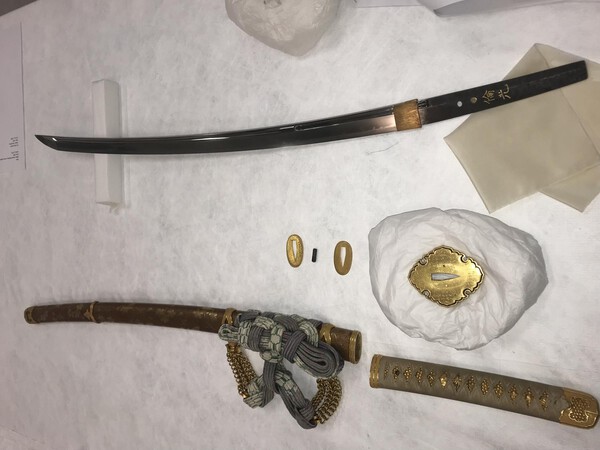
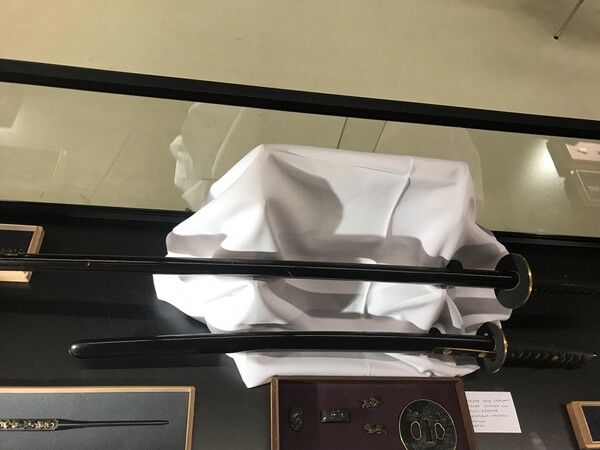
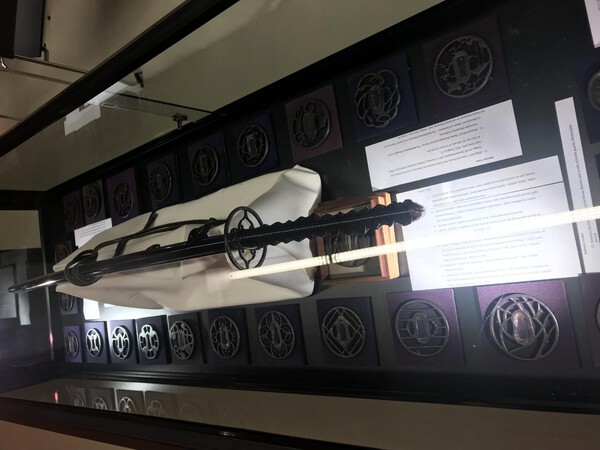
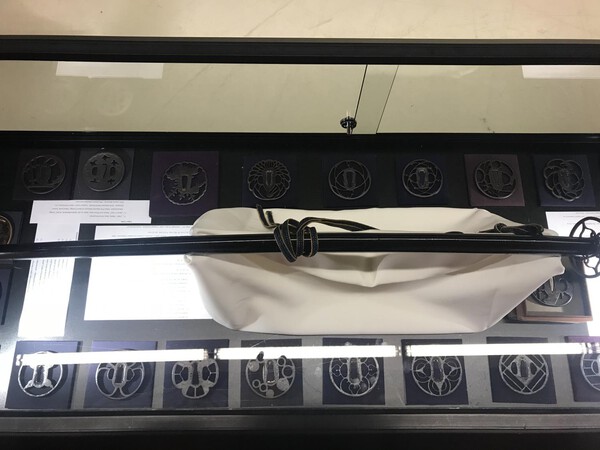
-
Swapping out good koshirae
Gakusee replied to Jussi Ekholm's topic in General Nihonto Related Discussion
Beauty is in the eye of the beholder. Plus we have mixed up around 300-400 years of gift exchanges. -
Swapping out good koshirae
Gakusee replied to Jussi Ekholm's topic in General Nihonto Related Discussion
Hi Kirill So, in general you tend to write quite authoritatively as though you did have access, in the Edo period, to daimyo gift exchanging ceremonies. Or as though important families allowed you to survey their collections and historic annals. When you say “requested as a set” I would like to oppugn, if I may - a senior daimyo would of course be interested in a blade (if top Kamakura piece) and he could commission his own lavish koshirae for it, so did not have to “request” a set - he was simply after the Shintogo or Sadamune or Mitsutada or whatever, and not the koshirae. However, that is not to say that daimyo themselves did not commission elaborate koshirae for their blades (and thus were not “requested” by a third party). I have, on the contrary, in various DTI sessions and at top online or Tokyo dealers, seen quite a few top blades in what I could only describe as daimyo koshirae: sometimes extremely lavish, invariably intricate workmanship, sometimes more subtle but still of sublime quality (nanako, guilding, chiselling, etc). They were mostly combinations of Kamakura (or end of Heian) top smith masterpieces and mid-Edo exuberance. Of course, historically there were also instances of sets of koshirae for different occasions which would fit the same blade belonging to a feudal lord: battle koshirae, formal koshirae etc. Next, please point us to some records where daimyo actually exchanged sub-par or low quality / poor-condition swords as presents (you describe them as “tsunagi level blades”). It will be beneficial to learn that. Thanks -
WTB: High-end tsuba, must have mei, spending 5k-15k USD
Gakusee replied to terminus's topic in Wanted to Buy
Tony/Terminus Please be very careful with Bonhams and Christie’s auctions for high-end items. Time and again high-end items are gimei but purport to have big makers’ names on them. Do your homework extensively and carefully examine the mei, the workmanship, etc. Of course, one does come across the genuine artefacts occasionally but these tend to be papered or come with some hakogaki or sayagaki etc -
WTB: High-end tsuba, must have mei, spending 5k-15k USD
Gakusee replied to terminus's topic in Wanted to Buy
Yes, that Yoshioka is my favourite. The way Fujiyama is rendered is subtle but elegant. -
WTB: High-end tsuba, must have mei, spending 5k-15k USD
Gakusee replied to terminus's topic in Wanted to Buy
By the way, one site that often slips the searches is Japaneseart.eu Check it out. -
Www.studyingjapaneseswords.com
Gakusee replied to yurie's topic in General Nihonto Related Discussion
Lovely tanto -
NBTHK Tokubetsu Kicho Koshirae paper help please
Gakusee replied to sz_waldmann's topic in Translation Assistance
Perhaps worthwhile spending a bit of money on a professional translation? Markus is the go-to provider: https://markussesko.com/translation-service/ -
Swapping out good koshirae
Gakusee replied to Jussi Ekholm's topic in General Nihonto Related Discussion
I remember that Kagemitsu daisho.... still dream about it from time to time:)) Darcy often has complete sets, as Chris has demonstrated. Fred does occasionally. -
Thanks! Well, Jean’s sword is very good and not togiberi at all.
-
Do you mean polished down, Piers?
-
Swapping out good koshirae
Gakusee replied to Jussi Ekholm's topic in General Nihonto Related Discussion
I am in the same camp as Chris. Quality period packages are valuable. The only complication is that the blades I am usually interested in have already been separated from their koshirae in most instances (judging from the quality of those blades, the koshirae would have been very good). A pity but understandable - we see how people are prepared to pay big money for high quality tsuba (well, these if mounted come from high quality koshirae in the first instance and sometimes are unmounted etc) and koshirae but might not collect blades and then we see the attitude above about not caring about koshirae but making one’s one. That is the reality. -
WTB: High-end tsuba, must have mei, spending 5k-15k USD
Gakusee replied to terminus's topic in Wanted to Buy
Well, you could still make an offer to the current owner via Darcy. -
That and the Nagamitsu and Norifusa and so on
-
It has been covered and discussed multiple times before on this forum, in books and elsewhere on the WWW. Markus Sesko does a very good job of explaining the interplay of carbon content (hard-soft dichotomy) versus the quenching temperature (nie versus nioi utsuri). Both are important to grasp when trying to understand utsuri. So, more reading and more research are needed by people trying to learn. See: https://markussesko.com/2013/08/22/some-thoughts-on-utsuri/
-
Most beautiful blade I've ever seen.
Gakusee replied to Hoshi's topic in Auctions and Online Sales or Sellers
The Nagamitsu further down is also very good ) -
Mike Hickman Smith in the U.K.
-
It looks acidic-treatment enhanced
-
Splendid. Thanks, Piers
-
Thanks, Piers, we really appreciate the lovely report. Wish could have studied 9-16 and 19 in some detail. Oh, well, enjoy these events on our behalf, too! By the way, Paul Martin gave me a similar microfibre cloth with his business logo emblazoned. Thick and high-quality and not too dissimilar to the optics microfibre cloth I otherwise buy in Japan.
-
Back then the Japanese believed they were born at 1, not like Westerners at 0.
-
Great blade up on Aoi, but..
Gakusee replied to raynor's topic in Auctions and Online Sales or Sellers
Interesting... two good Yoshioka blades on Aoi one after another -
That Yoshioka Ichimonji is still for sale at 19.5m People need to make their own determination about hamon etc as the three oshigata look very different and the photos are.... Well, photos.