
Leaderboard




Popular Content
Showing content with the highest reputation on 08/14/2026 in all areas
-
On Tametsugu specifically it’s interesting because he has very few signed pieces, and also zero swords at TJ. But when a “Tametsugu” is deemed good enough it gets an “upgrade” to some other Soshu smith at TJ. What that’s essentially done is concretize Tametsugu as a lower tier Soshu smith (which according to Fujishiro and other rankings he is) without allowing his stuff to just naturally pass into TJ as a Tametsugu. Instead he almost has this fate where the NBTHK has said without saying “Tametsugu cannot go TJ” because if it is that good, it must be some other smith. I don’t personally like this view when we’re dealing with 99% mumei blades because were no longer classifying a smith based on his traits but rather a tier system using names as placeholders rather than numbers with 0% certainty who actually made the sword other than it was made by a Soshu master.4 points
-
The NBTHK has no problem upgrading swords from TH to Juyo, Juyo to TJ, or even Juyo to Juyo if a sword is resubmitted down the line. There are many such examples of swords changing attributions. These are just some Juyo / Juyo and Juyo / TJ “upgrades” I’ve seen Tametsugu -> Norishige Naoe Shizu -> Shizu Morikage -> Chogi Kashu Sanekage -> Go Sanekage -> Naotsuna den <smith> -> <smith> And many many others.4 points
-
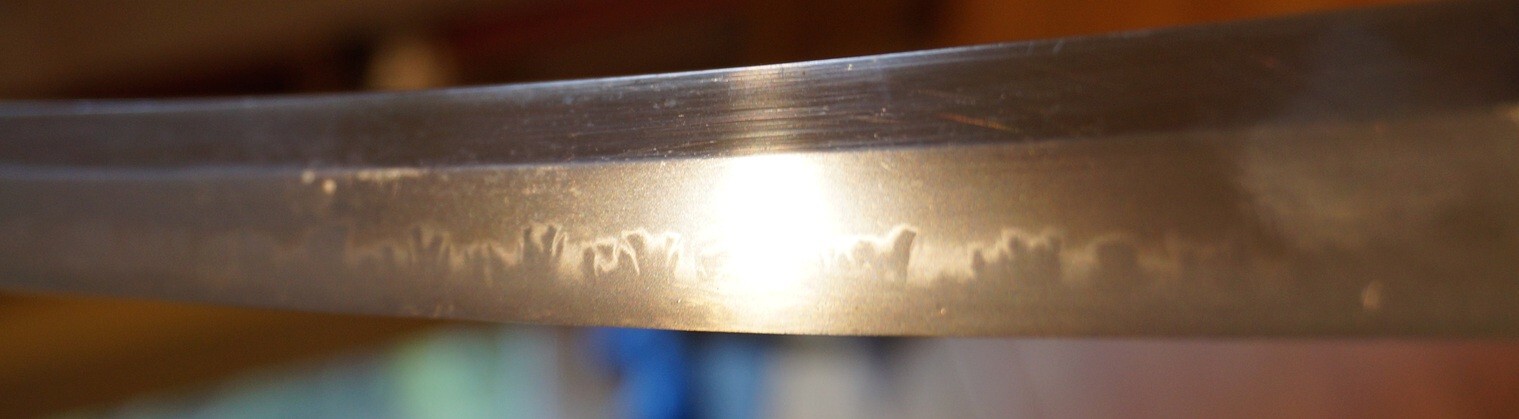
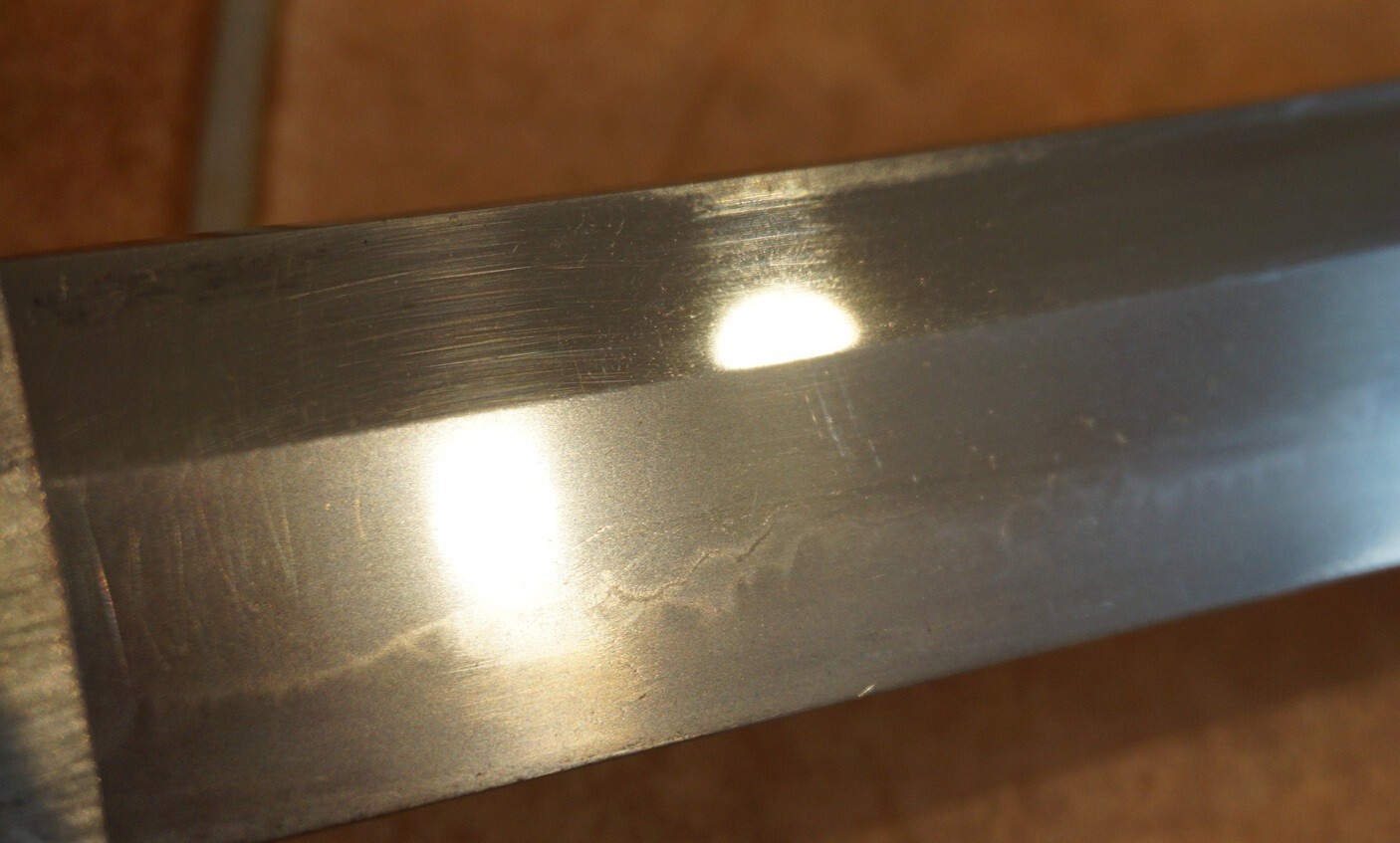
You can think of 'standing' hada as having a bunch of nie and grain activities that give the appearance of a 3d-textured surface (i.e. the texture appears to "stand out" of the polish); it can do this while still being quite compact and fine-grained. O-hada on the other hand just means that the grain structures are wider and/or looser than average; they can be this way while remaining 'flat' in terms of texture. For example, "mokume with areas of o-hada" would mean that in some areas, the whorls in the steel grain are noticeably larger in diameter, and possibly become somewhat irregular-shaped in the process.3 points
-
It's precisely because of this fluidity that he's only Jo-saku; Fujishiro's ranking is relative to peers within the same school(s) and timeframe. Tametsugu, hailing from Etchu, apprenticing under Norishige and moving to Mino means he's evaluated alongside Shintogo, Masamune, Sadamune, Yukimitsu, Norishige, Go and Shizu, and will necessarily be found wanting by comparison. I would dare to venture that in a sense this is a self-reinforcing delineation, in that it's likely some lesser Go and Norishige works have been attributed to Tametsugu because they're judged as not up to the usual standards of the grandmasters; similarly, I wouldn't be surprised if a few of the lower-end works attributed to those two are in reality the higher end of Tametsugu's handiwork.3 points
-
This is correct. I know of a sword with a Kanzan sayagaki attributing it to Norishige but mentioning Masamune. It had kinzogan mei for Norishige that had been removed (but still visible), I assume because the owner was trying for Masamune. It got Tametsugu at Juyo in the 70's.3 points
-
Rivkin is correct, it is quite commonplace for high-level Mino (Naoe Shizu, Tametsugu, later-gen Kaneuji) to change attributions when a blade moves up in ranking, whether from Hozon, TH or Juyo. Often this can be because the polish has changed, exposing more nie/activities in the hamon that point to a stronger Yamato influence (moving to Yamato Shizu, or Shizu proper) or stronger Soshu influence (moving to the Sa or Hasebe schools) than previously thought. Or the shinsa panel has changed and there's a new consensus on which particular set of traits is most dominant in the blade. In the case of Mino Tametsugu, there are even cases where a sword got reattributed to Masamune, which, assuming you bought it at a price appropriate for a Tametsugu, would be like striking the lottery.3 points
-
Funny thing the work by this smith came up. I collect various sword-related texts - appraisals, bills, advertisement, permits, recommendations. Among those always on a lookout for genealogies, since those were copied by craftsmen themselves before they would begin to practice independently and signified their standing within the family. Here is in words of Markus Sesko "It is the genealogy of the Iga no Kami Kinmichi lineage from the perspective of their Sendai-based student Katsumichi. It is signed by Mishina Iga no Kami Kanemichi and is dated Shōtoku three (1713). "
 3 points
 -
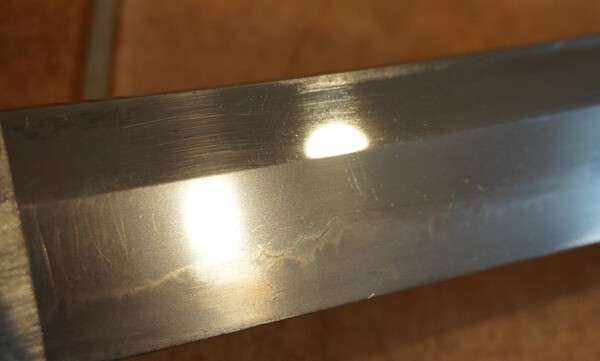
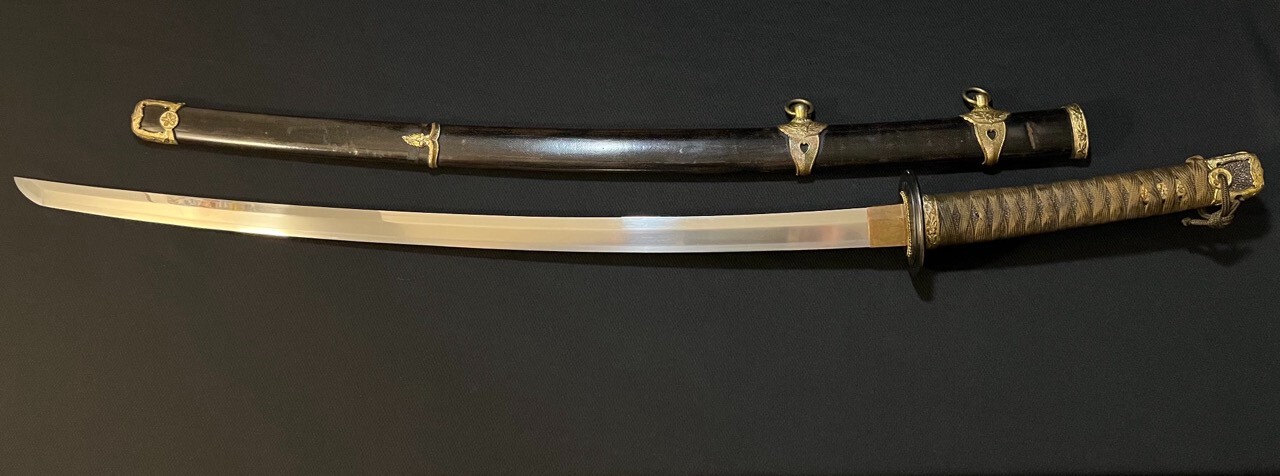
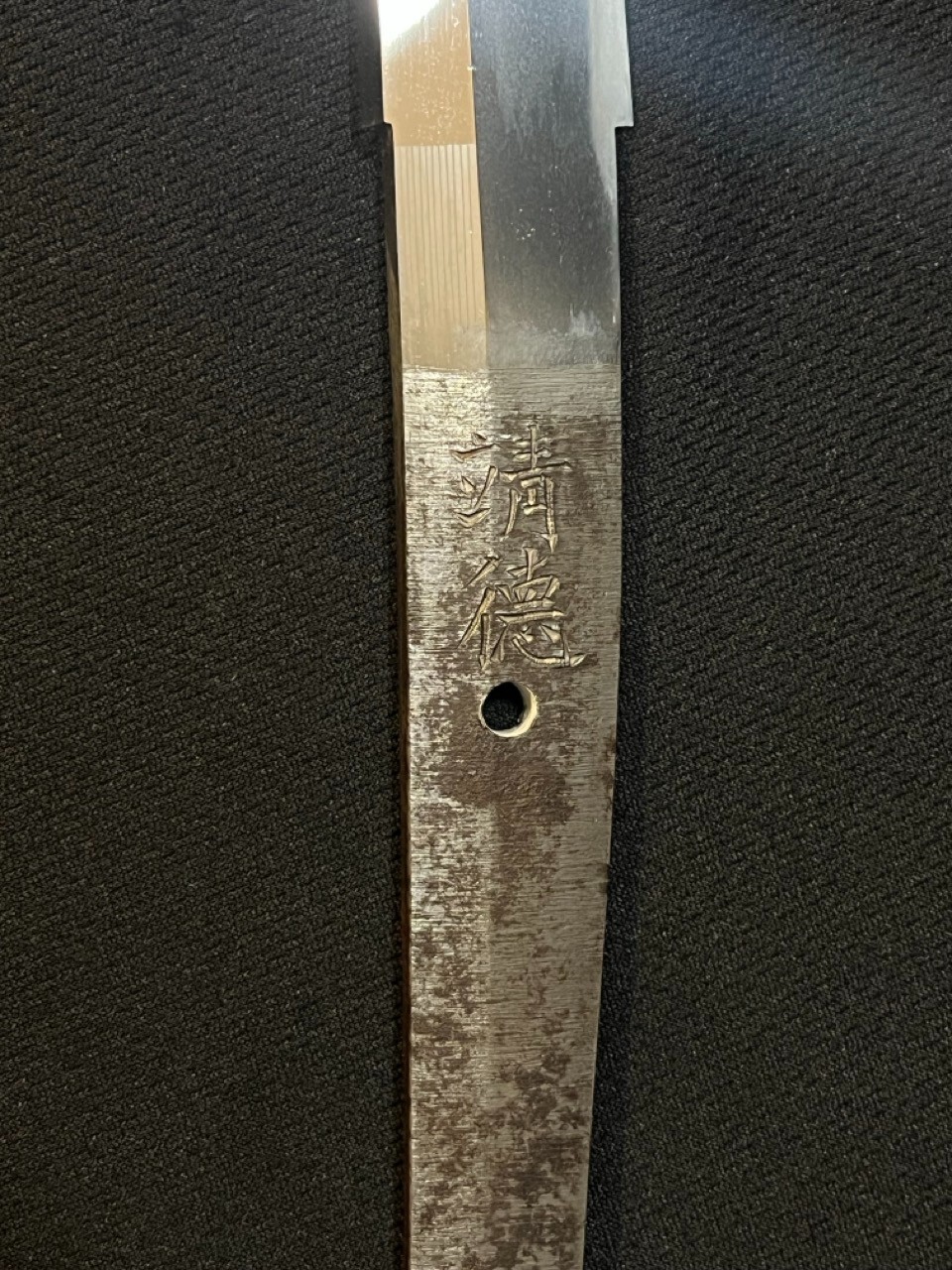
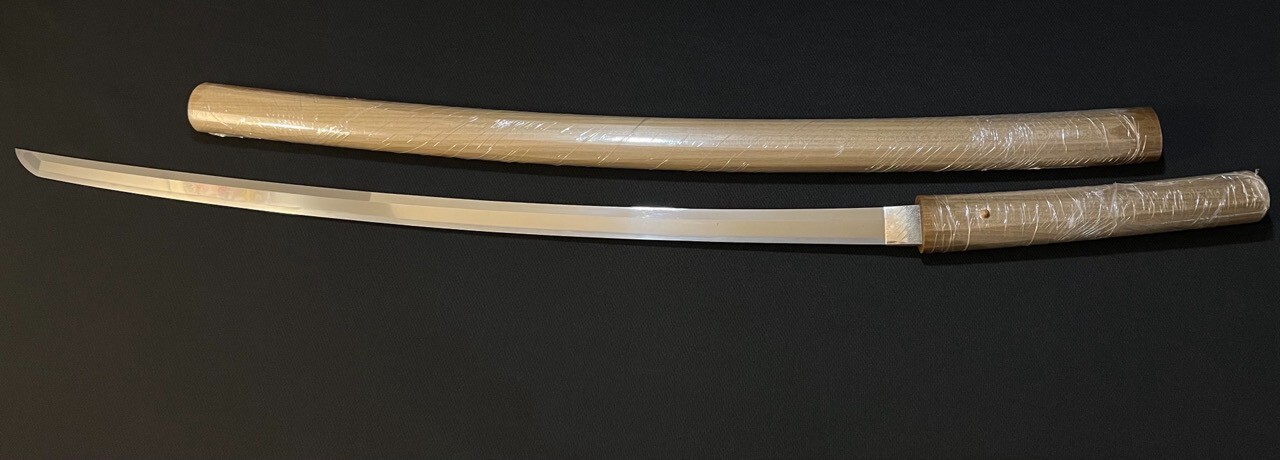
Gendaito signed Kanenaga and dated 3rd Month 1943 a lucky day. In good quality gunto koshirae with a removed mon badge visible on the kabuto gane. "Kanenaga (包永), Shōwa (昭和, 1926-1989), Gifu – „Nōshū Seki no jū Kanenaga kore o saku“ (濃州関之住包永作之), „Kanenaga“ (包永), civilian name „Amachi Ginjirō“ (天地銀次郎), older brother of Amachi Suzuichi (天地鈴市), he was born on the fourth day of the ninth month Meiji 17 (1884) and died March 8th 1958, he worked as guntō smith, posthumous Buddhist name „Enkaku Chikyō“ (円覚智鏡)" Lovely Bizen style choji hamon with a lot of hataraki, Kanenaga did make showato as well but this appears to be a true gendaito. It has some damage to the ha which probably happened during its use in WW2. The saya has a carved name which seems to be A HYND. Alexander Hynd was a Scottish Corporal who fought in the battles of Kohima and Imphal. He was also at Dunkirk during the evacuation. The sword was found during a house clearance in the lake district, I can't prove its the correct A. Hynd but it seems likely. I've seen quite a few of Amachi Kanenaga's swords and so far nothing comes close to this one. £900, unfortunately it's buyer collect only from the UK. With the recent changes in the law it's just not worth trying to ship, I'm not far from Manchester.
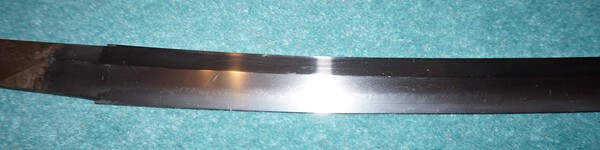





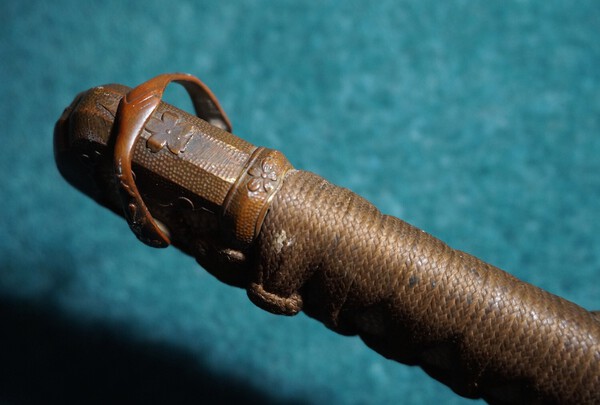
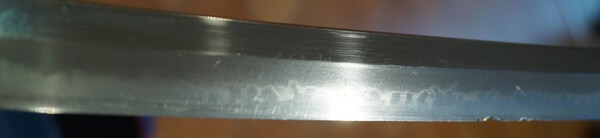
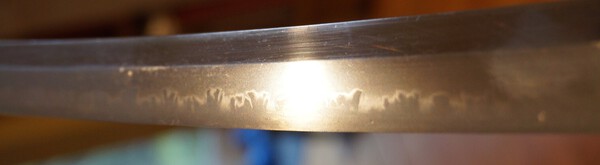
 2 points
 -
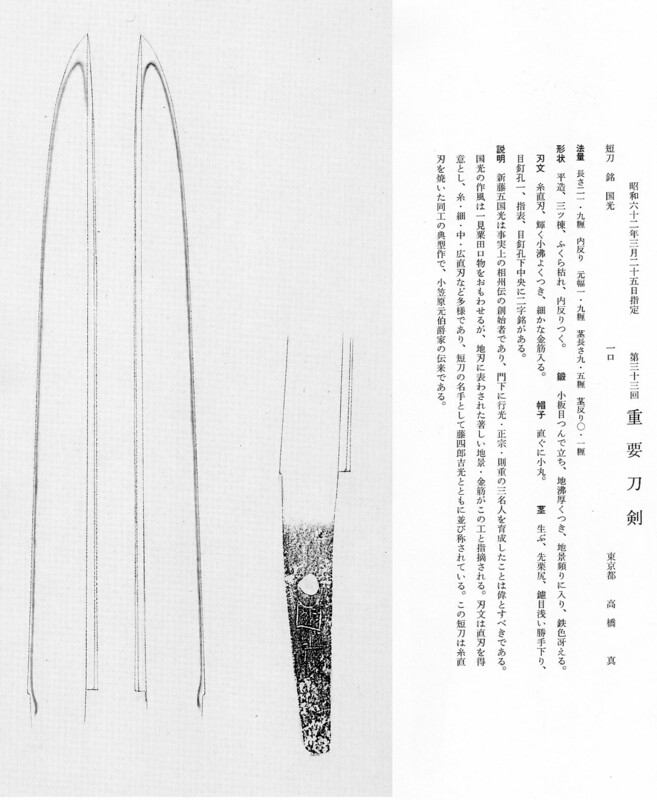
O-hada (large grained hada) and hada-dachi (standing hada) aren't the same. You can have a ko-itame hada or regular itame-hada that is standing but not large in form. Shintogo tanto often display this characteristic of very fine ko-itame that is also standing with tons of chikei. From what I've gathered and am still trying to learn is that clarity of steel and nie formations such as chikei can result in a standing or prominent grain unrelated to the size of the grain itself. A lot of early Soshu (Shintogo, Yukimitsu) show these traits as well as some Masamune and Sadamune. Outside of Soshu-den, we see schools like Aoe and Awataguchi also showing these traits as well as others. On the flip side, scanning the translations of the Zufu that I have, o-hada and hada-dachi are linked more often than not. So while its not a requirement to have big grain to have standing grain as seen above and in the example below, there is a trend that o-hada tends to also be standing by nature more often than not. Take this one for example:
 2 points
 -
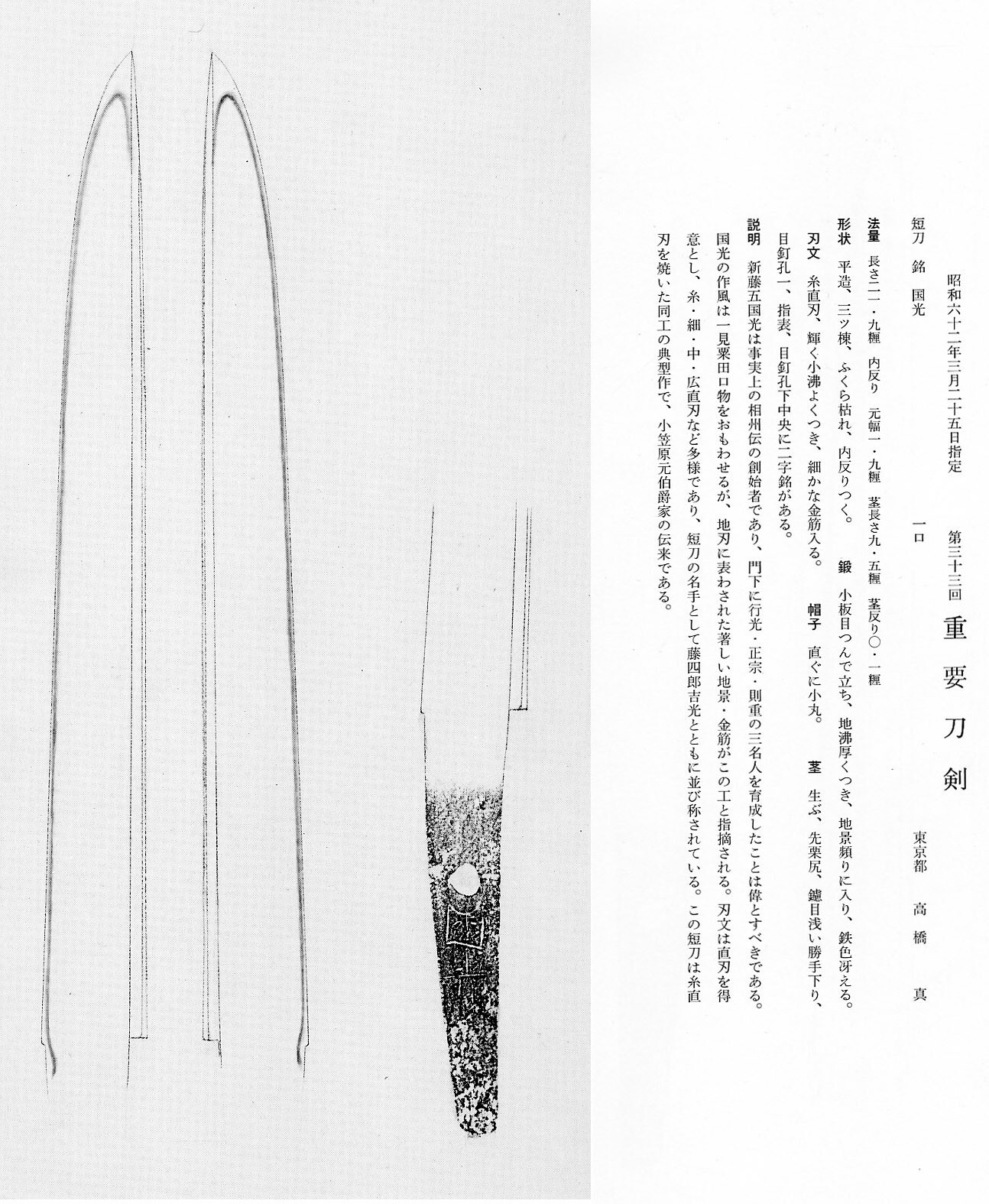
Yup. There are periods of Japanese history where Tametsugu would IMO easily place as Sai-jo saku if he wasn't competing against the traditionally held cream of the crop GOATed swordsmiths. Frustrating even when you deal with Soshu-den in general where its 97% mumei works to begin with. Its all a nebulous mess when work starts crossing over. Roughly (and probably wrong as this is from my own brain without verifying zufu translations) speaking: Tametsugu with lots of sunagashi and some masame tendencies = den Shizu/Shizu Tametsugu with top-class nie and strong tempered boshi = den Go/Go Tametsugu with a narrower hamon (not overly flamboyant) but excellent nie with a bit more standing hada = Norishige. Once his work crosses this threshold of certain parameters of quality and hataraki being met, it can no longer be Tametsugu and must be something else at TJ level. Honma Junji writes in his Soshu-den Masterpieces book:2 points
-
Apparently Jo saku which is surprising given the evidence of attributional fluidity with Norishige and Go. Or as in my example, Masamune, with a strong Mino influence.2 points
-
It really is interesting. I won’t argue against this, as I don’t have much knowledge of textiles, and I respect your opinion very much. I’ll wait for it to arrive and take a closer look...2 points
-
I am bad with keeping stats or researching sales, but kantei-wise it is not quite unusual. Or for that Mino Kanenobu shooting into Naotsuna,2 points
-
2 points
-
Ishido Teruhide saku https://www.japaneseswordindex.com/teruhide.htm2 points
-
Hi Justin, thank you. Actually there are at least 6 significantly different signature and 12 type of different kao. I did some research on this school that I tried to summarize here (The School of Ayanokōji Nagamine) my impression is that there was a sort of organized workshop creating Goto like pieces more than Soten like. But that is just my opinion but what do I know? Regards Luca2 points
-
Hi Khalid, In the case of iron tsuba and fittings, see the below method, taken from Jim Gilbert's Cleaning Iron Tsuba - 1/26/01 'The simplest and safest first step is to wash your tsuba in mild soap and water. Use hand soap, not detergent or cleanser. Over years of careless handling a tsuba can pick up quite a bit of plain old dirt. After you’ve washed the piece, be sure to dry it thoroughly. Once it’s relatively clean, take a careful look at the piece in good light - sunlight if possible. You’ll probably see plenty of red rust. You may also see various surface coatings of modern to antique origin – wax, shoe polish, paint, old lacquer, etc. If you are not sure what you’re looking at, show the tsuba to someone familiar with old guards. My preference is to leave old lacquer in place, unless it is associated with serious corrosion. Dealing with crud that won’t come off with soap and water can require a couple of different approaches. The most straightforward method for an iron guard is to boil it in distilled water for 20 minutes or so. This will remove most films without altering the metal or removing any lacquer that may be present. I don’t recommend adding any chemical agents to the water. The more aggressive the cleaning solution the greater the risk of permanently damaging the guard. Boiling water is good enough. When the tsuba comes out of the water, the good news is that all of the oils and waxes that were hiding rust will be gone. The bad news is that you are likely to be looking at a very ugly, dry, rusty plate at this point. You may wish that you had just left things as they were, and frankly, if you’re not willing to go through with the very time consuming and finger-tiring next step of rust removal, you should have left well enough alone. Rust removal is a mechanical process of dealing with two slightly different iron oxides. The idea is to rub off the active red corrosion (anhydrous ferric oxide) while leaving behind the slightly harder protective black magnetite patina. I have tried bone, antler, ivory, bamboo, etc., and all are good for certain aspects of the job. I find that ivory (old piano keys are a good source) works best. If it isn’t available, get a section of dense bone. The typical beef “soup bone” is good. Get one that has all of the grease cooked out and use a hammer and chisel (wear your safety glasses) to break the bone up into a number of variously shaped and sized chunks. You’ll find that one of the assortment of sharp and dull surfaces and angles should do the job. Whatever the tool, you're looking for something harder than the red rust and softer than the patina. Never use steel, iron, glass, sandpaper, or anything else harder than the patina. DO NOT try chemical rust removers - they will remove the patina and damage the iron. In fact don't try chemical treatments of any type - including boiling in tea or anything of the sort. Also, don't put your tsuba in a fire despite what Robinson's “Arts of the Japanese Sword” says! Some people will use chogi oil at the start of the process to loosen the red rust. I haven’t found this method to be much help. It certainly won’t harm the iron, but it is fairly tricky to keep the oil from soaking into the rust inside any sukashi openings and darkening it to an unnatural color. The surest method is to just take your bone, antler or ivory and gently scrape away at the red rust. Periodically wipe off the red dust to see how you're doing (a damp cloth removes the dust better than a dry one). It’s usually best to work slowly in a small area. Quickly rubbing over a large area is ineffective. Avoid the temptation to find a faster way, because if you do, you will also have found a way to take the patina off. I can't stress this enough. In your inevitable attempt to get the job done faster, you will be tempted to use brass or copper, but it's much too easy to wind up damaging the patina this way. Even if you're successful (this time), you'll have to find a way to get the ugly brass residue off. Lots of patience and tired fingers is the only way. Depending on how severe your rust is, in hours to weeks you will eventually remove the red and just leave the nice black. Go gently and slowly and check your work constantly. Too much scrubbing even with a soft tool will eventually remove the patina. If you think you've got the rust under control, take your tsuba out in the sunlight and have another look. Most artificial lighting hides red rust somewhat, but sunlight will reveal all. You will probably find that there is still more rust there, but don’t get carried away with trying to remove every trace. Don't over do your cleaning. The idea is not to make a 500-year-old tsuba look new. Older tsuba can have quite a lot of oxide build up that is best left alone. The idea is to remove any active corrosion and restore the beauty of the surface, not to alter fundamentally alter it. An over cleaned tsuba is always worse than an under cleaned one. If you overdo it and damage the patina, you're in trouble. You won't get it back any time soon. There are people who repatinate iron tsuba, but the only one in the US that does good work is no longer taking orders. Many people who claim to do restoration will destroy your guard. Unfortunately, even the best repatination cannot recreate the original aged surface. Also, NEVER clean the inside of the sukashi. Cleaning the inner walls of the sukashi is like polishing the nakago of a sword – a bad idea. However, do remember to clean the rim as well as the web of the plate. Once you have the rust down to the point that you're satisfied, get out a piece of cotton cloth and just rub the tsuba. As you keep this up you'll find that the color will darken and the surface will take on a soft luster. The cloth won't do much to remove red rust, so if you find that you missed some rust, go back to more boning. Just go slowly. Once the tsuba is clean, you may want to carry it in your pocket for a few weeks in addition to rubbing it with the cloth. The idea is not to polish the guard to the point that it shines. Also, avoid rubbing the guard on carpeting or synthetics that can leave a greasy finish. I prefer to stay away from oil on a finished guard. The oily sheen is not as attractive as the natural finish and it will tend to attract dust and lint over time. It will eventually dry out, and can then actually promote a new layer of rust under the dry oil film. By the way, a coat of oil is often used as a “quick fix” to make red rust look dark. This may seem like an improvement in the short term, but really just winds up making the tsuba look like oily dirt. Also, a coating of black shoe polish is a frequently encountered “magic patina.” Watch out for these dirty tricks when buying tsuba. There's no substitute for spending a lot of time with bone and cloth to get a rusty tsuba into shape. Once you've conquered rust, store your guard in one of the wood boxes made for tsuba. Compared to the cost of all of the work you've just done, the box is cheap. After a fresh sword polish, who would leave that blade out on the shelf, or wrapped up in paper, rather than pay for a shirasaya? Be aware that most of the tsuba boxes you will come across have the center post attached by two very sharp nails coming up from the bottom of the box. Transporting tsuba in this type of box will eventually cause the center post to come loose from the weight of the tsuba moving around on it. Once that happens, the tsuba will rattle around on top of those little nails and scratch up the seppa dai. Always transport tsuba in cloth bags. Periodically take your tsuba out and give it some light rubbing with the cloth. Try to keep your fingers off, since you risk starting more rust this way. When I was discussing the initial cleaning, I mentioned that there are a couple of alternatives to consider. In the case of a guard already in good condition, free of rust, etc., but simply covered in wax, it is usually possible to safely remove the wax by rubbing with some isopropyl alcohol. Additionally, you will occasionally come across a guard that has been coated in polyurethane or some other tough, modern finish. For these, there is a commercial stripper called Strypeeze that will not harm the iron or patina. It could harm you, though, so wear gloves and work with plenty of ventilation and/or a solvent respirator. Other problems that you can encounter include fire scale, a depatinated plate, cracks and breaks or other serious damage. Unfortunately, these will require professional care. Experimenting with home treatments will generally result in further damage to the plate.'2 points
-
I have another set of good tsuba for sale, less expensive than the list I posted previously. Again, DM me for additional pictures, on Facebook (Philip Fellman) or email me at shirogitsune@gmail.com Large (75 x 81 mm) Edo Higo iron and silver Tsuba. $675 Outstanding large, heavy Jakushi Tsuba (76 x 82x 4mm) $450 Refined Iron Nami Chidori Tsuba (70. 75 mm) with outstanding carving and inlays in gold, silver and shakudo. $650 Large, heavy Choshu Iron tsuba (78 x 82 x5mm) excellent carving some gold highlights. $675 Large, unusual shaped Iron landscape tsuba in the style of Kaneiye, (82 x 86 x 4mm) exquisite soft metal inlays. $650 Large (80 x 85x 4mm) Iron Mito school silver Crane over waves tsuba. $450 Heavy Triple plate shakudo tsuba ( Momoyama/Early Edo; 71 x 72 x4mm. $400 Mito Iron Dragon tsuba, (70 x 72mm) fine carving $325 Muromachi period, Myochin boar’s eye tsuba, fine patina, 2.8” $375 Nami Chidori Sukashi Tsuba, wakizashi sized, approx. 68 mm, $225
 1 point
 -
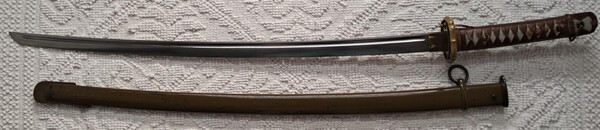
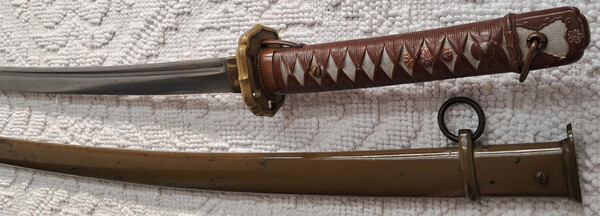
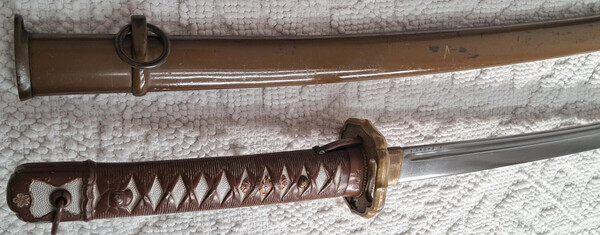
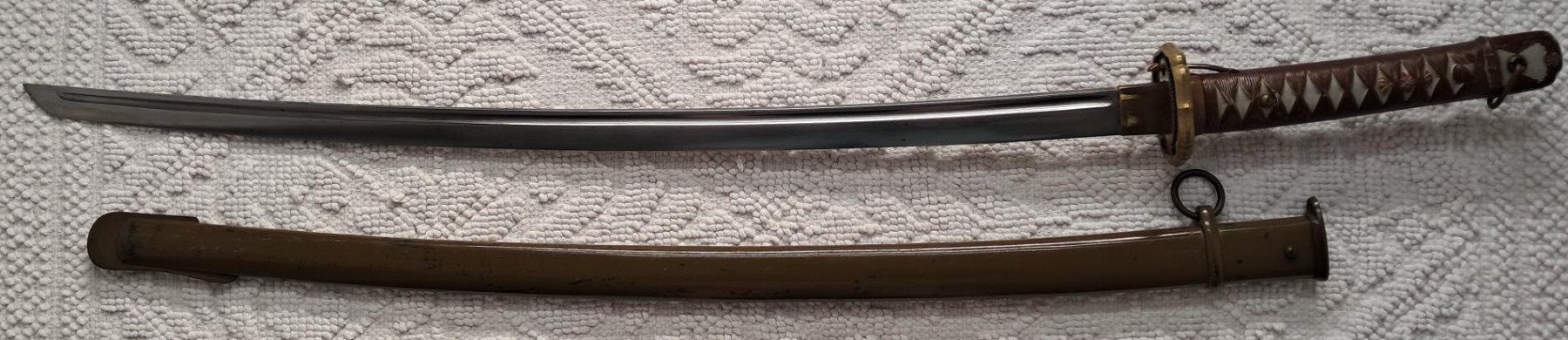
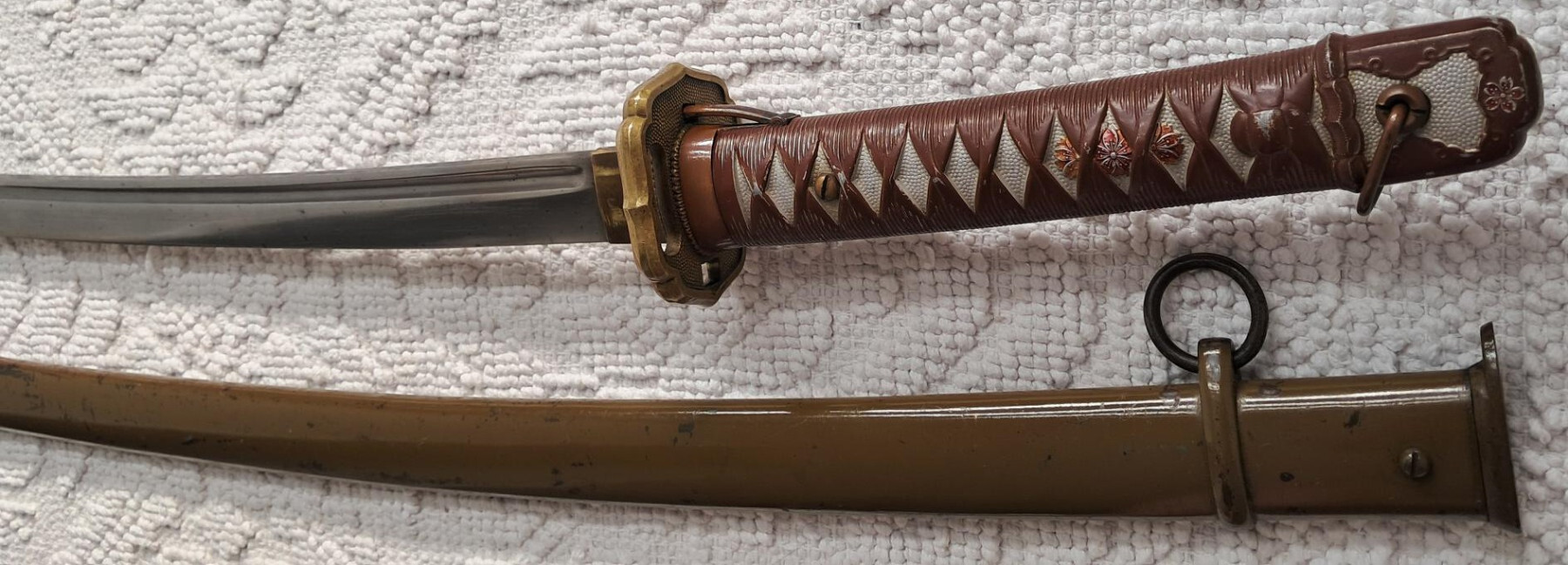
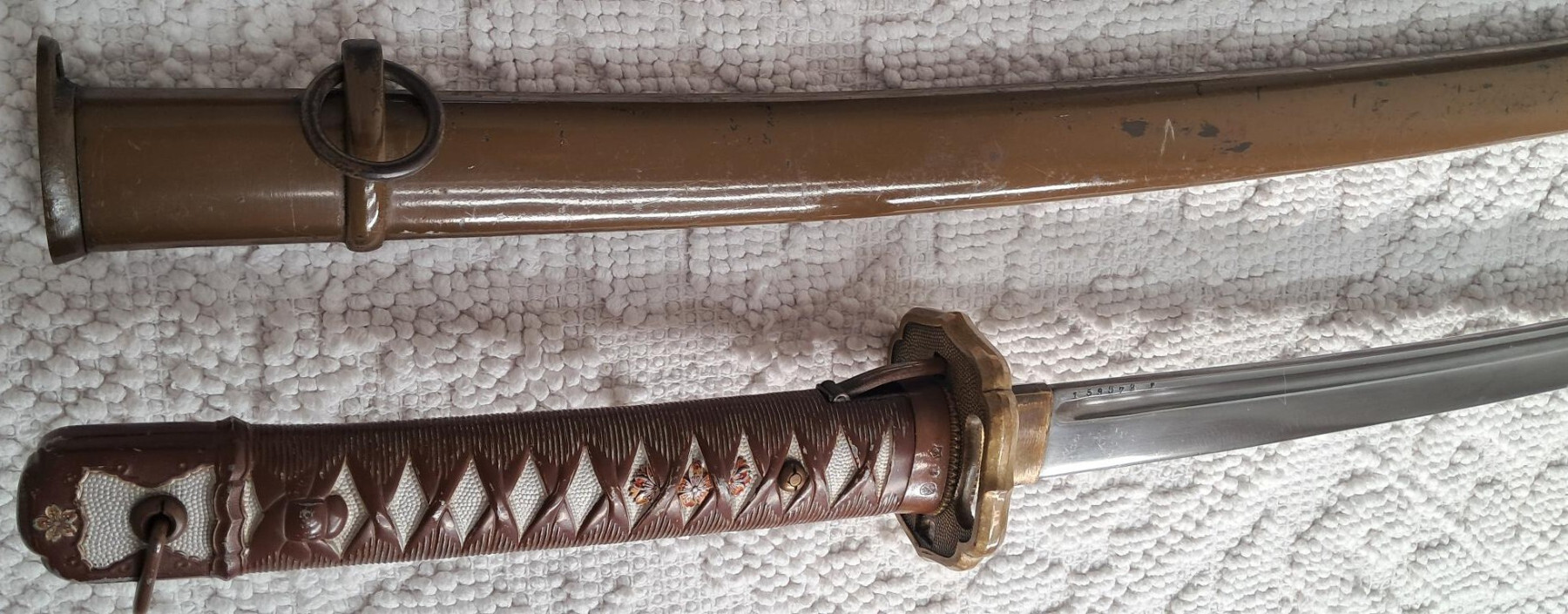
NCO Type 95 Gunto in Very Good Condition. Matching Numbers 159372 Would be hard to upgrade... Price $2400 AUD (Australian) plus all fees

 1 point
 -
I would listen to Mike's personal opinion very carefully. He has a good eye and I believe is the first and only non-Japanese resident to win the prestigious All Japan National kantei championship in 2001. He entered again in 2008 where he got 2nd place, and joint 2nd in 2018 after a tie-breaker. Thats praise indeed. Some pointers to look for. Firstly is the hamon nioi- or nie-deki? Utsuri? This will give you a good idea of the period. Utsuri tended to disappear in the Muromachi as nie-based hamon became more en vogue. Is the hada itame and mokume with many short chikei and a tendency to nagare hada?1 point
-
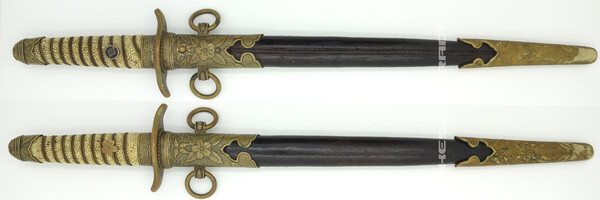
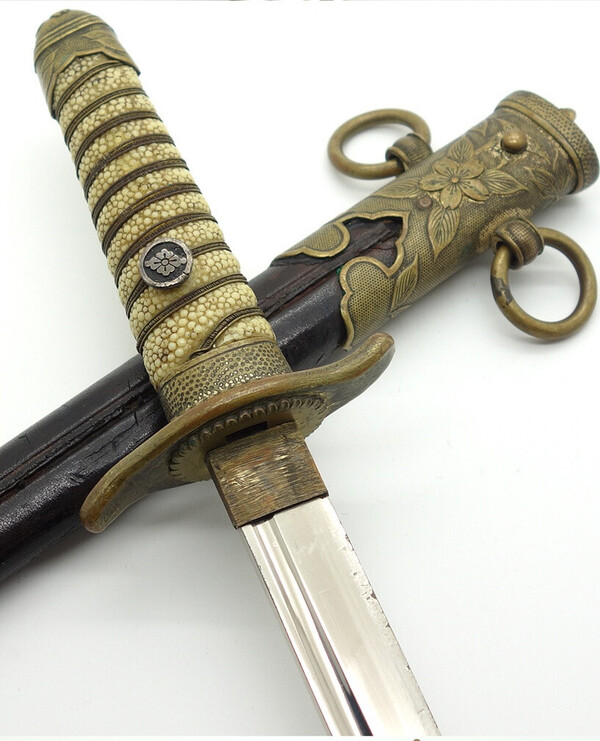
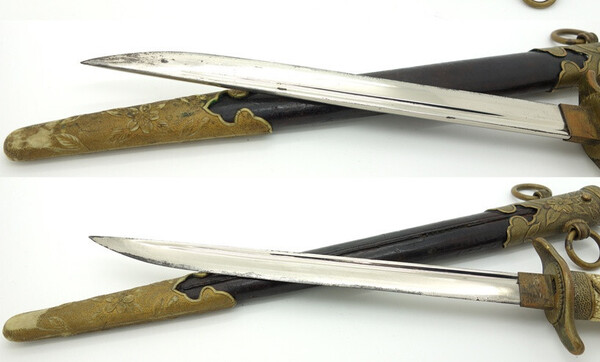
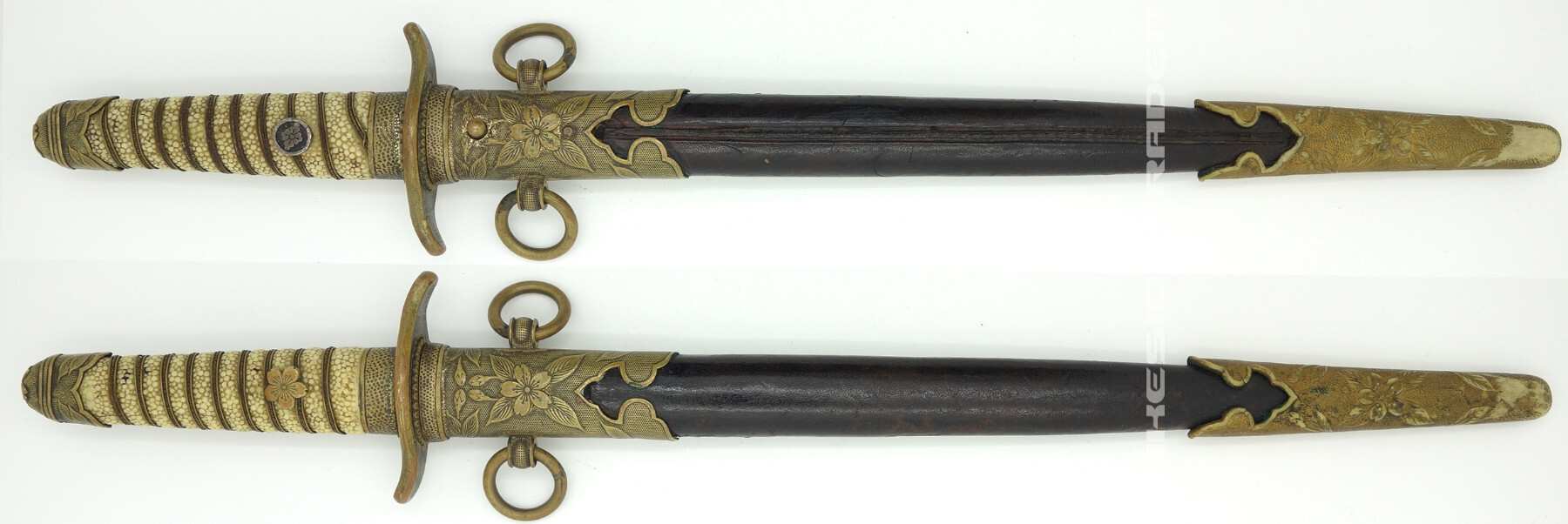
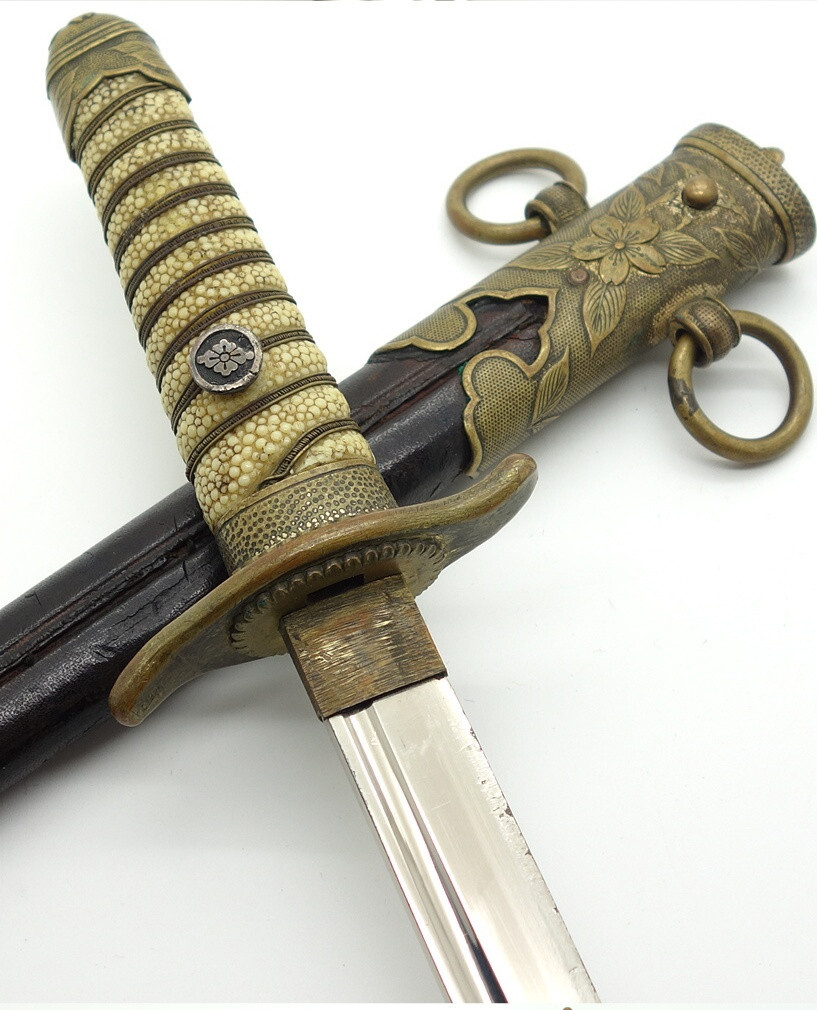
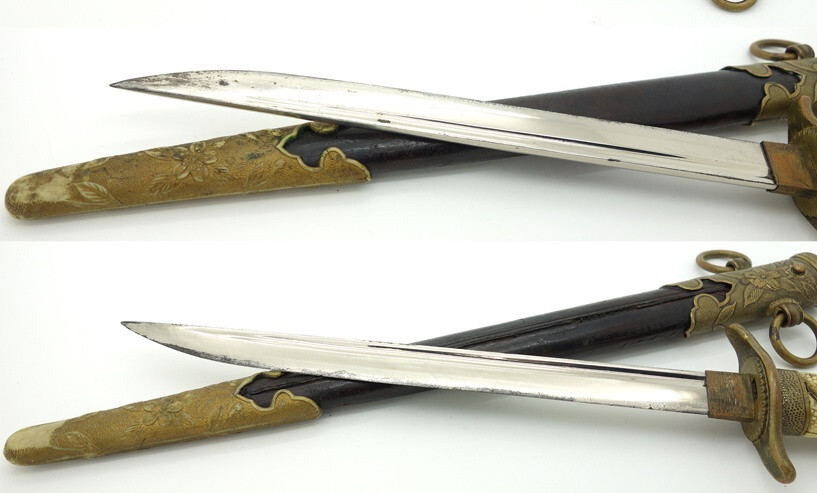
Seems to be the right place for this dirk as it has a Mon welded to mekugi screw. Yet this dirk is aso peculiar in other ways. The dirk is of late production as the tsuka has celluloid "wrapping" instead of samegawa. Yet it's still only "wrapping", not the tsuka made completely of celluloid (including ferrule, kashira and wire). The dirk itself still has a full set of brass parts as more early models had, it still has habaki and its blade is fullered. Meanwhile, the saya' drag is made of celluloid as those on the very late models. One may say that dik and saya might be from different sets. However, the design of ferrule (fuchi) and kuchigane is identical. Taking into account that design is peculiar by itself (usually it consists of smaller "dots") it's likely that saya and dirk belong to one set. Which may mean that celluloid drag was used not only for last ditch effort dirks. Source: https://www.lakesidetrader.com/item.php?ID=23364
 1 point
 -
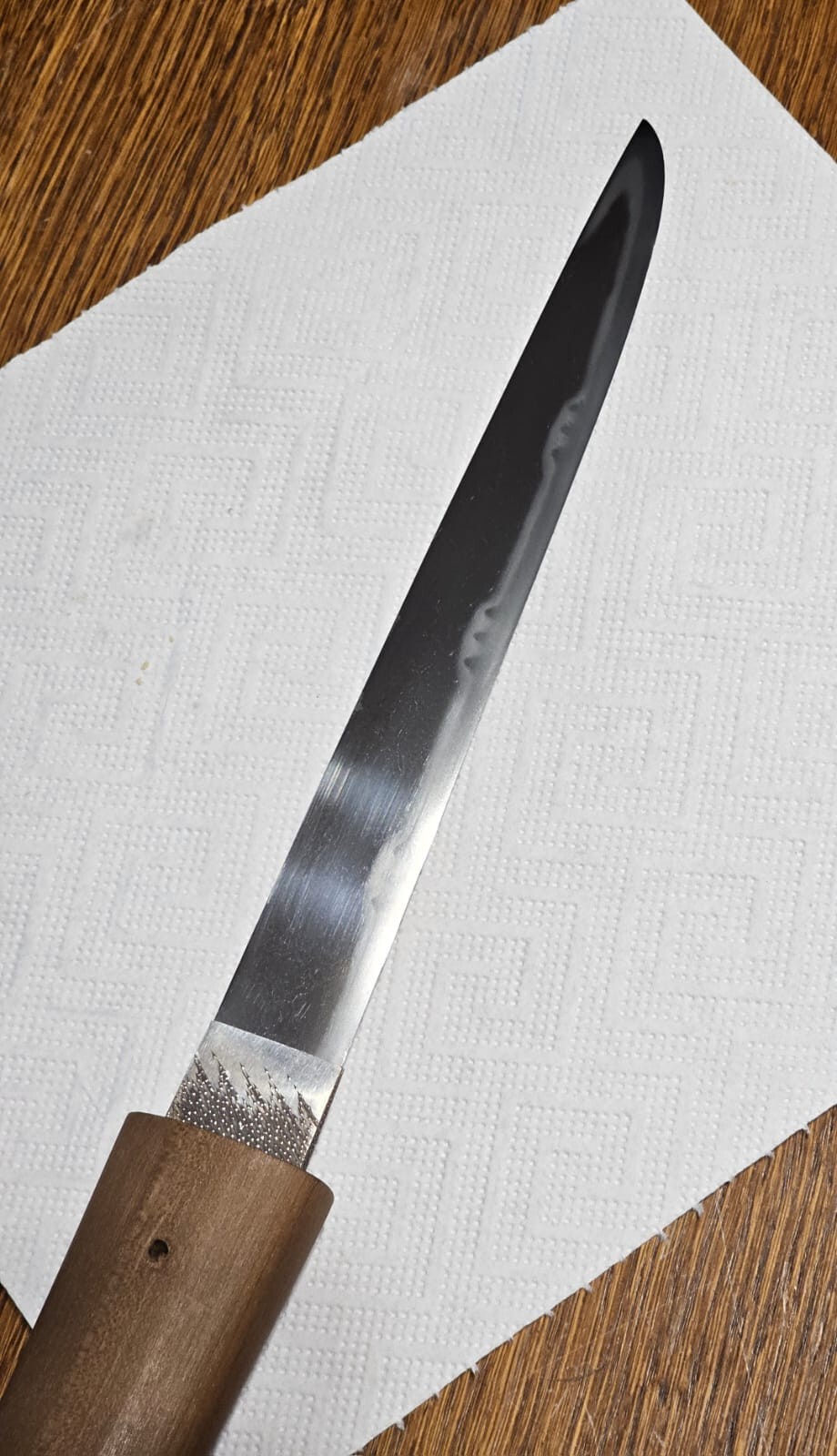
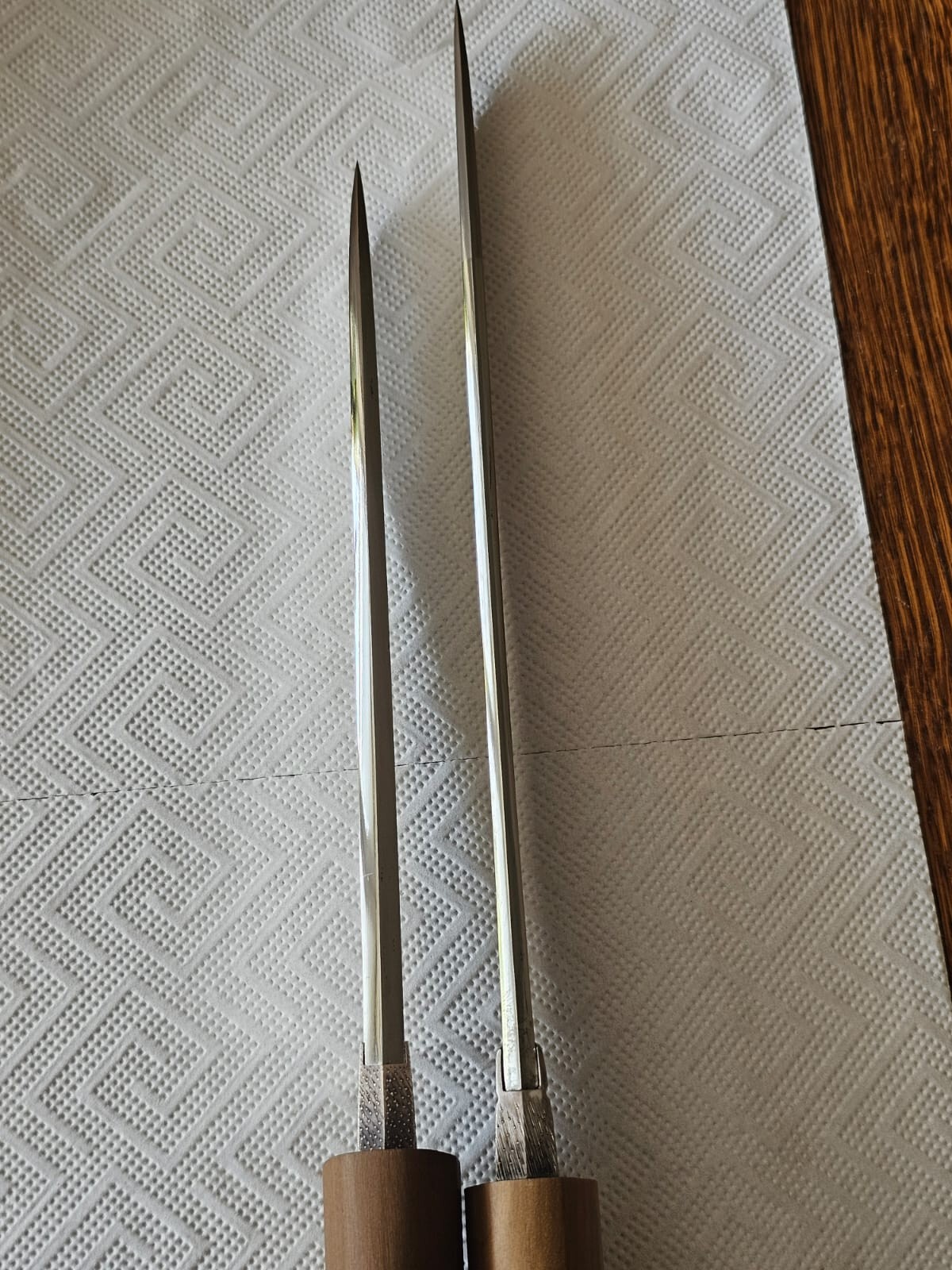
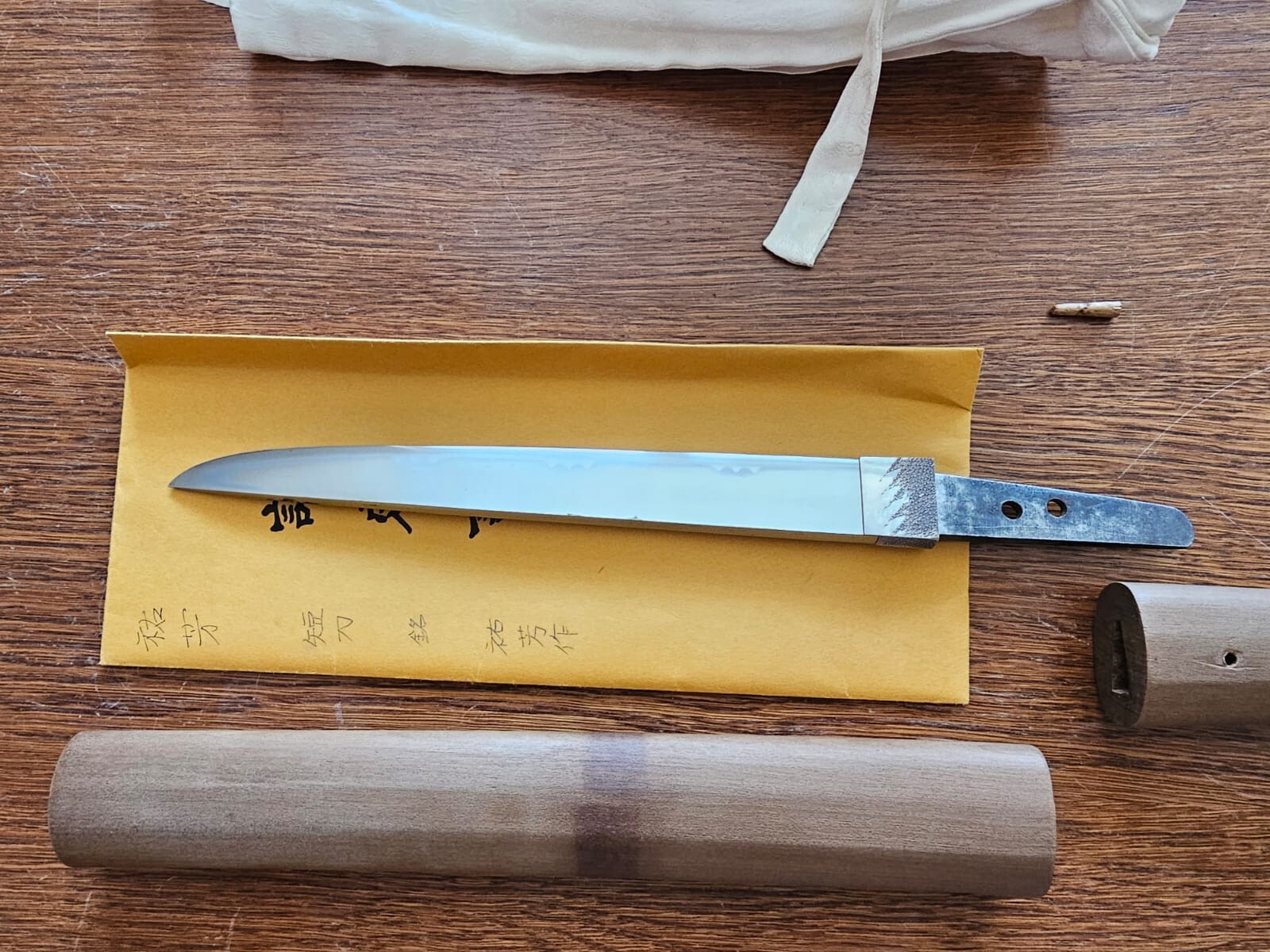
Hello, I have this nice Tanto to offer. What makes it unique for me is its thickness and awesome Hamon. It comes with solid silver Habaki, Aikuchi Koshirae (Menuki also solid silver), Shirasaya and NBTHK. Silk white sword bag also included. Nagasa: 21,8cm Total: 40cm Blade weight: 183g Sori: 0 cm This blade is attributed to Ashu Sukeyoshi (阿洲祐芳) by NBTHK. Ashu is another name for Awa province (Today’s Tokushima prefecture). Sukeyoshi was active during the end of the Edo period- early Meiji era (Late 19th century-early 20th century). He first signed Sukeyoshi as his maker’s name and changed it to Sukeyoshi. We assume Yoshikawa Rokuro was his birth name. He was born in Awa province, and he learned sword-forging techniques from Bizen Osafune Sukenaga (備前長船祐永), one of the most famous swordsmiths at the end of the Edo period. After finishing the apprenticeship, Sukeyoshi returned to Awa province and served Hachisuka clan, the head of the entire Awa province. It is said that he forged a sword for Kondo Isami, a famous figure who belonged to Shinsengumi, a military unit formed as guards or Shogun at the end of the Edo period. Considering this fact, we believe the craftsmanship of Sukeyoshi was highly appreciated among Samurai at the end of the Edo period. Asking price 2500$ + shipment. Located in Poland/EU.
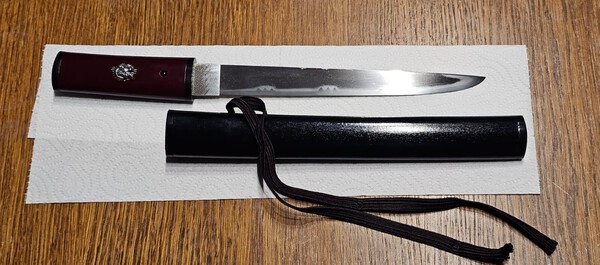


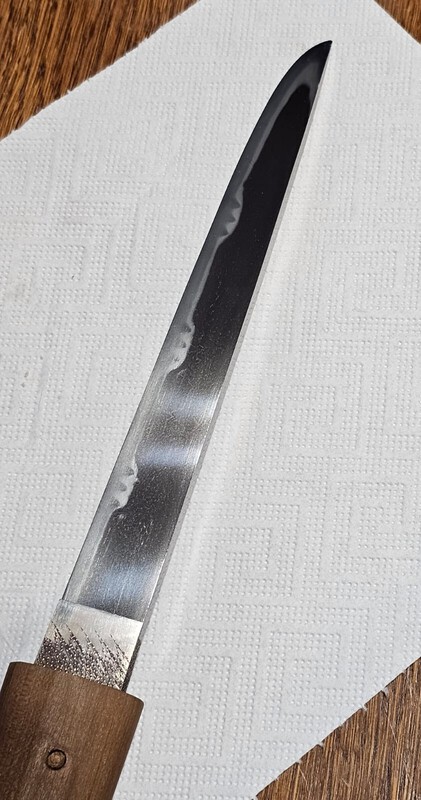


 1 point
 -
Thank you, Mr. Rohan! I was under the impression that NBTHK would not change their attribution when upgrading to a higher paper, but I guess I was too naive. I was also not aware of that Tamatsugu-Masamune upgrade instance. Very interesting!1 point
-
Modern cloth, this stuff is machine made and sold by the yard. The materials, the cut, construction and details are not period. Lots of modern Jinbaori get made for various festivals. The key give aways are the style of fabric, the bias tape and how it is sewn.1 point
-
Please tell us your reasons.1 point
-
....and a 3 D-printer? I cannot imagine a technique to imitate old fabric.1 point
-
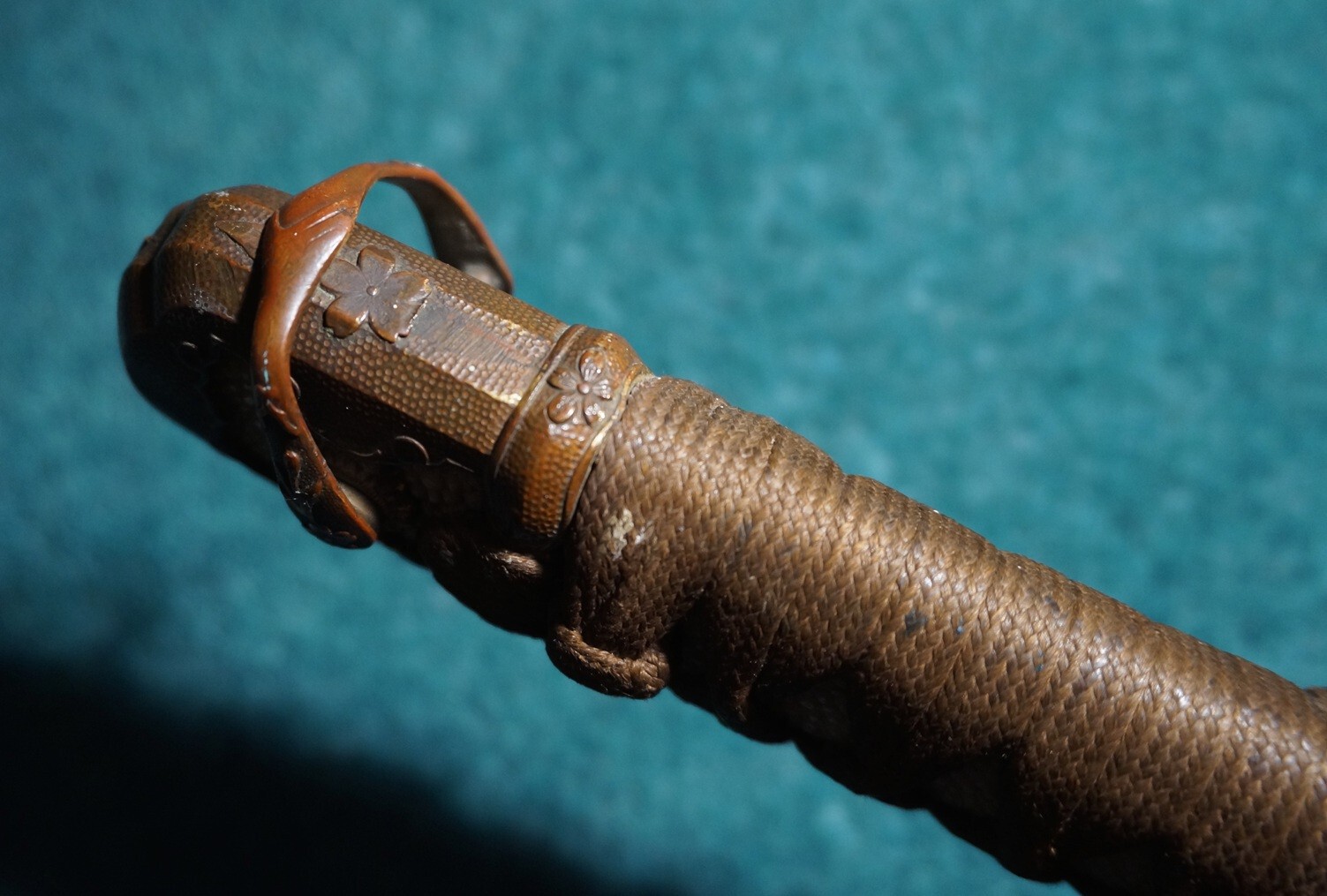
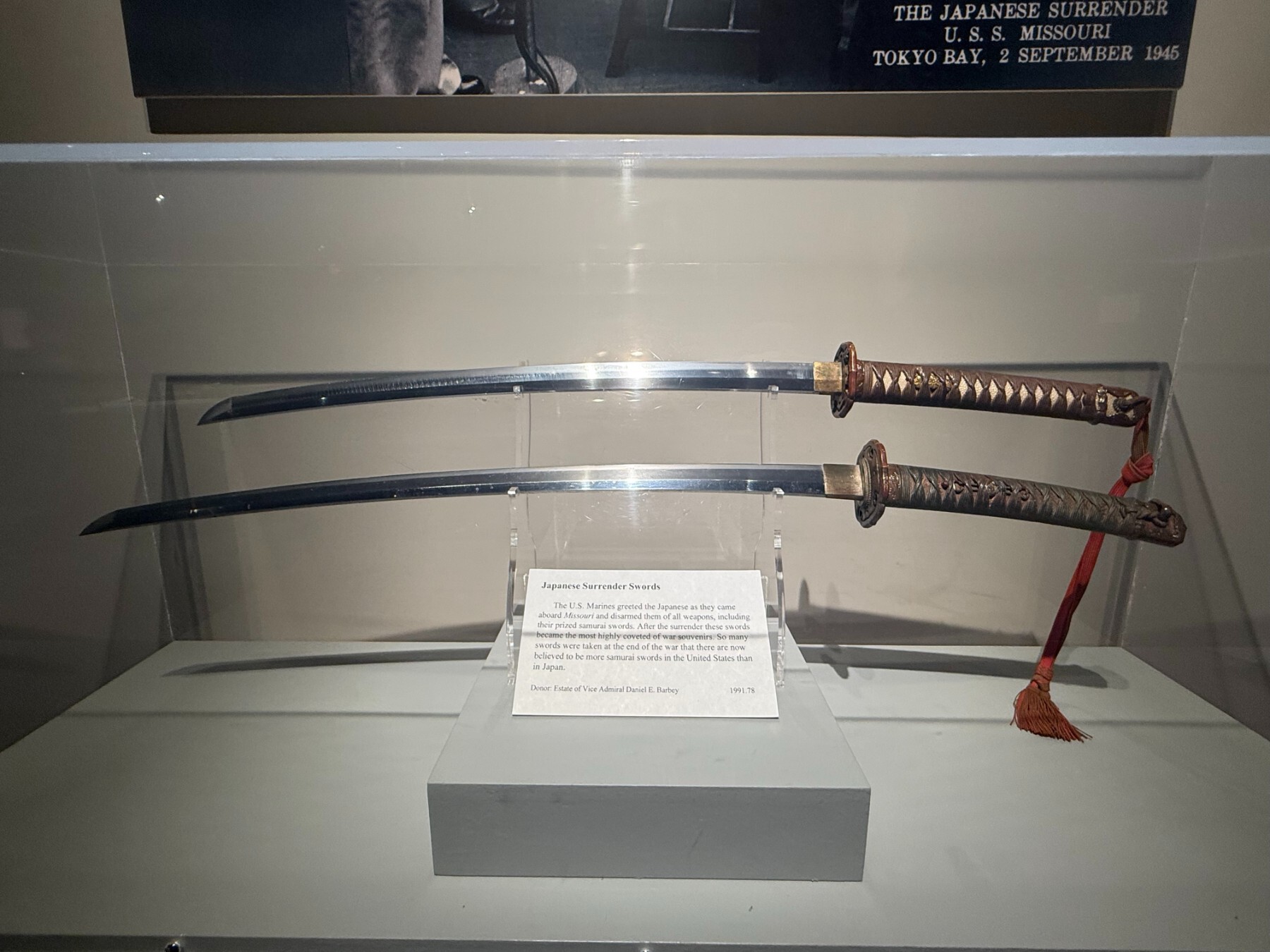
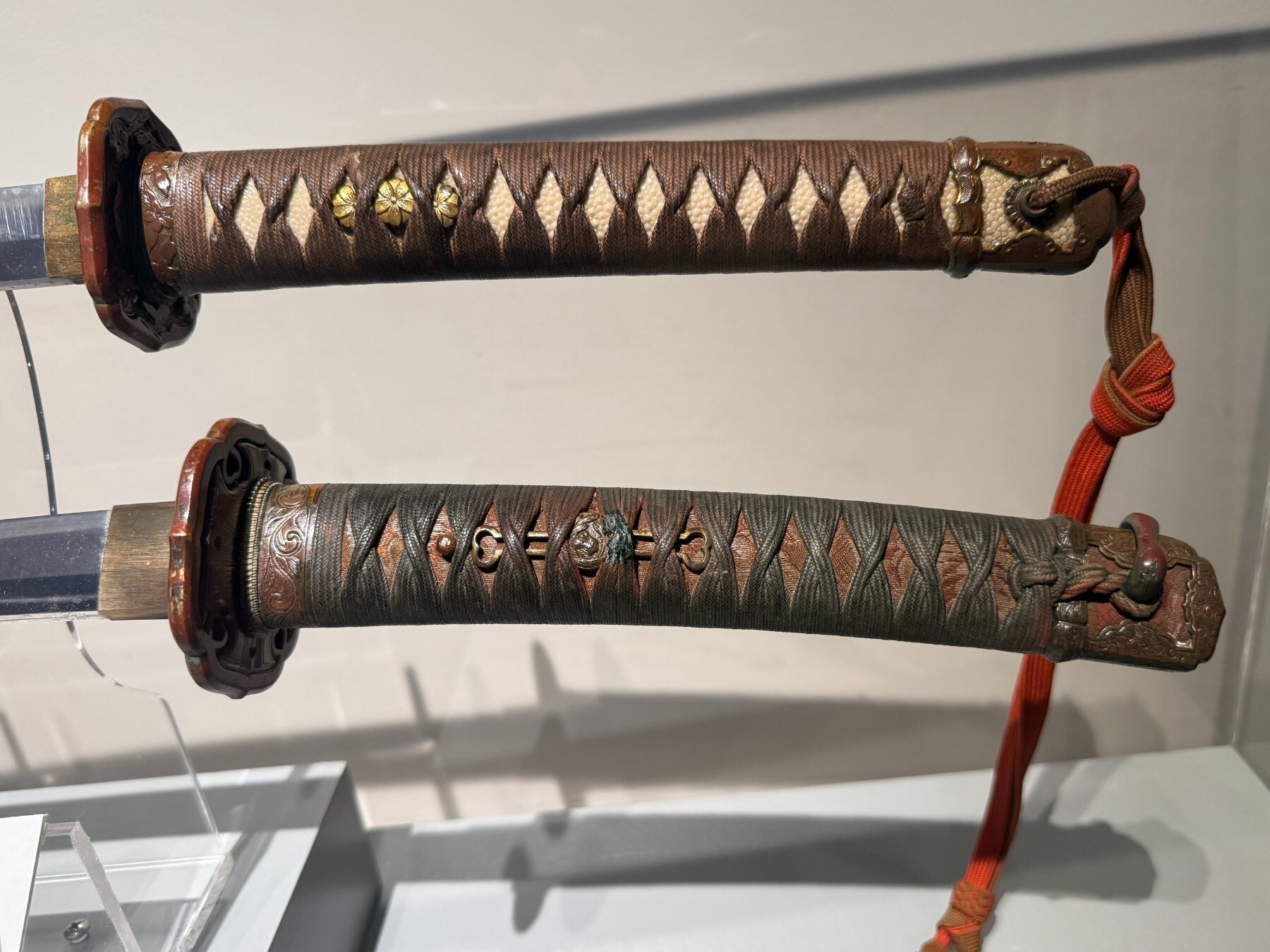
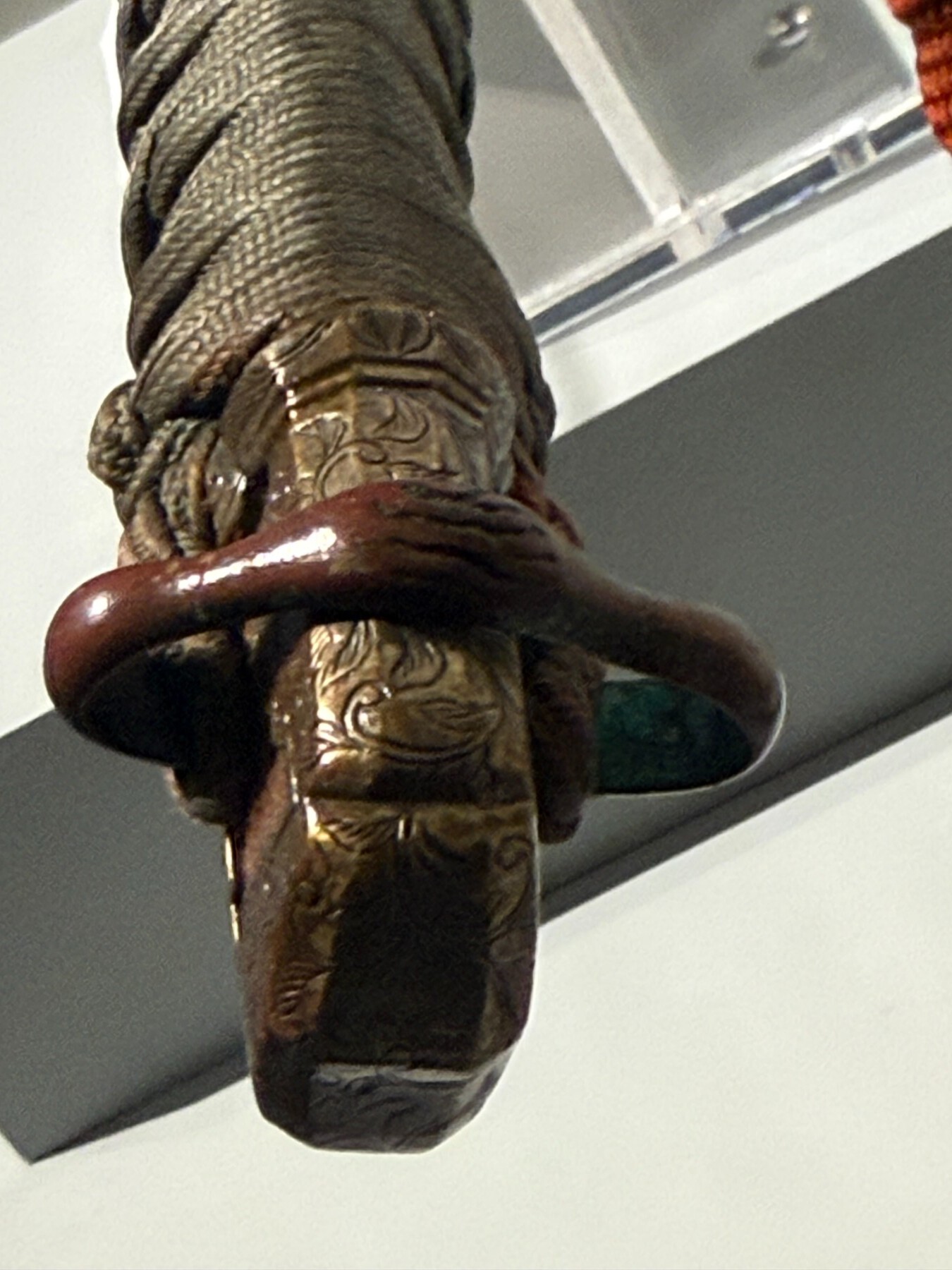
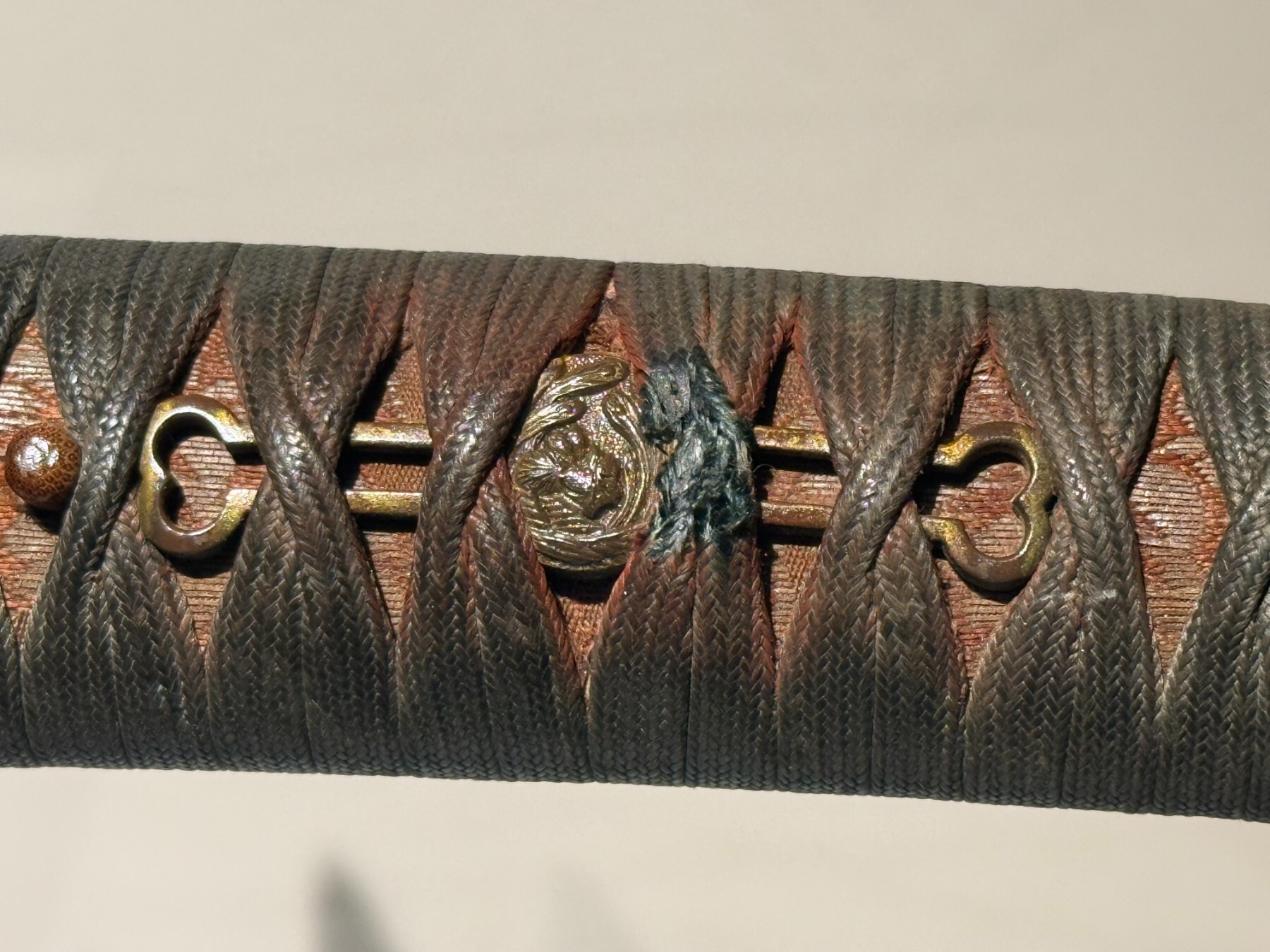
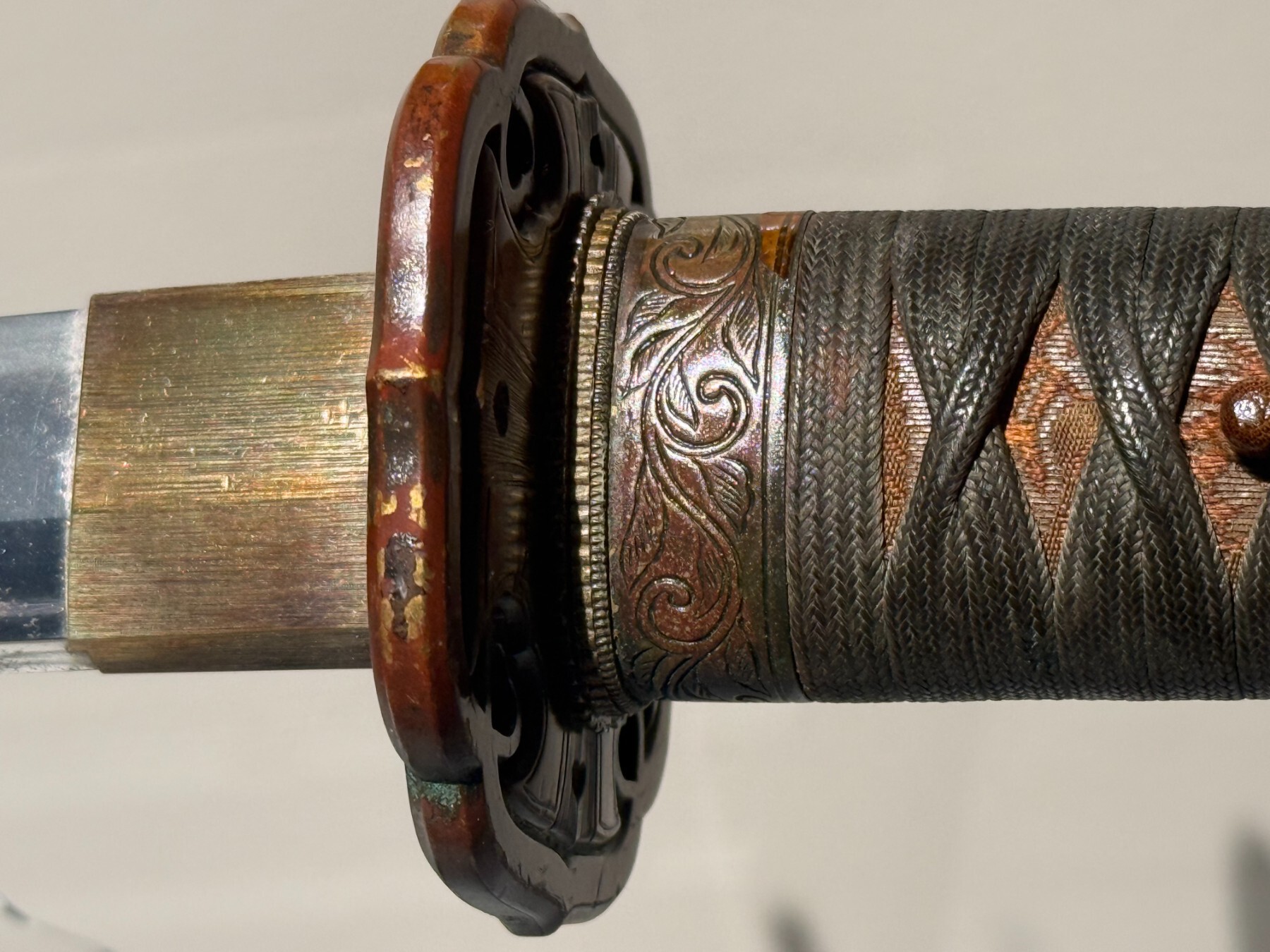
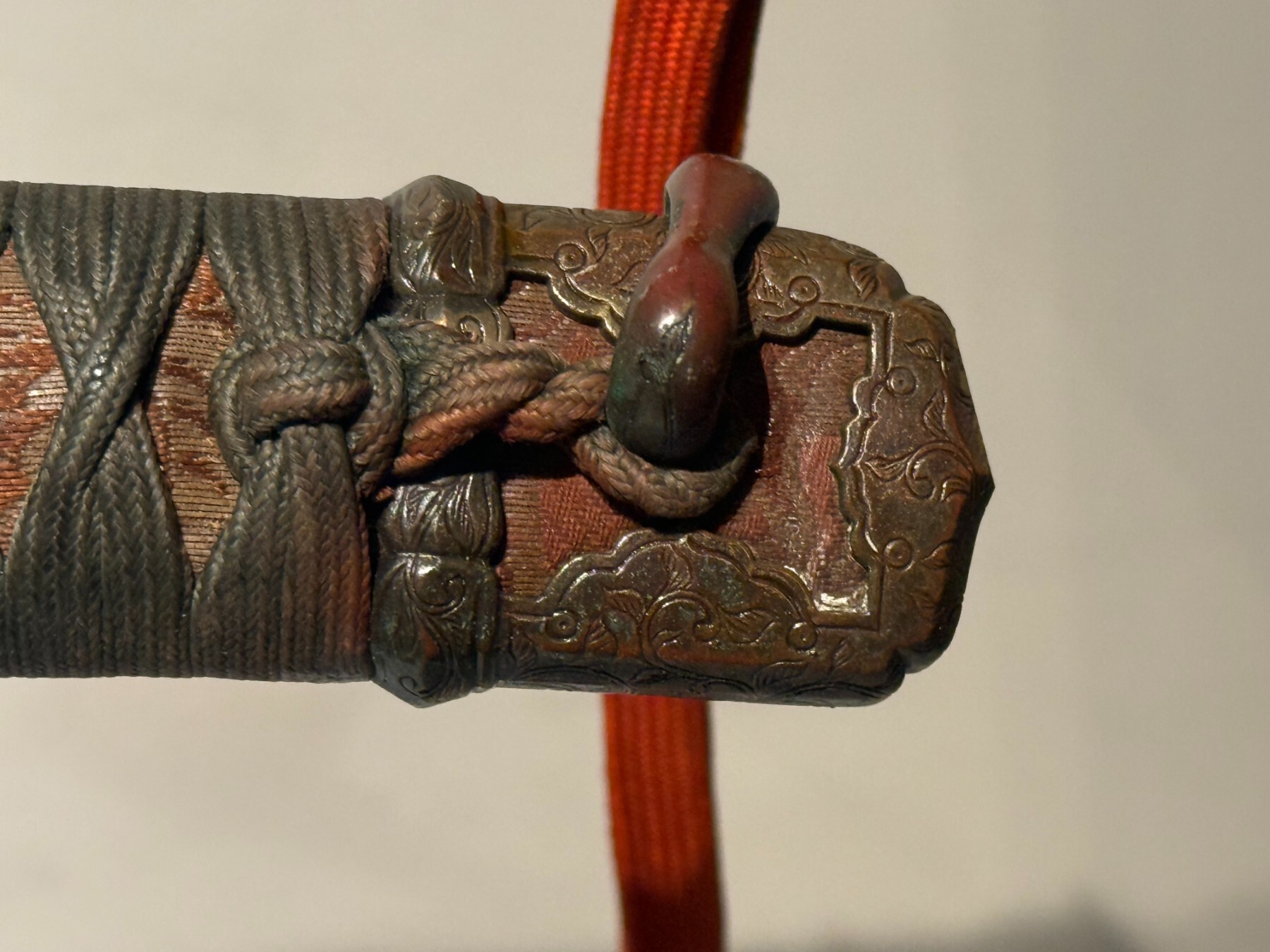
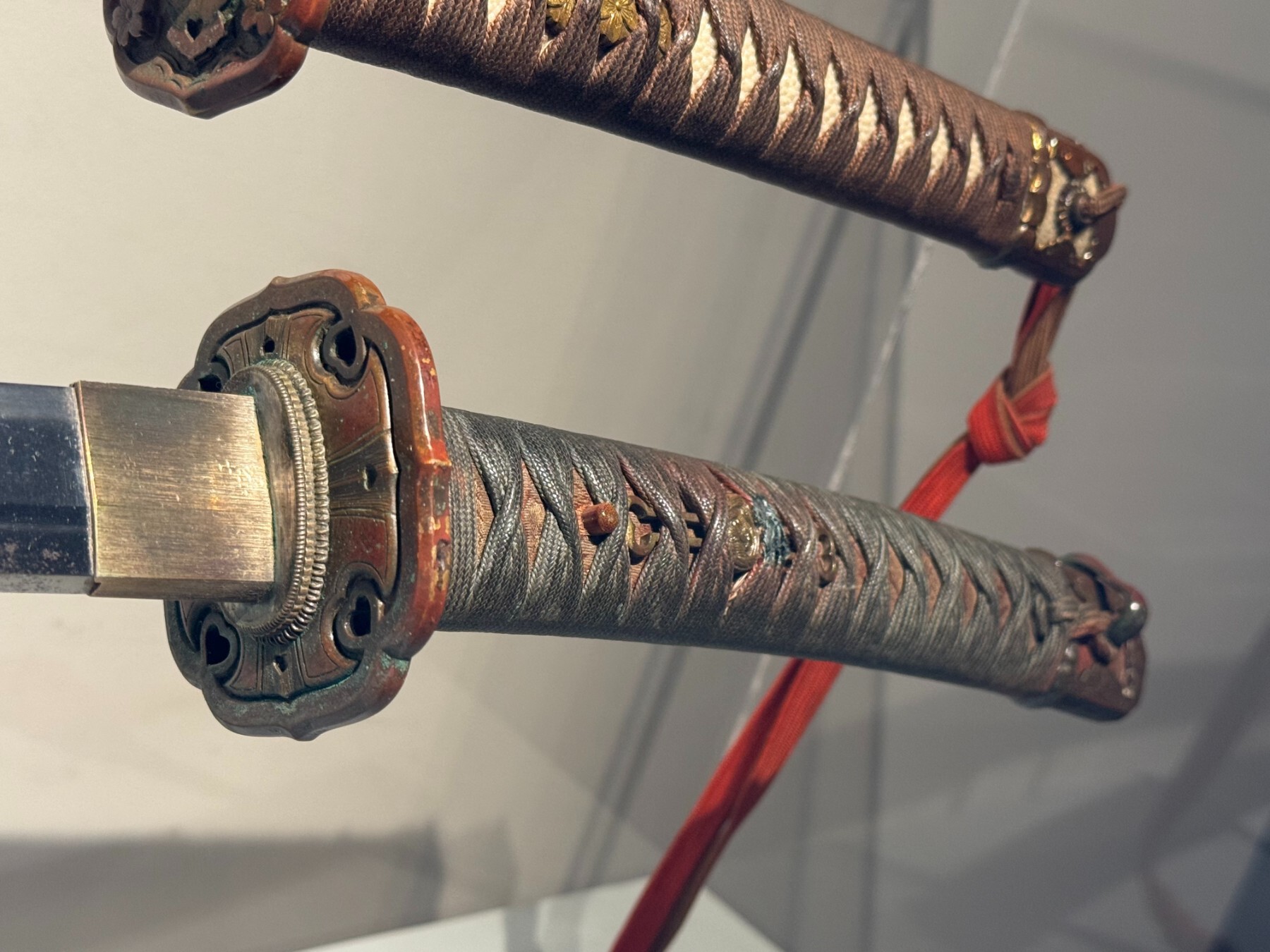
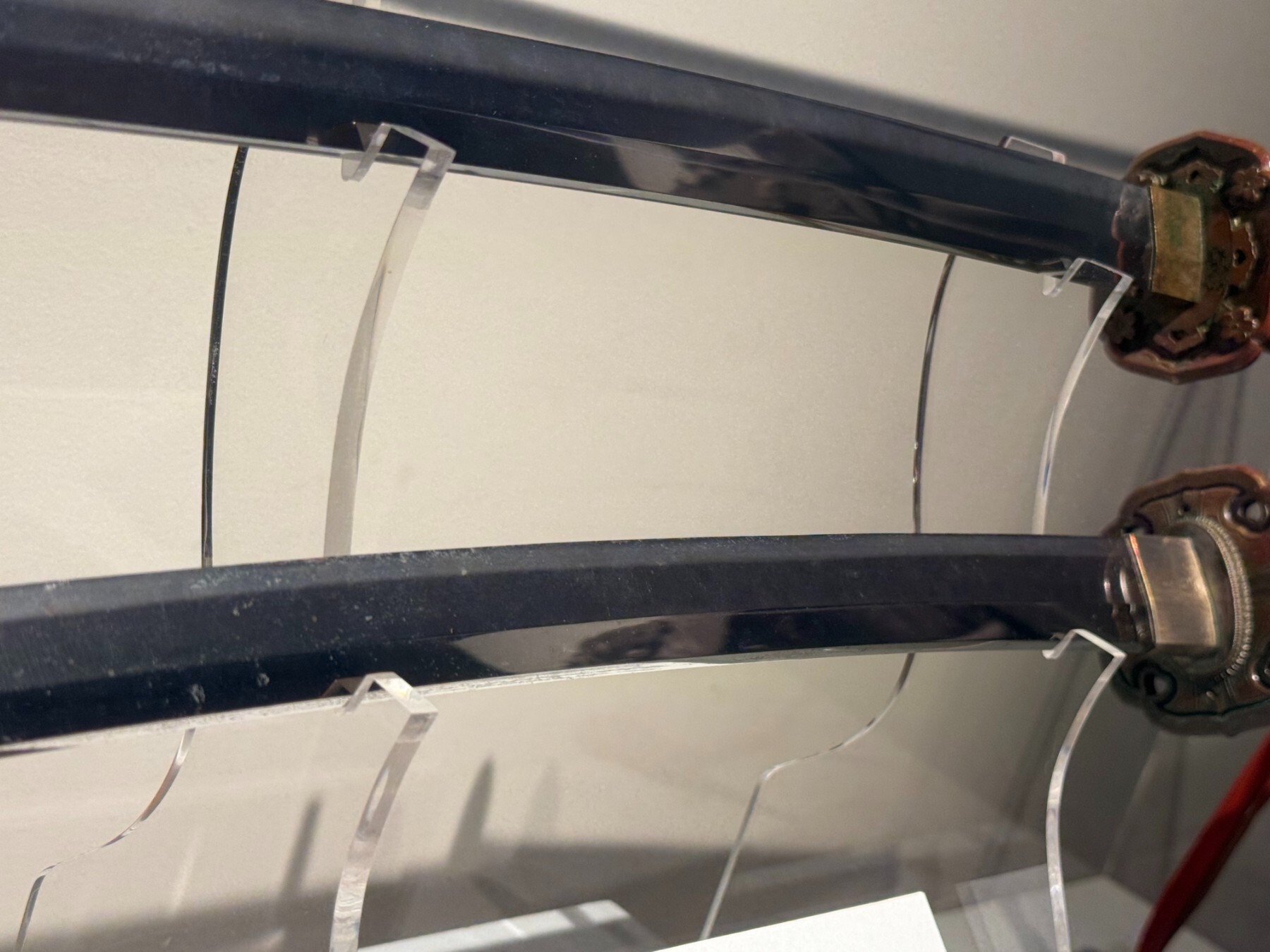
I donated a flag to the OBON society this weekend, and had the opportunity to tour their WWII display in the Maritime Museum in Astoria. I was surprised to see this sword on display. I’m no tosogu guy, but it immediately stood out to me as looking pretty nice and predating WWII. No saya was displayed unfortunately. I was hoping some of the tosogu folks here might be willing to offer their opinions on it, particularly regarding its quality, age, and any other details that might be apparent from the photos. What is the material under the ito? Also, I cannot tell what's in the center of the menuki for the life of me. Just a curiosity because I was immediately attracted to it. Behind plexiglass, so I did my best with photos. Thanks for taking a look! -Sam
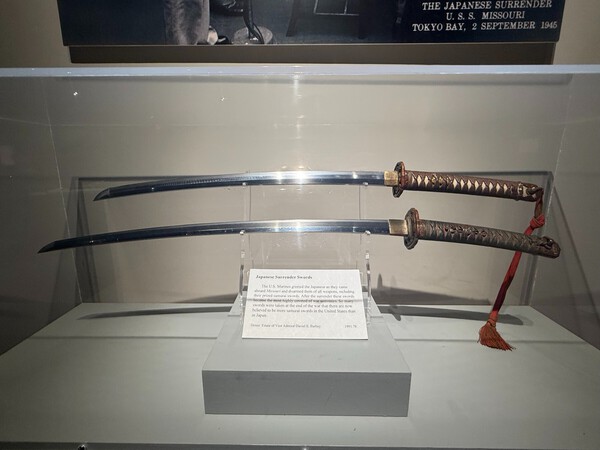
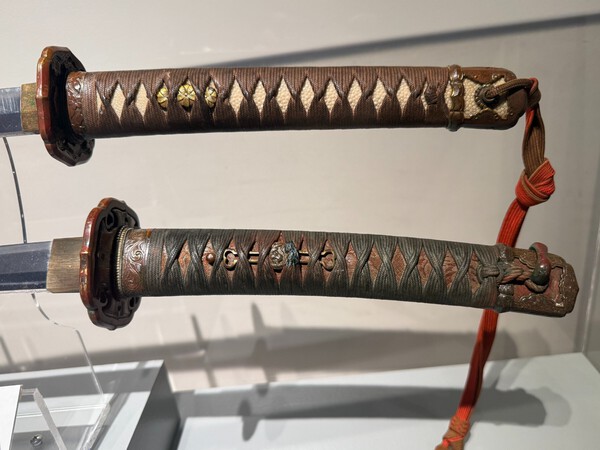
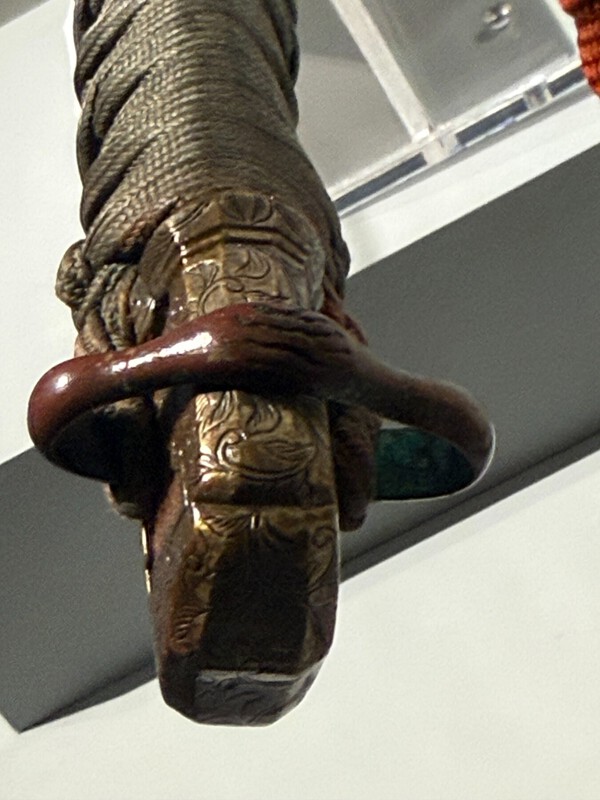
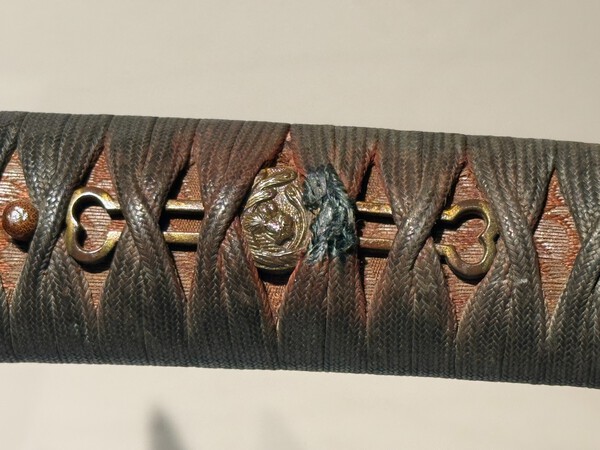
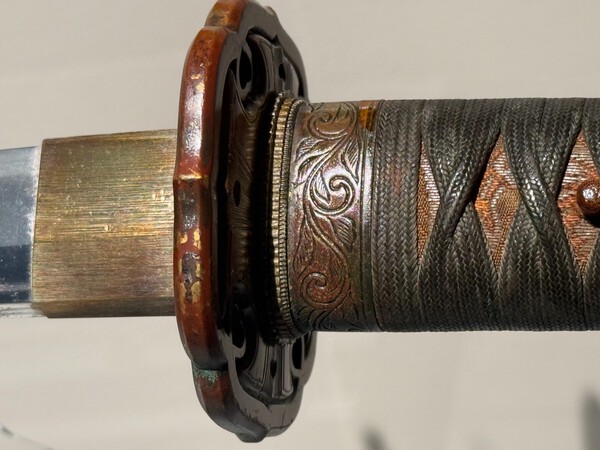

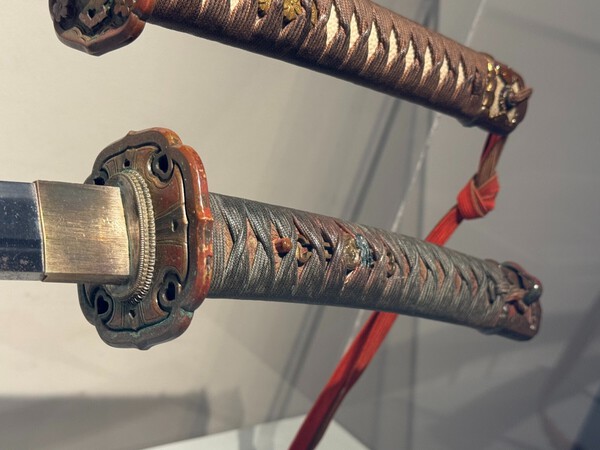
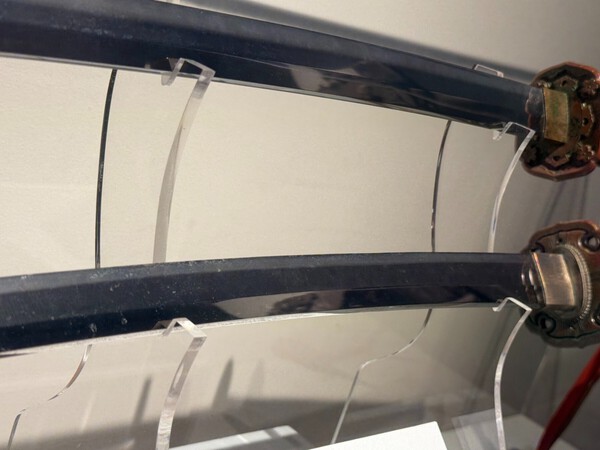 1 point
 -
I passed through there earlier in the year and noted the brocade which struck me as quite unusual, showed some pictures to a kimono collector who guessed that the cloth might be Edo period, on what grounds I don't know. Had meant to make a post asking about here it but I never got around to it. The sugata struck me as fairly recent in its massiveness in all dimensions so I'm glad there's some there's some evidence pointing in that direction. There's a third gunto in its saya in another part of the exhibit, with the Type 99 rifle, but it appears to be a more common and less interesting example.1 point
-
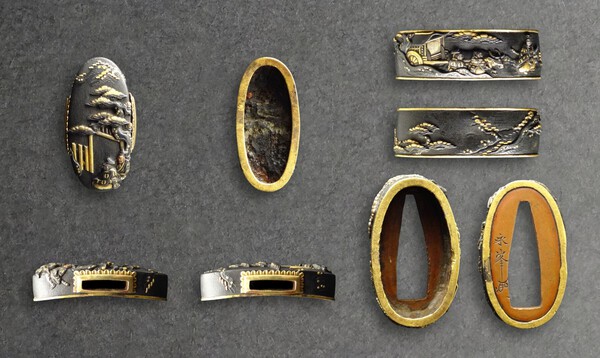
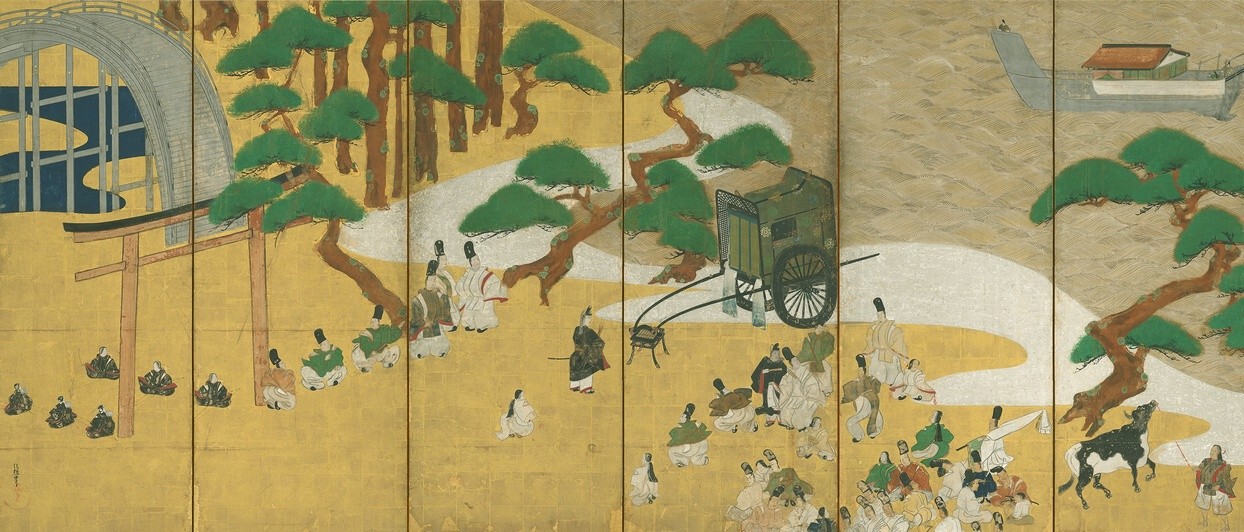
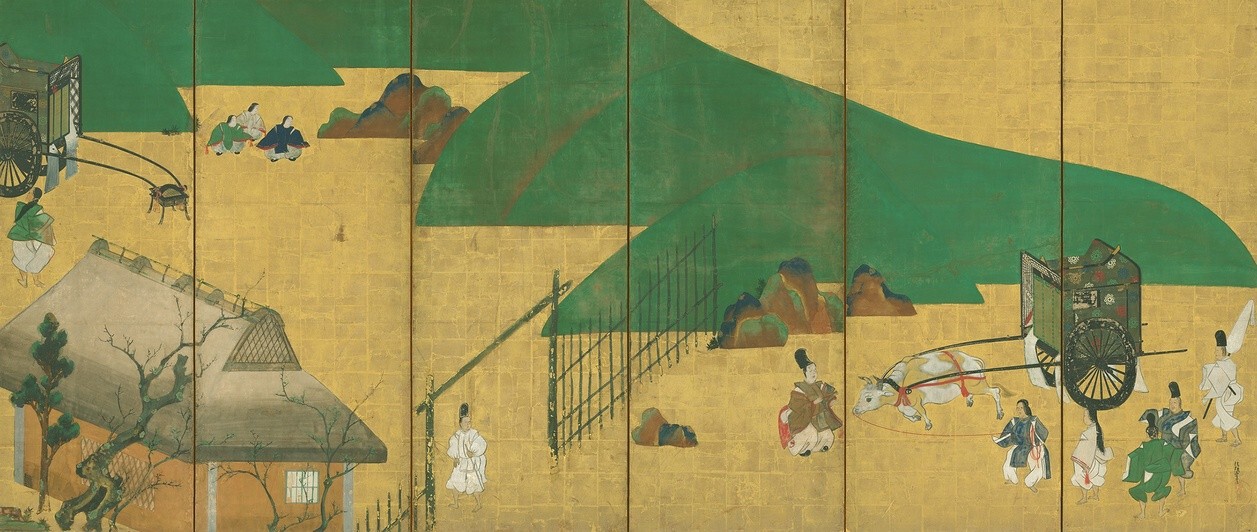
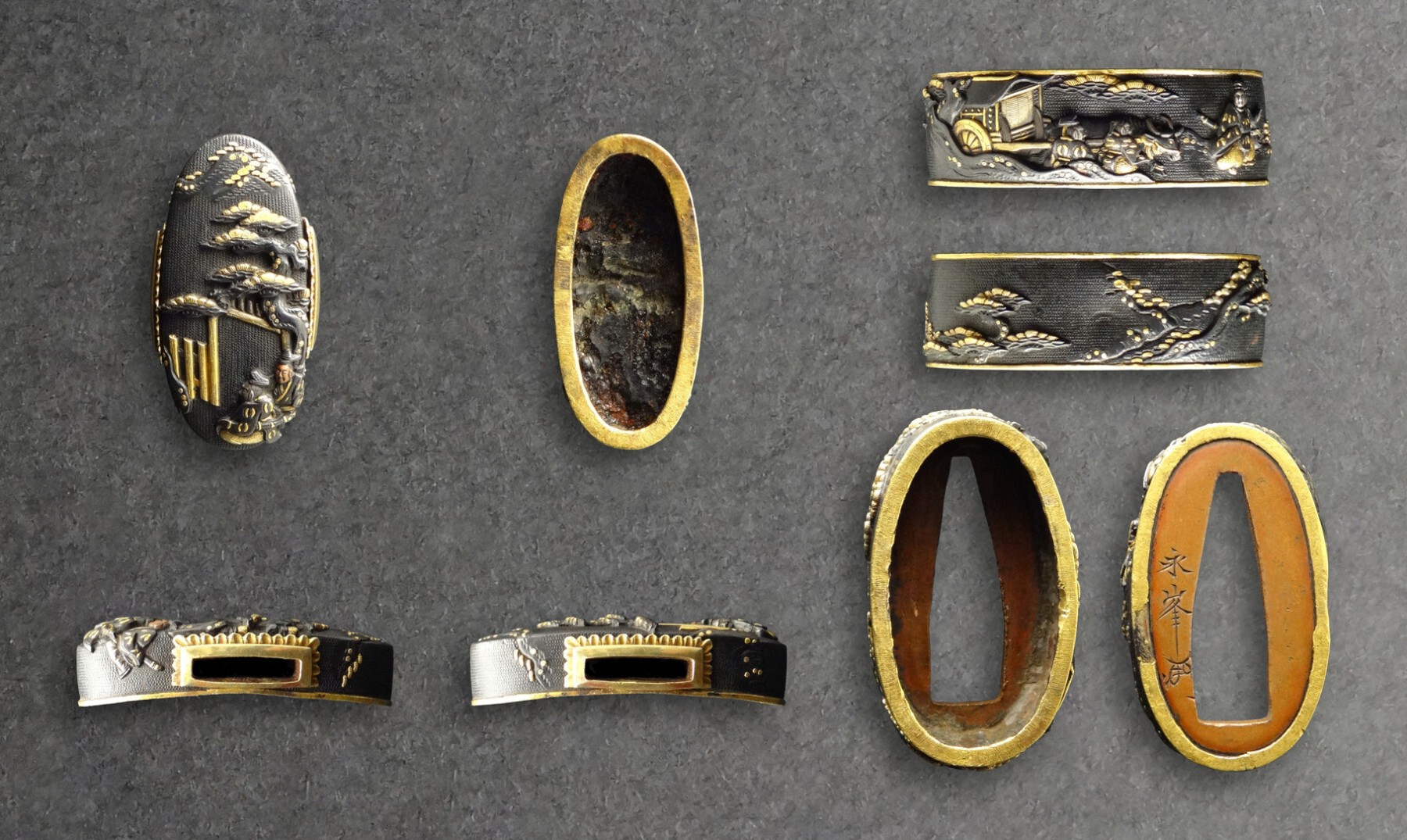
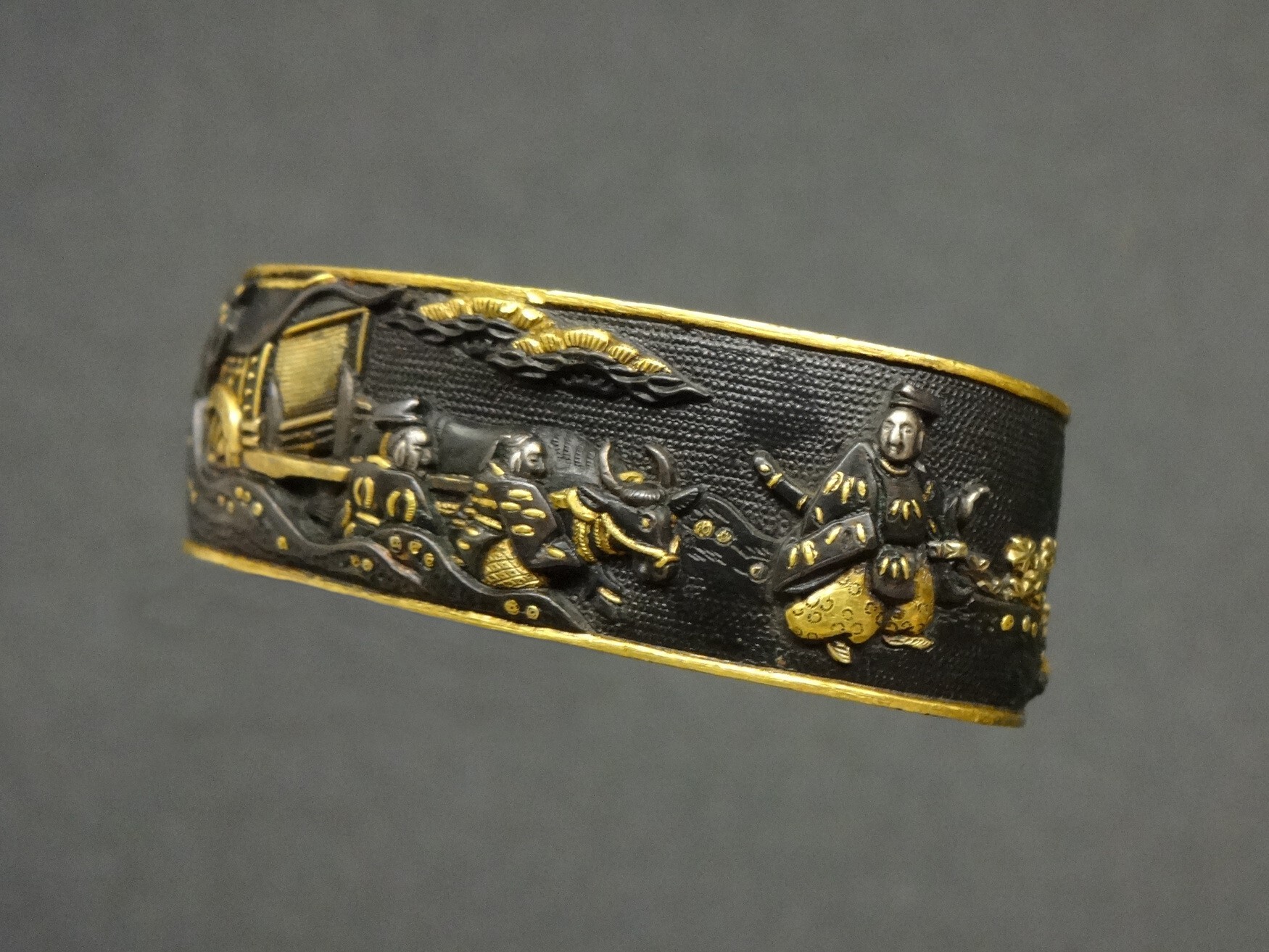
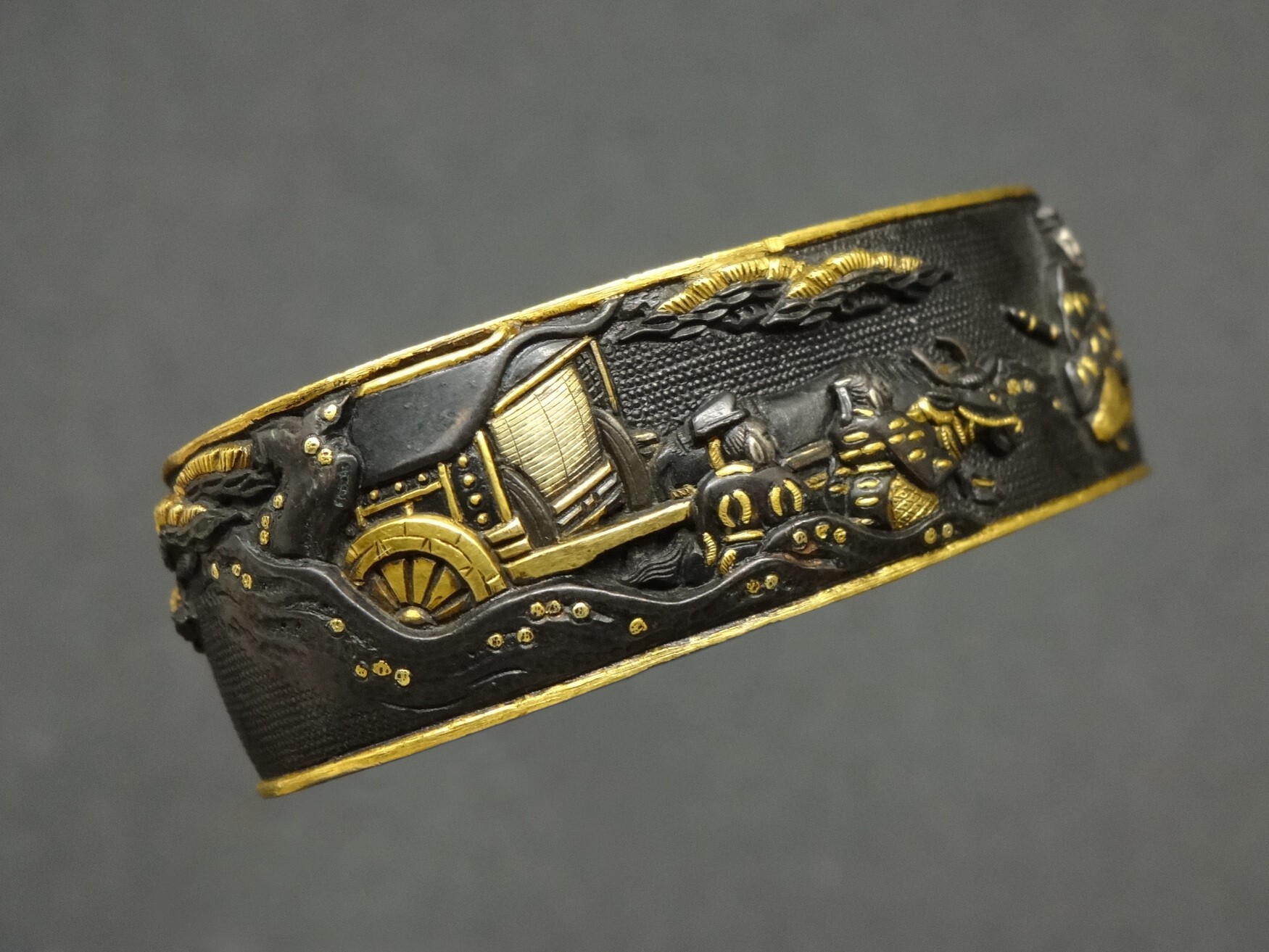
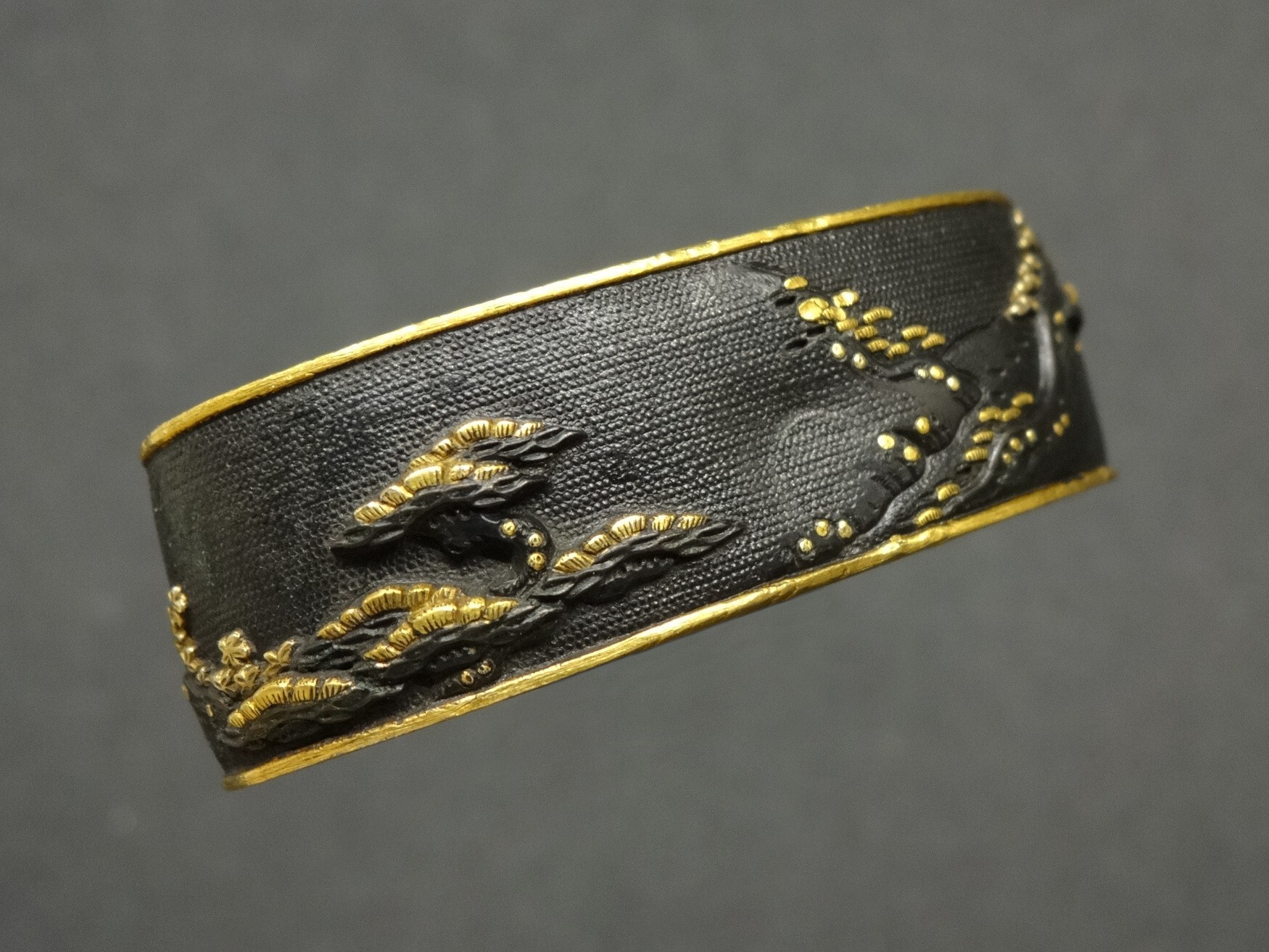
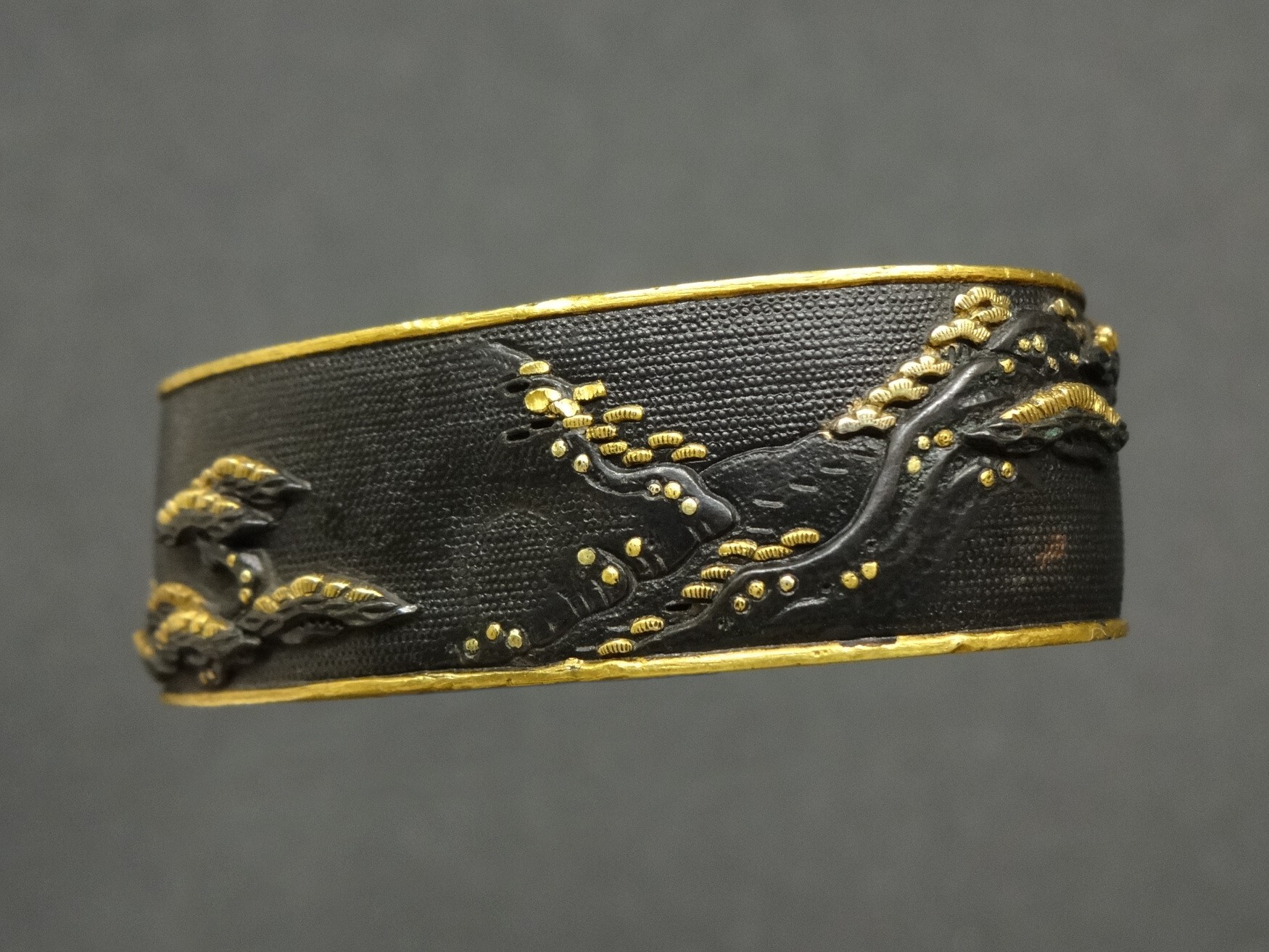
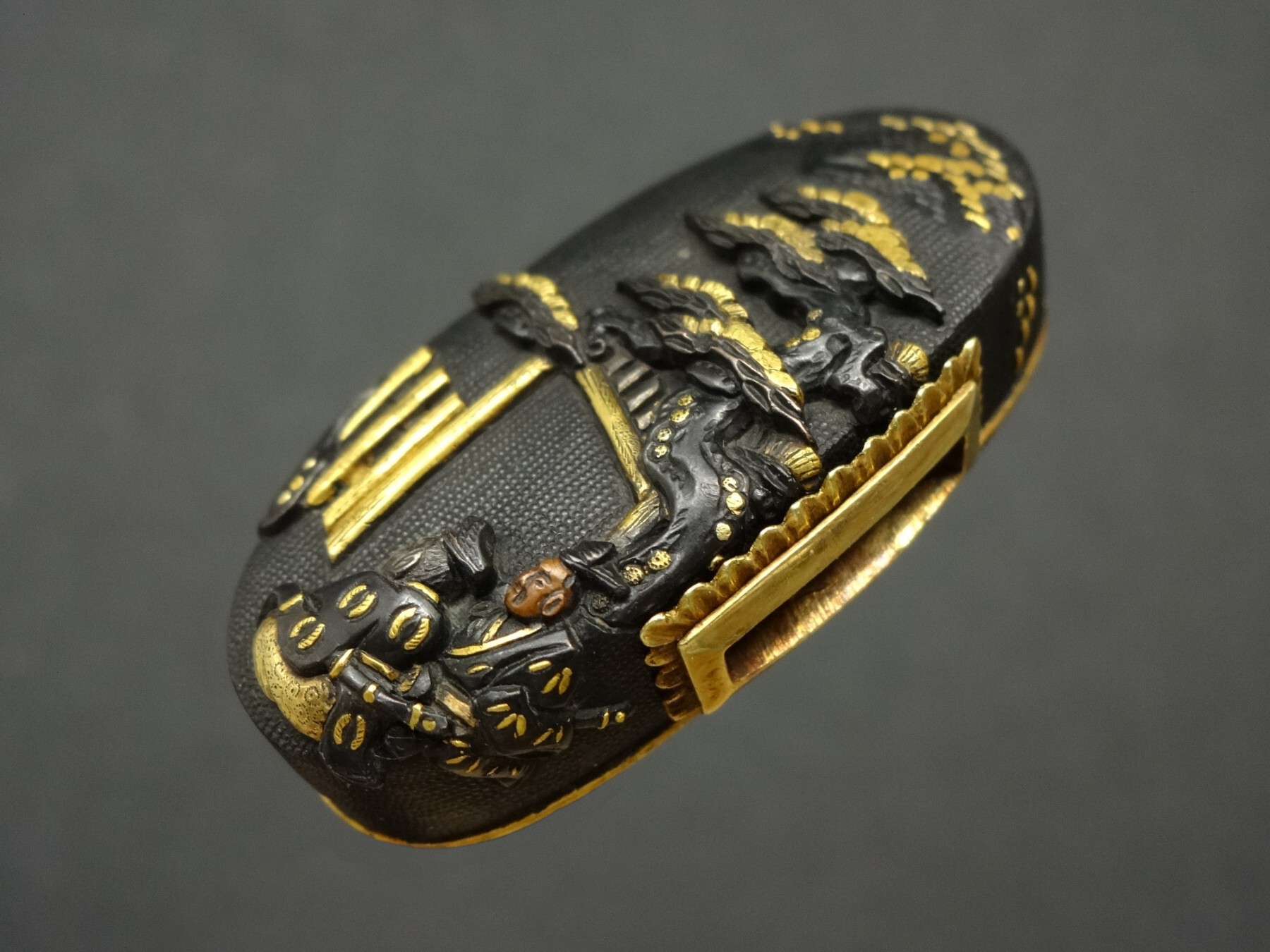
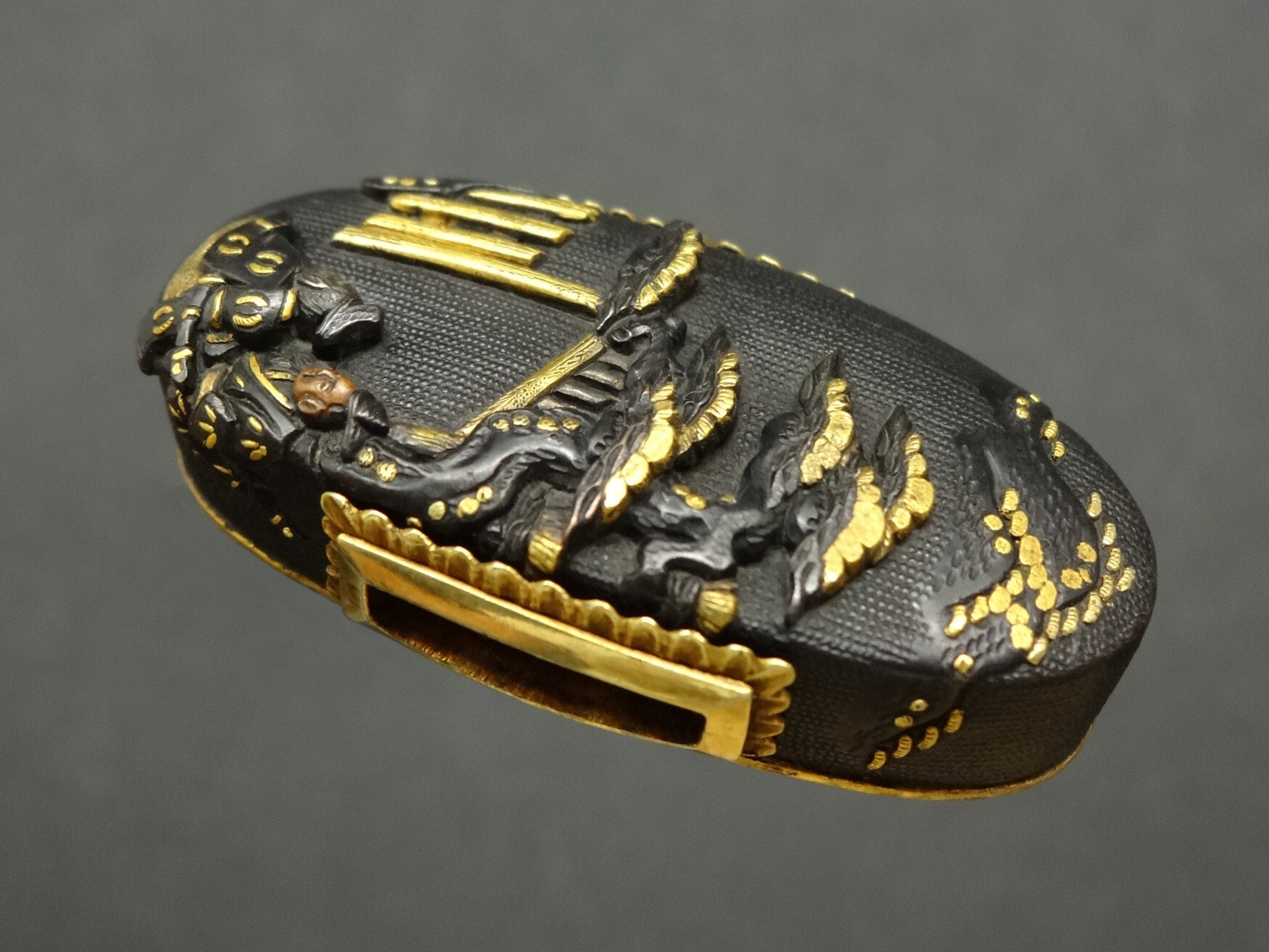
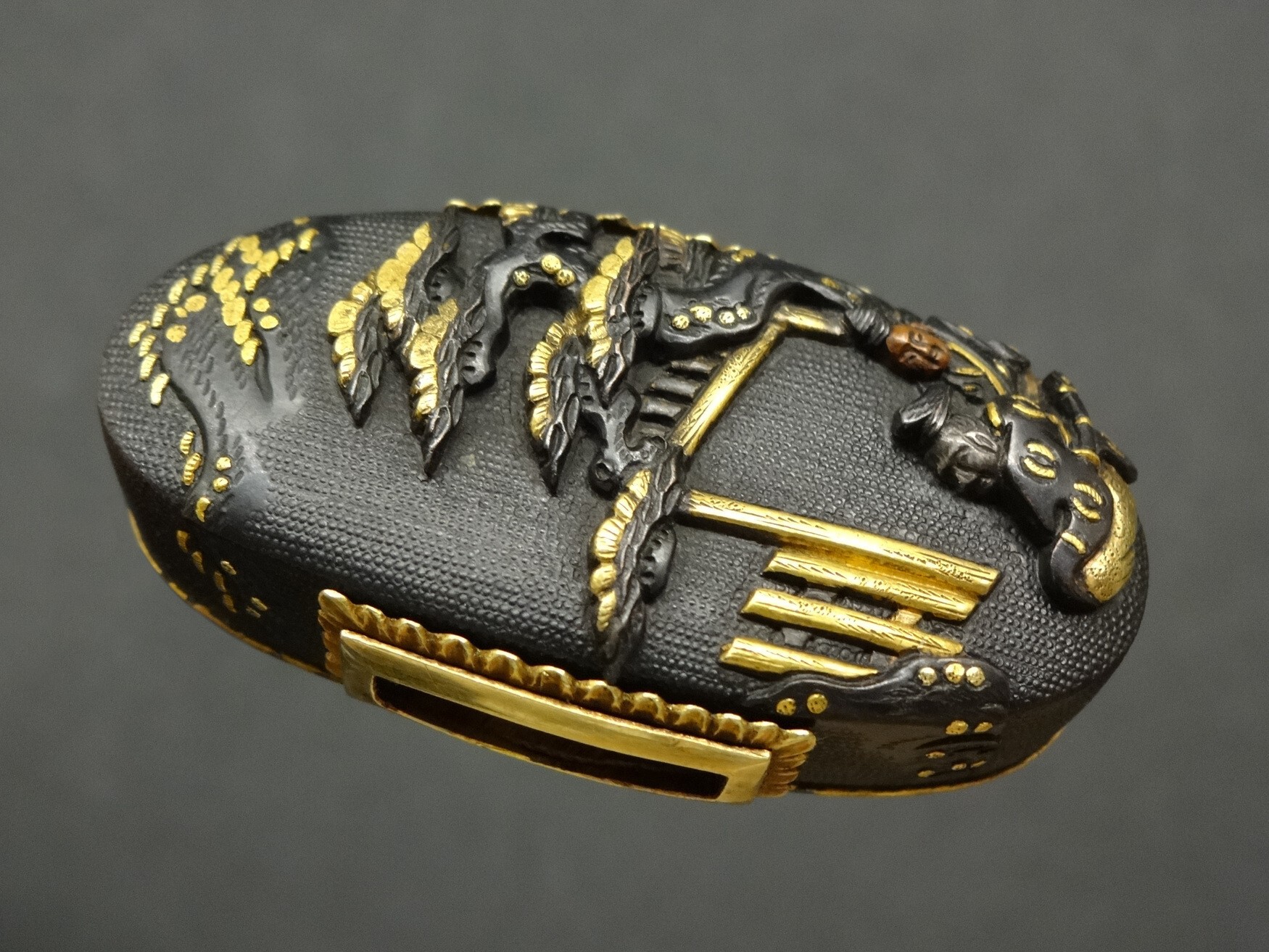
Dear all I just wanted to share one of my latest acquisitions. Dimensions: Fuchi 38.3 mm x 21.9 mm. thickness 12.5 mm. Kashira: 34.7 mm x 16.6 mm. thickness 9.8mm. It is a fuchi-kashira signed "Nagamine [Kao]" (永峯 [花押]) it is not papered but the signature, the quality of the execution and the composition of the subject fully fit into the caractersitics of the school as outlined in my summary of the Ayanokōji Nagamine school (https://www.militaria.co.za/nmb/files/file/122-the-school-of-ayanok%C5%8Dji-nagamine/). The fuchi shows some wear of the patina and the nanako ground but the conditions are farely good. On the omote (表) side of the fuchi (縁), an ox-drawn gosho-guruma (御所車) is shown against a landscape of pine trees and hills. The carriage is accompanied by attendants dressed in what looks like Heian clothing. The figure at the front is wearing a tachi (太刀). In ancient and medieval Kyoto, members of the imperial family and the aristocracy commonly travelled in ox-drawn carriages known as gosho-guruma (御所車). The presence of a gosho-guruma, particularly with its bamboo blinds lowered, conventionally suggests that a person of high rank - often an elegant lady, nobleman, or member of the imperial family - is inside the carriage. On the kashira (頭), a group of similarly dressed figures is shown standing in front of a fence or palisade with a gate. This architectural detail is particularly important for identifying the subject of the composition. There are two chapters of The Tale of Genji (源氏物語, Genji Monogatari) whose narratives could potentially correspond to the scenes depicted on this fuchi-kashira set. The first is Chapter 14, Miotsukushi (澪標, "Channel Buoys"), and the second is Chapter 16, Sekiya (関屋, "The Gatehouse"). In Miotsukushi, Genji encounters the Lady of Akashi at the entrance to Sumiyoshi Taisha (住吉大社). In Sekiya, Genji encounters Utsusemi (空蝉) at the Ōsaka Barrier (逢坂関). There is a particularly relevant pair of folding screens (byōbu, 屏風) by Tawaraya Sōtatsu (俵屋宗達), Tokyo National Museum, dating from the seventeenth century, which depicts precisely these two episodes. Miotsukushi Chapter 16 Sekiya Chapter 14 The screen representing the Sekiya episode clearly shows a gate whose form is remarkably similar to that depicted on the kashira of this fuchi-kashira set. This architectural detail provides an important clue. Although the general subject of the fuchi-kashira could initially be interpreted as either Miotsukushi or Sekiya, the presence of the distinctive gate strongly favors Sekiya as the intended theme. I hope you enjoy this fuchi-kashira set as I do. Regards Luca
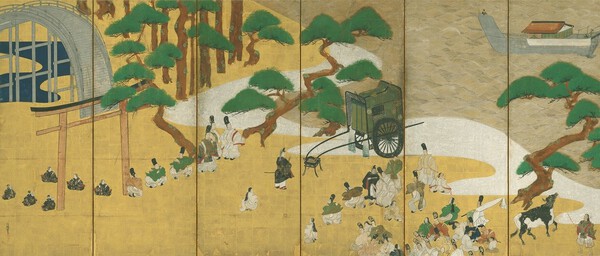
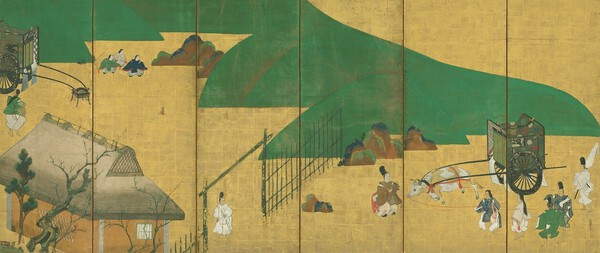
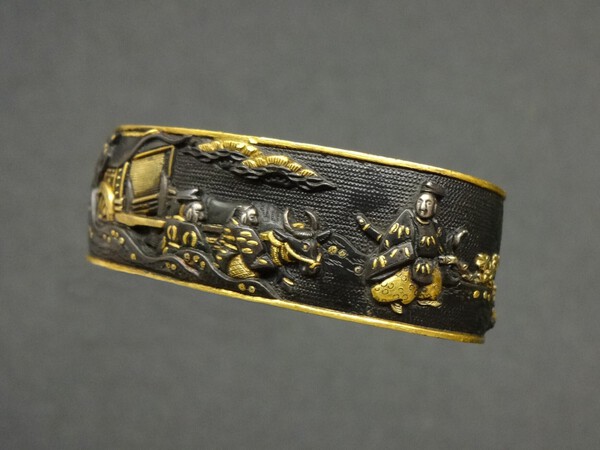
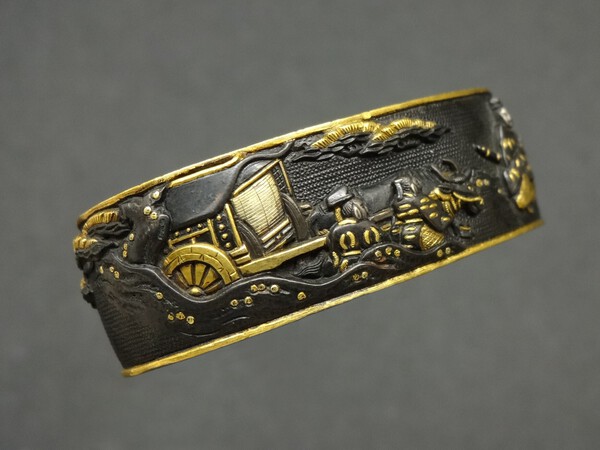
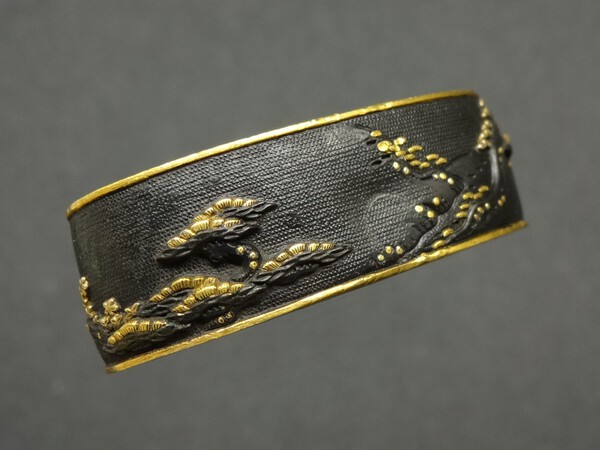
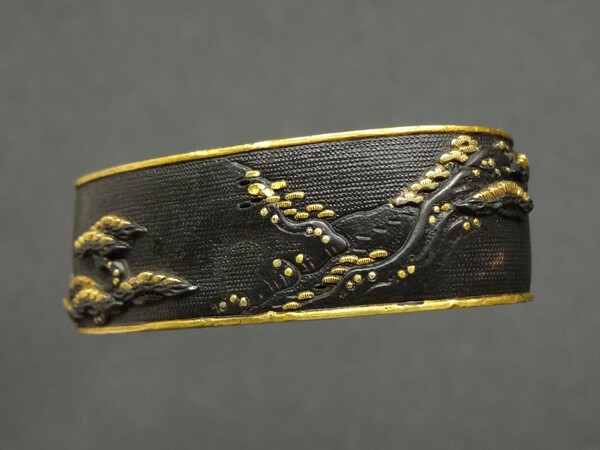
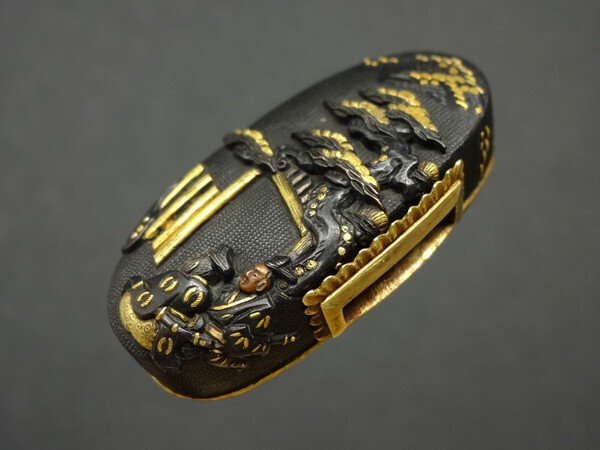
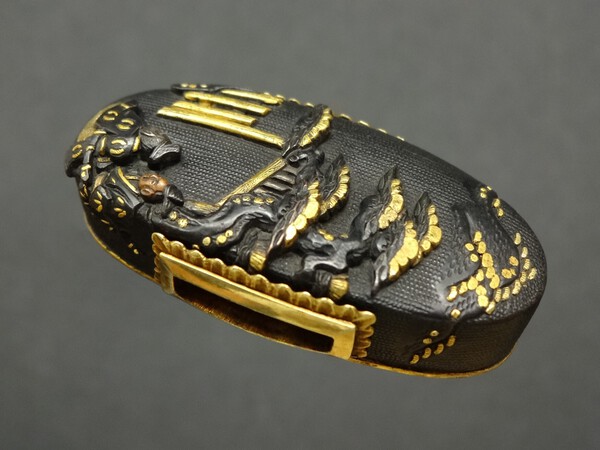
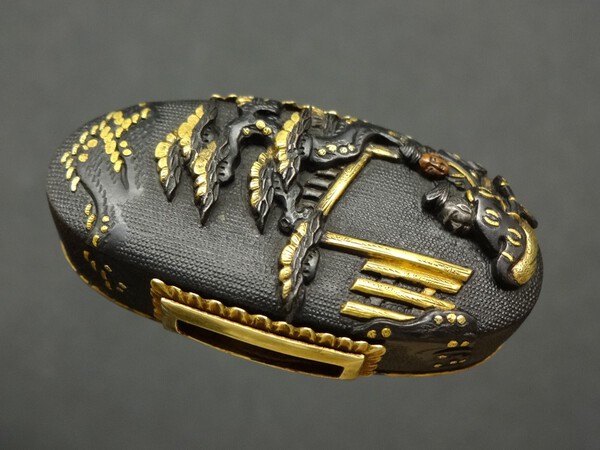 1 point
 -
Wow!! What a great article. You have put alot of work into that. Well done. I should write something similar up for some of my pieces. You have inspired me Luca Congrats on picking up the fuchi-kashira set. Very nice!1 point
-
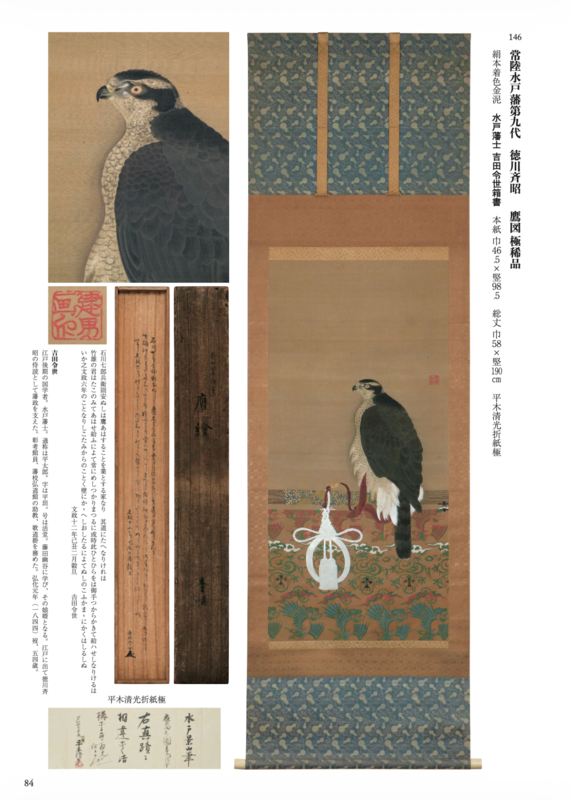
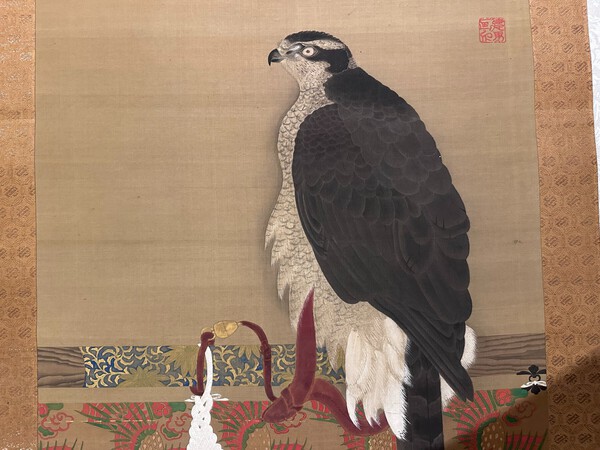
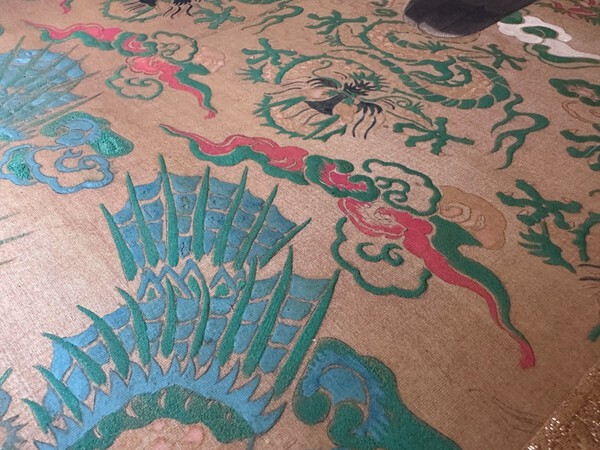
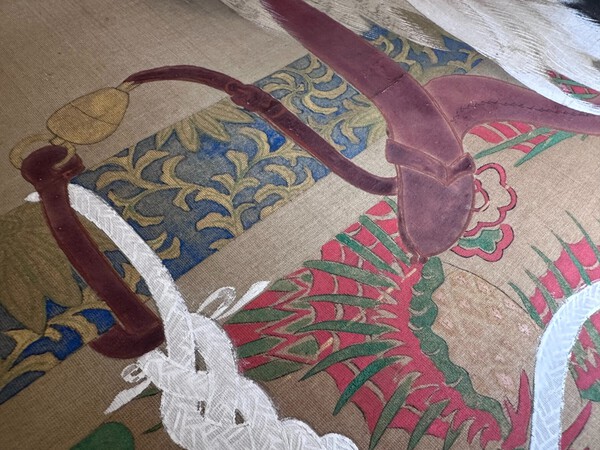
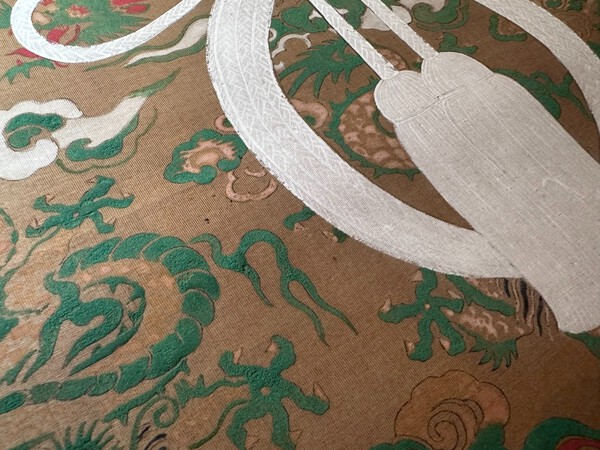
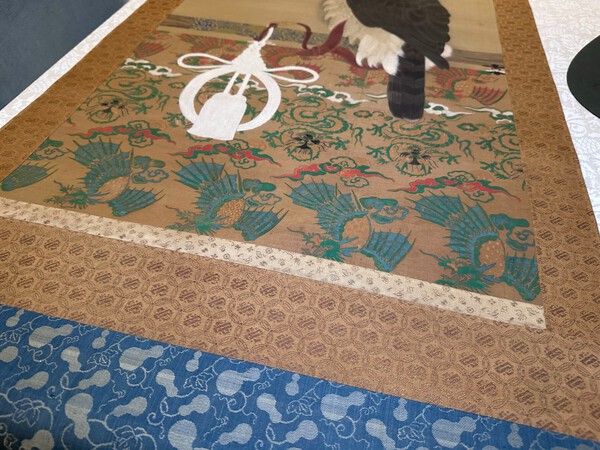
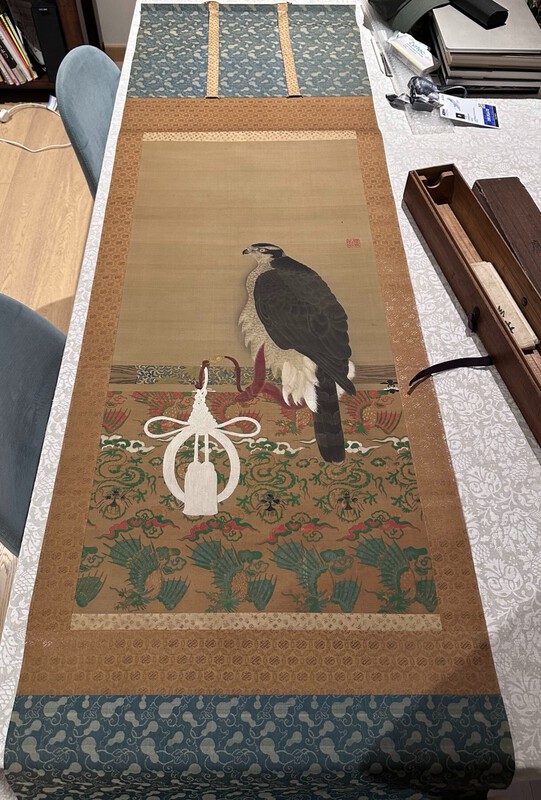
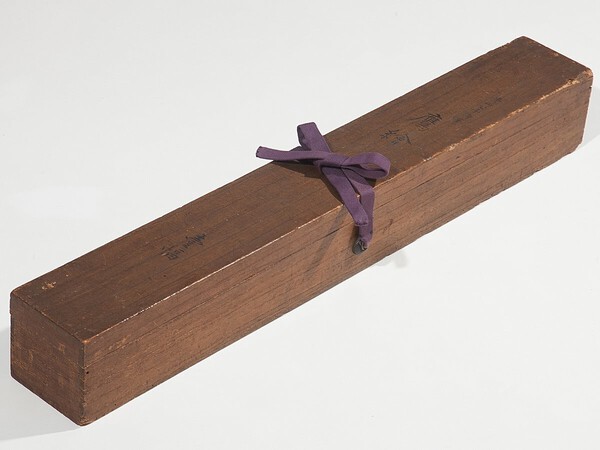
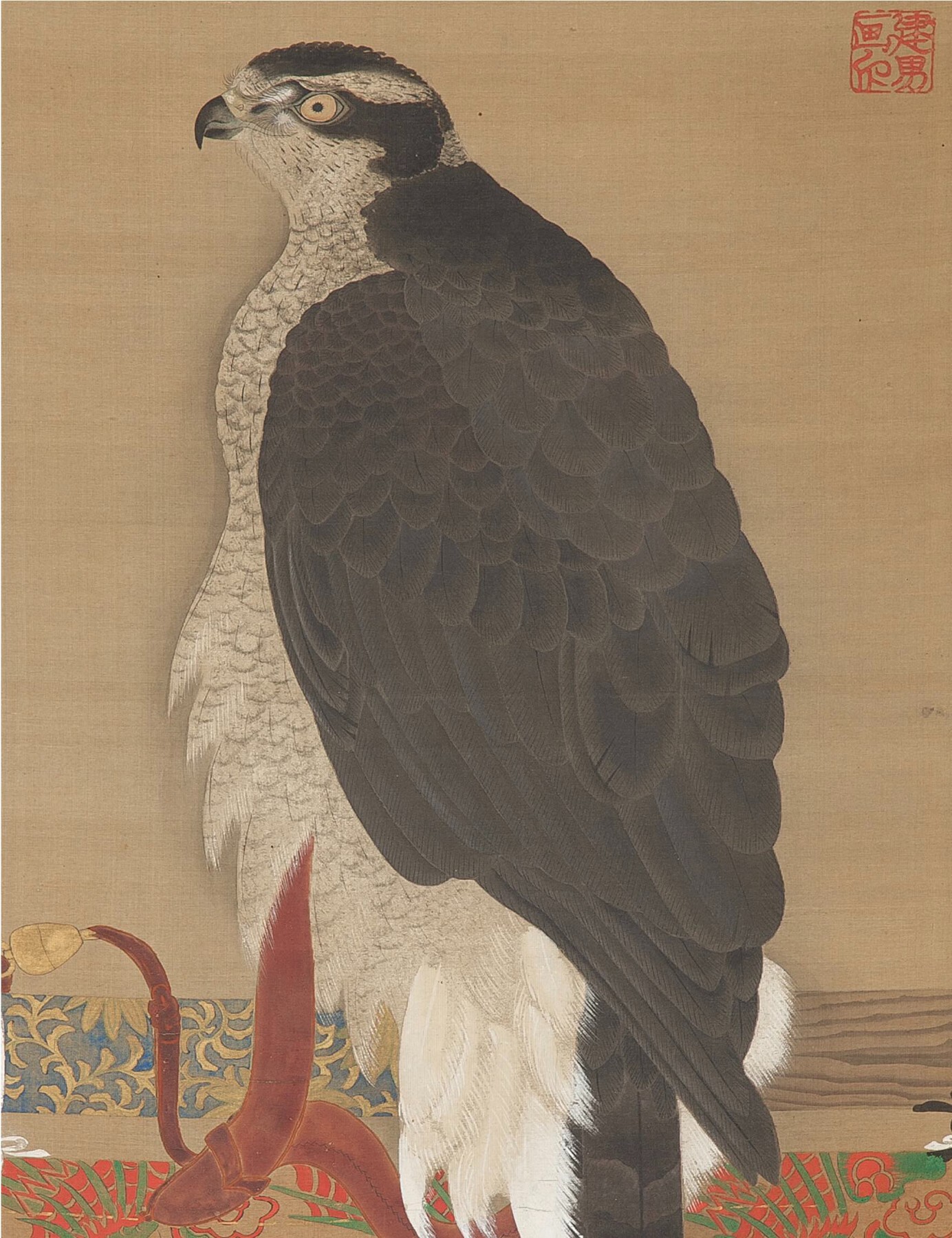
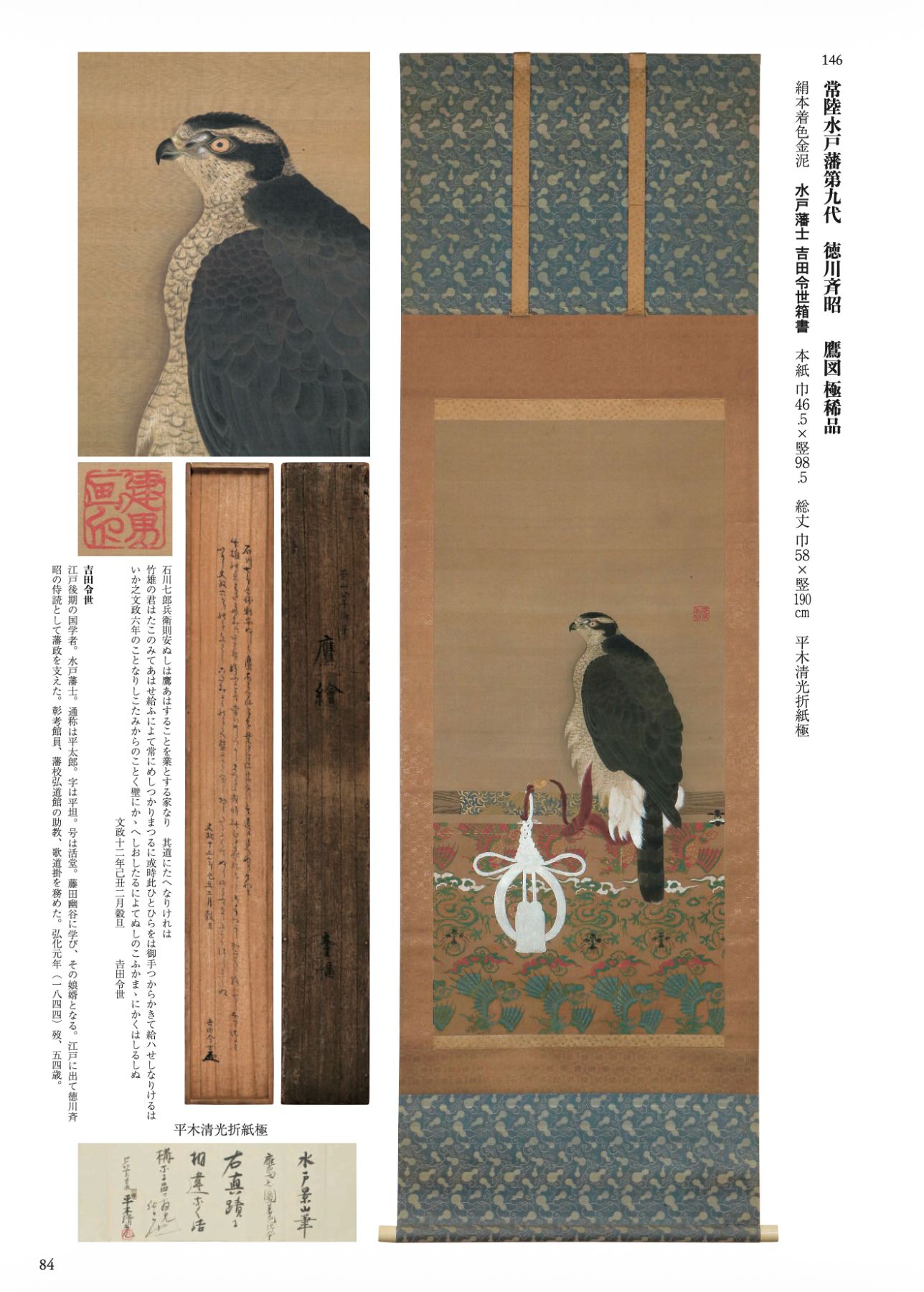
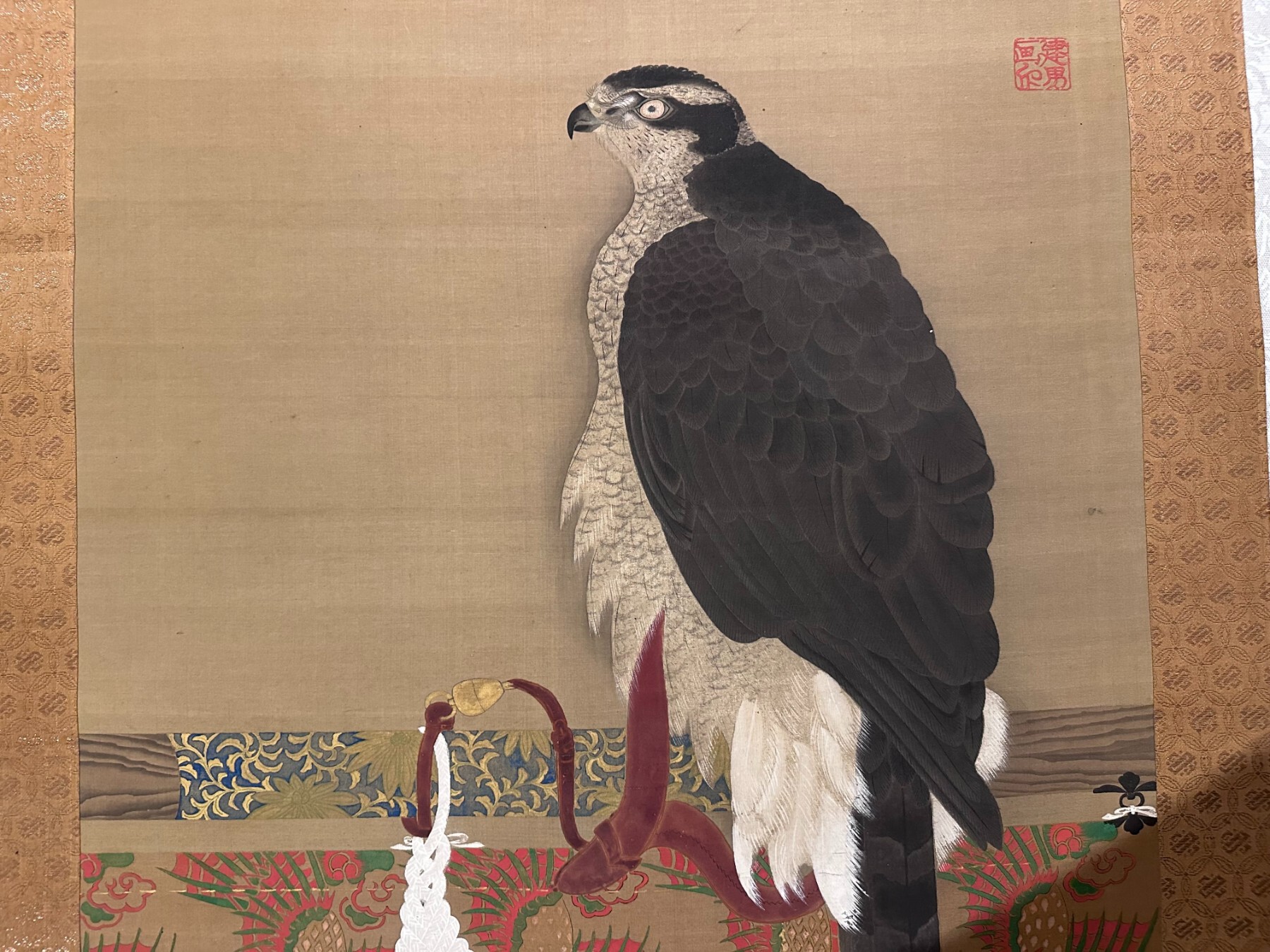
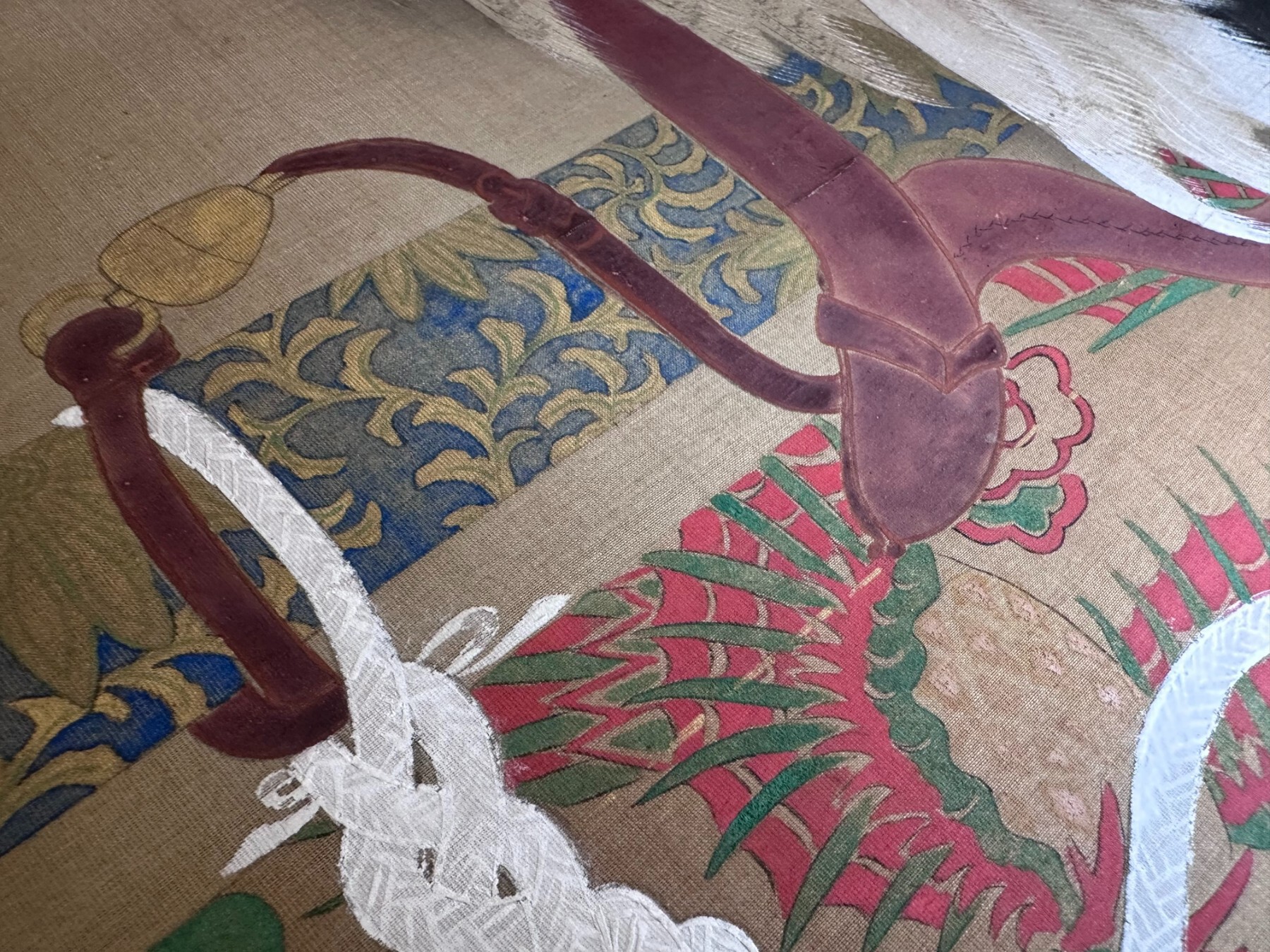
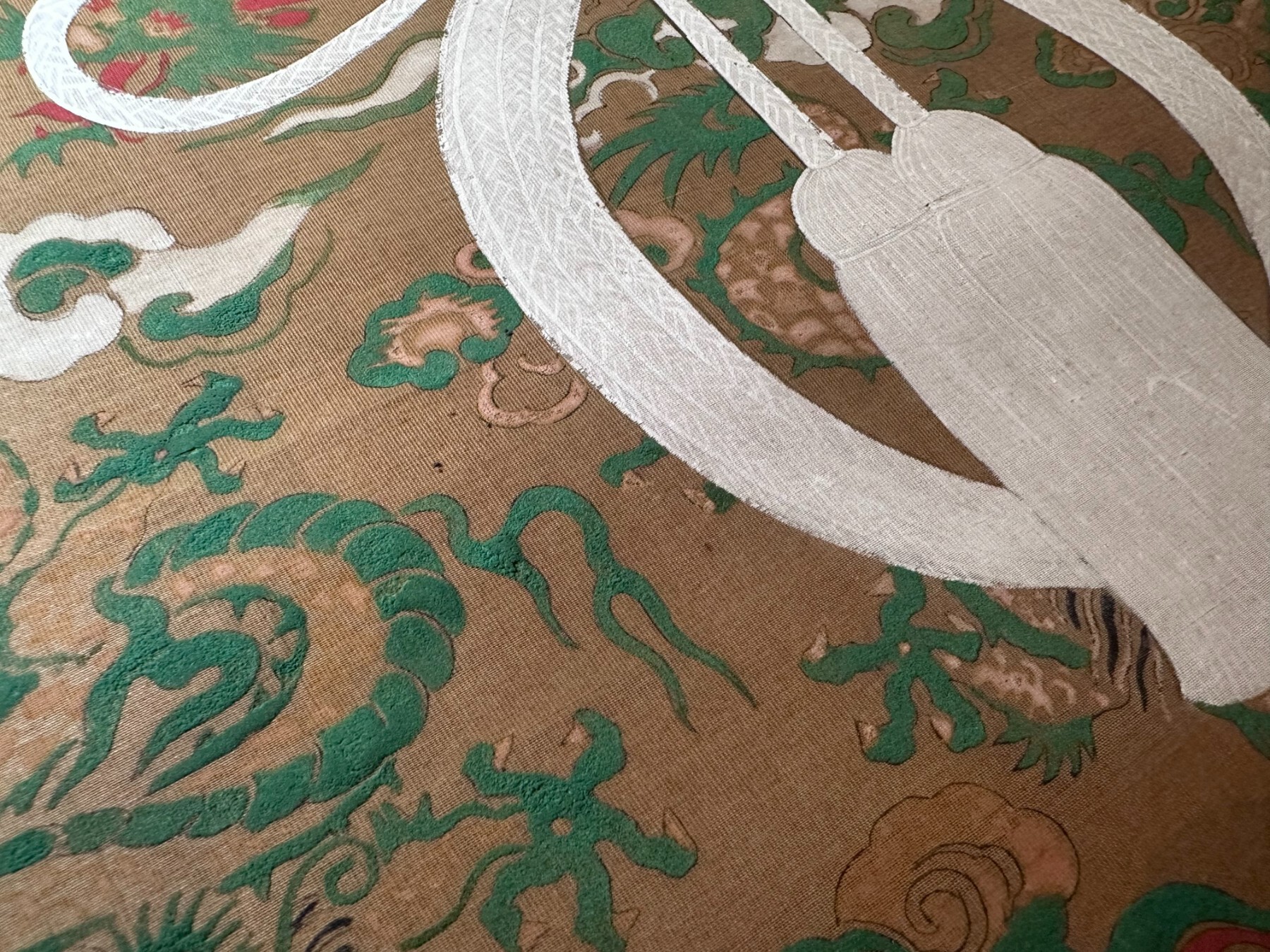
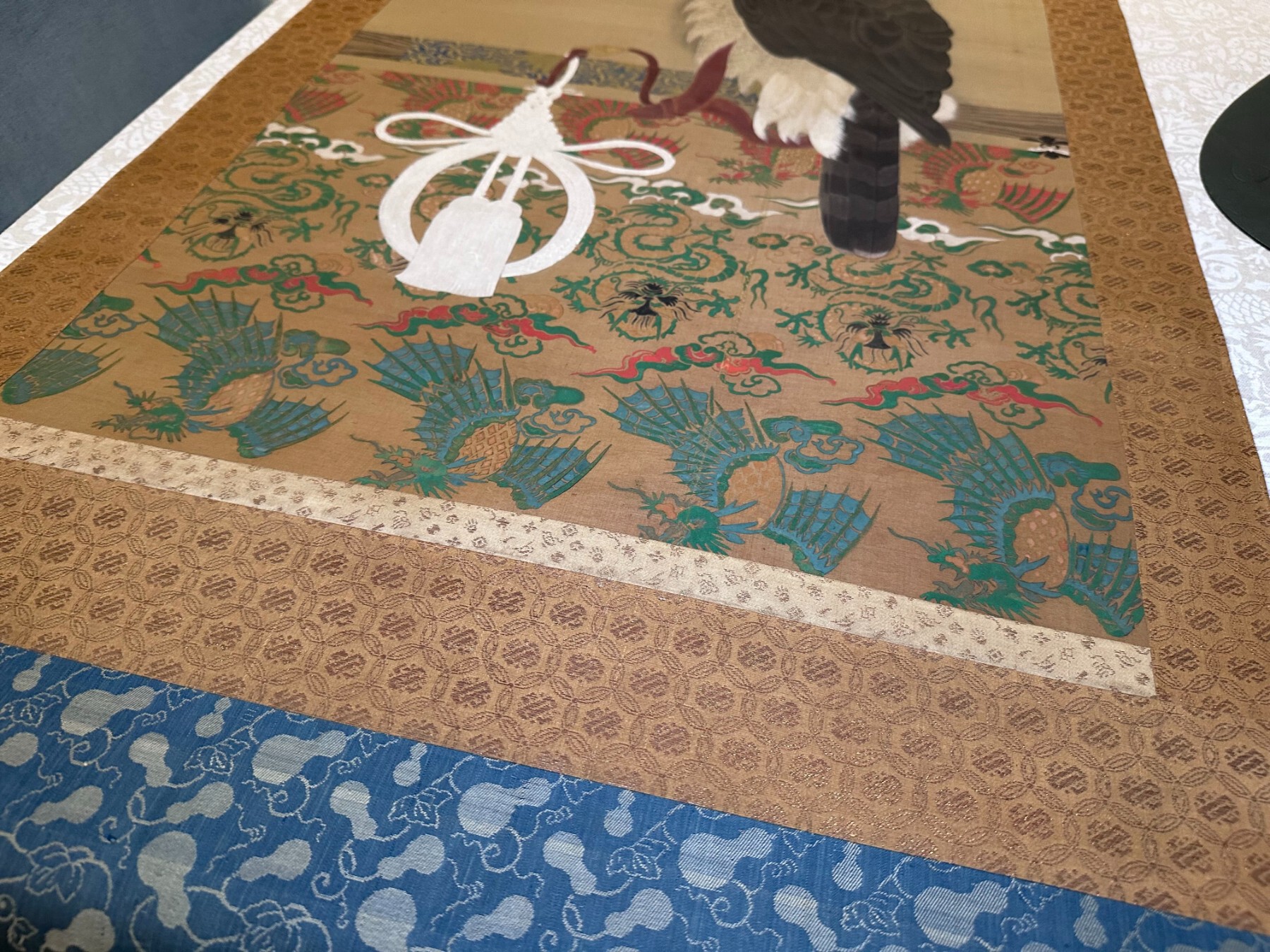
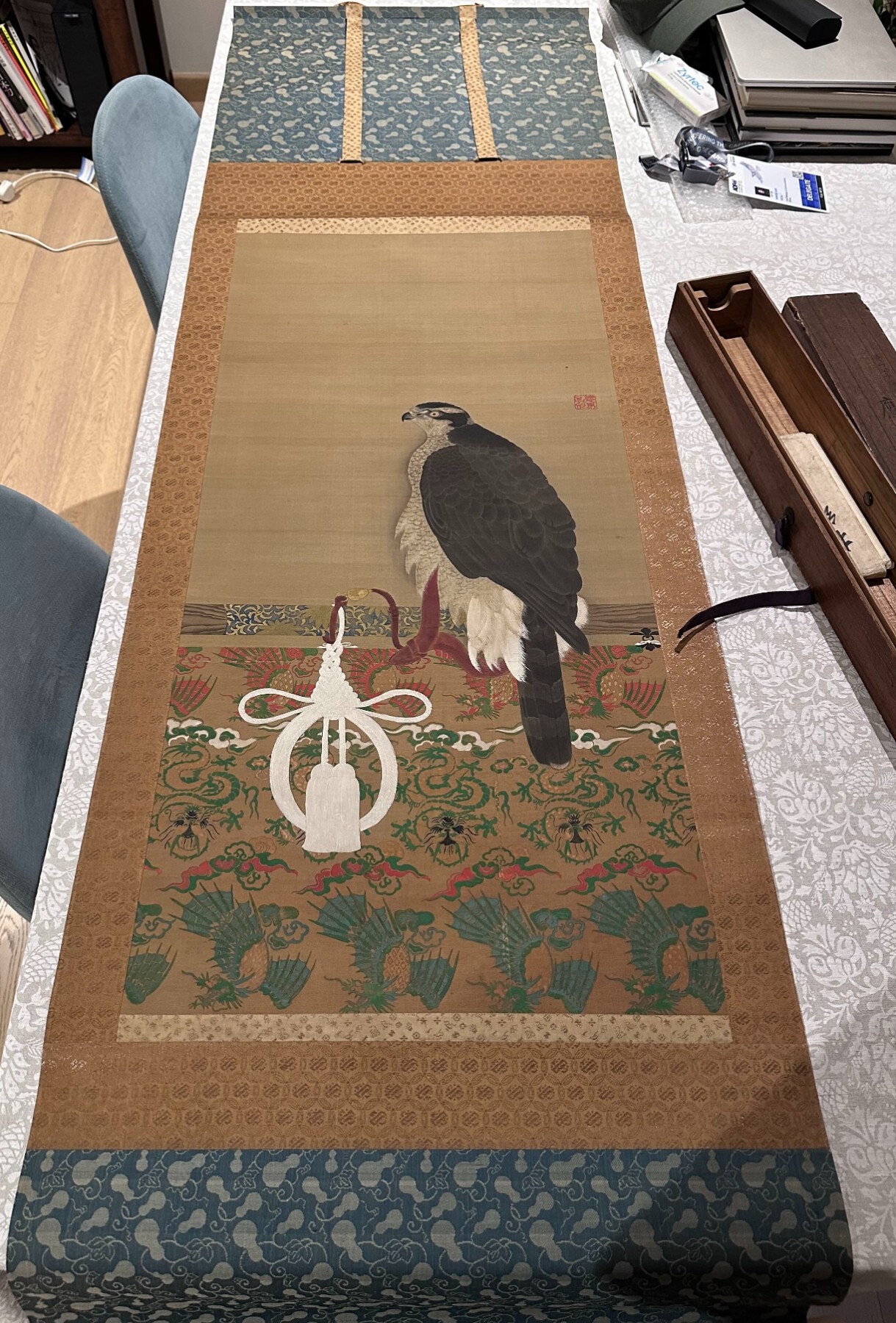
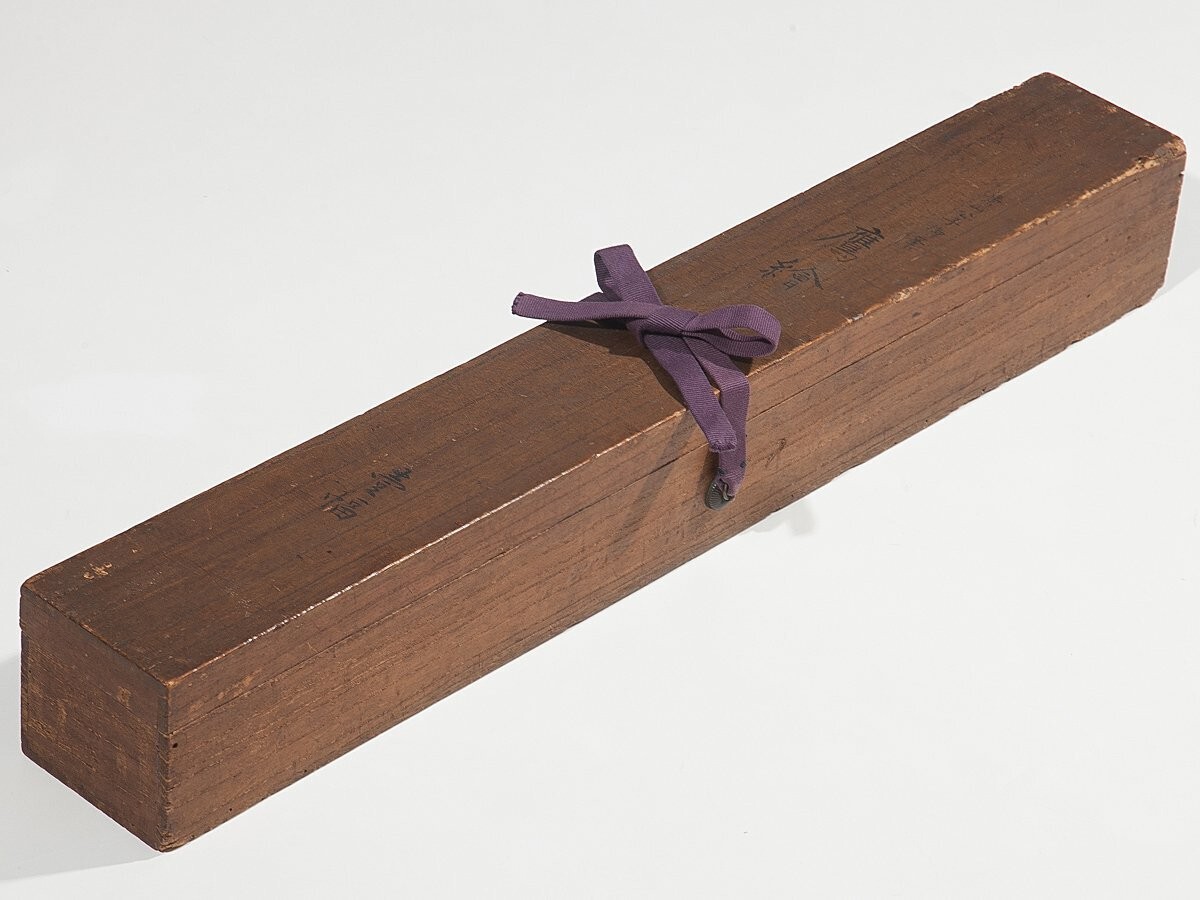
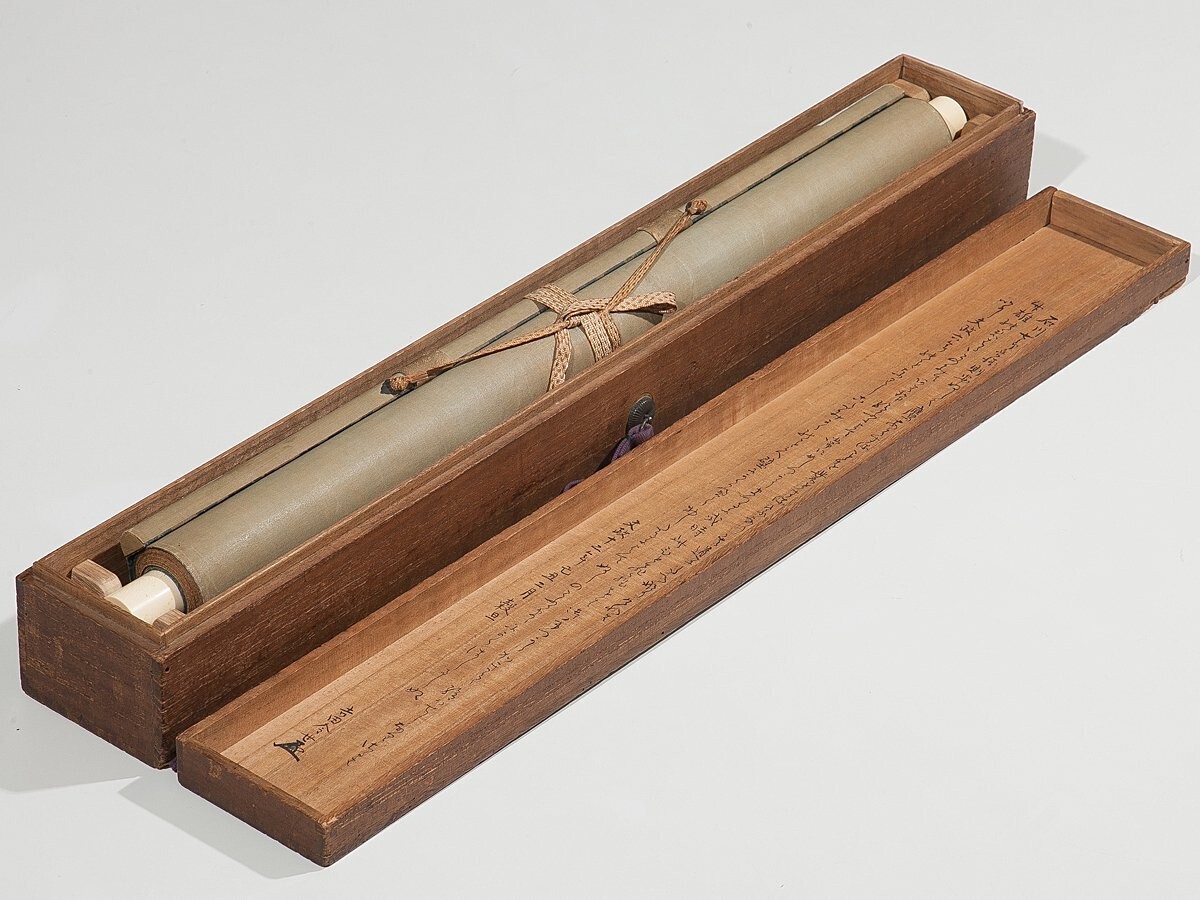
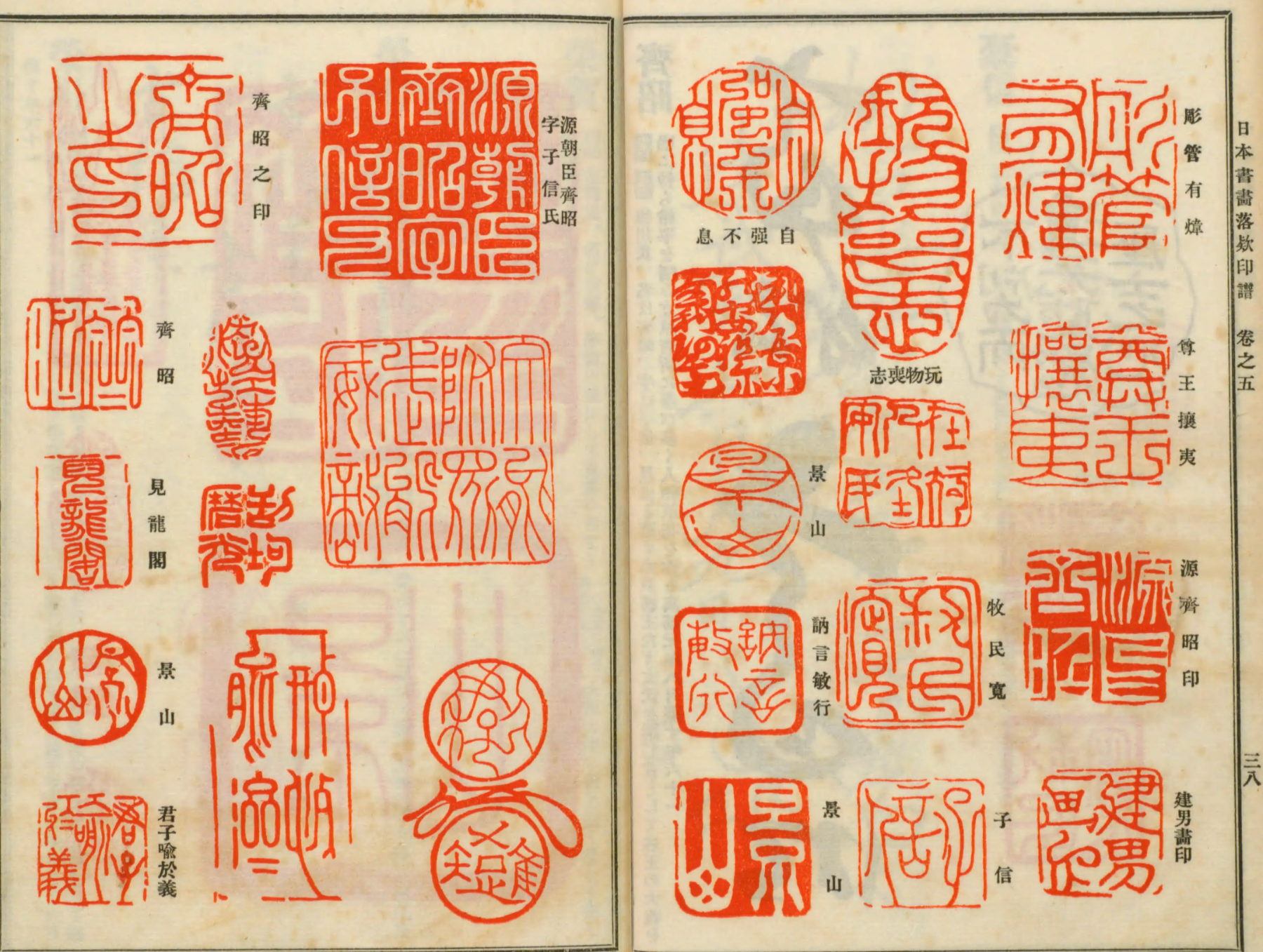
Hi all, I would like to share something interesting and rather unique: a scroll painting attributed to Tokugawa Nariaki, daimyō of the Mito Domain and father of the last shōgun. Hakogaki: Master Ishikawa Shichirōbei Noriyasu comes from a family whose hereditary profession is falconry, and he is extraordinarily accomplished in this art. Because Lord Takeo [Tokugawa Nariaki] favored hawks and held hawk-matching displays, he routinely summoned Noriyasu to serve him. On one such occasion, His Lordship personally painted this single sheet [of silk] with his own hand and bestowed it upon him. This took place back in the 6th year of Bunsei [1823]. Recently, because the master [Noriyasu] wished to mount it as a hanging scroll to display upon the wall as a family treasure, I have recorded these circumstances here as he requested. Date: An auspicious morning in the 2nd month, 12th year of Bunsei, Year of the Ox [1829] Written by: Yoshida Noriyo Origami: From the brush of Mito Keizan [Tokugawa Nariaki] Painting of a Hawk; color on silk. The above work is an authentic original Without the slightest doubt; full of vivid life/vitality The overall composition (kamae) is seen to be of high elegance/superior quality. Written by Hiraki Kiyomitsu in a Spring month (Year of the Snake) Enjoy! From the catalogue: All the seals and different names of Nariaki:
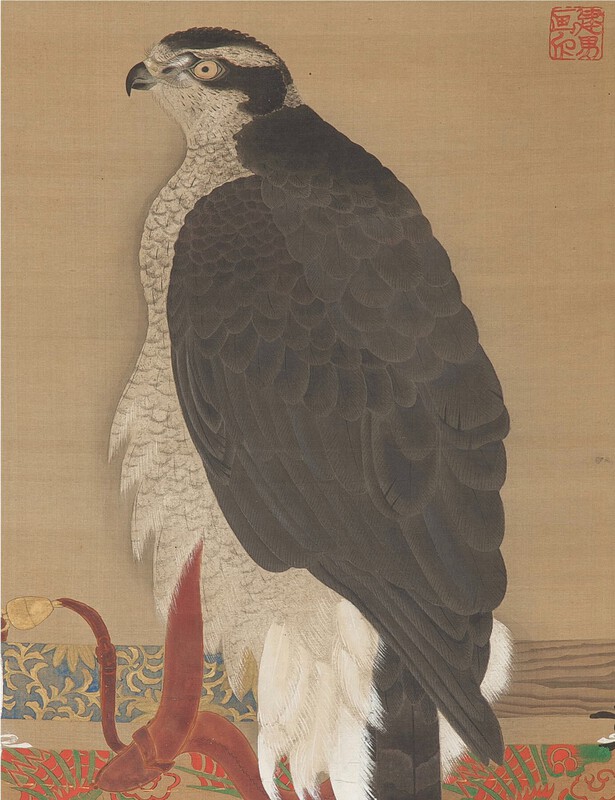
.thumb.jpg.36056a7b8eac20638ac3bea429f9c941.jpg)
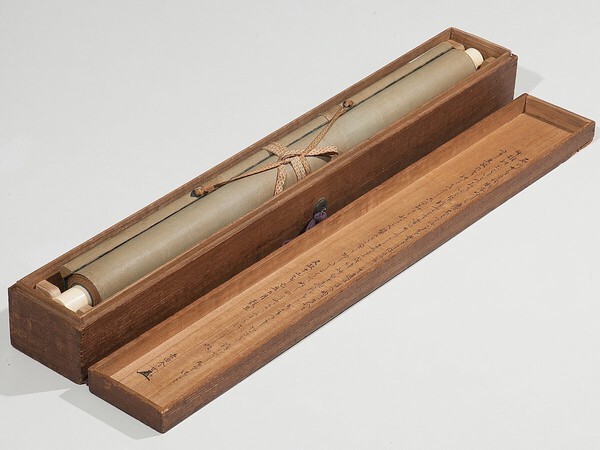
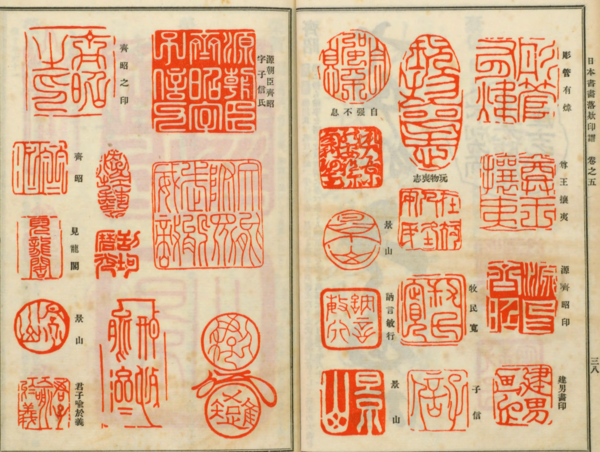 1 point
 -
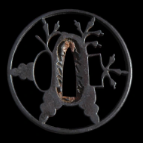
Jason, did you try a search on the internet? SHAKO is the term for this design that represents AMIDA rays in SUKASHI technique. Formerly, this design was assumed to represent clock gears, so it was called TOKEI (HAGURUNA). Cast iron TSUBA are later manufacture for tourists and do not have collecting value. They can be found on swords where the original TSUBA was swapped out and replaced by a cheap one.1 point
-
My pleasure. And please feel free to reach out if you have any questions about the Type 95. It sounds like you're starting down a path I traveled myself not too long ago, and there is a lot to digest. I am still studying myself. As for that little leather knot on your sarute, I don't think it's a remnant of one of the NCO leather tassels. It looks considerably thinner, and I'd be surprised if the original NCO tassel strap could be tied into a knot that tight without splitting. For those reasons, I’m inclined to think it’s something else. I don't think it would hurt to remove it, but I also don't think removing it would accomplish much; unless, of course, you plan to replace it with an appropriate leather tassel. Long story short, it's up to you, and I don't think there's really "right" or "wrong" decision about your leather knot. All the best, -Sam1 point
-
Dale it's a weird thing with AI, apparently it has a hard time as well with five fingers on a hand.... it likes to make 6 fingers!!1 point
-
松皮菱 x 5 As Rohan says, it’s the Matsukawa-bishi or Pinebark diamond in a linked circle of five. It must be a relative of perhaps the famous Ogasawara family.(?) Try key words in Japanese (like Kamon, itsutsu Matsukawa bishi) 家紋 五つ 松皮菱 Linked, in a circle, etc. Probably a later creation to show distant ancestry, and a 10,000 Mon book sounds about right!1 point
-
It certainly can; often what will be done is a wooden replica of the blade (tsunagi) is made which is then used for fitting and templating of the mountings without any risk to the polish of the real blade. A benefit of this approach is that the tsunagi can then be used to hold the mountings together when the blade is being stored in its shirasaya.1 point
-
I believe it might be a composite pattern made of the same kamon/motif repeated five times - the three overlapping diamonds, with the tips of the largest diamond touching those of the adjacent instance.1 point
-
Actually after talking with Ray Singer it turns out the paper for this specifically attributes the wakizashi buzen ryokai around the tenbun period. No idea how they specifically picked that era since it's mumei, but buzen ryokai seems like a rather rare attribution. Also this is what happens when I don't bother reading the papers on the swords I buy haha1 point
-
These help!.. They also confuse me a bit more... Hahah, at this point, I'm so curious to know who might have made this in the late edo period, deciding not to sign it (if it's shinshinto)... lol Jigane in the later edo periods usually doesn't look so... Alive? Anyway, this has been fun, and I definitely learned some things! Best of luck to you!1 point
-
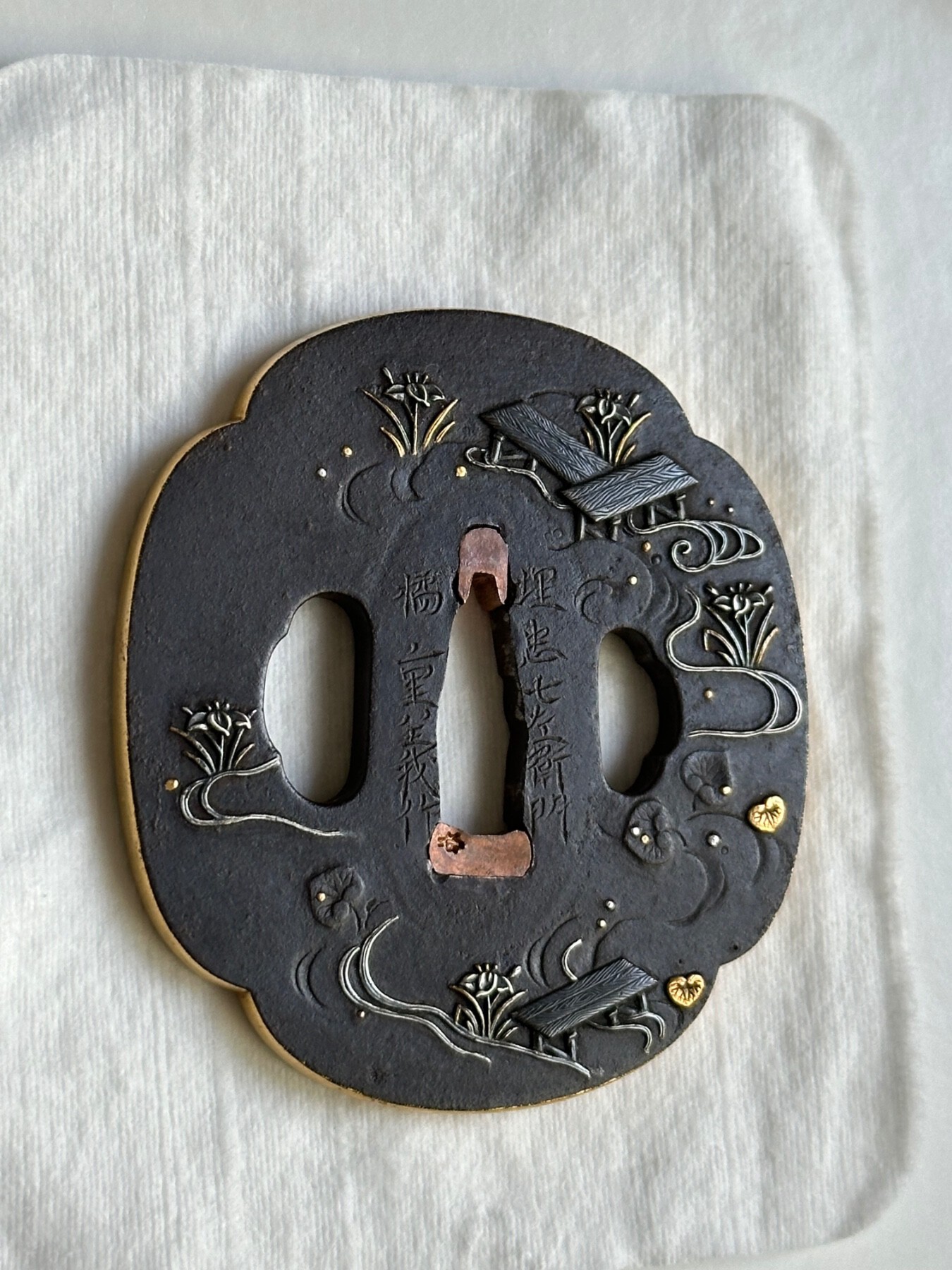
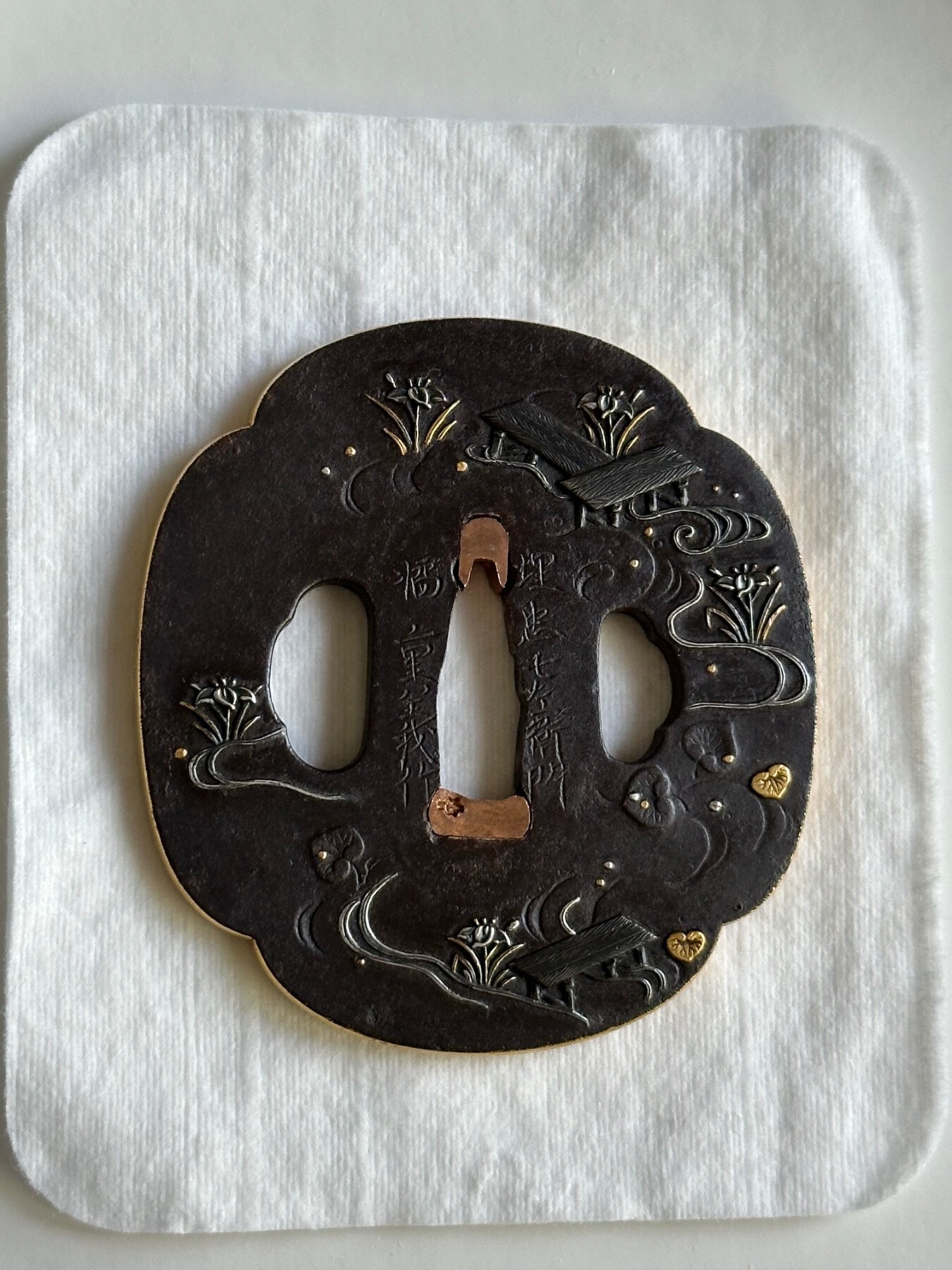
Wanted to share the fittings on the koshirae of a sword I bought from the Count Ito Miyoji collection (original post here: ) Will share the tsuba for now, but more pics coming for the rest of the set. It includes all matching iron+soft metal inlays - the tsuba, fuchi (also signed), kashira, kojiri, kurikata, kaeshizuno and kawara-gane (both sides) Kozuka, Kogai and menuki by Goto Mitsutaka
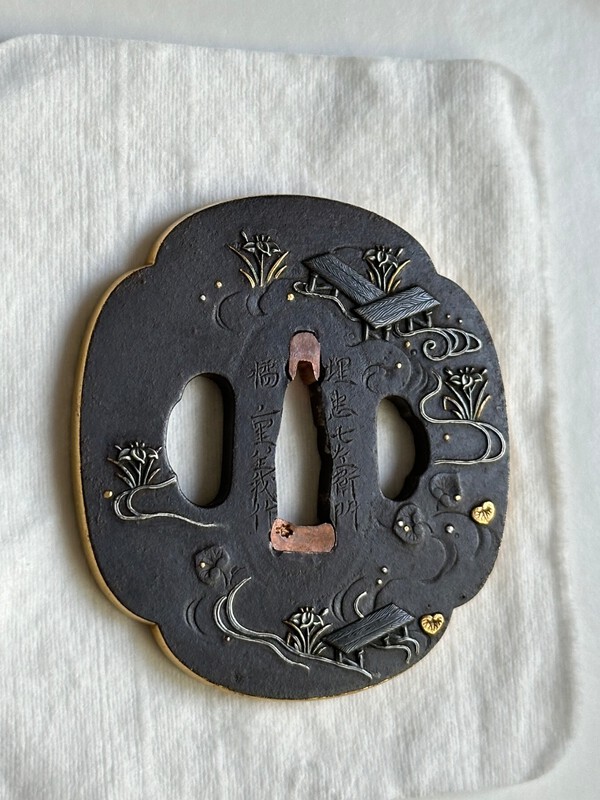 1 point
 -
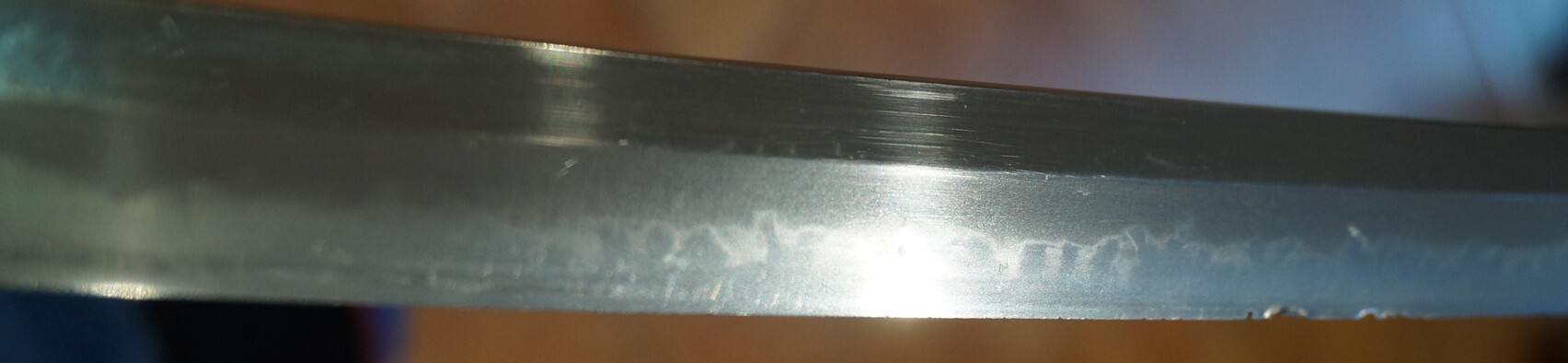
I've been scouring my university library for references to post here and I don't have much that's useful... What I have learned is that the term yakidashi is used to refer to shinto works and shinshinto made shinto copies, there's apparently some evidence documented in previous nihon bijutsu issues that describe yakidashi-like effects in Koto blades but they don't actually call it yakidashi... The say it's "yakidashi-like," because the term is only used for shinto and later shinto copy blades or something (if someone has any information to contradict this, please share). Apparently in shinto works the yakidashi is more symmetrical, vs sue koto blades where there are noticeable differences in symmetry on the omote and ura in more of an organic way... Your blade looks like it has asymmetrical effects like yakidashi but one of the photos makes it slightly more difficult to tell based off the angle... Does it look different on both sides @nihonto_1? Regarding the examples of this published in token bijutsu special issues, special issue number 50 has some examples of hamon affects (in muromachi blades surprisingly enough) that are described as "直刃調の焼出し( a straight tempered beginning line part) 様の部分を経て乱れに入る" - going through a suguha, yakidashi-like portion, it (the hamon) enters or into a irregular pattern (Midare)... So, yeah, yakidashi usually points to shinto blades/later as indicated by kokan nagayama, but there are documented exceptions to this seen in koto blades... LOL At this point I'd say "The sword is maybe, definitely, kinda old for sure, most likely, probably, unless it's not"1 point
-
Thank you for checking Piers, this is the closest I've found so far but not a perfect match: 八重鉄線 https://irohakamon.com/kamon/tessen/yaetessen.html
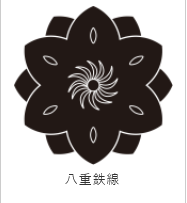 1 point
 -
See thread 'South Manchuria railway company presentation tachi',October 11th 2014 in Military Swords of Japan started by Medina San1.1 point
-
your grasp in prices with in australia is wrong, prices in austalia arnt cheaper! they are reflected to a world wide price range, postage isnt that complicated. your price range for a excellent type 3 with a showato start at 2k aud and go up from there. thats the market facts.1 point
-
Hello Marah, my condolences about your father. I am likely nearby, and would be honored to have them. I have sent you a message. All the best, -Sam1 point
-
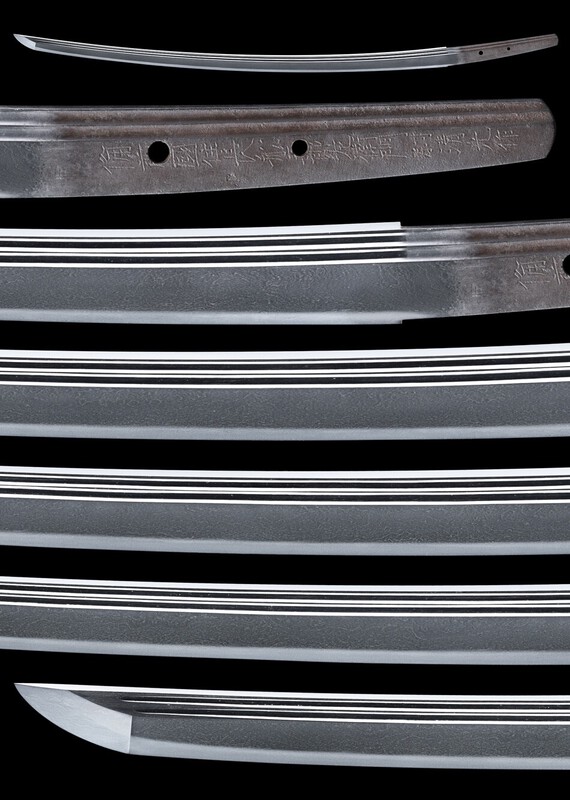
Wow, this is actually a pretty good signal. Thank you for the examples! Now if I could only know the provenance of the piece...given the fact mitsu-mune required a high level of skill to execute it makes sense. The piece I have also has original futatsujibi, so it must have been a high level order.

 1 point
 -
There are about 40 Jūyō Gō and about half of those are den Gō. Of those, six are old daimyō possessions, two are meitō, two have Hon’ami Kōjō attributions. To this we should add the seven Jubun examples which are all denrai and mostly meibutsu. So as far as the gold standards we are indeed in rarified air here. There are blades that passed Jūyō as Taima (recall that Taima can be very close to Yukimitsu) and Sanekage that were reattributed to Gō at Tokuju. I also wouldn’t say that Gō was a “reproducer” of Masamune’s work. The original Sōshū group working in Shintōgo’s forge in Kamakura were Yukimitsu, Norishige, and Masamune, likely in that order of seniority. It seems like other smiths likely came and went as the school matured, and Gō has often been associated with Norishige as they were both from Etchu province. My mental model is more like a mixing pot of traditions and ideas than a strictly hierarchical structure, at least in the first generation. We do see significant change in working styles in these smiths. Early Yukimitsu looks like Shintōgo, and turns into something more flamboyant. Norishige’s iconic matsukawa-hada develops slowly over his career. So I think perhaps Gō was following his own path, heavily influenced by the senior smiths around him of course. His work often has a little Yamato “seasoning” I think. There are blades that are attributed to Gō that have a distinct feeling of ideas from Yukimitsu, and especially Norishige and Masamune… but overall his work is characterized by being somewhat calmer in the chikei and kinsuji, but the jiba is always bright. The deki has incredible clarity. Despite the ichimai boshi being a kantei point, most Gō works do not have it. Certainly distinguishing between the top rank of Sōshū work can be difficult, but it can be accomplished…. Hope that helps.1 point
-
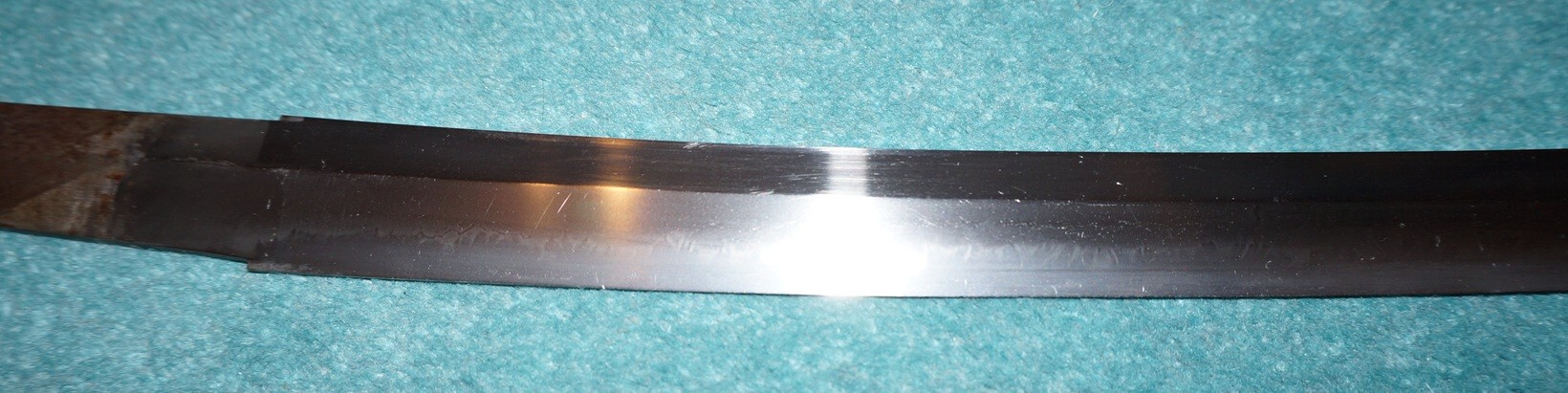
Hi Kevin, Great question. There is a tradition of attribution that goes back to the 17th century where respected appraisers wrote the name of the maker in gold inlay on the tang of the blade (Kinzogan). Some of the shortening were performed by this group, called the Hon'ami, and as a result they had access to many more signatures than we do today. The attribution "Go Yoshihiro" has a number of canonical traits (e.g., Ichimai boshi, first class nie, shallow sori, habuchi that increases towards the kissaki...) that have been studied since the Momoyama period. There is, of course, a substantial degree of uncertainty with attributed blades. Attributions on mumei works are best understood as "this is the most likely maker given what we know today" - and even more conservatively as a way to state that a sword expresses certain traits and a certain level of quality that is in line with reputation of a certain master smith. In this sense, there is a tradition of attribution that has been honed over generation of competent judges, based on ancient literature and oral transmission. I would advise caution on mumei Soshu blades to big names that are without Ko-Kiwame (old appraisal by the reputable judges) or established provenance from Daimyo collection with a high-level record of gift-giving. Makers during the Shinto era, such as Nanki Shigekuni or Shinkai came very close to Go, and one should always examine the sword critically. Best, Hoshi1 point









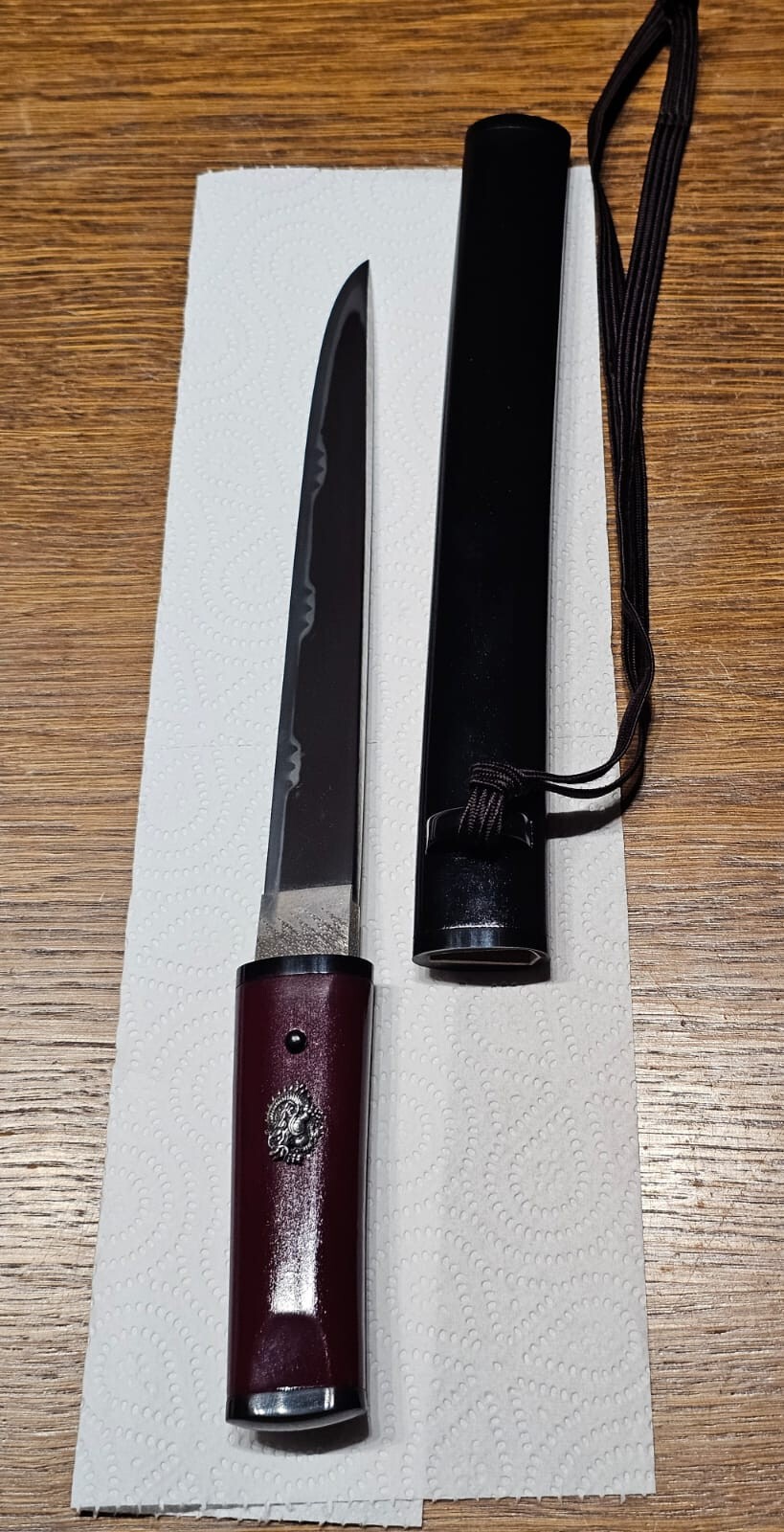

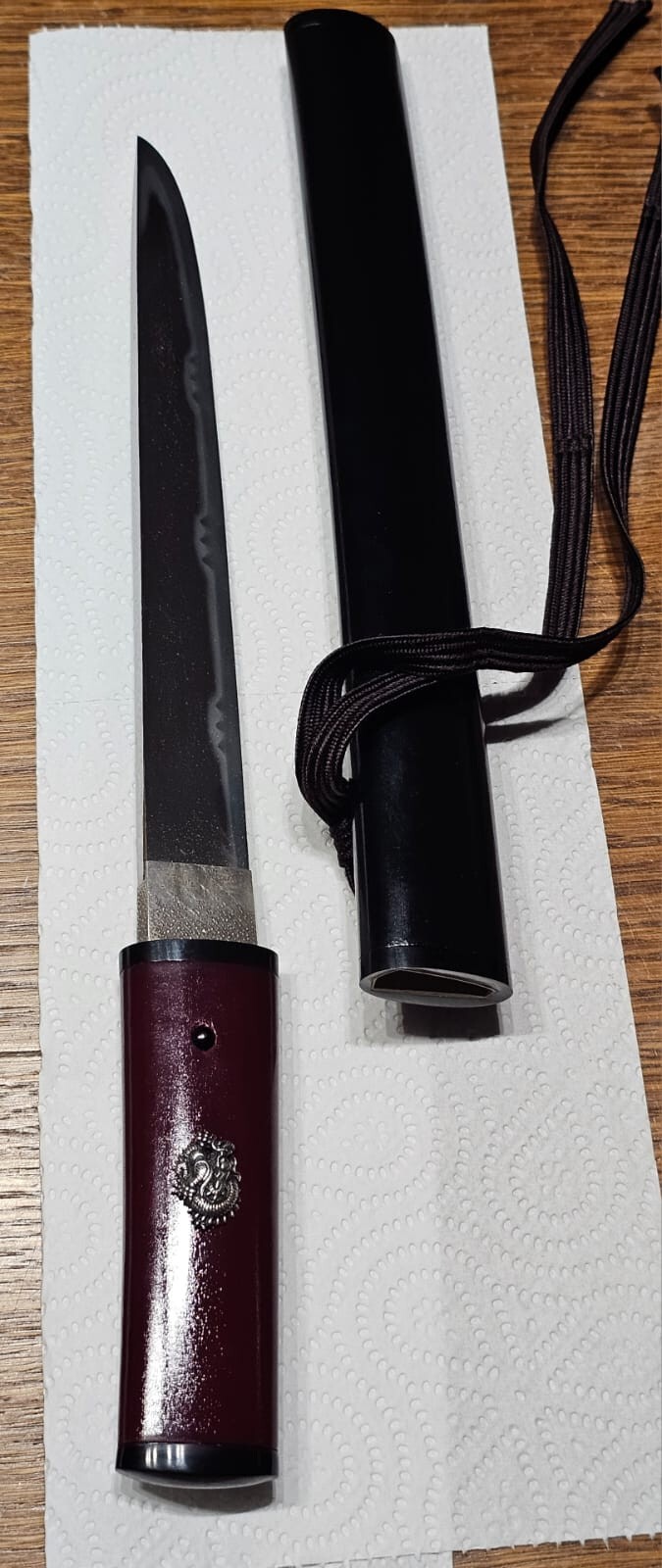
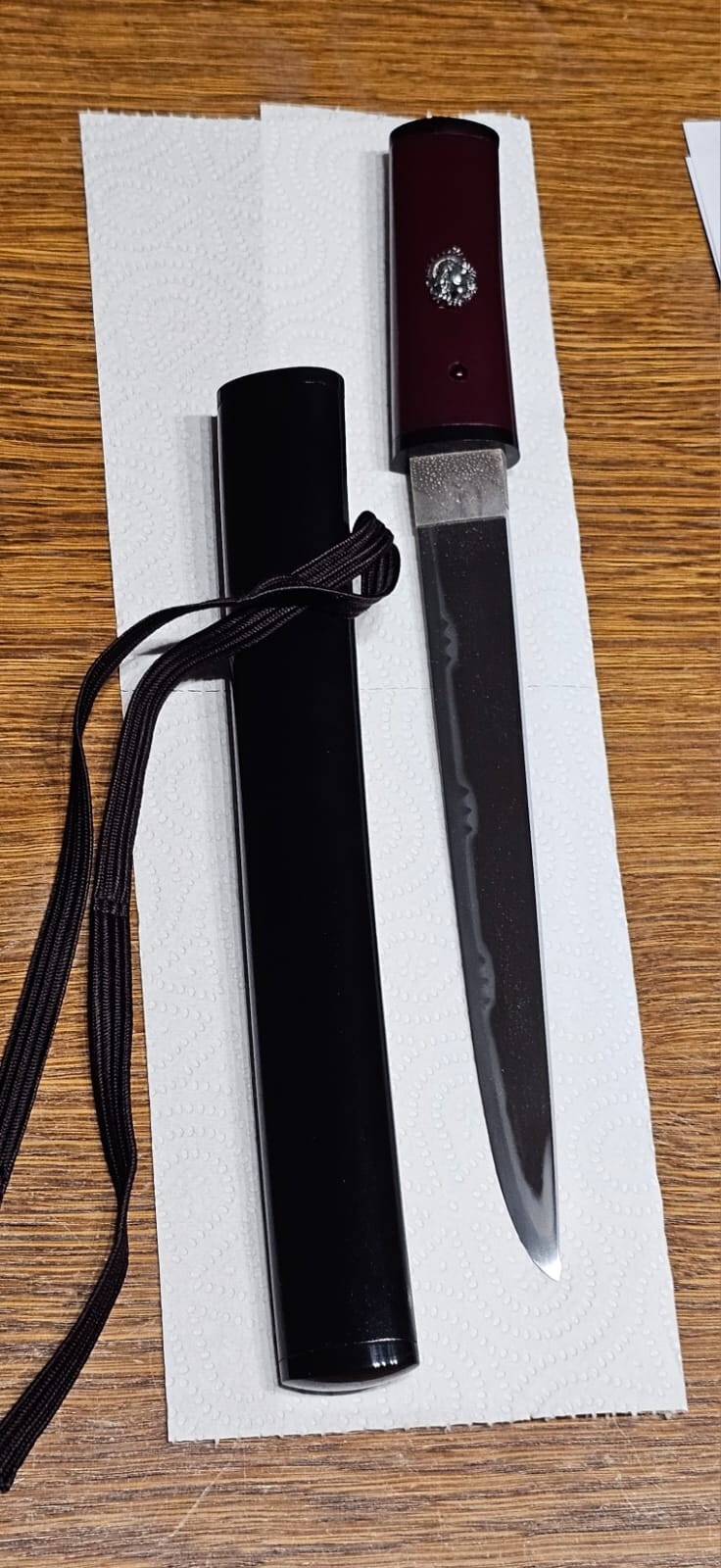


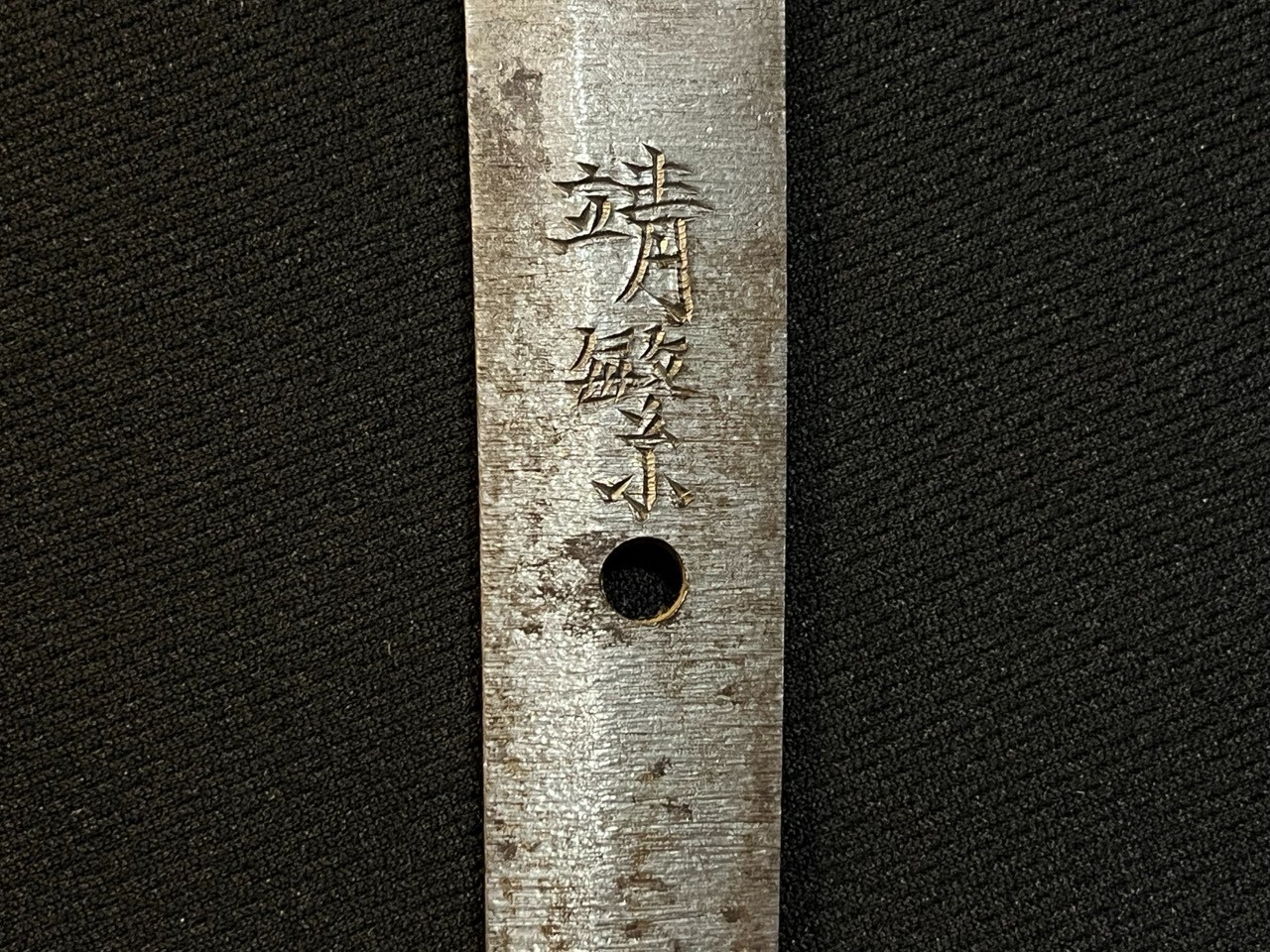










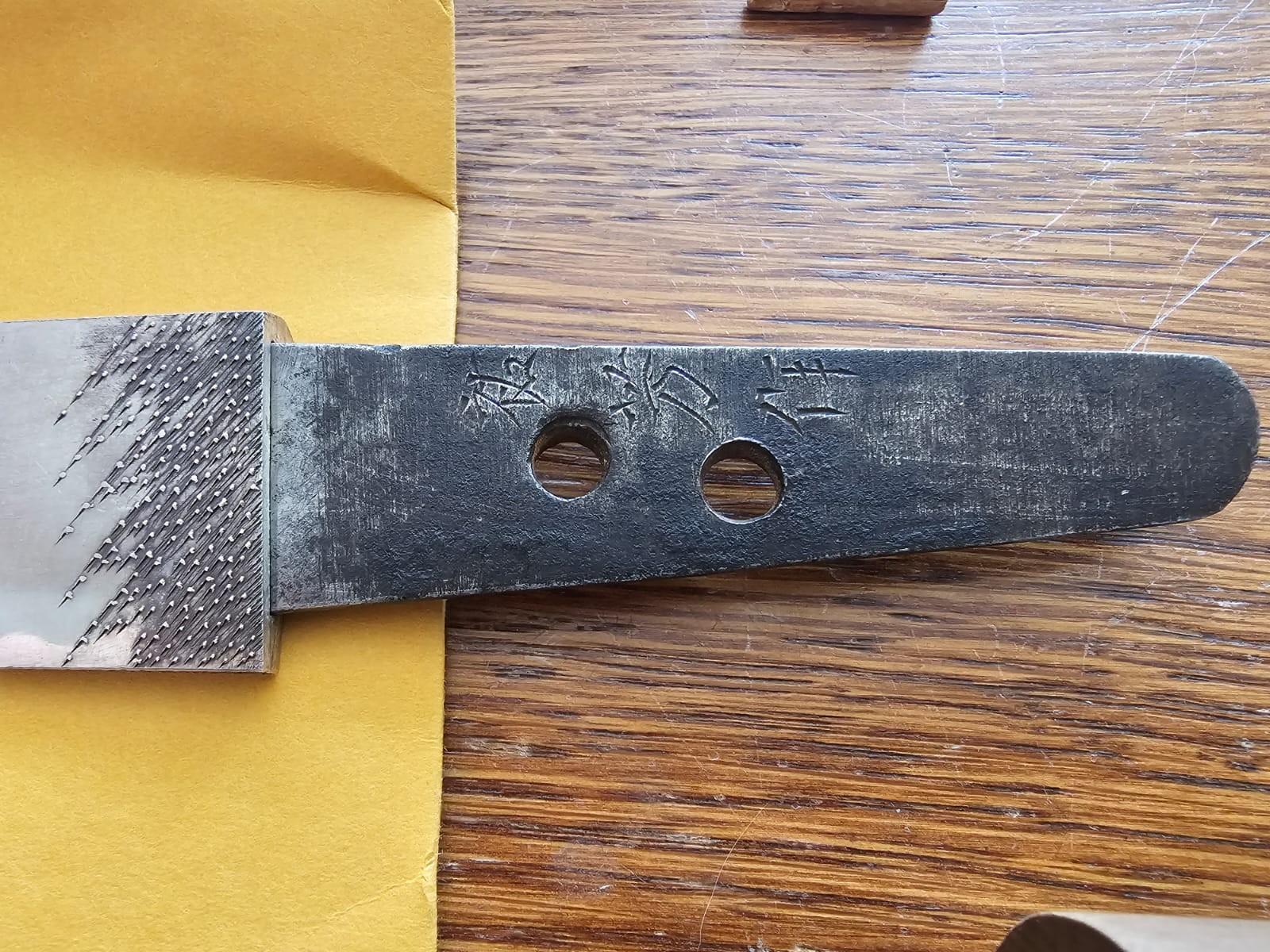


.thumb.png.54593db2789c8a1dcb235543b184ce39.png)




.jpg.9e102c530f9a5a411d5553992cd1f9d1.jpg)







This leaderboard is set to Johannesburg/GMT+02:00