
Leaderboard


Popular Content
Showing content with the highest reputation on 06/24/2026 in all areas
-
Good mounts can be an indicator of a decent blade, but never a guarantee.4 points
-
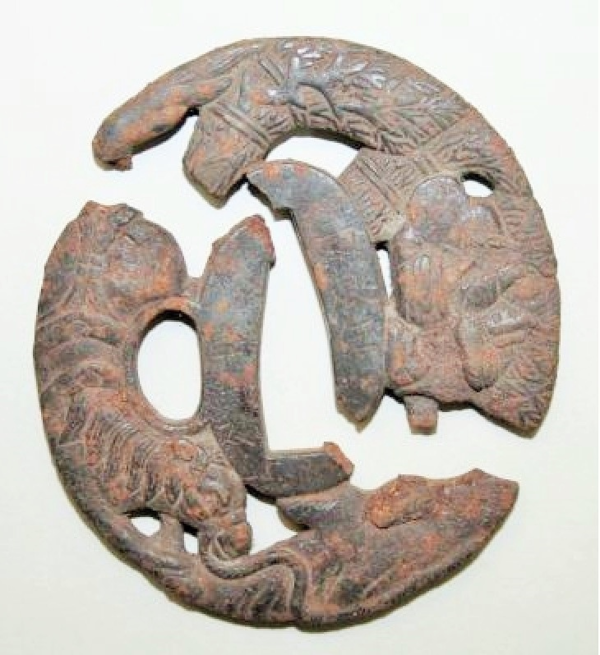
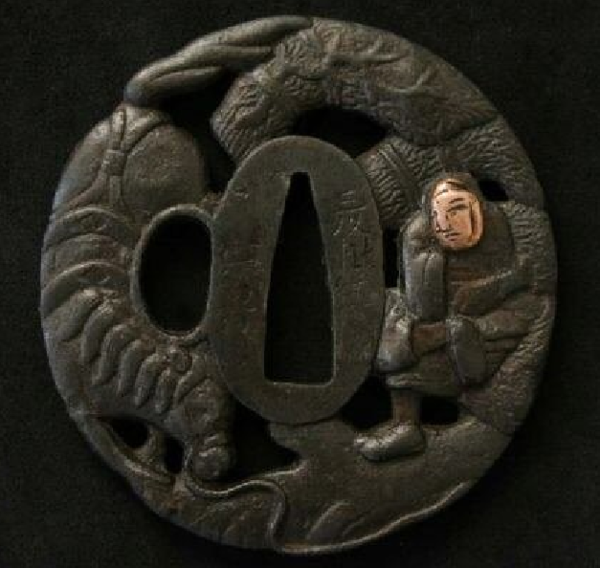
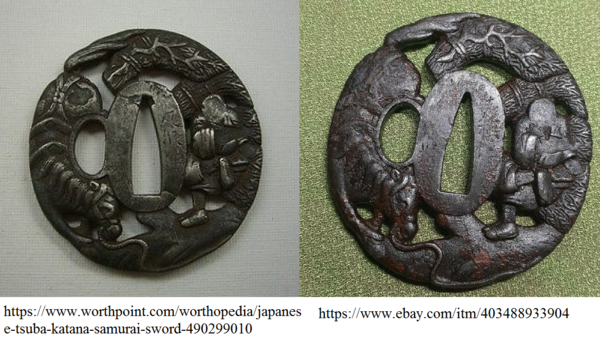
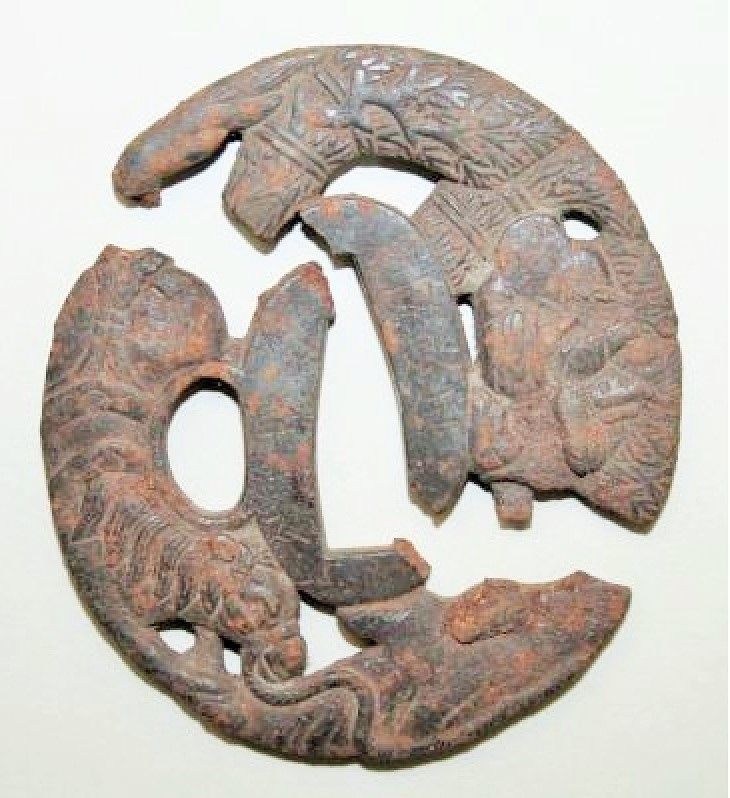
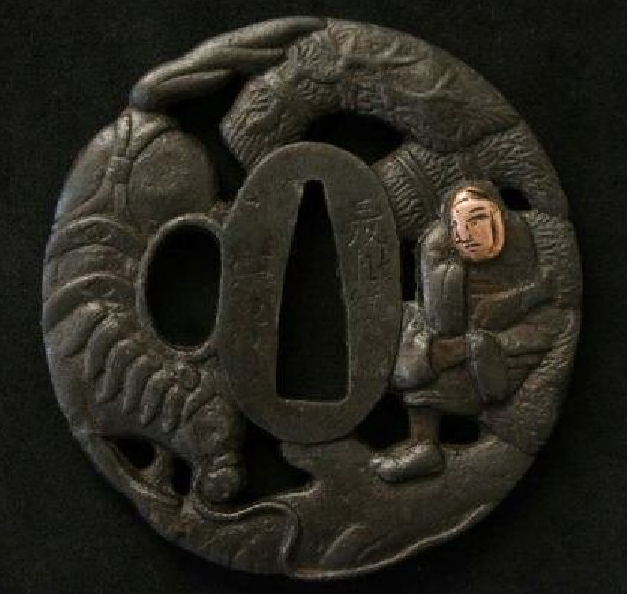
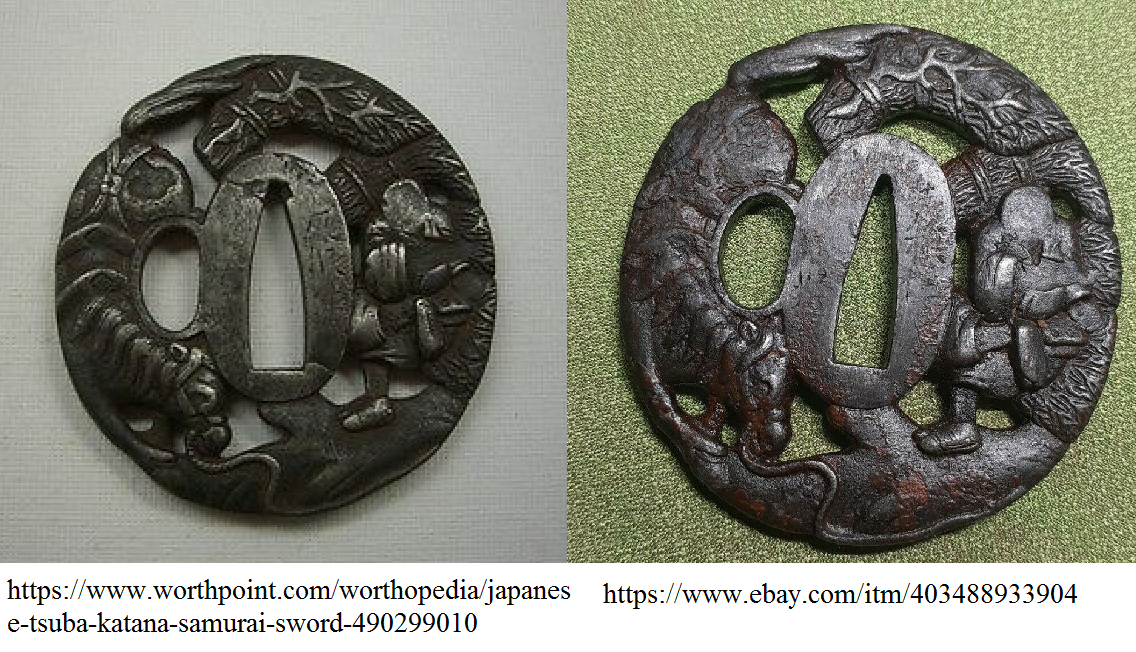
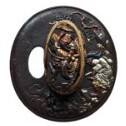
NO NO NO! Sorry Pown, these are always cast! 99% also have lost the face of the man - it was "glued" on and not truly inlaid. There are two sizes as well [The horses head is positioned slightly differently]. The difference in detail is because the moulds wear out - some were reworked but minimally Very rare "intact" version Don't feel too bad the Victoria & Albert Museum [V&A] also has one in its collection - so I guess you could say you have a "Museum Quality Tsuba" https://collections.vam.ac.uk/item/O466167/tsuba/ or in reality even the biggest museums have little idea of the authenticity of their pieces. Is it too late to send the thing back and ask for a refund?
 4 points
 -
@Jussi Ekholm That walking around part, I did that once and got lost, lol. Walked too far... That was before the smartphone era. A retired local taxi driver "rescued" me and when he asked me what I was doing and I explained I am a sword nerd, he drove me around to show me all the historic sword making sites. He had to quickly stop by his house to tell his wife he will be late for dinner that day, haha. Fond memories.4 points
-
I'm happy to announce that my Yagyu utsushi tsuba ranked Nyusen 4th in this year's NBTHK contest. Despite being ranked lower than last year it's still a positive result.


 3 points
 -
Greetings, Mr. Pennington! I saw this post when it was first out, but I couldn't find anything about this 一簷子保隣, only the Kinko 保隣 like the others had pointed out, so I didn't reply. 一簷之下,可以保隣 or similar variants I tried show no hit on the Chinese internet or on the https://ctext.org/ (Chinese Text Project, a digital and searchable pre-modern Chinese texts project), so it's perhaps just AI hallucinating again.3 points
-
Thank you very much Dale for your information. Best regards Pown.3 points
-
Here is my second tsuba. Couple of days ago three tsuba popped up on a local internet auction. And again, one of them caught my eye mostly immediately. Its simple elegance stole my heart, and something that looked like mei caught my mind. So I bought it. It arrived very quickly and indeed it had mei. Due to that double cut-out it was quite simple to narrow style and mei to Tetsunin/Tetsujin. Actually, this very board has several topics on the Tetsujin tsuba: www.militaria.co.za/nmb/topic/12900-tsuba-mei/ www.militaria.co.za/nmb/topic/26575-tetsunin/ www.militaria.co.za/nmb/topic/26665-tsuba-etc/ www.militaria.co.za/nmb/topic/48180-what-does-artificial-patina-look-like/

 2 points
 -
Owari? doubt it
 2 points
 -
Reminds me somewhat of uma-no-ha midare.
 2 points
 -
I'm not sure the presence of a mon would suggest anything about the blade itself. The reasoning behind my thinking, is that you often find mon on those Kyu Gunto parade/dress sabers, that have dull edge and artificial hamon. Best, -Sam2 points
-
Ohmura's website is a godsend; it's fabulous. Sometimes my computer decides to translate it a little funny, but otherwise it's an invaluable resource. Off of the web, my favorite publication about Military Swords of Japan is the following: Dawson, Jim. Swords of Imperial Japan, 1868–1945. Cyclopedia ed. Newnan, Ga.: Stenger-Scott Publishing, 2007. And for those who want to go even deeper, our very own Kiipu put this incredible bibliography together. Proved an invaluable resource while writing my Type 95 monograph:2 points
-
Ohmura's site is the Premium spot for that: Military Swords of Imperial Japan I also own an RJT gendaito in the steel saya. These tend to be a darker, mid-level brown as opposed to the lighter tan. A 1945 Kunitoshi I did a survey of RS fittings, and of the 75 with RJT star blades, there were 15 in the mid-brown metal saya. The rest were custom.
 2 points
 -
G Bryant, your sword is signed 虎徹 (Kotetsu). It would be more helpful if you could take better, clearer photos. Swordsmith information (create an account to access). https://nihontoclub.com/view/smiths/meisearch?type=All&mei_op=contains&mei=虎徹 Examples. https://www.google.com/search?sca_esv=6de80325d8c97b9b&rlz=1C1ONGR_enUS1136US1136&sxsrf=APpeQnsD-W631RT89SOJ9p08pR9QSnwb2g:1782318299769&udm=2&fbs=ABfTbFVyMZGZf1hfvX9uKjN_-G8c4u0nXx4bEIpwm1lnNH832VTJOOCxW_fyN-Q_ezyf8gI6tmCs2mGkqzilSWVScXUu-36F1xwJ6s2wRb7OWrvmXKhJLrQZNmI9gm2AYQW4Uizn2b8TkT7RybSEBZdtaCwnr8ep1FfDZpTyTkz03KmpKMoTvXnkTHHyQHvNfMh4ViFw0QP3ntipu8Gg32MSfCIb3zcfbg&q=長曽祢興里入道虎徹&sa=X&ved=2ahUKEwiXmomJpaCVAxXEliYFHZAJNNQQtKgLegQIFxAB&biw=1536&bih=791&dpr=1.25 https://www.google.com/search?q="okisato+nyudō+kotetsu"&rlz=1C1ONGR_enUS1136US1136&oq="okisato+nyudō+kotetsu"&gs_lcrp=EgZjaHJvbWUyBggAEEUYOTIJCAEQIRgKGKABMgcIAhAhGKsCMgcIAxAhGKsCMgcIBBAhGKsCMgcIBRAhGI8CMgcIBhAhGI8C0gEHODI3ajBqN6gCALACAA&sourceid=chrome&ie=UTF-8 A togishi in Australia. https://touken-togishi.com/ WWII Army koshirae. https://web.archive.org/web/20250228085100/https://ohmura-study.net/900.html2 points
-
Because you can imagine a line evenly extending across the top of the choji due to the consistent height of the choji, I see this as suguha-based rather than midare-based. So I'd probably call it chu-suguha-choji.2 points
-
“Almost always” being the key words. I believe Hamfish sold a star-stamped Kaneshige on NMB a few years ago in Type 3 koshirae with a steel saya. Sometimes, the Type 3 lacquered saya and tsuka ito can be found on late war showato, such as the example below: But I do agree the Type 3 is the model where the fittings most closely correspond to blade quality.2 points
-
Interestingly, I only have two other blades by him, with Showa stamp, and he used different dating 'language' on each one! Standard Imperial

 2 points
 -
The Rinji seishiki (Type 3, etc) is the only model that has a clear distinction in blades between the standard, light tan saya vs the custom saya with double release buttons. You almost always find a gendaito in the custom Rinji fittings.2 points
-
Very nice, congratulations! My Yagyū Seigōryū battō training sword has a Yagyū Utsushi made by @Manuel Coden back in 2020.2 points
-
Hi Chen, from looking at the additional photo, I would say Ko-Shoami group or early Edo Period Shoami School. The rim shape in particular does not look like the workmanship of the Owari group to me. The surface looks very damaged likely by sandpaper or something similar (hard and abrasive) was used to remove a lot of active rust from the surface as noted by @Bugyotsuji.2 points
-
Indeed, sometimes it's the mounts themselves that are what the collector was interested in, and they selected a junk blade to hold it all together rather than shell out for a custom tsunagi.2 points
-
Dear Tony, It's a hybrid signature, with mei in kaku and nengo in sosho. The change from one style to the other wasn't immediate; there was a transition period in which the mei continued to be kaku with the addition of the kanji Tsuda (Family name) and the nengo in sosho. I can't read the nengo, but the reference period for the hybrid mei should be from 1668 to 1674, if I remember correctly. Compared to the blade, when the hamon is suguha, Sukehiro always tends to have variations in height, it's never completely uniform, as you can see in the oshigata posted by Uwe. All the best Giordy
 2 points
 -
This sounds like a healthy dose of “sour grapes”….and it is misplaced. That sounds a bit “show off” to me. Erm….. There has always been and will always be wealthy people who love Art in its diverse forms. Many of the worlds great collections….swords….netsuke….whatever have been assembled by these patrons of the Arts who have ensured that these masterworks are recognised, recorded, protected and conserved for future generations. The netsuke market is not governed by snobbishness, it is governed by the usual rules of supply and demand. In my experience, the buyers of high end Japanese Art are truly passionate about the subject and are prepared to go to whatever it takes to acquire a treasure. The fact that pieces do sell for big money is just evidence that there is a strong demand pitched against a limited supply.2 points
-
I still have a few favorite Netsuke which I simply cannot part with. One is the Rat Catcher. These were quite often for lack of a better term IDIOTS, often hunch back. The one I have in Ivory is quite humorous in that he forgot to completely fasten his loin cloth and consequently his testicles are hanging out. Another is Ebisu, the Japanese God of fishermen. He too is in Ivory with so much detail that even his feet leave the correct anatomical footprints when pushed into plasticine. The carver was so talented he even undercut the eyelids. People used to ask me, How do you tell a Netsuke is of good quality and I used to say if he looks ready to get up and walk from the palm of your hand he is most certainly genuine. If a Netsuke of a Crane appears to be ready to spring from the water and fly away, ... it is genuine. One other point I should like to make is that on older genuine netsuke one of the cord holes is often much larger in order to conceal the cord knot. On a genuine netsuke are no sharp edges to catch on the silk kimono.2 points
-
March 19442 points
-
Hi Chen, it looks as if someone has used a wire brush there to remove rust.2 points
-
Ron, good to see you commenting here, and you touch on some excellent points. I have a few of those Chinese toggles too, interesting in their own right. I have never been able to compete with those millionaire collectors, but by biding my time I have managed nevertheless to find many intriguing, perhaps exceptions to mainline 'Western collector' rules, i.e. 'genuine' (made and used for purpose within the generally accepted time frame) netsuke. Also I have some examples of those 'sticks' that you mention, plus earthen fishing weights and holed stones, fangs and bones that also must have seen early or rudimentary use.2 points
-
I should have added that I have owned a couple of Chinese Toggles over the years. I found them very utilitarian with little for me at least to call ART. There is an excellent book on the subject for those interested : SUBSTANCE AND SYMBOL IN CHINESE TOGGLES by Schuyler Cammann published by The Trustees of the University of Pennsylvania, Library of Congress Catalog Number 62-72022 points
-
I believe Tadatsuna (upside down) showa 19 (1944). Please wait for confirmation, however. Could be the first listing on the attached. John C.
 2 points
 -
I have owned many Netsuke over the years, mostly in Ivory but now with the ban on Ivory of any kind and due to the fact I am getting too old to collect anything but my old age pension, I have bowed out. I hesitate to add that the Ban on Ivory came about because of people in China like Mr. Zhangshilong who carve what can only be called pseudo netsuke. The Chinese have been carving TOGGLES since at least 1280 AD long before the appearance in Japan of Netsuke. The Japanese needed some way to fasten their Tobacco Pouches to their body and since the Kimono has no pockets, the only logical choice was to fasten it to the Kimono Belt ( Obi ) by passing a cord from the tobacco pouch with some object fastened to the cord to have enough mass and weight to hold the tobacco pouch securely in place. The first Netsuke were no doubt small sticks, which later were carved to give the stick some artistic merit which was pleasing to the eye. This object we call a netsuke derived as a direct consequence of the introduction of tobacco into Japanese Society. Later Scholars fastened their ink and brushes to the Obi and the Ink container became the Netsuke and the Writing Brush became the tobacco pouch so to speak. The reason collectors shy away from buying Netsuke is that the Chinese began flooding the market due to there being many fine Carvers of wood and IVORY in China and wages in China lagged behind the rest of the World. When the wealthy SNOBBISH American and equally snobbish Europeans found a new trinket to add to their collecting ADDICTION and when one sees that Sotheby's or Christies Auction Houses but to name only a couple often sell Netsuke that fetch bids in the thousands of dollars and I've seen a couple of Netsuke sell for over $ 100,000.00. This is a one up man ship that only multi millionaires can indulge in. Don't tell me this is for the love of ART, ... this is pure showoff ! I collect ONLY Edo Period Netsuke and only from Internationally respected dealers. It matters little that my preference is IVORY, as there are equally fine carvings in Wood and other materials. I simply enjoy the medium ( material ). There are many very talented modern carvers, but they do not fit the criteria of having been used for the purpose they were designed for and I therefore correctly call them pseudo netsuke.2 points
-
Sword was purchased directly from the vets family. Army air corps. Stationed in Japan from 45-46'. Not sure exactly how it was acquired but was definitely never carried or used. Perhaps being slapped together to sell to GIs like the PX swords? But its definitely not a newly put together.2 points
-
I might have found the answer. A "old fashioned" kanji for 10 was 拾, right?2 points
-
Perhaps, I have struggled to identify this smith. He does not appear in my Sesko swordsmith books, or on any of my Fuller/gregory/slough oshigata publications. The TOSHI is signed different than the one above, on the nakago, TOSHI is signed like this: 利2 points
-
Some more pictures


 2 points
 -
I looked close at the photos and I think you are right.1 point
-
Hey Colin: I'm not arguing the point just want to offer a definition. In sociology circles, we call this "conspicuous consumption." The goal of the rich here is, not to own and admire an artistic object, but rather to display their wealth to the rest of the "proletariate" as they see us. John C.1 point
-
Often times, I do not associate the mounts with blade quality necessarily. I try to asses both individually from eachother. That said, when I find a sword "in the wild" that has a really nice two piece habaki; I do get a little excited and tend to look a little closer. Exceptions to every rule. -Sam1 point
-
Sorry! Yes, it's 拾, one of the old-fasioned ways to write 十. It's auto-corrected in my dumb brain, definitely not just because I was hasting to be the first to reply so I goofed (I should really do something about this juvenile mentality, though orz)1 point
-
Here is another example from a thread a couple of years ago. John C.1 point
-
Hi! This looks like 濃州関住藤原兼廣作 昭和十二二年二月日 Noshu Seki-Jyu Fujiwara Kanehiro Saku Showa 14 a day in February. This is one of those cases where it's 十二二 ("ten two two") instead of the regular 十四/fourteen because 四/Shi sounds like 死/death/Shi.1 point
-
Jussi, while I don't know the story about Katsumitsu fleeing the village, what is clear is that by 1560, the situation in Osafune had changed considerably. The glory days of the Katsumitsu line were already in the past. The atelier appears to have been much smaller than it had been during the time of Ukyo no Suke Katsumitsu and Sakyo no Shin Munemitsu, and it was operating alongside a number of related Osafune branches, particularly the descendants of Jirobei Harumitsu, the second son of Jirozaemon no Jō Katsumitsu. The Harumitsu branch seems to have specialized in higher-quality and often more individual commissions, producing many tantō and the occasional longer uchigatana. Also, by the Eiroku era, the economics of sword production had shifted dramatically. Demand generated by the Sengoku wars encouraged the large-scale manufacture of kazuuchimono, and the principal beneficiaries of that market were the Kiyomitsu and Sukesada groups. These two houses grew into the dominant producers in Osafune, overshadowing many of the older family lines in both size and output. At the same time, Bizen's political landscape was also changing. Since the death of Akamatsu Masanori, the province had been dominated by the Uragami clan, who were also big patrons of the Katsumitsu. But by the mid-sixteenth century the Uragami were weakened by internal divisions and increasingly dependent upon their powerful retainer, Ukita Naoie. During the 1560s, Naoie expanded his influence while maintaining a nominal loyalty to his lords, eventually emerging as the effective ruler of Bizen. Such political and economic upheavals almost certainly affected the fortunes of the Katsumitsu line, as they did many other Osafune families. Against that backdrop, the placement of Kiyomitsu's name before Katsumitsu's becomes easier to understand. Whether the order reflects seniority, prestige, commercial influence, or simply the circumstances of the commission cannot be known with certainty. However, by the Eiroku period the Kiyomitsu workshops were among the most prominent and productive in Osafune, while the Katsumitsu line no longer occupied the commanding position it had enjoyed a century earlier. On the issue of Katsumits fleeing the village, I have not seen and can't find anything to support this, but I guess it's possible. The documentary record for many late-Bizen smiths is fragmentary and not all of it is available online. What is striking,though, is that when the Yoshii River flood of 1590 devastated Osafune and effectively brought the great Bizen tradition to an end, the powerful Kiyomitsu line disappeared from history. Among the few branches that survived were members of the Sukesada line and descendants of the Harumitsu branch. In that sense, although the Katsumitsu family had long since lost its former prominence, its bloodline appears to have been among the last remnants of the classical Osafune tradition.1 point
-
I have to correct myself, I’ve never heard of this plant before. The Trillium plant indeed could be found in Japan (Trillium camschatcense), specifically on Hokkaido. So this seems to be the right track. Perhaps a northern clan?
 1 point
 -
Dear Bryan, in addition to agreeing with what was previously expressed, perhaps it is an optical effect of the photos but in the nakago the shinogi seems to disappear, furthermore not a single trace of yasurime for a "relatively recent" nakago... if due to corrosion I would expect a more generally suffering appearance of the whole nakago and not such deep mei strokes. All the best Giordy1 point
-
The more examples that are shown it would appear it was simply a nicer version, hence why often seen on better than average mounts.1 point
-
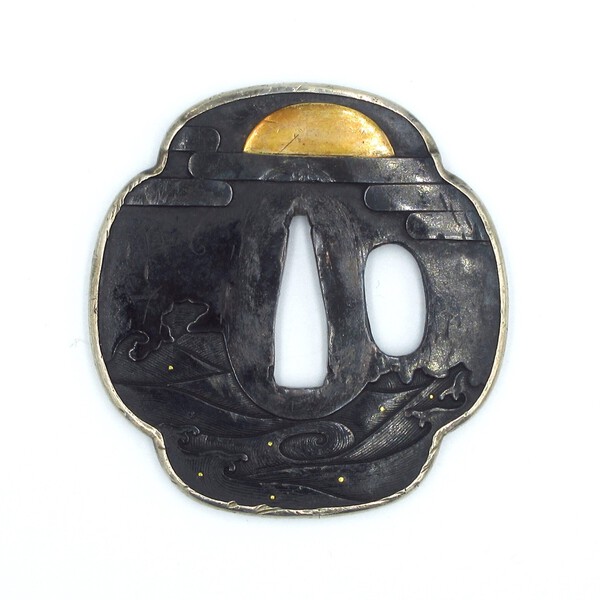
Japan's unique art has influenced European art for hundreds of years. Even when closed, some small amount was flowing out through the Dutch. Likewise, some was flowing in. Japanese designs influenced by European designs are called "Nanban" for "southern barbarian." Nanban Tsuba exist in large numbers, but the word (almost always I believe) with fittings means "influence" and not to actual importation whereas with armor Nanban armor is actually European armor imported, stylized, and used in battle. Also, European cloth was the most valuable cloth in Japan. Learning this was a fascinating moment, because as a child I read most of James Clavell's Shogun. (I ran out of steam in somewhere in the 700s by page count.) In this work, Clavell was said to be "Honest but inauthentic" in that his ideas of Japan at this time were 'correct by the standards of the studies of the period he was writing in, as they were based on often incorrect ideas held in academia, but were indeed held at the highest levels in academia. (So when he was wrong, it was because the research when he was writing was wrong.) One of these wrong ideas is how Blackthorne has a large volume of European cloth as trade goods, but the Japanese despise it and want only silk (and make quite a commotion about how awful they think it is....) while in reality European wool cloth was highly valued for strength, heat retention, and colors available. It was the most expensive cloth in Japan. These are Hideyoshi's personal private time bedroom slippers. They are made from European wool. It was called "rasha." Hideyoshi was a real piece of work, but in his old age he was subject to being cold, and being the most powerful man at the time was able to afford bedclothes and slippers and such made from European wool. These slippers are thought to be private (partly) because they aren't decorated enough to be used in important meetings. They also made battle surcoats for wearing over armor (the long sleeveless jackets) out of it. Because it was strong enough and also as a bit of a wealth flex, and as a way to add a layer to your look. As to influence outside Japan, Rembrandt the famous painter is known to have collected Samurai swords and he died in 1669. (This comes up a great deal when educating people who still think that Samurai swords were 'better in every way, instead of just very solid and extremely beautiful blades. It comes up because no one in European military affairs felt the need to change their swords out for Japanese ones as a functional issue but valued them tremendously as art objects.) But, I am rambling about the older period artistic influences.... On the topic of late artistic transmission.... post-Perry, the Japanese are reported to have used printed art (ukiyo-e) AS PACKING MATERIAL ON EXPORTED GOODS! Imagine you are a 'well to do' European, and you send off for a Japanese vase or screen, or some bit of lacquerware to show off to your friends how worldly you are... and it arrives a year later, packed in 'wadded up newspaper,' except it isn't newspaper. You glance at the paper, unroll it... and find THIS? This is the kind of thing that inspired Mikado by Gilbert and Sullivan. In truth, it seems like Japan has a massive world-wide cultural takeover of the world about every 30 years. When I was a kid Ninja Turtles, Robotech, and so on were massive. As to art going the other way, this absolutely happened but it can be harder to identify. Japanese people were of course fascinated by the outside world, and the time Japan was closed just increased this. One of the last people to travel was Tenjiku Tekobei, and he became famous for his writings on his travels. https://en.wikipedia.org/wiki/Tenjiku_Tokubei I have a picture of him on my wall as a wizard riding a giant frog. (The last great traveler before Japan closed became so fascinating to the nation for his writings about the outside he became a wizard in Kabuki playwriters started using him as a wizard.) As such, when it opened again an influences started flooding in, they absolutely influenced art.... but it's a bit harder for we who are outside to track directly... and also because of the abolition of the samurai class as a power play by the Emperor, there was less need for sword fittings which are the focus of this forum. I recently ordered an antique tsuba which I think must have had a European influence because the bottom is classic Japanese but the top is more of a semi-modern graphic design using bars with semicircles as ends to create a classical Japanese design (the sun over clouds) in a very new and different use of line. These bars stand out to me as a 'influenced design' but it might turn out not to be. It's entirely possible this is an old Japanese style I simply haven't encountered elsewhere.


 1 point
 -
From my F/K Piers.....the likeness is very similar to your netsuke....
 1 point
 -
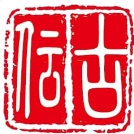
Could not find him either. Looks like we have here an unrecorded smith, Yasuchika (保隣), and his art name, Ichi'enshi (一簷子).1 point
-
The 1306 tanto would be a great sword to compare but I have yet to find high quality images. These are the images of the polished tanto. Not the optimum lighting or resolution but hopfully you can see the fine chikei that is so noticeable in the other examples. And is that nie-utsuri?


 1 point
 -
A true beauty. Sometimes if you refresh Eirakudo's page and switch languages a few times, a bug will happen where you can see the ask prices. I have had it happen a few times.1 point
-
Hello everyone, I wanted to give a quick introduction to my new dealer section. Having been active in this wonderful community for quite a while now, and having sold Japanese swords for over three years, I thought I would obtain dealer status here on NMB. This allows me to support the forum and have a more direct way to communicate updates concerning stock and upcoming swords. My name is Lex van der Jagt. I started selling antiques when I was 14 years old and started my own company as soon as I turned 18, based in the Netherlands. I have focused my interest on Nihonto ever since I was legally allowed to own them here in the Netherlands. I specialize in Japanese swords from the Koto period (before 1596 AD), as this is the period that interests me most and is also the main focus of my own collection. Japanese swords are my passion, and I stand behind every sword I sell. Almost all swords I sell come with modern NBTHK Kanteisho, and some have been submitted to shinsa by me personally. I visit Japan every three months in search of high-quality Koto-period swords that I can offer to my buyers, which I personally export by plane. I plan to have a website up and running within six months. Until then, you can contact me directly here or send me an email at: lexvdjagt@gmail.com. Greetings, Lex van der Jagt The Netherlands1 point




.thumb.png.54593db2789c8a1dcb235543b184ce39.png)

















This leaderboard is set to Johannesburg/GMT+02:00