
Leaderboard


Popular Content
Showing content with the highest reputation on 02/13/2026 in all areas
-
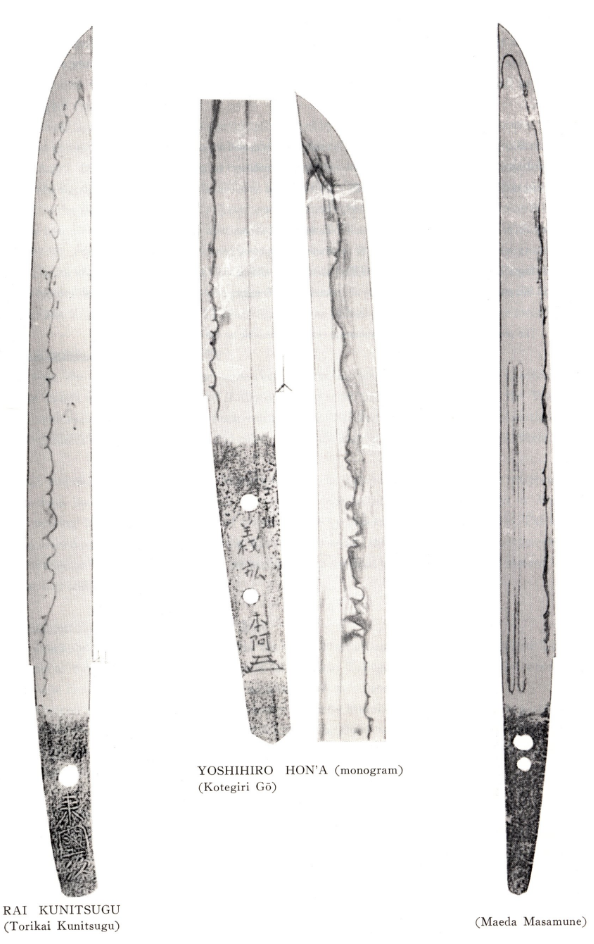
I stumbled across a great little read in the Token Bijutsu Volume 35 about the sale of the Iyo Saijō Clan's Matsudaira Masterpieces. The Iyo Saijō Clan was established with the fief of 30,000 koku as a branch family of Kishū Tokugawa by Matsudaira Sakyō-dayū Yorizumi, who was second son of Tokugawa Yorinobu ruling Kishū. When the new branch came into existence, some of the treasures in the Kishū family collection were transferred as heirlooms. Among the ten transferred swords, three of them were meibutsu, namely, Maeda Masamune, Tokuzen-in Sadamune, and Satō Yukimitsu. Others included two Juyo Bunkazai, a kodachi by Sanenaga and a ken by Mitsutadai. It is said that the magnificence of swords in the Matsudaira collection came next only to the Maeda, Shimazu, and Kishū Tokugawa collections. In the article it, it talks to the sale of a few of these great swords that we have discussed even recently here on this forum. It seems insane that some of these things have actually been sold but there you go. In 1918 or 50 years after the Meiji restoration, two of the Iyo Saijō Clan's Matsudaira meibutso were sold: 1. Torikai Rai Kunitsugu tanto - said by Dr Homma when he saw it in 1950 that he was surprised this was not elevated to a higher status (Juyo Bunkazai or higher) this sold in 1918 to a Mr Sugihara who paid 8,000 yen for it. To put in perspective. 1 yen was equivalent to roughly 51.5c USD back in 1918. So this means the sword roughly cost $4,120. To assess how much this was in the day, an unskilled labour earned you $1/day, whilst skill labour was $1.50/day. As such the salary of an unskilled labourer was $241/year or $361.50/year for a skilled labourer. At the time a larger, well-built, multi-bedroom home in New England cost between $2,500 and $3,500, today this home would cost over $3-4 million. Basically, if you look at the USD prices from back in the day, all you need to do is throw three zeros at the end for an roughly equivalent price today. 2. Kotegiri Gō wakizashi - Initially owned by Inaba Tanba-no-kami Masakatsu it was given official recognition as work of Gō by the origami issued by Hon'ami Koon in Kanbun 2 (1662). The origami also certified that it was worth 100 pieces of gold coins. Later when its ownership went to Hosokawa Etchū-no-kami the price was raised to 130 gold coins. It went back to the Inaba again with the origami certifying its new value was 200 gold coins. Finally it was put into the same auction in 1918 as the Torikai Rai Kunitsugu tanto and was sold for €3,338 or $1,719. In 1924, some 56 years after the Meiji Restoration, the remaining bulk of the Iyo Saijō Clan masterpieces were auctioned off, including their third Matsudaira meitbutso: 3. Tokuzen-in Sadamune tanto - named ofter the owner Maeda Gen-i who had the pseudonym Tokuzen-in. It came to the Kishū Tokugawa by way of the Shōgun Tokugawa, and it eventually went to the Matsudaira in lyo Saijō. It was at the time given the price of 300 gold pieces. It was placed in an auction in 1924 along with an aikuchi-koshirae with a set of mitokoro-mono made by Gotô Kojo. The three metal pieces are of the shishi (lion) design in gold. The tanto and the koshirae sold for 5,200 yen or $2,132 at 41c USD. Which seems a lot but this sword was made a Kokuhō or National Treasure on the 22nd November 1952 and is now held at the Mitsui Memorial Museum. The following is a list of some of the swords of major importance that sold at the 1924 auction: Bizen Kanenaga (unsigned) with shirasaya: 27,800 yen or $11,398 (even though it was not meibutso it became the highest priced sword at the time - we know it is not Kokuhō or Juyo Bunkazai as none of Kanenaga's blades are Kokuhō or Juyo Bunkazai. Would love to know what happened to it, is it one of the Juyo Bijutsu or Tokebetsu Juyo blades?) That would be almost $11.4 million in today's money! Norishige (unsigned) with shirasaya: 12,100 yen or $4,961 (People loving Norishige apparently is not a modern trend... Is this one of the Kokuhō or Juyo Bunkazai blades?) That would be almost $5 million in today's money! Tsuriganekiri Kuniyuki with shirasaya: 3,050 yen or $1250.50 or $1.25 million in today's money! Unreal! Enju Kunitoki tachi in shirasaya: 2,200 yen or $902 Yoshihiro tachi in koshirae: 1,650 yen or $676.50 Awataguchi Yoshimitsu tanto in koshirae: 1, 320 yen or $541 Rai Kunimitsu with shirasaya: 1,250 yen or $512.50 Awataguchi Kuniyoshi tachi in koshirae: 1,250 yen or $512.50 It is also known that more than half of the blades sold at this auction achieved prices above 1,000 yen or $410, that is over $410,000 in equivalent purchasing power today. If we consider the Dr Compton Auction at Christie's held March 30, 1992 as the highlight Japanese sword auction of our generation, then this 1924 auction would simply have been the greatest Japanese sword auction of all time!4 points
-
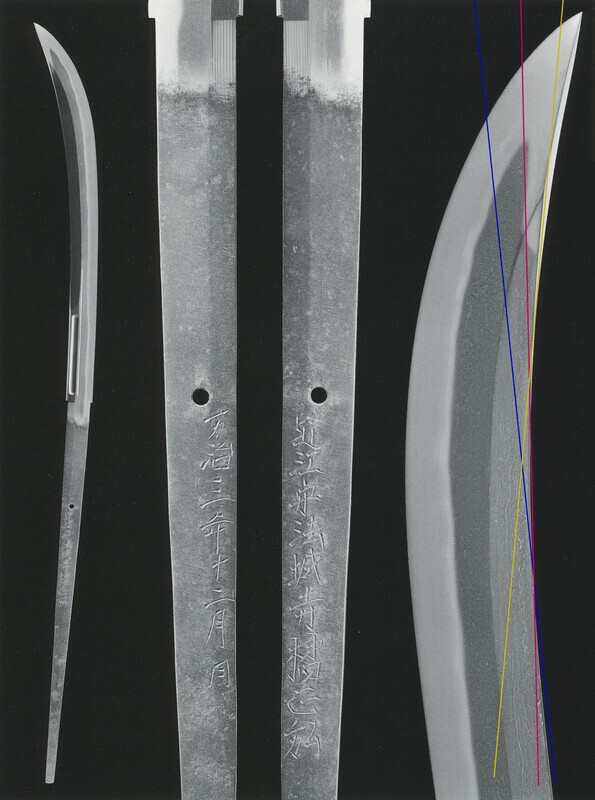
So that’s a little tough for me to guess with my level of knowledge. Especially with a naginata naoshi, as much of my studies has been with katana and tachi. Simply put, I’m just not there yet to give you a good age estimate. The thing with age, is that it’s generally assessed based on SUGATA and the form of the blade. When a blade has been shortened, much of that profile has been lost or altered. That can be said 2fold for naginata, because they’re often not only shortened from the bottom up, they are also often altered at the tip. Please see the heated discussion below. Lots of arguing, but also lots of valuable info: https://www.militaria.co.za/nmb/topic/52155-naginata-naoshi/page/3/ From what little we can see, I think koto is likely. But because of what I mentioned above - big grain of salt. -Sam
 4 points
 -
No, definitely not.4 points
-
Now the auction just ended, and the tanto was sold for 180,000 JPY. The problem of the blade is much worse than gimei. Its registration paper is a forgery. That means that the blade is not registered and the blade itself is illegal. I guess that the blade was illegally made in Japan or illegally imported to Japan. The mei on its omote-side is 伯州住延秀 – Hakushu ju Nobuhide. I can read the erased signature under the date on its ura-side. The old signature is also 伯州住延秀 (Hakushu ju Nobuhide). Again I guess that the faker originally intended to make an illegal blade with the mei of 伯州住延秀 (Hakushu ju Nobuhide), but he made a mistake and chiseled the mei on its ura-side at first, and then redone the nakago.

 4 points
 -
I did receive a scanned page from a Japanese textbook (Nihon Gunto Zuroku by Shindo Susumu?) I'm not familiar with that book.
 3 points
 -
What I notice right away is the nakagojiri shape looking straight, and that it does not extend into the pommel area. Whereas the aluminum and copper variations the nakagojiri is more chestnut shaped and has the large hole for the grommet screw through the pommel. This is not altogether surprising considering the double menuki serving as mekugi situation; but it’s interesting to actually see, and also to see the nakagojiri shape and location. I’ve put a bid on this sword for curiosity sake. I hope nobody outbids me, because I feel I’m one of very few people something like this would appeal to. Wish me luck -Sam3 points
-
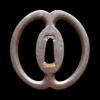
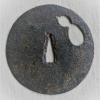
I agree with @uwe. Ref. 日本刀販売専門店 銀座長州屋 鍔 鐔 販売品 阿弥陀鑢桜透鍔(鐔) 銘 戸田彦左衛門, 鍔, 尾張鐔工3 points
-
昭和二十年正月日 – Showa 20th year (1945), January 服部鍛刀所 頼吉謹作 – Hattori forge Yoriyoshi respectfully made.3 points
-
I'm just a new guy here, but I've had a broad taste for various historical items/collectables over the decades. I always tend to do research on educating myself about a type of item I wish to acquire a couple of years in advance, if not more. That said, when something strikes me and ticks all of my boxes, I will impulse buy. However, that does not mean I don't know exactly what I'm buying. I also tend to buy just one example of an object I want, then move on to something else. In very rare cases, I become an extreme niche collector of a VERY specific form of a thing and over decades will acquire as many as I can of it. Anyway.... Caveat emptor always applies, and most everything has a variation of a compromise, even if slight, unless you have unlimited funds AND patience. I knew about a decade ago that I one day wanted a Sengoku period nihonto. Over time, casually researching, I found myself drawn to a certain style of hamon, and jihada especially. Then via more in-depth research, I found which regions and schools and in what time periods I would narrow my search to. After this, I compiled a list of dealers/websites to monitor. Over time, I noticed trends and browsed posts online about them. All of that to say, I believe a buyer should always do their due diligence (or hire an expert curator to acquire it for them) so that they can identify attributes of an item from all available sources (written, pictorial, documentation, etc.), often contacting a seller to request additional info due to gaps they may perceive in an ad/auction/etc. It's already been said in this thread that simply over time and volume, most sellers will exhibit patterns in their listing details and feedback. In the end, it comes down to the buyer's education and the seller's integrity, should there be an issue. I made a purchase almost 5 weeks ago from Aoi, and thus far, I've found the seller to be extremely responsive, professional, and accommodating. I found the listing details and images in my swords case, to have been comprehensive enough for me to make the purchase without further inquiry. I more or less knew exactly what I was buying (signed, dated, NBTHK, condition, etc.) and anything else was just a bonus. In my case, I found the koshirae (particularly the tsuka and tsuba) to be non-offensive and complimentary. The saya didn't even matter to me at all. When the sword arrives, I expect it will be just as shown, but if there is a problem for any reason, I'm also confident this seller will not "ghost" me if I reach out with one based on our correspondence thus far and having not seen any reports of this occurring to others. Which is good enough for me, what more could you ask of a business? Of course, there are always people who will buy whatever, totally uninformed, simply based on desire in the moment and at face-value of what a listing states (truth, lies, omissions, and all - just trust me bruh). More often than not, those people are totally happy with what they receive and never think twice about it. Mostly because they just don't care or sweat the details like most of us do. At the end of the day, no one is twisting your wrist to buy anything you don't have the warm fuzzies over. If you spot something that feels off, trust your instincts and move on. - But keep in mind, even the most terrible seller could one day come across exactly what you are looking for, then what will you do....3 points
-
@wakiboy yup!

 3 points
 -
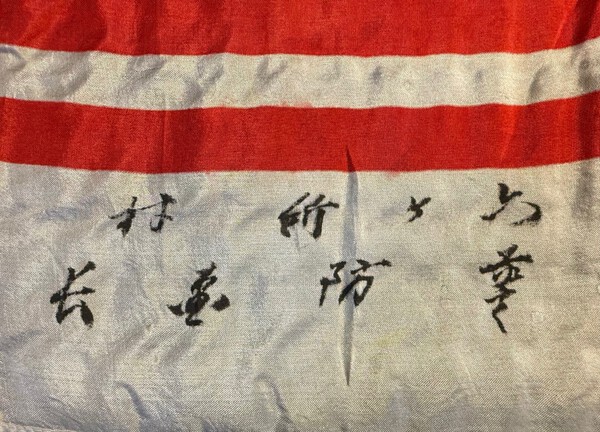
I recently came across this one, and am asking for some feedback here on the forum. It is obviously based on a Navy Model 1883 dirk. The scabbard is actually metal, most likely to allow for the flag to be furled and stored inside. The rest of the fittings seem genuine to me. I know that the reference books have examples of Imperial flags on a sword body, much like what is shown here on the dirk. What little I have found suggests this is a personal flag used by a Naval officer too designate his authority? I have asked some people for help in translating what is written on the flag but so far, no one has felt confident to confirm what is written. I can find nothing in Fuller & Gregory or in Banks. Any comments from the Forum? Any thoughts on a translation of the writing on the flag? Thanks.


 2 points
 -
At $676,500 in today's money - I like your definition of second tier! Would generally agree that this could be possible except for the fact that just below the Yoshihiro tachi is one of the other Tenka-Sansaku - a Awataguchi Yoshimitsu tanto. Both may have a both been meito but they are not from the Kyōhō Meibutsu-cho which is what I would say the meibutsu refers to. Also, these swords were described as swords of major importance and none of the other Yoshihiro's have been elevated to that category... yet. Also, happy to be proven wrong here... would love to see a Soshu or Senjuin sold at these kind of prices.2 points
-
With regard to the Yoshihiro... I am unaware of a Gō Yoshihiro tachi that has survived to the present day. Certainly none appear in the Juyo list. I know that there is Tokubetsu Juyo kodachi from Shinsa 16 that sold at Christie's in 2009 and there is this Tachi that apparently sold at Christie's but $11K seems stupidly cheap and no date is given for the auction - as such I am unsure this data is real or correct but there is a lot of info in this listing so who knows? As such I would have to say for the price suggests it was probably a Gō but for the fact that no Tachi exists at the Juyo level or higher it is probably lost after the war... if it was a Gō.2 points
-
I agree)
 2 points
 -
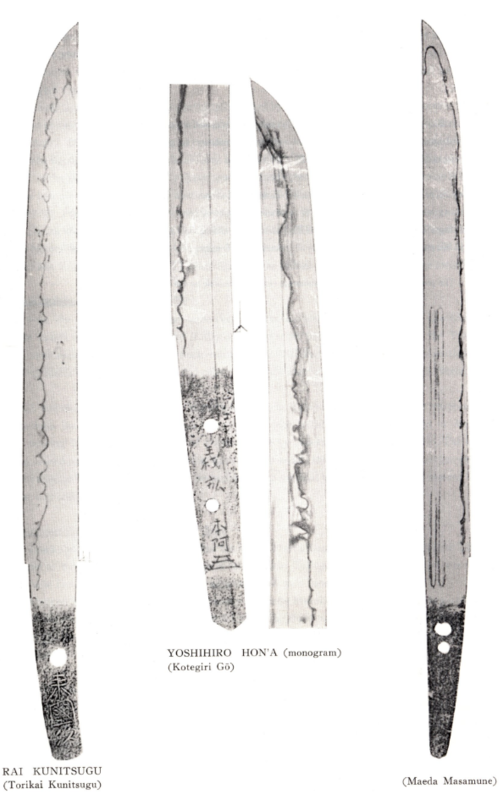
Some surprising datapoints there. One might argue that nihonto values, in monetary terms, have diminished considerably over time and will continue on that trajectory as we transition more towards a hobbyists interest. Im not sure there is a critical mass of younger collectors with the necessary disposable funds and curiosity to invest in these god-level pieces. Case in point, the Kotegiri Go, which was sold at another auction in 1931, receiving a bid of only 2,131 JPY basically two thirds what was paid in 1918. A very poor investment at the time. The Maeda Masamune didn`t meet reserve in 1924 and went unsold. Any more info on the `Yoshihiro`? Is this a blade by Go or Senjuin Yoshihiro or a later Yoshihiro eg Sa Yoshihiro? Oshigata for 3 of the blades
 2 points
 -
A slight adjustment in the angle might get your blade(s) to last a little longer, MalX. A (live) friend here has just agreed that the holes are most likely simply decorative. Thank you everyone for your considered thoughts.2 points
-
This mei is an early one from the Gassan smith Enomoto Sadayoshi (the mukansa). He worked at the Hattori sword factory during the war, and later changed his name to Sadayoshi. Take good care of the sword and please do not do anything to polish on your own. Best regards, Ray2 points
-
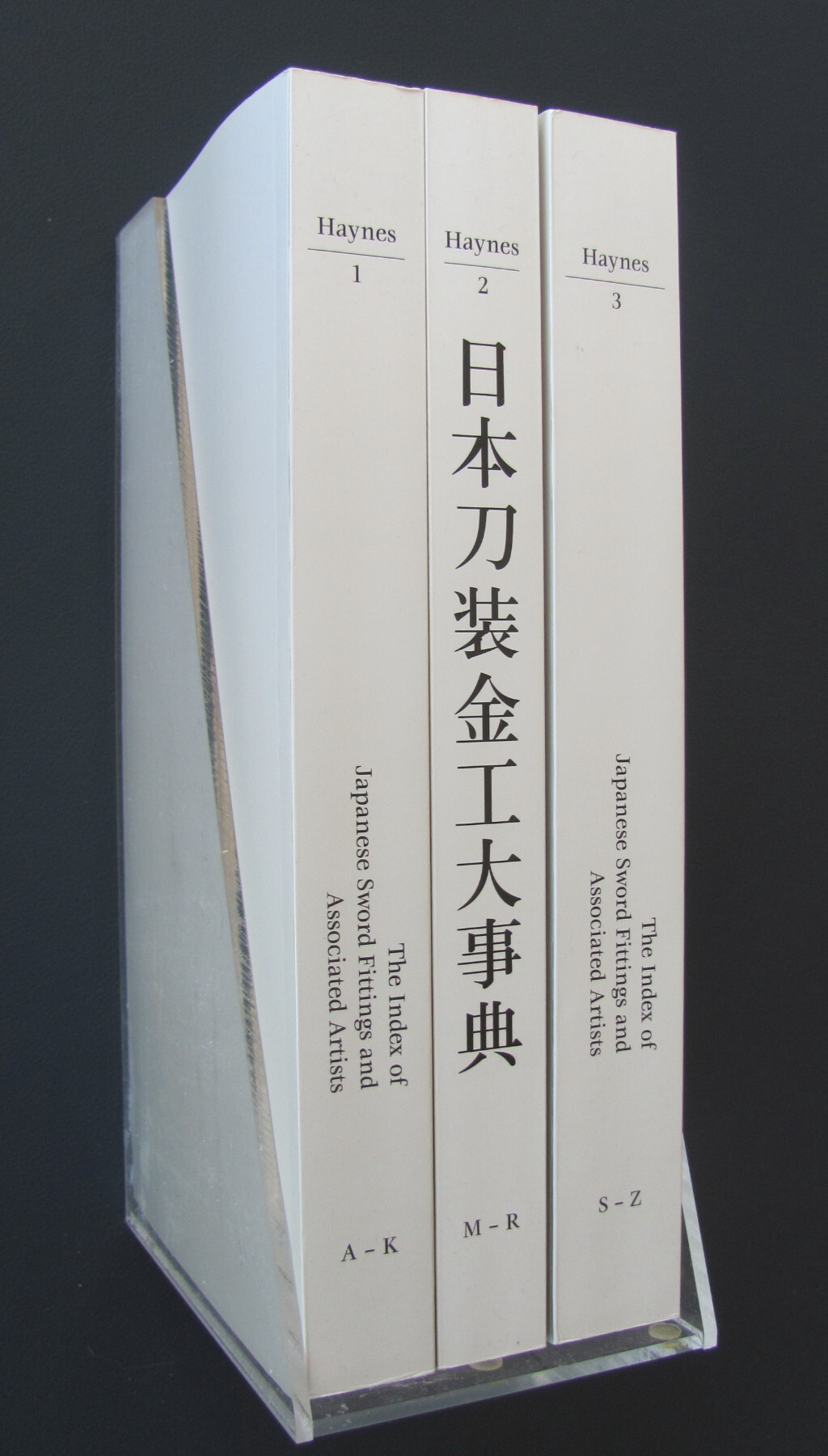
Hi folks, THE HAYNES INDEX AND ADDENDA ARE SOLD. More fine books have been arriving, including among others Toso Kodogu Meiji Taikei and Nihonto Swords of Japan A Visual Glossary. Find these at the top of the book section on my site. I'd like, however, to offer a deal that won't be listed to my site. I have picked up a copy in excellent condition of the three volumes of Robert Haynes' Index of Japanese Sword Fittings and Associated Artists, with their plexiglass stand, accompanied by both of the Addenda & Corollary to the Index (both in like new condition). One of the Addenda is inscribed by Mr. Haynes to an important former owner. These books are already listed on my site, offered by a consignor. Rather than compete with him on the site I am listing them here at a discount. On the site the Index is $185 and the Addend are $40 each plus post. You can have this copy of The Index and two Addenda for $225 plus post Here is a link to the books on my site: https://japaneseswordbooksandtsuba.com/store/book/fittings-books/b760-the-index-of-Japanese-sword-fittings-and-associated-artists-by-robert-haynes/ If you are interested in the deal please contact me by email - gdoffin at gmail.com - not by personal message here (I need your emails to keep track of business). Tell me you'd like the discounted set. Thanks, Grey

 2 points
 -
Not late 1945. This is January, 1945. Shogatsu.2 points
-
No, I don't think the holes were for the chopsticks after three individuals have finished their meal, eating from one bowl. When comparing this to a MOKKO GATA TSUBA with INOME in the "corners", I think the holes could well have been simply decorative and not functional.2 points
-
As a wild guess, I would suggest “戸田彦左衛門” (Toda Hikozaemon)…2 points
-
2 points
-
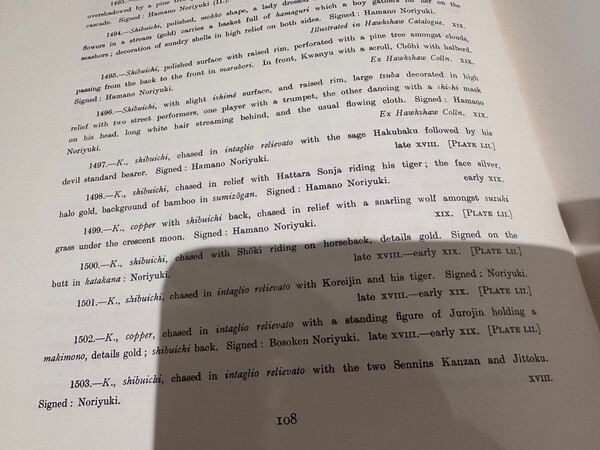
Welcome to the Tosogu section. That is quite a mix of kozuka. There are several nice ones in there. Personally, I like the Edo Goto one of black [shakudo] crabs. There are also two or three Hamano, a Kaga kinko, and one or two others. Signatures on the back might help produce more information, though there were a lot of "added signatures" done in the late 1800s to make them sell better to the visiting foreigners. Still, we can judge. If you feel like going through them one at a time... Some of us welcome the challenge. Also, visiting Ed M. over in Louisiana should give you some quality answers. Curran1 point
-
This thread should be in the TOSOGU section I think.1 point
-
All good points although I have my doubts it was a Go. Wouldn't Go blades in a collection of the calibre of Matsudaira have had names. This Yoshihiro appears a little more 2nd tier.1 point
-
As this was a Japanese Auction (rather than a Western Auction) held only 56 years post Meiji Restoration, selling a Daimyo Family's masterpieces, I am going to lean very heavily into the idea that they probably very much knew the difference between a Tachi and Katana. But crazier things have happened.1 point
-
Ah, I misunderstood - the question was about the Yoshihiro tachi, which I somehow missed in my initial reading. Yes, to my knowledge there's no extant Go Yoshihiro tachi, so either it was lost, or mistakenly recorded as a tachi despite actually being a katana (I've occasionally seen this happen with katana accompanied by tachi koshirae). Edit: one other possibility - it was submitted to shinsa and reattributed to someone else.1 point
-
https://www.tsuruginoya.net/stories/kotegirigou/ It is indeed attributed to Go Yoshihiro. Somewhat confusingly, it was at one point attributed to Masamune, which would have made it the Kotegiri Masamune - except there's another, more well-known Kotegiri Masamune (https://markussesko.com/2013/06/25/the-kotegiri-masamune/). Even more confusingly, that Kotegiri Masamune is very likely not by Masamune either!1 point
-
Suio Genro (遂翁元盧, 1717-1790) became a disciple of Hakuin Ekaku at age 30. After the death of his master, he took over the Shōinji Temple. His calligraphy and painting most frequently reflect his master's style and depictions, especially of Daruma. However, here he seems to be inspired by the work of his contemporary Jiun Onko (1718–1804, see below), who is famous for his powerful, abstract, and minimalist 3-stroke rendering of Daruma. Genro's inscription is the last line of the quatrain traditionally attributed to the First Patriarch of Ch'an: seeing original-nature, you become Buddha (kenshō jōbutsu 見性成佛). This piece was just auctioned on Yahoo Japan for $700, one of the few examples of this depiction of Daruma by Suio Genro. I'm hoping to acquire a Daruma by Jiun Onko, which is found in many Asian art museums and rarely offered for purchase. Examples of Jiun Onko's Daruma


 1 point
 -
Here's another depiction that is even more rustic and pictorially deconstructed by using a dryer brush.
 1 point
 -
Yep no that makes perfect sense, I shall leave it as is!1 point
-
Ryan, it is certainly not bronze, but as I suspected, a soft copper alloy. As sheet metal, it was easy to work with. The decoration was either made in a press-mold or with UCHI DASHI technique. Whatsoever, an interesting item!1 point
-
I’m not certain, but it could be partly due to the sugata once being “U no Kubi Zukuri”, perhaps? http://meiboku.info/guide/form/zukuri/index.htm Looks interesting, and I like the profile. Nice find, and I would be curious to hear what a Togishi might say about it. All the best, -Sam1 point
-
There is a lesser known group of smiths from Yamato province, Sue Tegai and then Kanabo.1 point
-
Knife collectors will tell you that few of us keep expensive knives in their leather sheaths. Often the steel handles it well, but the brass fittings can suffer. I'm with Ed, you won't know what your leather supplier used, best to be safe.1 point
-
It's about 25cm across, not accounting for the bend in it.1 point
-
Many thanks Moriyama san and Ray san! You are most kind. The katana is Kogarasu Maru style. The file marks definitely have a Gassan feel. I am grateful for your help gentlemen, and look forward to doing some more research.1 point
-
Couple of things: 1. Concur with the point about not using the foam with adhesive. I don't know that it will damage the patina, but it may. Better safe than sorry. 2. Leather will work, but keep in mind that most leather used for leather goods has been tanned with strong chemicals such as chromium salts. These are harmful to metal over time, whether guns or your sword fittings. I wouldn't use anything you are not absolutely sure about. If you use leather be sure you buy "vegetable tanned leather", a much safer alternative. There are numerous places which sale vegetable tanned leather and most sell "scraps" pretty cheap. You could buy some of this and get plenty for what you are wanting to do. Try Tandy Leather, or Weaver Leather or google it as there are others.1 point
-
Oh nice, a turtle Fuchi :D1 point
-
last one
 1 point
 -
Yep, I’d buy that suggestion. Occam’s razor in action. 🙂1 point
-
My birthday was last month, I'll send you my address1 point
-
It’s Japanese. Colours are wrong for Chinese. Porcelain body is a bit too “blue”.1 point
-
Regarding origins. Are we thinking Japanese or Chinese? I found this Chinese blue and white example with 4 holes. Definitely made pre firing
 1 point
 -
Thank you Dale I’m not a fittings person but I can certainly appreciate the quality and detail, your Tsuba are a good example on the same subject.. Ian1 point
-
Another common one is putting blades into shirasaya with legit sayagaki (using a file rasp to ensure the sayagaki fits the new occupant). Regarding mukansa blades - Ono Yoshimitsu swords can easily sell for the price of a Juyo, and there's no shortage of cheap-ish gendaito and shinsakuto with Bizen-style hamon that one could pass off as his work to the unwary.1 point
-
Thank you for the info, Nazar. John C.1 point
-
1 point
-
Nazar: I've been interested in this 3-D printing concept for some time to make habaki molds for metal casting. Are you doing this at home with a small printer or at a workshop with an industrial printer (usually used for making car parts)? If at home, could you name the brand and model of the printer and the plastic medium you use? Regards, John C.1 point
-
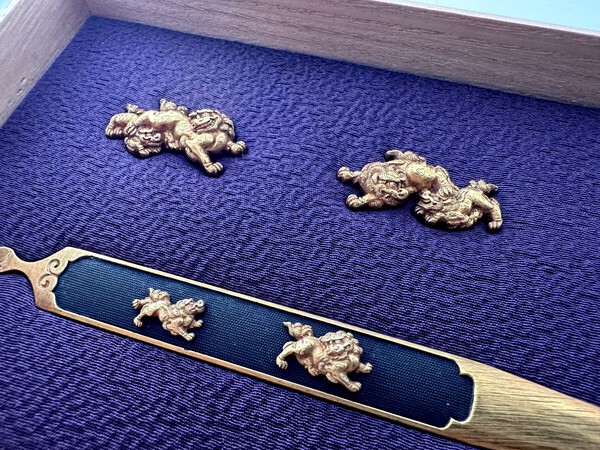
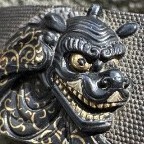
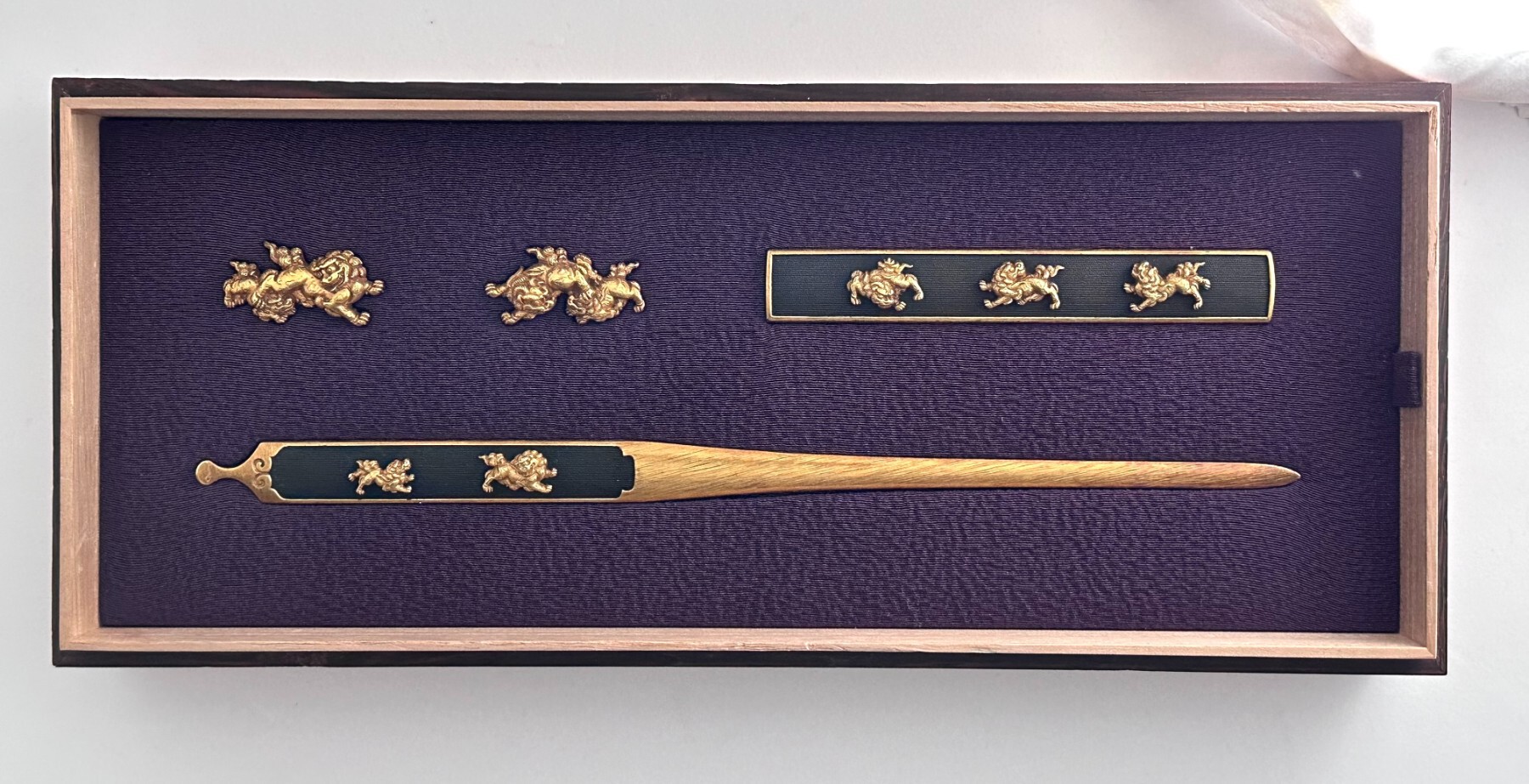
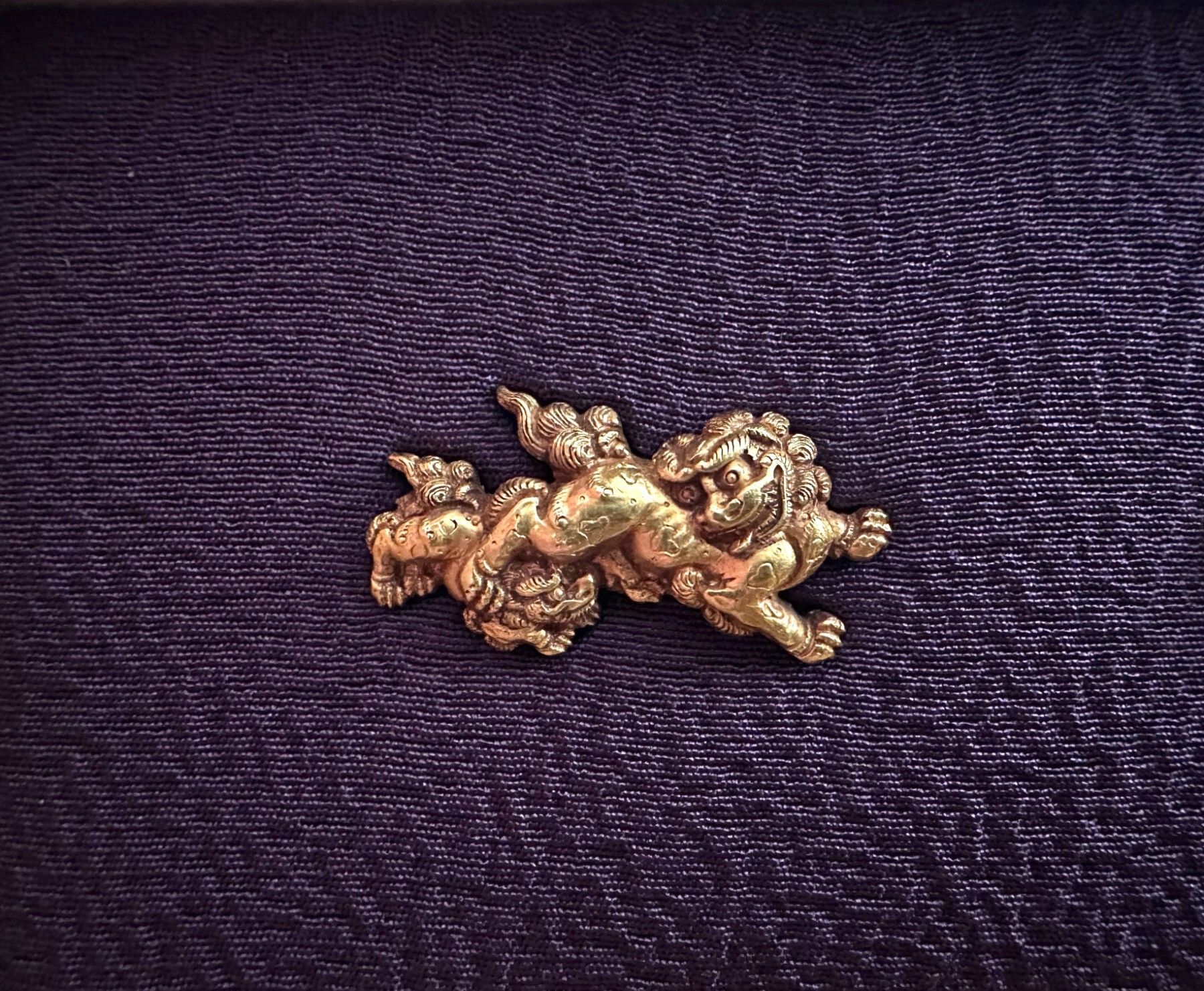
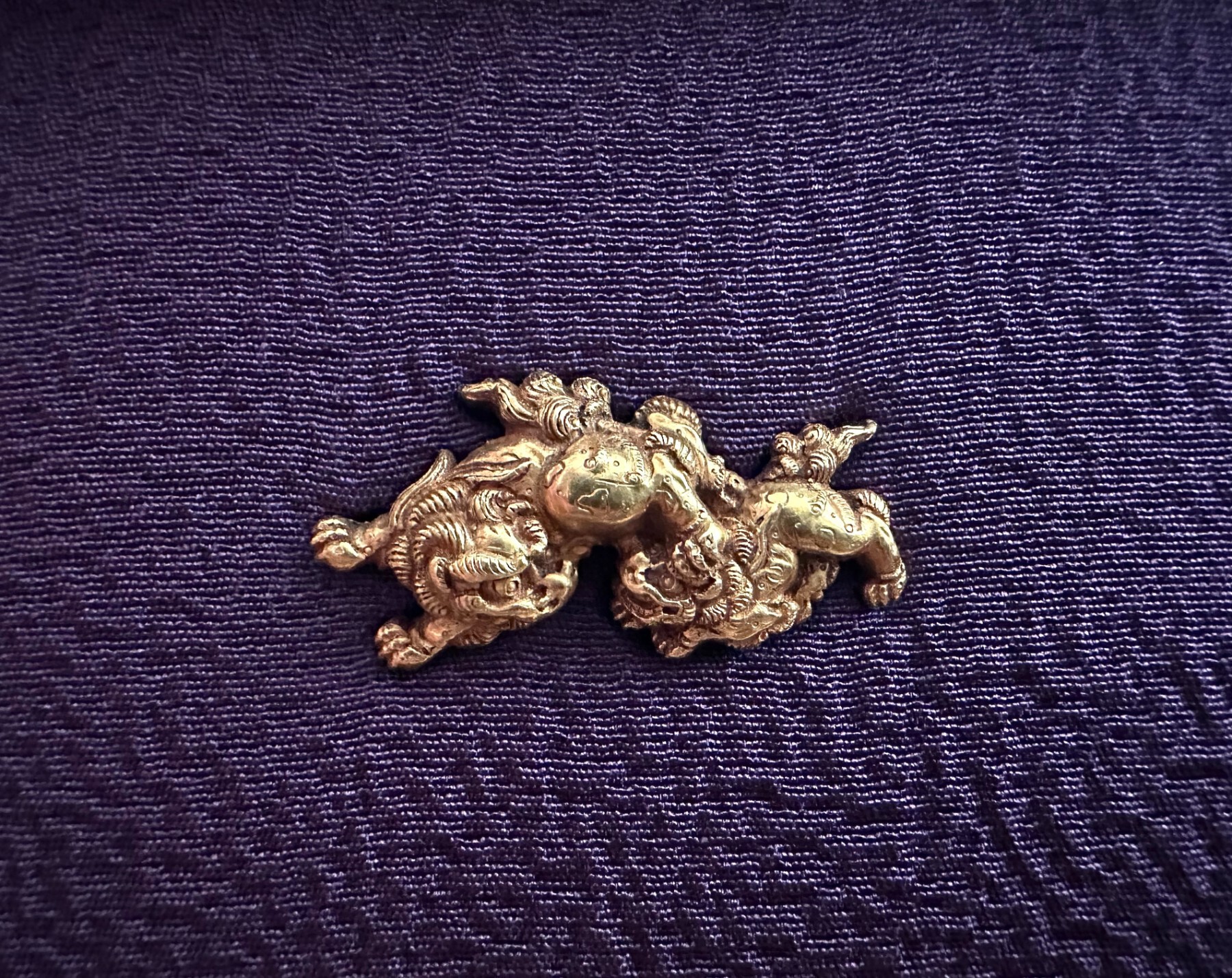
Hi all, Since I had some time for photos today, I thought I’d share this one as well. A mitokoromono by Sokujo, the 8th-generation mainline Goto. According to the origami, the nanako ground was made by Teijo, the 9th generation. Enjoy!



 1 point

















This leaderboard is set to Johannesburg/GMT+02:00