
Leaderboard


Popular Content
Showing content with the highest reputation on 12/17/2025 in Posts
-
6 points
-
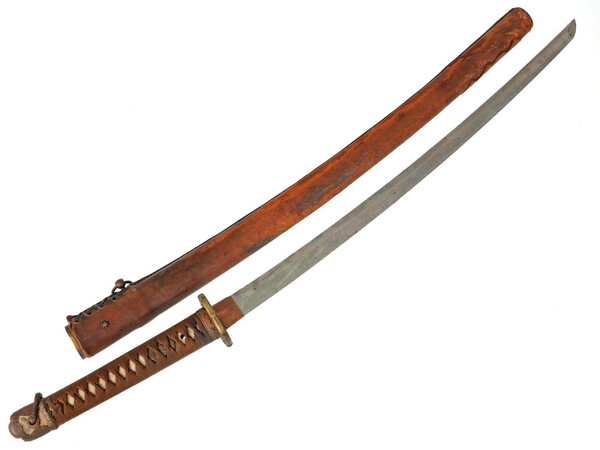
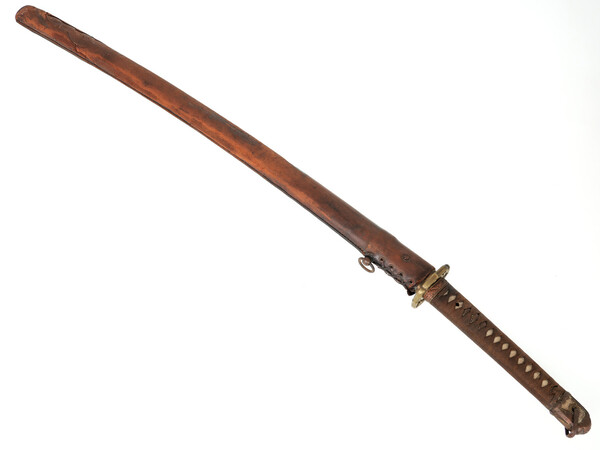
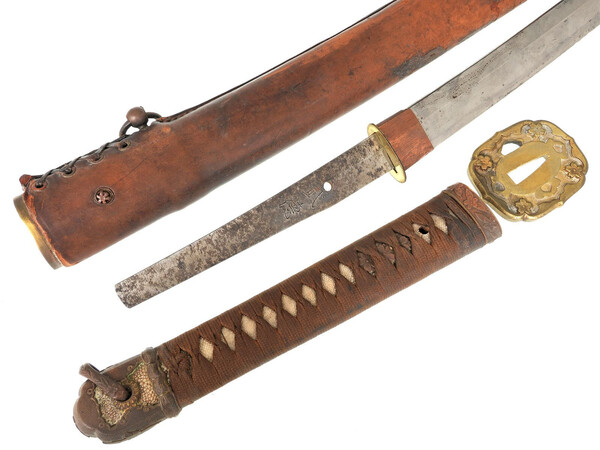
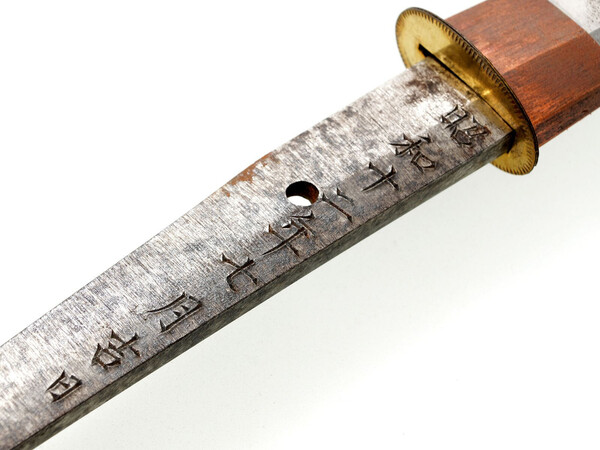
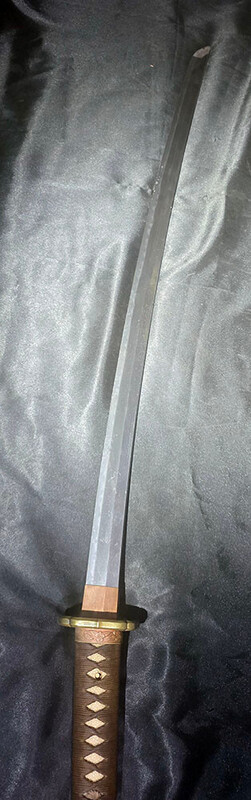
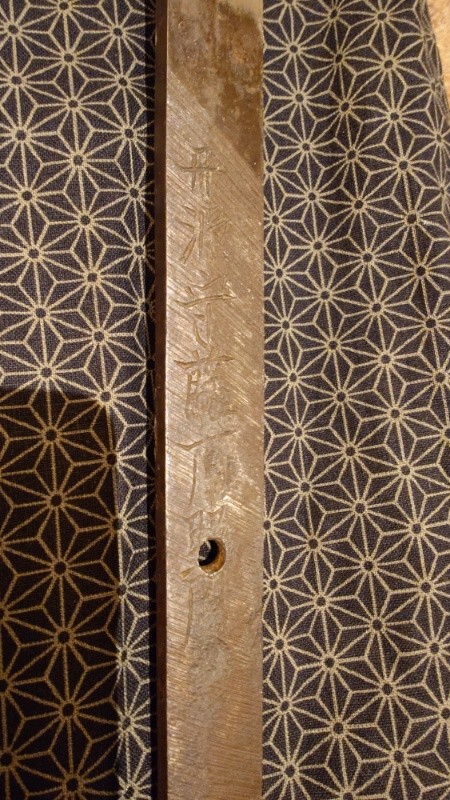
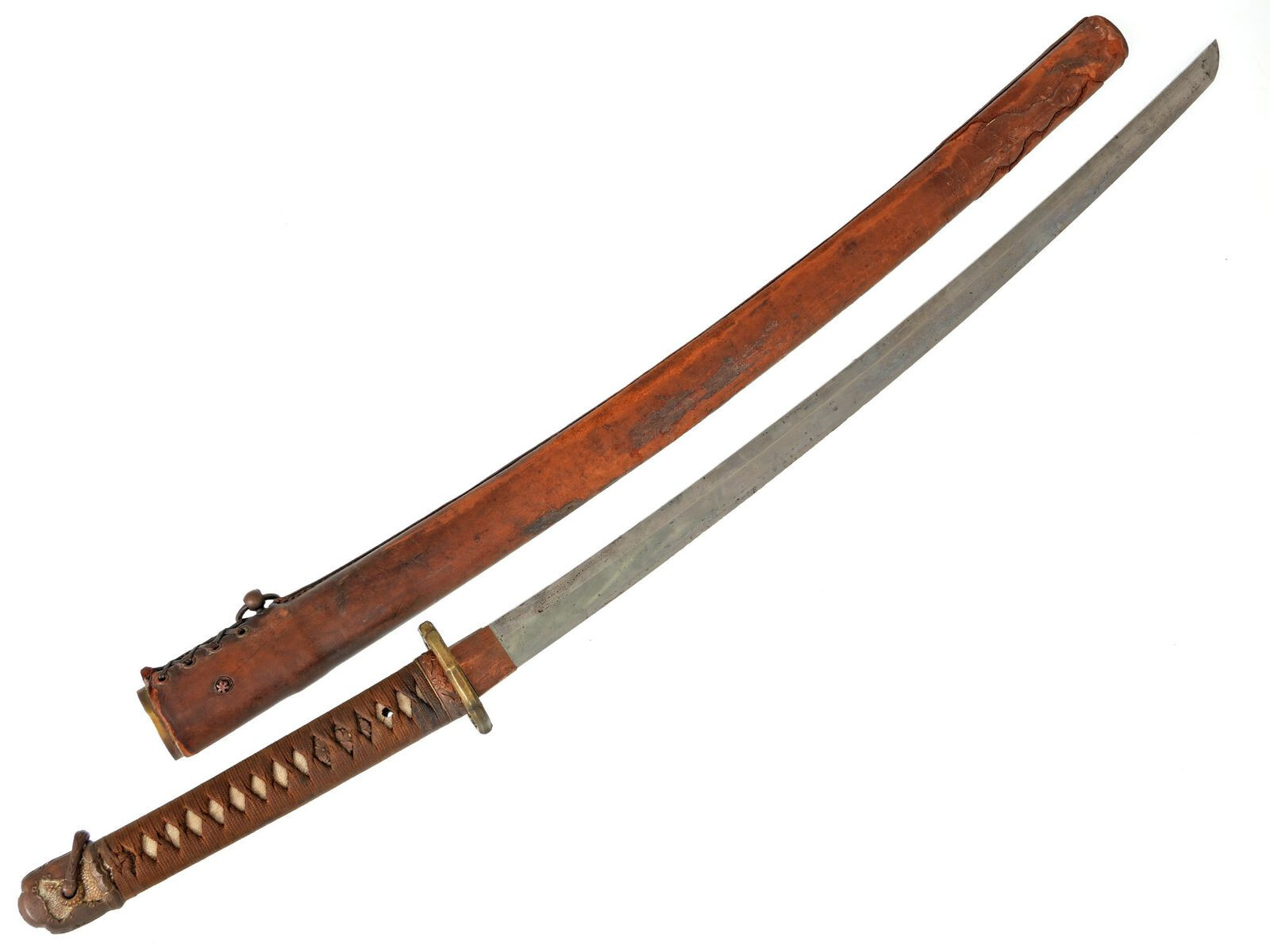
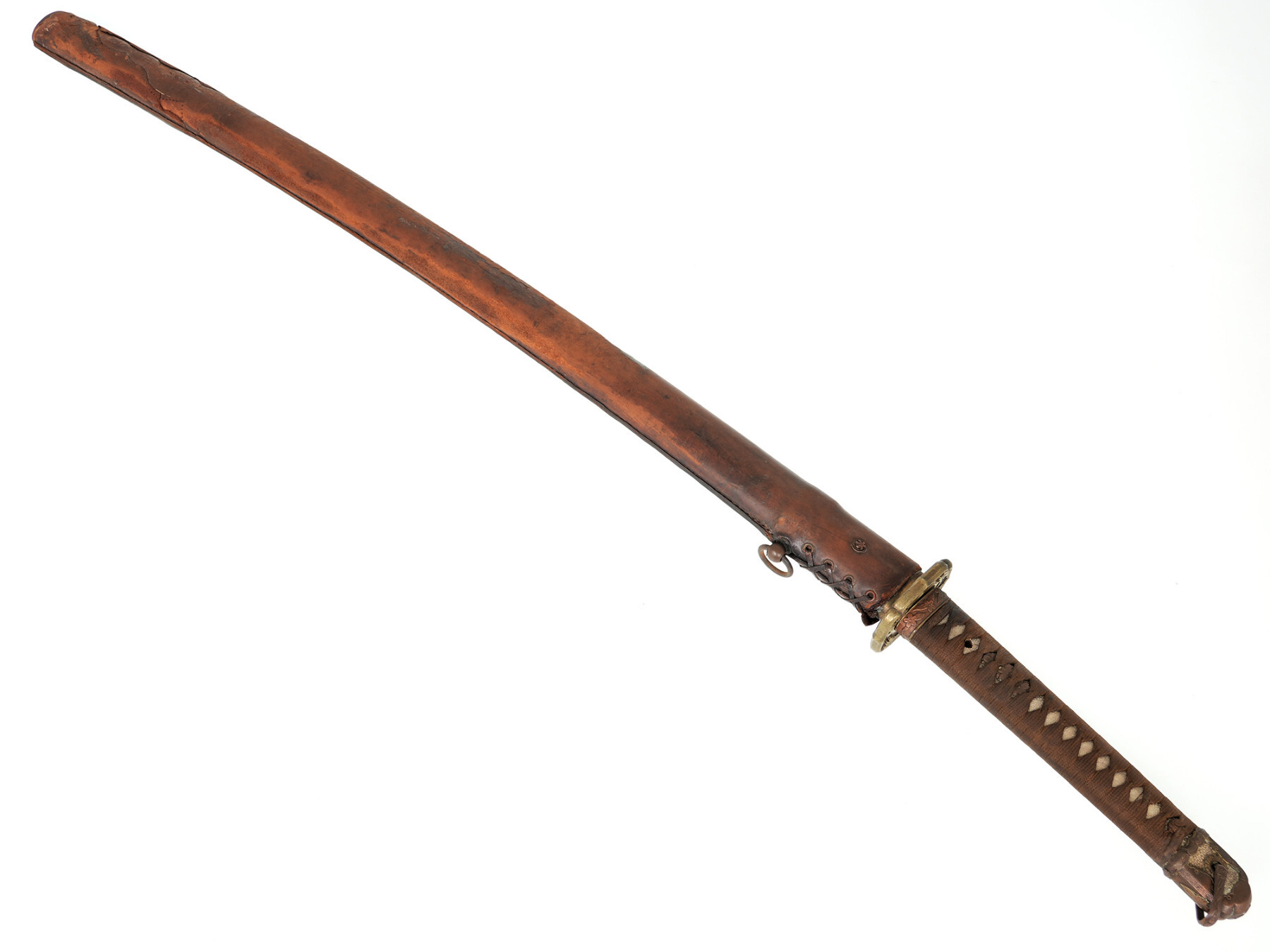
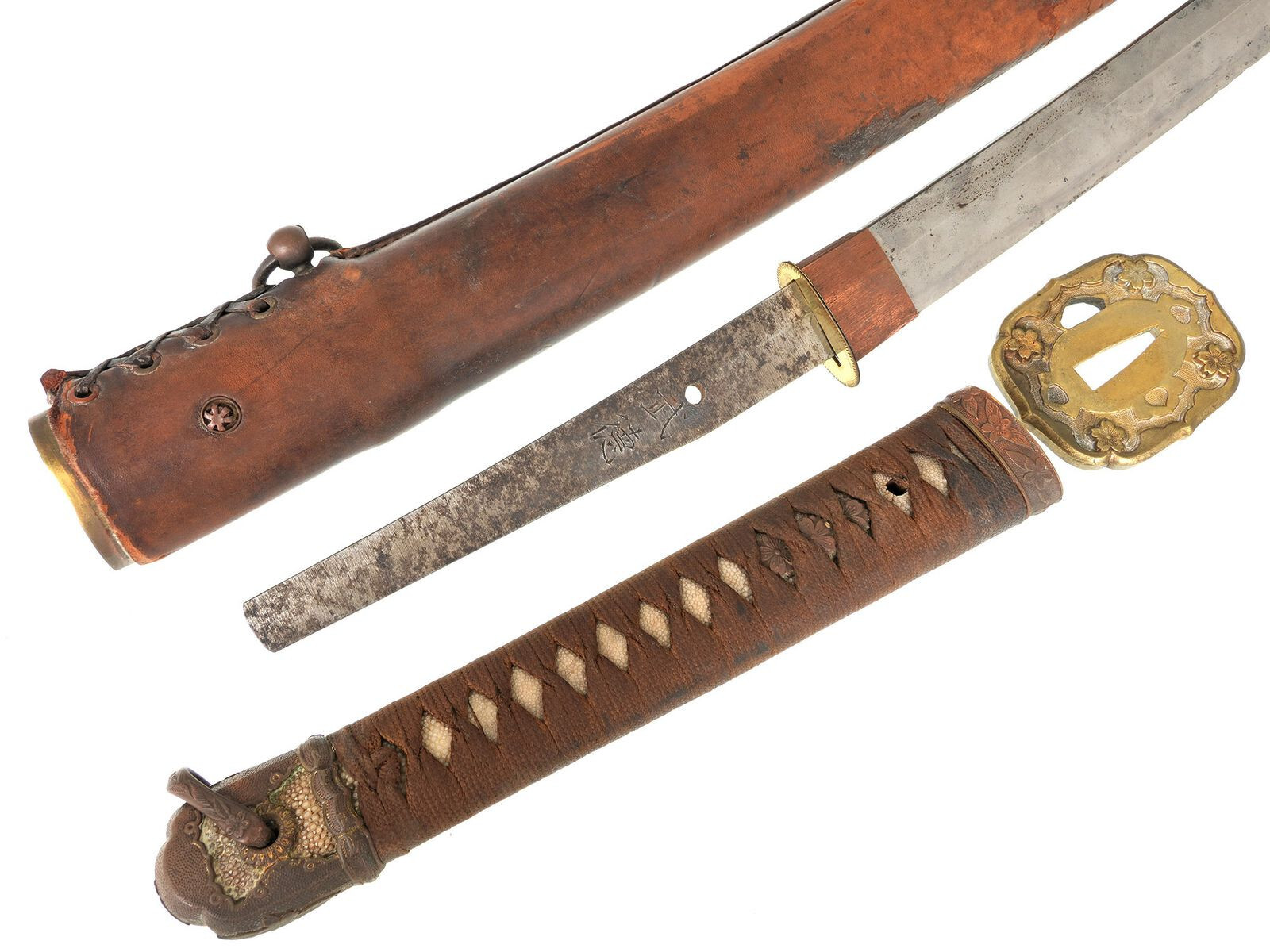
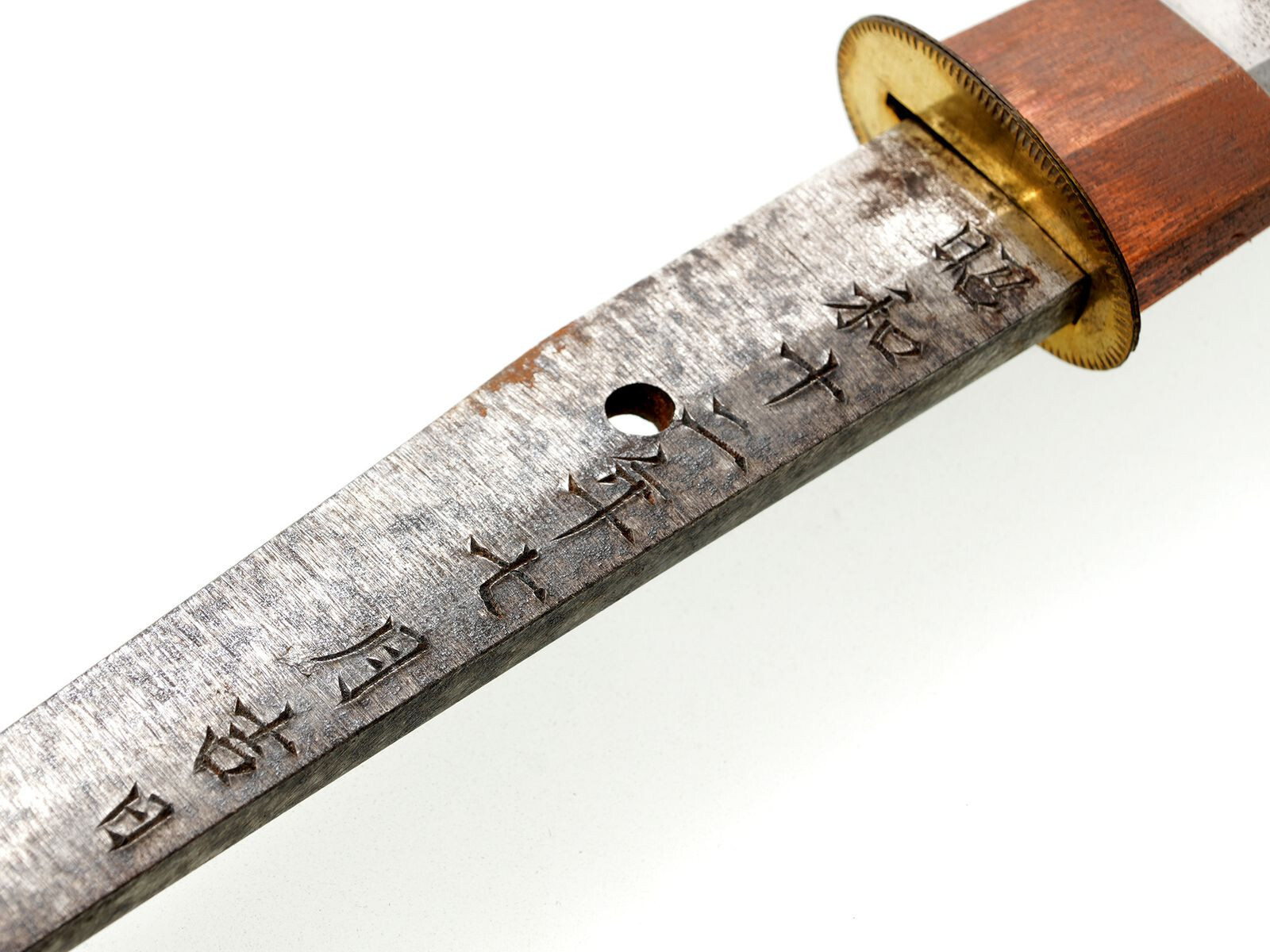
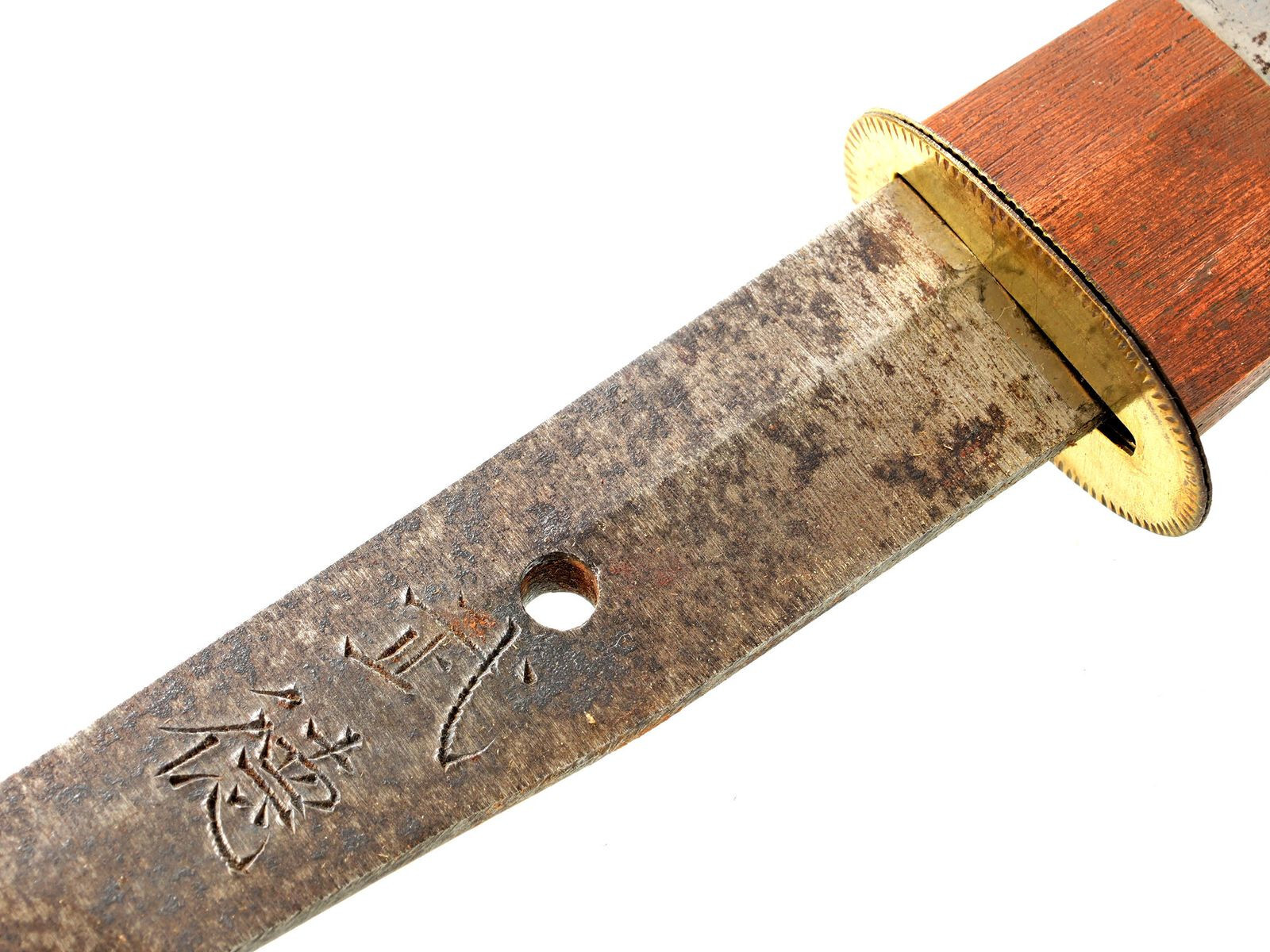
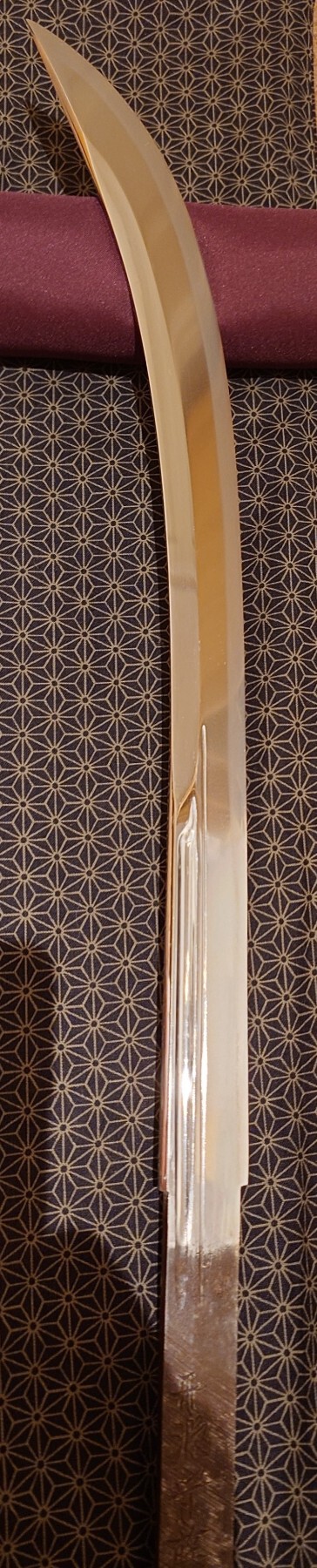
Even a blind squirrel finds a nut :-) I think I got my Xmas present. About a week ago, a respected and high end US collector of Gendaito posted on an SA site asking for advice on shipping a sword from SA to the US. All I could offer was the name of a lady that does knives for the collectors here, and the advice that shipping a sword from here is very complicated and difficult. None of the courier companies want to handle them. Anyways, I was interested how a decent sword would be found in SA of all places, since we hardly ever see Nihonto for sale here, but I forgot about it. About 3 days ago...I was browsing the website of a large local auction company that regularly has antiques and collectibles auctions. I have bought from them a few times, but almost never Japanese stuff. Usually knives and other small things. Imagine my shock when among the lots, I see a Shin Gunto for sale. I assumed it was a fake, but opened the pics anyways, and was surprised to see it was genuine, with a nijimei signature. Took me a few minutes, and I was gobsmacked to realize it was signed Takenori! (Later I realized it was Taketoku)| Realizing this was the Yasukuni smith, my heart went into overdrive. I realized this must be the sword that the collector had his eyes on, and i knew on an SA budget, there was zero chance I could compete. But I bookmarked the auction, and started planning what my budget was. A Yasukuni related sword has always been on my bucket list. Before the auction ended, I took the bid to a winning bid of about US$1150, and prepared for a fight at the end, and to see it end at far more than double that. Auction time, the lot eventually came up, and I prepared to lose, but at least to put up a fight. The lot starts...the price sits there. I'm waiting for other bids. Nothing? My heart is about to burst. Final call comes up...usually for about 5 seconds...this time it sits there for about 15 seconds. I am having a panic attack. Closed. I win it at $1150 plus about 20% premium. I don't know what I did to have some luck for a change, but I'm not complaining. Maybe shipping overseas was too complex. Don't know why locals didn't bid, that's cheap even by local standards for a regular Gunto. I was lucky..a friend was flying down to that city yesterday and driving back, and he agreed to fetch it. After some complications (Auction house decided to close yesterday and i had to reach out to the owner) my buddy brought it back late last night and I got it today. A lovely Kajiyama Taketoku Gendaito, made privately while he was working at Yasukuni but after he changed his nakago shape to kijimomo to prevent confusion between himself and his nephew Kotani Kenzo. Dated 1937 and in very good original polish, some stains but everything can be seen. Cleaned up nicely with isopropyl alcohol and some oil, and has a stunning sugata, tapering to a small ko-kissaki. Kijimomo nakago, nagasa is 655mm. Signed below the mekugi ana, which is something I need to research. It's only in hand you can appreciate how different these are to military swords. Light in the hand, with a Koto feel. Has a straight and active ko-choji hamon that I am still getting into examining. Lots to see and beautifully forged. Hard to take photos, so will add as i go along. But consider me one very happy guy. No idea how this got to South Africa, or the story behind it. But for now I am happy to be its owner, and thanks to that collector for giving me the shot at it. It has a good home and will be well cared for.



 6 points
 -
About 800 in these books!
 4 points
 -
HGK04 板鐔 – Itatsuba HGK05 鑢地 – Yasuri-ji HGK13 共覆輪 – Tomo-hukurin4 points
-
Just wanted to share my latest purchase. This is another Tanba no Kami Terukado blade. I bought this one at auction, and had it sent to shinsha - slightly worried as the mei had some corrosion, so I was only 80% confident. Anyways, it passed Tokubetsu Hozon, and I'd say the hamon is actually finer than some of the long sword examples I have. So very happy. Looking for a good ko-wakizashi or tanto next. 💪


 3 points
 -
Thank you, in session 35 I am not sure what item I was missing back then, as I got the book it has bit different numbering that I have adjusted for the current version. It is so much easier with the books as I can always look at the item. For session 61 I had actually skipped a den Unjū blade by accident later on, so big thanks for noticing this. Going just through hundreds of lines of text without any pictures is where I had made most of mistakes. I just have some Jūyō books that are very delayed because of Finnish post waiting inline for customs for 2 weeks now. I think I can do a full updated version of this early next year where I have corrected most of my mistakes.3 points
-
Thank you Brian can only confirm, that Kotani san was a kind and polite person and as we all know by now a great swordsmith! I was happy and proud to have been in good contact with him until his passing on March 1. 2003 a on nd special thanks to his granddaughter, who kindlydid all the translations between us. Once again, congratulations on your new Taketoku, we've already talked about it. An extremely rare signed example crafted by the great Kajiyama Yasutoku.3 points
-
Here's the best write-up I've seen on Taketoku https://yasutoku.blogspot.com/2014/07/tachi-by-kajiyama-yasutoku-may-1936.html3 points
-
A few more impressions. It starts at 9:00 minutes. With more usual suspects...3 points
-
I think this would be of interest to @Volker62 and @PNSSHOGUN3 points
-
It really is. After reading this article, I became curious about the approximate cost of a piece of tosogu during the Edo period. https://nihonto.com/nakai-koshirae/ Must-see We can see that the prices of high-quality works were truly impressive. These prices were justified not only by demand and popularity at the time, but also by the amount of work involved. How much would you estimate a piece that took about three to six months to complete? Today, such a price would not be much lower. For example, prices for top-end tsuba by Ford Hallam start at around $5,000. Obviously, producing such work requires a great deal of time and skill, making it inaccessible to many people. Looking at examples related to this topic, it seems likely that someone simply wanted to quickly create something similar and sell it to an inexperienced collector, which, judging by the auction results, was successful. However, I still think it could have been made in Japan, but with a different goal - purely for profit. During the Edo period, there were also many rather “simple” or even crude works by novice and inexperienced artists. The difference is that in those days the primary purpose was practical use, whereas today the context is completely different.2 points
-
For the torokusho, I think we're only disagreeing on semantics - we've both set out our case, so all is well. 🙂 For the NBTHK certificates, these are rare - I can only recall ever seeing 2 or 3. As you say, the vast majority will be described as wakizashi on the kanteisho (even if the seller describes it as a tanto).2 points
-
Rob: The term stands for Post Exchange. Army posts all have a store, which varies in size depending on the size of the post (or fort if it's larger; depot if it's smaller), that sells everything from basic necessitites in smaller posts up to full-on big box stores in some of the larger forts. John C.2 points
-
This is the only Taketoku signed blade i could find. Apparently, they are much rarer than those with Yasutoku signatures. 👍 日本刀・表/武徳(靖国刀匠 靖徳同人)|日本刀・刀剣販売の十拳2 points
-
I have a wakizashi with a cut in the nakago as well. This one is in gunto fittings.

 2 points
 -
Congratulations, glad the blade cleaned up nicely. Onkashi had the important differentiation of having "Kinsaku" added to the Mei, they seem to have been only made at the Yasukuni Shrine forge.2 points
-
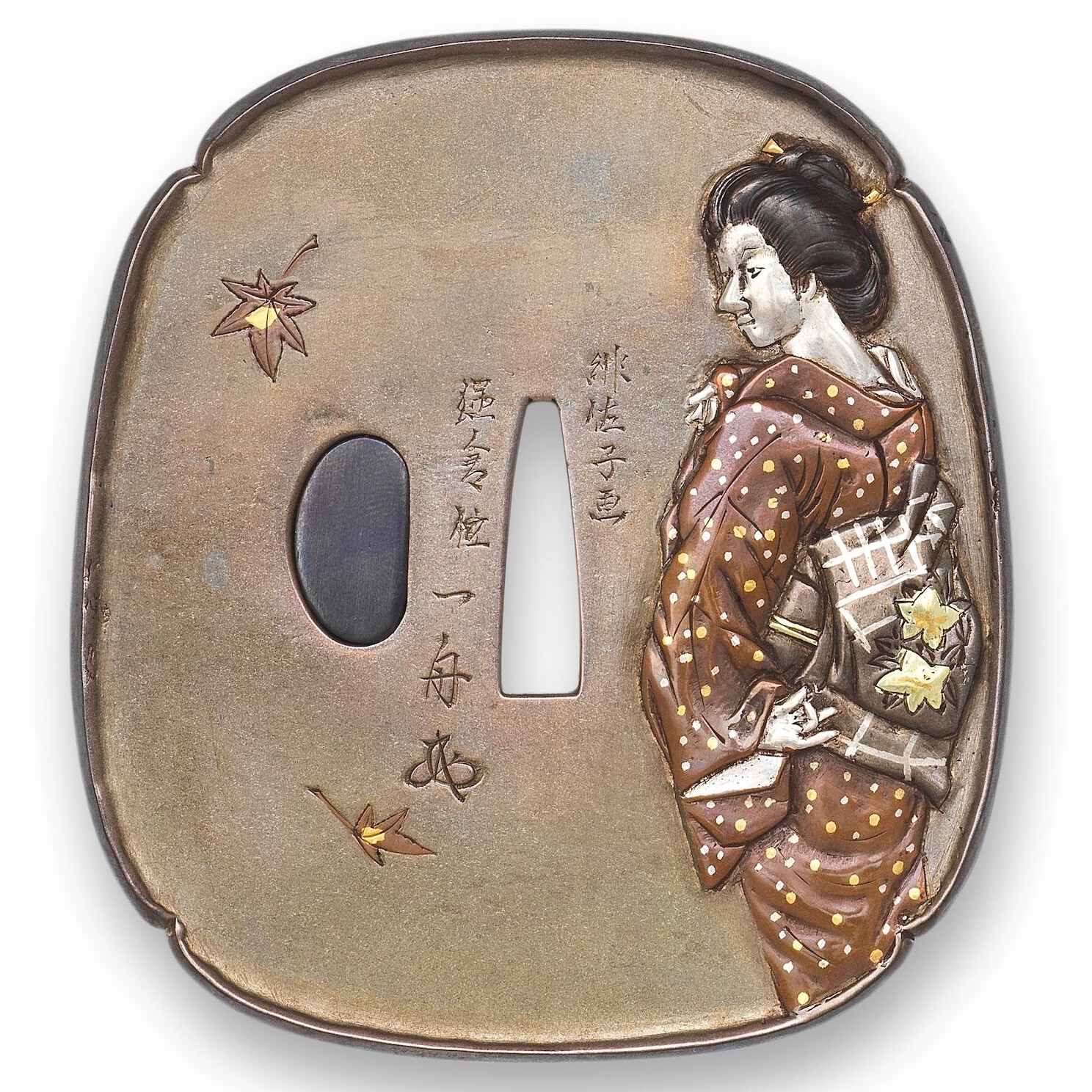
Still, I think it's just very poor quality and not following traditional techniques… It would be interesting to see them live. https://www.bonhams.com/auction/30444/lot/165/kawai-isshu-born-1920-an-inlaid-mixed-metal-large-tsuba-showa-era-1926-1989-mid-20th-century-2/

 2 points
 -
sorry forget to mention The appearance of such eleaborately crafted blades is often more attractive to our taste. like hamon ,shape , ect ect2 points
-
Brian after my reseach the reason for different place of the Mekugi ana could be a visual marker that the blade was made outside the shrine forge. the smith was free to choose the style of the balde and was not bound by the the strict rules of the shrine smith gulid2 points
-
Guys, it's almost Xmas, can we get less defensive and a little more chilled in our discussions? Let's have a peaceful December. Ed has been around the block more than most, and I can assure you he is just giving the facts as he knows them.2 points
-
@NotANinja Rob, PX is a store/retail outlet/supplier for US troops near their bases. They had them for occupation troops in Japan. Immediate post war, 1946, the PX stores were seliing "souvenir" swords that were made of arsenal parts left over. The blades were mostly naval arsenal with anchor stamps or anchor/circle, the tsuba mosly black plain iron ovals shape, and the tsuka bound but often with canvas underlay. The Fuchi/kashira were often mixed army/navy. Bruce has been compiling info on this....its confusing.2 points
-
I do speak English. Perhaps you struggle with comprehension. You are putting words in my mouth. I never used the word inaccurate. Superficial: appearing to be true or real only until examined more closely. concerned only with the obvious or apparent : not thorough or complete. The measurements must be more than a superficial, they must be accurate as I stated previously.2 points
-
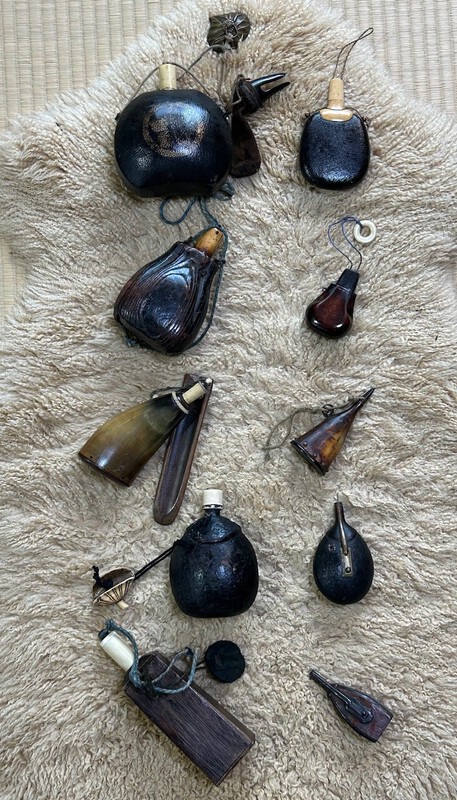
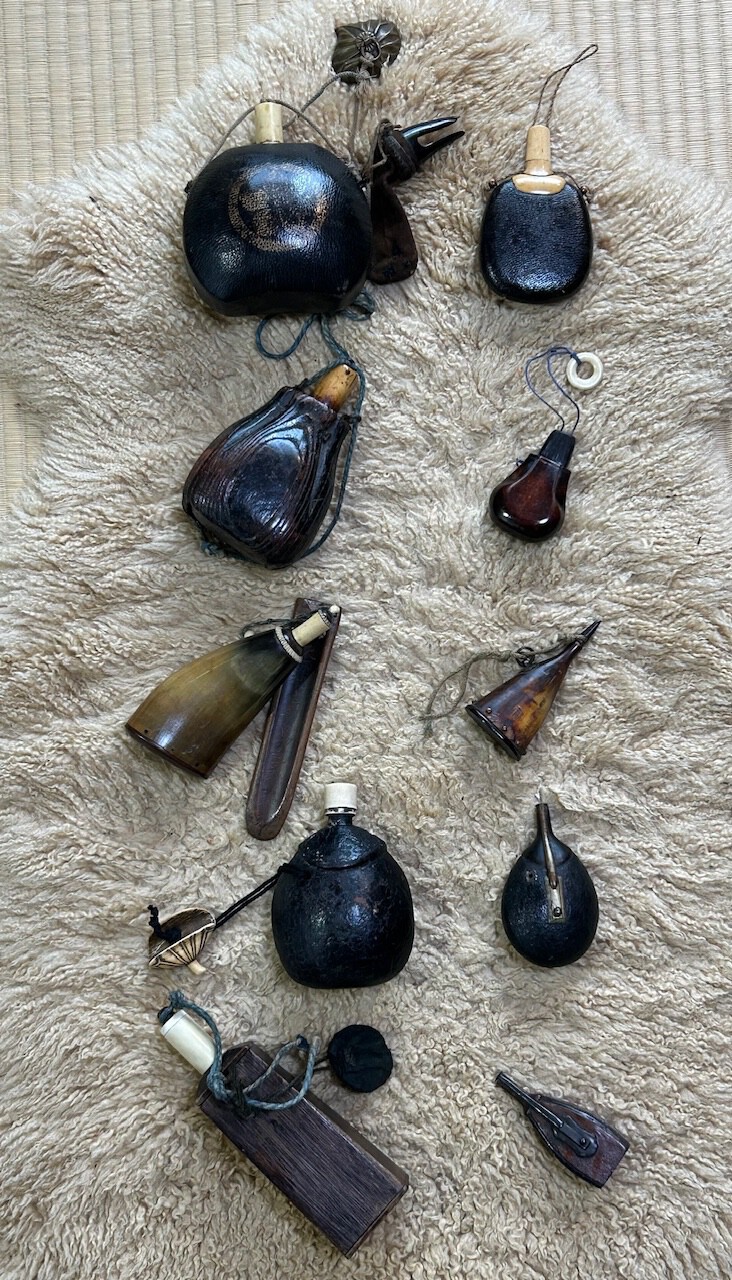
Recent posts regarding powder flasks have led me back to look again at A. and B. in the list at the top of this thread. 1. A gunner would have a large flask (A) for coarse gunpowder to replenish the quick-loading tubes, or to pour in measured amounts directly down the barrel for the main charge. 2. Hanging from the front of his armour would be a smaller flask (B) for the pan-priming powder, which is the same powder, but more finely ground. The pouring spout is narrower, to pour a pinch of fine powder into the pan. (B) flasks are smaller than their companion (A) flasks, though for a large gun you could have a relatively large flask (B) and a much larger flask (A). Photos below, showing example 'pairs' of (A) left, and (B) right, and their relative sizes.
 2 points
 -
Dan: I'm doing basically the same thing with mine. I too have several books published (I use Ingramspark). My method for the book covers, and for one of the interior files that is picture heavy, is done using Adobe Indesign. It has a HUGE learning curve but is by far the easiest way to layout the book. You can "rent" the software for 35 dollars / month and cancel after that. I watched hours of YT videos on it, got a free 7 day trial to practice, then rented it for a month and was able to create, layout, and publish all of my covers at one time. I also bought some "green screen" from Amazon to photograph the items, though you would have to use a photo editing program to get rid of the background before pasting it into the layout. Looks fairly professional. John C.2 points
-
Could be a postwar PX sword and I will kindly ask @Bruce Pennington to take a look at it.2 points
-
Thanks my friends for your kind words and support about cataloging my tsuba. So, here is something I was just thinking about (with my one brain cell!). I have self-published two small books using Amazon KDP. Not to sell them or make money, but just to have my research written down in a book type format. Yes, I am old school and prefer reading a book to reading a computer screen. Also, if my computer stops working or I lose my thumb drive, I still have something written down that anyone can access. Now what is cool about Amazon KDP is you can order proof copies to check out your work, and you can always edit or add to your work at any time. Also, Amazon KDP is a print-on-demand system. No minimum number of copies have to be ordered. Once someone orders a book, it is printed at the nearest Amazon KDP facility and sent out. So no major expense has to be invested by me in my catalog of tsuba idea. So, I think I will digitally photograph my collection and describe the tsuba or maybe just show pictures and the price that I think the tsuba are worth, so my heirs will have some clue as to what to sell them for. Then I will send a copy of the book to all my kids (not really kids any more at 43, 49, and 51 - but middle-aged adults!). Then when I pass, they will be coming over to the house with a copy of my book to pick out the tsuba that they want! Maybe they will keep some or sell some (or all!). Hey, but that won’t be up to me anymore!! I think this tsuba catalog book thing is a good idea!2 points
-
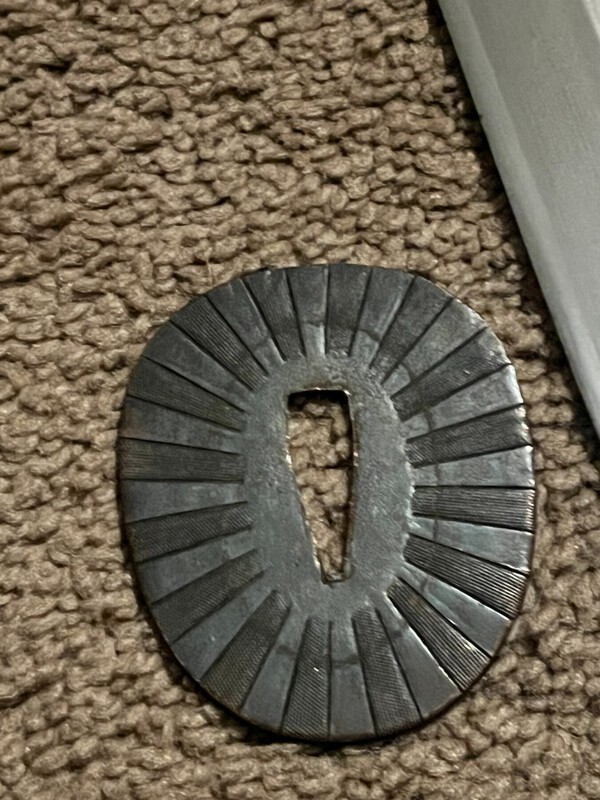
I was enjoying my kaigunto last night, and thought to count the rays of the daiseppa. There are 32, just like the 32 petals seen on the Imperial chrysanthemum. Maybe this is common knowledge, but I've never realized it before.
 2 points
 -
Yeah, I think at some point the fittings were changed, as the solid tsuba has 2 regular very thin seppa and the tsuba has has a slot for that leather retainer. I'll look at sorting the fittings out sometime. Interesting leather combat cover with lacing, and a brass? protector at the bottom.2 points
-
Yup, all good things come to those who wait. It was meant to be. Serendipity at work! Great find, and nice write-up.2 points
-
Hi Brian, If, as you say, you are new to the hobby, you don't want to be searching unknown websites for a bargain; it's a jungle out there. You need to learn a lot more that you currently do before buying and, even then, a trusted seller will be helpful. No need to hurry to a purchase; good Japanese swords will always be available. Grey2 points
-
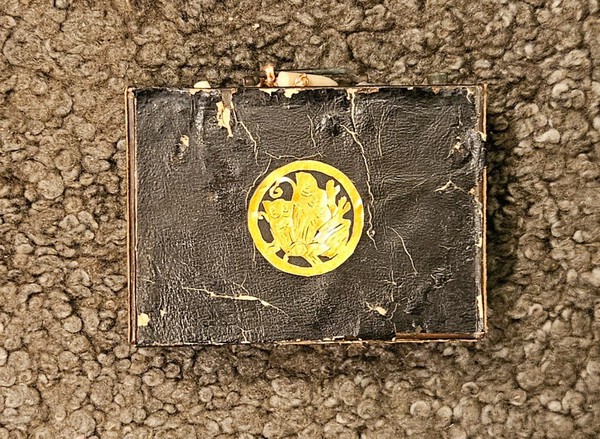
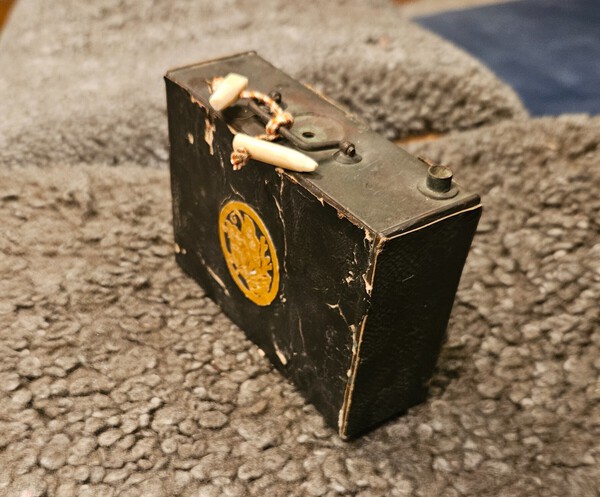
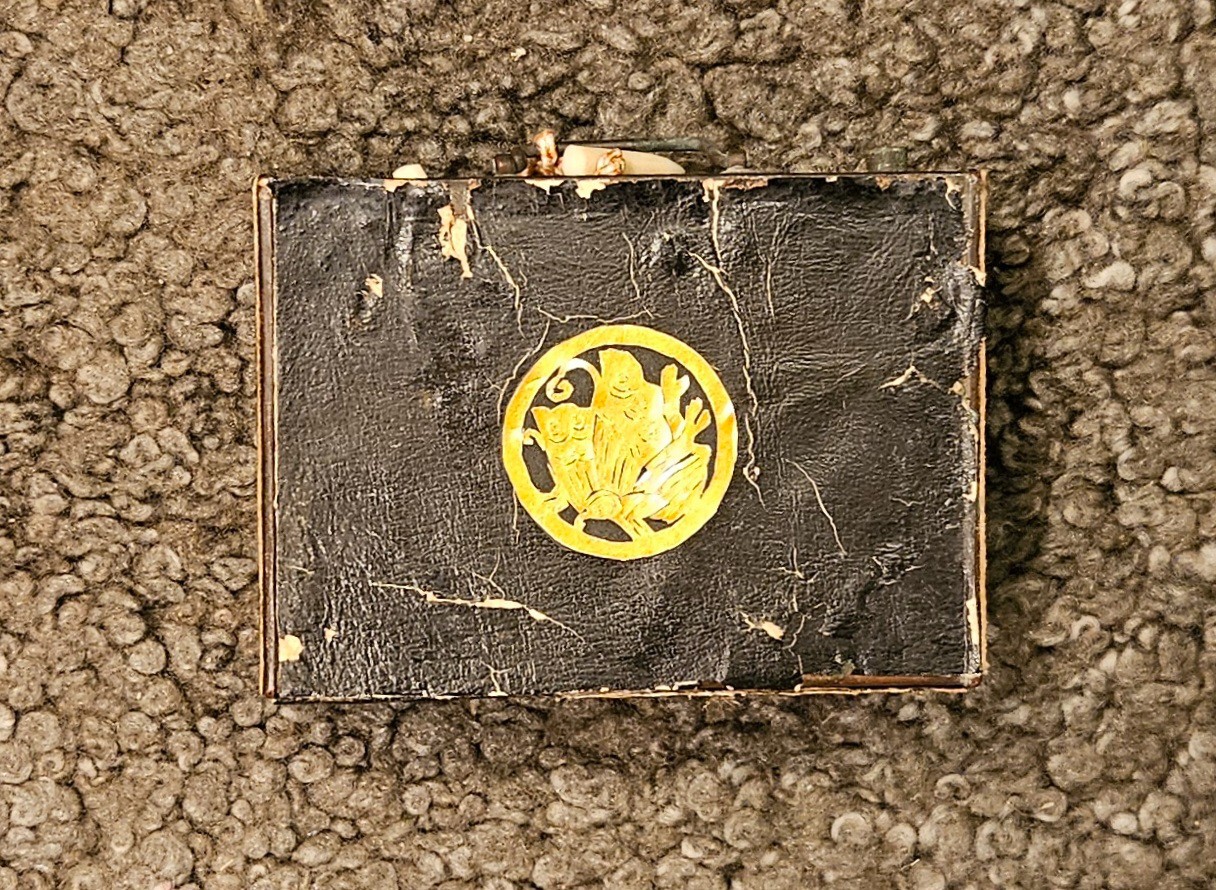
Won a handful of supposed gunpowder flasks at an auction as a part from a collection of different Japanese items. No muzzleloaded weapons at this auction. I am a beginner in this field so found this forum to lean on with hopefully answers on this flasks/boxes. Have been an active shooter with Japanese muzzleloaders since a while though. This kind of accessories almost never occure on auctions that I attend. On one picture western gunpowder and primer flasks for comparison. The box measures 11x8x4 cm.


 1 point
 -
Yeah, would go so well with a small cased pocket pistol. Really nice bag flask.1 point
-
I was up to 古囗存矣, and I too was thinking "old/antique taste", but I couldn't nail that second one with any certainty. 古香存矣 Kōkō ari? Unsure of pronunciation. And my guess is that the last kanji of the first line of this box (HGK05) is 壱 (one). But I've never seen a Kanzan hakogaki that had this sort of notation on it. Anyway, it looks very much like a kuzushi form of 壱.1 point
-
Missed it first time and I stand corrected on this point. Happy to see this example, it is a first for me. I do still stand by my comments regarding the torokusho.1 point
-
I believe our own @Volker62 has a very charming and personal history with Yasunori :-)1 point
-
I just watched a video (what I consider super great!) about tsuba at the N.Y. Metropolitan Museum of Art. They show (and explain about) some beautiful tsuba! The enthusiasm shown by the two people that are in that video is infectious! Thanks, Brian, for posting that video! The video can be found here- https://www.militaria.co.za/nmb/topic/54438-nice-video-on-tsuba-from-the-ny-met-adam-savage/1 point
-
Thanks Piers! Make sense. Yes the plugs is very much not the best and felt out of place. Then I have a neat picnic accessorie for future sunny summerdays!! Will shortly continue with next item from the same auction lot.1 point
-
Addition, HGK05 亀甲文 - Kikko-mon 右香存矣 – This item has good taste. (Unsure)1 point
-
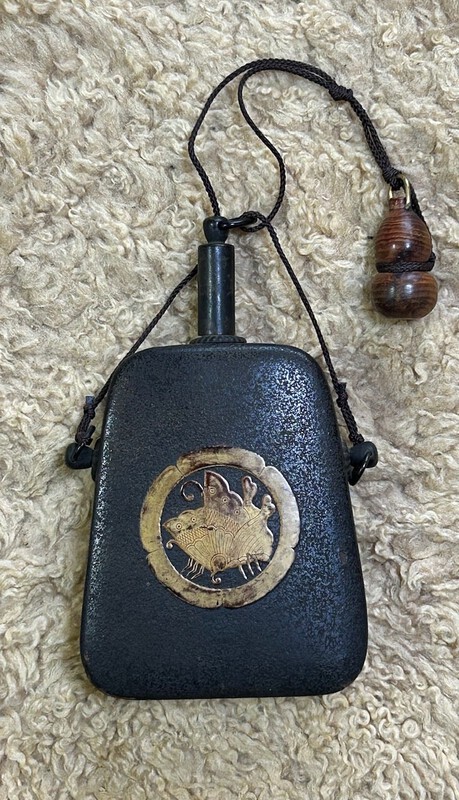
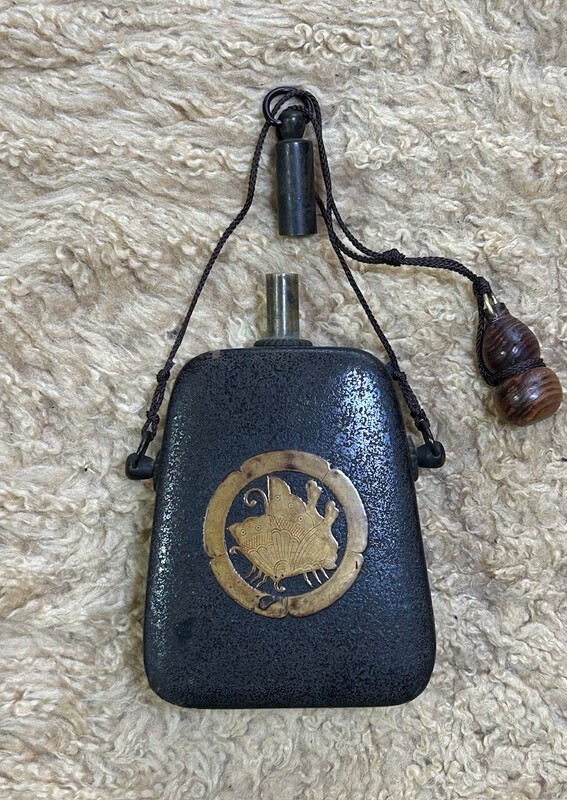
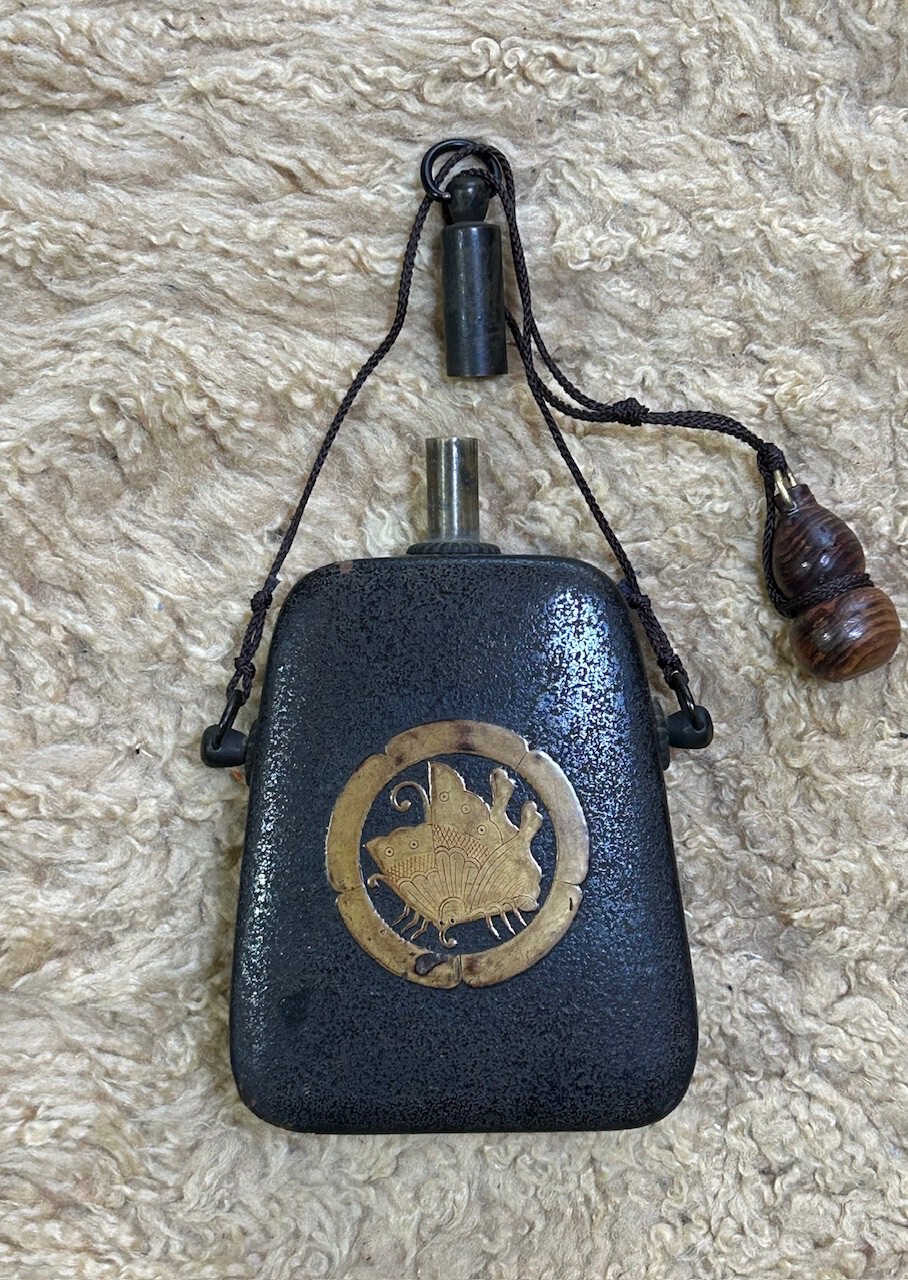
This example is a Kayaku-iré large coarse powder flask (A) from Tottori with Ikeda butterfly mon. Pouring spout enclosed, and opened. and PS Shinchū brass fittings do not strike sparks. The ‘netsuke’ was attached by the previous owner! Please disregard.
 1 point
 -
Rob, Can you post photos of the full nakago, both sides, and one or two of the rest of the fittings? We have on file a Toyosuke, anchor stamped stainless blade in a T98 with leather cover Army gunto, so it is possible this is a late-war rig. The one-piece seppa/fuchi, as well as black fabric ito, has been seen on late-war gunto, so that by itself is not a clear indicator of a souvenir. The non-gold-gilded metal fittings lean toward a late-war gunto ..... HOWEVER, we have a couple of worn, ungilded souvenirs on file. The wear and tear would also lean toward late-war gunto, but we have one or two souvenirs with clear wear and tear as well. The large, think tsuba has the look of the souvenir tsuba. I tried searching for actual late-war gunto to see if any had this thin, round tsuba but couldn't locate any (I'm not good at searching, though) More photos would help, especially if there is a 2 digit black number painted on the nakago.1 point
-
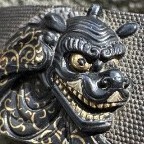
The face looks like that of Daikokuten (大黒天), one of the seven lucky gods. My guess, depending on material, would be a netsuke-like object sold as a souvenir. John C.1 point
-
I will create a new thread for the item and some more.....1 point
-
I've always kept a record of my tsuba in a doc format as below I also keep a spreadsheet so I can easily organise them in any order such as schools and dates With the record you can add as much or as little as you like This one of my earlier records from over ten years ago and nothing has really changed but now I remove the tsuba background to white
 1 point
 -
Curran, I have also had my eye on a fuchi/kashira set that I am going to pull the trigger on too. I will write down what tariff code I used and post it once I make this happen. Not sure it would apply to swords, but I am thrilled it worked for this tsuba. Jason1 point
-
Quote Brano : But first you have to have the ability to study such swords and understand what you are looking at. That is the most important part when you are serious interested in Japanese swords !1 point
-
Oki Sogen (大森 曹玄) was the third abbot of Ryōbozen-an, a sub-temple within the Myōshin-ji school of the Rinzai sect of Zen Buddhism. The temple's formal name includes the mountain name Garyūzan. Myōshin-ji, located in Kyoto, Japan, is the head temple for the largest branch of Rinzai Zen Buddhism, with over 3,000 affiliated temples. The inscription is a famous line from an account of the enlightenment experience of Dahui Zonggao (大慧宗杲, 1089–1163) in an encounter with his master Yuanwu Keqin, which also serves as a Zen koan1,2: "Master Yuanwu ascended the high seat in the lecture hall at the request of Madame Chang K'ang-kuo (張康國夫人). He said, "Once a monk asked Yunmen this question, 'Where do all the Buddhas come from?' Yunmen answered. 'The East Mountain walks on the water' (Tung-shan shuei sheng hsing).3 But if I were him, I would have given a different answer. 'Where do all the Buddhas come from (諸佛皆出自何處)? As the fragrant breeze comes from the south, a slight coolness naturally stirs in the palace pavilion (薫風自南来).' When I heard this, all of a sudden there was no more before and after. Time stopped. I ceased to feel any disturbance in my mind, and remained in a state of utter calmness." Yuanwu was quoting the conclusion verse from a poetry contest in which Emperor Wenzong of the Tang dynasty wrote an introduction verse stating, "Others suffer from the scorching heat, but I love the long summer days (別人受酷暑之苦,我愛夏日長日)." The poet Liu Gongquan then composed the conclusion verse, which Yuanwu quotes as his preferred answer to "Where do all te Buddhas come from?." The story highlights the Zen principle that enlightenment is not found through intellectual study or dogmatic answers, but through direct, immediate experience of the self-evident nature of truth. Just as one doesn't need to be told a southern breeze is cool, the reality of the Dharma is something to be directly experienced, not intellectually understood through words or concepts. We live our lives obsessed with gain and loss, caught up in self-interest, biased toward love and hate, and right and wrong, and we are driven back and forth by the dichotomous biases of the discriminating mind. Koan study is intended to induce the "Great Death," which severs us from this duality. 1Chun-Fang Yu, "Ta-hui Tsung-kao and Kung-an Ch'an." Journal of Chinese Philosophy V. 6 (1979) pp. 211-235 2Case 92 in "Entangling Vines: A Classic Collection of Zen Koans" (2013) 3Ibid, Case 49
 1 point
 -
I like frogs... But yes, often what is seen in museums includes the donated "trashy" pieces of a century ago. Most good pieces in museums derive from big, important (&knowledgeable) collectors of Japanese art in the early 1900s and there were not too many. Hamburg Museum has some great ones, as well as Oxford collection. Other museums too of course. But then there were also other collectors which focused on other Japanese or Asian works, but for the sake of completeness also had some Tosogu - these are often questionable items.
 1 point
 -
I agree completely, even though they are beautiful works of art, I tend to prefer iron. Especially very late Edo and Meiji pieces do not appeal to me very much. I do have a handful of soft metal tsuba , but I believe most of mine are older than late Edo. Here is one that has been set carefully at least twice, not sure that this museum grade as posted in the topic, but I also feel it is not too flashy either. Jason
 1 point
 -
From Japan: https://auctions.yahoo.co.jp/jp/auction/u1209946393

 1 point
 -
I agree with Ford that this tsuba is probably a portrait of an actual person. From a Western perspective, it’s natural to think it could be a self-portrait of the artist, but that’s not very common on tosogu. In addition, the tsuba was made in 1843 and Ikkin’s dates are 1812 - 1863, so he would have been around 31 years old at the time the tsuba was made. The man on the tsuba is approximately 55-70 years old, so it can't be Ikkin. As you may know, Ikkin was one of Goto Ichijo’s best students and studied with him from 1828 - 1838 when he received the kanji “ichi” (the first part of Ikkin) from Goto Ichijo. At that time, Ikkin went to work for the Sakai Daimyo at Tsurugaoka in Dewa’s Shonai province (Sakata Town). He commuted back and forth between Edo (Tokyo) and Sakata. Ikkin was famous for drinking too much, and it is even said that Goto Ichijo tried to intervene to get him to quit drinking and wasting his talents. Ikkin II’s (Ikkin’s son’s) work and mei is just like his father’s and and it is said that much of the known Ikkin work is actually by the Son. However, in the case of this tsuba, it is dated before the Son started using the Ikkin name around 1864. While much of Ikkin’s work was for the Sakai Daimyo and family he did do work for others. The gentleman portrayed on your tsuba is probably a Businessman instead of a Bushi; therefore, it would not be the retired Sakai Daimyo Sakai Tadakata (who would have been about the right age in 1843 when the tsuba was made). The eyeglasses (rare at the time), pursuit of Ikebana, hat and the fur collar shows that he is a rich and cultured businessman (probably semi-retired). The richest and most influential business family in that town was probably the Homma family who regularly hosted the Sakai Daimyo and even the Emperor when he was in the area. The Homma family was famous for its artistic connections including the arts of Ikebana (their ancestral home has even been converted into a present day art museum). Homma Mitsumichi (4th Generation) would be about the right age for the gentleman on your tsuba in 1843, and I believe that there is a good chance that he is the person depicted on your tsuba. I have written to the Homma Museum to see if they have a photo of Mitsumichi or can confirm the identity of the person depicted on your tsuba. I’ll let you know what they say in a later post.1 point





















This leaderboard is set to Johannesburg/GMT+02:00