
Leaderboard



Popular Content
Showing content with the highest reputation on 11/22/2025 in all areas
-
At last year's exhibition at the Shusui Museum of Art in Toyama there were 3 blades with the Yoshihiro attribution The photos are not the best, the blades follow each other in a rightward motion https://eu.zonerama.com/Nihonto/Photo/12422673/4969733947 points
-
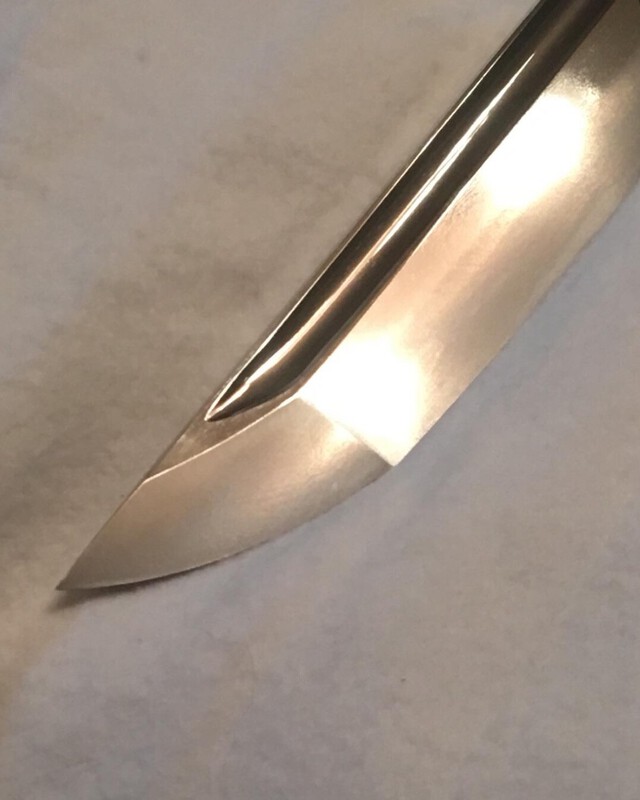
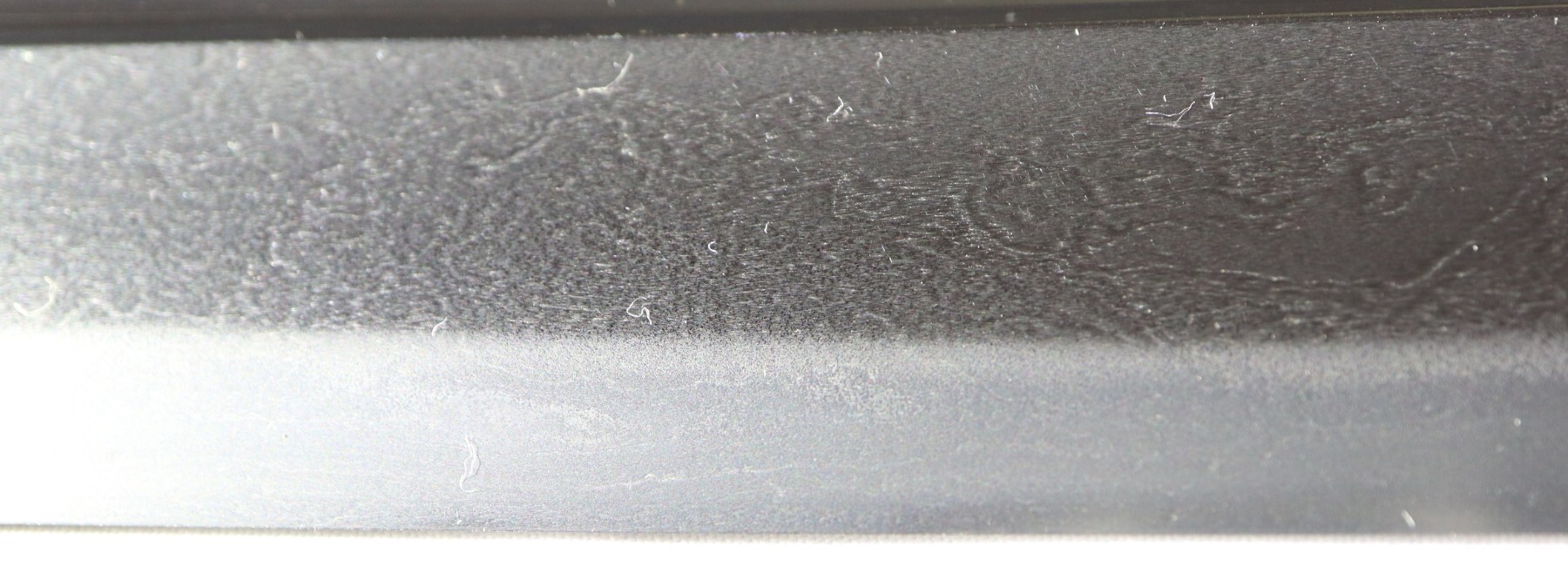
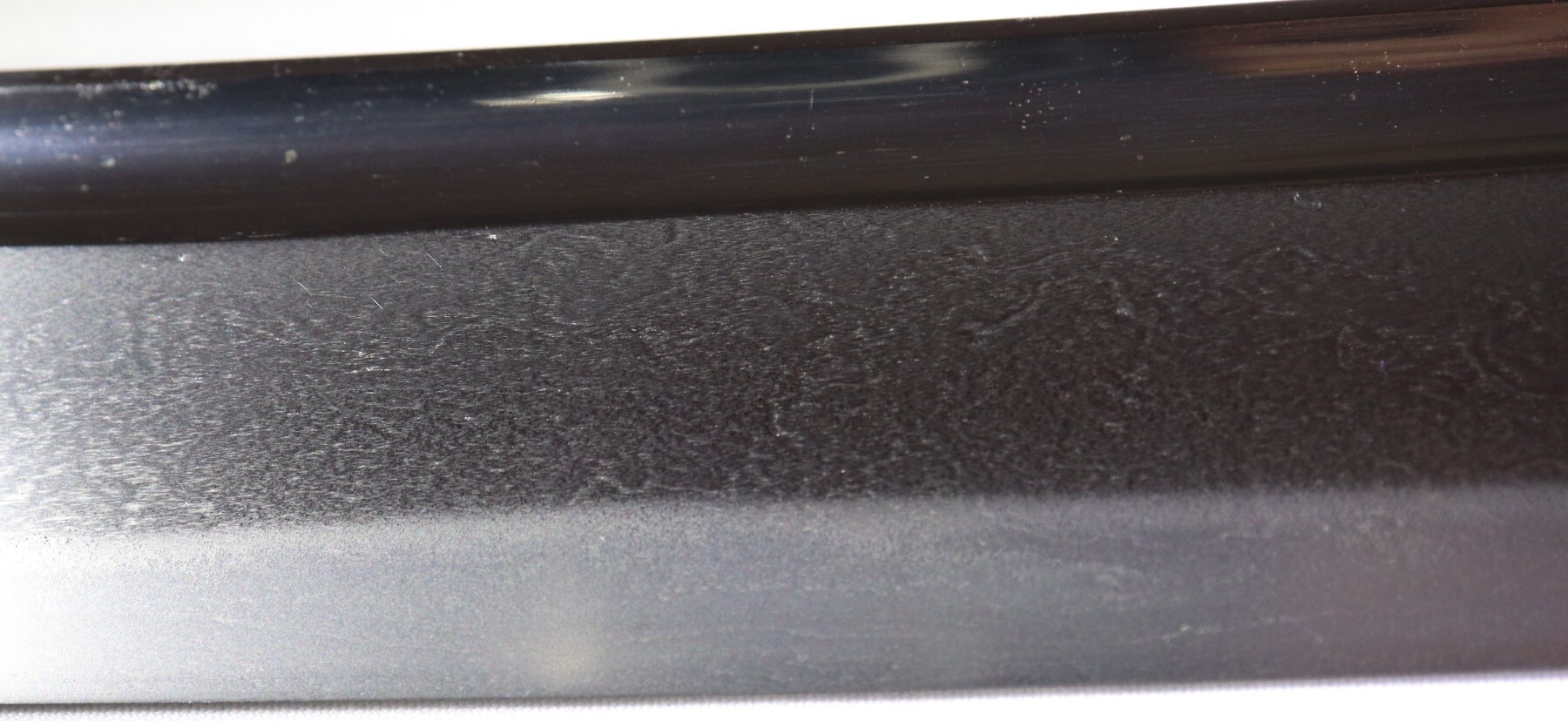
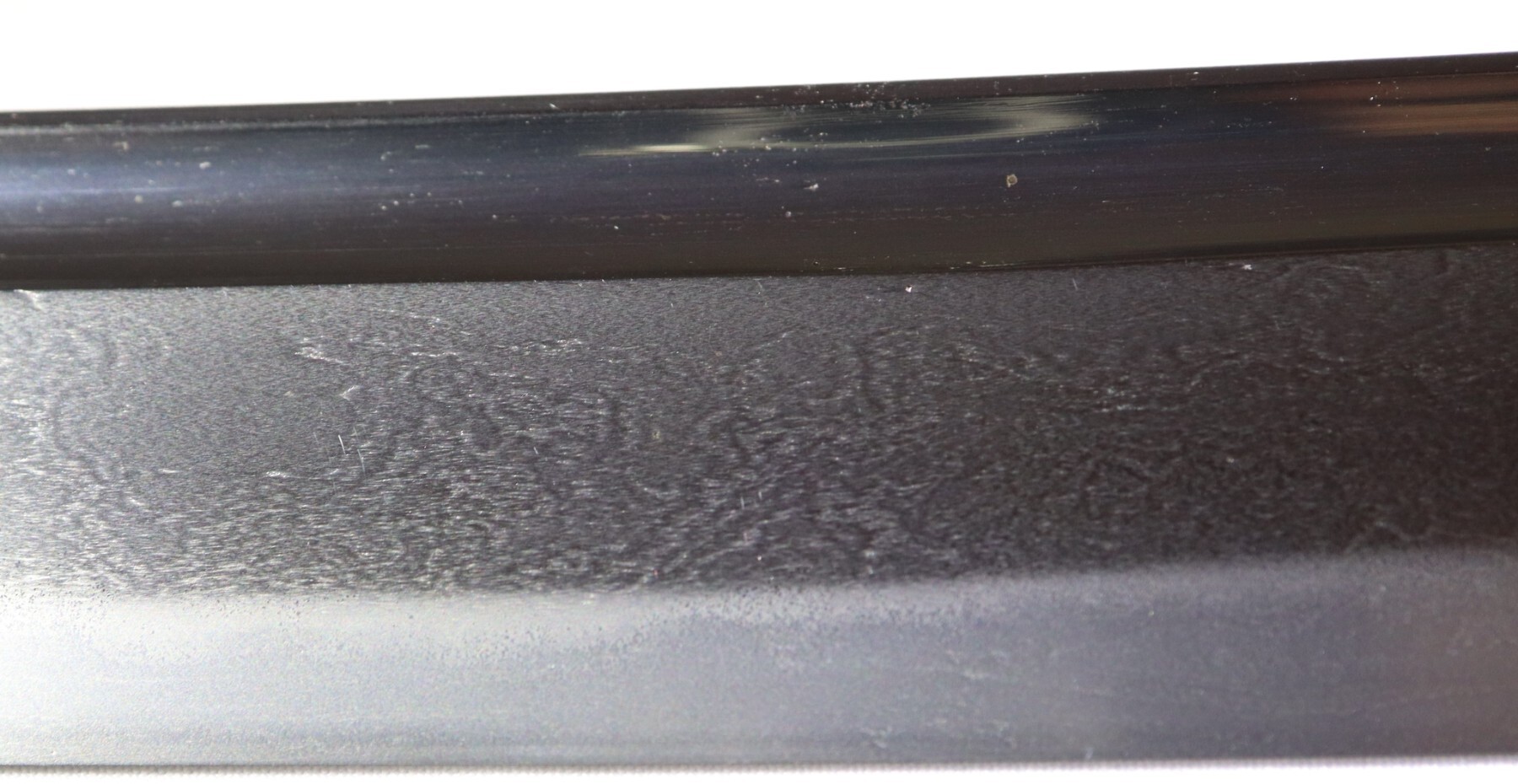
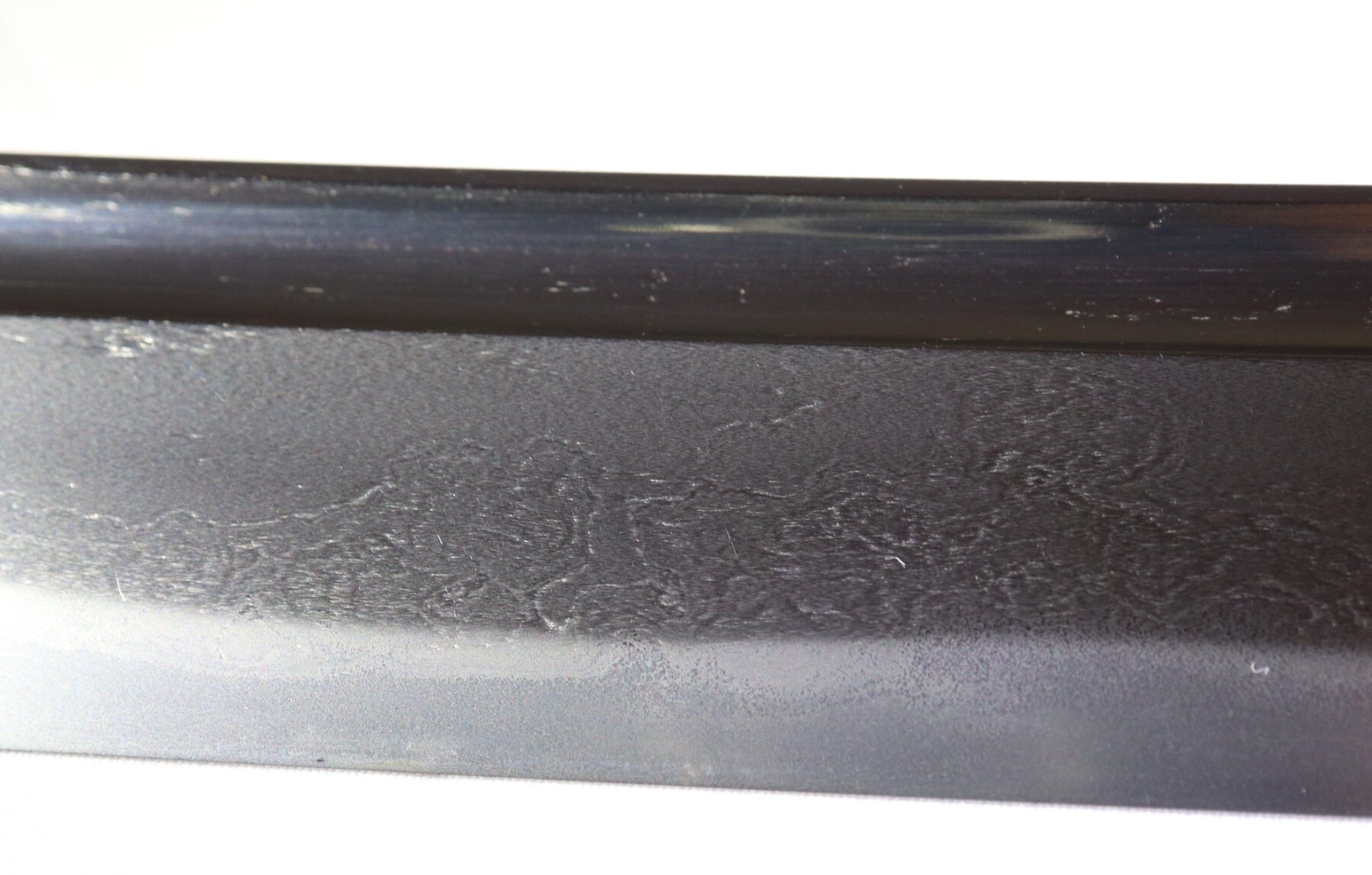
Beautiful contributions by some friends above, who I know are fairly knowledgeable and I can attest they have handled numerous Go (as some of that was a joint opportunity). Elusive as Go is, they do come up occasionally in Japan and if one has the admittedly rare opportunity, they should study them. The nice organic hamon and clarity combined with the uruioi micronie in the jigane is beautiful. Apologies for the bad pictures below but this is what I currently have on my mobile below. I merely want to demonstrate with some photos the “connectivity” to Norishige (note that jihada in some of the Juyo Go photos below) and the lustre. That Go is not one of the most flamboyant but still educational. As Tsuki says, not as prominent chikei or very ostentatious kinsuji but they are still there.


 6 points
 -
備州長舩五郎左衛門尉清光 – Bishu Osafune Gorozaemon no jo Kiyomitsu 十五字ノ長銘並ビニ天文六年紀有之同工ハ清光ヲ名乗ル鍛冶中最モ上手デ次ヒデ孫右衛門尉ガアリ本作ハ其ノ真面目ナル静謐ナ直刃ヲ焼キ出来宜敷ク鍛錬モ秀デタリ - A long mei of 15 characters and a date of Tenbun 6th year (1537) are inscribed. This smith is the best skilled smith among other smiths named Kiyomitsu. The next best Kiyomitsu is Magoemon no jo. This fine work was done with neat and calm suguha and well forged. 長貮尺二寸三分強 – Length 2-shaku 2-sun 3-bu kyo (a little longer than 67.58 cm) 歳乙巳陽月 – Year of Kinoto-Mi (2025), October 探山識 – Tanzan appraised.5 points
-
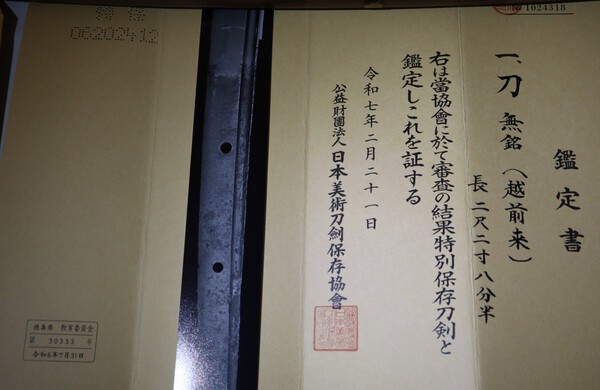
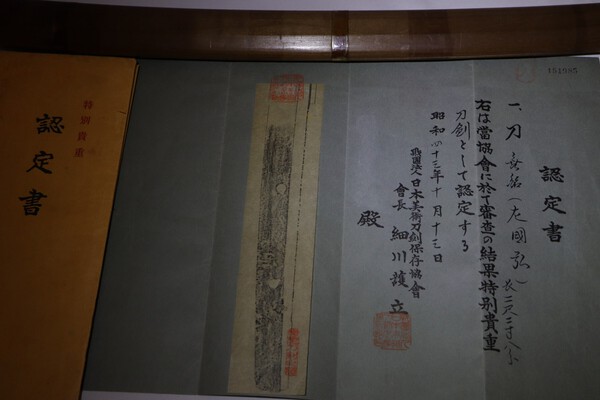
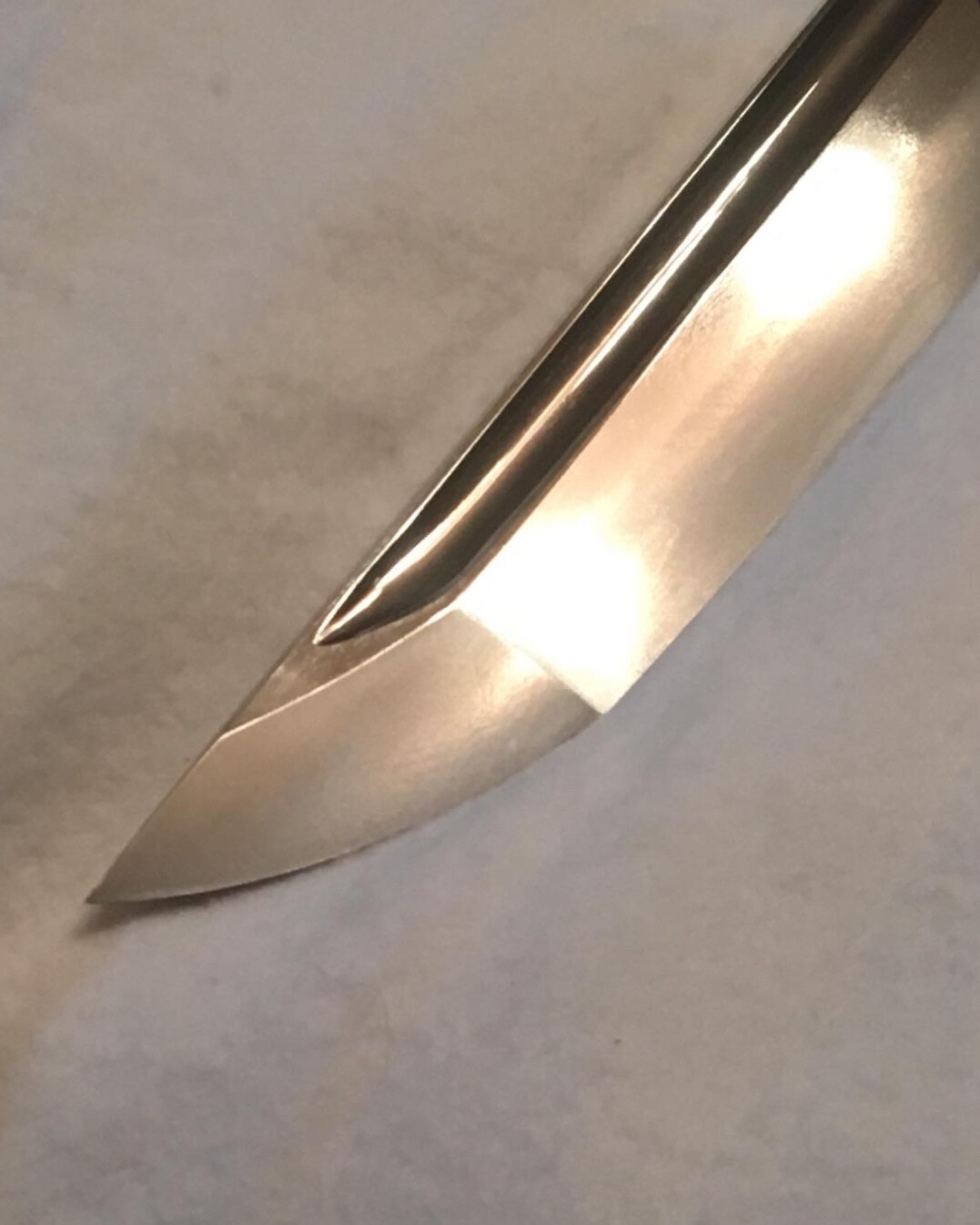
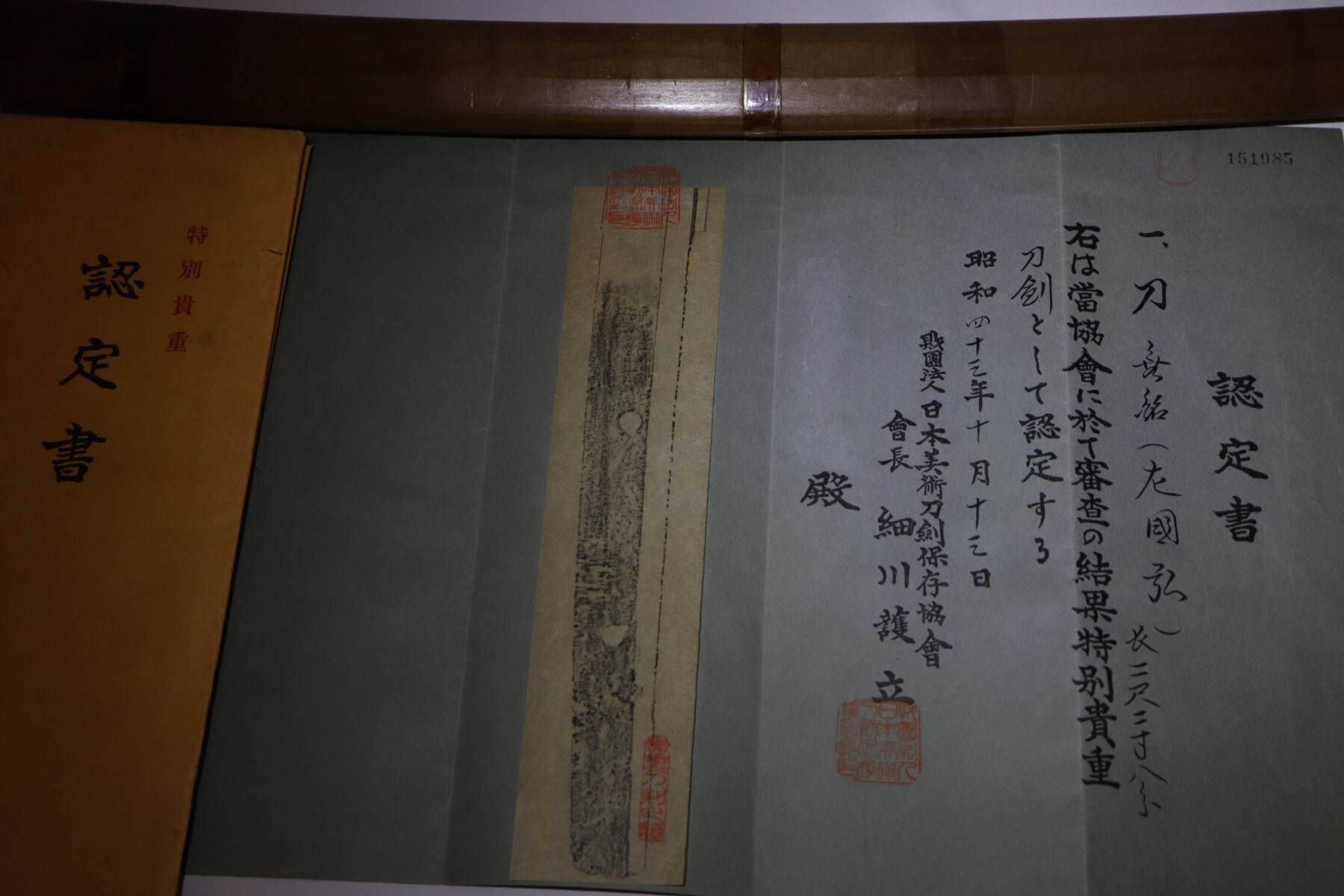
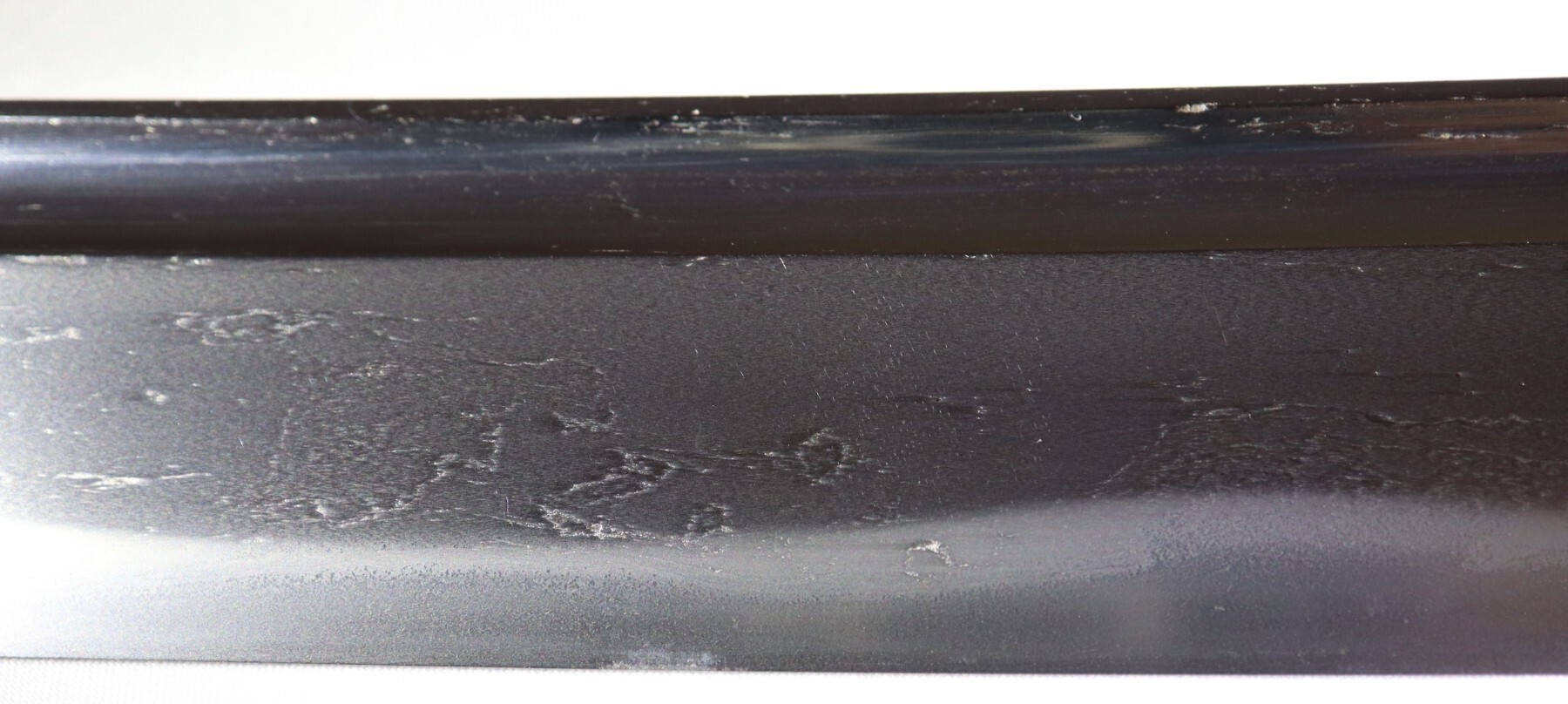
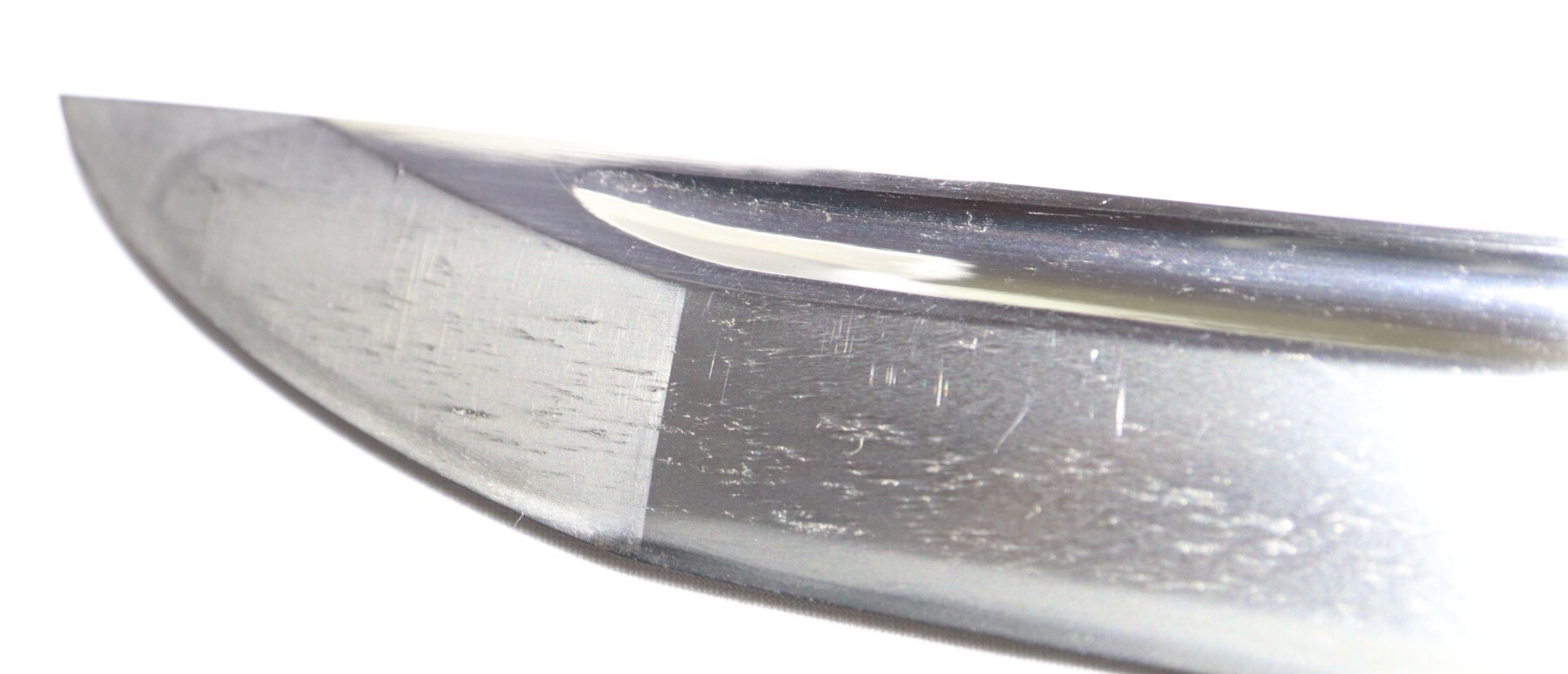
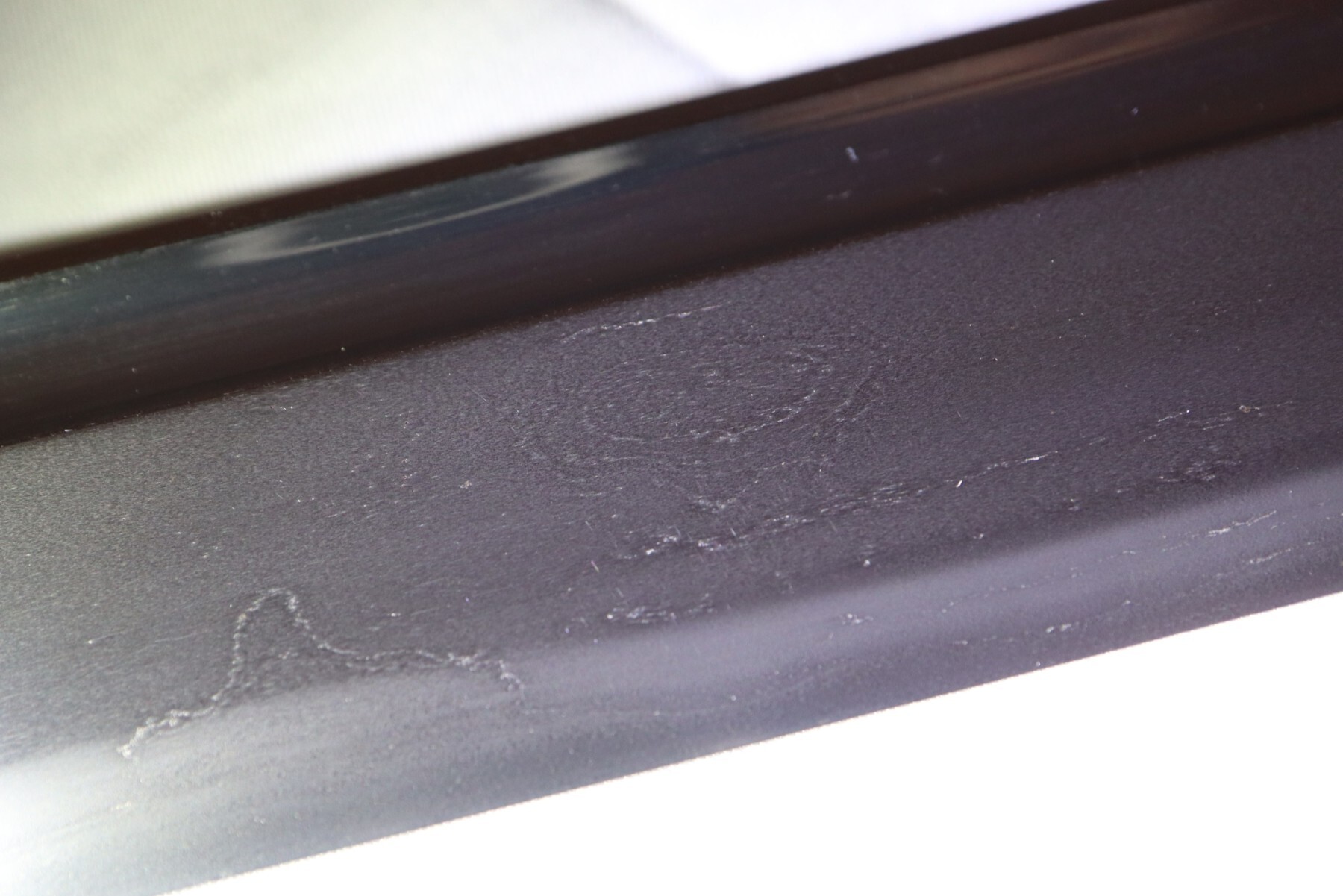
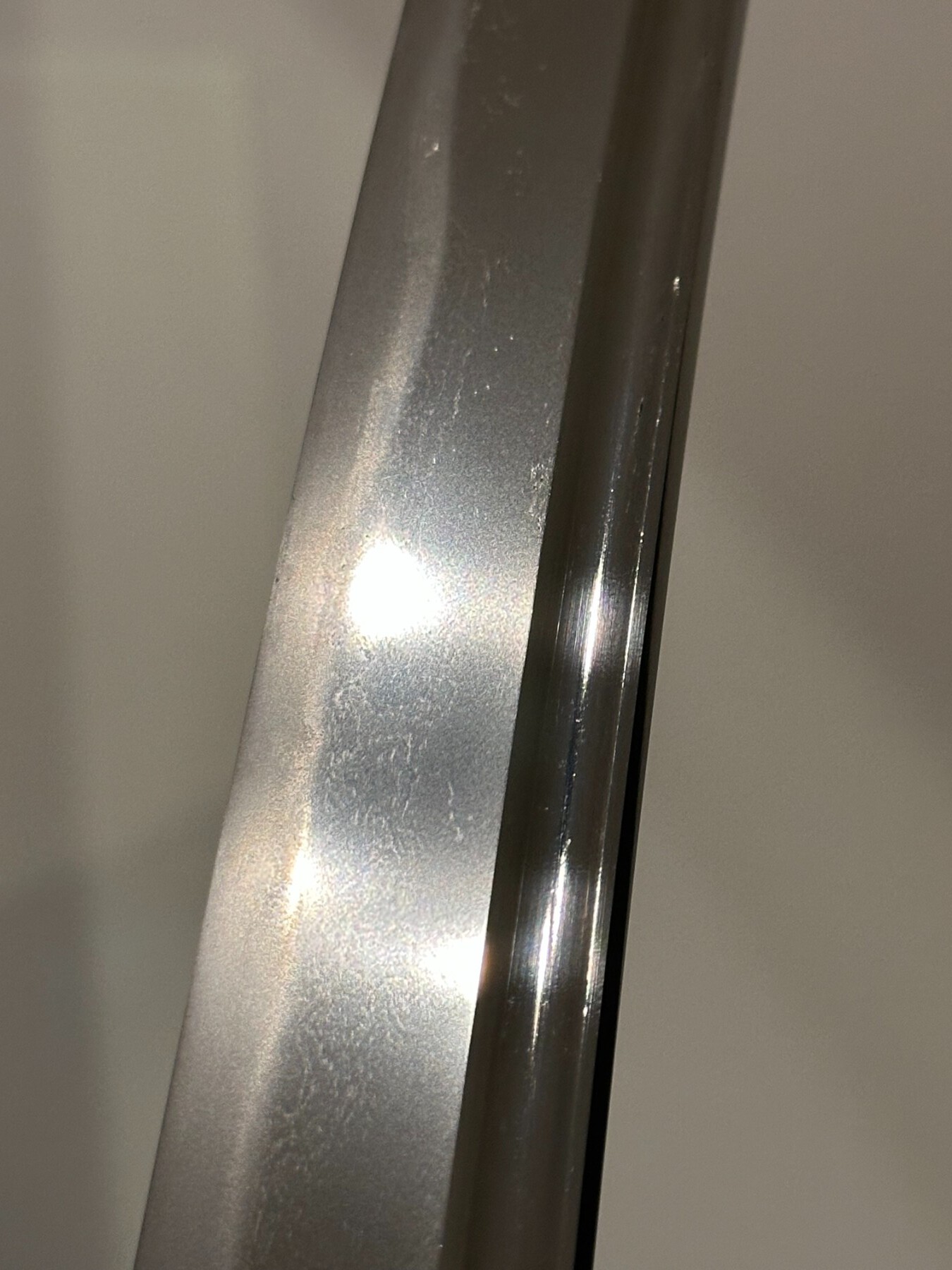
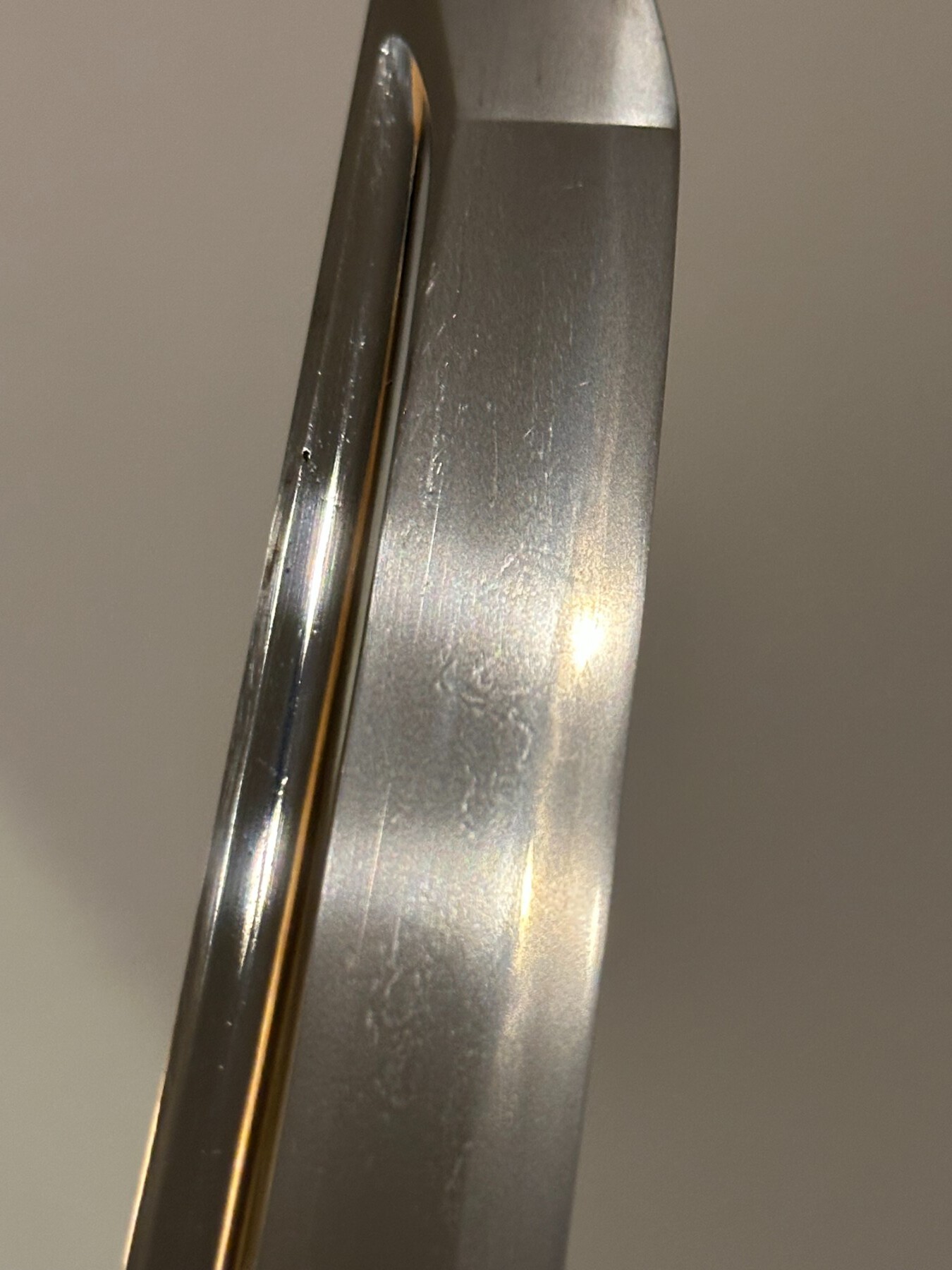
I am hereby offering this Echizen Rai katana. Specifications: Blade Length (Nagasa): 69.2 cm Curvature (Sori): 2.1 cm Mekugi-ana: 2 Nakago: Ō-suriage, mumei Dimensions: Motohaba: ~31.3 mm Motokasane: ~6.8 mm Sakihaba: ~24.3 mm Sakikasane: ~5.3 mm Bare Blade Weight: approx. 737.6 g Type: Shinogi-zukuri Blade Description: A stunning Nanbokucho period katana attributed to the Echizen Rai (越前来) school with recent NBTHK Tokubetsu Hozon papers, and previously attributed to Sa Kunihiro (左国弘) by Tokubetsu Kichō papers. Both attributions place this sword solidly in the Nanbokucho period. Although this sword clearly is not the work of Sa Kunihiro, the old paper was still preserved. I find it interesting to see how older NBTHK papers can differ from new papers. The blade exhibits classic Nanbokucho characteristics, including a wide Motohaba and longer kissaki. The jigane tight itame in certain areas, which can be well observed in some of my images. There is also Mokume, and overall Jigane that reflects previous older Rai works. There are sections where the hada stands out more prominently. Ji-nie is present throughout, giving the steel surface a rich, textured appearance. The hamon is a suguha-notare temper with activity visible, a lot of nie can be observed. See my Hamon images for a proper idea of the hataraki. The bōshi is Omaru, and is still very visible. The nakago is ō-suriage, typical for early Nanbokuchō swords, with two mekugi-ana. The sword is fitted with a habaki and comes in shirasaya (with reinforcing tape applied). Condition Some scratches can be observed, with one longer scratch visible on the images; all flaws have been photographed and are visible on the images. The scratches are shallow and do not distract from the blade itself. There are no significant ware of imperfections on the blade. It is a very clean Nanbokucho Echizen Rai blade that is ready to be appreciated. Image disclaimer The overview images of the entire blade had their background removed. Please do not use these images as a reference for the condition of the blade, as they have been altered. All other images are unaltered. Sometimes my camera can be seen in the reflection of the blade in the bohi. These are not imperfections. Price: €3700 Free shipping inside EU Shipping outside EU available for a small additional cost (€20–40) Shipped with UPS Express, fully insured to full value Located in the Netherlands – pickup possible Please feel free to message me if you have any questions.





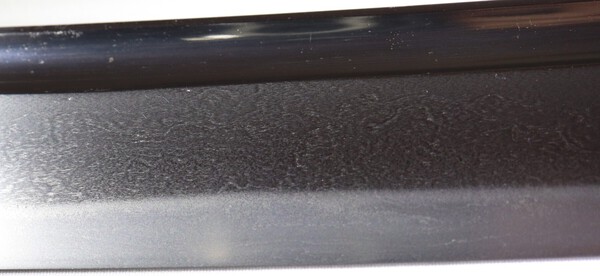


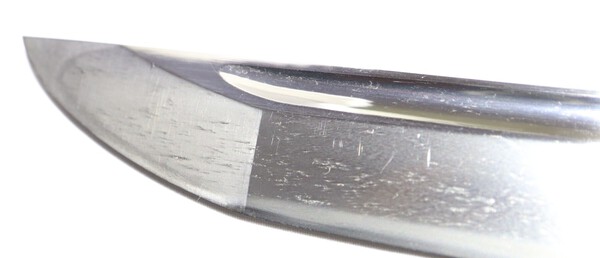
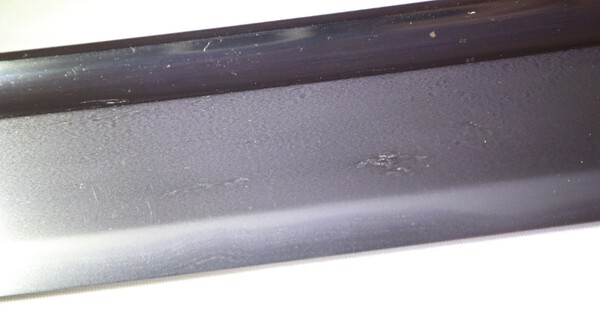
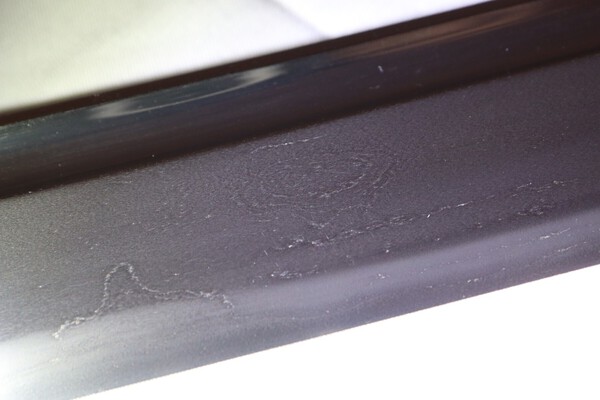


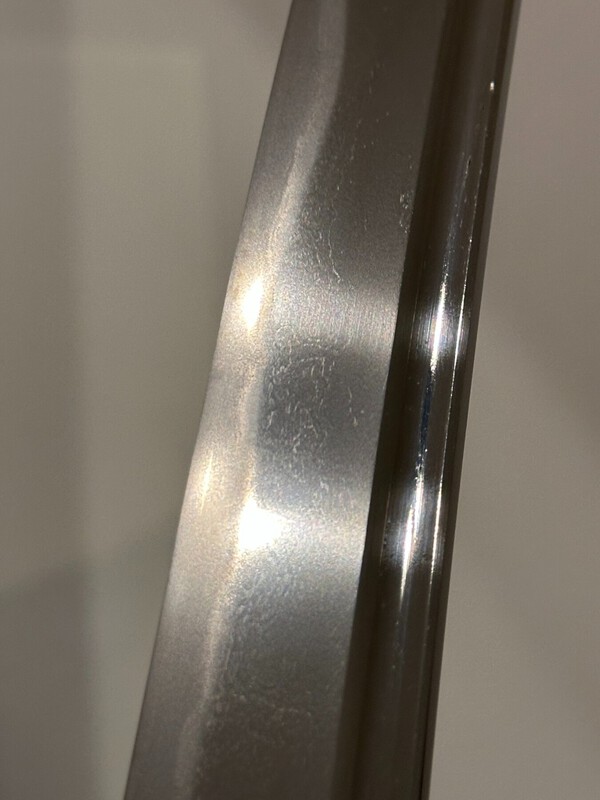
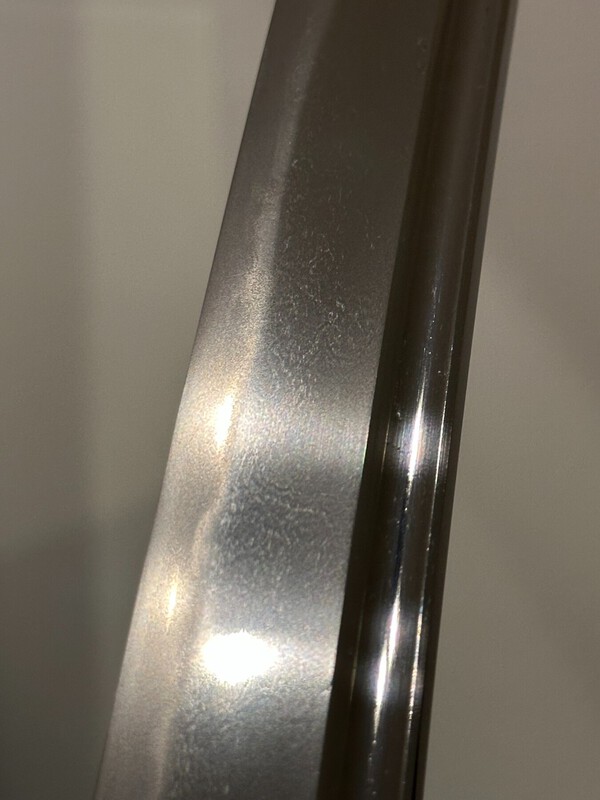
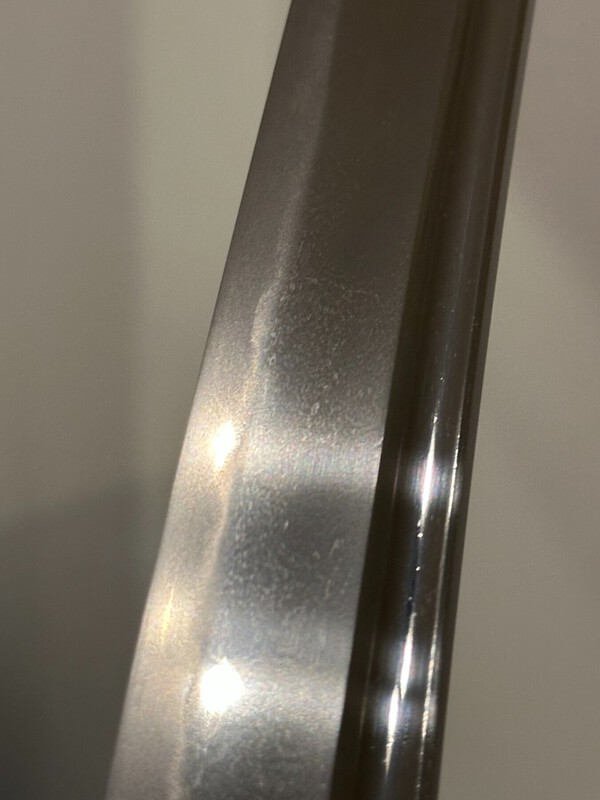


 4 points
 -
Eight. I suspect that you won't believe me, but there's nothing I can do about that. This is indeed showing the signs of rapidly following Brandolini's law, isn't it?4 points
-
https://www.aoijapan.com/katana:mumei-attributed-to-ko-naminohira-41st-nbthk-juyo-token/ A nice ko-naminohira tachi (albeit a bit tired) from the kamakura. Starting to understand why jussi like this school. Though why does the nbthk classify it as a katana even though its only a suriage and still has the shape of a tachi Jed.3 points
-
Noshu Seki ju niju sandai Kanefusa saku kore This was the 23rd generation of Mino Kanefusa. You'll find other examples of his work by searching the discussion board here.3 points
-
You can find a decent write-up of Zohei-to in Mal Cox's article here https://www.militaria.co.za/nmb/files/file/118-showa-period-swordsmiths-of-fukuoka-prefecture-kyushu-and-the-kokura-arsenal/ Basically a machine made higher end sword than the Type 95.2 points
-
There is as Morimitsu (守光) lineage in Bizen Kozori group that extends into Muromachi. I have just few examples of Nanbokuchō/Early Muromachi items by them, as I don't record older, however I believe the lineage continued into later Muromachi. Morimitsu (守光) is actually pretty rare name, when you look at Meikan or Sesko, there are only very few smiths that used the signature in general.2 points
-
My view may be biased when it comes to pricing, but I think it’s within the expected range. Matt is a good and reliable dealer; and both the tassel and the hanger can each be worth a couple hundred on their own, and both are hard to find. This transitional aluminum model with the mekugi-punctured ito was produced, according to my notes, in roughly the same quantities as the copper-handled versions. I have an estimated production figure of fewer than 6,000, and it’s anyone’s guess how many actually made it through the war. Just my opinion as someone who might like these "transitional patterns" a little too much -Sam2 points
-
Jeesh, you beat me at my seven. Photographed only two though.2 points
-
Reduced prices for remaining books Gokaden no Tabi by Tanobe Michihiro: set of 3 books - Yamato Den, Yamashiro Den, Bizen Den ... 90 EUR ... 60 EUR Supreme sword country Bizen ... 60 EUR ... 50 EUR Kotetsu and Kiyomaro ... 90 EUR ... 70 EUR + shipping cost Sent from Slovakia1 point
-
thank you very mutch Rohan... I will read this carefully.1 point
-
Incidentally, Peter Dekker has a Juyo Iga no Kami Kinmichi (first gen) wakizashi on his site with a good writeup on the smith: https://www.mandarinmansion.com/item/juyo-iga-no-kami-kinmichi-wakizashi1 point
-
That's what the NBTHK certificates say, yes. TokuJu (Aoi Art) is by the shodai, and TokuHo (Eirakudo) is by the nidai. Momoyama period: 1573 - 1615 (late 16th century to early 17th century) Kan'ei period: 1624 - 1643 Enpo period: 1673 - 1681 Neither of the generations appear to be, at least anywhere that I can see.1 point
-
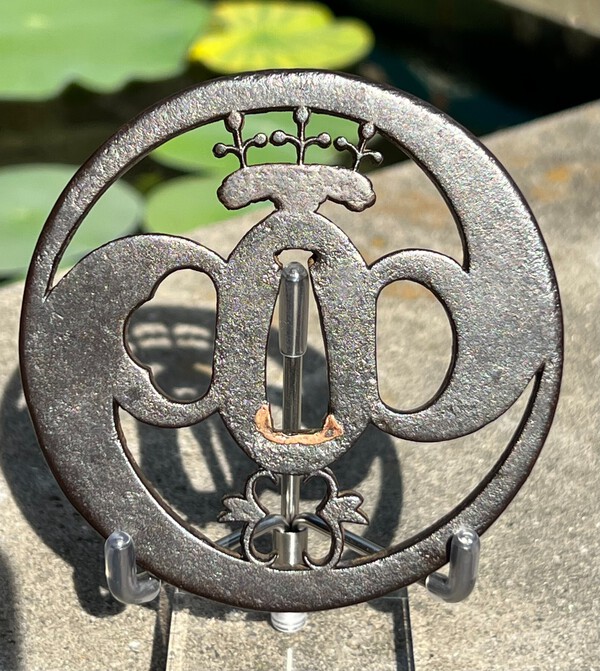
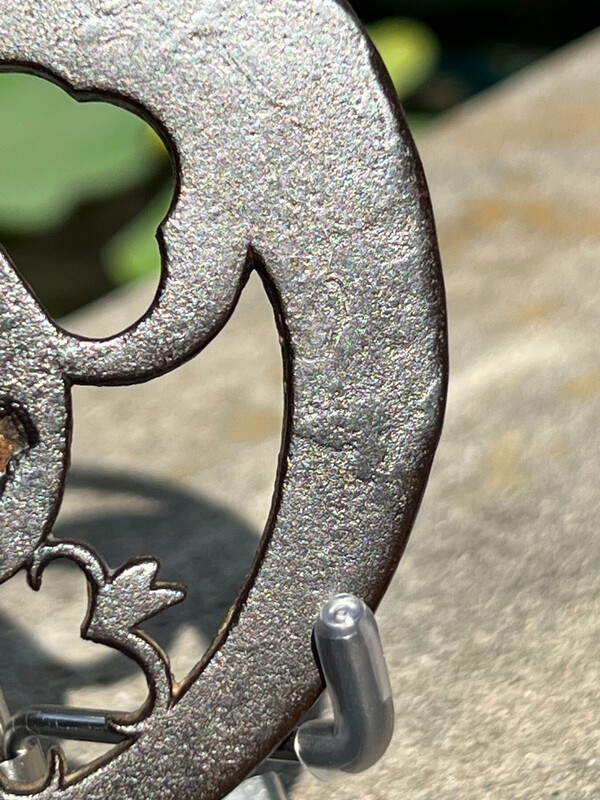
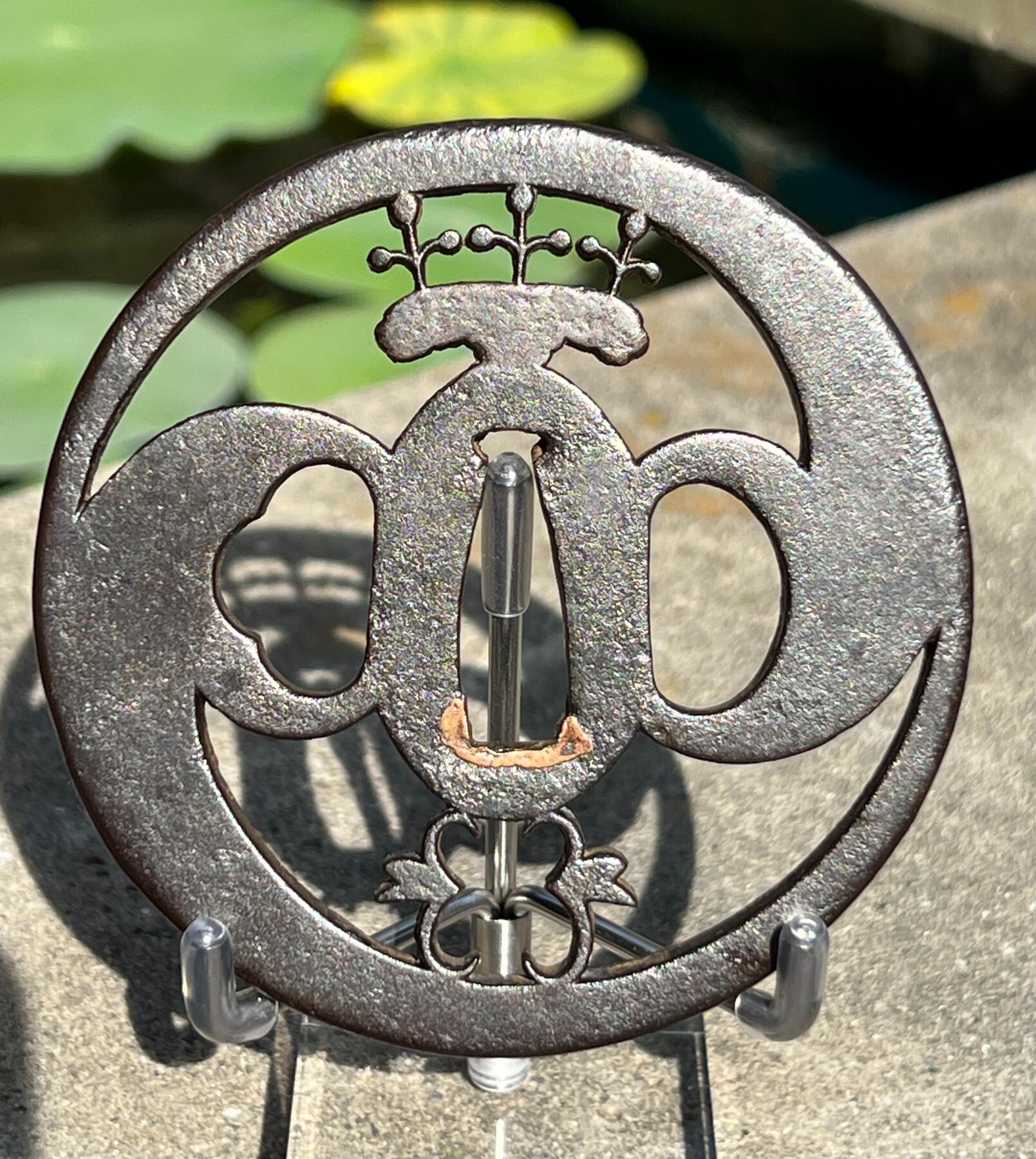
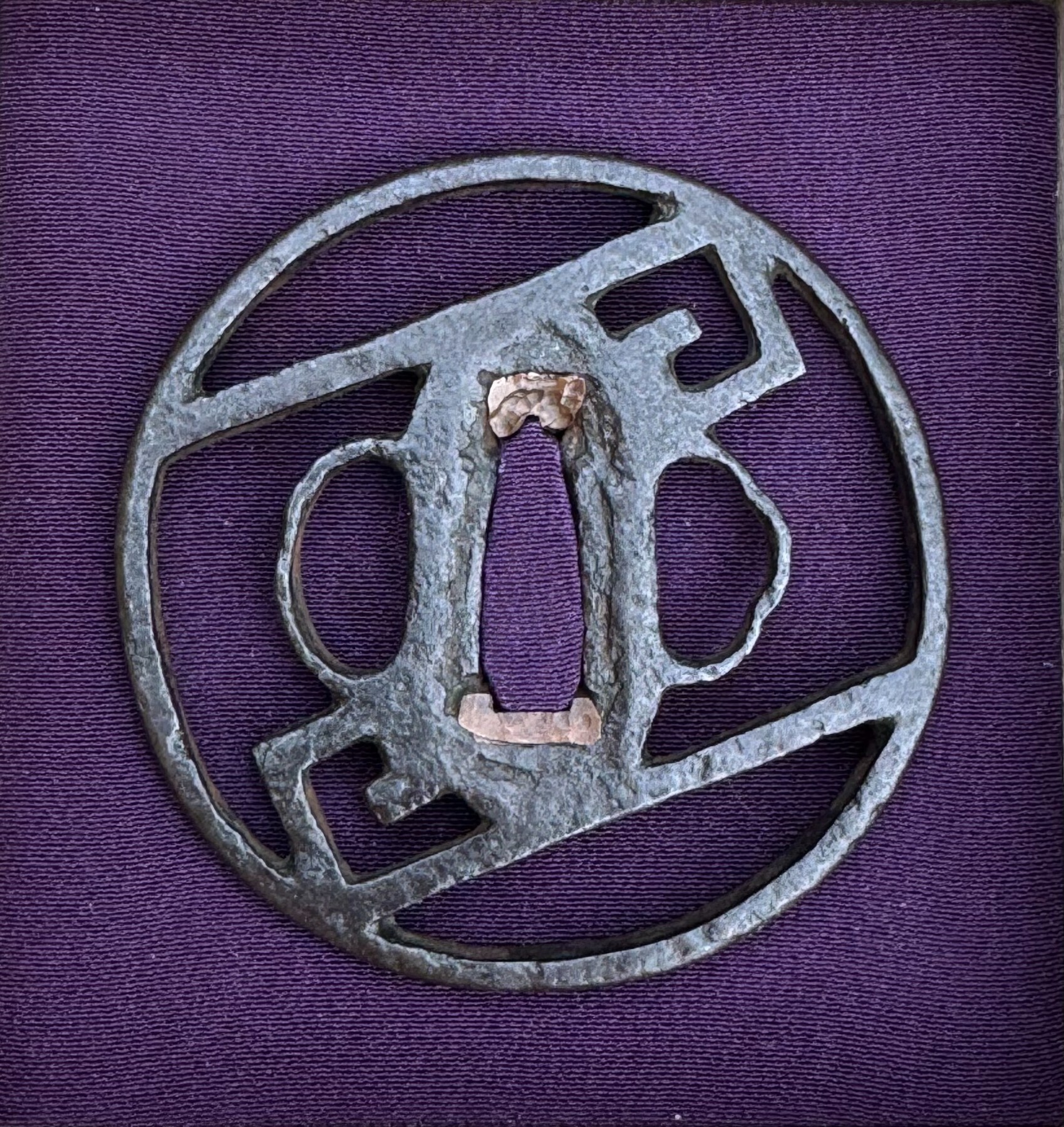
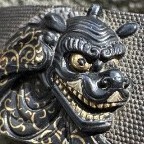
"Generic Edo Period" with numerous influences including Kyo-sukashi, Owari, Ohno smiths, which was sold as a Tanshu Sadamasa. I just like the very large size, heaviness, and motifs; mounts nicely on my katana for tameshigiri. Unexpectedly, it seems to have tekkotsu, but I dont' think it is Momoyama/early Edo. The indented tail feather motif seen at the bottom is unusual and not seen in earlier periods.
 1 point
 -
Very early massive "proto-Akasaka" Kirishitan Ikenie.
 1 point
 -
Thick early Edo Ohno Karuma with massive tekkotsu.
 1 point
 -
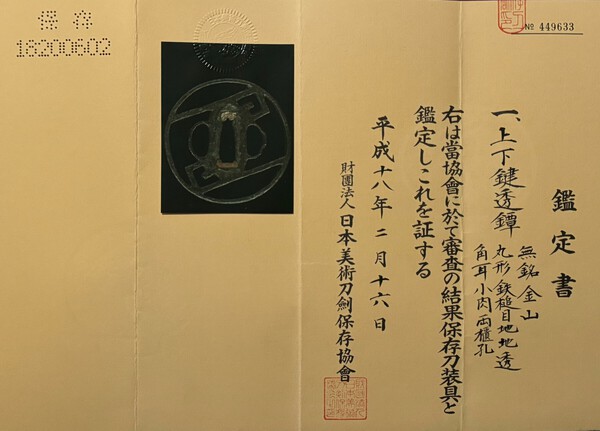
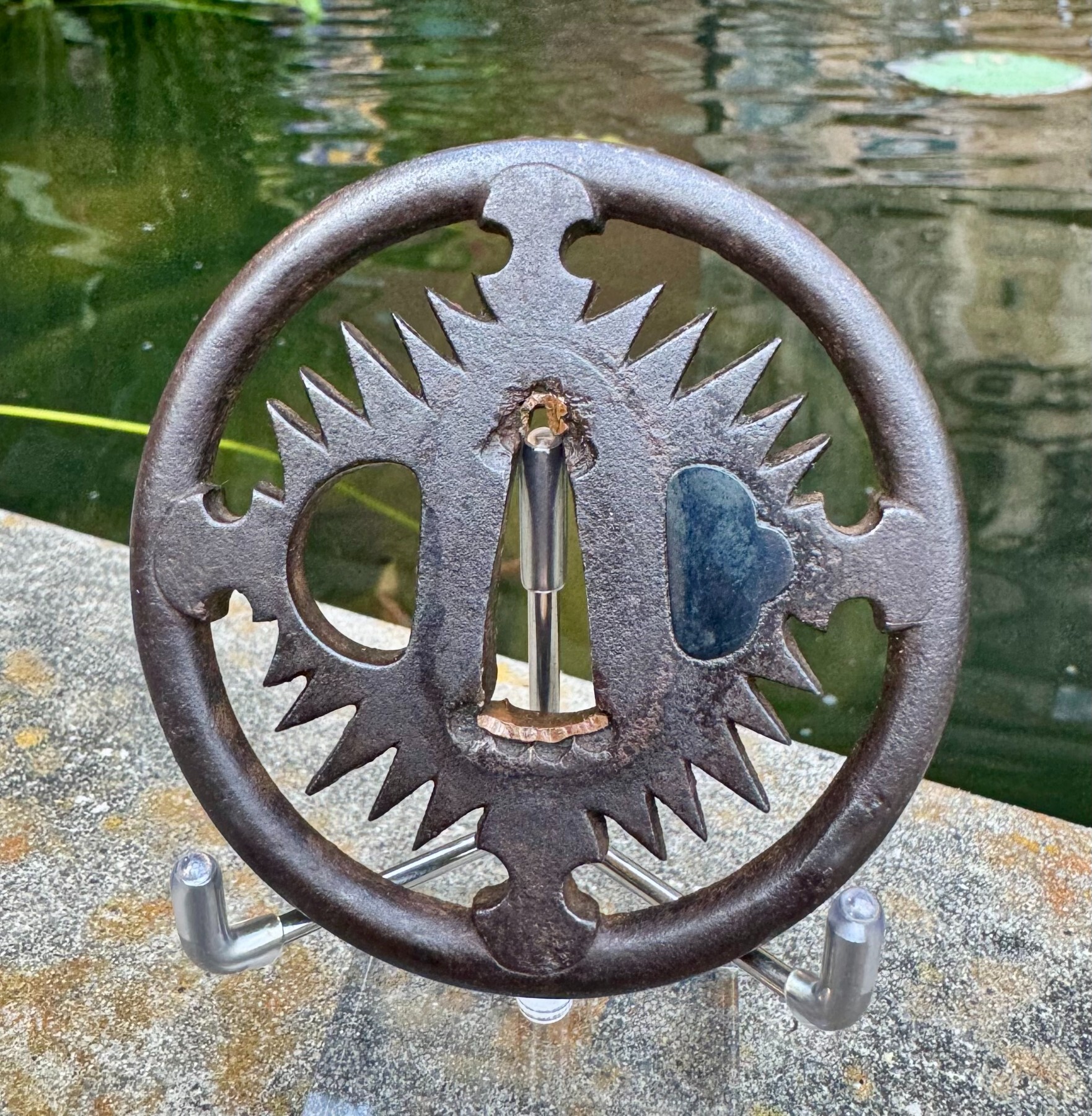
In response to Steve's plea for more steel tsuba: Ex-Sasano (gold book Plate 75) Kanayama "Thunderbolt"

 1 point
 -
Hello Mark, What you have is an arsenal produced “zohei-to.” As Brian alludes, these are almost the Officers version of the Type 95 NCO sword, since the blade construction is similar. The stamp resembling three cannon balls is the Kokura (originally Tokyo Artillery) Arsenal stamp. The ho stamp - ホ is for the Kokura factory number 1. The fittings are very nice and you should definitely show pictures of the individual details of the tsuba and spacers.1 point
-
I think for this sword NBTHK and Aoi Art have a differing viewpoint, pretty much the polar opposite views. NBTHK specifies in the paper that sword is ō-suriage and Aoi states that they see the sword as almost ubu. Unfortunately I cannot say which one is correct, and I could see both as plausible opinions by just seeing few pictures. Unfortunately I just have seen this in Jūyō book and now at Aoi website so I don't have it in any other sources. NBTHK can also judge suriage mumei blades as tachi but for that to happen I would assume a certain amount of original nakago must be present for that to happen.1 point
-
Yep, context is key - either it's signed tachi-mei, or it's ubu and from a period in time when blades of that shape and size would have been used as a tachi (i.e. worn edge down and likely used from horseback). Basically if the most recent usage it saw was likely as a katana (due to being shortened by a more recent owner, being too short to begin with, or being from the middle Muromachi period onwards) then it'll be classified as one. Exceptions exist, naturally, but there's usually extenuating circumstances such as well-known documentation or oral tradition about the blade's usage, or a particularly famous accompanying tachi koshirae.1 point
-
Absolutely perfect. Love Satsuma blades and Naminohira is definitely near the top of my bucket list of swords Id like to have in my collection next. I personally have only seen the NBTHK designate a blade as Tachi when it s ubu and/or has a tachi mei1 point
-
Interesting that this example at the Toovies auction does not have the 1 piece fuchi indicates an earlier souvenir made with wartime army fittings very likely a wartime built blade suriaged for standard length tsuka at the Tenshozan Tanrenjo is my guess.1 point
-
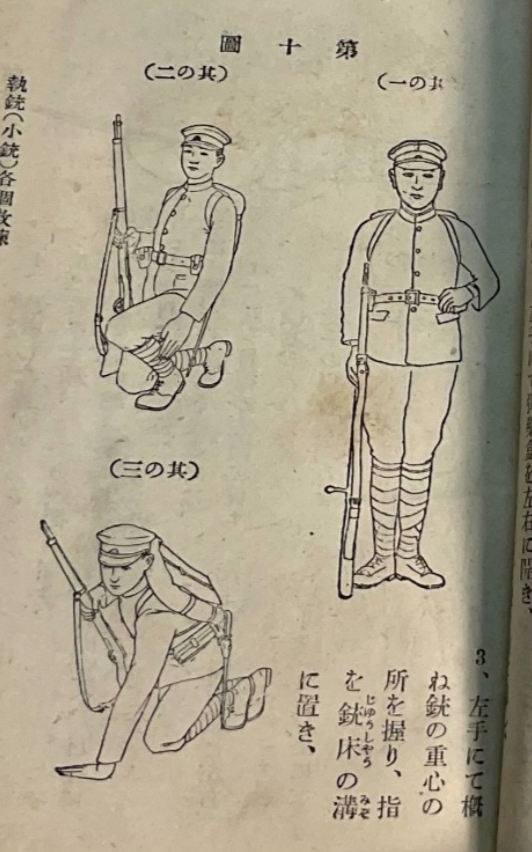
Jens: Guten Tag. Here is an auction for a Japanese field manual. This may answer questions about how equipment was supposed to be carried. Of course, everyone who has been in the military knows you carry things they way it works best for you once you leave the parade grounds. https://www.ebay.com/itm/116890492694? John C.

 1 point
 -
Ah, no, I think it is something else that has been made into a maedate, Bernard. Perhaps a post- or wall-plate from a Jinja for example.1 point
-
why not show more pics as cant really comment on a distorted partial image1 point
-
I have not yet done business with Eirakudo, although my interactions with them by email and at DTI have been very professional. They seem to have a good reputation, so I would be comfortable buying a sword from them.1 point
-
There is a subforum for translation assistance, so you are better to post this there. Even better, pay @SteveM or another translator to professionally translate this for you. You’ll get a better result, especially since Tanobe sensei sometimes has some nuance in his commentary.1 point
-
Mei is Iga no kami Fujiwara Kinmichi 伊賀守藤原金道 (second generation) and lack the Nihon kaji sosho mention 日本鍛冶惣匠. Kinmichi died in 1680. According the seller, that sword was made in Enpo jidai.1 point
-
Checks all my boxes except the price… Looks like the saya cover was originally made for a Type 98 based on the indentations in the leather where the haiken is located.1 point
-
Thats a really good one, and absolutely checks all my boxes. I really love these suya transitional patterns, and with all those accessories !! Thanks for sharing, A really good one for the list. -Sam ps. This one was previously shared on the NMB this year, although without much of the details like saya number, hanger, or the tassel. Must have been a shared eBay listing or something with worse photos than what St. Croix has now provided.1 point
-
Dont know if this fits and he was a registered Seki smith: KAZUNORI (一則), Shōwa (昭和, 1926-1989), Gifu – “Kazunori” (一則), real name Kanematsu Kazuichi (兼松一市), born June 10th 1894, he worked as guntō smith and died December 9th 1944, posthumous Buddhist name Zendō Myōtoku (善導妙徳) (from Sesko). Member of Seki Token Kaji Assoc in 1940. Registered as a Seki smith in Showa 14 (1939) October 26. Oshigata from Gendai S/smith Index. Same in Slough 1942 with Seki stamp. Fuller & Gregory has same mei Seki stamp 1943.1 point
-
I can’t help but agree with Colin. You definitely shouldn't do anything, especially in such an “indelicate” way. Firstly, rust removers completely “eat up” the top layer of the tsuba metal, and patina no longer forms on it. Secondly, you should not use oils like WD-40, as they are hygroscopic and contain aggressive additives. And if you remove the natural plaque around the inserts, the tsuba as a whole will look much less attractive…1 point
-
Hi Logan, Unless it’s being offered at a pretty low price, I’d recommend continuing to shop around. It does look like a genuine wakizashi, but in its current condition, it’ll be extremely difficult to appreciate any activities in the steel. The hamon is very hard to make out in the photos; I suspect due to a buffing or improper polish; and the nearly nonexistent hamachi suggests a tired blade. Overall, I think you could find something more enjoyable if you wait for the right piece. Other opinions may vary, but that's what I see. All the best, -Sam1 point
-
https://www.skinnerinc.com/auctions/3046T/lots/1058 Those these are all of the same general pattern, they are not identical and all show small variations. Like many of this type the tagane-ato punch marks around the nakago-ana were probably added in the workshop when manufactured, to give the impression that they had been mounted but are usually just cosmetic - some would have later been mounted but not many. https://auctions.yahoo.co.jp/jp/auction/g1197874839 https://www.jauce.com/auction/g1197874839 Auction still running. Another type that depicts the same scene are usually described as Hamano - the Hamano ones are identical and must have been mass produced but are often not finished to the same standards. I would much rather the hand finished Soten signed type! These can be expenive rubbish.1 point
-
Hi Kevin, Great question. There is a tradition of attribution that goes back to the 17th century where respected appraisers wrote the name of the maker in gold inlay on the tang of the blade (Kinzogan). Some of the shortening were performed by this group, called the Hon'ami, and as a result they had access to many more signatures than we do today. The attribution "Go Yoshihiro" has a number of canonical traits (e.g., Ichimai boshi, first class nie, shallow sori, habuchi that increases towards the kissaki...) that have been studied since the Momoyama period. There is, of course, a substantial degree of uncertainty with attributed blades. Attributions on mumei works are best understood as "this is the most likely maker given what we know today" - and even more conservatively as a way to state that a sword expresses certain traits and a certain level of quality that is in line with reputation of a certain master smith. In this sense, there is a tradition of attribution that has been honed over generation of competent judges, based on ancient literature and oral transmission. I would advise caution on mumei Soshu blades to big names that are without Ko-Kiwame (old appraisal by the reputable judges) or established provenance from Daimyo collection with a high-level record of gift-giving. Makers during the Shinto era, such as Nanki Shigekuni or Shinkai came very close to Go, and one should always examine the sword critically. Best, Hoshi1 point
-
Sorry price for above is usd 450 including shipping and PayPal fee1 point
-
Aoi Art usually does a much better translation than that. Surely that must have been done by some early Google-type of mechanical translator. Normally 平 is read Taira here, I believe. Nice package. Good luck!1 point
-
Yet another fake being sold as real. 800 USD. 9 people are watching this! https://www.ebay.com/itm/157480984955? John C.
 0 points
 -
Brandolini's law.... How many swords from this swordsmith have you really held in your hands? Me, only one so i keep my loud mouth closed on the subject-1 points
































This leaderboard is set to Johannesburg/GMT+02:00