
Leaderboard


Popular Content
Showing content with the highest reputation on 10/16/2025 in all areas
-
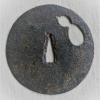
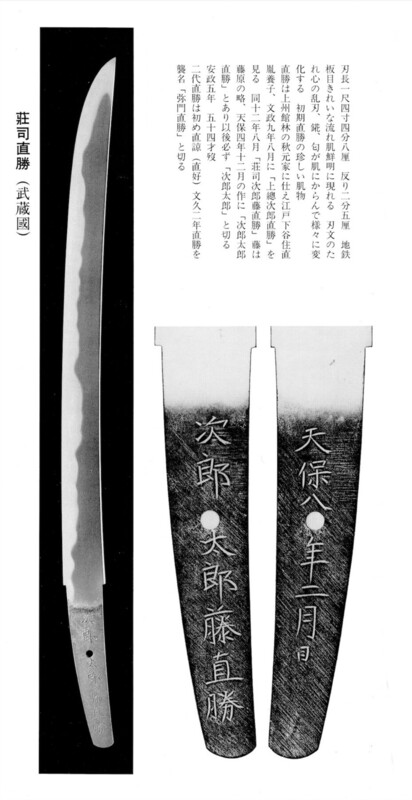
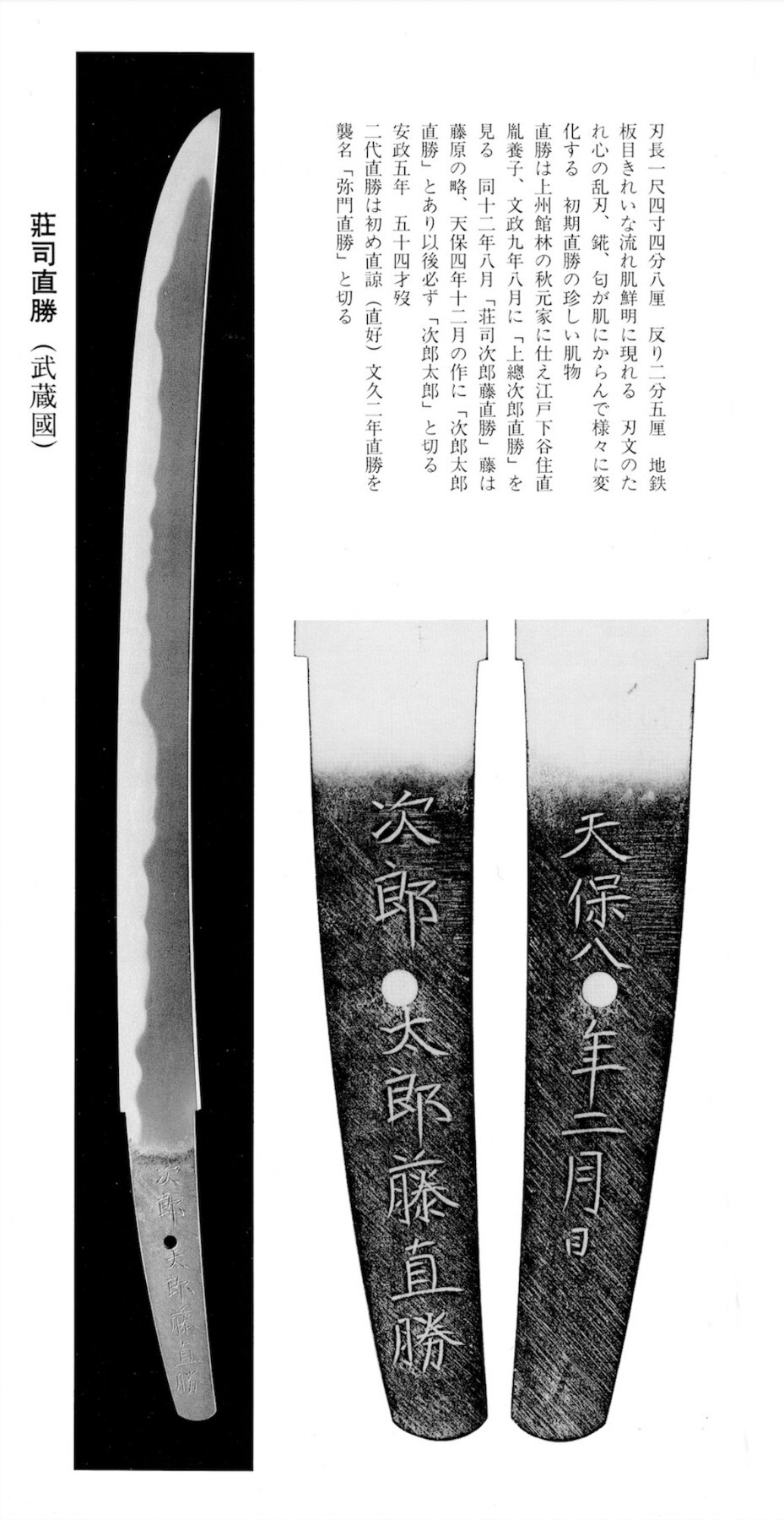
Thank you for joining me during this casual intermezzo. Basic inspiration is, of course, Etchu Norishige. Next in line is Ono Hankei. But the maker here is Jiro Taro Naokatsu, master-student of Taikei Naotane. reinhard
 13 points
 -
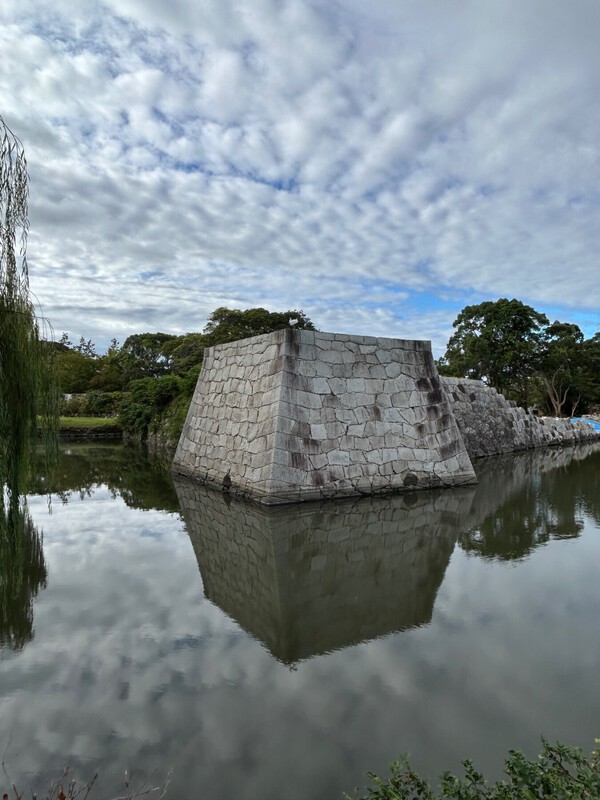
Moody shot of an egret on Ako Castle ruins.
 8 points
 -
三木様 海軍 – Mr. Miki, Navy 大山様□ – Mr. Ōyama ……6 points
-
There was another katana, though. and 2nd gen Hizen Munetsugu


 6 points
 -
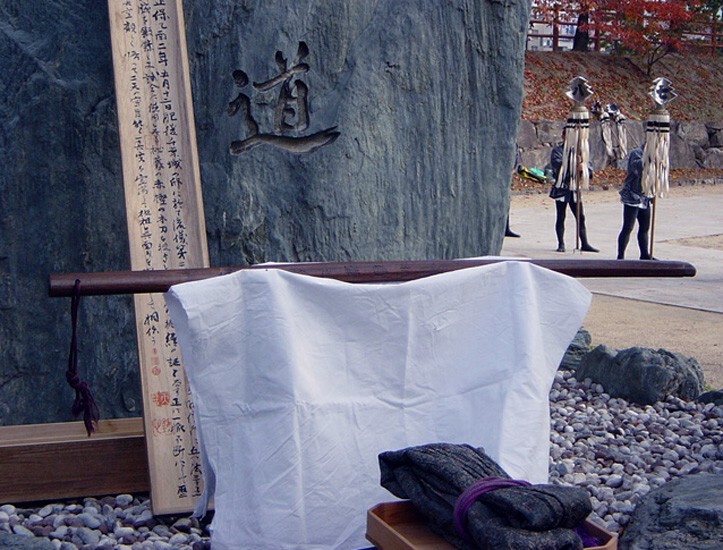
Just a teaser… 47 Ronin swords.
 6 points
 -
Best I could get, Nathaniel.

 5 points
 -
With a bit of twister I got further shots. The Yasumitsu wakizashi was turned away and almost buried in the display cloth, so I could get no clear shots of it.
 5 points
 -
Hi Erik, some of your photos are really good! Generally, making photos of swords isn't too difficult, but some practice can be helpful. Meaningful images should be: - well focused, not foggy or blurry - made with a plain dark/black, non-reflective background for good contrast (not white or bright) - made in a dark room, using spotlights - made with light from the side (may not apply to HAMON photos) - made directly from above (not at an angle) - made with correct orientation (straight vertically tip-upwards, especially NAKAGO photos) - without HABAKI, showing the MACHI and NAKAGO JIRI - made in high resolution to see details like BOSHI, HAMACHI, HAMON, HADA, NAKAGO JIRI etc. - presented as cut-outs so very little background is showing One main thing is to know what the important features of a blade are and how to capture and present them. It does not depend so much on expensive camera equipment or on special skills, but more on observing the results. You will find that only really good photos will contain enough information to help with the identification. Kind regards, Jean4 points
-
It's a noble cause Erik and one I approve of. Very few people take the time to optimise the photography of nihonto, which is a shame as there is so much beauty that is lost to the casual observer. I get as much pleasure from taking photographic images of my blades as I do studying their history. Darcy and Pablo are the two pioneers who really sparked my desire to improve my own skills. I'm by no means a photographer and had limited equipment when I started last year. My camera is an aging Fujifilm XT2 with the kit zoom lens. I quickly realised to capture all the fine detail a sword has to offer, a macro lens was essential. I bought a cheap, used Laowa 65mm F2.8 from Ebay Kleinanzeigen. The lens is manual only but I think the way manual focus works on the XT2 there is no problem getting pin sharp photos in combination with the Laowa. Next most important consideration were the light sources and I think it's true to say there is no universal light that will highlight every feature in the hada, hamon and boshi. After a few experiments the primary light sources I use now are an Ikea Jansjö LED lamp, which was recommended on a forum dedicated to macro photography. These are unfortunately discontinued but you can easily find them listed on Kleinanzeigen and I bought four for 5 euro each. To see the hataraki in the hamon, I discovered a high intensity halogen light with a dimmer to control output produced the best results (I think this is what Pablo Kuntz's photographer uses). Finally a tripod is critical when implementing longer exposures and I use the Fujifilm iPhone App to control the shutter release so there is zero risk of unintended movement. Here are some images I took from my first session. These are all jpg's without post-processing. You'll find more in the Google Drive folder. Still room for improvement, not least wiping the blade to eliminate all the dust particles . Ikea Jansjö LED lamp/Macro lens/tripod https://drive.google.com/file/d/1hcfbKl8l-efqxqyAxZ4Oe_PdNVX_jwDN/view?usp=sharing https://drive.google.com/file/d/1crDNe1w38OAxs56JgM0YfQpHB6nDpDWd/view?usp=sharing https://drive.google.com/file/d/15k7eGF_EwuC_oCAi-dd5qTee_p5E5PgY/view?usp=sharing 250W High Intensity halogen bulb/macro lens/tripod https://drive.google.com/file/d/1Ri4luL4j5Lslik8-sYD63RvJ-mJj9jlX/view?usp=sharing iPhone 12/natural diffuse daylight/handheld blade and phone https://drive.google.com/file/d/1ppwmEYqNJq_mI8zImLY5FQg2Vkbu6M-1/view?usp=sharing Good luck4 points
-
And a wakizashi koshiraé in a corner…
 4 points
 -
Katana said to be by Osafuné Kiyomitsu. The captions in the first case say the following: And for the Tantō

 3 points
 -
I like Hoshi's theory . One of my blades is by Kunihide and whilst it has bold sunagashi it is far more subtle and finer than the piece that Reinhardt has shown . His piece reminds me of the showa pieces that are produced by the likes of Amahide where the work is much coarser and even more artificial looking. So I will stick my neck out and say it is more recent than shinshinto .3 points
-
Adam, some images are really good in my opinion. It is as you say: TRy different angles and lighting, use a dark background for good contrast, and find the perfect focus. Your results will guide you!2 points
-
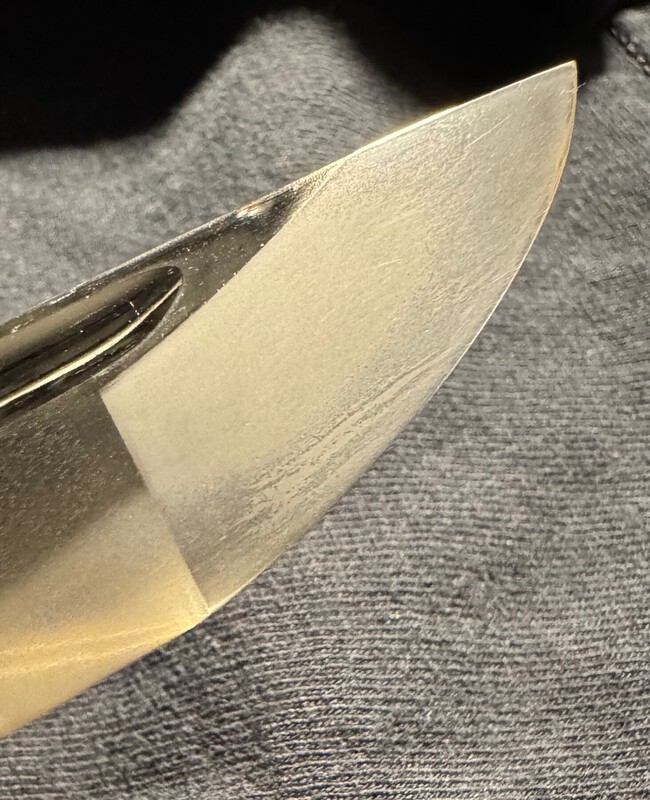
I am always impressed with the good photos of nihonto that some people are able to take. I’ve tried playing around with it a bit, but it seems like the fancier I try to get, the worse the photo. So I’ve resorted to just using my iPhone. Dust, reflections, lighting—all so frustrating. Just when I think I have a decent photo, I notice something is off. And good luck capturing a boshi!


 2 points
 -
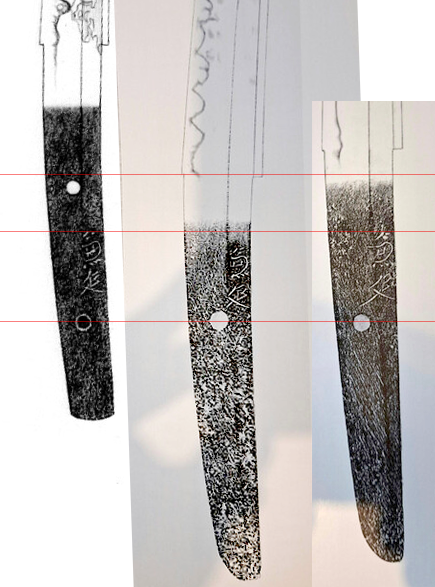
With Jussi's juyo oshigata as a reference, I think this shows that it would be impossible for current nakago-jiri to be original. As said above, the current nakago-jiri would be uncharacteristic and the nakago itself too short to be functional.
 2 points
 -
It is 100% not an antique and is modern made. That means it could easily be 30-40 years old...but waaaay newer than WW2. Not traditionally made. As Jussi said, a "modern" Iaito, even if it was 40 years ago. Zero chance it's a fighting sword made for the war or earlier.2 points
-
I believe these are the fittings that are on your sword Tsuba: https://www.seidoshop.com/products/minosaka-tsuba-washi-tm001 Menuki: https://www.seidoshop.com/products/minosaka-menuki-kuromon-m013 Fuchi & Kashira: https://www.seidoshop.com/products/minosaka-fuchi-kashira-higo-karakusa-fkm105 I would assume it is an iaito, and possibly made by Minosaka brand. I think many places sell these, for example Tozando, Seidoshop etc. You can see Tozando Higo Koshirae iaito has these same fittings but different tsuba: https://tozandoshop.com/collections/minosaka-iaito/products/minosaka-higo-koshirae-iaito however for long time it has been possible to customize iaito, so you can see the selectable basic tsuba options have the Eagle tsuba as 1st one in options. Also when you showed the 2nd nakago picture on the side without markings to me that looks like the iaito nakago I have personally seen. Unfortunately I haven't really been checking martial arts equipment for last 10 years or so as that is not my thing.2 points
-
嘱託=contract employee2 points
-
Not only for you Erik!2 points
-
Judging by 90%+ posts we see here, I beg to differ. Even the dealers with decades of experience do a p!ss poor job of it.2 points
-
Adam, good questions, but one day you will be able to visit, I feel sure! Remember to purify your hands by the entrance.
 2 points
 -
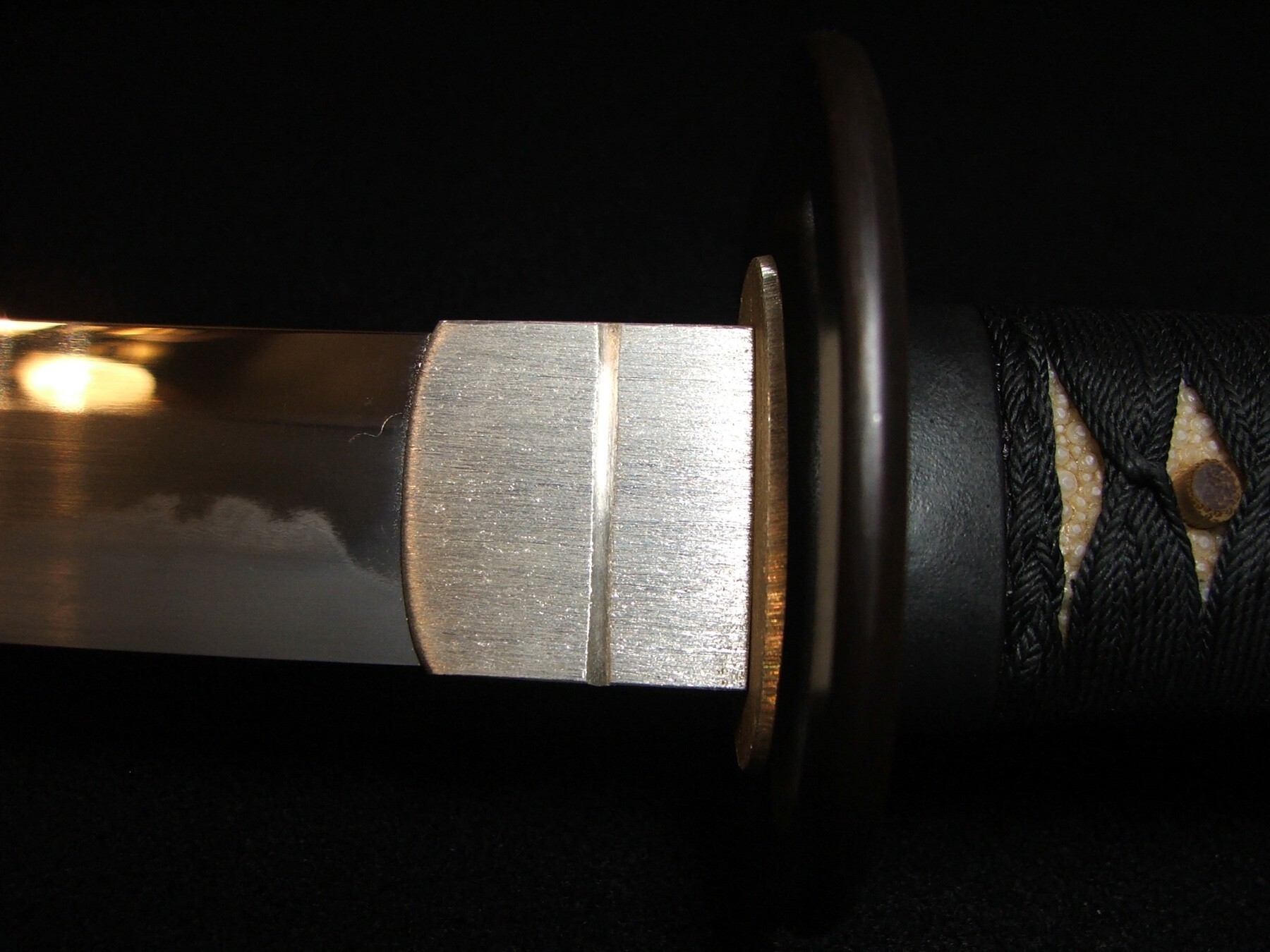
Sometimes simple is just as elegant........solid silver with a single groove
 2 points
 -
I think you're right. My bad. Photographic artefact. The penultimate pic shown for the Norishige confirms it, having the same anomaly. Seller should be ashamed especially for what they're asking.2 points
-
Hi, I'd like to purchase 2-3 exemplars of very low quality swords. The worst, the better. Examples of what I'm after: - A mass produced Sukesada, showing uneven hada, ware, and nie-kuzure in segments of the nioiguchi. - A bland Shinshinto or Kanbun Shinto work. The steel should be almost muji, without any jinie whatsover, and a hamon that feels hand-drawn without any activity in the ha. Bonus points for tobiyaki that feel like they've been painted on. Chu-saku on a Sake Hangover. - Mino Muromachi, with very rough, grey-looking hada and a gunome that has no coherence. The only constraint is that they must be in good polish and in shirasaya Because a good polish is expensive, I'm willing to pay a good amount commensurate, minimum, to the value of the polish. This is your occasion to recoup your sunk costs. The more terrible the blade and fitting of the archetype I'm looking for, the better. Hagire, ware, lack of boshi, crow's beak, and so forth are welcomed, even encouraged. PM me your swords with a google drive link that contains decent picture. Best, Hoshi1 point
-
Not that it matters to the sword, but just an interesting little bit of information for members. I very nearly got scammed, trying to buy the sword. Liveauctioneers was hacked and scammers got their hands on the email system and pretended to be the Auction house that sold these items. Several people lost a lot of money and I was very nearly scammed if it was not for Visa and their automatic fraud prevention system I would’ve lost close to US$4000 with no way to reclaim it. The lesson is be careful even if you think you’re dealing with a large Auction house or an online auction platform you can still get scammed. If something looks weird it probably is if someone asks you to pay through PayPal and send it to friends and family. It is a scam if they ask you to pay through a different payment system it is a scam if you cannot speak to someone personally or the telephone number of the Auction hours doesn’t work. It is a scam a visa or your credit card company automatically blocks a transaction. You should probably reconsider paying this person as it is probably a scam. Lesson learned. You would think an online platform like liveauctioneers would be safe and even that wasn’t.1 point
-
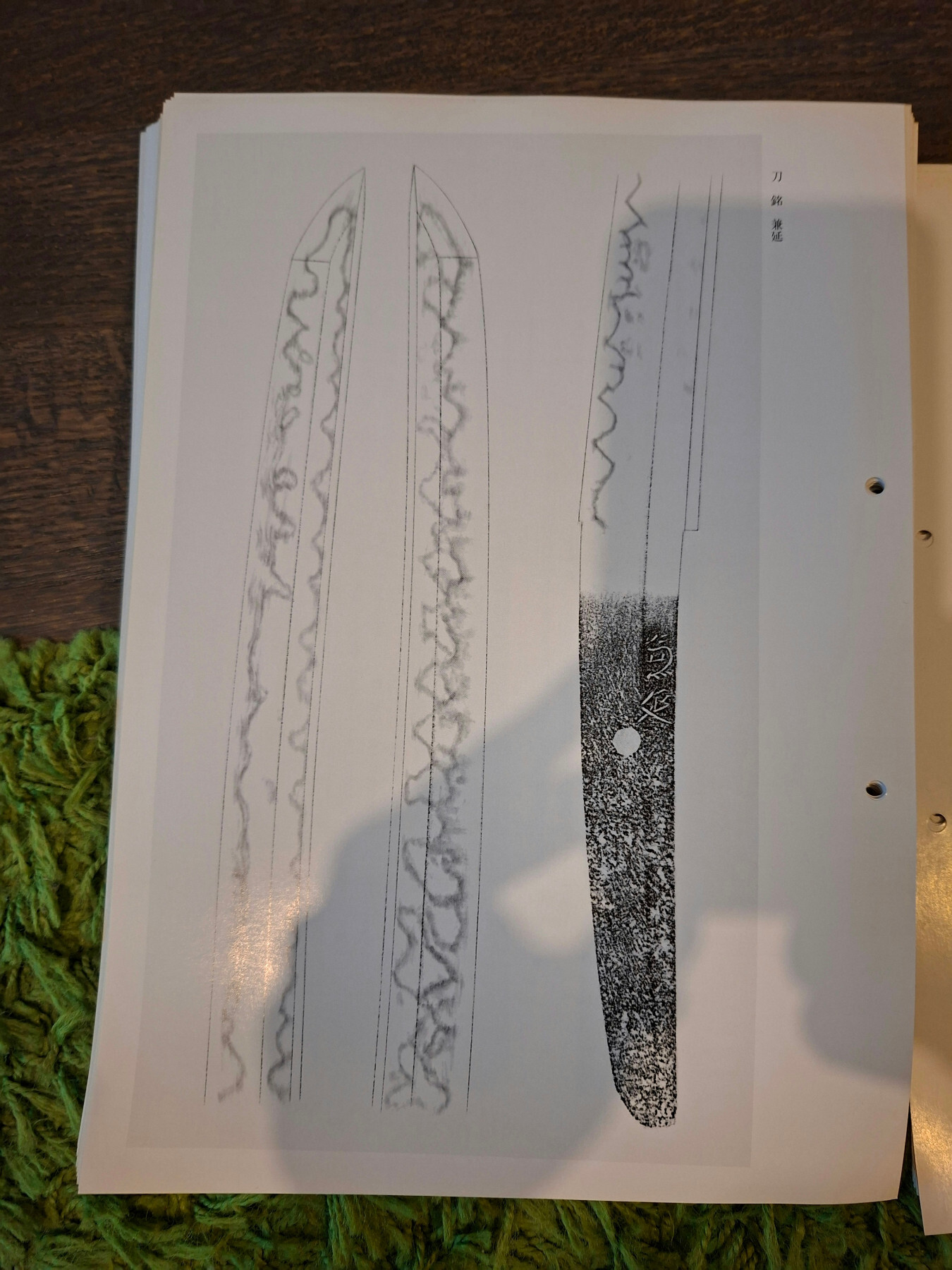
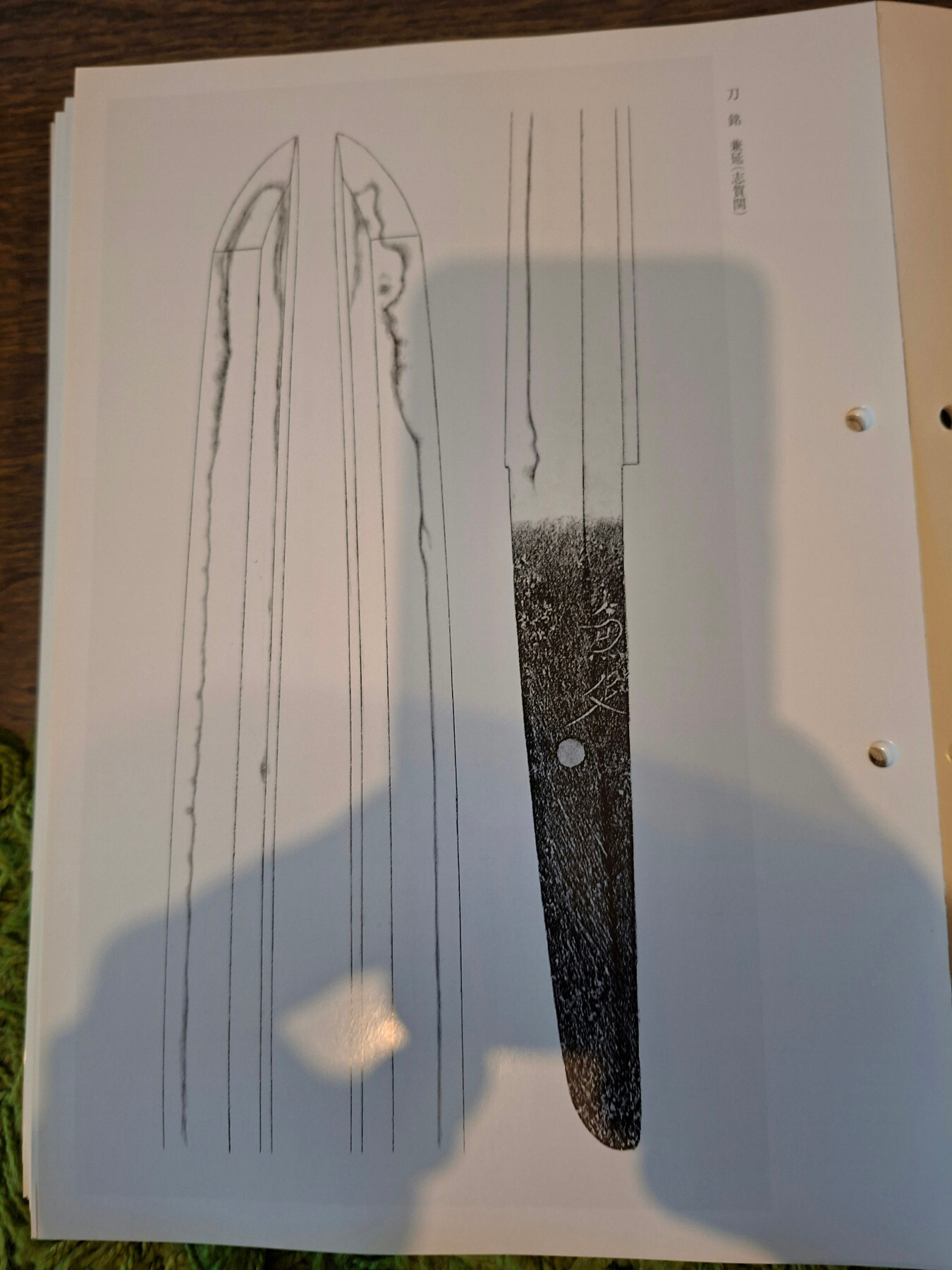
To me it seems like very nice sword based on the oshigata, I like it. However I think the sword has been shortened. Like Ray I think the lower ana is the original one. While that might not be a huge deal for me personally I think for Jūyō shinsa it could be a major point. There are only 3 Kanenobu (兼延) swords that have passed Jūyō. In sessions 41, 49 and 58 (unfortunately I don't have the 58 book yet but I will post the 2 others). They are both ubu and you can see that 41 session sword is hitatsura like yours. I have never sent anything to shinsa but I think I would just enjoy it with current papers it has.
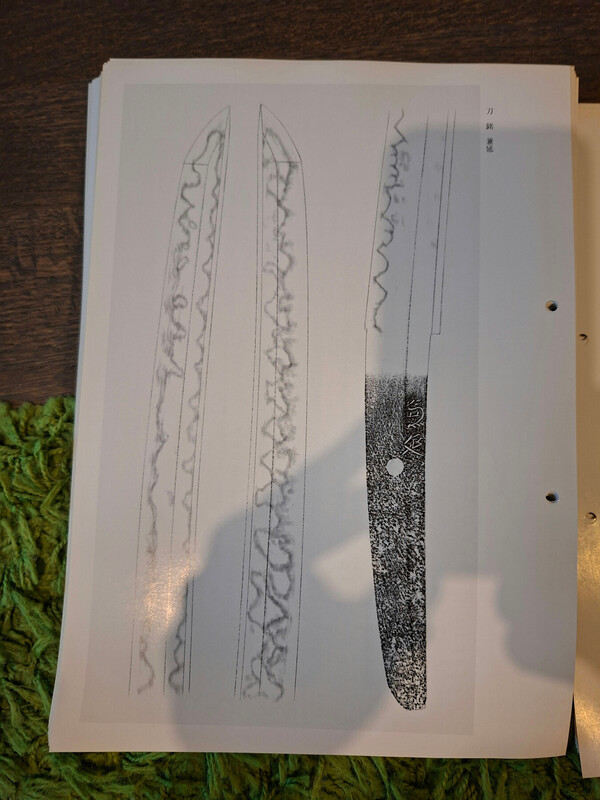
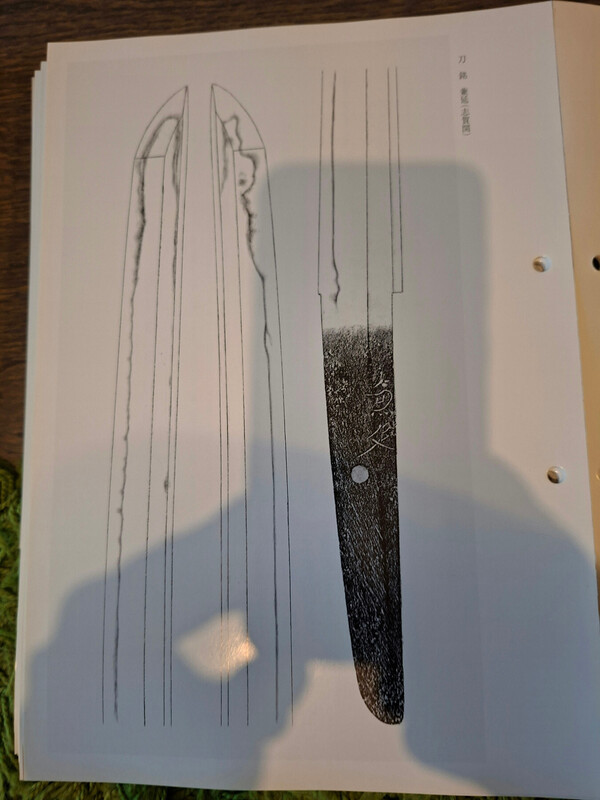 1 point
 -
Thanks for posting this Reinhard.1 point
-
Ahh you didn't mention it was signed. I couldn't see a signature on those nakago pics. That changes things somewhat. At about 500 quid all in you did pretty well then.1 point
-
Yes it was signed and stamped by maker so blade wasn't made to deceive buyer.
 1 point
 -
It caught my eye that the company had shops in China. The painted numbering on the nakago looks modern, too.1 point
-
They were buried in Edo (Tokyo), correct? According to books/movies not only drawing, but also cutting/wounding Kira. That one Wakizashi out there which is more expensive than Katana1 point
-
Is this a permanent display? Is there a connection between the 47 and the location? I'd also like to visit the Shrine this time next year when I plan to travel to Japan for the DTI.1 point
-
@BugyotsujiThanks! I envy you so much for having possibility to be there. These are very nice blades, Bizen, Hizen, not a cheap Kaze-uchi-mono I would expect. Question is, are these the swords they took for final battle, or are these the ones they had with them during Seppuku ...1 point
-
Indeed, emailed them and got this reply : While our expert suggests this appears to be a photo compositing mistake made during the editing process...1 point
-
Hats off to your research!I’ve actually been watching the market for Emura and Nagamitsu blades for more than two years. Judging solely by what turns up on Yahoo! Japan Auctions, only three Emura have changed hands in the past twelve months (Oct–Oct), whereas at least thirty-seven Nagamitsu have sold. The tiny surviving population of Emura—so out of step with the theoretical output—has bugged me from the start, and that’s exactly why I raised my original question about Emura and Nagamitsu.1 point
-
Thanks so much for the photos. I can't quite tell from the photo, but was the boshi on the Kiyomitsu ichimai? Looks like it flares out at the yokote, but I can't quite tell if I see a maru and kaeri or if it's just all hardened.1 point
-
Generally the presence of Uchinoke would steer one toward smiths with Yamato roots.1 point
-
My impression from the oshigata is that the lower mekugi-ana below the mei (now plugged) is the ubu-ana (the original mekugi-ana). If so, the upper mekugi-ana would have been added when the nakago was modified and shortened from the nakago-jiri end. This does appear to be suriage to my eyes.1 point
-
Try some incandescent light sources, as well as LED and fluorescent lights. (Auto) Focus can be tough - but looks like you've handled that well.1 point
-
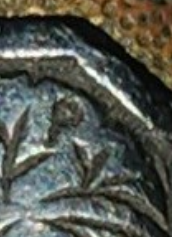
I think he's talking about this bit here, but I'm not sure if it is actually a "P Y", or if it is part of the design of the bamboo leaves on snow.
 1 point
 -
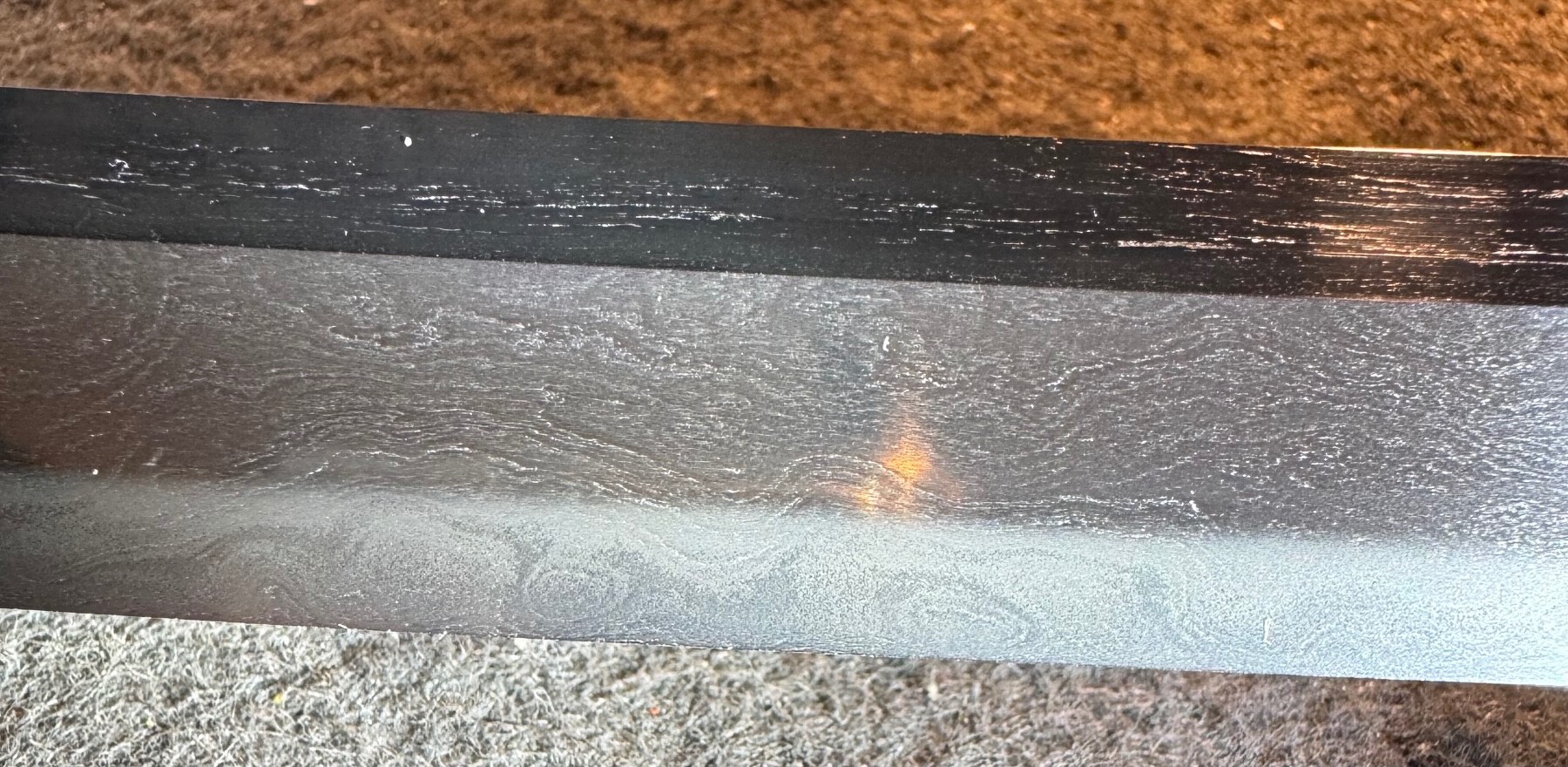
Personally, I think that what appears to be a crystalline structure of steel in the photos is actually caused by the software of the hardware (I think the mobile phone) that took the photos However, I couldn't find any data on the HW. so it's just a guess1 point
-
Is there anything with contrast editing that was done the picture? To me, it’s similar to Hankei in the O mokume, but that activity in the hamon seems quite different. There are places where the hamon would extend father into the ji, but wasn’t for sake of uniformity.1 point
-
Interesting. Also, the stamped number 26 would normally be seen on the seppa, as well. Well, Sara's dad brought it back, so like many others we've seen, we're left with a couple options. Either he found a sword that needed a tsuba and found a tsuba to put on it, or it was a replacement 'in the field.'1 point
-
With just seeing that one picture without any other info I would guess Hankei (繁慶) and Early Edo period. However as I am not that skilled in technical details it would be very hard for me to describe the features that are actually seen in the picture.1 point
-
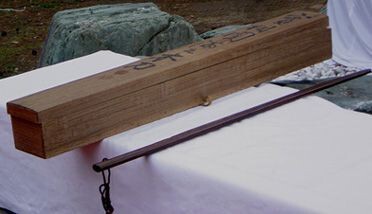
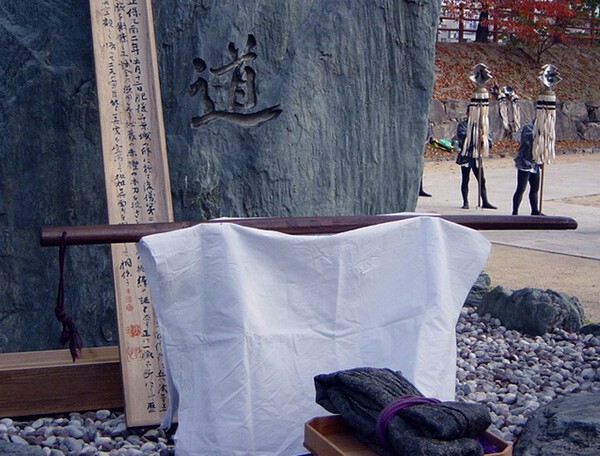
I pulled this off of a Japanese site years ago. "Musashi has many talent. He made sword fittings. Terao-Nobuyuki, Musashi's best pupil received a Musashi self-made koshirae. Sword is 81.8cm Kaneshige. Kashira is Hana-kukuri shape horn. kojiri is horn too. Fuchi is copper with hammer pattern. Tsuba is "Namako-sukashi" copper. Tsuka with horse leather Tsuka-ito". This sword is also described is the book, Zukan Toso no Subete on pages 58 and 59. The swordsmith is Izumi no Kami Fujiwara Kaneshige of Echizen. Also, there are two swords, a katana and wakizashi by Kawachi no Kami Nagakuni that are documented as being used by Miyamoto. Bokuto On the web page for the Hyoho Niten Ichi-ryu https://www.hyohonitenichiryu.com/global/english/ a bokuto made by Miyamoto called the Jisso Enman no Bokuto is mentioned. A detailed description is here https://www.hyoho.com/embo.html

 1 point
 -
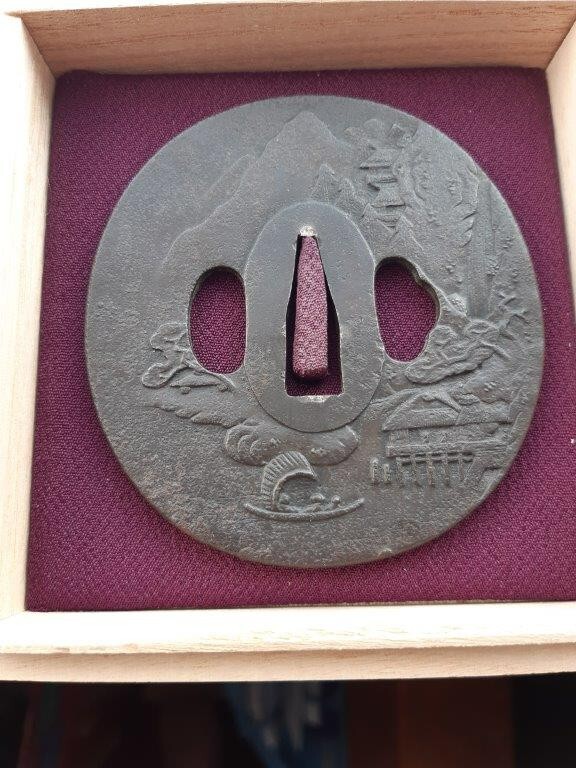
Hi Daniel here is my Choshu Tsuba , with a similar theme .
.jpg.b0d79ee8088130af849f56c29a27d670.jpg) 1 point
1 point -
Hi John, No dates yet. Typically we meet on the 2nd Friday of the month, but November and December are unusual since many people are away in Japan at the Dai Tōken Ichi, and because of the holidays. We were talking about meeting up for an end-of-year Christmas dinner sort of thing, but nothing concrete yet. Will drop you a line if we decide on anything. Steve1 point
-
Unfortunately I cannot identify a masterpiece amongst very good quality swords. I understand my limitations and as Reinhard wrote out so well about Japanese taste and appreciation points, I cannot achieve that understanding. I am limited to my own quite biased appreciation of swords. Just looked out my sword diaries and it seems I have seen 21 National Treasures, and to me it puzzled me as I couldn't even faintly remember all of them. Out of them only 3 swords were items that I immidiately thought that I personally see as masterpieces in my personal taste. Of course I think all National Treasures are masterpieces it is just that I lack understanding and judgement to understand them fully. And many might think that of course they will the 3 ōdachi... well yes an no. I do think the mumei ōdachi attributed to Bungo Tomoyuki is extremely well made for such a huge sword but is it unique when compared to other historical ōdachi. So the 3 most remarkable National Treasures that I have personally seen so far are Tomomitsu ōdachi, Nagayoshi ōdachi and Tokuzenin Sadamune wakizashi. I was also thinking about Kosetsu Samonji tachi but when I spent a lot more time looking at Jūyō Bunkazai tachi by Kanemitsu in the same room, I don't think personally I would classify it as high as the other 3 on my personal list. Fukuyama Art Museum is a crazy place, they had lent 2 of their National Treasures to another museum when I visited but they still had 5 National Treasures on display in their sword room. Now the crazy thing is that I spent about 50% of my time looking at the wonderful Kanemitsu tachi that they have in their collection, to me it was much more interesting than any of their National Treasures. Another difficult thing is to judge the work among the other works of that particular smith. I saw the Daihannya Nagamitsu tachi at Tokyo National Museum this summer. It is a very good sword and definately a masterpiece but I personally cannot really judge it in comparison to other Nagamitsu tachi that I have seen. Same thing with Kanemitsu tachi that I was mentioning there above. Last summer I saw 3 Jūyō Bunkazai tachi, and in my personal appeal they were Fukuyama Art Museum item, Tokyo National Museum item, Mitsui Memorial Museum item. Even though as I said I lack understanding to differentiate items at this very high level but Mitsui Museum one might have been the best one in quality. However for me there is no comparision as the shape of Fukuyama Art Museum sword blew the other 2 JūBu Kanemitsu out of comparison for me. It is also fun to see swords many years after seeing them for the first time and see if perhaps the opinion has changed. Funny thing is that I am not a big fan of Awataguchi work in general (I think it takes much higher level to appreciate), however I still remember seeing the Nakigitsune in Tokyo National Museum many years ago. I don't even remember Masamune etc. that were in the same room, just the Kuniyoshi and Kagemitsu naginata that was in their naginata spot upstairs. For fun thing at the end we can take Yoshifusa (吉房) as the smith. I have found 41 tachi by him and 4 of those are National Treasures. I have seen 5 of his tachi and 2 of the National Treasures but there is no way I could really make a meaningful point about their relative quality amongst each other. Also human perception is a funny thing and at least for me I would optimally need to see the swords side by side, as I have found out that even seeing wonderful swords by the same smith in different location during the same day my memory already fails me. Also from someone with extremely heavy focus on books I can say the swords can look very different in real life at museums/shrines etc. I can even imagine how much more you could some cases see if you would have the opportunity to view the item in hand. Very valuable occasion would be to also look at the items with someone with very good eye. I was fortunate to visit few museums in Tokyo with a fellow member with very good eye for swords, I was so happy he could teach me parts where to specifically look and could offer so valuable insight I could not have gotten just viewing the swords alone. I really struggle with the high art aspect but threads like these are really valuable to learn and broaden the understanding.1 point
-
I wouldn't immediately jump to gimei. Perhaps they went on the workmanship first, and the mei second. There can be many reasons for differences in mei, but the work has to confirm the mei, not the other way around. Plus although you can find gimei on Gendaito, the likelihood is far less than antiques. It's well signed too. What are the chances that someone took an unsigned decent sword and added this signature? I'd lean towards shoshin for that reason alone, but the work needs to be matched before you consider the mei.1 point
-
A great article by Markus. https://nihonto.com/samurai-income/1 point













.thumb.jpg.b230d369cb581228bdc2ca90f9259959.jpg)






This leaderboard is set to Johannesburg/GMT+02:00