
Leaderboard
Popular Content
Showing content with the highest reputation on 05/22/2024 in all areas
-
Curator of the MET - Markus Sesko - released a curatorial today which explains the concept of mono no aware by using examples. I've asked his permission to reproduce it here and he gracefully agreed - however I would like to stress that people should sign up for these mails at the site of the MET. It's really worthwhile and informative. Broken Tiles: The Japanese Concept of Impermanence Figure 1 Over the course of time, Japan developed worldviews that permeated native art as aesthetic concepts, many of which are difficult to translate or define in a concise manner. Arguably most well-known in the West is the Japanese concept of wabi-sabi, which started to shape culture and art in the late fifteenth century and which is often described as being that of “appreciating beauty that is imperfect/incomplete and of natural simplicity.” Another such concept, however, had emerged much earlier, i.e., in the Heian period (794–1185), and that is the concept of mono no aware (物の哀れ). Figure 2 Mono no aware is deeply rooted in Heian-period literature and is most prominently associated with the classic The Tale of Genji, written in the early eleventh century by noblewoman and lady-in-waiting Murasaki Shikibu (Fig. 2), and highlighted in The Met Asian Art Department’s exhibition of the same name held from March 5 to June 16, 2019. While the phrase translates literally as “an empathy towards things,” it stands more broadly for the awareness of impermanence. Mono no aware comes with melancholic undertones but is not about the mere acceptance of impermanence and transience of life per se. It embraces the certainty that although certain things and even moments are doomed to fade and pass, much of their beauty lies in the fact that they can indeed be witnessed in the first place, most famously so the brief blossoming of cherry blossoms in spring. Figure 3 When it comes to Japanese sword fittings, references to the concept of mono no aware start to appear in the mid-Edo period (1615–1868), when swords had become a critical means of self-expression for Samurai, and their fittings collectibles for persons outside of the Samurai class. Shown in Fig. 1, with additional details in Fig. 3, is a sword guard (tsuba) made by Gotō Ichijō (1791–1876), the last great master of the renowned Gotō School of sword fittings makers. It depicts broken roof tiles scattered over both sides, of which some are inscribed. The tile on the bottom right of the obverse bears the inscription Byakkorō (白虎樓, lit. “White Tiger Watchtower”) which was one of the four guarded entries to the walled Greater Palace inside of the original Imperial Palace of Kyōto and which was repeatedly destroyed by fires, never to be rebuilt again after the early thirteenth century. The tile on the top left of the same side of the tsuba is inscribed Daijōkan (太政官), the Great Council of State, which was the highest body in Japan's premodern Imperial government, but which lost power over the tenth and eleventh centuries. The inscription of the broken tile on the top right of the reverse starts with “Sakyō” (左京), which refers to the areas of central Kyōto east of the Imperial Palace. And the last inscribed tile, located at the bottom left of the reverse, references the Kōrokan (鴻臚館) guest houses for foreign ambassadors, traveling monks, and merchants that existed in Japan during the Heian period and earlier. Thus, through the deliberate use of broken roof tiles, ko-gawara (古瓦) in Japanese, the subject of the tsuba can be understood as an allusion to the old Kyōto at the height of its imperial glory in the sense of mono no aware, which was long gone by the time the sword guard was made, with actual power having been in the hands of the warrior class by many centuries at that point. Figure 4 The motif enjoyed great popularity, and the artist Gotō Ichijō produced several sword guards in this style. For example, as shown in Fig. 4, this daishō pair of tsuba featured in Volume 2 of multi-volume Tagane no Hana (鏨廼花, “Flowers of the Chisel”) published in 1904 by entrepreneur Mitsumura Toshimo (光村利藻, 1877–1955), which centered around his extensive collection of sword fittings. Ichijō was actually born and raised in Kyōto and was trained in other traditional arts, like waka and haiku poetry, as well as in painting. He visited Edo (present-day Tokyo) on several occasions but did not relocate there until the age of sixty when he started an official employment with the Shogunate. We can imagine that Ichijō might have had some mono no aware moments in the “new capital” if you will, yearning for his home, the birthplace and breeding ground of classic Japanese arts. Figure 5 Ichijō’s interpretation of the mono no aware subject via broken tiles was then also adapted by several of his students, e.g., by Araki Tōmei (荒木東明, 1817–1870). A tile on one of his works (Fig. 5), however, references the Shitennō-ji (四天 王寺), a Buddhist temple in Ōsaka, not in Kyōto. Built by order of Prince Shōtoku (聖徳太子, 574–622), the temple was destroyed by fire several times as well over the centuries, hence it carries the very same sentiment as described earlier. Figure 6 One more tsuba from our collection that I would like to introduce on the topic of mono no aware is shown in Fig. 6. Via openwork, it depicts a waterwheel and lively waves, a combination, which refers to the Waterwheels of Yodo (Yodo no Mizuguruma, 淀の水車). Once, two large waterwheels measuring around 48 feet in diameter were operated on the lower course of the Yodo River and transferred water into the castle of the same name and to surrounding farms. When the castle was abandoned at the very end of the sixteenth century and maintenance of the waterwheels became too expensive, the river was allowed to change course in a natural manner and the wheels were left dry. Soon, however, they became a famous scenic attraction, especially when viewed from a nearby bridge and tea pavilion. The scenery also must be understood from the point of view of power changes. Yodo Castle was once captured by the famlous warlord Oda Nobunaga (1534–1582), and then renovated by his assassin Akechi Mitsuhide (明智光秀, 1528–1582). Afterwards, it was expanded by Toyotomi Hideyoshi (豊臣秀吉, 1585–1592), who avenged Nobunaga and succeeded his political powers. When Hideyoshi’s own major castle of Fushimi was completed in 1594, Yodo Castle was abandoned. Fushimi Castle, however, was then itself dismantled in the early seventeenth century on behalf of the new rulers of Japan, the Tokugawa, who in turn had the older Yodo Castle rebuilt at a slightly different location, using material from former Fushimi Castle and incorporating once more a single waterwheel. There the castle remained under different rulers until it was burned down in the turmoil of the Boshin War in 1868. Figure 7 Accordingly, the subject of the tsuba shown in Fig. 6 and in a stencil in Fig. 7 in The Met's collection, highlights the tumultuous era of The Three Unifiers—Oda Nobunaga, Toyotomi Hideyoshi, and Tokugawa Ieyasu—in a single design. It so alludes to the fact that no empire, kingdom, or rule has proven immune to impermanence. Thus, works of art such as introduced in this humble article can be a reminder of the fleeting nature of human influence and that governance is one of constant flux and change. Fig. 1: Sword Guard (Tsuba), 19th century. Copper-gold alloy (shakudō), copper-silver alloy (shibuichi), bronze, copper. H. 3 1/4 in. (8.3 cm); W. 3 in. (7.6 cm); thickness 3/16 in. (0.5 cm); Wt. 4.5 oz. (127.6 g). The Howard Mansfield Collection, Gift of Howard Mansfield, 1936 (36.120.23). Photo: Stephen Bluto. Fig. 2: Detail of Portrait-Icon of Murasaki Shikibu (Murasaki Shikibu zu), Tosa Mitsuoki (1617–1691). Hanging scroll; ink and color on silk. Lent by Ishiyamadera Temple (SL.7.2019.19.3). Fig. 3: Detail of Sword Guard (Tsuba) shown in Fig. 1. Fig. 4: Mitsumura, Toshimo. Tagane no Hana, Vol. 2. Kobe, Japan, Ryūdshidō, Ltd., 1904. Department of Arms and Armor Library. Fig. 5: Fukushi, Shigeo. Tōsō, Tōsōgu Shogaku Kyōshitsu, No. 96, Tōken Bijutsu No. 545, pp. 23–24, Nihon Bijutsu Tōken Hozon Kyōkai, May 2002. Courtesy of Nihon Bijutsu Tōken Hozon Kyōkai. Fig. 6: Sword Guard (Tsuba), 19th century. Iron, copper. Diam. 2 3/4 in. (7 cm); thickness 1/4 in. (0.6 cm); Wt. 3.2 oz. (90.7 g). Funds from various donors, 1946 (46.122.145). Photo: Stephen Bluto. Fig. 7: Stencil with Pattern of Flowing Water, Waterwheels and Embankment Baskets, 19th century. Paper reinforced with silk. 20 1/2 x 14 3/4 in. (52.07 x 37.47 cm). Gift of Clarence McKenzie Lewis, 1953 (53.101.37).10 points
-
Thanks for posting this, Dirk. Mono no aware was actually a very important value informing the Tea aesthetics so dominant in late-16th and early-17th-century Buke culture. We see it pouring forth from such wares as Setoguro chawan, Bizen mizusashi, and Iga hanaire, but it found its way to the finest iron tsuba of the time as well. One interpretation of the effect of yakite treatment in works by (in particular) Hoan, Yamakichibei, Nobuiye, and the Kanayama "school" is that it echoes the dilapidation (impact of the passage of time) of what was once a pristine surface. In the expression of mono no aware thus realized, such tsuba also may be said to possess degrees of sabi. Interesting note: the term wabi-sabi is likely a relatively recent construct (i.e. 20th-century). While the aesthetic values wabi and sabi are known much further back (several centuries, at least), the joined term wabi-sabi does not seem to appear in any documents from the Momoyama or Edo Periods. It does not appear in the various Tea diaries and records of those years, though the terms do appear separately. We may thus wish to pause in describing Tea objects from those times (ceramics and iron tsuba known to have been tightly associated with Tea) as having or expressing "wabi-sabi." Here is a Shodai (hanare-mei) Nobuiye tsuba expressing the Yodo no Mizuguruma theme. It is thought that Nobuiye had close associations with Oda Nobunaga, and may have worked for the Oda family in the Momoyama Period.

 7 points
 -
This one seems worth a watch. Haven't watched it yet, so can't comment on how good it is, but looks interesting.6 points
-
Wow gentlemen! Thank you for your quick responses. I appreciate details of some of the underlying factors that helped form your conclusions. I don't know if I would have ever arrived at any reasonable estimation of source or date, as you can see from my shot in the dark "Mid-Edo,Shinto" guess. Just identifying the variety of features in the Hamon was a bit mind boggling, let alone trying to determine the pattern in the Hada and Boshi. Measurements I can make, but the more nuanced determinations are quite a ways beyond me. I have to ask if the information I provided was accurate and sufficient for your evaluation, or is there additional information I could have provided. It took me the better part of a week to prepare my inquiry, reading the many great articles, especially by Markus Sesko, taking pictures, sizing pictures, orienting pictures, trying to learn at least the rudimentary terminology, etc. I have 4 additional swords that I would like to submit and want to make sure I do it properly so I don't waste your time. I will also work to find a way to provide better pictures where possible.3 points
-
Today the mail lady brought my latest purchase I'm just giddy about it and felt I had to share it. Back in 1985 my wife came home from her parents and handed me this wakizashi and said her dad brought it down from 40 years of storage in the attic and said give it to me and if I don't want it to throw it away! Needless to say it started a fire and today our house is filled to the brim with Japanese antiques. Her father was an amphibious tank driver with the 1st Marines and in the first wave ashore on the Okinawa invasion and that's where this sword came from. I had it polished by the late John Browstowitz and I bought a replica sword to untie and teach myself to rewrap the tsuka. The blade and possibly the mounts too are circa 1680 by Fujiwara Sadayuki of the Bungo Takada school. I've always loved the tsuba which I'm told is signed Shoami Kanenori. Imagine my surprise to find this latest tsuba on eBay from a seller in China for what I though was a steal of a buy-it-now price. I'm so glad to put these two together in my collection. Would appreciate thoughts on what the mei says and how close they might be in age or any other comments welcomed. Howard Dennis

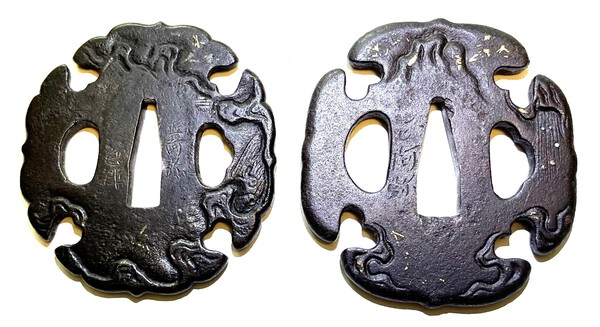

 3 points
 -
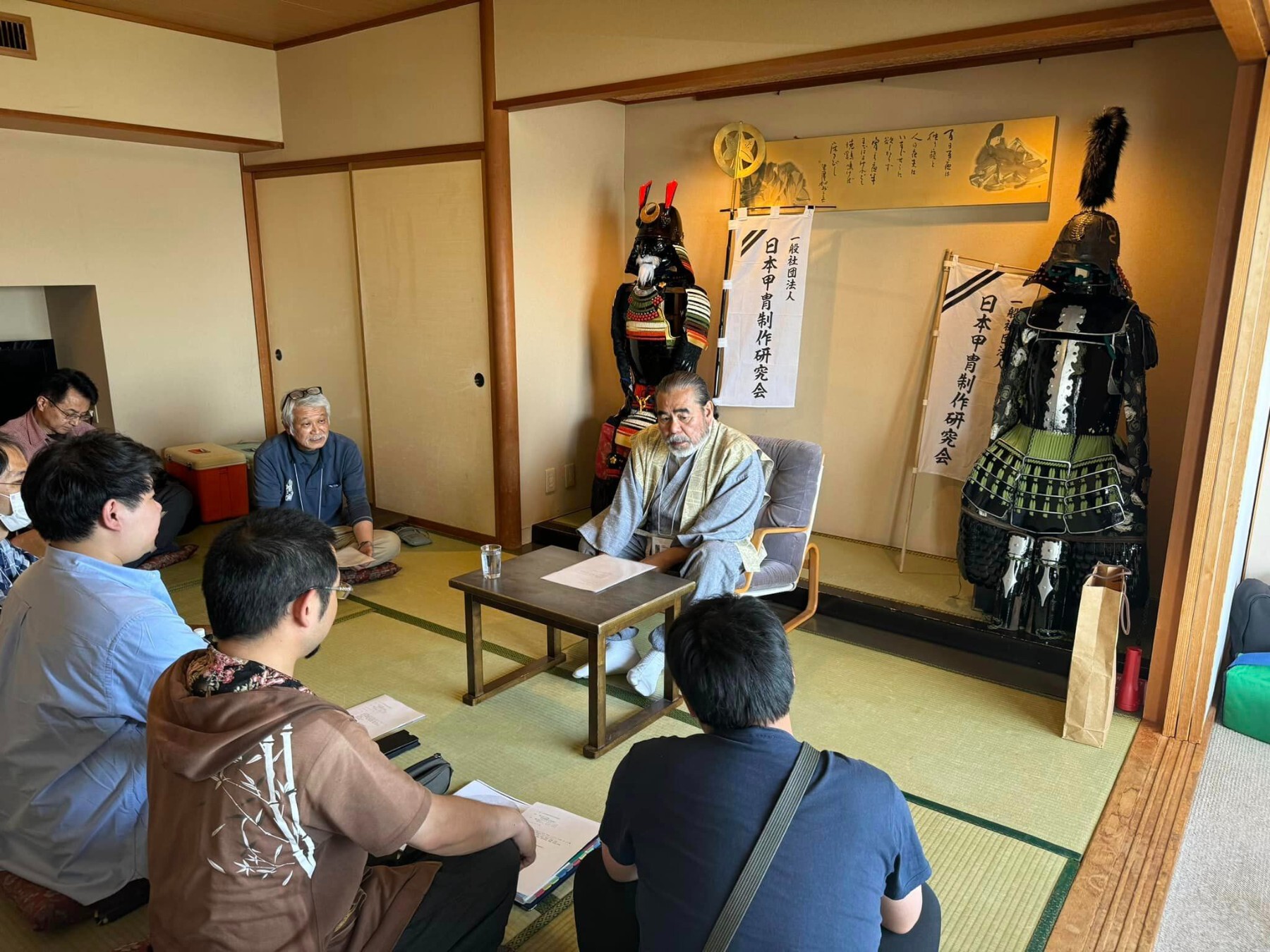
Hi Grev, Ogawa Sensei runs an open group that anyone can join (in Japan). The group creates superb armour. Unfortunately, he had to stop using urushi because the dust caused him cancer. Now, the group uses cashew lacquer as an alternative. Ogawa Sensei has been extremely helpful and taught me some of the finer points of armour-making, especially lacing techniques. He is also a member of the Japanese Armour Society. You can follow his group on YouTube and Facebook.


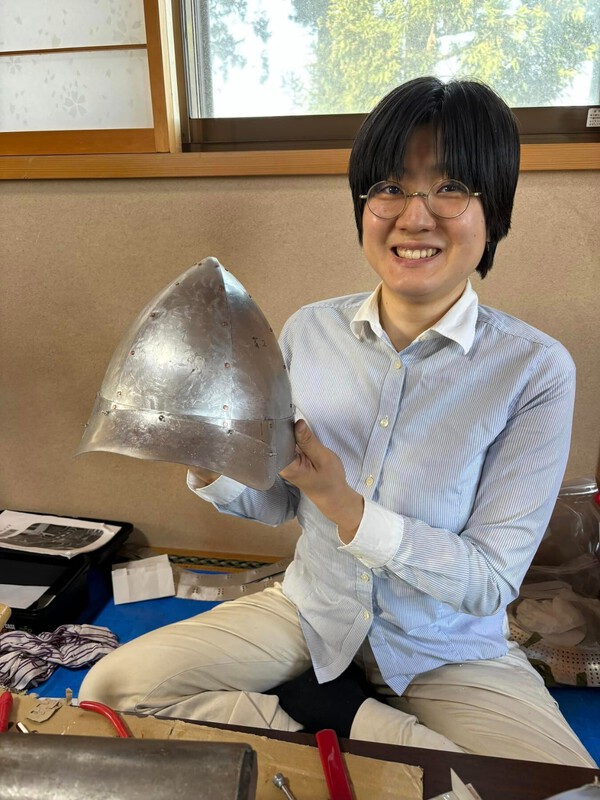
 3 points
 -
Well, the usage of the flag level sword was cancelled in 1914, meaning new Admiral rank officers used regular 1883 pattern for Ensign - Captain after 1914. So after that date there's very little chance to determine if an Admiral owned a particular Kyu or Kai Gunto without hard provenance to back it up.3 points
-
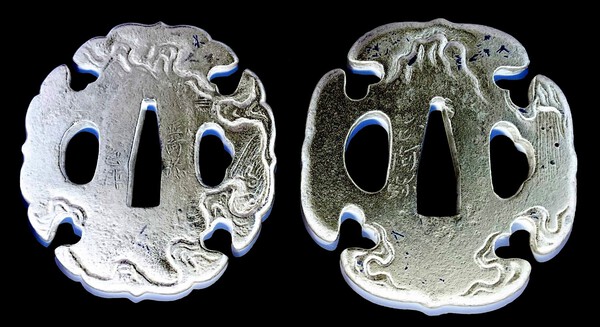
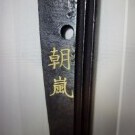
Not that I can see, no. There are only the three characters "正阿弥" going from up to down between the Kozuka-Ana and the Nakago-Ana.2 points
-
The right one also says Shoami (正阿弥).2 points
-
模 has the meaning of ‘in tribute to’, or ‘copy of’. (兼元Kanemoto?)2 points
-
Christopher, there was a long gun that I just had to have. (That's why I did not have any cash left for the Ken.) As usual with these things it needs some work. The bisen needs loosening, the ramrod is stuck fast, the lockwork mechanism does not engage properly, and a crucial part of the decorative fittings is missing. It is away in a bucket-brigade of artisans being given some TLC, and I forgot to take any overall shots of it first. I can give you a word picture, though. I know we all prefer words! Despite the torukusho saying the Mei is partly unreadable, I've figured it out. This was for me historically interesting. It was made in late Edo in Matsushiro, the castle there originally ('Kaizu Jo') built by the famous Yamamoto Kansuke. This castle served Takeda Shingen under the command of (his lover) Kosaka Masanobu (Kasuga Toratsuna), and was fought over by the Uesugi and Sanada. Later the castle was awarded in 1622 to the Sanada clan who renamed it Matsushiro Jo, and they remained there until the end of the Edo period. The castle itself was repeatedly burned down or destroyed in earthquakes but always rebuilt. The gun in question. The Bakumatsu 1850s~ gunsmith studied under a well-known Edo Bakufu smith named Akagari. In a nod to their old Takeda roots, I guess, the little ibo-kakushi screen is in the shape of a hanabishi mon. There are two or three other unusual features to this gun that originally piqued my interest. Will report as and when. Am I forgiven?2 points
-
I am curious about the Tadamitsu wakizashi paper you posted Jacques, could it be a reissue? Here are 4 reference papers from Jūyō 23 that have same type of red seal as the Yahoo Auctions Masamune. As I was doing some info digging it seems that the red seal on top right was changed to form featured in Tadamitsu paper in Jūyō 28. Similarily the hitsu ana of upper leftmost tsuba were also changed this time. So I would think reissue would be a reason why the paper would have a form of seal that wasn't used for several years when the paper was issued. Of course there can perhaps be other reasons too.2 points
-
Some more photos. The final kuro urushi-nuri was polished to a black mirror finish.

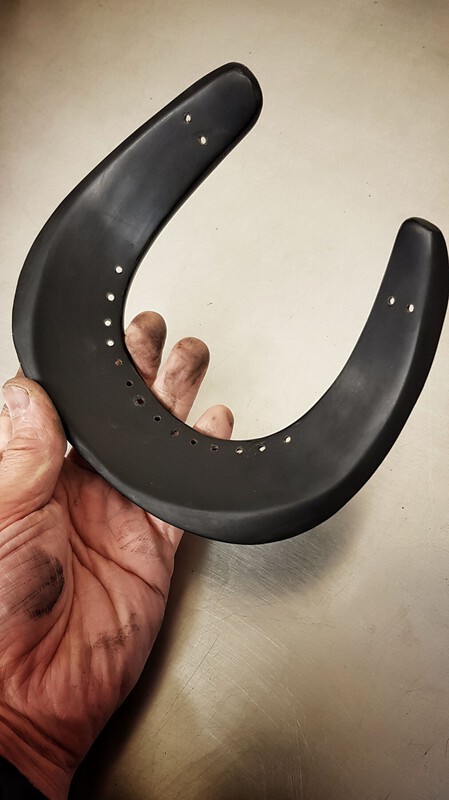

 2 points
 -
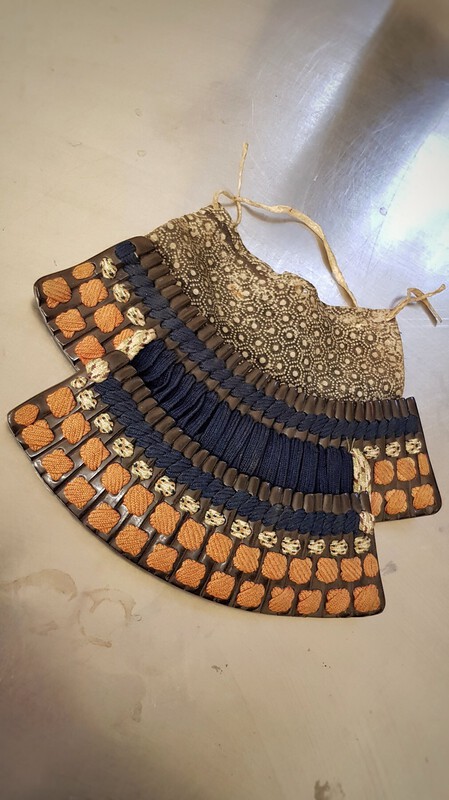
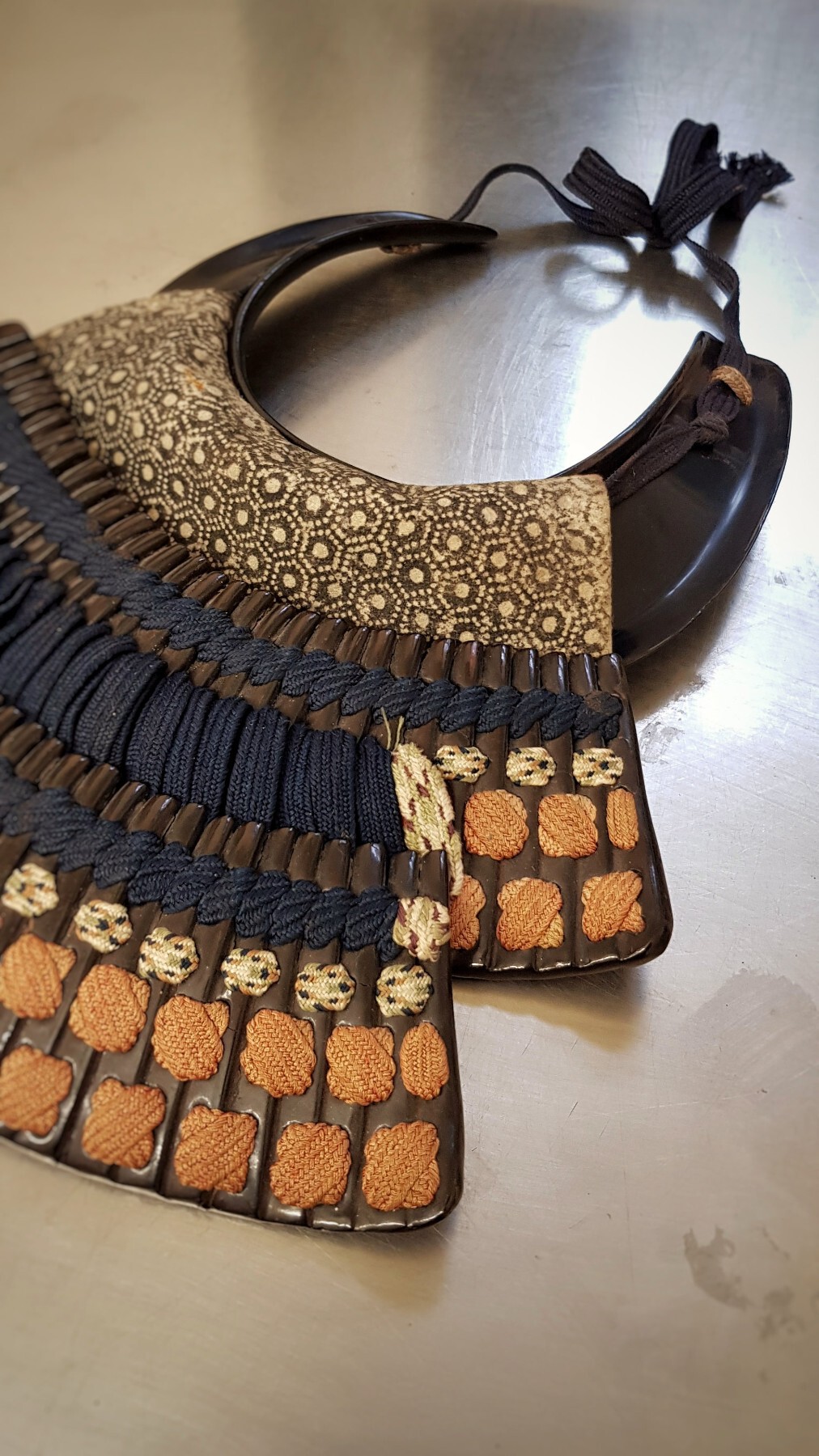
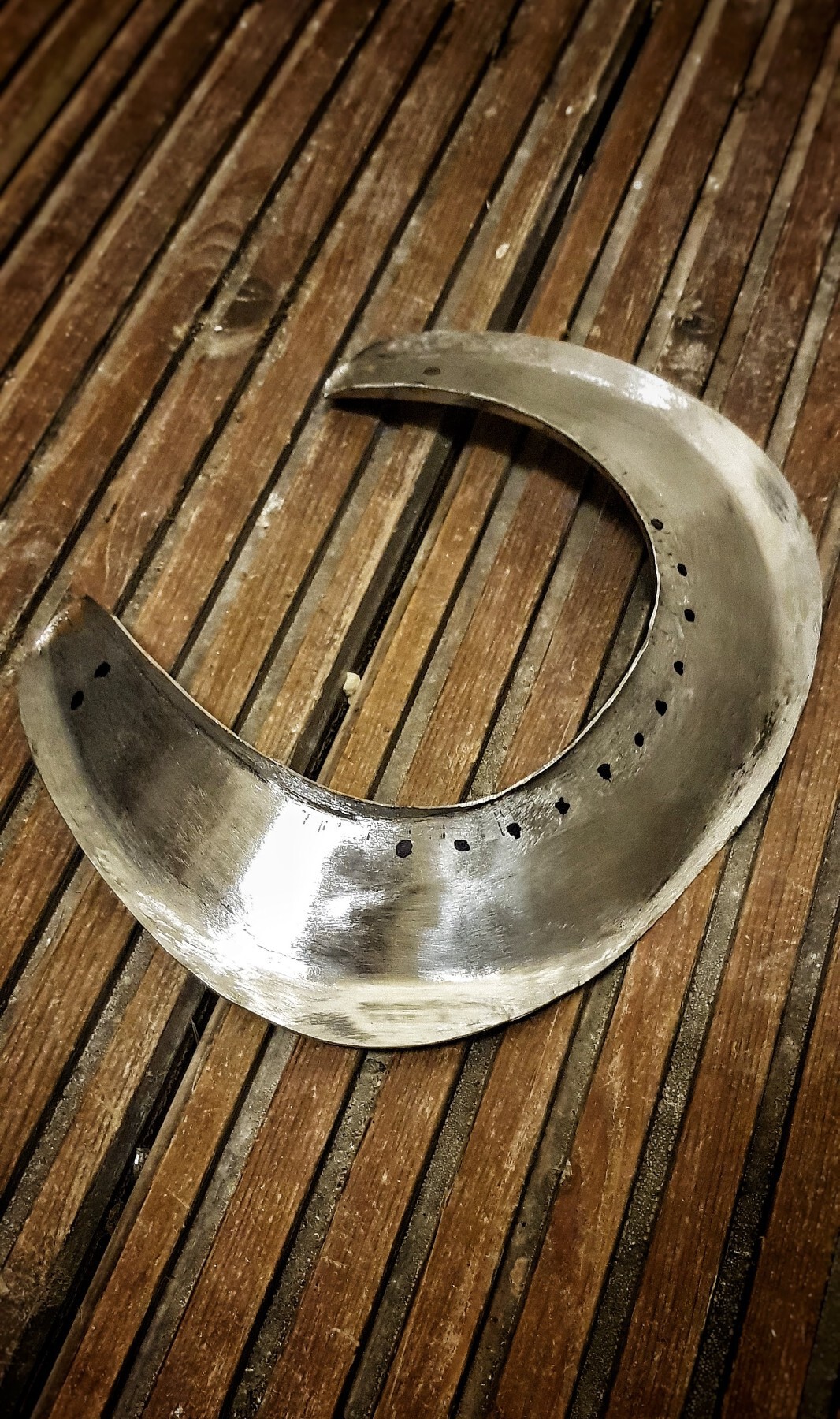
I was browsing YouTube when I noticed that Ogawa Sensei had released another insightful video on armour-making. Ogawa is a wonderful man who is always generous in sharing his knowledge and techniques. When I visited Ogawa Sensei in Nagoya, he recommended I try making a nodowa, highlighting the challenges posed by the shape and curvature of the main ring. Shortly afterwards, I visited the Samurai Art Museum in Berlin and saw a nodowa missing this section. Inspired, I decided to make one for them to test my skills. I used mild steel, kokuso, and urushi. The nodowa is now displayed at the museum. Here are some photos I took to complement Ogawa Sensei's video.
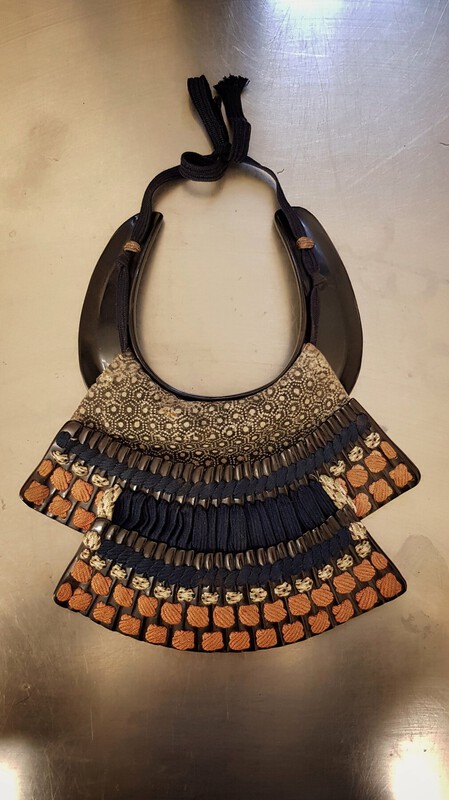
 1 point
 -
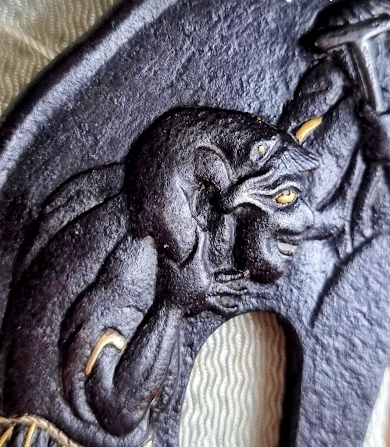
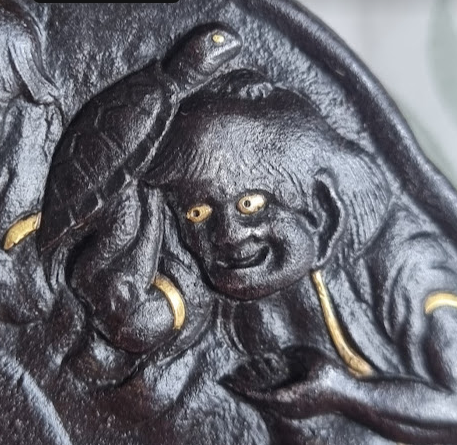
A recent addition to my collection has a very - to me - illusive theme. It's about 3 hermits (going on their clothes and general demeanor). Left one has a toad, middle one a staff and the right one a turtle. Obviously the toad led me to Gamma Sen'nin and the turtle could indicate Kame Sen'nin. But it didn't really match. As with most of these kind of themes they hail back to Chinese mythology. I noticed the crutch was actually burnished or inlaid in a slightly different metal than the iron that makes up the plate. The fact that the artist put so much effort in that crutch made me think it was done to define the figure's identity. Gamma Sen'nin seemed the logical path to go down and I ended up with Taoism and the 8 immortals of which I think 3 are portrayed here: Liu Haichan - basically the predecessor of Gama Sen'nin - where the toad represents good fortune (among others) Li Tieguai - ill-tempered but benevolent to the poor and sick, walks using a iron crutch and associated with medicine and healing Zhang Guolao - symbol of longevity Now I could be totally wrong on this - especially Zhang Guolao I've been back and forth about. Any help/comments would be appreciated!

 1 point
 -
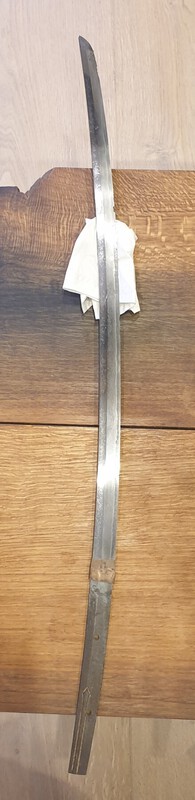
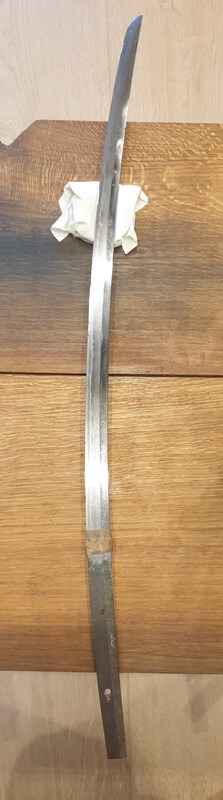
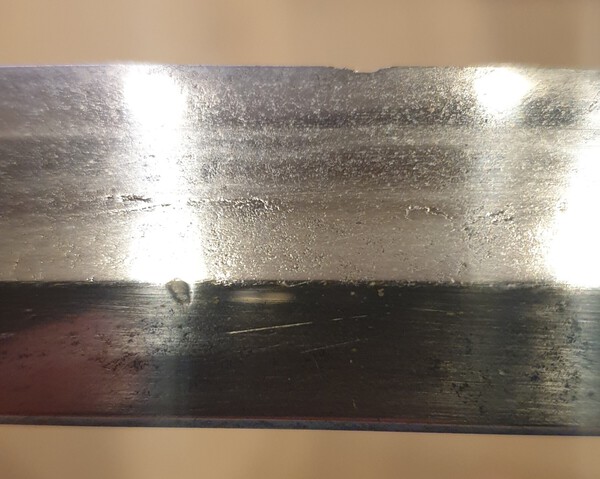
Hi! Since long time I have one very damaged sword in my collection that might worth nothing but is very interesting and a kind of special subject to me It looks like an old tachi that is o-suriage (full length now is 87cm). Remains of the ken horimono are still there and the shape looks old. The most interesting fact is the multiple hamon-line that I did not see on any other sword so far. Well, as said, the thing is in bad shape but maybe one can give me some information about this hamon effect or the sword at all? It's not easy to take pictures from this but I try my best... Thanks in advance! Christian

 1 point
 -
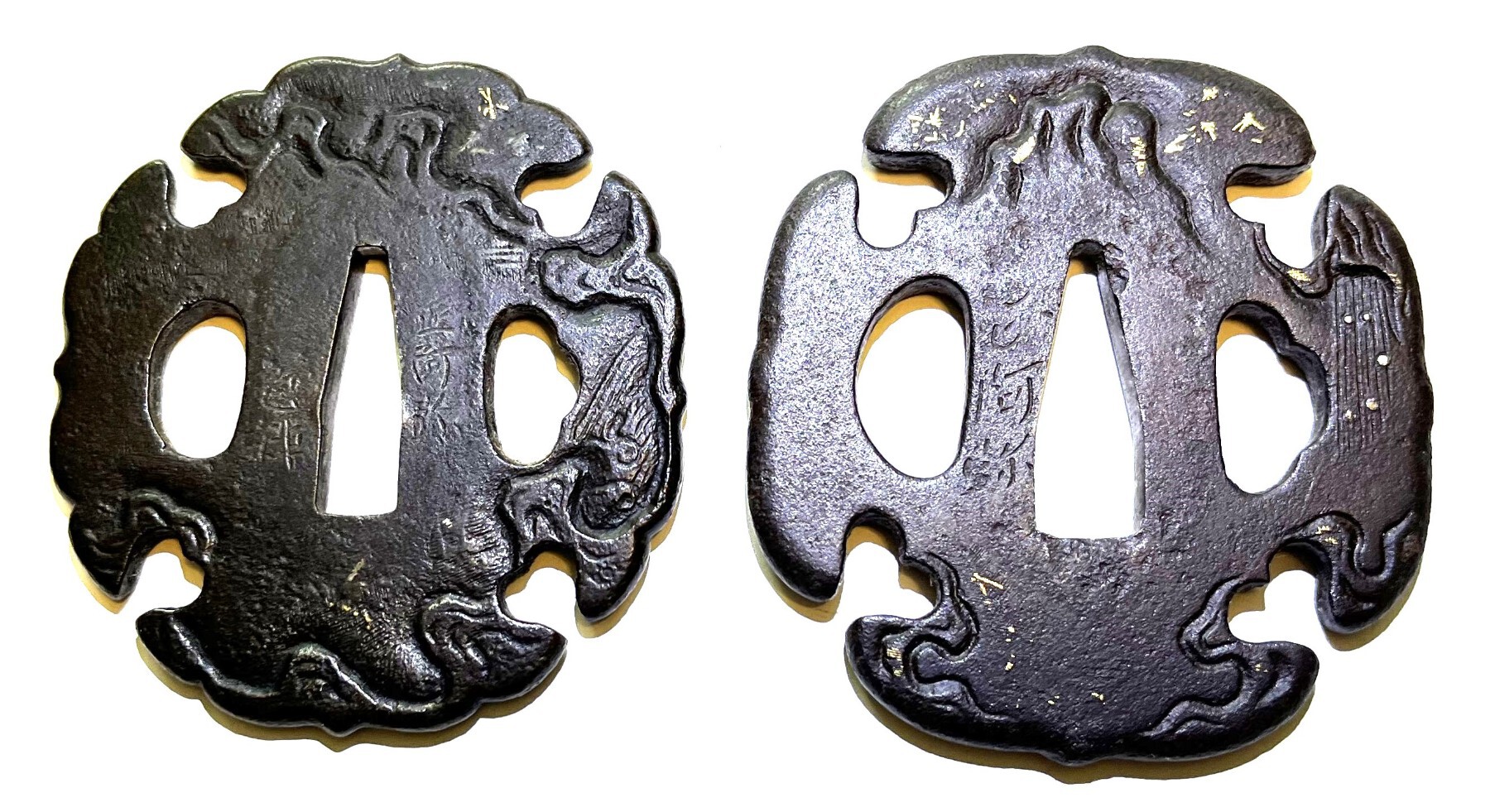
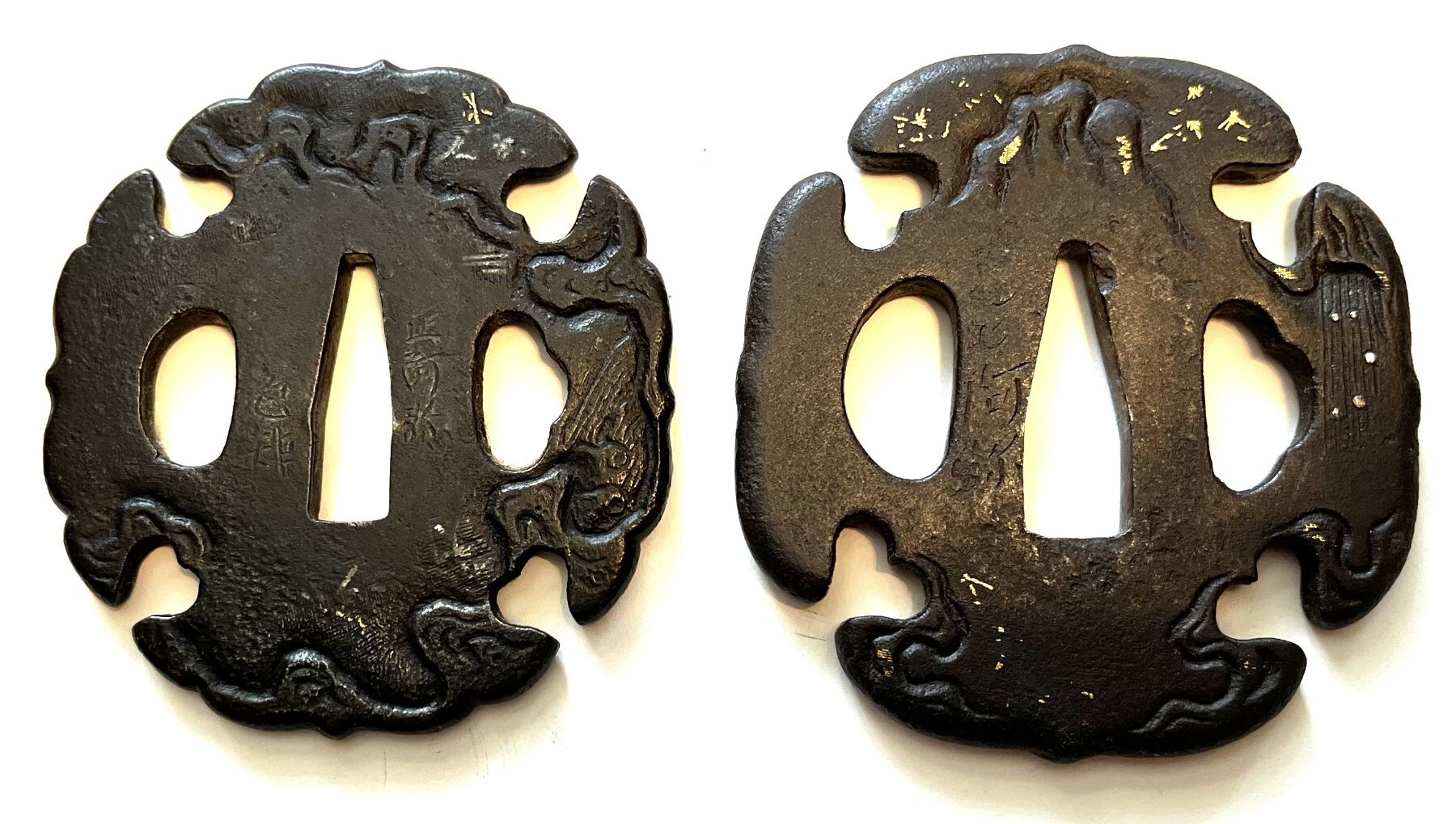
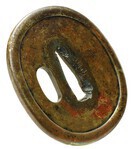
Just put these two tsuba together. The lefthand one I've had for years and was told it reads Shoami Kanenori. The one on the right I just acquired and don't know what it says. Thanks for any help, Howard Dennis

 1 point
 -
I don't see the similarity: Yantolee, Could we see the whole nakago and blade?1 point
-
Thank You, So just the school name and no smith? Howard Dennis1 point
-
Nothing to add really. Nice tsuba. It seems that you have the idea right, but I am not sure why these three sages should be gathering together here. (Gama Sen-nin's toad often has only three legs, but that is not really clear here.)1 point
-
Bruce, I will also add that I did buy this while I lived in Japan. It's in a civilian koshirae and has markings that indicate it's was used for tameshigiri cutting (tatami). When in Japan it had a registration card as well. Timothy N.1 point
-
Forgiven! And please, its just Chris. Or Christopher if you insist. If you ever come to the Chicago show, be sure to stop by my table and I'll show my tanegashima as well!1 point
-
Thanks for posting this Adam. It puzzles me even more, as it does seem they did use slight variations of the paper overlapping for several years. Of course I won't be getting a Jūyō sword so on personal level it is irrerelevant. As here are other references from Jūyō 26.1 point
-
This Juyo paper conundrum is super interesting. Here’s an example from Juyo 26, so it seems the changes to the tsuba ana and seal were a bit earlier than Juyo 28.
 1 point
 -
As far as I know, but I could be wrong, NBTHK doesn't reissue paper. On the Tadamitsu wakizashi, the tsuba hitsu-ana are full, while all the others are empty.1 point
-
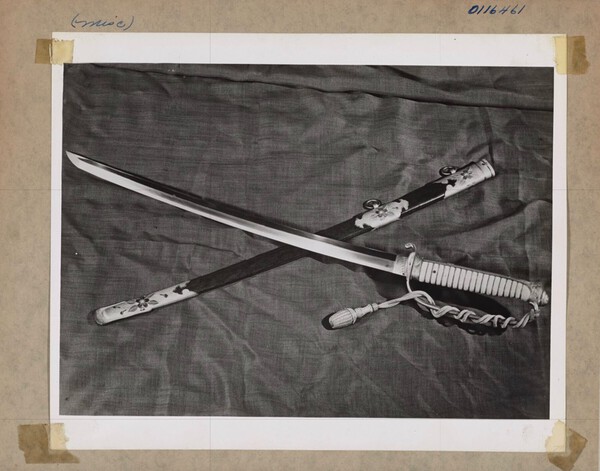
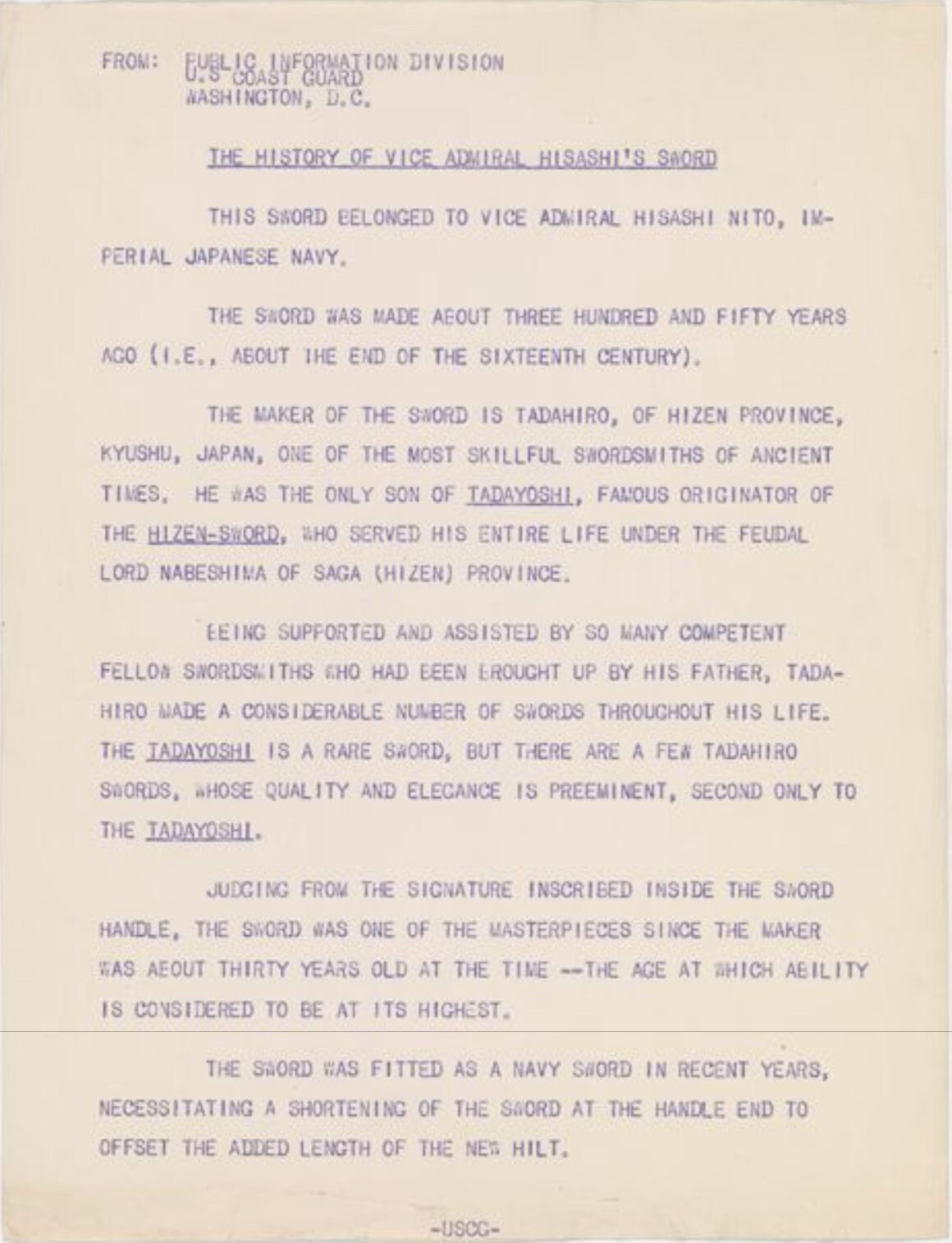
Thought you guys would like to see this lovely blade. "Lieutenant General Robert Eichelberger, commanding the Eighth Army, has presented this historic sword belonging formerly to Vice Admiral Hisashi Nito, Imperial Japanese Navy, to the Coast Guard. An accompanying letter states: "This weapon is presented to the U.S. Coast Guard Academy in honor of the officers and men of the Coast Guard who contributed to the successful landings of the United States Army in numerous assault invasions which led to the final defeat and occupation of Japan."
 1 point
 -
Ah, yes, now we are talking! That eases the pain considerably, Christian!1 point
-
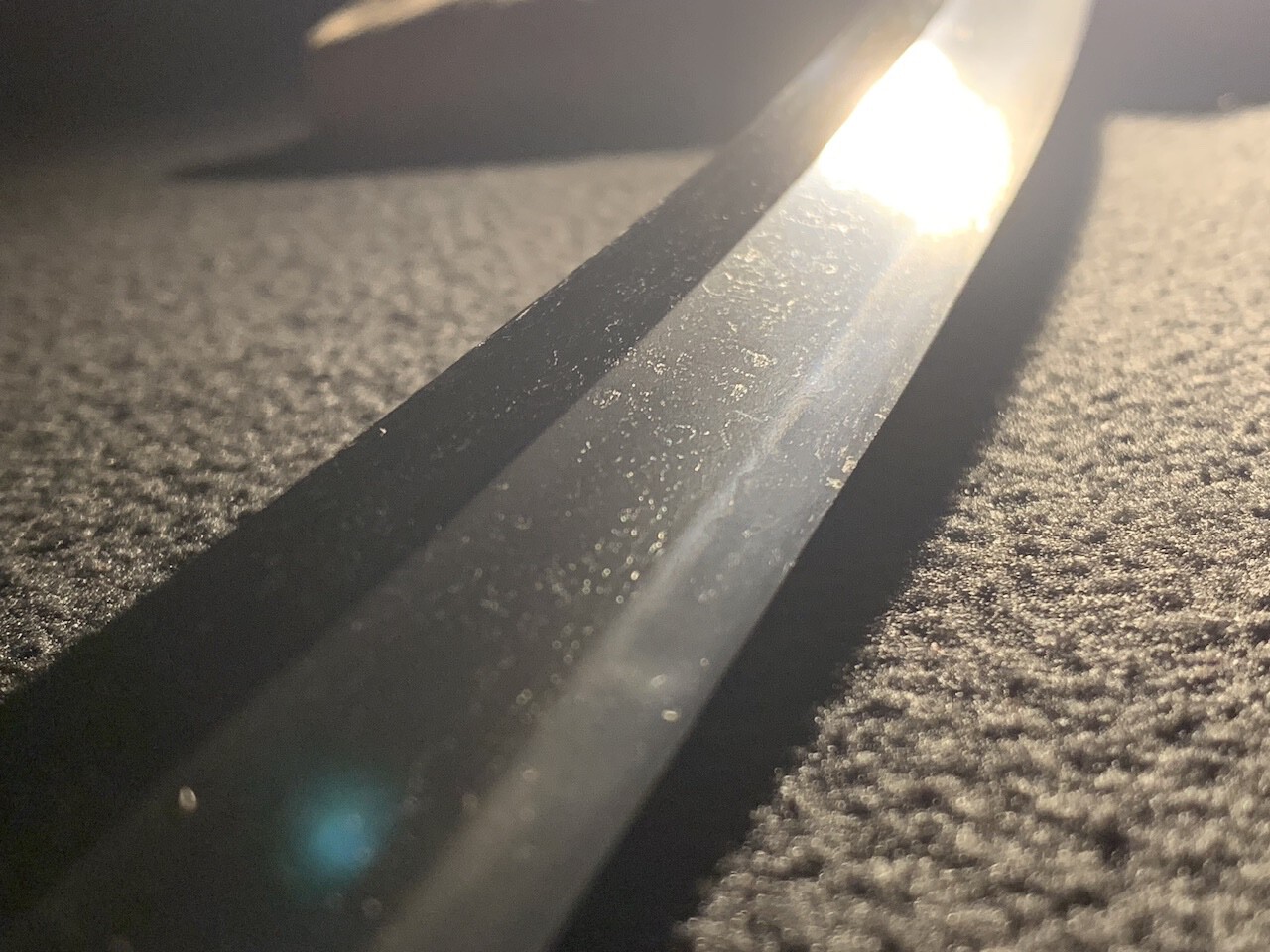
I respect the work and quality of your pictures Kirill but I don’t think your pictures really give me much. They are high quality everything visible but simply not as I see blades with my eyes. I also tried to make pictures like you do but then I decided that a more natural picture serves me better in showing the blade. In the end a video is much better because of it change in angles that can really show the Jinie what is impossible in one picture no matter how good it is. So I switched my complex photo setup to a more simple and closer to the real life experience setup. I have seen in other threads that your pictures seem more popular than mine but I would like to understand why that is the case. But im also the guy that says that Hadori is a reflection of classical Japanese society behavior and definitely the better polish then Sashi Komi. Here some pictures that I have made with my phone and could be much better done with a camera but this pictures show me much better what I can expect from a sword in my opinion.
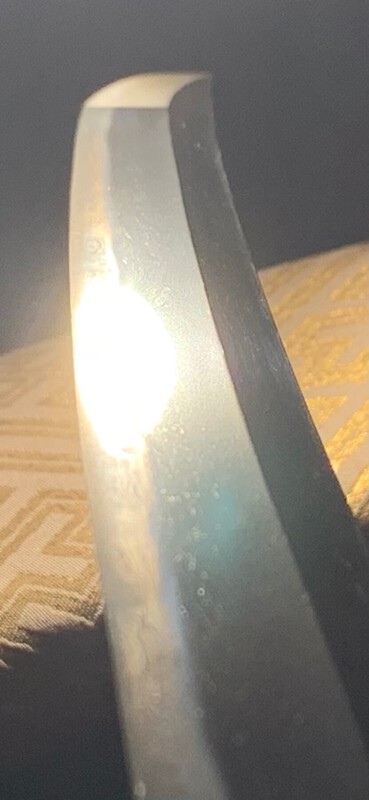
 1 point
 -
Here some informations https://nihonto.com/the-yasutsugu-school-康継系/1 point
-
Note that atari 邊 traditionally means 'beside' 'near' 'in the vicinity of', etc.1 point
-
That Tadayoshi is a different one, who spells his name differently. The one that Aoi has is 忠喜 (Kawashima Tadayoshi). Relatively famous smith gunto smith. The one that Klaus has is 忠義, who is something of a mystery, but looks like a pretty skilled smith.1 point
-
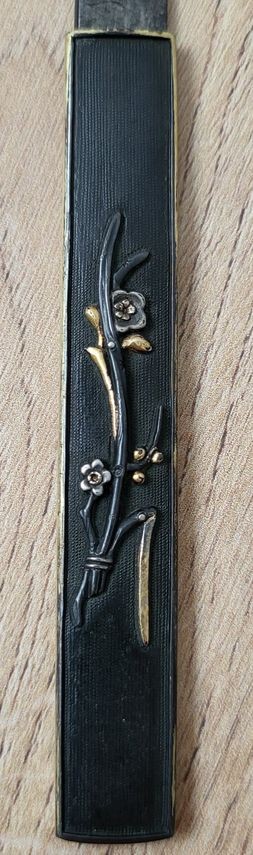
Kozuka's front by Mitsunori again tk's a lot Uwe
 1 point
 -
Bumping this for those interested in "Kantei for Beginners" Our Zoom Kantei is specifically aimed at beginners, the only book you need is the Connoisseur's book and we do our best to explain all the Japanese terms used. We only do one sword a month so you have plenty of time to formulate an answer. If you haven't yet we encourage you to check us out! -tch1 point
-
- Whole book: Kentei for beginners / intro to kentei - A book in English about early Koto Yamato-Den - Now that we're well into the 'future of photography', I'd love a book with high definition photographs that focuses exclusively on blade forging quality, flaws, and features. Disclaimer: maybe one or more of these books already exists, but escaped my searches. I have many books that touches on these subjects, but does not dive deep into them as much as I would like. Including but not limited to Marcus Sesko koto kentei + supplement, facts and fundamentals of Japanese swords, connoisseurs guide, etc... etc...1 point
-
Ed, It sounds like you have started off very well, and the advice Rich, Peter, and Milt has given you is rock solid. I cannot add much. Go slow. Books are a good investment. The Torigoye book is cheap from the Northern California Club. Being largely a photocopied paperback, it costs peanuts compared to most books. It may give you some brainache at first, but you will find yourself going back to it for years. The Haynes Catalogs (#1 to #10) are good. I used them to help identify a rare tsuba today. They may be something you want to look at later. In the long run, you will want to pick them up. Perhaps not yet, as at a beginning point they are a bit expensive compared to other books you don't have yet. The irony is that I just realized today that I have 2 copies of Vol. #6. The Haynes Index is something entirely different. Eventually you will want that as invaluable, but there are a lot of other books that will help you build a basic foundation first. As I believe Rich said... do a lot of soul searching to learn what appeals to you. Even then, you will find your tastes change a bit over time. At 45, you are in the young end of the pool, so you have decades to decide what you like. I force myself to keep a small collection so that I need think about every piece. When something comes in, something has to go out. That sort of philosophy works for me. Try and make it to Tampa. Paying the annual fee for the Florida Token Kai gets you into the show free (I hope that is still true!), and is about the same as 3day admission to the show. Don't be afraid to walk up to someone and start asking questions. Some of us are kooks, but many are good people. If you get a kook, politely bow out and simply go to someone else. Eventually you will run into Peter or me or one of the other guys who are happy to jabber about tsuba and fittings for hours on end. Curran1 point
-
Looks like Chris is dead?0 points






.thumb.png.54593db2789c8a1dcb235543b184ce39.png)












This leaderboard is set to Johannesburg/GMT+02:00