
Soshin
-
Posts
2,931 -
Joined
-
Last visited
-
Days Won
3
Content Type
Profiles
Forums
Events
Store
Downloads
Gallery
Everything posted by Soshin
-
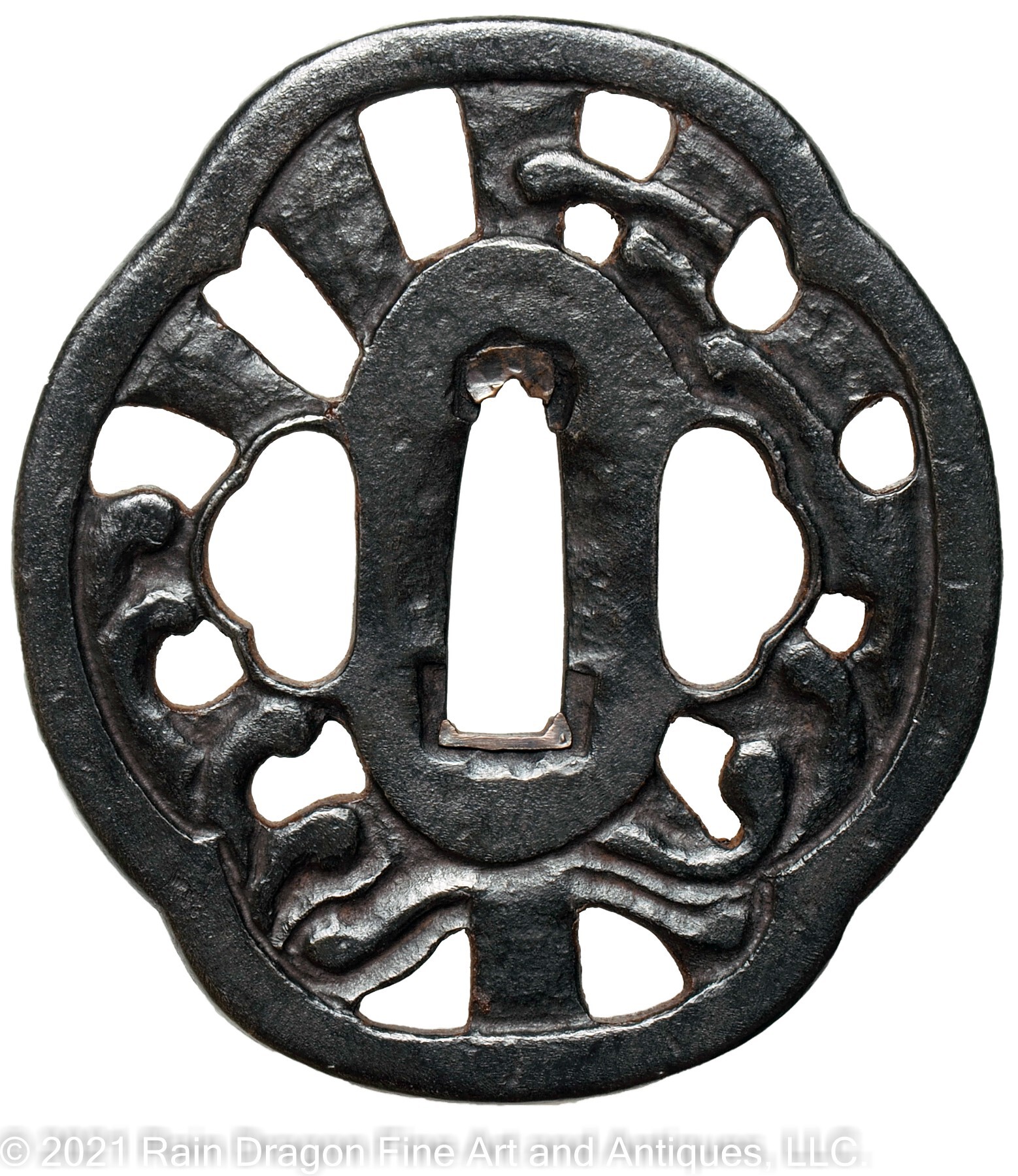
 Didn't really get much in 2021 generally speaking it has been a hard year. Here is my only memorable purchase from 2021 per Richard's request. A middle Edo Period Yagyū Tsuba. More information can be found on my website about this tsuba: Tsuba Gallery #4 | Tsuba Otaku. It is the second tsuba from the top on the webpage.
-
Just noticed this topic. I hope Guido make a full recovery...
-
Kanji Help for Specific Sword Fittings Term
Soshin replied to Soshin's topic in Translation Assistance
Thanks Steve M. This is very helpful and finding the term in a Japanese language diagram is really important. Searching my online Japanese dictionary (https://jisho.org/) I can confirm the meaning. When I search for the term "天井板" I get the meaning "ceiling boards". Therefore, I am going with the term (tenjōgane 天井金) which is not found in the dictionary and is likely the term I heard used by a Japanese collector. -
Kanji Help for Specific Sword Fittings Term
Soshin replied to Soshin's topic in Translation Assistance
Thanks, Jussi Ekholm. The term would be (tenjōgane 天上金), which will allow me to complete my notes about a new Higo style fuchi-gashira set that is new to my collection and that I am writing about. Interesting the Kanji "天上" by themselves means the heavens. I wonder why these Kanji were used. -
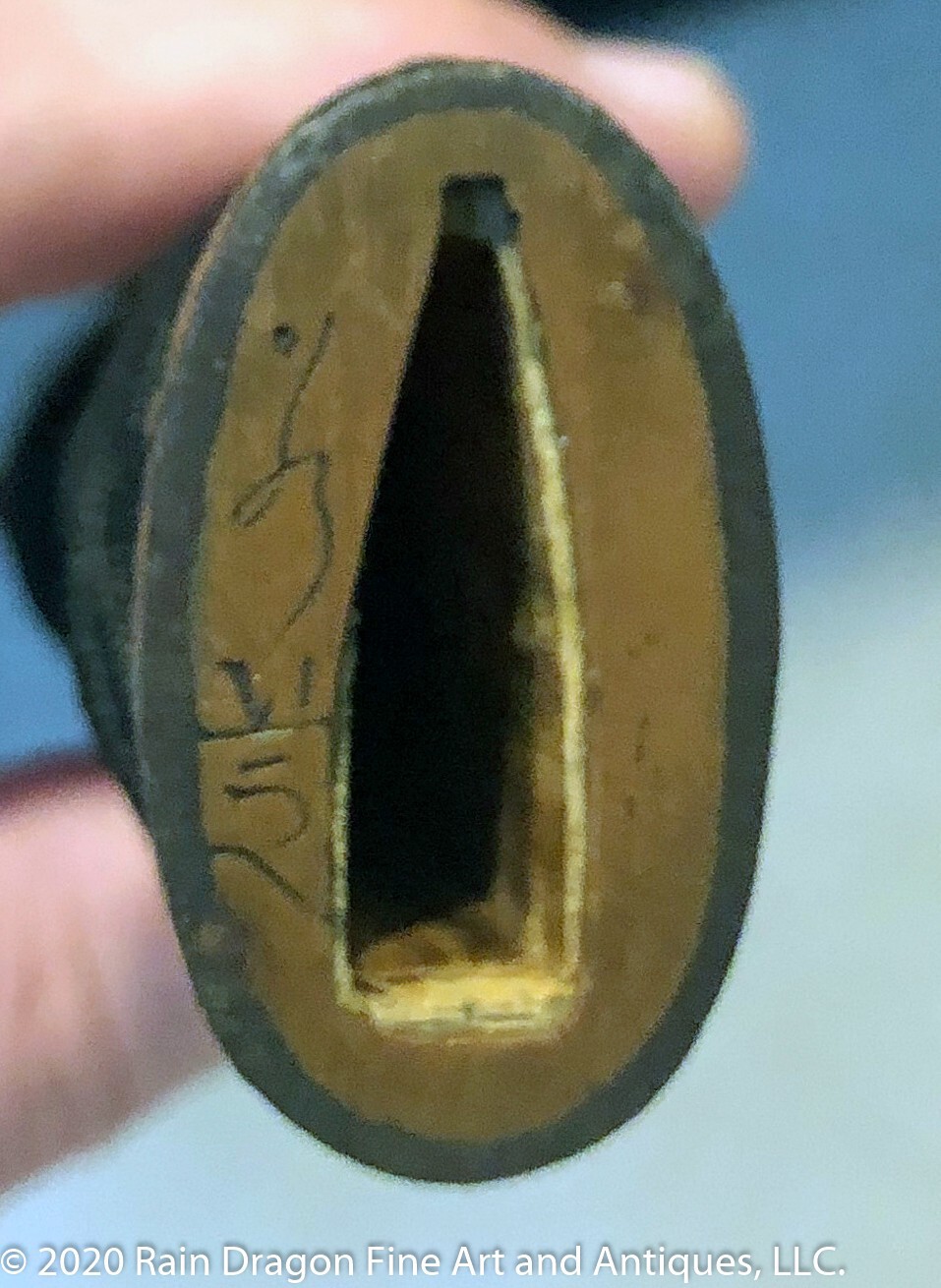
I need some translation help for a specific sword fittings term. The term is for the inner most part of fuchi that is often but not always a sperate piece of metal. See attached photo for reference. In my research notes I have the term "tenjogane" but I do not have any Kanji associated with this term just a phonetic reading in Rōmaji. I would suspect that the term might consist of a total of three Kanji characters with the last one being "金". Below is a signed tenjogane example of what I am talking about. Thanks in advance for anyone that can help me. I will continue my own search for the kanji. I need this for noncommercial purposes for the detailing of my own personal collection on the Tsuba Otaku website.

-
Dear Pippo, I generally agree with what Dale is saying I have tried and still do these approaches to remove active red rust on an iron handguard. I agree with Chris S. that when you would boil this specific handguard the small gold inlays would likely be damaged or all together lost. My advice would be very careful around the gold inlays and just skip the boiling in hot water step.
-
Congratulations Brian! Great to hear you found something local in South Africa that was on your "bucket list" as a collector of Japanese swords.
-
Hello Piers D., In answer to your question I think so. I was notified by a mutual friend of Mr. Masami Kodama a Mr. James McElhinney. Mr. Masami Kogama at one time lived in New York city for over fifth years and was a longtime member of the New York Token Kai before I joined in 2016. He has since moved back to Japan to live in Higashi, Hiroshima. I hope this additional information is helpful.
-
Notice and information about the thief of some important Japanese swords in Japan. Please follow the link for more information about the important Japanese swords that were stolen. Reported Theft of Important Japanese Swords | Needlewatcher
-
It should be noted so that there is not confusion that my katana had a double bohi cut into the blade during the late Muromachi Period. It was not recently done by anyone.
-
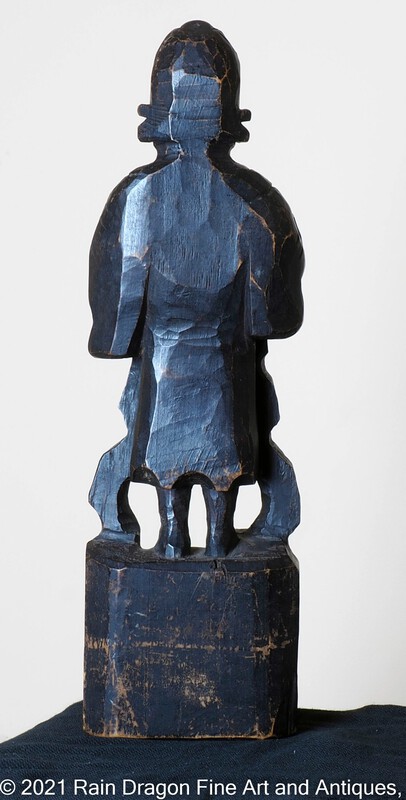
Hello Piers D. and Jan, Thanks for the replies. Jan, unfortunately the right hand of the statue is damaged so it hard to tell if the statue was originally holding a stick/club or a long spear. I also agree it was once housed in zuchi given the flat profile of the back of the statue. Finding a nice antique wooden zuchi that fit the statue might be a good idea.
-
I agree with Jeremy H. one of my best swords has a double hi (one large and one small) and it makes for a nice aesthetic note to long sword. Great you had a good experience dealing with Chris Bowen. I have deal with him and the NTHK-NPO and he has always been great to deal with.
-
I came across this wooden Buddhist statue while at a local auction house was cleaning out their consignment shop in preparation for a move. The statue was inexpensive but very interesting and impressive. It is a Japanese Buddhist statue of Tamonten (Snskrit: Vaisravana) the guardian of the north. He is the leader of the Four Heavenly Kings and is blessed with infinite knowledge. He is also known as a protector of warriors. Statue is made from a sold piece of very heavy hardwood. A previous owner dates the statue from the middle of the Edo Period circa 18th Century. I think is likely an example of primitive (folk) art of that period. The statue and wooden base measures 50 cm (20 inches) long by 15 cm (6.0 inches) wide. I am just wanting to share this new acquisition and get some advice on how best to display it in my home study. I was thinking a small table or stand would be good near a hanging scroll. Polite discuss and advice is always welcome. Thank you.

-
Thanks Bob, I have downloaded my copy. This will be a very run read. Looking forward to making my first DTI in 2022!
-
Bonhams : The Art of the Samurai.
Soshin replied to Jon Masutatsu's topic in Auctions and Online Sales or Sellers
Looks like they finally have the photos done for this sale that I have known about for a while. Going to register for the auction. Jon M. thanks for the reminder. -
Sad to hear this bit of news. I am hoping to attend DTI next year assuming Japan opens and relaxes the quarantine requirements for visitors. My wife and I also want to visit her family while in Japan before the show and then stop by the DTI when we visit Tokyo. I really miss Japan.
-
Congratulations to Bob! I talked to him and his son at the San Francisco show this year at their table. I remember hearing the NBTHK American Brach was having a board meeting at the show this year and that is likely when it was decided.
-
Hello Colin T., Thanks for sharing. I like your tsuba, but I feel it is not old enough to get the “Ko” prefix, which implies that it is older than the Edo Period. To me I think the “Kyō” prefix for your tsuba is more appropriate. I have Kyō-Shōami tsuba with a similar rustic plaint-based openwork motif that has an excellent heterogonous forged iron. I hope you find this additional information helpful to your research.
-
Hello Colin T., Been very busy with important life things... but felt compelled to reply as I like your tsuba and these type of tsuba. I would generally agree with the member consensus here that the tsuba is like the work of the Owari group. I would add that the tsuba is likely very a very late in the groups production circa the Middle Edo Period. I will add the caveat that I cannot examining the tsuba in hand and getting a real fee for the iron which is very important for this type of attribution. The workmanship nor the openwork design itself I feel is characteristic of the unsigned Akasaka School work. I hope you find this information helpful it grows your interest and appreciation for these type of Japanese sword fittings.
-
Hello Christian S., Thank you for the clarification. I also really like the sword, therefore any shinsa result positive or negative from any organization is not going to change my opinion of the sword. This sword is really a keystone of my Japanese sword collection.
-
Dear Chrtistain S., I do not understand this comment. A gimei by definition is a signature added to a sword at the time of its making or later to falsely attribute the sword to be the work of a specific swordsmith. How can a sword have a false signature but also the sword itself be attributed to be the work of that swordsmith. A few swords I have submitted to NTHK shinsa that failed because of gimei was attributed to different swordsmiths in the worksheets. Any mei added to sword later by someone other then the swordsmith is termed Ato-mei, which might or might not be a gimei. Thanks everyone for the feedback with my video. It might be just the web browser I am forced to use on my tablet computer which is Edge.
-
Hello Everyone, Still cannot see my video I tried to posted a few days ago. Not sure how it looks for other NMB users. To provide a written description of the jihada it is a very refined ko-itame mixed with a few areas of o-hada of different styles. One area the o-hada is a mokume style and other areas it is a masame style. At some point I will setup a do professional quality photos with my DSL with a good lighting setup. You would then be able to see more details. I posted the iPhone video to my Instagram account. You should see the video by following this weblink: https://www.instagram.com/p/CTe7ZVrijIp/?utm_medium=copy_link. The quality of the video does not allow you to see much detail of the jihada.
-
Hello Gary, I am not really sure, but it might depend on the degree or magnitude of the restoration work. Very noticeable changes to the Japanese sword fitting item might require a resubmission as the photo on the NBTHK Hozon paper will no longer match the item itself. I do know that items that have undergone restoration work do sometimes fail NBTHK Hozon shinsa so you should be very careful, conservative, and ensure only traditional techniques are used in any restoration work.
-
Hello Everyone, I had my Katana out examining particularly the jigane/jihada and did a short video preview of the sword with my iPhone. This is my first time posting a video on NMB so I hope everyone a view it and enjoy. Kanemoto Katana Preview Video.mov
-
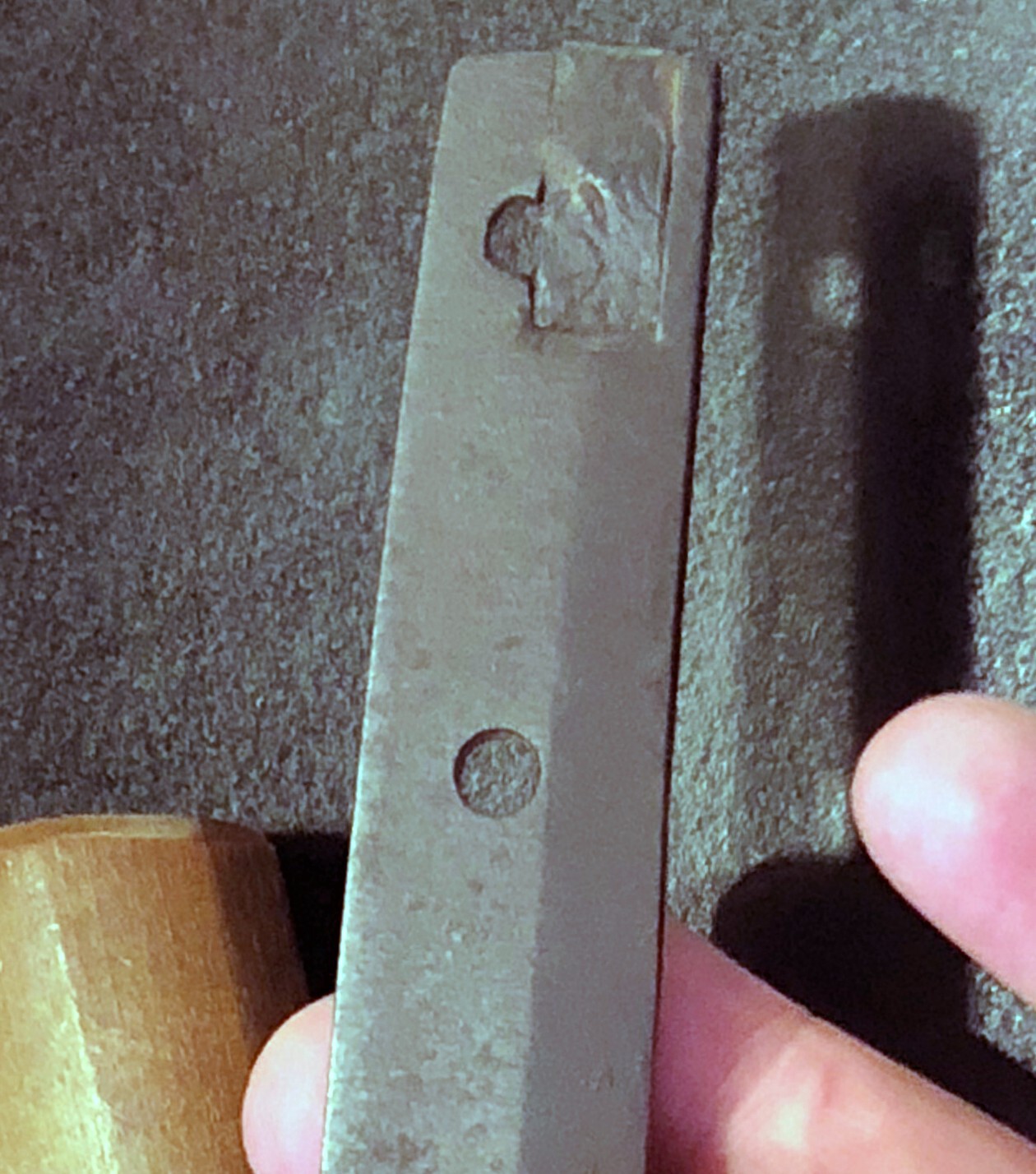
Dear Rich, Good point, I did not think about examining the end of the nakago. Here is another photo I just happened to take of the nakago on the side with the orikaeshi-mei at a different angle. From the end of the nakago you can see that it was actually folded over and not just inlayed.