Bruce Pennington
-
Posts
14,201 -
Joined
-
Last visited
-
Days Won
169
Content Type
Profiles
Forums
Events
Store
Downloads
Gallery
Everything posted by Bruce Pennington
-
Check this thread, a couple of guys mentioned there, The_ozzy-samurai, and another. Might try DaveR also. http://www.militaria.co.za/nmb/topic/19949-small-metal-screw-replacements-for-shin-guntos/?hl=screws
-
Interesting! How's the fit?
-

Anchor Mon On Rinji (Type 3)
Bruce Pennington replied to Bruce Pennington's topic in Military Swords of Japan
Yes, and I believe I’ve seen it once before. If I can find it, I’ll post it here. Honestly, there’s no reason a guy who has a mon wouldn’t put it on a Rinji as well as any other. Like Nick says, they’re all gunto. -
Real minty fittings, nice!
-
Anchor Mon On Rinji (Type 3)
Bruce Pennington replied to Bruce Pennington's topic in Military Swords of Japan
“this "desperation" officer's sword.” Really? So “desperate “ it’s in high-quality “non-desperate” koshirae!!! Ha! The lengths people will go to, to spice up the sales pitch! -
Charlotte, I would love to hear the story of the family member that brought this home and how he came to own this. The fittings are standard for a blade that was either donated to the war effort by a family, or bought off the civil market by the government. There was quite a shortage of swords during the war and the government made quite a push to get privately owned swords to fill the gap. Once obtained, they would put a wooden saya (scabbard) covered in leather, like yours, and military handguards and spacers (tsuba & seppa). The handle is usually civilian, but will often have the army or navy emblem (menugi) tucked into the weave, like yours. Some were hastily put together, and may explain the look/quality of your handle. It is possible the blade was made during the war, but the fittings show it came from the civil market/family. Terms are confusing in this hobby, but "machine made" is a bit of a misnomer, as all officer swords were made by people. Yours COULD be non-traditionally made, but that simply means it was oil-tempered, rather than water, and other aspects. Yours is a true weapon, not a "parade" sword for show. If you can get clear close-ups of the temper line we might be able to make a better guess as to how it was made. Are there any writing on the other side? That is where the date ususally is, but they didn't always put one.
-
Plum blossoms are Chinese.
-
Chris, I agree with the above that the mei and date are WWII style and the date is 1943. The nakago looks too new to be older than that, unless it has been cleaned. Why it would have 3 mekugi ana - possibly field damage and repairs? What is it that gave the impression of 1800's?
-
Ok, thanks Jean.
-
Koshirae Fitters Stamping Blades
Bruce Pennington replied to Bruce Pennington's topic in Military Swords of Japan
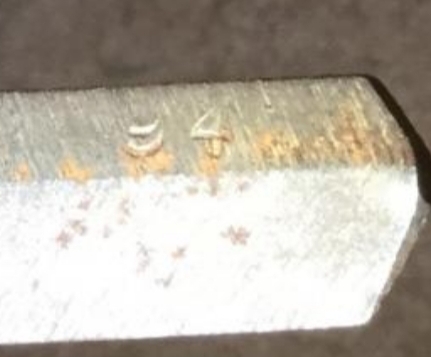
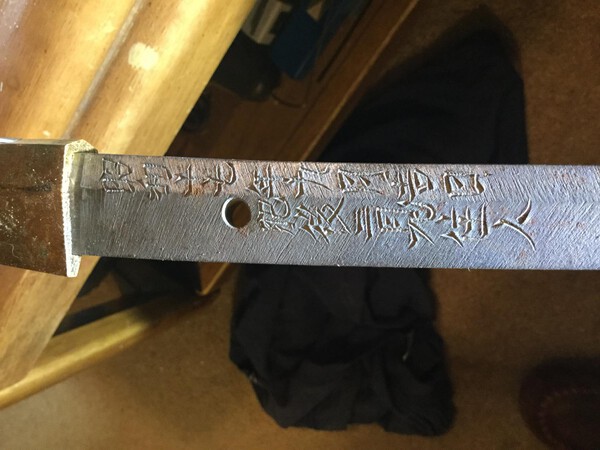
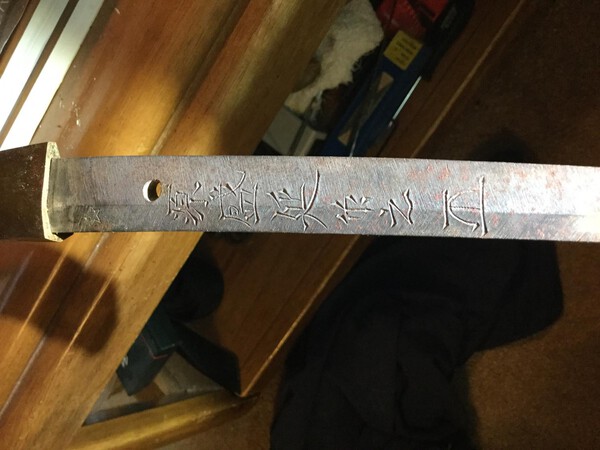
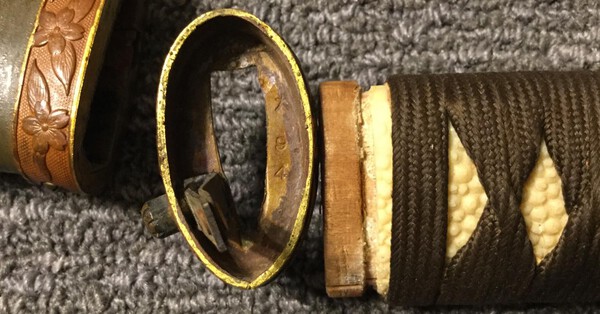
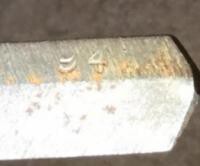
Another one: A star-stamped blade by RJT smith Minamoto Morinobu, a resident of Higo Futami (肥後二見人). The "9" is poorly struck on the blade. Owned by Michael and posted here: http://www.militaria.co.za/nmb/topic/28934-star-stamped-blade/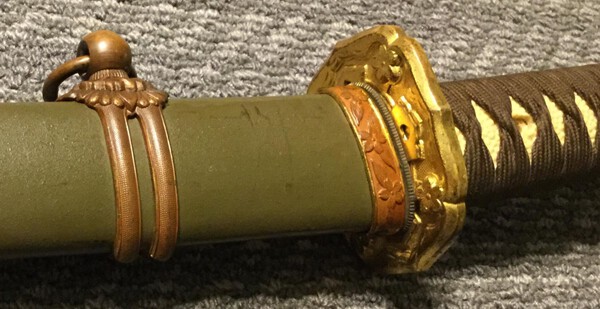

-
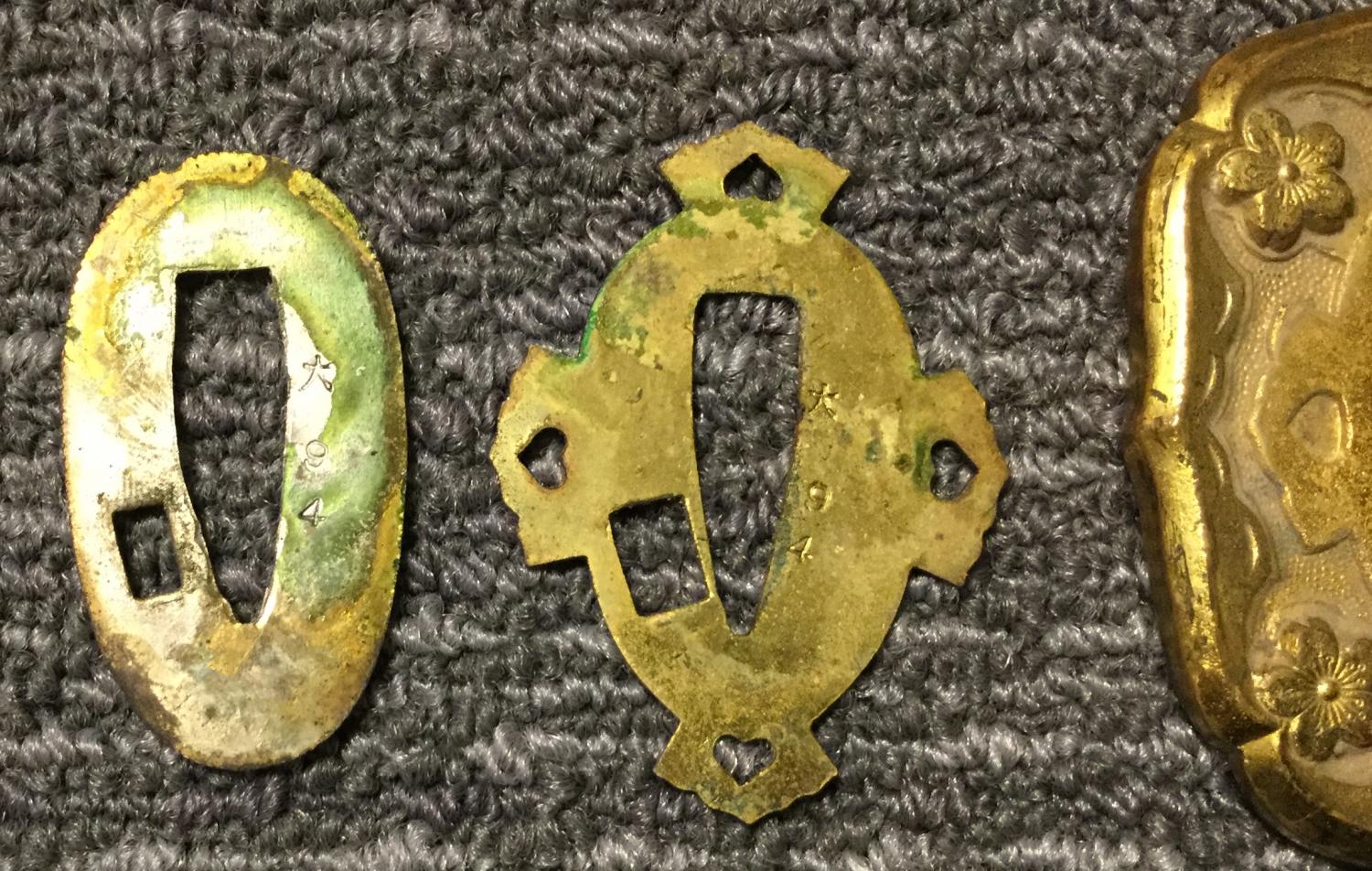
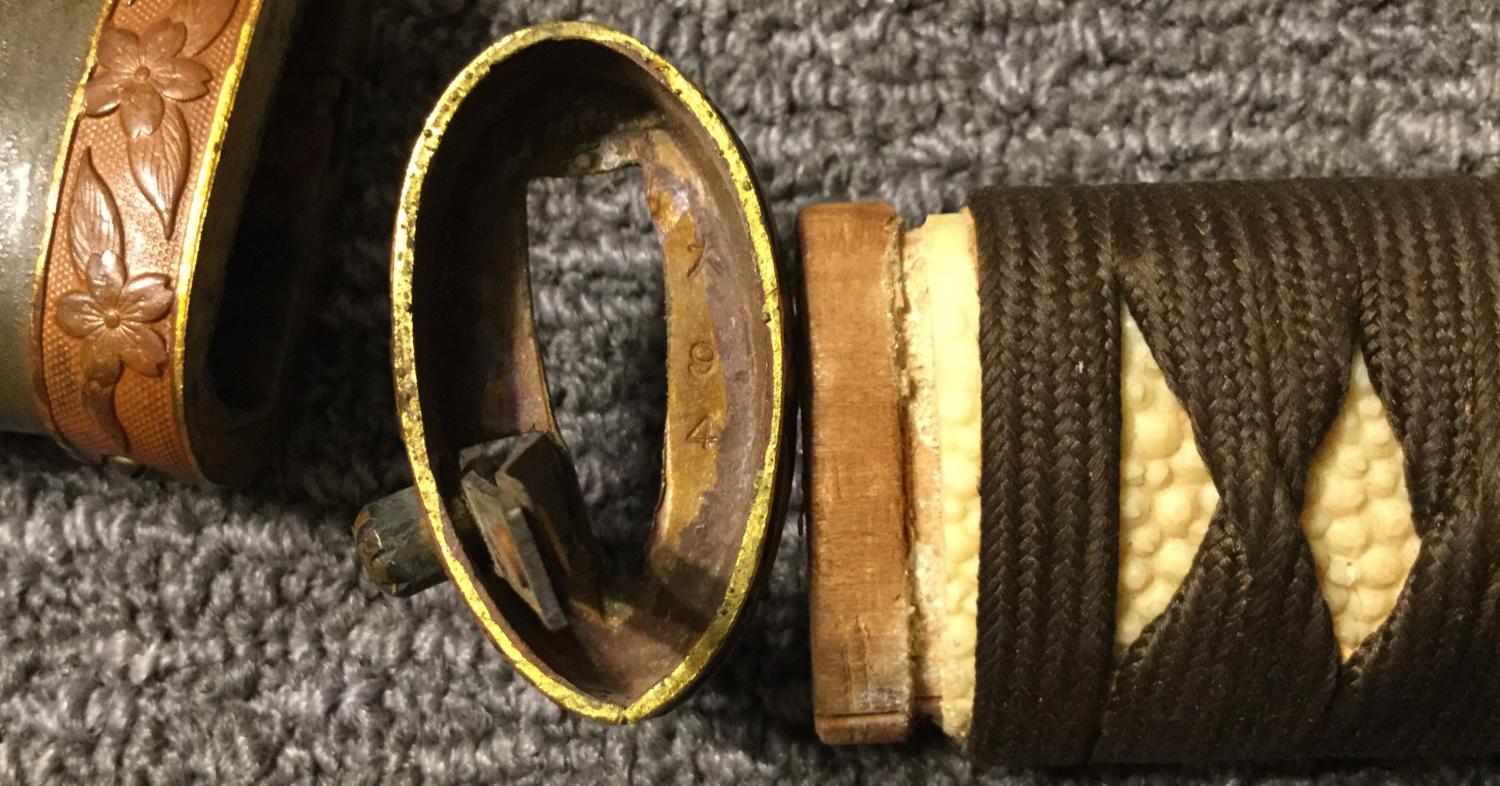
Ah so! The odd stamp on the nakago is probably a poorly struck "9" with "4" matching the numbers on the fittings. Thanks Michael!
-
But it's likely to be the tsuka craftsman's name, right, rather than maybe a koshirae shop name?
-
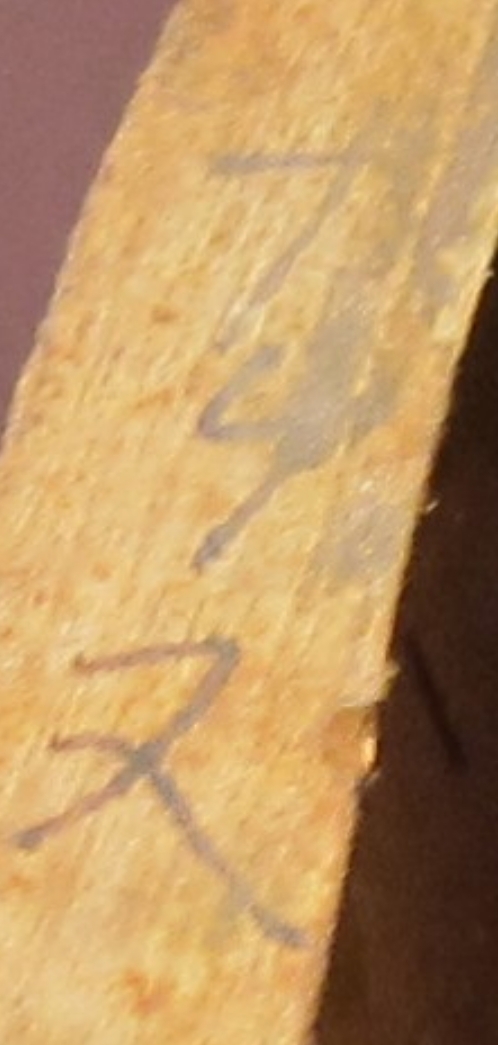
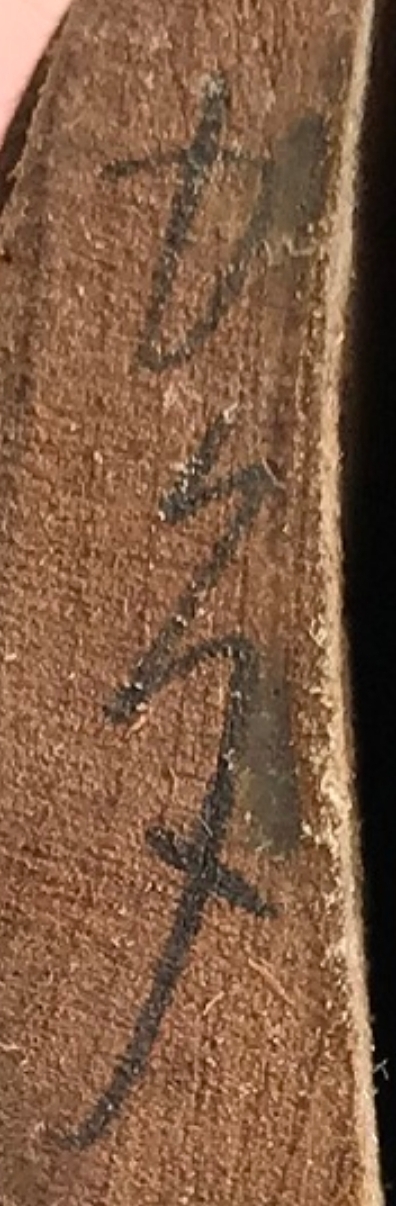
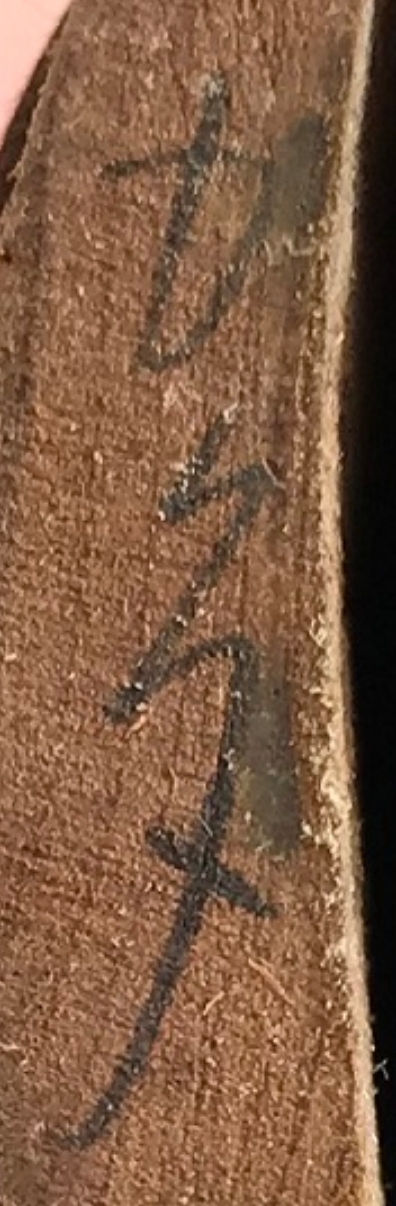
Gunto saya liner mei - Just for interest
Bruce Pennington replied to Mark C's topic in Military Swords of Japan
The top kanji are “373” which might match the same numbers on other fittings. The rest are probably the assembler’s name. -
Show Us Your High Class Gunto
Bruce Pennington replied to lonely panet's topic in Military Swords of Japan
Dang, that's gorgeous Neil! Wondering now if they are made by a single manufacturer or shop, implying that gunto fitted with them came through the same shop? Or, if it's simply easily made by multiple koshirae manufacturers. Probably the latter. -
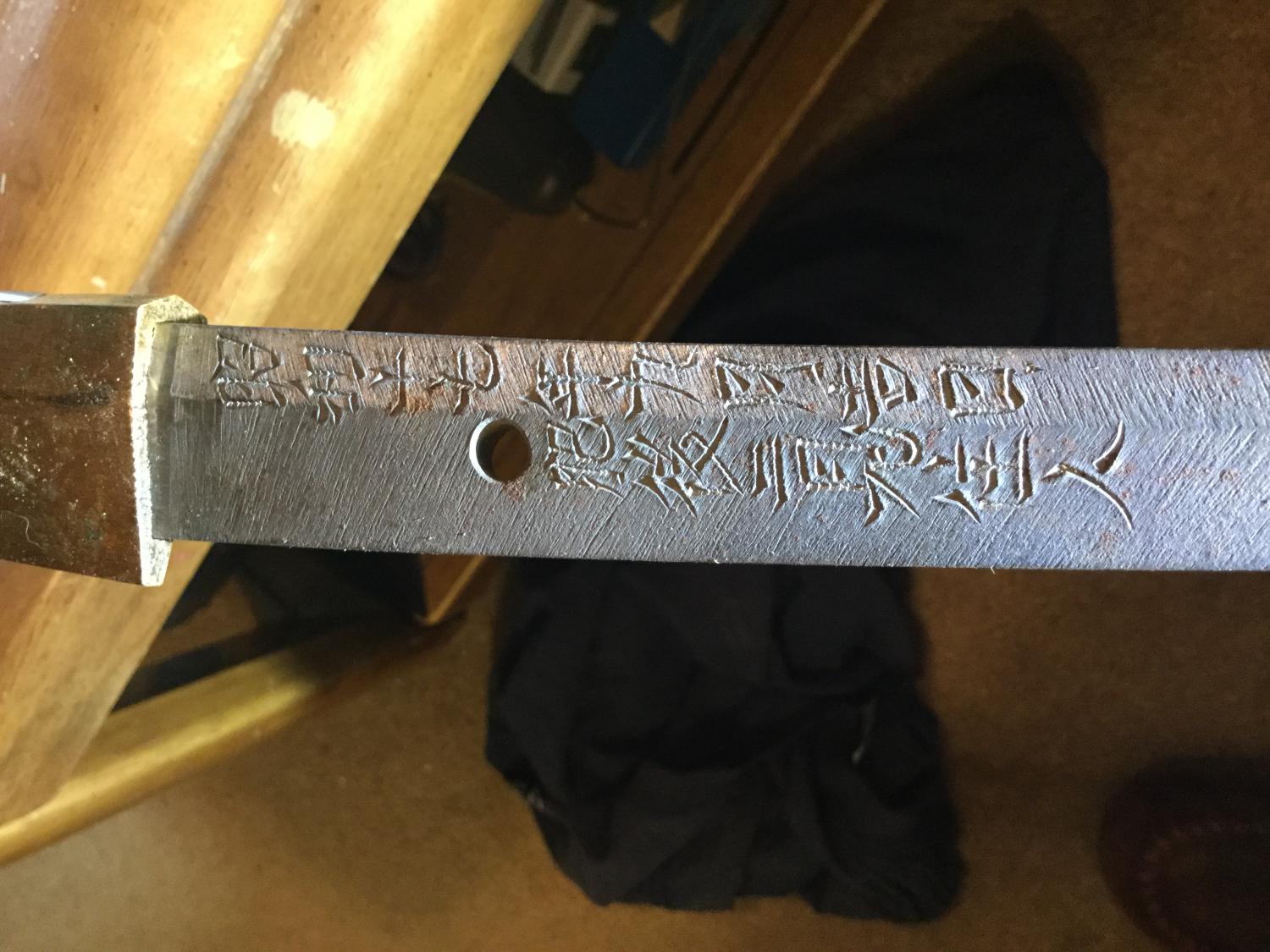
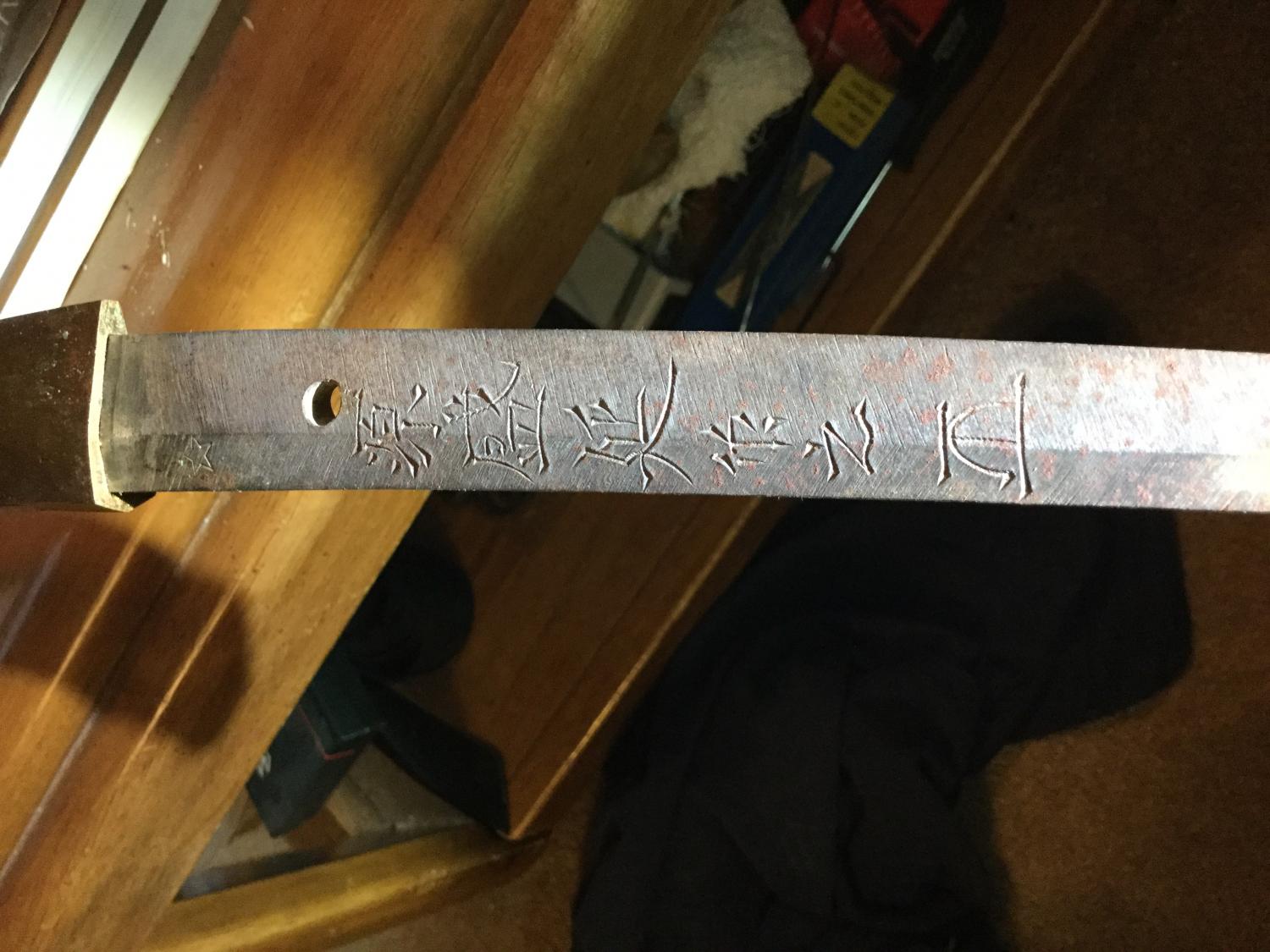
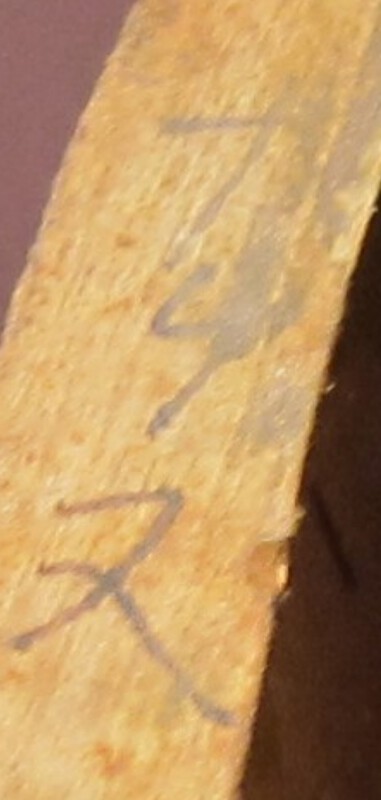
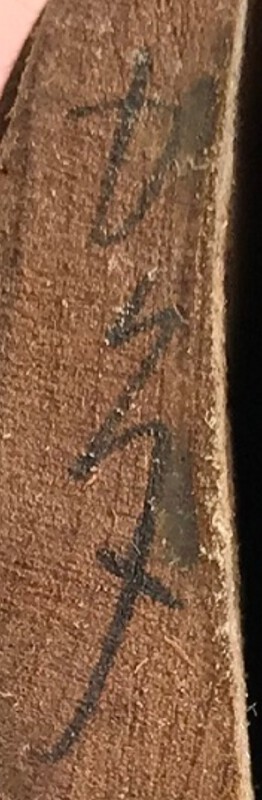
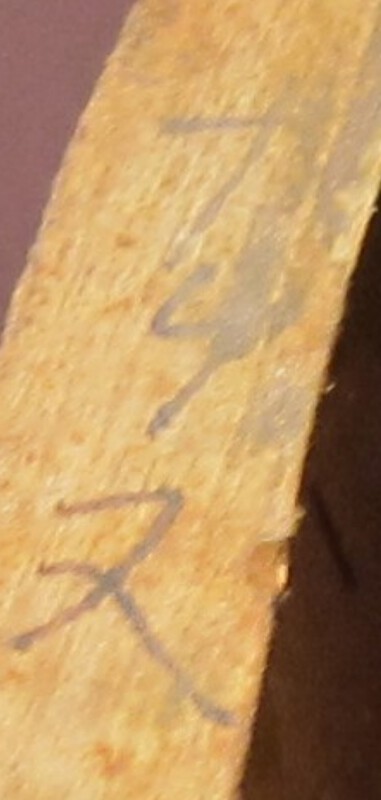
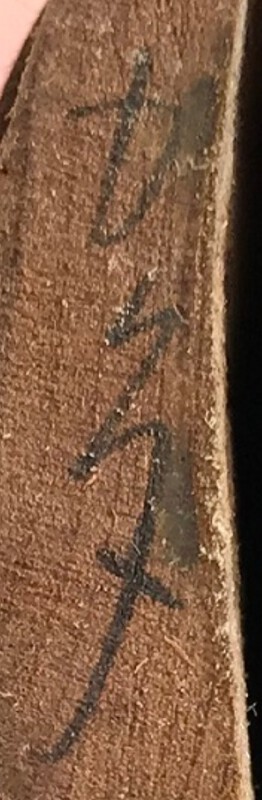
Hey guys, I've got 2 tsuka with the same mei. Any chance it's a name or a company name? Interesting to find 2 tsuka clearly made by the same guy or shop.
-
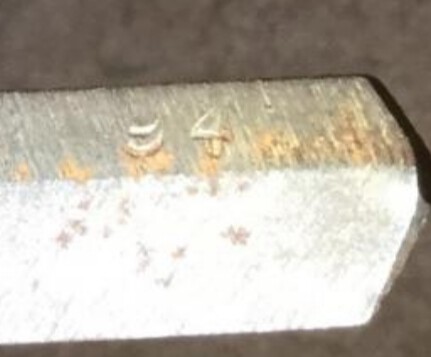
Well, part of the other side is a date: A day in September, 1942. I can't read the rest. Also, John, do the tsuba and seppa have numbers or marking similar to the marking at the end of your nakago?
-
George and Bryce's have the same signature (I assume it's a name):
-
Star Stamped Gendai in 98 Mounts
Bruce Pennington replied to Hastur's topic in Military Swords of Japan
An RJT smith, found here: http://japaneseswordindex.com/gendai2.htm Very gorgeous Brad! The small stamp is hard to make out, but looks like a poorly struck Nagoya inspector stamp. I've seen these on Star-stamped RJT blades before. -
Show Us Your High Class Gunto
Bruce Pennington replied to lonely panet's topic in Military Swords of Japan
I've always loved those fat, seppa. Any idea what metal it is made of Neil? Brass seems to get dull over time, this must be something else. -
I believe the kanji on the other side are assumed to be the name of the saya craftsman, but I don’t think anyone has ever proven that for sure.
-
Well ... I just realized I was using the “Tachi” term wrong! A mind is a terrible thing. Sure causes me a lot of problems!
-
Sword Belts For Double Hanger 94's
Bruce Pennington replied to IJASWORDS's topic in Military Swords of Japan
Fuller also has a picture of Army General Araki Sadao wearing a Type 94. You can just see the second belt strap coming out from under the edge of his coat. After reading Fuller's coverage of the topic, it seems the belts were made with 2 straps for wearing 2-ashi gunto.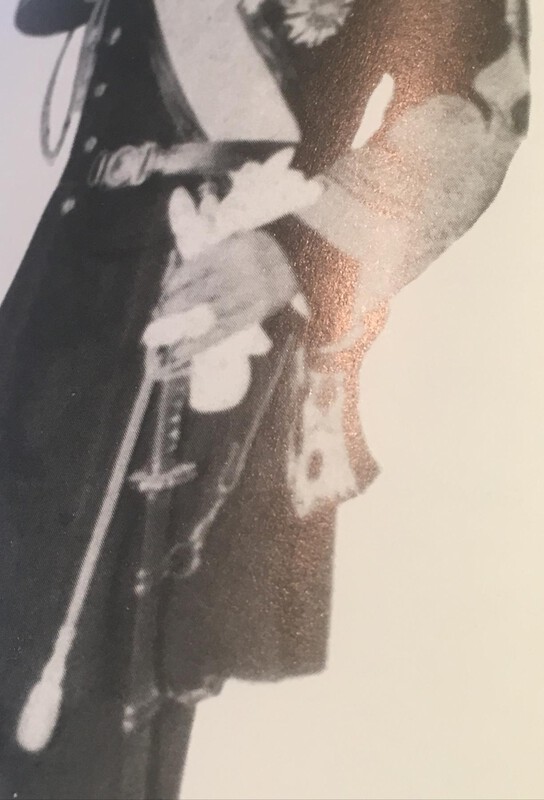
-
Ok, the looseness might explain the "upside down", or tachi as I was calling it, of the ashi. If they are that loose, the past owner/owners might removed them one day, and put them back on upside down. I'd say they are both original, as it's highly unlikely that it came with 1 and someone added an identical one later post-war. Like John said, the first version of the army shingunto, Type 94, started in 1934 with 2 hangers, so this may simply be the answer. In 1938, the Type 98 came out with only 1 hanger and most today are found that way. Whether you flip them or not is really up to you. Many guys prefer to leave a gunto the way it came as we don't really know it's story, but it won't hurt anything if you switch them.
-
I need help with translation on this.
Bruce Pennington replied to bigscreen64's topic in Translation Assistance
Brandon, Could we see pictues of the end of the nakago (tang), in fact the full length of it, as well as the blade tip and one overall of the blade? The writing is so poor I want to say it's a fakery, but I've been wrong about that in the past. Seeing more of the nakago and blade might help. -
Chris, Don't know how much you know about the fittings, so forgive me if I'm telling you something you already know! Like already said, the Seki stamp most likely means the blade was made during the war in a non-traditional way (big debates on this as some own gendaito with Seki stamps), but the look of the blade backs that up. SO, why would it be mounted in a tachi-styled, dual hanger, saya? It is possible this blade was bought up by the govt from a non-army factory and fitted out for the war. There actually were blades made during the war, and bought by civilians. This could be the case here. The standard look for a bought-up civilian blade is the army tsuka and wooden saya covered in leather, often with civilian fuchi and/or tsuba. Your leather cover is gone, but the hangers are made for it. But why tachi style and double hangers? I've never seen that before. I'm off into speculating now, but the all brown tassle is now known to be used by the Army civilian force, Gunzoku. Nick Komiya, at warrelics uncovered an imperial order that lays this out. (http://www.warrelics.eu/forum/Japanese-militaria/what-were-regulations-army-civilian-employees-carry-swords-701783/) Could it be that the Gunzoku official "personalized" his gunto by having it fitted out this way? Seems possible to me.