Bruce Pennington
-
Posts
14,642 -
Joined
-
Last visited
-
Days Won
176
Content Type
Profiles
Forums
Events
Store
Downloads
Gallery
Everything posted by Bruce Pennington
-
It’s a replica/fake. Good gut feeling you had.
-
@Stegel or @Shamsy will know. But I've seen enough human error on gunto that I suspect the stamper-guy was suffering from too much sake the night before! Mario, is the fuchi loose or does it fit tightly?
-
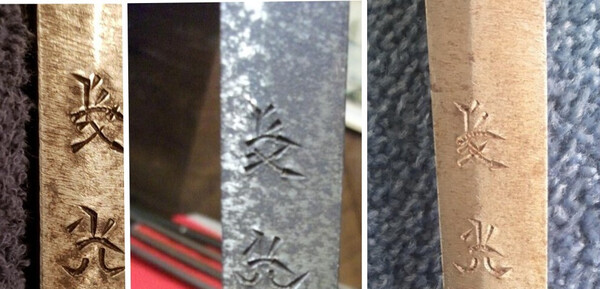
Chris, It is certainly possible. I have a variety of Nagamitsu mune with numbers and kana (1), so it's possible this is just another one. But after zooming in on Steeve's, it's clear the yasurime is the same as Mantetsu 1945 Yasurime (Steeve's in the middle) Nagamitsu

-
Very nice example. You see many group photos of navy crews with the officers carrying these.
-
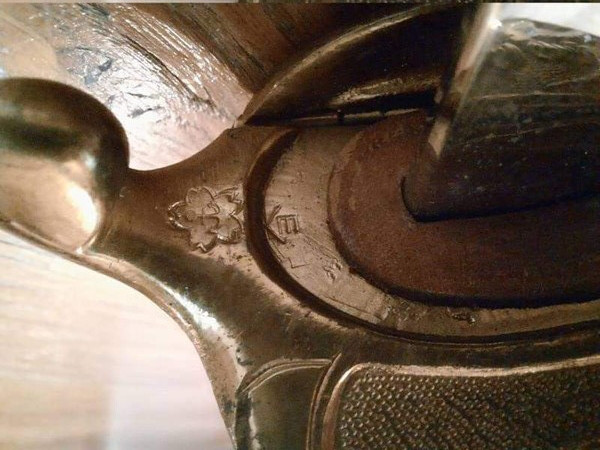
Gareth, The one on "top" is the Suya Shoten Company. Great write-up on them by Nick Komiay - The Untold Story of Suya Shoten. The bottom stamp - we used to say it was of the Toyokawa Navy Arsenal. Recent work by @Kiipu may be pointing toward a Naval Acceptance Stamp, similar to the Showa stamp for the Army. Your photo clearly eliminates any doubt as to it being a shop logo, as I have another guard with this anchor in sakura with another shop stamp. And on a seppa

-

Attention Mantetsu Owners: A Survey
Bruce Pennington replied to Bruce Pennington's topic in Military Swords of Japan
Thomas, Thank you! I wonder why I missed that one in my scouring of the forums for Mantetsu? Maybe at the time I was thrown off by the fact that it was mumei and didn't understand the significance of the serial number. At any rate, as I posted on his thread, here are our updated known 1945 serial numbers: い 28 mumei (Steeve) い 67 Konan Essei (from a book with a Diary citation) い 90 Konan Essei (from a book with a Diary citation) い 213 Konan Essei (from a book with a Diary citation) い 289 Konan Essei (from a book with a Diary citation) い 449 Konan Essei (from a book with a Diary citation) い 622 Konan Essei (Beng Shua Collection) い 1170 mumei (NGF Collection) There is one on page 82 of Richard Fuller's Japanese Military and Civil Swords and Dirks book, that I'm sure is a '45. I just wrote to him in hopes that he still has the gunto and can send a serial number to confirm. -
@steeve - if you are still receiving NMB emails, we have recently discovered that these blades were made in 1945 by Mantetsu. The serial number "い 28" is the 1945 series. We have 8 of these on record and yours makes 9, and the earliest number in the series. 6 of them have the "Konan Essei" slogan, but 2 are mumei like yours. い 28 mumei (Steeve) い 67 Konan Essei (from a book with a Diary citation) い 90 Konan Essei (from a book with a Diary citation) い 213 Konan Essei (from a book with a Diary citation) い 289 Konan Essei (from a book with a Diary citation) い 449 Konan Essei (from a book with a Diary citation) い 622 Konan Essei (Beng Shua Collection) い 1170 mumei (NGF Collection)
-
Quite gorgeous Geoff! Hope you get it!
-
Interesting with the screw up top as well as, I assume, below.
-
So, Dai-ei 1521 + 6 - 1 = 1526 August Once you have the date kanji, Thanks Trystan!, you can go to Japaneseswordindex.com Date Translation page for the era, then do the math to get the year.
-
Can you copy and paste the web link? Also, with the new NMB software, sometimes you can simply right-click on the photo and copy, then paste on your post. Sometimes that works, sometimes not.
-
Type 98 Japanese Officers Gunto. Looks like the saya is aluminum? Not rare, but not standard either. The thick seppa like yours are usually found on gunto of a high quality than the average. Your guy probably spent a little extra on this.
-
Type 98 signature info wanted
Bruce Pennington replied to MacTheWhopper's topic in Translation Assistance
Nihonto Club has a Yoshinaga, but he used a different mei and was from Hoki prefecture, where this one is from Seki. Doesn't surprise me though, as I've come across several smiths in my files not listed there. https://nihontoclub.com/smiths/YOS570 There were over 300 smiths working the Seki area during the war. We simply don't have official records of them all. -
Wow! Beautiful work!
-
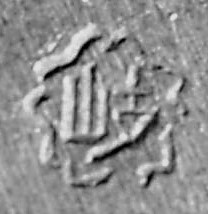
Thanks Sebastian! They are both the "Gifu" stamp: We don't know whether it was an Army acceptance stamp (leaning that way lately) or a stamp used by the Seki Cutlery Manufacturers' Assoc., who used to use the large Seki stamp until Army Inspectors absconded with it for their own use. Either way, it passed inspection and is non-traditionally made.
-
You can read all about the various types and see tons of high-quality pictures of each on Ohmura's site: Military Swords of Imperial Japan (Gunto)
-
Sebastian, Legit WWII Japanese officer gunto. Commonly called the "Type 3", but lately we've learned the version was a variant of the Type 98. It doesn't have an official label, but it was a 'Contingency Model' or in Japanese 'Rinji Seishiki', designed in 1938, but didn't 'hit the streets' until 1940 and not popular until 1943-1945. Yours is dated Aug 1944. Like John said, Masanori worked in the Seki prefecture. There is a small stamp at the top of the nakago (tang) that is the small 3mm Seki stamp - Could I get a good photo of it? It was used by inspectors of the Nagoya Army Arsenal, and is seen on non-traditionally made blade. I don't like the 'machine made' label, as all blades made during the war, regardless of tools/machines/quenching methods, were made by hand, by people. You can read about these at the following sites: Ohmura's Type 3 pages History of the Type 3 by Nick Komiya Unveiling the Rinji Seishiki in 1940
-
Nice thread, Neil, looking forward to more examples!
-
Arsenal Mark on RJT sword Fittings
Bruce Pennington replied to george trotter's topic in Military Swords of Japan
Came across another Gunma blade. A Sep 1943, star-stamped Kanetsugu - ク162 Star. In RS fittings. Found HERE on Wehrmacht-Awards. 1943, Sep Gunma Kanetsugu (RJT) ク162 Star Jumper, W-A RS 1944, Jan Gunma Kanetsugu (RJT) ク306 Edward Mahle, NMB 1945, Feb Gunma Kanetsugu (RJT) 938 Antiqueimperialarts 1944, Jul Gunma Tsugunobu (RJT) ク70-5 Star OhmuraBook pg 167 RS -
A star-stamped 1943 Kanetsugu in black saya and fittings. Found HERE.


-
@PNSSHOGUN - John - Big apologies! I'm brain-dead from 3 straight days of almost no sleep (wife in hospital. All is well and back home now). I thought I was on the Late war gunto discussion thread.
-
John, I feel your view is coming from a guy that valued High Quality Gendaito and their appropriate fittings. "Value", as all of us know in Sword-Collecting-World, is set by the tastes of the group that are interested in each item. I think $650 for a 1963 Spiderman comic book is ludicrous, but I don't have any interest in comic books. I would also never spend $10,000 on a nihonto - I could get 5 great WWII gunto for that!!! You know that some of us enjoy the late-war stuff. You also know, because we at NMB have had this discussion multiple times, the point I'm making about taste. So, what I don't know, is why you're, to all appearances, acting like you don't know all this. ??? Love you, dude, but this is not why we are here. I don't look down on your interests.
-
It starts at post #17 on this page: https://www.warrelics.eu/forum/Japanese-militaria/nlf-gunto-discussion-672281-2/#post2030534
-
I appreciate the effort. I find these items interesting as well. There is a larger thread about these, if I get a chance I will link it here. Nick Komiya, Warrelics, Posted a translation of a document in the last year of the war which showed that Allied bombing had essentially destroyed sword making on the mainland in that final year. They change the military specifications orders to allow anything that “shoots for stabs” to be produced regardless of Quality. He also showed a navy regulation downgrading the requirements for the metal fittings to allow one belt hanger black and fittings and essentially lower quality everything.
-
The handle is a classic style from the old days.