Bruce Pennington
-
Posts
14,640 -
Joined
-
Last visited
-
Days Won
176
Content Type
Profiles
Forums
Events
Store
Downloads
Gallery
Everything posted by Bruce Pennington
-

Type98 found on excavations on Shumshu island
Bruce Pennington replied to vajo's topic in General Nihonto Related Discussion
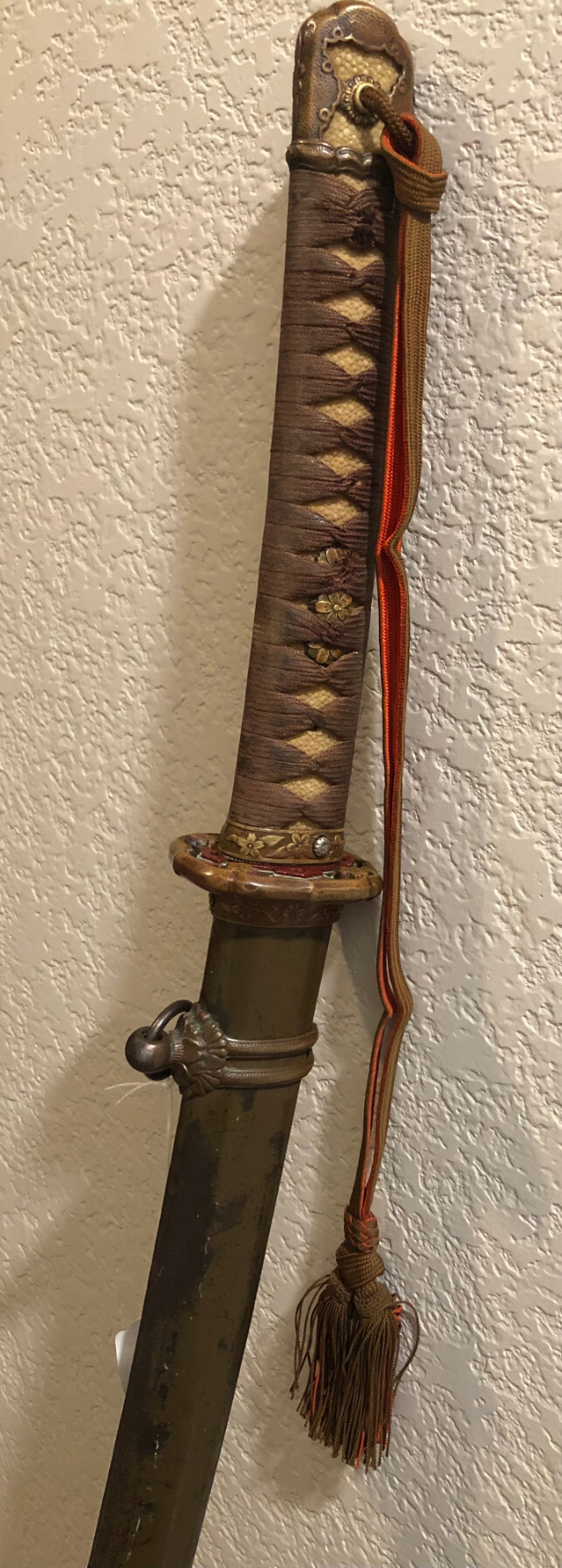
I was surprised at the untarnished condition of the brass fittings. -
You'll see some examples of the knotted navy sarute here:
-
There were some kyugunto with thumb latches. @lonely panet is one of the guys (can't remember who else) specialized in kyu. He would have some background.
-
Mine had a tiny knot on one end and the other is held by a conical wedge which is inserted into the end of the cord. For some reason, only common to kaigunto, they are tied in a knot externally to the tsuka.

-
Nihonto Circle of Life?
Bruce Pennington replied to bnacorda's topic in General Nihonto Related Discussion
That's it Rob! I couldn't find it, of course using my World-famous horrible searching skills! 3 pages of answers! -
I like the way you summarized that! Yes, Chris Bowen has real person-to-person interview testimony from smiths and polishers from the war. I have a feeling we are dancing all around the truth, with the edges of it still a little fuzzy and hard to pin down, like a dim star you cannot see if you stare straight at it. You have to look off to the side to catch sight of it sometimes.
-
Nihonto Circle of Life?
Bruce Pennington replied to bnacorda's topic in General Nihonto Related Discussion
My wife has dibbs on my collection, she knows how much it's worth! Ha! I've made a catalog of the swords, so when she goes to sell them off, she'll be able to list them properly. I also have contact info of a couple of our NMB guys she can contact for advice on how to move them. To be sure, though, I'm certain not a sword would go, as I have to harass her constantly just to get a bag or 2 of crap that's been hoarded in the basement for the last 40 years, off to Goodwill! At first, my gut wish was that the whole lot could be kept together. But I realize that even if each piece were sold separately, they would simply go into the hands of a collector that needed just that piece for the missing item in their own collection. So, I'm not so worried about it anymore. -
Bamboo Leaf pattern Tsuba on Gunto with old blade
Bruce Pennington replied to Baka Gaijin's topic in Military Swords of Japan
There's a nice one on @Benji's thread here: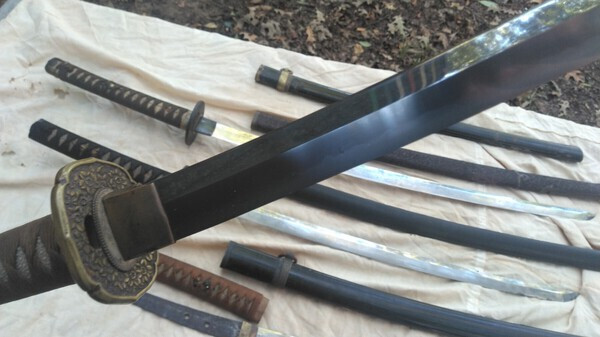
-
I'm sorry, I did say ito, but I really meant "same'" - what color is that rayskin? Great observation Neil, never noted that before!
-
Tang of Kai Gunto - need help with translation
Bruce Pennington replied to Kolekt-To's topic in Military Swords of Japan
Been around enough rodeos to recognize the "kanemasa", but could speak to all the rest. Can I get a good shot of the stamp at the top, Seki maybe? No date on the other side? -
Benjamin, That's a nice example of a Gunzoku sword. I can't read the mei, but the hotstamp is of a smith named Kanezane. the stamp is out of focus, but looks to be a Showa stamp. No date on the other side?
-
Geoff, is that ito painted gold???
-
Might have been @Shamsy or @IJASWORDS or @Stegel then.
-
Attention Mantetsu Owners: A Survey
Bruce Pennington replied to Bruce Pennington's topic in Military Swords of Japan
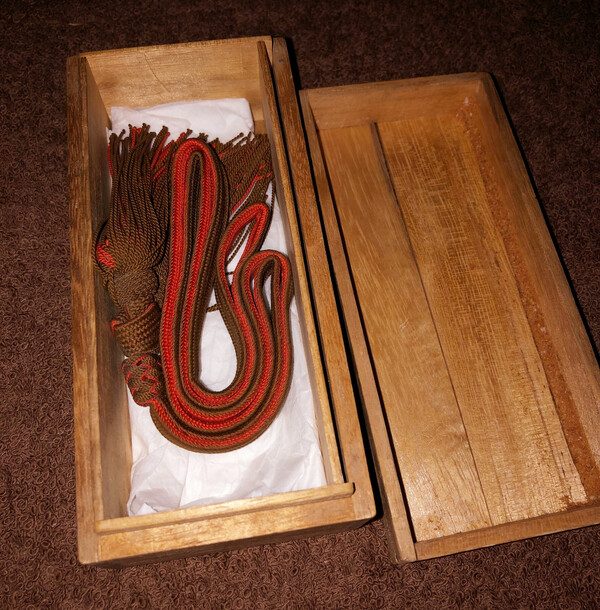
Wow, that's a great one, Thanks Trystan! I didn't have menugi pics like that in previous examples. -
I might have bought this one from you John! Field grade. Still had tiny rubber band around it. I promoted my company grade Mantetsu with it!
.thumb.jpeg.60c8339900b2eb66f101f415a333f3cc.jpeg)

-
Seki Inspection Tag On Combat Saya.
Bruce Pennington replied to mauser99's topic in Military Swords of Japan
Another gold label. Late-war fittings - black painted wood saya, leather covered. On Warrelics Thread.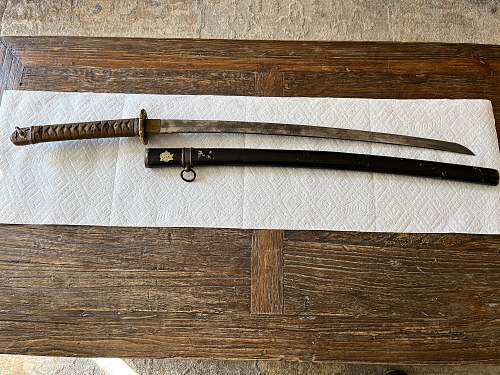
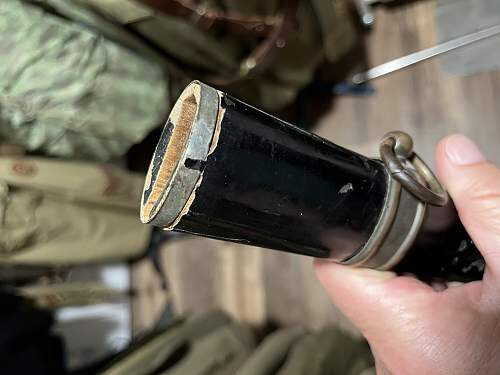
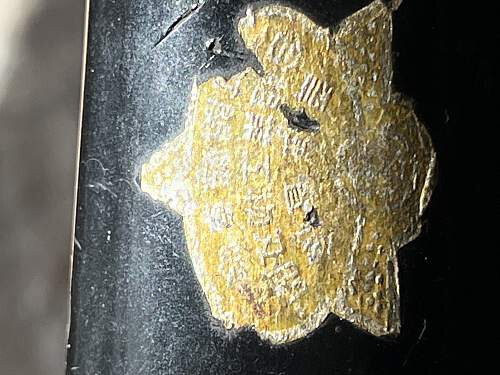
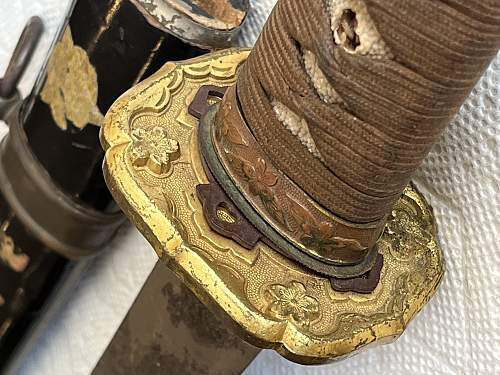
-
Geoff, mine is 4.15-4.5mm depending on how tight you squeeze.
-
I literally bought a tsuka on ebay that had the cloth sarute in it ($200). Took to the sarute off and put it on mine. Still have the extra tsuka.
-
Bruno, Do you have a source for that? If so, I would find that significant to have. In my digging, the only known source I could find was the Seki City website. The Seki City website claimed “all” blades were tested and stamped, lending support to the opinion by some collectors that their particular blades are gendaito, regardless of the stamps’ presence. But the website article was referring to showato and the impact “poor showato” were having on the industry. So, it is still possible the testing and stamping was only done on showato. In fact Ohmura, citing the number of Cutlery Assoc. inspected swords, states that traditionally made swords were not part of that tally because they weren’t inspected. Since half of the blades in each survey had no stamps at all, many of them from the Seki prefecture, this could indicate they were gendaito, while the stamped blades were showato. But your version still could be true. Here's the original discussion with Nick Komiya: "First, is what the Seki City site says about its cutlery industry in WW2. They have a long chronology chart of Seki City history and I provide the full translation of the first boxed section from the original below. 'Blade Manufacturing as Part of the Armament Industry Because the United States and England adopted China-assisting policies in the early years of Showa, Japanese products were driven out of world markets, shutting off Japan’s exports. Thus the mainstay exports of Seki’s cutlery industry such as knives, dishes and kitchen knives took a huge hit and those producers were transformed into suppliers for the military. During the war, Seki’s entire cutlery industry got drawn into supplying the military, and sword-smithery was once again a thriving industry. In those days, military swords were called Showa-toh to differentiate them from traditional Japanese swords, but as demand grew, bad quality Showa-toh appeared on the market, becoming a social problem. To counter this problem, the sword dealers of Seki devised a program to assure quality by having the Seki Cutlery Manufacturing Industry Association test all newly produced Japanese swords and stamped products that passed this test. This quality assurance program, combined with the trainee program at the forge and efficiency improvements coming from specialization and job-splitting of the production process, allowed Seki swords to gain the reputation of being affordable yet high quality, leading to a 90% share of Japan’s entire market supply. The sword industry of Seki in 1944 consisted of 49 smiths of traditional swords, 200 smiths of Showa-toh and 3,000 Polishers.' Secondly, although the Ohmura site claims that the Sekiwake 関分 plant under the Nagoya Arsenal adopted the Seki stamp as their acceptance stamp, the code list from 1943 below attributes it to the Seki Supervisory Group of the Nagoya Arsenal, one of a total of 10 acceptance outposts of the Nagoya Arsenal. Note also that "Na" in Katakana was from the Iwahana Plant under the 2nd Tokyo Arsenal and it was the Kanji version that stood for the Supervisory Dept. of the Nagoya Arsenal. 関分 is clearly another mistake. It is clear from the Seki City write-up that it was the non-traditional Showa-toh that invited the quality test and stamping and the later Sho in cherry blossom is obviously in direct reference to the distinction, "Showa-toh". I cannot imagine why he had to tie it to the Ministry of the Interior. Traditionally made Nihonto made by the 49 smiths were not called Showa-toh. The site says "All newly made Japanese swords got tested", as if testing was not limited to Showa-toh that ruined the reputation earlier. The Seki City History book consisting of more than a thousand pages will surely have more details. I just secured a cheap second hand copy of the 1999 issue, so in a few months, I should have a few more facts for you to chew on." Source Link So, as you can see, we still need more information.
-
Type98 found on excavations on Shumshu island
Bruce Pennington replied to vajo's topic in General Nihonto Related Discussion
I wonder if they recovery team was repatriating the remains to Japan, or if they had a mass grave on the island? -
Bruno, Could your other guy be Ishido Mitsunobu?
-
Kataoka Kunihiro - Bought unseen
Bruce Pennington replied to Lareon's topic in Military Swords of Japan
Thanks Tony! The first photos made it look really flat. -
Wwii Japanese Sword With A Tachi Blade From Kamakura Period?
Bruce Pennington replied to cplnorton's topic in Nihonto
Great examples of the Yamamoto Gunto Shop logo. Very nice fittings they made apparently. -
Here's a 1945 Mitsunobu: and a Feb 1944:
-
@Bruno, Just realized I don't have any examples of his work in the database. Do you have a blade made by him that I could get some photos of for the files?

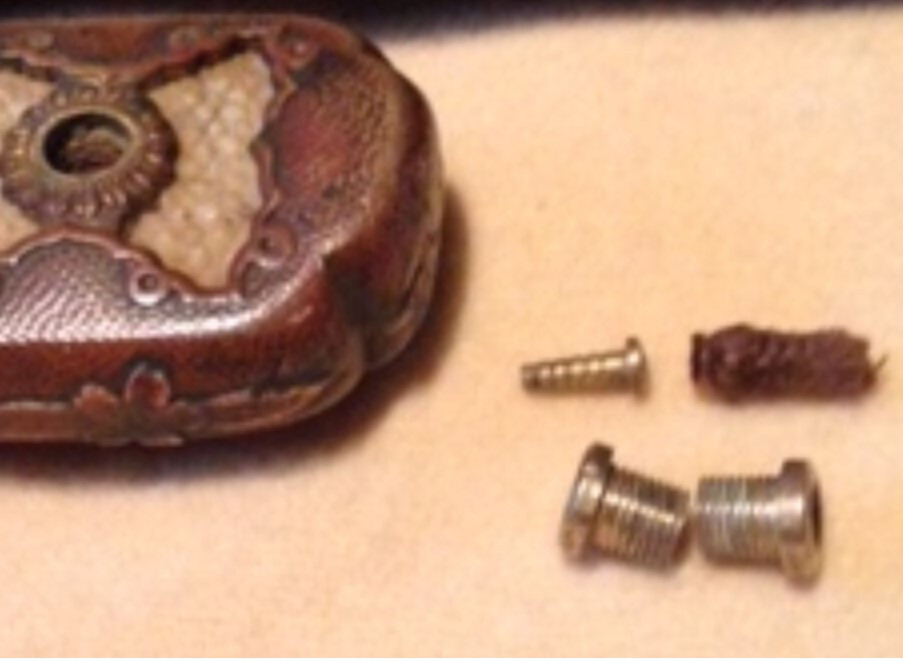




.jpeg.29168fab9276c920d42b1389af1547dd.jpeg)