Bruce Pennington
-
Posts
14,654 -
Joined
-
Last visited
-
Days Won
176
Content Type
Profiles
Forums
Events
Store
Downloads
Gallery
Everything posted by Bruce Pennington
-

Bamboo Leaf pattern Tsuba on Gunto with old blade
Bruce Pennington replied to Baka Gaijin's topic in Military Swords of Japan
Hmmm.....me thinks I see a pattern of green ito! Interesting. -
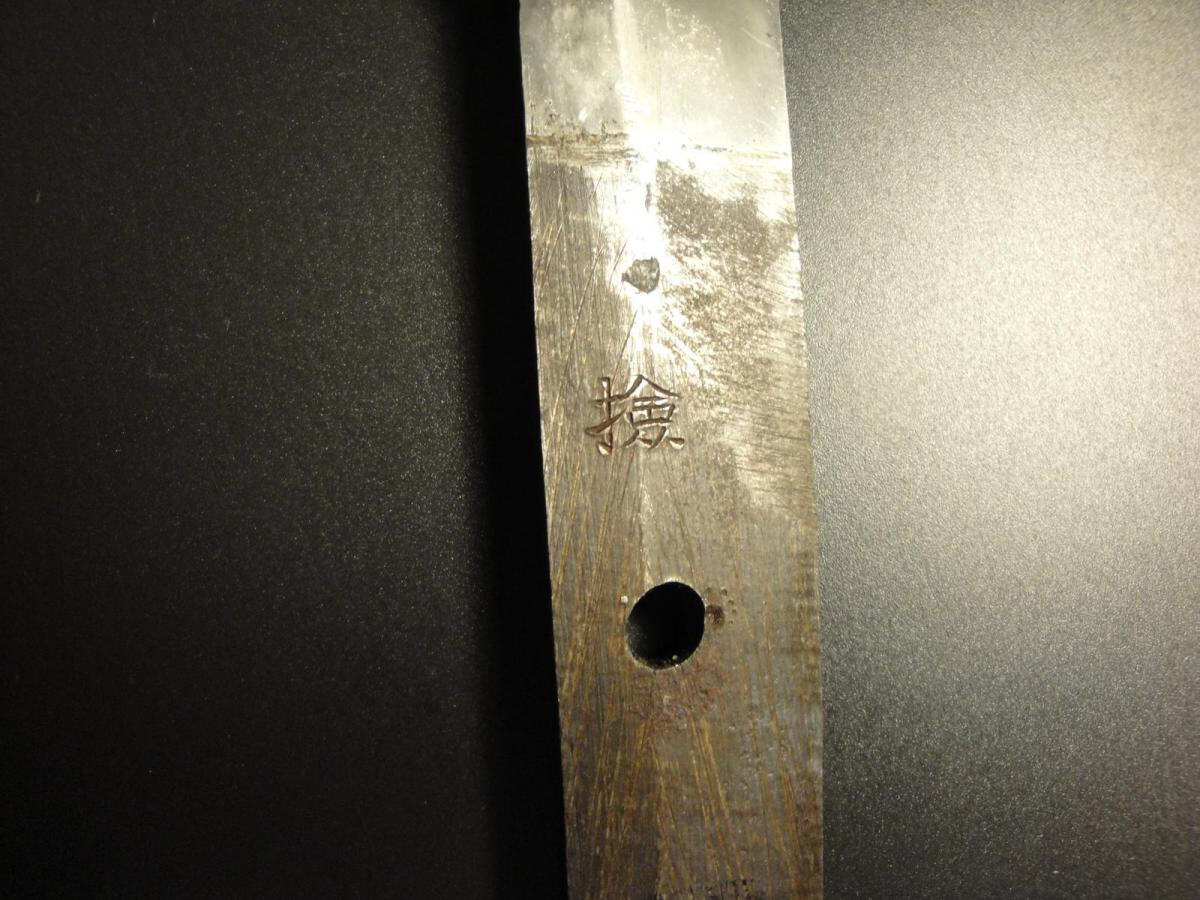
Thanks Eric, you're right. @Kiipu - notice the orientation!!! Ha! First one I've seen stamped vertically with blade tip down!

-
With the updated photo, looks like it's probably him - Miwa Kanetomo. Thanks to everyone for trying to sort this out!
-
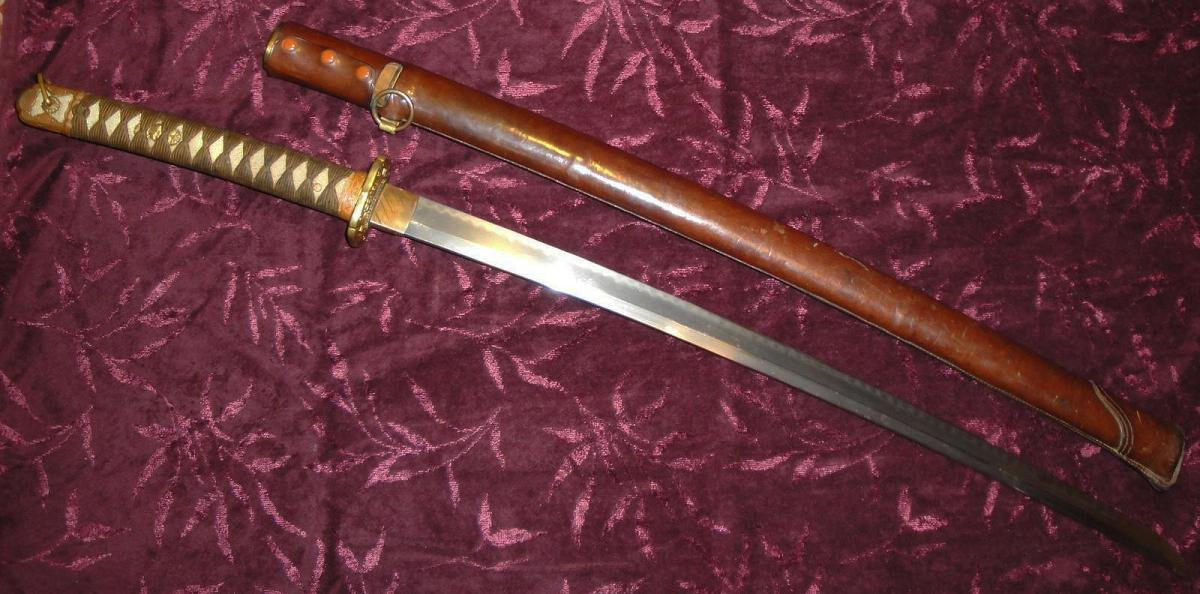
No one has mentioned - the tassel is a Company grade tassel, Lt - Capt. The saya (scabbard) is civil, but has the haikan (belt ring) and remnants of the leather cover that the Army put on civil swords when brought into service.
-
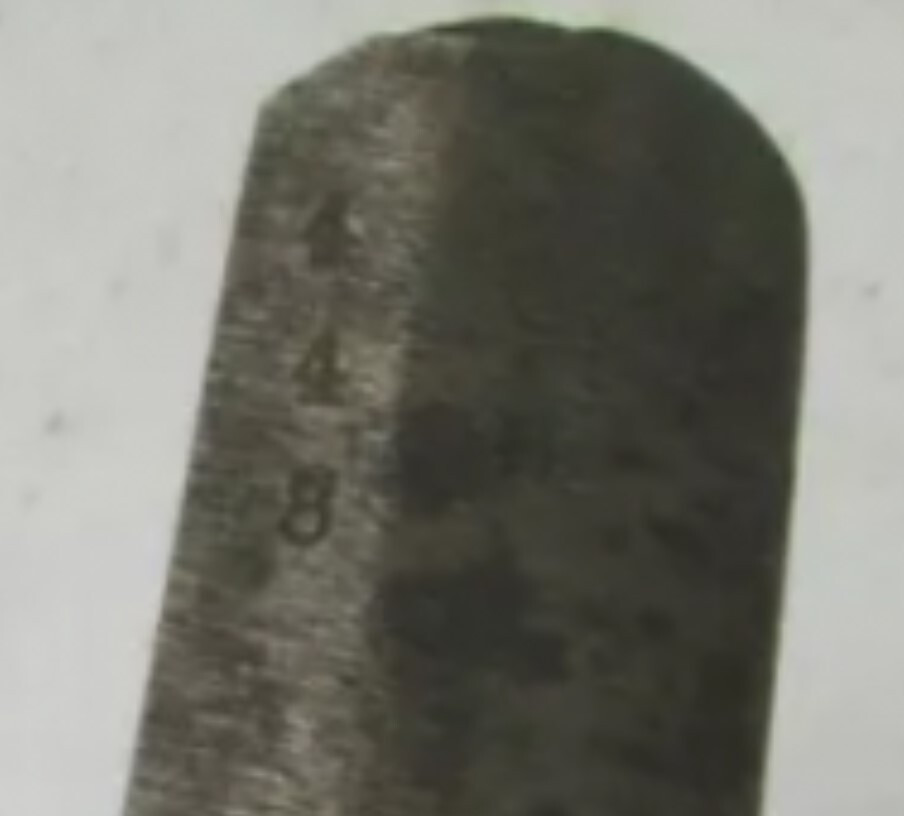
Also, Steve, you HAVE to get me a clear shot of that number at the end of the nakago!!! Is that "811"? Can you contact the owner for a better photo? If not, can you give me a link? I hope I don't sound desperate ....... I HAVE TO HAVE THAT NUMBER!!!! Ok, calming down..... Ha! But I would appreciate it.
-
Steve, If you haven't read it, I've compiled as much as we know (so far) about the Showa stamp, along with all the other stamps in the article: Stamps of the Japanese Sword. In the article, I state that it was likely the approval stamp used by the Seki Cutlery Manufacturers Association. Recent discussion have resurrected the possibility that it was an Army acceptance stamp. In either case, like Brian stated, it most likely means the blade was made with non-traditional means.
-
You can read all about the "Mysterious 'w' stamp" HERE. The short version is it's most likely an intermediate/half-way inspection stamp. An army reg found by @Kiipu says as much. The smith is Takehisa, who is one of 8 recorded smiths with the stamp, not counting all the Mantetsu blades with it. Your date is Autumn 1943.
-
iPhone - extremely slow - freezing?
Bruce Pennington replied to Mark S.'s topic in Forum Technical Details and Maintenance
I had the same problem on my laptop using windows 10 periodically. Not that often, maybe once a month or every other month. I just assume there’s updates or maintenance happening on the site. -
Help identifying a WWII-era sword
Bruce Pennington replied to ELK's topic in Military Swords of Japan
Thanks for the added photos Etienne! I noticed your dating question from back in Dec of 2020, sorry no one tried to answer yet, but both blades were made during the war. As they are not dated, it's really not possible to pin them down to a specific year. The Kanenao, with a Showa stamp COULD be in the 1940 plus/minus range. Most dated blades with the Showa stamp, in my survey, are 1940/41. I'll post my chart below. The problem lies in that out of the 176 Showa-stamped blades I have on file, only 42 of them are dated! So, when were the non-dated blades made? No one can say for sure. You'll find the same issue on old Nihonto. There are far more undated blades than dated. The mostly likely year for the Yoshimitsu blade would be 1942. STAMP SURVEY Stamp 1935 1937 1938 1939 1940 1941 1942 1943 1944 1945 No Date Showa 1 1 1 4 20 13 1 1 130 Seki, large 5mm 1** 3 9 43 3 3 108 Na 3 3 43 5 1 Seki, small, 3mm 8 14 7 Gifu Total 2 15 32 2 Gifu 2 5 17 2 Se & Gi 7 9 Fuller Gifu* 5 6 See note Saka 阪 1 5 8 Kokura 4 (Kyu) KO 1 2 2 1 江(E) Kokura 1 熊Kuma Kokura 1 Nan 1 Tan 1 4 TO 4(zoheito) 1 Yama 1 ヘHE 1 Matsu# 6 9 オ 1 タ# 2 3 マ 1 1 ク 2 ? 1 イ 1 1 フ 1## 1 + ア 2 ホ 2 Toyokawa Anchor 1 21 Tenzoshan Anchor 1 1 4 4 5 -
Andy, @SteveM might correct me on this, but I'd say that's "Seki Masatomo". There is a Hiramatsu Masatomo listed on the RJT list, but no Kanetomo. I haven't been able to pin down a prefecture for Masatomo. @george trotter - have I asked you yet? This blade would put him in the Seki area, with likely would mean Gifu, right? Sorry, Andy, I got to chasing rabbits there! Your date is 1945, with a HORRIBLY inscribed "Sho" "Wa" before the numbers. I've seen some bad calligraphy on blades before, but this one takes the cake, as they say. It's also a bit unusual to see an RJT blade in "standard" Rinjiseishiki saya. I have seen it, but it's not common. They are usually in upgraded fittings. This being a 1945 date, though, may explain it. We had almost completely shut down sword production in mainland Japan in the last year of the war, due to bombing. There might not have been a whole bunch of custom fittings shops to choose from at the point this gunto was assembled.
-
Star Stamped Gendaito - Tsuguyoshi
Bruce Pennington replied to Lareon's topic in Military Swords of Japan
Ha! Did it come with the gunto?! -
Yeah, there's that 35XXX number again!
-
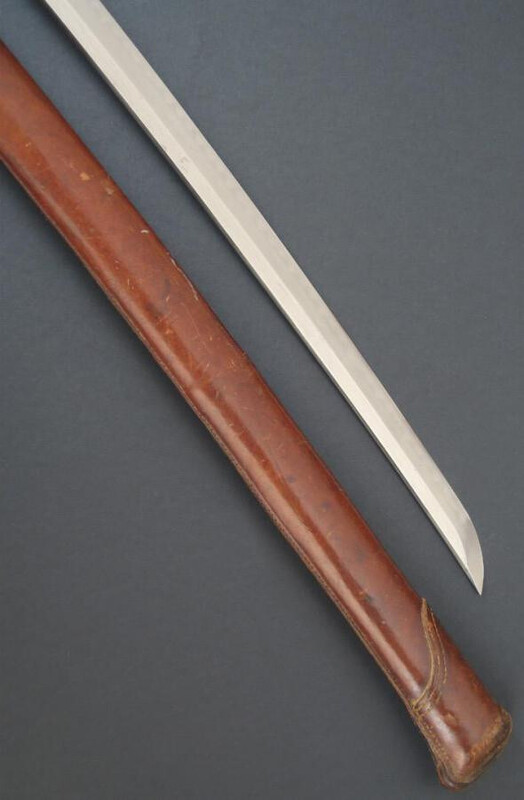
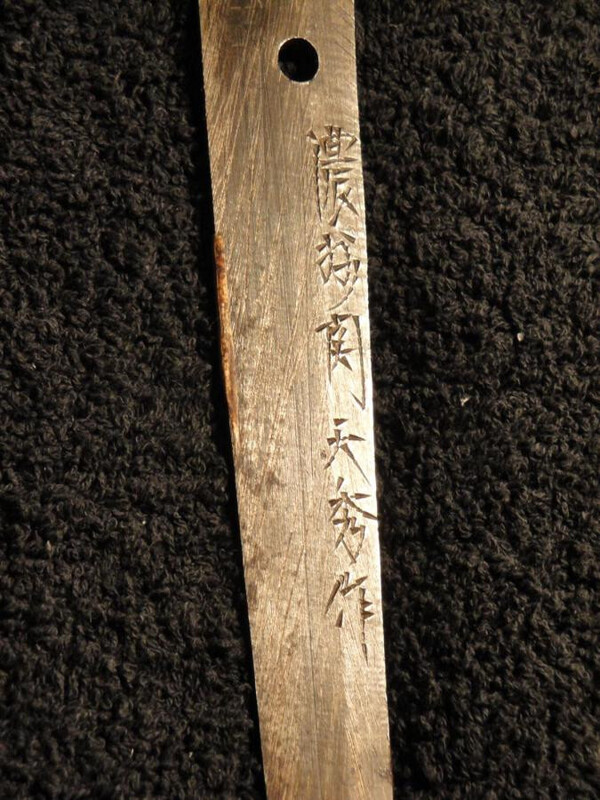
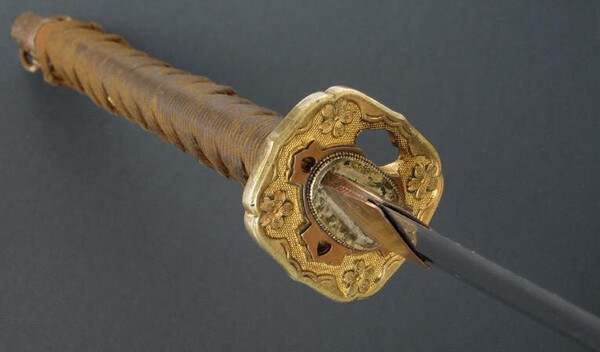
Here's all the pics provided by the owner. No pics of the other side. It's the only example of the "stamp" observed so far. It's an Amahide blade.



-
Boy, if it weren't for the bad bohi and the metal flaw by the numbers, it would be darn near perfect! This faker sure likes the 30,ooo number series, too.
-
Star Stamped Gendaito - Tsuguyoshi
Bruce Pennington replied to Lareon's topic in Military Swords of Japan
Nice gunto, Tony! -
Star Stamped Gendaito - Tsuguyoshi
Bruce Pennington replied to Lareon's topic in Military Swords of Japan
1943, Aug Gunma Tsuguyoshi (RJT) ク122 Star Lareon,NMB, T98 1943, Sep Gunma Kanetsugu (RJT) ク162 Star Jumper, W-A RS 1944, Jan Gunma Kanetsugu (RJT) ク306 Edward Mahle, NMB 1944, Jul Gunma Tsugunobu (RJTO ク705 Star OhmuraBook pg 167 RS -
Fabulous!
-
All I can say is I've never heard anyone say "Dang, I wish I hadn't had that blade polished!" Ha! Costly, but if it's worth it to you, then that is the real determiner.
-
Letter Opener?
Bruce Pennington replied to Bruce Pennington's topic in General Nihonto Related Discussion
Thanks guys! Piers, I just read through your Small Blade thread and see what you mean. I've added this one for comment. Jon, yes, it was quite unexpected. I'd say who it was, but don't want to set such a high bar for his future customers! Very kind thing to do! -
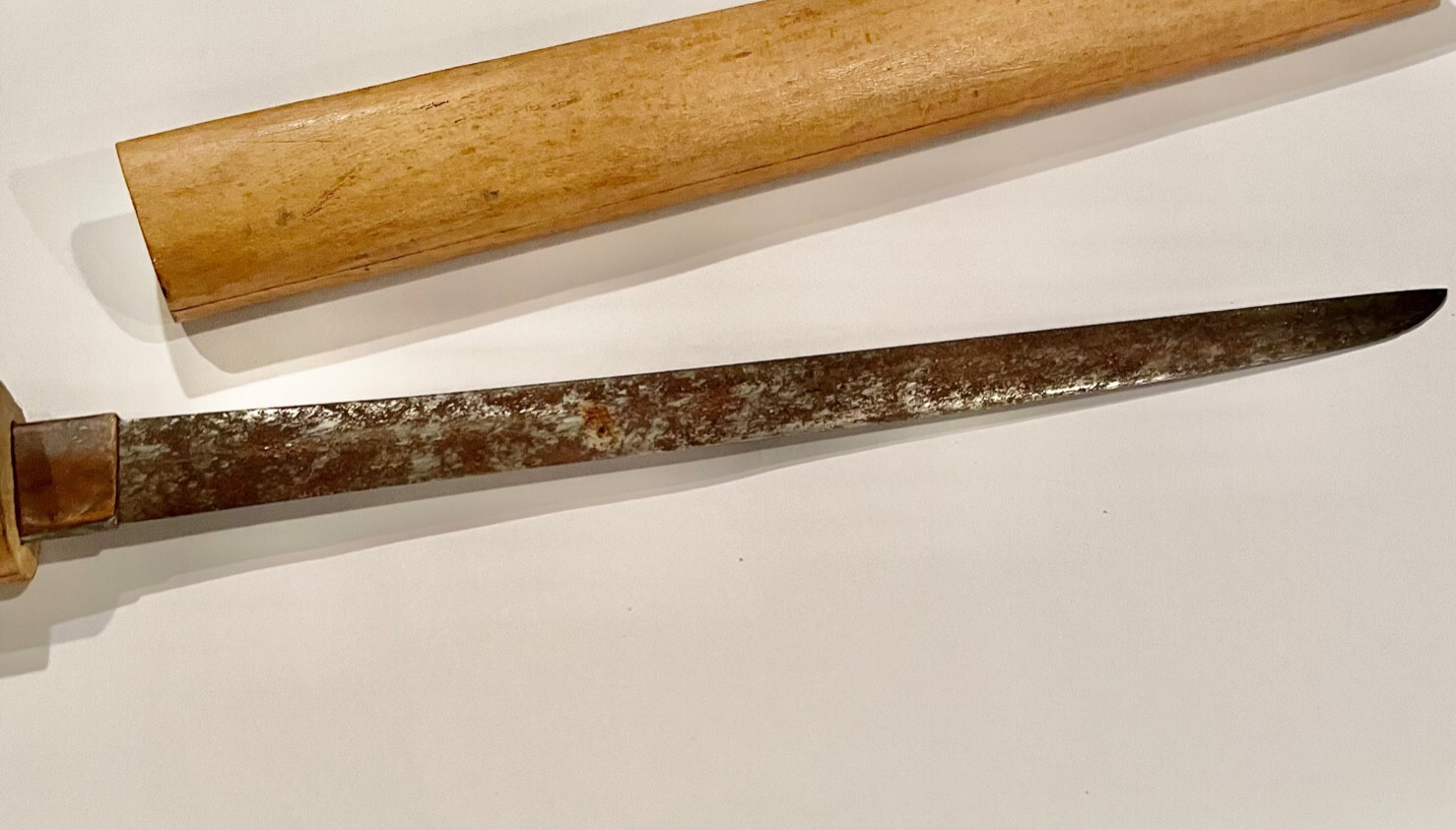
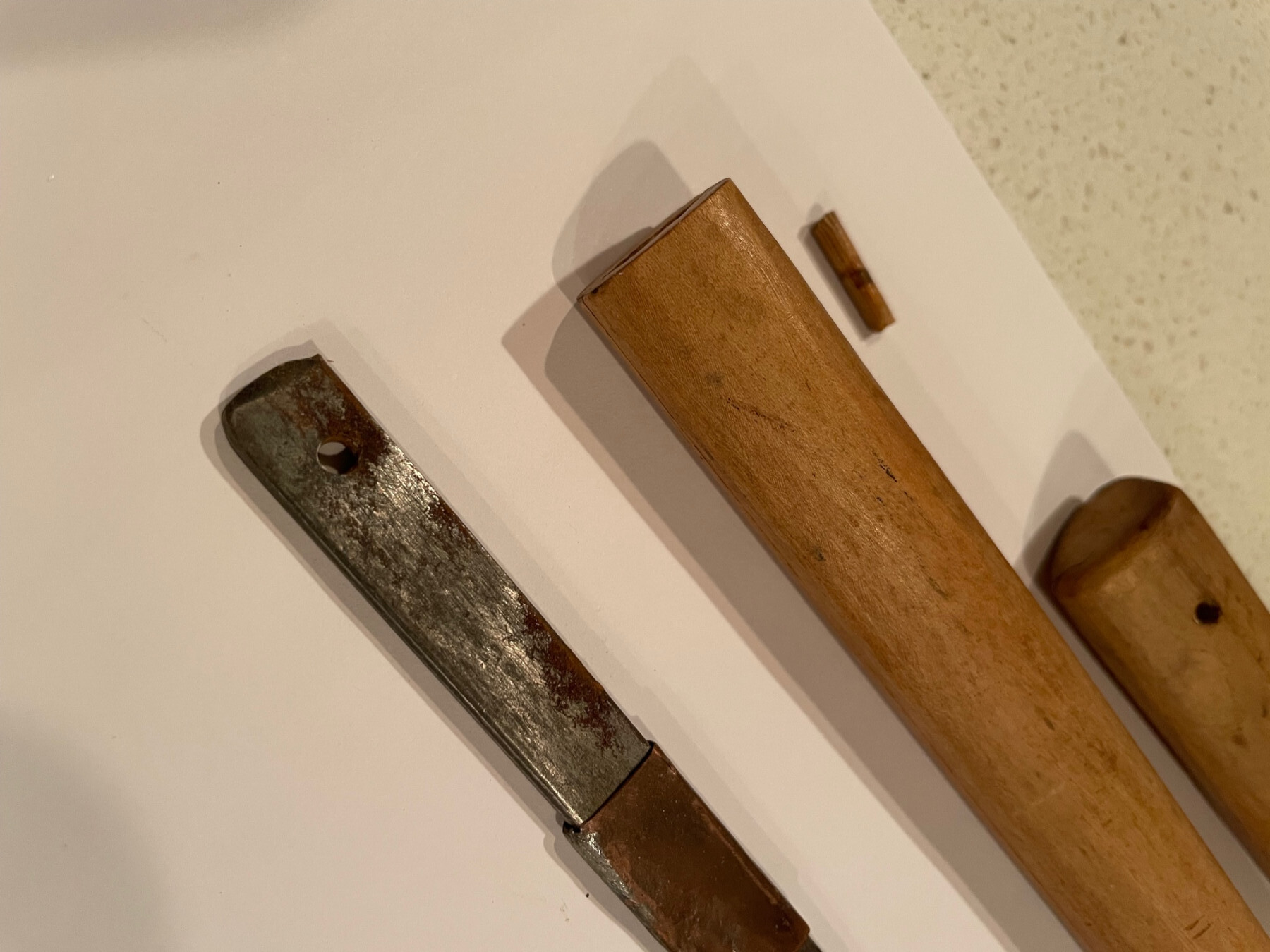
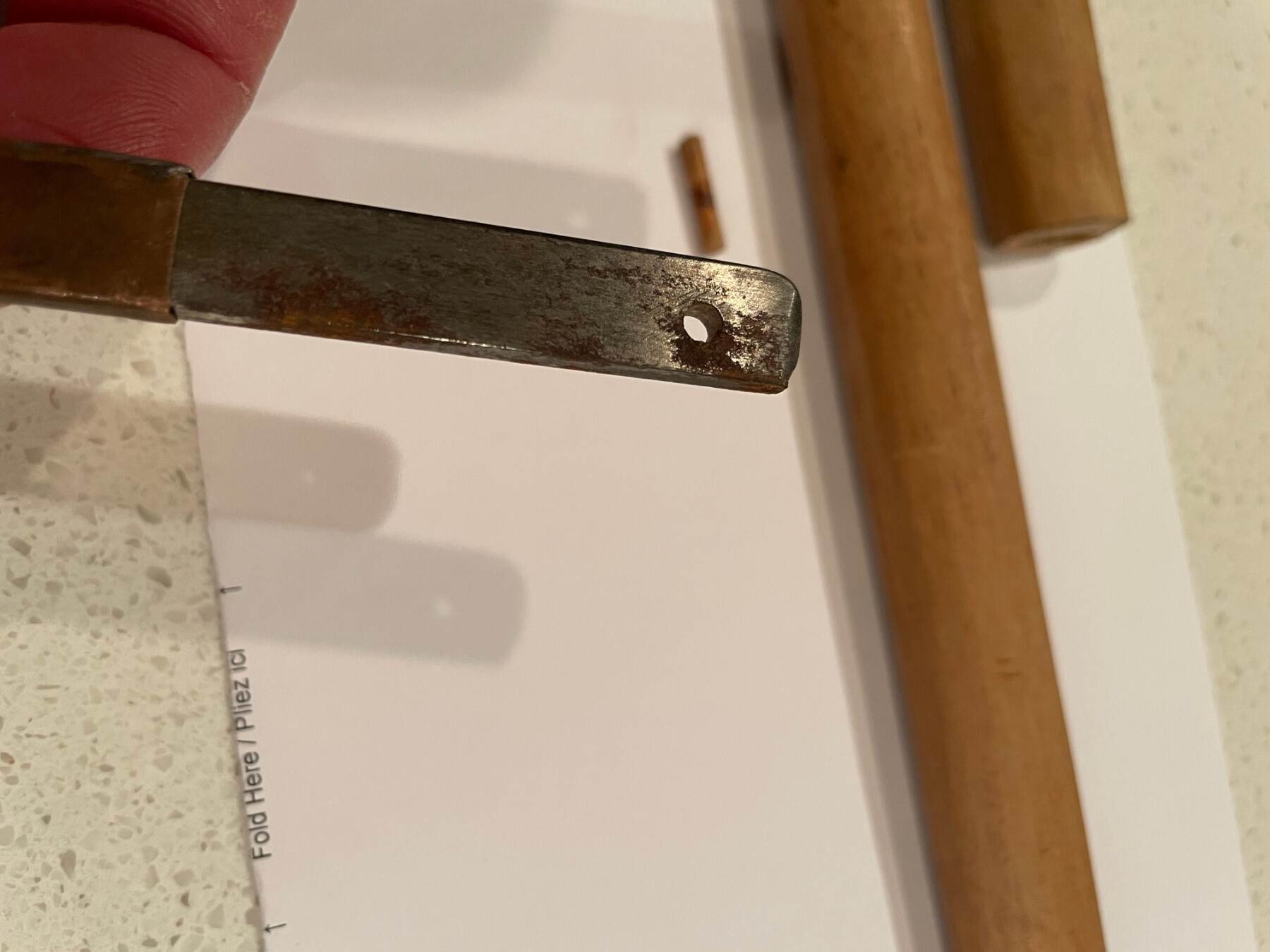
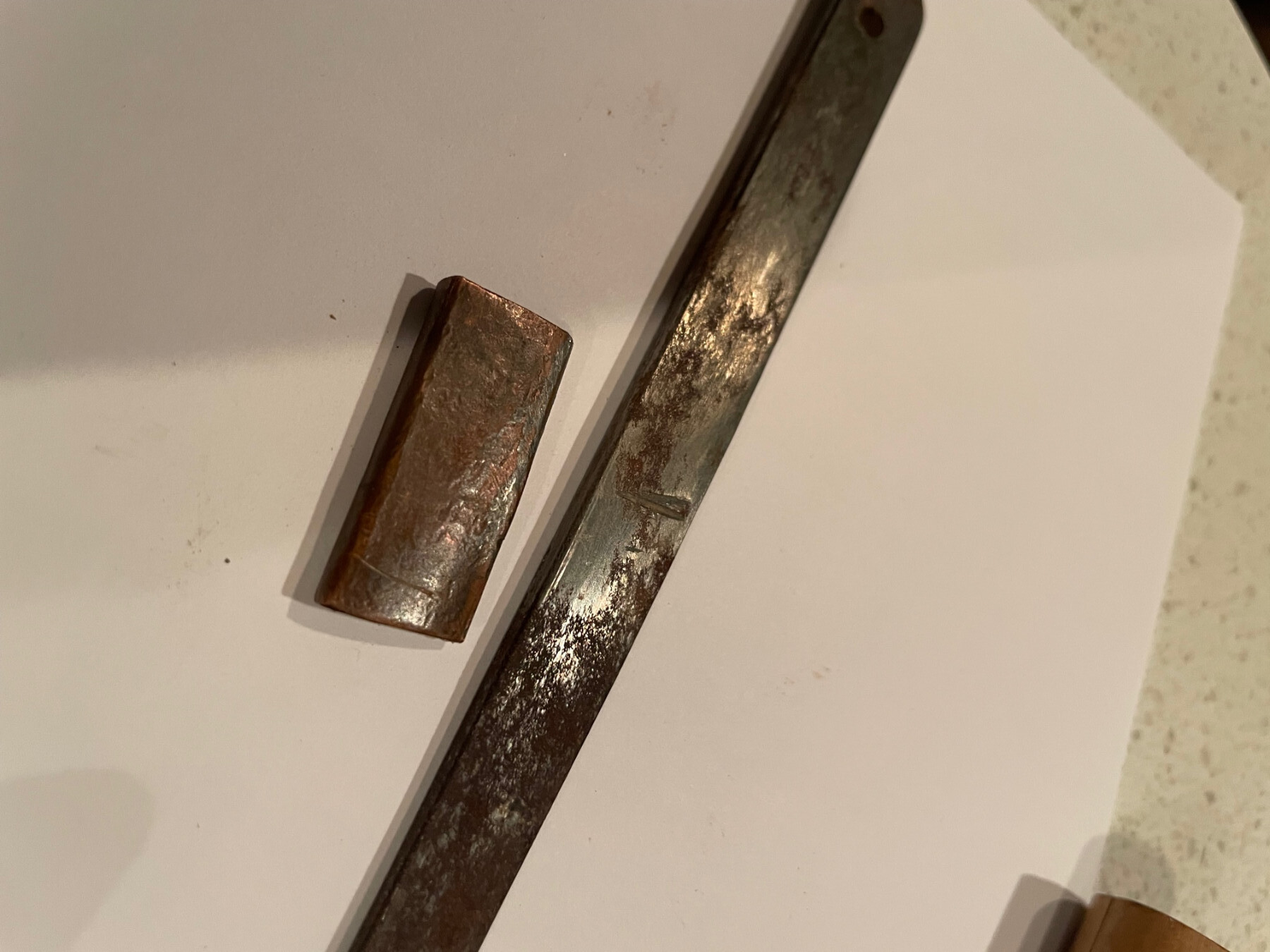
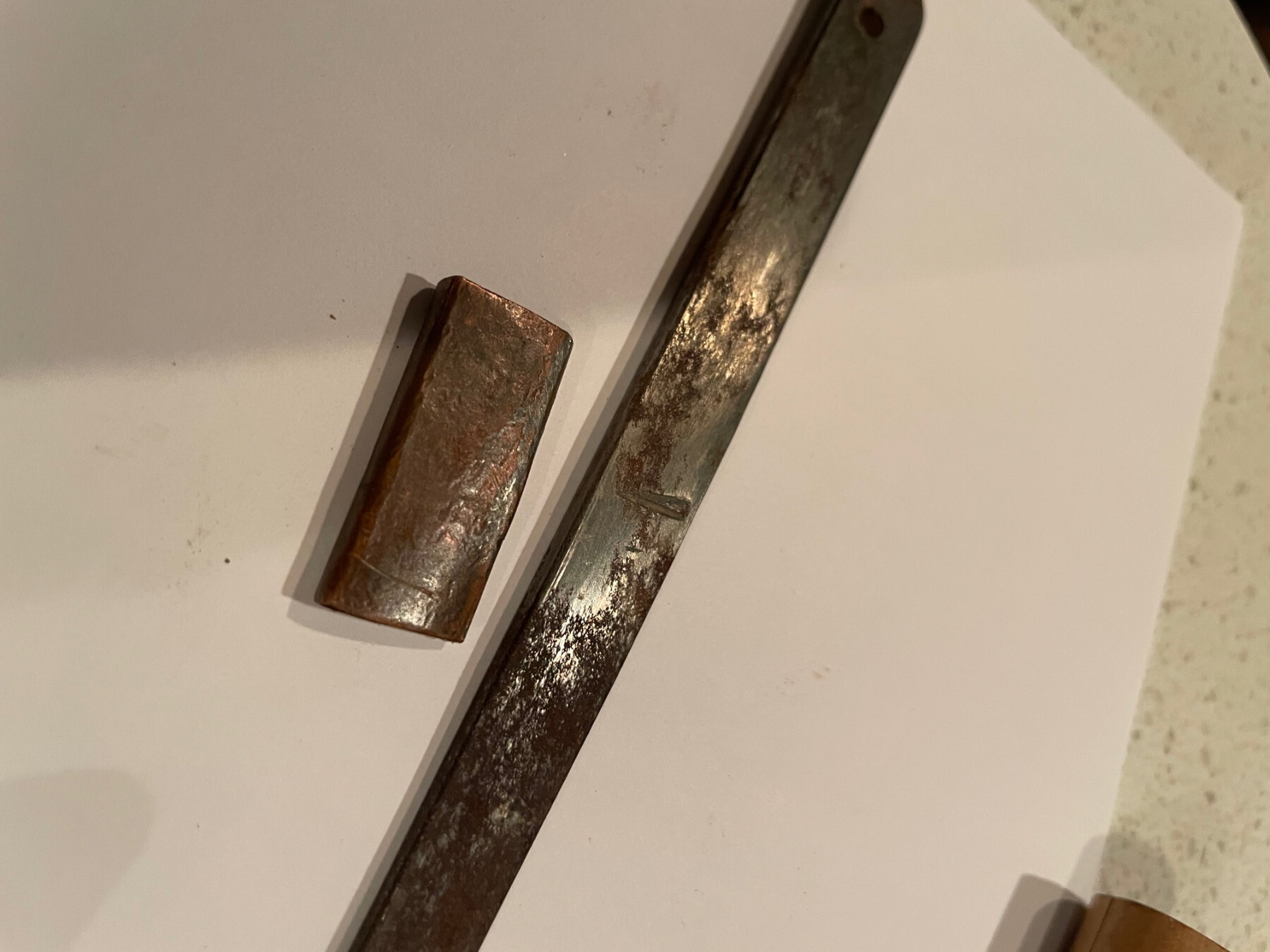
Just got this one, similar to Pier's first post, as a gift from someone very gracious. Mumei, and the nakago looks new to my eyes, though with some rust. Shirasaya seems to have some age, but not a great amount. I'm thinking post-war souvenir? Mostly because the habaki is fairly ugly and long. Most of it slides into the tsuka with only the "normal" amount sticking out, to look like a habaki. And also the squared and thick nakago. But I wanted to run it through you guys. I'd like to buff it up, but I don't want to if it's something older. If it's just a trinket/souvenir/letter opener then I'd feel easy with cleaning off the rust.
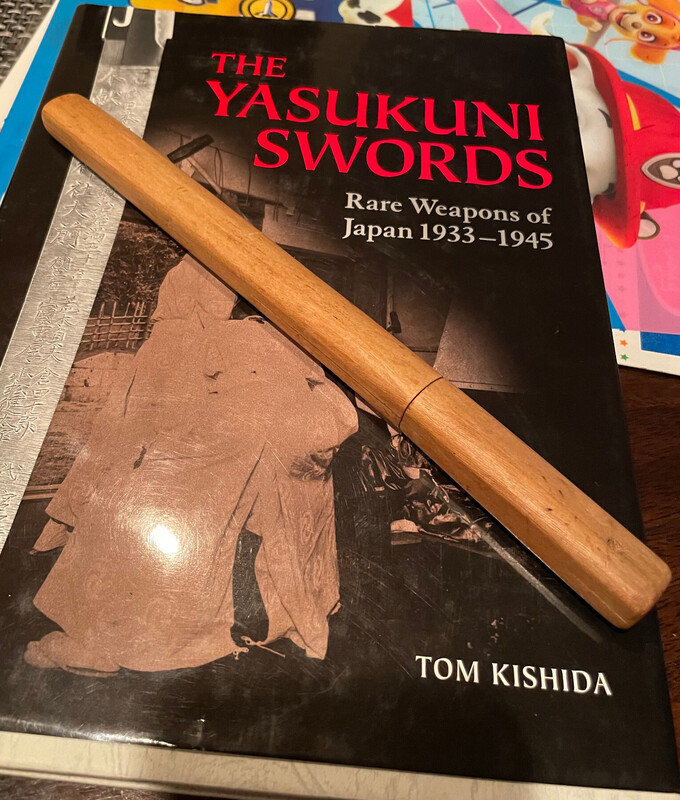
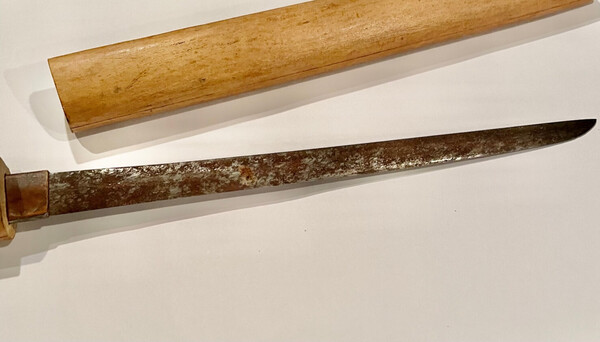


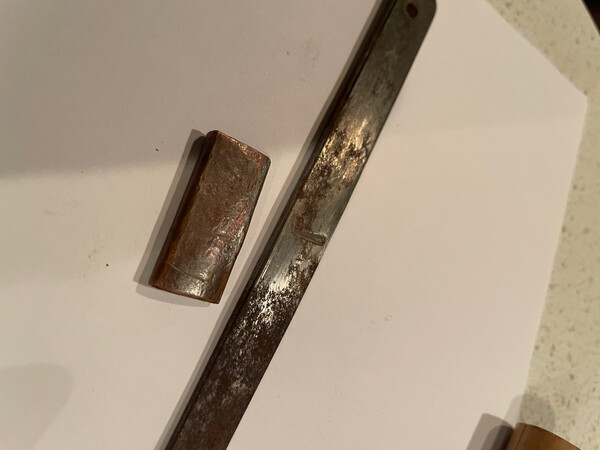
-
Letter Opener?
Bruce Pennington replied to Bruce Pennington's topic in General Nihonto Related Discussion
Thanks John. When I google that word all I get is a city in Japan or the word “toss.” -
Got this as a gift from a very kind book-seller. Previous owner didn't know what it was, either. I'm guessing a tourist souvenir or creative letter opener. Nakago looks new'ish and squared Really nice little shirasaya, so nicely done if a letter opener. nagasa - 5 1/2" full length - 8 1/2"


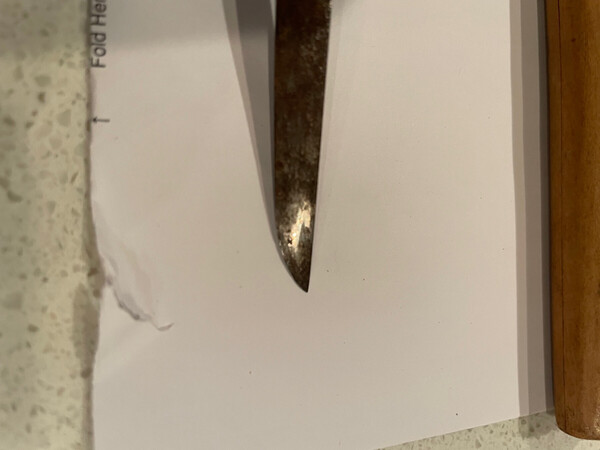


-
Can you get them to send you a link, if it's online?
-
@Rei Sinn - is this yours, or something found online? Can you show a clear picture of the star? And now about that marking at the end of the nakago, and chance of a clear photo?
-
A Study: Yasukuni-to
Bruce Pennington replied to Bruce Pennington's topic in Military Swords of Japan
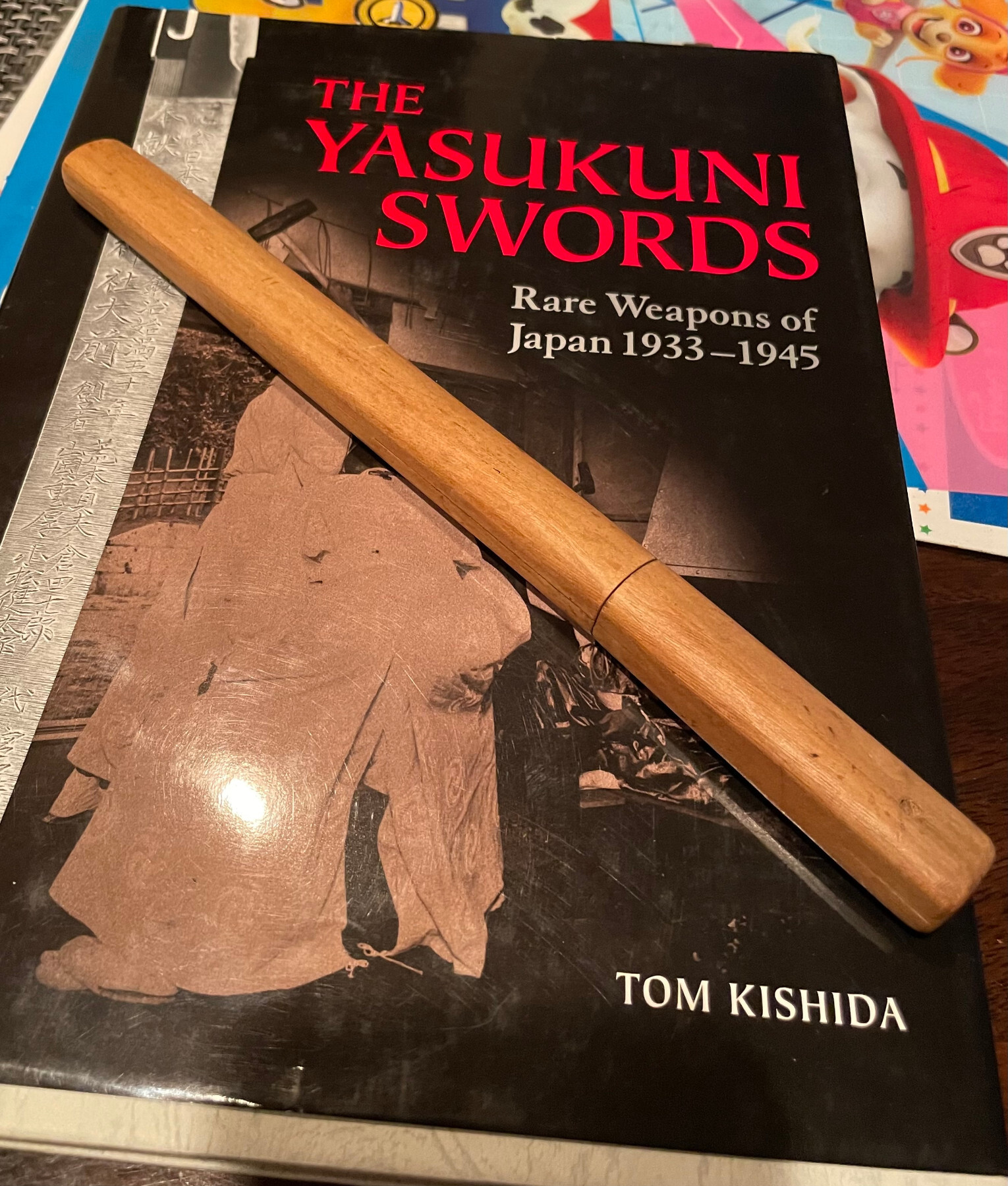
That's it Steve! I'm reading it now, thanks to @Julian. The copy he sent me looks new! I can see why Neil recommended a thread of actual blades. While the book is full of great swords, the black & white photos just don't match the color photos we are collecting here.