Bruce Pennington
-
Posts
14,022 -
Joined
-
Last visited
-
Days Won
169
Content Type
Profiles
Forums
Events
Store
Downloads
Gallery
Everything posted by Bruce Pennington
-
Seems to be just what you've described. Without more photos, the nihonto guys won't be able to tell you more about the blade. But it was re-fitted for the war. The thin tsuba is often associated with the later war years. Nice gunto if the price is right.
-

has anyone heard of this swordsmith?
Bruce Pennington replied to nihonto ken korekuta's topic in Military Swords of Japan
@Stephen thanks from bringing this thread up! This blade is stamped with the katakana "Ho" which is one I don't have in the database! We need (ok, I need) to find out what prefecture Hirokuni worked in. Japaneseswordindex.com lists a "Ikusa no Kajitsu Hisakuni", but is "Kajitsu" a different Hisakuni than Takeshita? @george trotter any ideas? They do list, as stated above, that Takeshita Yasukuni was RJT. Does anyone know the prefecture for Yasukuni? -
Actually wouldn’t have to move the thread, still useful for education. Simply post the photos in the gallery as examples.
-
For a guy with a small hobby-budget you've done quite well John!!! Nicely displayed too.
-
I agree.
-
Peter, Your thread, and detective work, need to be transferred to the "Fake Swords" thread in the Gallery! You are finding some real doozies! Looks new, but with artificially aged fittings. See the chemical marks around the edges of the seppa? The other metal parts are clearly treated as well to age them. The habaki and tsuba have marks on them to make them look used/aged. The thinness of the metal parts is another give-away.
-
Wow, some quality work there, thanks!
-
He didn’t say.
-
Another Type 98 with black tsuba and darkened ito. My first thought is the tsuba was spray-painted post-war, and still could be. But the ito is almost black, but that looks like weathering of some sort. Maybe not in the same class as all these on this thread, but close enough to include. Found on a fleabay sale noted on this NMB thread.


-
Geoff, For my files, could I get clear close-ups of the kikusui on both the blade and the habaki? Thanks!
-
Do You Still Have Your First Sword?
Bruce Pennington replied to ckaiserca's topic in General Nihonto Related Discussion
Inherited mine when my dad passed on, so yes. 1941 Mantetsu Koa Isshin. It will stay in the family if I get my wishes about it. -
Looking for examples of late war NCO swords
Bruce Pennington replied to WilBru5's topic in Military Swords of Japan
That sounds like a story! Want to fill us in? -
Ah, I see it, very nice!
-
Gunto identification help
Bruce Pennington replied to Misconstrued's topic in Military Swords of Japan
I've cropped and enhanced your shots a little. Still would be great to see some clear photos when you get a chance, especially the serial number. You can read about these on the following sites: http://ohmura-study.net/957.html https://www.warrelics.eu/forum/Japanese-militaria/short-development-history-type-95-gunto-676112/ https://www.warrelics.eu/forum/Japanese-militaria/ija-type-95-nco-sword-info-228172/


-
There's a similar one on post #95, but yours is a way better photo, thanks! Your second one is interesting with the blackened background and gold on top. A little blurry, do you think it's clouds?
-
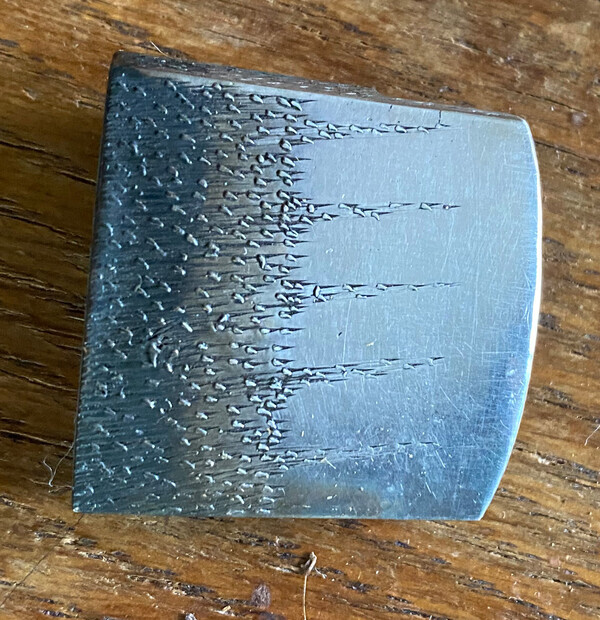
Interesting variation on the rain-pattern, found HERE.
-
David, glad to see it's arrived! Quite a beauty. I just noticed the Army company-grade tassel. Odd to be on a kaigunto. Maybe added by the G.I. who brought it home, or a post-war owner?
-
Looking for examples of late war NCO swords
Bruce Pennington replied to WilBru5's topic in Military Swords of Japan
They were certainly rushed. My late-95 doesn't have a bohi (takes time to make) and you can feel, as you slide an oiling cloth or paper towel along the blade, 3 stages of tapering in the blade body- widest, middle, and thinnest. There is a noticeable "line" for lack of words, where the tapering shifts. You can't see it, but I can feel it. Yet it's a solid weapon, heavier than the early 95s and a good looking blade. -
Here's your guy, Georg:
-
Looking for examples of late war NCO swords
Bruce Pennington replied to WilBru5's topic in Military Swords of Japan
Got a burr under your bonnet Peter? Your whole post is odd. I get cranky sometimes when things are getting to me at home. Need to talk? -
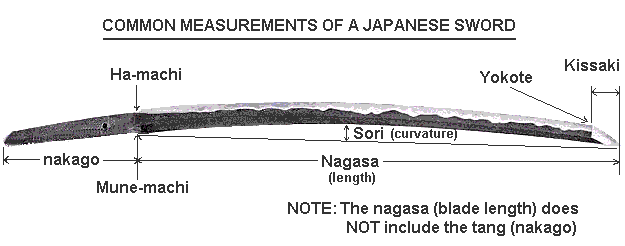
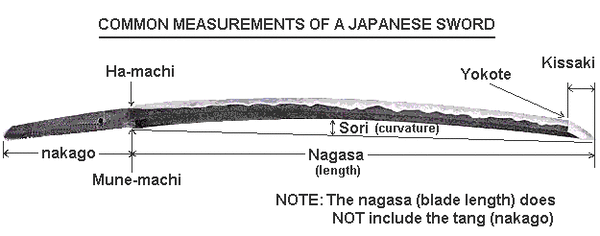
Oops! I mean nagasa- Sori is useful too, though.
-
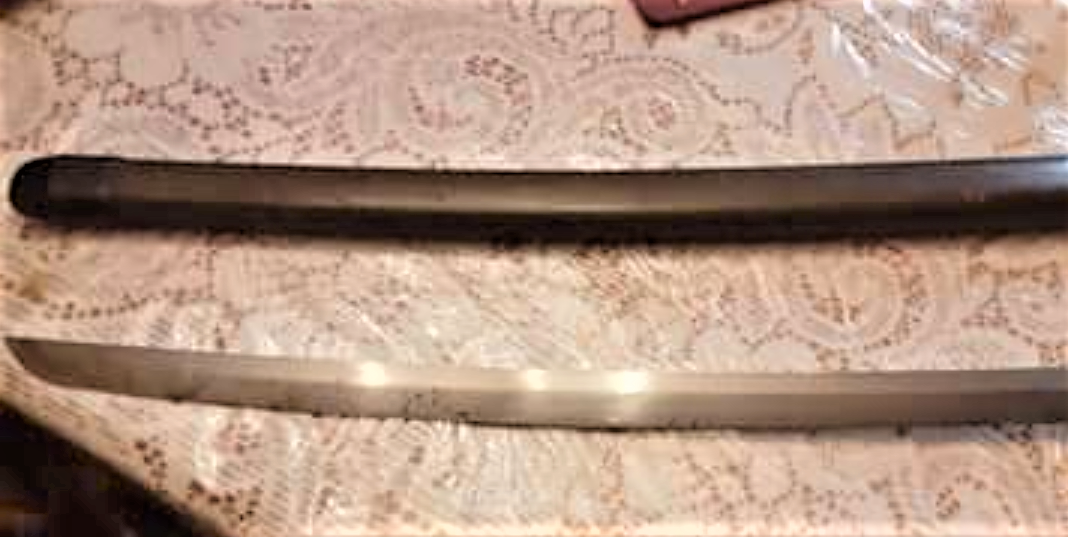
If the sori is less than 24" it's a waki. Here's how to measure the sori: Also, the Nihonto guys will want to see a photo of the bare blade like the image above.
-
Someone will have to translate the smith name for you, but I can say the Type 97 kaigunto was assembled by the Toyokawa Navy Arsenal (small stamp on the seppa), and the large Seki stamp on the top of the mei indicates this blade was a showato inspected and approved by the Seki Cutlery Manufacturers Assoc. I personally feel that the blades with the large Seki are high quality showato, with good workmanship in the blade.
-
Thanks Peter, great one! I can't draw things like that on paper, and these guys can sculpt this stuff in steel. Amazing.
-
Be sure to bring us some photos when it's done. Before & after! It's a great feeling to hold one of these after they've been restored as much as possible. Something sad about a gunto with missing parts, or dilapidated condition.