Bruce Pennington
-
Posts
14,640 -
Joined
-
Last visited
-
Days Won
176
Content Type
Profiles
Forums
Events
Store
Downloads
Gallery
Everything posted by Bruce Pennington
-
It's the most staining I've seen on one blade. I have several blades with spots, like you showed on the other side, and I've had no success in getting them off. It's like a stain that is embedded into the steel. You can try 90%+ alcohol, but in my experience, it's only shined the surface but didn't remove the black stains. Unless someone has some magic cure, I agree with Ray that only a polish will solve it. There ARE cheaper versions of polishing. You don't have to pay for the most expensive kind. I'm not experienced in the terms, but when I had mine polished there were 2 or 3 versions I could pick from and some were cheaper than others.
-
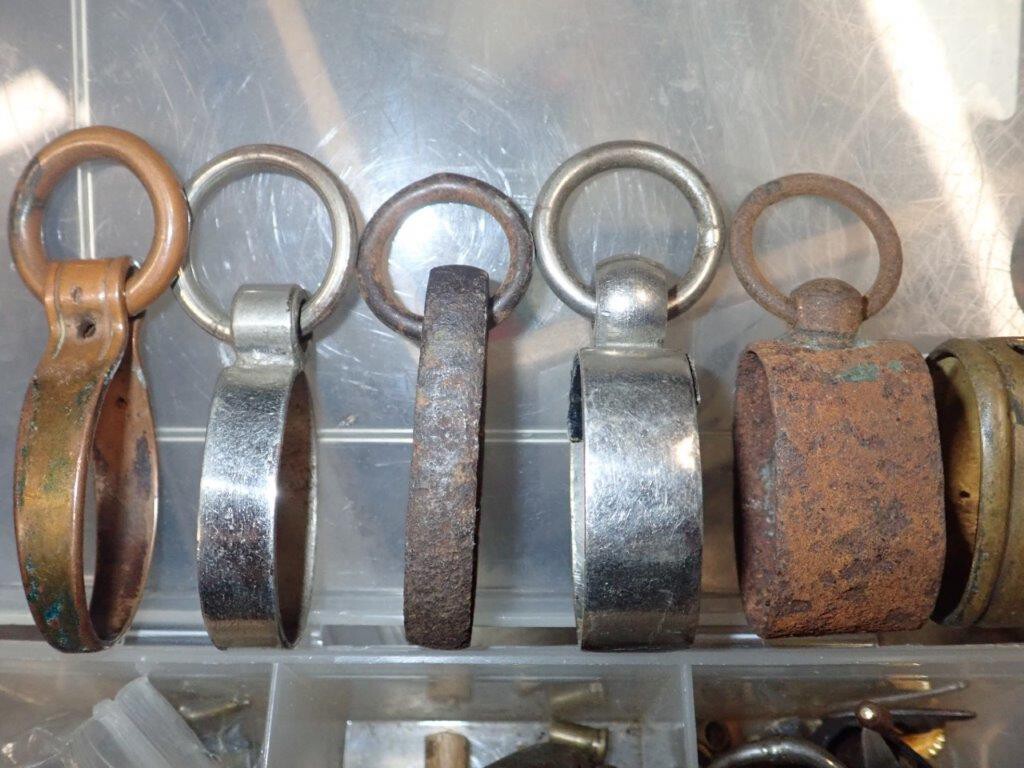
This officer definitely had a individualist streak! But we've seen that with other gunto, too. Just the first one we've seen in RS fittings. Gareth, while anything is possible with gunto, I can assure you the haikan on this was meant for a leather cover. Rinji seishiki haikan look like this: Here is a photo of several styles of haikan made for leather-covered saya:


-

Manchurian Rinji Seishiki Sword
Bruce Pennington replied to IJASWORDS's topic in Military Swords of Japan
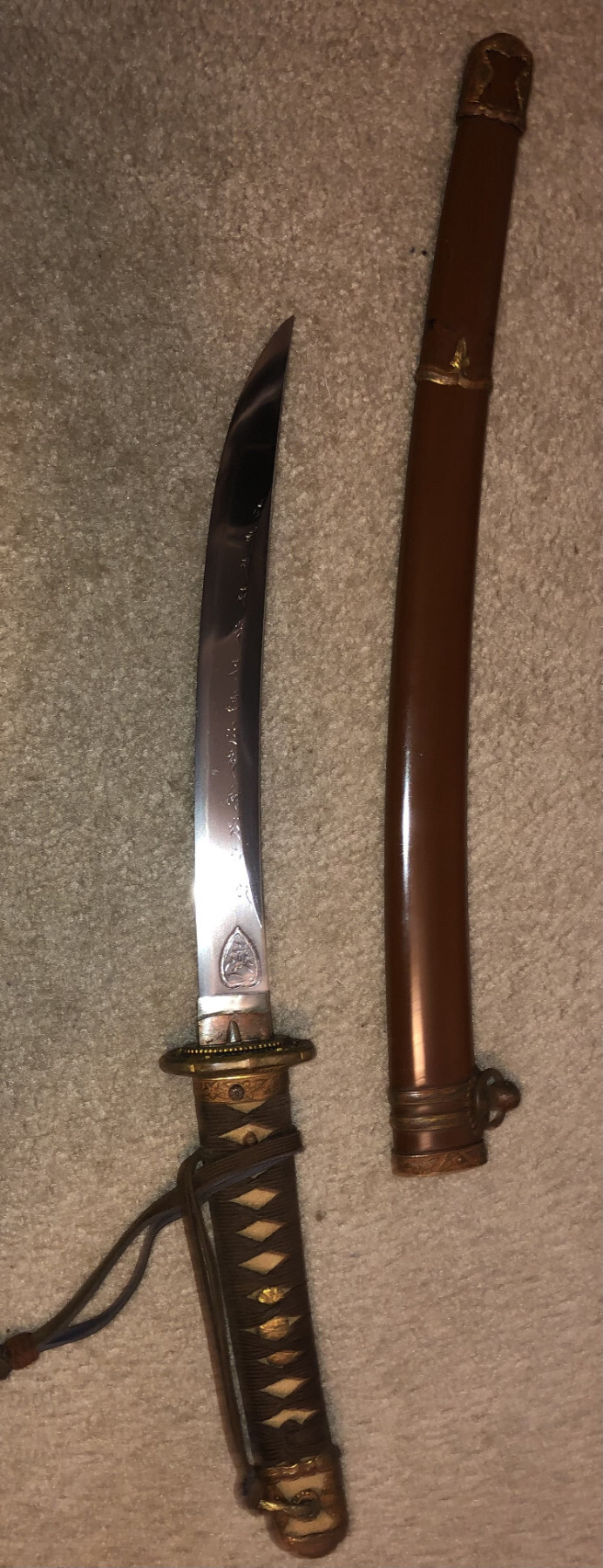
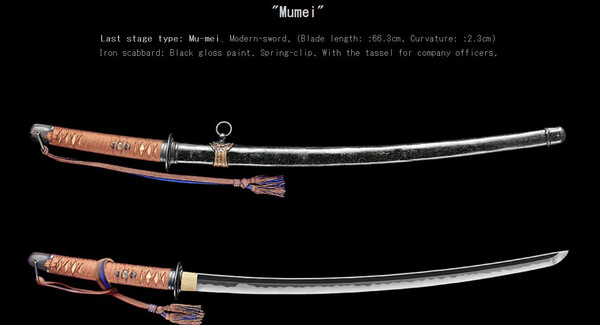
Just discovered this on Ohmura's site HERE. It seems to be the MRS fittings with a mumei blade. The problem is that the blade has quite a non-suguha hamon. So, either this is a 1945 Mantetsu blade with a very non-standard, maybe custom, blade; or it's a blade by someone else than SMR, and they buyer purchased an SMR rinji set of fittings; OR the style is not exclusive to SMR. In WWII, we can never say never, never say always!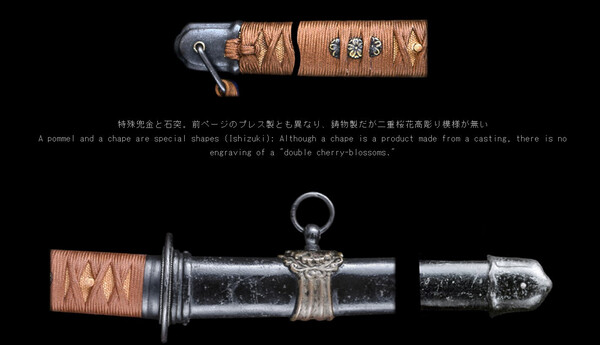

-
Saya appears to have been made for a leather cover, based on the smooth surface paint and the haikan (ashi). Pretty unique and rare.
-
Hermes, Another measurement the guys find useful is the "nagasa":

-
Graeme, You can find Seki-stamped blades in both army and navy fittings, but yours is definitely army. So, no date on the other side of the nakago (tang)?
-
Copper handle NCO shin gunto
Bruce Pennington replied to paul griff's topic in Military Swords of Japan
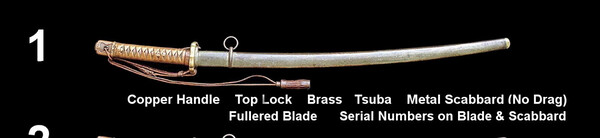
Paul, Don't know if your tassel came that way, but with the brass tsuba 95s, they're designed to start at the tsuba, then loop through the sarute, and then hang down. Here's a couple of pics, one from Ohmura, and one of mine: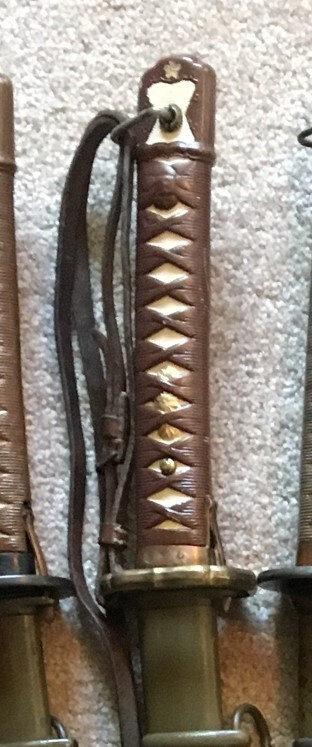
-
Copper handle NCO shin gunto
Bruce Pennington replied to paul griff's topic in Military Swords of Japan
I was going to joke that the owner must have had the crap scared out of him and his intense grip bent the tsuka! Maybe I wasn't so far off! @Shamsy and @Stegel can say with some assurance, but it's in the mid-6,000s. -
Hermes, If you want to know more about the possible age of this blade, post it on the Nihonto Forum for some expert evaluation. Don't be bothered by the surface rust on this. If you value it enough to have it polished, it will truly shine. If money is limited, do a search on NMB for how to clean and preserve a blade. It is definitely worth preserving!
-
I really love those fittings! The rattan wrap definitely shows the Indonesian locale flavoring.
-
Unidentified markings on Kabuto-gane
Bruce Pennington replied to PeterCollector's topic in Military Swords of Japan
Thank you Peter! The stamps on the kabutogane are not common. I've only see a few like this, and there seem to be only 2 or 3 shops that did it. -
Unidentified markings on Kabuto-gane
Bruce Pennington replied to PeterCollector's topic in Military Swords of Japan
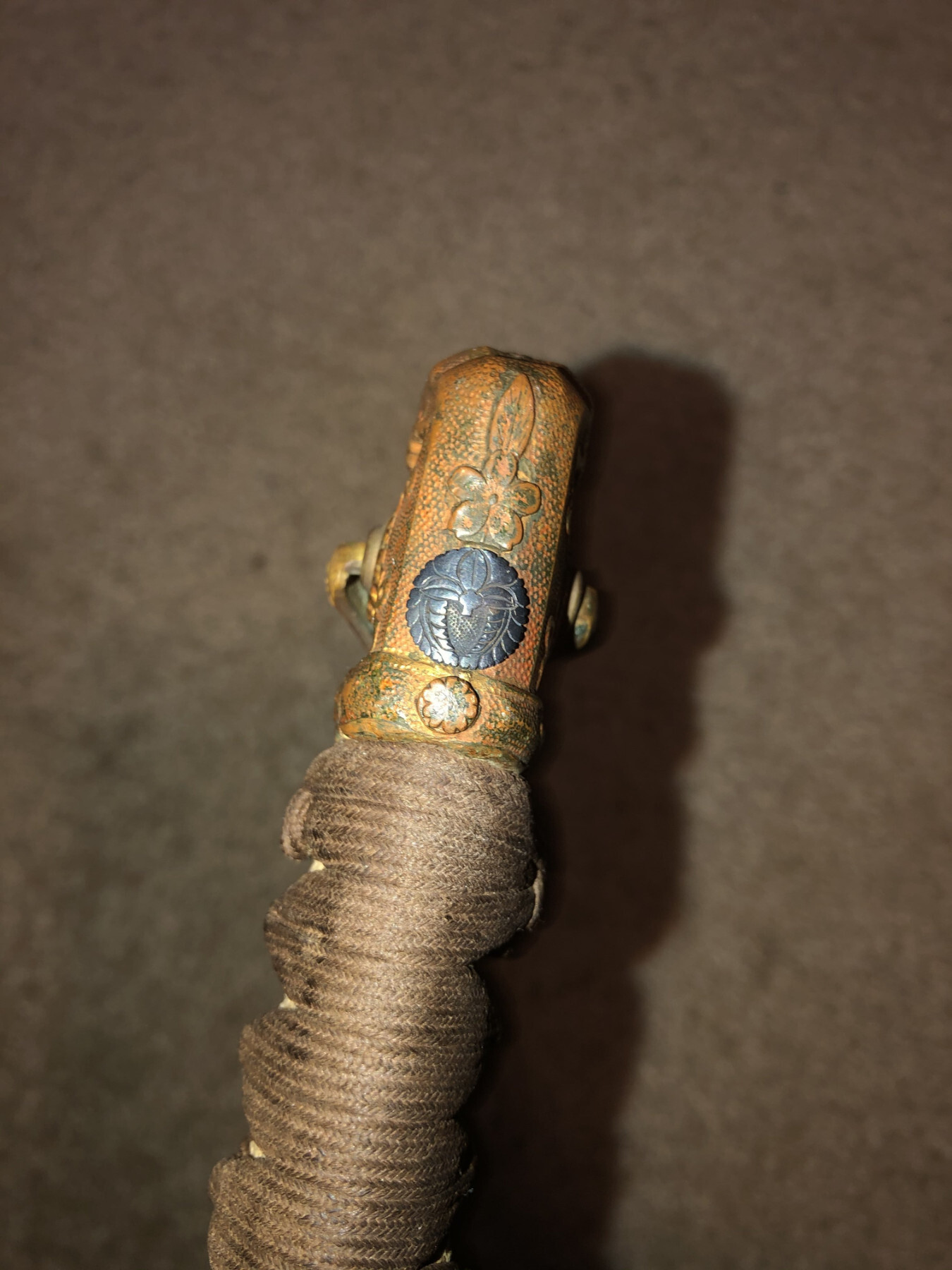
Peter, The star on your kabutogane is the Tokyo 1st Army Arsenal, but the other stamp is an unidentified shop logo. Here's a more clear photo of another with that stamp: Haven't seen that small stamp before on your tsuba/seppa, so it's unknown too. Can we get photos of the nakago mei and date for the files? I don't have that one listed in the survey.
-
Help needed with signature and date please. Shin gunto
Bruce Pennington replied to Johnbull's topic in Translation Assistance
Thanks Rob! Looks like I got it right in my survey chart, but misspoke in my reply - 2 Tadayuki 1942 Large Toshimasa B.Hennick, NMB 1942 Large Yasutsuna e-sword.jp 1942 Large Yoshishige F & G 1942 Large Yoshimichi Robinalexander, NMB 1942 Large Yoshimitsu Shinano, NMB 1942 Large Yoshisada Phil Reid, NMB 1942, Jan Large Kanetsuna Moley, NMB 1942, Jan Unknown From Fuller Survey 1942, Feb Unknown From Fuller Survey 1942, Feb Large Kaneaki Sasa1971, Guns.ru 2anaT98 1942, Feb Large Tadayuki Johnbull, NMB 1942, Mar Large Kanemichi 1942, Apr Unknown From Fuller Survey 1942, Jun Unknown From Fuller Survey 1942, Jul Kanenao Wmoore77 NMB 1943 x 5 Unknown From Cox Survey 1943 small Yoshichika Corry,NMB, jiri stamp T98 1943 Large Hiromitsu Apstla, Guns.ru, Gunzoku 1943 Large Tadayuki Cbecket NMB 1943 Large Yoshishige Pennington, NMB, kaigunto 1943, Apr Unknown From Fuller Survey 1944, Mar Yoshichika also has “Na” Angus,NMB, RS 1944, Apr Yoshimune Sechan, NMB 1944, May Kunitoshi (Star) Cillo, pg 93 1944, May Kunitoshi (Star) cursive mei Cillo, pg 93 1944, Jun Small Kanetoshi (Star) Cox 1944, Aug Small Kanehide (Star) only on mune Nihontocraft.com 1944, Sep Unknown From Fuller Survey -
An unusual one (to me anyway). Found by @PNSSHOGUN at this Yahoo auction.

-
Pinned Kabutogane on Type 94
Bruce Pennington replied to PNSSHOGUN's topic in Military Swords of Japan
Just when you've thought you've seen it all!!! Unusual mon there, too. Seems to be either extremely long gunto, or one of those light-weight, slim lined gunto. Too bad the blade is not with the koshirae. -
Railway Swords & Stamps
Bruce Pennington replied to Bruce Pennington's topic in Military Swords of Japan
Thanks Kyle! Cool display with even a helmet! -
UNUSUAL DAGGER - MADE IN Japan FOR CHINA?
Bruce Pennington replied to Bazza's topic in Military Swords of Japan
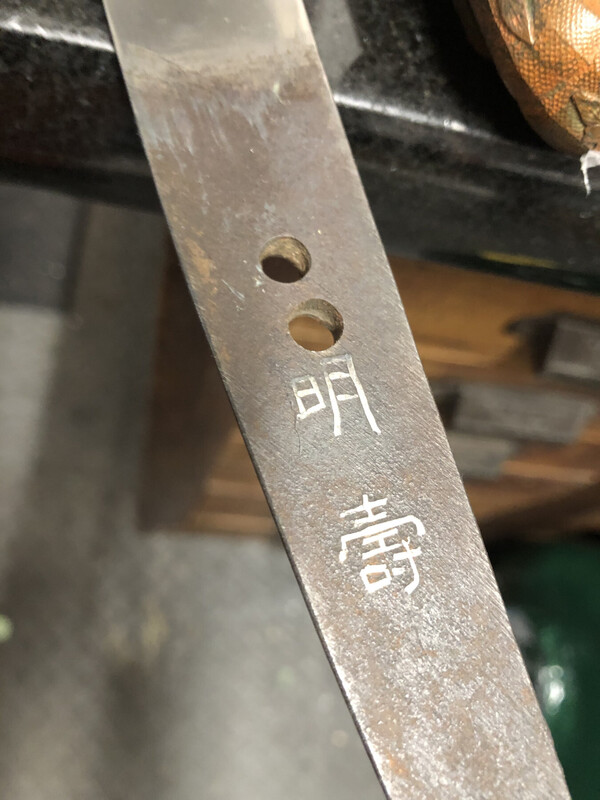
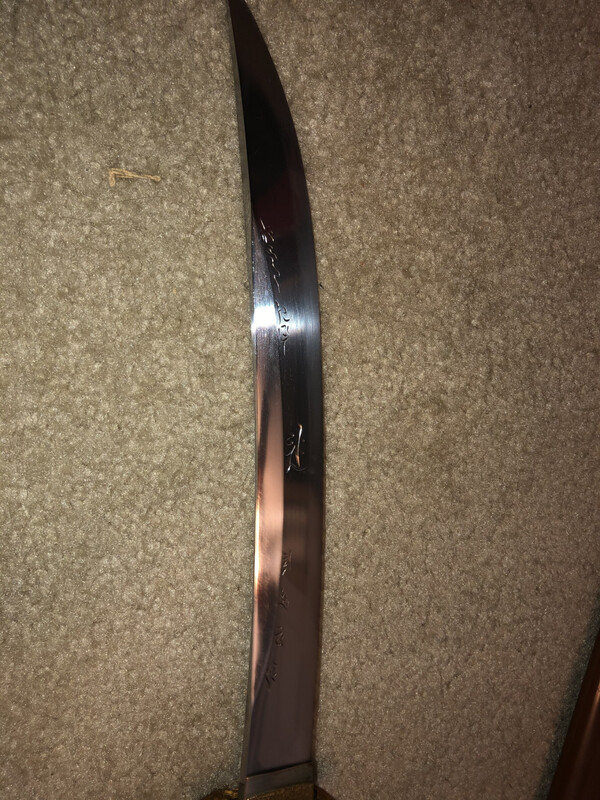
I seem to remember another thread than this one with similar "knives" to what I'm posting, but as usual with my non-excellent search skills, this is the only one I could find. Thoughts? Found on Warrelics HERE And on Gunboards HERE




-
Copper handle NCO shin gunto
Bruce Pennington replied to paul griff's topic in Military Swords of Japan
Nice find Paul! I agree with your thought that the non-matching numbers, being close, seems to indicate a factory replacement. I know we discussed this, along with several examples, on another thread. It's another example of the hundreds of thousands of gunto that we'd LOVE to study, but until someone, like you, posts them for all to see, they remain in the vast unknown. @Stegel @Shamsy -
Help needed with signature and date please. Shin gunto
Bruce Pennington replied to Johnbull's topic in Translation Assistance
Which adds to the well-balanced argument that the large Seki stamp is not a certain sign of a non-traditionally made blade. The large Seki, in my observation is, at minimum, a sign of really well made showato. This is only the 2nd Tadayoshi blade in found in my survey. Thanks John for the photos! -
Help with Hizen Masatsugu Gendaito
Bruce Pennington replied to Itomagoi's topic in Translation Assistance
You read my mind Peter! Thanks buddy! -
Late war gunto stamps follow-up
Bruce Pennington replied to Misconstrued's topic in Military Swords of Japan
A pic from Jace, for posterity (years from now, photo links often go inaccessible, so we like to post actual photos in case that happens later) "He 300994"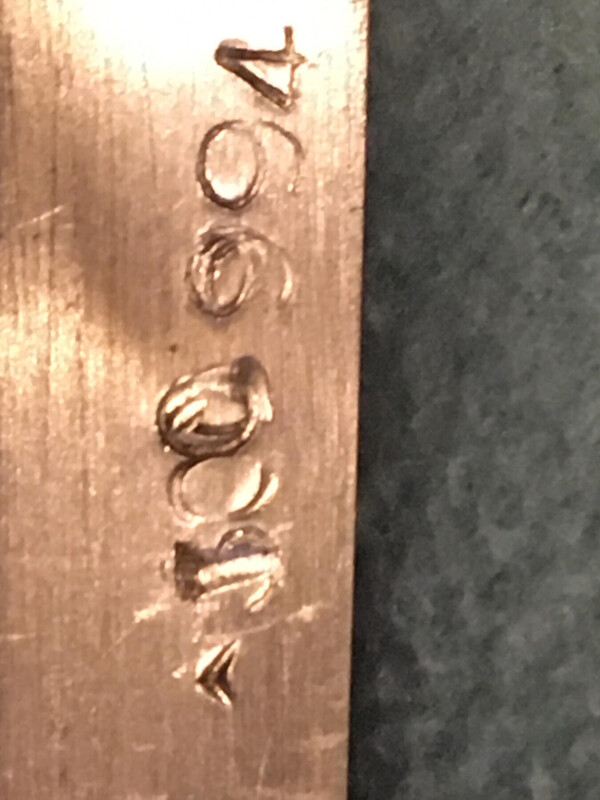
-
Show Us Your High Class Gunto
Bruce Pennington replied to lonely panet's topic in Military Swords of Japan
George, The MRS gunto has an SMR Mantetsu blade, so by "gendai" it's a era, not nihonto, as we commonly use the terms. This style Rinji seems to have been made at the Mantetsu factory, for only Mantetsu blades are found in them. Chris, I've been prowling a couple of Russian forums hoping to find more of these. Since Russian troops are the Allied force that overran Manchuria, it was proposed that maybe they might have a significant amount of them. But so far, none have shown up on the 2 forums. I even posted pictures of it hoping to generate some posts from guys that might have one. -
Interesting piece Eric! There is a third with the same kabutogane (found it HERE):

-
2 More!!! One posted by @eric-t, and the other linked by him:
-
Dang! Why would someone pay $750 Euros for a replica, when they could get the real thing for barely more.?