Bruce Pennington
-
Posts
14,351 -
Joined
-
Last visited
-
Days Won
171
Content Type
Profiles
Forums
Events
Store
Downloads
Gallery
Everything posted by Bruce Pennington
-

WW2 Japanese NCO sword numbers
Bruce Pennington replied to Swords's topic in Military Swords of Japan
@Swords Steve, Does your fuchi have 3 or 4 stamps? I had a Nagoya 95, #10506, that had a 4th stamp. The coppers were produced for about 1 year beginning in fiscal year 1937 (so April, 1937). So that puts the first year of aluminum handles in 1938. I don't have production numbers for the early years, maybe @Stegel or @Shamsy can say, but yours was likely made early 1939. Those guys will correct me on that, I'm sure. "Value" - that always depends on each particular collector. To me, it makes them more attractive. Yours is in amazing condition! I would certainly remove the cosmoline, personally. If you do a search of NMB, "remove cosmoline" you'll get plenty of pages describing how to do it. You won't hurt the blade. -
That actually looks like what we're seeing here! Gareth, I have seen many late-war gunto that were still done with quality workmanship. Not unusual.
-
WWII military sword with mysterious tang markings
Bruce Pennington replied to Dean's topic in Translation Assistance
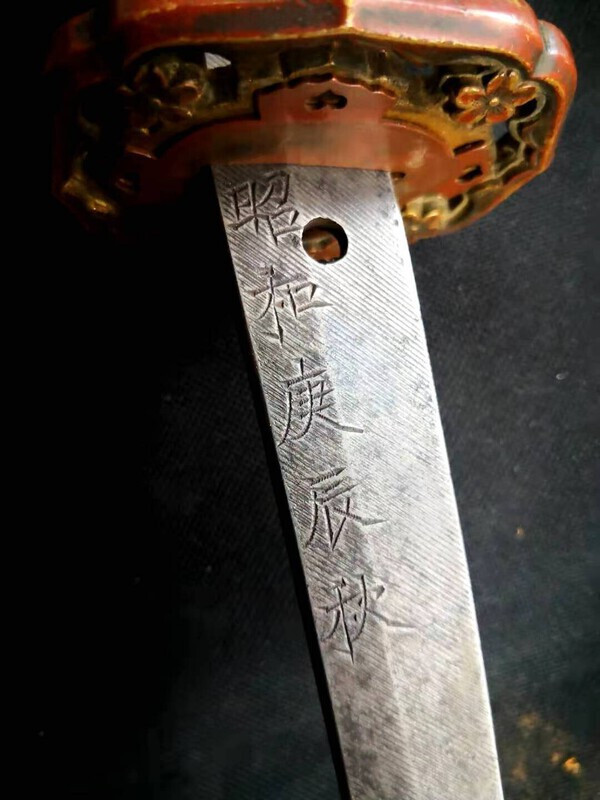
http://japaneseswordindex.com/oshigata/teruhide.jpg Is that date August 1935 @Stephen? The writing on the habaki might be the owner's name. Anybody care to translate? -
The translators would have to help you with that, unless it's a shop logo, or unit emblem. Looks, to me, like the center piece is an anchor:

-
Thanks David. I have those photos on that linked thread, but there's not one of the number. Any chance of getting one of the number?
-
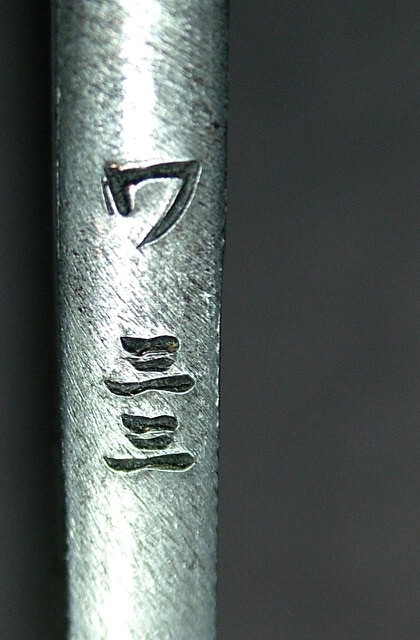
Real nice, Gareth! The angled marks on the habaki edge are " III \I \I" or "366" matching the rest of the numbered fittings. It's a modified Roman Numeral system using "\" as "5". I've noted multiple punch marks, like your 3 dots, but no one has come up with a purpose or source (fitting shop? forge? smith?). Also, I know I've seen the square punch before, too, but cannot find my earlier photo of it. I don't know what they are either. Upon magnification, they seem to have a logo or something embedded in the square. But I've only seen this twice, now, and neither had enough detail to make it out.
-
Don't you love it when something almost destroyed gets a new chance on life again?!! Keep up the good work!
-
WW2 made Wakizashi - How common are they?
Bruce Pennington replied to robinalexander's topic in Military Swords of Japan
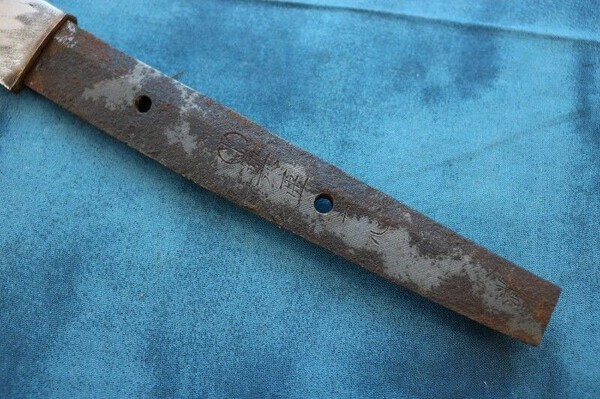
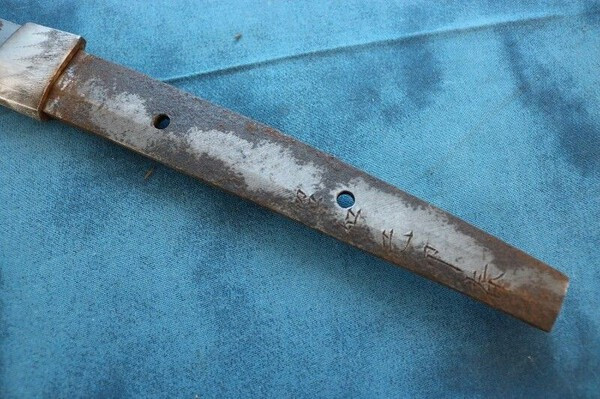
Hi guys. I have 3 Mantetsu on file: Spring '39 "O 4" Chopped down nakago Aut. '40 "WA 33" Ed's post; made that way; 21" nagasa Aut. '40 "WA 73" made that way I have sections of photos of Ed's posted blade, but not the full length. I believe his to have been made that way due to the fact that I DO have full photos of the sister-blade WA 73, and it's clear it was made that way. The nakagos of both look original and the bohi of "73" curves around the kissaki, showing it wasn't shortened at the blade tip. Here they are: 1939 "O 4" 1940 WA 33 1940 WA 73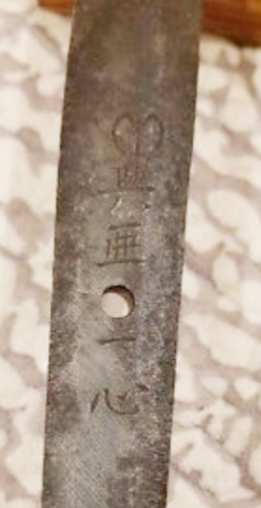
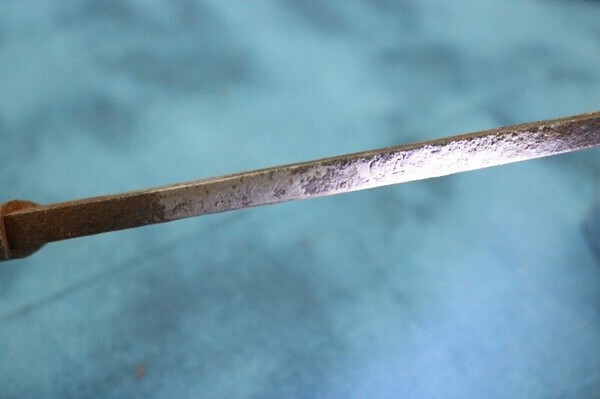
.thumb.jpg.90b960208046d10f698a1b626cd8569e.jpg)
.thumb.jpg.ac83ff90150d73ea55d514b55e5ce467.jpg)
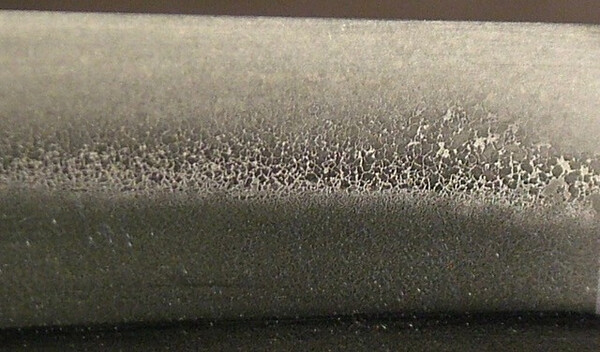
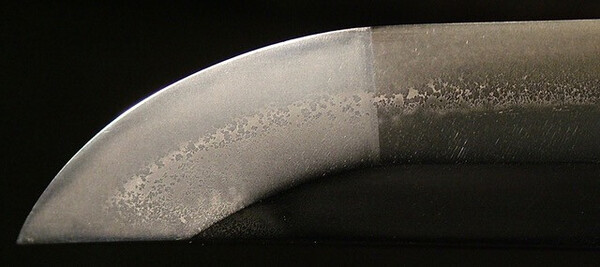
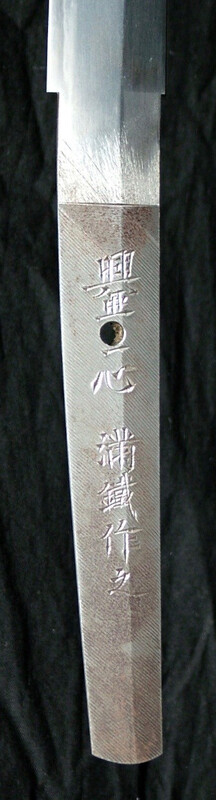
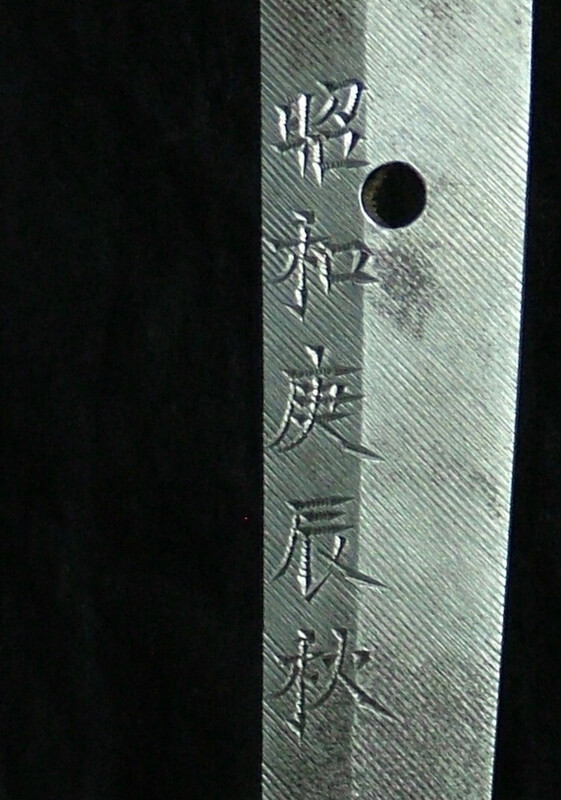
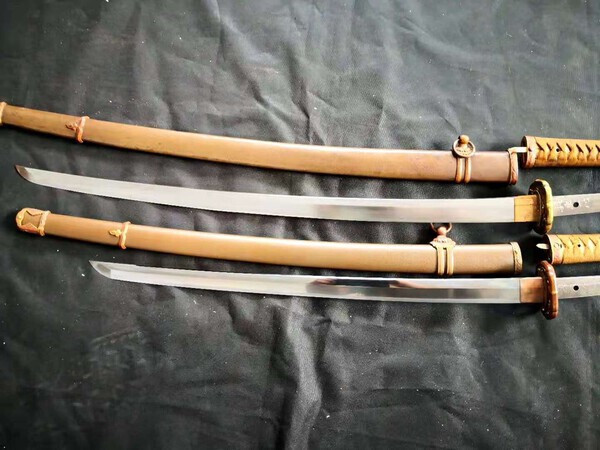
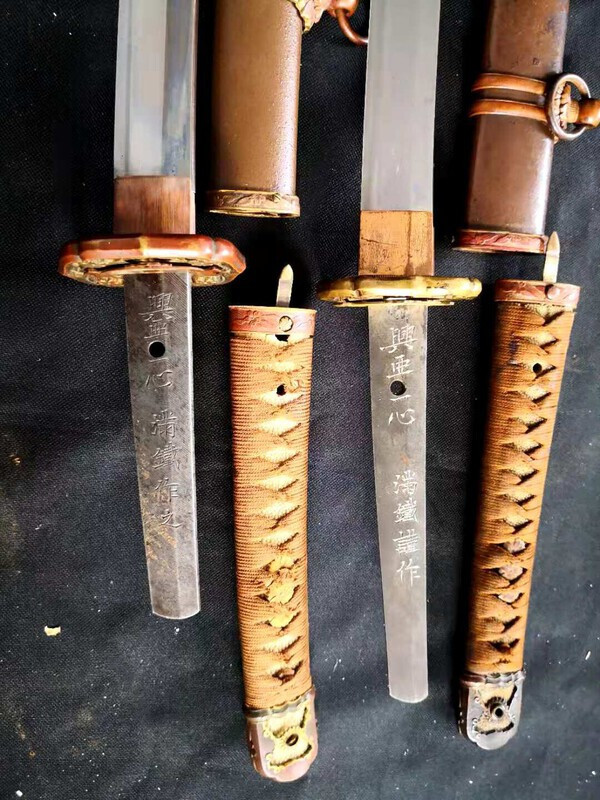
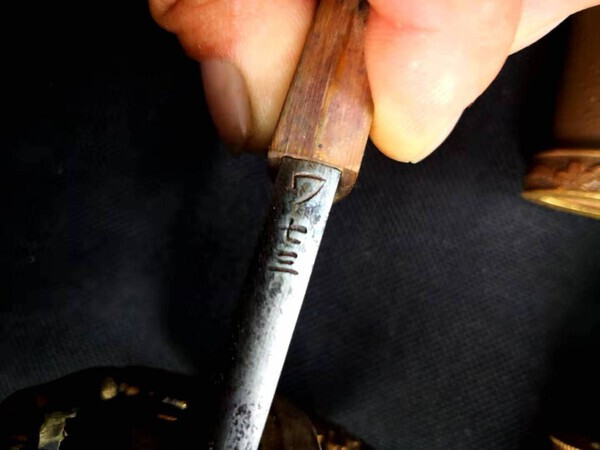
-
A Study: Minatogawa-to
Bruce Pennington replied to Bruce Pennington's topic in Military Swords of Japan
I remember the discussion about that mei. An interesting read on Kusunoki Masashige (楠木 正成, 1294 - July 4, 1336) and his legendary proclamation HERE. It didn't dawn on me that this was the origin of the 7 Lives Dojo name, but I'm sure it is what their shop name was referencing, now that you've brought it up! -
WW2 made Wakizashi - How common are they?
Bruce Pennington replied to robinalexander's topic in Military Swords of Japan
He did state the Nagasa was 22 inches though. -
Films featuring Japanese swords
Bruce Pennington replied to Kolekt-To's topic in Military Swords of Japan
Not surprising. It is interesting to hear that they are actually using CGI to put the blades into the shot now. Incredible! Not to get off-track, but I'm appalled that studios still use actual guns on sets. I cannot imagine the necessity for that. Even if they want shots with blanks fired, that shot should be taken on a firing range with no one else around. Dumb. -
A Study: Minatogawa-to
Bruce Pennington replied to Bruce Pennington's topic in Military Swords of Japan
You'll find this one at the bottom of a looooong line of photos on this Chinese site ( compliments of @Kiipu and @BANGBANGSAN): Luoyangong.com page. The first several photos are of a Star-stamped blade by the same smith, working the same forge. Interesting, to me, that the smith Masanaga, was making blades for both the Minatogawa and RJT operations. -
A Study: Minatogawa-to
Bruce Pennington replied to Bruce Pennington's topic in Military Swords of Japan
Found this Masanaga with a full view (although not a clear, close-up) of the blade, with civil fittings: Making this blade unique, to me, is the forge - 7 Lives Forging Dojo - engraved as part of the mei.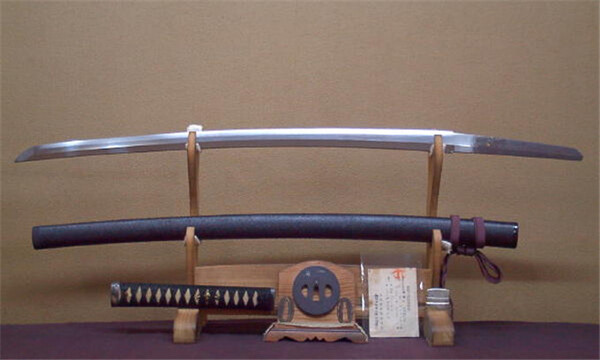
-
Fabulous! Thank you Morita-san!
-
Star-stamped blade on this Gunboards Post
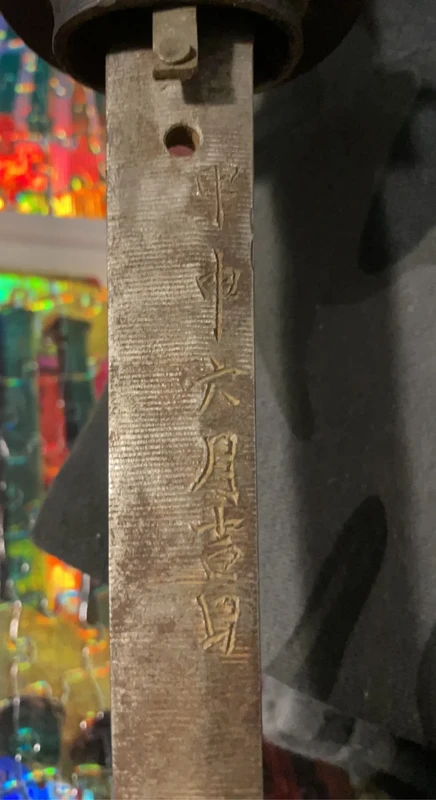
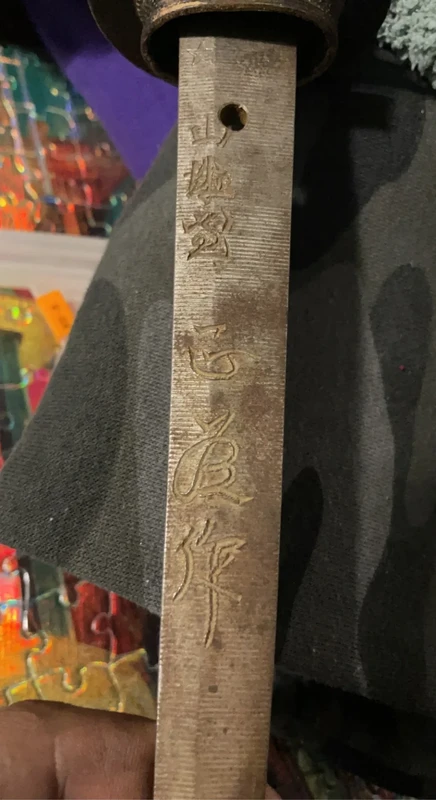
-
Photos added. I don't see anything that points to WWII. Purely a civil sword and fittings, although seeing the nakago could show a blade made during the war... or not. You don't show the covered mekugi. Often it's possible to gently push the ito aside to tap the mekugi out and reveal the nakago. PS: the new iPhone format of .heic doesn't post well on the forums. Take a screenshot of the photo and post that.
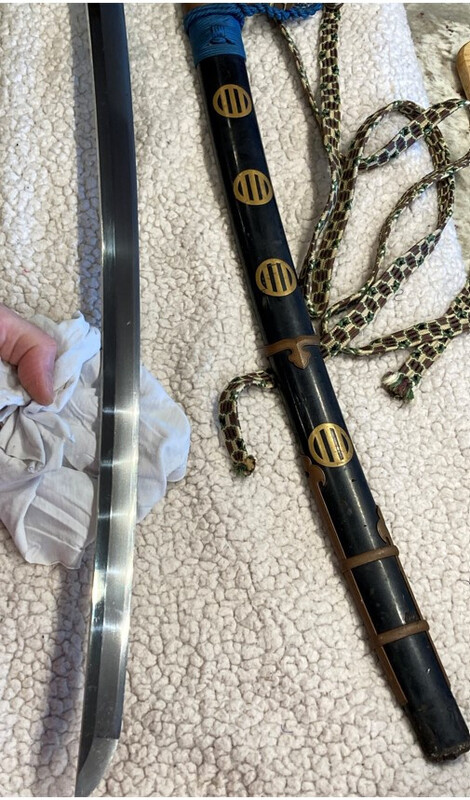
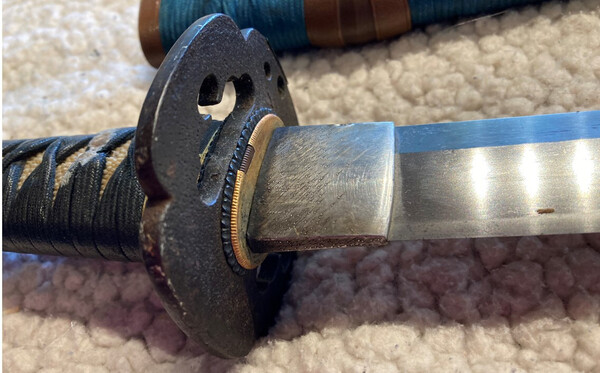
-
Help with mei on beat up Type 98
Bruce Pennington replied to JustinJustin's topic in Military Swords of Japan
Thanks for working this over for me, guys! Nothing definitive. I've had several blades where I was convinced of stamps, but it turned out to be creative corrosion, and my eye seeing something I wanted to be there. Great sword, thanks again! -
Films featuring Japanese swords
Bruce Pennington replied to Kolekt-To's topic in Military Swords of Japan
Geoff, Had to touch base on this one, as I just sat down and re-watched this brilliant piece of work!!! What a masterpiece! Perfect mash-up of the Spaghetti Western and old Japanese Samurai super-hero movies! Something the modern Western movies have been dancing around for decades, Tarantino stopped pretending and blended the 2 genres with a modern flair. Really loved it! Ha! Caught a flash of a Type 98 with tassell (movie prop, I'm sure) carried by one of the Crazy 88 soldiers: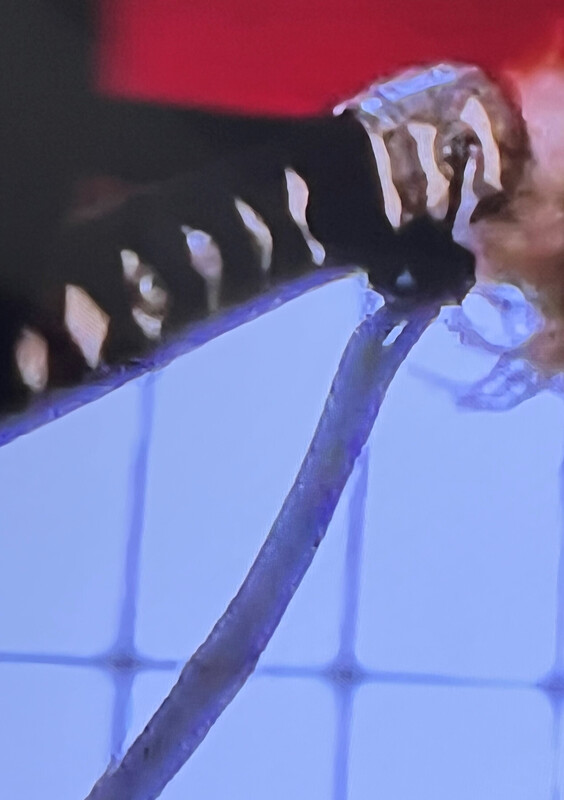
-
Help with mei on beat up Type 98
Bruce Pennington replied to JustinJustin's topic in Military Swords of Japan
There was. The large Seki stamp was used by the Seki Cutlery Manufacturers Association to mark quality showato. They can be found from 1940 to '45, but the massive majority of them are seen in 1942. The Army took control of sword production and oversight in '42, and the Nagoya Army Arsenal inspectors began using the small Seki stamp. For a long time, it has been believed that all acceptance stamps indicated the blades was non-traditional, but we have seen many acceptance stamps, to include the small Seki, on RJT star-stamped blades. So, it's evidence that the arsenal inspector stamps are more likely simply acceptance stamps approving them for the war. -
Help with mei on beat up Type 98
Bruce Pennington replied to JustinJustin's topic in Military Swords of Japan
@JustinJustin - Looks like you were trying to show us a mark on the back edge of the tang? Can you enhance that photo? Are there any punch-marks dots near the end of the nakago? Any numbers at the end? There was an RJT Kanemitsu but the blades I have on file are later, like 1944. I realize there were often several smiths working during the war that used the same art name, so this guy might not be the RJT Kanemitsu. Just worth checking for the other markings. Like John said, I have found that the blades stamped with the large Seki stamp, like yours, are quite often really nice blades with great hamon. Maybe they used another steel other than tamahagane, which put them in the "non-traditional" showato category, but they all have the appearance of being made traditionally. -
Michael, They are trying to be very careful, and not say that you have a $100,000-$400,000 sword. But what they are hinting at is that you may. You have something very exciting there, and you should be very selective on who you bring it to for polishing.
-
I am no follower of Tsuba or civil fittings, but I have to say I have never seen an actual jewel on sword fittings. My dad’s Mantetsu was missing several parts, that were stolen in his time in the Marines. He always said that he believed someone stole the metal parts thinking that there were jewels to be found.
-
I have had it happening on my laptop just as often as on my phone. I have literally gotten up from the table and to get a cup of coffee to wait for the photos to load sometimes. It doesn’t happen very often and I can’t identify when it is going on on a regular basis,
-
Excellent, thanks Steve!
-
Is this one Yoshimasa?


.jpg.e8b6d8d3151c673b721741e459553f3e.jpg)
.jpg.d0f2ce983e900d4e9d3902591a098229.jpg)