Bruce Pennington
-
Posts
14,324 -
Joined
-
Last visited
-
Days Won
171
Content Type
Profiles
Forums
Events
Store
Downloads
Gallery
Everything posted by Bruce Pennington
-
 Thanks @Ed, appreciate it! On that Hisaie, I have that one down as "Hisahide". I know the translation of these can vary, but here's the reference (I don't know what book this came from):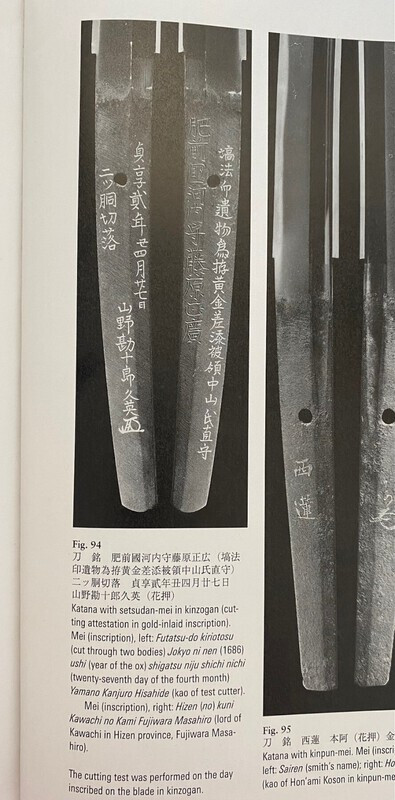
-
nice Near MINT NCO sword for sale
Bruce Pennington replied to Mark's topic in ASIAN ARTS & ANTIQUES LTD
Ah, thanks Jesse! It has the Tokyo 1st Arsenal star and the "Gifu" stamp. Love them both on the 95s. While neither are rare, you don't see them quite as often, and I just like the looks of them. Good luck on the sale. Excellent piece for any collector. -
nice Near MINT NCO sword for sale
Bruce Pennington replied to Mark's topic in ASIAN ARTS & ANTIQUES LTD
It's gorgeous Mark! Any chance of some pics of stamps and serial numbers for those of us that live to see those things?! -
Okay! Haven't seen one quite like this before! Posted by @BjornLundin HERE.

-
Attention Mantetsu Owners: A Survey
Bruce Pennington replied to Bruce Pennington's topic in Military Swords of Japan
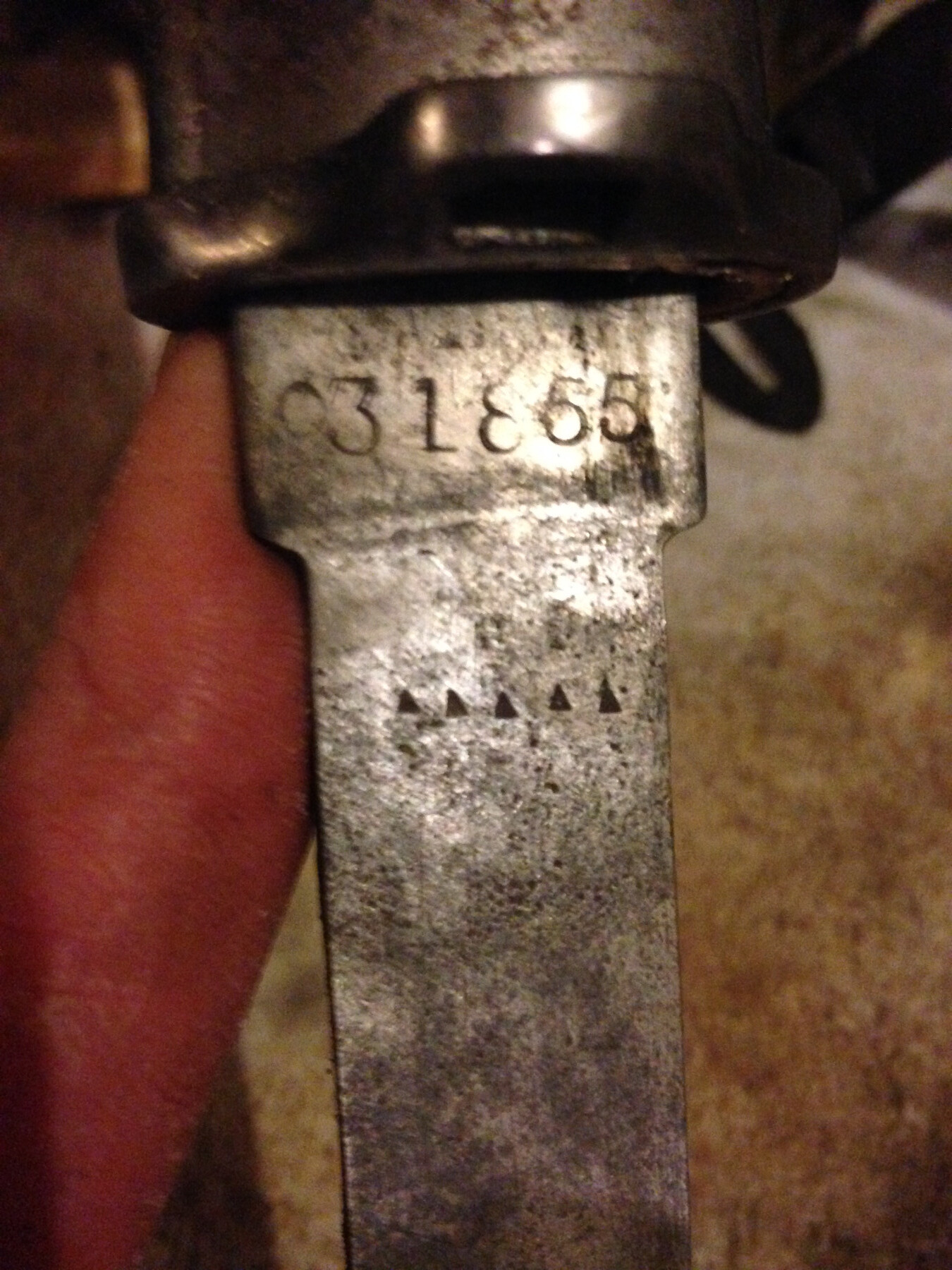
It could even be NU ヌ452, or 421. I have a ヌ433 on file, but no photos. When I first started recording numbers, I kept them in a spiral notebook, no photos. So it's even possible this is one I saw online and thought it was 433. It's a 1940 number, but we'd sure appreciate pics of the mei and date too. Standing by for any updated photos of that number. Thanks @Stephen! -
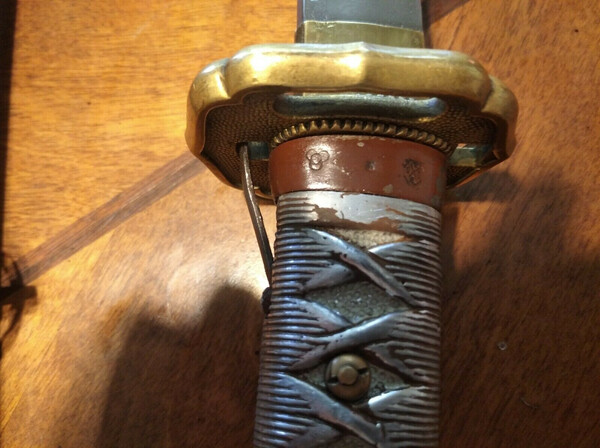
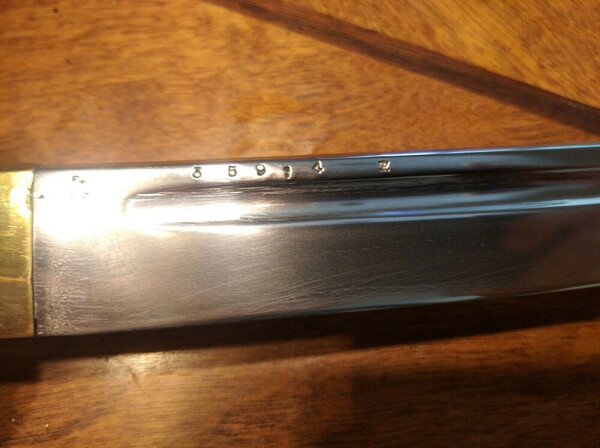
We've seen a number of these. They are usually in the 35xxx, 36xxx number range. I think @Shamsy said they are Polish reproductions. There are a few tell-tale signs, but overall they are nowhere near the quality of a Tokyo arsenal (Iijima) blade. Here are 2 others I've saved to file: 35974 35311 After searching the files, I have 4 in the 5Xxxx range too.
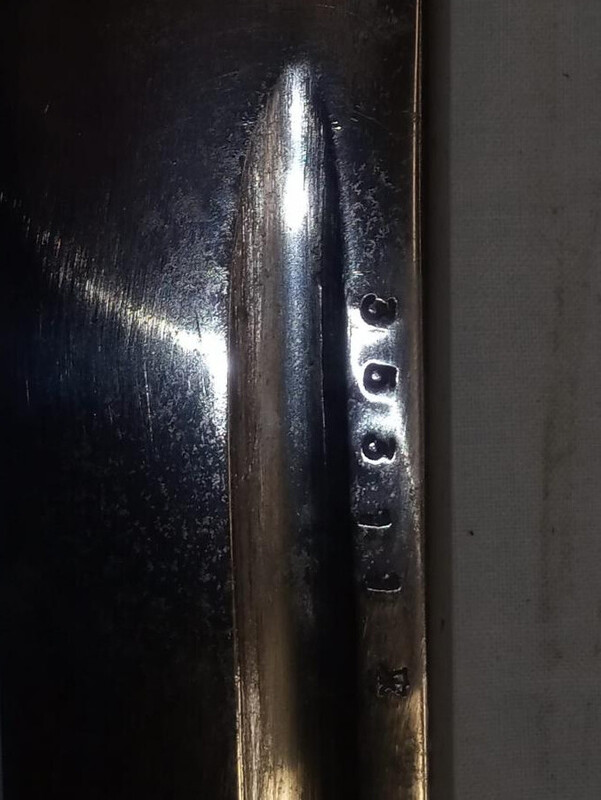
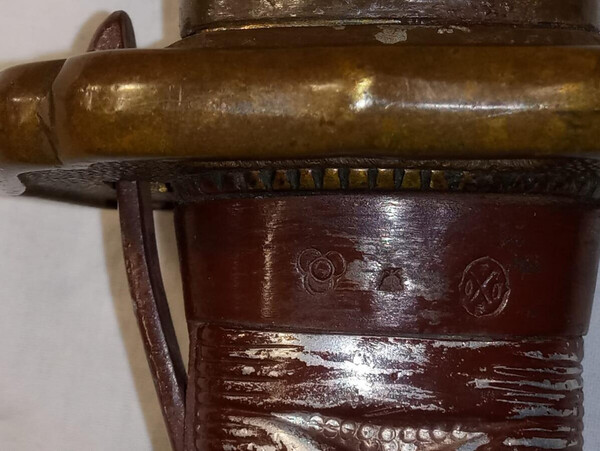
-
Had to post. Came across it looking up "pom."
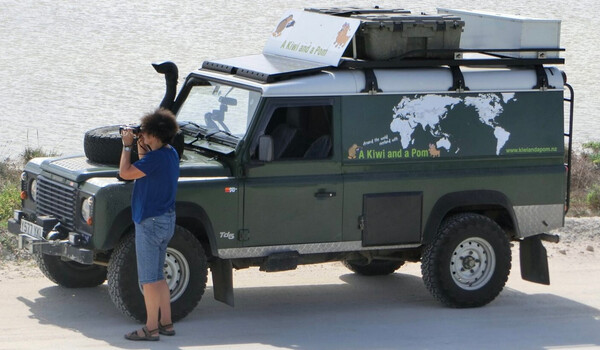
-
Yes, looks like painted wood. It also seems to have that one-piece fuchi/seppa seen on a few late-war kaigunto and on all the post-war souvenirs:
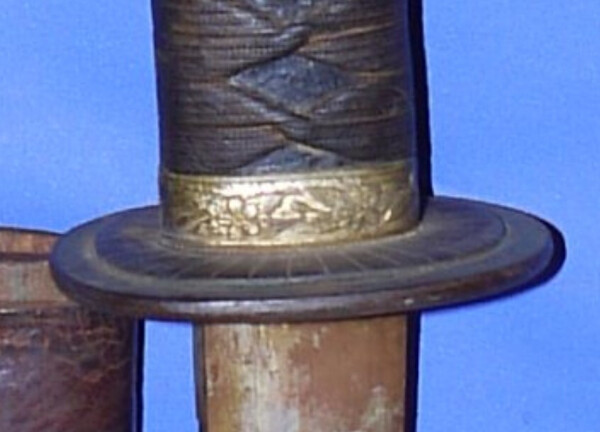
-
@Pippo - am I safe in assuming there is no date on the other side?
-
The use of the yamagata fits our earliest observations about the mark seeming to be used in the Tokyo area. And I see what you mean about the TO appearing on a few kabutogane. I wonder about the idea, though, of waiting for finished gunto before stamping. Doesn't seem like an effective method of meeting a stamping requirement (if one existed), as many, many blades were sent out to various shops for fitting which would not necessarily ever make it back to the arsenal for final inspection. If this was their method, we should be seeing way more TO stamped kabutogane. We have numerous blades double and sometimes triple stamped by Kokura, Nagoya, and Gifu (who the heck was that? Civil Seki Cutlery Manufacturers Assoc?). Stamps all over the nakago ..... but when we get to Tokyo - meh. Kabutogane here, W on blade there, but mostly absent knowing the vast number of blades that cycled through the arsenal. We should be seeing the TO all over the place. Unless ..... unless there was no requirement at all? Yet, I don't think that is the answer. We have a regulation chart showing the officially designated stamps of each arsenal and their associated inspectors. So, it must have been a regulatory requirement. Another issue - by stamping koshirae, not blades, showato make it into the world without being marked as showato. What does that say? The original intent of the Seki industry to mark quality showato was a commercial move, not military (as far as we understand). So, are we seeing that the military stamping of swords was totally disassociated from the issue and truly a simple inspection/acceptance mark? Maybe so. But why the totally different approach to stamping by Tokyo? Not very uniform for a highly regulated military function. I'm still puzzled.
-
I've seen similar themes, but I like the simplicity and the offset lines. Clean lines, well crafted. Posted by @Alex1984 HERE.
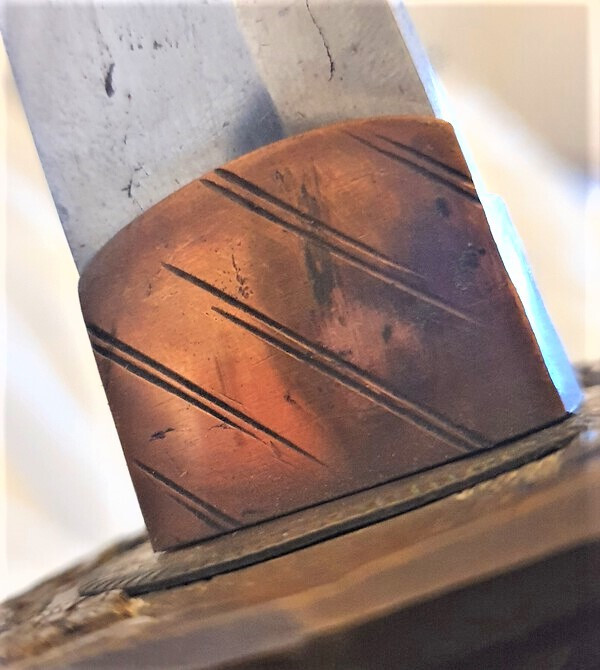
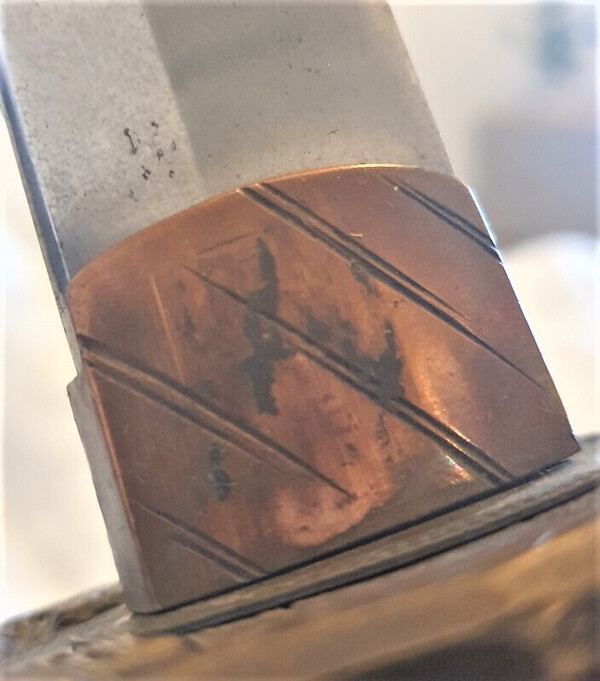
-
Thanks buddy! I like that one.
-
A closer look at the nakago showing the macki (notches where the nakago meets the blade) would be interesting. From the top photo, it seems the machi are almost worn down to nothing, which I've read, means many polishes?
-
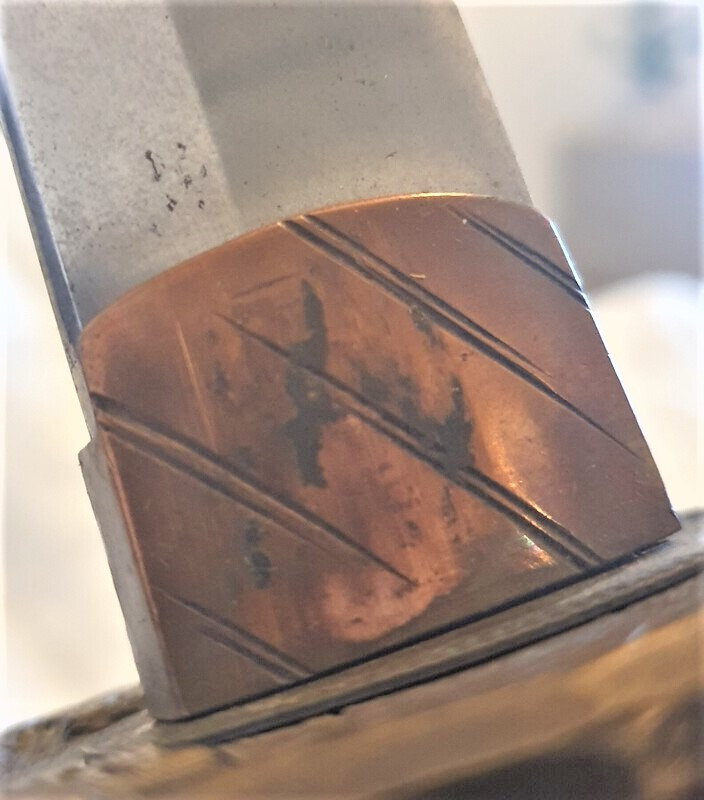
Alex, Could I get a clear, close-up of the habaki, please? I've seen this pattern, but yours has a nice look to it.
-
@Stegel Dang! Good point Dave! Very Interesting.
-
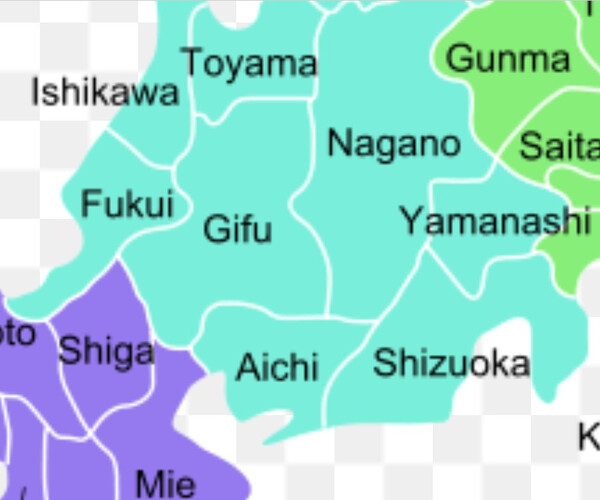
Speaking of Arsenal Stamps - In 1942'ish, the Army assumed control of all sword production, and we see stamps on blades greatly proliferate. The numbers of observed stamped blades matches. Showa and large Seki stamps were the stamps being used prior to this, and both quickly taper off at 1942. I had been assuming that there must have been some regulation or mandate from the Army/Navy for this. I recently realized the vast majority of stamps come from the Seki/Gifu area. Showa, Large-Seki, Na (of Nagoya), and Gifu account for the lion's share of observed stamps. There are a smattering of Kokura ('42-'45) and a few Osaka ('43-'44). So where's Tokyo 1st???? With the Type 95s it is clear that Tokyo 1st was stamping blades, but stamps on officer blades are almost non-existant. I have 4 undated zoheito with the "TO" and one officer blade with the "KI" (2nd Factory of Tokyo 1st Army Arsenal). FIVE blades from Tokyo vs almost 300 blades from mostly Seki/Gifu and Nagoya. About 7 from Osaka, and around 10 with Kokura (but even these are mixed with Nagoya stamps). An interesting point is the co-location of Gifu and Aichi (Nagoya's prefecture): These two prefectures, combined, account for at least 90% of stamped blades. We know that Gifu/Seki produced approximately 70% of WWII blades, so why aren't there 30% of blades stamped with everything else, especially Tokyo??? The nearly total lack of Tokyo stamps on officer blades has me really puzzled.
-
Yes, good example Thomas!
-
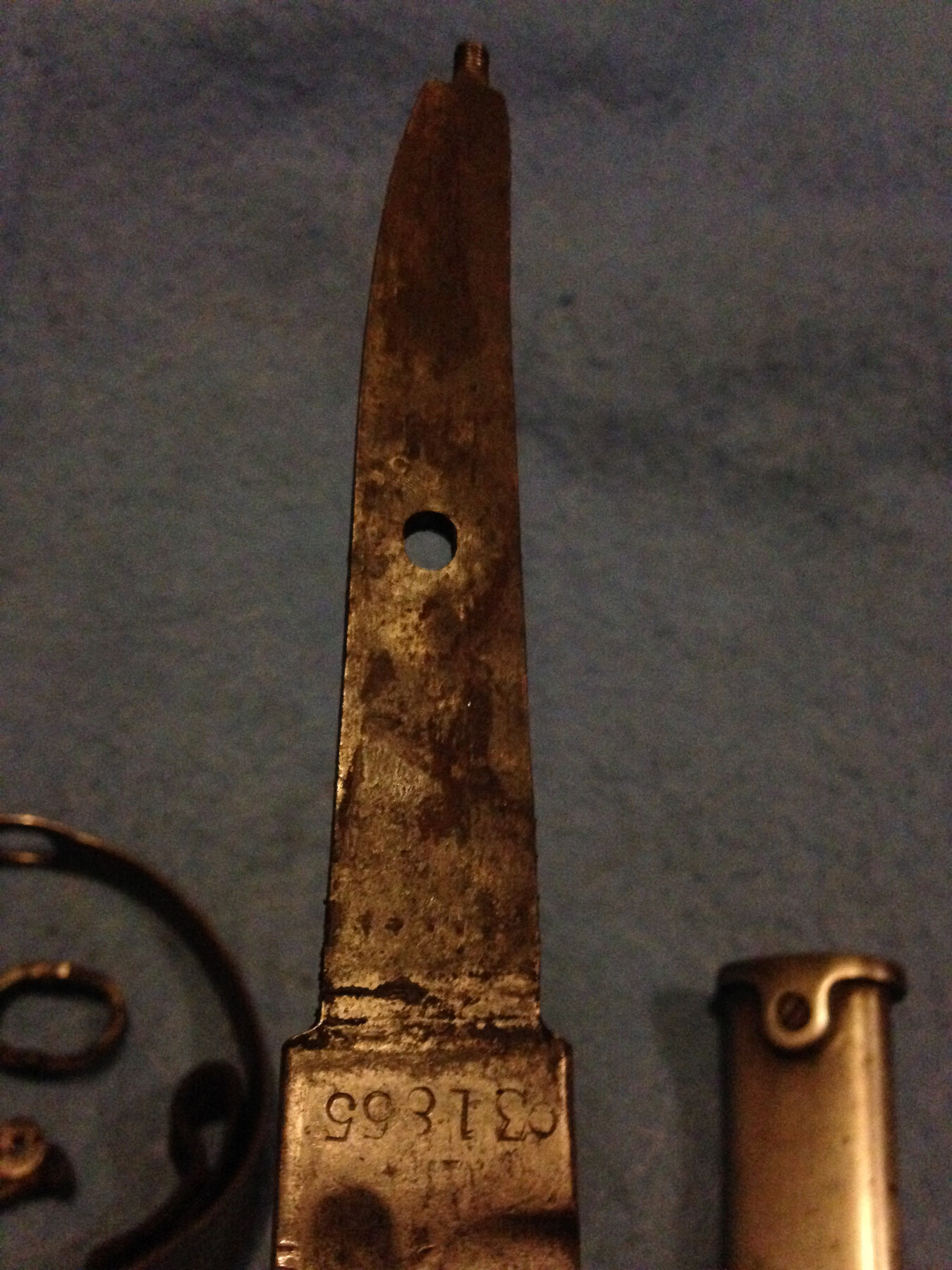
Thanks Jonathan! It's clear there is a threaded end of a nakago there. The holes in the nuts, as well as the slot of the screw show a little boogering. That leaves us at least 2 choices -1. Blade was factory made this way, but sword was disassembled by previous owners, or 2. Handle was disassembled in the field to remove original blade and insert current blade. No way to know, but I'd lean toward choice 2. I still don't see a G.I. creating and threaded nakago end like this, but I don't know European blades. Maybe it's possible they had some with such nakago ends.
-
Ok. It is a curious piece indeed. Can't see the end of the handle, but from the side it appears to have the threaded end of a nakago secured by the standard nut. Correct? If so, that seems a tad more craftsmanship than a G.I. trench knife would have.
-
@Leen, The last character on the date is "Spring", so it was "Spring 1942". Kanenobu became an RJT smith, likely after this blade was made (from lack of star-stamp). The program had only just begun at this time, so he must have gotten qualified sometime later. You will often see inspection stamps on the mune, like this, on star-stamped gendaito, so it does not mean the blade is non-traditional. Your small stamp above the "HO" in the corrosion does look like a "Na", like Thomas said. I have a few other gendaito with this combination on file, all between 1940 - 1942. They seem to stop after '42. @Bruno - I don't think I have your Mitsunobu on file, can I get a photo of the date and full mei, please? The small stamp on the mune is a Seki stamp, too.
-
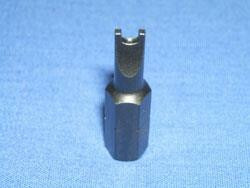
You will need a tool like these pliers, or a 2-prong MAF bit. I got both at an ACE Hardware store:

-
I initially thought it could be a broken 32 turned into a trench knife, too. But there would be evidence of the original fuller. @ribendao - Jonathan, would you do us a favor and take the handle off? If it's an original 32 blade, the nakago will look something like this:
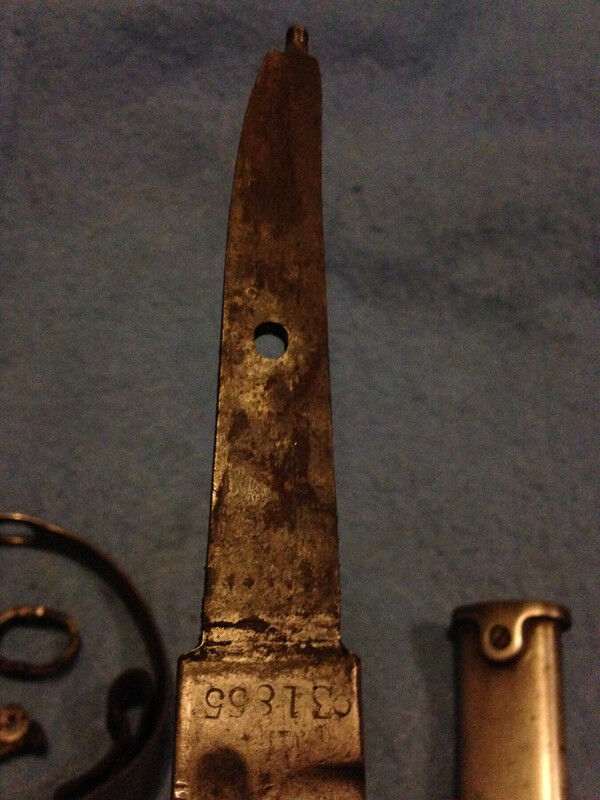
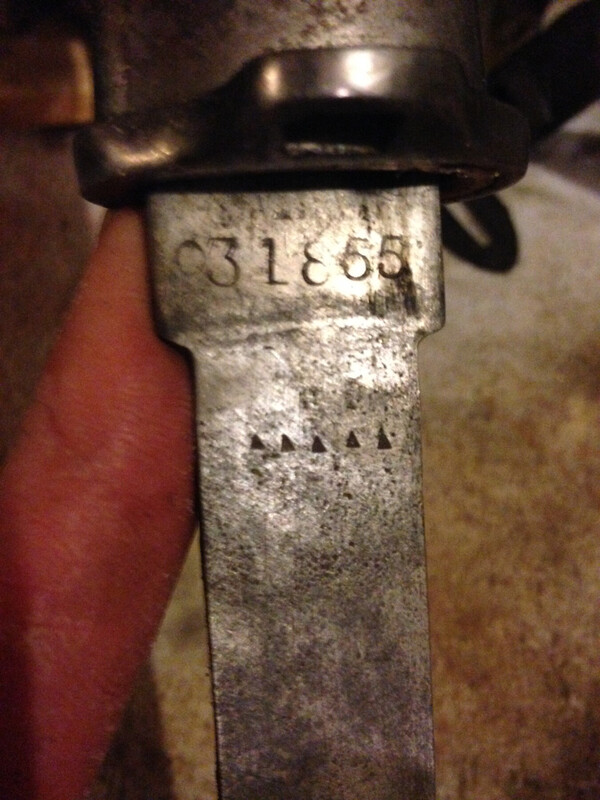
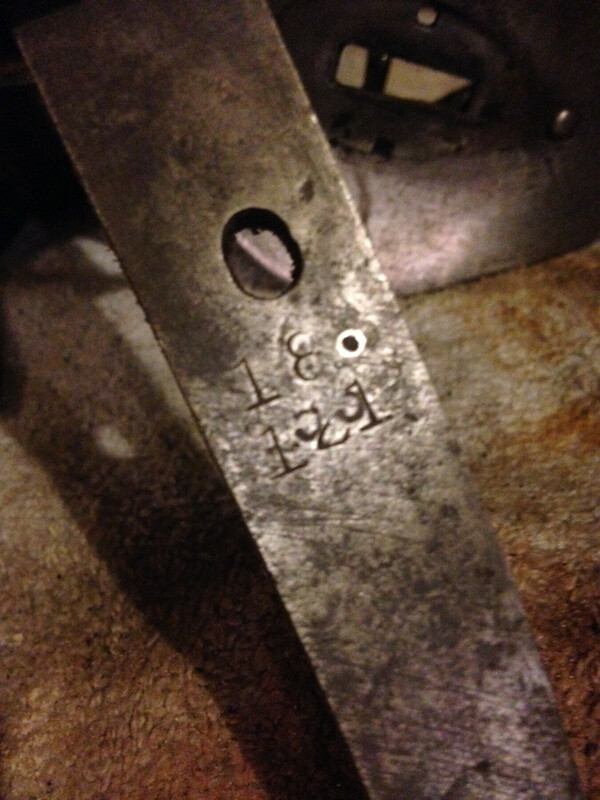
-
-
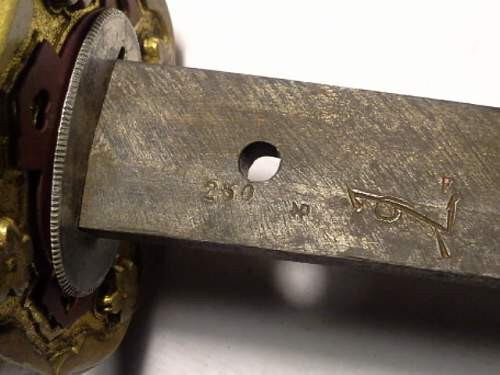
Thanks for that! "250"? "260"? Any thoughts?
-
Pics brought over for discussion, rather than reviving the old thread: The star is of the Tokyo 1st Army Arsenal, and the stamp on the right is one of the "unknowns". I don't understand 'Gunto's' post claiming the single one to be of the 'Chuo Kogyo Co'. It looks more like a double-struck "TO", Tokyo Arsenal Inspector stamp. I looked up Chuo Kogyo Co and the stamps on Nambu pistols were quite different than this. What do you think Thomas?