Bruce Pennington
-
Posts
14,324 -
Joined
-
Last visited
-
Days Won
171
Content Type
Profiles
Forums
Events
Store
Downloads
Gallery
Everything posted by Bruce Pennington
-
@Stegel or @Shamsy can narrow the year down, but my guess (which is always close, but never right!) is about 1941. Completely legit, with the "Gifu" contractor stamp (which is possibly the Seki Shoten Co).
-

Looking for advice on authenticating this sword
Bruce Pennington replied to twoscoops's topic in Military Swords of Japan
Thomas, I finally had some time to look this over. I'm not entirely sure what you have here. The majority of it seems to be a quality, upgraded kaigunto - sharkskin same', fat gold seppa, lacquered rayskin saya. Yet the fuchi is Army (green arrow) and the koiguchi (blue arrow) is Navy. Plus, the tassel is army. The inner black seppa (closest to the tsuba) on both sides don't fit well. This kaigunto has either been re-fitted by a collector (common with some gunto that come to the collectors in bad shape, or missing parts) or it was a late-war job using available parts. There has been much discussion over the decades of the Navy forces that fought on land along side Army and the swords they carried. It is certainly possible this one was one of those. The fuchi fits so well, and the scabbard latch goes through all the seppa and tsuba, that I want to say this was made this way. It's an odd character, for sure! Pricing these days is all over the place, but I wouldn't sell it under $2,000. Before COVID, they were selling for $2,400.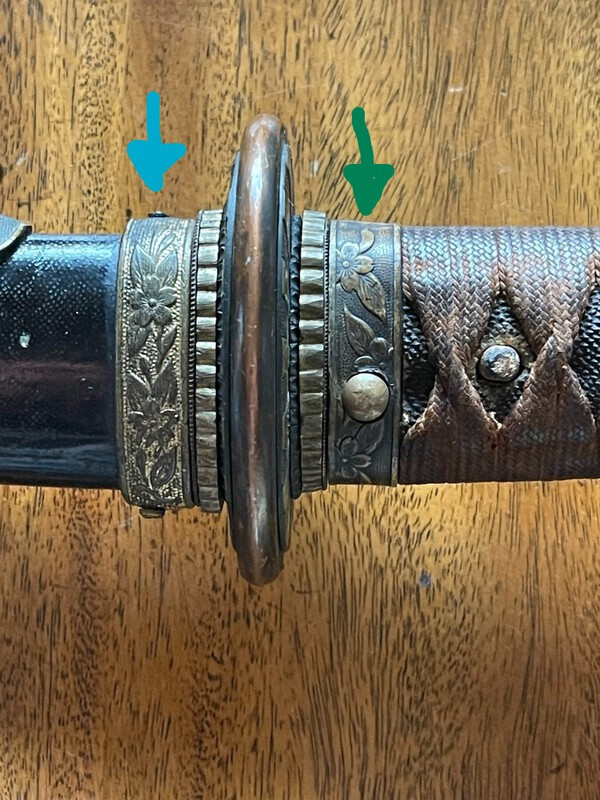
-
Great one @Itomagoi, Peter! I wonder if the whirlpool is depicting the Naruto whirlpool or something of legend? https://en.japantravel.com/tokushima/the-great-naruto-whirlpools/15302#browser
-
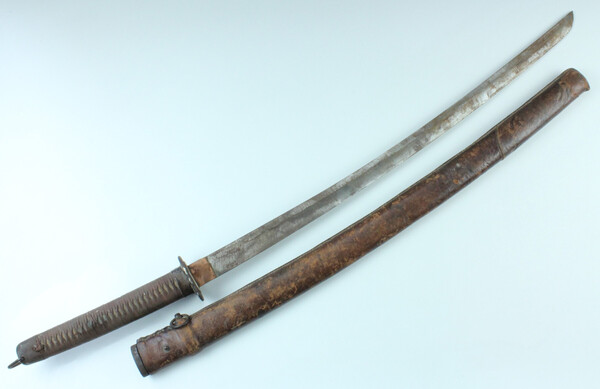
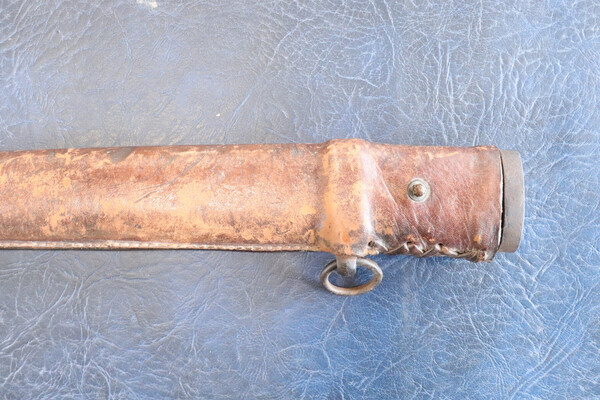
Pics added for the future: This one is a bit unique with only the center circle of the menugi in flower form.
-
Translation of markings on WWII era katana
Bruce Pennington replied to eraaij's topic in Military Swords of Japan
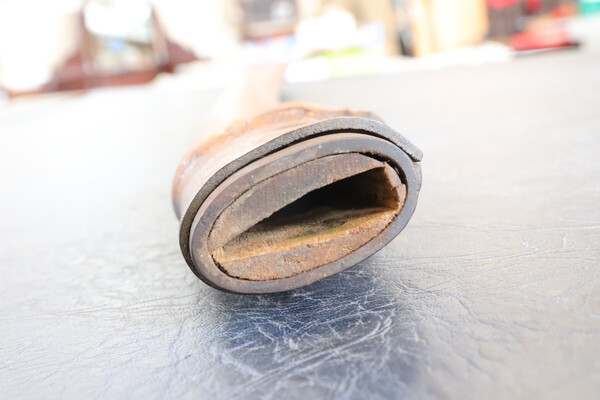
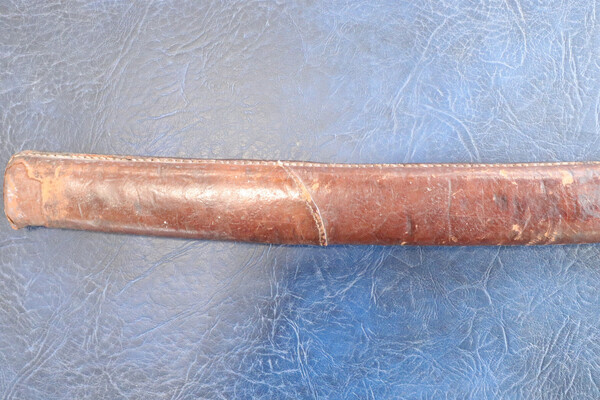
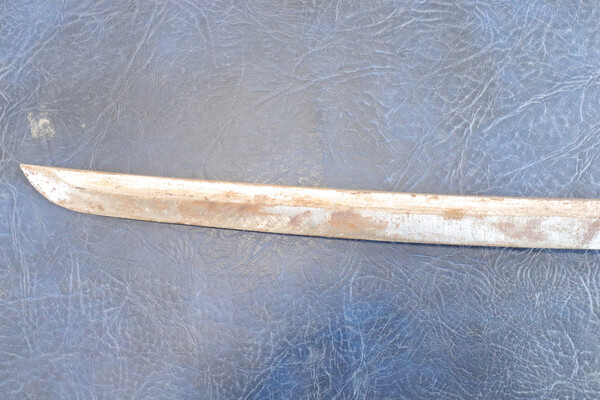
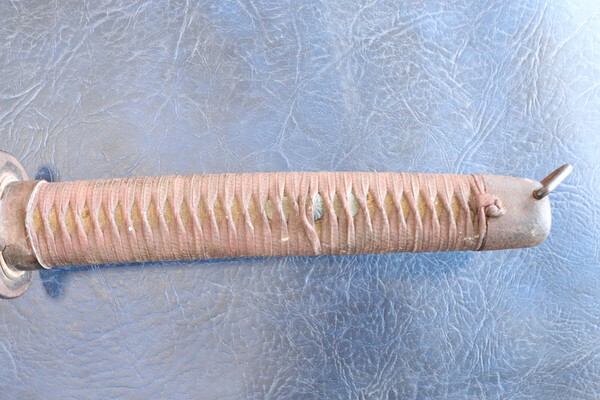
The leather covered wooden scabbards (saya) are seen throughout the war. They were "informal fittings". Leather over the metal saya is called "combat leather cover," (thanks again @BANGBANGSAN!) So, I imagine some guys would prefer these in the field, though we see plenty of pictures of officers in the field with the standard all-metal fittings uncovered. Like everything else, stuff like this was a personal option. Some chose it, others didn't. -
Incredible!
-
Another help with first Japanese sword
Bruce Pennington replied to Levallois's topic in Military Swords of Japan
"patina" on a nakago is simply oxidation. As a blade gets older, the rust gets darker and thicker. The dark rust isn't 'active' anymore, like fresh orange rust. You can find older blades without such patina, but when it is there, it can be used to estimate age. -
Equally possible John! I was just sharing facts as I have them. All else is speculation, including mine.
-
You got me to digging into the files. I was surprised at the numbers of RJT blades in Type 98 fittings. My impression was that the vast majority of them were in RS fittings. While the majority are in RS, there are more Type 98s than I had expected. Most in 98 fittings were clearly made for this, with only 1 mekugi ana. I did find one other blade, like this one with an extra hole drilled to accommodate the 98 fittings. All 3 holes looked equally rusted like it was done during the war, not post-war. Can't tell on the OP blade, since the nakago was cleaned, if it was done during or after the war. But after seeing the other one, I suspect it is possible the original owner might have wanted the RJT blade but didn't want RS fittings and had a shop re-fit to Type 98. Of course, it could have been done yesterday too, though.
-
Another help with first Japanese sword
Bruce Pennington replied to Levallois's topic in Military Swords of Japan
John, Welcome to the addiction! You can read about these at some great websites like Ohmura's site: http://ohmura-study.net/900.html Here is a good discussion of the military's effort to gather civil swords for the war: https://www.warrelics.eu/forum/Japanese-militaria/family-short-blades-gunto-688110/ -
Agree. It's the only way I've been able to mount them properly.
-
SHOW US YOUR GUNTO HORIMONO
Bruce Pennington replied to IJASWORDS's topic in Military Swords of Japan
-
Looks legit to me. Is that some sort of battle damage to the side of the blade?
-
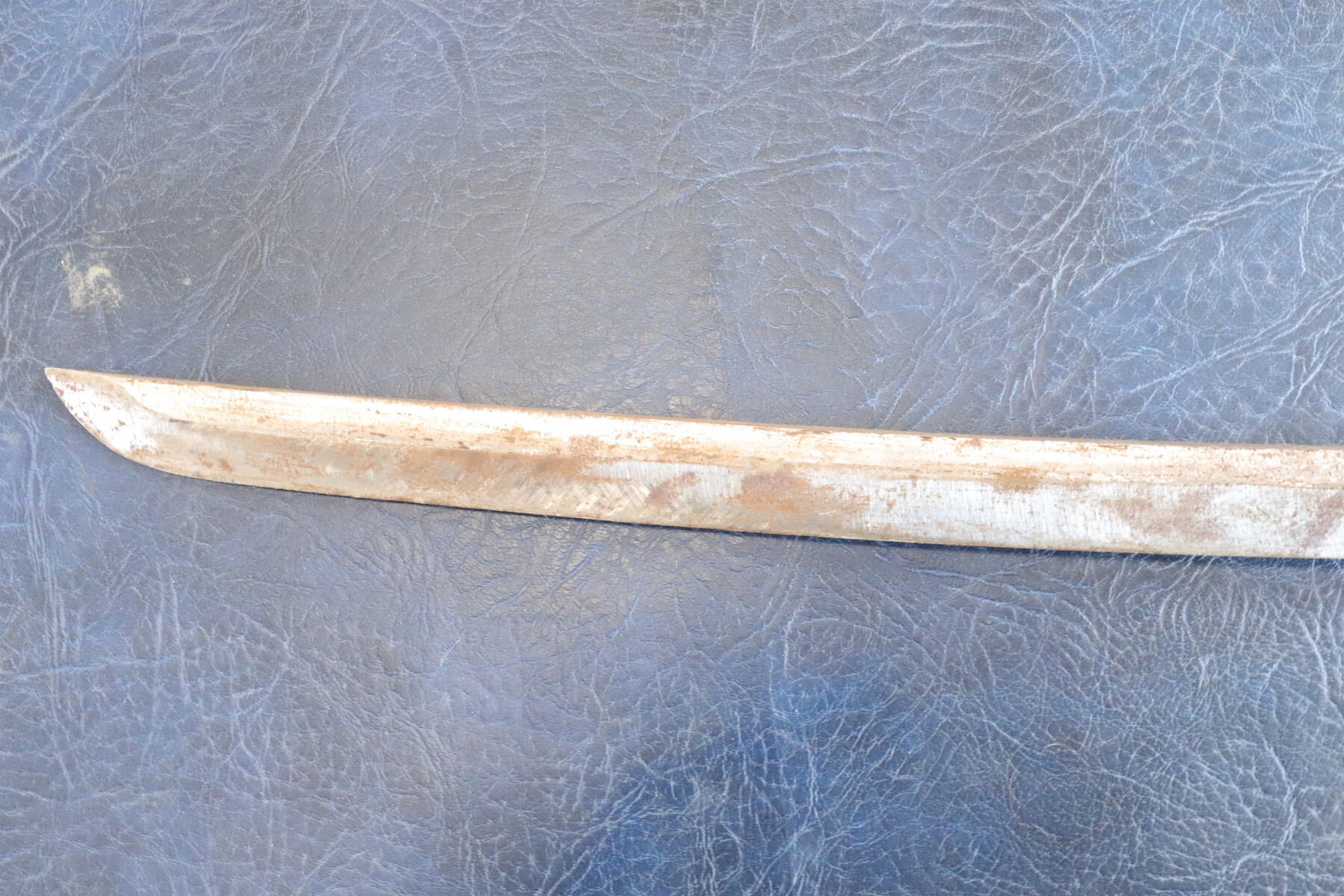
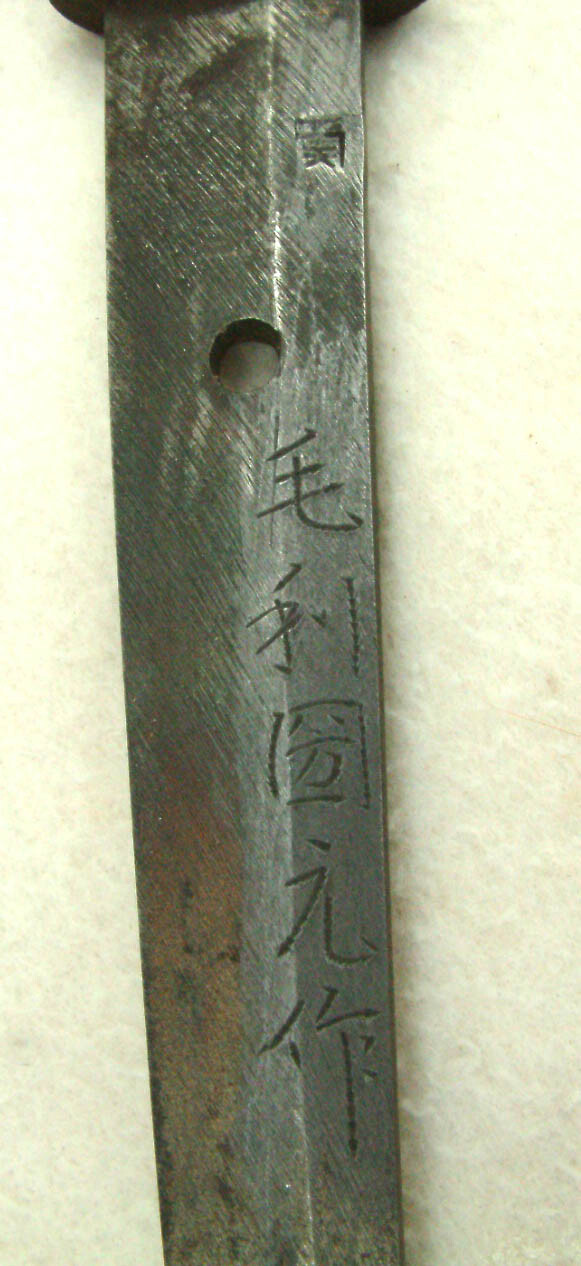
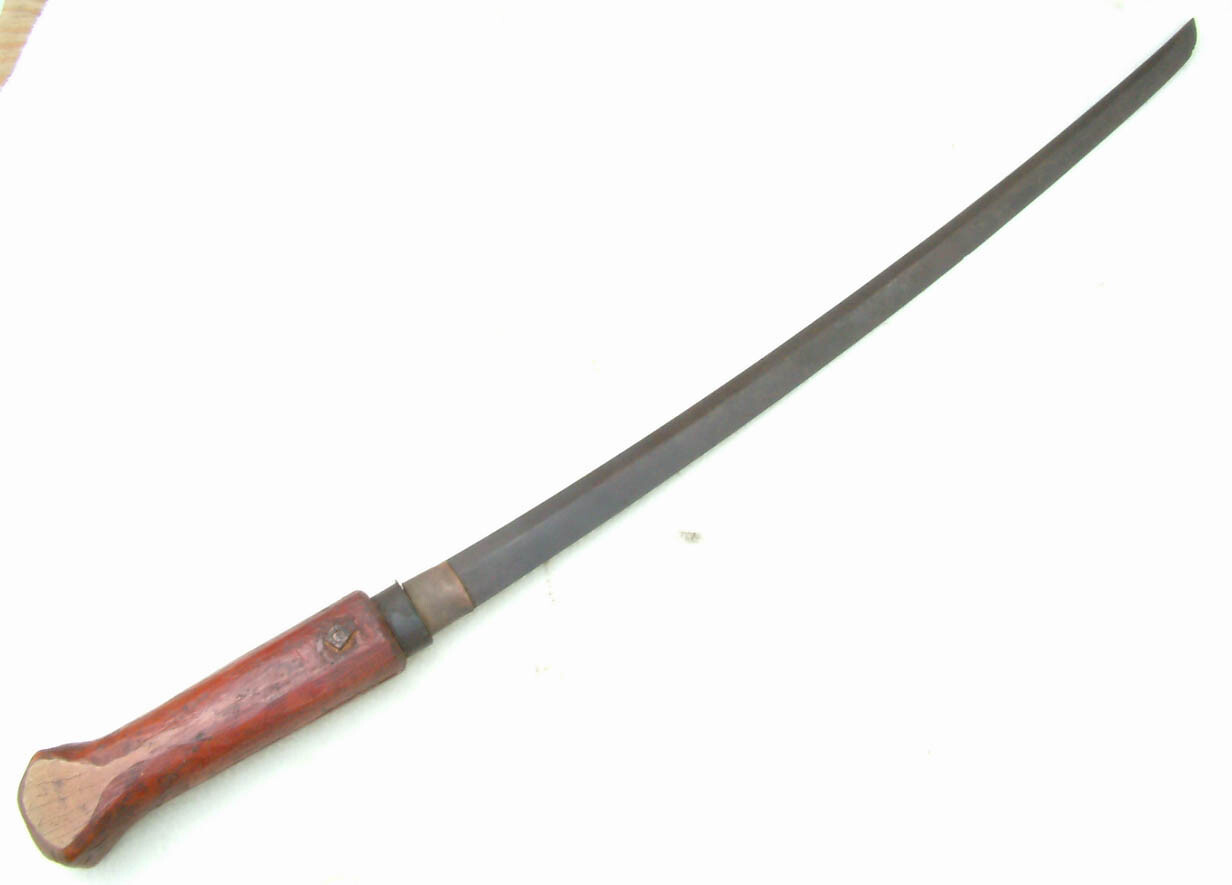
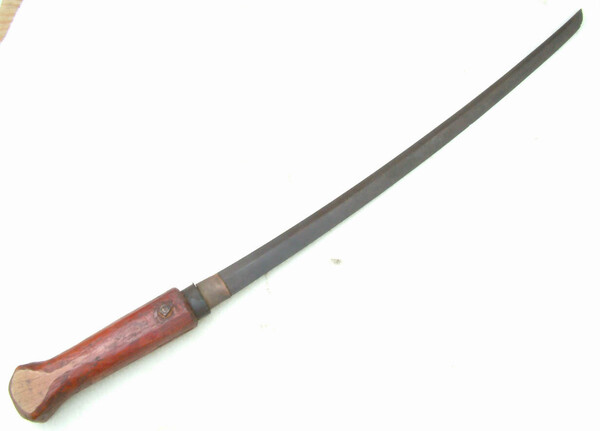
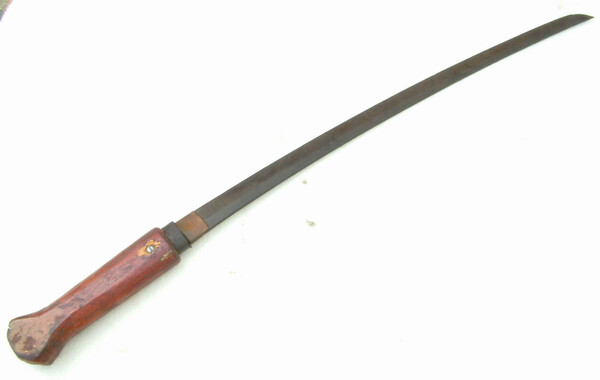
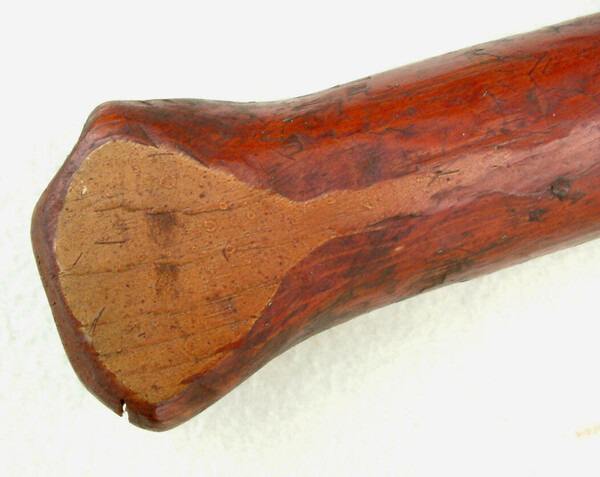
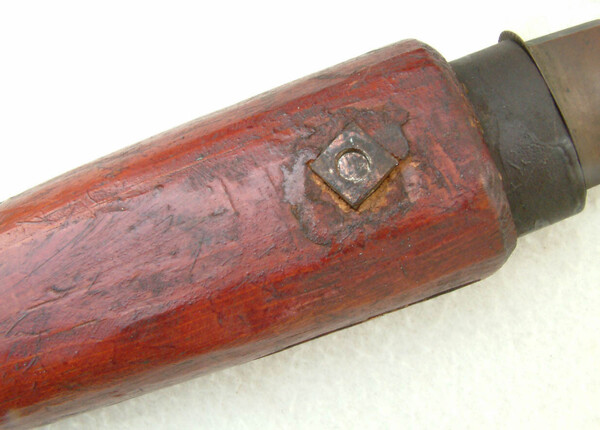
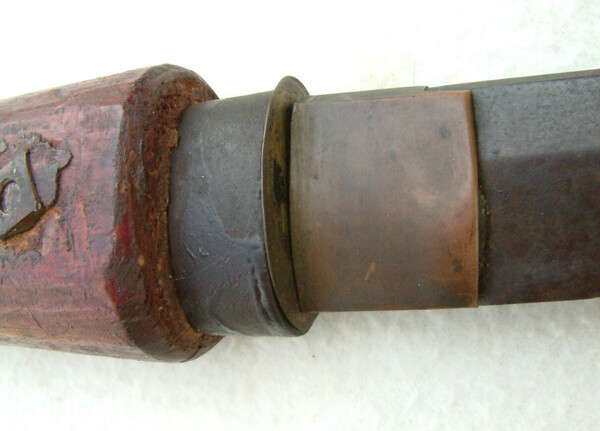
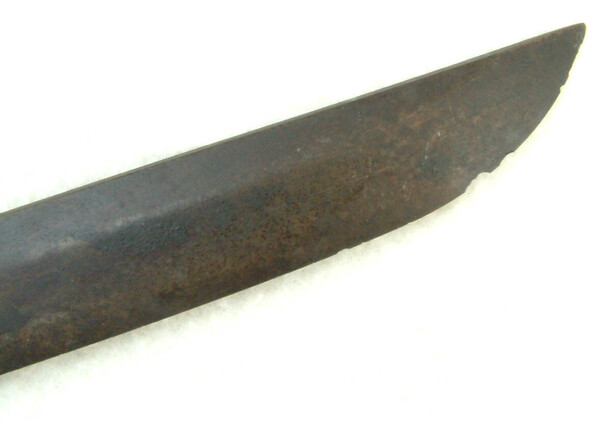
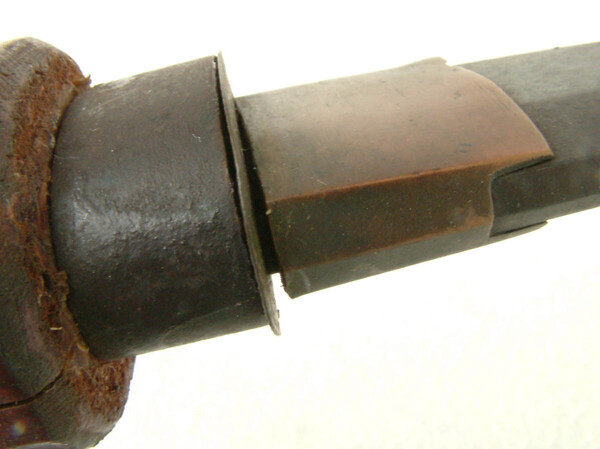
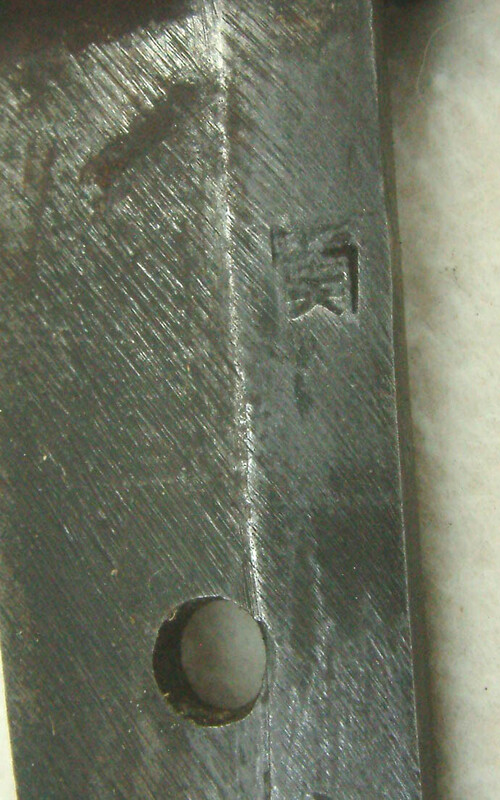
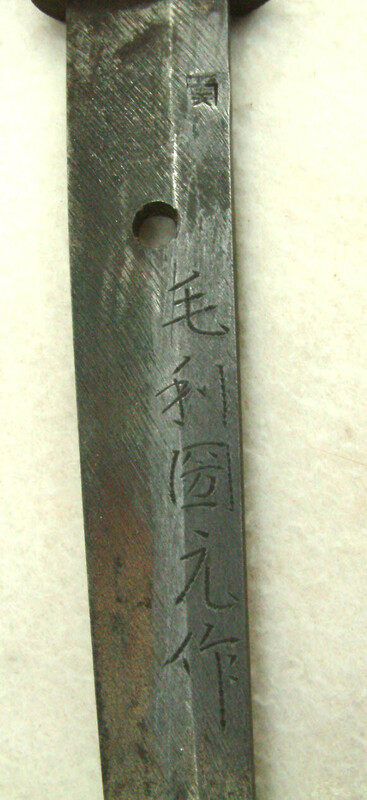
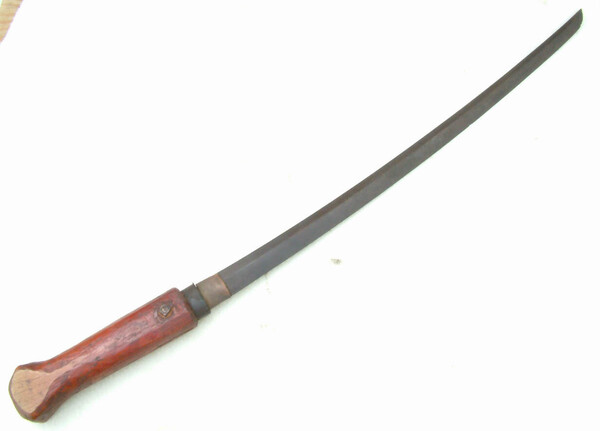
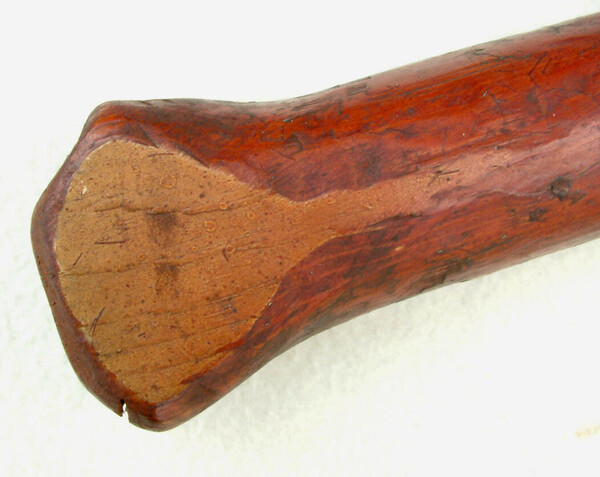
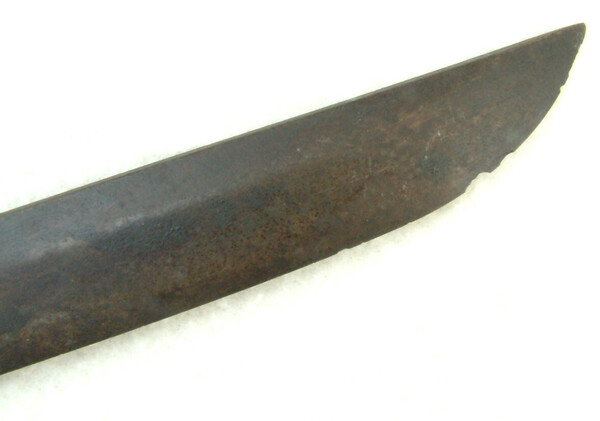
Thought I'd post this one for interest. Found by a friend who got it for almost nothing. Translated by @xiayang on THIS THREAD as Mori Kunimoto, and has a prominent large Seki stamp. No way to know who built the handle, but I think it's reminiscent of the swords stripped and refitted by the Filipinos after the war for use on the farm, etc.
-
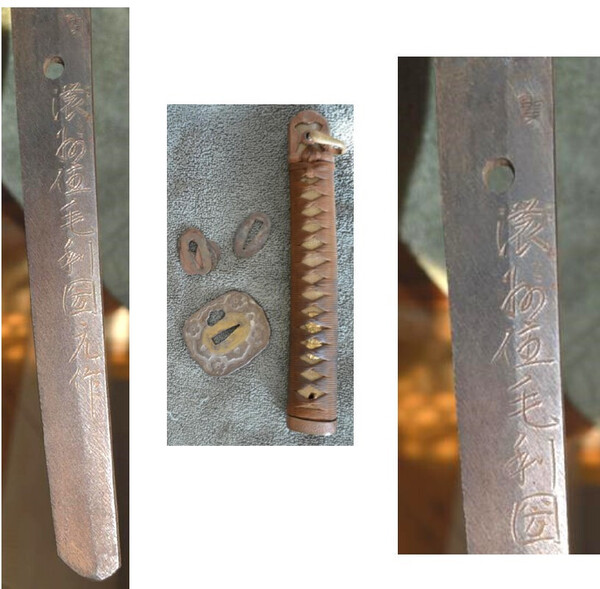
Thanks Jan! I never would have gotten the 'moto', but I checked my records under that name and found I do have another one. Used the same uncommon character for Kuni. This one from one of Mal Cox's articles: @Ray Singer - yes the poor thing was very poorly treated. I'm going to post it on the military thread. Looks like one of those swords that a farmer stripped and refitted for field work after the war:
-
Sakura Chuso release button
Bruce Pennington replied to PNSSHOGUN's topic in Military Swords of Japan
A real custom gunto! -
Any chance this is legit, and if so, who is it? I want to say Kunihisa, but the 'kuni' doesn't look right.

-
GAD ZOOKS!!! Is there no end to fakery?! Hadn't even considered that. However, all I've been interested in, really, is their kao.
-
Got that one on file from a post by Ray Singer, August last year. The smith is translated wrong. Should be "Kiyokuni".
-
Endo Mitsuoki with Horimono
Bruce Pennington replied to Matsunoki's topic in Military Swords of Japan
From Marcus Sesko's book: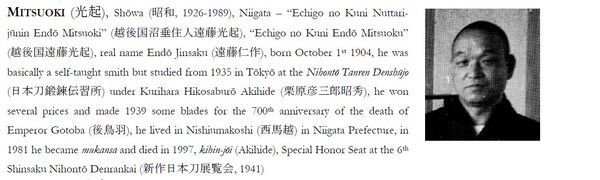
-
Thanks @jesse and @Okan! Nagahisa and Shigetsugu must have been prolific testers. I now have 3 Nagahisa and 4 Shigetsugu tested blades compared to blades tested by 5 other guys, but only 1 blade from each.
-
What is the meaning of this?
Bruce Pennington replied to Blade Refuge's topic in Translation Assistance
These are from a well-known faker who likes to put the date on the blade. The other side a a Japanese flag, and a character, but both are partially struck and polished off. Similar fake HERE. -
Don't know why no one has helped out with this one, Okan! There are a few oshigata examples on this Japaneseswordindex page, you might try making a collage of them side by side to check. But as a rookie, myself, on mei, I seem to find variations on even recognized legit mei. Hopefully someone skilled at this will help soon.
-
What is written on the habaki?
-
This was Thomas' thought too. After reviewing the 1944 production chart, I see Tokyo 1st produced a similar number of blades as the Osaka and Kokura arsenals, and I only have 7 Osaka and 6 Kokura stamped blades on file. So, I suppose the numbers of Tokyo 1st stamps should be inline with that, which would mean we really wouldn't see a great number of them out and about. And that fits the few examples we have seen of he stamping you describe. The numbers of Tokyo 1st, Osaka, and Kokura combined are still lower than I'd expect, which puzzles me some. I have roughly 100 Nagoya/small-seki blades on file. Knowing that they produced roughly 2/3's of all blades, then the combined To/Saka/Ko blades on record should be around 50. But I only have about 20 observed. That might simply be due to difficulties in sampling - I only see stamps that show up on NMB! I guess I'm ok for now. Thanks guys!