kissakai
-
Posts
3,718 -
Joined
-
Last visited
-
Days Won
12
Content Type
Profiles
Forums
Events
Store
Downloads
Gallery
Everything posted by kissakai
-
I'm with Grey To have the design over the seppa dai to me a no no
-
Would you let me know, how did you remove the Verdigris?
-
Poll: How often do you visit the NMB?
kissakai replied to Brian's topic in Forum Technical Details and Maintenance
For me it is a couple of times a day The better sale items go very quickly! I do look at a few other topics and the laugh of the day always makes me smile -
Maybe off topic but for tsuba I'd like there to be a bit more detail if known My Hizen gives the mei translation but no generation and I've shown it to a couple of respected sword collectors and they say the generation is quite obvious
-
They look so much better, as before I'm sure most would discard them straight away I can't see any damage to the patina I have not idea if your methods are correct but they needed much more than a gentle wash Stopping the rust was paramount and if you keep them long enough you will know I have seen some great work done with bone picks but the examples took ages for one piece I expect to get shot down buts thats life
-
Ed that was my thinking about a theme and we can all be guilty of this. At one time I bought almost anything that had kanji in the design! I had an enquiry about buying horse related items and after sending him the images he bought the lot. I sold at my normal price but I'm sure he would have paid more but that is not my thing I only charge more if it is one on my 'keepers' but that is very rare I have a friend who has been trying to the last three Haynes catalogues which is his personal goal but it's to expensive to buy outside the UK. Any help appreciated
-
Looking forward to your images
-
Yes but only if you can't see the hamon
-
I enjoyed the video - Thanks to all the NMB members who find this stuff
-
A very good find - thanks
-
Freshly polished Aoe blade
kissakai replied to Utopianarian's topic in General Nihonto Related Discussion
Wonderful Absence makes the heart grow fonder -
Submitting Tsuba for Grading and Papers - Thoughts?
kissakai replied to Winchester's topic in Tosogu
I agree with Steve Sometimes a tsuba's school/mei are obvious and don't expect much extra information So if you have a Yamakichibei tsuba don't expect an age or generation (same with swords) Ideal if a tsuba/sword is unsigned of good quality I did use shinsa to verify a signature that had mixed opinions on the NMB -
So tempting!!!
-
Didn't they learn handwriting !!!! So difficult for me Now I'll do more research
-
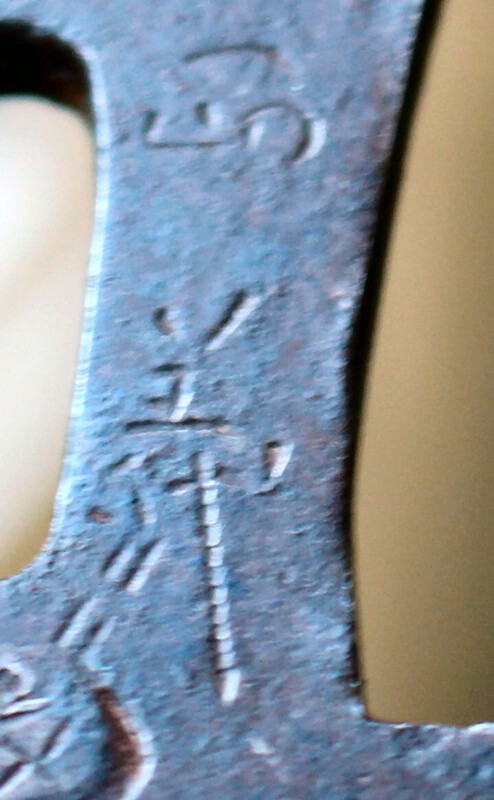
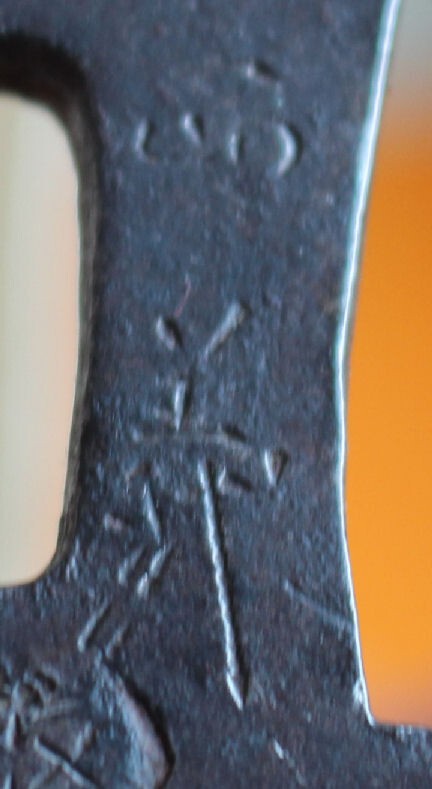
I've attached a tsuba mei - a bit blurry I couldn't find it in Haynes but looking at Sesko's book it looked like a match The Masa or yoshi tsuba kanji where not the expected form although I know how much they can vary Would someone let me know the correct kanji for this mei
-
Peter Yorke
kissakai replied to kissakai's topic in Sword Shows, Events, Community News and Legislation Issues
I bought the tsuba and print that I've posted today and I was happy with the prices especially the print It is 95% guns and WWII stuff. Very little nihonto as usual -
WOW that was quick As these were unknown to me as they are those found on a Google search Mandala of the Mani hoju, the Jewel that Removes Misfortune MANI HOJU MANDARA ZUSHI E 摩尼宝珠曼荼羅厨子絵 MANDALA OF THE MANI HOJU, THE JEWEL THAT REMOVES MISFORTUNE Japanese, MEIJI ERA, 19TH CENTURY, PHOTO CREDIT: MUSEUM OF FINE ARTS, BOSTON Known as the hōju 宝珠 or hōju-no-tama 宝珠の玉 or nyoi houju 如意宝珠 in Japan, this jewel signifies the bestowal of blessings on all who suffer, for it grants wishes, pacifies desires, and brings clear understanding of the Dharma (Buddhist law). In Japan, the hoju is often appears as giboshi bridge ornaments and are said to resemble the onion domes seen in Western or Baltic cultures, however, they are mostly likely the form of the peach which is the fruit symbolic of immortality and healing (known from the myths and legends of the ancient chronicles of Japan). One of the oldest known forms of the hoju is the jewel (called kuurin) atop a simple stupa called the gorinto or sotoba. The gorinto was originally a stupa structure component of a mausoleum built over a sacred area and usually containing a relic of either the Buddha or a revered teacher. Over time, exterior forms of the sotoba of China, Tibet and India changed, but the sotoba always included symbolic shapes integral to the doctrine of the godai Five Elements, Mahabhuta. This is the doctrine of Five Elements of Indian origin, that the physical body, being composed of five elements, would in death return to them. Given that the hoju jewel was used in the mausoleum context, the “jewel” may actually originally have been symbolic of the magical peach of immortality for those going into the afterlife, the peach that Izanagi lobbed at the hags of hell or as a magical amulet to keep the “hungry ghosts” at bay. The mani hoju or jewel is also found on top of railing structures called giboju or giboshi 擬宝珠, particularly older bridges built in ancient Japan. The giboju is a decoration made of bronze, wood, tile, brass or iron that is found on top of the newel, an upright post structure of oyabashira 親柱, of railings *kouran 高欄, bridges, and platforms *dan
-
I can see the key fret design but I believe it was never used as a mon It is the top and bottom shapes I don't understand. I did think of clippers but the shape is wrong Tongs?

-
Another visit to Birmingham Arms and Armour sale tomorrow (Sunday) 75% of my reason to attending this fair was to see and hopefully buy from Peter and I miss him Sadly missed
-
Mike can make you a shirasaya or one to your taste He may have Bals details who may help with the tsuka
-
Welcome Neil
-
Hi Bob A wonderful post and we have been so lucky see so many very fine fitting I hope you find some treasurers Grev
-
"Green papers mean no papers"
kissakai replied to Toryu2020's topic in General Nihonto Related Discussion
Not my field but I think old papers are OK and give more detail than their ne equivalents as long as it is not a BIG named smith Same for tsuba