kissakai
-
Posts
3,741 -
Joined
-
Last visited
-
Days Won
12
Content Type
Profiles
Forums
Events
Store
Downloads
Gallery
Everything posted by kissakai
-
I'm sure Bob M has an image of the reverse
-
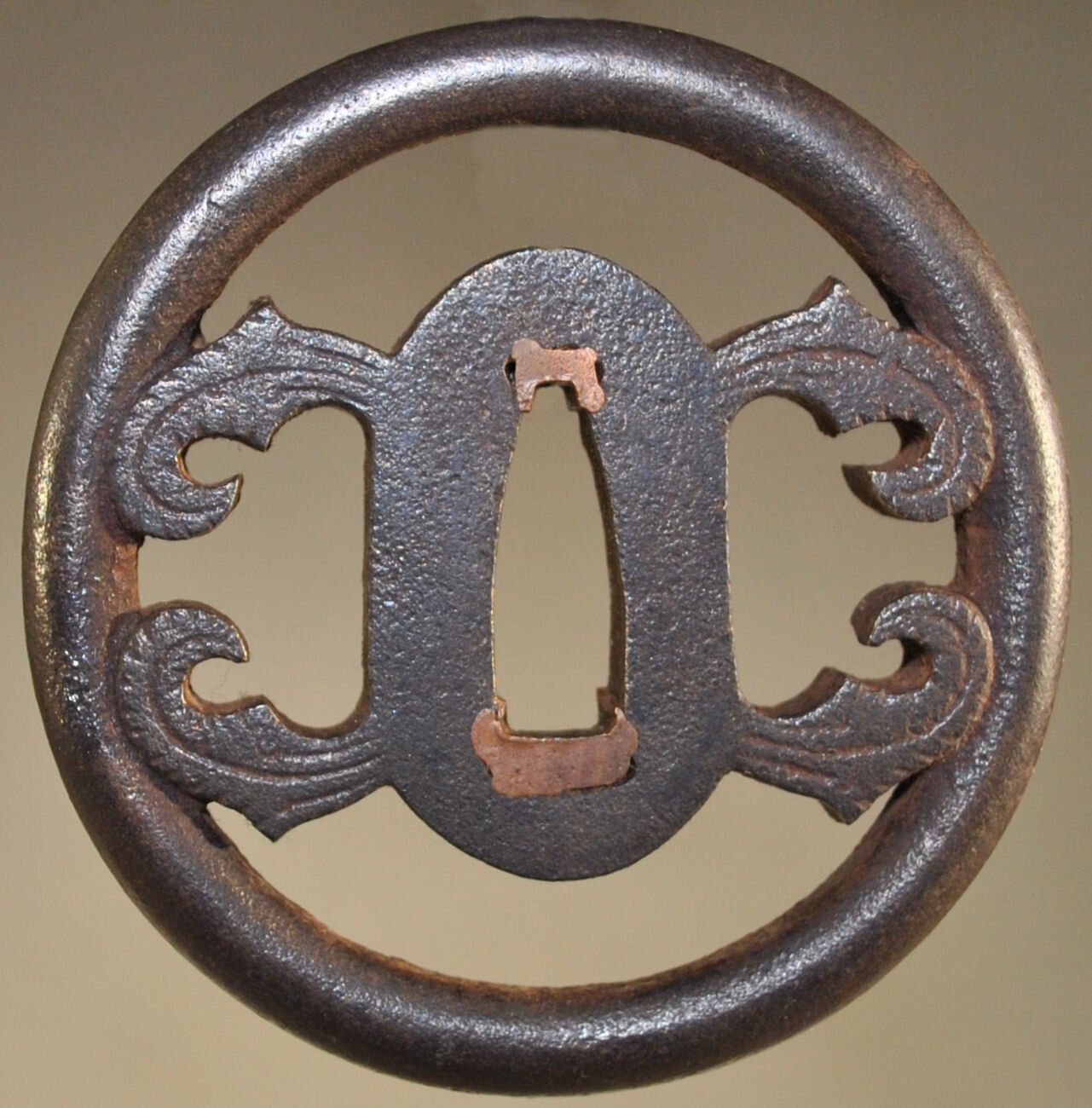
I have an Akasaka tsuba of unknown design and I have asked loads of people and put it on the NMB As Dale said it's a nice tsuba to be enjoyed
-
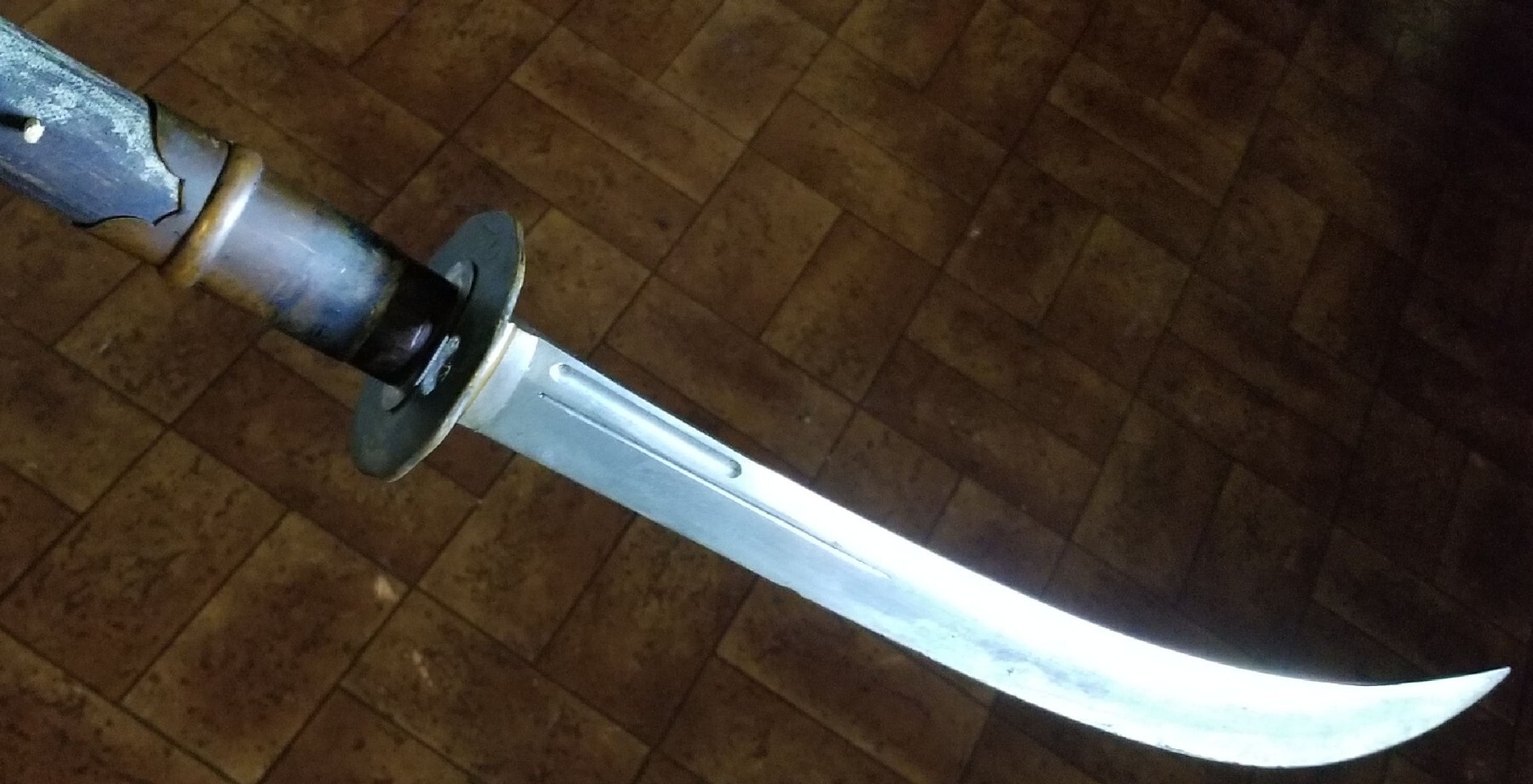
I've checked the news laws as below How does this effect Nihonto collectors? From 24 September, it will be illegal to own zombie-style knives and machetes as they will be added to the list of dangerous prohibited items already banned, including zombie knives, butterfly knives, Samurai swords and push daggers. The government has announced that it is set to expand The Criminal Justice Act 1988 (Offensive Weapons) Order 1988, by the addition of “zombie-style knives and machetes” to the list of prohibited weapons. The changes to the Order will come into force on 24 September 2024. The amendment is targeted at removing from circulation zombie-style knives and machetes with specific characteristics. A zombie-style knife or machete is defined as a bladed article with the following elements: A plain cutting edge; A sharp pointed end; and A blade of over eight inches in length (measured from the tip to the top of the handle in a straight line). In addition to this basic specification, it must also have one or more of the following features: A serrated cutting edge (other than one no longer than two inches next to the handle). More than one hole (of any shape) in the blade. Spikes. More than two sharp points in the blade. (A sharp point is defined as having an angle between the edges which create the point of less than 90 degrees. In the case of a curved edge the angle will be measured by reference to the tangent of the curve).
-
A very nice report - thanks
-
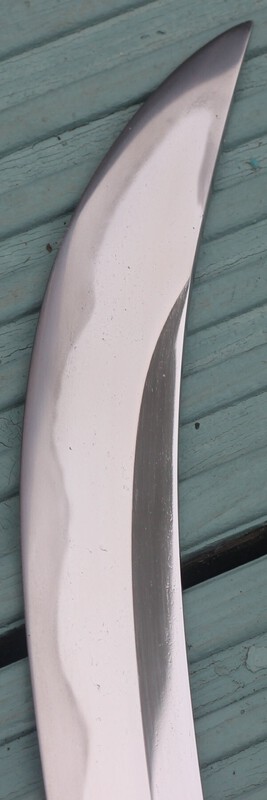
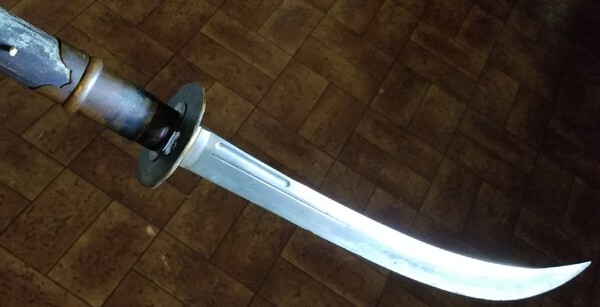
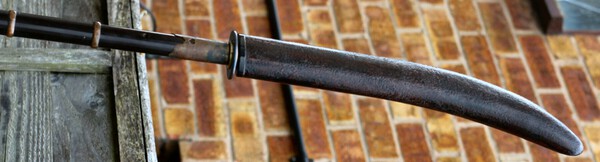
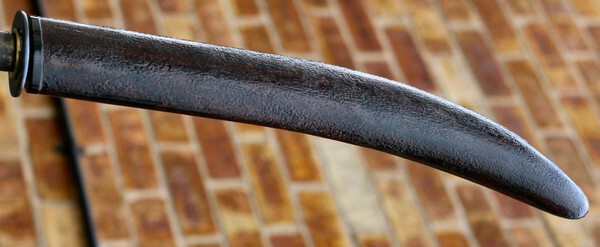
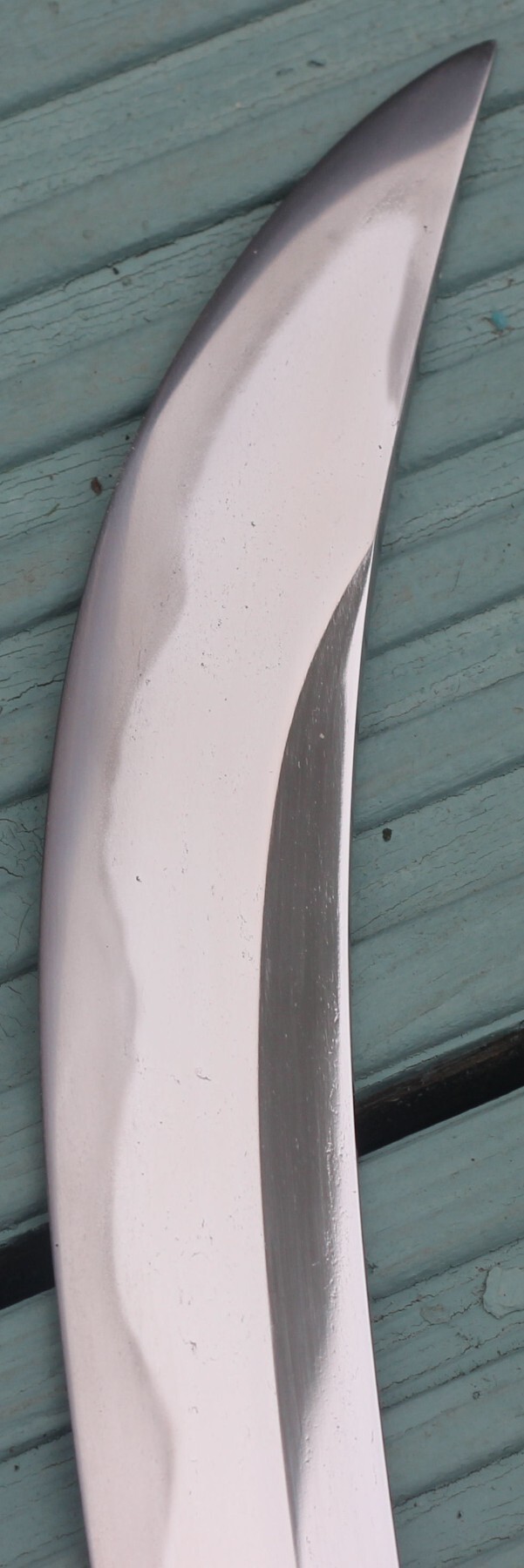
This was on the NMB before so just an update after restoration and received yesterday Original info when first posted so there may be some updated info. 7ft 5inch length complete - Blade around 15" - Tang around 15" Circa 1761 Your pole arm is well balanced and has good line or shape and length. Hamon curls over the kissaki and down the mune for some length. Lower hamon looks like horse teeth pattern while upper is wide suguha. Polish by Les Sheppard New saya and pole refurbished by Mike Hickman-Smith Before and after polish Only a small amount to be seen of the pole in these two image A majestic new saya - glorious texturing An idea of the overall size (I'm about 5'10"


- 1 reply
-
- 8
-

-

-
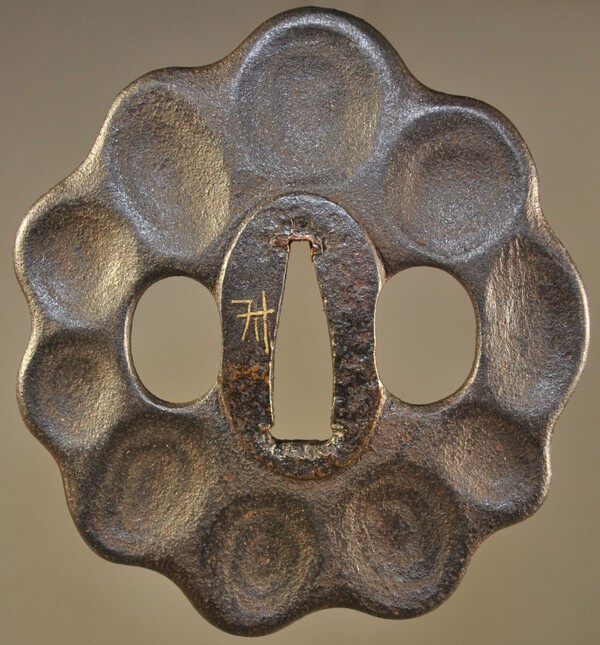
The tsuba is bi-convex Initially I thought it may be sanmei but it isn't I know these later tsuba have so many mixed school influences it can be impossible to state a school but note the influences The shells don't have any fine detail which in its self tells a story but it is quite attractive It still builds some back ground information
-
I bought this for it's age and the mangled seppa area
.thumb.JPG.217c0edcdd9e38534d5ec43d89847a55.JPG)
-
Learn something every day
-
Help Translating Fuchi Kashira (Sui?)
kissakai replied to Jake6500's topic in Translation Assistance
This may help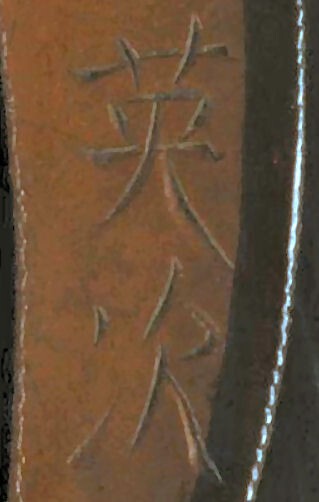
-
I thought Yagyu style but I expected it to be heavier looking and a bit more squat Now I've just seen Bigs link so fool me once....
-
This one of the first times I saw Ford and his infamous meeting at his old house. He invited me down as a newbie collector and he liked some of things I’d said and posted on the NMB. Possibly along with his other 'victims' Justin and myself walked back to our digs absolutely hammered, what a night The following year I popped down to see Ford with over a hundred tsuba and he explained their good and bad points. What an experience! He repatinated around 8 of my tsuba and these are a couple of the reworks This was the most challenging. Reworked by Ford Hallam and Kevin Adams This tsuba posed a few interesting questions when it came to us, the first and foremost being the large patches of thick, black material on the front and back. It was almost certainly a fire scale, and it took quite some time to remove – Ford suggested that the piece may have been in house fire, accounting for the thickness and randomness of the coverage. After a test patina, the inlaid elements were found to be more sophisticated than first thought. The monkey's face is a mixture of shibuichi and copper, with shakudo eyes. The implements are shakudo, and after polishing a portion of the rim we discovered that the copper has a lovely grain structure. However, the fire damage that produced the oxide layer affected the surface of the tsuba and created a "gritty" surface texture. We decided that it might be worth our while to polish the surface of the tsuba and apply a tsurikomi finish to the plate. Patinating the piece went more or less as expected, although we had some challenges getting the grey colour to patinate properly – most likely happened is whatever caused that black oxide layer also affected the top layers of the shibuichi and leached out the silver. All in all, a piece with an interesting story behind it. These were a couple he particularly liked This one was his favourite and was the best example of mokume work he had seen and it was used as his screen saver for a few months. I felt so proud! Finally, two of his early tsuba from the Birmingham museum. Who knew that from these early tsuba he would produce such stunning works of art I’ll let this post speak for it’s self Grev
.thumb.JPG.ee65c3a8a2a82e5c8377b2d739f8b008.JPG)
.thumb.JPG.78ee8a20426119b9905b75aed42aeb39.JPG)
.thumb.JPG.1035daf66e419ad9b3d9d130198cc4bc.JPG)
.thumb.JPG.761921d4d20757126004b1c60fdccdc4.JPG)
.thumb.JPG.d2e6a817bdd5c870cae7da2895e68b42.JPG)
.jpg.8fd3c5790e161c994296a356d926c6e7.jpg)
.thumb.JPG.368a61d6bef8eab793c948eb1e3ae847.JPG)
.thumb.JPG.dae4c1ab598adc10766ab0a73a4bb3b2.JPG)
.thumb.JPG.c9aaf52aa683aa7d4bf6fcd5b44dd5d8.JPG)

.thumb.JPG.8c6fd5a1de84c3aac042ea9f69d7f600.JPG)
- 29 replies
-
- 19
-
-
-
Exactly my thoughts A NMB member will be sending me some images when he gets the time
-
I have bought 499 over the last 12 years Sold some and I'm just starting to cull the collection
-
The image is too small for any assessment
-
Ford Hallam Has Passed Away
kissakai replied to zanilu's topic in General Nihonto Related Discussion
I just posted about this book so now I feel gutted. I'll try and deleted it -
I use decorative metalwork - works for me
-
There you go
.thumb.JPG.fd49752d7ce7b4ce974e24425ffdf54f.JPG)
.thumb.JPG.f3d9deb4d87c90a0f5a2b192f77786fb.JPG)
-
74 and collecting just over 10 years
-
I'll look forward to some other opinions More complex than I thought
-
Jean - I'd forgotten about Mitsuyuki - I blame my age! I still wonder why there is smiths names on both sides
-
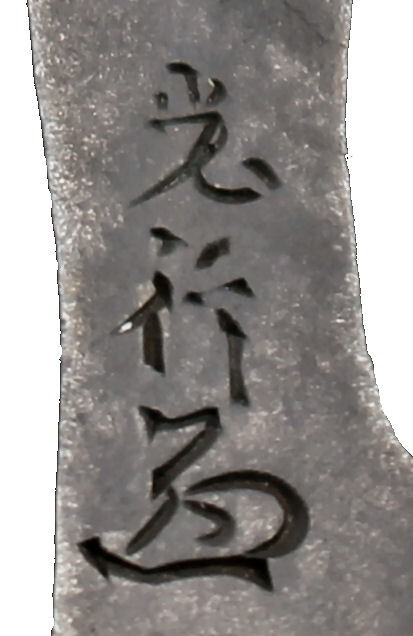
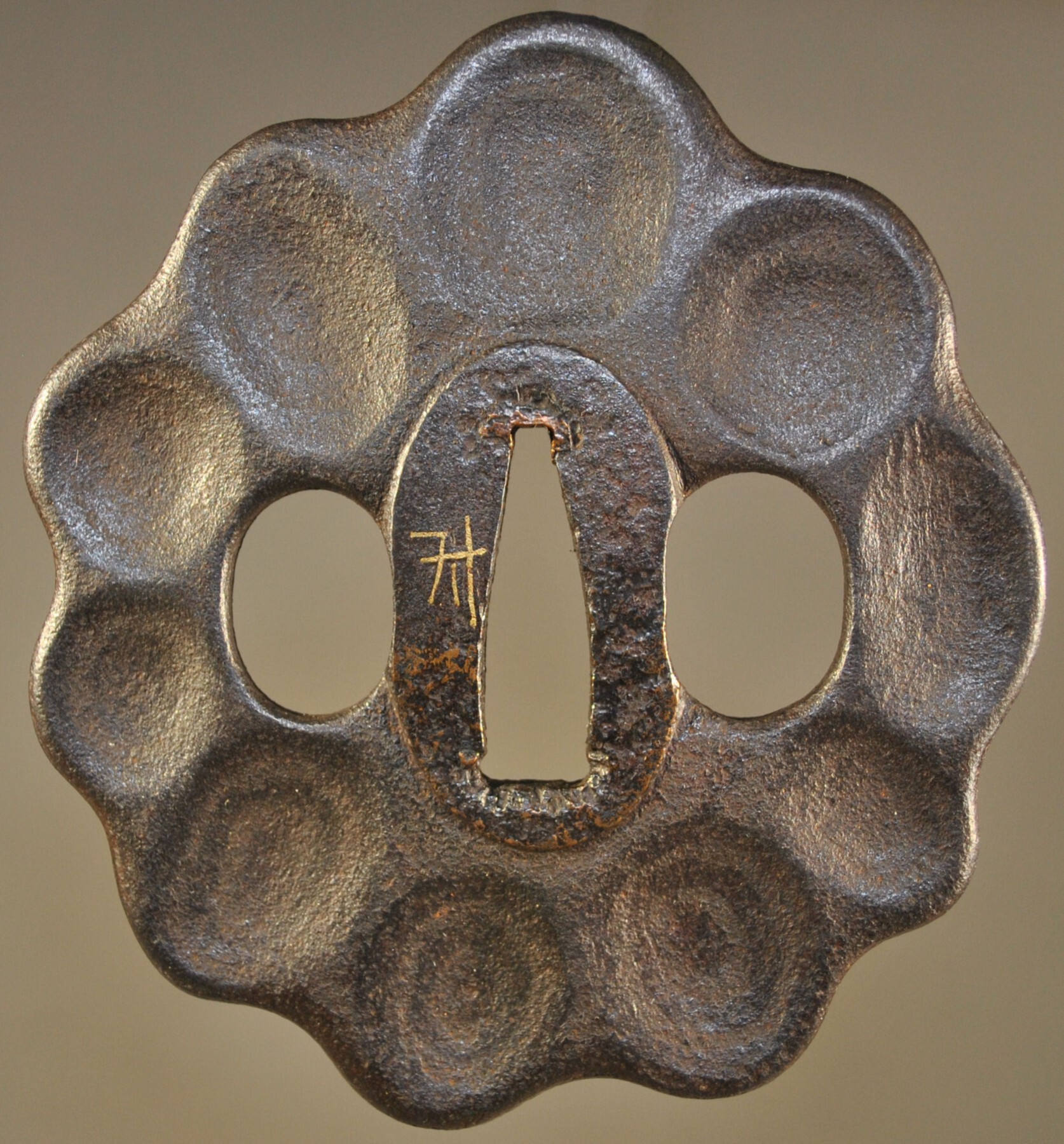
I put this on the NMB a few weeks ago Front mei School: Sekijoken Signature: Sekiryūsai 赤龍哉 - Haynes Index = H11188.0 (Yasumitsu) Front I forgot to ask about this mei on the reverse of the tsuba Also I wonder why it has another smith on the back Rear

-
I looked for the widest tsuba in my book and it is Myochin = 7.9mm No where near yours but may be of interest

-
I purchase a daishi tsuba set from Japan and the dealer asked if I wanted to submit it for papers which I did The papers said Owari Daisho so a good result If in doubt do it whilst in Japan, so much cheaper than deciding to do it at a later date
-
In the Birmingham museum some of the labels/descriptions had got mixed up "All the right notes but not necessarily in the right order"




.JPG.fe7af80c73b8559e1740e053017e8bdd.JPG)
.JPG.740cb9af20bf18721fbcba169a437b47.JPG)
.JPG.90edbd9fd58e8f3e2f9898d6313eafb2.JPG)

.JPG.6f218e522a39c7dbf03b3712892959c1.JPG)
.JPG.9d572a7896372dbb03ffbe1650ee4b65.JPG)
.JPG.3ffb902adf43eda4affff1b8b10c5493.JPG)
.JPG.a1dc5bd7a6093b070ed0208060e8ff75.JPG)
.JPG.665afb8fdec6e6d4a21a783f1f625b38.JPG)
.JPG.edc83e16e7bf4255e66538d6999129db.JPG)
.JPG.80d2e904aa7c938ae7ccdcf4e4c51ec4.JPG)
.JPG.7a3019b3805d2769faef7194ac332b21.JPG)

.JPG.45170d0ceb0e8a3d7d8656ceba3cb1ec.JPG)
.JPG.265a4a563e6f85dd37e9c866903a4a52.JPG)
.JPG.3fb214b4fc9ed4b2446cb04c214d21b7.JPG)